Tag: INSAT

  • India’s communication satellite GSAT-31 launched successfully from French Guiana

    India’s communication satellite GSAT-31 launched successfully from French Guiana

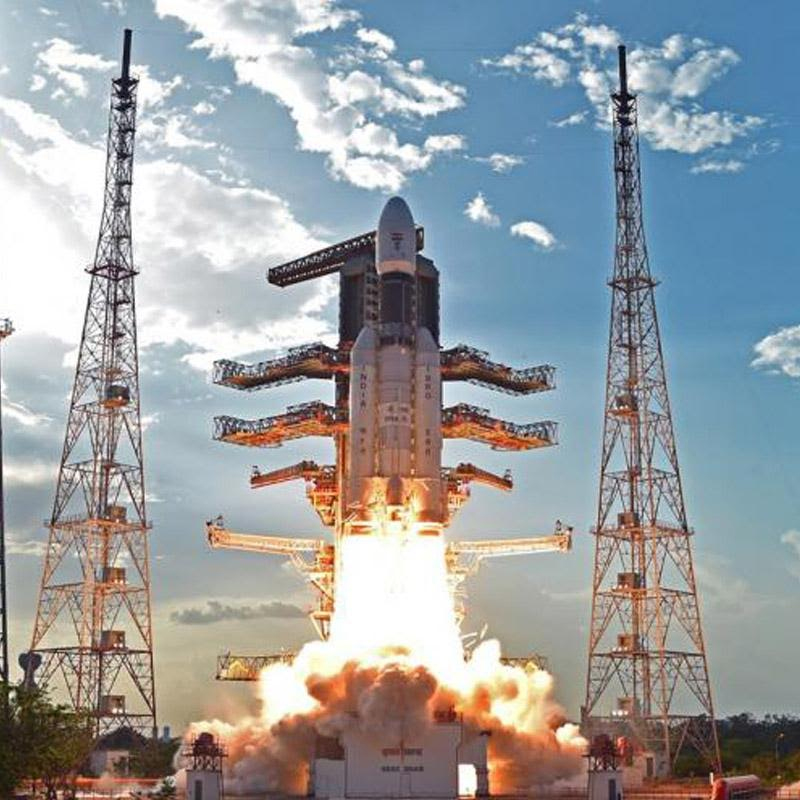
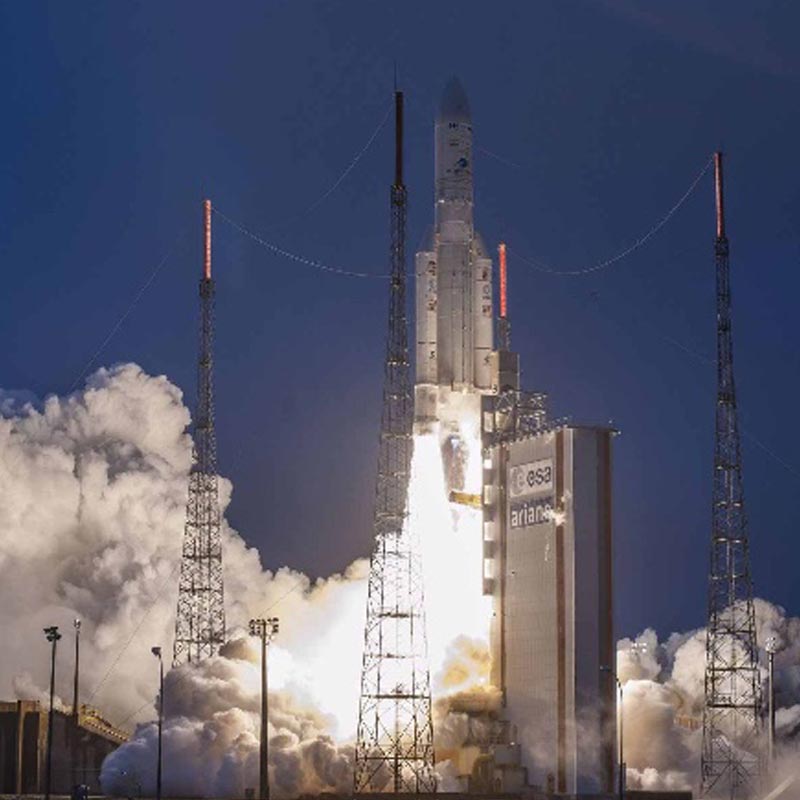
    MUMBAI: India’s latest communication satellite, GSAT-31 was successfully launched from the Spaceport in French Guiana during the early hours today.

    With a lift-off mass of 2536 kg, GSAT-31 will augment the Ku-band transponder capacity in Geostationary Orbit. The satellite will provide continuity to operational services on some of the in-orbit satellites. GSAT-31 derives its heritage from ISRO’s earlier INSAT/GSAT satellite series.

    ISRO Chairman Dr K Sivan said, “GSAT-31 has a unique configuration of providing flexible frequency segments and flexible coverage. The satellite will provide communication services to Indian mainland and islands.”

    Dr. Sivan also remarked that “GSAT-31 will provide DTH Television Services, connectivity to VSATs for ATM, Stock-exchange, Digital Satellite News Gathering (DSNG) and e-governance applications. The satellite will also be used for bulk data transfer for a host of emerging telecommunication applications.”

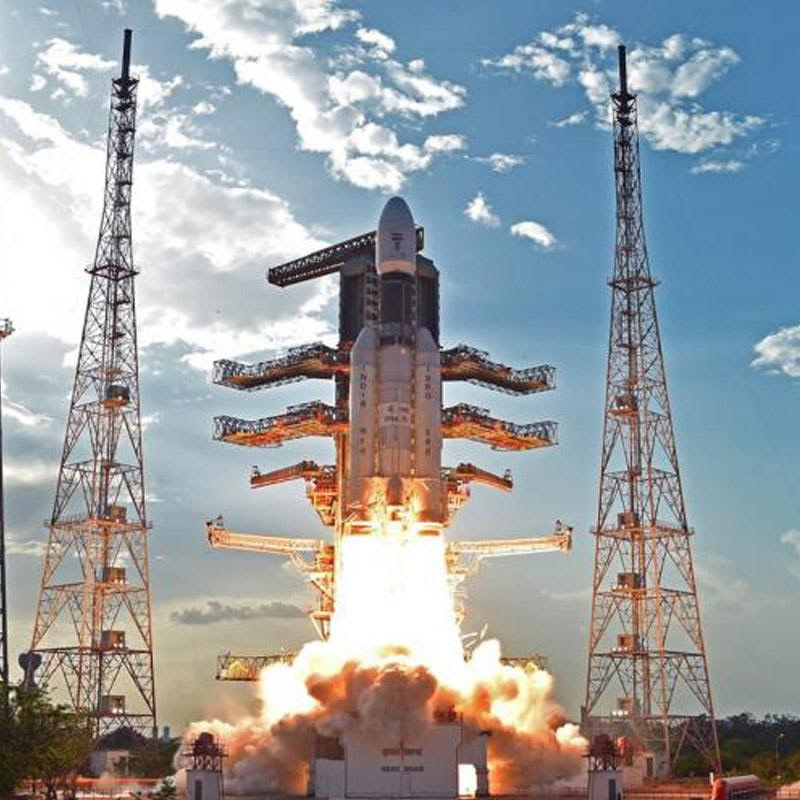
    The launch vehicle Ariane 5 VA-247 lifted off from Kourou Launch Base, French Guiana at 2:31 am (IST) carrying India’s GSAT-31 and Saudi Geostationary Satellite 1/Hellas Sat 4 satellites, as scheduled.

    After a 42-min flight, GSAT-31 separated from the Ariane 5 upper stage in an elliptical Geosynchronous Transfer Orbit with a perigee (nearest point to Earth) of 250 km and an apogee (farthest point to Earth) of 35,850 km, inclined at an angle of 3.0 degree to the equator.

    After separation from Ariane-5 upper stage, the two solar arrays of GSAT-31 were automatically deployed in quick succession and ISRO's Master Control Facility at Hassan in Karnataka took over the command and control of GSAT-31 and found its health parameters normal.

    In the days ahead, scientists will undertake phase-wise orbit-raising manoeuvres to place the satellite in Geostationary Orbit (36,000 km above the equator) using its on-board propulsion system.

    During the final stages of its orbit raising operations, the antenna reflector of GSAT-31 will be deployed. Following this, the satellite will be put in its final orbital configuration. The satellite will be operational after the successful completion of all in-orbit tests.

  • Comment: TRAI uplinks progressive recommendations; now MIB, others need to downlink them

    Comment: TRAI uplinks progressive recommendations; now MIB, others need to downlink them

    The approximately Rs 1,400 billion Indian broadcasting and cable sectors, reeling under the impact of a slow economy and hemmed in by erratic policy-making, would be breathing a bit easy after TRAI’s recommendations on issues related to uplink and downlink of TV channels and teleports.

    And, why not?  When the consultation paper on uplinking and downlinking guidelines was released by TRAI in December last year, the concept paper had sent alarm bells ringing in the media industry. Reason? The consultation paper had references about auctioning of satellite spectrum and TV channel permissions, introduction of AGR (adjusted gross revenue) sharing based licence fee (the concept of licensing itself was a debatable issue) and introduction of other changes.

    Most media houses sensed that an auction and AGR-based licensing and spectrum regime could have an irreparable impact on the industry, a la telecom sector, where winding down of businesses and pink slips are becoming common. Even more worrying for the sector was the assertion by TRAI — probably egged on by the Ministry of Information and Broadcasting (MIB)’s reference letter on the issue — that the administrative permissions received by TV channels under the existing norms were licences under Section 4 of the Telegraph Act, 1885, which in itself is an antiquated piece of legislation harking back to the 19th century.

    Though TRAI may not have been directly responsible for suggesting in the consultation paper, issues that rankled the industry, it did experience a rare united and collective views of the industry. Though consensus among stakeholders is rare, on this matter there was no such hesitation. And, an open house forum organised by TRAI on the issue to get further feedback could be cited as an example of this rare unity of views.

    Most attendees to the open forum conveyed loud and clear that concepts like auctioning of TV channels’ permission and AGR-based annual revenue sharing (with the government) would do more harm to the industry than any good. What’s more, some of the industry representatives reminded TRAI of its recommendations for National Telecom Policy 2018 where it had suggested “review” of all levy and fees imposed on telecom service providers.

    In the final recommendations issued earlier this week, TRAI has categorically struck down the possibility of either auctioning of permissions and/or spectrum and steered clear of AGR altogether. Rather, it has taken a highly progressive stance, which if accepted by MIB and other government organisations can inject the much-needed fuel in the industry for it to propel forward faster over the next decade.

    By not increasing any substantial financial burden on media companies in this sector, TRAI has enabled the capex to go into creating newer ventures, innovative products and business models, and other expansionary activities, rather than simply paying fees and levies. Though the suggested framework has been left mostly untouched from the perspective of administrative fees, there are a few notable changes.

    The annual licence fee for uplinking of a TV channel has been enhanced from Rs 200,000 to Rs 300,000. Similarly, the annual fee for downlinking of a TV channel has been increased to Rs 750,000 from Rs 500,000. Also, the fee for downlinking of channels uplinked from abroad has been increased to Rs 22,50,000 per annum.

    TRAI, while exhorting the likes of MIB, Department of Space and DoT to streamline processes, has interestingly suggested transfer of permissions between two companies be permitted only in the case of mergers and acquisitions as recognised under applicable laws. However, free transfer has been recommended for permission of a TV channel to its subsidiary company or holding company or a subsidiary company of the holding company. The caveat being such a company should have a valid uplinking and downlinking permission.

    A time period of only one year has been given for operationalisation of a TV channel and a lock-in period of one year from the date of operationalisation of a channel for the transfer of permission of such a channel too has been introduced.

    As for teleports, no change in the amount of one- time non-refundable processing fee levied for seeking permission for establishing a teleport has been suggested. Similarly, it has been suggested that no entry fee is levied for granting permission for establishing a teleport. However, for each antenna, a fixed annual license fee of Rs 300,000 has been recommended.

    What will also come as a relief to the teleport industry is that TRAI has refrained from restricting the number of teleports in India.

    And, once again TRAI has nudged Department of Space and Department of Telecoms to take time-bound and liberalised policy decisions relating to satellite capacity. Though not said upfront and in so many words, the regulator has pitched in for foreign satellites too. “The issue of open sky policy for Ku band frequencies may be taken up by MIB in INSAT Coordination Committee (ICC) meeting and the open sky policy should be adopted.”

    Any regulator would vouch that it’s hard to please the core constituency and stakeholders don’t always agree with its stand, but on the uplink/downlink matter the industry would agree with most of the suggestions of TRAI — and also breathe a little easy.

    Hang on, don’t pop the champagne yet. TRAI can only make suggestions — it admitted so in an open forum — and it’s up to MIB, DoT and Department of Space to accept the suggestions and implement them. And, therein lies the catch because quite a few other sets of TRAI recommendations have been gathering dust in various corridors of power.

    Also Read :

    Uplink, downlink issue: TRAI pushes for a liberal regime keeping most existing norms unchanged

    TRAI extends dates for comments on uplinking/downlinking consultation paper

  • MIB says ISRO upping capacity to facilitate migration from foreign satellites

    MIB says ISRO upping capacity to facilitate migration from foreign satellites

    NEW DELHI: The Indian government has admitted that inadequate capacity on Indian satellites has compelled domestic direct to home (DTH) operators to use a large number of transponders on foreign satellites and that India’s space agency Indian Space Research Organisation (ISRO) is gearing up to meet growing demands owing to proliferation of HD TV channels.

    “Presently DTH services are being supported by 42 transponders on indigenous satellites (INSAT/GSAT) and about 69 transponders on foreign satellites. There is a registered demand of additional about 64 transponders for immediate future,” junior minister at Ministry of Information and Broadcasting (MIB) Rajyavardhan Rathore informed fellow parliamentarians in Lok Sabha or the Lower House of Parliament recently.

    Without stating it in so many words though, Rathore said that as ISRO increases its satellite capacity to be able to meet the demands of Indian DTH operators, a migration from foreign satellites would become a reality — a move that MIB and Department of Space are slowly implementing to nudge users of satellite services, especially TV channels, to move away from non-Indian birds.

    “It is expected that over a period of next three years adequate capacity would be added through Indian satellites to facilitate migration of foreign capacity to Indian [satellite] capacity,” the minister said, adding, according to Telecom Regulatory Authority of India (TRAI) data, there has been a significant growth in the number of high definition (HD) satellite TV channels. The number has grown from three in 2010 to 83 in 2017.

    Dwelling on TRAI’s recommendations on sharing of infrastructure on a voluntary basis, Rathore clarified that till date MIB has not received any proposal from DTH operators for sharing of satellite transponders and earth station facilities with another such player or distribution platforms. “Enabling sharing of infrastructure may address the issue of demand-supply mismatch and reduce capital and operating expenditure of the service provider to an appreciable extent,” he added.

    Meanwhile, addressing another set of queries raised by parliamentarians relating to DTH, the minister said a total number of 1922 complaints/grievances against private DTH service providers were received through monitoring systems of the government and TRAI over the last three years on various issues ranging from technical/financial/policy matters to delay or improper installation, malfunctioning of STBs, issues of interoperability, disruption of signals during bad weather, improper billing, channel packaging, FTA channels, etc. As many as 1811 complaints were addressed by MIB till date.

    As soon as complaints are received, they are brought to the attention of the DTH operator concerned and later a follow-up action too is undertaken to evaluate compliance and whether the problems were resolved or not, the minister explained.

    According to the minister, sector regulator TRAI had issued last year a set of tariff guidelines to boost healthy competition among DTH service providers and bring down the subscription prices for consumers. The guidelines were legally contested by some stakeholders and are awaiting judicial advice, he added.

    ALSO READ:

    MIB admits no DTH infra sharing permission sought

    MIB, DoS nudge TV channel to use Indian satellites

    MIB to collect data on satellite capacity needs, digital chatter

    MIB, TRAI allay industry fears on sat capacity leasing & content regulations


  • TRAI clears path for broadband, voice services aboard planes

    TRAI clears path for broadband, voice services aboard planes

    NEW DELHI: Broadband connectivity and making voice calls from 32,000 feet above sea level while flying may soon become a reality over Indian space if broadcast and telecom regulator TRAI’s recommendations are accepted by some other government organisations, including ISRO.

    TRAI, while giving an in-principle green signal to in-flight connectivity (IFC), has suggested use of both domestic and foreign satellite systems for providing such services onboard airplanes and has dangled as an incentive levying of a token annual license fee of Re 1 on the service provider that could be reviewed at a later stage.

    TRAI has also recommended that the gateway for providing the IFC be located in India and that such a deployment will provide an effective mechanism to lawfully intercept and monitor the in-cabin internet traffic while the aircraft is in Indian airspace.

    Pointing out that onboard Internet traffic’s routing must be made obligatory via a satellite gateway on Indian soil, TRAI on Friday in a series of guidelines said, “The IFC service provider should be permitted to use either (Indian) INSAT systems or foreign satellite capacity leased through Department of Space (DOS) or foreign satellites outside INSAT systems in the Indian airspace (coordinated by ITU).”

    The Telecom Ministry had requested TRAI to furnish recommendations on licencing terms and conditions for provision of IFC for voice, data and video services, including those related to entry fee, licence fee and spectrum allocations.

    Making a case for creating and registration with the government a “separate category” for IFC service provider, TRAI said the operation should be permitted with minimum height restriction of 3,000 meters in Indian airspace for its compatibility with terrestrial mobile networks. Internet services through wi-fi onboard should be made available when electronic devices are permitted to use only in flight/ airplane mode, it added highlighting the IFC provider need not necessarily be an Indian entity.

    According to TRAI, the IFC service provider should be permitted to provide services after entering into an arrangement with unified licensee(s) having appropriate government authorisation.

    “If IFC service provider partners with… the licencee (that) also has commercial VSAT CUG service authorisation, it can provide the satellite links also. Alternatively, unified licencee with national long distance service authorisation can provide the satellite links,” the regulator suggested, adding, the regulatory requirements should be same for both India and foreign-registered airlines for offering IFC services in Indian airspace.

    https://ssl.gstatic.com/ui/v1/icons/mail/images/cleardot.gif

    Some of the other recommendations include the following:

    — Spectrum neutral approach should be adopted, subject to the condition that the frequency bands have been harmonized and coordinated for their use at the ITU.

    — It would facilitate the IFC services in all the bands (L, Ku and Ka) in which IFC services are currently being provided.

    — The framework recommended for IFC services in Indian airspace should be made applicable to all types of aircrafts such as commercial airlines, business jets, executive aircrafts etc.

    — There should not be any difference in the charges to be levied for domestic and foreign airlines in Indian Airspace

    — Satellite operators should be permitted to use of bandwidth already assigned to satellite operators for the use of IFC services also.

    — In case of multiple spot beam satellite, an aircraft may pass through many beams. In such a scenario, DOS should consider not charging for individual beams, but evolve the charging mechanism based upon the actual usage of the bandwidth.

    Also Read:

    TRAI says all stakeholders responsible to protect user data

    Trai to make recommendations on net neutrality today 

    TRAI releases recommendations on net neutrality 

  • Transponder leasing yields Rs 7.5 bn for communication satellites

    NEW DELHI: Communication satellites earned revenue of Rs 7.4668 billion through leasing of INSAT/ GSAT transponders in 2016-17.

    Minister in the department of space Jitendra Singh told the Parliament that 15 of the 42 Indian satellites in space are used for communication.

    Out of the others, four for meteorological observations, 14 for earth observations, seven for navigation, and two for space science purposes.

    The annual income from sale of remote sensing satellite data is Rs 251.7 million.

    The data and value added services derived from earth observation, meteorological, communication & navigation satellites are used to support various applications viz. resource monitoring, weather forecasting, disaster management, location based services, including societal applications.

    The expenses to realise and launching of these satellites are less than those of other countries, the Minister said.

    Also Read :

    MIB: No DPO request for infra sharing, DTH ops’ transponder demand up

    Transponder charges: Plan afoot to retain DTH services on Indian sats

    ISRO’s ‘South Asia Satellite’ to carry 12 ku-band transponders


  • GSAT 17 to be inducted into INSAT/GSAT system after tests

    GSAT 17 to be inducted into INSAT/GSAT system after tests

    NEW DELHI: The GSAT-17 launched last month is undergoing in-orbit tests after which it will be inducted into the INSAT/GSAT system for providing various communication services to the country in C, Extended-C and S-band.

    The communication satellite, with a lift-off mass of 3477 Kg – carrying communication, Data Relay Transponder (DRT), Search & Rescue Payload – was successfully launched on 29 June using Ariane-5 launch vehicle from Kourou launch base of Arianespace.

    Space department minister Jitendra Singh told the Parliament that the GSAT-17 carries a Data Relay Transponder for receiving meteorological, hydrological and oceanographic data from Automatic Weather Stations, Automatic Rain Gauges and Agro Met Stations and relaying back for down linking in extended C-Band.

    It also carries a Search & Rescue Payload, which picks up and relays the alert signals originating from the distress beacons of maritime, aviation and land based users to help in rescue services.

    Also Read :

    India’s GSAT-17 communication satellite launched successfully

    Arianespace to launch ISRO-built DTH & telecom satellites

    DTH-aiding GSAT-19 launch plan under way

  • Transponder charges: Plan afoot to retain DTH services on Indian sats

    NEW DELHI: The Department of Space (DoS) has said that a technical strategy is under formulation to retain direct-to-home services in the indigenous INSAT/GSAT system as well as to migrate DTH services from foreign satellite systems to indigenous system.

    This has been stated by the DoS to the Public Accounts Committee (PAC) of the Parliament, which had, early in 2016, in its fortieth report, complained about loss due to non-revision of transponder charges.

    In its action-taken report (ATR) tabled in the Parliament by the PAC recently, it has also noted that a Committee to look into the subject matter is being constituted, and its recommendation will be addressed by the DoS.

    Referring to non-revision of prices for transponders, the DoS told the PAC that lease agreements with foreign satellites are entered for a short term in order to make a provision for the end user to migrate the services from foreign satellite to the Indian satellite. This approach, the DoS claimed, is in line with the recommendation of the Cabinet approved ‘Norm, guidelines & procedures for implementation of the policy framework for satellite communication in India’.

    The Department said as the foreign operators quote lease charges in dollar terms, differential charges among indigenous capacity and foreign lease is unavoidable due to currency fluctuations and withholding taxes.

    However, it said it will work towards a scenario wherein the best possible solution for DTH services will be arrived at.

    In its original report last year, PAC had noted that DTH transponder lease agreements had a lease period from 5 to 10 years with no provision for revision of prices whereas lease agreement varied from 5% to 33%. The lack of such basic provisions resulted in revenue forgone to the tune of Rs 361.7 million.

    Furthermore, Vetted Comments of Audit Central PAC in its report last year had also wanted the DoS to set up an inquiry to look into the lease agreements with various parties and take stringent action against those responsible for agreeing to terms that were against the interest of the exchequer and apprise the Committee of the action taken within three months.

    However, it noted in the Action Taken Report that the Department did not initiate any action and instead said it had appointed a committee to look into these aspects as the lease agreements with foreign satellites are entered for a short term period and to examine periodic revision clause.

    But, the Committee said the fact remained that DTH transponder lease agreements had a lease period from 5 to 10 years with no provision for revision of prices whereas lease agreements with foreign satellites ranged from one to 6 years with provision for price revision from 5 to 33%. The price revision clause is required to be there in all the transponder lease agreements which extend for more than one year irrespective of the fact that the contract is for a shorter duration or longer duration.

  • Doordarshan’s regional services to shift to new satellite

    Doordarshan’s regional services to shift to new satellite

    NEW DELHI: The regional language channels of Doordarshan will be off air for about five hours on 10 December to enable a shift to a new satellite.


    The Regional services, currently being beamed from INSAT-3A are being shifted to INSAT-4B with effect from 10 December.


    This is being done in view of End of Life (EOL) of INSAT-3A as declared by Indian Space Research Organisation (ISRO).


    Four new transponders have been provided for these channels on INSAT-4B by ISRO.


    The services will remain off air from 00:00 to 05:00 hrs on 10 December.

  • ISRO to increase transponder capacity for Indian DTH players to use INSAT

    ISRO to increase transponder capacity for Indian DTH players to use INSAT

    NEW DELHI: With five Direct-to-Home (DTH) service providers using transponder capacity leased from foreign satellites, the Indian Space Research Organization (ISRO) is taking measures to augment satellite capacity in India so that these users have the option to migrate to the INSAT system. 


    Giving this information, Space Department Minister Jitenda Singh told the Lok Sabha today that ISRO has given a proposal for pricing of satellite transponders for public and non-government users.


    A proposal for continuing the existing method of transponder pricing, which is based on type of services, band of operations, coverage area, power level is under consideration. 


    There are 13 INSAT/GSAT satellites in orbit, out of which 11 are communication satellites and two are meteorological satellites. In INSAT/GSAT communication satellite systems, there are about 37 Government users and about 49 non-Government users. 


    The transponder characteristics in terms of power, coverage, frequency band, etc., vary according to the type of service, which requires differential pricing.  

  • DTH cos depend on foreign satellites due to Ku Band capacity shortage in Indian satellites

    DTH cos depend on foreign satellites due to Ku Band capacity shortage in Indian satellites

    NEW DELHI: Indian direct-to-home operators depend on foreign satellites due to shortage of Ku band transponders on Indian satellites.

    The Parliament was informed on 11 March that a total of 77.89 (36 MHz equivalent) Ku band transponders are used by Indian DTH operators for DTH services.


    Out of a total of 77.89 transponders, 19 transponders are in INSAT/GSAT satellites and 58.89 leased from foreign satellites. 

    The DTH service providers are using foreign satellites since sufficient capacity of Ku Band transponders is not available in INSAT/GSAT satellites, Minister of State in the Prime Minister’s Office Dr Jitendra Singh said. 

    The commercial, societal and defence service users have been using their allocated capacity as per their usage plan subject to receipt of regulatory approvals. 


    The allocation process is in progress for about 46 transponders (in C, Extended-C and Ku Bands), which are vacant at present. 


    Dr Singh had said recently that a total of six communication satelites – GSAT-15, GSAT-9, GSAT-6, GSAT-6A, GSAT-7A and GSAT-11 – are being developed indigenously as part of the XII Five Year Plan (2012-17).


    A total of 95 Ku-band (a part of K band) transponders onboard indigenous communication satellites are being utilised for various communication applications, he had told Parliament last month.