Tag: INS Vikrant

  • Bajaj V’s new film paid homage to soldiers this Martyrs’ Day

    Bajaj V’s new film paid homage to soldiers this Martyrs’ Day

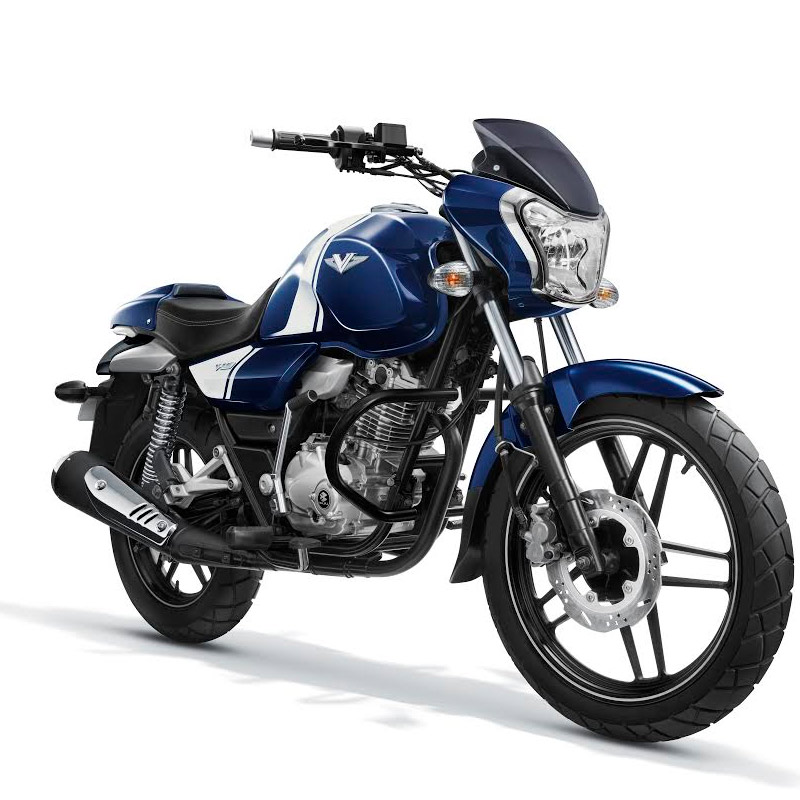
    MUMBAI: Bajaj V, the bike forged with the invincible metal of INS Vikrant launched the ‘Postcards of Pride’ film under its famous ‘Invincible Indians’ series.

    Through the film, Bajaj V asked all Indians to spare a moment to remember our martyrs who laid down their lives in military combat since 1947. It urged them to respect our martyrs’ memories, by lighting a candle outside their own homes at 8 pm on 23 March – Martyrs’ Day.

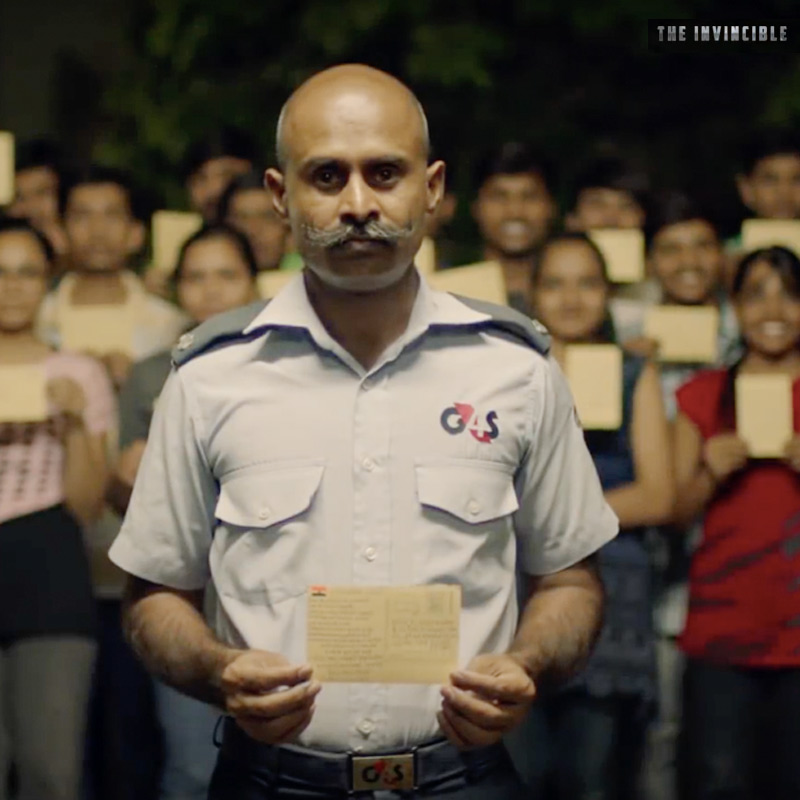
    22,000 of our soldiers have sacrificed their lives to protect our lands and borders, till date. Over the course of time, we as a nation, tend to move on with our grief of losing our brave men. One man, however, decided to honour our martyrs and their families’ great sacrifices. The campaign captures the story of Jitendra Singh Gurjar, a Surat-based security guard who has been writing postcards to martyrs’ families for the last 19 years. Till date, he has written letters to 4000 families. Through the film, Bajaj V conveyed a message of all Indians to come together on Martyrs’ Day at the same time to pay a tribute to our soldiers.

    Bajaj Auto vice president of marketing (Motorcycles) Sumeet Narang says, “Bajaj V has created invincible Indians, a platform to showcase the stories of solid Indians who, by their resolve and determination, performed extraordinary acts for our society. We feel that like Medicine Baba, Ambulance Dada and others, Jitendra Singh Gurjar is also a true invincible Indian and hope that his story will inspire millions of Indians to do their bit to pay tribute to our martyrs.”

    Leo Burnett South Asia chief creative officer Rajdeepak Das adds, “As humans, we are prone to grieve about something momentarily if it is far removed from our own lives. We fail to internalise that even a single martyr’s death is our collective misfortune; it is an eventuality that happened only to keep us safe. Bajaj V and Leo Burnett India wanted people to honour our soldiers’ memories and say a silent thanks to them on Martyrs’ Day. We may never become Jitendra Gurjar ourselves, but we can definitely try. The brand has done a brilliant job of paying homage to our forgotten heroes, and I’m sure this humankind idea will urge Indians to light a candle outside their homes on 23 March.”

  • Leo Burnett wins storyboard award for Bajaj V

    Leo Burnett wins storyboard award for Bajaj V

    MUMBAI: Leo Burnett India has a new feather on its cap: the agency has been honoured with the coveted ‘Storyboard Commercial of the Year’ award, at the 17 edition of the CNBC-TV18 Overdrive Awards. The agency has bagged the award for the Bajaj V launch commercial.’

    The CNBC-TV18 Overdrive awards honour India’s cars and bikes that are changing the face of the industry, through cutting-edge technologies and innovations. Storyboard is its weekly advertising, media and marketing TV show.

    Leo Burnett CCO RajDeepak Das who was present to collect the award said, “This is pretty much the best way to end the awards streak this year! Automotive is one of the most dynamic, high-volume categories in advertising, and making it to the top spot for real work is extremely encouraging. It is great to have walked up on the stage to receive this honour on behalf of my team. I hope Leo Burnett and Bajaj V’s great streak continues into 2017 as well.”

    The Bajaj V, that contains metal from India’s legendary warship and aircraft carrier, the INS Vikrant, was launched earlier this year on January 26. Bajaj sold a record 11,000 V bikes on the first day of the V’s launch.

  • Leo Burnett wins storyboard award for Bajaj V

    Leo Burnett wins storyboard award for Bajaj V

    MUMBAI: Leo Burnett India has a new feather on its cap: the agency has been honoured with the coveted ‘Storyboard Commercial of the Year’ award, at the 17 edition of the CNBC-TV18 Overdrive Awards. The agency has bagged the award for the Bajaj V launch commercial.’

    The CNBC-TV18 Overdrive awards honour India’s cars and bikes that are changing the face of the industry, through cutting-edge technologies and innovations. Storyboard is its weekly advertising, media and marketing TV show.

    Leo Burnett CCO RajDeepak Das who was present to collect the award said, “This is pretty much the best way to end the awards streak this year! Automotive is one of the most dynamic, high-volume categories in advertising, and making it to the top spot for real work is extremely encouraging. It is great to have walked up on the stage to receive this honour on behalf of my team. I hope Leo Burnett and Bajaj V’s great streak continues into 2017 as well.”

    The Bajaj V, that contains metal from India’s legendary warship and aircraft carrier, the INS Vikrant, was launched earlier this year on January 26. Bajaj sold a record 11,000 V bikes on the first day of the V’s launch.

  • Bajaj V campaign calls for Indians to celebrate national pride every day

    Bajaj V campaign calls for Indians to celebrate national pride every day

    MUMBAI: Be proud to be Indian, every day. Bajaj Auto has released a new brand film for V – the bike that contains the metal of the legendary warship INS Vikrant. The film raises an important question about why national pride is restricted to select occasions of national significance such as the Independence Day or Republic Day, and forgotten the next morning. Also, the new film features the fresh navy blue color of Bajaj V recently introduced through the new campaign.

    The film aims to inspire people to cherish India’s rich and glorious history and feel a sense of pride every single day of the year. In what is probably the first time ever in Indian advertising, the story is narrated from the point of view of a real life war hero. Rear Admiral S. K. Gupta, a Mahavir Chakra awardee who served aboard the INS Vikrant in the 1971 war, features in the film and talks about how the Bajaj V now allows us to experience our pride every day.

    Bajaj V, launched on the Republic Day earlier this year, created quite a stir in the market, with its first campaign – clearly establishing their distinct positioning of being made of pride.

    Bajaj Auto motorcycles marketing VP Sumeet Narang said, “With the V, we are not just selling motorcycles but celebrating the pride of the nation. Consumers are also playing back this feeling of pride. The new campaign takes the proposition forward and talks about how the V helps you experience pride every day, and not just on select occasions of national significance.”

    Leo Burnett CCO Rajdeepak Das said, “This is the harsh reality of our country. While we all see ourselves as proud Indians, we are quite happy just expressing them in occasions. Like beating a key rival in cricket, winning the World Cup, medals at Olympic games, and the two national days.” The film has been directed by Prakash Varma of Nirvana Films.

  • Bajaj V campaign calls for Indians to celebrate national pride every day

    Bajaj V campaign calls for Indians to celebrate national pride every day

    MUMBAI: Be proud to be Indian, every day. Bajaj Auto has released a new brand film for V – the bike that contains the metal of the legendary warship INS Vikrant. The film raises an important question about why national pride is restricted to select occasions of national significance such as the Independence Day or Republic Day, and forgotten the next morning. Also, the new film features the fresh navy blue color of Bajaj V recently introduced through the new campaign.

    The film aims to inspire people to cherish India’s rich and glorious history and feel a sense of pride every single day of the year. In what is probably the first time ever in Indian advertising, the story is narrated from the point of view of a real life war hero. Rear Admiral S. K. Gupta, a Mahavir Chakra awardee who served aboard the INS Vikrant in the 1971 war, features in the film and talks about how the Bajaj V now allows us to experience our pride every day.

    Bajaj V, launched on the Republic Day earlier this year, created quite a stir in the market, with its first campaign – clearly establishing their distinct positioning of being made of pride.

    Bajaj Auto motorcycles marketing VP Sumeet Narang said, “With the V, we are not just selling motorcycles but celebrating the pride of the nation. Consumers are also playing back this feeling of pride. The new campaign takes the proposition forward and talks about how the V helps you experience pride every day, and not just on select occasions of national significance.”

    Leo Burnett CCO Rajdeepak Das said, “This is the harsh reality of our country. While we all see ourselves as proud Indians, we are quite happy just expressing them in occasions. Like beating a key rival in cricket, winning the World Cup, medals at Olympic games, and the two national days.” The film has been directed by Prakash Varma of Nirvana Films.

  • Bajaj V and Paper Boat set trends in content marketing

    Bajaj V and Paper Boat set trends in content marketing

    MUMBAI: In the current state of disruption in the media and entertainment industry, two things have come forth as absolute truths — firstly, the need for brands to adapt and explore non-traditional marketing; and secondly the power of pure undiluted content.

    Be it GroupM’s This Year Next Year report or the KPMG – FICCI 2016 report, pick up any recognisable marketing study, and one can tell where the M and E industry is headed with double figure digital growth rates.

    Going with that idea, several brands and marketers are toeing the lines of content marketing. But few have gone ahead and taken a leap of faith with content and storytelling being the main focus.

    “We are used to seeing brands sponsoring television programs. ‘Buniyaad brought to you by Colgate’ is an example. But there is nothing ‘Colgate’ in Buniyaad. Whereas in the case of long format digital videos, the kind of content brands would go for is somewhere related to the concept of the brand. The format of digital allows you to experiment a lot more at a far lesser cost,” shared MullenLowe Lintas chairman and CCO R. Balki, on why it is viable for brands to produce their own content on digital.

    When asked, Balki named Leo Burnett’s campaign for Bajaj V as his favourite in the last year. At the same time, he referred to ‘Sons of Vikrant’ as a campaign, not a documentary. “Anything which is released around the bike is all part of building the brand. And that is why I say it is one of the most beautiful works I have seen recently.”

    When Bajaj released its new model for the commuter segment backed by the inspiring story of INS Vikrant, the power of weaving a story as the two wheeler’s brand identity was instantly revealed when record breaking units of the bike were sold on the very first day.

    But it didn’t end at that. Soon the brand launched a 16 minute video titled ‘Sons Of Vikrant’, conceptualised by its creative agency Leo Burnett, documenting the lives of the war veterans who were once aboard the warship.

    Bajaj Motorcycles marketing VP Sumeet Narang said, “As we delved deeper into Vikrant and started talking to people who worked on it, we realised that there are many untold stories and memories behind the naval battleship INS Vikrant and its heroes. Since we had brought back the essence of Vikrant in the form of V, we realised that the onus was also on us to bring these stories together and share them with the nation.”

    The video was launched through a gala event where the who’s who of the media and entertainment industry were invited. Amidst the glitz and glory, the anecdotes of life on INS Vikrant and war stories successfully created awe and inspired attachment around the warship. Suddenly Bajaj V wasn’t a two wheeler anymore, it was a story everyone wanted to own.

    “With Sons of Vikrant, our idea was to bring out the untold stories of INS Vikrant and the war veterans and share the feeling of pride with millions,” quipped Leo Burnett south Asia CEO Saurabh Varma when asked about the concept of releasing a documentary as part of the awareness building for a product.

    “To create this documentary, we met many people who were part of the war to learn their stories. The footage ran into hours, which we had to bring down to 16 minutes,” Varma added.

    Though the digital platform, without the time constraint, does lend itself for more creative exploration, it isn’t necessarily the long format that is working for the brands. As per Balki, digital audience is far more ADHD than a television viewer, with little patience for the content to take shape. “If the story is very well integrated with what the brand stands for, the content will bring benefits for the brand hugely, irrespective of the length of the video.

    “Fundamentally if you have a terrific piece of communication, the brand will benefit from it irrespective of the length of the video. Unless the film is very riveting people lose patience quickly. Some creatives grab on to the digital media thinking and finally they don’t have to fight with the client for the extra five seconds. I don’t think so. I feel a lot of the long forms we see are boring and could have been done shorter. If one wants to go beyond 60 secs they better have something compelling,” Balki simply stated.

    While Bajaj went the non-fiction way to bring out the real emotions people had for the warship and subsequently the bike, Hector Beverages’ flagship brand Paper Boat drinks, dabbled in non-fiction recently to achieve the same.

    The three and half minute video called Rizwan: The Keeper of the Gates of Heaven instantly transports the viewer into an incredible fairy tale of superhero saving the day that evokes all senses.

    “Paper Boat as a brand often speaks of different tastes and smells that can trigger memories, it is an important part of our brand communication. I realised that short films and features are a great way to tell such stories,” shared Paper Boat marketing head Parvesh Debuka.

    Soon Paper Boat’s agency Humour Me came up with Rizwan, written by Dhruv Sachdeva, which strongly resonated with the brand’s identity and therefore the brand went ahead with it.

    It has only been five days since the film has been put up on the brand’s YouTube channel and there are already 7,00,000 plus views, with positive comments like i forgot i was watching something else and this popped up” following the video.

    When asked how effective this brand communication has been compared to the traditional marketing tools, Debuka said, “It is hard to compare as the metrics are different. A brand communication is supposed to deliver a certain thing. Our 20 second spot for the Chilli Guava flavour did extremely well as well. It served the purpose of spreading awareness that we have that flavour. On the contrary Rizwan has taken our storytelling a notch higher, in terms of screenplay, the cinematic experience, in terms of animation. It is no longer creating awareness but building a bond.”

    Debuka is not opposed to the idea of brands producing their own content and exploring further visibility options with it. “For starters, a video such as this when released on the digital platform, garners way more eyeballs organically than what it would take to be visible on television. But as a piece of content it can be shown on television, and even cinema theatres for that matter, but then we will have calculate distribution cost, etc.”

    Going by the cost as well, a brand might come out with more in their pockets when making a video for the digital audience as opposed to putting up an ad spot on television. This window for a more ROI centric marketing is driving brands to go the content way. “Obviously when you end up making a TV commercial, you spend a little more than you would spend to make a film like Rizwan,” Debuka shared.

    Given the fanfare these brand produced contents have created, more brands are likely to explore the area more extensively and start producing their own content. One can’t help but ask if that will affect the way advertising industry works.

    “Agencies have to reorient themselves for the digital era. We are going to see more and more digital thinking in the works. It is no longer about marketing in digital platform but it is digital in marcom thinking. That’s a fundamental shift, and those that make this quick shift quickly and swiftly will survive. I wouldn’t say that agencies and other stakeholders in the system need to feel completely threatened by this new trend of brands making their videos. But since the industry is at a cusp of disruption now, some casualties are expected,” pointed out Vizeum India MD Shripad Kulkarni.

    While there is growing enthusiasm to see more work like Paper Boat’s Rizwan and Bajaj’s Sons Of Vikrant, industry veterans are also cautioning brands against jumping the content marketing bandwagon simply out of the herd mentality. “Often we see that people absorb good content for its own sake and completely forget the brand. Therefore the story needs to be well integrated with what the brand stands for, therein the content will benefit the brand hugely,” shared Balki.

    Echoing similar sentiments, Debuka added, “The primary requirement is how strongly enmeshed is your brand in the story. Whether it is told on television or digital or radio or even on the print platform. One has to ask if the brand can own that story. The content that a brand produces should be a natural extension of the brand communication. If that is not to be, then none of the mediums will work for the brand.”

  • Bajaj V and Paper Boat set trends in content marketing

    Bajaj V and Paper Boat set trends in content marketing

    MUMBAI: In the current state of disruption in the media and entertainment industry, two things have come forth as absolute truths — firstly, the need for brands to adapt and explore non-traditional marketing; and secondly the power of pure undiluted content.

    Be it GroupM’s This Year Next Year report or the KPMG – FICCI 2016 report, pick up any recognisable marketing study, and one can tell where the M and E industry is headed with double figure digital growth rates.

    Going with that idea, several brands and marketers are toeing the lines of content marketing. But few have gone ahead and taken a leap of faith with content and storytelling being the main focus.

    “We are used to seeing brands sponsoring television programs. ‘Buniyaad brought to you by Colgate’ is an example. But there is nothing ‘Colgate’ in Buniyaad. Whereas in the case of long format digital videos, the kind of content brands would go for is somewhere related to the concept of the brand. The format of digital allows you to experiment a lot more at a far lesser cost,” shared MullenLowe Lintas chairman and CCO R. Balki, on why it is viable for brands to produce their own content on digital.

    When asked, Balki named Leo Burnett’s campaign for Bajaj V as his favourite in the last year. At the same time, he referred to ‘Sons of Vikrant’ as a campaign, not a documentary. “Anything which is released around the bike is all part of building the brand. And that is why I say it is one of the most beautiful works I have seen recently.”

    When Bajaj released its new model for the commuter segment backed by the inspiring story of INS Vikrant, the power of weaving a story as the two wheeler’s brand identity was instantly revealed when record breaking units of the bike were sold on the very first day.

    But it didn’t end at that. Soon the brand launched a 16 minute video titled ‘Sons Of Vikrant’, conceptualised by its creative agency Leo Burnett, documenting the lives of the war veterans who were once aboard the warship.

    Bajaj Motorcycles marketing VP Sumeet Narang said, “As we delved deeper into Vikrant and started talking to people who worked on it, we realised that there are many untold stories and memories behind the naval battleship INS Vikrant and its heroes. Since we had brought back the essence of Vikrant in the form of V, we realised that the onus was also on us to bring these stories together and share them with the nation.”

    The video was launched through a gala event where the who’s who of the media and entertainment industry were invited. Amidst the glitz and glory, the anecdotes of life on INS Vikrant and war stories successfully created awe and inspired attachment around the warship. Suddenly Bajaj V wasn’t a two wheeler anymore, it was a story everyone wanted to own.

    “With Sons of Vikrant, our idea was to bring out the untold stories of INS Vikrant and the war veterans and share the feeling of pride with millions,” quipped Leo Burnett south Asia CEO Saurabh Varma when asked about the concept of releasing a documentary as part of the awareness building for a product.

    “To create this documentary, we met many people who were part of the war to learn their stories. The footage ran into hours, which we had to bring down to 16 minutes,” Varma added.

    Though the digital platform, without the time constraint, does lend itself for more creative exploration, it isn’t necessarily the long format that is working for the brands. As per Balki, digital audience is far more ADHD than a television viewer, with little patience for the content to take shape. “If the story is very well integrated with what the brand stands for, the content will bring benefits for the brand hugely, irrespective of the length of the video.

    “Fundamentally if you have a terrific piece of communication, the brand will benefit from it irrespective of the length of the video. Unless the film is very riveting people lose patience quickly. Some creatives grab on to the digital media thinking and finally they don’t have to fight with the client for the extra five seconds. I don’t think so. I feel a lot of the long forms we see are boring and could have been done shorter. If one wants to go beyond 60 secs they better have something compelling,” Balki simply stated.

    While Bajaj went the non-fiction way to bring out the real emotions people had for the warship and subsequently the bike, Hector Beverages’ flagship brand Paper Boat drinks, dabbled in non-fiction recently to achieve the same.

    The three and half minute video called Rizwan: The Keeper of the Gates of Heaven instantly transports the viewer into an incredible fairy tale of superhero saving the day that evokes all senses.

    “Paper Boat as a brand often speaks of different tastes and smells that can trigger memories, it is an important part of our brand communication. I realised that short films and features are a great way to tell such stories,” shared Paper Boat marketing head Parvesh Debuka.

    Soon Paper Boat’s agency Humour Me came up with Rizwan, written by Dhruv Sachdeva, which strongly resonated with the brand’s identity and therefore the brand went ahead with it.

    It has only been five days since the film has been put up on the brand’s YouTube channel and there are already 7,00,000 plus views, with positive comments like i forgot i was watching something else and this popped up” following the video.

    When asked how effective this brand communication has been compared to the traditional marketing tools, Debuka said, “It is hard to compare as the metrics are different. A brand communication is supposed to deliver a certain thing. Our 20 second spot for the Chilli Guava flavour did extremely well as well. It served the purpose of spreading awareness that we have that flavour. On the contrary Rizwan has taken our storytelling a notch higher, in terms of screenplay, the cinematic experience, in terms of animation. It is no longer creating awareness but building a bond.”

    Debuka is not opposed to the idea of brands producing their own content and exploring further visibility options with it. “For starters, a video such as this when released on the digital platform, garners way more eyeballs organically than what it would take to be visible on television. But as a piece of content it can be shown on television, and even cinema theatres for that matter, but then we will have calculate distribution cost, etc.”

    Going by the cost as well, a brand might come out with more in their pockets when making a video for the digital audience as opposed to putting up an ad spot on television. This window for a more ROI centric marketing is driving brands to go the content way. “Obviously when you end up making a TV commercial, you spend a little more than you would spend to make a film like Rizwan,” Debuka shared.

    Given the fanfare these brand produced contents have created, more brands are likely to explore the area more extensively and start producing their own content. One can’t help but ask if that will affect the way advertising industry works.

    “Agencies have to reorient themselves for the digital era. We are going to see more and more digital thinking in the works. It is no longer about marketing in digital platform but it is digital in marcom thinking. That’s a fundamental shift, and those that make this quick shift quickly and swiftly will survive. I wouldn’t say that agencies and other stakeholders in the system need to feel completely threatened by this new trend of brands making their videos. But since the industry is at a cusp of disruption now, some casualties are expected,” pointed out Vizeum India MD Shripad Kulkarni.

    While there is growing enthusiasm to see more work like Paper Boat’s Rizwan and Bajaj’s Sons Of Vikrant, industry veterans are also cautioning brands against jumping the content marketing bandwagon simply out of the herd mentality. “Often we see that people absorb good content for its own sake and completely forget the brand. Therefore the story needs to be well integrated with what the brand stands for, therein the content will benefit the brand hugely,” shared Balki.

    Echoing similar sentiments, Debuka added, “The primary requirement is how strongly enmeshed is your brand in the story. Whether it is told on television or digital or radio or even on the print platform. One has to ask if the brand can own that story. The content that a brand produces should be a natural extension of the brand communication. If that is not to be, then none of the mediums will work for the brand.”