Tag: Infrastructure Sharing

  • MIB admits no DTH infra sharing permission sought

    MIB admits no DTH infra sharing permission sought

    NEW DELHI: Despite the initial hype and enthusiasm over infrastructure sharing by broadcast, cable and satellite-delivered service players (such as DTH operators) and lengthy suggestions on the subject by the Telecom Regulatory Authority of India (TRAI), the government has admitted no stakeholder has evinced interest so far.

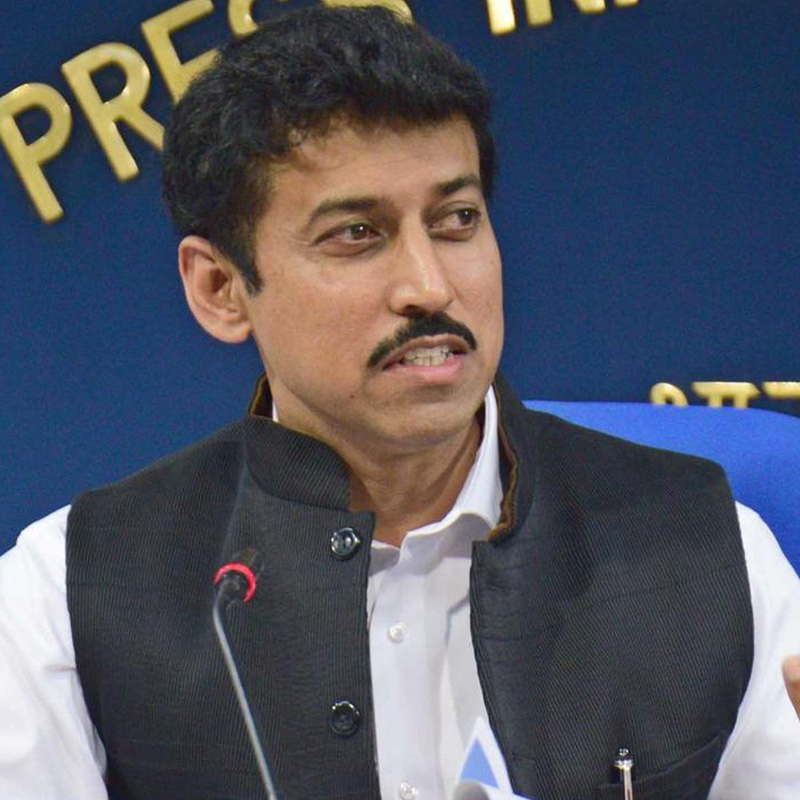
    “Ministry of Information and Broadcasting has not received any proposal from DTH operators for sharing of satellite transponders and earth station facilities with other DTH players and distribution platforms,” junior MIB minister Rajyavardhan Rathore told the Indian Parliament last week.

    Pointing out that sector regulator TRAI had made recommendations in March 2017 on infrastructure sharing by broadcast and cable sector players, the minister admitted that enabling sharing could address the issue of the demand-supply mismatch. Such a sharing could also “reduce capital and operating expenditure” of a service provider to an appreciable extent, Rathore added.

    TRAI had made suggestions on the hows and whys of infrastructure sharing, especially by DTH players, and had also exhorted the government to tweak policy guidelines to enable such sharing.

    “To enable [the] sharing of the DTH platform and transport streams transmitted on the DTH platform, the authority recommends that the guidelines for providing DTH services should be suitably amended,” TRAI had noted while making recommendations on infrastructure sharing.

    A decision to review the DTH policy guidelines is pending with the MIB with no firm decision on it being taken yet, if industry sources are to be believed, who also pointed out that the ministry may be readying files to refer the issue to the Ministry of Law and Justice for an opinion—a move that could be time consuming. The lack of a policy review has resulted in several glitches hitting DTH operators in India.

    TRAI had suggested that to ensure efficient use of scarce satellite resources, DTH operators—which have already set up earth stations and hired satellite transponder capacities, and willing to share the platform and transport stream of TV channels—should be allowed to do so with prior written intimation to the government.

    Amongst other recommendations of TRAI on sharing of infrastructure by DTH and distribution platforms, the following are noteworthy:

    — The central government should encourage sharing of infrastructure, wherever technically feasible, in TV broadcasting distribution network services on a voluntary basis.

    — To allow a new DTH operator to use the existing DTH platform and transport streams of TV channels transmitted on that platform, the conditions relating to hiring of satellite capacity and setting up of an earth station should be amended suitably.

    — A DTH operator, providing DTH services using the shared infrastructure with another DTH operator, should be allowed to establish, maintain and operate its own platform at a later date within the licence validity period if it decides so after following the due procedure.

    — An easier process should be put in place to ensure continuity of services to subscribers in the event of any disaster. One of the way in which it could be ensured is sharing of the main and the disaster recovery site in hot standby mode with the prior approval of the licensor.

    — The DTH operator, willing to share its transport stream of TV channels with another DTH operator, should ensure that the other DTH operator has valid written interconnection agreements with broadcasters concerned for distribution of pay TV channels to the subscribers.

    — On a voluntary basis, sharing of head-end used for cable TV services and transport streams transmitting signals of TV channels, among MSOs, should be permitted.

    Also Read :

    Law ministry likely to give opinion on DTH guidelines review 
    DTH’s year of consolidation

  • MIB: No DPO request for infra sharing, DTH ops’ transponder demand up

    NEW DELHI: Though there is a committed demand from DTH service providers for 68 more satellite transponders, Ministry of Information and Broadcasting (MIB) hasn’t yet received any proposal from any players to share amongst themselves satellite capacity or other distribution infrastructure.

    MIB minister M Venkaiah Naidu yesterday informed Parliament that DTH operators were presently using 104 Ku-band transponders, while there were additional needs as, according to Department of Space, demand for transponder capacity for DTH services has gone up with increase in introduction of high definition (HD) TV channels.

    The growth of usage of satellite transponders by DTH service providers in India, as listed out by MIB, over the last five years is as follows: March 2013 — 76; March 2014 — 77; March 2015 — 78; March 2016 — 87 March 2017 — 104.

    The Minister, acknowledging that sector regulator TRAI had given a set of recommendations on sharing of broadcasting infrastructure amongst players on a voluntary basis by tweaking certain rules, added that his ministry had not received any proposal from platform operators for sharing of satellite transponders and/or earth station facilities.

    The Telecom Regulatory Authority of India issued recommendations on sharing of infrastructure in television broadcasting distribution sector on 29 March 2017. These recommendations are available on TRAI’s website www.trai.gov.in.

    The objectives of these recommendations are to enable a policy environment for facilitating sharing of infrastructure in TV broadcasting distribution sector, on a voluntary basis. The sharing of the infrastructure is expected to enhance available distribution network capacities leading to reduction in capital and operative expenditure for the service providers, thereby bringing down the price of broadcasting services to subscribers.

    In addition, it would lower the entry barriers for new service providers and provide more space on broadcasting distribution networks for niche channels.

    India’s six private-sector DTH operators uplink signals of TV channels to different Indian and foreign satellites located at different orbital slots. Majority of the channels transmitted by operators are replicated across multiple platforms. This creates capacity constraints and also is a significant cost for each operator, thus making the service expensive, TRAI had observed while pushing for infrastructure sharing amongst distribution platforms.

    Hong Kong-based media industry advocacy group CASBAA in a report, issued in March 2016, had pointed that the DTH sector in India would grow in coming years as would demand for KU-band transponders and, while ISRO has been doing a commendable job, it’s unlikely to meet the market demands on Indian satellites, which will have to be provided for on foreign satellites.

    In the report, titled `Capacity crunch continues: Assessment of satellite transponders’ capacity for the Indian broadcast and broadband market’, CASBAA, amongst other things, had observed that to keep the vibrancy in the Indian broadcast sector alive, foreign transponder contracts need to be of longer durations (10–15 years) to allow Indian companies to leverage on cost economics and provide cost protection to DTH operators and allowing direct contracting for DTH operators to secure incremental capacity with existing satellite providers already authorized (by ITU and ISRO) to provide them service.

  • TRAI gives more time for responses on infrastructure sharing for TV distribution

    TRAI gives more time for responses on infrastructure sharing for TV distribution

    NEW DELHI: Even as the Telecom Regulatory Authority of India extended to 4 July the deadline for its pre-consultation paper on infrastructure sharing in broadcasting TV distribution sector, it is yet to receive a single response on its paper on ‘Net Neutrality to ensure National Security and Customer Privacy’ despite an extension of date to 5 July.

    However, a reproduction of a summary of the pre-consultation paper on Net Neutrality on mygov.in has elicited around 80,000 responses from consumers.

    The paper on infrastructure sharing assumes greater importance with the regulator having issued a paper on opening up the Digital Terrestrial Transmission – a domain so far of Doordarshan – to private television channels.

    While the pre-consultation on Infrastructure sharing was issued on 23 May and the deadline for responses was 23 June, the paper on Net Neutrality was issued on 30 May seeking conments by 21 June.

    In its paper on Infrastructure sharing, the regulator wanted to know from stakeholders what could be the operational, commercial, technical and regulatory issues which require to be addressed at the time of developing policy and regulatory framework for enabling infrastructure sharing in the broadcasting TV distribution space.

    TRAI also asked whether stakeholders envisage any requirement for change in the existing licensing/registration framework laid for DTH, DAS and HITS broadcasting services.

    The regulator wants to know what more can be shared by the distributor platform operators (MSOs, HITS, DTH) for better utilization of infrastructure.

    TRAI said the pre-consultation paper had been issued with an aim to solicit stakeholder’s views on issues related to sharing of infrastructure on voluntary basis and separation of network and service provider functions so as to reduce cost of distribution of services and enhance competition in respect of all type of TV distribution platforms.

    With mounting pressure from different quarters for and against net neutrality, TRAI in its paper on Net Neutrality wants to know what India’s policy should be and/or regulatory approach in dealing with issues relating to net neutrality

    India is one of the fastest growing information and communication technologies markets in the world, fuelled largely by the cellular mobile revolution. Starting from a few million connections in 1997, there are more than a billion connections, with 97.5% of them being wireless subscribers. With this, the overall teledensity in India at the end of 2015 stood at 81.83%.

    India has also witnessed tremendous growth in terms of the total number of Internet users. At the end of December 2015, there were over 331 million Internet subscribers in the country, of which about 94% (over 311 million) were wireless Internet users.

    The current nature of telecommunications and internet access services in India is therefore largely wireless. The number of broadband users has also been increasing steadily over the years. At present, India has approximately 136.5 million broadband subscribers, a figure that is expected to rise significantly in the coming years, particularly in light of the Government’s ‘Digital India’ initiative.

    This initiative emphasizes the electronic delivery of services to all citizens as an urgent national priority, with ‘Broadband for All’ as one of its fundamental pillars. Providing broadband to all will require a significant expansion of service providers’ networks, with substantial investments in infrastructure development.

  • TRAI gives more time for responses on infrastructure sharing for TV distribution

    TRAI gives more time for responses on infrastructure sharing for TV distribution

    NEW DELHI: Even as the Telecom Regulatory Authority of India extended to 4 July the deadline for its pre-consultation paper on infrastructure sharing in broadcasting TV distribution sector, it is yet to receive a single response on its paper on ‘Net Neutrality to ensure National Security and Customer Privacy’ despite an extension of date to 5 July.

    However, a reproduction of a summary of the pre-consultation paper on Net Neutrality on mygov.in has elicited around 80,000 responses from consumers.

    The paper on infrastructure sharing assumes greater importance with the regulator having issued a paper on opening up the Digital Terrestrial Transmission – a domain so far of Doordarshan – to private television channels.

    While the pre-consultation on Infrastructure sharing was issued on 23 May and the deadline for responses was 23 June, the paper on Net Neutrality was issued on 30 May seeking conments by 21 June.

    In its paper on Infrastructure sharing, the regulator wanted to know from stakeholders what could be the operational, commercial, technical and regulatory issues which require to be addressed at the time of developing policy and regulatory framework for enabling infrastructure sharing in the broadcasting TV distribution space.

    TRAI also asked whether stakeholders envisage any requirement for change in the existing licensing/registration framework laid for DTH, DAS and HITS broadcasting services.

    The regulator wants to know what more can be shared by the distributor platform operators (MSOs, HITS, DTH) for better utilization of infrastructure.

    TRAI said the pre-consultation paper had been issued with an aim to solicit stakeholder’s views on issues related to sharing of infrastructure on voluntary basis and separation of network and service provider functions so as to reduce cost of distribution of services and enhance competition in respect of all type of TV distribution platforms.

    With mounting pressure from different quarters for and against net neutrality, TRAI in its paper on Net Neutrality wants to know what India’s policy should be and/or regulatory approach in dealing with issues relating to net neutrality

    India is one of the fastest growing information and communication technologies markets in the world, fuelled largely by the cellular mobile revolution. Starting from a few million connections in 1997, there are more than a billion connections, with 97.5% of them being wireless subscribers. With this, the overall teledensity in India at the end of 2015 stood at 81.83%.

    India has also witnessed tremendous growth in terms of the total number of Internet users. At the end of December 2015, there were over 331 million Internet subscribers in the country, of which about 94% (over 311 million) were wireless Internet users.

    The current nature of telecommunications and internet access services in India is therefore largely wireless. The number of broadband users has also been increasing steadily over the years. At present, India has approximately 136.5 million broadband subscribers, a figure that is expected to rise significantly in the coming years, particularly in light of the Government’s ‘Digital India’ initiative.

    This initiative emphasizes the electronic delivery of services to all citizens as an urgent national priority, with ‘Broadband for All’ as one of its fundamental pillars. Providing broadband to all will require a significant expansion of service providers’ networks, with substantial investments in infrastructure development.