Tag: Infrastructure

  • Greaves Cotton shifts gears with Parag Satpute as group CEO

    Greaves Cotton shifts gears with Parag Satpute as group CEO

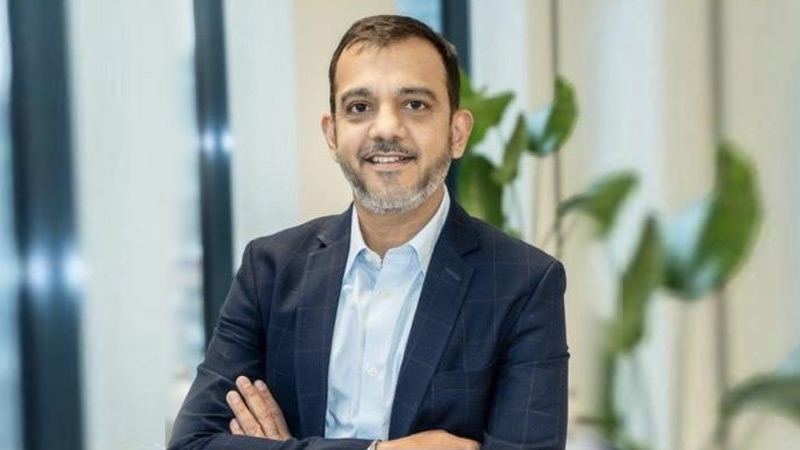
    MUMBAI: Greaves Cotton Ltd has turned a fresh chapter in its storied 165-year history, appointing Parag Satpute as group CEO and managing director. Satpute, a seasoned leader with a career spanning over three decades, steps into the driver’s seat of the engineering powerhouse, renowned for its pivotal role in powering India’s growth story across agriculture, transportation, and infrastructure.

    Under Satpute’s stewardship, Greaves Cotton is set for a transformation — evolving beyond its roots to become a fuel-agnostic mobility solutions provider. With a portfolio that spans diesel, petrol, CNG/LPG, electric, and even hydrogen-powered engines, the company is charging towards its vision of “Empowering Lives,” aiming to touch a billion lives by 2030.

    Satpute’s credentials speak for themselves. His leadership stints at Bridgestone and Sandvik have honed his expertise in change management and strategy, making him a perfect fit to lead Greaves Cotton through this next phase of growth. From leading Bridgestone Mobility Solutions in Amsterdam to overseeing Sandvik’s India operations, Satpute has a proven track record of steering industry giants through transformative journeys.

    As he steps up at Greaves Cotton, Satpute aims to build a digitally integrated ecosystem that connects consumers, business partners, and service providers across the mobility and power generation value chain — setting the stage for a new era of sustainable, inclusive growth.

  • Kerala Vision unveils Rs 200 crore plan to boost tourism and connectivity

    Kerala Vision unveils Rs 200 crore plan to boost tourism and connectivity

    MUMBAI: Kerala Vision, the state’s leading digital services provider, has announced an ambitious Rs 200 crore investment plan aimed at transforming Kerala’s rural tourism landscape whilst significantly enhancing the region’s digital infrastructure.

    The comprehensive initiative, unveiled at the Invest Kerala Global Summit, focuses on developing undiscovered tourist destinations throughout Kerala’s villages and establishing a state-of-the-art underground optical fibre network along national highways. This dual approach aims to boost both tourism potential and telecommunications infrastructure across the state.

    Kerala visio hq

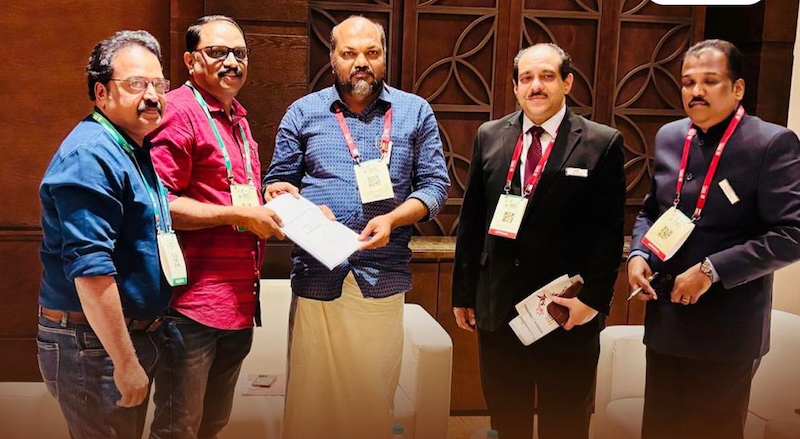
    Kerala Vision managing director Suresh Kumar P.P, and chief operating officer  Padmakumar N,  presented the detailed project report to a distinguished panel including industries minister P Rajeev, principal secretary A P M Mohammed Hanish IAS, and Kinfra  managing director Santhosh Koshy Thomas.

    Kerala Vision, which currently serves more than one million internet subscribers, brings considerable expertise to the project. The company operates the state’s largest optical fibre network, providing high-speed internet connectivity even to remote locations, alongside its digital television service offering up to 155 channels across various entertainment packages.


    KeralaVision BB

    The investment marks a significant step in Kerala’s digital transformation, combining tourism development with infrastructure enhancement. By leveraging its extensive network capabilities, Kerala Vision aims to create a more connected and accessible state for both tourists and residents, supporting the region’s long-term economic growth.

  • 2024 the year that was – Peter Watling & the art of getting your AI right in 2025

    2024 the year that was – Peter Watling & the art of getting your AI right in 2025

    MUMBAI: The buzzword dominating the industry in 2024 is undoubtedly artificial intelligence (AI). Whether or not it’s being fully adopted across the board remains a topic of debate, but one thing is clear: AI’s potential to revolutionise workflows and deliver efficiencies is captivating business leaders everywhere.

    But amidst the excitement, are we overlooking something essential? 

    Sure, AI might one day butter our toast and tie our shoelaces, but before we dive headfirst into complex AI models and cutting-edge algorithms, we should step back and consider whether the core infrastructure of our businesses is ready to support these advancements as we move into 2025. 

    The Distinction Between automation and AI

    Because of the hype around AI and generative AI in 2024 and the bizarre valuations  and market capitalisation that companies are getting just by mentioning  AI in their mission statement, it’s important to clarify  now as we are moving into 2025 what we mean when we talk about AI. 

    Much of what is often labeled AI is really advanced automation—technology that eliminates repetitive, manual tasks and introduces efficiency to workflows. Take, for example, the ability to automatically extract and organise metadata from content files, making them searchable without manual data entry.

    True AI, on the other hand, ventures into areas like object recognition, natural language understanding, and predictive analytics. While these capabilities are impressive, they often require significant investment in training and fine-tuning to produce meaningful results. Even then, they may not deliver the expected benefits if the system is working with incomplete or poorly organised data.
     

    Peter Watlling

    The archive: a neglected core asset; pay heed to it in 2025

    Here’s the crux of the matter: no AI model, no matter how intelligent, can be effective without a solid foundation. That foundation is your archive.

    All too often, businesses rely on outdated or fragmented storage solutions—an array of drives, legacy systems, or LTO tape setups that were never designed to handle the demands of today’s workflows. Even those who’ve embraced cloud solutions may find themselves hindered by unexpected costs, such as prohibitive fees for accessing and retrieving data during AI-driven searches.
    Without an effective archive platform, the very content you want to leverage may be disorganised, inaccessible, or prohibitively expensive to use.

    Investing in the right foundations; 2025 is the year to begin

    To truly harness the potential of AI—or even simpler workflow automation—organisations need to prioritise modernising their storage and archive platforms. This doesn’t mean discarding everything and starting over; rather, it’s about adopting solutions that integrate with existing systems while offering the scalability and efficiency required for future growth.

    A modern archive platform serves as an active repository, enabling seamless access to your media and providing the tools to:
    * Automate workflows.
    * Quickly locate and retrieve content.
    * Share assets effortlessly with partners and clients.

    Such platforms aren’t just about storage—they unlock the potential for monetisation, turning your archive from a static cost center into a dynamic business asset.

    Overcoming challenges to change; back to the drawing board in the new year

    The two greatest obstacles to modernising archives are budget and mindset. While technology providers have become increasingly flexible in their pricing models—offering cost-effective, private-cloud solutions that organisations can host and control—resistance to change often proves harder to overcome.

    Rethinking long-established workflows and processes can be uncomfortable but standing still in a fast-evolving industry risks falling behind. Adopting modern storage solutions isn’t just about saving money; it’s about enabling greater efficiency and creating new revenue opportunities.

    Building for the future; not just for 2025

    In the rush to embrace AI and other advanced technologies, let’s not forget the importance of laying a strong foundation as we move into 2025. An optimised archive platform isn’t just a storage solution—it’s the backbone of your operations, enabling you to take full advantage of innovations like AI when the time is right. That means being ready with your tech stack which is upgradable and scalable in future. 

    So, before we sprint into the AI-driven future, let’s ensure we’ve built the solid infrastructure we need to thrive. After all, there’s no point decorating the house if the foundation isn’t sound. 

    By focusing on the basics—organising, protecting, and making your content accessible—you’ll not only prepare your business for the next wave of innovation but ensure you’re maximising the value of your assets today.

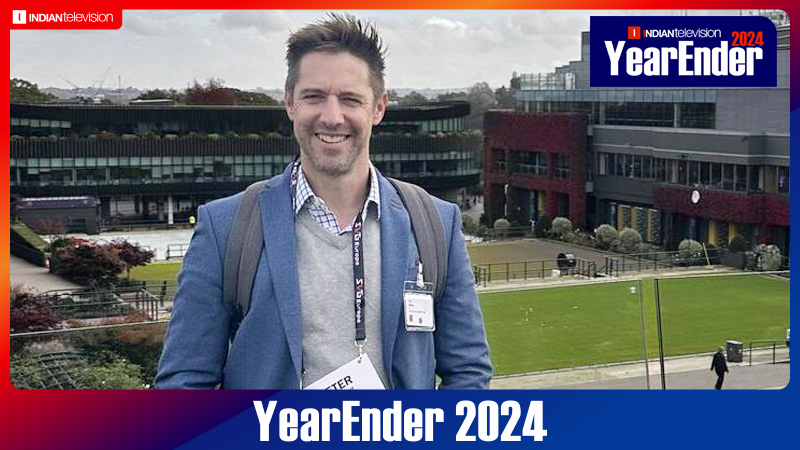
    Peter Watling is  Perifery senior sales director – EMEA    .

  • PM Narendra Modi inaugurates Surat Diamond Bourse

    PM Narendra Modi inaugurates Surat Diamond Bourse

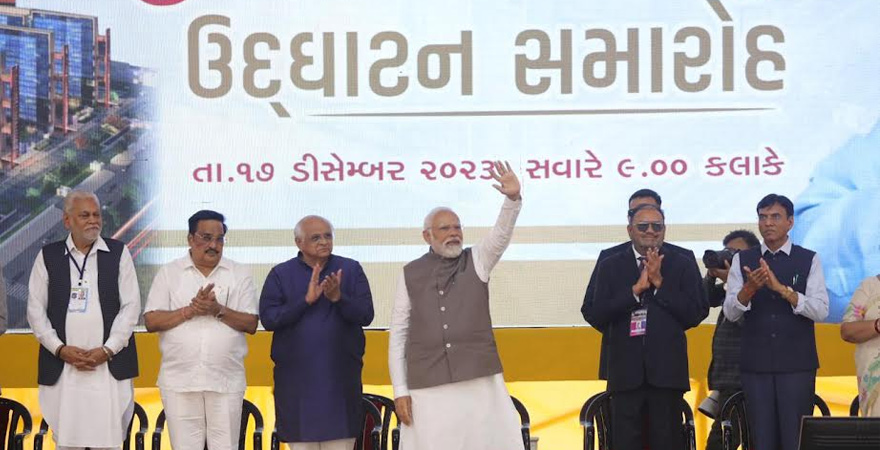
    Mumbai: Prime Minister Narendra Modi inaugurated the Surat Diamond Bourse, the world’s largest corporate office building in Surat on Sunday. Built at a cost of Rs 3,400 crores, the Surat Diamond Bourse will further strengthen Surat’s position in the global diamond industry.

    Speaking on the occasion, Prime Minister Narendra Modi described the Surat Diamond Bourse as one more diamond added to Surat’s grandeur. PM Modi said, “This diamond is not small, but the world’s best. Even the biggest buildings of the world pale before the shine of this diamond. This building is the symbol of new strength and determination of new India,” the Prime Minister said.

    He recalled that in the past, buyers from 84 countries used to come to Surat for trading, but because of the Surat Diamond Bourse, the city will attract buyers from 175 countries.

    He said that “with India’s largest customs clearance house, jewellery mall, international banking and safe vault facilities, the Surat Diamond Bourse will provide a world-class business experience. He said that India’s share in the global gem & jewellery exports is 3.50 per cent, but the central government has identified the gem & jewellery sector as a focus area to increase the exports to double digits”.

    “Make in India has become an influential brand globally and the Surat Diamond Bourse is the best example of it. The building is a symbol of India’s design, concept, engineering, architecture, and self-reliance. The Surat Diamond Bourse will prove to be a game-changer for the country’s economy,” he added, expressing that the bourse will emerge as a one-stop-centre for diamond workers, merchants, traders, and buyers.

    The Prime Minister also called upon the Indian gems & jewellery industry to play its part in making India the third-largest economy in the next five years and contribute to building a developed India.

    The Surat Diamond Bourse is a part of the Diamond Research and Mercantile City (DREAM City), which is taking shape at Khajod near Magdalla in Surat in an area of 682 hectares. More than 4,200 diamond industrialists have come together to establish the Surat Diamond Bourse.

    In his address, chief minister Bhupendra Patel said, “The belief that Prime Minister Narendra Modi is the guarantee of development has been firmly established across the country. He has created a new history of development with his resolution of ‘Developed India @ 2047.”

    The Chief Minister also said that by attracting lakhs of people from across the country, Surat has emerged as a mini-India and truly signifies the prime minister’s vision of “Ek Bharat, Shrestha Bharat”.

    In his address, Surat Diamond Bourse Chairman and Kiran Gems’ chairman Vallabhbhai Lakhani, said, “The Surat Diamond Bourse was born out of the idea that if Surat can emerge as the global hub of diamond cutting and polishing, why it can also not become a trading hub. The Surat Diamond Bourse will become a world-class trading centre for Indian and international diamond merchants. It is poised to create thousands of employment opportunities, which will have a substantial impact on the country’s economy.”

    Director of Surat Diamond Bourse Laljibhai Patel said, “The Surat Diamond Bourse is the result of the efforts and commitment of 4,200 members and the over 900 meetings we had. The commencement of the Surat Diamond Bourse marks a new era in Surat’s history. We are committed to helping realise the Prime Minister’s vision of a new India.”

    The Surat Diamond Bourse has become the world’s largest office complex, spanning over 67 lakh square feet of floor space. It has surpassed the size of the Pentagon, the US defence headquarters, which is spread across 65 lakh square feet. The megastructure comprises nine 15-storey towers, which house a total of around 4,700 offices.

    Later, speaking with media-persons, director of Surat Diamond Bourse Mathur Savani said, “It is a proud moment for all of us that Prime Minister Narendra Modi has inaugurated the Surat Diamond Bourse. The diamond industry has played a pivotal role in placing Surat on the global map. I am confident that the inauguration of Surat Diamond Bourse marks the beginning of a new era in Surat’s growth.”

    The Surat Diamond Bourse is expected to host business of Rs. 2 lakh crore per year and establish Surat as the global hub of the diamond industry.

  • MIB issues operational guidelines for DTH broadcasting services in lndia

    MIB issues operational guidelines for DTH broadcasting services in lndia

    Mumbai: The ministry of information and broadcasting (MIB) on Friday issued operational guidelines for obtaining a licence for providing direct-to-home (DTH) broadcasting services in India. The ministry stated that these guidelines have been issued in accordance with the modified DTH guidelines released on 30 December, 2020.

    As per the notice, these guidelines provide the operational framework with respect to the payment of licence fees, platform services (PS) channels, and sharing of infrastructure by DTH operators.

    The policies outline the timetable for the quarterly payment of the licence fee by DTH operators.

    Regarding platform service (PS) channels, the guidelines provide the definition of “platform services” and establish the norms for the DTH operators in running these services, which inter alia include that:

        The total number of PS channels permitted per operator is limited to five per cent of the total channel carriage capacity.

        All PS must carry a caption as “platform services” to distinguish them from the linear channels.

        The content of the PS is to be exclusive to the platform and is not to be shared directly or indirectly with any other distribution platform operator.

        All PS channels are to be placed together under the genre “platform services” in the Electronic Programme Guide (EPG) along with their maximum retail price and option for activation/deactivation of PS as per the applicable orders/directions/regulations of Trai.

    The operational rules for the DTH operator’s infrastructure sharing set forth the framework within which the sharing may be regulated, the processes for accountability and compliance, and the specific obligations of the parties to the sharing.

    These operational instructions are in force as of the order’s issuance date, which is 16 September, 2022.

  • Wing Communications to handle Advait Infratech’s PR mandate

    Wing Communications to handle Advait Infratech’s PR mandate

    Mumbai: Wing Communications has won the communications mandate for Advait Infratech—a Gujrat-based Infratech on Wednesday. It provides robust products and solutions for power transmission, substation, and telecommunication infrastructure and is hoping to expand into green/renewable energy by 2023.

    Wing Communications will be providing a range of services, including managing the brand’s strategic PR, media relations, and corporate PR and reputation management across India through incisive campaigns.

    Commenting on the development, Advait Infratech founder and managing director Shalin Seth said, “Wing Communications has established credentials, diversified experience across sectors and a deep understanding of the infrastructure industry, which makes them an excellent partner to drive our communications. With a team that has a seamless nationwide and international network, impeccable industry stewardship, and expertise in communicating the value of a company and linking them to concrete results, we’re looking forward to strengthening our communication and presence in the Infratech domain.”

    “Advait Infratech is an institution that is proudly making strides in building the nation and strengthening the core of our economy, and we are extremely proud to be a partner with this transformational brand in their public relations journey. With this mandate, we are looking forward to going beyond traditional PR. We will be helping Advait Infratech with thought leadership campaigns that will not only help them in engaging with the audience in the digital space and building their online footprint, but will also give them a remarkable boost in their rapid growth journey,” said Wing Communications CEO and co-founder Shiva Bhavani.

  • Opening DTT to private sector; discussion planned

    Opening DTT to private sector; discussion planned

    NEW DELHI: An open house discussion will be held on 19 October 2016 on a Consultation Paper on “Opening Up Digital Terrestrial Transmission.” The OHD will be held in the PHD Chamber near Sirifort Auditorium at 10.00 am.

    The Paper by the Telecom Regulatory Authority of India was issued on 24 June 2016, about a year after Prasar Bharati – which is the only terrestrial broadcaster in the country – unanimously recommended that DTT should be opened up to the private channels. Apart from Prasar Bharati, several private channels have already responded to the paper, which was followed by a linked paper on sharing infrastructure issued on 21 September 2016.

    In its response to the DTT paper, the pubcaster said even as it supports the move, it feels that the potential of available distribution options need to be critically analysed to fulfill their requirements (for example coverage, capacity, reception mode, and type of service etc).

    The public broadcaster has also said that the terrestrial broadcast platform will be relevant in the long term if its usage offers veritable benefits to the broadcasters, the audiences and the society as a whole. Even in countries where cable, satellite or broadband hold a significant market share, terrestrial broadcasting is usually regarded as an essential, flexible and reliable way of delivering broadcast content to a mass audience.

    In its response to 11 questions asked by TRAI in its Consultation Paper on ‘Issues related to Digital Terrestrial Broadcasting in India,’ the pubcaster says that the terrestrial platform must be digital to remain viable in the long term.

    Prasar Bharati CEO Jawhar Sircar, who had told indiantelevision.com in an interview earlier that it had cleared DTT for the private sector more than a year ago, said at the recent Indian Digital Operators Summit (IDOS) that it was willing to give its infrastructure to the private TV and radio channels.

    Also read:

    http://www.indiantelevision.com/television/tv-channels/terrestrial/idos-2016-prasar-bharati-could-share-infra-with-private-players-sircar-161001

    http://www.indiantelevision.com/videos/event-coverage/one-on-one-discussion-with-jawhar-sircar-ceo-prasar-bharati-161004


  • Opening DTT to private sector; discussion planned

    Opening DTT to private sector; discussion planned

    NEW DELHI: An open house discussion will be held on 19 October 2016 on a Consultation Paper on “Opening Up Digital Terrestrial Transmission.” The OHD will be held in the PHD Chamber near Sirifort Auditorium at 10.00 am.

    The Paper by the Telecom Regulatory Authority of India was issued on 24 June 2016, about a year after Prasar Bharati – which is the only terrestrial broadcaster in the country – unanimously recommended that DTT should be opened up to the private channels. Apart from Prasar Bharati, several private channels have already responded to the paper, which was followed by a linked paper on sharing infrastructure issued on 21 September 2016.

    In its response to the DTT paper, the pubcaster said even as it supports the move, it feels that the potential of available distribution options need to be critically analysed to fulfill their requirements (for example coverage, capacity, reception mode, and type of service etc).

    The public broadcaster has also said that the terrestrial broadcast platform will be relevant in the long term if its usage offers veritable benefits to the broadcasters, the audiences and the society as a whole. Even in countries where cable, satellite or broadband hold a significant market share, terrestrial broadcasting is usually regarded as an essential, flexible and reliable way of delivering broadcast content to a mass audience.

    In its response to 11 questions asked by TRAI in its Consultation Paper on ‘Issues related to Digital Terrestrial Broadcasting in India,’ the pubcaster says that the terrestrial platform must be digital to remain viable in the long term.

    Prasar Bharati CEO Jawhar Sircar, who had told indiantelevision.com in an interview earlier that it had cleared DTT for the private sector more than a year ago, said at the recent Indian Digital Operators Summit (IDOS) that it was willing to give its infrastructure to the private TV and radio channels.

    Also read:

    http://www.indiantelevision.com/television/tv-channels/terrestrial/idos-2016-prasar-bharati-could-share-infra-with-private-players-sircar-161001

    http://www.indiantelevision.com/videos/event-coverage/one-on-one-discussion-with-jawhar-sircar-ceo-prasar-bharati-161004


  • Sports recognised as infrastructure sector, eligible for private investment

    Sports recognised as infrastructure sector, eligible for private investment

    NEW DELHI: Alarmed by India’s performance in the recent Rio Olympics, the Government appears to have pressed the panic button: which may help sports persons on the long run.

    After appointing two committees – one for pointing out why India failed, and the other to prepare for the next two Olympics, the Government included Sports in the harmonized master list of infrastructure sub-sectors.

    The proposal was mooted by the Sports Ministry so that the sports sector becomes eligible for obtaining long term financial support from banks and other financial institutions on the same principle as is available to other infrastructure projects.

    The Finance Ministry after a series of meetings and discussions with different agencies including Reserve Bank of India has decided that sports infrastructure will be included under the Harmonized Master List of Infrastructure Sub sectors and it “includes the provision of Sports Stadia and Infrastructure for Academies for Training / Research in Sports and Sports-related activities”

    In this connection Ministry of Finance, Department of Economic Affairs, had issued a Gazette Notification dated 9 September 2016.

    This inclusion would encourage private investment in a public good which has socio-economic externalities in a country with young population. It will also bolster investment in sports infrastructure sector which will contribute to the economy and help in promotion of health and fitness of the people of this country as also provide opportunities for employment in the new and exciting sectors. It goes without saying that investment of the private sector will widen the platform from where the country can become a sporting power in future.

  • Sports recognised as infrastructure sector, eligible for private investment

    Sports recognised as infrastructure sector, eligible for private investment

    NEW DELHI: Alarmed by India’s performance in the recent Rio Olympics, the Government appears to have pressed the panic button: which may help sports persons on the long run.

    After appointing two committees – one for pointing out why India failed, and the other to prepare for the next two Olympics, the Government included Sports in the harmonized master list of infrastructure sub-sectors.

    The proposal was mooted by the Sports Ministry so that the sports sector becomes eligible for obtaining long term financial support from banks and other financial institutions on the same principle as is available to other infrastructure projects.

    The Finance Ministry after a series of meetings and discussions with different agencies including Reserve Bank of India has decided that sports infrastructure will be included under the Harmonized Master List of Infrastructure Sub sectors and it “includes the provision of Sports Stadia and Infrastructure for Academies for Training / Research in Sports and Sports-related activities”

    In this connection Ministry of Finance, Department of Economic Affairs, had issued a Gazette Notification dated 9 September 2016.

    This inclusion would encourage private investment in a public good which has socio-economic externalities in a country with young population. It will also bolster investment in sports infrastructure sector which will contribute to the economy and help in promotion of health and fitness of the people of this country as also provide opportunities for employment in the new and exciting sectors. It goes without saying that investment of the private sector will widen the platform from where the country can become a sporting power in future.