Tag: Information Technology

  • Tech companies come together for better business practice

    Tech companies come together for better business practice

    MUMBAI: At a time when life has become dependent on technological equipments, it’s necessary to have a system that makes the movement on the tech industry smooth. That seemed to be on the minds of even the tech distribution companies because of which they came together to form The Technology Distribution Association of India (TDAI).


    The launch of the Association that was announced today has been done with in an aim to revolutionise the Indian technology-distribution industry. The Association’s motto is: “we can only build when we know how to sustain”. A first of its kind non- profit organisation in Asia Pacific & India, TDAI’s objective is to build a transparent and organised distribution services sector in India through risk mitigated best practices. While maintaining a strategic and healthy channel through good governance and appropriate compliance standards, from the manufacturer to the end user, TDAI will support the industry’s development and expansion while ensuring business hygiene.


    In the last two decades, India has seen tremendous strides in the use and adoption of Information Technology products both in the consumer as well as the commercial space. While the technology vendors have played a pre-eminent role in introducing the Indian customer to the immense benefits of their products and solutions, the widespread use of IT products and processes can, in a large measure, be attributed to the contribution of a huge distribution channel, which has facilitated easy availability through their reach, presence and financial commitment.


    The success of the distribution channel is equally accredited to all the stake holders in the supply chain: Vendors, Distributors and Dealers of IT products, services and solutions. With an aim to drive the industry’s next level of evolution through constructive dialogues amongst all stake holders, the leading Indian technology distributors have founded TDAI.


    The current members of TDAI collectively contribute nearly Rs 50,000 Crores (~ US$ 8 Billion) annually towards the total IT industry business in the country.


    TDAI will provide all industry stake holders a common ground for deliberating on regulatory issues that impact them, with a view to take those up with relevant authorities for resolution. It will act as a platform through which they could contribute inputs and information that would help shape the industry. TDAI will facilitate interaction with various Dealer Associations on common issues faced by the distribution eco-system as also a forum for discussion with Vendors on taking the channel business to its next stage of development. The initiatives of this Association will pave the way for fostering trust and goodwill amongst all stakeholders of the community.


    The current members of TDAI include: Avnet Technology Solutions, Compuage Infocom Limited, Inflow Technologies Private Limited, Ingram Micro India Limited, Iris Computers Limited, Neoteric Infomatique Limited, Rashi Peripherals Private Limited, Redington India Limited, Savex Computers Limited and Supertron Electronics Limited.


  • Infocom 2013 kicks off in Kolkata today

    Infocom 2013 kicks off in Kolkata today

    KOLKATA: The twelfth edition of Infocom, a three-day annual Information Technology (IT) conclave from the Kolkata-headquartered media company, ABP group, kicked off in the city today.

     
    Driving IT awareness and envisioning organisations and individuals to be IT enabled has been of prime focus of the conclave every year. Now in its 12th edition, Infocom has chosen “Empowerment” as the theme for 2013. The focus of the conclave this year would be on digital empowerment and also on empowerment with innovation and creativity.


    ABP managing director and CEO DD Purkayastha on the sidelines of the event said that with India envisioning to become a developed nation in the next few years, there is a growing need to incorporate the concept of creativity in our developmental planning. “And with the aid of technology we also have to drive innovations. These would be areas under focus this year,” he said.


    “When we talk about empowerment, the emphasis is on the fact that we want to empower individual consumers, citizens of the country as well as organizations digitally, technologically, socially, gender-wise, educationally, occupationally and many more ways. India needs young entrepreneurs,” he said.


    West Bengal IT minister Partha Chatterjee, who inaugurated the event said, “Despite economic downturn, the IT exports from the state stood at Rs 11,200 crore in the last fiscal year 2012-13 as compared to Rs 9,500 crore achieved in the financial year 2011-12. The IT industry gives direct employment to around 1.30 lakh IT professionals and an indirect employment to around 6 lakh people in the state.”


    The event is expected to bring together over 1,200 delegates, 75 speakers and 40 sponsoring companies. Besides, more than 100 exhibitors from across the globe would display their products and services.

  • Cable TV digitisation: Parliamentary standing committee meets TV trade in Mumbai

    Cable TV digitisation: Parliamentary standing committee meets TV trade in Mumbai

    MUMBAI: There’s been a lot of press and media coverage about the process of cable TV digitisation over the past year or so. Most of it stated has been a mixed bag with opinions about its progress swinging from disastrous to a fabulous rollout. Hence, the political class decided to find out on their own what digitisation has meant for the industry.


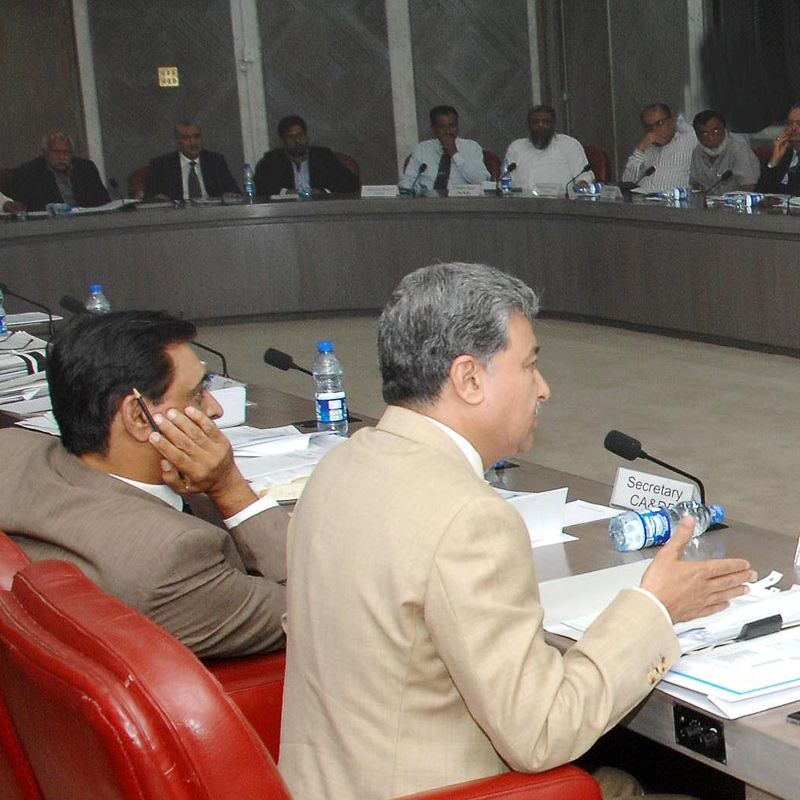
    The parliamentary standing committee on information technology – headed by Rao Bhirendra Singh – has been making a whistle stop tour of different regions where digitisation has been implemented. 22 October 2013 saw it landing in Mumbai. Prior to this, it has had stopovers in Rajkot and Ahmedabad as well.


    The various constituents of the TV ecosystem were summoned to update the committee on the pace of digitisation and their individual specific concerns. “Phase I and II have been completed,” says a government representative. “The committee wanted to be apprised of the learnings from the first two phases by the various players and their preparedness for the next round of digitisation which is slated to be completed by December 2014.”


    Each of the players had meetings in camera with the committee and presented their positions. First, the last mile cable operators (LCOs) or last mile operators (LMOs). The Maharashtra Cable Operators Association (MCOF) and Cable Operators and Distributors Association (CODA) represented the LMOs and spoke about the issues faced by them.


    Among the concerns they raised were the fact that they had put in physical labour repeatedly during the process of delivering and installing set top boxes. They stated that it is the LCO which bears the brunt of the cable TV viewer’s ire when channels are switched off by the MSOs. But they were optimisitic about their role in phase III and phase IV.


    “Our representatives said that we want to be active players in these phases and we are happy to know that the government seems to be intent on having a clear way forward,” says a cable TV operator.


    The main bugbear raised by the national and local MSOs – Hathway, DEN, Siti Cable and InCable, apart from others – was the issue of entertainment tax. (Maharashtra and Uttar Pradesh have the highest rates.) Their demand: that the LMOs should be made responsible for collecting and paying this levy. Earlier, in the analogue regime, it was the MSOs who had to carry the burden and it is crippling them.


    Says an executive from a leading MSO: “Once the billing system is in place in a digitised India, LCOs can collect the tax and pay it and give the remainder amount to MSOs.”


    However, an LMO says a better option would be “splitting of bills between MSO and LMO and LMO to subscriber to avoid double taxation for the TV subscriber.”


    Broadcasters and aggregators – represented by the  NBA (News Broadcasters Association), a representative from Sony Entertainment Television, Indiacast, MediaPro and TheOneAlliance. The aggregators strangely stayed mum, while broadcasters harped on the usual complaints of carriage fees, lack of subscription revenues and the heavy dependence on advertising. The conversation also drifted to talks about content on television and how channels need to be careful about their content. “This is a major issue as there is no clarity about how the viewer and broadcaster are going to get value out of digitisation. If there is no elbow room for channelising of money for broadcasters then how are they going to focus on better content,” says a broadcasting industry representative.


    More such meetings are being planned according to industry sources. “Finally, we will prepare a report and submit it to the parliament for review,” says a source close to the committee.


    Hopefully, their reports and inputs will make things easier for all concerned as India’s cable TV ecosystem gears up for its most challenging phase – that of rolling out almost 80 million boxes in small towns and rural India.
    (Inputs from Meghna Sharma and Seema Singh)

  • Majority of Indian business houses dependent on IT

    Majority of Indian business houses dependent on IT

    NEW DELHI: The VMware Cloud Index 2013 reveals that Information Technology is seen as a change enabler and source of business value for organisations by 85 percent of the respondents.


    Indian organisations are turning to IT to help them grow their business in the current economic environment, VMware said.


    Fast provisioning and zero downtime from networks (80 percent) and storage (81 percent) have been identified as key areas for IT to address over the next 12 months in the study. A total of 65 per cent claim will have a formal strategy in place for supporting end user computing, clearly showing that Indian businesses are acting to cater to the needs of the new age worker.


    The study reveals that nearly nine of every 10 per cent respondents in India believe that Cloud Computing or ‘as-a-service’ approach is relevant to their organisation.


    Nearly eight of every 10 respondents in India say they currently have a cloud-related initiative in place within the organisation or are planning to implement cloud, or ‘as-a-service’ approach, in the next 12 months.


    In terms of the top business priorities in India over the next 12 months, 87 per cent of IT decision makers said improving the quality and capabilities of their products and 85 per cent said addressing the rising expectations of customers and improving customer satisfaction.


    The current perception of IT remains positive in India with 63 per cent of respondents noting that the perceived credibility, influence and power of the CIO in their organisation is increasing.


    Business priorities are clearly shifting at a time when optimism is slowly returning to the Indian economy.


    In terms of priorities for IT over the next 12 months, improving IT agility and responsiveness to business demands was high at 82 per cent and operational efficiency was noted by 80 percent of respondents.


    Additionally, server consolidation via virtualisation continues to be a strong priority at 77 per cent.


    Respondents in India are also aware of and are planning new and evolutionary priorities.

    A software-defined approach to implementing and managing data center resources (servers, storage, networks) was stated by 71 percent of respondents. Furthermore, mobility and consumerisation of IT was also noted by 71 per cent as expected to create a lasting impact for organisations over the next two to three years.


    While 71 per cent of IT decision makers are concerned about end users accessing corporate systems and applications from mobile devices, 73 per cent believe that their IT organisation are able to keep up with the end user computing needs of their employees.

  • Have talent, will become animation hub

    Have talent, will become animation hub

    MUMBAI: The state-wide agitation over Telangana notwithstanding, the Andhra Pradesh government is pulling out all stops to make Hyderabad a media, animation and gaming hub.


    And not without reason, for, of the approximately $70 billion worth global animation industry, India’s contribution is around $ 900 million, with Hyderabad alone accounting for nearly $ 550 million.

    The Rs 350-crore GAME City project is in the last leg of finalising tenders, informs Madani


    So, after sponsoring the participation of Hyderabad-based animation companies at the recently concluded MIPCOM 2013, Information Technology and Communications Department deputy director (promotion) Syed Shawket Hussain Madani also made a pitch about how Hyderabad has a large talent pool that just needs the right push.


    Enlisting the challenges facing the animation industry, Madani said: “Infrastructure, which is dedicated to the media pool, is one challenge. The second important thing is to nurture the talent pool that specialises in 2D and 3D. The third challenge is to make gaming a part of the curriculum while the fourth is the policies relating to the animation industry,” and added that the AP government is coming up with a Gaming Animation Media Entertainment (GAME) City to tackle these obstacles.


    About the Rs 350-crore GAME City project funded by the state government, Madani informed: “We are in fact in the last leg of finalising tenders, which will be out by this month end.”


    Spanning more than 38 acre, GAME City will have an incubation space constructed over 8 lakh sq ft and various other facilities including a sound and acoustic studio, auditorium and shade studio. “We will give free bandwidth to the occupants for the first three years. Also considering that the software required for making animation series is expensive, the government has decided to buy the software and load it on the common server, which can be used by various companies located within GAME City,” said Madani.


    With plans to complete the 27,000 square feet incubation centre in the next two months, “Tenders for this are already out,” said Madani. The AP government is looking at big names to be part of the GAME City project. “Though Electronic Arts and Walt Disney already have their presence in Hyderabad, we want more such names to be part of this GAME city,” he said.


    As part of the larger project, a delegation was recently formed, comprising members from the AP government, industry and associations as well as architects and teachers from various institutes. “The team went to Dubai, Manchester, Amsterdam and South Korea to understand the needs of the animation industry and ensure that GAME City is well equipped,” said Madani.


    Additionally, the government is in the process of holding meetings with BBC and Al Jazeera among a host of other channels to set up businesses in Hyderabad. “We are negotiating with the University of Manchester for its specific programme that promotes animation in 2D and 3D. We have already signed a memorandum of understanding with Netherlands to set up an educational joint venture for making available its educational content to universities in Hyderabad,” informed Madani.


    Not only Hyderabad’s animation industry but also the work force stands to gain from these measures, which are expected to generate jobs for nearly 40,000 people. “This GAME city will complement the existing media and entertainment industry of Hyderabad,” concluded Madani.


    This is all very well but naysayers peg the fortunes (or otherwise) of the project on the upcoming elections. “The project sounds interesting and will be helpful to us. But, everything depends on the upcoming elections. If there is change in power, I am unsure if the project will see the light of the day,” said a Hyderabad-based CEO of an animation company who did not wish to be named.

  • Spectrum delinked from licences to increase availability via auctions: Deora

    Spectrum delinked from licences to increase availability via auctions: Deora

    NEW DELHI: In view of shortage of spectrum for terrestrial broadcasting and telecom sectors, spectrum has been delinked from licences and market discovered price mechanism by successfully introducing auctions.

    Minister of state for Communications and Information Technology Milind Deora told Parliament that the National Telecom Policy-2012 (NTP-2012) stipulates, among others, to re-farm and allot alternative bands or media to service providers from time to time to make spectrum available for introduction of new technologies for telecom applications.

    He said an Empowered Group of Ministers (EGoM) constituted on 26 November 2009 has made recommendations relating to measures for early introduction of spectrum efficient digital terrestrial broadcasting for vacation of spectrum for other services in line with international practices.

    Its terms of reference also includes recommending measures for vacation of adequate additional spectrum by the existing large users such as Defence, Space, Paramilitary, etc., in a time bound manner for the growth of mobile telephony and broadband sectors in the country.

    Some of the telecom service providers have reported interference in their mobile networks in some of the service areas. The Defence Ministry has been requested to coordinate alternate frequency in such service areas. Spectrum has been identified in different frequency bands to meet the requirements of Defence which varies service area wise.

  • 50 years after, FTII diplomas not recognised for higher studies

    50 years after, FTII diplomas not recognised for higher studies

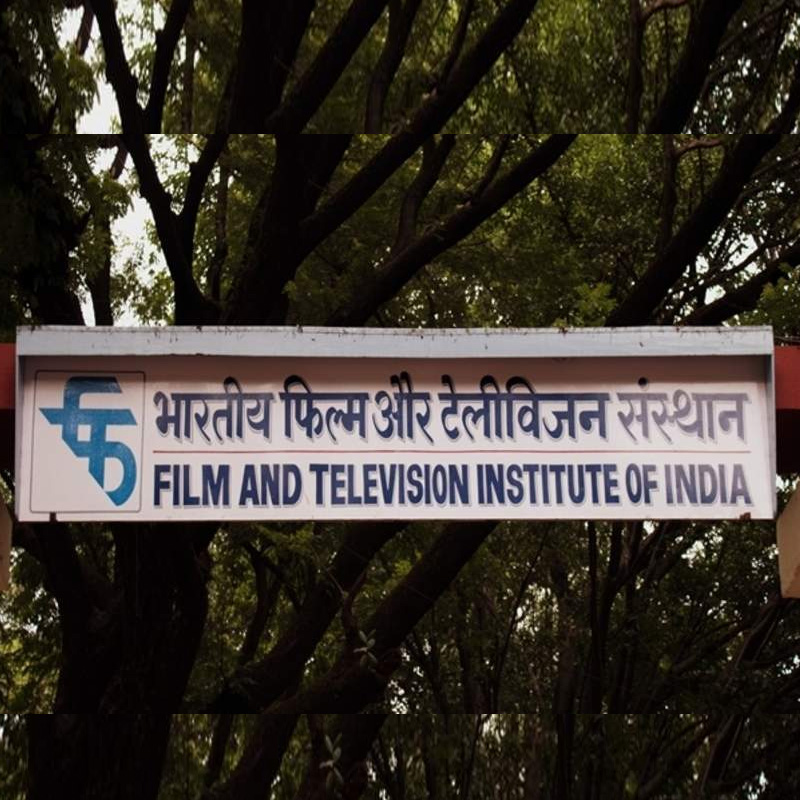
    NEW DELHI: Even half a century after it was set up, the Film and Television Institute of India, Pune, has failed to get equivalence status for its post-graduate diploma courses in various disciplines of film and television.

    As a result of this, those who pass out of the FTII are unable to take up higher studies and research. Taking note of this, a Parliamentary Committee has asked the Information and Broadcasting Ministry to expedite this matter with the Human Resource Development Ministry and the Association of Indian Universities. Interestingly, even the National School of Drama enjoys this equivalence status.

    Meanwhile, the I&B Ministry has prepared a Detailed Project Report with the help of a group of experts to upgrade the Institute and its infrastructure. A programme has already been undertaken to upgrade the infrastructure during the 11th and the 12th Plan period in a phased manner.

    A bill is expected to be introduced in Parliament to declare the FTII an “Institute of National Importance” to upgrade the position of FTII at the national and international levels to attract talented faculty, staff and students and to start high level research and innovation schemes related to Film, TV and allied media.

    The FTII was set up in 1960 in Pune, as a premier Institute for imparting training in art and technique of Film making. The Institute has been conducting Post Graduate Diploma in Film and Television in various disciplines, namely, Direction, Cinematography, Audiography, editing etc. FTII also runs various short courses for working professionals.

    The Standing Committee on Information Technology regretted that “no initiatives have been taken to upgrade the status of FTII, and the Ministry is still exploring the possibilities of getting equivalent status for its diploma courses from the Ministry of HRD”.

    The Committee said the upgradation of FTII to global standards should be done with ‘due promptness’ and wanted to be apprised of the progress and the Ministry’s definite plan for this purpose at the earliest.

  • Parliamentary standing committee begins study on paid news menace

    Parliamentary standing committee begins study on paid news menace

    NEW DELHI: The Parliamentary Standing Committee on Information Technology, which had late last week announced its intention to probe the menace of paid news, today held a meeting with senior officials of the Information and Broadcasting Ministry to gain the perspective of the government.

    Sources said the Committee, which deals with the I&B Ministry, also worked out modalities for probing into the subject during its meeting held in the premises of the Planning Commission.

    The Committee on 16 December invited comments from the public in general and experts/professionals/organizations/associations and stakeholders on various aspects relating to ‘Paid News‘.

    The matter has gained importance with leakage of telephonic conversations between mediapersons and corporate bosses and politicians.

    The Committee headed by Lok Sabha Member of Parliament Rao Inderjit Singh has decided to go into the subject and has sought the views for wider consultations.

  • Efforts on to make IT available to rural areas: economic survey

    Efforts on to make IT available to rural areas: economic survey

    NEW DELHI: The Government has formulated a proposal to establish 100,000 Common service Centres (CSCs) in rural areas, which will serve not only as the front-end for most government services but also as a means to connect the citizens of rural India to the World Wide Web.

    According to the Economic Survey 2006-07 tabled in Parliament today by Finance Minister P Chidambaram, the scheme will be implemented through Public Private Partnership (PPP). An outlay of Rs. 57.42 billion has been approved of which the share of the Central Government and the State Governments would be Rs 8.56 billion croe and Rs 7.93 billion, respectively. The balance would be invested by the private sector.

    Listing the Policy Initiatives For Electronics and IT Sector, the Survey says that In order to ensure that the benefits of IT reach the common man, the Government has initiated a move to make available tools and fonts in various Indian languages freely to the general public. Tamil, Hindi and Telugu software tools and fonts have already been released. All Indian languages are expected to be covered in the next one year.

    A proposal for Electronics and IT Hardware Manufacturing Policy is also under consideration which aims to rationalize tariff structure on capital goods and inputs, unify manufacturing for domestic market and exports, facilitate registration of international patents, transfer state-of-the-art technology (TOT) and enhance Research and Development.

    The Information Technology Amendment Bill has been introduced in the Parliament on 15 December, 2006 to put in place technology applications, security practices and procedures relating to such applications. Furthermore, it addresses the issue of technological neutrality in IT laws as recommended by UNCITRAL Model Law on Electronic Signature.

    The Survey noted that the Indian IT-enabled Services and Business Process Outsourcing (ITES-BPO) have demonstrated their superiority, sustained cost advantage and fundamentally-powered value proposition in the international market. The software and ITES exports from India grew from $12.9 billion (Rs 582.4 billion) in 2003-04 to $17.7 billion (Rs 782.3 billion) in 2004-05. Software and ITES exports from India estimated at $23.4 billion during 2005-06 was up 32 per cent from the previous year.

    This sector is growing with Indian companies expanding their service offerings, enabling customers to deepen their offshore engagements and shifting from low-end business processes to high-value ones.

    While there have been no spectacular achievements in the hardware segment as in the case of the software segment of the IT sector, there has been a steady progress in production and exports of hardware.

    Contrary to some popular misperceptions, the growth of the IT and ITES sector has had a salutary effect on the employment scenario with total number of professionals employed in this sector growing from an estimated 284,000 in 1999-2000 to
    1,287,000 in 2005-06. The increase in the number of employed person in the sector wasas high as 230,000 in 2005-06 itself. In addition, Indian IT-ITES is estimated to have helped create an additional 3 million job oppurtunities through indirect and induced employment in telecom, power, construction, facility management, IT transportation, catering and other services. Government has taken several steps to further enhance this industry.

    With strong demand over the past few years placing India among the fastest growing IT markets in the Asia-Pacific region, the industry’s contribution to GDP rose from 1.2 per cent in 1999-2000 to an estimated 4.8 per cent in 2005-06. Indian companies are enhancing their global services delivery capabilities through a combination of greenfield initiatives, cross-border mergers & acquisitions, partnerships and alliances with local players. This is enabling them to execute end-to-end delivery of new services. Global software giants such as Microsoft, Oracle and SAP, have established their captive development centres in India.

    A majority of the companies in India have already aligned their internal processes and practices to international standards such as ISO, CMM, and Six Sigma. This has helped establish India as a credible sourcing destination. As of December, 2006, over 400 Indian companies have acquired quality certifications with 82 companies certified at SEI CMM Level 5 – higher than any other country in the world.
     

  • Government committed to bridging digital divide: President

    Government committed to bridging digital divide: President

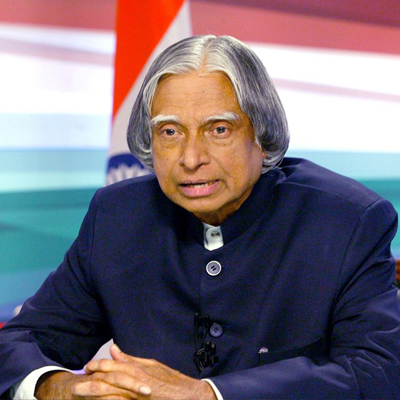
    NEW DELHI: Appreciating the need for empowering the citizen with modern information technology, President APJ Abdul Kalam today announced that the year 2007 will be the ‘Year of Broadband’ as the government was committed to bridging the digital divide by providing broadband coverage throughout the country.

    In his address to the joint sitting of both Houses of Parliament on the opening day of the Budget session, Dr Kalam said, “Our Information Technology sector continues to develop and remain globally competitive,” adding that, “My government will take forward the National Identity Card Project under the National e-Governance Plan for nationwide roll-out in a phased manner so as to ensure better delivery of services to our citizens.”

    He said the government was encouraging the growth of the electronic hardware industry and the semiconductor industry.

    He also said the Right to Information Act was one means of empowering citizens, adding that it had often been said that eternal vigilance is the price of democracy.

    The President said a Vision for the development of an empowered S&T base by 2015 had been prepared. Steps will be taken to attract talent, rejuvenate university research, enable women scientists to re-enter careers in science, strengthen technology business incubation processes, promote excellence in research, engage private sector in R&D and create greater science awareness and a scientific temper among the people. The financial allocation for science and technology will be increased from less than 1% of GDP to 2% of GDP.

    He said that to sustain the efforts in the advanced fields of modern science and technology, there was need to increase the number of scientists and improve the quality of Indian science. The Government was deeply concerned about the inadequate enrolment of students in basic sciences and said Indian science is lagging behind other newly industrializing economies. India needs a new thrust in the field of science and technology.

    The National Knowledge Commission had submitted its first report placing emphasis on the need to invest in education at all levels of the knowledge pyramid. Several new Indian Institutes of Science Education and Research, Indian Institutes of Technology and Indian Institutes of Information Technology were proposed to be set up in various parts of the country.