Tag: Information & Broadcasting

  • Prakash Javadekar takes over as I&B Minister

    Prakash Javadekar takes over as I&B Minister

    NEW DELHI: Senior BJP leader Prakash Javadekar has been sworn in as the new Information and Broadcasting Minister. Javadekar, in an interview to a News channel has said that his first priority as the Minister of State Information & Broadcasting would be to ensure the freedom of media.


    Javadekar, who will take charge of the ministry later today, also said he would like to study three portfolios given to him for three to four days before taking any action.


    Javadekar has also been given (Independent charge) of Environment and Parliamentary Affairs.


    Ravi Shankar Prasad is to be the new communication and information technology minister with cabinet rank. He will also hold charge of the law and justice ministry. 

  • I&B in talks with ISRO to resolve transponder issue: Bimal Julka

    I&B in talks with ISRO to resolve transponder issue: Bimal Julka

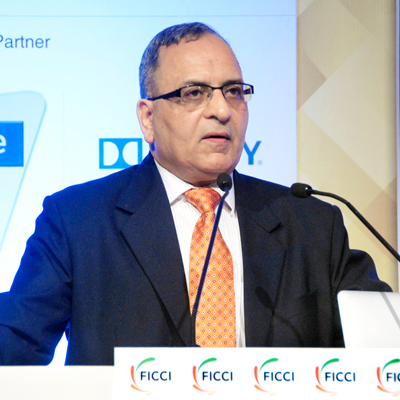
    MUMBAI: Day one of FICCI FRAMES 2014, the 15th chapter of the annual convention, witnessed a couple of significant announcements by Information & Broadcasting Secretary Bimal Julka.


    “DTH operators have complained that the limited transponder capacity has led them to completely depend on the Ku band. We are engaged in discussions with ISRO (Indian Space Research Organization) and the Department of Space to ensure this problem is resolved at the earliest,” said Julka in an assurance that the I&B Ministry was seriously looking at DTH operators’ demand for more transponders.


    With taxes levied on DTH platforms currently including an average of 10 per cent of entertainment tax, licence fees, additional customs duty on set top boxes (STBs), service tax and spectrum charges, Julka touched upon DTH players’ demand for rationalizing taxes so as to help them boost investment in infrastructure development and customers’ activation. “We are in talks with the Ministry of Finance and a consultation on this is on its way. We should be able to resolve the issue soon,” he said.


    On the subject of applications for launching new channels pending with the Ministry, Julka said, “An inter-ministerial committee has been set up under the I&B Ministry to look at granting permissions. There are around 800-odd channels currently, while 245 applications are pending for grant of permission. On one side, we get complaints that there are not enough revenues for broadcasters, while on the other side, we are flooded with applications for grant of permission for channels.” He said that in times to come, there would be a large number of mergers and acquisitions among broadcasters. The I&B Ministry is also in talks with the Ministries of Home Affairs, Corporate Affairs and External Affairs to ensure a more smooth process for granting permissions. “At least now, the Ministry of Home Affairs has granted permission and security clearance for channels-to-be for a period of 10 years,” he said.


    During his speech, Julka highlighted the strong partnership the Ministry shares with various stakeholders. “We have come out with policies that bring in a paradigm shift in the Media and Entertainment (M&E) industry. We are at the cusp of a major change with digitization, and this will help India put its best foot forward. The change has to be supported by liberal progressive policies that will encourage investment and ensure sustainable business models, promote entrepreneurship and create innovations,” he said. India has 77 million cable TV homes, of which 29 per cent are serviced by DTH operators while Doordarshan’s Free Dish reaches out to nearly 9 million homes. There are roughly 396 non-news channels and 60,000 cable TV operators, 6000 multi system operators (MSOs) and approximately 360 broadcasters; he informed, pointing out that the first two phases of cable TV digitization had been completed in about 42 cities with over 30 million STBs installed. “This was a mammoth task which has been undertaken with the coordination of all stakeholders,” Julka said. “About 110 million STBs are required to be installed in phases III and IV of DAS. Unless these phases are completed, we will not be able to fully harness the fruits of digitization. This is an excellent industry for employment generation.” Lavishing praise on digitization, he said, “It will change the way television is consumed. It will put India in the league of advanced countries.”


    On entertainment tax, he informed that preliminary data from state governments reveals a two to three-fold increase in collection of entertainment tax. “The data from news broadcasters shows approximately 30 per cent reduction in carriage fees in phase I cities and data from MSOs shows increase in subscription fees of about 35 per cent to broadcasters,” he said. Stressing on the need to fill in consumer application forms (CAFs), he said, “This is an ongoing exercise. I hope that the MSOs and LCOs are engaged in this exercise and will soon finish it.”


    While digitization would bring in transparency which in turn would bring in foreign direct investment (FDI) in broadcasting, Julka didn’t shy away from acknowledging the challenges. “Filling of CAFs, choice of a la carte channels, computerized billing to consumers, and the revenue sharing module between MSOs, LCOs and broadcasters is taking some time, but I am sure it will be resolved soon,” he assured, adding that the government would step in at any time it deems fit. On the ongoing issue of credible ratings, he said, “We are glad that the BARC has been set up. I will request BARC to speed up its process so that we can generate ratings without any delay.”

    Julka stressed the importance of digitization. “We need to see complete digitization throughout the country. Also, there are issues of registration of MSOs, monopoly restriction on MSOs and LCOs, and content monitoring. While vertical monopoly and cross media holding is a big issue, it is also engaging the MIB. We will consult the stakeholders before taking a decision on this,” he said on a concluding note.

  • Govt  firm  on Phase 2 deadline, claims 60% digitisation in 38 cities

    Govt firm on Phase 2 deadline, claims 60% digitisation in 38 cities

    MUMBAI: The Information & Broadcasting secretary Uday Kumar Varma has asserted that the government is firm on 31 March deadline.

    Giving a keynote at the Valedictory session of Ficci Frames, Varma said that the second phase of digitisation is on track with 60 per cent of households already going digital.

    "Digitisation is happening smoothly. We have achieved 60 per cent digitisation in the second phase. Subsequent to 31 March, the process will be irreversible," Varma said.

    Out of the 38 cities that are going digital in the second phase, as many as 10 cities have achieved 75 per cent digitisation.

    Four cities have been slow in implementing digitisation, Varma added. These include Ranchi, Srinagar and one in Tamil Nadu, where the state government is vehemently opposed to digitisation.

    "Out of 16 million STBs that are to be installed, 10 million have already been installed while six million are yet to be installed. However, we are confident that these will be installed within the deadline period," Varma asserted.

    Varma also said that the industry needs to keep the spirit of alignment to take the digitisation to its logical conclusion. However, he hastened to add that digitisation is still an incomplete task as even in phase 1 only set-top box (STB) has been installed and other aspects like Subscriber Management System (SMS) and billing are yet to be put in place.

    Digitisation, Varma said, will correct the aberrations of business model in the broadcasting industry and usher in an era of transparency.

    He also said that the role of state government is important for effective implementation of digitisation.

    He reiterated that the government can step in to provide guidelines for an independent television audience measurement system should the industry ask for it.

    "We need a robust and healthy ratings measurement agency," he said.

  • 30 June deadline for 4 metros sacrosanct: Uday Varma

    30 June deadline for 4 metros sacrosanct: Uday Varma

    MUMBAI: Information & Broadcasting Secretary Uday Varma Wednesday said the government was committed to the 30 June deadline for the complete switchover from analogue to digital in the four metros, putting an end to speculation that the the industry would get more preparatory time.

    Delivering the keynote address at the 13 edition of Ficci Frames here, Varma said :”The government has laid out a roadmap for digitisation of broadcasting and is committed to time bound transformation of the broadcast chain, especially the cable television distribution chain.

    The cable services will switch to digital mode in Mumbai, Delhi, Kolkata and Chennai as early as July 2012 and the whole country will go digital by 31 December, 2014.

    “It is a unique position where there is no political opposition for it (digitisation). In terms of what the government had to do, there is nothing much left. Yes, it is a difficult task but to change the status quo has always been challenging with gains and losses for all the stakeholders,” Varma stated.

    Elaborating further, he said: “30 June is not an unrealistic date. “We have set up mechanisms , task force and interest groups.”

    The I&B Ministry will go back to the revenue ministry, seeking for incentives for digitisation. When this was proposed earlier, the concerned ministry had certain reservations and would need some clarifications.

    On the promotion of digitisation, Varma said the first task is to ensure that people at large are accepting the shift. “We are at the threshold of a revolution and large changes are going to happen in a wider sense. And most of them will be beneficial for the stakeholders,” Varma opined.

    Varma also informed that the Department of Industrial Policy & Promotion (DIPP), the nodal body for approving the FDI, has already circulated the note on raising the FDI limit in the cable and DTH sector. He stressed that there is no serious issue and it should be done soon.

    The infrastructure created via digitisation would also help in increasing broadband penetration.

    According to Varma, over 80 million analogue TV homes are going digital. “This will make cable the largest provider of digital content.”

    The government has also approved the proposal to allow 839 new FM radio stations in over 250 towns of the country, the auction process for which has already been initiated.

    He further said that the government is laying special focus on community radio and informed that as many as 1000 community/campus radio stations will be set up across the country, to give voice to local aspirations.

    Outlining other initiatives taken by the I&B Ministry, Varma said the government is mulling setting up single window facility for shooting clearances in India in a bid to promote India as a cinema shooting destination in collaboration with the Ministry of Tourism and Culture.

    Meanwhile, Trai chairman Dr JS Sarma, who also was speaking at the annual media conclave, said that digitisation is an “essential ingredient” for India’s growth.

    Sarma said the sale of analogue TV sets has gone down while people are trying to acquire better TVs and better “digital content”.

    Trai is also open to reviewing the must provide clause and other regulations , if there is a need.
  • Government to set up 3 TV centres, 8 more to be augmented

    Government to set up 3 TV centres, 8 more to be augmented

    MUMBAI: The Information & Broadcasting and Parliamentary Affairs minister P R Dasmunsi in Lok Sabha has announced that three new TV centres are to be set up and eight more to be augmented in the country.

    Under the plan to set up new TV Centres, the ones at Rajouri (J&K) and Calicut (Kerala) are technically ready whereas the site has been taken over and building plans have been finalised for the Tirupati studio. Target completion date is 2008-2009, informs an official release.

    In the case of eight augmentation projects for existing TV centres, the technical area of building has been completed for Gorakhpur and departmental works have been taken up with the aim to complete it in 2006-2007.

    As regards additional studios in Chandigarh, Panaji, Jammu and Srinagar, building plans have been finalised and preliminary estimates for building works sanctioned. For project of a studio at Derhadun, land has been taken over and building plan finalised. In the case of work of building construction has been awarded.

    These projects are expected to be completed within 2008-2009. For the augmentation of studio at Portblair, the scheme has been approved and financial sanction issued and the target for completion is 2007-2008, adds the release.