Tag: Information & Broadcasting ministry

  • Chrome at variance with MIB on DAS Phase III, claims 78.6 per cent completed

    Chrome at variance with MIB on DAS Phase III, claims 78.6 per cent completed

    MUMBAI: Even as the Information & Broadcasting Ministry has claimed almost 100 per cent digitization in the ongoing Phase III of digital addressable systems, Chrome Data Analytics & Media says its studies show the figure is much lower at 78.6 per cent.

    The Task Force for the final two phases set up by the Ministry was informed in its 15th meeting on 30 May 2016 that about 41 million set top boxes had been seeded in Phase III despite the pending cases in many high courts.

    As reported by indiantelevision.com, the claim was made by Information and Broadcasting joint secretary R Jaya who had earlier told the 14th meeting on 16 February 2016 that around 90.44 percent success had been achieved in DAS phase III. During the meeting it was informed that the seeding of STBs by MSOs increased from 6.91 million to 12.43 million between 31 December 2015 and 15 February 2016.

    However, Chrome says its calculation of 78.6 per cent is primarily based on the 31.83 million C&S population that was digitized out of a total of 40.50 million C&S population in DAS III areas.

    This number was based on primary research that supports the company’s proprietary tools like the Chrome subscriber establishment survey, widely used by the broadcasting industry, taking into account the Census 2011 numbers.

    Chrome Data Analytics & Media CEO Pankaj Krishna told indiantelevision.com that “what we have seen in the current DAS phase is significant gains for DTH players, with their considerable infrastructure contributing towards these gains.”

    Phase IV of DAS, the last phase of digitization that aims at covering all the remaining urban and rural areas in the country is set to be completed by 31 December 2016.

  • Chrome at variance with MIB on DAS Phase III, claims 78.6 per cent completed

    Chrome at variance with MIB on DAS Phase III, claims 78.6 per cent completed

    MUMBAI: Even as the Information & Broadcasting Ministry has claimed almost 100 per cent digitization in the ongoing Phase III of digital addressable systems, Chrome Data Analytics & Media says its studies show the figure is much lower at 78.6 per cent.

    The Task Force for the final two phases set up by the Ministry was informed in its 15th meeting on 30 May 2016 that about 41 million set top boxes had been seeded in Phase III despite the pending cases in many high courts.

    As reported by indiantelevision.com, the claim was made by Information and Broadcasting joint secretary R Jaya who had earlier told the 14th meeting on 16 February 2016 that around 90.44 percent success had been achieved in DAS phase III. During the meeting it was informed that the seeding of STBs by MSOs increased from 6.91 million to 12.43 million between 31 December 2015 and 15 February 2016.

    However, Chrome says its calculation of 78.6 per cent is primarily based on the 31.83 million C&S population that was digitized out of a total of 40.50 million C&S population in DAS III areas.

    This number was based on primary research that supports the company’s proprietary tools like the Chrome subscriber establishment survey, widely used by the broadcasting industry, taking into account the Census 2011 numbers.

    Chrome Data Analytics & Media CEO Pankaj Krishna told indiantelevision.com that “what we have seen in the current DAS phase is significant gains for DTH players, with their considerable infrastructure contributing towards these gains.”

    Phase IV of DAS, the last phase of digitization that aims at covering all the remaining urban and rural areas in the country is set to be completed by 31 December 2016.

  • 250 Indian journalists to deliberate issues concerning women and children

    250 Indian journalists to deliberate issues concerning women and children

    NEW DELHI: Around 250 journalists from 30 States/UTs across the country representing 120 media organizations will come together on a single platform here tomorrow at the first ever ‘All India Women Journalists’ Workshop’ to understand, discuss and deliberate on issues concerning women and children.

    Organized by Women and Child Development ministry in association with Press Information Bureau of the Information & Broadcasting ministry, the women journalists represent print, electronic and online media across the country including small regional media organizations.

    This conference will be a unique gathering of women journalists who specialize in social sector reporting.

    WCD minister Maneka Sanjay Gandhi will herself make a presentation to showcase the achievements of the ministry during the last two years and also obtain a feedback on a number of issues concerning women and children especially on the recently released Draft National Policy for Women, Draft Anti Trafficking Bill, Draft Regulations under JJ Act.

    The ministry is also looking forward to new ideas/ areas concerning women and children which could be taken up in the coming months.

    In the post lunch session, the Commerce & Industry minister Nirmala Sitharaman will make a presentation on the achievements and new initiatives of the entire government during the last two years.

    The WCD ministry will also be putting up an exhibition of two of its large initiatives: Beti Bachao-Beti Padhao and Children’s Helpline-Childline.

    Tags: Maneka Sanjay Gandhi, Beti Bachao-Beti Padhao, Children’s Helpline-Childline, Women and Child Development ministry, Information and Broadcasting ministry, I&B, Pess Information Bureau. PIB, Beti Bachao-Beti Padhao, Childline, Draft National Policy for Women, Draft Anti Trafficking Bill, Draft Regulations under JJ Act

  • 250 Indian journalists to deliberate issues concerning women and children

    250 Indian journalists to deliberate issues concerning women and children

    NEW DELHI: Around 250 journalists from 30 States/UTs across the country representing 120 media organizations will come together on a single platform here tomorrow at the first ever ‘All India Women Journalists’ Workshop’ to understand, discuss and deliberate on issues concerning women and children.

    Organized by Women and Child Development ministry in association with Press Information Bureau of the Information & Broadcasting ministry, the women journalists represent print, electronic and online media across the country including small regional media organizations.

    This conference will be a unique gathering of women journalists who specialize in social sector reporting.

    WCD minister Maneka Sanjay Gandhi will herself make a presentation to showcase the achievements of the ministry during the last two years and also obtain a feedback on a number of issues concerning women and children especially on the recently released Draft National Policy for Women, Draft Anti Trafficking Bill, Draft Regulations under JJ Act.

    The ministry is also looking forward to new ideas/ areas concerning women and children which could be taken up in the coming months.

    In the post lunch session, the Commerce & Industry minister Nirmala Sitharaman will make a presentation on the achievements and new initiatives of the entire government during the last two years.

    The WCD ministry will also be putting up an exhibition of two of its large initiatives: Beti Bachao-Beti Padhao and Children’s Helpline-Childline.

    Tags: Maneka Sanjay Gandhi, Beti Bachao-Beti Padhao, Children’s Helpline-Childline, Women and Child Development ministry, Information and Broadcasting ministry, I&B, Pess Information Bureau. PIB, Beti Bachao-Beti Padhao, Childline, Draft National Policy for Women, Draft Anti Trafficking Bill, Draft Regulations under JJ Act

  • Kolkata misses DAS deadline the third time

    Kolkata misses DAS deadline the third time

    NEW DELHI: West Bengal government is again headed for a showdown with the Information & Broadcasting Ministry as the deadline for compulsory switchover to digital cable ends today, the third time since digitisation in the four metros was notified.

    The Multi-System Operators (MSOs) have been given strict instructions by the state government against switching-off analogue signals to cable TV homes.

    According to TAM, around 70 per cent of TV homes in Kolkata have gone digital by mid-December. Going by industry estimates, 25-30 per cent homes are still to be seeded with set-top boxes (STBs) required to receive signals of television channels in digital mode.

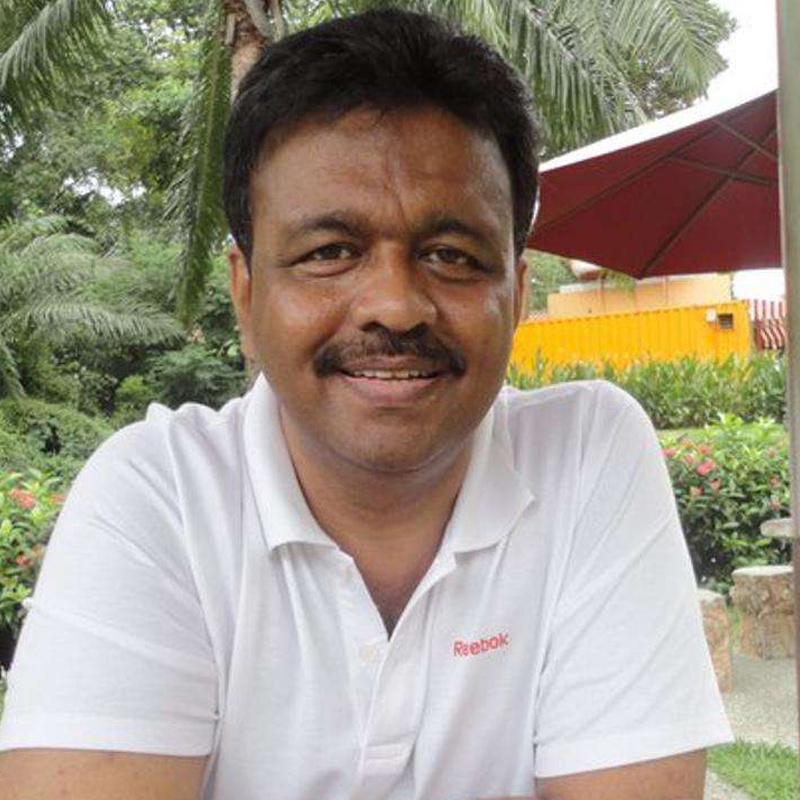
    West Bengal Urban Development Minister Firhad Hakim has made it clear that the central government cannot force cable operators in Kolkata to switch to digital addressable systems.

    The minister has also warned of action against operators who switch-off analogue signals, which will lead to television sets going blank with no STBs.
     
    He said, "The Centre cannot arbitrarily announce these deadlines for compulsory switchover to digital signals. We have written to the Centre and emphasised that such an exercise can only be attempted through a proper dialogue, but we have not received any response."

    Hakim said I&B ministry is yet to respond to the letters by him and the state‘s Chief Secretary Sanjoy Mitra on the matter.

    While analogue signals of some television channels would continue, the number of channels being carried by MSOs in analogue has reduced significantly. The MSOs had begun the process of switching off of analogue signals from 16 December. The Bengali language channels were expected to go dark by 27 December.

    "While we have switched off a lot of channels but at the same time we have to do a balancing act," an executive from a leading MSO said on the condition of anonymity.

    The executive said the off-take of STBs for installing in cable TV homes has been very good and complete switchover is only a matter of time.

    Echoing his sentiment, an executive from another MSO said, "We have to go along with the I&B Ministry as well as the state government. In the last one month, STB seeding progressed very smoothly."

    The executive said the state government has called for a meeting in the first week of January to take stock of the situation.

    Cable operators in the city told Indiantelevision.com that West Bengal Chief Minister Mamata Banerjee had been a member of the Union Cabinet when it had decided to go in for digitisation in four phases, beginning with the metros.

    But now the operators felt they were being put in an awkward situation with the centre and the state at loggerheads on the situation.

    "We have to operate in West Bengal and it will not be prudent to act against the instructions of the state government. But if the MSOs do not follow the directives of the Centre then they risk losing their licences," said Cable & Broadband Operators’ Welfare Association Secretary Swapan Chowdhury. 
     
    It must be noted that the original deadline for the first phase of digitisation in the four metros was 30 June which was extended to 31 October by the ministry to allow MSOs more time to prepare.

    While Mumbai and Delhi adhered to the 31 October deadline by switching off analogue signals (although pirated signals were available in many parts of Delhi), in Kolkata the signals were not switched off by MSOs on the state government‘s diktat.

    After maintaining a studied silence on the issue for more than a month, the ministry had finally cracked the whip on Kolkata MSOs to switch off analogue television signals in a phased manner in Kolkata by 27 December.

    Meanwhile, broadcasters have begun carrying scrolls on their channels about the 38 cities that will be digitised in the second phase by 31 March even as Chennai is yet to be digitised.