Tag: information and broadcasting minister

  • Around Rs seven lakh spent on DD India in 2015-16: Rathore

    Around Rs seven lakh spent on DD India in 2015-16: Rathore

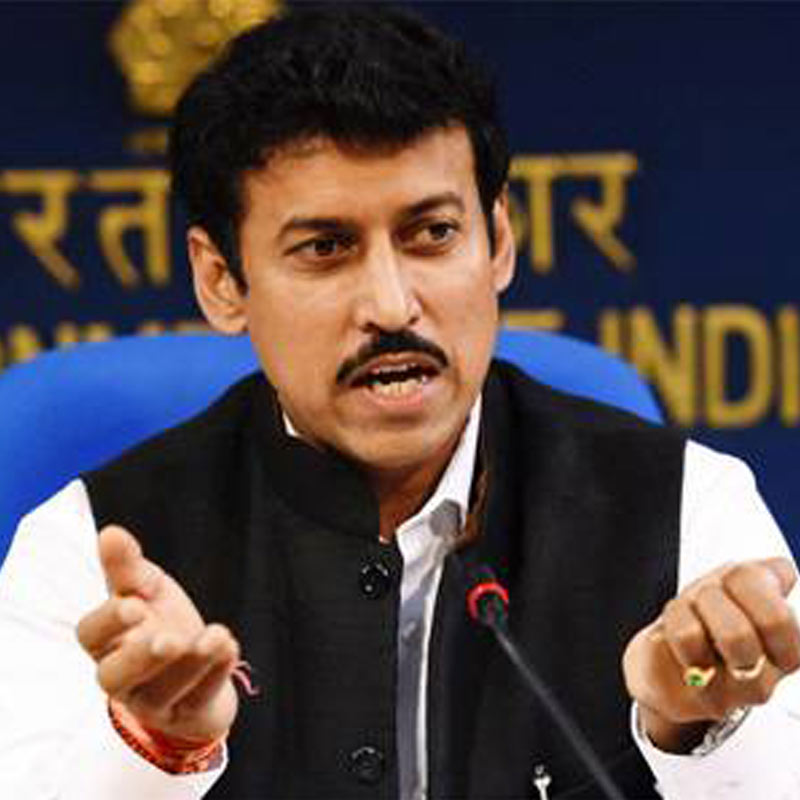
    NEW DELHI: While saying that no deadline had been fixed for restructuring Prasar Bharati, Minister of State for Information and Broadcasting Minister Rajyavardhan Rathore said Rs 6.46 lakh was allotted in the year 2015-16 for programming of DD India which was used for normal production activities.

    He told the Rajya Sabha today that no fund was allotted specifically for re-launching of DD-India and so no expenditure was incurred on this account.

    He said DD India was launched on 14 March 1995. It was initially known as DD World and renamed as DD India in 2000. The channel reaches 38 countries at present.

    He said the affairs of Prasar Bharati are conducted under the provisions of Prasar Bharati Act 1990 which essentially aims to confer autonomy upon the organization.

    Adequate provision has been made in the Act itself to make Prasar Bharati accountable. Prasar Bharati is accountable to the Parliament through its various Committees and laying of its annual accounts and annual reports as also through various questions raised in the Parliament.

    The Prasar Bharati Board, apart from Chairman and three whole time members, comprises of six part time members and other ex-officio members and the Board is empowered to take all decisions as per provision of Prasar Bharati Act 1990.

  • Digital & print media ad policy aimed at transparency, accountability: Naidu

    Digital & print media ad policy aimed at transparency, accountability: Naidu

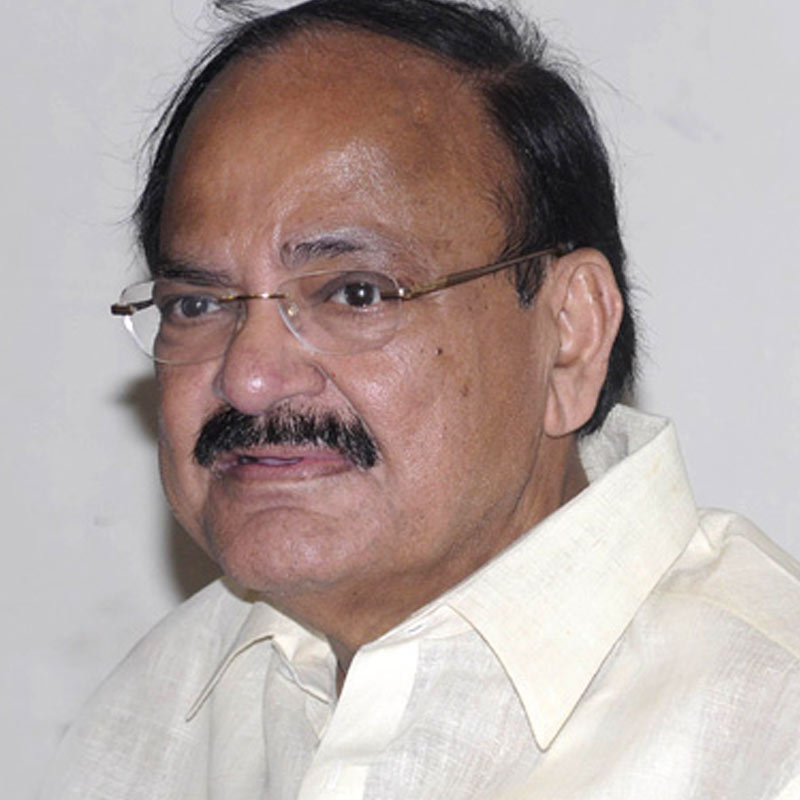
    NEW DELHI: Information and Broadcasting Minister M Venkaiah Naidu today said a Digital Media & New Print Media Advertisement policy was framed recently to promote transparency and accountability in issuing of advertisements.

    Addressing the first consultative meeting of members of Parliament attached to his Ministry since he took charge, he apprised the members about the three-member committee constituted by the Ministry to address the issues related to Content Regulation in Government Advertising. (The Committee had been formed after orders by the Supreme Court in a case relating to government advertisements.)

    All India Radio had completed the FMization of all channels of Vividh Bharati all over the country.

    Noting that the focus of the Ministry had been to streamline processes and promote transparency and accountability in its functioning, he said the e-auction of the first batch of has successfully & transparently completed e-auction of first batch of private FM radio channels Phase-III comprising 135 channels in 69 existing cities of Phase-II. He added that Private FM Radio has been permitted to broadcast at no cost AIR News for listeners to get credible information apart from entertainment.

    He said the Ministry had played a critical role in the communication and outreach activities for the Government Flagship schemes and Initiatives such as Swachh Bharat Abhiyan, Make in India, Beti Bachao Beti Padhao, etc. through 360 degree Multimedia campaigns. Minister of State Rajyavardhan Singh Rathore was also present in the meeting.

    Naidu said that in order to harness the India’s soft power in film sector, the Ministry is in the process of setting up of National Centre of Excellence for Animation, Gaming and VFX (NCOE) in Maharashtra. The institute would be a world class institution to provide skilled manpower in this emerging area.

    A Film Facilitation Office to promote and facilitate film shootings by foreign film makers in India. The Ministry has also included “Most Film Friendly State” as a special category award in National Film Awards this year. The Shyam Benegal Committee report for holistic interpretation of the provisions of the Cinematograph Act/ Rules was under consideration of the Ministry.
    Referring to the Publications Division which was the subject of the meeting, Naidu said the Division may approach stakeholders as part of corporate social responsibility to sponsor books for schools and libraries across the country. This would enhance the visibility of the rich collection of Divisions publications and at the same time making these books available to the younger generation in far off and remote villages.

    He said the Ministry would consider the possibility of publishing Employment News in regional languages also. He added that the Division would consider bringing out books regarding the contribution of large number of heroes of India’s struggle struggle from different regions who have not been given the recognition that they so rightly deserved.
    Members of the committee said efforts needed to be taken to enhance the visibility of the rich and diverse collection of books. This could be initiated through appropriate promotional and marketing strategies. Efforts needed to be taken to reach out the younger generation and publish books of their interest. Contemporary publication trends also needed to be a part of the vision and way forward strategy.

    A presentation was made by Joint Secretary Mihir Kumar Singh on behalf of the Ministry giving an overview of the steps and initiatives undertaken so far by the Division as well as the future roadmap for the Publications Division. Members of the committee were specially apprised of the digitization and e-initiatives of the Publications Division including the e-version of 100 volumes of Collected Works of Mahatma Gandhi.

    Parliamentarians Ms V. Sathyabama, Madhusudan Mistry and Vivek Gupta, Dr Sanjay Jaiswal, Ms Dev (Moon Moon Sen) Varma, and Harivansh attended the meeting.

  • Digital & print media ad policy aimed at transparency, accountability: Naidu

    Digital & print media ad policy aimed at transparency, accountability: Naidu

    NEW DELHI: Information and Broadcasting Minister M Venkaiah Naidu today said a Digital Media & New Print Media Advertisement policy was framed recently to promote transparency and accountability in issuing of advertisements.

    Addressing the first consultative meeting of members of Parliament attached to his Ministry since he took charge, he apprised the members about the three-member committee constituted by the Ministry to address the issues related to Content Regulation in Government Advertising. (The Committee had been formed after orders by the Supreme Court in a case relating to government advertisements.)

    All India Radio had completed the FMization of all channels of Vividh Bharati all over the country.

    Noting that the focus of the Ministry had been to streamline processes and promote transparency and accountability in its functioning, he said the e-auction of the first batch of has successfully & transparently completed e-auction of first batch of private FM radio channels Phase-III comprising 135 channels in 69 existing cities of Phase-II. He added that Private FM Radio has been permitted to broadcast at no cost AIR News for listeners to get credible information apart from entertainment.

    He said the Ministry had played a critical role in the communication and outreach activities for the Government Flagship schemes and Initiatives such as Swachh Bharat Abhiyan, Make in India, Beti Bachao Beti Padhao, etc. through 360 degree Multimedia campaigns. Minister of State Rajyavardhan Singh Rathore was also present in the meeting.

    Naidu said that in order to harness the India’s soft power in film sector, the Ministry is in the process of setting up of National Centre of Excellence for Animation, Gaming and VFX (NCOE) in Maharashtra. The institute would be a world class institution to provide skilled manpower in this emerging area.

    A Film Facilitation Office to promote and facilitate film shootings by foreign film makers in India. The Ministry has also included “Most Film Friendly State” as a special category award in National Film Awards this year. The Shyam Benegal Committee report for holistic interpretation of the provisions of the Cinematograph Act/ Rules was under consideration of the Ministry.
    Referring to the Publications Division which was the subject of the meeting, Naidu said the Division may approach stakeholders as part of corporate social responsibility to sponsor books for schools and libraries across the country. This would enhance the visibility of the rich collection of Divisions publications and at the same time making these books available to the younger generation in far off and remote villages.

    He said the Ministry would consider the possibility of publishing Employment News in regional languages also. He added that the Division would consider bringing out books regarding the contribution of large number of heroes of India’s struggle struggle from different regions who have not been given the recognition that they so rightly deserved.
    Members of the committee said efforts needed to be taken to enhance the visibility of the rich and diverse collection of books. This could be initiated through appropriate promotional and marketing strategies. Efforts needed to be taken to reach out the younger generation and publish books of their interest. Contemporary publication trends also needed to be a part of the vision and way forward strategy.

    A presentation was made by Joint Secretary Mihir Kumar Singh on behalf of the Ministry giving an overview of the steps and initiatives undertaken so far by the Division as well as the future roadmap for the Publications Division. Members of the committee were specially apprised of the digitization and e-initiatives of the Publications Division including the e-version of 100 volumes of Collected Works of Mahatma Gandhi.

    Parliamentarians Ms V. Sathyabama, Madhusudan Mistry and Vivek Gupta, Dr Sanjay Jaiswal, Ms Dev (Moon Moon Sen) Varma, and Harivansh attended the meeting.

  • Centenary Film Festival to feature retro of Ray

    Centenary Film Festival to feature retro of Ray

    MUMBAI: A screening of the silent film ‘Throw of Dice‘ to the accompaniment of live music orchestra by maestro Nishat Khan will mark the opening of a special festival being held next week to mark the centenary of Indian cinema.


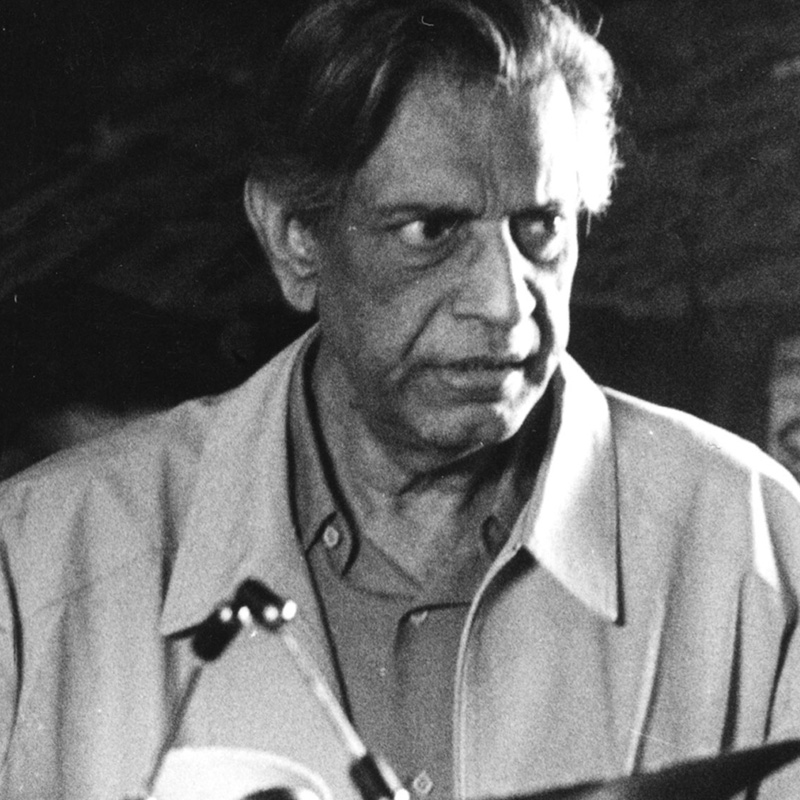
    A key highlight of the festival includes a special “Satyajit Ray Retrospective” and display the artwork of the cine craftsman of Indian cinema.


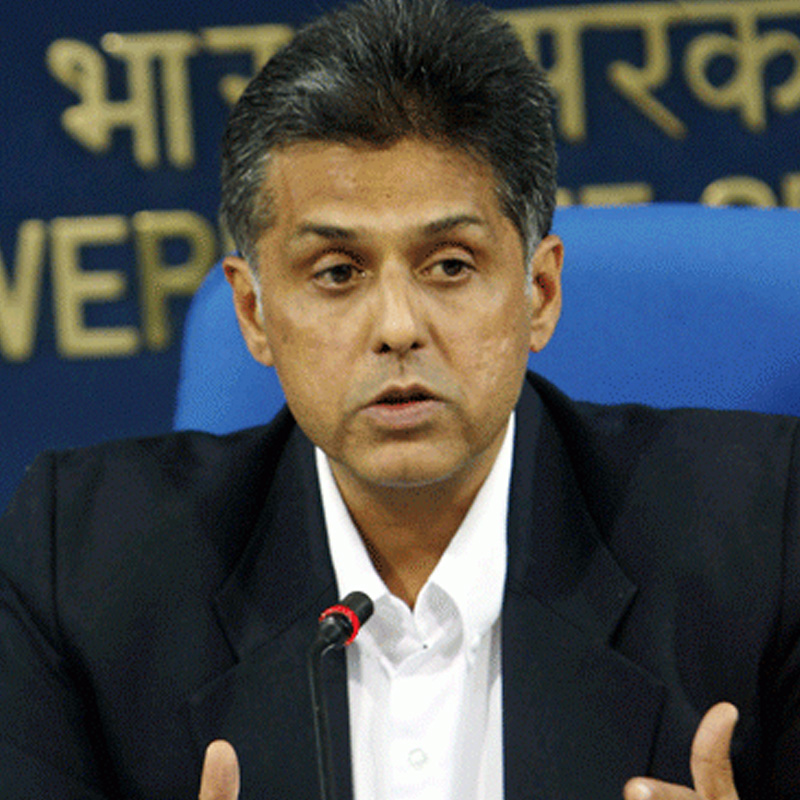
    Information and Broadcasting Minister Manish Tewari will inaugurate the Festival and also an exhibition on “Indian Cinema 100 (Celebrating a Century: An Audio Visual Voyage)”.
     
    The six-day festival will commence on 25 April and conclude on 30 April with a play on the life and times of Dadasaheb Phalke by Aamir Raza Hussain.


    The festival will travel to the Siri Fort auditorium, Jamia Milia Islamia University, Jawaharlal Nehru University, and India Habitat Center in an effort to bring it to the doorstep of film lovers in the capital.


    The extravaganza will also include screenings of some classics as well as contemporary Indian films by master directors such as Bimal Roy, Guru Dutt, Shyam Benegal, Adoor Gopalakrishnan and others.


    The festival will also pay tribute to some of the finest actors of popular Indian cinema, who are no longer alive, through the screening of their films. They include Balraj Sahni, Dev Anand, Shammi Kapoor, and Rajesh Khanna among others. The films being screened represent a sprinkling of various flavours of Indian cinema from major film producing regions of the country.


    Eminent filmmakers and actors have been invited to interact with the audiences over the course of the six day festival.


    Films Division will showcase documentaries which have captured on celluloid post-Independent India in all its myriad perspectives through gems out of its rich archives, such as news reels, documentaries, shorts, features and animation films on diverse subjects.


    Another key highlight of the festival is “Cut-Uncut,” a three-day workshop conceived and being executed by members of the Central Board of Film Certification. This event will showcase the growth and evolution of censorship in Indian cinema, through workshops and insightful panel discussions.


    The Centenary celebrations would culminate in the National Film Awards ceremony at Vigyan Bhavan on 3 May, including the presentation of the prestigious Dada Saheb Phalke Award to thespian Pran by President Pranab Mukherjee.

  • Local organizations or states cannot ban film certified by CBFC, Tewari

    Local organizations or states cannot ban film certified by CBFC, Tewari

    NEW DELHI: The central government reiterated in Parliament today that a local organization cannot ban a film if it has a problem with the content of that film and has to approach the Central Board for Film Certification in redressal.

    Information and Broadcasting Minister Manish Tewari stressed that state governments have the power to regulate cinemas under Constitution‘s entry 33 in List II, subject to the exclusive power of the Central Government for certification (entry 60, List I).

    Referring to cases where films had been banned or held up by state governments, Tewari said the film ‘Viswaroopam‘ was not banned but delayed by executive orders under section 144 of Criminal Procedure Code in Tamil Nadu. In 2011, the film ‘Dam 999‘ was banned by Tamil Nadu while ‘Aarakshan‘ was banned in Punjab, Andhra Pradesh and Uttar Pradesh.

    The Minister said Article 19(2) of the Constitution provides for reasonable restrictions imposed by Law on the freedom of speech and expression.

    The exclusive power of certifying films for public screening rests with the Central Board of Film Certification as mandated by the Cinematograph Act, 1952.

    Executive orders of State Governments, at times, also orders issued under various State laws relating to Cinema made under Entry 33, List II of the Seventh Schedule to the Constitution of India, regulate public screening.

  • Govt to spend 40% of its TV ad budget on regional channels

    Govt to spend 40% of its TV ad budget on regional channels

    NEW DELHI: The Government has announced that 40 per cent of the annual budget for television media campaigns will be reserved for regional channels.

    In its new policy guidelines for empanelment of private cable and satellite television channels for entitlement to government advertisements released by the Information and Broadcasting Ministry, the primary objective is to fix their telecast and broadcast rates.

    It is expected that the new guidelines would obtain the widest possible coverage for the media campaigns released by Directorate of Advertising and Visual Publicity (DAVP) on behalf of Central government ministries/departments.

    The existing criterion of 0.02 per cent all India channel share for empanelment with DAVP has been done away with under the new guidelines. This will ensure more regional channels to be empanelled by DAVP.

    The policy mentions that while finalising the media plan for any region, it has to be ensured that bottom up approach is adopted: channels in that region should be first widely covered, followed by other mainstream channels.

    A regional channel, satisfying the criterion for empanelment at any point of time in the year, can apply to DAVP for empanelment without waiting for the annual schedule, and DAVP, after scrutinizing the applications and verification of laid down criteria, may include the channel in the panel.

    The new rates have increased rates substantially. There shall be no rate for ticker/scroll, as running of scrolls etc. using lower part of the screen apparently contravenes the Rule 10 of the Cable Television Network Rules 1994. Interestingly, there will be separate rates for live cricket matches.

    Under the new policy guidelines, the rate structures are:

    • Rs.23000/- shall be adopted as CPRP (cost per one percent rating point) and Rs150 as constant (a) to calculate the rates in terms of the above formula.

    • Unit Rate – The unit rate for Government Spot shall be for 10 second duration.

    • Time Bands – There shall be six time bands – i.e. 7 AM to 9 AM, 9 AM to 12 Noon, 12 Noon to 7 PM, 7 PM to 8 PM, 8 PM to 10 PM and 10 PM to 11 PM.

    • In case of advertisement of 15, 25, 35, 45 seconds or any other duration which is in multiple of 5 seconds, the same will be payable on proportionate basis.

    • For second year and third year, increase of CPRP and constant element shall be done with the prior approval of the Ministry.

    No rate has been fixed for sponsored programmes. However, DAVP will call for rates for a particular time band from the channels having similar TVRs in a given genre for any specific requirement. The channel quoting the lowest CPRP may be offered the rate for telecasting the programme.

    A rate may only be offered provided DAVP receives quotes from a minimum of four channels. The rate so fixed by DAVP shall apply to DAVP as well as to all AAs.

    The policy also stipulates that there shall be a ceiling of 2 per cent on allocation of annual advertisement budget for Groups/Companies owning 1 to 3 channels and 5 per cent for Groups/Companies owning four or more channels. This provision shall be scrupulously adhered to by DAVP and the advertising agencies.

    For the empanelment of agencies with DAVP, certain criterion will have to be met at the time of application. This includes a minimum telecast period of one year of commercial broadcast with at least 16 hours telecast per day – that is, 7 am to 11 pm. The Government permission to the company for up-linking and down-linking and sufficient evidence of such operation, a certificate by either EMMC or any other reputed agency that a channel is continuously being aired, the programme scheduling (Fixed Point Chart) for the previous 12 months from 7 am to 11 pm, during which the companies operated; a certificate from the Teleport operator through which the channel uplinks its programmes regarding the average time of operation of the channel, certificate duly signed by the Auditor/Company Secretary for the prescribed revenue details, latest profit & loss accounts, balance sheet and actual tax payment including service tax for previous financial year and the amount of advertisement revenue generated by the channel during the previous financial year.

    The policy stipulates that all applications seeking empanelment shall be placed before a panel advisory committee constituted for taking a final decision. The policy stipulates that a channel once empanelled shall remain on the panel of DAVP for a period of three years.
  • Ambika Soni offers to lead film delegation to FM on service tax issue

    Ambika Soni offers to lead film delegation to FM on service tax issue

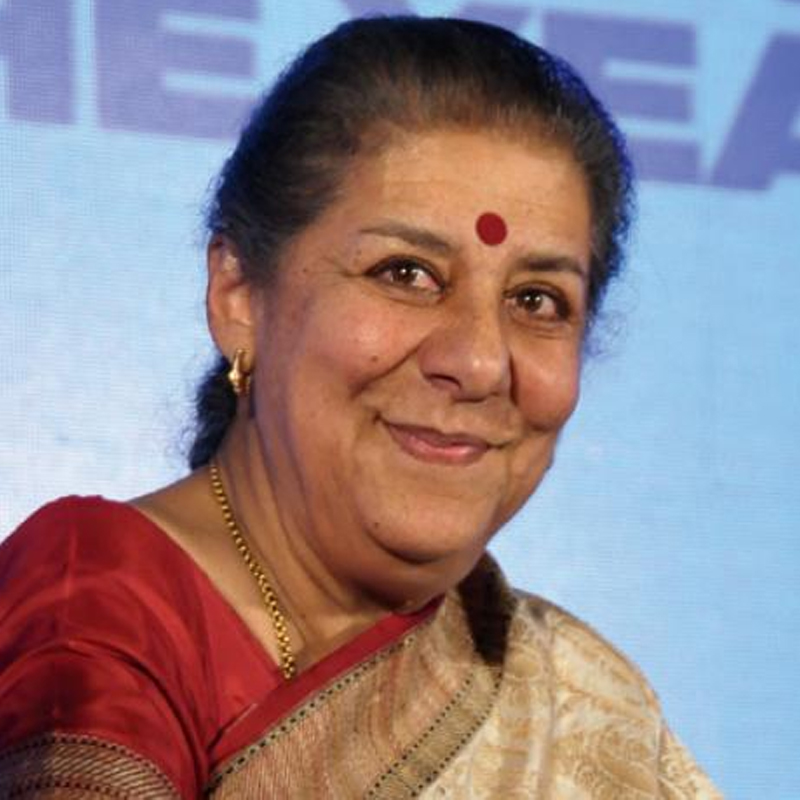
    NEW DELHI: Faced with the prospect of a nationwide full-day shut down of the film industry, Information and Broadcasting Minister Ambika Soni today offered to lead a delegation of filmmakers to Finance Minister Pranab Mukherjee over the Government’s proposal to levy 10.3 per cent service tax.

    Speaking on the sidelines of an event here, Soni said: “I have offered that we can all go together to Finance Minister”. She also stated that she was not sure if the industry would go on a strike on 23 February.

    “The filmmakers have apprehension that service tax of about 10 per cent will be levied in the coming budget. They do not want this. I had spoken to Mahesh Bhatt yesterday,” she said.

    At the same time, she wanted the film industry to understand the compulsions of the Finance Minister who had been talking about funds needed for welfare measures of the government, including right to food, right to education and his position “was also tight.”

    However, film industry sources said the proposal for the tax had been taken some years earlier but it was not being levied until recently when the Finance Ministry said this tax was deductible from the exhibitors.

    There are approximately 10,000 theatres in India, including 750 in multiplexes. It is felt that if the Central government goes ahead with its proposal, the budget of films will shoot up.