Tag: information and broadcasting minister

  • Venkaiah Naidu is NDA nominee for India’s vice-president

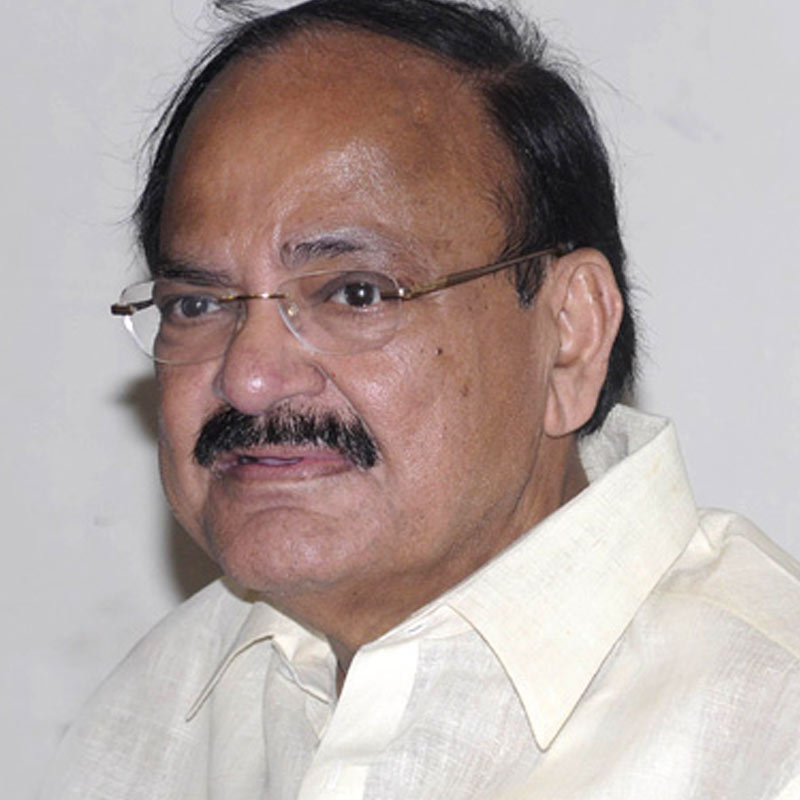
    NEW DELHI: Information and broadcasting minister M Venkaiah Naidu has been named as the ruling National Democratic Alliance’s candidate for becoming the vice-president of India. The opposition has already announced the senior politician Gopal Das Gandhi as its candidate.

    A Rajya Sabha member of the Bharatiya Janata Party from Rajasthan (elected in May last year), Naidu is also the minister of housing and urban poverty alleviation.

    Born on 1 July 1949, Naidu began his career as a student leader in Andhra University in the early seventies. A senior member of the party, he has also been the national president from 2002 to 2004. Earlier, he was the union cabinet minister for rural development in the Atal Bihari Vajpayee government.

    He was elected as an MLA to the Andhra Pradesh Legislative Assembly twice from Udayagiri constituency in Nellore district, in 1978 and 1983. After having served in various organisational posts of the BJP at the state and national level, he was elected as a member of the Rajya Sabha from Karnataka in 1998. He has since been re-elected twice — in 2004 and 2010 — from Karnataka.

    He served as the party spokesperson from 1996 to 2000, bringing to the job his panache for quirky alliterations and similes. Unlike most politicians from southern India, Naidu made an effort to master Hindi, going on to address public rallies in northern India.

    After the NDA victory in the 1999 general elections, he became the union cabinet Minister for rural development in the government headed by Vajpayee. He was known for pushing for reforms in Rural development and for the many schemes introduced during this period such as the ‘Pradhan Mantri Gram Sadak Yojana.

    He succeeded Jana Krishnamurthy as the National President of the Bharatiya Janata Party in 2002. On 28 January 2004, he was elected unopposed for a full three-year term. After the defeat of the BJP led NDA in the 2004 general elections, he resigned from his post on 18 October 2004 and was succeeded by L.K. Advani.

    However, he has remained in the forefront of the BJP as one of its senior vice-presidents and an important campaigner. Naidu raised special status to Andhra Pradesh issue in Rajya Sabha (as opposition member in February 2014) and demanded special category state status to AP. The then prime minister had agreed to it, though it was not included in the AP Reorganisation Act-2014.

    Following the victory of the BJP in the 2014 general elections, he has sworn as the Minister for Urban Development and Parliamentary Affairs on 26 May 2014. Naidu is also involved with the Swarna Bharath Trust, a social service organisation founded by him in Nellore. The trust runs a school for poor, orphaned and special-needs children and imparts self-employment training programmes especially for women and youth.

    Born at Chavatapalem in the Nellore district, he completed schooling from V R High School, Nellore, and pursued his bachelor’s degree in politics and diplomatic studies from V R College. Later, he acquired a bachelor’s degree in law with a specialisation in international law from Andhra University College of Law, Visakhapatnam. He was a swayamsevak in the Rashtriya Swayamsevak Sangh and joined Akhil Bhartiya Vidyarthi Parishad during his college days.He was elected as the president of the students union of colleges affiliated to the Andhra University. He came into spotlight for his prominent role in the Jai Andhra Movement of 1972. While K Venkata Ratnam led the movement from Vijayawada, Naidu took active part in the agitation in Nellore, until it was called off a year later.

    In 1974, he became the convener of the anti-corruption Jayaprakash Narayan Chhatra Sangharsh Samiti of Andhra Pradesh. He took to streets in protest against the emergency and was imprisoned. From 1977–80, he was president of its youth wing.

  • North-East plan: DD channel Arun Prabha launch in early Jan; 90% subsidy for community radio

    North-East plan: DD channel Arun Prabha launch in early Jan; 90% subsidy for community radio

    NEW DELHI: Information and Broadcasting Minister M Venkaiah Naidu announced that a new dedicated Doordarshan channel Arun Prabha would be launched in the first half of January 2017.

    The channel would showcase richness, variety and diversity of local culture and would seamlessly integrate North East with the entire country.

    In a scenario where the number of operational community radio stations remains 191 after more than a decade of launch of the scheme, the government today said those setting up community radios can now get a subsidy of 75% in all states except the north eastern states where it will be 90%.

    Naidu made this announcement towards the conclusion of the first session of the 28th State Information Ministers Conference (SIMCON) here. He said the community radio station is an extraordinary medium which disseminates information in localised content.

    A total of 235 entities have signed the grant of permission agreement for community radio and indiantelevision’s sister concern radioandmusic.com reported in March this year that a total of 272 applications were still under the consideration of the government from educational institutions, non-governmental organisations, Krishi Vigyan Kendras and state agricuture universities. Some of these date back to 2011.

    Though the scheme was announced more than a decade earlier, the reach of CRs was extended in 2006 to include NGO and community-based organisations with at least three years legal existence.

    A total of 115 community radio stations recently received interim renewal of their Grant of Permission Agreement (GOPA) till 31 December 2016. An announcement by the ministry had said that the renewal till 31 December 2016 is till the renewal of GOPA on regular basis, whichever is earlier.

  • North-East plan: DD channel Arun Prabha launch in early Jan; 90% subsidy for community radio

    North-East plan: DD channel Arun Prabha launch in early Jan; 90% subsidy for community radio

    NEW DELHI: Information and Broadcasting Minister M Venkaiah Naidu announced that a new dedicated Doordarshan channel Arun Prabha would be launched in the first half of January 2017.

    The channel would showcase richness, variety and diversity of local culture and would seamlessly integrate North East with the entire country.

    In a scenario where the number of operational community radio stations remains 191 after more than a decade of launch of the scheme, the government today said those setting up community radios can now get a subsidy of 75% in all states except the north eastern states where it will be 90%.

    Naidu made this announcement towards the conclusion of the first session of the 28th State Information Ministers Conference (SIMCON) here. He said the community radio station is an extraordinary medium which disseminates information in localised content.

    A total of 235 entities have signed the grant of permission agreement for community radio and indiantelevision’s sister concern radioandmusic.com reported in March this year that a total of 272 applications were still under the consideration of the government from educational institutions, non-governmental organisations, Krishi Vigyan Kendras and state agricuture universities. Some of these date back to 2011.

    Though the scheme was announced more than a decade earlier, the reach of CRs was extended in 2006 to include NGO and community-based organisations with at least three years legal existence.

    A total of 115 community radio stations recently received interim renewal of their Grant of Permission Agreement (GOPA) till 31 December 2016. An announcement by the ministry had said that the renewal till 31 December 2016 is till the renewal of GOPA on regular basis, whichever is earlier.

  • FM P-III second batch auction from 25 Oct; 14 in fray

    FM P-III second batch auction from 25 Oct; 14 in fray

    NEW DELHI: The e-auction of the second batch of FM Phase III will commence on 25 October 2016 from 09.30am.

    The Information and Broadcasting Ministry announced that as stipulated in the Notice Inviting Applications of 20 June 2016, bidders are required to submit their bid for at least one city in the first Clock Round. Any bidder failing to do so in the first Clock Round will forfeit its EMD in its entirety.

    The Ministry said any assistance in this regard is available on contact helpdesk +91-124- 430 2039 or support@c1eauctions.com. The second batch of FM Radio Phase-III channels comprises 266 channels in 92 cities. The channels include 227 channels in 69 fresh cities and 39 channels in 23 existing cities which had remained unsold as there were no bids.

    As in the first stage, the e-auctions will be conducted by C1 India Private Ltd. A Pre Bid conference was held on 11 July 2016, following by training and then a mock auction earlier this month.

    After the pre-qualification of bidders, the shortlist is:

    | 1 | Abhijit Realtors & lnfraventures (P) Ltd. |
    | 2 | Dharmik lnfomedia Private Ltd. |
    | 3 | Entertainment Network (I) Ltd. |
    | 4 | Hotel Polo Towers (P) Ltd. |
    | 5 | JCL Infra Limited |
    | 6 | Kal Radio Limited |
    | 7 | Malar Publication (P) Ltd. |
    | 8 | Purvy Broadcasts (P) Ltd. |
    | 9 | Rockstar El Private Limited |
    | 10 | Sambhaav Media Ltd. |
    | 11 | South Asia FM Limited |
    | 12 | The Malayala Manorama Co. Ltd. |
    | 13 | The Mathrubhumi Printing & Publishing Co. Ltd. |
    | 14 | Ushodaya Enterprises Private Limited |

    The first payment of 25 per cent of the successful bid amount will be made within five calendar days, and the remaining within 15 calendar days of the close of the auction and notification of successful bidders by the Government. The e-auction of the first batch of private FM radio phase-III comprising 135 channels in 69 Phase-II existing cities commenced on 27 July and was completed on 9 September after 125 rounds of bidding. Out of these, no bid was received in 13 cities having 26 channels, and partial bids were received in 9 cities with 12 channels remaining unsold, which Information and Broadcasting Minister Arun Jaitley justified on the ground of “the demand – supply based market economics and bidder’s strategy”. However, he told the Parliament on 4 December 2015 that the Ministry had received the full payment of Rs.1055.9 crore notified on 16 September by 1 October.

    Against the cumulative reserve price of Rs.550.18 crore for 135 channels, the government received aggregate provisional commitment of Rs.1156.9 crore for 97 channels in 56 cities. Out of 97 channels, 53 channels in 35 cities were sold at a premium over reserve price whereas 44 channels in 21 cities were sold at reserve price. The Ministry had decided to conduct e-auction of FM Radio Channels in batches under the extant FM Phase-III Policy.

  • FM P-III second batch auction from 25 Oct; 14 in fray

    FM P-III second batch auction from 25 Oct; 14 in fray

    NEW DELHI: The e-auction of the second batch of FM Phase III will commence on 25 October 2016 from 09.30am.

    The Information and Broadcasting Ministry announced that as stipulated in the Notice Inviting Applications of 20 June 2016, bidders are required to submit their bid for at least one city in the first Clock Round. Any bidder failing to do so in the first Clock Round will forfeit its EMD in its entirety.

    The Ministry said any assistance in this regard is available on contact helpdesk +91-124- 430 2039 or support@c1eauctions.com. The second batch of FM Radio Phase-III channels comprises 266 channels in 92 cities. The channels include 227 channels in 69 fresh cities and 39 channels in 23 existing cities which had remained unsold as there were no bids.

    As in the first stage, the e-auctions will be conducted by C1 India Private Ltd. A Pre Bid conference was held on 11 July 2016, following by training and then a mock auction earlier this month.

    After the pre-qualification of bidders, the shortlist is:

    | 1 | Abhijit Realtors & lnfraventures (P) Ltd. |
    | 2 | Dharmik lnfomedia Private Ltd. |
    | 3 | Entertainment Network (I) Ltd. |
    | 4 | Hotel Polo Towers (P) Ltd. |
    | 5 | JCL Infra Limited |
    | 6 | Kal Radio Limited |
    | 7 | Malar Publication (P) Ltd. |
    | 8 | Purvy Broadcasts (P) Ltd. |
    | 9 | Rockstar El Private Limited |
    | 10 | Sambhaav Media Ltd. |
    | 11 | South Asia FM Limited |
    | 12 | The Malayala Manorama Co. Ltd. |
    | 13 | The Mathrubhumi Printing & Publishing Co. Ltd. |
    | 14 | Ushodaya Enterprises Private Limited |

    The first payment of 25 per cent of the successful bid amount will be made within five calendar days, and the remaining within 15 calendar days of the close of the auction and notification of successful bidders by the Government. The e-auction of the first batch of private FM radio phase-III comprising 135 channels in 69 Phase-II existing cities commenced on 27 July and was completed on 9 September after 125 rounds of bidding. Out of these, no bid was received in 13 cities having 26 channels, and partial bids were received in 9 cities with 12 channels remaining unsold, which Information and Broadcasting Minister Arun Jaitley justified on the ground of “the demand – supply based market economics and bidder’s strategy”. However, he told the Parliament on 4 December 2015 that the Ministry had received the full payment of Rs.1055.9 crore notified on 16 September by 1 October.

    Against the cumulative reserve price of Rs.550.18 crore for 135 channels, the government received aggregate provisional commitment of Rs.1156.9 crore for 97 channels in 56 cities. Out of 97 channels, 53 channels in 35 cities were sold at a premium over reserve price whereas 44 channels in 21 cities were sold at reserve price. The Ministry had decided to conduct e-auction of FM Radio Channels in batches under the extant FM Phase-III Policy.

  • India-Bangladesh to collaborate on documentary on 1971 war of independence

    India-Bangladesh to collaborate on documentary on 1971 war of independence

    NEW DELHI: India and Bangladesh are to jointly collaborate to produce a documentary on the 1971 War of Independence of Bangladesh to mark the 100thbirth anniversary of the Father of the Nation Bangabandhu Sheikh Mujibur Rahman in 2020.

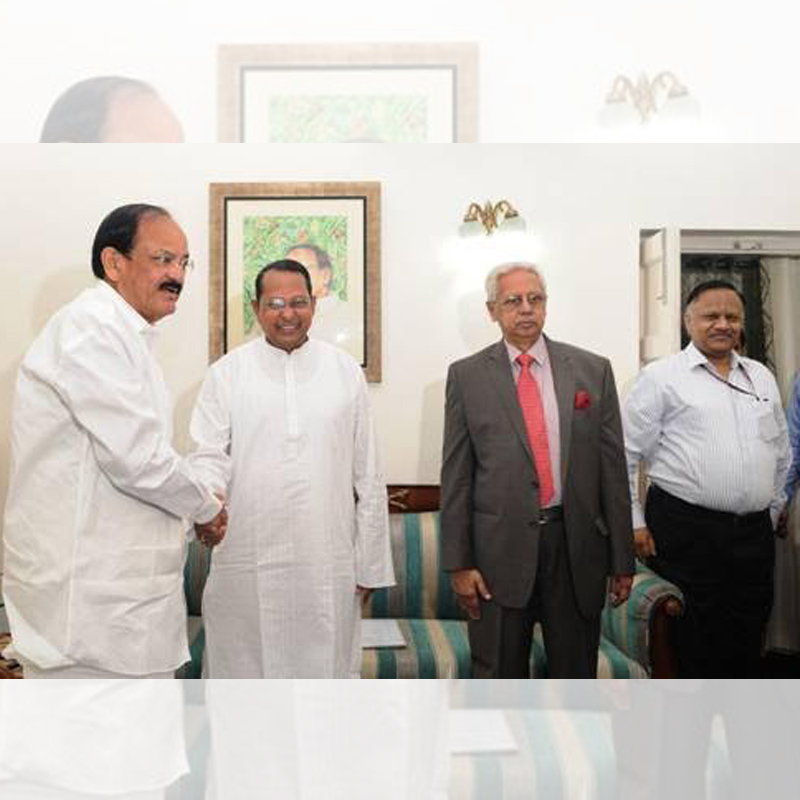
    Information and Broadcasting Minister M Vekaiah Naidu told his Bangladesh counterpart Hasanul Haq Inu here today that the archival material available with Films Division, Doordarshan and other media units would be optimally utilized.

    This documentary is proposed to be produced to commemorate the 50th year of Bangladesh Independence in 2021. Naidu also agreed to the proposal of Inu to facilitate the production of a movie by Bangladesh to coincide with the centenary of Bangabandhu.

    Both sides also agreed to jointly workout a proposal for a joint Audio-visual co-production agreement between the two countries. It was agreed to organize Film Festival of India in Bangladesh and a Bangladesh Film Festival in India.

    The Bangladesh Minister agreed to the request of Naidu to provide the celluloid version of the film Devdas directed by Pramatesh Barua, the Bengali version produced in 1935. Bangladesh had earlier provided the DVD version of the film to National Film Archives of Inda.

    Referring to facilitation of Free Film Trade between the two countries, Naidu said Bangladesh could consider relaxing the legal provisions which restricted the number of Indian films in that country. The easing of restrictions would have a positive impact on the local film industry. The Minister also offered to train the young film makers and entrepreneurs from Bangladesh at the Indian Film and Training Institutes. He also mentioned that collaborative measures would be initiated between the National Film Development Corporation and Bangladesh Film Development Corporation to promote joint production of films and also between NFAI and Bangladesh Film Archives for digitization and archiving.

    The Ministers during their deliberations also agreed to promote capacity building and training workshops for media persons, exchange programme for officers associated with Information and Broadcasting and exchange of programs between DD and its counterpart in Bangladesh.

    Naidu said information dissemination is critical to counter terrorism which is a common issue plaguing both India and Bangladesh. Secretary Ajay Mittal and senior officers of the Ministry were also present in the meeting between the two delegations.

  • India-Bangladesh to collaborate on documentary on 1971 war of independence

    India-Bangladesh to collaborate on documentary on 1971 war of independence

    NEW DELHI: India and Bangladesh are to jointly collaborate to produce a documentary on the 1971 War of Independence of Bangladesh to mark the 100thbirth anniversary of the Father of the Nation Bangabandhu Sheikh Mujibur Rahman in 2020.

    Information and Broadcasting Minister M Vekaiah Naidu told his Bangladesh counterpart Hasanul Haq Inu here today that the archival material available with Films Division, Doordarshan and other media units would be optimally utilized.

    This documentary is proposed to be produced to commemorate the 50th year of Bangladesh Independence in 2021. Naidu also agreed to the proposal of Inu to facilitate the production of a movie by Bangladesh to coincide with the centenary of Bangabandhu.

    Both sides also agreed to jointly workout a proposal for a joint Audio-visual co-production agreement between the two countries. It was agreed to organize Film Festival of India in Bangladesh and a Bangladesh Film Festival in India.

    The Bangladesh Minister agreed to the request of Naidu to provide the celluloid version of the film Devdas directed by Pramatesh Barua, the Bengali version produced in 1935. Bangladesh had earlier provided the DVD version of the film to National Film Archives of Inda.

    Referring to facilitation of Free Film Trade between the two countries, Naidu said Bangladesh could consider relaxing the legal provisions which restricted the number of Indian films in that country. The easing of restrictions would have a positive impact on the local film industry. The Minister also offered to train the young film makers and entrepreneurs from Bangladesh at the Indian Film and Training Institutes. He also mentioned that collaborative measures would be initiated between the National Film Development Corporation and Bangladesh Film Development Corporation to promote joint production of films and also between NFAI and Bangladesh Film Archives for digitization and archiving.

    The Ministers during their deliberations also agreed to promote capacity building and training workshops for media persons, exchange programme for officers associated with Information and Broadcasting and exchange of programs between DD and its counterpart in Bangladesh.

    Naidu said information dissemination is critical to counter terrorism which is a common issue plaguing both India and Bangladesh. Secretary Ajay Mittal and senior officers of the Ministry were also present in the meeting between the two delegations.

  • Communication is critical tool to ensure last mile connectivity: Naidu

    Communication is critical tool to ensure last mile connectivity: Naidu

    NEW DELHI: Information and Broadcasting Minister M Venkaiah Naidu said today that the Government had placed communication as a critical cog in the wheel of change and it had been woven into a policy matrix which aims at maximum governance, minimum government.

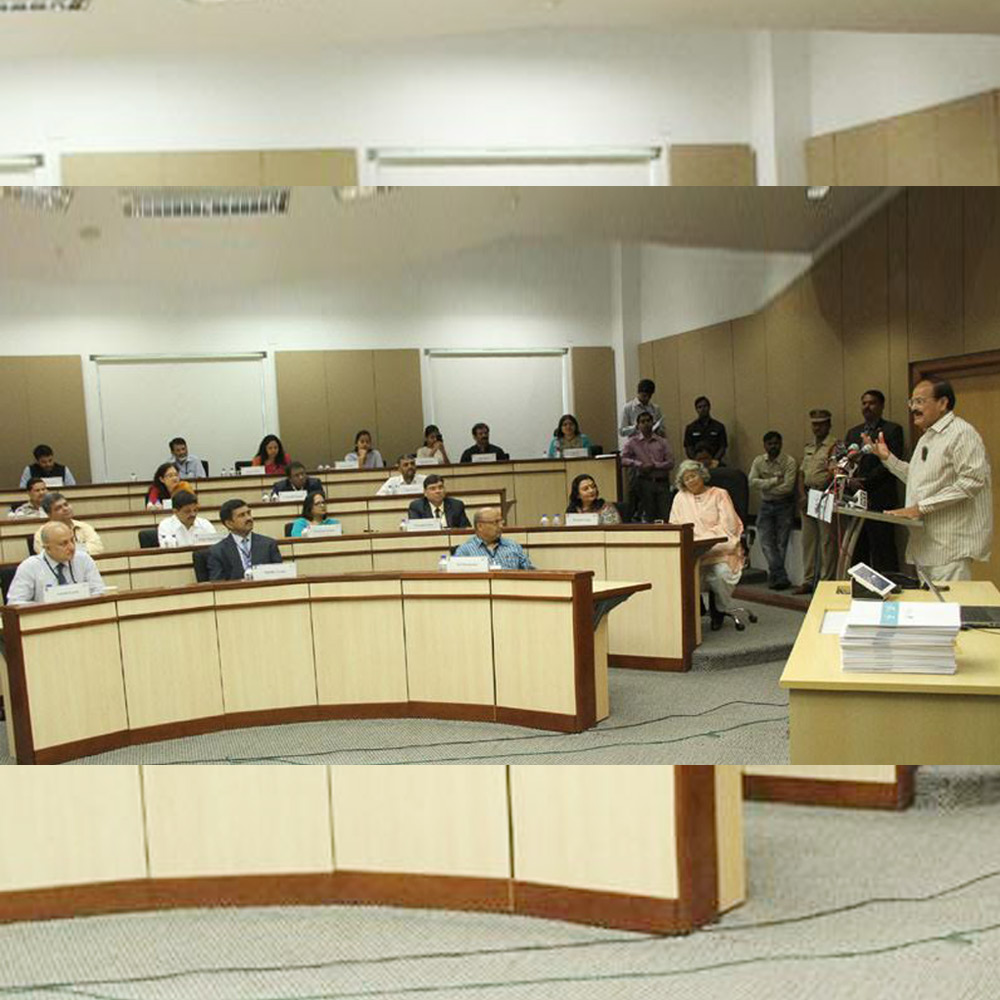
    Speaking at the valedictory function of Mid Career Training Programme for Senior Indian Information Service officers (IIS) at Indian School of Business, in Hyderabad today, Naidu said,“Today, we live in an age of instant communication, the images and tools of the media landscape influence our thought process on a continuous basis. The need to constantly re-invent our understanding and perception through an institutionalised skill upgradation program which includes a re-examination of our approach towards the communication process”, he stated.

    Naidu said that the government in the past two years had embarked on a programme of communication innovation – adopting methods, seeking spaces to ensure last mile connectivity to the people. “Our approach has attempted to weave different platforms, varied contents through a focussed 360 degree approach. While we have succeeded in adopting a new communication philosophy which incorporates the Citizens concerns, there are areas which still reflect chinks in the armour of government communication”, he said.

    He said the ministry had taken up the initiative of providing Information Service Officers skill upgradation through an institutionalised training policy. The objective is to plug the gaps in the Government’s communication approach in areas of content design, social marketing, branding, impact assessment and weaving technologies in the digital age. To bring about a change always creates a dissonance in the government process. He said that the two weeks training program is aimed to offer a fresh perspective, clarity on the nuances of communication management and gave tools and ideas to keep pace with the digital communication world to the IIS officers. He informed the officers that they would be going to the University of Berkeley for a further one week program training programme on the contemporary changes in the communication discourse.

    Naidu said recent advances in technology and communication space have completely overhauled the way the Government interacts with the citizens. This change being led by Social Media has ushered in a new era of Governance. it is absolutely necessary for constant upgradation of skills of officers in light of development of new technologies, he added.

    He said that in the last two years the present government has taken a lot of Citizen centric initiatives but communicating the benefits remains a challenge. Social and behaviour change communication is a critical factor in the success of Swachh Bharat Abhiyan which is a major flagship scheme of the government. “I am hopeful that the Media Strategy and Planning in the changing scenario of social advertising, a course module taught at ISB during the training of the officers, would benefit in defining the communication roadmap for the government social sector schemes and to ensure last mile reach”, he said.

    As the digital media continues to influence the communication and media landscape, social and digital media planning has to be an integral part of the government’s communication strategy. “I am sure the exposure to the officers about the best practises in digital media planning around various organisations across the world would have provided the required skillset and tools to address the challenges in the public domain”, he said.

    He added that the old mediums of communication have not become irrelevant. Radio still holds its relevance considering the mass outreach it has. Even the Government’s Mann ki baat Programme has become an excellent communication platform where the Prime Minister of our country not only directly communicates his views on diverse topics/ issues but also takes feedback from people through ‘myGov’ platform and Phone in services. In the current scenario, training in specific domains is incomplete without case studies and practical exposure. Case studies have proven to be an excellent way of practicing and applying new concepts. As such, they’re very useful tools in learning and implementation.

    The different phase wise training for the IIS Officers have been designed keeping in mind the broad objective of the Government’s Communications needs as well as changing communication and technology paradigm.

  • Communication is critical tool to ensure last mile connectivity: Naidu

    Communication is critical tool to ensure last mile connectivity: Naidu

    NEW DELHI: Information and Broadcasting Minister M Venkaiah Naidu said today that the Government had placed communication as a critical cog in the wheel of change and it had been woven into a policy matrix which aims at maximum governance, minimum government.

    Speaking at the valedictory function of Mid Career Training Programme for Senior Indian Information Service officers (IIS) at Indian School of Business, in Hyderabad today, Naidu said,“Today, we live in an age of instant communication, the images and tools of the media landscape influence our thought process on a continuous basis. The need to constantly re-invent our understanding and perception through an institutionalised skill upgradation program which includes a re-examination of our approach towards the communication process”, he stated.

    Naidu said that the government in the past two years had embarked on a programme of communication innovation – adopting methods, seeking spaces to ensure last mile connectivity to the people. “Our approach has attempted to weave different platforms, varied contents through a focussed 360 degree approach. While we have succeeded in adopting a new communication philosophy which incorporates the Citizens concerns, there are areas which still reflect chinks in the armour of government communication”, he said.

    He said the ministry had taken up the initiative of providing Information Service Officers skill upgradation through an institutionalised training policy. The objective is to plug the gaps in the Government’s communication approach in areas of content design, social marketing, branding, impact assessment and weaving technologies in the digital age. To bring about a change always creates a dissonance in the government process. He said that the two weeks training program is aimed to offer a fresh perspective, clarity on the nuances of communication management and gave tools and ideas to keep pace with the digital communication world to the IIS officers. He informed the officers that they would be going to the University of Berkeley for a further one week program training programme on the contemporary changes in the communication discourse.

    Naidu said recent advances in technology and communication space have completely overhauled the way the Government interacts with the citizens. This change being led by Social Media has ushered in a new era of Governance. it is absolutely necessary for constant upgradation of skills of officers in light of development of new technologies, he added.

    He said that in the last two years the present government has taken a lot of Citizen centric initiatives but communicating the benefits remains a challenge. Social and behaviour change communication is a critical factor in the success of Swachh Bharat Abhiyan which is a major flagship scheme of the government. “I am hopeful that the Media Strategy and Planning in the changing scenario of social advertising, a course module taught at ISB during the training of the officers, would benefit in defining the communication roadmap for the government social sector schemes and to ensure last mile reach”, he said.

    As the digital media continues to influence the communication and media landscape, social and digital media planning has to be an integral part of the government’s communication strategy. “I am sure the exposure to the officers about the best practises in digital media planning around various organisations across the world would have provided the required skillset and tools to address the challenges in the public domain”, he said.

    He added that the old mediums of communication have not become irrelevant. Radio still holds its relevance considering the mass outreach it has. Even the Government’s Mann ki baat Programme has become an excellent communication platform where the Prime Minister of our country not only directly communicates his views on diverse topics/ issues but also takes feedback from people through ‘myGov’ platform and Phone in services. In the current scenario, training in specific domains is incomplete without case studies and practical exposure. Case studies have proven to be an excellent way of practicing and applying new concepts. As such, they’re very useful tools in learning and implementation.

    The different phase wise training for the IIS Officers have been designed keeping in mind the broad objective of the Government’s Communications needs as well as changing communication and technology paradigm.

  • Around Rs seven lakh spent on DD India in 2015-16: Rathore

    Around Rs seven lakh spent on DD India in 2015-16: Rathore

    NEW DELHI: While saying that no deadline had been fixed for restructuring Prasar Bharati, Minister of State for Information and Broadcasting Minister Rajyavardhan Rathore said Rs 6.46 lakh was allotted in the year 2015-16 for programming of DD India which was used for normal production activities.

    He told the Rajya Sabha today that no fund was allotted specifically for re-launching of DD-India and so no expenditure was incurred on this account.

    He said DD India was launched on 14 March 1995. It was initially known as DD World and renamed as DD India in 2000. The channel reaches 38 countries at present.

    He said the affairs of Prasar Bharati are conducted under the provisions of Prasar Bharati Act 1990 which essentially aims to confer autonomy upon the organization.

    Adequate provision has been made in the Act itself to make Prasar Bharati accountable. Prasar Bharati is accountable to the Parliament through its various Committees and laying of its annual accounts and annual reports as also through various questions raised in the Parliament.

    The Prasar Bharati Board, apart from Chairman and three whole time members, comprises of six part time members and other ex-officio members and the Board is empowered to take all decisions as per provision of Prasar Bharati Act 1990.