Tag: information and broadcasting

  • I&B discusses strategies for unleashing M&E’s potential with industry experts

    I&B discusses strategies for unleashing M&E’s potential with industry experts

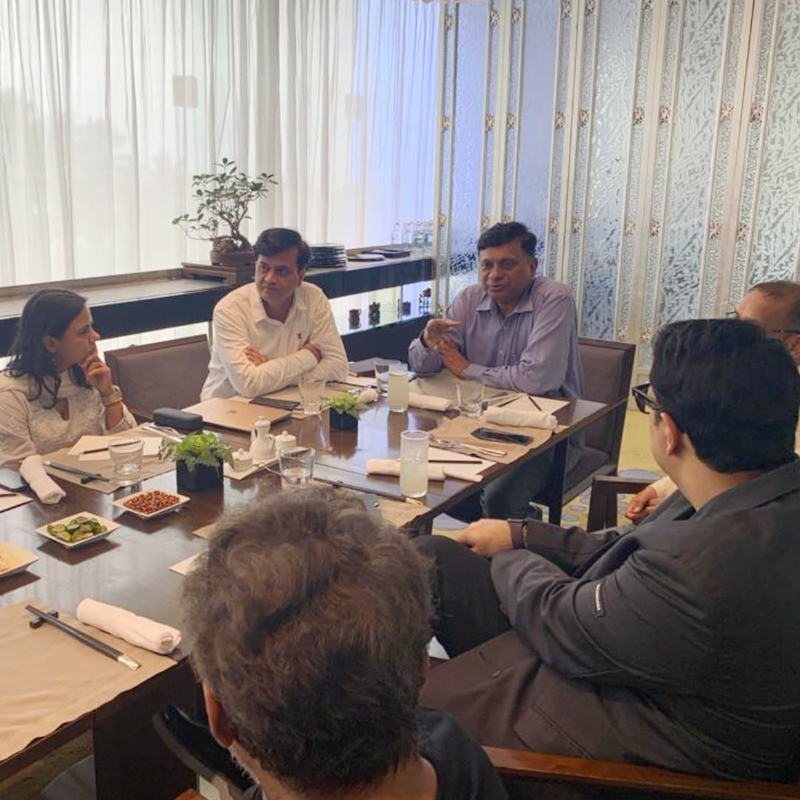
    Mumbai: Development of the audio-visual sector requires industry-friendly policies, collaboration, and regular interaction between the government and industry stakeholders.

    On Monday, a meeting in Mumbai was organised by the National Film Development Corp. where acclaimed filmmakers and industry professionals marked their presence, namely, Maddock Films founder Dinesh Vijan, Dharma Productions CEO Apoorva Mehta, Ayan Mukerji, R. Balki, Abundantia CEO Vikram Malhotra, Amazon Prime Video’s Gaurav Gandhi and Aparna Purohit, Netflix’s Monica Shergill, PEN India chairman Jayanti Lal Gada, Balaji Motion Pictures CEO Bhavini Sheth, Producers Guild of India president Shibasish Sarkar, Nitin Tej Ahuja CEO Producers Guild of India, and producers Mahaveer Jain & Madhu Mantena.

    The deliberations centred around the strategic initiatives taken by the government to unleash the potential of the media and entertainment industries. The I&B ministry’s efforts at easing filming in India through the Film Facilitation Office and the onboarding of Invest India to expand its outreach to the domestic and international industry were highlighted.

    The recently launched incentive scheme for international productions and official co-productions was discussed in detail, including the benefits it would bring to content creation in India. The industry was urged to leverage the FFO ecosystem and their suggestions on the incentives were duly noted.

    The government’s efforts to make the forthcoming 53rd edition of the International Film Festival of India a success were emphasised, along with the opportunities being created for the industry. Feedback was sought on the amendments made in the Draft Cinematograph (Amendment) Bill, 2021. The feedback received from the industry participants was positive and they unanimously accepted the proposed amendments.

    The stakeholders were also apprised of the ministry’s recognition of the industry’s concern towards theatre density in India and the consequent development of a single window ecosystem and a model law for the ease of permission for construction of screens/theatres was in progress. The attention of the industry was drawn to many other interventions being made by the Ministry in the audio-visual sector.

    I&B secretary Apurva Chandra summed up the discussion as fruitful and said, “The engagement with industry served as a perfect opportunity to apprise the various stakeholders of the efforts being made by the ministry to give an impetus to the film industry. The response from the participants was encouraging and we have urged them to leverage these various platforms to support our endeavour to make India a global content hub.”

  • The mainstream media channel poses the largest threat to the industry: I&B minister Anurag Thakur

    The mainstream media channel poses the largest threat to the industry: I&B minister Anurag Thakur

    Mumbai: The union minister of information and broadcasting Anurag Thakur stated at the 47th annual gathering and 20th meeting of the Asia-Pacific Institute for Broadcasting Development (AIBD) that the biggest threat to mainstream media is not new age digital platforms, but rather the mainstream media channel itself.

    He went on to say that true journalism was about confronting the facts, telling the truth, and giving all sides a platform to express themselves.

    The minister stated that inviting guests who are divisive, spread false narratives, and shout at the top of their lungs undermines a channel’s credibility.
    “Polarising debates pull down the credibility of the channel. Journalists are duty bound to report the news without fabrication,” he added.
    He further shared, “Your decisions regarding the guest, the tone, and visuals define your credibility in the eyes of the audience. The viewer may stop for a minute to watch your show, but will never trust your anchor, your channel, or brand as a trusted and transparent source of news.”

    Thakur urged the presenters not to let the narrative be defined by soundbites, but to redefine it themselves and set the terms for the guests and the channel.

    He prodded the audience, asking, “Are you going to watch as the younger audience switches and sweeps through the shrill on TV news, or are you going to bring back the neutrality in news and debates to stay ahead of the game?”

    Speaking on the theme of the event, “Building a stronger future for broadcasting in the post-pandemic era,” the minister remarked that, “though broadcast media is and has always been in the mainstream of journalism, the Covid 19 era has shaped its structure in a more strategic way. The Covid pandemic has taught us how the right and timely information can save millions of lives. It is the media which brought the world on one platform during this difficult phase and reinforced the spirit of one global family.”

    Presenting the role of the Indian media during the pandemic as a success story, he said that the media ensured that Covid-19 awareness messages, important government guidelines, and free online consultations with doctors reached everyone in the nook and corner of the country.

    Thakur also prodded the member countries to set up cooperation in the area of good quality content exchange. Program exchanges through such cooperation bring world cultures together. Such media partnerships between the countries help in building strong people-to-people bonds, he commented.

    In conclusion, the minister underlined that the media, in all its forms, has an immense ability to shape public perceptions and perspectives as an effective tool of empowerment. “It is imperative to create an enabling environment for our journalists and broadcasters to make the space of the media more vibrant and rewarding,” he added.

    At the event, the union minister of state for information and broadcasting (I&B) Dr. L Murugan, secretary of MIB Apurva Chandra, Prasar Bharati chief executive officer & AIBD president Mayank Agarwal, and AIBD director Philomena Gnanapragasam were present at the event.

    Agarwal highlighted that with an increase in the use of the internet in broadcasting, the training of journalists in cyber security journalism has become imperative. He added that AIBD is the first set up to take this up as part of its training programs.

    Philomena Gnanapragasam said that content is going to determine the future of media and how the content is shared and monetised will determine the future of broadcasting. She also thanked all the delegates and representatives of various organisations for their presence.

  • I&B ministry to announce SOPs for M&E industry

    I&B ministry to announce SOPs for M&E industry

    NEW DELHI: Information and broadcasting minister Prakash Javadekar today announced that the government will soon come up with new bring standard operating procedures for shooting in a post-pandemic world and will provide incentives for production across TV, film, animation, gaming and co-production. The completed details will be announced soon, the minister said at the FICCI FRAMES first virtual conference for the media and entertainment industry.

    Javadekar also said that the government will help the M&E industry in every phase and will play the role of partners. He mentioned that the government has to harness the soft power of India for the progress of the country.

    He added that the ministry recently provided facilities to foreign filmmakers to shoot in India through a single-window clearance has helped around 80 producers. He mentioned that India is a cost-effective option for many. Netflix biggie Extraction and Christopher Nolan’s upcoming film Tenet were shot in India.

    Javadekar, in his address, said, "The importance of the media and entertainment sector cannot be stressed enough. The content we produce through TV,  films or digital originals, is consumed by 150 countries. The sector generates millions of jobs and significant revenues. Despite the impact of Covid2019, it is growing at a good pace. Our share in the global market is small but can grow phenomenally. Given India's cost advantage of 40-60 per cent for producing the same quality of content as advanced countries, we can achieve stupendous results if we work together. There is a need for more entrepreneurs, founders and leaders in the media and entertainment sector to steer the industry forward with more innovations, origination and ownership. The government of India stands shoulder to shoulder with the industry in achieving all this."

    Follow Tellychakkar for the consumer facing news & entertainment

  • I&B min seeks donation of one day’s salary to PM-CARES fund

    I&B min seeks donation of one day’s salary to PM-CARES fund

    MUMBAI: The ministry of information and broadcasting has appealed to all its officers, staff, including media units, autonomous bodies, and PSUs to contribute their one day's salary to the Prime Minister's Citizen Assistance and Relief in Emergency Situation (PM-CARES) Fund to aid the government's effort to fight the coronavirus pandemic.

    A ministry release signed by deputy secretary and HoD Rajendra Singh said that any officer or staff having objection to it may intimate their concerned DDOs, invariably mentioning his/her employee code by 3 April 2020 positively. In respect of Main Secretariat, MIB, the concerned officers/employees may intimate DDO, MIB over telephone number 23384892 and Whatsapp number 8826701292. 

    Even as citizens have pooled in their resources to help the distraught, aides from the media have also done the same. A few days ago, Network18 announced that all its employees will be donating one day's salary to the PM fund.

  • India has 11.7 cr cable TV subscribers: I&B minister

    India has 11.7 cr cable TV subscribers: I&B minister

    MUMBAI: Replying to a question in the Lok Sabha, the Information and Broadcasting minister Prakash Javadekar said that there are 11.7 crore cable TV subscribers in India as on 30 November 2019. The ministry has accumulated the data through seeding data available from MSOs/LCOs.

    However, accurate figures haven't yet emerged since 100 per cent digitisation is yet to be achieved. Javadekar also mentioned that 100 per cent digitisation of cable TV network has been achieved in 
    Phase-I (4 metro cities), Phase-II (38 cities with population of more
    than 10 lacs) and Phase-III (All other urban areas municipal 
    corporation/ municipalities). In Phase-IV (Rest of India), it is about 
    more than 90 per cent at present.

    The government had adopted an ambitious digitisation plan a few years back to ensure proper flow in the cable TV system that would allow better revenue to be channeled and reduce piracy.

  • Smriti Irani exhorts DD to leverage reach better

    Smriti Irani exhorts DD to leverage reach better

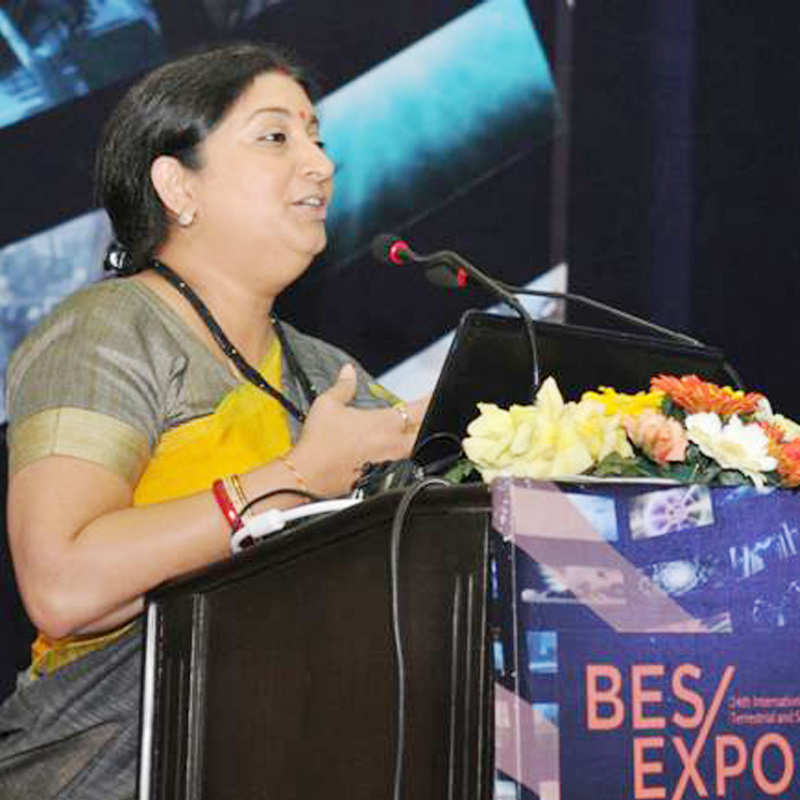
    NEW DELHI: Minister of Information and Broadcasting Smriti Irani at a public platform yesterday posed a question that may not be palatable to all but would bolster the confidence of Doordarshan bosses. She asked why the pubcaster couldn’t better leverage its own taxpayer-funded vast infrastructure for revenue generation the same way as private sector broadcasters had done.

    “The tragedy was that private broadcasters grew at the cost of [pubcaster] Prasar Bharati [riding DD’s FTA FreeDish platform],” Irani said, asking further, “How can we leverage the infrastructure that the taxpayer has paid [for] so that good content is available [and] there is increased ad spend because of sheer power of reach of Prasar Bharati?”

    According to her, India’s total advertising spend is expected to grow from 9.6 per cent last year to 12.5 per cent this year.  

    Irani, speaking at the Broadcast Engineering Society-oraginsed BES Expo 2018, went on to raise several other issues on the need of marrying good business model with technology, inadequate capacity and capability to manufacture locally STBs and the importance of broadcast engineering in the development of India’s media industry.

    DD’s KU-band DTH service, marketed under FreeDish brand, has been in the news lately with private TV channels questioning the pubcaster’s decision to not renew contracts to be on the FTA platform on expiry. Since then, DD has been giving temporary extensions to TV channels, waiting for broadcast disputes tribunal TDSAT, moved by some by some aggrieved TV channels, to give a final ruling on the matter.

    Bringing up the issue of FreeDish at a media event, Irani looked at a natural process of sending a message across to the private sector TV channels (over 800 on last count) and the mandarins of Prasar Bharati, which, by an Act of Parliament, is an autonomous body but relies heavily on government for funds.

    “The tragedy was that private broadcasters [on DD FreeDish] ended up taking a huge chunk from the ad pie not only from the ad spend of private sector, but also from government institutions like the DAVP [agency responsible for handing out government ads] on the basis of strength they leveraged from Prasar Bharati’s own infrastructure,” the minister pointed out.

    According to Irani, if Prasar Bharati, the managers and owners of DD, leveraged its infrastructure better, it would result in not only increased advertising revenue for the pubcaster but also reducing the burden of the taxpayer. She added that the government had allocated over Rs 2,500 crore to Prasar Bharati to fund its activities that also include DD’s sibling the All India Radio.

    Admitting that online consumption of video is increasing in India—40 per cent of entertainment is consumed online—and there is a growing demand in the digital arena for broadcasting, the minister asked whether Indian consumers, both rural and urban, have been sufficiently educated about digitisation of entertainment and the convergence happening in the country.

    While exhorting the stakeholders to collaborate with phone handset manufacturers to get additional numbers on video consumption patterns in terms of quality, quantity and genre, Irani said, “Data cannot have only [a] few masters… [one of the] greatest liberators in terms of data is the expanding reach of digital tech.”

    Bemoaning the country’s inability to manufacture locally good quality, cost-effective STBs in adequate numbers, Irani said, “That engineering anomaly needs to be addressed.”

    Though India is still far from digitising fully its 183 million TV homes, industry observers say the country imports almost 90 per cent of the boxes from China and ASEAN countries not because of engineering inability but lack of financial incentives.

    The BES Expo is one of the biggest broadcast technology shows in India. Nearly 300 companies from 25 countries will display their products in this year directly or through their dealers and distributors in India.

    Also Read :

    WOW Cinema petitions TDSAT on delayed auctions for DD FreeDish slots

    Right time for India-centric global news channel: Smriti Irani

    Smriti Irani: Need to reduce gap between regional & national news & democratize viewership

  • Doordarshan rev shows minor increase, ops costs decline

    NEW DELHI: Doordarshan has earned revenue of just Rs 8.32 billion as against a total operational cost of Rs 20.89 billion which included Rs 14.19 billion given as salary support by the government during 2016.17.

    Minister of state for information and broadcasting Rajyavardhan Rathore said the Government is providing grants-in-aid to Prasar Bharati (All India Radio and Doordarshan) for 100 per cent salary support and central sector scheme (erstwhile Plan grant) for creation of capital assets and content development for Kisan Channel.

    In 2015-16, DD earned revenue of just Rs 7.56 billion as against a total operational cost of Rs 18.7292 billion which included Rs 11.74 billion as salary support. In 2014-15, DD earned revenue of only Rs 9.12 billion as against a total operational cost of Rs 18.16 billion which included Rs 10.65 billion given as salary support.

    The rest of the operational costs of Rs 6.70 billion in 2016-17, Rs 6.99 billion (2015-16) and Rs 7.52 billion (2014-15) came from Internal and Extra-Budgetary Resources (IEBR) of Doordarshan. All these amounts are exclusive of service tax, the Minister said.

    The Minister said there has been a gradual increase in the operational costs of Doordarshan primarily attributable to hike in staff salaries in the wake of implementation of recommendations of 7th Central Pay Commission.

    However the other operating expenses have decreased due to strict financial prudence, the Minister claimed. The declining revenue trend over the recent past has also been arrested and increased by about 10 per cent last year.

    Also Read:

    Doordarshan mulls reach extension in south & east markets with new regional offerings

    Doordarshan: Soaps & travelogues make Arun Prabha shortlist, presentations early July

  • Govt committed to self-regulation on issues of freedom of press: Rathore

    NEW DELHI: Minister of State for Information and Broadcasting Rajyavardhan Rathore today said the Government believes in the philosophy of Self Regulation regarding to the issues related to freedom of Press.

    The Minister was speaking with a UNESCO delegation led by its Assistant Director General for Communication & Information today in New Delhi Frank La Rue.

    The delegation apprised the Minister about the varied activities of UNESCO in the field of Media and Communication. Possible areas of collaboration with the Government were also highlighted by the delegation.

    The Minister said Community Radio will address the information needs at the grassroot level, providing updates on different local and relevant issues in their own language and dialect.

    He said the Government stood committed in its objective to provide the last mile connectivity through various communication platforms including Community Radio which has been provided a big push through various initiatives.

    He said the Ministry has increased the subsidy for setting up CRS from 50 per cent to 90 per cent in the North Eastern States and 75 per cent in other states subject to a maximum limit of Rs 7,50,000. In order to make it more participatory, varied set of participants including Universities and NGOs have been permitted to set up CR stations in the country.

  • Govt adapting new communication strategies, says I & B minister

    Govt adapting new communication strategies, says I & B minister

    NEW DELHI: Minister of state for information and broadcasting Rajyavardhan Rathore today said that the Government has been redefining and adapting the content and information dissemination strategy in accordance with the changing paradigm in communication space, especially in the social media.

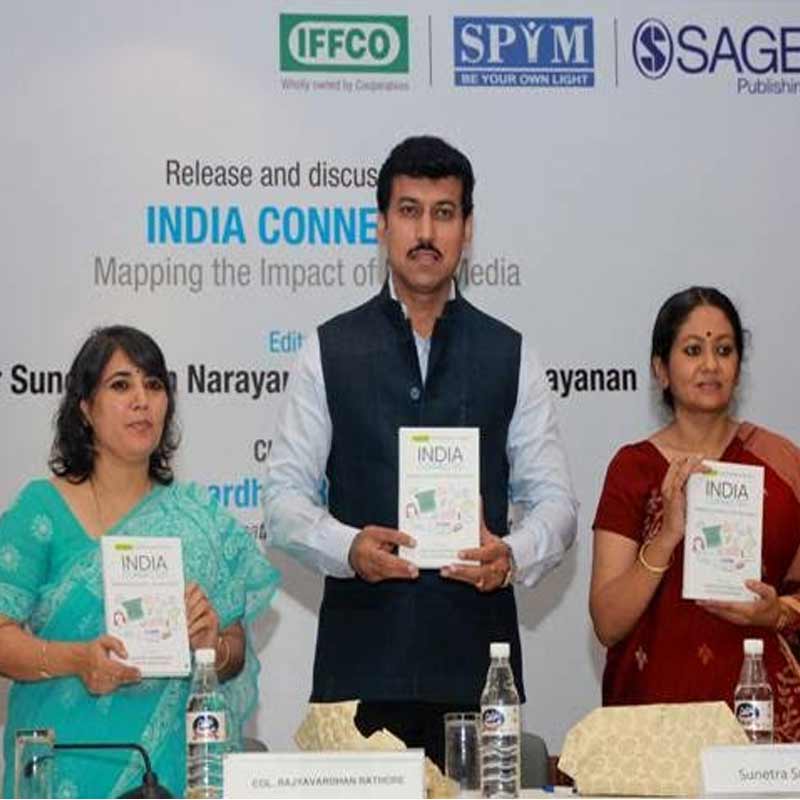
    Rathore said, due to technology change, information generation pattern and information consumption has changed today. The minister said this after releasing the book “India Connected: Mapping the Impact of New Media” here today. The book has been jointly authored by Dr Shalini Narayanan and Dr. Sunetra Sen Narayanan.

    Elaborating, the minister said news broadcasters today were following social media trends for designing debates and discussions on their channels.

    Rathore said the Government has been conducting seminars and workshops to train officers in social media with the latest tools and techniques to effectively communicate with citizens.

    The book outlines the impact of social media while comparing it with the traditional media. The book flags challenges and opportunities that social media offers in the Indian setting.

  • Govt adapting new communication strategies, says I & B minister

    Govt adapting new communication strategies, says I & B minister

    NEW DELHI: Minister of state for information and broadcasting Rajyavardhan Rathore today said that the Government has been redefining and adapting the content and information dissemination strategy in accordance with the changing paradigm in communication space, especially in the social media.

    Rathore said, due to technology change, information generation pattern and information consumption has changed today. The minister said this after releasing the book “India Connected: Mapping the Impact of New Media” here today. The book has been jointly authored by Dr Shalini Narayanan and Dr. Sunetra Sen Narayanan.

    Elaborating, the minister said news broadcasters today were following social media trends for designing debates and discussions on their channels.

    Rathore said the Government has been conducting seminars and workshops to train officers in social media with the latest tools and techniques to effectively communicate with citizens.

    The book outlines the impact of social media while comparing it with the traditional media. The book flags challenges and opportunities that social media offers in the Indian setting.