Tag: Information

  • Govt admits low production of STBs, urges more players to manufacture under Make in India Initiative

    Govt admits low production of STBs, urges more players to manufacture under Make in India Initiative

    MUMBAI: The government today admitted that less than 10 per cent set top boxes being used in India were Indian made. However, Information and Broadcasting Secretary Sunil Arora said the government and his ministry were completely committed to the digitization programme.

    Arora said, “We want the industry to look at this opportunity under the Make In India initiative and produce more STBs in India under the Electronics Manufacturing scheme”.

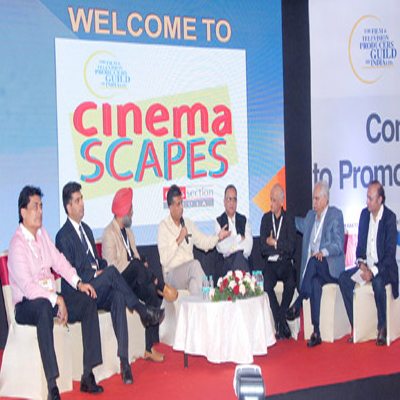
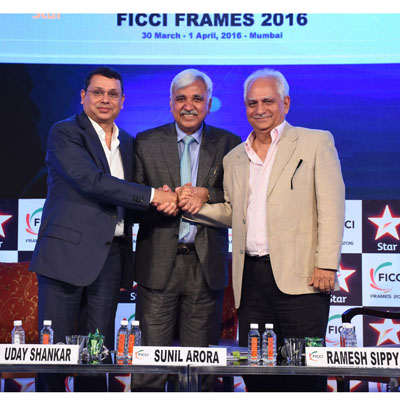
    The ministry remained committed to promoting ease of doing business in the media and entertainment sector, Arora said in a dialogue with Star India CEO Uday Shankar and veteran filmmaker Ramesh Sippy at FICCI Frames 2016.

    He said the Ministry was also guided by the ‘minimum government, maximum governance’ philosophy. “One of our primary objectives is to bring down the number of visitors to Shastri Bhavan to a trickle. We want to move towards less regulation and facilitate India to become the hub of media and entertainment industry.”

    Arora claimed that clearance for new TV channels had been expedited over the last six months under a liberalized regime. He said the home ministry had agreed to most of the suggestions made by the I&B ministry about liberalizing several conditions. Arora stressed that the ministry intends to play a role of a facilitator for the media and entertainment industry to flourish in the country.

    He said a decision had been taken to set up the National Centre of Excellence in Animation, Gaming and Visual Effects in Mumbai.  The Maharashtra Government is providing a 25 acre land near the Film City in Goregaon for the institute.

    The secretary also said the government had approved the Rs 598 crore National Film Heritage Mission to preserve and promote India’s rich film and cultural heritage. He also referred to the National Museum of Indian Cinema coming up in Films Division Complex on Peddar Road in Mumbai with several interactive exhibits. “Prime Minister Narendra Modi has taken a keen interest in this museum which is being curated by the National Council of Science Museums, Kolkata.”

    Focusing on ease of doing business, Arora said a Film Facilitation Office had opened in the National Film Development Corporation to function as a single window service for film related clearances. The secretary said an award had been instituted as part of the National Film Awards from this year to honour the states that are most film friendly. In 2016, Gujarat has been adjudged the most film friendly state, followed by UP and Kerala.

    Participating in the discussion, Shankar, who is also FICCI Entertainment Panel Chairman expressed concern over the viability of stand-alone news channels. He also said the entry of fringe elements in the news broadcasting field for ‘ancillary facilities’ was affecting credibility. Sippy expressed concern over low theatre density in India.


  • Govt admits low production of STBs, urges more players to manufacture under Make in India Initiative

    Govt admits low production of STBs, urges more players to manufacture under Make in India Initiative

    MUMBAI: The government today admitted that less than 10 per cent set top boxes being used in India were Indian made. However, Information and Broadcasting Secretary Sunil Arora said the government and his ministry were completely committed to the digitization programme.

    Arora said, “We want the industry to look at this opportunity under the Make In India initiative and produce more STBs in India under the Electronics Manufacturing scheme”.

    The ministry remained committed to promoting ease of doing business in the media and entertainment sector, Arora said in a dialogue with Star India CEO Uday Shankar and veteran filmmaker Ramesh Sippy at FICCI Frames 2016.

    He said the Ministry was also guided by the ‘minimum government, maximum governance’ philosophy. “One of our primary objectives is to bring down the number of visitors to Shastri Bhavan to a trickle. We want to move towards less regulation and facilitate India to become the hub of media and entertainment industry.”

    Arora claimed that clearance for new TV channels had been expedited over the last six months under a liberalized regime. He said the home ministry had agreed to most of the suggestions made by the I&B ministry about liberalizing several conditions. Arora stressed that the ministry intends to play a role of a facilitator for the media and entertainment industry to flourish in the country.

    He said a decision had been taken to set up the National Centre of Excellence in Animation, Gaming and Visual Effects in Mumbai.  The Maharashtra Government is providing a 25 acre land near the Film City in Goregaon for the institute.

    The secretary also said the government had approved the Rs 598 crore National Film Heritage Mission to preserve and promote India’s rich film and cultural heritage. He also referred to the National Museum of Indian Cinema coming up in Films Division Complex on Peddar Road in Mumbai with several interactive exhibits. “Prime Minister Narendra Modi has taken a keen interest in this museum which is being curated by the National Council of Science Museums, Kolkata.”

    Focusing on ease of doing business, Arora said a Film Facilitation Office had opened in the National Film Development Corporation to function as a single window service for film related clearances. The secretary said an award had been instituted as part of the National Film Awards from this year to honour the states that are most film friendly. In 2016, Gujarat has been adjudged the most film friendly state, followed by UP and Kerala.

    Participating in the discussion, Shankar, who is also FICCI Entertainment Panel Chairman expressed concern over the viability of stand-alone news channels. He also said the entry of fringe elements in the news broadcasting field for ‘ancillary facilities’ was affecting credibility. Sippy expressed concern over low theatre density in India.


  • Permission to 126 TV channels remains cancelled even as total of permitted channels rises to 869

    Permission to 126 TV channels remains cancelled even as total of permitted channels rises to 869

    New Delhi, 10 March: While the total number of satellite television channels uplinking from or downlinking into India has risen by twelve to 869 in the past month, the number of channels to whom permission had been cancelled remains 126.

    Thus, the government had given permission to a total of 995 channels which included those whose permissions were cancelled later.

    Of the permitted channels, 402 are news and current affairs channels while 467 are general entertainment channels until 29 February.

    Unlike previous times, the Information and Broadcasting Ministry has not uploaded details of the twelve new channels that have been permitted during February.

    Twenty channels including seven news channels have been permitted to uplink from India but not downlink within the country. 

    A total of 755 channels including 375 GECs are allowed to uplink and downlink in the country while 94 including 79 GECs are uplinked from overseas but allowed to downlink into TV homes in the country.    


  • Permission to 126 TV channels remains cancelled even as total of permitted channels rises to 869

    Permission to 126 TV channels remains cancelled even as total of permitted channels rises to 869

    New Delhi, 10 March: While the total number of satellite television channels uplinking from or downlinking into India has risen by twelve to 869 in the past month, the number of channels to whom permission had been cancelled remains 126.

    Thus, the government had given permission to a total of 995 channels which included those whose permissions were cancelled later.

    Of the permitted channels, 402 are news and current affairs channels while 467 are general entertainment channels until 29 February.

    Unlike previous times, the Information and Broadcasting Ministry has not uploaded details of the twelve new channels that have been permitted during February.

    Twenty channels including seven news channels have been permitted to uplink from India but not downlink within the country. 

    A total of 755 channels including 375 GECs are allowed to uplink and downlink in the country while 94 including 79 GECs are uplinked from overseas but allowed to downlink into TV homes in the country.    


  • Second digital India summit to be launched by Times Network

    Second digital India summit to be launched by Times Network

    MUMBAI: In a bid to help speed up the transition to a vibrantly Digital India, Times Networkannounced the launch of the Second Digital India Summit (SDIS). The Network claims that the summit will lead the country on the path to digitalization by providing the leaders and digital evangelists a platform to ideate on important areas and issues, and also by recognizing and honouring individuals, businesses and organizations that are harnessing the power of information, communication and technology and digital tools.

    SDIS will be telecast on Times Now and ET Now. The summit will get under way on 22 March 2016, with a day-long event in New Delhi, which will begin with a keynote address from the union minister of communications and information technology, Ravi Shankar. The session will be addressed by Dell’s Asia Pacific and Japan president Amit Midha and Dell emerging markets chairman.

    Times Network managing director and CEO M K Anand said, “India is surging ahead on the path of progress, powered by young, creative, digitally-savvy people and a strong government emphasis on the best use of information, communication and technology to usher in digitization across cities and platforms. As the nation’s most influential network with the biggest English and business news channels that inform and empower viewers, Times Network is proud to announce the second digital India summit. Our goal is to contribute to transforming India into a global economic superpower over the next decade, and we are confident that the second digital India summit will create a significant positive impact.”

    The day will conclude with the Digital India Summit awards being given out to those leaders whose efforts and initiatives have contributed the most to the Digital India Summit’s primary objectives to help India on the path to transform business processes, improve delivery of public services and thereby to create a positive impact on society. SDIS works to identify and honour the top individual torchbearers harnessing the power of ICT and digital.

    To promote SDIS, Times Network says that it will run and exhaustive high-decibel call-for-entries campaign to invite participation from businesses and organizations that are harnessing the power of technology and transforming businesses and lives of people. The entire process, from call for entries to the selection and short listing process, through an eminent jury meet, and finally, the winners’ announcement and felicitation on the awards night, will flow across a month.

    The awards are divided into two parts, Good For India and Good For Organizations.

    While the Good For India awards recognize the initiatives taken by stakeholders towards the accomplishment of the digital India dream, on other hand the Good for Organizations awards will recognize organizations that have made the first move towards digital India by using ICT in integrating people, processes and data to achieve business transformation and growth.

    Good for India has seven categories – e-governance solutions, e-education learning solutions, e- healthcare delivery solutions, skills and employment solutions, energy solutions, environmental solutions and agricultural solutions. Good for organizations has four categories under digital enterprise which are manufacturing, services, digital start-up innovators and digital social innovation.

    Supporting the event are the lead and award partner Huwaei, lead partners GTL Infrastructure and Union Bank of India, knowledge partner MAIT and Tech 4 good partner NASSCOM foundation.

  • Second digital India summit to be launched by Times Network

    Second digital India summit to be launched by Times Network

    MUMBAI: In a bid to help speed up the transition to a vibrantly Digital India, Times Networkannounced the launch of the Second Digital India Summit (SDIS). The Network claims that the summit will lead the country on the path to digitalization by providing the leaders and digital evangelists a platform to ideate on important areas and issues, and also by recognizing and honouring individuals, businesses and organizations that are harnessing the power of information, communication and technology and digital tools.

    SDIS will be telecast on Times Now and ET Now. The summit will get under way on 22 March 2016, with a day-long event in New Delhi, which will begin with a keynote address from the union minister of communications and information technology, Ravi Shankar. The session will be addressed by Dell’s Asia Pacific and Japan president Amit Midha and Dell emerging markets chairman.

    Times Network managing director and CEO M K Anand said, “India is surging ahead on the path of progress, powered by young, creative, digitally-savvy people and a strong government emphasis on the best use of information, communication and technology to usher in digitization across cities and platforms. As the nation’s most influential network with the biggest English and business news channels that inform and empower viewers, Times Network is proud to announce the second digital India summit. Our goal is to contribute to transforming India into a global economic superpower over the next decade, and we are confident that the second digital India summit will create a significant positive impact.”

    The day will conclude with the Digital India Summit awards being given out to those leaders whose efforts and initiatives have contributed the most to the Digital India Summit’s primary objectives to help India on the path to transform business processes, improve delivery of public services and thereby to create a positive impact on society. SDIS works to identify and honour the top individual torchbearers harnessing the power of ICT and digital.

    To promote SDIS, Times Network says that it will run and exhaustive high-decibel call-for-entries campaign to invite participation from businesses and organizations that are harnessing the power of technology and transforming businesses and lives of people. The entire process, from call for entries to the selection and short listing process, through an eminent jury meet, and finally, the winners’ announcement and felicitation on the awards night, will flow across a month.

    The awards are divided into two parts, Good For India and Good For Organizations.

    While the Good For India awards recognize the initiatives taken by stakeholders towards the accomplishment of the digital India dream, on other hand the Good for Organizations awards will recognize organizations that have made the first move towards digital India by using ICT in integrating people, processes and data to achieve business transformation and growth.

    Good for India has seven categories – e-governance solutions, e-education learning solutions, e- healthcare delivery solutions, skills and employment solutions, energy solutions, environmental solutions and agricultural solutions. Good for organizations has four categories under digital enterprise which are manufacturing, services, digital start-up innovators and digital social innovation.

    Supporting the event are the lead and award partner Huwaei, lead partners GTL Infrastructure and Union Bank of India, knowledge partner MAIT and Tech 4 good partner NASSCOM foundation.

  • Broadcast expenditure 4x that of MIB’s information, film & secretariat sectors

    Broadcast expenditure 4x that of MIB’s information, film & secretariat sectors

    NEW DELHI: Expenditure on the broadcasting sector alone in the past three years up to March 2015 has been more than three to four times the total expenditure on the other sectors covered by the Ministry of Information and Broadcasting (MIB): secretariat, film and information.

    An audit of the Ministry’s accounts has revealed that during 2014-15, a total of Rs 2467.4 crore (including Rs 2004.41 crore as non-plan expenditure) as was set aside for broadcasting alone, while the expenditure on the information sector was Rs 466.4 crore (including Rs 269.84 non-plan); Rs 176.33 crore (including Rs 97.16 crore non-plan) on film and Rs 48.4 crore (including Rs 46.35 crore non-plan) on secretariat expenses.

    During 2013-14, expenditure on broadcasting was Rs 2157.19 crore (including Rs 1733.38 crore non-plan) as against Rs 474.73 crore (including Rs 247.83 crore non-plan) on information; Rs 153.99 crore (of which Rs 90.32 crore was non-plan) on film; and Rs 42.31 crore (including Rs 41.47 crore non-plan) on Secretariat expenses.

    The expenditure on broadcasting in 2012-13 was Rs 2069.09 crore (of which Rs 1654.33 crore was non-plan), as against Rs  381.22 crore (including Rs 234.75 crore non-plan); Rs 133.02 crore (including Rs 83.72 crore as non-plan); and Rs 41.93 crore (including Rs 40.36 crore non-plan) on Secretarial expenses.


  • Broadcast expenditure 4x that of MIB’s information, film & secretariat sectors

    Broadcast expenditure 4x that of MIB’s information, film & secretariat sectors

    NEW DELHI: Expenditure on the broadcasting sector alone in the past three years up to March 2015 has been more than three to four times the total expenditure on the other sectors covered by the Ministry of Information and Broadcasting (MIB): secretariat, film and information.

    An audit of the Ministry’s accounts has revealed that during 2014-15, a total of Rs 2467.4 crore (including Rs 2004.41 crore as non-plan expenditure) as was set aside for broadcasting alone, while the expenditure on the information sector was Rs 466.4 crore (including Rs 269.84 non-plan); Rs 176.33 crore (including Rs 97.16 crore non-plan) on film and Rs 48.4 crore (including Rs 46.35 crore non-plan) on secretariat expenses.

    During 2013-14, expenditure on broadcasting was Rs 2157.19 crore (including Rs 1733.38 crore non-plan) as against Rs 474.73 crore (including Rs 247.83 crore non-plan) on information; Rs 153.99 crore (of which Rs 90.32 crore was non-plan) on film; and Rs 42.31 crore (including Rs 41.47 crore non-plan) on Secretariat expenses.

    The expenditure on broadcasting in 2012-13 was Rs 2069.09 crore (of which Rs 1654.33 crore was non-plan), as against Rs  381.22 crore (including Rs 234.75 crore non-plan); Rs 133.02 crore (including Rs 83.72 crore as non-plan); and Rs 41.93 crore (including Rs 40.36 crore non-plan) on Secretarial expenses.


  • Government plans to increase funds for M&E industry: CII

    Government plans to increase funds for M&E industry: CII

    MUMBAI: Minister of State for Information & Broadcasting (I&B) Rajyavardhan Singh Rathore assured the media and entertainment (M&E) industry that the government policies would be supportive and calibrated to enhance the modernisation and monetisation of the sector.


    Addressing the fourth edition of the CII Big Picture Summit 2015 in New Delhi, Rathore said, “In phase II of the auction of the frequencies for the radio, there was no provision for broadcasting news. This was changed during the phase III auction, when private radio was allowed to broadcast the news of the All India Radio (AIR) for a specified time.”


    Rathore mentioned that a lot of initiatives were being taken by the government to support the M&E industry in the country, such as channelising more advertisements to the digital media like YouTube, outsourcing some of the creative works of Doordarshan and AIR to the industry. More such steps would be taken in due course.


    In this regard, plans are underway to revamp the terrestrial broadcast of DD to couple it with internet and DTH so that there would be opportunities for making local programs based on events happening in smaller towns and rural areas. This would also give a boost to creation of contents, which have local flavour and relevance. 


    Acknowledging the industry demand that the monetisation of the M&E segment had not kept pace with the requirements, Rathore disclosed that the government had proposed to set up a university to develop soft skills needed for the industry.


    This university would specialise in providing skills to students in areas like gaming, animation and other avenues of creative pursuits relevant to the industry. He wanted industry to take a lead in this endeavour and create centers of excellence, which would enable the M&E industry to reach $100 billion by 2025. He also said that industry support was imperative to improve the content and appeal of the programs and for training media professionals.


    Responding to a suggestion made by the industry to bring down high incidence of tax levied on the M&E industry, the Minister said that the Good and Services Tax (GST), which the Government wanted to enact would have subsumed various taxes incidental on the industry. He hoped that the bill would be passed soon in the interest of the nation.


    Rathore observed that the Government was keen to create a single window clearance for shooting films in India, which could enhance the monetisation and profitability of the industry. He wanted CII to come out with a plan for creating a dynamic eco system for the film industry to flourish. At the same time, he said that inadequate number of cinema halls in India as compared to countries like the US and China could be more to do with real estate prices.


    Ministry of I&B special secretary J S Mathur said, “The process of digitisation in the M&E sector was at a higher pace and would show results in the coming years. He was of the opinion that smart phones, which could carry large quantum of data including films, news bulletins etc. would redefine the digital space in India.”


    He also mentioned that the Government was in the process of finalising the draft of the Intellectual Property Rights (IPR), which would enable more and more people to invest in India in various segments like content creation, production, animation, and gaming. 


    Prasar Bharati CEO Jawhar Sircar opined that a consortium approach should be followed by the industry and the Government to promote the convergence in the M&E industry to realise its potentials. He suggested that a shared approach should be there among the players to make use of the vast infrastructure of the government through innovative schemes that would put to use smart phones as carriers of innovative contents.


    CII National Committee on Media and Entertainment and Group CEO, Viacom 18 Group CEO and CII National Committee on Media and Entertainment chairman Sudhanshu Vats pitched for easing of doing business and greater application of convergence of technology to tap the potentials of the industry. Monetisation of the industry can be enhanced through proper government support to the industry.


    Narrating the problems being faced by the M&E sector, Star India COO Sanjay Gupta said that bandwidth problems, high cost, high taxes etc were adversely affecting the growth of M&E industry. He wanted a supportive policy regime to help the industry reach $100 billion mark by 2025.

  • Kashish Queer Film Festival invites entries for fifth edition

    Kashish Queer Film Festival invites entries for fifth edition

    MUMBAI: The Lesbian, Gay, Bi-sexual and Transgender (LGBT) community is set for a filmy outing very soon as entries for the fifth Kashish Mumbai International Queer Film Festival has been invited.


    The festival will be held from 21 to 25 May 2014 (tentative dates).


    Kashish Mumbai International Queer Film Festival is the only LGBTQ film festival in India to be held in a mainstream theater and the only queer festival to receive clearance from the Information and Broadcasting Ministry.


    The previous four editions of the festival were well received and attracted close to 6,500 footfalls over five days at two venues. Almost 120 to 130 films including shorts, documentaries and features with LGBTQ themes from across the world are screened at the festival every year.


    The competition categories in the festival are: Best Narrative Feature, Best Documentary Feature, Best Documentary Short, Best International Narrative Short, Best Indian Narrative Short, and Riyad Wadia award for Best Emerging Indian Filmmaker.


    The last date of submission of forms is January 31, 2014. However, the festival encourages early submission as previews begin mid November. The selected filmmakers will be notified by email by March 31, 2014.


    The winners will be selected by a panel of eminent jury.


    For details and online submission of forms, one can log on to https://www.surveymonkey.com/s/K2014-FilmSubmissionForm