Tag: Influencers

  • GUEST COLUMN: Top marketing trends brands may need to adopt in 2022

    GUEST COLUMN: Top marketing trends brands may need to adopt in 2022

    Mumbai: With the rising internet and smartphone penetration and social media usage, especially in tier-II and tier-III cities, the way brands engage with their clients has irrevocably changed. Digital adoption has been the primary focus for marketers in 2021, with a myriad of trends appearing in the marketing industry, including growing online shopping, technology-integrated operations, and so on. With this backdrop in mind, here are some of the most essential marketing trends to watch in 2022.

    Influencer marketing

    Once known as an additional leg to a brand campaign to gain social media visibility, influencers have expanded their audiences and now are driving the communication strategy for many brands. Millennials and Gen Z customers religiously follow influencers on social media, considering them to be highly relatable in terms of content they share. Various brands are already banking on this trend, collaborating with influencers to promote their products and services. The coming months will see more marketers and advertisers follow suit increase brand exposure and garner fans from the influencer’s audience. In fact, several businesses are developing technologies that will enable influencers to create their D2C brands, resulting in creating a micro-entrepreneur ecosystem.

    First-party data will become relevant

    Until recently, most marketing platforms have relied on third-party cookies to collect consumer data. These insights help them understand the evolving shopping patterns of customers and accordingly modify their ongoing marketing activities. However, with rising privacy concerns, the new legislation has initiated restricting the use of third-party consumer data sources. Given this, first-party data will become more relevant than ever. As a result, organisations should enhance their existing data practices and partner with platforms that have extensive first-party data. Doing so will not only give them access to quantitative insights but also help them craft innovative marketing campaigns that are tailored to the intent of consumers.

    AI-powered conversational marketing

    As technological advancements continue to evolve, consumer behavior, interests, and expectations will keep changing at an accelerated pace. Today’s consumers aren’t satisfied with simply appealing websites or products. They are always looking for something new, desiring more personalised, engaging, and immersive shopping experiences. Brands must therefore modify their customer interaction strategies to generate interest, engage buyers, and convert demand to flow in sync with the new customer journey.

    Many brands are implementing conversational AI technologies such as chatbots and voice assistants that can understand and speak vernacular to provide an enhanced experience and strengthen brand-customer relationships.

    Short-form content

    Long-form videos make consumers reluctant to watch and consume content about the brand and its products, pushing them away rather than attracting and retaining them. But fitting well with the fast-paced attention spans of Millennials and Gen Z consumers across several demographics, short videos have gained substantial traction, contributing to an overall increase in e-commerce. As a result, major e-commerce platforms are shifting their focus to short-form content to create more engaging purchasing experiences.

    Mobile-friendly digital experiences

    With over 600 million internet users in India, it’s no wonder that people are spending more time on their smartphones and tablets. And, as millennials and Gen Z audiences, who like to explore and buy across a range of devices, increase their purchasing power, the problem of providing a & seamless experience across all devices — particularly on mobile — will get more complicated. So, it is pivotal for marketers to recognize that mobile-friendly digital experiences are more important to consider, and accordingly create meaningful user experiences to drive brand awareness.

    Conclusion

    The Covid-induced quarantine and consequent isolation have redefined the consumer expectations and how they interact with brands. Improving customer satisfaction is the most accessible approach to distinguish yourself from the increasing e-commerce crowd. And catalysed by the pandemic, the aforementioned trends will continue to thrive in 2022, which is why you should start experimenting with different advertising strategies to keep customers happy and delighted at every point possible.

    (Vijay Kumar Mikkilineni is TCL India marketing head. The views expressed in the column are personal, and Indiantelevision.com may not subscribe to them.)

  • Health OK taps celebrities & influencers for its digital campaign

    New Delhi: Health OK, a multivitamin and minerals tablet from the house of Mankind Pharma, has launched an extensive digital campaign featuring celebrities and popular influencers.

    The brand has collaborated with various celebrities including Harbhajan Singh, Harshvardhan Rane, Abhinav Bindra, Prince Yuvika Narula, Ranvijjay Singha to make consumers aware of the benefits of ‘Health OK’ multivitamin and mineral tablets. The idea is to establish a stronger presence across the nation by leveraging influencers as one of the catalysts while maintaining a greater focus on other mediums as well, said the company.

    Health OK has also partnered with Marathi actors like Adinath Kothare, Siddharth Chandekar, Shashank Ketkar; Shine Shetty for the Kannada audience; Nikhil Siddhartha for the Telugu audience, and Makapa Anand for the Tamil audience. All the influencers have posted about the benefits of the product on their respective social media platforms.


    Mankind Pharma, general manager, sales and marketing, Joy Chatterjee, said, “In the last few months, we have noticed a great response in our sales number for Health OK. Our aspiration for this brand is to make the last person living in the remotest areas aware of this product. With this campaign, we intend to expand the reach of the product and consume it because it builds the overall immunity and energy which is quite essential during such times.”

    Health OK was incorporated in the OTC category in March this year due to the demand and need for multivitamin products in the category. Going forward, the brand said it will roll out new campaigns and will keep investing in the marketing channels to connect well with the audience.

  • Clubhouse takes off in India amid pandemic

    KOLKATA: With large parts of the country still under lockdown, people have begun exploring new virtual spaces to interact with each other. Within few days of its launch for androids in India, the social media app, Clubhouse recorded over one million Android downloads in the country pitching India as one of the top markets for this new emerging audio-based app.

    “India seems to love it,” said Zoo Media and Foxymoron co-founder Pratik Gupta. “The platform is acting as both casual and formal setup to discuss diverse topics, so it’s an apt media vehicle for brands to latch onto. Early brand movers will gain an advantage; both in terms of scale & cost-effectiveness, right from the start. The concept is new – it’s almost like a talk show where people are free to express themselves.”

    What are the opportunities for brands?

    The opportunities lie in being able to either host a branded room or sponsor rooms that are hosted by prominent creators or simply aid and join third-party rooms for now. According to Grapes Digital national business head Rajeesh Rajagopalan, marketers may think about running their campaigns on the app going forward because the elements like chat apps, conference calls or podcasts would help marketers/brands to reach a diverse set of consumers.

    “For a marketeer or an advertiser, Clubhouse presents a great opportunity to establish the brand and promote products, services, or events,” said Isobar India COO Gopa Kumar, adding that it gives a voice to an authentic narrative that is inherent in the platform as all the people and the conversations are real. “There are opportunities to share your brand purpose, story, connect with consumers at large, get their feedback, act as a focus group to know more about how and what they feel about the brand. Brands can start small and start seeing how they can establish a connection with the audience and push the narrative, cause, or story.”

    Although the conversations are voice delivered like podcasts, the main difference is the chats are live. Since there is no recording, users tend to be hooked on to its content for long as they are anticipating and looking for conversations about topics they are interested in—whether to listen or share. “It is an extension of a Podcast hosted in a virtual venue around a limitless audience. It has reinforced the age-old power of human voice emotions,” Vizeum India ex-CEO Himanka Das said. Its key attribute is an audio medium, which sets it apart from established social media and messaging platforms like Facebook, Instagram, Sharechat, TikTok, Moj, WhatsApp, and YouTube.

    The Indian market has the appetite to support audio-only platforms. But the app needs to localise its feature for the Indian market and tap into the regional languages more to capitalise on the audience, believe experts. “Any such social media platform will house rich data in these couple of months to deploy deep learning algorithms to derive actionable insights from consumer cohorts based on interest, interactions, and habits. This can bring magic to enable brands to curate audio content to drive structured conversations. This will be key to drive the metric for monetising for brands,” added Das.

    How influencers can leverage the platform?

    According to experts, it has become an important platform for influencers and creators to engage with their fan base. Influencers will play a critical role in driving conversation and traffic, once the initial hype starts to fade away. The width of content & topics available on the platform makes it an amazing platform for influencers to participate. For the audience, it gives them a sense of being up-close and personal with their favourite influencers.

    “Clubhouse is a peer-to-peer network that can be leveraged by the influencer community to interact with the user base,” said Buzzoka CEO and co-founder Ashutosh Harbola. For example, they can quickly host a Room with 200 followers on the app. However, it won’t be a primary channel for influencer marketing. It can always be an extension for influencers to engage with the users in the long-term, he added. Considerably, Clubhouse now allows Instagram, Twitter profiles to be linked to the user profile.

    Monetisation opportunities:

    There are plenty of opportunities for brands to exploit the platform but it seems that Clubhouse may not restrict its monetisation to advertising revenue only. The app is looking to expand into payments, ticketing, subscription, ticketing, tipping, Clubhouse co-founder Rohan Seth said recently.

    “Clubhouse will continue to focus on its audience expansion and methods to keep the creators incentivized & provide tools for better content creation. Clubhouse has recently launched Clubhouse Payments for direct payments to creators and has less focus on advertising revenue. These are still early days, and I think that the model that the business will adopt will be creator & payment to creator focussed. Brands will probably latch onto the creators through the platform itself, rather than opening it up to buying advertising space,” Zoo Media’s Gupta commented.

    According to Isobar’s Kumar it is too early to comment on monetisation opportunities as the app is soon to end invite system, to be open to all. The very fact it was an invite-only medium early on and had an exclusivity element, attracted many users, and also promise privacy. Hence, the industry needs to wait to see how the platform and its users evolve over some time.

    While the Indian government is in a standoff with few social media platforms regarding the implementation of new Information Technology Rules, Clubhouse founders expressed their willingness to comply with the new rules that came into effect on 26 May in a virtual press meet.

    In a country driven by freedom of speech, one has to keep a close watch on the audio content responsibly with the new social media regulations. This is also good for the brand safety going forward, highlighted experts.

  • ASCI unveils final guidelines for influencer advertising on digital media

    ASCI unveils final guidelines for influencer advertising on digital media

    Mumbai: Advertisers now have a clear set of guidelines on which they can base their influencer driven ads/commercials. Industry watchdog – the Advertising Standards Council of India (Asci)  –  unveiled the final guidelines for influencer advertising on digital media today. The ombudsman had initially released some draft guidelines  in February and sought feedback from all stakeholders – advertisers, agencies, influencers and consumers. Asci then incorporated the responses before drawing up the final framework.    To ensure a collaborative process and expert inputs, ASCI tied up with Big Bang Social, a leading marketplace for social storytelling, to get India’s leading digital influencers’ views on board.

    The new rules will become applicable to commercial messages or advertisements published on or after 14 June 2021. The guidelines clearly lay out the definitions for the terms influencer, virtual influencer, material connection and digital media. Asci has introduced  Asci.social platform- a digital platform that will house information about the rules applicable to the  community of influencers, marketers, agencies and consumers. Additionally, all promotional content in which they feature will have to mandatory  be labelled as such by the influencers. Asci has roped in Reech, a French technology provider to monitor potential violations of the guidelines.

    GUIDELINES:

    Disclosure: All advertisements published by social media influencers or their representatives, on such influencers’ accounts must carry a disclosure label that clearly identifies it as an advertisement.

    Criteria for disclosure :

    a. Disclosure is required if there is any material connection between the advertiser and the influencer.

    b. Material connection isn’t limited to monetary compensation. And includes anything of value given to mention or talk about the Advertiser’s product or service, like free or discounted products or service or other perks

    c. a disclosure is needed even if they weren’t specifically asked to talk about that product or service.

    d. Disclosures are required even if the evaluations are unbiased or fully originated by Influencer, so long as there is a material connection between Advertiser and Influencer.

    e. If there is no material connection and the influencer is telling people about a product or service they bought and happen to like, that is not considered to be an advertisement and no disclosure is required on such posts.

    · Disclosure must be upfront and prominent so that it is not missed by an average consumer

    · Any one or more disclosure labels can be used: advertisement, ad, sponsored, collaboration, partnership, employee, free gift

    · If the advertisement is only a picture or video post without accompanying text (such as Instagram stories or Snapchat), the disclosure label needs to be superimposed over the picture/video

    I. For videos that last 15 seconds or less, the disclosure label must stay for a minimum of 3 seconds.

    II. For videos which are 2 minutes or longer, the disclosure label must stay for the entire duration of the section in which the promoted brand is mentioned.

    · In live streams, the disclosure label should be announced at the beginning and the end of the broadcast.

    · In the case of audio media, the disclosure must be clearly announced at the beginning and at the end of the audio, and before and after every break that is taken in between.

    · The disclosure should be in English OR in the language as the advertisement itself in a way that is easy for an average consumer to understand.

    Responsibility of disclosure of material connection and also of the content of advertisement is upon the advertiser for whose product or service the advertisement is, and also upon the Influencer.

  • Mitron app inks licensing deal with Zee Music Co

    Mitron app inks licensing deal with Zee Music Co

    KOLKATA: Short format video app Mitron has inked a licensing deal with Zee Music Company, enabling users to have access to thousands of songs from the latter’s extensive catalogue.

    This is the first-ever deal for Mitron with a music company and it’s in line with the app’s efforts to provide a robust and versatile music library for creators to showcase their creativity. To celebrate the association, Mitron has launched #MummyKassam challenge where users can groove to or create videos on the newly released song from the Varun Dhawan and Sara Ali Khan starrer Coolie No. 1, in the near future blockbuster titles such as Ranveer Singh starrer World Cup ‘83, Parineeti Chopra starrer The Girl on the Train, are expected to join the library.

    Mitron TV CEO & co-founder Shivank Agarwal said, “We are delighted that Mitron users will now have access to the huge Zee Music library including blockbusters from Bollywood. We aim to provide a seamless experience to our millions of content creators to showcase their talent and make the most interesting content.”

    Zee Music Company chief business officer Anurag Bedi said, “We are glad to partner with Mitron, this collaboration will give content creators access to our diverse stream of catalogue spread across regional languages. We focus on bringing together a community of people who want to do more with music.”

    Mitron is rapidly ramping up its music library along with focusing on original in-app music. Mitron recently released ‘Atmanirbhar Anthem’, paying homage to the Indian technology community whilst imparting a message on the importance of the #VocalForLocal movement. The anthem is part of Mitron’s music library and available on more than 200 music streaming platforms. The app has crossed over 40+ million downloads on Google Play Store.

  • From neighbourhood influencers to Disha Patani: The journey of WOW Skins

    From neighbourhood influencers to Disha Patani: The journey of WOW Skins

    NEW DELHI: Fit & Glow Healthcare Pvt Ltd, the parent company that owns the brand WOW Skin Science, was launched in 2013. In the initial phase, the brand encountered a few stumbling blocks but now it is sitting pretty at a valuation of $50 million (Rs 350 crore). 

    Wow Skin Science co-founder Manish Chowdhary described how the company began with tight operations and a small team that focused on formulations and development of the brand. “There are a few key things that we worked on when we started our journey: the first was consumers; the second, our formulations; the third, faster turnaround time; and fourth, easy accessibility to the products across the country. From the beginning, we used data science and analytics to understand consumer behaviour and develop products based on the insights.”

    The brand offers a wide range of products in the skincare and haircare categories. It has over 200 products and the apple cider vinegar haircare range was the first of its kind in the market.

    The company’s target audience is basically new-age millennials, the youth, and working professionals. Chowdhary mentioned that the brand follows a simple customer acquisition strategy. “A high percentage of our target audience is on social media and are digitally savvy. The digital medium remains the main platform for us for customer acquisition, and we do appropriate investments in that. We are able to generate an impressive amount of customer response through our efforts on the digital platform.”

    In the age of digital marketing, social media plays a pivotal role in promoting a brand and WOW Skins has gone the same route. “We decided not to take the usual advertising route, instead focused on social media as that was like promoting the brand via word-of-mouth. The digital medium is the fastest way to reach our customers, that is why online marketing and sales have been our key go-to strategy.”

    When it comes to core marketing objective, the brand’s marketing and product strategy is driven by consumer insights. “We have an experienced marketing team that tracks social media and other digital platforms to understand consumer trends and latent demands. Based on that marketing programs are developed to attract, acquire, and retain customers,” Chowdhary said.

    Content takes precedence in Wow's marketing strategy, as the brand wanted customers to know its USP and unique formulations before they made a buying decision.  “Besides doing the usual promos and discounts, we have used the power of YouTube and Instagram for promotions. The brand’s strategy was to spread awareness through product videos,” he added.

    The millennials of today are constantly refreshing their timelines and influencers are a big part of their content feed. Therefore, the brand has taken to influencer marketing since its inception. Chowdhary stated, “We have seen that consumers tend to trust an influencer who is an ordinary person with the next-door neighbour vibe. They have a closer touchpoint with the consumers. Those who follow influencers are able to connect with them in a better way and take their advice more seriously. This works because most of them showcase the products in a more real-life scenario.”

    However, in what may be considered a departure from its ‘relatable’ brand messaging, Wow Skin signed on Disha Patani as the line’s new face a few months ago. The brand has also roped in Bhumi Pednekar as brand ambassador for its range of skincare products. Says Chowdhary: "We have been working with regular influencers with a more regional and vernacular focus to develop a stronger connect with consumers in various tier markets. But now our brand has grown and is continuing to grow in a big way, and this means we needed to develop a brand connection at a bigger level. That is why we felt the need to have a young celebrity as the face of our brand. This is suitable in the time when there is a major market impact due to the pandemic and people are looking for ways to feel upbeat.”

    Primarily, the brand is a digital-first organisation and has a presence in all online marketplaces like Amazon, Flipkart, Nykaa, Purplle, Big Basket, Myntra, and Health & Glow. But now it has also made its products available in brick and mortar stores and beauty retail spaces to enable customers to get a more direct feel of the brand. WOW Skin products are also available in more than 5,000 department stores and pharmacies across India.

    However, Chowdhary shared that due to the pandemic, the physical retail space has taken a major hit and the recovery is still slow. At present, the focus will continue to be on the digital medium and online marketplaces.

    He also shared that the brand has been able to garner a big chunk of loyal customers and it is all because of a strong customer service culture that reaches out to existing and new users with product support and beauty advice. “We try to ensure that each and every customer is satisfied with our products. We listen to them and if they are unhappy with any product or result, we provide support in choosing the right products. This is to ensure that we have repeat customers.”

  • Instagram Reels and what it means for brands and content creators

    Instagram Reels and what it means for brands and content creators

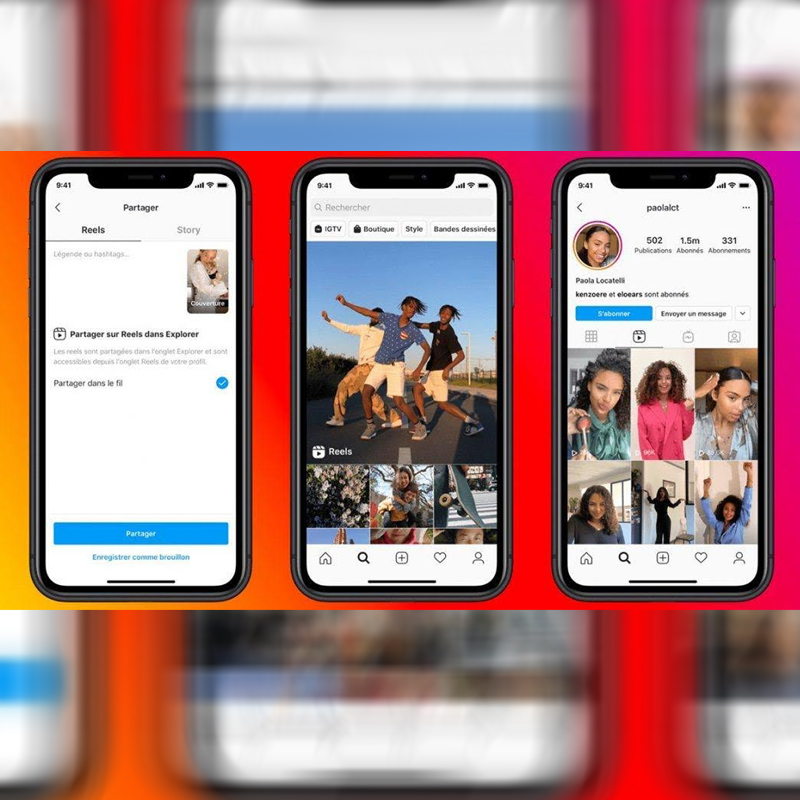
    NEW DELHI: The ban on TikTok surely made a dent in influencer marketing since it wasn’t just a space for content creativity but also for brands to connect with audiences. This gave the opportunity for other homegrown brands to scale up. Meanwhile, Instagram introduced a new feature ‘Reels’, allowing users to record and share short videos, much like TikTok.

    The new feature proposed by Instagram allows users to create and share 15-second videos with camera effects, editing tools and music. There is also a handy timer and option to adjust the video’s speed. The tool which was rolled out last week has become a quite hit among influencers and celebrities and people are trying their hands on the new feature.

    However, there is a sharp distinction in where these apps were used dominantly. TikTok had a user base of 200 million in India, which was a massive user growth base, and it was highly popular in Tier II and Tier III markets, while Instagram is more widely used in metro and urban markets.

    The Marcom Avenue director Divanshi Gupta shares that influencer marketing will see a shift. “Users and content creators will try to find their comfortable space amidst the chaos. But, eventually, influencer marketing will find its balance as the latest feature gains traction from the right kind of target audience and brands.”

    Grapes Digital COO Shradha Agarwal explains, “With Reels, Instagram has sent a signal to the entire country that we have evolved from being aspirational to massy. They have combined Instagram music with Reels where you can look at the lyrics while selecting the song and then create snippets of videos to combine them. From a user perspective, it is easier for them as they don’t have to manage multiple social handles. Influencers have already moved to Instagram. The only challenge is that while some TikTokers had a huge following on Instagram as well others may have had just 3000 compared to millions on TikTok. So, the biggest challenge for these influencers will be to first grow their numbers and then get business from brands.”

    The ban on TikTok enabled many Indian apps like Chingari, Roposo, Mitron and others to provide similar user experience and engage the disgruntled content creators and consumers. When TikTok was banned, Roposo claimed to bag 22 million users in only 48 hours. Chingari reported that the app has garnered more than 16 million users in just 25 days. Mitron also stated that the brand has observed an 11x jump in daily traffic after the ban.

    However, the popularity of Instagram is huge and could have an edge over the competition. In fact, all these apps will have a tough fight attracting users towards them and gain a market share. This means that brands will have to also choose platforms.

    Gupta feels that brands should be where their audiences are. “In a country like India, where the population varies from A to Z, it is difficult to find a micro-targeted audience at one place or in a particular ecosystem, especially amongst the Indian apps. With the change in demographics, gender, income and other personal factors, the choices of people change and so, to say that brands should focus more on Indian apps is quite irrational.”

    Agarwal explains, “I don’t think we should focus on only Indian apps. What is the benefit of globalisation if we are not adoptive and competitive? I don’t disagree that we should be proud of using Indian brands but the country should be open to foreign brands which have an edge.”

    For homegrown apps, consumer acquisition and sustenance also remains a big challenge.

    Media Moments MD Sandeep Sreekumar says, “Instagram is undoubtedly the most preferred choice of brands and influencers alike. Thus, it will be quite natural and easy for both to leverage the power of Instagram and its latest feature. As far as Indian apps are considered, they are likely to face the rough waters ahead and it will be an uphill battle to fight against this social media behemoth.”

    In this situation, advertisers will also play a pertinent role because influencers or content creators are usually attracted to brand endorsements and paid partnerships.

    It would be interesting to see if Instagram Reels will manage to fill the void left by TikTok in India.