Tag: Influencers

  • India’s influencer marketing industry to touch Rs 2,200 crore by 2025

    India’s influencer marketing industry to touch Rs 2,200 crore by 2025

    Mumbai: Social Beat’s influencer marketing platform, influencer.in, has released the Influencer Marketing Report 2022 to provide insights on how influencer marketing has become one of the most important channels that big brands are leveraging as part of their digital marketing.

    The report is based on over 500+ survey responses by Indian content creators and over 60 marketers in Q1’ 22.

    The survey finds that Snapchat and Moj are becoming popular with content creators, with 17.79 per cent of creators on Snapchat and 8.53 per cent on Moj. Brands leveraging their product or service through influencers on these platforms can help them create brand awareness and engagement, educate users about their product or service, drive incremental revenue via conversions, or target a niche audience.

    According to the report, the influencer marketing industry’s value is estimated to grow at a compound annual growth rate (CAGR) of 25 per cent over the next 5 years to reach Rs 2,200 crore by 2025, up from Rs 900 crore in 2021. The projected meteoric rise of the industry can be attributed to the steep growth in the number of creators and the increasing partnerships between brands and creators to deliver compelling, relatable story-telling content to the target audience.

    It finds out that 61.2 per cent of all brands recognise the power of influencer marketing to tap into a newer audience pool to boost brand awareness. While smaller businesses understand the value of influencer marketing but have not yet committed significant resources to it, larger businesses have acknowledged it as an essential component of their digital marketing plans.

    50 per cent of marketers said they spend up to 10 per cent of their digital marketing budget on influencers each year. While 10 per cent of the respondents dedicate over 40 per cent of their annual digital marketing budget to influencer marketing.

    Another interesting insight is how brands and creators are looking at collaborations. While 58 per cent of brands prefer to work with an influencer for an average duration of one month doing short-term promotions, 91 per cent of influencers are looking for a long-term relationship. Some brands, such as SnapDeal, TataCliq, BharatMatrimony, Jupiter, Dhani, and Gamezy, have understood the value of long-term collaborations and entered into long-term contracts with influencers.

    Speaking about the launch of this report, Social Beat co-founder Suneil Chawla said, “We were ahead of the curve in launching influencer.in and these trends confirm our belief that this industry is integral to digital marketing. We predicted that as devices and Internet access increased, content across multiple platforms, video content, and storytelling in regional languages would gain traction.We were confident that influencers across the spectrum, irrespective of their size, would be in demand from brands based on their style, specialty, and content. While video content is the preferred form of content due to its story-telling potential, the emergence of new social media tools is something to watch out for.”

    Adding to that, influencer.in head Arushi Gupta said, “Instagram, YouTube, and Facebook continue to be the preferred platforms for most creators. Short-form videos account for the largest pie of content at 33.8 per cent; carousel posts/videos account for 25.8 per cent of content; statics account for 24 per cent; and long-form videos account for only 15.7 per cent of content. It will be interesting to see how influencers adapt their content to the emerging short video platforms. As the market evolves, we will continue to make influencer.in the most technologically advanced platform for ease of use, verified creator profiles, analytics, and reporting for both brands and creators.”

  • GUEST ARTICLE: Impact of 5G in marketing and communication

    GUEST ARTICLE: Impact of 5G in marketing and communication

    Mumbai: While the 5G discourse has been mainly centred on autonomous vehicles and telecom capabilities, the truth is that there is more to this emerging technology than simply enhancing our mobile connectivity. To elaborate, 5G will accelerate technological innovation by enabling AI and machine learning (ML) at the edge, bringing with it unprecedented new enterprises and technological capabilities. According to the report, 1.4 billion devices will be connected to 5G by 2025, opening up a world of possibilities for explosive data. As new devices and technologies are created across industries, what used to take years or months to reach the market will now be accomplished at breakneck speed.

    5G network design and connectivity are rapidly becoming more widely available. It can benefit from the rising availability of this service in a variety of ways, including marketing and communications. The faster the customers and prospects can connect to and navigate the network, the happier they’ll be. 5G ensures that more people can connect to and utilise your network or website more quickly and consistently, even when traffic levels are higher than usual.

    So, what does this all ultimately mean for marketing and communication?

    Because many industries are expected to be impacted, marketing and communications professionals must be ready to develop their messaging and properly explain the results of 5G to key influencers and stakeholders. Here’s how it works:

    5G will help in enhancing experiential marketing

    The promise of 5G — from high-power edge computing to lightning-fast speed — is an opportunity for both consumers and companies. Communication can help brands to position themselves in the community as visionaries, discussing trends and projections while emphasising the growth of their business and generating interest and enthusiasm about the beneficial effects of brands in the community through 5G. Marketing will also assist in allowing the consumer to personally experience the brand or product and obtain brand rewards through 5G. Experiential marketing has always been known for highlighting a brand’s physical presence. With 5G, brands can use artificial intelligence (AI), virtual reality (VR), and augmented reality (AR) approaches to communicate with those who are still striving to reach consumers faster.

    5G technology opens up AR and VR

    Online interactions will increasingly revolve around immersive experiences, and 5G will make this transition more seamless. Virtual reality experiences can take the role of video in marketing by immersing the client in the experience rather than simply showing them what is available. For example, you could allow a customer to enter the store where they want to buy something; allow them to try on hundreds of different items of clothing without entering a changing room; or even allow them to dine with their favourite celebrity.

    Personalization

    Data collection is probably going to get much better under 5G. Discovering your customer might take less time. From this, marketing and communication will be able to help brands know how they can connect with their target audience and consumers faster. Due to such fast connectivity, they can also help brands connect with the media. Such technology will also help marketing by making brands more personalised and immersive experiences for their consumers.

    Marketing and communication will become more interactive

    With 5G’s high-speed capabilities, communication may become more appealing in addition to being more prevalent in the media. Marketing will become more interactive, which was previously thought to be impossible. However, 5G may make this tactic more feasible for marketing professionals. It will become more digital and immersive in the future.

    5G signifies that more individuals can connect to and use the companies’ experiences or goods more swiftly and reliably. The future of marketing and communication will help brands connect with customers and prospects faster and more passively, boosting the brand’s image and awareness with the aforementioned points.

    The author of this article is Scenic Communication co-founder Anindita Gupta.

  • ‘Weekend Unwind’ with: Krazyfox co-founder Vishal Srivastava

    ‘Weekend Unwind’ with: Krazyfox co-founder Vishal Srivastava

    Mumbai: With another weekend upon us, it is the time to unwind with the latest Q&A edition of Indiantelevision.com’s Weekend Unwind — a series of informal chats that peek into the minds of corporate executives through a fun lens in an attempt to get to know the person behind the title a little better. 

    In this week’s session we have Krazyfox co-founder Vishal Srivastava opening up the windows to his thoughts.

    KrazyFox is one of the fastest-growing multi-channel networks, offering a smooth collaboration between brands and creators with a network of over 80,000 influencers in India, the Middle East, and Singapore.

    Srivastava is an enthusiastic 24-year-old entrepreneur driving the success of the influencer marketing industry in India. In just two years since the inception of his venture into Krazyfox, the revenue has doubled from the first year.

    In his previous role, Srivastava worked as a business unit head at Talenzo Media. People recognise him as a thought leader in the influencer marketing industry for his startup and investment-related expertise. He studied engineering at Sinhgad College of Engineering, Pune.

    So without further ado, here it goes…

    Your mantra for life:
    I live by only one mantra: “Be patient in learning; results will come automatically.”

    A book you are currently reading/plan to read
    I am currently reading “The Coaching Habit: Say Less, Ask More, and Change the Way You Lead Forever” by Michael Bungay Stanier. I am reading this in an attempt not to be an advice monster.

    Your fitness mantra, especially during the pandemic
    I have taken fitness more seriously post-pandemic. But I feel my body will take a lot more time to recover from all the stress-eating and bad food choices I made during the pandemic. However, I am doing yoga for 40 minutes daily, which helps me stay active and focused throughout the day.

    Your comfort food
    Like every Indian guy, I love ‘Maa Ke Hath Ka Khana.’ So no cuisine can beat that taste for me. Apart from that, I enjoy eating chicken biryani.

    When the chips are down, a quote/ philosophy that keeps you going?
    “It’s not about money or connections — it’s the willingness to outwork and outlearn everyone when it comes to your business. And if it fails, you learn from what happened and do a better job next time,” says Mark Cuban.

    Your guilty pleasure 
    I think I have a lot of guilty pleasures. The ones I am comfortable disclosing are having too much ice cream and stress-eating. So, whenever I feel the situation is not going my way, I have ice cream to chill me out, and genuinely, it works like magic.

    When was the last time you tried something new?
    Since the inception of Krazyfox, every new task, every recent meeting, and every client is something new I am doing. So, I can say I am trying something new every hour. Every time I meet new people, I learn new lessons and have new takeaways.

    I am also thrilled to explore new business ideas and help them with investment and funding.

    A Life lesson you learnt the hard way
    In the initial years of your business, you meet different people; some want you to see them grow, and some take advantage of you as a tool to further their success. But it would be best if you weren’t disappointed or afraid of them because these people will teach you who to trust and who not. So, if you are ambitious and desire to make it big, be your pillar and be ready to embrace anything life throws at you.

    What gets you excited about life?
    Hustle! I approach life with curiosity. Life has a lot of happiness and lessons in store for us all. I am too excited to wake up every day to find out what’s in store for me.

    What’s on top of your bucket list?
    Climb Kilimanjaro, the tallest free-standing mountain, and get eight hours of sleep every night.

    If you could give one piece of advice to your younger self, what would it be?
    Someone’s opinion of you doesn’t have to become your reality. Never lose faith in yourself; others are not aware of your capabilities.

    One thing you would most like to change about the world
    Let life and relationships be the foremost priority. Every relationship you create, personally or professionally, is essential because it defines your character and personality. You will receive the same if you have ethics and respect for others.

    An activity that keeps you motivated / charged during tough times
    I am trying my best to be disciplined in life because I have witnessed that disciplined people are always energetic and motivated. Whenever I feel low, I try to share that feeling with family and friends who care.

    What lifts your spirits when life gets you down?
    It is often said that tomorrow is not promised. So the possibility of a new tomorrow helps me channel and navigate my mindset to get the desired outcome.

    Your go-to stress buster
    Stress is a constant; talking to my confidante helps me relax and motivate again, whether it is work-related or personal. Also, I never mind reading something that interests me.

  • Music licensing platform Hoopr.ai launches ‘#HarGharCreator’ campaign

    Music licensing platform Hoopr.ai launches ‘#HarGharCreator’ campaign

    Mumbai: Hoopr.ai is looking to solve a billion-dollar problem faced by content creators and businesses every day, like discovering and licencing the right music for their videos. India’s 80 million+ creator community comprises vloggers, podcasters, gamers, filmmakers, live-streamers, and influencers creating audio-visual content on a variety of topics. With over 25,000 tracks and sound effects, Hoopr.ai is not only enabling these creators to get specific music for their needs, but also helping them avoid copyright strikes and legal issues.

    Furthermore, what’s also changing is the mindset with regard to content creation, with more people embracing it as a career choice. And that is exactly what the ad captures. In the ad, a young college student can be seen telling his strict father that he doesn’t want to be an engineer but rather a content creator. The reaction of the father makes the ad a must-watch for all content creators and their families.

    Hoopr.ai co-founder & CEO Gaurav Dagaonkar said, “We are excited to roll out the “#HarGharCreator” campaign as part of the Hoopr platform launch. A creator is now emerging in nearly every home across India, and we want to help them find phenomenal Indian music for their videos. Apart from individual creators, the music on Hoopr is also being used by brands, enterprises, and OTT platforms, as it is cleared for use and free from any copyright strikes or takedowns.”

    Hoopr.ai secured a seed funding of $1.5 million in December 2021 from investors such as Venture Catalysts, 9Unicorns, Inflection Point Ventures, Ashneer Grover, Sahil Barua (Delhivery), Anshoo Sharma (Magicpin), etc., and has since grown strongly. The company has built India’s first and biggest music licencing marketplace that hosts thousands of original music tracks in Hindi, English, Punjabi, and other regional languages. The library boasts tracks by popular artistes such as Monali Thakur, Ash King, and Nikhil D’souza, along with numerous regional artistes. Within a few weeks of going live, Hoopr.ai has got over 15,000+ creators using the platform, including creators such as Ashish Vidyarthi, Tanya Khanijow, and City Ka Theka.

    Speaking at the campaign launch, Hoopr.ai co-founder & CMO Meghna Mittal said, “The creator economy is primed more than ever to grow, and we’re excited to support creators across India. There’s also increased awareness about the need for sourcing licenced music since awareness of issues such as copyrights has increased. Apart from helping creators, Hoopr will also enable music creators to unlock a new source of revenue for their music.”

    The creator economy, considering the pace at which it is growing, is set to become a major contributor to the Indian economy. At this point, around six lakh people make a living directly through monetary gains associated with the creator ecosystem, and this will continue to rise. The creator economy rose from $1.7 billion in 2016 to $6.5 billion in 2019 and to $9.7 billion in 2020. This growth has seen a continuous increase even during Covid, with many people becoming full-time creators across platforms such as YouTube, Instagram, Facebook, and other short video apps.

    With the “#HarGharCreator” campaign, Hoopr.ai aims to change the way creators are perceived. The company aims to build more tools that help creators make better content while at the same time enabling musicians to monetise their music better.

  • Flipkart exhibits its latest influencer campaign #FlipkartShoppingMela

    Flipkart exhibits its latest influencer campaign #FlipkartShoppingMela

    MUMBAI: Flipkart, India’s homegrown e-commerce marketplace, has released its latest influencer campaign #FlipkartShoppingMela, which is to primarily bring forth the platform’s affordability and high-quality selection across a wide range of products in beauty, fragrance, FMCG and furnishings. With this campaign, Flipkart aspires to expand its reach beyond Tier II areas in the country. It plans to do so with this campaign, by highlighting it as a value-driven shopping destination providing the best budget-friendly deals.

    This influencer campaign was put in place to cater to the diverse needs of customers across the country by extending an expansive selection of superior quality and value-driven products.

    Speaking about the campaign, Flipkart senior director consumables (FMCG), general merchandise and home Kanchan Mishra pointed out, “At Flipkart, we are committed to offering a high-value shopping experience to our customers by paying close attention to their dynamic needs. E-commerce shoppers in India, especially from Tier II and III markets look for quality, convenience, value-based, and reliable shopping experiences. We conceptualised the #FlipkartShoppingMela campaign ahead of the festive season, to strike a chord with Bharat and re-emphasise Flipkart as the quintessential value-driven shopping destination for everyone across the country.”

    The #FlipkartShoppingMela campaign will be augmented on social media channels by engaging with over 45 influencers across categories such as fashion, lifestyle and beauty. With an attempt to strengthen the platform’s connection across the country, the campaign will be elucidated in regional languages including Oriya, Bengali, Manipuri and Assamese. Some of the products highlighted in the campaign include bedsheets, blankets, curtains, bottles, lunch boxes, kitchen containers, wallpapers, clocks, posters, indoor plants, shampoos, moisturisers, hair oils, kajal, eyeliner, foundation etc.

    Flipkart offers a growing number of national, international, and regionally renowned sellers and brands including D2C, an opportunity to provide customers with an expansive product range across categories.

  • Will the centre’s move to reign in the influencer industry boost it or backfire?

    Will the centre’s move to reign in the influencer industry boost it or backfire?

    MUMBAI: The recent years have seen a marked shift from banking on celebrity endorsers to engaging social media influencers by brands for product promotions. The impact of influencers on viewers has moved the brands to consider it as an inevitable element of their marketing mix. The resulting size and growth of the burgeoning Indian influencer marketing industry, expanding at a CAGR (compound annual growth rate) of 25 per cent and which is expected to touch a worth of Rs 2,200 crore by 2025 as per industry estimates, has caught the government’s attention.

    The Central government is poised to bring in a set of rules to regulate the booming industry with a list of do’s and don’ts.

    The news that the government proposes to slap fines up to Rs 50 lakh on influencers for non-disclosure of paid promotions has thrown up a mixed-bag of reactions from the mammoth community of social media influencers in the country, even as a majority of industry stakeholders welcomed the regulations as a much-needed measure.

    There has to be a self-disclosure by the influencer with regards to the product/service they are endorsing, Central Consumer Protection Authority (CCPA) chief commissioner Nidhi Khare declared earlier last week so that the consumer understands that there is a commercial relationship between the influencer and the brand or agency.

    Additionally, failure to disclose financial ties with brands could result in an order restraining the influencer from taking on any more of such endorsements for a period of one year up to three years, she asserts.

    Even though ASCI and popular social media platforms such as Instagram and YouTube already prescribe similar guidelines, several industry executives feel that some creators and brands do not follow them stringently. They believe creators and brands will take the government’s guidelines more seriously.

    Considering how the earlier established guidelines were being taken leniently, a strict approach regarding this was necessary for the betterment of the consumers, says 8Bit Creatives founder & CEO Animesh Agarwal.

    Viewers get easily swayed by the content put out by their favourite creators and hence it becomes crucial for them to know the legitimacy of the endorsement, he continues. “These guidelines will ensure that influencers give a fair assessment of the product that they are endorsing without just boasting about its positives. Another benefit of this decision is that it protects consumers from fake reviews related to the product,” he adds.

    This would also compel brands to henceforth select the right fit for their respective products or services to get genuine reviews for their consumers, believe experts. This would further lead to increasing the transparency between the influencers and their audience, voiced by others.

    Alpha Zegus founder & director Rohit Agarwal, a next-gen marketing agency specialising in the domains of gaming & lifestyle, believes that the strict implementation of these guidelines will be beneficial for the creators and the audience. “At present, many brands are requesting creators to make the content look more organic and authentic. This makes it difficult for the audience to figure out whether the opinion of the creator is biased or unbiased. It also hurts the long-term growth of the creator, as the audience finds it difficult to believe their opinion,” he states.

    Influencers themselves, while being cautiously optimistic about the government decision, were sceptical at the same time. The fear is that audiences might start doing the ‘Skip Ad’ procedure with their content, which might drop their engagement for branded pieces, being the uppermost.

    It’s a good step, honestly, asserts gaming influencer Shobith Rai aka Tbone Gaming, who has an Instagram following of 64.1K and YouTube following of over 200K subscribers. “Although it can cause a dip in engagement numbers of the content piece, I still personally want to do what’s best for my audience.”

    “The best part will be that brands will start preferring the right fit for their respective products or services to get genuine reviews for their consumers, they will tap the influencers who genuinely hold the knowledge of their industry and use the services/products very often”.

    Also, if it’s applied to all creators, then it becomes a level field, he adds.

    Your audience should know that whatever you put out has been paid for and just because it is a paid association doesn’t mean the products/services reviews are biased, points out Saloni Pawar aka Meow16k, an influencer with Instagram followers of 21.8K and YouTube of over 60K subscribers. It depends on the credibility that an influencer has and how much engagement and retainers they have with their audience on their generic and paid posts, she adds.

    After a point in a content creator’s career, responsibility takes the driver’s seat, says fin-influencer Ayush Shukla, who has followers to the count of 125K on Instagram. “I have seen many creators not disclosing brand collabs, not declaring to the audience that it’s a paid ad, trying to pull off paid ads portraying it as an “organic” story.” The audience is the judge, he notes, saying that the audience knows when it’s paid and when it’s not. Creators would be dumb to take their audience for granted, he adds.

    Another fin-influencer, Sharan Hedge, while in agreement that transparency and full disclosure should be mandatory “as the audiences ought to be aware of the content they’re consuming”, found the proposed fine of Rs 50 lakh to be “slightly concerning” as the influencer industry is just at a growing stage. It’s an encouraging move but the fine amount should be reconsidered, he adds.

    Marketing and business video content creator, Shivanshu Agrawal too welcomed the move by the government, believing that disclosing a paid partnership upfront will only strengthen the trust of their audience and bring greater accountability to creators.

    Endorsing the Central government’s stance, ASCI CEO & director general Manisha Kapoor said that governments and self-regulators work together and in complementary ways. According to the self-regulatory body, the complementary work of the government and ASCI would only strengthen consumer protection.

    On the other hand, some industry experts believed that this could pose a new challenge for the nascent industry and a community battling marketing budget cuts and India’s ban on TikTok. The clauses seeking honest declarations and due diligence, and conditions laid for expert endorsements can put unnecessary litigation burden on influencers, opined some industry insiders.

    Micro-influencers may become over cautious as they don’t have resources for potential litigation, believes Pulp Strategy founder & managing director Ambika Sharma. The rules now only place unnecessary roadblocks and scepticism in the minds of endorsers, she says, adding that a simple and mandatory disclosure specifying the paid content and their personal experience of its usage could solve the problem.

    The guidelines may scare smaller influencers and in turn deter the growth of the digital advertising industry for a while, but may benefit the sector in the long run, as it will lead to more responsible behaviour in the digital marketing ecosystem, opines others.

    While there is little doubt that the blossoming influencer ecosystem in the country will be significantly impacted due to this development, the industry would be better off for the changes it would usher in the long term.

  • GUEST ARTICLE: How to stay competitive in the growing world of influencer marketing

    GUEST ARTICLE: How to stay competitive in the growing world of influencer marketing

    Mumbai: If you reflect ten to twelve years, affiliate marketing was a reliable method of reaching your target audience on the internet. Traditionally, affiliate publishers and web portals were the primary channels through which brands competed for customers. Trends, however, are subject to cyclical changes, aren’t they?

    Nowadays, brands are looking for influencers who can promote their products on social media. The effectiveness of influencer marketing was questioned five or six years ago, but now brands are willing to pay a lot to connect with the right influencers through agencies.

    According to our experience with affiliate marketing and influencer advertising, influencer marketing is a mixed form of affiliate marketing and celebrity endorsements. Influencers are now able to leverage their power through the creation of engaging brand-centric content. As part of our mission, we strive to connect with like-minded customers and to provide them with a better customer experience.

    Powerful influencer platforms

    Curated newsletters have taken off over the past few years. It’s common for business influencers to promote articles through newsletters on social media like Twitter and LinkedIn. You’ll likely come back for more as you read.

    Eventually, you’ll gain trust in the sources of information in the content, and their words will be able to influence you. When they promote a product or service, a buyer might buy it. You should send out newsletters and blog posts.

    The old ways of marketing can’t get you brand awareness anymore. Be sure to take advantage of influencers who are influencing your target audience.

    Get an edge on your competition with influencer marketing. To help you start influencing people with your products and services, here are some tips:

    • Ensure your influencers are legit

    Influencer marketing follows the same principles as other forms of marketing. Getting to know your audience members is key to providing anything of value to them.

    Make sure you segment your target audience based on their interests. Pick influencers who can attract those people instead of those whose reach will do it. Any relationship you have with an influencer should be based on relevance. 

    If you pick an influencer with a similar target audience to your brand, you’ll be able to reach the right people. Consumers 92 per cent of the time trust you as an authoritative source and recommend you to friends and family. Many followers of influencers consider their videos, photos, and posts to be endorsements.

    • Make your influence niche-specific

    Marketing with influencers can reach millions, but you won’t get as much for your money as with other “mass” marketing strategies.

    Try looking for smaller influencers and followers instead of big ones. It’s often more likely that they have engaged and dedicated fans. Their communication should also be tailored to the audience and generate responses.

    Many brands use this approach. This campaign wasn’t designed to maximise ROI but to expand the brand’s social footprint, which can pay off financially.

    • Mix your content correctly

    You can reach different audiences with influencer marketing, just like with content marketing. Make sure you’re not just using Instagram and Snapchat for short-form content. These platforms don’t just have viewer influence; you shouldn’t rely on them exclusively.

    See if long-form content offers you more opportunities instead. By using sites like Medium, you can find the right balance rather than focussing on one type of content exclusively. A platform like medium lets your audience dig deeper into topics than Snapchat and Instagram.

    Curating your marketing collateral is always a good idea, and a good collection provides various content. You can further the discussion with pictures, videos, articles, and even emails.

    • Make give-aways free and valuable

    No one can deny that people love freebies. Ensure your influencers are hosting giveaways so your target audience will be attracted to your content.

    It will help to encourage participants to follow your account and comment on your posts, and it may get more engagement. Customers will return to your business after sampling your products and getting to know your brand.

    37 per cent of the time, consumers buy stuff based on recommendations from social influencers. The social proof of influencers is one of the reasons consumers trust them. There is a chance these strategies will boost sales, so they are worth a shot.

    Conclusion

    A marketer’s arsenal of marketing strategies is growing more powerful with the use of influencers. It will help if you learn how to use it properly to be able to use it effectively. It takes considerable time, effort, and research to identify the right influencer to promote your brand. Once you have achieved the proper balance for your bottom line, it may be a divine match.

    The author of the article is PDP Media founder and CEO Raushn Jha.

  • GUEST COLUMN: How Micro-Influencers become creators for brands

    GUEST COLUMN: How Micro-Influencers become creators for brands

    Mumbai: Until recently, the concept of brand endorsements and the way brands reach their target audience has recreated the social media landscape. A newer concept of influencer marketing has emerged in the era of the creator economy. Considering the explosion of social media and creator tools in the market, the creator economy has grown from $1.7 billion in 2016 to $6.5 billion in 2019 further crossing $9.7 billion in 2020.

    Given the accelerated transformation of the advertising economy to the creator economy, it has become necessary for brands to develop relationships with influential personalities and promote their products and ideas. Creator economy is centered on creators becoming influencers, someone with 10,000 to 1 million followers or micro-influencers with 500 to 10,000 followers. Brands partner with influencers on a smaller scale to generate authenticity in brand promotion instead of focusing on sponsored ads or paying hefty to branded influencers for their stardom.

    Influencers vs Micro-influencers

    Influencer marketing is at its peak. It has gone beyond the brands partnering with people with thousands and millions of followers and promoting their product to their audience. Having said that customers are more likely to purchase from a brand they can connect with. That’s where influencer marketing comes into the picture as an effective tool for word-of-mouth marketing and increasing social media authenticity. Hence, brands pay macro influencers to create and publish content based on their products or sponsor their events, as large-scale outreach programs.

    Micro-influencers, on the contrary, have fewer followers and are extremely valuable for brands looking to increase their awareness within a particular niche. With the surge in the popularity of micro-influencers, younger generations are coming forward with their charismatic appeal and niche expertise, leading the brands to capitalize on the youth marketing techniques. For instance, go-to Gen Z fashion brand – Urbanic created a 150+ community of best-dressed campus students aka creators, who created some fabulous content and engaged in a variety of brand collaborations, drove meet & greets to drive brand sales, digital visibility and grow community size.

    Collaborating with the right influencers

    Influencers are appreciated for their real content. They are considered to be more authentic and community oriented than a brand or a celebrity promoting a product. Known for being more engaging with the TG, the influencers typically get more time to connect with their follower base. This helps in creating a loyal audience for the brand. Instead of having followers with varied interests, demographics or geographics, these influencers tend to be more specialized and niche specific.

    In the fast-paced creator economy, influencer marketing offers several benefits to brands. As social media algorithms continue to change, brands struggle to reach their audience in broader terms. According to the facts – influencers with more than 5,000 followers are usually responsible for 70 per cent of all reach in the influencer landscape. Hence, a smaller follower base of micro-influencers can actually create engagement for the brand by making the content appear right in front of the eyes of the target audience. Furthermore, it becomes more cost-effective to collaborate with micro-influencers as brands can share free product samples or coupons with micro-influencers.

    Strong community building

    Social media connects people on a global level. However, a community is built with like-minded people who have common ideas and thoughts to share. Though micro-influencers do not have instant name recognition, their narrower reach and specific content build a strong community of followers for brand endorsements. Even with a smaller reach, micro-influencers have higher credibility than some high-profile endorsements. This helps brands to create connections with the targeted audience with local interests that can have a huge impact on the brand’s marketing front.

    Brands experiencing growth

    Onboarding the right influencers and empowering them to create real content is always followed by long-term relationships that further depend on the success metrics of the campaign. However, brands still find it challenging to evaluate the results of a micro-influencer marketing campaign. Differentiating between real influencers and people who buy inorganic followers that can offer no guarantee of engagement or success remains the biggest concern of the brands. Those looking to experience growth and engagement need to explore different marketing perspectives and tools such as followers, profiles, quality of comments, profile visits and even previous experience of influencers as brand endorsers to evaluate results. They can prove to be important numbers to quantify success metrics and can work as great ROI predictors for brands as well as micro-influencers.

    The author is Sociowash co-founder Pranav Agarwal

  • Loco launches ‘Legends’, all-new NFT platform for esports

    Loco launches ‘Legends’, all-new NFT platform for esports

    Mumbai: Live game streaming and esports platform Loco has announced the country’s latest NFT platform for esports ‘Legends,’ The decision was taken as part of its commitment to democratising gaming entertainment in the country.

    Users will be able to own and trade esports collectibles on the platform, boosting their fandom and giving them the chance to feel like esports scouts for a day. Legends paves the way for decentralisation for game developers.

    Loco has also inked exclusive collaborations with major esports tournament organisers including Villager esports and Upthrust esports to ensure that its data plan has the finest in class data flow.

    Loco has also built a proprietary data system that powers Legends. This system leverages the data generated by the large number of tournaments empowered by Loco.  

    Loco Legends launches exclusive partnerships with the most popular esports teams in India including 8bit, s0ul, Godlike, Revenant, Blind, and XO among others. These top Indian esports teams are the category dominators in popular games like BGMI, FreeFire Max, and Valorant, and provide fans with the most credible NFT experience. Loco has a 52 million-strong community of gamers.

    The first asset on Loco Legends will be NFT esports cards. This offering combines non-fungible tokens (NFTs), and free to play esports fantasy gaming. Users can purchase NFT trading cards allowing them to buy and sell cards amongst each other and also participate in free-to-play fantasy pools. By collecting, owning, and trading these limited-edition digital collectibles, Loco is designing a unique fan experience, where users can truly get closer to their heroes, build real world connections, and enhance their watching experience. The NFTs will be limited in number and unique to each owner. Loco is the first to build a large-scale consumer platform of this sort in India, that is embracing NFTs & web3.

    Founders Anirudh Pandita and Ashwin Suresh shared, “We are passionate about the potential of web3 to empower creators and create new fan experiences in the gaming community. Gamers are the earliest adopters of new technology and our community has shown a strong acceptance for these initiatives. We are excited about providing users an easy-to-use experience so that they can enjoy the power of web3 without dealing with the complexities that other products are often plagued with. We are also pumped about the partners we are bringing with us and the experiences that these partnerships will help us deliver to users. Our team firmly believes that this is a unique opportunity to unlock a new paradigm in gaming and this product is the first step in our roadmap.”

    The platform is currently in beta and will be made public in July 2022. As a part of this launch, the top 1,000 users that waitlist themselves on the platform will get access to free NFTs worth approximately Rs 500 each. On sharing the waitlist link with friends and family, and onboarding more users through their referrals, users will have a chance to jump the queue by 100 spots, allowing them to move higher up in the waitlist and increasing their chances of winning a free NFT. The platform is now live for audiences to access.

  • Manforce Condoms leverages influencers to promote ‘Ultrafeel’ condoms

    Manforce Condoms leverages influencers to promote ‘Ultrafeel’ condoms

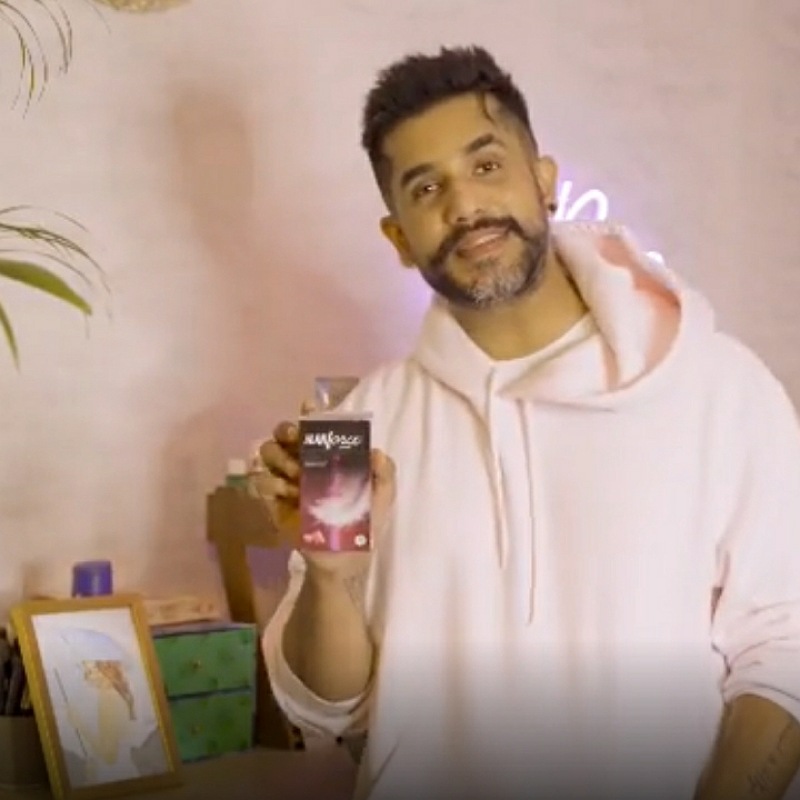
    Mumbai: Mankind Pharma’s condom brand Manforce Condoms has roped in actor and influencers Suyyash Rai, Aradhana Sharma to further strengthen awareness for its recently launched ‘Ultrafeel’ condoms.

    The brand has chosen the two influencers that belong to different demographics, helping the brand to amplify its message as widely as possible. The brand roped in influencers to add credibility to the brand narrative – ‘It’s so thin, you’ll feel it’s next to nothing.’

    “As per the research conducted nearly 88 per cent of consumers wanted and looked for condoms that were the closest to feeling natural. Keeping this research in mind, we have launched the Ultrafeel condoms and are entering a 285 crore premium condom market in which the cost for one condom is 15 rupees per piece,” said Mankind Pharma general manager sales and marketing Joy Chatterjee, commenting on the influencer activity of the new campaign. “We have collaborated with influencers to further strengthen our position, and so the target audience becomes aware of the newly available product. The influencer activity will help the brand to convey the said message and add credibility to our brand narrative.”


    The brand recently launched the Ultrafeel condoms through a TVC that featured brand ambassador Sunny Leone.