Tag: influencer marketing

  • GUEST COLUMN: AI-powered influencer marketing redefining the landscape in 2022

    GUEST COLUMN: AI-powered influencer marketing redefining the landscape in 2022

    Mumbai: From Facebook recasting itself into a metaverse to marketers executing new lines of thought for sailing through yet another year amidst the pandemic, 2021 was indeed a roller coaster year for the digital marketing industry. However, one phenomenon which flourished all through was influencer marketing.

    The thriving influencer marketing arena in India is expected to grow at a compound annual growth rate (CAGR) of 25 per cent till 2025 to reach a size of Rs 2,200 crore (Source: GroupM INCA’s India Influencer Marketing Report). Globally, the industry is set to increase by approximately $13.8 billion by 2022 end (Source: 2021 State of Influencer Marketing Benchmark Report). What’s more, the induction of AI into influencer marketing is going to completely change the dynamics of decisions & ROI from it.

    With a plethora of types of influencer relationships and ongoing campaigns, supervising it the right way will be pertinent to a brand’s success.

    Data and analytics are now at the centerstage with marketers focusing on when and where to run campaigns, what kind of influencers, and how many influencers to engage with. By measuring the impact and performance of influencer campaigns, Data-driven influencer marketing is not only helping marketers calculate the ROI, further optimise the campaigns but is also helping them identify new opportunities and shortlist key influencers for future collaborations- while keeping a close eye on consumer preferences.

    As tools, artificial intelligence (AI), machine learning (ML), and natural language processing (NLP) are redefining the way brands conceptualise and execute influencer marketing by integrating quantitative and qualitative metrics in a relevant way. Such AI-driven influencer marketing campaigns will improve quality audience check and success measurements. Let’s deep dive into this…

    The right Influencer: In the recent influencer campaign meetings ‘The right influencer’ term is being used by brands on a continuous basis and they need a more detailed understanding of the selection. This process is going to be governed by AI technology by the end of this year since it’s all based on the data & if we are able to process those calculations in microseconds instead of minutes then this hunt will certainly get more interesting.

    With a few common filters we can easily narrow down the list but if we actually want to go in-depth for any decent-sized campaign, it consumes a lot of time and effort which can be easily tackled with AI-based tools. AI-based influencer marketing systems are steadily being leveraged to analyze the minutest of data from an influencer’s social media profile including every content piece posted by them.

    Marketers are looking to partner with those influencers whose online persona and style resonates with their brand’s image- to ensure that those influencers’ audiences are more likely to engage with their brand. AI-powered influencer marketing is helping brands analyse the performance of multiple influencers across various social media platforms irrespective of the language being used. Such scalability will further expand this year as marketers analyse diverse metrics including the reach and engagement metrics of individual posts.

    The Game of Fake Audience: While it can become really tricky to analyse the authenticity of the audience manually, AI is changing this game altogether. With the right algorithmic factors and by considering the step-by-step evolution of ML in this process, brands and agencies can make the right decision without too much time allocation.

    Reporting: ML & AI can assist marketers by generating very insightful analysis. The industry stakeholders are seeking to understand the reach and impact of influencer campaigns on multiple levels, even when the campaign is not huge in scale. AI will definitely help in exploring the influencer marketing insights on a level that the market hasn’t explored before and hence add many layers to what brands and agencies are doing so far.

    2022 will be a game-changing year when it comes to AI’s influence in the world of influencer marketing. It will play a crucial role in tracking sentiment to shortlisting influencers of all sizes and influencing brands in the way they define their goals and prioritise authenticity. The growing market of D2C brands in India is steadily increasing their budgets and now also want to control their data and creator relationships with the help of AI tools. 2022 will further raise the excitement with new influencer marketing trends unfolding for D2C brands, e-commerce companies, digital marketing, and advertising agencies.

    This year will see an escalation of influencer marketing growth as digital marketers will combine innovative strategies with data-driven marketing. 

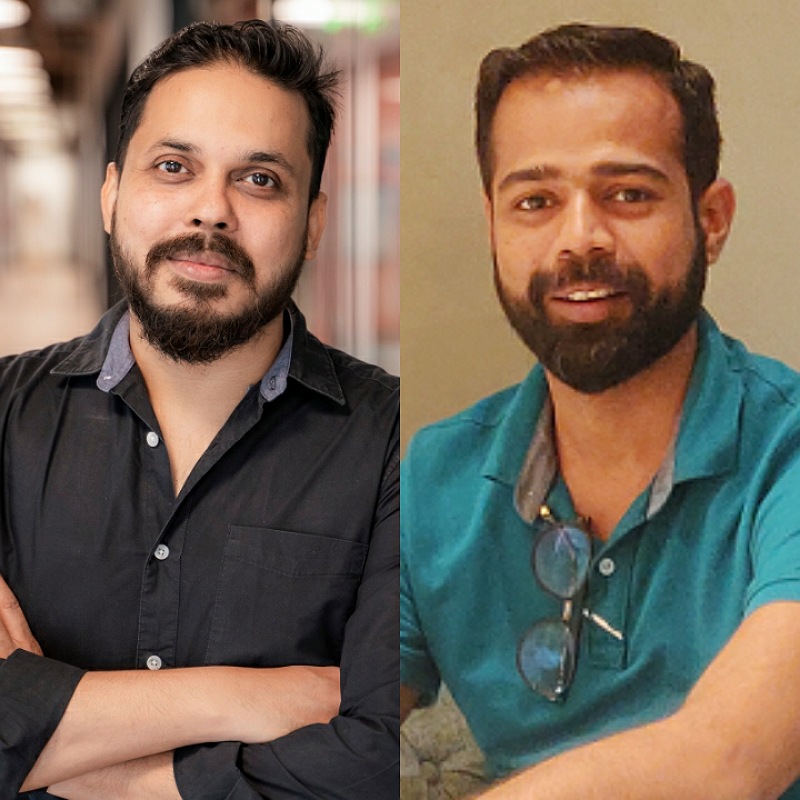
    (About the Authors: Shreyansh Bhandari is the Lyxel&Flamingo co-founder and COO; Veda Bashishtha is the LYRKL co-founder and CEO)

  • GUEST COLUMN: Understanding the role of NFTs in influencer marketing

    GUEST COLUMN: Understanding the role of NFTs in influencer marketing

    Mumbai: Let’s start by understanding NFTs.

    The acronym NFT stands for “non-fungible token.” This signifies that it’s a one-of-a-kind code that can’t be substituted with anything else. An NFT is nothing more than a digital representation of a physical item. NFTs have monetary or sentimental worth and can be bought, sold, or traded. You can own them because they are digital assets. They are one-of-a-kind digital assets in the form of cryptographic tokens. Bitcoin tokens can be thought of as blockchain-verified dollar bills, and NFTs are works of art or other media files that have been confirmed on the blockchain.

    In the digital realm, the possibilities are limitless. NFTs are a gamechanger for digital content creation since they allow creators to create and sell art, music, books, films, and more. Digital marketers and content providers can communicate with customers on social media, give them valuable assets such as giveaway prizes, and more.

    How do NFTs impact influencers?

    NFTs have the potential to establish a new universe of intellectual property with copyright income for content creators and influencer-generated material that attracts influencers and content creators. We’ve seen over the last decade that viral moments may provide a monetary profit for their creators. Memes, short videos, and products are all examples of this. It can be used as a possible revenue stream for a variety of people and businesses, ranging from professional sports leagues to artists and others, who can now sell the NFT behind their brands instead of having to negotiate a three- or five-year usage of their image.

    Influencers can earn a lot of money, but their resources are limited. To make money, they rely on brand partnerships and collaborations. But NFTs change that by offering a completely new way to make revenue and improve marketing strategies. Because of its unique setup, the creator economy has enabled individuals to generate digital content using blockchain-based technologies, potentially altering the financial environment for the creators involved. They’ve made it possible for artists to make millions from just one piece of work. NFTs are being explored by creators as a means to deliver unique, paid experiences and communicate with their followers.

    NFTs also have the potential to be sold in the future. They can be configured to allow royalties so that when an asset is sold on the NFT marketplaces, the developer receives a portion of future sales.

    Naturally, the scope of influencers in the fields of lifestyle, fashion, and art is nearly endless. These influencers can sell exclusive content, such as digital art, while NFT ensures its validity and value. Influencers in the gaming industry are also getting involved, selling in-game weaponry and artifacts as NFTs.

    As a prize, NFTs can boost engagement. Influencers can organise a campaign and give away NFTs, which have a lot of value for their followers. NFTs are also excellent prizes for collaboration posts and user-generated content contests, particularly if they include a memorable moment, exclusive material, or a digital collectible.

    Moving Forward

    NFTs aren’t just the latest craze; they’re digital assets that exist exclusively online yet have real-world value. We’re getting more digitally oriented, and NFTs bring a popular activity, an investment possibility, and a status symbol into the digital realm. We like physical objects that we can hold and feel, but digital assets are the way of the future. Companies and influencers have a one-of-a-kind way to monetize online content and intellectual property, from unique digital art to a virtual baseball card to an unforgettable moment.

    It is critical to recognise that NFTs do not pose a threat to brand-influencer partnerships. On the contrary, by employing NFTs as a newer form of technology that will allow them to drive innovation, they will be able to improve their collaborations and continue to expand their ties.

    NFTs are popular because of their uniqueness and collectability. Creating products through limited partnerships between companies and influencers will be a whole new revenue source for both the brand and the influencer. Customers can gain access to a unique piece of the digital world with NFTs.

    Today, marketers are using Livestream product launches and other experience sessions with influencers in the form of tutorials to create experiences that are exclusive. The digital and crypto worlds are sweeping the globe as new generations of customers become increasingly accustomed to them and see the enormous value of this type of transaction and investment.

    (The author is CEO of Mad Influence, a social media marketing platform. The views expressed in this column are personal and Indiantelevision.com may not subscribe to them.) 

  • Lifestyle channel Zee Zest launches website ZeeZest.com

    Lifestyle channel Zee Zest launches website ZeeZest.com

    Mumbai: Lifestyle channel Zee Zest has launched its digital offering called ZeeZest.com. The platform offers influencer marketing solutions to brands with a varied talent roster of influencers across categories.

    ZeeZest.com will offer insights across categories – food, travel, health, culture, style and beauty and homes. The website will provide glocal content across core lifestyle genres that are informative, entertaining and will pivot content based on national and international pop-culture trends, said the channel in a statement. The website has led to three million+ users in its soft launch phase, it added.

    The content will be spread across multi-formats such as shows, recipes, articles, original videos, web stories, multilingual and aims at generating curiosity and making aspirational lifestyle more accessible. Along with access to Zee Zest shows, the website will also host contests on an ongoing basis to engage with users.

    The website will be populated by stories curated by in-house and contributing authors. The website will feature articles on Bollywood celebrities such as Farhan Akhtar, Vidya Balan, Aditi Rao Hydari, Dino Morea, Sonu Sood; and popular influencers such as Shenaz Treasury, Yohani, Tesher and Sejal Kumar.

    “Over the last few years, we have seen a major growth in lifestyle content consumption with people wanting to express their individuality and seeking to live a higher quality life,” said Zee Zest business head Amit Nair. “ZeeZest.com is uniquely positioned to be that guide for the urban millennial and the youth to express themselves sharply whether its food/travel/homes and health. The strategy of having a strong TV+ digital presence helps to capture a sizable user base that spends on the diverse categories to always stay several notches ahead. The future sees multiple India Originals for TV, Digital first ideas and initiatives that will raise the bar for lifestyle content delivering immersive and engaging IPs with key focus on user and revenue growth.”

    Zee Zest has 45 per cent viewership share in the lifestyle genre with original shows like “From Fit Fab Feast with Huma Qureshi,” “India’s 50 Best with Chef Ajay Chopra,” “Goan Gullies with Rocky and Mayur,” and “Grand Trunk Rasoi.”

    “With the phenomenal success garnered by Zee Zest within a span of just one year, we are now thrilled to launch the website that will house original and quality content across lifestyle categories,” said Zee Zest chief cluster officer – West, North and premium Amit Shah. “Digital will play an important role in our overall strategy and we will be a unique brand that will have both linear, digital and social presence and thereby be an attractive option for advertisers. With the ambitious goal of being the top five publishers in lifestyle the path is clearly chalked out for the next 3-5 years of bringing together content, community and commerce.”

  • GUEST COLUMN: Digital marketing trends that reigned supreme in 2021

    GUEST COLUMN: Digital marketing trends that reigned supreme in 2021

    Mumbai: 2021 was coined as the year of the ‘New Normal’ and it did turn out to be one in many ways. The second wave of the Covid-19 pandemic this year not only affected every aspect of our lives but also impacted how companies further realigned their operations all over the world.

    Strengthening the migration to a digital environment in 2020 became the only viable option to stay on the map for many businesses, which in turn greatly impacted their digital marketing strategies. 

    The ‘New Normal’ kept alive the status of digital marketing as the need of the hour for businesses to stay afloat, gain new customers, retain current ones and generate revenue. Staying ahead of the digital marketing game is beyond just understanding and applying basic industry principles.

    As we bid goodbye to 2021, it’s time to analyse trends that reigned supreme. By analysing past trends and staying aware of ongoing changes, marketers in India will be better prepared for what’s next for the coming year.

    Marketing automation:

    Automation stood at the top of every marketer’s strategic pyramid this year and played a pivotal role in providing brands with more detailed insights into behavioral patterns of their users. Our research estimates that some brands even saw a 30-35 per cent increase in leads generated after implementing automation software. With each channel working together, brands were able to create a unified customer experience, thereby facilitating a seamless journey.

    AI-powered personalised marketing strategies:

    As per industry research, 70 per cent of companies observed that AI-powered personalised marketing strategies generated around 200 per cent ROI while 86 per cent of brands noticed a spike in business after integration. Thanks to AI, marketers were able to make product recommendations to users, hyper-personalisation of messages, optimisation of display and search ads, email marketing, and even content marketing by discovering what works better and what type of content is more effective. All in all, it empowered brands to have a better engagement with their customers and gave a boost to customer loyalty and retention.

    Live streaming

    The number of live streaming platforms and streamers has increased mainly since the onset of the pandemic in late 2019. With the use of live streaming this year, consumers got yet another opportunity to acquire better information about brands, products & discover the character of brands. Thanks to real-time interaction, Live streaming emerged as a strong medium for brands to create a better relationship with their consumers and expand the viewership for their marquee events and new launches.

    Continuous visibility on different live streams enabled brands to experience better engagements. The community of live streamers is just starting to get bigger and live streaming will continue to play an exceptional role in 2022 as well. 

    Vernacular content

    According to a Google KPMG report, 70 per cent of Indians find local language digital content more reliable; 88 per cent of Indian language internet users are more likely to respond to a digital advertisement in their local language as compared to English.

    We saw digital marketing moving towards vernacular in a holistic way. Brands actively began transcending into literacy agnostic content across formats – audio and video to target consumers across the spectrum. For example, if you look at the latest brand video for Baidyanath Chyawanprash, the entire communication is primarily in Hindi as North India is their target location. Even the media banners and communication on the social media handles follow the same route. In this year, there have been multiple examples of brands like Britannia Good Day (Tamil), Ola Autovin Home Delivery (Tamil), Goodknight Fabric Roll-On (in Bengali), Sunfeast YiPPee (in Malayalam) which were some of the most viewed YouTube Ads in the regional language.

    Nano influencers and creators

    Nano influencers were one of the core facets of all major ongoing campaigns and helped in providing brands with valuable awareness and recall amongst a niche audience. They often see the highest percentage of engagement, as they have a small and more closely linked community of followers. According to the INCA report, the average engagement rate of nano-influencers in India is 30 per cent, while for micro-influencers it is 14.5 per cent. For mega and macro, it stands at 18.2 per cent and 12.7 per cent, respectively. We observed major brands dedicating about 20–25 per cent of their brand promotion budget to influencer marketing and primarily focus on nano-influencers that can reach their target group.

    Voice Search

    emerged as a new market for marketers. According to research estimates, 65 per cent of smart speaker owners don’t want to go back to a life without a voice-controlled assistant. Smart speakers will continue to change the ways users interact and spend.

    Tech will continue to take the lead in the new year with robust advancements in technology, marketing tools, and forward-thinking strategies. 2022 will be the year to further seize opportunities, take charge from the front and take necessary steps to leverage customer behavioural trends to get the maximum out of digital marketing.

    (Shreyansh Bhandari is COO and co-founder at Lyxel & Flamingo, while Shikha Abrol is a media strategist at the same company. The views expressed in the column are personal, and Indiantelevision.com may not subscribe to them.) 

  • DigiChefs bags social media & influencer marketing duties for Ram Bandhu

    DigiChefs bags social media & influencer marketing duties for Ram Bandhu

    Mumbai: DigiChefs, an independent and high-performance creative agency has won the social media and influencer marketing duties of Ram Bandhu, the flagship brand from FMCG company Empire Spices & Foods Ltd (ESFL).

    Under the mandate, DigiChefs will be responsible for strategising, planning and executing a comprehensive social media strategy and elevating the brand’s presence through creative assets, said the company in a statement. “The agency focuses on identifying best-suited influencers in the digital arena for the brand’s upcoming campaigns to gather visibility and boost brand recognition by leveraging the power of social media platforms,” it added.

    “We feel immensely happy to be partnering with Ram Bandhu in carving their social media journey,” stated DigiChefs co-founder Deep Mehta. “We aim to help the brand connect with renowned influencers in the digital space and conceptualise innovative campaigns to increase engagement and create a stronger connection with their targeted consumer base.”

    “We look forward to taking the social media marketing of our flagship brand Ram Bandhu to newer heights in association with a dynamic creative agency like DigiChefs,” said ESFL director Anand Rathi on the business association.

  • Optiminastic Media launches digital influencer marketing platform Click2Collab

    Optiminastic Media launches digital influencer marketing platform Click2Collab

    Mumbai: Digital marketing agency Optiminastic Media has announced the launch of Click2Collab, a tech-based influencer marketing platform. Click2Collab is built upon a seamless interface that helps influencers, brands, and agencies to connect with each other on a single platform.

    By introducing an end-to-end solution, Click2Collab aims to help brands and agencies design, curate, and customise campaigns as per their needs and requirements with the platform’s network of verified influencers from across India, said the statement.

    Speaking on launching a first-of-its-kind platform in India, Optiminastic Media co-founder Akshae Golekar said, “Click2Collab is a platform that is built to ease, simplify and bring efficiency to this evolving business. The platform is multifaceted wherein it allows influencers to on-board themselves and become more easily available and accessible, brands with easy discoverability of the right influencer for their campaign as well as agencies to streamline their business.”

    He further added, “Click2Collab reduces the complexities associated with the influencer marketing business. We are sure that it will also help the influencer marketing and creator’s ecosystem grow to greater heights. We will continue to invest in enhancing the platform and are certain of becoming a platform of choice for influencer marketing campaigns.”

    The platform, designed to cater to all three stakeholders – brands, influencers and agencies, will ease the business of influencer marketing, improve efficiency and help all stakeholders plan better, said the company.

    By providing brands with a state-of-the-art tech interface, Click2Collab aims to help them easily identify, estimate, execute campaigns in a short span of time by doing away with pseudo-science and manual intervention. It also provides the creator community an e-commerce platform thus giving them the opportunity to sell merchandise directly to their followers along with an exhaustive dashboard to track their earnings, it added.

  • Trinity Gaming forays into South India, announces partnership with Blind Esports

    Trinity Gaming forays into South India, announces partnership with Blind Esports

    Mumbai: Homegrown gaming talent management company Trinity Gaming has strengthened its influencer’s management portfolio by signing Blind Esports, which is known to have the best e-sports rosters and content creators on board in the southern part of the country.

    With an aim to provide the best talent management services to the dynamic professional players of the team, the partnership will create opportunities to connect them with brands and support them in monetising their craft, said the statement.

    “We have always strived to provide the best of services to our content creators and helped them financially to stabilise their career in gaming,” stated Trinity Gaming co-founder and CEO Abhishek Aggarwal. “We are extremely delighted to have professional players of Blind Esports on board as it will open more opportunities not only for the esports team but also for Trinity Gaming as we will be able to explore deeper bonds in the southern part of India as an agency.”

    Blind Esports have emerged champions in some of the biggest esports tournaments including BGMI titles in Thug Invitational, Nimo TV Cup, KPL season 3, and were the finalists in PMCO Fall Split 2019 and, Free Fire titles in FFCO 2021 and Booyah Summer League 2021. The team also finished fourth in the India Cup Open in Call of Duty Mobile.

    Trinity Gaming will help Blind Esports creators to not only grow but also provide them with graphic assistance, PR, educate them about social media presence, outreach and engagement, and how to benefit from all such activities both monetarily as well as establishing themselves in the gaming industry, said the company in a statement. 

    The agency will educate the talents to develop the best content for audiences, facilitate brand deals for the influencers, and get notable attention for both brand and influencers, it added.

    “We have always been aiming to partner with an esports talent management sector to provide better opportunities to our players and we are delighted that Trinity Gaming would be helping us in carrying forward that vision for our team. We aim to create a national footprint for ourselves and our players and creators,” said Blind Esports owner Arjun Suresh, who is popularly known as ‘Blind Satan.’

  • OACT 2021: Bringing the digital ecosystem to linear TV

    OACT 2021: Bringing the digital ecosystem to linear TV

    Mumbai: “We see linear TV more like virtual linear TV because it is so easy to plug and play and join the digital ecosystem,” said The Q India, chief executive officer Simran Hoon at the OTT Advertising and Connected TV Summit 2021’ organised virtually this year. “Today, delivery is not important, remarks Hoon, everything is platform agnostic.”

    Technologies like free ad-supported streaming television (FAST) have become ubiquitous in the North American market with players like Pluto, Roku, and Samsung+ seeing their revenues double year on year. The FAST industry revenues grew from $2.1 billion to $4.2 billion in a year and the trend is happening in India as well where connected TV users are at 5-7 million growing fast to touch 40 million in 2025, according to a report by E&Y.

    Hoon is a media professional with 27 years of experience in ad sales with some of the biggest TV networks including Sony, Star, Zee, and Viacom18. She joined most of these media companies when they were at the launch phase and has worked across functions in the broadcast media industry. Now, she is leading the Hindi general entertainment channel The Q in India.

    Speaking at the two-day event organised by Indiantelevision.com, and co-powered by mediasmart, an Affle company and summit partner – The Q, Hoon shared her views on ‘Driving new synergies between linear TV and digital ecosystem.

    The Q India is pioneering unique TV initiatives by driving synergies with the digital ecosystem. The channel recently announced a syndication deal with the OTT platform MX Player to bring their popular web series “Aashram” to TV viewers. The channel had earlier partnered with short video platform Chingari to hold the auditions for its crime series “Crime Aur Kanoon”.

    Bringing “Aashram” to TV required the broadcaster to convert nine one-hour episodes into 18-episode length series after editing the content to make it more appropriate for TV audiences, said Hoon. The channel is also in talks to bring another OTT series to TV in November and “Aashram 2” in December.

    Its main proposition has been to bring the best of digital content to TV. According to Hoon, there is a vast young free audience on TV that has been migrating to digital because they are not being served on TV. The soap opera fare that is broadcast by traditional free-to-air channels is not catching the fancy of these audiences where the mean age is 28 years old. The Q India brought youth media creators, starting from content creators and influencers on YouTube, and amplified their reach by bringing their content to the TV.

    “A YouTube creator with 10-12 million audience reach, can be exposed to a whole new audience on TV. That’s the biggest kick for influencers and the value proposition of The Q,” noted Hoon.

    Last year, the channel was rated by the Broadcast Audience Research Council (BARC) India and crossed the 45 GRP mark over a span of 19 weeks.

    “The Q reaches to Tier II, III young family audiences that are watching the channel’s content across platforms, whether it be connected TV, OTT, or linear TV,” said Hoon. “We are available in 100 million homes, but there are still 210 million TV households to go. 70 million households are yet to buy a TV. Even though India is a smartphone market, today there are smart TVs that are selling cheaper than smartphones. We want to be omnipresent because we believe great content pulls viewers and hence advertisers, creating a virtuous cycle.”

    The channel is available on DTH providers like Tata Sky and D2H and also on the big Cable operators such as GTPL Hathway. It has partnered with connected TV manufacturers such as Samsung TV+ and Mi India. According to Hoon, the channel is available on 700 personal machines.

    The Q India is a part of the North American media company QYOU Media that was co-founded by Curt Marvis and Sunder Aaron. The company has also roped in TV veteran Andy Kaplan to be chairman of The Q India. It has three big verticals – its broadcast channel, an influencer marketing company Chtrbox, and its distribution arm.

    “Chtrbox is one of the largest influencer marketing companies in India with 3.50 lakh influencers in its network. We have started doing integrated sales, where brands also look at influencers and their YouTube channels when buying advertising on The Q India TV channel. Chtrbox uses AI to match the brand and the influencer depending on the region or target audience the brand is looking at,” explained Hoon.

    This is much harder to do than it seems, from a technology perspective, maintained Hoon. The channel is still experimenting with this approach and expects to see giant strides being made in this space in the next six to nine months. “Today, it is so easy to be digitally connected to your TV. The opportunity to be more targeted and programmatic on virtual TV will drive more advertising dollars compared to linear TV,” said Hoon.

  • 89.5% influencers witness a dip in engagement post ASCI guidelines: IPLIX survey

    89.5% influencers witness a dip in engagement post ASCI guidelines: IPLIX survey

    Mumbai: Influencer marketing and talent management agency, IPLIX Media has released insights from an independent survey on influencer sentiment post-release of ASCI guidelines 2021. According to the survey, nearly 89.5 per cent of influencers witnessed a dip in engagement on their content since ASCI guidelines went live. However, over 56.7 per cent of respondents (influencers) said that they found the ASCI guidelines to be helpful, while 35.3 per cent admitted that it needs more structure and transparency. 43.3 per cent of influencers were unsure about the penalties or the repercussions they may face for not adhering to the guidelines further indicating the need for more clarity.

    The pan India survey included metros and tier 1, 2, and 3 cities across 200+ influencers.

    When it comes to content format, in 2020, both long-format and short-format garnered engagement for creators with the latter slowly taking lead. In terms of content categories – Fashion & Beauty (54.2 per cent), Comedy (20.9 per cent) & Travel (18.9 per cent) are the top three categories of the respondents. The majority of these influencers are creating somewhere between 20-40 per cent of branded content.

    On the survey that drove insights from micro, macro, and nano influencers across the country, IPLIX Media LLP co-founder Neel Gogia said, “ASCI guidelines are a welcome step forward in introducing transparency and authenticity across the content creation ecosystem. However, there were certain aspects on which more clarity was required. The insights from the survey clearly reveal demand for a structured approach to put this into motion and a better understanding of the penalties.”

    When it came to brand associations, 34.3 per cent of influencers rated ‘relevance’ at the top with consistency closely following behind. With a more aware audience set, content creators are generating the content, even branded, that sticks, builds loyalty, and represents their true self. Before the ASCI mandate, 48.3 per cent of influencers revealed that only 10 per cent of brands they worked with opted to tag content as sponsored.

    Social satirist Saloni Gaur said that the audience these days is smart enough to figure out what’s sponsored and what’s not even before adding a paid partnership tag. “I agree with the fact that ASCI guidelines are still not clear to many of us. But, from an audience’s point of view, it’s a good step and definitely adds more transparency,” Gaur said.

    “As for the revenue part, I certainly thought that some brands would not undertake associations because they don’t want the paid partnership tag on our posts, but I’m glad to say they have adapted really well to these guidelines. In addition to this, I also thought that this will reduce the engagement significantly as people tend to leave the video as soon as they hear any brand name, but this hasn’t been the case for me,” she added.

    BB Ki Vines- manager & partner Rohit Raj said, “I believe that guidelines are necessary to bring in more structure to the content creation and monetisation ecosystem. However, having worked with some of the top creators in the industry, I believe that we need to approach this in phases. This will help iron out the creases and create a more holistic approach.”