Tag: influencer marketing

  • Hypothesis introduces creator discovery platform – DiscoveryOS

    Hypothesis introduces creator discovery platform – DiscoveryOS

    Mumbai: Hypothesis, OML’s influencer intelligence platform, recently announced its groundbreaking module, DiscoveryOS, one of the world’s largest creator discovery platforms. As a frontrunner in tech solutions for the creator economy, the search engine is poised to transform how brands and agencies connect with authentic creators. DiscoveryOS harnesses the power of data through its AI-enhanced search, redefining the way brands discover and collaborate with influencers. It represents a paradigm shift in influencer marketing workflow by enabling impactful and measurable campaigns at an unprecedented scale.

    Influencer marketing has changed the way brands build awareness and connection with a broader audience. With an astounding number of over 500 million active influencers worldwide and the ongoing growth of social media platforms, the laborious and challenging process of finding the right kind of creator that resonates with a brand’s ethos has largely been a complex process. DiscoveryOS bridges this gap and empowers marketers to choose trustworthy influencers from its growing database of over 210 million, ensuring their campaigns reach real people, not bots.

    This cutting-edge platform offers a data-backed approach to influencer discovery, ensuring brand safety and authenticity.  Brands can now identify trending and upcoming influencers based on their growth rate, previous brand collaborations or audience affinity, fostering impactful and result-driven marketing campaigns. DiscoveryOS represents a transformative leap towards making influencer collaborations with seamless access to in-depth insights of 212 million global creators at the click of a button.

    Key Features of DiscoveryOS :

    ●    Unmatched reach: Boasting the largest searchable database of over 210 million creators across the globe, DiscoveryOS enables brands to tap into a diverse pool of talent, reaching new and diverse audiences worldwide.

    ●    Advanced filters: With more than 20 advanced filters, including demographics, growth rate, audience interests, and brand affinity, marketers can fine-tune their search and pinpoint creators who align perfectly with their target demographics and campaign objectives.

    ●    Genuine Audience Percentage score (GAP): DiscoveryOS introduces a proprietary GAP score metric, evaluating the authenticity and engagement of a creator’s audience. This ensures brands connect with influencers who have a genuine and loyal following rather than bots or fake accounts.

    ●    Lookalike creator matching: By leveraging AI/ML capabilities, DiscoveryOS allows brands to find lookalike creators based on topics and audience, significantly expanding their reach and discovering new audiences for their brand.

    ●    Detailed creator insights: Marketers gain valuable intel on creator profiles, including growth rates, branded collaborations, and in-depth audience insights, enabling informed decision-making for successful campaigns.

    ●    Spotlight trending creators: With DiscoveryOS, brands can monitor the month-on-month growth of creators, ensuring collaborations with fast-growing influencers who can effectively promote their products and services.

    OML Entertainment CEO and board member Gunjan Arya said, “At OML, our unwavering commitment to driving innovation in the creator economy fuels our pride in Hypothesis and its groundbreaking achievements. DiscoveryOS stands as a testament to our vision, offering a comprehensive end-to-end solution to the challenges prevailing in the influencer marketing domain. By meticulously addressing pain points and streamlining the entire process, this cutting-edge platform is poised to revolutionise branded content creation and elevate the landscape for creators to new heights. DiscoveryOS is set to redefine the influencer marketing landscape, paving the way for unparalleled brand partnerships and authentic connections with audiences. As pioneers in the industry, we take immense pride in unleashing the true potential of influencer marketing, shaping a future where brands and creators can thrive together, hand in hand.”

    Hypothesis Sr VP – product & analytics Himani Agrawal further added, “Creator Discovery is the first and most crucial step to building a robust campaign that can result in effective and efficient ROI for brands, if executed right. Brands are struggling with finding the right creators, with the right target audience, for their brand’s marketing objectives. Hypothesis’ DiscoveryOS with its advanced search capabilities allows brands to do just that. Hypothesis is a first-of-its-kind platform that tackles the pain points of limited access to verified creator information and ability to navigate through ‘the many’ to find ‘the one’. It’s positioned as a powerful catalyst set to revolutionise branded content creation through data-driven decision-making. Hypothesis aims to herald a new era of meaningful collaborations that will spark unparalleled creativity in putting the brands’ messaging in front of the right audience in the most engaging manner.”

  • GUEST ARTICLE: The creator economy and how it has evolved over the last few years

    GUEST ARTICLE: The creator economy and how it has evolved over the last few years

    Mumbai: For many decades, we have relied on traditional media outlets like television, radio, and print for our information and entertainment, consuming content created and curated by a few major media houses based on the preferences and requirements of the masses. The advent of the internet and web 2.0 brought a significant shift in how we consumed information by decentralising content communication, creation, and distribution. Thanks to the opportunity offered by social media, we found ordinary people like ourselves writing, filming, and creating niche as well as mass content that resonated with people worldwide.

    And as a result of this, people moved away from traditional media sources. They started surfing the internet to consume content and connect with people who shared similar interests and experiences. Over time, people learned to market their skills, hobbies, and interests online. This resulted in the rise of a new economy built by millions of independent content creators, curators, and community builders, marking the beginning of the “creator economy.”

    Today, the creator economy is estimated to be worth more than $100 billion, and it includes everyone who is a part of the web economy, such as social media, blogs, videos, software tools, and tech platforms like Hypothesis designed to help them grow and monetise.

    More than 50 million people worldwide identify as “creators,” with two million or more earning a living from their passion through platforms such as YouTube, Instagram, Twitch, TikTok, and others. According to a survey, YouTube content creators contributed a whopping Rs 6,800 crore to the Indian economy in 2020.

    The evolution of the creator economy

    ●      The birth of social media platforms

    Towards the end of the 2000s, we witnessed the birth of many social and content channels like YouTube, Instagram, Spotify, Medium, Linkedin, and more. The rise of the creator economy has relied heavily on the development of these platforms. We wouldn’t have creators if you didn’t have platforms on which they could create. It was due to social media sharing that content distribution became normalised. Today, creators are no longer at the mercy of large production companies, as these platforms have equipped them well to solve their distribution problems.

    ●      The emergence of influencer marketing

    Brands began to see the value in investing in creators to promote their products and services to their large on-platform audiences as they began to build a dedicated audience engaging with their content due to their skills and personalities. This proved a very successful marketing strategy, aka “influencer marketing,” as it allowed brands to tap into a new market and advertise to a niche audience more likely to be interested in the brand’s product during their moment of consumption.

    Brand sponsors began paying creators on platforms such as Instagram and Tiktok in exchange for their reach to an audience gained through the platforms.

    ●      Covid impact 

    As social media platforms proliferated, people found themselves increasingly attracted to screens, both as creators and consumers. What many believed would be a passing phase, like the dot-com era, soon became a compulsion.

    With the onset of the pandemic, millennials and gen-z turned towards social and subscription based platforms either out of boredom or to supplement their income due to the economic slump. Because of the nationwide lockdown, everyone was forced to use online health, education, shopping, and entertainment resources.

    This has led to the growing dominance of content creators in mainstream media who are willing to pay for tools that help them grow their content reach and maximise their revenue.

    ●      Creators are brands within themselves

    With the constant influx of influencers, competition for branded collaborations is becoming increasingly fierce, prompting influencers to seek alternative revenue streams.

    Instead of chasing revenue through generic clickbait content, influencers are becoming the new brands. Today, creators have gained enough loyalty from their audiences to be able to sell any product better than the traditional brands. Creators are launching their brands without investing millions of dollars in a team and resources, instead relying on a combination of audience and reach, good branding, and a distinct point of view with their product.

    Today, many brands consider working with creators an essential part of their brand and marketing strategy. But it remains a largely unorganised space, with discovering the right talent to work with and measuring success depending on how each brand structures its efforts. The creator economy needs a unified platform to connect brands with customers through the right influencers and manage the entire campaign pipeline. At the same time, it requires a platform for creators to engage with their audience and build meaningful relationships with brands.

    That’s where “influencer marketing software services” step in, allowing agencies and brands to discover the right creator, conduct outreach, set up campaigns, and track performance on one platform. On the supply side of the ecosystem, it empowers creators and influencers to reach their audiences by understanding their content performance and audience affinity and collaborating with brands and agencies.

    The author of this article is Hypothesis senior VP product and analytics Himani Agrawal.

  • GUEST ARTICLE: How do small businesses get benefited through influencer marketing?

    GUEST ARTICLE: How do small businesses get benefited through influencer marketing?

    Mumbai: Influencer marketing is not always about celebrities endorsing goods and services for big brands. In fact, the new way of marketing in the digital world is accessible to anyone, regardless of the business’ size.

    Marketing and brand promotion are major factors, even for small businesses and start-ups. One of the most effective ways to do promotion on social media is to involve influencers. Some are still sceptical about influencer marketing as they think it’s costly, or they simply don’t know where to start or where to look for the best suitable influencer. The truth is that it’s the other way around: small businesses can actually benefit a lot from influencer marketing.

    How can micro-influencers contribute?

    Micro influencers are content creators with an online community of 10,000 to 100,000 followers. Their follower count might seem inadequate compared to celebrity influencers, but the dedicated social following of micro-influencers has proved to be quite effective, mainly for small businesses. Micro-influencers have a more active and focused audience. Promoting your brand or business with the suitable micro-influencer will provide adequate visibility and help improve business.

    1. Micro-influencers are the right choice for promoting small-scale businesses, as they are more effective than celebrity influencers.

    2. Micro-influencer campaigns are cost effective and easy to start or handle.

    3. They have a strong and focused niche audience, hence, the brand gets relevant social interactions.

    Why should small businesses partner with influencers?

    There are many reasons for start-ups to stake their claim in the creator economy. From increasing profits to accelerating brand awareness, the possibilities are endless.

    Make your brand stand-out and share your story

    It doesn’t matter if you have a lot of competition or lack proper brand awareness, social media influencers can help a lot in introducing your brand or business to the market and explaining the benefits of doing business with you.

    Influencers are excellent storytellers, that’s why people love their content. They can use the same storytelling skills to promote your business in a meaningful manner. People are able to retain more data when they receive it through stories. Influencers are the best option to share your brand story and make you stand-out among your competitors.

    Return on marketing investment

    Spending money on marketing and not acquiring increased sales is a hard time for every marketer and company. Influencer marketing, on the other hand, is a proven and effective strategy to reap the benefits of a return on marketing investment.

    When you are a small business, you lack the budget to try out different marketing strategies. Hence, trying a strategy (influencer marketing) that is already proven gives you a substantial return. It’s a worth trying strategy for small businesses when there is a promised return on marketing investment, or ROI.

    Brand Authenticity

    Brand authenticity is the kind of trust every business desires. For small businesses, it takes time to build trust. The best way to track trust-building is to ensure that your customers see your brand or business as authentic. Choosing any influencer isn’t enough. Partnering with the right influencer who aligns with your business niche will only make the brand authentic.

    People will no longer trust the influencer or brand if the endorsement seems inauthentic. Proper influencer marketing can help build third-party credibility and trust with an audience looking for resources from your market.

    Visible and Cut Through the Noise

    Traditional ads have become annoying for digital natives. That’s the reason most users block ads. Ad blocking makes surfing easier and more comfortable, but it’s not so comfortable for advertisers. Even if a consumer or user is interested in your product, they might never get to see the ad just because their ad blocker kicked it out or they are overloaded with content.

    Influencer marketing comes into play in this scenario. If the user sees an influencer they like promoting your product, they will definitely watch it. Social media is run by the opinions of its network, which includes influencers. So if you choose an influencer who loves your product, their customers will know that the product is worth checking out. When influencers share your brand story, their network of followers will get familiar with your business, and the more their content engages, the greater your customer acquisition.

    Influencer marketing is affordable, effective, and, moreover, worth the investment. You are bound to find impactful brand ambassadors and spokespersons when you start doing purposeful influencer research online.

    The author of this article is My Haul Store founder & CEO Abhishek Vyas.

  • We are not very advertising oriented; we are influencer oriented: NOFILTR’s Hitarth Dadia

    We are not very advertising oriented; we are influencer oriented: NOFILTR’s Hitarth Dadia

    Mumbai: NOFILTR Group is an influencer marketing agency that was conceptualised and co-founded by Sumedh Chaphekar. The agency saw the first light of dawn on 21 September 2017 when the marketing dynamics in India were undergoing a tectonic shift and social media had gradually begun to occupy centre stage, grabbing the spotlight. At that exact moment, Chaphekar hit the hammer on the anvil by signing with the first influencer and laying the foundation for the NOFILTR.Group.

    By creating the enigmatic synthesis between influencers and brands, NOFILTR works towards intelligibly devising a network that enables the marriage of personal expression and thought-provoking content that has the ability to hook onlookers at every level of the marketing experience. In a nutshell, NOFILTR connects brands to influencers, who creatively connect with the brand’s target audience, by enticing onlookers with a plethora of services that include personal branding, content creation and curation, influencer marketing, brand collaboration, and campaign design, coupled with the total execution and analysis of the entire activity.

    Today, NOFILTR.Group graduates beyond the capacity of a typical influencer marketing and management company. Apart from providing content creators with facilities like brand collaboration and management, content ideation, growth mapping, and production team support, NOFILTR invests in the dreams of content creators, helping them to make them a reality.

    Presently, the company has exclusively signed up 39 content creators. Some of the names are Awez Darbar, Nagma Mirajkar, The Mermaid Scales (Krutika), Mr. MNV, and Aashna Hegde. NOFILTR.Group has also joined hands with celebrated YouTubers like Angry Prash and Funcho. The list grows as NOFILTR continues to mine for promising influencers who are on the verge of rising to their true potential.

    Indiantelevision.com caught up with NOFILTR.Group partner chief marketing officer Hitarth Dadia. His role involves optimising business collaborations and creating a profitable entrepreneurial blueprint for the influencers collaborating with NOFILTR.Group. While driving profits for the company remains a mainstay, Dadia works closely with the creative departments and plays an instrumental role in charting out the detailed insights in public relations and branding for the influencers. Armed with foresight and a market-savvy streak, he invests in a dint of hard work, giving NOFILTR.Group the edge it has today. He joined NOFILTR.Group as a sales intern and advanced onwards into the role of a business development head before taking over as the chief marketing officer.

    His accomplishments at NOFILTR.Group involve fruitful collaborations with international brands of repute. Some of these brands include Cadbury and Amazon Pay. While working with these brands, Dadia creatively coupled his insights in sales and marketing to garner the required traction for these brands on group media. He’s also worked extensively with reputed group media applications like Snapchat.

    Born and brought up in Mumbai, Dadia received her education from a prominent convent school. Being an introvert, he later slipped into his comfort zone during his years at Somaiya College. Soon after, he graduated in banking and insurance from Mithibai College in Mumbai, where he experienced a monumental personality shift for the positive.

    Dadia worked extensively towards overcoming all the blocks that would inhibit his growth. He worked at a multinational bank for a year to gain experience in the banking industry. Creativity took a back seat while working at the bank, but the experience helped him garner insight into the organisational hierarchy and structure.

    Being an avid reader has worked to his advantage. His passion for non-fiction has enabled him to borrow all the positive attributes from the role models who we look up to today.

    Excerpts:

    On the market gap that was seen when NOFILTR launched in 2017

    In 2017, there wasn’t much activity happening. There were a few people on a platform called AskFM. There were a few individuals who were gaining more than usual attention on social media. They were getting more and more relevant. What we understood is that brands do not understand getting people as influencers who are not traditional celebrities. Because of platforms like Instagram, we felt that these people would become more relevant. When we started, hardly any brands were interested in working with individuals who were not celebrities. But as time went on, awareness grew about the importance of influencers and things started building.

    On the USP of NOFILTR

    We are very focused. It is very easy to get distracted in this space. Technically, we are in the management and advertising businesses. Eventually, you land in the merchandising and brand-building business. Our focus is on incubating talented individuals who can be very effective influencers for brands. The focus is that if an individual is very talented, we will help that person. We are not very advertising-oriented. We are very influencer-oriented. We focus on what is best for talent. So let us say a brand is willing to pay a very high sum of money for an influencer, but it is not the right fit for the creator’s long-term goal and growth. We are not an ad company that does one campaign and moves on. We think long-term.

    On the key learnings so far

    There is no one formula. Influencer marketing is not about products. It is about human beings. There is no manufacturing blueprint. Every day will be different. Each influencer is different and highly opinionated. You have to make sure that an economy is built around them and not on them.

    On the impact of covid

    The first lockdown was a surprise in the grand scheme of things. We tried to figure out how to work through the new environment. Marketing was the first thing to take a hit. When you are trying to survive, you do not want to spend. But in the long term, when I retrospectively look at it, covid has sped up the industry. It was a very good thing for the industry. More people are focused on consuming their preferred content, and others are focused on creating their own content.

    On the company’s outlook before partnering with an influencer

    A bunch of things. First, we meet them to get an idea about how passionate they are. This is not conventional work. This is an extremely new space. You put your personality out there. We look at how willing they are to give it their all and how original they are not just in terms of content, but how true to themselves they are and how strong their identity is.

    On the rising number of NOFILTR’s exclusive influencers

    We started with four creators. Now we are at 40. We work with them exclusively. They create content in areas including entertainment, fashion, lifestyle, dance, comedy, etc.

    On the influencer marketing’s trends

    At least for the next 12 months, a lot of creators will become entrepreneurs. They will start on their own. Over a span of say five years, they have been interacting with brands. They have learned how to build their own brand and I think that over time you understand what you personally like, and prefer. They are themselves brands and I think that people are just to realise that. They are taking this space more and more seriously and are coming up with their own projects which are not just about ads or entertainment.

    On the business model

    We sign a creator who works exclusively with us. They create content. We help them with the business aspect of things like travel and business production. Doing this helps our creators put the best content out there.

    On the recent work

    For Diwali, we did a bunch of campaigns with companies like Gold and Coca-Cola. We have a NOFILTR Escapes division where tourism boards partner with our influencers. Influencers are taken to international destinations. This IP allowed creators to create content in different environments. The creators get to travel and create content. The tourism board gets more awareness. It is a successful IP that we have been working on for a while now. There are a bunch of projects in the works now. We will create IPs for our company and also creator IPs. We are working on three to four creator IPs and a bunch of IPs for the company. The creator IPs will leverage the skills of a particular creator.

    On the platform Creator 21

    Initially, we only worked with five creators. We just adopted them. This is not a conventional line of work. These are 18- to 23-year-old kids. We put in a lot of time, effort, and resources, and the creators succeeded. A lot of other creators wanted to sign with us. But giving so much attention to more and more people was not feasible. So we started another company to help creators with the business aspect of things. We help creators with their businesses and give them the tools to succeed. Brands want more and more influencers. If we also had more people on our roster, it would definitely help. The goal is to help more creators and access more brands.

    On the hand holding that NOFILTR does with influencers, given that social media platforms keep tweaking their algorithms

    Initially, two years ago, this was the case. The space was relatively new. Now it is a self-sustaining model where their circle can help them out.

    On the goals set for 2023 by NOFILTR

    There are a bunch of things. We want to make sure that we are helping as many people as possible in the content creation and self-expression space. We want to help the wackiest of creators. We have unconventional things in the works.

    On the various metrics that companies use to check the ROI of influencer marketing

    There are a bunch of things. There are KPIs and click-through rates. We do not work on deals like that. People will buy a product if it is good. We can give awareness of a product. We check the engagement level with a piece of content.

    On the whitespace in tier II, III towns and cities

    Vernacular content is growing in importance. This is usually the TG for a lot of FMCG and commercial brands. A lot of niches are forming in tier II and tier III audiences. Brands are diving deeper into assessing and targeting these grounds. People are becoming more aware of different sections of brands or different sections of the community.

    On whether companies have misconceptions when it comes to influencer marketing

    The situation today is much better in this respect. Earlier, people saw influencer marketing as being a product or a billboard. Today, that is not the case. If the influencer does not believe in your brand, they should have the freedom to choose. This aspect is also better. Brands do not usually focus on individuals who are extremely creative. They have to be creative, or else, you will not be relevant on social media. So brands should give influencers not just money but also creative freedom because they know their audience the best.

    On what one needs to keep in mind when using social media platforms like Instagram for influencer marketing

    You have to be very mindful when talking about things. You have to dive deep. You have to be aware. One creator has close to 25 million followers on Instagram, which is more than the city’s population. As an audience, you have to be mindful of who you follow. Watch enough 30-second videos and you will form an opinion. It is a good thing that Instagram is moving towards video. Video can tell better stories than pictures. It cannot be a one-sided conversation.

    On the growing importance of short-form video in influencer marketing

    This is a separate skill by itself. You have to be quick and very valuable when telling a story. Long-form allows you to tell a story and develop an intention, cause, and effect. We know that attention spans are going towards short forms. It is about getting a tiny gist or a teaser. It makes more sense for brands to put in more money and for platforms to put more resources into short-form content. It is still a little underdeveloped. Better storytelling can happen there. I am extremely excited to see where the short-form format goes in terms of storytelling. If you can tell a good story in 30 seconds, you are a legend.

    On whether LinkedIn is playing a role when it comes to influencer marketing in the B2B space

    It is an undervalued platform, if I am being very honest. For finding the right talent and the right team members, nothing has proven to be better than LinkedIn in the B2B space. If you have a project that requires multiple brands and agencies to be in the picture, the goal for us has been to use LinkedIn to find the right individual to talk to. LinkedIn has not been disappointing at all. It would be nice if more and more brands got involved. If brands were more accessible on LinkedIn, they would definitely find the right audience to promote their products. LinkedIn does have creators, but they are highly opinionated and entrepreneurial.

    On the challenge of using Twitter, which has a lot of noise

    Twitter and Reddit are examples of platforms that are highly opinionated. A lot of noise comes with that. People agree and disagree. You need to be more aware of navigating those platforms. Things can get real on Twitter, and things can get extremely useless as well. Creators have to be mindful of what is being put out. Twitter and Reddit, in the right hands, are beautiful tools. It can help you figure out the trends that will come here in the next three to four months. You have to follow the right kinds of conversations and that will tell you what will happen. These platforms can be indispensable. We offer suggestions based on these platforms. We know what they are going for.

    On Elon Musk’s owning of Twitter

    I am very excited about Elon Musk owning it. There are not a lot of billionaires who are relatable. Elon is extremely relatable. Platforms need a good shakeup every now and then for people to care about them. More people will take Twitter seriously.

    On the expansion plans abroad

    Our goal is not to be restricted to one domain in terms of platforms, countries, and culture. We want to bring in the best of every space and domain. We want to get better stuff to the crowd here. You cannot set stonewalls on the kind of content you consume or the things you read that are counterintuitive to cultural development. We want to get different perspectives here, and then people will form their niches and form their views on that.

    On the potential of the Metaverse

    We are working on projects in this area. We are in the initial stages of the Metaverse. It is going to lead to something else. People right now want to understand it out of FOMO. But if you dive deep, it is a beautiful place for identity and self-expression. You can be whoever you want to be there. In terms of self-expression, you will not be restricted to a particular domain.

  • GUEST ARTICLE: The future of brand marketing using influencers

    GUEST ARTICLE: The future of brand marketing using influencers

    Mumbai: ‘Influencer marketing is the future,’ ‘Influencer marketing helps brands reach millions,’ and ‘Influencer marketing has limitless potential.’ We see such statements across articles, news, blogs, etc. As we dissect the relevance and future of influencer marketing, let’s clarify what it is.

    Simply put, influencer marketing uses content creators on social media to craft engaging promotional content to drive traffic and conversions, boosting the brand’s growth and revenue. But is it true? Can we assume that brands can turn towards influencer marketing as the marketing industry’s future? And if so, how is this shift getting suitable returns? How is the integration happening across different mediums? How is it a reliable method of generating high ROI? Finally, and most importantly, what is influencer marketing for brands? In this article, we will unravel this boundless strategy.

    One strategy – multiple purposes served

    Influencer marketing, with its multifaceted benefits, serves more than one purpose. Some of the objectives of brand marketing with influencers can range from:

    1. Building brand awareness: Influencers can amp up the brand positioning and visibility for their respective followers, especially if they’re niche-based with a highly engaged audience.

    2. Increase reach: Influencers can help brands reach broader and more relevant audiences across cities or countries. This also helps the audience connect strongly with the brand that their favourite influencers associate with.

    3. Drive sales/traffic: Influencers can help brands get more qualified leads and traffic with their content.

    4. Improve brand image: Influencers are usually considered experts or key leaders in their niche or industry, and their followers highly value their opinions. When an influencer posts something good about or for the brand, this boosts the brand’s credibility and image.

    Sass and Sales are on the same side now-

    The evolution of digital marketing has taken over people’s digital privacy, so it’s safe to say that most of the expensive advertisements you’re pushing forward to your potential customers are not even reaching them. As a result, people are now paying to stop receiving advertisements. So it’s no surprise that the marketing industry witnessed the rise of influencer marketing as the hero of marketing, helping brands reach their potential customers on social media platforms with quirky, engaging, and relatable promotional content. Leading creators have mastered the subtle and sassy ways of promoting products or services. Be it Bhuvan Bam’s Myntra collaboration, RJ Karishma’s Hotstar collaboration or KYRA’s boAt collaboration, the content doesn’t just reach millions of people, it also helps people connect more with the brand. They feel the urge to buy the products recommended by their favourite influencer, driving high ROI in sales, website traffic, instals, brand visibility, awareness, and so much more.

    Pay Less, Earn More? Yes, that’s on the table

    Tired of paying for ads and marketing promises that never yield good returns? Influencer marketing has successfully established itself as a cost-effective strategy. How? Here’s an example: Micro-influencers charge as low as Rs 2,000 for content that reaches 50k potential customers. At the same time, macro influencers charge Rs 40,000 or more for content that reaches five million potential customers. Moreover, influencer marketing can be customised to suit your brand’s budget, ensuring your brand spends less and gains more.

    Not just that, some influencers even prefer to do barter campaigns, meaning your brand can give some products to the influencer in exchange for a promotional post for the product.

    Rule the digital world? Yes, along with customers’ hearts and pockets!

    The digital crowd is hooked on their social media platforms throughout the day. Be it Instagram, Youtube, Twitter, LinkedIn, or Facebook. However, the digital crowd is smart, so the selling process has to be more innovative. Customers are no longer attracted to advertisements promoting anything and everything. Brand marketing with influencers can be considered the liveliest form of marketing by simultaneously capturing millions across the globe. Let’s check out some of the leading influencer campaigns across different social media platforms to better understand them.

    1. YouTube influencer marketing: Youtube influencers specialise in different niches. Collaborating with YouTubers for brand marketing can add value for your target audience while driving higher conversions. Some YouTube brand campaigns with influencers include live-shopping, review videos, and narrative and reaction videos, among others. Case in point, Open Book launched a regional campaign with influencers to familiarise the brand’s new products with its target audience. The content revolved around experts talking about the products and their solutions.

    2. Instagram influencer marketing: With Instagram, brand marketing with influencers usually focuses on campaigns that aim to earn brand mentions, product reviews, content sharing, and contests. With the rising popularity of Instagram in the last decade, the creator pool has successfully implemented content curation and creation strategies that boost brand awareness, sales, brand visibility and more. Case in point: Paragon collaborated with mega influencers to target the youth audience and depict the brand as the go-to footwear for all occasions. The content revolved around reviews and product experiences, with a hint of humour.

    3. Snapchat influencer marketing: Snapchat marketing with influencers is often considered the ace of social media due to the high rates of conversion, genuine interaction, and two-way content engagement allure it holds. Case in point: In 2020, Dunkin’ Donuts launched the most extensive campaign on Snapchat. To put a smile on its customers’ faces, it launched a campaign on National Donut Day. The brand’s Snapchat channel was taken over by influencers who posted snaps from Dunkin’ Donut outlets. To enhance their customers’ experience, they also devised a “Geofilter” that visitors could access after signing up with the store, driving high outlet visits.

    Over the years, we have witnessed brand marketing with influencers on Facebook, TikTok, Twitter, etc. It is safe to say that the trend has seen a glorious rise, and the future of brand marketing with influencers is ripe with possibilities and opportunities. Most brands have started adopting and adapting as per the latest trends and updates, staying in-vogue with campaign strategies with the “WOW” factor for the digital crowd, like boAt with its first-ever campaign with virtual influencer KYRA or L’Oreal revamping its influencer marketing strategies in a relatable way. One thing is sure: influencer marketing plays a vital role in the growth trajectory of brands. It won’t be long before most leading brands shift their strategies to adopt influencer marketing as a core strategy.

    The author of this article is The Good Creator Co. co-founder Rahul Singh.

  • India’s influencer marketing industry to touch Rs 2,200 crore by 2025

    India’s influencer marketing industry to touch Rs 2,200 crore by 2025

    Mumbai: Social Beat’s influencer marketing platform, influencer.in, has released the Influencer Marketing Report 2022 to provide insights on how influencer marketing has become one of the most important channels that big brands are leveraging as part of their digital marketing.

    The report is based on over 500+ survey responses by Indian content creators and over 60 marketers in Q1’ 22.

    The survey finds that Snapchat and Moj are becoming popular with content creators, with 17.79 per cent of creators on Snapchat and 8.53 per cent on Moj. Brands leveraging their product or service through influencers on these platforms can help them create brand awareness and engagement, educate users about their product or service, drive incremental revenue via conversions, or target a niche audience.

    According to the report, the influencer marketing industry’s value is estimated to grow at a compound annual growth rate (CAGR) of 25 per cent over the next 5 years to reach Rs 2,200 crore by 2025, up from Rs 900 crore in 2021. The projected meteoric rise of the industry can be attributed to the steep growth in the number of creators and the increasing partnerships between brands and creators to deliver compelling, relatable story-telling content to the target audience.

    It finds out that 61.2 per cent of all brands recognise the power of influencer marketing to tap into a newer audience pool to boost brand awareness. While smaller businesses understand the value of influencer marketing but have not yet committed significant resources to it, larger businesses have acknowledged it as an essential component of their digital marketing plans.

    50 per cent of marketers said they spend up to 10 per cent of their digital marketing budget on influencers each year. While 10 per cent of the respondents dedicate over 40 per cent of their annual digital marketing budget to influencer marketing.

    Another interesting insight is how brands and creators are looking at collaborations. While 58 per cent of brands prefer to work with an influencer for an average duration of one month doing short-term promotions, 91 per cent of influencers are looking for a long-term relationship. Some brands, such as SnapDeal, TataCliq, BharatMatrimony, Jupiter, Dhani, and Gamezy, have understood the value of long-term collaborations and entered into long-term contracts with influencers.

    Speaking about the launch of this report, Social Beat co-founder Suneil Chawla said, “We were ahead of the curve in launching influencer.in and these trends confirm our belief that this industry is integral to digital marketing. We predicted that as devices and Internet access increased, content across multiple platforms, video content, and storytelling in regional languages would gain traction.We were confident that influencers across the spectrum, irrespective of their size, would be in demand from brands based on their style, specialty, and content. While video content is the preferred form of content due to its story-telling potential, the emergence of new social media tools is something to watch out for.”

    Adding to that, influencer.in head Arushi Gupta said, “Instagram, YouTube, and Facebook continue to be the preferred platforms for most creators. Short-form videos account for the largest pie of content at 33.8 per cent; carousel posts/videos account for 25.8 per cent of content; statics account for 24 per cent; and long-form videos account for only 15.7 per cent of content. It will be interesting to see how influencers adapt their content to the emerging short video platforms. As the market evolves, we will continue to make influencer.in the most technologically advanced platform for ease of use, verified creator profiles, analytics, and reporting for both brands and creators.”

  • QYOU Media elevates Karan Pherwani & Mrunali Dedhia to vice president of Chtrbox

    QYOU Media elevates Karan Pherwani & Mrunali Dedhia to vice president of Chtrbox

    Mumbai: QYOU media subsidiary Chtrbox has announced the promotion of Mrunali Dedhia and Karan Pherwani to further strengthen its leadership team.

    Dedhia and Pherwani have both been crucial in building Chtrbox to its nationwide position as a leader in influencer marketing and creator talent management. In their new roles, they will further innovate and scale-up Chtrbox’s creator-powered marketing solutions across India while driving synergies with QYOU’s influencer marketing group in the US.

    Dedhia and Pherwani have been heading key growth and servicing divisions at Chtrbox, including managing a team of over 60 influencer marketing and creator content specialists. Their expertise in the domain has led to award-winning work and the successful execution of thousands of creator-led campaigns by Chtrbox over the past six years.

    Pherwani comes with over 10 years of strong experience in India’s new-age media and entertainment industry, including being the leader behind the 2021 launch of Chtrbox’s talent management unit, Chtrbox Represent.

    Dedhia was Chtrbox’s first team member in 2016, and through her six intrapreneurial years with Chtrbox, she has successfully grown multiple influencer marketing divisions, key partnerships, and responsibilities for the company.

    “I have had the fortune and freedom to grow with Chtrbox over the past four-plus years. With such talented creators and teams around us, we believe we’ve only scratched the surface of what lies ahead. I’m excited to co-lead the growth and create even far more compelling offerings for brands, creators, and audiences alike,” said Pherwani.

    While sharing her experience of working with Chtrbox, Dedhia shared, “It’s been a tremendous ride with Chtrbox, from helping build and grow the team from the ground up, to consistently working with some of the best creators and brands-P&G, Amazon, HP, Cred, etc. I am looking forward to this new role and scaling QYOU & Chtrbox’s great work further.”

    Chtrbox CEO & co-founder Pranay Swarup added, “We are ecstatic to elevate Karan and Mrunali to their new roles. As we grow towards increased international capabilities with the QYOU influencer marketing team in the US, they are perfect to lead synergies there as well as continue to grow depth with our India business. They are true influencer marketing experts and path-breaking leaders, and we believe they will thrive in their new roles.”

  • Will the centre’s move to reign in the influencer industry boost it or backfire?

    Will the centre’s move to reign in the influencer industry boost it or backfire?

    MUMBAI: The recent years have seen a marked shift from banking on celebrity endorsers to engaging social media influencers by brands for product promotions. The impact of influencers on viewers has moved the brands to consider it as an inevitable element of their marketing mix. The resulting size and growth of the burgeoning Indian influencer marketing industry, expanding at a CAGR (compound annual growth rate) of 25 per cent and which is expected to touch a worth of Rs 2,200 crore by 2025 as per industry estimates, has caught the government’s attention.

    The Central government is poised to bring in a set of rules to regulate the booming industry with a list of do’s and don’ts.

    The news that the government proposes to slap fines up to Rs 50 lakh on influencers for non-disclosure of paid promotions has thrown up a mixed-bag of reactions from the mammoth community of social media influencers in the country, even as a majority of industry stakeholders welcomed the regulations as a much-needed measure.

    There has to be a self-disclosure by the influencer with regards to the product/service they are endorsing, Central Consumer Protection Authority (CCPA) chief commissioner Nidhi Khare declared earlier last week so that the consumer understands that there is a commercial relationship between the influencer and the brand or agency.

    Additionally, failure to disclose financial ties with brands could result in an order restraining the influencer from taking on any more of such endorsements for a period of one year up to three years, she asserts.

    Even though ASCI and popular social media platforms such as Instagram and YouTube already prescribe similar guidelines, several industry executives feel that some creators and brands do not follow them stringently. They believe creators and brands will take the government’s guidelines more seriously.

    Considering how the earlier established guidelines were being taken leniently, a strict approach regarding this was necessary for the betterment of the consumers, says 8Bit Creatives founder & CEO Animesh Agarwal.

    Viewers get easily swayed by the content put out by their favourite creators and hence it becomes crucial for them to know the legitimacy of the endorsement, he continues. “These guidelines will ensure that influencers give a fair assessment of the product that they are endorsing without just boasting about its positives. Another benefit of this decision is that it protects consumers from fake reviews related to the product,” he adds.

    This would also compel brands to henceforth select the right fit for their respective products or services to get genuine reviews for their consumers, believe experts. This would further lead to increasing the transparency between the influencers and their audience, voiced by others.

    Alpha Zegus founder & director Rohit Agarwal, a next-gen marketing agency specialising in the domains of gaming & lifestyle, believes that the strict implementation of these guidelines will be beneficial for the creators and the audience. “At present, many brands are requesting creators to make the content look more organic and authentic. This makes it difficult for the audience to figure out whether the opinion of the creator is biased or unbiased. It also hurts the long-term growth of the creator, as the audience finds it difficult to believe their opinion,” he states.

    Influencers themselves, while being cautiously optimistic about the government decision, were sceptical at the same time. The fear is that audiences might start doing the ‘Skip Ad’ procedure with their content, which might drop their engagement for branded pieces, being the uppermost.

    It’s a good step, honestly, asserts gaming influencer Shobith Rai aka Tbone Gaming, who has an Instagram following of 64.1K and YouTube following of over 200K subscribers. “Although it can cause a dip in engagement numbers of the content piece, I still personally want to do what’s best for my audience.”

    “The best part will be that brands will start preferring the right fit for their respective products or services to get genuine reviews for their consumers, they will tap the influencers who genuinely hold the knowledge of their industry and use the services/products very often”.

    Also, if it’s applied to all creators, then it becomes a level field, he adds.

    Your audience should know that whatever you put out has been paid for and just because it is a paid association doesn’t mean the products/services reviews are biased, points out Saloni Pawar aka Meow16k, an influencer with Instagram followers of 21.8K and YouTube of over 60K subscribers. It depends on the credibility that an influencer has and how much engagement and retainers they have with their audience on their generic and paid posts, she adds.

    After a point in a content creator’s career, responsibility takes the driver’s seat, says fin-influencer Ayush Shukla, who has followers to the count of 125K on Instagram. “I have seen many creators not disclosing brand collabs, not declaring to the audience that it’s a paid ad, trying to pull off paid ads portraying it as an “organic” story.” The audience is the judge, he notes, saying that the audience knows when it’s paid and when it’s not. Creators would be dumb to take their audience for granted, he adds.

    Another fin-influencer, Sharan Hedge, while in agreement that transparency and full disclosure should be mandatory “as the audiences ought to be aware of the content they’re consuming”, found the proposed fine of Rs 50 lakh to be “slightly concerning” as the influencer industry is just at a growing stage. It’s an encouraging move but the fine amount should be reconsidered, he adds.

    Marketing and business video content creator, Shivanshu Agrawal too welcomed the move by the government, believing that disclosing a paid partnership upfront will only strengthen the trust of their audience and bring greater accountability to creators.

    Endorsing the Central government’s stance, ASCI CEO & director general Manisha Kapoor said that governments and self-regulators work together and in complementary ways. According to the self-regulatory body, the complementary work of the government and ASCI would only strengthen consumer protection.

    On the other hand, some industry experts believed that this could pose a new challenge for the nascent industry and a community battling marketing budget cuts and India’s ban on TikTok. The clauses seeking honest declarations and due diligence, and conditions laid for expert endorsements can put unnecessary litigation burden on influencers, opined some industry insiders.

    Micro-influencers may become over cautious as they don’t have resources for potential litigation, believes Pulp Strategy founder & managing director Ambika Sharma. The rules now only place unnecessary roadblocks and scepticism in the minds of endorsers, she says, adding that a simple and mandatory disclosure specifying the paid content and their personal experience of its usage could solve the problem.

    The guidelines may scare smaller influencers and in turn deter the growth of the digital advertising industry for a while, but may benefit the sector in the long run, as it will lead to more responsible behaviour in the digital marketing ecosystem, opines others.

    While there is little doubt that the blossoming influencer ecosystem in the country will be significantly impacted due to this development, the industry would be better off for the changes it would usher in the long term.

  • SocioClout to empower tier II & tier III content creators by launching CreatorsClout in India

    SocioClout to empower tier II & tier III content creators by launching CreatorsClout in India

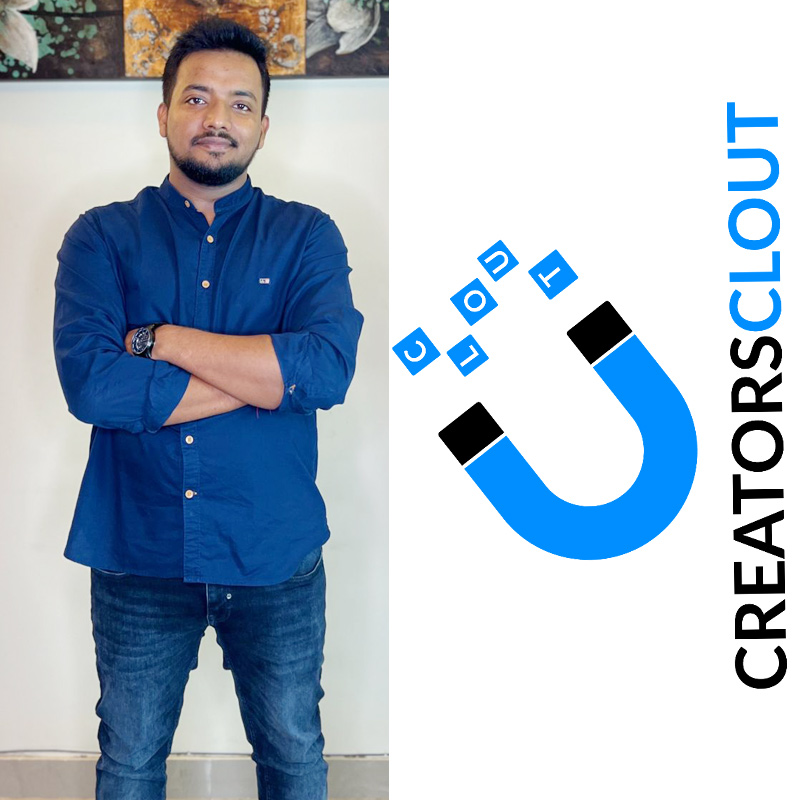
    Mumbai: SocioClout has announced the launch of its talent management vertical CreatorsClout. The agency helps bring together creativity and ROI and with this launch, SocioClout is set to tap into the untapped market and bridge the gap between vernacular creators and brands, leading to monetisation opportunities for creators through more mainstream, large brands.

    Presently, with 45 creators onboard, the vertical is to support influencers and creators in regional areas and build bridges between them and brands, thereby fueling their revenue and growth journeys.

    CreatorsClout is onboarding micro and macro creators from multiple genres across different parts of India in the languages of Kannada, Telugu, Gujarati, Bengali, Tamil, Malayalam, Marathi, Odia, Bhojpuri, Assamese, Punjabi and many more.

    With the marketplace, CreatorsClout is aiming to tap 200 creators by 2022 across regions in India.

    The Indian influencer marketing market is sized at approximately nine billion rupees, out of which 90 per cent is said to be focused on creators from tier one cities, mainly Mumbai, Bangalore, and Delhi.

    CreatorsClout will be in charge of providing a variety of services to onboarded creators, including talent management, end-to-end campaign execution, content strategy, mentorship programs, market research, in-house content production, and post production.

    Founder and CEO Bitesh Singh said, “At CreatorsClout, we are trying to expose vernacular influencers to the ever growing demand of brands trying to capture the Bharat market. We are ready with the 15–50-year-old demographic, ensuring maximum regional reach for the brands. SocioClout has been in the segment since 2020 and has worked with over 235+ brands since. Our deep connections and strategic ideation will deeply benefit the creator economy while also enabling brands to diversify their approach from vanilla influencer marketing to a full-suite content creation process.”

  • GUEST ARTICLE: How to stay competitive in the growing world of influencer marketing

    GUEST ARTICLE: How to stay competitive in the growing world of influencer marketing

    Mumbai: If you reflect ten to twelve years, affiliate marketing was a reliable method of reaching your target audience on the internet. Traditionally, affiliate publishers and web portals were the primary channels through which brands competed for customers. Trends, however, are subject to cyclical changes, aren’t they?

    Nowadays, brands are looking for influencers who can promote their products on social media. The effectiveness of influencer marketing was questioned five or six years ago, but now brands are willing to pay a lot to connect with the right influencers through agencies.

    According to our experience with affiliate marketing and influencer advertising, influencer marketing is a mixed form of affiliate marketing and celebrity endorsements. Influencers are now able to leverage their power through the creation of engaging brand-centric content. As part of our mission, we strive to connect with like-minded customers and to provide them with a better customer experience.

    Powerful influencer platforms

    Curated newsletters have taken off over the past few years. It’s common for business influencers to promote articles through newsletters on social media like Twitter and LinkedIn. You’ll likely come back for more as you read.

    Eventually, you’ll gain trust in the sources of information in the content, and their words will be able to influence you. When they promote a product or service, a buyer might buy it. You should send out newsletters and blog posts.

    The old ways of marketing can’t get you brand awareness anymore. Be sure to take advantage of influencers who are influencing your target audience.

    Get an edge on your competition with influencer marketing. To help you start influencing people with your products and services, here are some tips:

    • Ensure your influencers are legit

    Influencer marketing follows the same principles as other forms of marketing. Getting to know your audience members is key to providing anything of value to them.

    Make sure you segment your target audience based on their interests. Pick influencers who can attract those people instead of those whose reach will do it. Any relationship you have with an influencer should be based on relevance. 

    If you pick an influencer with a similar target audience to your brand, you’ll be able to reach the right people. Consumers 92 per cent of the time trust you as an authoritative source and recommend you to friends and family. Many followers of influencers consider their videos, photos, and posts to be endorsements.

    • Make your influence niche-specific

    Marketing with influencers can reach millions, but you won’t get as much for your money as with other “mass” marketing strategies.

    Try looking for smaller influencers and followers instead of big ones. It’s often more likely that they have engaged and dedicated fans. Their communication should also be tailored to the audience and generate responses.

    Many brands use this approach. This campaign wasn’t designed to maximise ROI but to expand the brand’s social footprint, which can pay off financially.

    • Mix your content correctly

    You can reach different audiences with influencer marketing, just like with content marketing. Make sure you’re not just using Instagram and Snapchat for short-form content. These platforms don’t just have viewer influence; you shouldn’t rely on them exclusively.

    See if long-form content offers you more opportunities instead. By using sites like Medium, you can find the right balance rather than focussing on one type of content exclusively. A platform like medium lets your audience dig deeper into topics than Snapchat and Instagram.

    Curating your marketing collateral is always a good idea, and a good collection provides various content. You can further the discussion with pictures, videos, articles, and even emails.

    • Make give-aways free and valuable

    No one can deny that people love freebies. Ensure your influencers are hosting giveaways so your target audience will be attracted to your content.

    It will help to encourage participants to follow your account and comment on your posts, and it may get more engagement. Customers will return to your business after sampling your products and getting to know your brand.

    37 per cent of the time, consumers buy stuff based on recommendations from social influencers. The social proof of influencers is one of the reasons consumers trust them. There is a chance these strategies will boost sales, so they are worth a shot.

    Conclusion

    A marketer’s arsenal of marketing strategies is growing more powerful with the use of influencers. It will help if you learn how to use it properly to be able to use it effectively. It takes considerable time, effort, and research to identify the right influencer to promote your brand. Once you have achieved the proper balance for your bottom line, it may be a divine match.

    The author of the article is PDP Media founder and CEO Raushn Jha.