Tag: Infectious

  • Infectious Advertising bags global digital mandate for MyGenie

    Infectious Advertising bags global digital mandate for MyGenie

    MUMBAI: Infectious Advertising has bagged the digital advertising mandate for MyGenie, a newly launched product from ITPeopleNetwork LLC, based in Illinois, Chicago.
    MyGenie is an online marketplace for employers and workforces. Currently, the platform caters to the Information Technology sector in the US by providing opportunities to both employers and workforce to fulfill project requirements (skilled experts, tools, and accelerators) to successfully deliver business results.

    Infectious will manage social media presence, paid media creative and digital collaterals and activations for MyGenie.

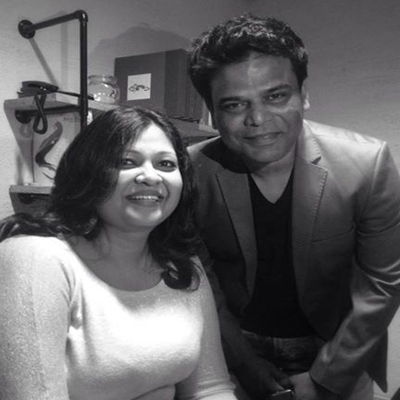
    ‘‘MyGenie is a fantastic platform that gives both employers and employees flexibility as well as access. It’s our honour to be chosen by them as their creative partner and we look forward to building the brand together,” Infectious director & co-founder Nisha Singhania said.

    “MyGenie’, the workplace of the future, will be the ‘New Normal’ – an evolutionary idea about the disruptive marketplace whose time has come. Super chuffed to have been chosen to partner this game-changing business,” Infectious director & co-founder Ramanuj Shastry said. 

    “MyGenie (www.mygenienetwork.com) is an ingenious, innovative, and state-of-the-art employer-workforce engagement marketplace. It re-defines how "Opportunities" are designed and offered, “Breakdowns” prevalent dysfunctional models, and re-imagines "Workplace" of the future. We chose Infectious as our partner for our dream project because of their broad range of expertise, creative abilities, and customer service. MyGenie’s ambitions growth trajectory will depend on two crucial factors, first, the direction in which we are heading (innovative idea), and second, the momentum at which the joint team is propelling it (thrust). I believe we are on our way to achieving stratospheric growth for MyGenie.,” ITPeopleNetwork  CEO Amit Dutta said.

  • #LikeAGirl, is not an abuse

    #LikeAGirl, is not an abuse

    MUMBAI: ‘Like A Girl.’ When did those three words become an insult?  

    This thought provoking question has been floating on various social media platforms for a couple of weeks now. Thanks to Procter & Gamble’s (P&G) new campaign, this thought is being heard loud and clear across the globe.

    The campaign which has different phases on digital is supported with a power packed video filmed by P&G’s ‘Always’, a leader in feminine hygiene products with a market valuation of $3.4 billion.

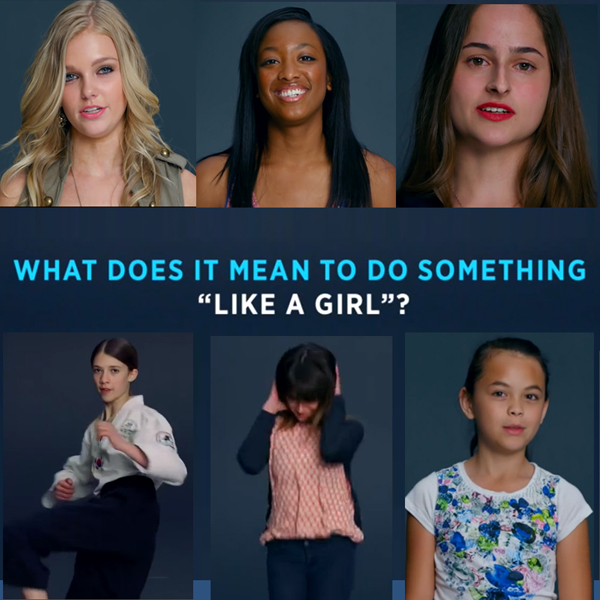
    Though the film might appear to look just like many other feminist-themed videos, there is a lot that it brings across the table. As part of the campaign, ‘Always’ has partnered with award-winning documentary filmmaker Lauren Greenfield to conduct a social experiment to illustrate how people of all ages interpret the phrase ‘Like A Girl.’

    Wondering why this campaign?

    On the official YouTube channel of P&G Lauren Greenfield, filmmaker and director of the #LikeAGirl video explained, “In my work as a documentarian, I have witnessed the confidence crisis among girls and the negative impact of stereotypes first-hand. When the words ‘Like A Girl’ are used to mean something bad, it is profoundly disempowering. I am proud to partner with ‘Always’ to shed light on how this simple phrase can have a significant and long-lasting impact on girls and women. I am excited to be a part of the movement to redefine ‘Like A Girl’ into a positive affirmation.”

    The video has already been viewed over 29 million times on YouTube, shared approximately 300,000 times on Facebook and tweeted around 40,000 times on Twitter. According to various media reports, P&G spends about $10 billion annually on marketing in the US. Of this, 25-35 per cent is spent on digital.

    This percentage of digital spends will soon get somewhere near in an emerging market like India. Last year P&G’s Pantene released a digital video which was also championed by Facebook chief operating officer Sheryl Sandberg who showed how the same behaviour by men and women is viewed differently by the society.

    With this campaign from ‘Always’, the company is taking a step further to strike social conversations and impressions for a good change.

    Click here to watch the campaign

    We at Indiantelevision.com, asked Indian creative fraternity of the challenges of creating campaigns on the digital platform and how much did the ‘Always’ campaign touch their hearts. 

    “It is a brilliant effort“

    According to Bang in the Middle managing partner and chief creative officer Prathap Suthan this particular campaign from P&G, shows how major advertisers in the world look at the criticality and importance of the digital space. And as usual, focus is in on universal insight.

    “The fact that physical weakness is often attributed to ‘being a girl quality.’ It pries open a lot of areas. It opens up a conversation into giving girls more liberty, comfort, reality, and empowerment. It is a brilliant effort. It squashes down on the global habit of seeing a girl’s natural and general lack of brawn as deficiency. Instead, the campaign applauds the differences, caliber, mettle and a whole lot superior attributes that only women possess.”

    According Suthan the campaign hits the right chord. “It’s a truth. Every girl, woman, daughter, mother, sister, aunt etc. will relate to it and so will all the men, especially fathers. I think it radiates a lot of optimism, positivity and reinforces confidence.  #LikeAGirl is one of the most common insults and demeaning expressions that have been going around until now. It has been used to not just debase and abuse women, but also used as an expression that’s widely used to lash out at boys and men when they don’t physically and even mentally push the bar,” says Suthan.

    With #LikeAGirl now trending across the world, and with every woman synching with the thought, hopefully this will initiate and propel a movement to help women across the world gain even more confidence, stature, self-esteem and happiness mentions Suthan.  “We need that for a better, healthier and more peaceful world,” he says.  

    Origin Beanstalk co-Founder Upendra Singh Thakur thinks in India, discrimination against girls starts at birth. It is way beyond than just making fun of ‘being like a girl’. “However, keeping the affluent consumer in mind that the brand caters to and the notion of silly being associated with girls, to me the brand has definitely hit the right chord and really made us think that in many ways, jokingly, we do tend to discriminate even though we don’t realise it,” says Thakur.

    “If you are not creative on digital then it is criminal”

    Curry Nation founder Priti Nair believes in the above statement. She says, “It is not being creative that is a challenge on digital, but it is how much more creative can you be. That is the real challenge. It is not your typical 30 seconder shot on location or set. It is an audition and the audition is the advertisement.”

    “In the #LikeAGirl campaign everything lies in the music and the casting. It takes you through an emotional graph. I think it is really insightful and I love the way it is connected to the product. Most of the times you have lofty philosophical stuff floating for causes that does not really have any connection to the brand. But to connect confidence ebb and fall with puberty is excellent and also true. It is good to know that someone is thinking harder,” opines Nair.

    Infectious director Nisha Singhania has similar thoughts about the campaign. She believes, “#LikeAGirl taps into a fantastic insight on how without realising it, we create norms on how girls and boys are supposed to behave. Often I’ve heard boys being told to stop behaving ‘like a girl’ as if it was an insult.” Since most clients want the campaign to go ‘viral’ Singhania thinks they buy braver work for the digital medium. 

    “How I wish, this gets translated into different languages. Or it needs a global version with multi-cultural and multi-ethnic representation. There’s so much truth going waste otherwise,” concludes Suthan.

  • Is it right of Congress to blame Denstu?

    Is it right of Congress to blame Denstu?

    MUMBAI: It was early this year that Congress started its Rs 600 crore blitz ad campaign. The campaign started with the slogan ‘Mein Nahi, Hum’ which caught itself amidst allegations from the Bharatiya Janta Party (BJP) which said that the slogan was first used by Narendra Modi at a rally.

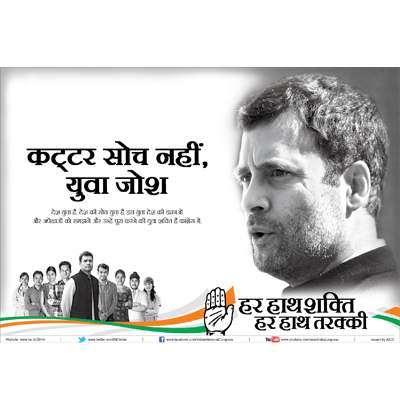
    Then came ‘Har Haath Shakti, Har Haath Tarakki.’ The campaign conceptualised by Dentsu was meant to position Congress vice president Rahul Gandhi as a young and dynamic leader who could empower the common man.

    BJP’s campaign, ‘Abki Baar, Modi Sarkar’, which went on floor a few months after Congress’ communication line, portrayed Modi as the saviour who could change the game of Indian politics.

    Both the campaigns created a stir not only amongst the experts but also amongst the common man as everyone had something to say about them – good, bad or ugly.

    The D-Day, 16 May, proved which ideology and promise voters believed in. BJP came out as a clear winner, while Congress’ performance was of sheer disappointment.

    Since then, the Congress has been ‘introspecting’ to find what went wrong. However, its latest reason for the debacle is the campaign, itself. The party is now blaming the creative agency by saying that its campaign was weak.

    When we contacted Dentsu India Group executive chairman Rohit Ohri, who is travelling abroad, sent an official statement of the agency through an email.

    The statement reads, “Dentsu India was hired by the Congress party for their 2014 Lok Sabha campaign, for advertising services, after a publicly announced request for proposal by the Indian National Congress. Dentsu India bagged the mandate after a rigorous pitching process involving several iterations among top Indian agencies. While Dentsu India worked rigorously on an ad campaign as per the client’s brief with approvals at every stage, the other aspects of the campaign eco system such as PR, media relations and online strategy were not within the ambit of Dentsu’s scope of work as mandated by the client briefing. Throughout the campaign, Dentsu India enjoyed a good working relationship with the Congress party.”

    “The agency maintains the highest standards of creativity and professionalism and adheres to global standards of ethics and compliance. The agency shares cordial relationship with all its clients, and shall endeavour to maintain the same.”

    We at Indiantelevision.com, ask creative fraternity if it is right to blame the agency for the dismal performance of the political party?

    Bang in the Middle managing partner and chief creative officer Prathap Suthan

    This is a bit of a deja vu for me. Considering that some leaders in the BJP did exactly the same thing when India Shining didn’t work as a political multiplier in 2004. That aside, elections are purely won on the basis of performance. On a limited scale, one could overcome inefficiency by hyperbole and exaggerating the potential of the future.

    But this was the national elections. On the back of a long winded story of scams, misgovernance, corruption, lack of leadership, slow economy and what have you. However the campaign, for all its advertising polish and gloss, did not address issues that people wanted answered. There were no admissions. No apologies. No responsibility for incompetence.

    Instead what we saw was campaign that was divorced from the need of the hour. They pushed a campaign that presented a hollow and shallow picture of supposed happiness. More importantly, Rahul Gandhi hardly came through as an honest, well meaning, and effective leader. His own media exposure wasn’t very kind to him.

    So when you have invested in a campaign that didn’t speak what was required, and projected a story that was far away from the truth, it is bound to fail, and has obviously failed. It is absurd to blame an agency. They only delivered what they were contracted for. I am sure they advised otherwise, but ultimately the client is always right.

    It is ridiculous to imagine that the party didn’t agree to the communication. Everyone saw it and everyone approved it surely, if they didn’t agree they wouldn’t have run the campaign. The agency doesn’t and will not create and release an unapproved campaign. There are a lot of signatures that need to approve media releases. And if they have spent all that money behind a donkey in a horse race, you really can’t turn around and blame the jockey.

    Lowe Lintas & Partners NCD Arun Iyer

    One shouldn’t take too much credit if a campaign goes viral or flak if it flops. Of course, at the end of the day if a campaign doesn’t work then the agency is to be held responsible, but everyone is kept in the loop. It is a well kitted effort and everybody involved is responsible for the outcome. I don’t think what Congress is doing is right. It shouldn’t have done what they did, especially publically.

    Infectious director Nisha Singhania

    It is not fair to blame an agency if the end product fails to deliver what it promises to the consumers. The purpose of an advertising campaign is to popularise a product but if consumers’ don’t have good experience rejection is obvious. The same thought applies in this situation too. 

    Curry-Nation director Priti Nair 

    How can they blame anyone or anything for this except themselves? This goes for each and every product; if your product is bad even Santa Claus cannot help you. Agencies build a brand and make people choose so as to go and use it, so agencies help to choose. A product has to deliver on the use bit. Unfortunately here people had already experienced the product, and it had failed so miserably that no amount of brand building could resurrect it. In fact if you ask me the outdoor, the films (if that is what Dentsu did) were pretty good and looked and seemed even nicer than the BJP campaign, which looked more like the usual political campaign. Except that the BJP campaign thought was far more powerful and true. You can fool some people all the time or you can fool all people sometime but you can’t fool all the people all the time.

    Origin Bean Stalk co-founder Upendra Thakur Singh

    I personally feel that the agency can be blamed only if it, for any reason, goes totally off the brief. Not if the client and agency have been hand-in-glove while developing the communication and approving the same before release. Today’s consumer is more aware and smart and doesn’t often buy into a bad product even if the campaign is good. 

    Having said that, fingers are always pointed when the campaign doesn’t give you the desired response or when you lose. Owning to that fact that your product offering is bad is a good thing but blaming the agency for sticking to the brief and executing such a high-cost visible campaign is very unfortunate.

  • An ‘Infectious’ association

    An ‘Infectious’ association

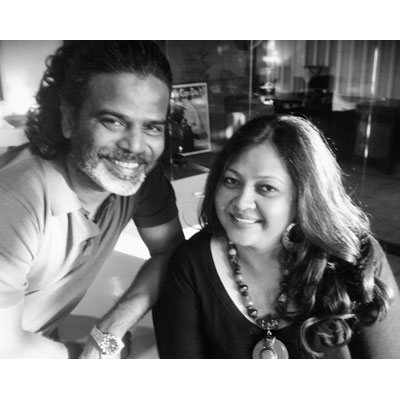
    MUMBAI: For colleagues at the then Saatchi & Saatchi who saw them fighting with each other, it came as a surprise when Ramanuj Shastry and Nisha Singhania quit within days of each other, to start an enterprise of their own.

    Singhania makes no bones about it. “We still have a lot of fights. Of course, it’s all related to work, but we aren’t the kinds who will just nod our heads to what the other person has to say,” she admits. How do they resolve these conflicts? “We try and convince the other. At the end of the day, it is all about logic and creativity,” she answers.

    What began as an association when the duo first met in Rediffusion Y&R blossomed into an up-and-coming agency christened ‘Infectious’. Ask them why such a title and Singhania says it has to do with their belief that their work should be infectious. “We wanted to solve clients’ business problems, rather than focus only on creating communication like large agencies. Our work is to engage people and for that to happen, the work had to be communicable. We wanted to start an epidemic of good with ideas that spread,” she adds.

    The freedom to do the kind of work the two of them wanted to was the mainstay of this self-funded agency. “We wanted to ‘do’ as well as ‘say’. For instance, when Camlin asked us to create a print ad for Children’s Day, we ‘did’ an activity instead. We created a ‘join the dots’ ad, which kids had to colour and parents were urged to upload on their Facebook page. It was a very successful engagement and within 24 hours, took the likes on the Kokuyo Camlin FB page from 150 to 15,000,” says Shastry.  The activity went on to be nominated by Facebook Studio for best use of the social networking website by any brand.

    According to Singhania and Shastry, what sets their agency apart is the quality of ideas, lesser turnaround time, and personal involvement in every business. The client list is a mixed bag of biggies like HCL, DNA and Camlin and start-ups like Pied Piper and Braces & Smiles. For some clients, the agency handles all their marketing requirements while for others, it looks after specific projects.

    For an organic set up, Infectious was lucky to have bagged two clients even before it launched. However, Singhania and Shastry are candid about the fact that clients are usually more comfortable giving business to larger agencies. Besides, it did take them a while before winning the confidence of heavyweights like HCL and DNA.

    Infectious is headquartered out of Mumbai with a presence in Chennai, Delhi and Kolkata and has a young, energetic, hand-picked team of 15 running it. “We have worked in various agencies, so when people heard that we were starting something of our own; we got a lot of calls, especially from the youngsters. And since we have worked with them, so we knew what we could expect from them. We are blessed to have hand-picked talent,” says Singhania.

    In addition to having a young team, the agency saw no harm in advertising itself. “Very few advertising agencies ever advertise about themselves. What is the harm in doing so? The logo adaption is our way of having fun. Digitally, one can do so much to engage with people, let alone clients,” says Shastry. Though he quickly adds that at its core, the business is still about ideas and digital is only a medium. Speaking of elections, he says that most political parties engaged and optimized their reach via the digital medium. Even Infectious created a special campaign along with DNA to urge people to go out and vote.

    What do the next five years look like for Infectious? “Five years is a very long time. We are a ‘work in progress’ agency, with plans for the next 100 days,” say Shastry and Singhania at once.

    What about network agencies snapping up independent agencies? The duo feels that in most cases, it is a win-win situation where network agencies bring in resources and scale while independent agencies bring in local expertise.

    And with Goafest coming up, the agency which is all for awards as long as they are for real work, the future holds only great promises.

    One wouldn’t be wrong in saying that like Monday mornings and coffee (chai, in some cases), Singhania and Shastry are a perfect combo.

  • Infectious appointed as creative agency for Pied Piper

    Infectious appointed as creative agency for Pied Piper

    MUMBAI: Infectious has been signed on by MNR Marketing as their communications partner to launch Pied Piper, a first of its kind Intelligent Pest Repellant. It works on ultra sound and is non-messy, chemical-free, eco-friendly and most importantly, a permanent solution to pest problems. Infectious is entrusted with branding, identity, packaging and communication for the brand.

    Rahul Bafna, Director, MNR Marketing said “We met several advertising agencies before deciding to partner with Infectious. However, we honed in on them because they not only have strong credentials but also the passion of going out on their own to deliver something they truly believe in. This young enthusiastic team gets under the skin of the product, understands consumer needs and then creates work. This is a quality which perfectly fits the needs of any entrepreneur.”

    Commenting on the win Ramanuj Shastry, Co-founder & Director, Infectious says, “It’s a game changing product which can have a far reaching positive impact on urban home sanitation and health. The challenge is to design communication that is as effective and simple as the product itself”

    Nisha Singhania, Co-founder & Director, Infectious says, “It’s always an honor when a client entrusts you with their brand. We hope to make Pied Piper a leader in pest repellant solutions.”