Tag: Indra Nooyi

  • Kuku FM and Penguin India launch 15 exclusive Hindi audiobooks

    Kuku FM and Penguin India launch 15 exclusive Hindi audiobooks

    MUMBAI: Kuku FM has joined hands with publishing giant Penguin Random House India (PRHI) to launch 15 exclusive Hindi audiobooks adapted from Penguin’s bestselling titles.

    This partnership not only expands both brands’ storytelling universe but also caters to India’s booming demand for regional audio content. With digital audio consumption skyrocketing, the collaboration brings a treasure trove of literary works to life in a more immersive and accessible format.

    The curated collection includes works by some of India’s most celebrated voices Gaur Gopal Das, Devdutt Pattanaik, Harish Bhat, Indra Nooyi, Raghuram Rajan, Ankur Warikoo, and Neena Gupta, among others. These audiobooks, produced and adapted by Kuku FM, promise high-quality narration, cultural resonance, and a deeply engaging listener experience.

    “Our customers have higher expectations from us every day, and at Kuku FM, we love rising to that challenge. They know what they want and need plenty of choices. We aim to bring the best books to them in their language and give them a unique yet engaging listening experience,” said Kuku FM CEO & co-founder  Lal Chand Bisu.

    “We are excited to partner with an iconic publisher like Penguin to not only expand our library but also ensure that we’re opening up a whole new world of entertainment and knowledge for every Indian in more accessible formats.”

    Titles will be available on the Kuku FM Android app from April 2025, priced from Rs 175 making bestselling reads more affordable than ever in audio format.

    PRH India vice president  & product Vijesh Kumar added, “At Penguin, we are committed to making books more accessible and inclusive, ensuring they reach readers in the formats they love. Our exclusive partnership with Kuku FM marks an exciting milestone as we bring some of our most celebrated titles to Hindi audiobooks for the first time. With storytelling evolving beyond the page, audiobooks offer a dynamic and immersive way to experience books welcoming both avid readers and new audiences alike.”

    The collaboration aligns perfectly with the projected growth of India’s OTT audio market expected to hit $1.8 billion by 2025 with over 100 million users.

    “The collaboration is a critical extension of Kuku FM’s highly curated portfolio of stories and we are excited to expand this universe further with PRH India who are known to have some of the most storied authors and books in their library,” said Kuku FM head of content acquisition Prerna Vohra.

    PRH India manager & audio Vidhi Nangia added, “Audiobooks are seeing tremendous growth globally, and India is no exception, with the market expected to grow over 30 per cent annually. Recognising this shift in how audiences engage with literature, Penguin is thrilled to partner with Kuku FM to introduce 15 Hindi audiobooks by beloved authors such as Bhat, Warikoo, and Nooyi. Kuku FM’s commitment to exceptional curation and production ensures that our cherished works are presented with the utmost quality. This collaboration marks the beginning of a promising journey to make our stories accessible to an even broader audience.”

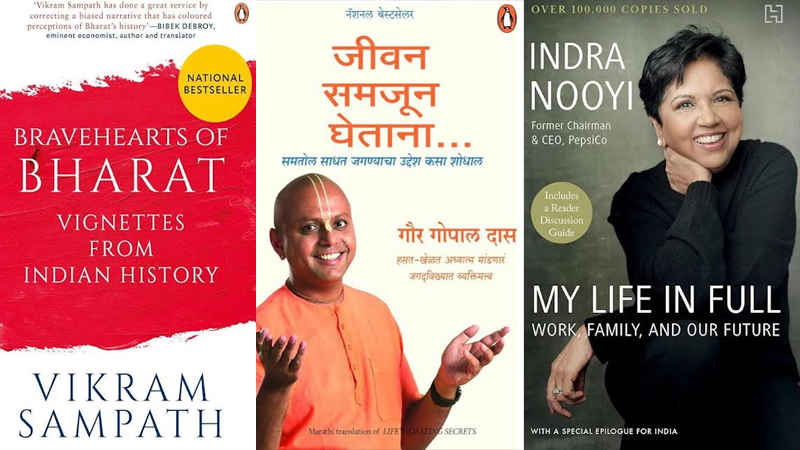
    The exclusive collection of Hindi audiobooks includes Tata Stories by Bhat, Bravehearts of Bharat by Vikram Sampath, and My Life in Full by Nooyi. Listeners can also enjoy Jeevan ke Adbhut Rahasya and Energise Your Mind by Das, along with India’s Most Fearless 1 and India’s Most Fearless 2 by Shiv Aroor and Rahul Singh. The line-up features Mythakon se Vigyan Tak by Gauhar Raza, Jaya and The Book of Ram by Pattanaik, and Breaking the Mould by Rajan and Rohit Lamba. Also included are Make Epic Money and Build an Epic Career by Warikoo, Sach Kahun Toh by Gupta, and Manoj Bajpayee by Piyush Pandey.

  • Indra Nooyi steps down as PepsiCo boss after 12 years

    Indra Nooyi steps down as PepsiCo boss after 12 years

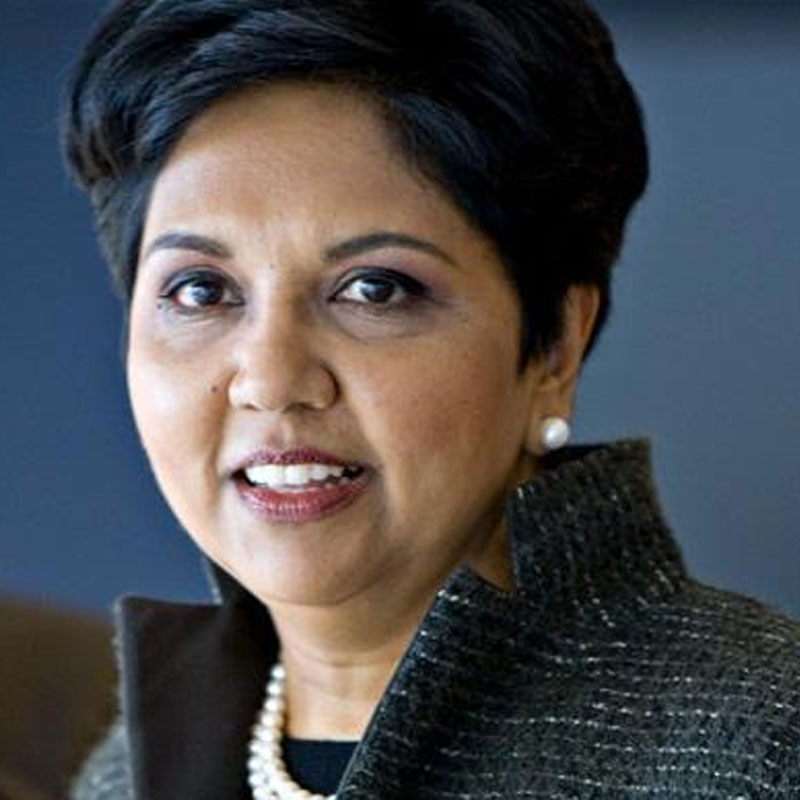
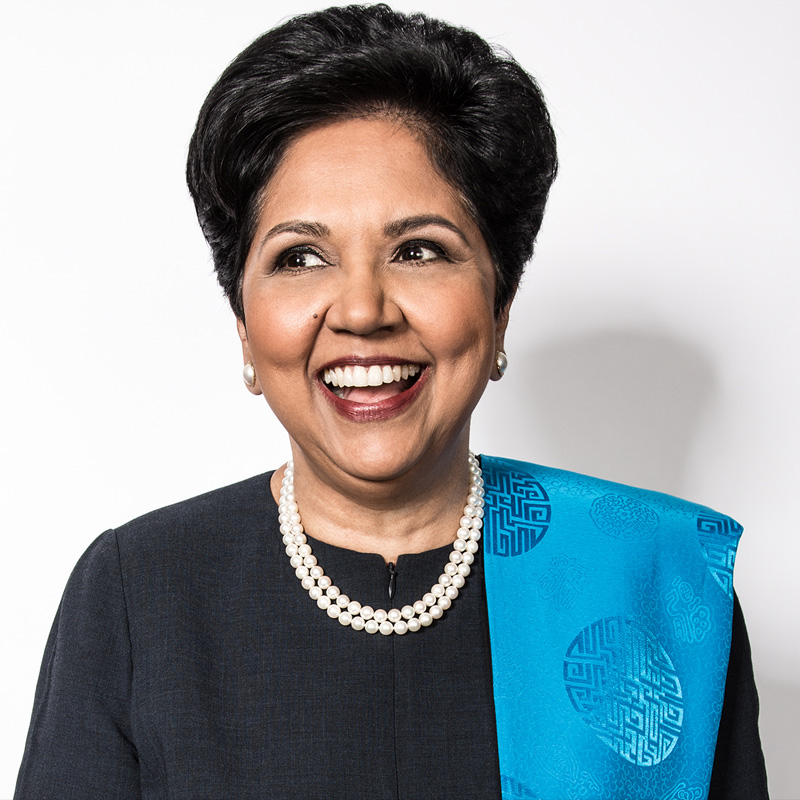
    MUMBAI: Indian origin Indra Nooyi has decided to step down from American multinational food, snack, and beverage company PepsiCo after heading it for 12 years.  

    She is currently serving her notice period and will leave the position on October 3. Nooyi will however remain Pepsico’s chairman until early 2019.

    Recently elevated PepsiCo president Ramon Laguarta will fill in Nooyi’s shoes to be the new CEO. Laguarta has been with the corporation for over 22 years.

    In a statement issued by the company, Nooyi said, “Growing up in India, I never imagined I’d have the opportunity to lead such an extraordinary company. Guided by our philosophy of Performance with Purpose — delivering sustained performance while making more nutritious products, limiting our environmental footprint and lifting up all the communities we serve — we’ve made a more meaningful impact in people’s lives than I ever dreamed possible. PepsiCo today is in a strong position for continued growth with its brightest days still ahead.”

    Nooyi joined PepsiCo in 1994 as senior vice president of strategic planning and has since donned many hats at the company. 

    A Yale University alumni, she shattered the glass ceiling by becoming PepsiCo’s first female CEO.

  • PepsiCo acquires Bare Foods for $200M in a bid to provide healthy products

    PepsiCo acquires Bare Foods for $200M in a bid to provide healthy products

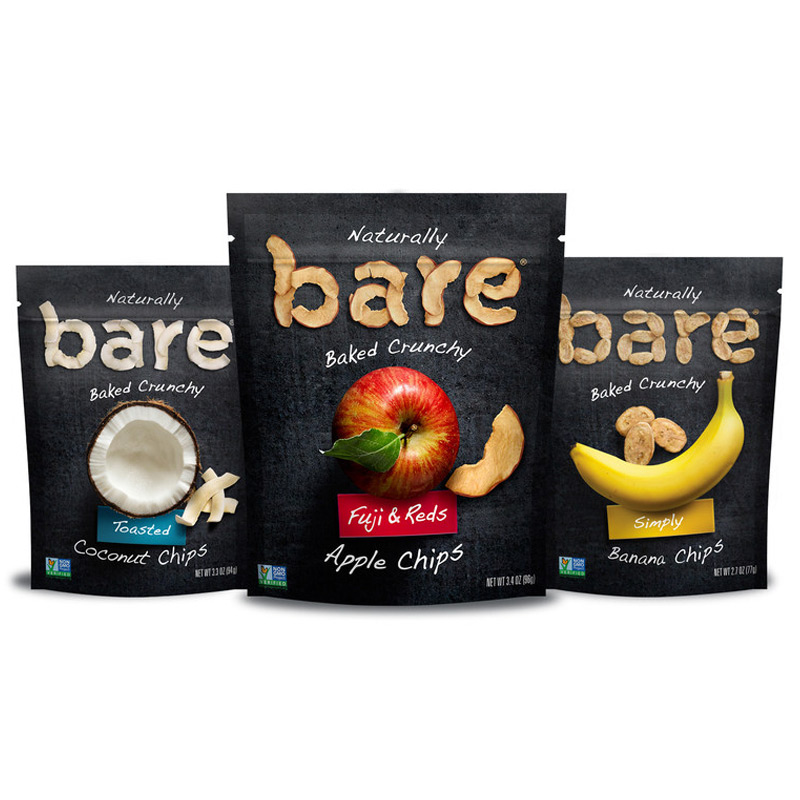
    MUMBAI: A global snack brand started by an Indian, Bare Foods has been acquired by American multinational food, snack, and beverage corporation, PepsiCo. 

    PesiCo has entered into a definitive agreement to acquire the US snack company that is primarily into baked fruits and vegetable snacks. The transaction will expand the company’s snacking portfolio and further deliver on its vision to offer consumers more positive nutrition options.

    PepsiCo chairman and chief executive officer Indra Nooyi says, “For nearly a dozen years, PepsiCo has been committed to our vision of making more nutritious products, while also reducing added sugars, salt, and saturated fat. Bare Snacks fits perfectly within that vision.”

    Although both the companies did not disclose the financial terms of the deal, but it is learnt that Pepsi will pay less than $200 million for the snack company.

    She adds, ”The Bare Snacks leadership team has done an outstanding job building a top-tier organisation and a strong brand with authentic roots, and I couldn’t be more excited to welcome Bare Snacks to the PepsiCo family.”

    Bare Snacks was founded in 2001 by a family owned organic apple farm in Washington, that began selling packaged baked apple chips in local farmers’ markets. Under its current leadership team, it has expanded steadily to become the leader in apple, banana and coconut snacks.

    It has recently expanded into vegetable chips and offers the industry’s broadest assortment of baked crunchy fruit and vegetable chips (apple chips, banana chips, coconut chips, and new beet chips, carrot chips, and sweet potato chips). Bare products are made from simple ingredients that are baked, not fried.  They are non GMO project verified, feature clean labels and are sold online and in natural and conventional retail channels across the US.

    Bare Foods CEO Santosh Padki is thrilled to work with the PepsiCo team to further its mission of bringing simplicity to snacking. “With a shared passion for crunchy, better-for-you snacks, PepsiCo is the right partner to help bring our simply baked fruit and vegetable  snacks to even more consumers across the world and continue to grow our brand,” he adds. 

    Upon closing, Bare Snacks will continue to operate independently from its headquarters in San Francisco with its leadership reporting into Frito-Lay North America, a division of PepsiCo.

    Frito-Lay North America president and chief operating officer Vivek Sankaran thinks that Bare premium baked fruit and vegetable chips are an exciting expansion of Frito-Lay’s better-for-you snack offerings. 

    PepsiCo will continue to offer the current Bare Snacks product line  while also working with the Bare Snacks team to deliver new, innovative options, and ultimately expanded distribution.

    PepsiCo generated more than $63 billion in net revenue in 2017, driven by a complementary food and beverage portfolio that includes Frito-Lay, Gatorade, Pepsi-Cola, Quaker and Tropicana. PepsiCo’s product portfolio includes 22 brands that generate more than $1 billion each in estimated annual retail sales.

  • ICC’s appointment of Indra Nooyi raises eyebrows

    ICC’s appointment of Indra Nooyi raises eyebrows

    MUMBAI: The International Cricket Council (ICC) has named PepsiCo chairman and CEO Indra Nooyi as its first independent female director. Her appointment is likely to cause some ripples given that PepsiCo has tied up with the ICC for a multi-year global partner deal.

    PepsiCo and ICC’s deal lasts till 2023 while Nooyi’s term with the ICC is for two years and can be extended twice, taking it to a maximum of six consecutive years of service. Her appointment is likely to run concurrently with the council’s partnership with the global FMCG behemoth thereby raising the question of conflict of interest.

    An ICC release stated that she was selected after due diligence from both the Independent Ethics Officer of the ICC and PepsiCo’s general council. There will be a clear framework for managing any potential or perceived conflicts of interest that may develop in the future.

    The introduction of a female independent director was approved by the ICC in June 2017 as part of a wide-ranging constitutional change aimed at improving the governance of the sport. Nooyi will join the board in June 2018 to align with the term of the ICC independent chairman following the unanimous confirmation of her appointment at a meeting held on Friday, an ICC release said.

    ICC chairman Shashank Manohar said, “Adding another independent director—particularly a female—is such an important step forward in improving our governance. To have someone of Indra’s calibre is fantastic news for the global game. We undertook a global search looking for the right candidate who would complement the existing skills and experience already on our board. A cricket enthusiast with experience in the commercial sector and independent of the ICC, any member or state or associated organisation were the primary criteria and in Indra we have found an exceptional new colleague and we look forward to working with her in the future.”

    Expressing delight at her appointment, Nooyi said, “I love the game of cricket. I played it as a teenager and in college, and to this day, I cherish the lessons the game taught me about teamwork, integrity, respect, and healthy competition. I am thrilled to join ICC as the first person to be appointed to this role. And I look forward to working with my colleagues on the board, ICC’s incredible partners, and cricketers around the world to grow our sport responsibly and give our fans a new reason to follow every ball and shot.”

    At PepsiCo, Nooyi is responsible for a global food and beverage portfolio that includes 22 brands generating more than $1 billion each in annual retail sales, including Quaker, Tropicana, Gatorade, Frito-Lay and Pepsi-Cola.

    Also Read:

    SPN India acquires TV, OTT rights for T10 Cricket League

    Star ushers in IPL’s new era with a bang

    Star India gets IPL to change match timings for 11th edition

  • Vivo dials into IPL’s title sponsorship as Pepsi fizzles out; BCCI meeting underway

    Vivo dials into IPL’s title sponsorship as Pepsi fizzles out; BCCI meeting underway

    NEW DELHI: The controversy ridden Indian Premier League (IPL) has got its third official sponsor in less than nine seasons of the tournament, with Chinese smartphone maker Vivo replacing PepsiCo as the next sponsor for two years.

     
    PepsiCo, which had replaced DLF as the title sponsor of the IPL, has gone global quoting Pepsi chairman Indra Nooyi saying that the company will only associate with ethical and clean sporting properties.

     
    Confirming the new sponsorship deal with Vivo to Indiantelevision.com, a source close to the development said that the terms and conditions will remain the same as with PepsiCo.

    At the time of filing this report, IPL chairman Rajeev Shukla was not available for comment as it is understood he is attending a meeting of the Board of Control for Cricket in India (BCCI), which is currently underway in Mumbai. 

     
    The source said Vivo is trying to establish its presence in the Indian market and will leverage the IPL platform for the same.


    PepsiCo had become title sponsor of the IPL in 2013 after they bid Rs 396.8 crore for five seasons until 2017. 


    Earlier this month, the cola giant had informed IPL COO Sundar Raman about the decision to withdraw.


    Shukla had earlier said the Pepsi pullout will have no bearing on the tournament as they were already in talks with other sponsors. Shukla had clarified that PepsiCo had been a good partner, had made certain points and the issue would be resolved amicably. 

    Sources indicated that PepsiCo will continue to be associated with the IPL as beverage partner with independent IPL teams.


    Prior to Pepsi, DLF had paid Rs 200 crore to become title sponsors of the tournament since its inception in 2008 till 2012.

     
    It is learnt that PepsiCo was disturbed at allegations of corruption as well as arrests of players and officials on charges of betting during its sponsorship term.

     
    These included Gurunath Meiyappan, then team official of Chennai Super Kings (CSK) team, and Raj Kundra, then co-owner of Rajasthan Royals (RR), who had been given a clean chit by a commission appointed by then BCCI chief N Srinivasan. 

     
    After losing the case in the Bombay High Court, BCCI went to the Supreme Court, which in July appointed the Justice RM Lodha panel after which with CSK and RR teams were banned from the tournament for two years with Meiyappan and Kundra being banned for life.

  • PepsiCo CEO Indra Nooyi hails Modi’s ‘Make in India’ initiative

    PepsiCo CEO Indra Nooyi hails Modi’s ‘Make in India’ initiative

    KOLKATA: Indian Prime Minister Narendra Modi’s call for ‘Make in India’ would help boost up manufacturing and employment in the country, PepsiCo chairman and CEO Indra Nooyi said on Saturday.

    Nooyi, who heads the Fortune 500 company, also said that business success nowadays is measured on quarter-on-quarter or year-on-year basis. 

    “I think the PM is absolutely right on this. It creates a manufacturing base and employment,” said Nooyi, during a brief media interaction at Indian Institute Management, Calcutta (IIM-C) convocation, in Kolkata. 

    She informed that almost everything that her company sells here is “Made in India.” 

    Answering a query as to whether her company was looking to promote its Rs 33,000 crore investment plan by 2020, Nooyi quipped, “That’s a lot of money… let’s get on with that.”

    Talking about the success of business, she said, “Most successful businesses are those, which focus on the long-term. The most successful companies are the ones that create value over the long term for employees, for shareholders, and for the greater community.” 

    “We’re working every day to build a more balanced portfolio, to conserve natural resources, and to create diverse, inclusive workplaces, because we understand that long-term growth is contingent upon a healthy relationship between a company, its community, and its consumers,” Nooyi said. 

    She further said that challenges faced by India are inter-connected, which demands solutions and leadership. 

    “We still face complex challenges like inequality, climate change and resource scarcity that demand solutions and leadership. Making these challenges even more complex is the fact that they are all interconnected. You cannot dive into one issue without touching another,” Nooyi said.

    In her concluding remarks, Nooyi said that though the county has made a lot of progress over the last four decades, India has a long way to go going forward.

  • Women bankers lead India in Fortune list

    Women bankers lead India in Fortune list

    MUMBAI: Eight Indian women have made it to the Fortune list of 25 most powerful women ‘shaping the new world order’ in the Asia-Pacific region.


    ICICI Bank CEO Chanda Kochhar has been ranked second across the region while SBI’s Arundhati Bhattacharya, HPCL’s Nishi Vasudeva, and Axis Bank’s Shikha Sharma have also made it to the top-10 earning fourth, fifth and tenth rankings respectively. The list is topped by Australian banking major Westpac’s chief Gail Kelly.


    Releasing the latest rankings, the Fortune magazine said that women around the world are continuing to win the top jobs, so much so that more than a third of the women on this Asia-Pacific list are making their debut in the coveted list, including two from India.


    The two Indian new entrants are Bhattacharya and Vasudeva.


    Bhattacharya is the first woman to hold the ‘three-year post at the country’s largest bank and oversees a 208-year-old institution with $400 billion in assets and 218,000 employees dispersed among 16,000 branches across India’.


    On the other hand, Vasudeva, became the first woman to head an Indian oil company and is ‘and one of only four women to helm a Global Fortune 500 firm in the Asia-Pacific region’.


    Other Indians on the top-25 list include Biocon chief Kiran Mazumdar-Shaw (19), National Stock Exchange CEO Chitra Ramkrishna (22), HSBC’s Naina Lal Kidwai (23) and TAFE chairman and CEO Mallika Srinivasan (25).


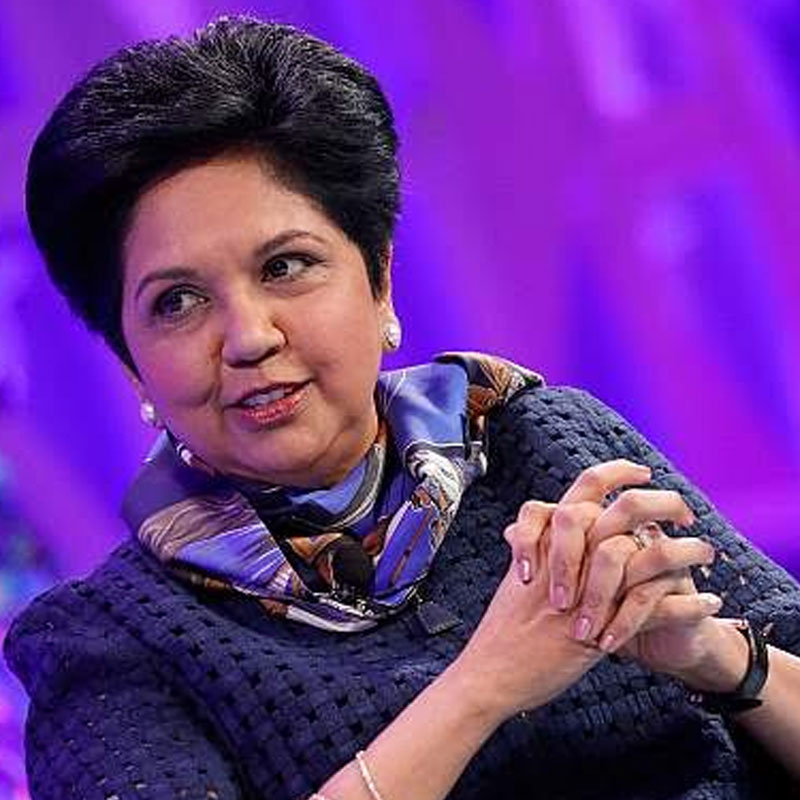
    Meanwhile, Indra Nooyi, PepsiCo’s India-born CEO, has been ranked third among the world’s most powerful business women by Fortune. She is only Indian-origin woman on this year’s global list, which has been topped by IBM chairman and CEO Ginni Rometty and General Motors CEO Mary Barra.

  • Winfrey, Knowles, Shakira in Forbes list of powerful women

    Winfrey, Knowles, Shakira in Forbes list of powerful women

    NEW DELHI: Actor-presenter Oprah Winfrey and singer Beyonce Knowles have once again made it to the Forbes list of ‘The World’s 100 Most Powerful Women.’


    While Wifrey is at number 14, Knowles is at number 17, just ahead of Yahoo CEO Marissa Mayer at 18.


    PepsiCo chairperson and CEO Indra Nooyi is placed at 13 (as against 10 last year) while Cisco Systems chief technology and strategy officer Padmasree Warrior is at 71 (against 57 last year).


    Actor Angelina Jolie is at number 50 and has fallen from last year’s ranking of 37.


    Other prominent women from the media and entertainment industry in the list are Sony Pictures Entertainment co-chairperson Amy Pascal at 28, actress Sofia Vergara at 32, NBC Universal chairperson Bonnie Hammer at 42, TV Personality and comedienne Ellen DeGeneres at 46, Huffington Post editor-in-chief Arianna Huffington at 52,  singers Shakira Mebarak at 48 and Lady Gaga at 67 and Chinese actress Yao Chen at 83.

  • Oprah off Fortunes most powerful women list

    Oprah off Fortunes most powerful women list

    MUMBAI: When Fortune published its first Most Powerful Women (WPM) in Business list in 1998, it included just two Fortune 500 CEOs.


    The 2013 Fortune MPW list includes 20 Fortune 500 CEOs. At the top is Ginni Rometty of IBM.


    Fifteen years ago, most of the Fortune MPW we’re in the consumer packaged goods and media industries. The 2013 list features consumer-products stars–PepsiCo (PEP) chief Indra Nooyi, Mondelez (MDLZ) CEO Irene Rosenfeld and Procter & Gamble’s (PG) Mel Healey and Deb Henretta. But women in tech dominate the new rankings. The 2013 top 10 includes five tech execs: Rometty, Facebook’s (FB) Sheryl Sandberg (No. 5), Yahoo (YHOO) chief Marissa Mayer (No. 8) and Hewlett-Packard (HPQ) boss Meg Whitman (No. 9).


    There are lots of moms on the 2013 MPW list as well. And in general, Fortune’s MPW are getting older. Average age: 53, vs. 48 in 1998.


    And for the first time ever, one woman who has always made Fortune’s MPW list dropped off, Oprah Winfrey. Her cable network, OWN, seems to have overcome its startup struggles and is drawing bigger audiences, but the business isn’t big enough to put Oprah on the 2013 list.

  • Advertisers should continually reinvent

    Advertisers should continually reinvent

    NEW DELHI: In a world of so many choices, it is important for advertisers and corporates to continually reinvent ideas to reach out to the new generation, and also use social media through the Internet for this purpose.

    This was the general consensus at the 27th AdAsia held in India after a period of eight years and attended by over 1200 delegates from India and 25 countries.

    On the concluding day, Pepsico chairman and CEO Indra Nooyi cautioned those in the advertising and marketing business that the uncertainties in the corporate world could only be overcome if one could adapt suitably to face the future.

    She said that the corporate world today faced a crisis of leadership, of governance, and of expectations.

    The corporate leaders therefore have to lead for ‘today and tomorrow at the same time‘ – that is, keep an eye on the horizon even as one planned for the present. Similarly, one has to be ambitious, attract and tap the right talent and make sure that it stayed with you, and the leaders have to be ‘super visible‘ – they should be available to all their employees and not sit in ivory towers and give orders.

    She said creativity and adaptability are the answers to uncertainty, and referred to working in an atmosphere of connective autonomy.
     
    Referring to her own brand, she said that the way to sell globally is to innovate and so while Lays is a popular Pepsico brand, it is marketed in different countries with local flavours.

    Nooyi was addressing the concluding session of AdAsia 2011.

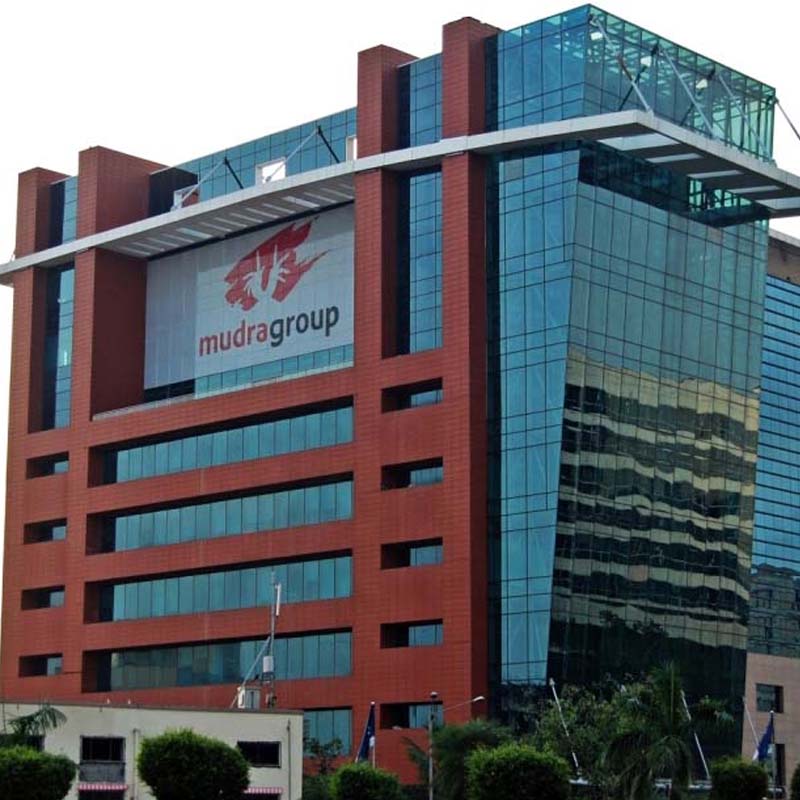
    Talking about the theme – “Uncertainty: The New Certainty” – Mudra Group MD and Group CEO and AdAsia 2011 chairman Madhukar kamath said that it underlines the dynamic world that is currently at an inflection point witnessing a realignment of global economic leadership. Post the global meltdown, Asia leads the world on the path of recovery, thus attracting attention from the world over.

    Earlier, Saatchi and Saatchi creative chairman Robert Senior said there have to be certain change in strategy to be in the advertising and marketing business in ‘the age of now‘. Thus, attention had to be substituted by participation, inform by inspire, interpretation with interaction, return on investment with return on involvement, and pumping markets with creating movements.

    Speaking on the pursuit of Big Ideas in the Age of Now, he said the consumer today lives in a VUCA world: he is volatile, uncertain, complex, and ambiguous. The advertiser has to change that attitude to being vibrant, unreal, crazy and astounding.

    Noting that ideas can be the prism of hope, he said the real skill lay in seeing the point in an idea and then nurturing it with speed, agility, and news desk mentality.

    He said at the outset that he is particularly impressed by the optimism among the advertising fraternity in India, as compared to Europe. The advertisers know what their consumers expected from them.

    In another session where he interacted with lyricist and McCann Worldgroup India‘s chairman and CEO Prasoon Joshi, Coca Cola Company EVP and chief marketing and commercial officer Joseph Tripodi said large companies tend to be very conservative and often do not take risks. In his company, he has encouraged a policy where one would put 70 per cent of his money where he know it would pay, 20 per cent to innovate off that 70 per cent, and 10 per cent just innovate with new ideas. Thus, it would not matter too much if that 10 per cent failed.

    There is also need to take some risk and take some challenges, part of which is trying to create popular culture.

    He said it is important to understand the brand and create love for it. Coca Cola did this with the help of inspirational and operational marketers.
     
    He said the aim was to create both love and value for the brand as well as the product. Consumers demanded value for their time and attention and wanted entertainment, and portability. For all this, evolution was mandatory.

    For his brand, he said the focus was on storytelling and there has been a link with the liquid being sold.

    Furthermore, he said in reply to a question that value for him meant shared dividends and this was the reason for Coca Cola to endorse causes. He gave several examples of how this had been done by showing short film clips. There is need to market certain global values as commonalities are growing all over the world with ‘Internet being the great democratiser‘ which made everything ‘glocal‘. People like to connect with each other and therefore Coke has also used the social media for this purpose since it is a natural human behaviour to share.

    But it was necessary to earn the trust of the local people. One cannot let the hype get ahead of the reality and therefore the nature of Corporate Social Responsibility has changed with the non-governmental organisations not just wanting cheques. They want commitment and not mere promises, and wanted that the corporate house should be transparent. Therefore one has to work to earn the trust of the consumer and the NGO.

    Answering a question, he said that flavour extensions in Coke were only aimed at catering to local populations.

    In a session on how to navigate through in the face of media fragmentation, Citi Head of Global Marketing (Consumer) Bob O‘Leary said new technologies demand new choices and new behaviours and it is important to rise to the occasion.

    OMD Worldwide CMD Mainardo de Nardis said it is necessary to capture the imagination of the people through the right beliefs.

    Maxus Worldwide CEO Kelly Clark said that it is important to keep creative talent motivated and challenged, and excited about their work. People can be brought in from various fields but have to be kept in the company by appreciating the impact of their work.

    The importance of reinventing oneself was driven home again in a discussion on building brands in a trust deficit world. All the speakers stressed the need to be able convince the people about brands.

    Moderating the session, author Deepa Prahlad said technology is changing everything and affecting the metaphors of brand marketing. Therefore advertisers and brands have to change.

    Engine and WCRS President Robin Wight was clear that brands were created to avoid too much of brain work by the consumer who should be able to recognise what he wanted by seeing a brand. The decline in trust is because the consumer often did not want to use brain power. The Internet and social interactions could help to rebuild that trust, he said. Peer-to-peer marketing through social networking is a great tool, he said.

    Bharti AXA Life Insurance CEO Sandeep Ghosh said people expect proof rather than promises, and showed two commercials of his company to prove this point. But leadership also matter, he added.

    Ford India president and managing director Michael Boneham said one has to re-invent brands to separate oneself from competitors. For example, he said his cars have added features like a Bluetooth to become different. He also believed in consumers talking to consumers and therefore his company has avoided brand ambassadors.

    GroupM CEO South Asia Vikram Sakhuja said a major problem is that with too many choices, one live in an attention deficit world. Therefore, psychological equity is as important as brand equity. Digital tools could help engage the consumer and build trust. There is need to evolve with the consumer, and brands should never talk down to consumers.