Tag: Indira Gandhi

  • Remembering Pritish Nandy – the  poet, journalist, filmmaker, painter and a humanist

    Remembering Pritish Nandy – the poet, journalist, filmmaker, painter and a humanist

    MUMBAI: Around two years and eight months ago, the following post appeared on Pritish Nandy’s timeline on social media.

    “You relax on a plane, even if you don’t know the pilot. You relax on a ship even if you don’t know the captain. You relax on a bus even if you don’t know the driver. Why don’t you relax in life knowing that the universe is in control?”

    To which Pritish  responded. 

    Loved this post by @malini_ramani Perhaps I am trying to tell myself this as well. I have lived my whole life chasing stress. Stress brought forth poetry. Stress inspired my journalism. Stress informs all my creative work. Yet I yearn to relax, to switch off and go on a long vacation. Someday perhaps… when life expects less from me.”

    Pritish Nandy did realise his dream to go for a vacation five months later after that post when he got a chance to travel through Italy. He roamed the streets of Rome like a commoner, visited Harry’s Bar, soaked in the sights, the Vatican, appreciating and admiring art and the sculpting finesse of Michaelangelo’s David and the unknown Pieta. He looked relaxed and like he was having a good time. But the trip was relatively short and his thoughts kept him busy and they were probably racing a hundred a dozen through that vast and deep mind of his.

    And that’s exactly how Pritish Nandy lived his life:  busy.  He kept himself busy, as a poet in his younger days in Calcutta, a city he fled from around 40 years ago for the city of dreams. He published his own works and translated the works of other great poets – altogether more than 40 of them.  

    In Mumbai, he kept himself pre-occupied as publishing director of Bennett Coleman & Co between 1982-91 working on all its magazines but he got the most known for what he did as the editor of The Illustrated Weekly, which he transformed into a publication that stood out and made every one stand up too. Whether they were authors or politicians or  painters or film stars or beauty queens or musicians.

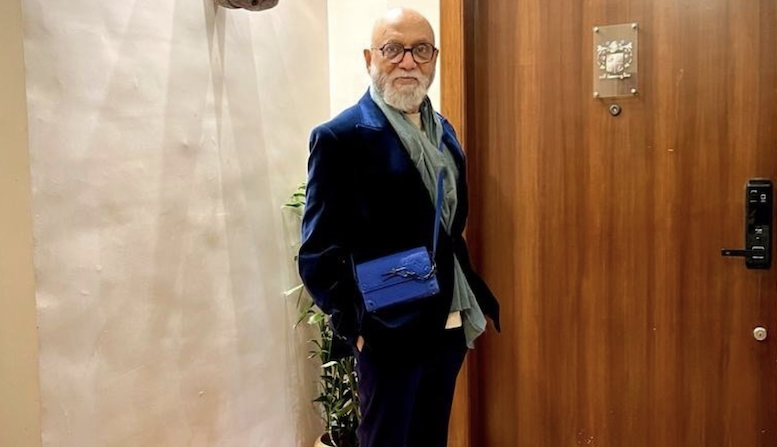
    Pritish Nandy in Italy

    President Gen Zia ul Haq invited him to his residence in Pakistan and gave him an explosive interview just a short while before he was assassinated. Then he and Rajat Sharma secretly recorded an off the record interview with the godman Chandraswami in London, which led to political explosions in India. Actress Neena Gupta  never forgave him for picking up Masaba Gupta’s birth certificate and identifying Viv Richards as the father of their love child. 

    Pritish did a stint with the Observer of Politics & Business, which was Reliance Industries’ Anil Ambani’s attempt at getting into media with his father Dhirubhai’s blessings. It floundered soon, despite first Prem Shankar Jha’s initial editorial guidance and then Pritish’s but it gave him an impetus to launch his own company which he set up in the offices of OBP, if I remember correctly.

    Thus Pritish Nandy Communications (PNC) was born. Which then again kep him busy as it went on to make television shows for Doordarshan, Zee TV, Star and Sony. Among them were current affairs shows, business chat shows, comedies, daily entertainment bulletins, Marathi dramas, Hindi dramas. Some of these he hosted himself. 

    From television PNC transitioned to films making some memorable titles like Jhankar Beats,  Kaante, Sur, Hazaaron Khwaishein Aisi., Pyaar ke side effects, Chameli and  Mastizaade. Some of the biggest names worked with him Amitabh Bachchan, Juhi Chawla, Sanjay Dutt, Kareena Kapoor, Aishwarya Rai in his films.
     
    And then of course came the era of streaming.  That got him busy again, it got his creative juices flowing. He, along with his daughters Rangita and Ishita, ploughed right in. Their first original approved by Prime Video Four More Shots Please was among the top shows of the year, in terms of viewership. It also went to get nominated for an international Emmy, which pleased Pritish no end.  Of course, what gave him a lot of pride was that his was amongst the first few production companies to be listed on the stock exchanges, way back in 2000.  And that the company was celebrating 25 years of its listing in 2025.

    Pritish got recognition very early at the age of 26 when he was given the Padma Shri. And he did hobnob with the powers that be. Indira Gandhi the then prime minister came to the release of his book of poems Lonesong Street and appreciated his work. This was much before he became a power house courtesy his journalistic endeavors.
    Pritish with his Pet

    He  has been a recipient of many awards: the EM Forster Literary Award, the Unesco Asia Pacific Heritage Award, the International Association Award from the Humane Society of the United States, the Friends of Liberation War Honour from Bangladesh, and hundreds  of award nominations for the films PNC has produced, from all over the world.

    A lot has been written about Pritish’s  caring for animals and how he along with Maneka Gandhi set up People for Animals much before its time. For him his pets were his children. His caring for strays on the street led him to strike a friendship with Ratan Tata who also shared with him his love for animals. In fact, so close was their friendship that Ratan Tata also picked up a chunk of  PNC shares from the open  stock market.

    Pritish was elected to the Rajya Sabha on a Shiv Sena ticket in 1998 from Maharashtra with the support  from both Sena and the BJP members without either of them knowing it.

    His pen shall write no more. Nor will his brush make the strokes on canvas. Pritish Nandy wielded both strongly. As a poet. As an editor. As a painter. As the script doctor or writer of the shows or flms that he gave his creative inputs for. With his passing away following a cardiac arrest, all that has been silenced.  He breathed his last on 8 January 2025 at the age of 73 at his south Mumbai residence, leaving behind his  two daughters who he doted on – Ishita and Rangita – his son Kushan, his pets and many a stray on the streets of Mumbai. 

    (Even as this piece is being written another Bennett, Coleman & Co legend Bhaskar Das continues to be critical in a Mumbai hospital. His family is counting down the days as the doctors have given up, surrendered to the cancer that has spread and ravaged his body)

  • Reliance Jio may be fined for using PM’s pic in ad sans permission

    Reliance Jio may be fined for using PM’s pic in ad sans permission

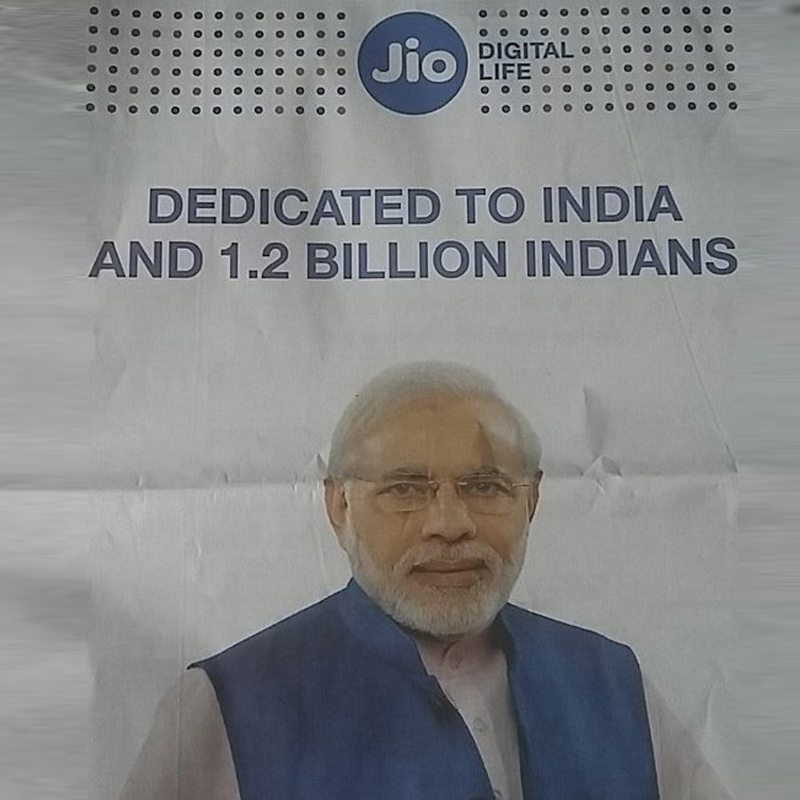
    NEW DELHI: The Government has denied that it gave permission for publication of a full-page photograph of the prime minister Narendra Modi in advertisements in newspapers about Reliance Jio.

    Minister of state for information and broadcasting Rajyavardhan Rathore said: “No permission was granted by the Prime Minister’s Office.”

    Rathore told the Parliament that the Act, ‘The Emblems and Names (Prevention of Improper Use) Act, 1950’ is administered by the Consumer Affairs, Food & Public Distribution Ministry.

    He also said that the directorate of advertising and visual publicity (DAVP) of his ministry releases Government advertisements only and does not release advertisements of any private body.

    Reliance Jio may have to pay only Rs 500 as fine for using Modi’s picture in advertisement, without permission from the government. Newspapers reported that the minor penalty could be charged from Jio.

    Rathore, in a written reply, admitted that it was aware that Reliance Jio used the PM’s photographs in the advertisement. About the actions that can be taken against Jio, he replied that the (DAVP) unit was responsible for it is the Emblems and Names (prevention of improper use) Act 1950.

    Section-3 of the Act states that no person shall use any “specified” name or emblem for the purpose of any trade, business or any such activities without the “previous permission of the central government” or officers authorised by the government. The list of names and emblems that cannot be used without prior permission from the government includes the president of India, the PM, governor of a state, the government of India or any state, Mahatma Gandhi, Indira Gandhi, Jawaharlal Nehru, United Nations Organisation, Ashok Chakra or Dharma Chakra.

  • Reliance Jio may be fined for using PM’s pic in ad sans permission

    Reliance Jio may be fined for using PM’s pic in ad sans permission

    NEW DELHI: The Government has denied that it gave permission for publication of a full-page photograph of the prime minister Narendra Modi in advertisements in newspapers about Reliance Jio.

    Minister of state for information and broadcasting Rajyavardhan Rathore said: “No permission was granted by the Prime Minister’s Office.”

    Rathore told the Parliament that the Act, ‘The Emblems and Names (Prevention of Improper Use) Act, 1950’ is administered by the Consumer Affairs, Food & Public Distribution Ministry.

    He also said that the directorate of advertising and visual publicity (DAVP) of his ministry releases Government advertisements only and does not release advertisements of any private body.

    Reliance Jio may have to pay only Rs 500 as fine for using Modi’s picture in advertisement, without permission from the government. Newspapers reported that the minor penalty could be charged from Jio.

    Rathore, in a written reply, admitted that it was aware that Reliance Jio used the PM’s photographs in the advertisement. About the actions that can be taken against Jio, he replied that the (DAVP) unit was responsible for it is the Emblems and Names (prevention of improper use) Act 1950.

    Section-3 of the Act states that no person shall use any “specified” name or emblem for the purpose of any trade, business or any such activities without the “previous permission of the central government” or officers authorised by the government. The list of names and emblems that cannot be used without prior permission from the government includes the president of India, the PM, governor of a state, the government of India or any state, Mahatma Gandhi, Indira Gandhi, Jawaharlal Nehru, United Nations Organisation, Ashok Chakra or Dharma Chakra.

  • Architect of autonomy for AIR DD breathes his last

    Architect of autonomy for AIR DD breathes his last

    NEW DELHI: Veteran journalist BG Verghese, who in 1975 won the Ramon Magsaysay award for outstanding journalism, died on 30 December, aged 87.

    Verghese, a former editor of the Hindustan Times, passed away at 6 p.m. at his son’s residence, a family member said. The former information advisor to Prime Minister Indira Gandhi leaves behind wife Jamila and sons Vijay and Rahul.

    Verghese headed the group set up by the then Information and Broadcasting Minister L K Advani during the Janata Party rule in 1977 to work on an autonomous All India Radio and Doordarshan. The Verghese Committee recommended setting up Akash Bharati as an autonomous trust,

    Born on 21 June 1927, he was a veteran journalist. He was editor of the leading papers The Hindustan Times (1969–75) and The Indian Express (1982–86).In 1975, he received the Ramon Magsaysay award for outstanding contribution to journalism. Since 1986, he has been associated with the New Delhi think-tank Centre for Policy Research.

    Verghese attended The Doon School. He then studied Economics at St. Stephen’s College, Delhi and pursued a Master’s degree from Trinity College, Cambridge. While at Doon, Verghese edited The Doon School Weekly.

    Verghese started his journalistic career in The Times of India. He was information adviser to Prime Minister Indira Gandhi in 1966-69 and wrote her speeches. Subsequently, he joined as editor, Hindustan Times, but he lost his post for criticising Indira Gandhi during the dark years of the Emergency. His integrity in those years earned him immense respect and he was awarded the Ramon Magsaysay award that year. Immediately afterwards, he contested Lok Sabha elections in 1977 from Mavelikkara in Kerala but lost.

    A crusader for civil rights, Verghese has long worked on problems of development. He was also on the Editors Guild of India Fact Finding Mission after the Gujarat riots, 2002.

    He has written extensively on developmental issues. Waters of hope (1990) and ‘Winning the future (1994) discuss managing the Himalayan watershed. Design for tomorrow (1965), India’s North East resurgent and Reorienting India: Rage, reconciliation and security (2008) are other books with a progressive theme. He is also the author of Warrior of the Fourth Estate (2005), an acclaimed biography of Ramnath Goenka, owner of the Indian Express. In October 2010, he published his autobiography First Draft: Witness to Making of Modern India, which discusses the steady degradation of democratic processes during the tenures of Indira Gandhi and her son Rajiv.


  • Sardar Patel, Indira Gandhi to be remembered by AIR, DD on their anniversaries

    Sardar Patel, Indira Gandhi to be remembered by AIR, DD on their anniversaries

    NEW DELHI: Both All India Radio (AIR) and Doordarshan are celebrating India’s Iron Man Sardar Vallabhai Patel’s birthday this week with different programmes.


    AIR has organised a discussion today, which will be broadcast on 31 October.  This year’s topic is Marxism, Socialism and Integral Humanism. The speaker is veteran mediaperson and member of Parliament Chandan Mitra.


    Meanwhile, AIR Delhi will also broadcast live the function relating to the 30th Death Anniversary of former Prime Minister Indira Gandhi from 1 Akbar Road, New Delhi on 31 October from 8.15 am onwards on Indraprastha Channel MW 366.3 mtr and a Radio Report  on the various functions  held  in the capital to commemorate the anniversary and will be broadcast on 31 October 2014 at. 8.30 pm. This report will be broadcast from Indraprastha Channel 366.3 mtr and National Network.


    DD Bharati is telecasting “Sardar Patel”: Vallabh Bhai Patel Birthday Celebration on 31 October at 06:00 pm, with repeat telecast at 02:00 am and 10:30 am.


    DD National is going to remember him through the Hindi Feature Film ‘Sardar’ directed and produced by Ketan Mehta scheduled for telecast at 09.30 p.m. on DD-National.


    DD National will also telecast at 08:00 am the events of the Rashtriya Ekta Diwas with the paying of floral tributes at Patel Chowk, New Delhi. This will be followed by the Unity Pledge and Run for Unity from Vijay Chowk to India Gate, New Delhi.


    There will be a documentary on the Sardar after the morning function, and the film YUGPURUSH: A film on Sardar Vallabhbhai Patel at 10.00 am.


    The feature “SARDAR” by Ketan Mehta will be telecast on DD National in the Friday Houseful slot at 9.30 pm.


    DD News has also slated programmes to pay their tributes to the Sardar and the former Prime Minister. A half-hour discussion will be telecast at 7.30 pm on the Sardar, and the social media; Tweets and YouTube alerts will be given for the function. The Sardar Patel lecture will be telecast in news bulletins. The live programme will start at 7:30 am and go live till 10 am with two anchors and two guests with inputs from Police Parade, Hyderabad. This will be followed by a half-hour programme, named Lauh Purush which will be repeated at 7:30 pm. There will be a discussion in the late night news bulletin on DD News at 8.10 pm.


    During the day, all the events in which Prime Minister Narendra Modi takes part will be streamed live on YouTube. There will be tweets on PM’s function and speech, apart from posts on Facebook. 

  • News channels to focus on Modi this Independence Day

    News channels to focus on Modi this Independence Day

    MUMBAI: News channels, during the general elections had gone all out to cover the mega event. With the new BJP government coming to power, it hardly comes as a surprise that during India’s 68th Independence Day, the focus of news channels will be on the newly elected Prime Minister of India Narendra Modi who will be addressing the nation for the first time after assuming power. News channels have also come up with special programmes and bulletins to celebrate the day.

    CNN-IBN

    In the run up to the Independence day, CNN-IBN had initiated a month long campaign Clean up India’, where the channel appealed to the viewers to identify areas in their cities that are eyesores and unhygienic due to filth and garbage. People from cities like Delhi, Varanasi, Kolkata, Mumbai, Bengaluru, Chennai, Trivandrum, Hyderabad, Jaipur, Puri, Srinagar and Ahmedabad reached out to the channel and shared their experiences about the lack of civic sense amongst common people and their thoughts on the inadequacies of the waste management system in the country.  At 12 pm the show will have its final telecast which will take a close look at what it would take to bring sanitation, waste management and hygiene to rural and urban areas.

    NDTV India

    The channel will begin its line up at 6 am. Panelists on the channel will be seen discussing what they could expect the focus of Modi’s maiden speech to be. It has also prepared two special shows; one called Lal Kila which will include the important highlights of former Prime Minister’s of India like Morarji Desai, Indira Gandhi and Jawaharlal Nehru.  The other show titled Colours Of India will unravel the colourful diversity and unity of India’s people. In the evening, the channel will focus on the highlights of the PM’s speech and the importance given to the different cabinet ministries.

    IBN-7

    The programming will commence early morning with the live coverage of Modi’s address to the nation from the Red Fort. The long 7 hours of programming will highlight the plight of the holy river Ganga. IBN7’s OB vans will be stationed at various banks of Haridwar, Kanpur, Varanasi and Ganga Sagar in West Bengal. The channel’s reporters will do on-ground reporting from there and will be joined by local activists, environmentalists, priests along with a panel of guests. At 7:30 pm, the last episode of Saving the Ganga series will culminate with a half hour special. From 9 pm onwards, the channel will discuss the PM’s speech and its significance in detail.

    News Express

    News Express will be launching a new show Kamal Prajapati Ke Saath Aankhein Kholo India. Kamal Prajapati is a 21 year old visually challenged journalist who through the show will try instilling civic sense among India’s citizens. In five minute specials, he will be visiting the streets of Delhi and questioning citizens who are seen breaking traffic rules while at the same time explaining the importance of maintaining traffic discipline. “For the channel, Independence Day was the best opportunity to come with a show that will help contribute towards the nations,” says News Express executive editor Jacob Mathew. The daily show will see the boy travelling to other cities later on. Besides this, the channel will also be covering the Prime Minister’s Independence Day speech.

    NewsX

    The channel will be focusing on the PM’s speech and have defense and foreign policy experts along with politicians. Special shows include Patriotic Songs –Flash back Special at 2:30 pm, Campus Connect Independence day Special at 6:30 pm followed by Young MPs Dream for India  at 7:30pm

    Zee News

    Zee News launched a media campaign called ‘My Earth My Duty’, under which a symbolic plantation will be done at office and also at locations like Wagah Border, Lucknow, Udhampur and Delhi. While it will be focusing on the PM’s speech, it will also showcase various programs under the theme ‘Jashn-e-Azadi’ during Independence Day.

  • Bring electronic, online media under ambit of a body: Markandey Katju

    Bring electronic, online media under ambit of a body: Markandey Katju

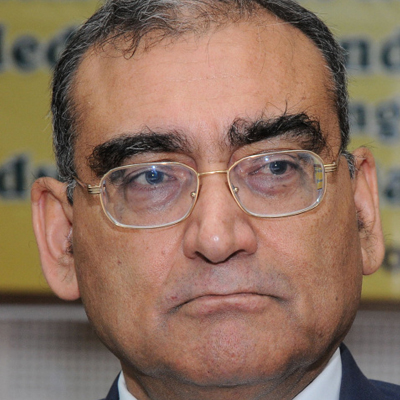
    NEW DELHI: Press Council of India chairperson Justice Markandey Katju has again said that electronic as well as online media should be brought under the ambit of a body.

    “The scope of Press Council of India (PCI) should be expanded by including the electronic media into its ambit,” Katju told reporters after chairing the PCI meeting in Panaji.

    “The Press Council of India Act is dated 1966 when there was no television. Now there is a huge influence of television in our life. We have recommended that electronic media should also be brought under the ambit of the PCI,” he said.


    It can be recalled that the Press Council of India Act was passed again in 1978 with some changes after Indira Gandhi had repealed it during the National Emergency in 1975.

    Katju said that online media be also brought under the purview of the PCI which now covers only print media.

    He also reiterated his demand for more powers to the Council. “The Parliamentary committee has also recommended that the PCI should have more powers. Currently, recommendations of the Parliamentary committee are under consideration,” Katju said.

    He added that with the inclusion of electronic media, the number of members on PCI can also be increased thus giving proper representation to the newly-included sector.

    “Right now there are 20 members from print. We can include 20 more from the electronic media,” Katju said.


    Responding to a query, he said that the Council should be a regulatory body and not the controlling one. “I am against the controls. I am in favour of regulations. No freedom is absolute. Regulations have to be there,” Katju concluded. 

  • Relive India’s 80s with NGC

    Relive India’s 80s with NGC

    MUMBAI: The 1980s was one of the most ‘happening’ decades in the history of India. It wasn’t just in one segment that the country witnessed change. While Indira Gandhi’s assassination was one of the biggest events of the decade leading to communal violence and political turmoil, there were other interesting events like India’s victory in the Cricket World Cup. The introduction of national telecast and colour TV in 1982 was one of the biggest events of the country.

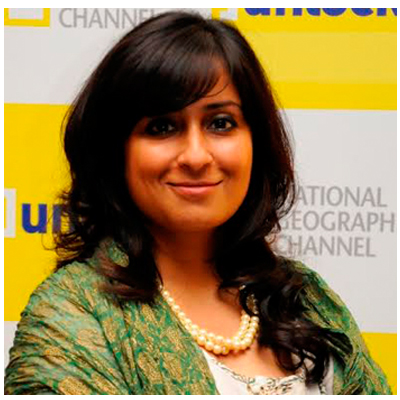
    Debarpita Banerjee says, the 80s was the decade that was responsible for paving the path ahead for a young, middle-class India, with a liberal perspective.

    Now, National Geographic Channel as part of its series The 80s is giving its viewers an opportunity to revive the memories of the 80s with a special feature on India. So far, the series according to the channel officials has got a pretty good response. While the whole series has been received well, the episode titled Tear Down These Walls which focuses on the many literal and cultural walls brought down globally during the decade, has had the highest viewership.

    NGC VP and Fox International, marketing Debarpita Banerjee says that across six weeks, the series has managed to revisit some of the most significant global events of the decade. “What I think genuinely worked was the fact that every viewer could relate to it, in their own personal way. Whether you were an 80s child or not, you are sure to have been left with some or the other lasting impression of the decade,” she says and adds that with a fairly good response to the series, it just made more sense to have one episode exclusively dedicated to India.

    Indira Gandhi and Kapil Dev after India won the cricket world cup

    “The decisions, the tragedies, the fads…this was the decade that was responsible for paving the path ahead for a young, middle-class India, with a liberal perspective. This episode will give the viewer both an analytical, as well as a nostalgic viewpoint of the ‘80s,” she says.

    To make the episode interesting and content-oriented, the channel has got on board many eminent people like established journalists, culturists, film-makers and eminent researchers, such as Vinod Dua, Anurag Kashyap, Mark Tully, Mahesh Bhatt, among others, whose anecdotes and commentary are strung in the feature to give the viewers a better perspective of the era.


    However, since there was a time restriction of just one hour duration, the channel had to make some tough choices in terms of the topics that would be covered. It had to ensure that the focus remains on events that were frontrunners in changing the course of India’s history. “Keeping this in mind, we chose personalities, who are not only stalwarts in their own fields, but served as eye-witnesses, as well as fans of this fascinating decade. Once they got to know that it was the 80s they were to talk about, the rest was easy,” says Banerjee.   

    Rajiv and Sonia Gandhi

    Filmmaker Mahesh Bhatt, who was at the helm of his career during the 80s, recalls the era with a lot of fondness. Talking about the TV set, to which the Indian common man suddenly got an access to, he says: “Well, an Indian suddenly realised there was a way to amuse himself by staying at home…and community viewing – the family. India woke up to this thought that television was consumed by the entire family and that was the beginning of what is called ‘the great television revolution’ which was going to take place with the satellite age. I think the Indian loves to be at home with his family and listen to the stories which his father and grandfather told him, but nuanced in a modern way.”

    However, Ogilvy & Mather executive chairman & national creative director India, Piyush Pandey explains it in a better way. He says: “It’s not that in the late 70’s, people were not watching Doordarshan, but with the coming of colour television and its availability in households, one was very clear that this medium was going to go a very long way. We are a very audio-visual country anyway, we love our movies, we love story telling and we love emotions. TV was the best medium that was just waiting to be unleashed. And, it got unleashed in ’82. I think everyone, every marketer; every advertiser knew that this was the medium that was going to be the most powerful one in the days ahead.”

    The Indian audience was introduced to colour TV in 1982

    Since the episode is packed with many such info and interesting stories from the era, it made more sense for the channel to go all out to promote it and thus it has activated a digital campaign across Facebook and Twitter for the episode. “There is a radio campaign across Delhi, Mumbai and Bangalore as well taking the listeners on a retro ride of ad jingles from the 80s and Mile Sur Mera Tumhara…,” says Banerjee.

    Nokia Lumia 1020 is the presenting partner and Hindware Italian Collection is the co-presenting partner of the series.

  • Relive Indias 80s with NGC

    Relive Indias 80s with NGC

    MUMBAI: The 1980s was one of the most ‘happening’ decades in the history of India. It wasn’t just in one segment that the country witnessed change. While Indira Gandhi’s assassination was one of the biggest events of the decade leading to communal violence and political turmoil, there were other interesting events like India’s victory in the Cricket World Cup. The introduction of national telecast and colour TV in 1982 was one of the biggest events of the country.

    Now, National Geographic Channel as part of its series The 80s is giving its viewers an opportunity to revive the memories of the 80s with a special feature on India. So far, the series according to the channel officials has got a pretty good response. While the whole series has been received well, the episode titled Tear Down These Walls which focuses on the many literal and cultural walls brought down globally during the decade, has had the highest viewership.

    NGC VP and Fox International, marketing Debarpita Banerjee says that across six weeks, the series has managed to revisit some of the most significant global events of the decade. “What I think genuinely worked was the fact that every viewer could relate to it, in their own personal way. Whether you were an 80s child or not, you are sure to have been left with some or the other lasting impression of the decade,” she says and adds that with a fairly good response to the series, it just made more sense to have one episode exclusively dedicated to India.

    Indira Gandhi and Kapil Dev after India won the cricket world cup

    “The decisions, the tragedies, the fads…this was the decade that was responsible for paving the path ahead for a young, middle-class India, with a liberal perspective. This episode will give the viewer both an analytical, as well as a nostalgic viewpoint of the ‘80s,” she says.

    To make the episode interesting and content-oriented, the channel has got on board many eminent people like established journalists, culturists, film-makers and eminent researchers, such as Vinod Dua, Anurag Kashyap, Mark Tully, Mahesh Bhatt, among others, whose anecdotes and commentary are strung in the feature to give the viewers a better perspective of the era.

    However, since there was a time restriction of just one hour duration, the channel had to make some tough choices in terms of the topics that would be covered. It had to ensure that the focus remains on events that were frontrunners in changing the course of India’s history. “Keeping this in mind, we chose personalities, who are not only stalwarts in their own fields, but served as eye-witnesses, as well as fans of this fascinating decade. Once they got to know that it was the 80s they were to talk about, the rest was easy,” says Banerjee.   

    Rajiv and Sonia Gandhi

    Filmmaker Mahesh Bhatt, who was at the helm of his career during the 80s, recalls the era with a lot of fondness. Talking about the TV set, to which the Indian common man suddenly got an access to, he says: “Well, an Indian suddenly realised there was a way to amuse himself by staying at home…and community viewing – the family. India woke up to this thought that television was consumed by the entire family and that was the beginning of what is called ‘the great television revolution’ which was going to take place with the satellite age. I think the Indian loves to be at home with his family and listen to the stories which his father and grandfather told him, but nuanced in a modern way.”

    However, Ogilvy & Mather executive chairman & national creative director India, Piyush Pandey explains it in a better way. He says: “It’s not that in the late 70’s, people were not watching Doordarshan, but with the coming of colour television and its availability in households, one was very clear that this medium was going to go a very long way. We are a very audio-visual country anyway, we love our movies, we love story telling and we love emotions. TV was the best medium that was just waiting to be unleashed. And, it got unleashed in ’82. I think everyone, every marketer; every advertiser knew that this was the medium that was going to be the most powerful one in the days ahead.”

    The Indian audience was introduced to colour TV in 1982

    Since the episode is packed with many such info and interesting stories from the era, it made more sense for the channel to go all out to promote it and thus it has activated a digital campaign across Facebook and Twitter for the episode. “There is a radio campaign across Delhi, Mumbai and Bangalore as well taking the listeners on a retro ride of ad jingles from the 80s and Mile Sur Mera Tumhara…,” says Banerjee.

    Nokia Lumia 1020 is the presenting partner and Hindware Italian Collection is the co-presenting partner of the series.

  • Congress TV Agenda?

    Congress TV Agenda?

    With elections looming large, the spotlight may be on political parties and their candidates however an unlikely candidate seems to have entered the fray, i.e. television.

    Very quietly, two shows have been launched on two TV channels within the span of one week, bearing an uncanny resemblance to Indias biggest ruling party – the Congress.

    One; Anil Kapoors Indian adaptation of the American espionage series 24, which aired on Colors on 4 October and the other; Desh Ki Beti – Nandini, which premiered on Sony on 7 October.

        
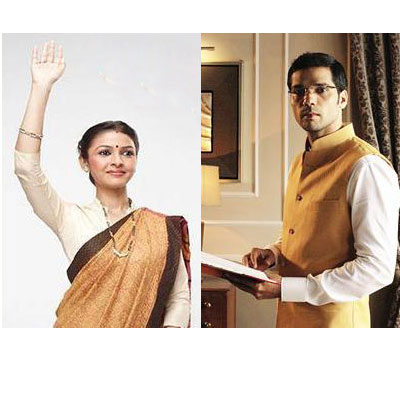
    The desi 24 sees the young scion of a political family, Aditya Singhania played by Neil Bhoopalam, reaching out to the countrys youth a la our very own vice president of the Congress Party, Rahul Gandhi.

    While Desh Ki Beti has a bun-sporting, saree and long sleeve blouse-clad Nandini waving out to the crowd, reminiscent of Indias only woman PM, the late Indira Gandhi.

    Leaving aside similarities; both the shows couldnt have been timed better. North India goes to elections in November while the race for Indias next PM unfolds in the first half of 2014.

    24 will end in approximately three months but the impact is sure to last. That Colors reduced the air time of one of its most popular shows, Comedy Nights with Kapil, to accommodate the series is proof of just how much is riding on the timing. Similarly, Sony prematurely pulled the plug on its earlier week day show Chhanchhan to make way for Nandini, citing low TRPs as reason.

    Social media has been quick to catch the so-called connect between these shows and the ruling party. Heres sampling the kind of comments on Twitter and Facebook: A new show called desh ki beti nandini seems to be funded by congress, daily soap Nandini will subtly glorify pre emergency Indira. Direct editorial control from Rahul Gandhi, waiting for Aditya Singhania the 24 character based on Rahul Gandhi, to take his speech and say phaad ke phenk do, 24 just predicted a Rahul Gandhi victory and so on.

    Makes one wonder whether this is part of the viewers fertile imagination or truly Congress Ka Haath behind these shows…