Tag: Indira Banerjee

  • Third Madras high court judge gives TRAI tariff order thumbs up

    Third Madras high court judge gives TRAI tariff order thumbs up

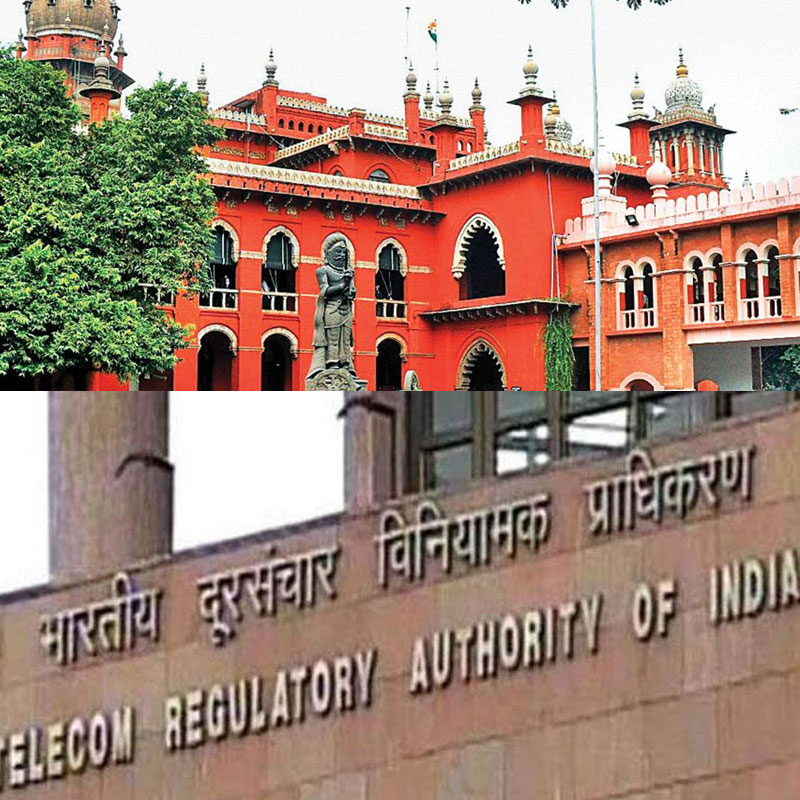
    MUMBAI: The long-awaited judgment of the Madras High Court on the TRAI tariff order has been pronounced.

    Sources indicate that almost all the proposals mentioned in the order have being given the go- ahead –  the only exception being the capping of discounts to 15 per cent.

    The decision was announced by the third judge in the Madras High Court earlier today – an order is supposed to come later this evening.

    Reacting to the judgement, AIDCF hailed it as “significant for the cable TV broadcasting and distribution sector’. AIDCF president Rajan Gupta said, “We are elated to note that Honorable Mr. Justice M.M. Sundresh has concurred that TRAI is within its jurisdiction in notifying the tariff order and interconnection regulations of 2017. This new regulatory framework will benefit the entire sector and especially the consumers by improving transparency, enhancing subscriber choice and removing discrimination in provision of content.”

    He further added: “We hope that this present judgment, combined with the earlier view of Honorable Ms. Chief Justice Indira Banerjee, is taken in the right spirit by the stakeholders and any further unnecessary litigation is avoided so that the TRAI can move forward and continue working towards its vision of creating a transparent and non-discriminatory regulatory framework governing the sector.”

    Earlier in March 2018,  a two member bench of the Madras High Court had delivered a split verdict in Star Vijay’s litigation against its passage as content pricing should be left to the discretion of the broadcasting.

    While chief justice Indira Banerjee, heading the first bench, had ruled in favour of TRAI, the second judge — justice M Sundar – had ruled otherwise. The matter was then referred to a third judge who had been given a month to give his directive. The third judge’s decision came earlier today.

    Sources indicate that the third judge has also suspended the decision for the next two weeks, giving Star India a  chance to appeal against it in the Supreme Court.

    The TRAI order had the following highlights…

    The role of the broadcaster

    Under this, broadcasters will have to first declare their channels as a pay channel or a free to air channel, on an a  la carte basis, and in one of the following seven genres: devotional, general entertainment, infotainment, kids, movies, news and current affairs and sports. The TRAI has defined a ceiling on the maximum retail price (MRP) for each of the genres: devotional (Rs 3), general entertainment (Rs 12), infotainment (Rs 9), kids (Rs 7), movies (Rs 10), news and current affairs (Rs 5) and sports (Rs 19).

    Each pay channel has to have a MRP  that can vary depending on the region, but which cannot be changed before the expiry of six months of it being declared. These rates will be platform agnostic – that is, uniform across the platforms (cable TV, DTH, HITS and IPTV) across a relevant geographical market, and will have to be declared on each broadcaster’s website and be transparently available to the TRAI, TV distributors and consumers.

    The pay channels of a network or its subsidiary or holding company or subsidiary of the holding company can be packaged into a bouquet. This can be done while taking the precaution that the bouquet’s MRP is not less than 85 per cent of the sum of the MRPs of the a la carte pay channels forming a part of the bouquet. Similar conditions of holding prices for six months and in geographical areas also apply to bouquets.

    The TRAI has introduced a category called a premium channel. Broadcasters are free to notify any channel as premium channel in their reference interconnect order (RIO). There shall be no price cap on maximum retail price notified by broadcasters for customers. For HD channels, the regulatory authority has, however, stated the price cannot be more than three times the MRP of the corresponding channel transmitted in SD. For those HD channels that do not have a corresponding SD channel, the benchmark will be the ceiling on the MRP of the genre it is in. These independent HD channels will have a price ceiling of three times the ceiling of the MRP of the genre.

    The television distributor’s role

    On the television distributor side, the TRAI has made them responsible to provide all channels on a la carte basis and it has also  proposed to formalize  a minimum subscription fee of Rs 130 per month per set top box from a subscriber for 100 SD channels.  Now if an HD channel is included in this, it will be equal to 2 SD channels.

    The TRAI has stated that TV distributors cannot change the bouquets formed by broadcasters or its price, but they can form bouquets themselves of pay channels of different broadcasters provided that their price is not less than 85 per cent of the sum of the MRPs of the pay channels forming part of the bouquet. Free to air, HD and SD variants of the same channel and premium channels are not permitted to be included in these bouquets.

    The authority says that the composition of the 100 channel basic tier should be left to the subscriber’s volition. It can consist of FTA, pay, premium channels, broadcast bouquets or even television distributor package bouquets. But it has to have the government mandated channels and at least five channels of each of the seven genres. If the subscriber opts for pay TV or premium or HD channels or broadcast or TV distributor bouquets, he will have to pay the retail price for these separately.

    Subscribers wanting channels beyond the basic tier can opt for other channels by paying the TV distributor Rs 20 – excluding taxes-  for each slab of 25 channels and the broadcaster the MRP of each channel.

    The TV distributors also have another responsibility. The electronic programming guide on the network must display the details of all channels and their MRP genre wise for easy navigation. Broadcasters who are relying on TV distributors to collect and remit the pay channel revenues will provide a 20 per cent distribution fee to them, which the latter can share with the LCOs who are actually doing the collection. Additionally, TV channels can also offer a maximum 15 per cent MRP discount to TV distributors to encourage them. Parameters for discounts will be disclosed by broadcasters in the RIOs that will be transparent and uniform for all distributors of television channels.

    More to follow…Keep reading Indiantelevision.com

    Also Read:

    Madras HC gives split verdict in Star India versus TRAI case

    TRAI-Star case back to Madras HC with SC rider

    SC could take up TRAI-Star case on tariff regulations

  • Star-TRAI case hearing in Madras High Court starts

    NEW DELHI: Final hearing commenced in the petition by Star India and Vijay TV challenging the jurisdiction of Telecom Regulatory Authority of India to issue tariff orders on the ground that content came under the Copyright Act.

    Although the Supreme Court had in early May while staying the tariff order directed the Madras High Court to complete hearing within four weeks, the high court had earlier this month listed matter to come up for today.

    Heeding the directive of the apex court to hear the matter on a day-to-day basis, the hearing which commenced today will continue for another two or three days until it is concluded.

    The hearing in the court was today confined to hearing the counsel for Star India who is expected to continue tomorrow as well. This will be followed by counsel of the TRAI and the Union of India.

    Meanwhile, TRAI TV reference interconnect offer (RIO) and Quality of service order (QoS) came into effect from 2 May following the order of the High Court.

    Although the high court chief justice Indira Banerjee and Justice M Sundar had listed the matter for 12 June, it issued directions before that date that the matter would come up today (on Tuesday).

    In the hearing in April-end, it had said Section 3 of the Tariff order and all other consequences of such implementation/enforcement would be subject to the outcome of the main petition.

    Apart from the Tariff order which had originally been issued on 10 October last year, the regulator also issued the DAS Interconnect Regulations which had been issued on 14 October last year, and the Standards of Quality of Service and Consumer Protection (Digital Addressable Systems) Regulations which had been issued on 10 October last year.

    The orders can be seen at:
    http://trai.gov.in/sites/default/files/Tariff_Order_English_3%20March_20…
    http://www.trai.gov.in/sites/default/files/QOS_Regulation_03_03_2017.pdf
    http://www.trai.gov.in/sites/default/files/Interconnection_Regulation_03…

    Also Read:

    Decks cleared for TRAI tariff order implementation as HC declines stay (updated)

    Star India case questioning TRAI jurisdiction over content postponed 

  • HC orders on Star plea for stay on TRAI tariff today

    NEW DELHI: Orders are expected to be pronounced tomorrow on the application by Star India and Vijay TV in Madras High Court seeking a stay of the tariff orders issued by the regulator last month and slated to become effective 2 May 2017.

    Arguments concluded tomorrow after both the broadcasters and the Telecom Regulatory Authority of India concluded their arguments.

    The broadcasters, who have challenged the jurisdiction of the TRAI in issuing relating to TV content, had on 28 March decided not to press for stay after the Court was informed by the regulator that it had decided to defer implementation of its tariff orders to 2 May instead of 2 April.

    TRAI had issued the tariff order, Quality of Service, and Reference Interconnect Agreement orders after getting clearance on 3 March from the Supreme Court, which had then directed the High Court to conclude the matter within sixty days.

    The case by the two broadcasters is that content falls under Copyright Act and does not come under the ambit of TRAI. The matter came up for hearing earlier this week in a bench headed by Madras High Court Chief Justice Indira Banerjee.

    Hearing on the petition, which has had a chequered history with three judges recusing themselves, commenced anew as it had gone before a new bench with the Chief Justice and Justice M Sundar.

    After counsel for the broadcasters, counsel for TRAI, Union of India, and the intervener All India Digital Cable Federation will be heard.

    Though it was not clear, it appeared that the judges Justice S Nagamuthu, Justice Anita Sumanth and later Justice Govind Rajan had received letters which prompted them to withdraw from the case.

    The fresh petition became necessary as the matter is being heard .

    Apart from the Tariff order which had originally been issued on 10 October last year, the regulator also issued the DAS Interconnect Regulations which had been issued on 14 October last year, and the Standards of Quality of Service and Consumer Protection (Digital Addressable Systems) Regulations which had been issued on 10 October last year. The orders can be seen at:

    http://trai.gov.in/sites/default/files/Tariff_Order_English_3%20March_20…
    http://www.trai.gov.in/sites/default/files/QOS_Regulation_03_03_2017.pdf
    http://www.trai.gov.in/sites/default/files/Interconnection_Regulation_03…

    Following these regulations, the broadcasters had filed an amended petition and TRAI had also replied to the same last week. Concluding his arguments for the broadcasters, senior counsel P Chidambaram argued that TRAI’s action of fixing tariff for TV content was in violation of the Copyright Act. He also submitted that TRAI did not have the jurisdiction to fix tariff since the exploitation of IPR was part of the Copyright Act.
    Also Read:

    Hearing of Star – TRAI case begins before MHC chief justice

  • Hearing of Star – TRAI case begins before MHC chief justice

    NEW DELHI: The case by Star India and Vijay TV challenging the jurisdiction of the Telecom Regulatory Authority of India on the plea that content did not come in the regulator’s ambit commenced today in a bench headed by Madras High Court Chief Justice Indira Banerjee.

    Hearing on the petition, which has had a chequered history with three judges recusing themselves, commenced anew as it had gone before a new bench with the Chief Justice and Justice M Sundar.

    However, the matter was listed for tomorrow after a brief hearing when the Star India counsel commenced speaking as the court had other matters to conclude.

    After counsel for the broadcasters, counsel for TRAI, Union of India, and the intervener All India Digital Cable Federation will be heard.

    Though it was not clear, it appeared that the judges Justice S Nagamuthu, Justice Anita Sumanth and later Justice Govind Rajan had received letters which prompted them to withdraw from the case.

    The petition had been filed by Star India and Vijay TV under the Copyright Act on the ground that TRAI could not give any directive that will affect the content since that did not fall in its purview.

    The fresh petition became necessary as the matter is being heard afresh by the Chief Justice. Star India SVP – Legal and Regulatory – Pulak Bagchi confirmed that while the primary case remained on the grounds of the Copyright Act remained the same, a new petition had been filed because it was coming up before the Chief Justice.  

    Last month, Star India and Vijay TV decided not to press for their pleas for extension of the tariff order following TRAI’s announcement that its tariff regulations which were slated to come into effect on 2 April were being deferred to 2 May 2017. The court had fixed the matter for further hearing on 3 April even as TRAI counsel commenced his arguments following the conclusion of the arguments by the broadcasters over two days commencing last Friday.

    Earlier, on 3 March, the regulator had issued three regulations after getting a directive from the Supreme Court on its appeal against a stay granted by the Madras High Court. While granting the appeal, the apex court also asked the high court to conclude hearing in 60 days.

    Apart from the Tariff order which had originally been issued on 10 October last year, the regulator also issued the DAS Interconnect Regulations which had been issued on 14 October last year, and the Standards of Quality of Service and Consumer Protection (Digital Addressable Systems) Regulations which had been issued on 10 October last year. The orders can be seen at:

    http://trai.gov.in/sites/default/files/Tariff_Order_English_3%20March_20…
    http://www.trai.gov.in/sites/default/files/QOS_Regulation_03_03_2017.pdf
    http://www.trai.gov.in/sites/default/files/Interconnection_Regulation_03…

    Following these regulations, the broadcasters had filed an amended petition and TRAI had also replied to the same last week. Concluding his arguments for the broadcasters, senior counsel P Chidambaram argued that TRAI’s action of fixing tariff for TV content was in violation of the Copyright Act. He also submitted that TRAI did not have the jurisdiction to fix tariff since the exploitation of IPR was part of the Copyright Act.

    Also Read:

    Chief Justice of MHC to hear Star India case against TRAI under Copyright Act

    Coordinate with registry for mentioning TV tariff matter, says Madras HC CJ

  • Coordinate with registry for mentioning TV tariff matter, says Madras HC CJ

    NEW DELHI: The case by Star India and Vijay TV challenging the jurisdiction of the Telecom Regulatory Authority of India in the matter of tariff orders, in which two judges of Madras High Court withdrew from the case, will be listed before newly appointed Chief Justice Indira Banerjee soon for being referred to an appropriate bench.

    The Chief Justice turned down the oral mention of the matter by Star India counsel saying this was an administrative matter which should be coordinated with the registry for listing before her.  

    Though it was not clear, it appeared that the two judges Justice S Nagamuthu and Justice Anita Sumanth had received a letter which prompted them to withdraw from the case. The petition had been filed by Star India and Vijay TV under the Copyright Act on the ground that TRAI could not give any directive that will affect the content since that did not fall in its purview.

    Meanwhile, counsel opined that, as the pleadings were completed, the new bench will get down to hearing the arguments. Arguments had commenced on behalf of the Union Government until lunch yesterday and the matter was thereafter adjourned to today.

    Earlier, Star India and Vijay TV decided not to press for their pleas for extension of the tariff order following TRAI’s announcement that its tariff regulations which were slated to come into effect on 2 April were being deferred to 2 May 2017. The court had fixed the matter for further hearing on 3 April even as TRAI counsel commenced his arguments following the conclusion of the arguments by the broadcasters.

    The court will also hear counsel of All India Digital Cable Federation which was allowed to intervene in the matter. Earlier on 3 March, the regulator had issued three regulations after getting a directive from the Supreme Court on its appeal against a stay granted by the Madras High Court. While granting the appeal, the apex court also asked the high court to conclude hearing in 60 days.

    Apart from the Tariff order which had originally been issued on 10 October last year, the regulator also issued the DAS Interconnect Regulations which had been issued on 14 October last year, and the Standards of Quality of Service and Consumer Protection (Digital Addressable Systems) Regulations which had been issued on 10 October last year. The orders can be seen at:

    http://trai.gov.in/sites/default/files/Tariff_Order_English_3%20March_20…

    http://www.trai.gov.in/sites/default/files/QOS_Regulation_03_03_2017.pdf

    http://www.trai.gov.in/sites/default/files/Interconnection_Regulation_03…

    Follwing these regulations, the broadcasters had filed an amended petition and TRAI had also replied to the same last week.

    Also read:

    TRAI extends tariff regulations execution date, Madras High court arguments to continue