Tag: indigenous

  • Tanishq unveils Diwali collection Alekhya with ‘Pehli Diwali’ campaign

    Tanishq unveils Diwali collection Alekhya with ‘Pehli Diwali’ campaign

    Mumbai: With the onset of the festive season, jewellery brand Tanishq has unveiled the much awaited Diwali campaign “Pehli Diwali.” The TVC introduced is a tribute to every Indian woman celebrating her ‘firsts’ along the journey of reinventing herself, which is truly worthy of a “Pehli Diwali” celebration. The festive campaign emphasises the optimism that evokes emotions associated with every first.

    The festive campaign comes on the back of Tanishq’s exclusive Diwali collection ‘Alekhya,’ inspired by the indigenous heritage artforms, where every piece of jewellery in the collection stands as an ode to today’s woman, celebrating her as the author of her own story, as the ‘karigar’ of her life.

    Staying true to its narrative, Tanishq’s series of festive films, “Pehli Diwali,” conceptualised by Lowe Lintas, captures the essence of those invigorating occasions. The films encapsulate some of the priceless moments that remind us of our personal and professional growth journey that truly call for a celebration. Every ‘first’ of our life, whether big or small, is extremely special and needs to be treasured forever. The thought-provoking films are a gentle reminder that every milestone in our lives is worthy of a grand celebration, just like that of a “Pehli Diwali.”

    The three 40-second heartening films are woven together on the premise of celebrating an expansive view of “Pehli Diwali.” The visually delightful series of campaign films gives viewers a sneak peek into the lives of women who believe in celebrating every milestone that contributes to their self-development. The uplifting background score, coupled with a soulful voiceover, rides high on emotions.

    The first film features an entrepreneur celebrating Diwali for the first time at her new office with family and friends, and ends with a mischievous banter with her husband, who compliments her dedication and her infectious energy as they rejoice in their special moments together. The second film breaks into the life of a lieutenant in the Indian Air Force, celebrating her first Diwali away from home with her Air Force family. The third film opens with a single mother who plans to go on her first bike trip with her daughter.

    Speaking about the campaign, Titan Company’s Tanishq vice president of category, marketing & retail Arun Narayan said, “Pehli Diwali holds a very special significance in our country where families celebrate the first Diwali after a wedding or after welcoming a child. Our festive campaign is an insightful take on this tradition, seeking to celebrate and commemorate the many new journeys that women have begun in recent times. These journeys, whether small or big, are special as they hold a deeper personal meaning. We are therefore happy to wish every woman on the occasion of the “Pehli Diwali” of all her new beginnings.”

    Quoting the film, Lowe Lintas chief creative officer Sagar Kapoor said, “Diwali has always been a symbol of life stages in an individual’s journey. In this context, “Pehli Diwali” has a huge significance, which is followed by a life-changing decision. We wanted to capture those emotional milestones of “Pehli Diwali” across different age groups, keeping them real and relatable. The idea was to break away from the usual Diwali advertising that celebrates the festival at a surface level.”

  • Dish TV exploring possibility of setting up domestic STB manufacturing business

    Dish TV exploring possibility of setting up domestic STB manufacturing business

    MUMBAI: The positive thrust that the cable and DTH industry has been receiving from the current Information and Broadcasting (I&B) Minister Prakash Javadekar is getting encouraging response from the industry.


    While the government has classified set top boxes (STBs) as telecom equipment to encourage indigenous manufacturing of STBs, Dish TV has decided to tap into the emerging domestic market.


    Reporting improved results, Dish TV MD Jawahar Goel said that the company is ‘re-evaluating possibilities for domestic manufacturing of STBs’.


    Speaking to indiantelevision.com, Dish TV CEO RC Venkateish said, “We are exploring the idea of domestic STB manufacturing given the incentive and fillip that the government is keen to provide to domestic manufacturers.” He added that there seems to be an overall trust of the government which is the underlying assumption that indigenous manufacturing will save costs as compared to importing boxes.


    Venkateish said that the company is currently evaluating the cost structure for setting up an STB manufacturing unit that will not just provide boxes to Dish TV but to others in the industry as well. Though the company would have to invest in capex and opex for the manufacturing unit, whether this will help them save up the additional cost of custom duties that imported boxes incur, is still a question mark.


    Dish TV has reported an addition of 332,000 subscribers in Q2 2015 with lower losses at Rs 15 crore as compared to the previous quarter.

  • Govt will provide all facilities to local STB manufacturers for DAS: Javadekar

    Govt will provide all facilities to local STB manufacturers for DAS: Javadekar

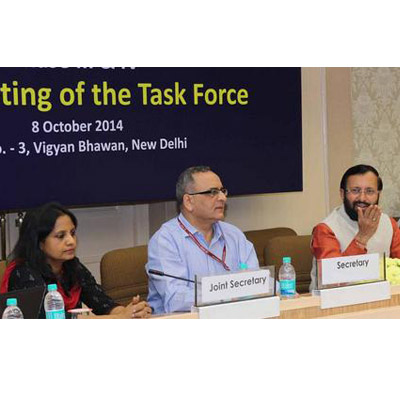
    NEW DELHI: Information and Broadcasting Minister Prakash Javadekar today clarified that the new dates for Phase III and IV for digital addressable system were the outer limits but all attempts would be made to achieve the target well before that.


    Reiterating that the main aim of the new deadlines was to encourage DAS with use of India-made set top boxes, he told the first meeting of the DAS task force for the final two phases here today that the Government has facilitated C form issue for indigenous manufacturers.


    At the outset, he said the entire digitisation programme was an integral part of Prime Minister Narendra Modi’s Digital India plan.


    He also pointed out that he represented the viewer and consumer, who had no voice unlike the other stakeholders who were present at the meeting.


    Javadekar said the cable TV digitisation process aimed at providing the consumer with greater choices and affordable and qualitative options. The overall objective was to be sensitive to the needs and choice of the consumer. The choice of the consumer was paramount in defining the inputs, strategies and roadmap for the remaining phases of the digitisation process.


    He called upon the manufacturers to innovate and explore new technologies for addressing the different consumer tastes and needs.


    The Minister added that in the next phase of digitisation, the price mechanism offered to the consumer would be a key determinant of the process, particularly as DAS was being extended to rural areas. As a consequence, it was mandatory for all stakeholders to sensitise the consumers on the benefits of the process in view of the rural outreach of the programme. 

    Regarding the indigenisation of STBs, the Minister said that the concerns of the industry had been taken up with the Finance and Communications and IT Ministries and STBs were declared as part of ‘telecommunication network’.


    The Minister said the task force ought to identify timelines for implementation so as to ensure the timely completion of Phase III and Phase IV. All issues concerning the key stakeholders needed to be debated at length so as to ensure the mainstreaming of the process with the existing policy. The need of portability of set top boxes so as to provide the option of interoperability to the consumers was an issue that could be looked into by the concerned stakeholders.


    Every meeting of the task force was critical as it identified critical inputs so as to ensure the effective implementation of the timelines and processes. Every viewer should be able to get the best viewing experience over the next two years, he added.


    He also wanted portability for STBs on the lines of portability for mobile phones and said the government and the task force will study this issue.


    Earlier speaking on the occasion, I and B secretary Bimal Julka said the task force provided an important platform to debate and overview issues related to the digitisation implementation. It also provided an opportunity to understand the concern of stakeholders.


    The experience of such meetings during the first and second phase of implementation of the programme had been extremely useful in streamlining the roadmap for effective implementation. He said the consumer is the judge of what he gets to see and content rules. He said a lot of complaints had been received from stakeholders during the implementation of the first two phases but he hoped to get more suggestions as well.


    The meeting saw various stakeholders raise issues concerning them. Taxation was raised by STB manufacturers and auditing was requested by consumer groups. The broadcaster suggested that the deadline should be reduced to 2015 for both phases. No TRAI member attended the meeting.


    Javadekar also assured that there will be sub committees that will monitor the process of digitisation.  

  • Local STB manufacturers confident of meeting target of DAS phase III and IV

    Local STB manufacturers confident of meeting target of DAS phase III and IV

    NEW DELHI: The Information and Broadcasting (I&B) Ministry has been assured by manufacturers of domestic set top boxes (STBs) that they will be able to meet the demand of 11 crore STBs needed for the final two phases of cable television digitisation.


    This assurance was given to I&B Ministry secretary Bimal Julka over the weekend with manufacturers to check the status of indigenous manufacturing of STBs.


    I&B Minister Prakash Javadekar had recently told that it was unfortunate that good quality STBs were being exported overseas and poor quality STBs from overseas were being installed.


    Earlier, he had said that the Ministry will take steps to solve problems of local manufacturers including those relating to taxation.


    The manufacturers appreciated the efforts of the government for resolving their long pending demand of C-form. They said that they have sufficient installed capacity to meet the full demands of STBs locally and said the government’s initiative would help give employment to about 50,000 people and would attract an investment of about Rs 500 crore. It would generate local support facility for repair of STBs and would also help in smooth implementation of digitisation initiative in the country. 

    The Finance Ministry had on 13 August extended the facility of Form ‘C’ under section 8(3) (b) of Central Sales Tax (CST) Act 1956 to STBs thus fulfilling the major demand of the domestic STB manufacturers who would charge CST @ 2 per cent against VAT of 12-14 per cent being paid earlier. 

    The phase III of digitisation to be completed by December 2015 would cover all other urban areas (municipal corporations/ municipalities) which were not covered in first two phases. Phase IV to be completed by December 2016 would cover the rest of India.


    The meeting was attended by the members of the consumer electronics and appliances manufacturers association (CEAMA) and representatives from STB manufacturers such as My Box Technologies, Dixon Technology, Videocon, Jabil, One-Eight Technologies, Skyworth Digital, Spectra Innovations, Indieon, Logic Eastern and Simmtronics.

  • Govt sending wrong signals to foreign investors by delaying digitisation: Rahul Khullar

    Govt sending wrong signals to foreign investors by delaying digitisation: Rahul Khullar

    MUMBAI: Recently, a letter written by Telecom Regulatory Authority of India (TRAI) chairman Rahul Khullar pointed out that the government was committing a mistake by extending the deadline for digitisation. Khullar has many more points to present on the regulator and the industry.


    In a conversation with Bloomberg, he said that his views on digitisation were very clear. “It is a very bad decision to defer it. It is bad for digital India, broadband delivery and not in public interest,” he said.


    While the government says that its main aim is to push indigenous production of seven crore set top boxes (STBs) in two years, Khullar feels that this is a ‘pipe dream.’


    Khullar said that last year several investors met him and conveyed that it was a miracle that they managed to get two crore boxes digitised. They also asked that by when will digitisation be completed because they are desperately interested in investments in cable. “By delaying digitisation, you are sending a signal to foreign investors that India isn’t ready for investment yet. This does great harm to public credibility,” he said.


    Meanwhile, rumours are afloat that the government is mulling creation of a ‘super regulator’ that will oversee the communications sector. Khullar believes that it is necessary to keep content and carriage separate. “If your aim is to strengthen TRAI then you don’t need a super regulator, just empower the existing one. But if it is to regulate carriage and content, this is an experiment that hasn’t succeeded in the world,” he said.


    According to him, issues concerning content immediately ‘stir up a hornet’s nest’ that usually involves freedom of speech. “My own sense would be to keep carriage and content separate and ensure that the content regulator has nothing to do with the government. Then you have some sort of fighting chance of regulatory survival,” he said.


    Broadband is a growing medium of revenue that is catching the attention of all in media space. The TRAI is due to come out with a paper on ‘policy issues relating to broadband’ in the next 10 days. “Broadband and convergence is still five to 10 years away. If we are to deliver broadband we need to know how to do it in the cheapest way, who should be involved, what to be done in terms of application and software development,” he highlighted. It will focus on building infrastructure and delivering content.