Tag: IndiaTimes

  • India TV appoints Puja Sethi as group editor of digital

    India TV appoints Puja Sethi as group editor of digital

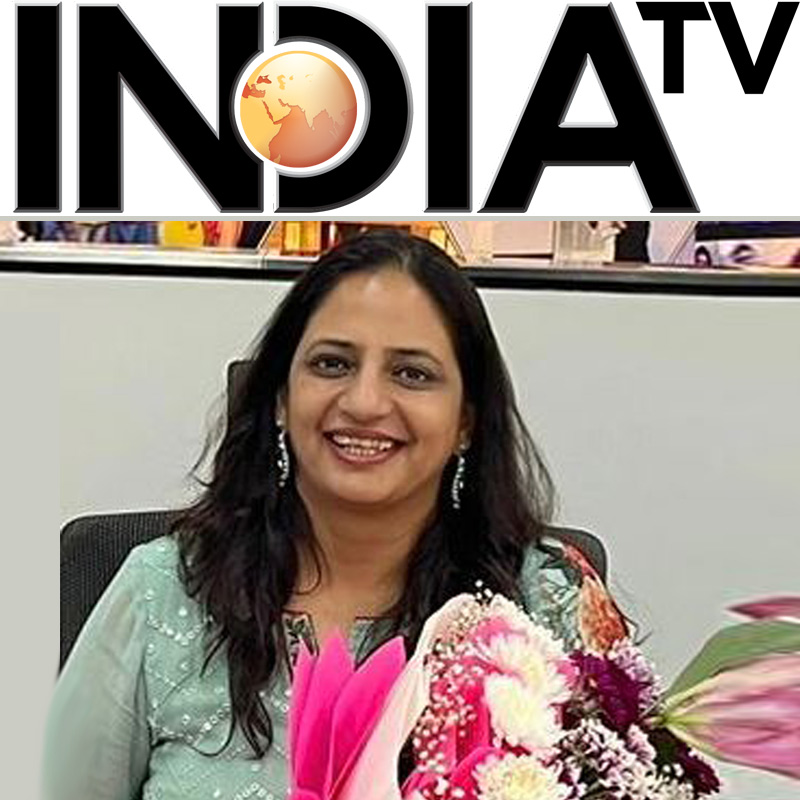
    Mumbai: India TV has roped in Puja Sethi as group editor of digital. Sethi, a senior journalist and digital strategist, brings over two decades of rich experience on board. Her last stint was with Zee Digital as a group editor.

    In the past, she has held senior leadership positions at Indiatimes, Jagran New Media, and myUpchar, amongst others. Her career has evolved around broadcast, print, and digital journalism. She is an alumnus of the prestigious Lady Shri Ram College and Miranda House, Delhi University.

    In her role at India TV, she would be responsible for managing the editorial. In addition, she will focus on strategic and innovative solutions and the development of an integrated digital strategy that cuts across paid, social and search.

    On her appointment, India TV managing director Ritu Dhawan said, “We welcome Sethi to the family. We are sure she will add value to India TV’s digital ecosystem and help us attain the predetermined organisational goals.”

    “I am extremely excited to take over the role of spearheading the digital strategy for India TV. I am looking forward to expanding the reach of our digital properties and further expanding the digital portfolio,” said Sethi.

  • Alia Bhatt’s YouTube channel to boost her brand value

    Alia Bhatt’s YouTube channel to boost her brand value

    MUMBAI: In the past few years, YouTubers across the world have managed to grab a celebrity status for themselves. Names like Bhuvan Bam, Prajakta Koli, Ashish Chanchlani have become immensely popular and have got the chance to perform with several Bollywood celebrities. Creators like Shibani Bedi and Harsh Beniwal also made their Bollywood debuts this year.

    While these micro-and mini-influencers are on their way to embrace the silver screen, a star from there has shifted to the digital pedestal in a big way. Alia Bhatt, who within a career spanning over just 7 years has become a critically acclaimed star and has been getting abundant love from the fans as well, has launched her own YouTube channel on which, in her own words, she is planning to showcase her ‘unadulterated’ self.

    Bhatt is already a huge star and has a massive following on Instagram and Twitter. Then why did she decide to go the YouTube way?

    As per communications consultant on digital/social media marketing and PR Karthik Srinivasan the move is understandable as YouTube helps in long-form content far better than Facebook or IGTV given the SEO benefits.

    Indiatimes and Lifestyle Brands at Times Internet COO Angad Bhatia says that Bhatt already has strong cultural relevance and with YouTube she can become an influential content creator in her own way.

    It is not the first time that a celebrity is trying to dabble in the social media space away from conventional platforms like Instagram and Facebook. Jacqueline Fernandez has a strong Snapchat presence, and she also debuted on TikTok recently along with Shahid Kapoor, and Tiger Shroff. Sonam Kapoor has her own app where she connects with her fans sharing beauty tips and offering a sneak peek into her lifestyle. In fact, a few celebs like Ajay Devgn, Shilpa Shetty Kundra, and Priyanka Chopra have their own YouTube channels as well, but they often upload just professional stuff.

    Alia, who is one of the most loved stars in the country right now, could have easily leveraged these other media as well, especially her own app. Brand-nomics’ Viren Razdan notes that apps have their own limitations and challenges and that has led to international celebs like Kim Kardashian and Taylor Swift shutting down their individual apps.  

    Srinivasan says, “An app demands that people install it in the first place. And unless they happen to be really big fans, they may not install the app since it has limited appeal on an everyday basis. Plus, app content cannot be discovered by casual fans and fans of specific topics they address from time to time, while a YouTube page, with well-curated titles and tags would be.”

    Landor managing director Lulu Raghavan adds that an app needs very strong market machinery to promote and it is quite doubtful that people would want to add more app to their phones. Meanwhile, users are already there on YouTube and watching many forms of content and it makes it easier for discovery.

    Brand guru and founder Harish Bijoor Consultants Harish Bijoor quips, “YouTube is the place to be. A magnet star with a magnet brand-name can do just so much in promoting her own app. YouTube, on the other hand, provides it all and more within a nano-second. For Alia Bhatt, it must be like saying, ‘why dig a well when you can outsource the sea?’”

    Rightfully so, within just three days of the launch and just one introductory video online, Bhatt’s channel has more than 310K subscribers. Meanwhile, Sonam Kapoor’s app on Google Play Store reflects only 100K+ downloads in three years.

    Experts also believe that being on YouTube will add several points to Alia Bhatt’s already sky-high brand value.

    Raghavan feels that the platform might give her an edge amongst her peers and it is possible that she emerges as the next global star from India after Priyanka Chopra.

    “Of course, her primary brand value will be based on her roles and how well her movies perform. But if shares genuinely interesting and useful content besides, she could considerably enhance her brand value,” says Srinivasan.

    “An active medium definitely helps build your influencing power and has the potential to strengthen conversations. If curated well, it could build her value immensely,” adds Razdan.

    Bhatia adds, “This new generation of celebrities is very social media friendly. They know how to convert excessive social scrutiny to their benefit. More visibility is important for a top of the mind recall and higher brand value. Different media and social platforms ensure just that.”

    Also, brands can come forward to leverage in this new side of Bhatt’s social media presence. The actress is already associated with prominent brand names like Caprese, Frooti, Garnier, and Nokia and her venture into this new domain might open up other big opportunities.

    Srinivasan mentions that this will especially help brands that cannot afford expensive TV media. Her YouTube channel could be their first big media push if the target audience is appropriate.

    However, Raghavan points out that this is the one area in which Bhatt will have to tread carefully. “If she has authenticity then she should only promote those brands that she truly believes in. It shouldn’t become another value for sales pitches as that can easily backfire. But if she can track it (the products) beautifully in the narrative of her life, the word of mouth of a celebrity is extremely fast.”

  • Times Now launches Election Mobile App

    Times Now launches Election Mobile App

    MUMBAI: In order to enhance viewers’ access of the ongoing general election, Times Now has come up with its election mobile application. In partnership with Nokia, the app has been developed to provide real time information through video, image and text feeds on the general election.


    Users can download it on Android, iOS, Nokia X and Windows phone. People can watch feeds in the form of YouTube videos and it also provides options to like, reply or share feeds and plug in Times Now’s social feeds from Twitter and Facebook.


    Users can chat with each other while shows are on air. Apart from this, they can also watch live telecast of the channel from the Indiatimes website link that is given in the app.


    Speaking on the launch of the app Times TV Network MD and CEO MK Anand said, “We have launched an exclusive app for all the people on the move so that we can keep them informed regarding all news, updates and the entire coverage on election news. We have created this app to empower them to make the right decision as to who they want to see as their next leader.”

  • WahIndia to unveil Bollywood social networking site by August

    WahIndia to unveil Bollywood social networking site by August

    MUMBAI: WahIndia, online media and social networking company, has announced that by the end of August 2006, it will launch the first social network focused on Bollywood and Indian entertainment for a global audience.

    The company claims to have received an undisclosed amount of investment from prominent angel investors. The US based company further plans to establish an office in Mumbai during next quarter to accelerate user growth in India, informs an offcial release.

    WahIndia founder & CEO Sunil Thakur said, “WahIndia is already one of the most popular destinations for Bollywood fans around the world and with the integration of a Bollywood-focused social network, we will further deepen relationship with our user community.”

    Bollywood films find wide audiences in many parts of the world, particularly in North America and Europe, with a growing demand in the Middle East and select Latin American countries. By empowering a user-built entertainment network, WahIndia will be able to provide a distribution channel to earn revenue from downloads of films, music, mobile ringtones, wallpaper and other premium digital content, adds the release.

    Founded in 2003, WahIndia is the producer and distributor of video content specifically developed for small screens such as PCs, laptops and mobile devices. The company distributes its in-house produced content through several partners and channels, including Sify, IndiaTimes, Akimbo and iPod Podcasts. WahIndia also offers legal download of films such as Bollywood blockbusters Andaz Apna Apna, Loafer, Parvarish and independent films like Oscar-nominated Little Terrorist.

  • ‘With cricket action coming up, Sony has initiatives lined up in the digital space’ : Kaushal Modi – Sony Entertainment Television India head licensing & telephony

    ‘With cricket action coming up, Sony has initiatives lined up in the digital space’ : Kaushal Modi – Sony Entertainment Television India head licensing & telephony

    After establishing its digital platform 2525 with a slew of activities in 2004, Sony India’s 2005 plan was to take it to the next level to turn it into a substantial revenue generating model. To drive the strategies, it needed an experienced hand in this space to head the division. The search ended in Kaushal Modi, who was then a key player in arch rival Star India’s digital strategies. Thus, in February 2005, Modi switched to Sony India in the capacity of head, licensing and telephony.

    Going into the second half 2006, Sony’s game plan now mainly revolves around the game of cricket and Modi is banking on the bonanza to contribute significantly to the growth of his digital activities. “With cricket action coming up, Sony has got lots of initiatives lined up in this space. The action will start ticking from October 2006 onwards. We are still working on our plans,” he says.

    On the licensing front, Modi is exploring new markets and under his leadership, Sony has even entered the arena of format sales. “Sony used to sell its shows in the international markets and was never into selling formats. This year, for the first time, we have tried exploring this space with soaps ‘Kaisa Yeh Pyaar Hai’ and ‘Yeh Meri Life Hai’ and the experiment has generated an encouraging response,” says Modi. And he is betting big on new content platforms such as Video on Demand (VoD) and IPTV to drive the growth in this sphere.

    In an interview with Indiantelevision.com’s Bijoy A K, Modi explains the market scenario, the strategies and the game plan for the year.

    Excerpts:

    This year’s MipTV witnessed the trend of TV producers investing in buying formats as against just broadcasters doing so. Would it make a negative impact on the syndication strategies of broadcasters?
    Yes. Earlier, broadcasters used to drive these activities at MipTV. But, now, the scenario has undergone a change. There are many international format companies, which are very keen on the Indian market. While bigger companies such as Endemol and Fremantle do have direct access to the Indian market through their offices in the country, some of their smaller counterparts — who don’t have direct access to India — depend on markets such as MipTV and Mipcom. This is the international scenario right now.

    Coming to the second part of your question, this trend doesn’t make a difference to our business strategies. We are content aggregators and not content creators. The format owners are never in a position to squeeze money out of their clients. It is up to the broadcaster (buyer) to pick up a format or not.

    Sony has taken its two shows – Kaisa Yeh Pyaar Hai and Yeh Meri Life Hai, which are not game shows – to MipTV in Cannes this year for the purpose of syndication and formatting. How was the experience? Have you struck deals with international companies?
    Earlier, Sony used to sell its shows in the international markets and was never into selling formats. Now, this year, we have kicked off our format syndication activities. We tried exploring this space with soaps Kaisa Yeh Pyaar Hai and Yeh Meri Life Hai and the experiment has generated an encouraging response. We haven’t signed any buyer yet, but there are enquiries from various foreign broadcasters. Some of the Asian and European (Germany and Poland) have expressed interest in the format. They want to recreate the content, giving it a local treatment. The talks are still going on.

    Please comment on the demand for our homegrown properties abroad? Do you keep the international market also in mind, while developing original formats?
    The advent of new technologies is changing the face of the international content syndication market. In the international market, new content platforms including Video on Demand (VOD) and IPTV have been boosting this business segment. The new technology helps the content aggregator to target niche consumer segments, however small in size they are.

    For example, if you have 5000 Indians living in a certain area in Japan and you want to target them with your content, you can do that with the help of these new technologies. Thus, you have a viable business model in hand. This has opened up new markets across the globe.

    Speaking about the potential of Indian properties in the international markets, there is a significant Indian diaspora – though not critical enough to drive the business — supporting the trade. Genre-wise, I would say there is a stress on movies.

    South East Asia has always been the strong traditional market for Indian content. But now, with the advent of new content platforms, Europe and Africa have also started showing interest in our content. European channels such as RTL2 (Germany) have been showing a lot of interest in Indian content. As I mentioned earlier, there is a demand for movies. But, at the same time, some of these European channels now want to try shorter series as well.

    Hence, developing homegrown properties, which can be saleable in the international markets also, sounds a lucrative idea. But, our main focus continues to be India and the strategy has always been to leverage on the original Indian content. For us, the Indian viewer always comes first while conceptualising ideas.

    What will be the size of the content syndication market with regard to Indian television? Please speak on the market dynamics including growth potential and competition.
    It is a highly fragmented market in India and it will be very difficult to put any number to it. Apart from the three or four big players, there are several medium-sized companies and then hundreds of smaller players including sub-brokers. The traditional syndication market is stagnant. New content platforms will drive the business. This will be driving almost 50 per cent of the revenues in the near future.

    Competition is there in all forms, whether it is producers or broadcasters. Speaking about Sony’s content syndication plan, I would say we haven’t yet exploited the segment to the full extent. We have just started. Healthy competition definitely helps. With competition, you have new markets opening up across the globe. Players keep moving, looking for greener pastures.

    The advent of new technologies is changing the face of the international content syndication market

    How much does the content syndication business contributes to Sony India’s kitty?
    It is definitely not a topline driver for Sony. It is more of a bottomline driver. Though it contributes a miniscule compared to other revenue streams, it plays a significant role in the total scheme of things. It creates a market value for the channel. It creates added revenue opportunities through an existing property. We have to keep in mind that, here the channel is not making any new investments.

    Speaking about the future potential, content syndication & licensing will contribute well to drive exponential growth.

    Star India recently revamped its short code 7827 and looks very aggressive on its interactive and digital plans. What can we expect from Sony this year in this space?
    With cricket action coming up, Sony has got lots of initiatives lined up in this space. The action will start ticking from October 2006 onwards. We are still working on our plans.

    Speaking about our digital presence, Sony already has a Wap site. But we haven’t been promoting it much since the Wap technology is still in its nascent stage of growth in India. Hence, we haven’t been banking on the Wap site much to drive user downloads. A good percentage of our content download happens through the telecom operator sites. We are also weighing options to launch a mobile voice platform.

    Please elaborate on your digital and wireless strategy
    The entire department has been created to leverage the opportunities this space offers. Sony envisages that, the future is going to be digital. New technologies driven by mobile phones, iPods and other handheld devices will spearhead an exponential growth. The atmosphere is very encouraging since mobile connectivity in the country has really picked up. Keeping the changes in mind, we are closely working to build a digital content bank and making our programming and content available across all the available platforms. The thrust will be on creating a dedicated mobile and internet community.

    Convergence of television and portals appears to be the latest mantra for entertainment. Please elaborate on Sony’s plans and the progress in this segment.
    We have our online presence in setindia.com. To offer content through broadband, we have tied up with SifyMax. This association helps us to offer some of our popular shows such as Fame Gurukul and Indian Idol through broadband. This way, we are able to capitalise on the significance of SifyMax as a popular destination for online content. This is a win-win situation for both of us. We also have content associations with Indiatimes and Tata VSNL.

    How do you plan to leverage Set India’s programming portfolio with the mobile initiatives? Are there plans to make mobisodes out of your popular soaps?
    I would say, the Indian market is yet to see a proper mobisode. The mobisode revolution is still bit away in the horizon as the technology is not yet ready to accommodate it. What we all have been doing is, repurposing our content for mobile phone. And the advantage: you can target different audience segments with various niche products made out of a single programme.

    Globally, most of the mobile companies are getting out of the content sector to focus on their main areas of strength. In India also, should mobile operators have to move out of the content space? Please offer your take on this.
    The international market has been witnessing lots of alignments between content providers and the technology companies. Internationally, we have entertainment companies sticking on to content operations, while technology companies concentrating on the technical aspects. Obviously, you can’t lay your hands on both the businesses because it is difficult to focus on these diverse segments. The same applies to the Indian market as well.

    Are you looking to partner international companies in the digital space? What is your take on the global scenario?
    Sony in talks with some of the players for digital distribution of content and we have already got Jump TV on board in this space. We are in advanced stages of talks with some of the European and US players and an announcement in this regard will be made soon.

    What are the issues that will foster an even faster mobile market growth in India?
    What is critical is creating best practices and formula for the industry. Industry practices should be standardised so that, it will encourage the players to roll out a variety of services. There should be flexibility in pricing. There is huge potential in areas such as voice offerings and subscription services. By working together as a team, we can capitalise on the huge growth potential the space offers.
    Will web streaming as a concept catch up in India?
    Web streaming is yet to catch up in the country because of the bandwidth issues. But, with falling broadband prices, it has got a huge potential to deliver, especially in the area of interactivity. If the government’s bandwidth targets for the fiscal are met, the market would undergo a tremendous change.
  • Zoom ropes in former Channel [V] hand Suresh Bala as COO

    Zoom ropes in former Channel [V] hand Suresh Bala as COO

    MUMBAI:The Times Group’s non-fiction entertainment and lifestyle channel Zoom has roped in a former Channel [V] programming professional Suresh Bala as its new chief operating officer.

    With Suresh Bala coming in, the outgoing COO Upen Roop Rai has moved on to head Integrated Marketing Solutions Group (IMSG) and Indiatimes as the director, informs an official release.
    Bala will report to Bennett, Coleman & Co. Ltd’s executive president Arun Arora. He is expected to take over his responsibilities within a week or two.

    Prior to this, for the past three years, Bala was in Canada, and before that he was in the programming function of Channel [V].

    Interestingly, Rai came from Times Group’s internet division where he was the marketing head. His last day as Zoom COO would be 1 June.

    While, overseeing Zoom, Rai continued to handle Indiatimes.com in Delhi. He was completely responsible for revenue, marketing and sales. Integrated Marketing Solutions is also something he was handling.

    Under Rai’s guidance, Zoom has added various franchisees to mark its positioning of an Indian lifestyle channel. Commenting on his move to IMSG and Indiatimes, Rai said, “The experience at Zoom has been a great one. I was sent here for a year and it has been a great year. I am already looking forward to my focus responsibilities at IMSG and Indiatimes.”