Tag: India’s Daughter

  • Paladin to theatrically release ‘India’s Daughter’ in US

    Paladin to theatrically release ‘India’s Daughter’ in US

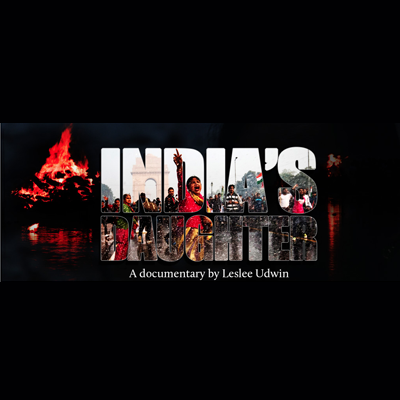
    MUMBAI: Leslee Udwin’s documentary, India’s Daughter, will be released theatrically in the US by Paladin, with openings in New York and Los Angeles on 23 and 30 October respectively.


    India’s Daughter tells the story of the savage rape and eventual death of 23 year-old medical student, Jyoti Singh, in New Delhi in December of 2012, an event that shook the social fabric of the country — and the world — to the core. Udwin’s film was catapulted to global attention in March of this year when it was banned in India just two days before its scheduled broadcast. 


    Singh was a young physiotherapy student from a poor family in New Delhi, and a symbol of a 21 century India in which economic growth is expanding opportunity for women and men alike. With dreams of a career in medicine, she asked her parents to use her wedding dowry to pay for her education. Despite protest from the extended family, her parents willingly obliged and sold the family’s ancestral land to put her through school.


    On 26 December, 2012 she went to see Life of Pi with a male friend. When they boarded a private bus to return home, the young man was beaten senseless, and Singh was dragged to the rear of the bus and repeatedly gang raped. Her assailants brutalized her as they circled the city, injuring her internal organs, and ultimately eviscerating her with an iron rod. Miraculously, she survived for 13 days before her surgeons could do no more to save her. Her tragic death raised the fury of Indian women and men alike, and New Delhi saw an explosion of public outrage that resulted in a month of unprecedented mass street protests throughout the nation, and a government crackdown with water canons and tear-gas.


    In India’s Daughter, Udwin unspools the extraordinary story of Singh and her forward-thinking family, while also probing the culture of rape and the psyche of her attackers. One of the film’s most astonishing scenes is a confession by one of the perpetrators, filmed in prison, that provides crucial insight into the mindset of the men who committed the rape, and explores the wider dynamics of a patriarchal society and culture which seeds violence against women.


    Following its debut in Great Britain earlier this year, and presentations at festivals and conferences throughout the world,India’s Daughter has become a source of considerable controversy, with some advocates calling it essential viewing and a film that can spark change for women in India and worldwide, while others criticise it for giving a megaphone to the rapists’ point of view, for bringing shame upon India, ignoring the Indian women’s movement, and violating the rights of both the victim and the accused. For bearing witness to the truth about rape in global society Udwin was honored as a New York Times 2015 Woman of Impact, and won the prestigious Anna Lindh Human Rights Award for her groundbreaking work in advancing the rights of women.


    India’s Daughter is directed and produced by Udwin. Co-producer is Dibang and associate producers are Riddhi Jha and Frieda Pinto. Executive Producer is Nick Fraser. Editor is Anuradha Singh with original music by Krsna. Sound Designer is Resul Pookutty, CAS MPSE and story editor is Rob Ritchie. Shot on location in Delhi, India.

  • Leslee Udwin’s ‘India’s Daughter’ bags award at Indian Film Festival of Stuttgart

    Leslee Udwin’s ‘India’s Daughter’ bags award at Indian Film Festival of Stuttgart

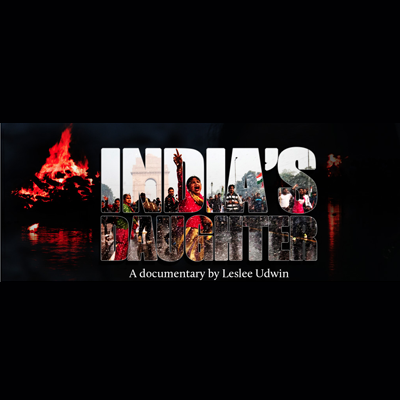
    MUMBAI: Leslee Udwin’s India’s Daughter has received the audience award at The Indian Film Festival of Stuttgart in Germany.


    India’s Daughter is an India-UK co-production, which tells the story of the horrific Delhi gang rape, which sent shockwaves around the world in December, 2012, and of the unprecedented protests and riots which this horrific event ignited throughout India, demanding changes in attitudes towards women.


    Udwin said, “Following on the latest award India’s Daughter was graced with at Biografilm Italy, we are thrilled by the news that the film was honoured with the audience award at the Indian Film Festival at Stuttgart last night. This is such a positive and welcome development especially given that it was the first Indian Film Festival, which was courageous enough to host this important film and its powerful call for global change for women and girls across the world. What is so heartening to me is that when Indians abroad see the film in screenings and festivals, they invariably comment on how surprised they are to find the film so positive about India, the protests and the enlightened male role models in the film, which far outnumber the negative male figures. Having been led by their government and their media to expect a film that shames India, they find themselves embarrassed and amazed that this film could have been banned.”


    “On 5 August, 2015, the Delhi High Court will hear a petition brought by two forward-thinking individuals who are committed to democracy and a better world for women, which asks the court to lift the ban. I pray that we will have a wise and independent judge and that we can again move forward with India holding its head up high on the international stage, leading the world by example as it did in the courageous and inspiring protests against the Nirbhaya gang-rape in 20/12-13,” she added.


    Since 2004, the Indian Film Festival Stuttgart has been presented by the Filmbüro Baden-Württemberg for one week in July. In 2011 the festival changed its name from Bollywood and Beyond to Indian Film Festival Stuttgart.

  • Two lawyers issued notice for anti-women remarks on ‘India’s Daughter’

    Two lawyers issued notice for anti-women remarks on ‘India’s Daughter’

    NEW DELHI: The Supreme Court today asked the two advocates representing the 16 December gangrape convicts to respond to the charges that they allegedly made derogatory remarks against women in a BBC documentary India’s Daughter by Leslee Udwin.


    Justices V Gopala Gowda and C Nagappan issued notices to the two advocates M L Sharma and A P Singh and sought their response in two weeks following a petition by the Supreme Court Women Lawyers Association.


    “We have heard the argument, pleadings and grievances urged in the petition. The matter requires consideration in view of the factual and legal submissions,” the Court said.


    The Association had sought restriction on the entry of the two advocates in the apex court premises, alleging that their remarks in the controversial documentary were “inhumane, scandalous, unjustifiable, biased, outrageous, ill-minded” and are a “direct affront to and in violation of the dignity of women,” especially those practicing in the Supreme Court. The Supreme Court Bar Association (SCBA) supported the plea of Women Lawyers association.


    Senior advocate Vibha Datta Makhija representing the Women’s Association urged the Court to lead from the front and show zero tolerance for such views. “We need an environment where we are fearless,” she said and added that the two advocates need to be sensitised.


    Senior advocate Dushyant Dave, appearing for SCBA, submitted that there should be a meaningful and proper implementation of gender sensitisation regulation. He said, “SCBA has taken a unanimous decision to take action against Sharma.” 


    The petition had sought protection of fundamental rights, guaranteed under the Constitution, of the female advocates practicing in the apex court to work with dignity and without any gender bias.


    The petition filed through advocate Mahalakshmi Pavani has made Chairperson of Gender Sensitisation Committee and Registrar of the apex court as parties and submitted a transcript of the two lawyers’ comments.


    It also sought the court’s direction to make Sharma and Singh issue a public apology in the media for holding and making public views, which are “absolutely derogatory to the dignity of women” and refraining from issuing such statements in future. The two advocates also be directed to retract their statements and their apology should also be included in the BBC documentary, the petition had said.


    The Association represented by secretary Prerna Kumari had said in the petition that the remarks made by the two advocates showed they do not have respect for any woman and do not see them as more than an object. It had added that the conduct of these lawyers showed complete absence of any concern for society and utter disregard of the Constitutional values and human rights of women besides the ethics and etiquette of the Bar.


    The petition said the lawyers should retract their statements and their apology should be included in the BBC documentary.


    It had added that the conduct of these lawyers showed complete absence of any concern for society and utter disregard of the Constitutional values and human rights of women besides the ethics and etiquette of the Bar. It is much more than a crime, the petition said. 


    Although it has been banned in India and NDTV could not screen the film as slated on 8 March, it continues to be available on the Internet and has been aired more than two times by BBC4, which is not seen in India, apart from some other countries have screened the film on International Women’s Day.


  • Delhi HC refuses to lift ban on ‘India’s Daughter;’ says media trial influences judges

    Delhi HC refuses to lift ban on ‘India’s Daughter;’ says media trial influences judges

    NEW DELHI: The Delhi High Court today refused to stay the ban on BBC’s documentary India’s Daughter by British filmmaker Leslee Udwin on the Nirbhaya gang rape of December 2012, saying the case was sub judice in Supreme Court and allowing its display in the masses could affect the case.
     

    Justices BD Ahmed and Sanjeev Sachdeva said media trials tend to influence judges by subconsciously creating pressure. Although the judges said they were prima facie not opposed to airing of the documentary, it should be released after the Supreme Court decides the appeals of the convicts in the matter.
     

    “Media trials do tend to influence judges. Subconsciously a pressure is created and it does have an effect on the sentencing of the accused/ convict,” it said in support of its observation.


    The bench was of the view that the documentary could “interfere with the justice system” but refused to pass any interim orders. “Had it been originally placed before us, we would have asked you to place material before us on why the ban should be lifted. But it has come here from the roster bench of Chief Justice, so we will not pass any interim orders.”


    Observing that airing of the video could make or ruin the case of one of the rape convicts, Mukesh, it said, “Whether he has shown remorse or not would be considered at the time of his sentencing. Why not wait till the Supreme Court decision?”


    On the contention that ban on airing of the video till the apex court judgement could also lead to gag on reporting of all sub judice matters, the bench said, “We agree.” It said that earlier media had a self-imposed code of not reporting sub judice matters, but now “media has thrown it (the code) to the winds.”


    The Central government represented by advocate Monika Arora opposed airing of the documentary saying it would give a platform to the convict to air his views and that it also contains derogatory statements against the victim. 

    She also said that the Information and Broadcasting Ministry only issued an advisory to cable TV networks to abide by the magisterial court’s order banning airing of the documentary.

    The petitioners claimed that since the documentary was freely available on the Internet, and its viewing by lakhs of people had caused no untoward or law and order situation, there are no grounds for banning the video. The petitioners also said that parts of the convict’s interview are already part of the judgment in the case by the trial court and High Court and thus are public records.

    The court had earlier refused to give urgent hearing after three law students –Vibhor Anand, Arun Menon and Kritika Padode– in their two separate PILs said “fundamental right of freedom of speech and expression have been infringed due to government’s illegal action to ban the broadcast.” They had approached the High Court after a trial court on 4 March had banned until further orders the broadcast of the interview of 16 December, 2012 gangrape convict Mukesh Singh, allegedly conducted in July 2013 inside Tihar jail.


    Earlier, a trial court had restrained the media from broadcasting or publishing the interview of Mukesh Singh after the Delhi Police moved the court seeking the restraint. The Information and Broadcasting Ministry had also issued an advisory to all television channels not to broadcast the film or excerpts from it.


    The pleas had sought lifting of the ban on the ground that it is “a look at the mindset of one of the convicted rapists.” One of the pleas had also sought direction to the Bar Council of India to expedite action against the two lawyers — advocate AP Singh and ML Sharma — who had allegedly made derogatory anti-women remarks in the documentary. It also claimed that the parents of the gangrape victim have not objected to the telecast of the documentary.


    Meanwhile, Udwin told the Los Angeles Times that the Indian government should hang its head in shame for banning her film. 

    However, the government claims she was permitted to interview the convicts in jail when she said was doing research and would not use the film for commercial purposes. The film has already been aired in several countries including the United States and the BBC4 in the United Kingdom. NDTV was to have aired the film on International Women’s Day but could not do so in view of the ban.

  • ‘India’s Daughter’ goes international; Freida Pinto to attend US screening

    ‘India’s Daughter’ goes international; Freida Pinto to attend US screening

    NEW DELHI: Despite the uproar in India and the government’s call for a ban, India’s Daughter by Leslee Udwin was re-telecast on BBC4 to mark International Women’s Day.


    Although BBC News is available in the country, the British pubcaster aired the documentary – for the second time in five days – on BBC4, which is not available to Indian viewers.


    The documentary was also screened in countries across the globe — including Switzerland, Norway and Canada — to mark International Women’s Day and is being screened in the United States today. The film also continues to be available to Indian viewers on the internet.


    The documentary is based on 26 interviews including those with the rapists of the Delhi paramedical student, who was gang-raped brutally on 16 December, 2012  and died two weeks later in a Singapore hospital.


    The premiere will be attended by Oscar winning actress Meryl Streep and Frieda Pinto in a show of support for the film banned in India at the Baruch College of the City University of New York and will be presented by NGO Vital Voices Global Partnership and children’s development organisation – Plan International.


    Streep and Pinto, who is Plan’s ‘Because I am a Girl’ global ambassador, will be joined by the documentary’s director Leslee Udwin at the screening.


    Meanwhile, parents of the girl whose real name has been revealed in the documentary but who came to be known as Nirbhaya have now said that the filmmaker did not show them the final version of the documentary and they had then refused to sign release papers. The parents had earlier also objected to the documentary being aired as it not only makes the victim’s name public but also includes offensive remarks made by one of the rape convicts.


    Udwin, a Plan ambassador, had said the December 2012 rape and the protests that followed was an “Arab spring for gender equality.”


    “What impelled me to leave my husband and two children for two years while I made the film in India was not so much the horror of the rape as the inspiring and extraordinary eruption on the streets. A cry of ‘enough is enough’,” Udwin said.


    “Unprecedented numbers of ordinary men and women, day after day, faced a ferocious government crackdown that included tear gas, baton charges and water cannon. They were protesting for my rights and the rights of all women. That gives me optimism. I can’t recall another country having done that in my lifetime,” Udwin had added.


    Earlier according to a Reuter report, Udwin said India committed “international suicide” by banning the documentary.


    “My whole purpose was to give a gift of gratitude to India, to actually praise India, to single India out as a country that was exemplary in its response to this rape, as a country where one could actually see change beginning,” said Udwin, during a panel discussion. “The supreme irony is that they are now accusing me of having wanted to point fingers at India, defame India, and it is they who have committed international suicide by banning this film,” she added.


    The British filmmaker said she was inspired to make the film after watching thousands of people take to the streets across India to protest the December 2012 rape and murder of a young physiotherapy student on a bus.