|
Multi Screen Media (formerly Sony EntertainmentTelevision India) is beginning to enjoy a remarkable turnaround story. The Indian Premier League (IPL) has surfaced as cricket‘s most lucrative property, Sony Entertainment Television has climbed to the No. 2 position in the Hindi GEC (general entertainment channel) space andSab has grown beyond its flanking channel status.
The other channels have also moved up the hierarchy. English movie channel Pix has raced past HBO and AXN has protected its turf quite strongly. Mix, the pure music channel, has had a good start. Being the only channel in that space that has network strength, it has taken up the challenge to grow the market and ramp up revenues.
In an interview with Indiantelevision.com‘s Sibabrata Das, MSM president network sales, licensing & telephony Rohit Gupta talks about how the company is going to end this fiscal with a 40 per cent ad revenue growth and a 25 per cent growth in FY‘13. Excerpts: |
|
|
MSM raked in Rs 9 billion in ad revenue from the IPL last year. But is growth slowing down for the property due to a fall in ratings in the previous edition of the T20 tournament? |
|
|
Are we looking at a below double-digit growth as is evident from the deals that you have locked in so far? |
|
|
So has IPL as a property matured? |
|
|
Hasn‘t it been a tough sell so far as by this time normally you manage to close almost 80 per cent of your ad inventory?
The IPL TV rights are with us for another five years and it is our biggest property; we can‘t afford to discount its current value. T20 continues to grow in popularity; the formats that are not doing so well are the Tests and the ODIs. |
|
|
|
|
So the new BCCI tender for international cricket played in India will not be as valuable as it was when Nimbus held the TV rights a few years back? Will that be the calculation when Sony bids this time? |
|
|
When Sony launches a sports channel, it will have to acquire other cricket rights than just the IPL and New Zealand board. Can ad rates be driven further up to support aggressive bids at higher acquisition costs for cricketing properties than their current value? |
|
|
Are we seeing some categories of advertisers retrenching from the sport due to the current tough economic environment? |
|
|
When will MSM‘s ad revenues touch the Rs 20 billion mark? |
|
|
How far has SET contributed to this growth?
Fiction is what we had missed out for the last 3-4 years. But it has started doing well. We have an upscale, urban skew; our male viewership is also very strong. Advertisers chase this segment and our fitment is the best. |
|
|
Will SET launch an afternoon band to create a new revenue stream or still have a primetime overhang? |
|
| Does Sab still play the role of a flanking channel or it has grown beyond? It is not anymore just a flanking channel; it is a proper GEC, has a strong viewership and, as a family comedy channel, is uniquely positioned. Sab has helped our network revenues to grow. |
|
| Has the Hindi GEC ad revenue market expanded this fiscal and will we see more channel launches in this space? It (Hindi GEC space) has now become a game for the big boys. There is an entry barrier for new players as the cost of running a Hindi GEC is as high as Rs 5-6 billion. Which new player has that appetite after a few of them have severely burnt their fingers? This has helped us even as our own channels have grown. Even in a digital environment, it will be tough for a new player. Segmentation is not possible because GECs have to be mass and can‘t be niche due to the huge costs involved to run it. |
|
|
Is Max under pressure due to steep acquisition costs for Hindi movies?
There is bound to be a price correction in movie buying. Though Star went overboard last year, that strategy won‘t work every year. Some broadcasters are looking at launching action movie channels keeping digitalisation in mind. We have no such plans, at least not this year. We will wait to see how digitalisation evolves. Like GECs, the consumption of Hindi movies is more mass. |
|
| Why did MSM decide to launch a music channel when the market is too crowded? Though the ad size is around Rs 2 billion at this stage, it is a good genre to be in. Mix‘s positioning of capturing the various moods during the day has got accepted and we believe that we will be the leader. As a pure music channel, we are here to grow the market. MTV and Channel [V] have taken a different route and focus on reality shows as their growth drivers. While other players in this pure music space have a standalone presence, we are the only one to have the network strength and will be able to ramp up revenues. |
|
| Isn‘t the English entertainment space getting spoilt with new launches? The genre is growing and is still undersold. It is an important space to be in and is sold not on ratings but on perception. AXN stands out in this genre. As digitisation grows, we will see more launches. |
|
| MSM doesn‘t have a footprint in regional-language broadcasting that is growing the fastest. Was letting TV18 Group acquire ETV a missed opportunity? The acquisition has to come at the right price. We are not desperate to launch channels. We do not believe in width that does not give us profits. |
Tag: indiantelevision
-
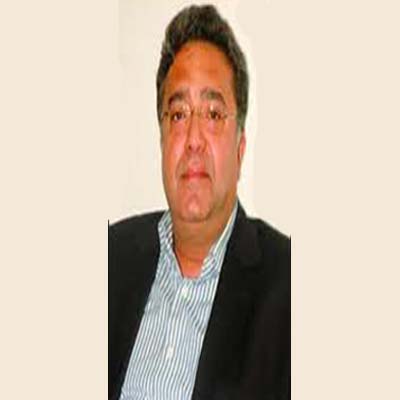
‘IPL is our biggest property and we can’t afford to undersell’ : MSM president network sales, licensing & telephony Rohit Gupta
-
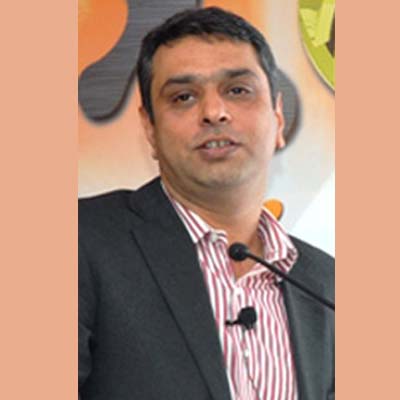
‘We are adequately funded by New Silk Route’ : 9X Media business head- new business Punit Pandey
9X Media has seen its share of ups and downs. Launched in 2007 as INX Media by Peter and Indrani Mukerjea, the company started with a Hindi general entertainment channel 9X, a music channel 9XM and later an English news channel NewsX.
Then came the economic slowdown and coupled with problems at management level and fund crisis, the Indian promoters exited after selling off the English news channel.
The new management had a huge task: to reduce debt and turnaround. INX Media sold off 9X to Zee and started focussing on its only success – 9XM.
Today, with a new name, 9X Media, the company has four channels under its ambit. It has also relaunched in the UK.
Indiantelevision.com’s Gaurav Laghate caught up with 9X Media‘s business head- new business Punit Pandey to talk about the turnaround of the company and how it plans to grow further.
Excerpts:
INX Media was into losses and your Indian promoters exited. Why did New Silk Route agree to fund the music channels while the Hindi GEC 9X was sold to Zee?
The Hindi GEC did not work and we decided to concentrate all our energies, time and investments on 9XM as it was doing very well right from its day of launch. The turnaround story was around 9XM. NSR as a private equity partner, along with others, assured faith in not only the product but also in the management team.Fortunately for us and 9XM, they continued to show faith in us. And obviously, we are backed by a strong product and a strong revenue stream as a business model.
NSR continues to partner and fund us and we have delivered on what we were supposed to. Today, we are a zero debt company and adequately funded.
With their funding support, we have launched three more channels over the last seven months. We launched Punjabi music channel Tashan in August, first Marathi music channel Jhakaas in October and recently Jalwaa. We have also relaunched 9XM in UK.
Weren‘t you planning to first launch the Bengali music channel in the regional space. Why didn‘t it happen?
While you are at a business plan state, you obviously think of so many things. But if you look at it, we have managed to consolidate 9XM, which is our flagship brand. Then we have also launched three more channels and UK feed.And what about the performance of these channels?
Well, the Punjabi channel has replicated 9XM‘s success across the PHCHP (Punjab, Haryana, Chandigarh, Himachal Pradesh) region and has achieved leadership status in the first week of its launch. So, it has become our second winning product.Jhakaas and 9XM UK also have been received well. And though Jalwaa was launched just last week, we are getting tremendous response not just from trade but also from consumers that it is looking well.
So we have five operating products.
But Marathi channel has not picked up yet?
Jhakaas is not only Maharashtra‘s but India‘s first Marathi music channel. Since it is the only music player, it has been received well. But if your benchmark is going to be what Tashan has achieved in Punjabi, it is never going to be there.Maharashtra, as a region, is 800 GRP market, and bulk of it is from general entertainment – Marathi as well as Hindi. It is followed by movies and news. And if you see, we have not launched just a channel, but a genre. There was no Marathi music channel before Jhakaas.
Being the first music channel, viewers have to get used to watching a music channel. Considering that, it is doing well as per our expectations. We are interacting with people, and they are liking it. To my view, it has opened well. There is scope to grow.
“West Bengal is a big market. So is Bhojpuri. But that doesn’t mean that we will launch everywhere. Let’s see, you will hear from us once we are ready to launch“Talking about the business model, all your channels are FTA and only advertising lead. No plans for other revenue streams?
India currently is an ad-led business model and this applies to our channels as well. A large part of our revenue is from advertising, but we have also ventured into selling our merchandise through ecommerce.We have to build the category. So, we have started merchandising and we have a very strong online presence.
You have been very bullish on the digital front and all your channels have live streaming. Why?
Currently, all our offerings and channels are in music space and large part of music consumption also happens on the online platform. So it is important that as a product we are present across all platforms, not just television but online and mobile also.The idea is to reach out to your consumers, whoever they are and wherever they are and online cuts across that bet.
Online is a very important medium for us and is very visible. We are on Youtube, Facebook, Twitter, everywhere.
But can it be monetised?
As I said, we have already started ecommerce website; this is our first initiative. And as we move on, we will have revenue lines attached to it also.But yes, our business is driven by, and will continue to be driven by advertising.
How will you differentiate between the business models of all the channels?
Well, all our channels have a business plan and we ensure that we continuously monitor and follow it. That‘s how you see more new products.Each new product brings in a lot of confidence as to how the product is delivering from the content and business perspective. And that is how you move ahead.
Which all regional markets you think have potential for another regional music channel? And when is the Bengali channel coming?
Responding to important markets, we saw that Punjab is a good market and we got into that. Marathi is also a good market. We saw that there is a clear need gap for 25+ audiences, so we launched Jalwaa.Obviously, West Bengal is a big market. So is Bhojpuri. But that doesn‘t mean that we will launch everywhere. Let‘s see, you will hear from us once we are ready to launch.
And what about English?
English is also an interesting space. I am not saying we are launching, but it should interest a music broadcaster. -
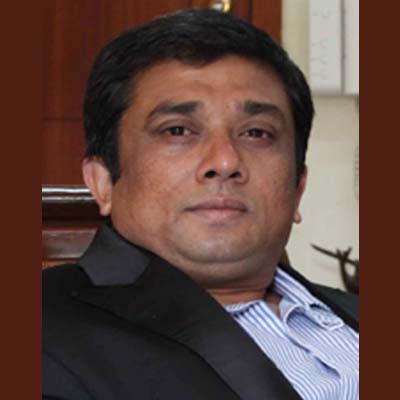
‘We are weighing various channel launch options’ TV Today Network CEO Joy Chakraborthy
TV Today Network is in the process of an organisational shake-up as it prepares for expansion into regional news channels and language newspapers through the Aaj Tak brand.
The route isn’t easy, considering that revenue growth for the TV news genre is under challenge, the advertising environment is slowing down and it is a highly competitive TV news market where there is too much supply.
Earlier sitting on a cash pile, TV Today took a conservative approach and has in the past few years merged the loss-making promoter business of radio while taking a 13 per cent stake in TV Today for Rs 455 million. Now with no cash reserve, it is planning to expand through self-funding and debt (as it is debt free); it is also not averse to raising equity financing.
The winds of change are blowing. There is talk of weighing each channel individually, having business heads for each of them, and even exiting from radio if the price is right while at the same time preparing for its operational profitability and building synergies between TV, print and radio.
Late last year, the company tapped into a senior executive who has grown up in the television broadcasting space as a revenue specialist. His fast-paced aggression may have been a counter-counter to an otherwise editorial-driven organisation that believes in expanding at a comfortable speed. But that could have also worked in favour when the company’s revenues are growing at a snail’s pace, three of its loss-making channels are supported by its flagship Aaj Tak and radio needs to be turned around.
In an interview with Indiantelevision.com’s Sibabrata Das,TV Today Network CEO Joy Chakraborthy talks about how he plans to grow the company in challenging times, upping revenues, improving profitability and making radio operationally break-even in FY‘13.
Excerpts:
Q. How difficult has it been to fit into a pure news organisation like the India Today Group that is very editor friendly as your past experience has been in entertainment broadcast networks?
There is certainly a difference between an organisation which has got GECs (general entertainment channels), sports, niche and other genres and that which is a pure news outfit. When you are working for an entertainment broadcaster, it is more about using research, marketing, strategy and planning. News business, on the other hand, is very brand driven and credibility plays an important role; it is very day-to-day driven. My past exposure in Star and Zee will help me immensely to do a cross-fertilisation of cultures. The sanctity of news, however, has to prevail.Q. What skills you needed to acquire to transition from a revenue specialist to a CEO?
CEOs are not born in one day; they move up the ladder from different wings like finance and revenue. When you are the revenue head, you are acting like the CEO of that arm. And I was also running P&L of eight niche channels. So, anyway, I am familiar with handling the bottom line role. What matters is a basic understanding of the industry.The biggest challenge in TV Today Network is to get the staff within oriented to my mindset. I have to get the existing team, which is very talented, to work at my pace. My task is to give the editorial the latest in technology and news gathering. Being a revenue specialist, I can work out innovative solutions and increase the company’s turnover.
Spending years in Zee has made me understand the cost part of the business very well. It is important for media companies to be very cost conscious and not to splurge money. For TV news organisations in India, which have the structural issue of high manpower and low top line, this is much needed.
Q. Will we see a new restructured TV Today that is less rigid and more nimble footed as an organisation?
As an organisation, there is a lot of potential to grow. It has built high credibility and is a very strong news brand. The Group will start a process of synergising across departments and functions so that we can streamline costs and build economies of scale. I also hope to get the right support for taking calculated risks.Q. Does that mean that TV Today will have a less conservative approach to expansion in the areas of business and regional news?
We are making business plans that include regional news channels. We will be weighing various channel launch options. We are preparing for expansion, but will wait for the market situation to be good. Also, it has to make the right business sense.“We are open to the idea of selling the radio biz, provided we get the right price. We are targeting break-even in FY’13. We are not going to bid for Phase III
“Q. When TV Today was sitting on cash, it did not expand. Will it not be tough when there is no cash reserve and the company is averse to raising equity funding?
We will expand through self-funding and being a debt-free company, we can also source bank financing for our expansion. We are also not averse to raising money.Q. TV Today’s cash reserves have dwindled after the merger of the loss-making businesses of radio on a valuation of around Rs l billion and a 13 per cent stake buy in TV Today for Rs 455 million. How do you justify such huge valuations and how will it help TV Today?
We feel that radio and print will help us have a 360 degree approach; along with our main television business, it will complete the link and give us a cushioning feel. It also makes us cost effective.Q. How do you turnaround the radio business that had an operating loss of Rs 219 million on a meagre revenue of Rs 42 million last fiscal?
We are targeting break-even in the next fiscal. No doubt we are a weak player in radio. But we have a presence in the three main markets of Mumbai, Delhi and Kolkata. We are getting in a business head with a sales background. By doing proper structuring and sales, we can easily jump our revenues to the operating cost level. We are looking at packaging Delhi Aaj Tak sales with Oye (the radio brand). We will also be looking at the costs.Q.Will you be bidding for Phase III to expand or you will be content being a small player?
We will not bid for Phase III. The radio industry is not growing substantially enough to compensate for huge capital investments and long waiting period for profitability. We will rather work on strategic sales alliances with smaller regional operators who have a presence in some of the key markets like Bangalore, Hyderabad and Chennai; they may even have a single market presence. We can handle their ad sales.Q. Doesn’t it make more sense to find a buyer for the radio business now, particularly when the time for renewal of licence is just four years away and costs for retention are going to be higher?
We are open to the idea of selling the radio business, provided we get the right price. We are at the same time going to focus on reaching operational profitability and growing its revenues.The recently launched ‘Sabse Filmy‘ positioning of our radio station gives us a big advantage as a large amount of film content can be drawn from our TV channels. With content and ad synergies with our local and national channels, we hope to make this operation highly cost effective and benefit from the fast growing radio market, which in India is much lower than other growing and developed markets. Also with news expected to be permitted on radio in the future, the fitment with our TV channels will be perfect. Radio can be a support medium to our main television business.
Q. What is the reasoning behind TV Today’s small stake presence in Mail Today that is bleeding profusely?
Mail Today investment is highly synergistic to our TV business, both from content and ad revenue point of view. The paper operates in the largest ad sales market in the country (Delhi) and has a huge growth potential. A foray into the newspaper space also gives us an opportunity to set up Hindi newspaper business around the Aaj Tak brand. The Hindi newspaper space is growing very fast and the Aaj Tak brand is one of the most powerful Hindi news brands.Q. Sources inside TV Today tell us that you have been talking of a 20 per cent revenue growth target for TV Today in the next fiscal. Isn’t this an impossible target to achieve, considering that the revenue growth is under challenge for the genre (TV Today just grew 3 per cent last fiscal), the advertising environment is slowing down and it is a highly competitive TV news market where there is too much supply?
The market is tough at this point of time and there is too much of inventory in the news genre. The problem of news is that it has been sold on ratings rather than perception. The truth is that it should be measured like cricket; it has a huge ‘outside home’ viewership and is consumed by a lot of people. Being a revenue specialist, I know how to drive it up but will not be in a position to share my strategy at this point of time.We are also looking at ways where we can have a premium rate for news and a separate pricing for non-news content.
As a genre, we have to optimise our revenue sources. That is the only way we can stay profitable. I also plan to control and rationalise the middle line. While personnel cost comprises a good chunk, distribution expenses have to be reviewed. Digitisation is a hope for broadcasters at this stage but it will take three years to feel the real impact.
Moving to our own building, which will have the latest technologies, will also help us save costs and make our on air news look the latest with great graphics and presentation.
Q. TV Today’s flagship channel Aaj Tak is supporting the other three loss-making channels. Why not shut at least two of the channels which play a flanking or a niche role?
I am planning to have business heads for each channel; they will have to manage their P&L. The idea of Tej as a flanking channel works when it is strong enough to cannibalise some viewership away from the main channel. There needs to be some shake-up; it needn’t necessarily imply a closure. We are in the process of microscopic analysis of each channel individually. We will take calls where we are heading keeping 3-5 years in mind.Q. How can you have pricing power and up the revenues of Aaj Tak when there is so much of commodisation of news and the second and third Hindi news channels are priced so much lower?
Aaj Tak may have deviated for some time and gone the wrong way of sensationalism. But it has always been a market leader and for the past 13 weeks, we have a 30 per cent lead over our nearest rival. It is present in most of the media plans. And don’t forget that 45 per cent of the channel’s viewership comes from females. There is a lot of untapped revenue potential.Organisations sometimes make the mistake of feeding the weak child instead of the strong. I believe in feeding your generals even at the cost of the soldiers. We will be investing a lot in Aaj Tak.
We will be doing a lot of strategic alliances. We have tied up with Star for its biggest upcoming property with Aamir Khan; we are their channel partners for that. We will be launching a weekly show with the Bollywood star in Aaj Tak. The issue-based special follow-up show will be similar in nature to Star’s.
We will also get into awards and events without compromising our credibility. For starters, we are doing the Aaj Tak Care Awards event.
Q. Headlines Today has gone through new positioning and revamps a few times. How do you build the channel into a powerhouse?
The biggest challenge is Headlines Today as we see big potential there. We are investing in the channel where we think we can make money. It has to build numbers but what it misses more is perception. In fact, TV Today needs a big marketing and PR push. We have changed our agency to Black Pencil (Leo Burnett’s creative agency) with whom we are going to work on brand films. You will see a lot of action around Aaj Tak and our other brands.Even with the channel’s current status, we can double its revenues next fiscal. We are setting up a separate ad sales team for Headlines Today and removing it from the rate card. The channel has not been able to get its true value because it was sold along with Aaj Tak; Hindi and English news channels have to be sold separately. We have already recruited an All-India head for Headlines Today who would be reporting to the existing network head and coming on board next week.
Q. What about Tej and Delhi Aaj Tak?
The value of Tej will be if it can effectively supplement Aaj Tak. Along with Delhi Aaj Tak, they can tap retail advertisers and dig deep. Retail, in any case, is Aaj Tak’s biggest strength.Q. Are we going to see more launches internationally?
We will have to try and get more international revenues. We will be exploring other markets outside US and UK. We will also strengthen our existence in UK, US and Canada. We have recruited Vikram Das as our new international head who moves in from Neo Sports’ international business. -

‘Premier League Soccer will have $20 mn revenues in year 5’ : Celebrity Management Group executive Director Bhaswar
After hosting big names in football like Diego Maradona in 2008 and Lionel Messi last year when the star Argentinean footballer toured India for an international friendly game against Venezuela played in front of a record crowd in Kolkata, Kolkata-based sports management company Celebrity Management Group decided to kick-start a venture like the Premier League Soccer, modeled on the lines of America’s successful Major League Soccer.
An initiative of Indian Football Association (West Bengal), the governing body of football in the state, and CMG, the league has turned world’s attention towards Indian football which has been slowly realising its true potential as a marketable sport.
Testament of the league’s potential is the fact that leading sports media company, MP & Silva, has bought the international media rights excluding South Asia. The organisers are targeting total revenues of $5-6 million from the inaugural season of the league.
In an interview with Indiantelevision.com’s Javed Farooqui, Celebrity Management Group executive Director Bhaswar Goswami, the brain behind the project, shares his vision behind launching the league and its commercial prospects.
Excerpts:
What was the thought process behind launching Premier League Soccer?
The day we brought Diego Maradona to Kolkata, we realised that we wanted to do something for Indian football which be different. We started looking at different options; we organised exhibition matches, got coaches down for clinics. But these were one-off activities. We decided to do something that is a combination of all these activities but is held on a regular basis and is part of the Indian football system. That’s when this idea came to us and we shared it with IFA (Indian Football Association); they immediately accepted (the proposal) and asked us to start working on how it should happen and what are the modalities.
We studied global football from different perspectives, looked at MLS (Major League Soccer), EPL (English Premier League), and were sure that the franchise model is what we are going to follow. During this time, IPL (Indian Premier League) also happened in India and the cricket league was a roaring success. The inspiration was the MLS.
The I League was going nowhere; it had no vision. It is India’s premier domestic football but only in words; it did not had any effect on the football scenario of India. So we thought we should do something which would create buzz across the nation and catch the imagination of the fans, the sponsors and everybody who loves football. We decided that we should bring the biggest names in football to come and play for our teams. That is how it started.
How difficult was it to get international players like Cannavaro and Crespo to come and play in the PLS?
It took us seven-eight months to put together these six big names because the first time when we sounded them out, they thought we were crazy; they didn’t understand what we were talking about. They had a long and illustrious career and have been sold and transferred from one club to another. But we came up with a proposal that they would have to sign an MoU and would be put up for auction for a base price which is acceptable to both of us. We also told them that their participation in the league would go a long way to develop football in India. They bought into our vision and accepted our offer. We are happy that we will have some of the big names being part of Indian football for the first time.
Why did you restrict yourself to West Bengal rather than launching a pan-India league?
I definitely want it spread across the country. But you need to have the endorsement of the AIFF (All India Football Federation) to organise a pan-India league. As AIFF has taken IMG Reliance as its marketing partner, they couldn’t have agreed to our proposal. And in case we want to do something, we have to go through them
The reality is that there are more fans of Manchester United in India than East Bengal and Mohun Bagan put together. So then why can’t our clubs from Siliguri or Barasat have fans across India and beyond? It’s not just the name of the club but also how you create content. We believe that in the era of television, if you have the right product, content and packaging, it’s only a matter of time that it will travel across the world. You will have a winning brand and a winning combination. It doesn’t matter where the matches are played. If the content is seen in North America, South America and Europe besides India, I think we are up for a great future ahead for PLS.
What will drive this league?
We have the best combination of legends in the world of football who will actually come together and play with our young boys in India. I think the quality of soccer played will be much better than what we see in India now. Each of the teams will be headed by a world-class coach. And in football, we all know coaches play a huge role.
Imagine a young local footballer from one of the catchment areas passing the ball to Crespo for a goal. I mean, just the thought of it excites me! What it will do is bring our young footballers to the global scene. This will become an inspirational story for a number of talented footballers.
Also for the first time in India, a league will be telecast across the globe in Europe, in Americas and Africa. You never know what will happen in five years time – perhaps, there will be an Indian footballer who may end up with a contract in Europe. So the marketing ability goes up.
The market has already expanded. In the last few days, we have mopped up around Rs 1.05 billion that is being invested in teams and overseas players in the PLS. That money was always waiting to come into Indian football. The Indian football market will continue to grow.
‘The Indian football market has already expanded. In the last few days, we have mopped up around Rs 1.05 billion that is being invested in teams and overseas players in the PLS. That money was always waiting to come into Indian football’Don’t you think that the PLS will compete with I League?I League will continue to be the premier domestic competition in India. But I do believe that the PLS will be popular.
Will it be more popular than I League?I hope so, that’s what my target is. A large number of television audiences watch EPL and I want them to watch our Indian league; that’s where my target audience is. If you look at Tam figures, in 2010 there were 155 million television viewers that watched football. I want most of them to watch the PLS.
I also think that the PLS will complement the I League. It will be a talent supply source that the I League can tap.
While the PLS will have big foreign names, will Indian players be able to participate?The I League players will not be eligible to participate in the PLS. We are talking about the other guys. The Kolkata Football League, which is one of the strongest leagues in India, has 16 teams in the premier division. Both Mohun Bagan and East Bengal have been beaten by four teams in the league. This proves that there are a lot of good footballers outside these I League clubs. Similarly, in Goa there are a lot of good footballers in the local league. So it’s actually these footballers who will get to showcase their talent in the PLS.
A lot of I League clubs have been shut down in the recent past due to lack of returns. Many have blamed these clubs for not investing in talent development and marketing. Do you have commitment from the franchises that they will invest in talent development and help in marketing the league?One of the terms in the tender mandates each of the franchises to run U-13, U-16, and U-19 coaching camps. It is in the interest of the franchises to nurse talent. Because if you have a footballer who is worth being exported to one of the clubs in Europe, you might earn millions. The commercial opportunities in developing a footballer are enormous.
What is your business model and how are revenues to be shared between PLS and the franchises?PLS has a central revenue pool which includes commercial rights. The broadcast and other media rights form part of this. Fifty per cent of that will be distributed among franchises. They also hold the marketing rights for their own teams; they have ticketing, merchandising and licensing rights. We are sure that the franchises will make profit.
When do you expect the league to be profitable? What is the break-even period for the league as well the franchises?
The league will be profitable in year one because of the model. In a franchise system, you cannot make loss because you are paid a fee. Then you will sell the commercial rights packages, out of which you share 50 per cent with franchises. So your earnin is the franchisee fee (which is Rs 75 million and is expected to reach Rs 85 million with the addition of the sixth franchise). And if you have $6 million from commercial rights in year one, you will make another $3 million from there (after sharing 50 per cent with franchises). We are also sure that each of the franchises will make profit in year two.
What kind of investments you are making to organise the league?
We will be investing around $3 million. A large part of that will go into developing infrastructure at all the venues. There will be floodlights in all the stadiums; upgradation will also be done.
Do we have stadias in each of the franchise cities?The franchise cities itself were chosen on the basis of whether they have stadias and hotels.
What do you think is the revenue potential of this league?I am expecting the league to reach $20 million in revenues during the fifth year. So far as the franchises go, if they do a consolidated P&L account they will earn a profit of at least $15-20 million.
Why have fixed the expense cap for the franchises at $2.5 million?We don’t want them to over-spend. This cap will, however, change each year after discussing with the franchises.
What about your broadcast partner for India?We are in talks with three of them. We are still evaluating what kind of deal we want to have. We are looking at a broadcaster who would help us in promoting the league. We want the matches to be shown live.
Will you have a local broadcaster in West Bengal besides a South Asian rights holder?We are not looking at a local broadcaster at this point, but you never know what happens. We are looking to sell a South Asian package. I want my league to be a pan-Indian product.
How many sponsors are you looking to sign in?We will have a title sponsor, six on-ground sponsors and one referee sponsor. We haven’t started looking out for sponsors yet, but we will sign them very soon.
Will slowdown have an impact on PLS?I am not looking at billions of dollars, so I am not bothered about slowdown.
What are your marketing plans for the league?We are in talks with leading agencies who will work with us on marketing the property. We are seeing presentations from a lot of them. We will have a 360-degree marketing strategy.
-
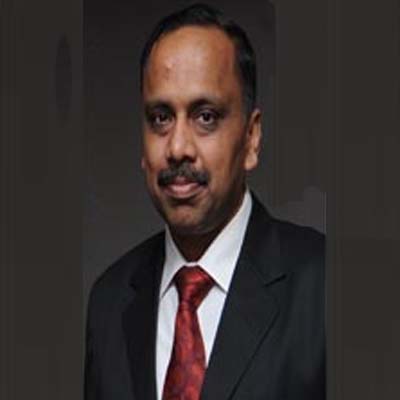
‘India is witnessing a sporting revolution’ : IMG Reliance COO Ashu Jindal
Last year in a bid to increase its presence in the sports world, Reliance formed a JV with IMG. The aim of the JV, called IMG Reliance, is to among other things create and operate major sports and entertainment assets in the country.
The JV has done deals with different organisations including the Basketball Federation of India (BFI).
It is also taking the Aircel Chennai Open tennis event to the next level. Indiantelevision.com‘s Ashwin Pinto caught up with IMG Reliance COO Ashu Jindal to find out more on the JV‘s plans.
Excerpts:
What is the vision for the JV in terms of the impact you see it having on the sports landscape?
India is a sport-loving nation and we are keen on developing and promoting different sports in the country.In the recent past, the Indian market has witnessed the rise of some of the world‘s strongest sports brands. As India‘s sports landscape grows, we are looking at bringing several successful sports properties to India in addition to creating newer ones tailored to fit the country‘s specific requirements. We will continue to build on the strong foundation and brand equity that India enjoys.
Which are the sports that IMG Reliance is focussing on developing and what are the various strategies being followed?
IMG Reliance will create and operate a variety of sports assets in the country.As you might know, we have signed a 30-year partnership with the Basketball Federation of India (BFI) to develop basketball. The BFI has granted IMG Reliance commercial rights, including sponsorship, advertising, broadcasting, merchandising, film, video and data, intellectual property, franchising and new league rights.
We have also signed a 15-year partnership with the All India Football Federation (AIFF). We aim to restructure, overhaul, improve, popularise and promote the game of football throughout India, from the grassroots to the professional level.
What challenges does the economic slowdown pose for you?
India is currently witnessing a sporting revolution of sorts. Even though the sector might still not have exclusive industry status, the country‘s most powerful business houses seem to have understood the benefits of investing in Indian sports.The success of the Indian Premier League and more recently the inaugural Indian Formula 1 Grand Prix illustrate the fact that the sports sector will continue to mature. Growth in the media and entertainment industry is expected to be at 14 per cent until 2015, and the entertainment and recreation arenas, including sport will be the greatest beneficiaries.
Organising world class sporting events is IMG Reliance‘s core competency and I am certain that the businesses we operate in will continue to enjoy success in the presence or absence of a slowdown.
On the tennis front, how has IMG Reliance grown the Aircel Chennai Open?
As an organisation, we‘ve done our best to combine our domain expertise with unrivalled experience in promoting, commercialising, operating and distributing large-scale events.The support of the government of Tamil Nadu, Tamil Nadu Tennis Association and the All India Tennis Association since the tournament‘s inception has been invaluable. In many ways, the Aircel Chennai Open has been successful thanks to a combination of our global and local strengths. We are proud to have been associated with it since its inception and hosted the likes of Rafael Nadal, Boris Becker, Carlos Moya, Richard Krajicek, Patrick Rafter, Yvgeny Kafelnikov, Byron Black and India‘s own Leander Paes and Mahesh Bhupathi.
The fact that the number of spectators attending the tournament in the first round has gone up each year is evidence of the event‘s growing popularity. Chennai‘s tennis fans have given the tournament their unstinting support. Hardly surprising that the world‘s best players love going there because the fans they play in front of are knowledgeable and immensely committed to the game.
‘Increasingly corporations are moving towards the concept of ‘triple bottom line‘ which is comprised of people, planet and profit‘You have seen some tennis events including a WTA one in India close. What are the challenges involved in keeping a tournament financially viable?
Being the largest independent promoter of events and representative of tennis players does not help unless the country you operate in loves the game. Without a doubt, we‘ve done our best to see tennis growing into one of the most popular sports in the city and state.With the people supporting our efforts, we have a dedicated and experienced team of individuals, both globally and nationally, who work on events like the Aircel Chennai Open.
We are confident that any event planned professionally and executed well will continue to attract sponsorship and advertising. In addition, the Indian markets and populace are now opening up to accept and enjoy non-cricket sports, a fact that is making the growth of events like the Aircel Chennai Open easier.
Has it been harder this year to find sponsors given the economic slowdown?
India has been growing at a robust rate of over eight per cent over the past five years and is expected to grow at over seven per cent for the next decade.All signs point to a market that is ready and eagerly waiting for additional sports to enter the mainstream, thus making the process of finding sponsors easier. Positive developments such as these, apart from the rising stock of Indian sportspersons and emergence of Indian team owners and organisers on the world sporting scene, have led several exciting new sports events being organised in India.
For Aircel Chennai Open 2012 too, we are very pleased to have Nature Valley, Parle Hide and Seek, Ricoh among others as first-time sponsors in addition to many of the others continuing their sponsorships. It is but safe to presume that the scope for marketing can only grow wider.
How is the Aircel event perceived by viewers in India and abroad vis-a-vis other ATP events?
The Aircel Chennai Open is the longest running tennis event in the country thanks to its popularity among both viewers and tennis stars that look forward to being a part of it year after year.It has grown to become South Asia‘s premier ATP World Tour event and come a long way since Leander Paes and Mahesh Bhupathi won the first edition doubles title in 1996. Though there is still a lot of room for improvement, we stand firm in our resolve to develop the event into one of the world‘s leading tennis championships.
Is tennis finding more acceptance from advertisers looking at targeting affluent audiences?
As a sport, tennis is garnering more and more attention from diverse fronts, especially with increasing high-intensity competition and the participation of some of the world‘s top players.Advertisers from India and abroad are looking at this as an opportunity to build effective marketing programs, bring their brand into India or take it abroad, and in the process engage with affluent and global sports fan bases around the world.
What are the different ways in which sponsors leverage the Aircel Chennai Open?
Tennis is one of the few global sports that India has doing very well off-late, not only has the sport grown in stature, it has given rise to a number of stars who enjoy celebrity status. Besides that, the Aircel Chennai Open which is in its 17th year has grown to become a marquee ATP event in South Asia which attracts some of the best known and emerging players from across the world.The sport is a very interesting mix of athleticism and glamour, both of which offer a host of opportunities for partners and sponsors, this, besides the regular benefits of branding and visibility in the media. The tournament takes place every year in the first week of January. It offers brands a platform for launching new products. And owing to the timing of the tournament, the overseas players usually reach around the last week of December, just after Christmas and before new year, so brands associated with the event can use this festive period for a lot of hospitality and entertainment relates activities.
We have come up with a concept of ‘Market Square‘, this is a commercial area within the stadium premises where partners can showcase their offerings and get a captive audience who visit the stadium through the tournament. This apart, depending on the nature of sponsorship, the brands can get time from celebrity players for promotional activities.
In terms of ROI how does tennis compare to other sports?
According to recent numbers from Tam Sports, tennis is the fourth most watched non-cricket sport in India after soccer, wrestling and motorsports.So, while on the surface this may not seem the most attractive proposition for a brand to be associated with tennis, the fact of the matter is that the other three sports do not have much participation from India and neither does much action taking place here with the only exception being the Indian Grand Prix.
As against that, tennis in India is growing by leaps and bounds, not only do we have the honour of hosting South Asia‘s only ATP event (2012 will be the 17th edition), Indian players are carving a niche for themselves in world tennis – Mahesh Bhupathi, Leander Paes and Rohan Bopanna feature among the top 15 doubles players in the world and Somdev Devvarman is one of the most promising stars in the singles arena. From a brand‘s or an investor‘s perspective, a good mix of on-ground opportunities and emerging stars offer a world of opportunities to spread the word, and from that point of view, tennis does offer a bigger bang for the buck!
What does the deal with the AIFF encompass and what is it worth?
IMG Reliance separately signed a 15-year partnership with the All India Football Federation (AIFF), the governing body for football (soccer) in India. IMG Reliance, in cooperation with the AIFF, will radically restructure, overhaul, improve, popularize and promote the game of football throughout India, from the grassroots to the professional level.This agreement grants IMG Reliance all commercial rights to football across all football properties controlled by AIFF including but not limited to the national teams and all current and future professional leagues. It is valued at Rs. 700 crores for a period of 15 years.
How do you see television viewership of AIFF and the Aircel Chennai open growing?
There is no denying that television has a major hand in transforming sports into a profitable business. For many years, sporting events have given advertisers around the world a phenomenal opportunity to showcase their brands to an international audience.In India too, football and tennis are among the most popular sports, and television audiences continue to grow at a steady pace.
Are advertisers now more receptive to non cricket sports compared to five years back?
As is the case that was highlighted earlier, India is going through a phase where non-cricket sports are gaining more and more importance. Much has changed in the last five years, and sporting events are being marketed as extravaganzas like no other. In a scenario like this, advertisers are eager to use sporting platforms in India.There is a lot of talk that companies often use sports apart from cricket for CSR rather than looking at an ROI. Do you agree with this?
The relationship between CSR and corporate reporting (ROI being one element of reporting) has evolved and come a long way from what it used to be until a few years back.Increasingly corporations are moving towards the concept of ‘triple bottom line‘ which is comprised of ‘people, planet and profit‘, with people meaning the development the society within which a corporation functions. Given this, a lot of companies are now putting money into sports and development of sports at the grassroots level which could be considered a contribution towards the welfare of the society.
So if this were to be seen from the point-of-view of the new reporting framework, this investment would be contributing directly towards the bottom line of the organisation. However, even in the traditional view of ROI, the sports sponsorship market is evolving and with so many options for sponsorship, firms are now recognising the benefit to their brands in associating with world class, professionally managed sports events in India, in all sports.
Are you looking at cricket at all?
As an organisation, our areas of expertise are diverse and wide ranging. We are always open to developing new opportunities in different sporting disciplines and cricket is no exception. We‘ve worked with the world‘s top cricketing nations including India, where the game will always rate highly in the hearts of sports fans. We continue to look at exciting prospects in the future. -
‘Challenge is to harness the future focused SMG culture to build a differentiated product’ : SMG India chairman and LiquidThread MD CVL Srinivas
Engineering and management degrees are quite common for professionals working in automobiles. But it is a surprise to find folks who have chosen to get educated in these two disciplines before plunging into advertising. Take CVL Srinivas for instance who has an engineering degree from BITs Pilani and a management degree from XLRI, Jamshedpur.
Today, Srini, as he is called, serves as the chairman of the Publicis-owned Starcom MediaVest Group India and also as the managing director of LiquidThread, one of its divisions.
He has 14 years of exposure to the media business, having scored numerous successes for leading media agencies such as Madison, Fulcrum and Maxus over the period as a senior manager or head.
Srini is wont to do what he wants to do, like taking a four year break from media and advertising, and at a time when his career was roaring. In 2007, he gave up a plush job as CEO, Maxus Asia Pacific to become a consultant with Surewaves, a company that specialises in media convergence solutions. He then went to consult a private equity (PE) fund in the media sector and also worked with BCCL‘s Private Treaties as director for two years.
SMG was his media comeback vehicle earlier this year. And it has been on fire under his and his colleague Mallikarjundas CR‘s stewardship. It has focused on three pillars of insights and research, digital and branded content. In the process, it has not only managed to retain old businesses but also gained some new accounts. Among the 15 brands it pocketed include: Yahoo, Biba, Sab, Pix and Aircel.
Indiantelevision.com‘s Prachi Srivastava spoke to Srinivas about his charge, its performance and the way forward.
Excerpts:
How has the performance of the company been in this year, as it comes to an end?
We are fairly satisfied with what we have achieved this year. We have managed to grow both topline and bottom-line at a healthier pace than the past few years. In terms of new business, we had a surge of wins in the past few months. We have so far bagged 15 businesses this year including one of the biggest media pitches of the year Aircel (TV and Digital).What was your focus this year?
We wanted to build on the strong foundation of SMG and accelerate growth. The focus was on (1) People – where we infused talent across levels and realigned a few units, (2) Product – investing in Insights, Digital and Content and (3) Process -streamlining the operation thru‘ a newly created Business Impact function.You have been with multiple agencies. What difference do you see in the work culture?
Each agency has its own work culture, but broadly speaking the end output in this market is hardly differentiated. You hear it from clients all the time, that they hardly see any difference between one agency and another. Our challenge is to harness the future focused SMG culture to build a differentiated product.There were different specialist units earlier. Why were they merged in Vivaki?
SMG had a host of specialist units in Outdoor, Retail Branding, Rural activation etc. While they helped make the product more holistic, their ability to scale up was limited. By migrating them to VivaKi, we helped these units get access to clients of our group and brought about a lot of operational efficiency. This in turn has helped SMG focus on the core product. We now have the best of both worlds.“Ours is a Human Experience Company that is a storehouse of insights & research that can help integrate communication plans across media and non-media channels”Are clients showing an inclination towards the new media (digital, internet, mobile, retail) or they continue to be comfortable with traditional form?
There is definitely a lot more interest in digital now, than before. Not just the usual suspects, but even FMCG clients are today talking digital and investing in the medium.How is LiquidThread doing since its launch in India?
We had an existing content practice in India. This made it easier to launch LiquidThread (LT) in this market. We have had a good year and have done some interesting work for our clients. There have been a few cases this year where LT created the campaign idea. We see it as integral to the communication strategy.How do you see the economic slowdown affecting Starcom or the advertisers‘ spend?
Earlier forecasts were predicting an industry growth of around 15 per cent, but these days the consensus seems to be closer to 8-10 per cent. We expect to grow at a far higher pace than this given our client profile and diverse revenue streams.Is it as bad as the slowdown in 2008? What have been the learnings from 2008 slowdown that you apply now?
It is too early to say if it will be as bad or worse. Right now most clients are in a wait and watch mode.Television today has the efficacy for advertisers. How does it affect the other mediums?
We are largely still driven by television as the key medium. It not only has a high base but is growing faster than print and other mass media forms. While fragmentation has split the viewership across more channels, the evolution of Content on TV has kept the interest levels high for both viewers and advertisers. Digitization of the medium is going to give a further boost. For a growing economy like ours, where most categories are still under-penetrated, TV will be the lead medium for a long time to come.Is reallocation of resources happening from client‘s side across different media?
Clients are willing to experiment lot more today than they used to 5 years ago. There is definitely money flowing into digital, experiential marketing and events.Has the concept of return of investments (RoI) changed with the clients? What is the measurement metrics followed now?
Very few clients are able to get the true measure of RoI and lot more needs to be done here by the industry. There is an over-emphasis on the “efficiency” of a media plan in our market. So in most cases, RoI measurement is limited to measuring how “efficient” the media plan is. This leads to a frenzy of CPRP and CPT calculations and debates. Marketers need to realise that the cheapest media plan is not necessarily the best option for building their brand. The agencies need to raise the bar on this one and encourage clients to invest in capturing more data. This is the starting point if one has to build robust RoI metrics.SMG is pioneering lot of work in this area which I hope will benefit our clients in the coming years.
Have the dynamics for communication to rural market changed? How are you helping your clients communicate to their rural consumers?
Three significant developments have helped improve communication to rural markets. Firstly, the increased penetration of mass media allows conventional advertising to reach large pockets of rural India. Next, there are better technological aids to manage and monitor rural communication and contact programs. And finally there is a much better understanding of rural consumer behavior today than 5-10 years ago.How will Starcom MediaVest‘s business be split in Print/ TV/ FM/ outdoor/ Internet etc?
We have more than 10 per cent of our revenue coming from digital and hope to make it 20 per cent within the next 1-2 years. We have a fairly equal split between TV and Print.As a media planner, how do you view the emerging radio and digital scenario?
For radio, a lot more needs to be done at the policy level to make the medium advertiser friendly. Currently radio stations are not differentiated enough for advertisers and listenership is extremely fragmented. The stations follow a herd mentality. Radio needs to deliver niche audiences. They should also be more relevant in this day and age and compete with the immediacy of digital media. As far as digital is concerned, it is the fastest growing medium and today there is absolutely no escape from it for any advertiser. Print is the medium that will get most affected by the growth of digital.But we still see a dominant readership in print…
For a majority of the population, Print is still the first choice for daily news. For advertisers, Print is still the first choice for announcement value and immediacy. According to TAM, Print has grown at 7 per cent in Nov 2011 v/s Nov 2010, led by Services and Banking. The reason why print is still a dominant media in India is that every few years, new categories come into the market and most new categories start with print and only then they come onto TV and then other mediums, whether its education, insurance or healthcare. As and when digital penetration increases, Print could start feeling the pinch. Print needs to learn how to co-exist with digital if it has to remain relevant.
What is your strategy to integrate media plan across different verticals? How do you make that more effective?
Our dream is to grow our client‘s business by transforming behavior through uplifting, meaningful human experiences. By investing in the right kind of talent and techniques we are trying to bring a more refreshing and relevant approach to communication planning for our clients. We do not see our job to be that of a media agency that releases advertising, but that of a Human Experience Company that is a storehouse of insights and research that can help integrate communication plans across media and non-media channels.What do you have to say about the cut throat competition in the media industry?
I think it‘s a good thing to have competition in the media industry as it keeps us all on our toes helps us get better in what we do.Over the past five years what changes have you seen in media business, planning and buying?
Three things that are worth mentioning – a lot more focus on digital media, advertisers willing to invest in impact and a change in the profile of a media agency, especially with the influx of insights, digital and content talent.
Is youth still the hardest segment to capture?
Youth was a difficult to reach segment. With the emergence of digital media and several niche channels on TV, there are several options available. What is more important is the possibility to stay constantly engaged with the youth thru‘ social media platforms. Targeting the youth is not just a one-way effort, but an opportunity to build communities, conversations and advocates for brands. There is no better time than now to have Youth as a target audience.When it comes to television, how do you stack up the genres as per the deliveries?
The IPL and one day cricket is at the top of the league followed by reality shows, general entertainment channels (GEC), blockbuster movies, and then some of the other genres. It‘s more a question of what kind of audience one is trying to reach out to and the content you are looking to advertise, which determine the genre.What kind of research you conduct before deploying digital media for any purpose?
At SMG we have an online panel that captures the latest trends across several markets including India. We have also done some interesting studies to understand the consumption of digital media among various target audiences in the region, including India. Apart from the available sources, our multi-disciplinary Insights & research team works closely with our communication planners for key campaigns.What are your plans for 2012?
We have a few exciting plans for 2012. Apart from further strengthening our Product and developing our Talent pool, we are looking to partner with a few exciting players in core areas of our business. The momentum we have generated in 2011 with 15 new business wins is helping us aim for higher growth. We see a steep growth in our Digital and Content businesses. -
‘With Revenge the studio, network and production company were all on the same page’ : Revenge executive producer Marty Bowen
Next year Star World will air the show ‘Revenge‘. It is about a woman who returns to The Hamptons to seek revenge on those who were responsible for her father‘s imprisonment and death.
Marty Bowen is one of the executive producers of the show. He spent many years as an agent representing talent like Charlie Kaufman and James Gandolfini before surprising the industry and leaving UTA to pursue a career in producing in 2006. Bowen partnered with veteran producer Wyck Godfrey, to create their own production company, Temple Hill Entertainment.
Their first film was ‘The Nativity Story‘ but the big break came in 2008 when they embarked with Summit Entertainment on production of the ‘Twilight‘ movie franchise. The films have made well over $1 billion at the box office.
Temple Hill Entertainment has gone on to make a television show ‘Revenge‘, created by Mike Kelley and starring Emily VanCamp, Madeleine Stowe and Henry Czerny. It is currently airing in the US on ABC.
Known in Hollywood for his solid work ethic Bowen is very much hands on during the production process. This includes the casting decisions. Indiantelevision.com‘s Ashwin Pinto caught up with Bowen to find out more about ‘Revenge‘ as well as the challenges of being a producer in Hollywood
Excerpts:
How did the idea for ‘Revenge‘ come about?
Temple Hill Entertainment the company that I work for had made a deal with ABC. They asked us to come up with some ideas that we thought could speak to audience that we generally like to produce programming and entertainment for. We had always been interested in doing a drama set against the backdrop of The Hamptons for which I am sure there is an Indian equivalent.It is an area where very wealthy people go to for their vacations. It was a world that we wanted to explore. We loved the idea of having rich people coming for the summer interacting with the people who live there the year round. We thought that there was really interesting drama to explore. ABC continued to challenge us to find an interesting story engine that might make it really compelling to have audiences go watch. Through a process of elimination we thought that it might be interesting to loosely use the structure of The Count of Monte Cristo to do that.
You have had a huge amount of success with ‘Twilight‘. What were the learnings from that which you incorporated into this show?
There are certain fundamental themes that one gets to explore in the ‘Twilight‘ series that we have learned from and have tried to incorporate a version of them within the story structure.I don‘t know if I want to be more specific than that but certainly there is a reason why audiences that see ‘Twilight‘ like to see it with groups of people. There is a reason why they enjoy that collective consciousness. We try to learn from that and try to instill the show with some of our elements.
The television landscape is crowded with shows vying for attention. What separates ‘Revenge‘ from the rest of the pack?
The show has a healthy old fashioned storytelling that we have not seen in a long time.The shows that I grew up with included ‘Dynasty‘, ‘Dallas‘ and all those fun soap opera from the 1980s. I think people nostalgically want to tune in to ‘Revenge‘ as they miss those kinds of programmes. At the same time our storytelling remains modern enough to have audiences seem to want to come back again and gain.
As a producer how hands on were you in the casting and creative process for the show?
I was very hands on. Certainly when it came to the pilot as it was an idea that we had generated in terms of finding a writer, picking a director and all levels of casting we were in all the meetings and were very active.But at a certain point once your baby learns to walk, you have to let them bump into furniture on their own. So we tried to keep a healthy distance to allow our writers to generate stories and write their teleplays in the best environment they can while at the same time steering the ship in the right direction.
‘We have a handful of very smart people at our company who constantly throw ideas against the wall to see if something sticks‘Was it a challenge to stick to the budget and production schedule?
It was at the very beginning absolutely. You are all learning to work with one another for the first time. You have to have a tremendous amount of energy to launch a show. This only becomes more efficient as you get into the flow of things. So it was a challenge at first but we have managed to figure it out in a way that it runs very smoothly.Could you talk about the talent involved with the show?
Let me start with Mike Kelley who is our writer, our showrunner. We were fans of his and were aware of the things he had written over the years. I loved his show ‘Swing Town‘ which was autobiographical and was something he really slaved over.I saw how good his writing was and how good that show was. When this idea came about he was literally at the top of our list of people who we thought could do the show. Actor Emily VanCamp is someone who is sympathetic. She is likeable but is also someone that you believe is capable of vengeance. Phillip Noyce made the pilot and he is one of the finest directors in Hollywood. He has made movies like ‘Salt‘.
As a producer how many scripts and ideas come your way in a month and what qualities do you look for?
We look at hundreds of ideas a month. We come up with dozens of ideas on our own from reading books, and watching other shows, documentaries, reading articles. We find themes that we are interested in.That is the nature of our business. We have a handful of very smart people at our company who constantly throw ideas against the wall to see if something sticks.
This year some high profile shows like ‘Charlie‘s Angels‘ bit the dust after a few episodes. What separates a successful show from a failure?
I think that there has to be something that an audience can connect with. I think that it is great to have a big title and it is great to have an intellectual property that people are familiar with.But you ultimately have to be engaged in what the characters are doing. I cannot speak about ‘Charlies Angels‘ as I did not watch the show but this factor is what separates great storytelling from average storytelling.
Why are channels impatient in terms of letting a show find its feet?
Many times they are impatient. But you can also point to many other times when they have been the opposite.Some of my favourite television series are shows where the networks believed in the show but which the audience did not get at first. Later on the audiences went on to love those shows. I think that it goes both ways.
In terms of how the production process works what is the difference between film and television?
In film there is beginning, middle and an end. Television never ends. You could be finishing one episode, editing another, starting production on another. A smaller budget project could more challenging than one that costs hundreds of millions of dollars.In 2006 you left your job to establish a producing partnership. What prompted you to shift track?
I wanted a creative outlet. While I loved what I was doing earlier I felt like working as a producer. I was fortunate to be able to get into a production partnership with my good friend Wyck Godfrey.How did you get your break with ‘Twilight‘?
We had worked with ‘Twilight‘ director Catherine Hardwicke earlier on ‘The Nativity Story‘. We had also worked with the head of production at Summit Entertainment Erik Feig. They wanted to make the movie and so we came on-board.As a producer what is the main challenge you face?
You have to make sure that you complete the thought. You have to ensure that the idea becomes a script which then translates into a movie.Assembling a project is a challenge. The different pieces have to come together in the way that you want it to. ‘Revenge‘ was one of those times where the studio, the network and the production company were all on the same page. It was a true collaboration.
How challenging is it to juggle different projects at once?
It is tough. However I am fortunate in terms of the people that I have working with me. I have people who are capable of picking up the slack.Do you keep the family audience in mind before giving the nod to a project?
For us it is story first and the audience second. We focus on trying to tell a strong story and then look to see which audience the project will appeal to. -

‘We will bend over backwards to be user friendly to new clients from India’ : Natpe president, CEO Rick Feldman
Natpe, the US-based media marketplace organiser, is now turning its sights toward the critically important markets in South Asia. It is working with a Mumbai-based team of Murtuza Kagalwala overseeing business development to raise its profile with Indian buyers and sellers of content and to attract more Indian and Asian attendees to both Natpe Miami and Natpe Budapest.
Indiantelevision com‘s Ashwin Pinto caught up with Natpe president, CEO Rick Feldman to find out about Natpe and what it offers Indian companies.
Excerpts:
Could you talk about the services that Natpe offers the media and entertainment industry?
Natpe is the global content marketplace for a digital world. It is strongly committed to being the destination for TV programme buyers and sellers. Evolving to meet the demands of a changing media landscape, Natpe delivers a first look at fresh content before Mip and the LA Screenings, giving industry leaders a jump-start on monetising their projects.Now, in Miami, a major international destination, Natpe is a catalyst in the content revolution – providing thousands of chances to make a deal. Celebrating over 45 years of service to the ever-changing international televisionindustry, Natpe continues to redefine itself and the services it provides to meet the needs of its members. Today‘s industry encompasses more than ever before and Natpe has remained flexible in its effort to encourage and support the progress of the industry and all of the platforms it now serves.
What has remained constant is Natpe‘s commitment to keeping the industry appraised of the changes occurring daily in the global media environment.
Natpe implements its mission by providing the multiplatform video industry with education, networking, professional enhancement, vibrant business environment through Markets and technological guidance through year-round activities and events. The organisation also offers a full complement of online services including access to a database of industry executives to anyone interested in learning more about the digital video industry.
How has Natpe expanded on its marketplace Content First?
After operating independently for 15 years, Discop East was acquired by Natpe in 2011 as part of a continued strategy for expansion within the international arena. The market has now become Natpe||Budapest and will take place from 26-28 June, 2012.What prompted the move from Las Vegas to Miami and how has this helped?
After 10 years in Las Vegas we felt it was time for a change. Miami Beach and the Fontainebleau is an international destination that is much better for our international attendees and a welcome change to our US attendees.What is the theme of Content First next year and how is it different from previous years?
Natpe||Content First is always our theme – to feature and support the creation, distribution and funding of original global content and it will remain the same in the coming years as well.‘What has remained constant is Natpe’s commitment to keeping the industry appraised of the changes occurring daily in the global media environment‘ What sort of participation is expected for next year‘s event in Miami?
At Natpe 2012, we expect over 5000 attendees to Natpe Miami. About 70 per cent from the US and Canada, and a cumulative presence from 70 countries. We are a market that is smaller than Mipcom but larger than Budapest.Many of the sellers that are at Mipcom are also at Natpe||Miami, but we have more content being bought / sold in the US / Canada / Mexico and Latin America. We can‘t say what content is most in demand, as each platform has unique needs. But, at Natpe both packaged content and format content is bought and sold.
As we are an international, multiplatform market, we have many people from the ad and digital world at Natpe. So in addition to buyers and sellers, we have producers/agents and all matter of creative/funding/and distribution types at our market.
Who are some of the big players who will be present?
There will be companies from various sectors participating at Natpe 2012, some of the key industry players which make their presence are as follows:Traditional Entertainment: ABC, CBS, Comcast, Discovery, FremantleMedia, Fox, Globo, Hearst, Lionsgate, MGM, NBCUniversal, Shine Group, Televisa, Univision, Venevision, Warner Bros.
New Platforms: AOL, Google, YouTube, Yahoo!
Investment: American Express, Nomura Securities, Credit Suisse
Agents: APA, CAA, ICM, WME, UTA
Ad Agencies: Carat, Digitas, Group M, Mediaedge:cia, MediaCom, Ogilvy
New Media: Facebook, Demand Media, Hulu, iTunes, Netflix , SeamBI, Stickam, Tremor, YuMe
Technology: AT&T, Adobe, HP, Intel, Microsoft
Electronics: LG, Motorola, Panasonic, Sony
Research: ComScore, MediaLink, Nielsen, PricewaterhouseCoopers, SNL Kagan, Rentrak
Global Brands: American Express, Audi, IKEA, P&G, Pepsi Co., Saban Brands,
Subway, Wal-Mart
The list above is just a representation of the attendees, where Natpe is expecting over 5000 attendees from all over the world in 2012. Attendees from North America, Latin America and South America, Europe, Asia and other parts of the world will be seen for various engagement purposes like joining, attending, exhibiting, advertising, networking, experiencing and sponsoring at Natpe.
There are buyers here in the States that will not be at Mip and for the Indian market we think that Natpe||Miami is a better fit than the two events in France.
Could you give an idea of the effort and time it takes to organise each edition? How far ahead do you have to plan?
Planning for Natpe||Miami and Natpe||Budapest is a year-round activity. We look to build each year upon the growth and opportunities we see at each market.Whether it‘s booking speakers, working with programme distributors to book their space or developing new partnerships with media around the globe or keeping our web sites fresh and up-to-date, there is always something to do.
To what extent have you and your clients been affected by the on-going economic downturn? The US is one of the worst hit countries along with Greece and Spain.
Yes, the world is grappling with many economic issues…but positively the ad spend in the US continues to be strong.I think that so far the economic downturn does not seem to be hurting the transactional video market place. I am not sure why, as one would think it might. Our numbers are consistent with last year, so for now, so far so good!
How is digital impacting the business and what steps has Natpe taken to address this?
All over the world, the distribution of content is a major topic of conversation. Band width and technology is only going to make the opportunities greater, certainly in India too. Each country will get to various places at different times, but there is no doubt that more video content that people want to watch and pay for will be created in the near future than ever before.What is the USP of Content First vis-a-vis other markets like Mipcom, Nab and ATF?
Natpe delivers a first look at fresh content before MIP and the LA Screenings, giving industry leaders a jump-start on monetising their projects. Now, in Miami, a major international attraction, Natpe is a catalyst in the content revolution – providing thousands of chances to make a deal.Natpe||Miami is the only global marketplace for the buying and selling of content that takes place in the US each year. Nab is not a marketplace for those involved in producing content. It is instead a place to go to see recent advances in the technology of broadcasting and for channels to purchase equipment.
ATF is primarily a market in Asia for Asia – as we have stated Natpe is the only global marketplace based in the US that brings buyers and sellers from around the world.
How detailed is the seminar at Content First?
We offer more than 50 sessions with over 150 speakers across the three day conference which runs along with the market.The focus is on the creation/distribution/funding of original content. Most of the speakers are from the US. However we also have speakers from Latin America and Europe on the panels.
Could you talk about the importance of India for Natpe?
I would rather talk about how India will benefit from Natpe 2012 and going forward at all Natpe platforms.From an Indian broadcasters‘ point of view, they will meet all the world‘s content owners and will learn how broadcasters all around the world are operating in this creative and economic climate. There is also an advertising and digital track that will provide ideas about how best to monetise content.
The idea of the market is to see what is happening around the world, especially in the US/Canada/Latin America for the rest of the world. The South Asian market is a small but growing part of our business. But India especially has so much potential here and around the world because of your production infrastructure and common language.
The idea of the market is to see what is happening around the world, especially in the US/Canada/Latin America for the rest of the world.
What is the strategy going to be to create awareness in India for Natpe?
We have hired Murtuza to help us navigate the Indian market and provide specific outreach and information that will help those considering attending from India see the value of this market and conference.Contentino Entertainment is a content management and acquisition company owned by Murtuza Kagalwala. Murtuza had approached us a few months ago via email, and impressed us well. India is a big place and far away, and Contentino will help us extending our relationships with content sellers, buyers, content aggregators and other interested audiences in the country.
With having someone like Murtuza with his vast experience in this digital field, talking us up is a positive for us as he is there and well respected.
Some Indian broadcasters go for the LA Screenings. How will a presence at Natpe as well benefit them?
NATPE||Miami is the only global marketplace for the buying and selling of content that takes place in the US each year. LA Screenings is primarily an opportunity for the major US studios to showcase new programmes about to launch on U.S. stations. It is not a comprehensive market as only some of the US and very few of the international program distributors are at the screenings.For Indian/English content, I would think that it would be wrong to ignore the largest TV marketplace based in the US. We have the only market place in the largest market in the world and deals get done. You never know what you miss when you don‘t come. It is THAT meeting that you have with someone you didn‘t even know existed that is the magic at Natpe.
In the past what sort of participation has Natpe seen from India and what kind of business growth are you looking for from here?
In the previous years, Natpe saw participation from leading players like Star India, Shemaroo, Miditech, Accel Animation Studios, Cellcast Asia Holdings amongst the other few, whereas this year we are looking at more attendance from across industries like, film, broadcast, digital etc for both our summits combined Miami (Jan 2012) and Budapest (June 2012).And with respect to business growth, India as a country, for sure, we believe, has immense potential for its ever growing innovatively conceptualised content globally, where the fraternity attending, exhibiting have the best of opportunities to meet representatives from varied platforms from across the world, utilising our arrangements available to facilitate the best deals during these three days.
You also have Natpe Budapest. Will you be looking at doing an event in Asia for the Asian market?
We currently do not have plans to set up an expo in the Asian subcontinent. -
‘World Series Hockey will change the face of hockey as we know it’ : Wizcraft International director Sabbas Joseph
In order to expand its presence in the sports world Wizcraft International has come on-board the World Series Hockey (WSH) as a franchisee. The franchise-based league initiative from Nimbus will be played across eight cities and kicks off on 17 December 2011.
Wizcraft International bought the Delhi franchise and has called it Delhi Wizards.
Indiantelevision.com‘s Ashwin pinto caught up with Wizcraft International director Sabbas Joseph to find out more on the company‘s plans and how he sees the league benefitting the sport.
Excerpts:
How did Wizcraft get involved with World Series Hockey?
We have always been involved in Sport, be it the ceremonies of the Commonwealth Games or the Cricket World Cup and were very eager to get involved in a big way with Hockey.Wizcraft sees the WSH as an opportunity towards community building, giving our national sport a pedestal equivalent or maybe even bigger than other sports. We are keen on developing the sport and bringing it back in a big way.
How does this broaden your presence and offerings as a company?
We‘ve always tried to push the boundaries with everything we do and we are constantly looking to challenge ourselves with new endeavors.As a company, we have the resources and the determination to do this and we feel that World Series Hockey will establish Wizcraft as a player in the sports arena as well as entertainment. In fact we would work actively to combine entertainment and sport to create a success.
What are your short term and long-term expectations from the league?
We‘ve only just started and it will definitely be a challenge but we‘re sure that it will be a great success.Both our short term and long term expectations from the league are “Whatever is best for Indian hockey and sport”. We are confident that WSH will make a huge difference.
From a commercial, viewership and player point of view what impact do you see the league having?
From a commercial point of view I think it will change the face of Indian hockey as we know it. This initiative will make hockey ‘cool‘ and ‘exciting‘ again and it will revamp the image of our national sport.It will be a great opportunity for the players to get international training and exposure and develop their skills and really show their talent. And I think it will rouse the interest of the public as well. People will begin to get excited about hockey just as they do for cricket.
‘It will certainly be a challenge to get sponsors in such a short amount of time, but we love a challenge‘Could you talk about the management team that has been put in place to look after the franchise?
As of now, Wizcraft has the in-house expertise with a number of people working around the clock to manage the franchise and build the ‘Delhi Wizards‘ brand from the ground up, making it the national capital‘s pride.Additionally we have the world‘s best hockey coach, Roelant Oltmas and the captain Lucas Villa.
Will Delhi Wizards be incorporated as a separate company?
We are at a very nascent stage now. We are yet to decide the corporate structuring of the ‘Delhi Wizards‘. We will do all that is needed to give it impetus and independence.What is the overall investment being made by Wizcraft in the franchise and will this go up year on year?
At the present moment we are committed to do all that it takes to make Delhi Wizards succeed. Expectedly our commitments will only increase year on year.By when do you expect to breakeven and what sort of a split do you see between central and local revenue?
It is early. But we hope that we can break even within five years at least. The split between central and local revenue is projected to be equal.Why did you choose Delhi as the franchise base?
We have already got a fantastic team in Delhi and we have our leisure and entertainment destination ‘The Kingdom of Dreams‘ there as well.We have also got a media and entertainment institute coming up in Delhi shortly and we felt that all of these factors would give us a bit of an edge.
How did the name Delhi Wizards come about and what are the brand attributes of the team?
Well, at Wizcraft we consider ourselves to be Wizzes and believe the hockey team should be an extension of this belief.They are another addition to the Wizcraft family which is why we call them the Wizards. It‘s also a tribute to Dhyan Chand, the wizard of hockey. Incidentally, our home ground too is named after Dhyan Chand.
Has research been done by Wizcraft to show how the national sport is perceived?
Yes, but I think it‘s pretty clear that our national sport doesn‘t get the recognition it deserves.It is riddled by politics and doesn‘t get the encouragement and distinction or reward that is needed. This is very sad and it is exactly the kind of perception that we would persevere to change.
There are just a few weeks between the announcement of your franchise and the league starting. What challenges does this pose for you in terms of getting sponsors, getting the players to gel as a team?
It will certainly be a challenge to get sponsors in such a short amount of time, but we love a challenge at Wizcraft and we‘re certain we will rise to the occasion.With regard to the team, we‘ve got the pick of the coaches in Roelant Oltmans, who is unarguably the world‘s best coach today and he‘s committed to working hard to get the team on the fast track and ready for the league. We‘ve also got some excellent players – a combination of international and local, experienced and really young – and we are very certain and the team will be more than ready by the time the league starts.
Could you talk about your strategy during the players draft?
We‘ve tried to pick a fairly balanced mix of players. We want to combine expertise with the eagerness of youth and create an environment that is conducive to learning and development.We‘ve also picked many talented players that can play in different positions making it easy to build a good team.
Is it fair to say that a draft system is more cost effective compared to a player auction?
Yes! It is very cost effective and it is also fair as there is an even distribution of quality players. Consequently, the picking of players is purely based on strategy. The draft system has been used very successfully in the US for the NBA. I think it works splendidly for us, as well.This year the NBA had a dispute with the players. Are there safeguards in place for WSH to ensure that this problem does not arise?
The disputes between the NBA and the players arose solely due to the fact that the collective bargaining agreement (CBA) entered into between the NBPA (player union) and the league had expired.Both parties had failed to agree the terms on the renewal of the CBA which resulted in a lockout. Given that the players in World Series Hockey are currently working collectively as stakeholders for the league the need for a CBA does not currently arise, making the possibility of aforementioned NBA type dispute not possible.
We are in the midst of an economic slowdown. In this situation how tough will it be to get sponsors?
It is not easy but we‘ve seen a tremendous response to hockey by many corporations. Things are looking up for our national sport.We see corporates willing to go the extra mile to reclaim the country‘s pride in our national sport. In the case of hockey it is more CSR than sponsorship!
If you want to succeed then the franchise must be in the public‘s eye for the major part of a year and not just for a couple of months. How do you plan to do this?
We plan to undertake community engagement programmes to ensure that the franchise engages with its most important stakeholders: the people. Coaching programmes, club tournaments and school engagement will be the key to connecting with our fan base through the year.Will the franchise have an active digital presence?
The franchise already has an active digital presence. We have a strong digital team working on it and the website will soon be up and running.Would you look at grassroots level activities to identify new talent?
Yes, definitely. We plan to develop the sport and create an interest in hockey. Our stakeholders will see us as a brand new light in the area of sports.As said earlier, we would have coaching camps,tournaments, a search for hockey talent that would commence in the months after the tournament.
What other sports is Wizcraft looking at being involved with?
For now we want to focus on hockey and really do our best with developing the sport and getting more people involved. In the future we would like to translate this success across other sports.You have won awards for events like the opening ceremony of the cricket World Cup. How important is innovation in experiential marketing?
Innovation is very important. In fact, sometimes it is the thing that makes the difference between a run-of-the-mill engagement and something that will be memorable. It keeps the event alive and fresh.You have won awards for events like the How important is innovation in experiential marketing?
Innovation is very important. In fact, sometimes it is the thing that makes the difference between a run-of-the-mill engagement and something that will be memorable. It keeps the event alive and fresh.As said earlier, we would have coaching camps,tournaments, a search for hockey talent that would commence in the months after the tournament.
What other sports is Wizcraft looking at being involved with?
For now we want to focus on hockey and really do our best with developing the sport and getting more people involved. In the future we would like to translate this success across other sports.You have won awards for events like the ricket World Cup. How important is innovation in experiential marketing?
Innovation is very important. In fact, sometimes it is the thing that makes the difference between a run-of-the-mill engagement and something that will be memorable. It keeps the event alive and fresh. -
‘Pix’s growth has upset the balance in the English movie genre’ : Pix business head Sunder Aaron
The English movie channel space has seen a shake-up. The power centre has been upset with the growth of Pix and the onslaught of new entrant Movies Now. From being a two-horse race, now there are four – Star Movies, HBO, Movies Now and Pix.
Having acquired the library of its parent Sony Pictures Entertainment, Pix is making a bigger push in a market that is getting more competitive.
In an interview with Indiantelevision.com‘s Ashwin Pinto, Pix business head Sunder Aaron talks about the rise of the channel, the challenges the genre faces and the opportunities to grow the market.
Excerpts:
What have been the focus areas of Pix this year?
To capture moré and more good content, given the competitive nature of the market; to ensure that the channel is distributed on the right networks and in the right position; and to create an environment for viewer stickiness.How far has Pix gained from the output deal with parent Sony Pictures Entertainment?
The perception about Pix among viewers and advertisers has changed as we have moved from a library to a contemporary movie channel. It is easier to change attitudes and perceptions of younger audiences as they do not have an inherent commitment to another channel like HBO or Star Movies.Among our target audience, we have beaten HBO since January. The aim is to become No. 1 eventually. We will continue to focus on getting the right content and building distribution.
Could you talk about how Pix has evolved since launching five years back?
The appearance has really evolved since we launched the channel with library content. The channel went through a massive packaging overhaul in May-end. Our promos look a lot more younger. We are playing bugs; we also give trivia information for some of our key titles.What are the changes you have brought on the programming front?
We were the first ones to create a single ad break movie slot. We also realised that the afternoons and late nights are the non primetime hours where the viewership is growing.Younger audiences come in during the 12:30 pm-4 pm time band. Our programming is geared towards addressing that audience who are mainly college going.
In the last few weeks, two new things have happened. One is ‘Awesome Saturdays‘ where we have lined up the evening with popular movies. And on Sundays we focus on the 12 pm-4 pm time slot with an initiative called ‘Sunday Breakout‘. This is how we are pushing the weekends.
We are doing the Dynamite Diwali festival, which takes place on weeknights at 11 pm. In November, we will have an even bigger stunt. It will probably be called ‘Big Guns of Hollywood’.
‘The perception about Pix among viewers and advertisers has changed as we moved from a library to a contemporary movie channel. The output deal with Sony Pictures Entertainment has helped in this‘What about thematic blocks?
We had started this when we launched five years back, but have moved away from this as we evolved. When your channel does not have a strong identity or presence, you need to build points which can draw in viewers. However, we continue to do festivals.When Pix launched, it skewed towards 25+ audiences. Now where do they come from?
We focus on 15-34 SEC A,B, across six metros. But from a programming perspective, we are inclusive in nature. Older viewers also watch us. We continue with properties like ‘Hand Picked‘which consist of movies that have a strong drama quotient.Is this genre seeing more of appointment viewing than say two years back?
My suspicion is that it is not there. When HBO had groundbreaking series like ‘Sex And The City‘, this was there. Also, when Star Movies had ‘Avatar’ people probably made a point to come in, but they have shown it 30 or 40 times. So you don’t have to make an appointment to view it. I don’t think that it is possible to build it any longer.People watch movies in different ways – DVDs, online, on their ipad. So why would you have to make an appointment at 9 pm to sit in front of a channel to watch a film? I don’t think that channels compete on this basis anymore. Competition is on the basis of content, perception and profile.
Is channel loyalty falling?
Yes, but this is the case across television and is not something specific to the English movie genre. There is more programme than channel loyalty. There is a residual brand presence in the consumers mind at the same time.Has the market dynamics for the genre changed dramatically?
HBO and Star Movies were the leaders. Pix has grown, which has obviously upset the balance. Then Movies Now came in and upset the balance even more.Movies Now has made an impact by focussing on popular films. Does that mean that premieres have lost a bit of their value?
I think that Movies Now has been clever and there have been elements to their success. One is that they selected films that are widely known and recognizable. Another big factor is that they got the distribution right; they invested a lot in positioning themselves properly. The third factor is that you cannot underestimate the value of the Times support.But I wouldn‘t say that it diminishes the value of premieres. It does show that Indian audiences still have an appetite for movies that are familiar to them. But when Pix showed ‘The Karate Kid‘, it was a premiere and propelled us to the No. 1 spot.
Is there going to be more focus on original shows like ‘Gateway’?
Yes! But there is a challenge as it is costly. We are talking to sponsors about bringing back ‘Gateway’ in a different form that will be even more exciting. Currently, we do specials from time to time. ‘Chicks on Flicks’ does things on premieres. We will do new series in a couple of months.How is the deal with the NBA working out?
It is working out well. The big challenge, though, is that the NBA is in a lockout; they have not started the season. The players’ union has not come to an agreement with the owners to start the season. The season will get delayed.Are you looking at more sports properties to build reach?
We are careful. The NBA is enough; if we put more, it will look like a sports channel.How are you pushing distribution?
We are attempting to go beyond the six metros. DTH has shown how we are consumed in other markets as well. We are looking forward to cable digitisation.I don‘t want to rely so much on ad revenue. But we don‘t get our due in terms of subscription income. Carriage fees rise every year while subscription revenue is not keeping pace with it.
Between the different mediums, how is your spend split?
It is defined by the film and not by the city or medium. Flexibility is needed in planning. For instance, if we use radio this month, then next month we may or may not use it at all.I would say that online is a very effective medium. It is highly flexible.
Could you give me a couple of examples of innovative campaigns that have been done this year?
We did the ‘Hollywood is Here‘ campaign where we used clustered outdoor. In Chowpatty (in Mumbai), we took six to seven hoardings together. In Delhi, we used a cluster of 10 mobile vans standing in one line. We showcased our positioning and the new titles that were coming up.For ‘The Social Network‘, we could not use Facebook as a medium. So we used radio and hoardings. People knew Mark Zuckerberg but not the film’s star Jesse Eisenberg. The thought for the campaign was the sexiest man alive; this created an intrigue.
How are you growing consumer contact initiatives like the Pix Movie Club?
We have touched 10,000 members. We are in Mumbai, Delhi and Bangalore and we want to take it further down next year. We haven‘t decided on whether or not to rope in advertisers for this.Are you looking at more marketing initiatives?
We are looking at doing something online. We are working on the details. For me, online marketing is about an idea and not just taking out a bunch of banners across sites.