Tag: Indiantelevision Dot Com

  • Connected TV: A growing market in India

    Connected TV: A growing market in India

    Mumbai: Connected TV has an audience base of 45 million in India, according to Madison Advertising Report 2022.

    The segment contributes eight to ten per cent of the digital audience currently. In the last five years, it has grown nine times and is expected to grow by another four times to reach an audience base of 120 million by 2025. It is expected that connected TV audience base contribution will surge by 15 per cent in future.

    The audience base of CTV is growing mostly due to the increase in demand for smart TVs. In 2021, CTV shipments accounted for 84 per cent of overall TV shipments as compared to 64 per cent in 2020.

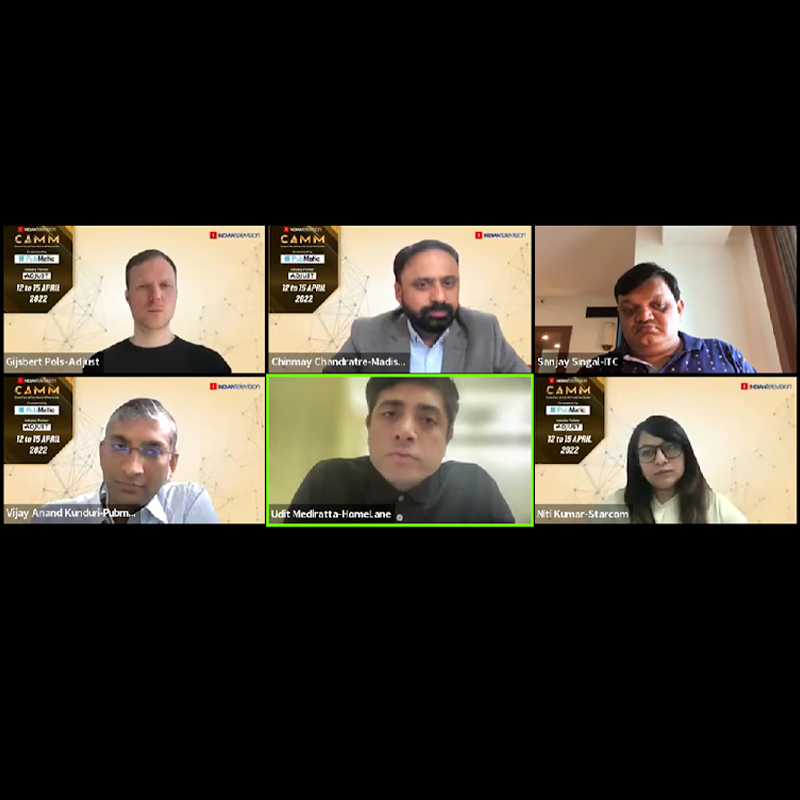
    These data points were presented by Madison World’s general manager Chinmay Chandratre who moderated a panel discussion at Indiantelevision Dot Com’s four-day event ‘Content-Tech, Ad-Tech, Mar-Tech and More (CAMM) Summit’ co-powered by Pubmatic and Industry Partner Adjust held on Tuesday.

    The discussion was joined by legacy and new-age brand marketers, media planners and technology providers such as Adjust lead product strategist Gijsbert Pols; Starcom chief operations officer Niti Kumar; ITC Limited chief operating officer – dairy and beverages Sanjay Singhal; HomeLane chief marketing officer Udit Mediratta and Pubmatic’s regional vice president (OTT and CTV) Vijay Anand Kunduri.

    Watch the full session.

    The discussion kicked off by understanding how a legacy brand like ITC looked at the opportunity of CTV. “Typically, the way you build huge categories like biscuits and snacks is through mass advertising,” explained ITC’s Sanjay Singhal.

    “As consumer tastes have evolved, we have found that there is a need to slice and dice consumer segments whose needs cannot be met by traditional products and communication on mass media platforms. There is a need for targeting cohorts of consumers that TV cannot do efficiently,” said Singhal.

    “There is only so much that may be communicated in a 30-seconder ad on TV,” he added.

    Singhal, “When there is a need to explain certain benefits of products to the consumer, a more engaging medium with a higher frequency build-up is required.”

    No doubt ITC is a large spender on TV but a large proportion of ad spends are moving to new age mediums for their brands that are targeting younger audiences, alluded Singhal.

    He added, “It’s not just our brands such as ‘Bingo’ and ‘Yippee’ which are youth-oriented that are moving towards digital but also our atta brand ‘Ashirvaad’. That’s the power of high frequency.”

    While legacy brands are leveraging a mix of traditional TV and CTV, new-age brands such as HomeLane are comfortable advertising only on digital and CTV platforms.

    As Udit Mediratta puts it, “As a digital-first brand, our target audience is largely millennials who are ‘cord-cutters’ and hence CTV is the new TV for us. There are inherent strengths in CTV whose visuals and formats are similar to traditional TV while at the same time it is also targeted and measurable. The only disadvantage at this point is scale because there are only 20 million CTV households. However, this base is expected to increase by four times in the next three to four years.”

    From a media planning perspective, CTV allows brands to reach incremental audiences, states Starcom’s Niti Kumar. “When you look at CTV and what it brings to the table, it is the largeness of TV in terms of screen size and format coupled with the biggest advantage of digital i.e., targeting/precision. CTV should be included in media plans based on two criteria – where’s the consumer and the brands’ business outcomes.”

    “In terms of inventory that is available and targeting, CTV in India is still in its nascent stage as compared to what a YouTube or Disney+ Hotstar can provide. There’s a lot of development that is needed in the technology but it can be layered onto media plans from an incremental reach perspective,” she adds.

    The rise of CTV also implies that publishers must be more conscious of hygiene factors while displaying an ad that negatively impacts the user experience. “What we’ve seen is a movement from the small screen to the big screen,” observed Pubmatic’s Vijay Anand Kunduri.

    “In most of the Indian market, digital penetration is largely due to mobile but in the last 24 months, we’ve seen the transition from ‘me’ to ‘we’ viewing largely in front of CTV. On the broadcaster side, the trend where the content was first being created for linear and then streamed on OTT as catch-up has reversed. Now, content is being streamed on OTT-first followed by linear telecast,” Kunduri added.

    “Parallel to CTV there’s also the emergence of free ad-supported TV (FAST) or advertising video-on-demand (AVOD) and publishers must take into account that when their ad is playing on CTV it should not face technical issues such as buffering, back-to-back ad reels and showing competitor product ads consecutively as this creates a bad user experience,” he added.

    Adjusts’ Gijsbert Pols mentioned that in terms of measurability, CTV measurement on digital platforms is just like Facebook and YouTube, however, there is an important caveat that marketers and planners must be aware of.

    He said, “Across the world, performance marketers are entering the TV space via CTV because it has become measurable. I don’t think we are far away from a fully digitalised way of measuring performance and branding as the technology and data are there. The problem is implementation which is a tough cookie to crack.”

    “While you can measure CTV in the same way you measure other digital channels, it does require you to adjust key performance indicators (KPIs). CTV is more upper-funnel as there are no clicks. For the last decade, digital marketers have been used to measure digital looking at last touch data, however, CTV requires you to adopt a multi-touch approach when it comes to measurement,” he concluded.

  • MipFormats, Cannes: Demystifying India’s content formats space

    MipFormats, Cannes: Demystifying India’s content formats space

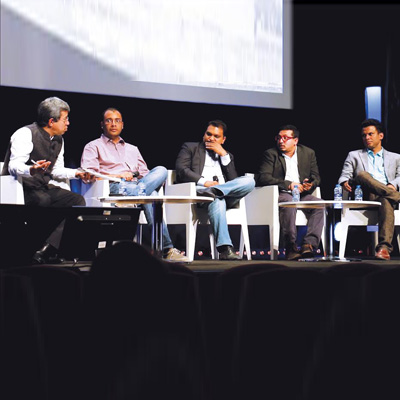
    CANNES: How do you work with India? Is it a new TV and digital formats’ paradise? These  – among others – were some of the questions raised and answered in the Producer’s Toolbox at MipFormats in Cannes on 3 April in Auditorium A in the famed Palais des Festivals.

    The session began with IndianTelevision Dot Com Group founder, CEO Anil Wanvari giving the 100 strong audience from about 25 countries a quick snapshot view of the Indian television industry.

    He estimated that the TV content creation business is about $620 million with about $500 million of this being accounted for by the Hindi General entertainment space. While soaps, drama, Bollywood films and songs account for a major chunk of the spend, around $90 million (including the format licence fee, production margins, and production and talent costs) is spent on TV formats.

    Wanvari also pointed out that almost all the European majors have set up shop in India, including Endemol Shine, Zodiak, Fremantle, BBC WorldWide productions.  And they have managed to build robust business.

    Wanvari highlighted the potential for new content ideas that has popped up courtesy the proliferation of platforms in the OTT and VOD space. The last couple of years have seen the entry of Hotstar (with about 40 million users; targeted to hit 100 million by end this year), Hooq, VuClip, Voot (from Viacom18), Ditto TV, OZee (from the Zee TV group), ErosNow, ZengaTV, and Netflix. Others like AltDigital (from Balaji Telefilms) are firming up plans for a launch. And the digital opportunity is only going to explode further with the impending launch of 4G services from the Reliance group which is investing about $22 billion on its broadband and 4G mobile play.

    CA Media-backed OML (Only Much Louder) COO Ajay Nair was pretty gung-ho about the Youtube promise. “We are about to launch six new shows – four of which are  formats –  with India’s top comedy talent with the support of brands. As most youth are on mobile devices, brands are willing to support any fruitful engagement they can have with them.”

    GoQuest Media CEO Vivek Lath announced the formation of GoQuest Formats a new company looking to acquire formats – even paper ones from all over the world to market them globally. “We are looking at travel show formats, convergence formats,” he said.

    Grey Matter Entertainment co-founder Rahul Sangari spoke about his music format The Remix which was produced in Vietnam and became the no 1 show there on VTV. “We are going into production in three weeks in China too,” he said. “We are looking forward to closing deals in 16 territories and hope  to do signups in the UK and the US too,” he said.
    Sangari was also pretty oprtimystic about a TV and app integrated show called Street Stars which focuses on street performers which is represented by Dentsu StoryLab at Mip.

    Zee TV’s Yogesh Karikurve opined that foreign companies wanting to explore the format opportunity in India would do well to explore licensing their formats, preferably before opting to set up a full fledged production operation.

    Nair emphasized that any international company needs to find a local partner to do the production and also liaise with the telecast partner, rather than just licence a format.

    Sangari’s view was that the need for an Indian partner arises because “India is a very different country; the cultural sensibilities and nuances have to be born in mind while creating, developing and selling a format in the country is concerned.”

    Lath said that music and dance shows have been rating well in India. “But formats targeting the new millenials  will have legs,” he said.

    Sangari agreed that India had yet to develop in terms of forking out large licensing fees for formats.  Lath interjected and said that should not be a worry for any large format distributor or creator. “Collectively if it is licensed on the regional language channels along with the mainline Hindi channel , then the licence pad can expand,” he stated.

    Karikurve talked about the potential for  factual entertainment  formats as that is a genre that ithe Zee TV group is investing in greatly in that genre. Nair agreed but added that ‘dating,’ extreme sports, music and comedy formats were becoming relevant. He ended the discussion  forecasting that around 40-50 international formats could make their way into India on digital and traditional television in the not too distant future as the appetite is definitely there. .


  • MipFormats, Cannes: Demystifying India’s content formats space

    MipFormats, Cannes: Demystifying India’s content formats space

    CANNES: How do you work with India? Is it a new TV and digital formats’ paradise? These  – among others – were some of the questions raised and answered in the Producer’s Toolbox at MipFormats in Cannes on 3 April in Auditorium A in the famed Palais des Festivals.

    The session began with IndianTelevision Dot Com Group founder, CEO Anil Wanvari giving the 100 strong audience from about 25 countries a quick snapshot view of the Indian television industry.

    He estimated that the TV content creation business is about $620 million with about $500 million of this being accounted for by the Hindi General entertainment space. While soaps, drama, Bollywood films and songs account for a major chunk of the spend, around $90 million (including the format licence fee, production margins, and production and talent costs) is spent on TV formats.

    Wanvari also pointed out that almost all the European majors have set up shop in India, including Endemol Shine, Zodiak, Fremantle, BBC WorldWide productions.  And they have managed to build robust business.

    Wanvari highlighted the potential for new content ideas that has popped up courtesy the proliferation of platforms in the OTT and VOD space. The last couple of years have seen the entry of Hotstar (with about 40 million users; targeted to hit 100 million by end this year), Hooq, VuClip, Voot (from Viacom18), Ditto TV, OZee (from the Zee TV group), ErosNow, ZengaTV, and Netflix. Others like AltDigital (from Balaji Telefilms) are firming up plans for a launch. And the digital opportunity is only going to explode further with the impending launch of 4G services from the Reliance group which is investing about $22 billion on its broadband and 4G mobile play.

    CA Media-backed OML (Only Much Louder) COO Ajay Nair was pretty gung-ho about the Youtube promise. “We are about to launch six new shows – four of which are  formats –  with India’s top comedy talent with the support of brands. As most youth are on mobile devices, brands are willing to support any fruitful engagement they can have with them.”

    GoQuest Media CEO Vivek Lath announced the formation of GoQuest Formats a new company looking to acquire formats – even paper ones from all over the world to market them globally. “We are looking at travel show formats, convergence formats,” he said.

    Grey Matter Entertainment co-founder Rahul Sangari spoke about his music format The Remix which was produced in Vietnam and became the no 1 show there on VTV. “We are going into production in three weeks in China too,” he said. “We are looking forward to closing deals in 16 territories and hope  to do signups in the UK and the US too,” he said.
    Sangari was also pretty oprtimystic about a TV and app integrated show called Street Stars which focuses on street performers which is represented by Dentsu StoryLab at Mip.

    Zee TV’s Yogesh Karikurve opined that foreign companies wanting to explore the format opportunity in India would do well to explore licensing their formats, preferably before opting to set up a full fledged production operation.

    Nair emphasized that any international company needs to find a local partner to do the production and also liaise with the telecast partner, rather than just licence a format.

    Sangari’s view was that the need for an Indian partner arises because “India is a very different country; the cultural sensibilities and nuances have to be born in mind while creating, developing and selling a format in the country is concerned.”

    Lath said that music and dance shows have been rating well in India. “But formats targeting the new millenials  will have legs,” he said.

    Sangari agreed that India had yet to develop in terms of forking out large licensing fees for formats.  Lath interjected and said that should not be a worry for any large format distributor or creator. “Collectively if it is licensed on the regional language channels along with the mainline Hindi channel , then the licence pad can expand,” he stated.

    Karikurve talked about the potential for  factual entertainment  formats as that is a genre that ithe Zee TV group is investing in greatly in that genre. Nair agreed but added that ‘dating,’ extreme sports, music and comedy formats were becoming relevant. He ended the discussion  forecasting that around 40-50 international formats could make their way into India on digital and traditional television in the not too distant future as the appetite is definitely there. .