Tag: indiantelevision.com

  • NGC’s Swati Mohan says local production rises to 15%

    NEW DELHI: The real-life documentary channel National Geographic has claimed a 400 per cent growth in its engagement with Indian viewers over the past few years, even as its local productions have risen from 10 to 15 per cent of its total programming.

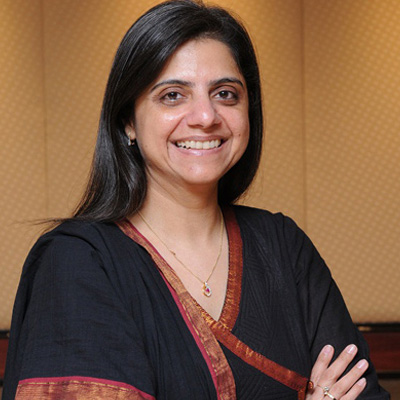
    National Geographic and Fox Networks Group, India business head Swati Mohan told indiantelevision.com that the marketing budget of the channel in India had doubled, though she did not give any figures.

    To a question, she claimed that the viewership of the core Nat Geo channel had grown to 140 million television viewers per month and had the largest digital footprint.

    However, a report of the Broadcast Audience Research Council shows that Nat Geographic channel was third among infotainment channels in week 31 with 2,662,000 with History TV and Discovery in the top two places.

    Speaking to the website on the sidelines of its meet to announce the telecast of ‘Inside INA’, a one-hour long documentary on the Indian Naval Academy in Kerala, Mohan said that the local connect was through the respect that the channel enjoys.The documentary will be telecast at 9.00 pm on Independence Day.

    It was a matter of pride for India that many of Nat Geo’s foreign productions were made by Indians.The channel’s brand ambassador is Farhan Akhtar.

    To another question, she said 27 per cent of what the channel earned went to the National Geographic Society.

    Vice-Admiral A K Chawla who is the head of personnel told indiantelevision.com that around Rs 25 million were invested every year on promotion and marketing to motivate young persons to join the Indian Navy.

    Earlier, at the event, Mohan said: “’Inside INA’ underlines our core proposition of showcasing stories, ideas and people that take us Further – through a quest or mission. It has been heartening to be able to showcase the story of these cadets and the next generation of Naval Officers who whole-heartedly embrace this very attribute. Combine that with the National Geographic gold standard of story telling and you get a compelling one hour that will take you through an extraordinary journey.”

    This is National Geographic’s fifth series celebrating the spirit and courage of the Indian armed forces. The network has earlier produced and broadcast Mission Army (with the Indian Army in 2011), Mission Navy (with the Indian Navy in 2009), Mission Udaan (with the Indian Air Force in 2005) and BSF: India’s First Line of Defence (With BSF in 2016).

    At the press meet, Mohan and other NatGeo team members said the film shot over two years was done in such a way as to not disturb the training of those at the INA,

    Promo video-

    Chawla said the film will attract a global audience. Answering a question, he said that the INA had a capacity to train 1200 persons but would soon increase that to 1700. He added that the Navy had no shortage among its personnel, and there was only a shortage of officers that would be filled soon.

    ‘Inside INA’captures how the men and women of Indian Navy are trained and moulded into future Naval heroes who serve the nation. A riveting view into the meticulous mental and physical training that each candidate undergoes, to rise to the challenges at sea, inspires valour and patriotism. ‘A great mix of action, emotions, and sacrifices make this a perfect way to celebrate Independence Day and salute the heroes of the Nation’ Mohan said.

    ALSO READ :

    Nat Geo and Farhan team up, inspire ‘water footprint’ reduction

    “Our metric for National Geographic is different (from BARC)” :  Swati Mohan

    Age-appropriate ‘safe’ content is taken from Nat Geo Kids, Sony & Amar Chitra: Shirsa


  • Efforts to procure creative local content for ‘DD kids’ under way, says Supriya Sahu

    NEW DELHI: Doordarshan director-general Supriya Sahu has said that efforts were in progress to explore and procure creative local content that appeals not only to children but also to adults in the proposed DD Kids television channel.

    Sahu said that it was important that children should not be treated as a commodity to attract advertisements as was happening in some private channels, and therefore the content has to be strong and specific to them.

    Speaking at the launch of the ninth edition of Gali Gali Sim Sim, she said programmes such as DD’s ‘Main kuch bhi kar sakti hoon’ which is among the top 10 programmes in India showed that meaningful content could also be made interesting and entertaining.

    Sahu said the idea of a channel for children had come up when a DD team visited Uttar Pradesh villages to examine the reach of FreeDish. In spite of the free offering, she said, she found that several homes did not take FreeDish because it did not have any channel for children.

    Earlier, Sahu had told indiantelevision.com that the pubcaster had earlier in the year sent a concept note to the information and broadcasting ministry which had now asked it to work out details. Sahu said that the pubcaster was presently studying possible partnerships and various models, apart from studying the availability of content.

    She said that she was confident that this would “materialise soon”.

    Sahu also pointed out that the durect-to-home platform of Doordarshan, FreeDish, had all kinds of programming but nothing for the kids. It was therefore considered important to launch such a channel. She said DD Freedish was reaching 22 million homes at present and so there was no reason for not having a channel for the young.

    In fact, she said the issue had also been discussed at FICCI Frames in March this year. It was pointed out that kids’ channels in India were roughly about three per cent of the total number of channels with limited Indian content. Programming for children for television is a responsible job; sensible children’s programming has the objective of making youngsters imbibe a sense of responsibility and morality.

    To strengthen the kids’ content industry and bring about sustainability, stability and growth to the artiste community and other stakeholders in the industry, there was consensus that India needs a free-to-air terrestrial kids channel. There was general agreement that, since Doordarshan is the only channel to have such a wide reach, it is the only capable broadcast channel to make kids content available on a wide scale nationally.

    At DD, she had said, they were working hard to create a dedicated content think tank of experienced personalities to rope in the best content and mentor progression. Earlier in 2015, the wishlist of the Federation of Indian Chambers of Commerce and Industry included a plea to the pubcaster to launch DD kids.

    ALSO READ :

    DD to dub Galli Galli Sim Sim in more Indian languages: Sahu

    Doordarshan in talks with Disney for kiddy content in evening slots

    DD’s kids channel could partner private players, launch this year

    Doordarshan D-G Supriya Sahu says studying tie-ups & models as kids channel launch nearing

    2-14 age-group is highly under-indexed, avers Sony Yay! business head Leena Lele Dutta

  • TV9 Marathi managing editor Kumawat resigns within a month

    MUMBAI: What is going on at TV9? Umesh Kumawat, who had started his innings at TV9 Marathi as the managing editor recently, has left the company within a month. Monday (31 July) was his last day in office. Recently, celebrated journalist Nikhil Wagle had reportedly quit hosting weekday show ‘Sadetod’ within three months.

    Kumawat did not take the call when Indiantelevision.com tried his number — twice. Before TV9, Kumawat worked for ABP News for 14 years, and has earlier done stints with Zee News and Aajtak.

    Speaking to Indiantelevision.com on 21 June, Kumawat had said, “We have changed the format of TV9 Marathi; senior journalist Nilesh Khare’ will now host shows such as  ‘Baatmi Maagchi Baatmi’ and ‘Sadetod with Nikhil Wagle.’ Nilesh Khare is the TV9 Marathi executive editor, host and anchor. 

    https://1.bp.blogspot.com/-DXJTl2Sxm18/WX7PC8TPyhI/AAAAAAAAFSE/iLOQV6NmfoQh2vdzUpUeFDk0b2NLRHOuQCLcBGAs/s320/kumavt.jpg

    TV9 Marathi recently also introduced other news formats in prime time slots — ‘Maharashtra Uttar Haway’, ‘Aaple Shahar,’ ‘Divasbharachya Baatmya’ and ‘Mumbai 24×7.’ Kumawat had declined to offer comment on the general fall in news viewership across channels. 

    Also Read:

    TV9 network on sale; Zee group front-runner?

    Large Networks lead regional channels, programme ratings in weeks 1 to 8 of 2017

    TV9 Marathi format has changed, says new editor Kumawat

  • T. S. Panesar to lead DSport business in India

    MUMBAI: Former CEO of Hathway video business T.S. Panesar has been named head of the DSport channel business in India. 

    Panesar had quit Hathway following the move where Hathaway Cable and Datacom chose to opt out of its cable TV business to a wholly-owned subsidiary retaining the broadband operations in the parent company. 

    The reformist Panesar, having a multifaceted 20 years of experience in the broadcasting sector, decided to call it off after spending two and half years in the cable TV distribution entity. The executive, who had moved in from Star India, played a pivotal role in reforming the TV and cable operations unveiling a battery of value-added services (VAS).

    Rajan Gupta (MD – Hathway Cable & Datacom Limited, Chairman & Non-Executive Director -GTPL Hathway Limited) was recently appointed president of the All India Digital Cable Federation (AIDCF), the apex body of digital cable television players. This change was made as   Panesar (CEO Video Business – Hathway Digital Pvt. Ltd) the erstwhile President, has resigned from his post at Hathway.

    Also Read:

    Rajan Gupta replaces T S Panesar as new AIDCF President

    We believe the new cable TV tariff order will benefit everyone – Hathway Cable video CEO TS Panesar

    Hathway’s outgoing exec Panesar yet to firm up future plan

    Hathway’s Panesar succeeds Wadhwa as AIDCF head

  • Competing with Google & FB on free side and with Netflix and Amazon on subscription — Hotstar CEO Ajit Mohan

    One of the early movers in the Indian over the top (OTT) space, Hotstar – – part of the Twenty First Century Fox-owned Star India – has been setting a scorching pace for itself. In a nation where high data costs made customers wary of consuming content when on the move, it displayed a voracious appetite for acquiring them. Today, its massive subscriber base equals or surpasses the total subs of all the VOD services in Asia and rivals that of the big boys in the US.

    It has also been aggressive in its content strategy – paying top dollar for movies and TV series from  top notch Hollywood studios as well as for sports telecast rights.

    21st Century’s Fox’s leaders – the Murdoch brothers Lachlan and James – along with the Star India management led by Uday Shankar and Sanjay Gupta – are quite bullish that the investments being poured into Hotstar are well worth it and should bear fruit, sooner than later. Estimates are that around $500 million has so far been pumped into the VOD service.

    The man in the hotseat at Hotstar has been the US returned executive Ajit Mohan who has been steering it right from day one three years ago. With single minded focus, he has been at his task of building a robust product and a team that helps it remain so.

    The publicity shy Mohan was one of the Indian VOD leaders who had a one on one with Indiantelevision.com founder, CEO and editor in chief Anil Wanvari at the highly successful  second VIDNET OTT conference in Mumbai two weeks ago.  Excerpts from the conversation:

    First of all, I would like to start by congratulating you on your CBS Showtime deal. Tell me little more about it?

    If you look at what we have built on Hotstar premium we feel pretty proud. I think we have built a fairly distinctive subscription service which in many ways I think compares to the best in the world.  I am not sure that there is any platform worldwide that brings together the best studios for American TV shows and movies. With Hotstar Premium we have HBO, Fox and Disney movies exclusively. And we thought that the only missing piece was Showtime. So we have done an exclusive partnership with  Showtime to both bring the Showtime brand and also the best of their marquee shows  to India on Hotstar.

    I think it really completes our offering. We have built a free service that has scaled up dramatically in the past two and half years or so. Now we are kind of applying some of the same rigor and aggression on P remium as well.  From the content proposition point of view I feel pretty good about how it  looks like.

    What will we get to watch? What kind of shows and will it be on same day and date?

    It is. One of the promises we have as pat of the English part of Premium is that all the TV shows will be aired at the same time as  the US. That’s true for HBO, Fox and it will be true for Showtime as well. Billions, one of their best shows will be on Hotstar and Twin Peaks too. Overall, I think it’s a pretty exciting roster.

    I think more than any individual shows what I am excited about is that both HBO and Showtime in the US have created these fabulous premium pay TV propositions on the back of really redefining what a high quality  American show looks like. I think  by bringing them together on the same platform, what we are essentially saying when it comes to English content there really is no need to look beyond Hotstar Premium. Not in terms of other services.  Or not in terms of torrents, which is still a meaningful source of competition for us.

    We will now start investing in educating the market where there is a substantial number of users who have an affinity to English who are spending a lot of time – especially the younger demographic – digging up for content on torrents. And very often they don’t get good quality versions. They don’t get it on time.Or they get It dubbed or subtitled in a language that is not familiar.

    Now the reality is that as a consumer in India you don’t need to have  to go through the pain. It may be difficult for them to understand the richness of the proposition that is  on offer today. Now when you compare it to consumers in any other part of the world today; the Indian consumer has probably the best deal.  Rs 199 per month only…I don’t think price is a  challenge anymore. So I think it’s more about creating  awareness.  And I think there is still a segment – especially in the younger demographic – who believes it’s cool to pirate. And I am sure that philosophy will be carried by a lot of people. For most people,  it is just creating awareness that there is a serious ease of getting almost every show that you want on Hotstar Premium at a price that is quite affordable. And that is what we are going to invest in on the back of the Showtime deal and what we already have on Premium. And taking it to a mass market in a way that’s not been done in this country before.

    So will you have Hindi sub titles? Or in any other languages?

    Currently, it’s English subtitles. I think the fundamental  point you are making is improving accessibility, can dramatically expand the audience for English TV shows or movies in India. Hollywood has shown that with dubbing. The direction we are moving is to make it accessible by subtitling in multiple languages which you will see over the next few months.

    How are you doing on the app download front?

    We have crossed 300 millions downloads and we are seeing downloads across all operators. Wifi.  Jio obviously has  had a tremendous impact on the ecosystem in terms of expanding access to mobile broadband and increasing affordability. Two things stand out over the last nine months when Jio has had this massive disruption. One is that video has  benefited disproportionately. For us what the last two years -and the last year in particular – has really established is the bet that we made if data was not a constraint,  people will gravitate towards  long-form content including on a mobile. That  what we saw in the early stages of the ecosystem , people consuming short form clips, user generated content  – that it did not represent the truth. It was not the end state; it was the beginning of the market.  That has really played out  And you see that in the data, the time spent time..the watch time on video  has grown disproportionately to social media.. And by multiple factors. And Hotstar has grown – disproportionately to any other video platform.

    300 million I don’t think somebody else has this kind of numbers in the world.

    I think Jio has been an enabler. But more and more you are seeing that for sieving out where consumers are going, both in terms of adoption and in terms of watch time. I think data is an enabler. My sense is that the more people have access to 4G, the cheaper data gets – a high quality propostion like Hotstar that has both the content proposition and is compelling as well  and we are seriously investing in technology to keep improving the consumer experience. I think that combination is quite powerful.

    We are seeing that in the numbers which are substantive. One of the numbers that stands out for us is that just on the Google Playstore globally we crossed 100 million downloads a couple of months ago. From what we know, only Netflix has done that globally outside of Hotstar and may be in the entertainment space, Spotify. And it does feel like even being in one market in India, I think  the scale of what we are seeing clearly compares to the best in the world.

    I believe this should be a moment of pride for the country as well that in the mobile ecosystem that we are blazing the trail in terms of what can be done. And for us, we really think of ourselves as “we are not replicating models that have happened in other parts of the world. We are truly creating a template for what a mobile centric business could look like which would be relevant in any market.”

    How many of these are active?

    In the month of May and June 2017, we crossed more than 100 million active users

    How would you define these actives?

    Somebody coming and spending meaningful time at least once a month. The reality is almost everyone who comes to Hotstar comes multiple times a month. And very often multiple times a day. But a monthly active way is a good way to look at it as it a common measure for looking at adoption across the ecosystem. And all our 100 millions actives are unique.

    Some of the OTT players are distinguishing between monthly active users and uniques.  

    Digital is an interesting space where is there is no common measurement system in place and that equally applies to Facebook, Youtube or Hotstar. It makes sense to have a common measurement that is consistent. To the extent that  we know how to identify  unique users, their presence on devices, not everyone logs in. It’s not the same login across Hotstar, Facebook, Google  – all of those still remain. But We are seeing more than 100 million users coming to Hotstar.

    Are you still in the consumer acquisition mode or you have passed that. In what phase are you?

    I think we are going to be in a perennial growth mode for a long time because of two reasons: I think that’s the kind of company we want to build. The proposition is so exciting,  it’s relevant for more than 100 million users.

    Second, the context of India where as more people get access to  data… one of the things that we are convinced is the primary use case for getting people getting online can be video and Hotstar.

    The next 100 million or the first 500 million to go on digital in India.. we think mobile video and especially around the entertainment proposition that we have.. more than search, social media or ecommerce we can be the beach head. Because people love stories and it’s relevant for  a larger number of people. From that point of view I don’t think we are going to stay away from focusing on growth for a long time. I think we can be the primary use case for bringing people online in India.

    But your customer acquisition cost are going up or down?

    I think costs are going down. It’s a two and half year old platform now; there is a lot equity of the Hotstar as a brand. Once you reach a certain scale and have broken through I think the organic momentum starts kicking in. We are in the stage where it feels like growth is happening with far less effort than two years ago. Having said that it looks exciting to look for the next100 million users..and the next 100 million users after that.

    It’s not in an optimization mode, it’s in growth mode and in growth mode our focus is all three:  adoption of new users, it’s watch time and the third is revenue.

    I think for a uniquely consumer internet company we believe there is a virtuous cycle between consumer adoption, engagement and revenues.  We don’t see  it as competing, we see it as going together.  

    Varun (HotStar head of product and engineering EVP) said in some conference that he would like get some billion minutes. Correct me if am wrong?

    A year ago in APOSTech in Shanghai Varun had articulated this ambition of crossing a billion minutes a day in watch time. I don’t think we have said this publicly but we have crossed that  number a few times  in the past couple of months.  

    How has the playground has changed since you were here last year. What do you seeing? Your tech is keeping up or you have to spruce up your tech. You invested in Zapr to get some analytics in place. What has changed?

    Three things in my mind have changed.

    We have made significant movement in the past 12 months.  I think we have hired 60 engineers just in the last nine months. I think we are looking at doubling that number in the next six months.

    We have the clarity that we can build something unique in India and compete with some of the best global tech companies. It comes with building our own technology muscle.

    Second, if you look at the consumer internet space with lot of actions across e-commerce, fin-tech and our own media space, we have been quite thoughtful in building a deep bench in leadership. The past 12 months have been marked by a significant bulking up of our leadership capacity in Hotstar.

    Third big change that has happened as a result of that there is starting to be  a bit of a separation in terms of services that are standing out from an adoption, engagement and scale point of view – and clearly that’s happening.

    The last 12- 15 months have seen the launch of whole bunch of new services in OTT and a lot of them have very interesting propositions. They are occupying interesting positions in the market …some fairly niche but if I step back and think about it what we are proud of at Hotstar is we are breaking away when it comes to  serious scale and engagement.

    And for me it looks like we are competing with Google and Facebook on the free side which is all about its large scale,  ad supported and big numbers. And on the other front its subscription, which is still nascent, much smaller audience at the moment, we are competing with Netflix and Amazon Prime. At Hotstar, we have two sorts of vertical, one is the free ad supported business and the subscription business where we are facing two different sets of competitors.

    But I believe the ad supported services, IPL got you good revenues from two partners Vivo and Maruti. Agencies have told me its Rs 20 crore per head.

    I think we did okay.

    But that is serving out well in the terms of revenue.

    One of things is clear to advertisers and that’s a big movement in the last 12-24 months especially at a time when there have been a lot of issues around  brand safety that came up in the UK. I think two things are showing up I think most advertisers started to recognizing that the Hotstar proposition is unique. In most parts of the world high quality on demand content on streaming is completely behind the paywall. Therefore it’s not available for brands to advertise on like you can’t advertise on Netflix in US.

    So Hotstar represents a unique opportunity on digital where for the longest time advertisers could only reach audience through user generated content or short clips whereas on HotStar you get premium content which is very different from most streaming business models.

    Second thing that the advertisers started recognizing the power of its engagement. I think it different when you reach an audience when they are scrolling and checking something on social media for 30 seconds or when watching a 40 second clip. It’s a very distracted audience. So even when you presumably get scale and you get metrics like video views what you are not getting is real engagement that comes with long form content. There is a reason why television helped build brands for 50-60 years. It was because people spent time deeply immersed into stories. And that’s the proposition we offer on Hotstar.

    Sports is driving you plus Hollywood. You kind of have tip toed away from originals unlike what Amazon Prime or Netflix are doing?

    I feel I keep answering this question but for whatever reason people don’t want to embrace the answer – especially my peers. Sports is big on Hotstar.  Sports is less than 15 per cent of our total watch time. It’s definitely played a meaningful role for us.

    But TV shows and movies are much larger on Hotstar. The proposition of Hotstar at least for consumers is  that they know that Hotstar is beyond cricket or sports. On originals, almost everything we have is exclusively on Hotstar on digital. Right from the early stages we believe in the power of exclusive content. Which is why Game of Thrones, a Star Plus show is all exclusively on Hotstar. The originals bandwagon was started by the people who did not have the enough content. I am not sure why Hotstar with the most compelling  content portfolio in the world would want to get on the same bandwagon.

    Why is Republic TV  there on your platform?

    …..For more of the interview click and watch the video  link below

  • Just 11% video viewership is on OTT: Akamai’s Reddy

    MUMBAI: Video viewership is growing at about eight and a half hours a month at present, and is expected to double or triple over the next year. However, 89 per cent of video viewership is on YouTube and Facebook, and only 11 per cent is shared among OTT players in India, according to Akamai Technologies country sales manager Sandeep Reddy.

    Reddy was the keynote speaker at the Vidnet 2017 meet organised by indiantelevision.com. The theme of Vidnet 2017 was: Will Indian OTT/SVOD live up to its promise?

    Revealing more inputs, Reddy said there are 150 million estimated online viewers at a time when the country ‘is in the middle of this revolution’ and this is bound to grow. The current estimate is that 60 to 65 per cent viewers watch online video in 28 Tier-III cities, and deployment is improving but not at the level of Mumbai, Delhi or Bangalore. “There is a challenge of reach,” he said.

    Building a brand, partnership, reach, scale, and economy are the quintessential parameters to make a successful OTT.

    Speaking on OTT and deployment of connectivity, Reddy who has been with Akamai for eleven years, shared his experiences noting that there was deployment only in 25 centres over 15 years.

    While referring to the limitations of traditional broadcasting in TV, he said the turning point would be in 2020 when there would be more online viewership than on traditional broadcast TV. Broadcast TV was headed towards online viewership, he said.

    The rise of affordable Chinese smartphones in India led to cheaper data plans and reduced the entry barrier, he said, and added: “we are talking about buying smartphones and seeing telecommunication providers increasing their deployments. We are observing huge connectivity, huge deployment, and we are seeing the race going up for the state of internet according to the report what we have published. The speed of the internet is about 2 Mbps in India. We are still lagging behind globally but it is growing and there are 40 per cent viewers over 4 Mbps and that is a sweet spot where you can deliver reasonable video and that’s why people are watching for longer hours”, he said. In this context, he referred to the example of Jio which came with low rate data plans.

    Because the number of users was growing, he said there was better connectivity and there were likes of Alt Balaji and Netflix using content specifically made for this audience, resulting in more and more users and that was the opportunity for broadcasters.
    With respect to OTT players, he said there were some key success facts for those sitting on the fence. Referring to a previos speaker who had spoken of how Indians will pay, he said they will pay if the content is appealing and engaging. The Indian population/users was ready to pay and that had been seen from the growth of TV, cable TV, and DTH where the subscription is Rs 600 to Rs 700 per month. “One can watch television when a show is being aired but the internet costs much less and one still gets all the content”, he added.

    There was a lot of scope to make a good business model here, he said, as with traditional broadcast one did not really know, did not really connect, and used it directly. ”When you are online you have the players that are tracking your every activity, you know which videos are being viewed, you know where exactly the users are stopping, you know exactly how to monetize, where to place your ads. So fabulous monetization models are available’, he told broadcasters and distributors.

    Making a point on scale and quality, Reddy said, “We are talking about competing with broadcast television where you have a signal from a tower beaming signal to millions of users. There are no issues, satellites are not strained, but on the internet single user places a load on his system. When you talk about prime time audiences you are talking about India vs Pakistan match at 7pm on Internet. The whole nation is tuned in and so that is a load on the system and there is a challenge one has to deal. Similarly you can offset the system as VOD users are watching at their convenience”.

    When competing with TV broadcasters, “Internet works just on the box, the video is clear, it plays perfectly well and it is not so simple as you cannot click on a video, and it needs to play perfectly otherwise it is going to lose the user”. He added that In the United States, “we are seeing about less than 1 second startup time of the video and the estimate is that if the startup time is 3 seconds you are going to lose the audience and we want to be sure that startup time is good. In India we are lagging behind America and Europe. We have got less than 4-5 per cent rebuffer or more than five per cent for our views delivered. So quality, reach, and economy are the factors impacting the success in OTT.”

    Hotstar is leading the revolution, he said. They took the plunge and they invested the big bucks, they went out and bought rights for undisclosed amount. The streaming content provider ALT produces its own shows. Sun TV launched its ‘SunNxt’ app a month ago growing some phenomenal numbers,

    “The message I want you to leave with is content, which needs to be unique and engaging. Content is king is a cliché but it is true. It is about the brand right now. Anybody in the screen, anybody in the train can watch and their choice is Hotstar. That is the brand proposition they have built.”

  • Entries invited by FFI for Oscar award consideration

    NEW DELHI: The Film Federation of India today invited entries of Indian films commercially released in India between 1 October 2016 and 30 September 2017 for the Oscar awards which will be presented in February next year.

    As in previous years, the FFI is authorized to select one film for the consideration of Oscar Award in the category “Best Foreign Language Film Award”.

    The selection committee set up for this purpose will view the films entered for selection from 16 September 2017 as the film has to be submit to the Academy not later than 1 October 2017, Secretary General Supran Sen told indiantelevision.com.

    The Producers may send their entries directly to our office in Mumbai. The conditions set are:

    1. The films must be commercially released in India between 1 October 2016 and 30 September 2017. The film must run at least for seven consecutive days.

    2. As the films released between 1 October and 30 September are eligible, the films which are slated for release on the last Friday of the month -29 September – may also be considered.

    3. One English Subtitled print/DCP and synopsis of the film must reach the venue between 10th and 14th September’ 2017. Prints received after the stipulated date will not be considered. We are finalising the venue for screening and the same will be intimated shortly.

    Clarification can be sought from FFI Secretary General Supran Sen on Mobile No. 09821095649 or Deputy Secretary Anindya Dasgupta on Mobile No.09819820020 / 022 – 2351 5513. The Fax No. is 022 – 2352 2062 and email I D is filmfed52@gmail.com

  • Republic TV to launch in Middle East and Singapore

    NEW DELHI: The unstoppable TV journalist Arnab Goswami keeps marching: Republic TV, which has already announced going digital with an app, is now going overseas. While Republic TV will launch in the middle east next week, it is going to launch in Singapore next month on the Star hub.  

    Launched in May 2017, Republic TV has been leading the English News genre ratings. The channel opened its launch week, week with a bang, displacing Times Now as the genre leader, with a massive 21,18,000 weekly impressions.

    As reported by Indiantelevision.com earlier, the launch of Republic TV gave rise to an ugly war between the existing Indian English News channels and the new entrant.

    For one week, week 21 of 2017, ratings of the top Indian English news channels were not published as they had stripped their new feeds of the BARC audio watermark. The NBA-backed channels returned to the BARC fold in week 22.

    Also read

    Republic TV retains lead as Times Now narrows gap

  • GST: TV prod biz bemoans lack of clarity and increased paperwork

    MUMBAI: Minister of information and broadcasting M Venkaiah Naidu, writing for a business newspaper, opined: “At the midnight of June 30, India will make a tryst with history by heralding the much-awaited GST regime and turning a new leaf in the annals of the country’s taxation system.”

    “There might be some teething problems initially, but, in the long run, GST will help both the traders and consumers as it will cut down red tape — there will be no inspector raj, harassment by taxmen or check posts at borders. The officers will have no discretionary powers. It will ensure transparency, reduce inflation, bring down prices, improve ease of doing business, create a level-playing field, increase tax compliance and help achieve higher economic growth.”

    The aim of the Goods and Services Tax (GST) — one nation, one tax — may be lofty, but clearly many segments of the media business don’t seem to agree with Naidu’s optimism — at least in the short term. And, television and film production houses are one such category.

    Executives at production houses feel accounting and operational processes would definitely escalate, thus needing more staff in a largely insecure business environ, although most are hopeful that irritants would iron out in the long run.

    “Accounting and operational processes would increase to a large extent. I am sure we would learn, adjust and settle down in the new system,” said Swastik Production producer Rahul Kumar Tewary. Although, he feels there wouldn’t be much impact on the television industry owing to a new indirect taxation regime that GST seeks to usher in, he explained, “The producers will claim additional tax from the broadcasters who, in turn, will recover it from the advertisers.”

    In fact, a uniform tax system will help the largely unorganised industry become organized and, according to Tewary, it will “benefit the content makers and producers” who will get more input credits under GST as there will be no distinction between service tax, entertainment tax and VAT. However, the paperwork will definitely increase. Neela Telefilms director Asit Modi admitted paperwork will be a “big problem”, especially when shooting outdoors as then production houses will have to file “three (tax) returns in a month.” His worry is compounded by the fact that more paper work would warrant employing more human resources in the presently financially insecure production business.

    Still & Still Media Collective founder Amritpal Bindra pointed out some big impacts of GST. Dubbing increased tax filings a “clerical impact” of GST, he said, “Administrative hassle in the beginning will lead to a simplified tax structure substituting multiple taxation in the long run.”

    Pointing out that high taxation (28 per cent) on movie tickets priced over Rs. 100 would be a challenge for the industry, Bindra explained teething pains as paving the way for “transparency, unique management, discipline and good corporate governance in the industry.”

    The reason for his relaxed attitude towards GST? “We have been trying to pay more people through cheque and also insisting on raising relevant invoices so that our partners could pay taxes in their individual capacities. Unlike the norm of 90-120 days payment cycle in the industry, we make sure the vendor is paid within 30 days after raising an invoice,” Bindra explained.

    Some executives are approaching the new system differently. Contiloe Pictures COO Anup Vijai is looking at the new tax regime in two parts — commercial and compliance. “There is a cost perspective and the other is process compliance,” he remarked, “We are a production house that is subjected to service tax. When we raise an invoice for a TV channel, we add service tax separately. We believe that GST would lead to reduction in costs, but are unclear on the process of filing the new tax.”

    Some other production house leaders complained about the new tax regime, nevertheless. Hats Off Production founder JD Majethia said that more funds would get blocked as they would have to pay the actors in advance and, according to him, things such as makeup, food and vanity van, covered under GST, would become expensive.

    “Under GST, the cost of food provided to actors could be set off, which is good. But, if we ordered from hotels (outdoor catering), it may be dearer under the new regime,” Majethia said. He expected the situation to be prevalent for a couple of years, but hoped GST would boost economy.

    Another production house executive chided the government for “poor marketing” of the new tax system. Paperback Films co-producer Pradeep Kumar found GST to be beneficial, but was unhappy about its marketing and lack of a thorough awareness and literacy drive about GST.

    “GST may hurt because there will be a penalty for delayed or missed payment of GST,” he said, adding, “We would have to ensure that vendors and caterers, etc raised invoices by the end of every month so that we are in a position to do the taxation process in the next ten days.” He also described a surge in tax from 10 to 15 per cent as “tax terrorism”, saying that GST may simplify taxation in the long run, but an increase in the quantum is a “liability”.

    Whoever said `no pain, no gain’ probably had GST in mind and for the media industry and production business, in particular, it seems to be quite true. The long-term simplification of a multiple taxation regime brings along pains in the form of short-term uncertainties as India is still largely a cash-economy and formal invoices and a process-driven system a rarity.

    ALSO READ:

    http://www.indiantelevision.com/regulators/ib-ministry/gst-benefits-come-with-daunting-compliance-increased-paperwork-say-sector-stakeholders-170628

    http://www.indiantelevision.com/dth/dth-operator/under-gst-taxes-on-cable-dth-entertainment-services-to-come-down-170523

  • U-20 & U-17 FIFA ’19 bidding for host launched, Sony to telecast U-17 in seven countries

    MUMBAI: Broadcasters, OTT/VoD platforms and digital companies are looking forward to entertaining and engaging viewers by providing the best adrenalin. Sports lately is the genre which is in vogue. Leading broadcast and streaming companies are seeking out avenues and sporting event opportunities to keep their dedicated viewers glued to their respective screens.

    On the back of the success of the FIFA U-20 World Cup 2017 in Korea Republic, and with the FIFA U-17 World Cup India 2017 on the horizon, FIFA has launched the bidding process for the next editions of both of its men’s youth competitions – to be staged in 2019. 

    Telecast rights of U-17 FIFA World Cup 2017 to be held in India from 6–28 October are with Sony Pictures Network India. U-20 World Cup 2017 held in the Korea Republic was also telecast in India by Sony Pictures. Apart from India, Sony will air the matches in Bhutan, Sri Lanka, Nepal, Pakistan, Maldives and Bangladesh. 

    In 2014, Sony had won the media rights for the cyclic event till the next FIFA World Cup to be held in June 2018 in Russia, Sony Six business head Prasanna Krishnan told Indiantelevision.com.

    The FIFA 2019 bidding process for both tournaments recently got under way, with a deadline of 7 July 2017 having been set for FIFA member associations to declare an interest in staging either of the competitions. Member associations are being given the opportunity to bid for both events, however each event will be awarded to a different host.

    After that initial stage in the process, bidding and hosting documents will be sent by FIFA on 14 July to the relevant associations, who will have until 18 August to re-confirm their interest in becoming the tournament’s hosts. Definitive bids must then be submitted by 1 November, with the appointment of each host scheduled for Q4 2017 or Q1 2018 by the FIFA Council.

    The FIFA U-20 and U-17 World Cups are two of FIFA’s oldest competitions, dating back to 1977 and 1985, respectively. Since their inceptions, both competitions have grown in size and stature, adding lustre to the game by producing great attacking football and unveiling exciting players for the future.

    Players who have received the prestigious adidas Golden Ball for their performance at the FIFA U-20 World Cup include Diego Maradona, Robert Prosinecki, Lionel Messi, Sergio Agüero and Paul Pogba, whilst at the U-17 level they include Landon Donovan, Cesc Fabregas and Toni Kroos, to name a few.