Tag: indiantelevision.com

  • Asianet looking to launch educational channel

    Asianet looking to launch educational channel

    MUMBAI: The Thiruvananthapuram-headquartered media house Asianet Communications Ltd is planning to launch two more channels in the Malayalam television space. One of these two projects will deal with a television channel covering the education genre.

    Speaking on the occasion of the second anniversary celebrations of the media firm’s youth-oriented entertainment channel Asianet Plus, Asianet chairman Reji Menon revealed the company’s long term plans. “Asianet targets to have a total of five television channels and one of these will be an educational channel,” he said, without offering any time frame on the plans.

    “Asianet will be launching India’s first ever educational channel. We are still working out the plan and the project is presently in its preliminary stage,” Asianet managing director K Madhavan told indiantelevision.com.

    According to market sources, Asianet is seriously looking at expanding its presence in the Southern television space by entering the non-Malayalam (Kannada, Telugu and Tamil) market. “The fifth channel might possibly target one of these three languages,” says a source.

    Flagship entertainment channel Asianet, the youth channel Asianet Plus and the news channel Asianet News constitute Asianet’s television force at present.

  • ‘Culturally, linguistically diverse India is a test case for us’ : Sesame Workshop India ED Sashwati Banerjee

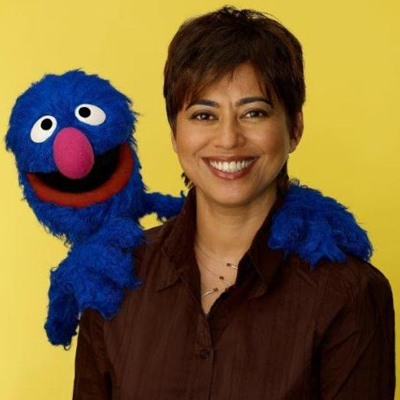
    ‘Culturally, linguistically diverse India is a test case for us’ : Sesame Workshop India ED Sashwati Banerjee

     For both Sesame Workshop and its newly-appointed executive director for Indian operations, Sashwati Banerjee, India is a big challenge. The US-based Sesame Workshop might have revolutionized pre-school education through various initiatives, including the path-breaking TV show Sesame Street, but replicating a global model here will be a tough task.

    Rather, if communications expert Banerjee is to be believed, Sesame Workshop is adopting an entirely new game plan for India, apart from innovating on some aspects that incorporate what it has done in other parts of the globe. She agrees that India may become the incubator for a model that could be replicated elsewhere too.

    Founded in 1968, Sesame Workshop changed television forever with the legendary Sesame Street. Today, the Workshop continues to innovate on behalf of children in 120 countries, using its proprietary research methodology to ensure its programmes and products are engaging and enriching.

    For Banerjee, who’s dabbled in various assignments from India to Hong Kong to the US, the changeover to children’s education from healthcare communications is a step that was not taken easily. But after initial doubts were cleared by Sesame Workshop CEO Gary Knell, it has been hectic work for the lady who grew up and studied in Delhi, but spent quite a few years in Hong Kong doing “this and that”, as she would modestly say.

    In this conversation with Indiantelevision.com’s Anjan Mitra, Banerjee spells out her priorities and gives a glimpse into Workshop’s plans for India. She also cribs a bit on procedural delays and lack of readily available comprehensive data/research on government-aided education initiatives and child behaviour.

    Excerpts:

    What’s the aim of setting up Sesame Workshop India?
    Sesame Workshop India would primarily be the outreach arm to promote early childhood initiative and the educational curriculum of Galli Galli Sim Sim (the Indian version of Sesame Street) through a multi media platform, especially to children who are most in need or underserved. The educational curriculum of Galli Galli… has been designed by Indian educators, researchers and writers keeping in mind India’s cultural and social diversity and needs.

    How will that be done?
    What Sesame Workshop really brings to the table is technical knowledge and expertise in early childhood education and development. These are the two broad areas we are working with. How will it go about doing it? One arm of the education initiative is the television show Galli Galli… which is going to be broadcast on Cartoon Network, Pogo and (terrestrial broadcaster) Doordarshan. The other aspect of the initiative is to see how we can extend and reinforce that learning through a variety of other activities with the help of technology to bridge the digital divide.

    The target audience is children aged between two to six years and their caregivers, which include parents and teachers using educational materials that are fun and make learning engaging “because all children deserve a chance to dream and discover, to understand the world and their place in it, to reach their highest potential…”

    We would be working with other organizations that are already active in this field and our mandate is to help them develop programmes that will take such initiatives forward.

    Seed Funding has been provided by Turner India

    How would Sesame Workshop leverage Galli Galli…?
    Television is just one of the ways in which the educational curriculum will be delivered is television. Sesame Workshop India will help to deliver Galli Galli… across other mediums – from print, training, interpersonal communication to high technology initiatives like the internet. While the television series is expected to reach audiences across India, there is still a large population who have limited or no access to television. It is through Sesame Workshop India’s outreach efforts that this population will be reached.

    Moreover, research has shown that children who watch Sesame Street or its various local versions in countries round the globe are better prepared for school in terms of cognitive learning and the show has helped prevent children from dropping out of school.

    When is Galli Galli Sim Sim likely to make its debut on Cartoon Network and Pogo?
    Galli Galli Sim Sim will premiere on Cartoon Network in mid-August after which it will be aired on Pogo. But for those broadcasting details, Turner is best placed to provide more information.

    How is Sesame Workshop funding its initiatives in India?
    Seed Funding has been provided by Turner India (a Time Warner company). Sesame Workshop India, like any other not-for-profit organization, will raise funds to support its activities in India.

    When Indiantelevision.com spoke to Sesame CEO Gary Knell, he had said corporate houses too would be roped in for funding activities. Has any development taken place in this regard?
    Those things would take place after we set up shop formally and get our basic act in place. Presently, we are in the process of getting our clearances from various government agencies.

    However, we’d like to tap big corporate houses for funds as part of a corporate’s social responsibilities. There are quite a few business houses that are involved in educational initiatives and we’ll look at partnering with them in various ways.

    What role would the Indian government play in Sesame’s scheme of things? What are those few things that Sesame must consider as it goes forward?
    In order to understand the critical priorities of the Indian government – where Sesame Workshop can collaborate, and highlight areas of concern – Sesame Workshop had organized a workshop that brought together a cross-section of relevant stakeholders in New Delhi in early December 2005.

    Briefly, the discussions were participative and each government department and agency, professional educational bodies, and the voluntary sector brought their own set of issues to the fore providing for comprehensive inputs towards future planning and strategy. In fact, there was a consensus around the fact that the media can help overcome constraints posed by the existing administrative structures across the country, which are highly segmented.

    We are hoping to work with diverse partners, develop and create innovative materials and build capacity at all levels. Our vision is to reach as many children as possible in India by partnering with government’s Sarva Shiksha Abhiyaan or Universal Education programme with material that will make learning joyful and help the government in reaching its educational objectives.

    Considering Turner International India had provided the money for a corpus, what would be its role?
    Turner is the TV series’ co-producer and distributor of Galli Galli Sim Sim. Together, Sesame Workshop and Turner are committed to making Galli Galli Sim Sim a break-through educational programme and brand. Sesame and Turner are working closely to ensure that India’s children will have access to this new show and its educational messages, and are actively pursuing promoting the show on multiple platforms across India.

    Is the telecast deal with Turner exclusive or can it be done with other broadcasters in other Indian languages too?
    As far as the agreement with Turner is concerned, all I can say is that it’s for at least five years or five seasons of Galli, Galli… I cannot hand out any financial details or presently comment on the fact whether we can work with other broadcasters or not.

    Generally, Sesame Workshop works with the public service broadcaster of the country concerned, but there had been some initial problems with Doordarshan, which, I am told, have been sorted out now by Turner India.

    India is a vast country and getting educational initiatives in all the local languages would not be possible. But we would certainly be exploring at least one South Indian language, if not two, apart from Hindi. The details haven’t yet been worked out and would be done in consultation with Turner.

    Will the Indian ops undertake merchandising activities too?
    We are focusing on the launch of the show and have nothing to announce at the moment.

    How are such merchandising activities done elsewhere in the world?
    Sesame Workshop operates in 120 different countries. The modus operandi varies from country to country and partner to partner.

    How is the revenue generated from such activities used and what will be the game plan for India?
    Like I said, Sesame Workshop is a not-for-profit organization. Any revenue generated through merchandising or licensing go towards providing quality early childhood education and development around the world – to those who are most in need.

    How important is India as a market for Sesame?
    Of the 103 million children aged 2-6 years, over 35 per cent in rural areas and 48 per cent in urban areas can’t access Early Childhood Care and Education. Roughly 100 million live in urban slums alone, which have no access to Integrated Child Development Scheme (ICDS) that is the primary vehicle for Early Childhood Care and Education in India.

    While Early Childhood Care and Education is definitely a felt need and lot of efforts have been put in by the government and private institutions, other issues like malnutrition and child heath take precedence for ICDS. Demand has never been an issue in education. Supply is what we need to focus on.

    Does Sesame Workshop feel that the Indian regulatory environment requires too many procedural clearances impeding quick start of operations?
    Actually, the Indian regulatory environment has been extremely supportive for us. We have had representation from the government and other public education bodies right from conceptualization to production of Galli Galli Sim Sim, which is being produced for Turner by Miditech. We work closely with Indian educators to arrive at the educational curriculum that looks at ‘whole child’ approach and is very much in line with the education policy of this country.

    However, India is a test case for Sesame Workshop as it is uniquely ahead of most developing countries in terms of market and economy and the size of population. More importantly, India is not a donor funded country as sizeable infrastructure is being built by Indians. Then in India, we are not working primarily with the terrestrial broadcaster, unlike in other countries. We do hope that the time block on DD will continue airing Galli Galli… for a long time to come.

    I don’t see Galli Galli… broadcasting in 22 Indian languages. What we can do is to take the essence of educational initiatives and roll it out in outreach that can happen in multiple languages.

    In those terms, India is a learning experience for Sesame to see what kind of partnerships work best and how sustainable models can be built up for impact in a country that is culturally and linguistically diverse.

  • Yantra Media, Asianet programming initiative takes on movie piracy

    Yantra Media, Asianet programming initiative takes on movie piracy

    MUMBAI: After unleashing its fight against movie piracy with the launch of a full-fledged digital movie project last month, the Kerala entertainment space is now all set to deliver a second punch on the industry evil, this time through a TV show venture.

    In an innovative programming initiative, the Chennai-based production house Yantra Media and the Malayalam entertainment channel Asianet have come together to launch a movie-based game show Super Hit Challenge, which promises to nurture Malayalee’s theatre-viewing habit.

    Aspiring contestants will be asked to answer certain questions based on the movie they have recently watched in a theatre, through an Interactive Voice Response Systems (IVRS) system. The binding clause of the ‘rules’ is that, the contestant should submit the movie ticket he had purchased in the theatre to ensure his entry into the contest.

    The game show promises bumper prize to the winner of each episode. The ‘challenge factor’ comes in, when the ousted contestants decide to ‘challenge’ the leading scorer, when he prepares to face the bumper prize questions, and the amount both the parties have already won is at stake.

    Speaking to indiantelevision.com, Yantra Media head Shyamsundar said, the show would unfold a unique synergy between the television and movie industries. “Today, in television, we get to see a lot of film-based programmes, which are meant to boost the box office fortunes of those films covered. But, none of them really make an attempt to fight the more serious issue of movie piracy, which is actually killing the industry. In this context, Yantra Media, supported by Asianet, has conceptualised this innovative format. This format urges and inspires consumers to watch movies in theatres only”, says Shyamsundar.

    Yantra Media has made an initial investment of Rs 4.5 million on the project. “Since we will be spending a lot on the prizes, the actual investment would peak in the long run. We are in the process of signing up leading brands for the prizes,” says Shyamsundar.

    Asianet is expected to launch Super Hit Challenge in August and each episode will have a half hour run. The channel is presently working out a slot for the game show.

    Anchored by popular Malayalam film actor Mukesh, Super Hit Challenge promises participation from the cream of the film industry. “The whole industry is backing us. Superstars like Mammootty and Mohanlal have already assured us their participation in the show,” says Shyamsundar.

  • Disney on a job cutting spree; starts with studio head Jacobson

    Disney on a job cutting spree; starts with studio head Jacobson

    MUMBAI: US media conglomerate Disney is reorganising its film division. The movie studio is looking to axe 650 employees in an effort to trim $90 to $100 million from its annual bottom line.

    One of the first people to lose their jobs is Nina Jacobson who was the head of the Walt Disney Motion Pictures Group.

    Media reports indicate that Disney Studio chairman Dick Cook had a conversation with Jacobson. Jacobson’s role will be taken up by Oren Aviv who was the marketing and chief creative officer.

    In a statement Cook says, “Disney is the number one name in filmed entertainment around the world. It’s the name on the door, it’s what we do best, and when we do it right, not only do moviegoers of all ages benefit from the finest in quality entertainment, but it lifts the entire company as well. The depth and breadth of great Disney movies range from Pirates of the Caribbean to Cars to The Chronicles of Narnia and we look to expand our global reach even more. Cutbacks such as these are difficult on so many levels, and we will do everything in our power to make the transition as smooth as possible.”

    As had been reported earlier by indiantelevision.com that Disney is set to cut the number of films made each year from 18 to eight. What is interesting is that Jacobson had argued with M Night Shyamalan about the script for his new film Lady in the Water. The tepid reviews that the film is getting indicate that her concerns were not misplaced. The relationship between Shyamalan and Disney came to an end as a result of the dispute.

  • Zee Telefilms likely to call off deal to buy Venus

    Zee Telefilms likely to call off deal to buy Venus

    MUMBAI: Zee Telefilms Ltd (ZTL) is likely to call off its deal to acquire 60 per cent stake in Venus Films Pvt Ltd and Venus Records & Tapes Pvt Ltd.

    “Zee won’t go ahead with the acquisition of Venus,” an industry source tells Indiantelevision.com. ZTL had announced in March that it would buy controlling stake in Venus, subject to due diligence and final approval from the board.

    Zee Network senior vice president Ashish Kaul, however, did not confirm that the deal had fallen through. “A due diligence has been conducted and it will be presented at the ZTL board meeting. A decision will be taken after that,” he says.

    When contacted, Venus promoter Ganesh Jain refused to comment on the issue. The Zee board is meeting on 24 July to consider and approve, among other things, the financial results of the company for the first quarter.

    Zee already has secured telecast rights to most of the Hindi movies produced by Venus including Garam Masala, Akele Hum Akele Tum, Josh, Kyunki and Baazigar. “The failure of the deal won’t have much impact on Zee as the company has the rights to most of the successful movies of Venus. Some rights to movies like Hulchul are, though, with Star India. What would have been of interest is the joint film production activities,” the source adds.

    The deal would also have given Zee access to Venus’ music titles. While Venus Films has negative rights of 30 blockbuster films, Venus Records & Tapes has a repertoire of 2500 titles. Venus also has post-production facilities.

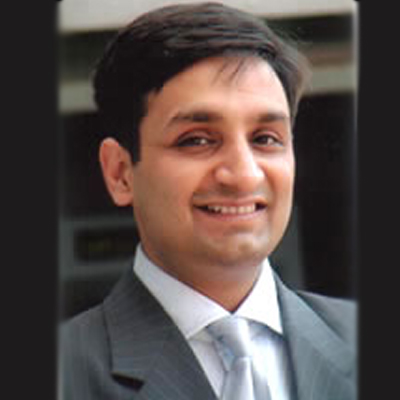
  • ‘We will be a Rs 5 billion company by 2008’ : Atul Goel – E-City Ventures CEO

    ‘We will be a Rs 5 billion company by 2008’ : Atul Goel – E-City Ventures CEO

    His is a tale that is not just about multiplexes. E-City Investments and Holdings chief Atul Goel is hooking up a film exhibition, distribution and digital delivery business.

    At the centre of this game is the multiplex business. Fun Multiplex Pvt Ltd is on a massive scale up exercise, planning to ramp up from 23 screens to 150 by FY08 while acquiring 100 single screens to gain a pan-India presence.

    E-City Digital Cinemas will deliver movies to theatres via satellite as well as hard disk in a format that operates on low margins but is profitable. Being part of the Essel group, it will use the Essel Shyam facility at Noida near Delhi which is also utilised by Zee for uplinking its channels.

    Goel recently got IL&FS to invest Rs 1 billion for a 26 per cent stake in E-City Entertainment, the hived off entity that handles real estate development. His next big target: a combined turnover of Rs 5 billion by FY08.

    In conversation with Indiantelevision.com’s Sibabrata Das & Bijoy AK, Goel unveils the expansion plans he has chalked out for E-City.

    Excerpts:

    Why did you decide to hive off the multiplex and real estate businesses into separate companies?
    The best way to attract investors is to divide the two segments of business. They can enjoy their own valuations and investors. For instance, the investors in real estate may not necessarily want to take exposure in the multiplex business. We got Infrastructure Leasing & Financial Services Ltd (IL&FS) to pick up a 26 per cent stake in E-City Entertainment, which handles real estate development like setting up malls, for Rs 1 billion.

    Are you in the hunt for an investor in the multiplex business as well?
    Fun Multiplex Pvt. Ltd. still needs to scale up as we ended the last fiscal with a turnover of just Rs 450 million and a net profit of Rs 60 million. We are planning to pump in Rs 2.5 billion and have 150 screens by FY08. We have already put in Rs 300 million. We plan to raise money in a debt-equity ratio of 1.5:1. Our target in FY08 is to have a total income of Rs 2.5 billion and operating profit of Rs 720 million by FY08.

    What makes you project such a fast rate of growth in two years?
    The revenues will come mainly because of newer developments. We have 23 screens and are opening up three properties this month. We, in fact, will be adding 10 more screens by 15 August.

    Do you see revenue growth also coming from increase in ticket rates?
    Pricing power will continue to be more a movie-based strategy rather than a rate hike in tickets across the board. In case of Krrish, we increased the ticket rates. We will also see the emergence of differential pricing for off-time shows. We have, for instance, lowered the rates for early morning screenings.

    Multiplex operators are in a build up phase and Inox has even taken the acquisition route in Kolkata to enhance its pan-India presence. How are you planning to scale up your operations?
    We are also planning to take the inorganic route. We will be acquiring single screen theatres across the country. We aim to have 100 single screens by FY08. This will be in addition to the 150 multiplex screens we will have by then.

    The future trend could be special alliances between distributors and multiplex operators

    Multiplex operators have been made to pay more for premium film content by Yash Raj Films (YRF). When YRF asked for an increase in revenue share for the Aamir Khan blockbuster Fanaa, you took a hard stance. What made you compromise later?
    Initially, all the multiplex operators protested against the hike. But the unity didn’t stay and some of them went ahead to sign the new terms with YRF. Let me reiterate here that we were in a pure business deadlock and not a confrontation of any kind.

    Has YRF, with a lineup of Hindi blockbusters like Fanaa, Krrish and Kabhie Alvida Na Kehna, started a trend where film content distributors would push for higher revenue shares from multiplex operators?
    We are not in a position where we can take a hard stance against YRF. We have a business relationship going with them and are showing Krissh. The new terms are exceptional to YRF but with such high ratios, we can only break even. The future trend could be special alliances between distributors and multiplex operators.

    Are you in any such alliance with a big distributor?
    It is too early to carve out such relationships. In fact, we urge the distributors not to start hiking rates or getting into special relationships with certain multiplexes at this stage. The industry needs to scale up the infrastructure, there is an opportunity sitting out there. We should take measures that grow rather than kill the industry at this early stage.

    Have you taken a cautious approach in the film distribution business?
    E-City Films (ECF) has distributed Hindi movies like 36 China Town in Gujarat where we control 90 theatres. The market is fragmented and will take time to consolidate. Some companies are also acquiring some movies for distribution at unrealistic prices. We are cautious and have no plans to set up a film distribution outfit overseas. For international movies, our strategy is to distribute 10-12 a year. In the past, we have distributed Alexander (December 2004), One Dollar Curry (February 2005), Million Dollar Baby (March 2005) and Sahara (July 2005). Among ECF’s recently acquired movies are Astronaut Farmer, Babel, Miss Potter and Michael Clayton.

    Have you closed down your content syndication business?
    It is in a state of lull now, but we have revival plans.

    What are the expansion plans for E-City Entertainment after IL&FS has taken a stake in it?
    We are investing Rs 1 billion each for the Kanpur and Coimbatore properties. Lucknow will attract a further funding of Rs 250 million. We have already pumped in Rs 2.17 billion in developing four projects (Rs 600 million for Andheri in Mumbai, Rs 750 million in Lucknow, Rs 550 million in Ahmedabad and Rs 270 million in Chandigarh). We will have 10-15 properties by FY08. We expect our turnover to climb from Rs 210 million to Rs 800 million by then. As these are rental incomes, E-City Entertainment will always be a profitable venture.

    How are you funding these properties?
    We will be raising fresh equity. But we have not started talking with anybody yet.

    When is E-City Digital Cinemas starting satellite delivery of movies to cinema theatres?
    We plan to launch it by the end of this month. We will be using the uplinking facility of Essel Shyam at Noida near Delhi. Currently, the hard disk is physically distributed to the 22 theatres in Gujarat (we control 90 theatres there) which we have taken on long term hire basis. We are using Real Image’s encryption technology so that piracy is safeguarded. The movie is first converted into digital master using the telecine machine, after which it can be taken on to D5 tape or captured directly on the encoding server. After encryption and compression, the movie is uplinked to the satellite via transmission server and downloaded at the playout local server which is installed at the theatre. A digital projector is used for screening of the film. E-City Digital Cinemas will target A-class towns where the current net collections are over Rs 100,000 per week.

    How many theatres will have the digital system?
    We plan to digitise 500 screens by FY08. We have already acquired 30 cinemas including a few in Mumbai. The business operates on low margins and, on a turnover of Rs 300 million last fiscal, we have reached a break even situation. As we ramp up theatre acquisitions, we expect our revenues to touch Rs 2.5 billion by FY08.

    So will E-City Holdings go for an initial public offering (IPO) or will the different entities have separate listings?
    We haven’t decided anything yet. We have no IPO plans, as of now. But by FY08 the entire venture will be a Rs 5 billion company.

  • Lifeline KBC2: Star holds on with re-runs

    Lifeline KBC2: Star holds on with re-runs

    MUMBAI: It is official now. Star Plus is not discontinuing Kaun Banega Crorepati 2 (KBC2) even though it has exhausted its fresh bank of episodes. Instead, the channel will telecast re-runs of KBC2, starting 20 February on Fridays and Saturdays.

    “We are not winding up KBC2. We are expecting the show to make a come back with fresh episodes by March. To fill the void, we will air re-edited versions of some of the interesting KBC2 episodes for the next four weeks,” Star India EVP marketing Ajay Vidyasagar told indiantelevision.com.

    However, Vidyasagar refused to give any timeframe on Bachchan’s re-appearance to shoot for KBC2.

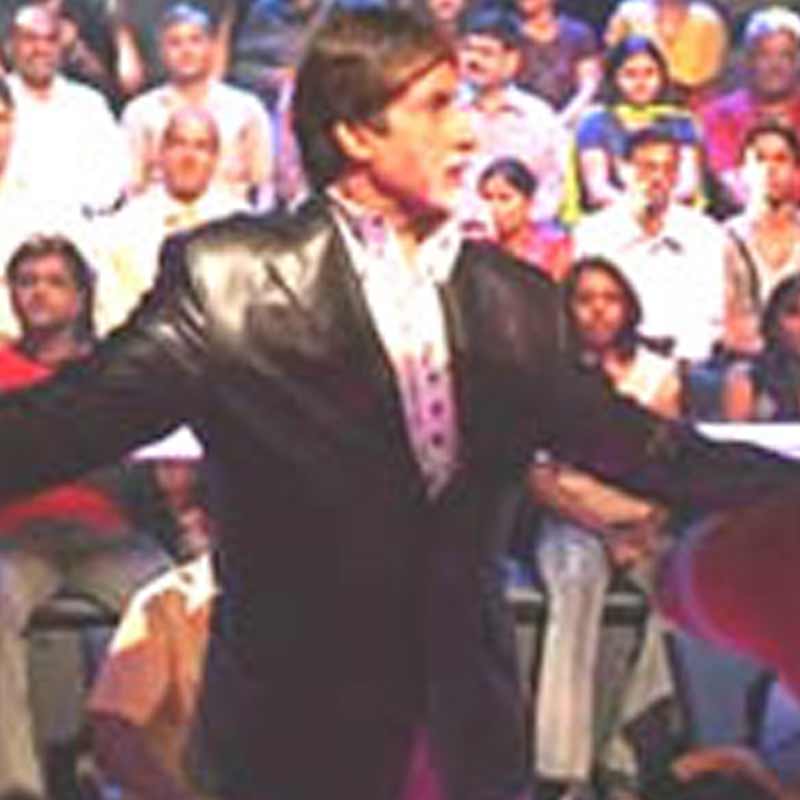
    “You gotta wait for me”
    As reported earlier, Star Plus aired the 61st episode of KBC2, the last fresh episode in its hold, on 13 January. Anchor Amitabh Bachchan, originally committed to shoot 85 episodes, was unable to continue shooting after his recent illness. Reportedly, Bachchan is expected to resume shooting for the remaining 24 episodes next month.

    Vidyasagar feels that, such a break (of fresh episodes) will be good for the show’s popularity. “It will create a lot of expectations across the nation. Hence, when KBC2 makes a comeback, we expect it to deliver better ratings. That would be good for advertisers as well,” he says.

    Star India had earlier re-scheduled its popular game show following Bachchan’s illness to twice a week (Friday & Saturday) instead of the original thrice a week run with effect from 2 December. In between, the channel also re-ran celebrity episodes. The channel has filled the Sunday slot left vacant by KBC2 with the serial Sai Baba.

  • I&B minister Dasmunsi hints at major revamp of draft broadcast bill

    I&B minister Dasmunsi hints at major revamp of draft broadcast bill

    NEW DELHI: You can kiss the Broadcast Services Regulation Bill 2006 – a draft of which is doing the rounds of various ministries and industry stakeholders these days – goodbye, Well, almost.

    “Whenever I bring a Bill to Parliament, it’d be the most media-friendly legislation in the whole world,” information and broadcasting minister Priyaranjan Dasmunsi today said, hinting that the draft is likely to go undergo major revamp.

    Speaking to journalists on the sidelines of a Cabinet briefing, Dasmunsi added that proper consultation with various stake holders would be held before draft legislation is taken to the Union Cabinet or Parliament.

    Asked by indiantelevision.com whether the Broadcast Bill 2006 would be tabled in Parliament during the forthcoming monsoon session, the minister said the endeavour be so “after holding discussions with everybody.”

    “Our effort and endeavour would be to do so during this session and if that does not happen, then we’ll see in the next session. We would not do anything to gag the media,” Dasmunsi explained, making it clear that the government has taken serious view of the all round stringent criticism of a draft media legislation.

    The monsoon session of Parliament begins on 24 July and there seems little time left to hold proper discussions with the industry on the Bill, which has been drafted surreptiously and left the players stumped when unraveled by a section of the media.

    Making an overt bid to keep in good humour the media, which came in for praise from the Cabinet today for its sensitive coverage of the serial Mumbai blasts earlier this week, Dasmunsi said, “All fears (of broadcast industry) will be removed.”

    Proposals on cross media restrictions, powers bestowed on authorities to take action against the media and TV channels on the flimsiest of grounds, content censorship (which is being drafted separately, but could be made part of this Bill or legislation at a later stage) are aimed at strangling the media and cripple business models in the name of safety against monopolistic trends.

    The proposed autonomous Broadcast Regulatory Authority of India (Brai) has been given powers in the Bill that permit it to run amok if interpreted incorrectly by it. What’s more, Brai’s chief executive would be a serving government official of additional secretary’s rank, drawing a salary from the government.

  • ABC Asia Pacific to launch as Australia Network on 7 August

    ABC Asia Pacific to launch as Australia Network on 7 August

    MUMBAI: Starting 7 August, the Australian Broadcasting Corporation (ABC) Asia Pacific will be called the Australia Network, offering news, documentaries, drama and lifestyle programs. In its new avatar, the network will bring some new programmes but with same spirit and zeal across Asia.

    In India, the channel will be distributed by Global Broadcast News (GBN). In a recent interview to Indiantelevision.com, GBN joint managing director Sameer Manchanda disclosed, “We have just signed up to be the Indian agent of the Australian Broadcasting Corporation, an infotainment channel with large doses of news and travel shows.”

    Featuring live coverage from around the region, it will be produced exclusively for Australia Network by the ABC TV news and current affairs division.

    The channel will air a brand new current affairs programmes Focus on Tuesdays and Thursdays at 9 PM Evening bulletins will feature three times per night at 5 PM, 7 PM and 9 PM, with exclusive reports from the four new correspondents in the region reporting from Delhi, Beijing, South Pacific and Jakarta in addition to ABC correspondents from around the world.

    Adelaide based actor Margot Politis will host Study English, which has been designed specifically to help students prepare for study overseas or improve their career prospects. Politis is also the host of the ABC Education programme Like It Is.

    Business English will focus on helping people improve their career prospects by learning the worlds global language of business.

    The dramas are uniquely Australian, created, written and produced in Australia. The Australia Networks will bring in a daily soap Home & Away. It will air at 5:30 PM

    There will be a special one hour recap of all Home & Away every Sunday at 6 PM The network will showcase more Aussie drama such as hospital drama All Saints; the award winning police series Blue Heelers; Love My Way with Claudia Karvan; Travel favourite Getaway and many more.

    The Network will be carrying coverage ranging from horse racing (The Melbourne Cup), to V8 Supercars to surfing and of course rugby International Rugby Union featuring the International Test Matches between Australia, New Zealand, South Africa, England, France and Ireland as well as the Tri Nations and Bledisloe Cups, National Rugby League (NRL) and Australian Rules Football (AFL).

  • Indian television advertising is very much underpriced’ : Joy Chakraborthy – Zee Network executive VP Network Sales

    Indian television advertising is very much underpriced’ : Joy Chakraborthy – Zee Network executive VP Network Sales

    Joy Chakraborthy took charge of Zee Network as ad sales head in early 2005, at a time when Zee TV was going through a crucial phase. Chairman Subhash Chandra was strategising a turnaround for the flagship channel and a number of big ticket shows were being readied, with the expectations of re-writing Zee TV's fortunes in the Hindi GEC arena.

    As Network sales head, Chakraborthy's first challenge was to project Zee in a new light. "Zee had a perception problem in the market and a section of the trade had written it off. We wanted to create a new impression and build on that," Chakraborthy says."There couldn't have been a better time for me to head the network's sales team," he gushes.

    Speaking to indiantelevision.com's Bijoy A K, Chakraborthy elaborates on the strategies that worked for Zee, future plans and on the industry scenario.
    Excerpts:

    You have completed a year as the sales head of Zee network. Please elaborate on the key industry learnings you could gather during this period?
    A crucial lesson we have learnt is on the significance of soaps in the GEC prime time game. We have learnt that GEC is all about soaps, but different from Saas-Bahu sagas. People buy a channel for consistency and not for spikes only. In the industry, on an average, 70 per cent revenue is tied up on a long-term basis and only soaps can fulfill that promise. Innovative programming is fine, but they should be scheduled and timed very effectively. When you innovate, it should not be just a programming decision but a collective decision including sales, marketing and programming.

    Everybody had written Zee off. But we could pull off a turnaround — what seemed impossible until some time back – through team work, discipline, passion, accurate timing and by keeping the faith intact. As expected, the trade has responded to this change very positively, and now we enjoy the backing of the entire market. This is because of the strong relationships we had built during this period. What I am driving at is the fact that, relationships play a key role in this industry. This period also showed us who are our real friends and who are opportunists. Also, it has been a learning for me that both, people and organizations are important, and one cannot exist without the other.

    How is the industry evolving? Give us a low down in the recent developments and the trends?
    Indian television advertising is very much underpriced and we have decided to bring this issue into focus, under the banner of the Indian Broadcast Foundation (IBF). In a couple of months, we are planning to come out with certain guidelines on pricing, which would hold a lot of significance for the industry. Our main concern is the underpricing of television. It is a powerful medium and it should get its due, especially at a time when the costs of programming and marketing have skyrocketed. All network sales heads are now represented in IBF and we are united on this cause.

    The present scenario is very confusing. Television is booming, but clients are very tentative to take a call on TV as compared to the print as television research is more confusing and dynamic and changes everyday. I think an increase of 15 per cent to 20 per cent in rate is due immediately. It should also be noted that cricket of late has not affected GEC/Hindi movies viewership, which are the primary revenue drivers in C&S. The Hindi movie genre is still very much underpriced and same is the case with regional channels.

    I keep hearing that the English entertainment space is shrinking, but I don't agree with this as this is the genre with least wastage and where even an advertiser is a viewer.

    Does GEC still hold an edge over other genres when it comes to delivery and demand? Or has there been a change in the pattern?
    GEC will always hold the edge as maximum revenue comes to this genre. For any client, the reach build up and in some cases, frequency by smart scheduling comes from GEC. According to me, the genre pecking order would remain as: GEC, Hindi Movies, Regional, News, Sports – in that order.

    In the last two years, unique content channels have seen so much of a price cut that the FCT has increased drastically and revenue in the genre has hardly moved. I sometimes wonder how they are still surviving in business.

    Regional television space holds a lot of potential though it faces tough competition from print. The key segments driving growth in regional are: Retail, education and real estate, in addition to general categories like FMCG, telecom services, consumer durables etc.

    Zee has already started working on all these segments. We have started roping in retail clients and our next focus is on the real estate and education. Though there is a slow transition of main print category advertisers to television, the good news is that these clients have realised the power of television.

    Did the recent stock exchange fluctuations impact sales?
    The fluctuations haven't affected us at all. Actually, Zee recorded better sales during this period of May-June. June-July usually has a lean period tag attached to it, but this year, it was different. This is one change in the normal pattern. These days, there is nothing called lean or peak period. This is due to the boom in categories such as telecom, services, finance and the perennial FMCG.

    Today, advertisers are not limiting themselves to a particular genre due to media fragmentation. Most clients are there in almost all the channels/genres. Earlier, there used to be a particular set of advertisers for particular genres, such as premium products for English entertainment channels. These days, even FMCG brands are keen on English channels. It is a trend of aspirational marketing.

    'With the good performance, our viewer base has also expanded and this, in turn, helps us to better our performance on a consistent basis'

    The last one year saw Zee TV pulling off a turnaround in Hindi GEC, by reaching the second position. Could you briefly outline what happened during this eventful phase?
    During this period, the sales team was able to initiate a lot of changes successfully. To start with, we decided to remove the paid bonus system and agreed to reduction of ad sales inventory. This helped to change the general perception that, Zee has unlimited inventory. Then, we made it a point to keep away from attempting any innovation in terms of sales. This is because, the delivery of innovations take too much of time for the value we generate. Also, I have observed that in spite of doing innovations, the clients/agencies are always unhappy with the implementations, however good you might do. So why do innovations?

    We also focused on doing more client/agency meetings and met people at all levels. The Zee Network had a perception problem in the market, and the sales team has positively addressed this. I felt a lot of our positives were not known to the market. We had been very firm in our decisions and we always made it a point to abide by our well-defined sales policy. I have ensured all commitments/deliverables are in writing and not verbal, as this avoids conflict when people change at channel/agency side. When it comes to deals, the attempt has been to create win-win situations. We reduced our FCT to an effective level to create demand and initiated a very transparent sales policy.

    We also introduced the Matrix system, which played a key role in bettering the network performance. We appointed individual sales heads, responsible for strategy, revenues and targets of their channels. We have senior people as branch heads in the business deployed in key markets such as Delhi, Kolkata and the South whose roles are more tactical and they ensure revenue spread across all channels and have their branch targets. Both sales heads and branch heads work very closely with themselves and with me.

    For me, Zee has turned out to be a great place to work. It is a place with total freedom and great empowerment. I would say internal stability in Zee is very high. All decisions are discussed and not pushed down your throat. We have the best bunch of professionals, both at senior and junior level.

    Please comment on your face-off with Star. Star recently initiated its counter strategy to block your surge in the 9-10 pm time band. What impact has it made on your game plan?
    You feel happy when the leader reacts. Zee has pioneered the strategy of launching soaps with innovative media breaks. Seeing Star also doing the same for their show has been an ego booster for us. Coming to the second part of your question, it felt even better when the leader's tactics didn't affect our numbers and the market demand.

    With the good performance, our viewer base has also expanded and this, in turn, now helps us to better our performance on a consistent basis. Earlier, when we launched a show, rating in the range of 1 TVR to 2 TVR was considered as satisfactory or good. Now, our new launches pick up very fast and the shows even record an opening rating of 2+ TVR on an average basis. This has inspired us to fight Star in its own bastion – the 10 – 11 pm band – with non-soaps such as Johny Aala Re and Sabash India.

    So what is the next big idea? What will be Zee's next focus?
    We have now settled ourself comfortably in the 6 pm – 8 pm and the 9 – 10 time bands. You will be seeing some more launches in the months to come which will strengthen our FPC even further. The programming, marketing and sales wings are now working on the strategies to strengthen the 8-9 pm band.

    What is the strategy you follow to sell Day Parts?
    We have made lot of efforts to increase the demand for the Non Prime Time (NPT) band. Each sales package has got a mix of PT and NPT. We ideally would love to sell at 30:70 for PT/NPT. We have also been selling early NPT and late night slots for religious/tele shopping properties. As a result of focusing on NPT, our inventory FCT consumption has doubled in NPT.

    Which are the client segments that top your delivery list these days?
    Still FMCG is number one, though there has been a major upswing in Telecom/Services/Auto/ to name a few. The concern has been the consumer durable category with a few big players not clear about their plans. Additionally, SMS has emerged as a key revenue driver for us for our interactive shows.

    Speaking about the network performance, what is the scorecard?
    Zee TV is on top followed by Zee Cinema. Zee TV was underpriced when I took over, and now we are steadily moving in the right direction of rate. We activated rate corrections twice for the network during the six months and now, as the festival season is coming, you can expect another correction soon. For some channels, it will be across all day parts and for some it will be programme based.

    Revenue wise, maximum share comes from Zee TV followed by Zee Cinema, Zee Marathi, Zee Bangla, Zee English cluster, Zee Music and Zee Smile. The beginning of the year has been very good and I am sure we will touch a new high this fiscal.

    Now let us take it one at a time. To start with, please comment on the performance of Zee Cinema. What is the plan for this year?
    As a sales person, I can't ask for a better channel than Zee cinema which has been consistently delivering for years in the face of stiff competition. My colleagues in programming and marketing have given us a product which is a must have in all media plans, specially if it is targeting the "cow" belt (Hindi heartland). Since the last two years, the Amitabh movie band Shaniwaar ki Raat Amitabh Ke Saath has been our key driver. This year, we have introduced a youth block – Klub. We have our own share of blockbusters for the year also.

    Zee Smile has been keeping a low profile these days. Is the channel in an orphaned state, or is there a plan on the anvil?
    You will soon know our plan for Smile. But for sales, Smile has been a great help to get incremental revenues. The channel is very well distributed in non traditional markets and hence, you will find lots of brands advertising on Smile.

    Speaking about regional channels, you are in charge of sales of two key players Zee Bangla and Zee Marathi. How did these two channels fare in the last one year period?
    This year, we have practically re-launched Zee Bangla with a slew of new programmes and this will boost its sales potential. We are again going to do sales initiated programmes like Durga Pooja and Jatra.

    Zee Marathi has now become the clear number one. We are there in almost all plans. We have also set up a separate sales team to develop retail and non traditional advertisers like educational institutes, real estate, local jewelers, classified etc and the results are showing.

    Comment on the delivery of your event properties.
    During the last one year, there has been an extra thrust on good events, and the efforts have paid off very well, I would say. We have converted the Saregama finals as an on-ground event and the attempt has met with great success. This had inspired us to take the Saregama Ek Mein Aur Ek Tum finals to Dubai. Apart from winning a global appeal, going to international venues helps sales also. Zee Cine Awards, Mauritius and even the Zee F- Awards, have done very well for us.

    We have Zee Astitva Award, Zee Marathi Awards, Zee Gaurav Puraskaar, Zee Amader Gaurav, Zee Songeet Puroshkaar to name a few, lined up in the next few months across various channels.

    Have you retained Amap's service as an alternative rating agency to Tam?
    Yes. We need to have two meters because the industry needs competition in this realm also. It is always good for the trade. It brings out the best of everyone. According to me, each of them can coexist, triggering healthy competition. I am not making a judgment here, but for the betterment of industry, we need two parallel rating systems. The earlier we acknowledge this, the better it would be for all of us.