Tag: indiantelevision.com

  • Star, Zee both claim rights to ‘Betiyaan’ concept; issue set to reach Court

    Star, Zee both claim rights to ‘Betiyaan’ concept; issue set to reach Court

    MUMBAI: The Diwali fireworks have already hit Indian television’s Hindi Entertainment space with archrivals Star India and Zee Network locking horns over a copyright issue.

    The “war” was kicked off with Zee Telefilms issuing a notice to Star demanding it withdraw all activites around its upcoming soap, tentatively titled Betiyaan, claiming ownership of the concept.

    Star dismissed Zee’s charges, asserting that the show’s writer Rekha Modi had registered the titles and the concept with various copyright bodies well before Zee made its own registration.

    In its legal notice sent to Star, Zee has said that its upcoming prime time soap Ghar Ki Lakshmi Betiyaan, produced by Creative Eye, would face serious market implications if Star went ahead with its prime time project carrying a similar title Betiyaan.

    Revealing the registration dates of the Ghar Ki Lakshmi Betiyaan title and concept with various copyright and industry bodies such as Film Writers Association, Film and Television Producers Guild of India and Society for Copyright regulation of Indian Producers for Film and Television, Zee has warned Star that, “Use of key elements or concept or format in your programme/series may constitute a violation of applicable intellactual property laws, including without limitation those regarding copyright infringement and passing off.”

    Buttressing its case, Star made available to Indiantelevision.com copies of the registrations made with the Film Writers Association on 5 April, 2006; 12 April, 2006 & 27 July, 2006. The show concept, characters and scripts were registered with the Association of Motion Pictures and TV Programme Producers on 29 July 2006 with the titles Betiyaan and Ghar Ki Lakshmi…Betiyaan. A copy of this document was also furnished.

    Zee’s notice to Star further states, “We would like to draw your attention to the fact that the television programme ‘Ghar Ki Lakshmi Betiyaan’ is owned by Zee Telefilms Ltd. We have already started the promotions on 5 August, and have incurred and/or committed substantial sums on business promotion / advertising and publicity etc for the programme. Our right to the programme is highly valuable to us as we have invested a lot of resources in the programme in building up awareness and goodwill in the said programme.

    “We state that, on 2 August 2006, our programme was registered with the “Film Writers Association” and on 21 August, registered with the Film and Television Producers Guild of India and Society for Copyright regulation of Indian Producers for Film and Television (SCRIPT). We understand that, this registration was done by the Guild after confirming with Association of Motion Pictures & TV Programme Producers.”

    A Star spokesperson countered, “We have been working with Rekha Modi on a show which she has registered with various industry bodies. The show concept and script of Betiyaan was registered with the Film Writers Association on 5 April, 2006; 12 April, 2006 & 27 July, 2006. The show concept, characters and scripts have also been registered with the Association of Motion Pictures and TV Programme Producers on 29 July 2006 with the titles Betiyaan and Ghar Ki Lakshmi…Betiyaan.”

    Star has further said that, it would be sticking to its original plan of launching Betiyaan very soon. “We will be launching this show very soon, though we are yet to finalise the title of the same. As far as the show is concerned, we are convinced that this is Rekha Modi’s original concept and will take all steps necessary to protect our position in this regard,” the company said.

    As per the Zee notice, the Star soap will be telecast by Star One. However, the star spokesperson refused to divulge any more details regarding the programme.
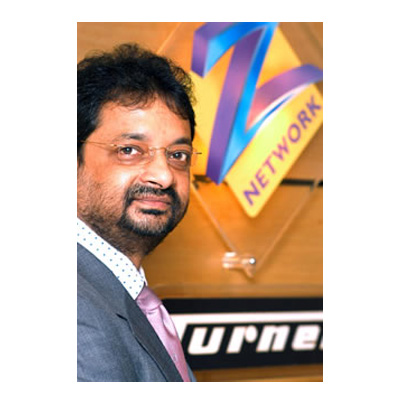
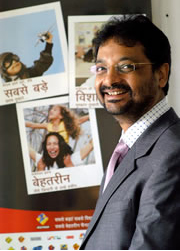
  • ‘In some areas, we have done better than One Alliance, while in some areas we have done as well as Star. But no denying that at a national level Star bouquet is way ahead of others’ : Arun Poddar – Zee-Turner CEO

    ‘In some areas, we have done better than One Alliance, while in some areas we have done as well as Star. But no denying that at a national level Star bouquet is way ahead of others’ : Arun Poddar – Zee-Turner CEO

    Arun Poddar is an industry veteran with an enriched experience and excellent track record of over 23 years in sales and distribution. He brings with him vast experience in media and broadcasting industry and proven ability in the FMCG sector. A business management graduate, Poddar started his career with Maxwell Industry. During his tenure of seven years with Maxwell, he successfully established a robust distribution network in the eastern region of the country.
    One of the many important tasks that Poddar undertook during a stint at ESPN was seamless transition of ESPN from Modi Entertainment Network, which used to be responsible for ESPN’s distribution. After working with ESPN Star Sports for seven years, Poddar joined Ten Sports as vice-president, distribution and marketing. Utilizing his expertise in sales and distribution, garnered over 21 years, he successfully structured and developed an in-house distribution team. At Ten Sports, he also established a working and monitoring format to create a direct relation between company and trade.
    After spending two years at Ten Sports, Poddar joined Zee Turner as its chief executive. A person who loves to read, paint and listen to music, Poddar in this interview with
    Indiantelevision.com Anjan Mitra holds forth on various aspects of the broadcast industry.

    Excerpts:

    What is your overview of the present scenario of the broadcast industry?
    If you really see the broadcast industry in the last 10 years, then it has evolved a lot from being totally fragmented to a situation where big corporate bodies have come in and are trying to evolve a corporate structure. The distribution segment too has seen this happening with big MSOs coming in and trying to bring a semblance of order in the business.

    At one point when big corporate entities started coming into the industry’s various segments it was felt that the industry as a whole would shape up faster having well defined corporate identities and professionally managed businesses as in other sectors. Unfortunately, that did not happen.

    From a broadcaster’s point of view under-declaration of the subscriber base had always been an issue, which slowly became an accepted norm. The whole flip-flop on CAS since 2003 has added to the confusion in the market. However, CAS in its second inning now seems to be more of a reality than just talking about bringing in new technologies.

    With the arrival of DTH and CAS, the choice of a consumer gets widened. It gives broadcasters a competitive edge as good content and a strong channel would be a winner. From cable operators’ point of view, new technologies not only bring in transparency in the whole system, but also some orderliness.

    Don’t you think that intra-industry differences and constant appealing to the umpire (the government or the regulator) has impeded industry’s growth?
    Fundamentally, everybody had their own agenda. There has always this issue of declaration or under-declaration between the cable fraternity and broadcasters. Most industry disputes emerged from this basic issue of want of more declaration of the subscriber base or a resistance to it.

    Now this basic issue gave rise to subsidiary areas of dispute. I’d say that want of more subscriber base, price hike and introduction of new channels on limited bandwidth are at the core of ills afflicting the industry. These always created an environment that was not very conducive for business on either side.

    The regulator’s efforts to address industry issues cannot be negated. At the end of the day, any industry difference would affect the subscriber. It’s always beneficial to have a neutral agency to oversee an industry as it helps the industry too to go to such a body and bounce off ideas.
    Over the last 18 months or so every issue, major or otherwise, seems to be going to disputes tribunal, which results in loss of time and inconvenience to subscribers. What do you have to say about this trend?
    This was bound to happen. When (industry) grievances are kept captive for long one glimmer of hope in a tribunal makes stakeholders run to it. Had there been a regulator or a disputes tribunal from the start or even earlier, the rush of cases in TDSAT would not have been there. It’s like giving vent to accumulated fury.

    As part of the broadcast industry, are you, unlike some others, in favour of a regulator?
    I am definitely in favour of a regulatory body.

    Even if the regulatory body may end up over-regulating the industry?
    A regulation is a regulation. At least in India you have the freedom to stand up and ask the reasons for a particular regulation and what led to its formulation. Ideally, a regulatory body should take care of the interest of all stakeholders, including consumers. It’s foolish to think that broadcasters should grow and the MSOs shouldn’t. If a particular segment is not growing, then the whole industry suffers.

    It’s easy to put the blame for all industry ills on one particular segment, but that’s not the case and a regulator should see it turns out to be a win-win situation for all.

    What do you think of the revenue share formula that the Telecom Regulatory Authority of India (Trai) has mandated?
    At this point of time, I feel there is scope to better it (from a broadcaster’s point of view). Also, at this juncture we could put across our views to the regulatory body, which would be done in all probability.

    If you ask me, what should have been the broadcasters’ share of revenue accruing from pay channels, I’d say 50 per cent, instead of 45 per cent. The remaining could have been divided in the ratio of 20:30 between the MSOs and local cable operators.

    I am giving the LCOs more share as they are the retailers, while MSOs are whole sellers. In marketing practices, retailers always have the bigger margin.

    Why do you think broadcasters’ share of the revenue gravy should be more?
    Simply because broadcasters are making investments in programming. If cable TV subscribers and viewers in general want high quality programming, then broadcasters need to invest in such shows. Quality production can only come through higher investments and costs cannot be limited or capped.

    How would broadcasters bring quality stuff if their margins are clipped? Every business runs on the formula that the return on investment is balanced. Low investments could also mean low quality production values. Would Indian viewers settle for shoddy programmes and production values?

    What’s your opinion on Trai’s move to legitimize carriage fee charged by MSOs, a reality that was never discussed openly or accepted?
    I don’t think carriage or a fee paid for carriage on cable networks’ prime band would be an issue in a digital era towards which everybody is working. A digital system will take care of not only quality of broadcasting, but also the shortage of space that’s plaguing cable networks.

    Do you feel that ratings of various TV channels will get affected during initial phase of CAS, scheduled to be rolled out from 1 January 2007?
    Any change will have its rub-off effect on all stakeholders, including customers. A transition phase always throws up some doubts, which would get ironed out over a period of time.

    'Ideally, a regulator should take care of the interest of all stakeholders.
    It’s foolish to think that b'casters should grow & MSOs shouldn’t'

    Is there a chance of some pay TV channels going free in CAS areas to safeguard their reach, which is important vis-?-vis advertising revenue?
    I really don’t think so. If the content is powerful, consumers will pay for a channel. It can happen that broadcasters introduce new free to air channels. I don’t foresee a scenario where existing pay channels turn free to air.

    Do you foresee a scenario where a consumer picks and chooses channels in a CAS regime depending on events for a short period of time?
    It is a possibility and will revolve around marketing initiatives. For example, a pay channel can be made available to a consumer for a year at X price. Now if that consumer wants the channel for just six months, then the cost would X plus a certain percentage. Shorter the period, higher would be the premium.

    This trend could be a big concern for sports broadcasters as actual pay-per-view comes into vogue. These are advanced technologies, which will follow when digitalization, DTH and CAS set in properly.

    Will CAS turn out to be beneficial from a distribution point of view?
    Certainly. Apart from bringing about some transparency in the whole system, CAS would make the environment competitive, while giving more choice to a consumer. Distribution will have a bigger role to play in such a scenario.

    With the introduction of CAS and expansion of DTH services, the focus of distribution will be more on consumer rather than just a broadcaster’s client, which is the MSO. As a distribution person, I’ll also have to keep in mind the interest of my client’s clients (consumers). Therefore, there would be a lot of play while servicing clients.

    To facilitate a loyal customer base for a cable operator, it will be very important for me to also go and directly talk to the consumer about a broadcasting product.

    What will Zee Turner do to dial the customer directly?
    The primary objective should be the content and then creating awareness about it. As a company we would try to create a communication channel with the consumer/viewer to keep him in the loop about my product in its entirety.

    The approach would have to be 360 degree in the sense that we get feedback from consumers, hitherto not permitted by cable operators to approach directly, and then create products or upgrade existing channels depending on the feedback.

    In a small way, Zee Turner has started hooking up with the consumer. But it’ll take more time for this exercise to bloom fully as some doubts still persist. Those uncertainties have to be removed before a full-fledged consumer relationship exercise can be rolled out.

    What are the future plans for Zee Turner?
    With consumer becoming the king as options for him open up, thanks to new technologies, I need to be more close to him. Most company activities will be revolving around this theme of getting up close to the consumer, apart from satisfying my direct customers, the MSOs.

    For this to happen, activities like events have to be organized either via TV channels or on the ground. As a bouquet, Zee Turner has the largest number of channels (32) across most possible genres of programming. The task before us is to pick up our positives and pass it on to the consumer in a way that is understood by him.

    'In some areas, we have done better than One Alliance, while in some areas we have done as well as Star. But no denying that at a national level Star bouquet is way ahead of others'
    Do you think the regulator is doing a fair job on the pricing front? (The question was asked before Trai mandated all pay channels will be priced at Rs 5.)
    I think the regulator is trying to do a fair job.

    Has a deal with Tata Sky been concluded?
    We are talking to each other. We had suggested a price for Zee Turner bouquet of channels based on the formula mandated by a disputes tribunal in case of Dish TV and Star India. Tata Sky is not comfortable with the suggested price.

    What are the issues bogging down an agreement to be concluded?
    Tata Sky wants to be selective in terms of channels (from the Zee Turner bouquet), which we are not agreeable to; especially when such a criteria has not been adopted for other bouquets.

    Has Tata Sky given any reason for being selective with Zee Turner channels?
    The reason is quite obvious: lack of transponder space to accommodate all channels. But we also feel this reason is not true. We are keen on giving our channels to Tata Sky, but one cannot have different set of conditions for different broadcasters. Moreover, we are guided by an order from TDSAT.

    What are the revenue targets for Zee Turner this financial year?
    Zee Turner with a subscriber base of 4 million for bouquet 1 and 3.7 million for bouquet 2 is targeting a turnover of Rs 4000 million by the end of this financial year in March 2007. This should translate into 30-35 per cent growth in revenue compared to last year. I am not taking into account bouquet 3 as the subscriber base and revenue is negligible at this point of time.

    I can say with pride that we have been improving our performance. In some areas, we have done better than One Alliance (Discovery-Sony distribution joint venture), while in some areas we have done as well as Star. But there is no denying that at a national level, the Star bouquet is way ahead of others.

  • Branded ‘Big’, ADAG’s FM venture targets 12 October launch

    Branded ‘Big’, ADAG’s FM venture targets 12 October launch

    MUMBAI: The Anil Dhirubhai Ambani Group (ADAG) is entering the final stages of preparation for its “Big” bang entry into the FM radio field.

    The Ambani brothers are known for doing everything on a big scale and it is certainly no different in this case as younger brother Anil’s ADAG gets set to launch its 92.7 FM stations across India. It is only fitting, therefore, that ADAG is launching ahead of the Diwali festive season under the brand name Big Radio.

    According to sources, the group is targeting 12 October for the launch of its radio station in cities where the common infrastructure network exists. This includes Delhi, Mumbai, Kolkata, Jaipur and Surat.

    Big Radio is expected to be on air in Mumbai first, with a fast-paced rollout in the other cities where the common infrastructure exists. The teams for the radio stations are already in place with radio jockeys and other engineers hired and ready.

    Big Radio will be facing a phalanx of established players when it launches services in Mumbai. The group will have to compete with players such as the Times Group’s Radio Mirchi, Radio City, Red FM and Radio One (Formerly was known as Go FM), who have been in this game for over five years.

    One advantage Big Radio will be looking to leverage upon is the massive mobile phone user subscriber base that sister concern and telecom major Reliance Infocomm provides. Big Radio will be introducing a lot of interactive features with the specific aim of building a community of cell users hooked in to the station, industry sources have told Indiantelevision.com.

    Another “Big” advantage ADAG is banking on is that it has the ultimate brand icon in the “Big B” Amitabh Bachchan endorsing the station. If ever there was a case of the brand and the ambassador fitting to a T, it is this.

    ADAG originally secured its FM licence through Adlabs Films Ltd (AFL) in which it has a controlling stake. But post the demerger of the radio business, the company has transferred its FM operating units to Reliance Unicom Ltd.

    Big Radio will manage 45 FM stations. The frequencies were bought out for approximately Rs 1.60 billion. Initially, the company had bagged the licence for 57 frequencies but had to surrender the licence for 13 cities as per the norms, which do not allow one single company to hold more than 15 per cent of the total allotted frequencies.

  • Demands for channel price ceilings to be extended to non-CAS areas

    Demands for channel price ceilings to be extended to non-CAS areas

    NEW DELHI / MUMBAI: An immediate fallout of the Trai mandated Rs 5 for all pay channels in CAS areas is that demands have started surfacing from various quarters to regulate prices in non-CAS areas as well.

    “CAS should be beneficial for consumers and we hope that it is extended to other parts of the country soon, rather than being restricted to small areas of Kolkata, Mumbai and Delhi. This way, cable TV prices can be regulated,” Col SN Aggarwal, head of the Delhi-based consumer organization Voice, said today, while briefing newspersons.

    Aggarwal told Indiantelevision.com that prices of pay channels should be brought down in non-CAS areas as well since both “broadcasters and cable operators are fleecing consumers.”
    As per a Delhi High Court mandated understanding between the government and broadcast industry, CAS is scheduled to be rolled out in the south zones of Kolkata, Delhi and Mumbai from the midnight of 31 December 2006.

    Voice, which had been an active participant in the CAS debate, has also demanded that the government should make rules that force pay channels either to air programmes without any advertisement or become free to air.

    Aggarwal’s comments were echoed in a “non-CAS city” like Pune as well. Sudhakar Velankar, president of Grahak Panchayat, a Pune-based consumer forum, welcomed the Trai diktat saying, “We are in active negotiation with the MSOs to voluntarily adopt CAS for the consumers’ benefit.”

    Meanwhile, independent cable operators in non-CAS areas have slowly started realizing that low prices in notified areas would result in disparity in pricing, leading to discontent amongst general consumers.

    Cable Operators’ Federation of India president Roop Sharma today said that a meeting has been scheduled next week with Trai chairman Nripendra Misra, wherein a demand for extending the CAS regime to other areas would be made.

    “Prices in non-CAS areas too, need to be regulated and lowered and this would be our agenda at the meeting with the Trai chairperson,” says Sharma, adding that her organization would speak on the behalf of small cable operators in non-CAS areas.

    That independent cable ops in non-CAS areas are making demands for pay channels to lower their prices is evident from what several broadcasters said today.

    “I have got several calls from cable operators saying that we should shed our channel prices to bring them at par with Trai stated prices for CAS areas,” a broadcaster, controlling several pay entertainment channels, said.

    In Mumbai, Cable Operators & Distributors Association (Coda) president Ganesh Naidu says he wants CAS to be pushed not just in Mumbai but also across India. According to Naidu, “The new rates issued by Trai should be awarded to all consumers, rather than just restricting it only to certain sections of society. Unlike in the past, we are fully in support of CAS now that there is à la carte pricing of pay channels (something the cable fraternity has long been asking for).”

    Simultaneously, a divided broadcasting community is trying to come to terms with the “ridiculously low” prices.

    A sports broadcaster admitted that amongst the several options there is also one that envisages non-supply of its channels in CAS areas if the government refuses to budge on the Rs 5 per subscriber for any ay channel diktat.

    “It’s a fundamental decision to be taken. There is certainly an option to let go of the CAS notified areas and suffer the loss rather than bear the ignominy of investing huge amounts of money in programming and getting paid peanuts as subscription, which would upset the whole business model,” the broadcaster said.

    Still, the regulator feels such threats could only be addressed when it finally becomes a reality. “Trai would address the issue (of blackout of pay channels in CAS areas) when it is brought to it. Till now, no broadcaster has told us that it will switch off channels in CAS areas,” a Trai official told Indiantelevision.com.

    There are valid reasons for the Trai official being so sanguine about the “blackout threat”. According to another broadcast executive Indiantelevision.com spoke to, non-supply of channels “is not an option”. The executive pointed out that the new downlink policy allowed the government enough powers to cancel the broadcast licence of anyone it deemed as being out of line.

    So what are the options before the broadcasters? There are only two, he says. “Accept the Trai diktat or else fight it out in court.” No prizes for guessing the course the channels will be taking.

  • Sahara One COO Bose quits; CEO Aditya to take control

    Sahara One COO Bose quits; CEO Aditya to take control

    MUMBAI: Sahara One Television chief operating officer Purnendu Bose has resigned from the post. With Bose moving out, the hunt for the post has begun.

    Meanwhile, Sahara One CEO Shantonu Aditya will assume the charges, until a successor. Bose was reporting into Aditya.

    “I will be directly overseeing Sahara One till such time as a suitable replacement is found. We have interviewed a few people and a decision to the effect will be announced in due course,” Aditya tells Indiantelevision.com.

    Prior to joining Sahara One, Bose was associated with the kids’ channel Hungama TV as the COO. He earlier was associated with Star TV vice president special projects and was also actively associated with the launch of Radio City and Star News.

  • Star India beefs up mobile audio service ‘Voice’

    Star India beefs up mobile audio service ‘Voice’

    MUMBAI: Pushing the ‘digital’ envelope further, Star India has announced the full-fledged launch of its mobile audio entertainment service Voice. The service now offers audio capsules of some of the leading programmes in the Star Network.

    The programmes now available on Voice include prime time soaps Kyunki Saas Bhi…, Kahani Ghar Ghar Ki, Kasauti Zindagi Ke, Viraasat, the afternoon serials Bhabhi and Kumkum. Also in the pipeline is, content based on the upcoming Star One celeb talent hunt show Nach Baliye 2.

    States Star Interactive senior vice president Viren Popli, “There is a ready demand for popular TV content and interactivity on the go. STAR 7827 Voice is a platform for the non-SMS, non English-speaking viewers of our channels to enable them to keep up, and interact with our channels and with their favourite shows.”

    As already reported by indiantelevision.com, Star India debuted Voice on with an audio-episode of Plus’ new prime-time show Karam Apnaa Apnaa 23 August. Now the entry of more shows on the platform has made Voice a full-fledged service, according to Popli.

    “We tested waters with Karam Apnaa Apnaa and got a very encouraging respose. This has inspired us to launch more content on Voice. STAR 7827 Voice will be fully integrated into Star channels, thereby increasing the channels’ interactivity. We are also looking to enter the Tamil Nadu market through Vijay TV,” says Popli.

    The service will be available to BSNL subscribers and Hutch, Spice (Karnataka & Punjab) will follow thereafter. To explore STAR 7827 Voice, mobile subscribers can dial in 127827 from their BSNL and 5057827 from their Hutch mobile phones for the latest in mobile content.

    The BSNL service costs RS 3.50 per minute, while the Hutch/Spice service is charged Rs 6 per minute.

  • Zoom launches L’Oreal Paris Elite Model Look 2006

    Zoom launches L’Oreal Paris Elite Model Look 2006

    MUMBAI: The lifestyle and glamour channel Zoom has announced its latest client led initiative – The L’Oreal Paris Elite Model Look 2006. The event saw the official launch of the model hunt platform in India and unveiling of the logo at The Leela Kempinski in Mumbai.

    The announcement of the Indian leg of the international model hunt was made by the panel comprising Zoom business head MK Anand, L’Oreal Consumer Products division (India) director Phillippe Raffray, Elite India CEO Sushma Puri and reigning Miss India-Universe 2006 Neha Kapoor.

    Speaking to Indiantelevision.com Zoom business head MK Anand says, “We will be airing a 10 episode series that takes a look at the reality shoot at the training sessions at Goa and the finale. A large part of the reality show is going to be produced by the internal team at Zoom and we are looking at finalizing a production house for the grand finale. It will depend on whether the finale will be a standard one or have a complete international template.

    “Plus, being movers in the lifestyle glamour space, we do not want any other channels getting in to this space and are looking at blocking all such similar events. Here, we are looking to marketing this event in a big way. L’Oreal has been advertising with us since the beginning so we are happy to bring this property to them and vice versa. Additionally, this also helps us get exclusive access to content on the behind the scenes reality show,” says Anand.

    Adding that the Times Group had in the mid -1990’s held the Elite hunt and the winners then – Ujwala Raut and Sheetal Malhar – have got global recognition, Anand says, “We got in to a different trajectory with the reality series Bannungi Main Miss India and with this event, we hope to consolidate our position. With our tie up with L’Oreal, we are hoping to throw up the next Indian modeling superstar through this hunt.”

    Giving details of the hunt, Anand says, “The auditions will be held between 2 to 9 September. Twenty girls will be chosen and sent to Goa for a complete training and fitness programme from 12 to 17 September. The finale is on 18 September and the first episode will be aired a week later.”

    All the grooming sessions will be held at The Leela Palaces & Resorts, which is the official venue sponsor for the event. Fitness expert Leena Mogre will be monitoring the sessions in Goa.

    Commenting on the association with the event, Raffray said, “Beauty is a core part of our business and we see this event as a fantastic opportunity for fresh modeling talent in India to the forefront. Our association with Elite, one of the most prestigious modeling networks and Zoom, India’s glamorous lifestyle channel creates a unique showcase for contemporary Indian beauty.”

    “The Elite Model Look is a platform for young Indians girls to get international recognition. We will be scouting for talent in six cities across India. The winner will represent India in the finals of the L’Oreal Paris Elite Model Look 2006, to be held in Thailand,” says Puri.

    Diamond jewellery firm Ira is an associate sponsor to the event.

  • Pix looks to grow further through original content

    Pix looks to grow further through original content

    MUMBAI: It has been a little over four months since Sony’s English movie channel Pix went on air. The channel positions itself as being different from the competition by airing films which tell a good story, regardless of when they were made.

    In July, to add variety the channel launched the interview based show Inside The Actors Studio. Now it is looking at putting out original content.

    Speaking to Indiantelevision.com, Pix business head Sunder Aaron says, “We are looking to have two, perhaps three shows of our own on air some time after the Diwali festival. We are looking at talk shows and other concepts. It could be Bollywood stars talking about their favourite Hollywood films. We are also looking at a show that examines current trends in film, both in India and abroad.

    “We are also looking to do reviews of current films. In the future we will acquire films from independent and medium sized studios. Our main focus is on whether a film tells a strong story. After all, a big budget, big name stars, costly visual effects do not necessarily make for a great film.”

    Aaron also claims that in terms of GRPs and reach Pix is ahead of Zee Studio. “There is still room for improvement here though. We have received an encouraging response from cities like Bangalore and Chennai.” Not surprisingly, information available with Indiantelevision.com indicates that Pix had to pay carriage fee to cable operators so as to ensure that the channel had adequate visbility among viewers.

    Says Aaron, “We will now go out to the market and target media agencies to advertise on Pix. We waited to establish our distribution as well as viewership. Our audience is not the teenager who likes flashy blockbusters.

    “It focusses on the discerning viewer. While our TG is 15-44, time will tell whether our channel attracts an older set of viewers (25+) compared to the competition.”

    Pix has also rolled out a marketing campaign which is in the form of among other aspect hoardings. It is being done in the six metros. The message is that the channel watches many movies before handpicking a few for the viewer. The aim is to convey the message that a lot of thought goes into choosing films for that select audience that wants and expects only the best. There are also radio spots. Pix also has a presence in multiplexes in the form of slides and a radio programme. Pix also has an on-air competition. Viewers can answer simple questions by sending an SMS to 2525.

    When asked whether Pix is becoming associated with nostalgia, Aaron said that while that may partly be the case, people watch it and stay with it for the stories. “When we brought actor Will Smith down for the launch of the channel, he said that it was Pix’s commitment to storytelling that attracted him to it. He felt that there was a need on the part of Hollywood to get back to the basics of solid storytelling. Perosnally, I am happy to see that this is the case. The films that were nominated for the best picture Oscar this year all had strong stories.”

  • NGC deduces the science of Hollywood

    NGC deduces the science of Hollywood

    MUMBAI: What is fact and what is fiction? In Hollywood it is often difficult to tell the diference.

    Now the National Geographic Channel (NGC) is set to unveil the realism behind stunts and special effects in Hollywood films with a new show Science of Hollywood. Can what is shown on the silver screen actually happen in real life?

    The show kicks off on 27 November at 9 pm.
    Appropriately enough the first episode looks at car chases. How realistic were the car chases in flicks such as The Bourne Identity, Bullit and The French Connection? Can the vehicles in the films really burn rubber and do hairpin turns?

    In the episode Disasters At Sea the show examines whether the oceanic disasters depicted in the big gorssing film of al time Titanic, The Perfect Storm and The Poseidon Adventure true to life or was there a tidal wave of Hollywood fiction at play?

    Fans of 007 should check out Spy Gadgets. From Bond to Bourne, the world of espionage has fascinated cinemagoers for decades. But how many of the gadgets are actually used in real life?

    CGI and interviews with top scientists and filmmakers combine to separate fact and fiction within Hollywood’s most famous depictions of scientific phenomena and historical fact.Bond’s Aston Martin and Knight Rider’s KITT were high-tech for their time, but Minority Report gave us a very different look at the future of cars. Was the director of that film Steven Spielberg realistic about his vision of the future?

    Next month the channel takes a look inside special events with what it calls Inside Series. This kicks of on 18 December 2006 at 10 pm. Speaking to indiantelevision.com on this NGC VP marketing Rajesh Sheshadri says, “This takes viewers inside special events and the logistics that go into making them possible. The first episode is called Inside – Rolling Stones In Rio.

    ” This is is one of the biggest concerts in history with an iconic band. 1.5 million people attended the free concert. Viewers will see what takes place behind the scenes to transform salt and sand into a high-tech light and sound extravaganza. 200 tons of equipment were used to build a seven story stage, and keep over a million screaming fans safe.”

    The show will also go inside the Fifa Club Championship Toyota Cup. For clubs around the globe the crowning of the Fifa Club World Champions is the ultimate event. Teams from six continents battle for the title in the great soccer cathedrals of Japan. 1,500 media will be accredited and over 45,000 fans will cram into each stadium.

    The show goes behind the scenes to see what it takes to put on such an international spectacle. A spidercam will give soccer viewers at home a new perspective on the game. Viewers will follow the story of a team of referees as they encounter their moment of truth, the announcement of the selected referees for the final match.

    Another episode is called Inside – Hong Kong’s Big Bang. Seven million revelers take to the streets of Hong Kong to join one of the biggest parties in the world.

    How do you throw the party of the century? At the close of each lunar year, the streets of Hong Kong fill with tourists hungry to be entertained by some of the best party-planners in the world. But this is no ordinary year.. Over a half million tourists are expected to join the seven million Hong Kong residents to celebrate the Year of the Dog. Entertainers come from all over the world, 1,000 boats crowd Victoria Harbor and hundreds of highly-trained police officers will oversee the masses to make sure the celebration goes off without a hitch.

    Viewers will find out what goes on in the control rooms, on the floating powder kegs, and beyond the stage doors of Hong Kong’s most anticipated day. As tourists, organisers, and partygoers converge upon Hong Kong, Inside captures the technology and toil of the Chinese New Year celebrations.

  • ‘We believe that it is not in numbers but in the quality and nature of programming that is getting us noticed’ : Aditya Tripathi – Discovery Lifestyle Networks vice president

    ‘We believe that it is not in numbers but in the quality and nature of programming that is getting us noticed’ : Aditya Tripathi – Discovery Lifestyle Networks vice president

    Discovery Lifestyle Networks VP Aditya Tripathi began his professional career with Living Media India Ltd., and has worked in senior positions with some of the biggest media houses in the country. He made the move to Discovery in 2000 and his expertise in creating brand empathy, marketing and promotion has gone a long way to reinvigorate the various Discovery brands in India, especially Travel & Living.

    India is attaining prominence because of the socio-economic developments taking place in the country. Ahead of Discovery Travel & Living’s (DT&L) first local production The Great Indian Wedding to be aired on 20 August, Tripathi spoke to Indiantelevision.com’s Usha Thomas about how the lifestyle channel was gaining eyeballs with incessant demand from both Indian and foreign viewers for India-centric content.

    Excerpts:

    How did the concept of a lifestyle channel come about?
    With its growing and dynamic TV market and emerging middle-class, India was the right place to begin Discovery Networks’ new lifestyle endeavour. Some years ago, we took stock of the international TV landscape and we identified the presence of established global leaders in different genres: news, sports, movies, factual. And, among all this we identified a niche in the lifestyle space. There was no global brand and given that we had some experience in lifestyle and travel genres, we felt that this was an area we could occupy and dominate in the years to come.

    The senior management from the parent group came to India and wanted to be convinced that India was the right place to launch a lifestyle channel. After a day of the usual presentations, we took them to Gurgaon and showed them the homes, buildings under construction, call centres and malls. They looked around and said if this is the future of India, then lifestyle is the future of India and right there in the middle of a shopping mall, we were given the go ahead to launch DT&L. And, hence India was the first country to launch lifestyle networks.

    What is the positioning of the channel?
    Since its launch in November 2004, DT&L has striven to make its positioning distinct from that of factual channels. From day one, the strategy of our channel was to offer varied, non-fictional content as it is our strength. But, we don’t need to stick to factual alone. We can be factual as well as be in the lifestyle group and our positioning in the lifestyle group is aspirational, yet attainable. It’s just not about enjoying life, it is about celebrating life. It is good looking entertainment. So our channel is aspirational yet attainable, hedonistic, pacy, edgy …always stylish and trendy. We believe in good looking, entertaining television.

    Who is your target audience?
    Our primary target audience is upscale SEC AB audience – males, females and couples, between the age group 18 – 45 years. But, for us SEC, age, gender are limiting definitions. Our focus markets are Top 10 cities in India. Apart from these, the aspirational character of the channel will attract a secondary audience as well. It’s a state of mind that we are looking to capture so we are targeting a person with an international outlook, a person who has travelled abroad, may have even lived abroad, whose kids may be studying abroad and one who has seen international television and international lifestyle. This is common in Travel & Living in the UK, US, Singapore, all over the world. Nationality is not important for people with this mindset.

    Outline your performance in viewership, reach and among advertisers?
    Today, we reach 3 out of 4 cable homes in the country and in the top six metros, we reach 4 out of 5 homes. As far as viewership and relative channel share compared to other English entertainment channels Star World and Zee Café is concerned, we are growing considerably with time. We don’t share content with these channels but almost eight months after our launch, we had overtaken Star World in terms of numbers.

    Word of mouth and strong advertiser response is an indicator of our success. We are looking at the mindset which goes beyond demographics.

    Though TAM is a very democratic form of measurement designed to measure television groups across the country, groups, cities & towns, it is not designed to measure our target audience. For us, it is the people in malls, in fine dining restaurants, our ad agencies who are watching the channel. We believe that it is not in numbers but in the quality of programming and nature of programming that is getting us noticed.

    DT&L is about innovative, up market and interesting programming and we seek to experiment with properties that transverse different genres. We also pride ourselves on understanding our audience. Audience feedback has greatly attributed to our success and word of mouth is what makes us tick.

    In the first year, we had 236 brands on the channel and each time we go to an ad agency, the decision makers and their families are watching the channel so we have got very positive response from the advertisers to this channel. Also, despite the rapid growth of the television industry in India, advertising spends on lifestyle brands have traditionally been restricted to the print medium. The lifestyle channel provides advertisers with a dynamic media vehicle to reach a well targeted and defined viewership profile. It attracts 120 advertisers from across product categories, further cementing the channel’s unique value proposition.

    DT&L is providing a variety of shows, apart from just travel based shows. The programming strategy on DT&L since 2004?
    DT&L is essentially a lifestyle channel and along with travel, the programming will give viewers the inside track on all the latest trends in luxury and includes travel, health, relationships, wine, cuisine, home, car, bikes, the good life with a little bit of celeb and glam life.

    We have evolved keeping our original concept in mind and have grown far more than expected since our launch two years ago. Content is the key driver. We have made it our policy to incorporate as many different genres as possible and to acquire international programs or create localised programming in order to form a strong bond with our viewers.

    The Theme Week and Sunday Brunch strategy introduced in end December 2005 targeted at both viewers and advertisers. These programming blocks were created to appeal to the various target groups at times that they prefer while at the same time giving advertisers a focussed platform to reach key audiences.

    We have introduced a number of genre-defining programmes that have never been seen before in India, for example,American Chopper, Faking It, Million Dollar Agents, Miami Ink. We have all along explored different different genres of programming and experimented with reality factual programming with a difference.

    We don’t do celeb focusssed programming and are not overawed by celebs. Shows that we have incorporated have ranked extremely high in terms of quality and appeal and capitalize on wit and local humor, apart from being real.

    What are your views on DTH in India?
    The encouraging DTH scenario was also one of the reasons why the Indian management had been advocating the case for a lifestyle network in India. The channel has been established as a lifestyle channel, roping in the upwardly mobile. Currently available in 22 million homes across the country, DTL is also now available on the DTH platform.

    Today, we have the choice to choose the bouquet you want and the channel you want, so we welcome it. Internationally, the Discovery family of channels has thrived in all DTH markets. All three of our channels – Discovery, Animal Planet and Travel & Living are available on Dish TV and Tata Sky. We get to see the channel we want rather than with cable ops where they run all the channels and one can’t choose. For DTH, exclusivity is important and that suits us.

    10-15 per cent of the programming will be Indian. At any given point, we will have one local show on air and every quarter, we will premiere a new series

    Can you tell us about Discovery producing programs in India?
    India’s relevance on the world map is increasing. There are more people around the world interested in India, coming to India to work and travel so therefore DT&L is producing programming on Indian audiences but this will go to our channels across the world. The programming will show India in a positive light and in turn we get eyeballs from other regions who see these programs and maybe plan to visit India on seeing it.

    The way the Discovery format is used, we make a program on one part of the world and we show it in other parts of the world. That is the nature of our programming and all the shows on the three channels Discovery, DT&L and Animal Planet are of global interest. Similarly, we know our channel here is an international channel that provides high quality entertainment for a global audience.

    Give us the complete lowdown on the first local production The Great Indian Wedding?
    With our decision to commission local productions in India, we had been identifying various ideas that fit our programming strategy. Amongst many other concepts, we zeroed down to The Great Indian Wedding show. Also, in our discussions with many production houses, Delhi based Blue Mango came up with the very same idea. They were given the go ahead to make a pilot, mainly to serve two purposes: Get the formula right and then make the rest of the series.

    At the time that we decided on the wedding series, the media was all agog about the Chatwal wedding. Many other channels were trying to get the coverage and when we spoke to the Chatwals, they readily agreed to give us exclusive access to all the happenings on the wedding which was to be held in three cities in India – Mumbai, Udaipur and Delhi.

    The Great Indian Wedding is a one of a kind series, allowing the viewer to experience the wedding as an insider. The focus is on weddings with a difference and have a twist to them: opulence, glam quotient, location and theme. The pilot episode premieres on 20 August at 8 pm.

    During the ad break of this pilot episode, a banner will be streamed asking viewers if they have a great Indian wedding coming up. Based on the responses and our research, the 13 part series will be made. The remaining episodes will go into production in the 2006-2007 wedding season. We are looking at ethnic, different weddings and need not be of the same scale as the Chatwal wedding. Apart from the many applications received for the upcoming wedding season, we expect many more once the pilot episode is aired.

    The programme captures the glamorous theme parties extending from exotic locations like Jag Mandir in Udaipur to premium hotels in Delhi, the striking performances by Indian and international artists and the romantic and religious wedding ceremony. The host, Natasha Mago presents an insiders view, chatting up the bride, groom, guests, the challenges and frustrations of the wedding planner and the actual wedding ceremony.

    All guests invited at the wedding who appear on the show have given their signed consent in this regard, mainly to avoid legal hassles later, what with the high celeb turnout for this wedding.

    Our aim is to showcase India and showing a wedding held at the opulent and historical venues at Udaipur & Delhi, we hope to do our bit in promoting tourism in India. Keeping in tune with the high standards that Discovery is associated with, budgets were high especially as it was all shot on digibeta cameras. It was not studio based and there will be no compromise on the quality of the film, light, sound and effects used. We are clear that each programme should include a unique and entertaining story, credible facts and high-quality production values.

    We plan to get into merchandising by early next year by releasing DVD versions of our popular series and those currently on air

    What are the marketing initiatives being undertaken for the new local shows?
    We have already started airing promos and teaser campaigns for the pilot episode from 15 July and these have evinced a lot of interest among the viewers and the advertising fraternity. On the day (20 August) that the pilot episode will be premiered, we will be placing advertisements in all the major national dailies.

    Have you set targets regarding the amount of India centric content?
    It is essentially an international channel and India productions will be a small but significant part of the repertoire of programmes. The Indian programming will never dominate the channel as we clearly make it with the intention of airing it in other parts of the world. So, maybe 10-15 per cent of the programming will be Indian. At any given point, we will have one local show on air and every quarter, we will premiere a new series.

    What outdoor activities are being planned in India in order to extend the brand beyond television?
    We plan to get into merchandising by early next year by releasing DVD versions of our popular series and those currently on air. We have tie ups for the same with firms based out of Singapore and hope to soon associate with local firms.

    Name few acquisitions made recently?
    Among the recent acquisitions are a home interiors show called Trading Spaces and one on the training methods for airline cabin crew called Flight Attendants School. In January, we will be airing another BBC title Hairy Bikers Cookbook which captures the journey of two motorbike freaks as they travel to different places and learn about the local food.

    Are Indian viewers different from their counterpart in other countries?
    Honestly, there is no difference as our target audience matches up to any other in a similar genre in the world. They travel a lot, may have been educated abroad or visit countries on business and their lifestyles, eating habits and aspirations are similar to those abroad.

    Any plans of incorporating broadband and mobile into your business?
    We are looking at what technology may allow and what audiences are looking for and yet marrying that to the core DNA attributes of what Discovery has represented and people have loved through the years. We do not consider them a threat and with time, will integrate them in our business. Flipping channels is a reality and we are evaluating on working with mobiles, VoIP and other different platforms. We have been at the forefront of incorporating technology in the way we program and market the channel.

    For the series aired last quarter Five Takes, we had selected young people in their early to mid-twenties, and have given them $50 a day, a camera to film and software to edit so they document their daily lives. We gave the audience the opportunity to vote on the net and via SMS to decide where these young people should go and what they should do.

    In the niche channel environment where perception counts for a lot customization, do mention any customised solutions that have been done for clients?
    We recently had our first initiative in this regard with HSBC Bank for the HSBC Premiere card. They target the same high net worth individuals like us and they invited their customers and potential customers to a dinner and whisky tasting event at elite hotels in Delhi, Mumbai and Bangalore. We spoke about different whiskeys, their history and they also got to taste the best available in the world. We got tremendous feedback from those invited and HSBC and will hold many more customized events with like minded firms in the future.