Tag: indiantelevision.com

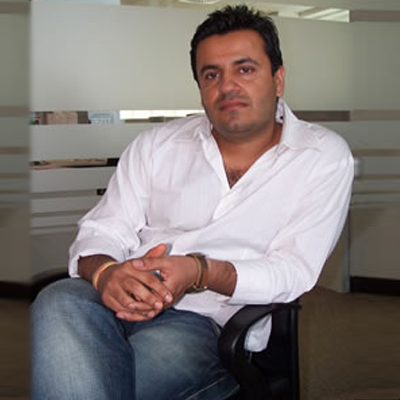
  • ‘Indian television by & large lacks the art of crafting shows’ : Vikas Bhal – Sony SAB senior vice president and business head

    ‘Indian television by & large lacks the art of crafting shows’ : Vikas Bhal – Sony SAB senior vice president and business head

    From the world of advertising to the world of television. That’s exactly what Sony Sab senior vice president and business head Vikas Bahl has done. Now at Sab he has the enviable task of not only revamping the channel after a takeover by Sony Entertainment TV India in November 2005, but also look at revenue generation on the back of conservative budget.

    Though the channel has a fresh lineup of shows only for one and half hour only, Sab is optimistic of touching 90+ GRPs by the end of FY2006-2007 as the programming lineup slowly expands.

    In conversation with Indiantelevision.com’s Manisha Bhattacharjee, Bahl holds forth on Sab’s revamp process and other issues like getting the right mix of programming to exploit the channel’s brand identity.
    Excerpts:

    Why don’t you give us an overview of Sab after the takeover by Set India?
    Well, the revamp of the channel is still on. From the time I joined, in terms of numbers, the channel has grown 300 per cent in terms of revenue and new advertisers on board. But admittedly the base of the growth was small.

    On the revamp front, we are quite clear we wanted to gain from Sab’s positioning as a comedy channel. But we did not want to stick to that as its only strength. The channel has its set of loyal audience who come to Sab typically for alternative viewing. And, that alternative viewing was by and large comedy, people who had grown sick of watching saas-bahu type of programming. But it was a fleeting audience, which came, saw his or her favourite programme and then moved on.

    So, we realized that on the face of fatigue in viewership across general entertainment channels (GECs) — most GECs, in our opinion, were falling in the same trap of having family drama — our audience was pretty much the one that was questioning the kind of programming. Such a feedback also indicated that that a large base of audience was tired of saas-bahu syndrome and had no place to go and we were in a position to take a chance by getting into alternative programming.

    What, according to you, would be viewer profile?
    In short, people who are young at heart and have a younger mindset. Now this profile cuts across SECs and age groups.
    So, Sab’s viewers are not Gen X. They could be from a small town in Madhya Pradesh, South Mumbai to Jammu up north to Jamnagar in the West. The common link between all such viewers is their mindset, which is progressive and not regressive.

    But Sab’s first alternative viewing after the Sony takeover, Twinkle Beauty Parlour, was taken off the air suddenly as it failed to click. Comment.
    That serial admittedly was a key project at that point of time. It was the first show after the revamp that was set in and we did an out of box marketing for it too. I think the channel got a lot of traction at the point in time. We followed it up with Left Right Left, which completely defined what we wanted to offer to the people and what they wanted to watch on Sab.

    Twinkle Beauty Parlour was started with the aim of being ‘destructive programming’. After Left Right Left was launched, we realized Twinkle Beauty Parlour was not conceived to be a `young’ show and consciously we had to take it off. We are glad that the second time round we started connecting with the audience through Left… All these talks of understanding one’s audiences’ looks very good when stated, but the important thing is to convert them into reality.

    And, normally reality can take time a lot of time. It looks like we are getting it right (on the programming front), but we still have a long way to go.

    What’s the ‘reality’ for Sab with new programming after Left Right Left?
    The revamp is just about kicking off. Initial response from viewers and advertisers has been excellent. Sab’s present channel share is six per cent, which grew from 1.5 per cent at the time when Sony took it over.

    Sab, which was doing an all-day GRP of 23 to 24 last October, is presently doing 70 GRPs. Our channel is driven by 15 to 34 age bracket and those in 50 to 65 years age group.

    Is Sab also looking at movies as a viewership driver?
    Sab is not a movie channel, though presently the channel is airing films. The reason: fill space on the channel, while we figure out fresh programming. We also pick up a certain genre of ‘light’ movies that seem to have done well with audiences of all age groups — films like Gol Maal and Chupke Chupke (comedies all).

    Sab’s brand identity is dictated by its programming. So if the brand is about young new India and we are sticking with that. Presently, 25 per cent of our programming is still very ‘light’, but in the process we do not want to lose our loyal viewers because they have been driving our channel for a long time.

    Twinkle… kicked off with the aim of being a destructive programming

    What’s the new programming line up looking like after all the feedback on viewers?
    We have Mohalla Mohabbat Walla launching on 13 November and Fame X on 24 November as the base line. A big difference that has been incorporated in the second season of Fame X that aired last year on Sony is that the contestants will not undergo any makeover.

    After these two shows, we are looking at a show from Anurag
    Basu, which likely hit the tube in about two months. However, I must point out that we have launched a few shows like Behanji, Ishq Ki Ghanti, FIR and Party and have retained Yes Boss from the earlier lineup. What we also did is try cleaning up Sab by setting in motion a phasing process for old programming.

    You have roped in Anurag Basu (director of films such as Murder and Gangster) who is now more into film making? Is there not enough talent in the already existing TV market?
    The same way we are trying to get those viewers on board who had given up on television, we are tying to get those professionals on board who have given up on television and had stopped crafting shows for television. We also have Timangshu Dhulia directing Mohalla…

    What is important is that the directors of our new TV shows are not the guys who’ll like to make the saas-bahu type of serials. It’s unfortunate that almost all the GECs are going in that direction (of saas-bahu mush). But must admit that at the moment such serials are doing well businesswise — a trend that we intend to buck.

    Most popular entertainment channels depend heavily on Balaji Telefilms for shows. Will Sab also do that?
    Yes, I agree with you. We are also in talks with Balaji, but hopefully the production house would be willing to do something different. Till now viewers had little choice (but to watch saas-bahu type of serials), but someone must not get swayed by the trend and create different programming. We are trying that at Sab. Writers who had stopped crafting for television are coming to us with ideas willing to do different things. They are not big names, though.

    Sab lost out its biggest and most successful show, Office Office, to Star. What do you have to say on such a loss when the channel is trying to establish itself?
    I personally feel that gems are created once and people should not try to recreate them. Office Office was a gem and in that sense it’s a loss. Still, whether it can be recreated for a second season or not is debatable.

    Today, we run repeats of Office Office and it delivers the same numbers as the new one on competition’s channel. Without spending additional money, the old Office Office does as well as the new one. Creativity cannot be transferred.

    Repeats of ‘Office Office’ delivers the same numbers as the new one on competition’s channel

    Is there any new strategy for selling airtime for day parts?
    As the revamp process is still on, we are concentrating on building on prime time. Our prime, unlike the rest of the channels, begins at 8:30 pm and ends at 10 pm. So, we actually have only one and a half hours of fresh programming. From 13 November onwards with Mohalla Mohabbat Walla, we will have two hours of fresh programming. With Fame X launch the prime time band will be extended to two and a half hours. On Fridays, we depend on reruns.

    The GECs closest to Sab like Star One and Sahara One have at least five hours of fresh programming on prime time, while our prime time is shorter. With just one and a half hour of programming, we are faring well and hopefully will pick up further with new shows coming on air soon.

    From the advertising point of view, Sab’s entire advertiser base has changed with an entirely new set of advertisers who have come on board in the last eight months. Earlier the advertisers who were not keen on being on Sab because of the previous brand identity and other factors are now looking at the channel. Presently, the advertiser base includes big brands like Pepsi, Nokia, Visa, Levers and Perfetti.

    Sab’s audiences are fragmented throughout the day. Being a channel undergoing a revamp, sampling of all shows happens across the day. So each time a show gets repeated, it brings in a unique audience. For instance, women who are not willing to give up their daily dose of soaps on other channels at 9 pm and skip Left Right Left on Sab catch up with the repeat at 2 pm next day. For advertisers and the channel this is a new set of audience base.

    But repeats are done by other channels too and they too claim fresh viewership.
    For established players, when they air shows at 10 pm they get all their audiences at that time and generally don’t do reruns as they want to consolidate the viewership. We are not in a position to consolidate that way at the moment, so we spread our audiences through the day.

    As the revamp is on, is Sab working with a lavish programming budget?
    We have been very conservative with our spending right now. It is pretty much growing in sync with our numbers. In short, we have not gone and splurged money. That’s why even after eight months (of Sony takeover), we have just three new programming. I do not know what Sab’s earlier owners used to spend, but from last year there has been an increase of 40 per cent in programming budget.
    The budget assigned to me hasn’t been exhausted completely and it will be ramped up as we continue testing the programming waters.

    Is Sab being sold to advertisers along with other Sony channels as a package deal?
    No the channel is sold separately. For example, Sab is not being sold along with Sony as both have different and distinct identities, which will be retained.

    Has there been a revision in ad rates of Sab after the Sony takeover?
    The rates have doubled and the channel’s inventories are full. At times, we have had to reduce show time to accommodate ads. The response seems to be good from the market, but admittedly the base for rate hike was small.

    Target: As business, new advertisers on board was the target. The response from there is pretty much visible. The monthly figures that we need to achieve are pretty much there to get to our annual figures. In terms of viewership, with the kind of lineup we hold the viewership we expected we are very there.

    Has the strategy of putting on Sab a Hindi language feed of cricket matches for which Sony has telecast rights helped?
    The channel recorded an average ratings of two on all-day part for all India matches in the (just concluded) Champions Trophy, which was as good as the ratings obtained by (terrestrial broadcaster) Doordarshan. The cricket feed has been incorporated largely to get Sab’s distribution act in place and is being used as a marketing device. This will help the channel bring in newer audience to sample our new shows.

    What are the plans leading up to the cricket World Cup in 2007?
    As per the strategy, cricket matches will be available on Set Max and Sab instead of on Max and Sony. We expect the audience coming on to Sab for cricket will remained tuned in for other shows.

    What is the target that Sab has set for itself in terms of channel share and revenue?
    As far as channel is concerned, the target is to take the GRPs up to 80-90. We are already clocking GRPs of 70 and with new shows coming on air we are likely to achieve our goal. With every new programme, Sab has received incremental audiences.

    What is the road map for Sab?
    The channel will maintain its positioning as a channel airing fiction. Though there will be booster shows like Fame X or probably something similar next year. We are not going to dabble in reality shows or events because we do not have the budget and, second, we have a strong fiction team whose core competence will be exploited to our advantage. The dailies will run from Monday to Friday.

    When is the revamp process going to be completed?
    The whole revamp process will take one more year. So by FY 2007-2008 Sab will have a healthy prime time and will deliver numbers too. By that time the channel would also hopefully have enough number of new shows that will reduce our dependence on repeats.
    At the moment, Sab is a channel airing new programming only between 8:30 pm to 10 pm.

    Branded entertainment seems to be new age mantra for the GECs to offer something different. Will Sab also look at this aspect of entertainment?
    We are extremely careful about crafting television shows for Sab. I don’t think branded entertainment works for advertisers unless integrated properly with the storyline. If Indians can learn from the James Bond movie experience about branding and integrating such initiatives with the storyline, then the result can be fabulous. If they can’t, then there is a fear of killing the advertising product as well as the show.

    Personally I feel we do an appalling job of it (integrating advertising with entertainment) most of the time. Unless we manage to do a quality job, it ruins both the show and the product(s). To top it all viewers hate it too.

    Indian television by and large lacks the art of crafting shows right now. Forget crafting of advertising integration, the industry even lacks the art of crafting shows. I think if the art of crafting is brought back to television, viewers will love you for it.

    However at Sab, we are hoping to do some advertising integration-related work as we did some work by employing unused footage of Indian Idol to create Indian Idol Tak Taka Tak. I think we did justice and a lot of crafting went into the creation of the property then.

  • Nimbus pegs 2-channel package price at Rs 58

    Nimbus pegs 2-channel package price at Rs 58

    MUMBAI: With the Conditional Access System (CAS) controversy continuing unabated at the broadcasters’ level, Nimbus Sports Broadcast has quoted a premium price for two of its channels at Rs 58 to the sector regulator.

    The newly launched Neo Sports, which debuted on 1 October in some parts of the country, is likely to turn pay ahead of the January 2007 cricket series. This company has priced this channel at Rs 40.

    Even, the yet-to be launched Neo Sports Plus holds a price tag of Rs 40. The company has specified a bundled price of Rs 58 for the two channels.

    The proposed prices are yet to be accepted by the Telecom Regulatory Authority of India (Trai), which in the normal course takes about one month to issue procedural clearance. Interestingly, rival sports channels ESPN and Star Sports are priced at Rs 38 per subscriber for the two-channel bundle.

    The rates at which the two Neo Sports have been pegged are in line with what Nimbus Communications chairman Harish Thawani had told indiantelevision.com in a recent interview: “We are looking to charge a premium price. Broadcasters so far have not had the guts to charge the price that they feel reflects the true value of their product. What I can confirm is that our pricing will be considerably higher than ESPN Star Sports.”

    TDSAT had earlier directed that the rates of the channels available on the direct to home platform (DTH) will cost half the price of what is charged to cable platforms (exclusive of taxes).

    This benchmark judgment was issued with respect to Dish TV vs Star India, wherein the two were haggling over price. The reason for the verdict was attributed to DTH being an addressable system where loss of revenue down the value chain is negligible if not zero.

    The distribution rights for all Nimbus’ sports channels are held by Rupert Murdoch’s Star India and run till 2010. The Star-Nimbus distribution deal will apply to the two sports channels that will be launching by the end of the year as well as any future sports channels from the Neo Sports stable (a sports news channel is also in the pipeline scheduled for debut in the second half of 2007).

    Although Nimbus has proposed the prices of its channels to Trai, it has already created doubts in the minds of the various stakeholders, whether this would be easily accepted by the regulator and if yes, whether it will go down well with the industry.

    Under the CAS notified areas, the two Nimbus channels will be charged as per the ceiling price fixed by Trai.

  • Zee enters China; in deal with CCTV

    Zee enters China; in deal with CCTV

    MUMBAI: The Zee Network today announced an agreement with Beijing based China Central Television, China’s largest national TV network.

    China Central Television has licensed to Zee Network, the use of news and other programs from CCTV International (CCTV-9). They have also authorised Zee to pick up their signals and transmit it over the Zee Network. Zee Network in turn will license to China Central Television the use of its news and programs. Both the networks will exchange news programmes, documentaries and feature programs introducing each other’s culture, history, geography, economy, etc. for telecast.
    It was in July that Indiantelevision.com first reported that Zee was planning to enter China.

    Zee Network and CCTV will enhance cooperation in program production including television dramas, films and feature programs. The exchange of television dramas and programs will be mainly based on purchase. Both sides shall take care of all copyright obligations for all programs to be provided to the other party.

    Speaking on the signing of this agreement, Mukund Cairae, Head – Asia Pacific, International Business, said, “We are very pleased to announce this agreement with China Central Television. China is an important market and we are optimistic about audience response there. This initiative is a step towards promoting mutual understanding and friendship between the people of India and China. Jointly the populations of India and China total a third of the world population. With interactions such as these, we will responsibly make our populations aware of the rich cultural heritage that exists in Asia.”

    Adding further he said, “We will not be charging licensing fees from each other for news programs. This contract is valid for two years and is extendable on mutual agreement.”

    CCTV president Huayong Zhao said, “Interactions such as these will facilitate better understanding between the people of China and India and will pave the way for future cooperation between our two countries.”

    In addition to this content sharing agreement, China TV week will be held in India and India TV week in China with television hosts from both sides appearing on TV together in the same TV week. As part of the TV week, both sides agree to broadcast each other’s programs half hour per day, seven days in series.

  • Discovery US to pay tribute to late host Steve Irwin

    Discovery US to pay tribute to late host Steve Irwin

    MUMBAI: US broadcaster Discovery will pay tribute to the late host Steve Irwin. Irwin the channel acknowledges was instrumental in building Animal Planet into a global brand.

    Irwin hosted Crocodile Hunter on Animal Planet. As had been reported earlier by Indiantelevision.com Irwin died a few days ago in Australia while filming a segment for a TV show on the Great Barrier Reef. He died from a stingray barb.

    Animal Planet in the US is airing special tribute programming. This will highlight Irwin’s background, including his early days as the Croc Hunter, and his passion for wildlife and his family. On 10 September, Animal Planet US plans to air an all-day marathon tribute featuring the Best of the Croc Hunter. Animal Planet International in markets around the world will provide the same programming.

    To honour Irwin Discovery will rename the garden space in front of its world headquarters in Silver Spring, Maryland, the Steve Irwin Memorial Garden.

    Discovery founder and chairman, John Hendricks said, “Steve was a larger than life force. He brought joy and learning about the natural world to millions and millions of people across the globe. He was a true friend to all of us at Discovery Communications. We extend our thoughts and prayers to Terri, Bindi and Bob Irwin as well as to the incredible staff and many friends Steve leaves behind.”

    Discovery CEO and president Judith McHale said, “I don’t think we will ever get over the loss of Steve Irwin, a human being of enormous feeling and irrepressible enthusiasm and dedication to everything he touched.”

    Discovery International president Dawn McCall, said, “Rarely has the world embraced an animal enthusiast and conservationist as they did Steve Irwin. Steve’s passion for animals and leadership in conservation awareness leaves a powerful and lasting legacy across the globe.”

  • Disney to debut 2 local live-action shows by year-end

    Disney to debut 2 local live-action shows by year-end

    MUMBAI: In line with its localisation strategy, Walt Disney is working on two original, live-action Hindi-language TV series to be shown on the Disney Channel.

    The move will mark Disney’s entry into production of shows locally as it pumps up efforts to expand in a fast-growing Indian kids television market.

    “We’ll have two shows on the air by the end of 2006,” Disney Channel Worldwide president Rich Ross told Financial Times in an interview.

    Ross did not disclose the working titles for the two new series, but said they will be ‘half-hour dramas telling different stories.’ One of these shows is reportedly centered around a girl band.

    Disney has shown aggression in the Indian market and recently acquired Hungama TV, a local kids channel, and a 14.9 per cent stake in production house UTV Software Communications for a total consideration of $44.5 million. The company has also announced serious intent to produce Bollywood movies.

    Following a step by step localisation strategy, Disney initiated this move by converting Toon Disney into Tamil and Telugu for audiences in the South. “Languaging was our first step,” a Walt Disney Company (India) Pvt. Ltd spokesperson told Indiantelevision.com.

    In order to provide the Disney channels a local environment, specific interstitials were introduced. The third step was to acquire locally produced content like Hanuman.

    “Producing our own shows locally was the final step in this localisation drive,” the spokesperson added.

    Another major initiative Disney has in the pipeline is a localised version of the international smash hit TV movie High School Musical. According to a report in the Guardian, the film is being remade as a feature film for the Indian and Latin American markets, swapping basketball (the male lead is a high school basketball star) for cricket or football as appropriate.

    As reported earlier by this website, Disney has also stated that the key driver for market expansion in India is live action programming and revealed that it was looking at local acquisitions to support that strategy.

    Live action programming is said to appeal to the tween age group (10 – 14 years), which is a large but underserved category in comparision to pre-school kids.

    Walt Disney is yet to evolve a programming strategy for Hungama TV as the acquisition process is not complete, the spokesperson told Indiantelevision.com. The three channels in India will cater to diverse audiences in the kids space.

    Disney also sees potential in the China market, although the company made inroads in India first for its “relative openness.”

    “We have yet to be able to strike a deal in China to make co-productions there. We believe that day will come as well but I think that is emblematic of the difference right now,” Ross told FT.

    High School Musical, which cost just $ 4.4 million to make, has had a phenomenal worldwide response. By year-end the film will have been shown in 100 countries. The DVD has sold more than 2.3 million copies and the soundtrack has shifted 3 million copies in the US alone. In February, there were nine songs from the musical in the top 100, five of them in the top 40, paving the way for the stage play, the T-shirt, the book, the dance craze and the theme park rides, the Guardian reported.

  • The History Channel launches local initiatives to connect brand

    The History Channel launches local initiatives to connect brand

    MUMBAI: In April, The History Channel (THC) had repositioned itself as an entertainment channel while staying true to its core proposition of airing content with a historical perspective. As a step up to this strategy, the channel has embarked on India-specific initiatives.

    Speaking to Indiantelevision.com, THC senior VP programming Joy Bhattacharya says, “We are taking an integrated approach which encompasses on air, online and on ground. On air we will be showing a special on the Mughals on 23 and 24 September at 10 pm titled Warrior Empire. The show will look at various aspects of their rule. Viewers will learn little known details like the Taj Mahal was built of bricks with only a marble façade. Later on we will be airing a show Jewel In the Crown.”

    THC is also looking at doing a series of 30 second to one minute interstitials called Timepieces which will kick off next month. “It will offer information on what happened this week in history. This will air during breaks of programmes. Each week a new interstitial will ai,” adds Bhattacharya.

    The channel plans to launch next year an initiative around the 150th anniversary of the 1857 revolt. “We are talking to parties like the imperial war museum in London. They have artefacts and documents of what transpired. It is good to see that they have an unbiased viewpoint of what happened in terms of what worked and did not work during colonisation. The channels’ weekly reach since the repositioning has risen by 29 per cent. Our share in the English entertainment genre has also doubled,” says Bhattacharya.

    The online initiative is a campaign called Save Your History. This will be a community sharing site that will allow Indians to share and collaborate on important historical happenings in their lives, which could be in the form of photos, precious documents and artifacts.

    For instance, a famous cricketer could put a photograph of his first bat or the first match that he played. The campaign is aimed at educating people on the importance of responsibility and commitment to saving one’s culture and heritage for the sake of posterity. Bhattacharya says that this is a good way to get a community involved with the brand.

    “We are trying to involve as many people as possible to create a community of history. We have approached several well known personalities as well on this. After all everybody has a history. The History channel site gets around 7000 page views a day,” adds Bhattacharya.

    The onground initiative involves a tie up with NGO, the Indian National Trust for Art and Cultural heritage (Intach). The organisation works towards promoting awarness of heritage and conservation. Both parties will aim at making history more relevant.

    “The first step of the initiative is a school contact programme. Screenings of THC’s shows like French Revolution,The Mughals, Rome and Crusades are being organised by Intach with its chapters, schools and colleges. In the first month, the activity will reach 6000 students. This way THC hopes that children will not look at history as being dull and boring,” says Bhattacharya.

    He also says that plans are afoot to include heritage walks, seminars and workshops. This way the channel hopes to build a brand that people can touch and feel. In terms of marketing activity to create awareness, spots will air on the channel. These initiatives, Bhattacharya says, will give viewers the feeling that the channel is programmed by and for Indians.

  • ‘We are competing for the entertainment share, not radio share’ : William Sabatini – Worldspace VP Global Programming

    ‘We are competing for the entertainment share, not radio share’ : William Sabatini – Worldspace VP Global Programming

    Worldspace VP Global Programming William Sabatini has more then 22 years of major market radio experience working at radio stations in New York (WNBC-AM, WXRK-FM and WCBS-FM) and Los Angeles (KCBS-FM).


    Sabatini has worked with the biggest names in the radio business in the US, including Howard Stern, Cousin Bruce Morrow, Dan Ingram and Wolfman Jack. He has been with WorldSpace for more than 8 years now, and started in 1998 before the satellites were even launched!


    Sabatini joined WorldSpace as director of Music Programming and was responsible for designing and launching the first original music channels which were created in the fall of 1999. Currently, his responsibilities include development of content strategy, building new content, partnering with third party content partners, implementation of content plans – managing the content on a global scale, encompassing numerous markets such as India, Middle East, Europe, South Africa.


    During a recent trip to Bangalore, Sabatini found time to speak to indiantelevision.com’s Taro W. Excepts from the interview:

    WorldSpace is about getting music at an affordable cost. How do you propose to face the challenge from the growing FM Radio explosion in India from the programming perspective?

    In truly providing different niches of music, whether it’s Indian music or Western music like in the case of the States where you have the XN series, we provide things that FM can’t provide. That’s kind of the starting point.

    What are the things that FM can’t provide?

    Well, we are going to have 65 music channels. An FM station can do one format. So you have a platform that will reach out, that’s it.

    As far as FM is concerned, it’s free, you only need a radio, a standard receiver, but in your case you require a separate receiver and a subscription charge. So what’s the differentiator? Suppose I was to subscribe to you, how would you get me to do that?

    Our job is to just provide that value, to demonstrate to the consumer why the value for the money. FM is free; we’re not, why come to us? That’s part of our job.

    So how do you go about doing that?

    What we’ve found in the States; Europe is that you have to really experience the product. People have to be explained the value proposition. And once they get it demonstrated to them, whether it’s through an audio retail outlet, or through the GM cars, people would get it for two months free. Once people heard it when they got it … Oh My God! Yes you have X number of stations in the market, the format would never be on FM radio, they’d never be able to provide individual stations with these kind of niche products. When you are on FM you are all about providing mass appeal, in all mass appeal, you’ve to track advertising revenue. It has to be the biggest broadest format. You can’t do a jazz channel, you can’t do a Carnatic classical music channel, and you can’t do a Punjabi music format. You can have a big brand, you know the Bollywood hits format, which is cool, we have one ourselves, but we also offer this variety of music formats that are not heard on traditional FM radio.


    The benefit of having a whole platform and the value proposition that we hopefully are, well unlike FM. Yes there is a subscription cost, but this is what you get. You get 40 plus channels of music. So hopefully the consumer understands that.


    We recently did an event in the US. It’s a big existing kind of yearly concert. We go there while we are on the ground, we get access to all the artists, we interview all the artists on the stage and we do it (a) Live on the channel and (b) we pick that and package it and distribute it to different channels in a format that makes sense for them and again that is an example of unique stuff that people have access to. People can have a CD of an artist, but they are not going to have the interviews and things like that.

    And your job is to organize the content basically.

    Right, I handle global content, developing the content strategy, trying to figure out what is it that people want. We have X amount of bandwidth on our system, how do we use that to get people what they want. Most in demand music formats for instance, you know, create demand.


    We have to think about content all the time. Providing content that is unique and compelling to people obviously. When I think about the content, I think about two things – the breadth of the content, all the different genres and varieties and choices that you have from A to Z. Then also within that channel selection of breadth, the depth of each particular channel, and what does that channel provide that is unique and compelling.


    Getting back to your original question, we’d like to articulate that – Yes, we have these variety of choices which are cool and great.


    Even for the channel choices, we really try to go deep and offer – like our New Pop (NP). You know NP is our globally focused Pop channel. We play the pop hits from around the world. Who are the big stars in Italy, in France, here, the US and everywhere? What we did last year, actually this year, was we went to Studio2 – the Beatles studio in London where they did everything. We went there for three days, brought in 20 plus bands and we recorded sessions with them which we broadcast.


    The event itself was cool; we repackaged that, nowhere else could you get that. A lot of up and coming British acts, some established British acts, and they were just excited to come, because they were in the place that the Beatles did all the great stuff in. Those are the kinds of things we look to do on all the channels, in sync with the channel, of course. A long answer to you question.

    Do you do some research to know kind of stuff that people want?

    At the end of the day, it’s not what I want, it’s not what anyone in the content department wants, it’s what our subscribers and potential subscribers want. They are the ones who are going to pay the subscription fees, so we’ve to give them what they want. We constantly do research to. We poll our subscribers, the satisfaction levels that they have with the channel, what do they like that we have, what don’t they like that we have, what things do they see missing on the platform, what do they like to see more of. A lot of those kinds of things. We’re constantly polling our subscribers and potential subscribers who may not even be aware of WorldSpace, that way we are always informed.

    Third party content, how easy, or how difficult is it get in different countries? Do you find different regulations all over the world?

    Yeah, it greatly varies. It varies on our partners, on their goal, what they want. Sometimes a partner might just want to be ubiquitous, they may just want distribution, WorldSpace can take this and it’ll be easy to get them on. In other cases, not so much. Maybe they already have distribution on some other platform. There’s no kind of set answer to that. It depends on the brand or the third party, what their goals are.

    What about from the regulations point of view? Do different countries have different rules as far as sharing of content, payments, other things are concerned?

    It’s not an issue at all.

    You have been in the music industry for 22 years.

    Yeah, I started in Radio New York City, and then worked with some big high profile people in Europe and then Los Angeles; I have been with WorldSpace when we didn’t even have the satellites up yet.

    What are the future plans for WorldSpace?

    Just generally, in terms of the content which I can best speak about – it’s continually staying on top, I talked about the research with our listeners; it changes from time to time. It’s about trying to figure out what’s the right mix of channels so that we can keep the subscribers happy. I am basically a consumer myself too, so I put myself in position of the consumer here or anywhere else that we do business and I want what I want. I am just trying to keep that consumer mindset in my mind when we program all these channels, and try to communicate that to all the people who run the channels and we really have to be in touch with all the listeners, in this day and age we can really communicate with people through email and message through to text, whatever. Chances are that they are communicating with the head of the channel, they like the channel. This is the core people who listen to your channel. We’ve to figure it out what they want from this channel.


    The RIFF Jazz event that we are going to do is the first of many events. This is the kind of thing that I want to do more of here – taking us to the people. We are just talking about Jazz in this event in particular. You know Jazz isn’t kind of high profile format; it’s an important format that’s got a core base of listeners. One of the reasons is because it doesn’t get the kind of exposure, people aren’t exposed to jazz, even in the states we have just 30 radio stations nationwide that are dedicated to Jazz. So people don’t grow up knowing about Jazz, they are not exposed to it, they are intimidated by this whole thing they don’t know about.


    So this kind of event will take Jazz to the people. This is the going out and explaining kind of Jazz to the people and demonstrating it and making it more acceptable. That’s what we do across all our channels, especially channels like this – Jazz and Classical. There is a wealth of knowledge and a wealth of history behind this kind of format. I want to replicate this kind of setting across multiple formats with different genres and do these kind of events all over India.

    India only? What about the other countries?

    You know with our satellites we cover 134 countries. If business climates call it, that will roll out as well. That’s not for me to talk about. There are future plans for the company, but right now obviously our main market of interest is India. That is quite clear.

    While we are going to have 65 music channels covering various formats, an FM radio station can cater to only one format

    Over the last eight and a half years, what are the different trends you’ve seen – Most music life is a few months or few days?

    Every person that we have hired to run the channel, I consider is a kind of expert in that field. We have also taken people on board who don’t have a lot of radio experience, but are a kind of an embodiment the format; they kind of live the format. You can literally teach people the basics of the radio, how to program a radio station, but you can’t teach them the lifestyle of the music. We are not in one place, we are in many with a million different expectations of what comes out of the radio, we can’t do research of one market like you do in a regular market and hire somebody, I am hiring you because of your instincts, on your gut feeling, we’ve to rely on you as an expert on this genre of music to program the station.


    Coming here to WorldSpace kind of liberates a lot of people, because they can program the station based on their own creativity and ideas and without having this pressure of “OH MY God! I can’t play this song because this section doesn’t like it. That’s why it’s really important for all the program directors of all the stations to (a) use their gut instincts (b) also be informed and try and stay in touch with the market with people all the different forms of communications because we have to understand what is going on the ground.


    Getting back to your question, people who are embodiments of these formats, people who know the lifestyle of that format, like Pamela Hall in the US. She grew up in a Jazz environment. She lived the life of Jazz.


    It’s up to the people to control the individual format and brand to constantly be on top of changing trends within their universe. Our people have to stay in touch, especially the current music – Pop. For example Reggae Pop, 3-4 years ago, it didn’t exist. We just started a channel called Flavor that is a globally focused hip-hop channel. Hip-hop started as a purely American form and the biggest Hip-hop, western people like that. What it’s done over the years is that in addition to people all over the world listening to hip-hop, they’ve got influenced by that and they’ve built their own versions. So we’ve this channel that globally focuses on hip-hop.


    That’s what we do on all the channels; we try to make them as globally focused as possible. Certainly not all formats can do that. Country format – for example -American country music. Our people are constantly aware of the trends, not just in the US, but everywhere.

    Today, internet has made geography history; do you see music becoming common globally? For example an album that is released in the US has a simultaneous release the world over. People globally are aware of it, on television, on the internet. How common is the content across different countries? The content that really gives you a good audience.

    One of the benefits of our platform is that we present a lot of different content. We have Indian produced channels that are very specific and focused on some regional languages and some more Indian formats, as well as the western content. Certain amount of that stuff applies globally. I have spent time here going to places such as bars, pubs, etc and just hear what people are listening to, especially some of the bars where the DJs’ are playing. It’s stuff that we all play on our channels.


    You walk into some of the bars here and they are just playing good old Led Zeppelin and the Who. And obviously that is the trend, no matter where. I’ve heard that kind of stuff everywhere. I think there is a certain commonality with some of the music, maybe on the platform, a lot of it, everywhere, but there are certain things that are specific to this market and maybe wouldn’t be trendy outside this region. So there is a kind of combination of both things on the platform. But I certainly agree it’s changed the music industry, that ubiquitousness of music has crossed the world; you will certainly see the kind of cultural exchange between people, people are aware of the other artists and, this wouldn’t necessarily happen if it weren’t for the easy access.


    We have a channel, a platform called World Zone to take the world of music and present it in a form that makes sense. I mean, literally, and I am not talking about just pop music, it’s more Chip Mammy, Sting, Peter Gabriel, and all these artists from around the world and putting it all into one mix representing it in the way that it is (1) first and foremost is entertaining, (2) but also educational.


    You remember when Sting came out with Chip Mammy, every one knew Sting, in the States at least, no one knew what Chip Mammy was, by virtue of being partner with Sting, people started paying attention to that. That’s what we are trying to do in World Zone, to bring all that music to people’s mind. We try to help in the process of globalization of music.


    Very often people may not like some of the music, something that they may not be yet interested in. We expose it to them, and play something they like, they give you the benefit of doubt, let’s stay with the channel, they kind of trust your instincts. They know, okay I like this channel they’ve introduced me to a lot of some cool music, it’s a sort of a global channel, that’s what we try to do. To kind of present the music to people they may not be familiar with, in the right context of course.

    Unlike Television, you don’t have methods of tracking listenership.

    No we don’t. Not yet. We just have the internal research that we do. We hope to have something like the TV ratings in the States for satellite radio. We’re pretty obsessed with the research that we do.

    What is your biggest competition?

    I think the biggest competition is not really the radio stations, it’s entertainment. I mean we have to make this a really compelling medium that people want to listen to us. Not just TV or news channels, or FM radio, it’s just entertainment. We are competing for the entertainment share, the entertainment ear if you will, so lots of forms. Satellite Radio series in the States are competing with each other, competing with FM, they are also competing now with I-pods. People have got I-pods in their car, it’s their music, when they want it. We have to give them a compelling reason with all these channels, give them stuff that they’re not going to get, can’t get on their I-pod. It’s also the serendipity of listening to a radio station, of not knowing what’s coming up, of being entertained by the DJ or the RJ.

    What about the internet, you have a choice to internet radio with so many channels in hold.

    You sure do, and I have thought a lot about that over the years, especially the kind of activities have increased, and with broadband, it’s easy to listen to internet radio, and as cities are getting wired, how long is it till internet is in the car. We can’t narrowly define our competition as this because there are maybe contrary things come up that attract attention for people. We just have to focus on the basics – content – how do we make our content so compelling, so unique that people just want our content.

    So content is the only differentiator?

    That’s what people are buying, they’re not just buying the receiver because it’s a cool receiver. It’s what they get from the box , and that’ why a subscriber probably just comes to us, they get things that I can’t get elsewhere, not on my I-pod, not on FM. That’s what we are selling on WorldSpace-content. And our music channels are commercial free, that’s another compelling reason.

  • ‘Path to 9/11’ miniseries draws the ire of Democrats

    ‘Path to 9/11’ miniseries draws the ire of Democrats

    MUMBAI: US broadcaster ABC is being put under pressure from democrats including former president Bill Clinton not to air the five hour miniseries The Path to 9/11.

    The series among other things shows how the Clinton administration repeatedly messed up opportunities to catch Osama Bin Laden. It also shows that the 1993 bombing at the World Trade Center would not have happened had authorities including the FBI not been so complacent.

    Media reports indicate that with the mid term elections around the corner the Democrats are concerned that the series will prejudice voters. As had been reported earlier by Indiantelevision.com, the film is a dramatisation of the events documented in the 9/11 Commission report.

    Media reports also indicate that some of Clinton’s officials — including former secretary of state Madeleine Albright and former national security adviser Sandy Berger are unhappy about the manner in which the series depicts them.

    In the film, Berger refuses to authorise a 1998 raid designed to capture Bin Laden. This event reports state was contradicted by the 9/11 Commission. Berger sent a letter to Disney CEO Bob Iger saying that “no such episode ever occurred, nor did anything like it.”

    Clinton aides say that as per the 9/11 Commission Report, it was CIA director George Tenet who refused to authorise the raid on Bin Laden. The film also suggests that Clinton was distracted from fighting terrorism by the Monica Lewinsky affair and impeachment proceedings.

    Bill Clinton Foundation executive director, Bruce Lindsey, in a letter to Disney said, “The content of this drama is factually and incontrovertibly inaccurate. ABC has a duty to fully correct all errors or pull the drama entirely.”

    In a statement ABC says, “No one has seen the final version of the film, because the editing process is not yet complete. So criticisms of film specifics are premature and irresponsible.”

    In India the show will air on Zee Studio on 10 and 11 September 2006. The miniseries cost around $40 million to make.

  • HBO, Star Movies start to feel blackout pinch

    HBO, Star Movies start to feel blackout pinch

    MUMBAI: It has been two weeks since English film channels HBO and Star Movies have been off air in Mumbai. While the Hindi film channels have returned with the undertaking not to air ‘A’ rated films, the problem with the above mentioned two channels is that they do not have enough films rated U and U/A to put on air for 24 hours.

    In Mumbai, Hathway and InCable, which control 55 per cent of the cable homes in Mumbai, have not resumed telecast of these two channels. Even some other areas of Mumbai that have other service providers are not getting them. The first problem is that a significant percentage of the viewership for English movie channels (around 15 per cent) each week, comes from Mumbai.

    The second difficulty is that the channels have to get their films cleared by the Censor Board. A Star official says that the channel is in the process of submitting the films. He was non committal when asked as to when the channel was expected to be back on air.

    HBO too, has a significant backlog to be cleared. While attempts to contact HBO proved unsuccessful, a Zee Turner official says that it is looking to help HBO in the process. The repercussions of the blackout are already starting to show however.

    On the ad revenue front, information available with Indiantelevision.com indicates that agencies will ask for some kind of compensation if the problem is not resolved soon. The amount of course will depend on the delay in getting the channels back on the air.

    On the distribution front though, the Zee Turner official says that the cable fraternity has been cooperative and understanding of the situation. Of course subscribers in Mumbai will continue to pay for HBO. So there is no loss there in the absence of addressability.

    The longer this drags on the better it is for the likes of Zee Studio and Pix. While the ratings are not yet out they would have benefitted to some extent as some viewers who would normally watch HBO and Star Movies tune in to them.

    What is interesting though is that Zee spokesperson Ashish Kaul says that the blackout is too restrictive to be a reason for the channel to do anything drastic like push forward its planned marketing campaign. “Had it been a nationwide blackout, the situation would have been different. While more people in Mumbai will tune in to us we need to push ourselves more for them to stay with the channel once HBO and Star Movies come back on. We will be launching new properties and a campaign in around three weeks time. If the blackout is still on (which looks likely) then we will certainly see more visibility.

    “However we recognise that the blackout is temporary and to get viewership in the long term we need to create better visibility for ourselves. It is important that our brand position of being a channel for the movie connoisseur be clear.”

    Another beneficiary from the blackout would be DVD libraries. A spokesperson from a library says that more English movie DVDs are being rented on the weekends. The blackout does not affect rentals the weekdays as people in any case do not have the time, he says. On weekends though the number of English film DVDs being rented is up by around 15 per cent over the past couple of weeks.

  • Adlabs Films finds Synergy in equity deal

    Adlabs Films finds Synergy in equity deal

    MUMBAI: The Anil Dhirubhai Ambani Group (ADAG)-backed Adlabs Films is set to formally make a foray into the television business.

    According to capital market sources, Adlabs Films is poised to pick up a sizeable equity stake in Siddharth and Anita Basu’s production house Synergy Communications Pvt Ltd.

    Sources close to the development, however, said that it is still not clear whether the stake being picked up is 51 per cent or higher.

    While Adlabs expressed ignorance of the deal when contacted by Indiantelevision.com, Synergy Communications refused to entertain any query on the issue.

    However, market sources said that a valuation of Synergy Communications has been pegged between Rs 470 million to Rs 500 million.

    The scrip of Adlabs Films Ltd closed on 6 September at Rs 332.10 after opening at Rs 332 on Bombay Stock Exchange (BSE). The scrip reached an intra-day high of Rs 337.50, probably riding on the information of its radio division slated to roll-out FM operations in about four to six weeks time.

    It must be reiterated here that Adlabs Films CMD Manmohan Shetty had earlier confirmed to Indiantelevision.com that the company was looking at taking a controlling equity stake in a production house.

    Though Shetty had refused to divulge any names at that time, he had admitted, “All that I can say is that it (the targeted production house) is not a listed company and produces three to four shows with a good balance sheet.”

    Adlabs has been funding a few TV production companies and has chalked out eight projects with various producers who will be making programmes for TV channels.

    Synergy Communications, producers of Kaun Banega Crorepati or KBC (an Indian version of the popular western game show Who Wants To Be A Millionaire), is presently working on Jhalak Dikhla Jaa (a local adaption of Dancing With The Stars) for Sony.

    KBC, hosted by Bollywood legend Amitabh Bachchan, first started airing in 2000 on Star Plus and created such a national hysteria that it changed the fortunes of Star India and put it in a leadership position that’s still being maintained.

    Synergy was started by ace quizmaster Basu and his wife after the gentleman became a household name in India by hosting the very popular Quiz Time on Doordarshan in the pre-cable television days.