Tag: indiantelevision.com

  • FTA subscription sharing: TDSAT for expanded review by Trai

    FTA subscription sharing: TDSAT for expanded review by Trai

    NEW DELHI: The Telecom Disputes Settlement Appellate Tribunal (TDSAT) has sent back the case related to MSO’s demanding a share of the Rs 77 for FTAs to be paid by consumers under the Cas regime, for an expanded review by the Telecom Regulatory Authority of India (Trai).

    The tribunal, in its order issued yesterday, said that the process would have to be completed within six weeks.

    According to the TDSAT, since the case is of great importance and has wide repercussions, Trai should also incorporate the views of all stakeholders, including those of the cable operators.

    Wire and Wireless India Limited (formerly Siticable) had filed the case against the 31 August, 2006, order by Trai, giving to the cable operators the entire Rs 77 that consumers pay for Free-to-air channels under the Cas regime.

    “We said that if this is done under the Cas regime, the Rs 75-odd in fees that we get for carrying pay channels will not even cover our variable costs, let alone overheads,” Arvind Mohan, vice president, WWIL, told Indiantelevision.com.

    In the court the WWIL counsel proffered his logic, stating that Trai had said that while cable operators could keep the Rs 77, MSOs could keep the subscription from pay channels, as well as the carriage fees.

    However, the subscription for the pay channels would also be shared between MSOs and LMOs as well as broadcasters, as per a Trai formula.

    ‘Carriage fees’ are the amount charged by MSOs for carrying a certain pay channel in the ‘prime band’ or ‘colour band’, that is, special, viewer-preferred slots. This was applicable when the channels were streamed in the analogue system, because in that system, the number of channels would be limited to a maximum of 60.

    Under the Cas system, where digitalisation is compulsory, the number of channels shown can be innumerable, theoretically, and not less than 600, or 10 times that under the analogue system.

    WWIL argued today that Trai itself had gone on record that ‘carriage fees’ are a temporary phenomena and would disappear under the Cas regime, because the carrying capacity would shoot up from 60 to at least 600. Hence, the MSOs would lose that avenue of revenue.

    Trai argued that sharing of the FTA purse would lead to disputes and hence it had opted for a simple formula that MSOs could keep the carriage fees and the cable operators could keep the Rs 77 from the consumer subscription for FTAs.

    The tribunal, however, felt that he matter was seminal and the views of all the stakeholders need to be incorporated, and asked Trai to file the response of the views of all parties concerned within six weeks.

    Incidentally, this is the second time in two weeks that TDSAT has asked Trai to review aspects of an important case. The first was last week when TDSAT asked Trai to give their views on transponder capacity issue after examination of the facts. That case too, had been filed by Siticable, now known as WWIL.
  • Zee ramps up prime time schedule with ‘Maayka Saat Zindagi Bhar Ka’

    Zee ramps up prime time schedule with ‘Maayka Saat Zindagi Bhar Ka’

    MUMBAI: Zee TV is sprucing up its primetime offering with the launch of a new weekly show titled Maayka Saat Zindagi Bhar Ka at 8:30 pm.

    Yet another family drama, the show will kick off on 15 January and replace Jab Love Hua, which has been shifted to 10:30 pm and conveniently kicks Johnny Aala Re off the channel.
    Zee TV senior VP programming Ashvini Yardi tells Indiantelevision.com that the channel will be replacing Jab Love Hua with new show Maayka Saat Zindagi Bhar Ka and will position the former into the 10:30 pm slot.

    Maayka Saat Zindagi… revolves around the story of a Punjabi family of three daughters and a son, which struggles to preserve the family bond after the daughters get married.

    It is evident from the programme restructuring that Zee has placed immense faith in the new serial as it will lock horns with Star’s Kasauti Zindagi Ki at the same time band.

    This rounds up Zee TV’s programming plan with Dulhaan, Maayka…., Kasamh Se, Saath Phere, Betiyann and Jab Love Hua to strengthen their weekday 8 – 10.30 pm time band.

    But will the regular Zee fans continue to be glued to the channel during the crucial 9-10 pm slot or will they flock to see SRK in his new avatar, is yet to be concluded?

  • ‘Expanding home video relationships with the Hollywood studios into other areas will be a big ticket for us’ : Subroto Chattopadhyay – RPG Enterprises – Ent. Sector president and CEO

    ‘Expanding home video relationships with the Hollywood studios into other areas will be a big ticket for us’ : Subroto Chattopadhyay – RPG Enterprises – Ent. Sector president and CEO

    Saregama, India’s oldest music company, is in makeover mode. Having slipped into the red with a net loss of Rs 211 million in the nine-month period ended 31 March 2004, the RPG Group company has chalked out a five-year growth plan in music, movies, TV content, home video, events and digital formats.


    The man responsible for this new script: RPG Enterprises – Entertainment Sector president and CEO Subroto Chattopadhyay. The company has turned around and in FY06 posted a net profit of Rs 88.7 million on a turnover of Rs 1.19 billion.


    The focus so far has been to put in place the management bandwidth for running the businesses. Now it is all set to execute these plans and scale up operations as a content company available on all platforms.


    In an interview with Indiantelevision.com’s Sibabrata Das, Chattopadhyay talks of the efforts made to regain the grand old company’s status as a creative hothouse and of the challenges he faces in establishing Saregama as an entertainment powerhouse with stress on bottomline.


    Excerpts:

    How has Saregama managed to turn around after slipping into the red?

    We have put in place a five-year strategy. We have decided where to place our bets and where to withdraw. We, for instance, have taken a stance that we won’t get into owning radio stations. We have divided our businesses, are getting into adjacent areas and have identified touch points.

    What is the plan for the music business with T-series grabbing the lion’s share in acquiring rights to new Hindi movies?

    We have decided to be a content company in music and not a distributor of CDs and cassettes. We will create, acquire and make available to consumers music while remaining platform agnostic. We will be exploiting different delivery systems like mobile and radio. That is a positioning we have taken as part of our restructuring strategy. And we are buying music rights for new Hindi movies like Gangster, Bluff Master, Anwar, Kaliyug and Vivah.

    Have you tied up with the mobile and FM radio station operators?

    We are doing such deals through the Indian Performing Rights Society (IPRS) and the Phonographic Performance Ltd (PPL). That is a strategic decision which we took upfront. We have tied up with all the mobile operators. We also see upside in revenues from radio stations which would soon be springing up across the country. Out of our total revenues, 15 per cent comes from digital format. Our earnings from digital exploitation should go up. Digitisation is critical to our business model.

    What are your digital initiatives?

    We are launching an entertainment portal and it is likely to be called saregama.com. The aim is to make it the digital supermarket of entertainment. Consumers can download music and later on we will add movies. We are behind schedule by four months as we are adding many other features.

    How much of Saregama’s library is digitised?

    We have digitised 190,000 out of the 300,000 tracks we own. We will have the remaining content digitised and work on it will start by April-May. This process, in fact, has helped us discover our vast library. We, for instance, came to know that we have 30,000 tracks in Tamil. The challenge is for us to go out and make our products locally relevant.

    Valuations are too high at this stage for acquisitions. We are in the make rather than buy mode

    Saregama had stopped producing movies as it started losing money. Why is it making a re-entry?

    When we sat down and took stock of the company, we decided that we had to be on the content side of the business. We identified our second vertical should be films because it is adjacent to music. The ecosystem is changing and we believe technology will have an impact. The game will change dramatically and we won’t have to depend entirely on the current star-loaded model.

    What is the business model you are adopting?

    We have identified creative people to head the business. We have taken on board BR Sharan of Lalita-ji Surf ad fame and noted film actor-director Aparna Sen who will look after the Hindi and Bangla movies. We will be producing movies in these two languages initially. Bangla is a widely spoken language and the overseas population (including Bangladesis) is large. There is shortage of good content and we can create a business out of this market. Noted cinematographer Vijaylakshmi will also be involved.

    What will be the budget size and how many movies will Saregama be producing in a year?

    We may start with mid-budget movies and see how we can scale up along the way. We have just taken in the people and will be firming up the business plan within three months. We will try and build a financial logarithm to movie making. Our focus will be to make good movies with strong scripts.

    Saregama already produces TV content in the southern languages. Will you be expanding into Hindi as well?

    We produce 14 hours of programming per week for the Sun group of channels. We will be transferring that capability to the other languages. We have Sharan, Sen and Vijaylakshmi to take care of the TV content business.

    Saregama was in negotiations to buy controlling stake in K Balachandar’s TV content company Min Bimbangal, but the talks failed. Is there a conscious decision not to take the acquisition route?

    We are in the phase where we realise that capability build up is crucial to us. We were in the buy mode, but now have decided to be rather in the `make your own product’ mood. Valuations are too high at this stage and the overall company philosophy is that we make rather than buy. It is because of a mix of both these reasons that we are not acquiring.

    Do you have plans to ramp up your home video business?

    We are exclusive partners with some major Hollywood studios like Paramount, Warner Bros, Universal, Dreamworks and MGM for distribution of their home videos in India. We have access to 20,000 films and it contributes around Rs 250-300 million to our revenues. It is a nice business to be in. If we can expand our relationships with the studios into other areas, it will be a big ticket for us. We also distribute Hindi movies but our fundamental positioning in the home video segment is that we provide the best of international flavour.

    Moser Baer has entered the home video segment and drastically dropped down prices of VCDs and DVDs. How do you see that impacting the industry?

    We don’t believe in price drops as a competitive strategy if we can hold them firm. People, after all, buy content. They will pay more for better content.

    Will you be getting into event management as well?

    We will have a presence in this vertical as it brings consumers and entertainment together. Our broad plan is to be available for music, home video, theatrical, domestic and international consumers.

    Saregama was earlier thinking of merging its two overseas subsidiary companies RPG Global Music and Saregama Plc. Is that plan dead now?

    We are happy being in the state of status quo. Our focus is to first fix the business and create clean surpluses in each subsidiary company so that they become robust. We use them to deliver products to consumers in different areas of the world. While Saregama Plc focuses on the UK, US, Europe, Canada, Caribbeans and South Africa, RPG Global looks at Middle East, South East asia and New Zealand. And as India globalises, our subsidiaries will become good and strong.

    What is the status of HamaraCD.com?

    We are changing the positioning and it will become B2C. Consumers can place an order and we will get it delivered to them.

    How much will Saregama be investing for expanding its business?

    We will be firming up our fund requirement after we decide what we will make and what we will buy. We are evaluating our options and haven’t taken the decision yet. We have been busy cleaning up our operations and strategising to be in businesses where our performance not only becomes successful but also sustainable.

    Won’t Saregama forego a big opportunity by chalking out a slow process of growth while some media companies are taking an aggressive route?

    We have been funding our growth from internal operations and internal accruals. Our purpose is to keep tight control and make the businesses sustainable. Our ability to accelerate will be better two years later. We have not yet become a creative hothouse as we were earlier. We are preparing ourselves towards that. The entertainment industry needs management bandwidth to run the businesses. None of that was required in this industry earlier. But those days are gone.

    Will you not then be left with too little space in the marketplace?

    We will be moving fast in the areas of exploitation, music and cinema content. We have formed business units and are building competitive advantage and strategy for them. If those dots join up, then it will be very exciting for us.

  • ‘We have stepped up work on digitalization for Prasar Bharati’ : Asutosh – IBN 7 managing editor

    ‘We have stepped up work on digitalization for Prasar Bharati’ : Asutosh – IBN 7 managing editor

    His father wanted him to be a doctor, but he chose science as his discipline in college. Within a short time, having done his graduation from Allahabad University, he switched over to philosophy as his master’s degree subject. He did not stick to that either, and did his M Phil from JNU in Foreign Affairs.


    Today at 37, Ashutosh is the managing editor of the Hindi news channel IBN 7. He has been with TV journalism ever since it took off in the country.


    But why journalism, and why so many changes? “Restlessness,” he smiles, almost apologetically. Suave and affable, Ashutosh got a prize fellowship, the Dag Hammejoldt U N Scholarship in 1996, and that was one of his two “major jumps in life.”


    He has got pretty strong opinions and does not believe he needs to pussyfoot his industry for some of the ills that have gotten in and are sticking out like snot. But he has the analytical tools to examine why these problems are there and tries to find a way out.


    Ashutosh spoke to Indiantelevision.com’s Sujit Chakraborty.


    Excerpts:

    Why is Hindi news television so loud, often crude, repetitive and boring?
    I agree with you, but only partly. There has been an unbelievable level of dumbing down of content, so much so that some of it ought not to be there at all. I guess the editors of Hindi channels would have to soon sit and decide what goes and what does not. It’s just the rating, the grabbing of eyeballs, which has become the single focal point and, therefore, all this is happening. But as time goes by, we shall have to mature. This is an evolutionary process.

    Eyeball journalism?
    Absolutely. To that extent, I agree with you. But there is the other positive side. Hindi TV journalism has completely revolutionised the news universe. It has educated and broadened the frontiers of news audience. Things have gone so local it is difficult to believe. And yet, we have become unbelievably global as well, for a Saddam story is as important to a Hindi viewer as a rape in Nashik.


    The other huge positive is at the cultural level. I mean, who knew Karva Chauth? We in the Hindi channels went and did Karva Chauth and now it is a nationally recognised Hindu festival. So is Ganesh Chaturthi…

    But Ganesh Chaturthi was always a huge affair…?
    Yes, but in Maharashtra. We now have brought it to mainstream news with round the clock coverage. Look at Dandiya dance from Gujarat. It is now an elite-class affair in Delhi, and our people here deck up and go for Dandiya. So we have brought Ganesh Chaturthi and Dandiya to Delhi and taken Karva Chauth and Chhat out of Hindi heartland to the rest of the country. Hindi news TV has re-unified and revitalised Indian culture and identity.


    The other thing is that Hindi journalism has brought terror to the law makers and law enforcers. They have changed radically after the sting operations. Corruption has not been wiped out, but things have changed, because now no one knows who is a sting man and who is a common person.


    Most importantly, Hindi TV journalism has brought in a sense of urgency, which has forced newspapers to change. They had lost all urgency, till we came along and gave them such a fright by being there 24 X 7. They had to wake up… I mean the Times Of India front page today is not what it was a few years ago.

    Is it that Hindi news channels introduced crudeness and audiences lapped it up? Or is it that the audience itself was like that and you catered to their tastes?
    Both are responsible. But much of this is misunderstood. Take for example: the ‘F’ word…. It sounds OK when said in English but if I were to translate it in Hindi and use it, there would be a horrific repercussion.


    Hindi itself and the people who speak the language are robust, rustic, loud, feudal. Hindi is used in the area where feudalism is still prevalent largely. Hindi journalism is evolving to be more liberal and things are changing.


    English journalism is sophisticated, modern and in touch with global realities. But English news is only for South Block, India International Centre, South Delhi’s sophisticated lot, may be. Even in Delhi, it makes no sense in Shahdara, a few kilometres from the heart of the Capital. Hence, all these account for the complaint of crudeness, etc., but things are changing.

    In what sense?
    Well, there is this stereotypical image of the Hindi journalist, that you have to be the jholawalla and chew paan masalaa….

    And try your best to be dirty and scrumpy, like this major presenter who makes you feel he could any time spit out the paan juice on the floor of the studio, despite the fact that he is a fine National School of Drama actor…. Why?
    (Laughs) But for him that is his achievement, being sophisticated and yet doing the opposite… Things, though, are changing fast. I mean, look around our studio here, there is none like that. Most of them are fluent in English, dress well… the Hindi news reporter’s image is changing fast. Today, in fact, Hindi TV scribes are better paid than their English counterparts. Because in English TV journalism, there is less competition, so there is less demand and the salaries are lower. We have to compete against huge odds.

    What are the synergies you draw from CNN-IBN?
    We are two entirely different and independent channels. Our outputs are different, but at the level of logistics and information there is a lot of synergising. If there is a murder somewhere, and we do not have that, but they (CNN-IBN) do, they tell us. If they are short of an OB Van where something is happening, they tell us and we give them the back up.

    Why are the names of programmes in your channel ( from Breakfast News downward) in English?
    This is a planned thing. It is a clear signal to the viewers that we have to be international in our approach. There is no point in forcing a bad Hindi name for a good Hindi programme. So if the name sounds good in English, and it catches on, we shall use English names. That is a conscious approach.

    Hindi journalism has brought terror to the law makers and law enforcers. They have changed radically after the sting operations

    Breaking news… all the time, Hindi channels are giving breaking news. Pramod Mahajan dies, that is breaking news for all the channels, from morning to late night. Don’t you think this is ridiculous?
    (Laughs) Those two words are the most misunderstood and misused in Indian TV journalism. Breaking News is a TV technique for catching the eye of the viewer; it is vibrant and attractive, but it is being used for everything. We have to evolve somehow to have different methods of presenting big breaking news and the ordinary news.

    Some of your programmes are very long drawn. Do you think any audience would stay that long with a channel?
    These long programmes are meant to tell the audience that here is a basket from which you get everything, from Saddam Hussain to Bollywood to travel and lifestyle. Stay with the channel and you will get everything from the same basket.

    But is it getting reflected in your TRPs?
    (Somewhat uncertainly), Yes, there is a good response. We have gained ratings and respectability.

    What would you say is the driver programme for your channel?
    We simply do not subscribe to the idea of a driver programme. If the driver programme is good, the channel’s showing is good. But if the driver programme flops, it all goes down. So we cannot have one or two driver programmes. The idea is to create a channel that has all good content across.

    I asked a friend once why there were no programmes on environment on Hindi channels, and he said it does not sell. Is that true?
    True, that is the worst tragedy of Hindi TV journalism. There is a lack of concern, and I am party to that crime. Blame it on eyeball journalism. Besides, can you imagine what kind of money BBC or CNN or Nat Geo spend on their programmes?

    Forget big money. Environmental programmes are the most ethical sting operations you can carry out at minimal cost and people would stay glued to them because it relates to their life. Also, corruption is rampant.
    (Ponders) Yes, I see what you mean, but may be we need to give some real thought to this.

    How do you see yourself in the ratings warfare?
    Everyone wants to be number one, and so do we. But as a group, we are have decided that the biggest thing that we need to develop is credibility. We need to bring back the credibility of TV news journalism. In the process, if we become number one, so be it. I would prefer to stay at the second or third place if people told me that we are hugely credible.

    You see so much sophistication in foreign channels. Why do Indian channels never pick that up?
    Oh, Indian channels are way ahead in terms of energy, vitality and intelligence. And we make mistakes, from the exuberance of youth. That can be corrected. But foreign journalism is not what we want to do.


    Indian journalism is far superior. We also went to war in Kargil, and we were taken there by the Indian army. But Indian channels did not spare the army for the mistakes they made. We did critical stories against the army as well.


    We have that freedom. But look at CNN’s embedded journalism… they not only go with the army, they become the army. This is unimaginable, there is no democracy. BBC was marginally better, but just that.

  • Anil Ambani plans foray into TV channel business

    Anil Ambani plans foray into TV channel business

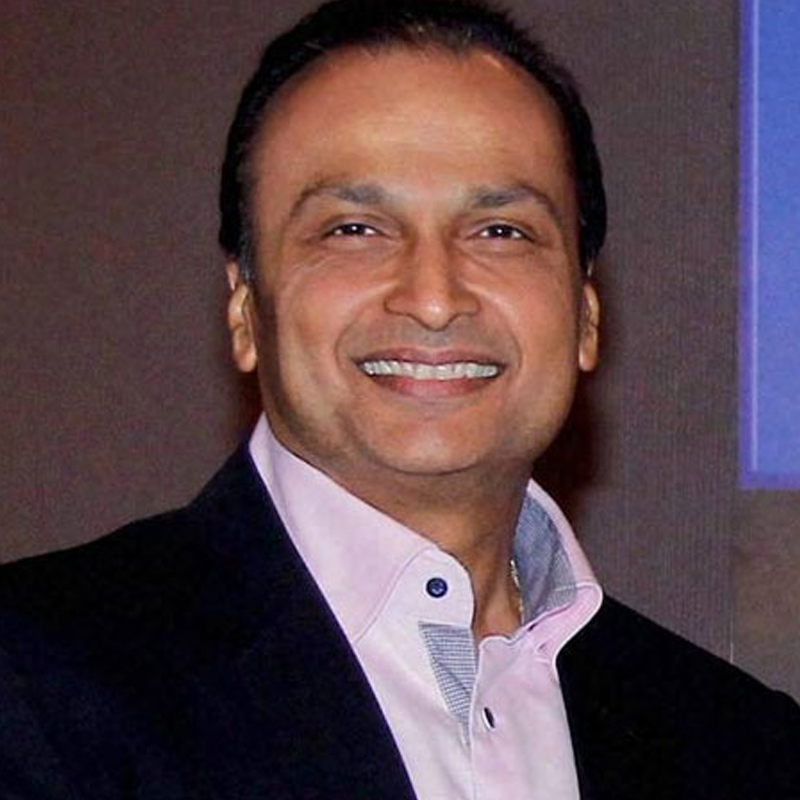
    MUMBAI: Anil Ambani is planning to make an entry into the broadcasting business, the final piece in the media chain where he had so far stayed out.

    On his radar is the launch of an entertainment business channel through Adlabs Films, the listed company where he acquired a majority stake in mid-2005.
    “We are considering it and have given the proposal for the launch of an entertainment business channel. But the board has to approve of it,” Adlabs chairman and managing director Manmohan Shetty tells Indiantelevision.com.

    The idea is to capitalise on the contacts that Shetty has with the film industry and synergise content with Adlabs’ film production business. The channel would also provide information on the gross earnings from box office collections and other financial data.

    Shetty, however, did not wish to talk on the content front, saying “it was too early to talk about anything” till the go-ahead signal was given for launching the channel.

    Adlabs already has a presence in film processing, production and distribution business. The company is also stepping into TV content production and has bought out majority stake in Siddharth and Anita Basu’s production house Synergy Communications Pvt Ltd. Ambani has ventured into the FM radio sector with aggressive bids for stations.

    “The acquisition process is not completed yet. We would be pumping money into the content business after that. We will be making content for other TV channels through this company,” says Shetty. Synergy has produced popular shows like Kaun Banega Crorepati or KBC (an Indian version of the popular western game show Who Wants To Be A Millionaire) for Star and Jhalak Dikhla Jaa (a local adaption of Dancing With The Stars) for Sony.

    Adlabs has ambitious plans for animation. In the pipeline is a 3D feature film, Superstar, with Southern actor Rajnikanth’s Ochre Studios which is slated for release in April 2008. The second animation project is a feature based on the characters Gini & Jony, who represent one of the top brands in children apparel in India.

    “The first film will cost Rs 310 million and we will have a worldwide release. We haven’t finalised the budget for the second film as we are not ready with the script yet,” says Shetty.

    Rounding up the media cycle will be the foray into the broadcasting space. Ambani has already announced his plans for IPTV and a direct-to-home (DTH) service.

  • GBN to dilute close to 15% in IPO, valuation pegged at Rs 6.5-7 billion

    MUMBAI: Global Broadcast News Ltd (GBN), which owns and operates English news channel CNN-IBN, will dilute close to 15 per cent in its intial public offering (IPO), pegging the valuation of the company at around Rs 6.5-7 billion.

    The company, which plans to raise Rs 1.05 billion in the public float sometime in January, has yet to announce the price band. The proceeds of the issue will be used to meet the company’s growth plans, which include the completion of the acquisition of Hindi channel IBN-7.TV18 Group managing director Raghav Bahl declined to comment on the extent of dilution that the IPO would involve. “We are in the process of finalising that,” he said.

    Sources, however, confirm that the company is looking at a dilution in the region of 12-15 per cent through the IPO. Indiantelevision.com had earlier reported that GBN would be raising Rs 1.05 billion.

    Bahl is also aggressively eyeing the regional news space. “We realise it is an important growth segment. But we are still examining it. We will be taking a final decision on this quickly,” he said.

    The other growth area in the broadcasting business, Bahl said, was in launching niche channels in the news space. There is no decision yet in which companies these channels will be housed.

    Growth for TV18 will come from subscription business. Pay revenues in this fiscal will rest at Rs 350 million, Bahl said. “We see the lines of distribution business maturing in the coming years. It will account for a big leap in our revenues. We will also continue to register advertising growth,” he added.

    TV18, which got re-listed on Wednesday after restructuring the different businesses, is expected to close this fiscal with a revenue of over Rs 2 billion and a net profit margin of around 35 per cent. The company houses two business channels, CNBC TV18 and CNBC Awaaz, a clutch of internet properties, financial wire service Crisil Marketwire (which was recently acquired) and an e-broking venture with partners which will get launched in 3-6 months. “TV18 is positioned as a full spectrum business news, information and transaction play company,” said Bahl.

    On the first day of trading in its new avataar on Wednesday, TV18 opened at Rs 600 and closed at Rs 618.35. This was much higher than the market expectation of a debut listing in the range of Rs 450.

    “The market is giving value to the internet properties. Bahl has created a perception where he will be a clear leader in this space,” an analyst at a broking firm said.

    Bahl may decide to list these internet properties (including flagship moneycontrol.com, commoditescontrol, ibnlive, compareindia, cricketnext) which are sitting inside TV18 overseas. He will be adding more sites through a string of acquisitions as well as growing them organically. “We are bullish on our internet properties. We are giving it a balance sheet and a capital structure. We will unlock value for the shareholders at the right time as they reach critical size. This can mean revenues or even critical traffic into these portals,” he said.

    Interestingly, the TV18 scrip (before the restructuring) saw a surge in quick time by Rs 300 to hover over Rs 900 on the back of the IPO floated by Naukri.com (Info Edge). Bahl has created internet assets that can rake in money as he scales up these verticals.

    TV18 shareholders will also enjoy the GBN value which will come to them via the Network18 route. Network18, which has 51 per cent stakes in both TV18 and GBN, is likely to be listed within 2-3 weeks.

    TV18 will be raising capital up to Rs 3 billion to fund its various expansion requirements. “We have made some investments in acquisitions and other areas through internal accruals and debt. We have a capital raising programme,” says Bahl.

    TV18 had earlier mandated HSBC to raise Rs 1 billion. “We will sit with them again and decide how much and when we need to raise capital,” said Bahl.

    Besides being the holding company, Network18 will also house Studio18 and Shop18. “It is positioned as a full play media company. In Studio18, we will have a presence in the movie business across the value chain of distribution, production, acquisition and content syndication. We will roll out our products in the next fiscal. We also have ambitious plans for Shop18,” says Bahl.

  • WWIL announces Rs 1800 package for Cas

    WWIL announces Rs 1800 package for Cas

    NEW DELHI: Wire & Wireless India Ltd has come out with a price package that it believes will lure consumers to digital cable under Cas (conditional access system).

    The multi-system operator (MSO) is offering an own-your-own set-top box (STB) plus a year long access to at least 100 channels, a minimum of 25 of them being pay channels, for just Rs 1800. This scheme will be available only for those who are subscribing within 31 January, says WWIL CEO Jagjit Kohli.

    For those willing to settle for just the service of 100 channels, but not own the boxes, the option is to go for the Rs 600 per annum (Rs 50 per month) scheme. Rental on the boxes will be an additional cost.

    Consumers in both the schemes will have to pay taxes and Rs 77 for the free-to-air (FTA) channels.

    The bouquet, however, does not have any of the sports channels. For access to any additional pay channel the subscribers would have to pay the Trai-fixed charge of Rs 5. WWIL executive vice president Arvind Mohan of Siticable told indiantelevision.com that not even Ten Sports would shown as part of the Rs 600 bouquet.

    Asked how many of Star, Set and Zee channels respectively would form the bouquet, Mohan said that the details were being worked out.

    WWIL is also immediately launching its Cas-enabled GalaxZee boxes in non-Cas cities.

    “There is a feeling that the analogue will stay for a long time in India. The popular perception is that India being a poor country and technologically backward, so digital would take a long time to take off. But even we are surprised to see at what massive pace digital is taking off in the country,” Kohli said.

    Bangalore, Hyderabad and other cities are witnessing the highest demand for digital services, he added. In these cities, physical headends would be set up for the box operations even before HITS arrives.

    The special GalaxZee STBs have on offer various facilities, apart from the normal TV services, and updated boxes with facilities matching those offered by any DTH service provider. The updated boxes would cost Rs 1,499, but the customer can exchange the old boxes for the new paying the additional cost of Rs 299.

    GalaxZee is using digital technology of Scopus for its digital headends, encryption technology from Conax and STB from Handan.

    “We are aware that the average Indian user is not tech-savvy, so we told the architects of the boxes to make them user-friendly,” Kohli said.

    It is much cheaper than the DTH boxes, he stressed and added: “Whatever channels DTH operators offer are fixed for across the country. We, however, have the option of adding whatever channels we want to depending on which city we are operating in, especially the popular regional language channels and also the local cable channels. And even the local channels would be digital.”

    Besides, for multiple TV sets in one household, GalaxZee is offering FTA in all the additional sets at no extra cost, “but in DTH system you would have to pay for every additional TV set”.

    The value added boxes, which are likely to come after a few months, will have internet, online games and phone on demand. GalaxZee will also offer DVR (digital video recording).

  • Dopod launches in India with convergent mobiles

    Dopod launches in India with convergent mobiles

    NEW DELHI: Dopod International Corporation, a leading PDA phone and Smartphone provider, today opened their India operations, setting up office in New Delhi. The company is launching here with three models that has convergent technology powered by Microsoft.

    Dopod also announced the appointment of Ajay Sharma as the Regional Sales Manager, Dopod Communications (India) Private Limited, to oversee its Indian operations.

    Sharma told indiantelevision.com “Initially, we are introducing three handset models – C800, C720 and 818Pro in India. These devices are aimed at providing the combined power of telecom and IT through a unique, convergent solution with Microsoft.”

    Sharma will manage Dopod International’s new office, serving as India’s first Regional Sales Manager, India, overseeing all marketing and business development activities in the region.

    Asked about the company’s investment plans in India, Sharma said: “Presently, we are just setting up a distribution base here to cater to the Indian market. In due course we will be investing a substantial amount in marketing and sales related activities”.

    The models being introduced are 818Pro, a GSM Quad Band PDA phone that enables users to communicate by voice, any place around the world; the C720W, which supports Bluetooth v2.0 w/A2DP & AVRCP, and USB 1.1 for charging and data transfer and also provides GSM Quadband with GPRS & EDGE & hi-speed WLAN access 802.11g.; and C800, which has a sliding QWERTY keypad and 5-way navigation button that “makes messaging a breeze”.

    The last also offers the “ultimate connectivity”, with Bluetooth v2.0 w/A2DP & AVRCP, and a USB port for charging and data synchronisation, and provides GSM Quadband with GPRS & EDGE & hi-speed WLAN access 802.11g.

    Company executives explained that Dopod have entered the Indian market late, after it has seen the expansion phase into the B and C class cities, and the Class A cities have matured into creating a large demand for convergent mobile phones.

    “Dopod International would offer sophisticated and innovative converged solutions to the Indian consumers, which would be at par with the best designs and trends prevalent internationally. The distribution of its handsets models in India would start through a strategic tie-up with National Distributor, Jaina Marketing & Associates,” Sharma said.

    Asked about the roadmap for the company in India, Sharma said, “In the first phase Dopod plans to make its handsets available to Indian customers in 10 cities: Delhi, Mumbai, Kolkata, Chennai, Bangalore, Hyderabad, Pune, Ahmedabad, Surat and Chandigarh.

    Dopod International Corporation was founded in 2002, and has expanded rapidly, Sharma said.

    By the end of 2007, Dopod plans to set up operations in 25 cities in the country.Talking about the models on offer, Sharma said: “818Pro is designed simply to appeal to the no-fuss crowd. It is a light, small and futuristic device which comes in lifestyle design with incredibly enhanced features.”

    The machine packs a host of comprehensive connectivity options, including WiFi 802.11b/g, Bluetooth, Infrared, GPRS (on top of basic features like SMS and MMS), making it “an unparalleled choice for not only general consumers but also mobile business professionals”, Sharma claimed.

    Powered by the advanced Microsoft Windows Mobile Version 5.0, the 818Pro comes with a full suite of applications for viewing and editing files, like Pocket Word, Excel, Power Point, managing address book and e-mails like Pocket Outlook while allowing users full access to the Internet.

    In addition, the 818Pro also comes bundled with the WorldCard Mobile Business Card Capture Solution software. “This means users can now enjoy easy business card data input. All they need is to take a picture of a business card with the intelligent software and all their contacts are instantly captured, recognised, sorted and stored,” according to Sharma.

    Model C720W has a lean and mean design, Sharma said, adding that runs on user-friendly Windows Mobile 5.0 Smartphone operating system. “Windows Mobile 5.0 with DirectPush Technology allows you to instantly synchronise emails, calendars and schedules, and besides, you can access PDF, Word, Excel and PowerPoint documents allowing you to work even while on the go,” Sharma explained. It has a built-in 128 MB ROM, 64 MB RAM with persistent storage and a Micro-SD card slot, he added.

    Model C800 is the “slimmest PDA Phone with slide-out QWERTY keyboard”, but apart from that has all the features of C720W.

  • CNN to air startling documentary on Christianity

    CNN to air startling documentary on Christianity

    MUMBAI:Was Jesus Christ born on December 25? Was He the founder of Christianity? Ask some basic questions, and the answers will be there for you at the programme “CNN Presents -After Jesus: The First Christians”, premiering on December 22 at 8.30 pm.

    The documentary is a surprise almost at every step, saying things like the fact that the followers of Christ would have thought themselves as Jews, not Christians!

    Then, take this quote from the documentary:”The simplest things (about Christianity), like the date when Jesus was born, was totally fluid through the second and into the third century. It only appears for the first time on a Christian calendar in the fourth century as December 25. So you get the feeling that the entire coalescing of the religion of Christianity is taking place over 100 to 200 years after Jesus is no longer walking the face of the earth.”

    Startling, but that is what Richard Freund, PhD, an ordained rabbi and director of the Maurice Greenberg Center for Judaic Studies at the University of Hartford, says.

    “After Jesus: The First Christians” is a major CNN effort that was filmed for four months across nine countries, United States, England, Italy, Israel, Jordan, Egypt, Syria, Turkey and Greece, CNN Productions executive producer and director Jody Gottlieb tells indiantelevision.com.

    The documentary deals more with how Christianity evolved over the centuries to become what it is now today: a faith ruling two billion people across the world in diverse countries and cultures.

    In fact, the early followers of Jesus Christ did not even call themselves Christians. Amy-Jill Levine, PhD, and an expert, says: “Jesus’ first followers – Mary Magdalene and Peter, Martha and the sons of Zebedee, etc. – did not think of themselves as ‘Christians’. The word was not invented until the movement Jesus founded took root outside of Judea and the Galilee.”

    In fact, Jesus was by no means founding a new religion, Levine says. To the contrary, his mission was to prepare his own people for the Kingdom of Heaven. The borderlines between “Judaism” and “Christianity” remained fluid for the next several centuries. Given the diversity in each movement, we can only speak in very general terms.So, is there something that is true about the book “Holy Blood, Holy Grail”, which questions the basic role of the Church in many ways?

    “No, we do not deal with the book at all in the feature,” said Gottlieb. In fact, answering a specific query about whether the film refers to the Dead Sea Scrolls, which too are controversial for their content, Gottlieb says it does not, but adds, “We do deal with the discovery of the Gnostic Gospels.”

    These Gospels are associated with the early mystical trend of Gnostic Christianity. They are not accepted by mainstream Christianity as authentic, and are therefore declared heresy.

    It was a massive effort, and Gottlieb says, “The film was conceived last November and we began filming in January 2006. She led the production team with the assistance of religion writers, David Gibson and Michael McKinley.”

    The centre of the film would be Saints Peter and Paul, so who played the roles? “We filmed a number of the scenes at Nazareth Village, a working village that recreates a Jewish community at the time of the first century. We used the re-enactors to help cast our scenes. One tour guide had played the Apostle Peter before, and slid into his role with genial ease; another played the mercurial Apostle Paul, and worked with us to reveal the character of this complex man, who is often seen as second only to Jesus in the foundation of Christianity,” Gottlieb says.

    “I think most people imagine that after Jesus died, the Church just emerged suddenly and that you had Christians confessing the Nicene Creed, reading the canon of the 27 books of the New Testament, and that it was all in place right after Jesus’ death. And, in fact, it took centuries for these things to fall into place,” says Bart Ehrman, PhD, James A. Gray Distinguished Professor in the Department of Religious Studies at the University of North Carolina at Chapel Hill.

    In fact, Saint Paul could have been the person to start developing the movement that is now known as the Christian religion. “On a more controversial note, it has been argued that while Jesus preached the good news of the Kingdom of Heaven, Paul preached the good news of Jesus himself. In this understanding, Paul changed the message and so created a movement distinct from what Jesus taught. The relationship between Jesus’ message and Paul’s continues to be a matter of debate,” Levine says.

    These are some of the surprises that are revealed, and CNN is keeping the rest, as it is about how much it cost to make the film or revenue generation issues. But nonetheless, it would be a great journey, it seems, from whatever the channel has said so far.

  • Satyam’s BPO outfit bags $25 million contract, in talks for another $10 million order

    Satyam’s BPO outfit bags $25 million contract, in talks for another $10 million order

    MUMBAI: Nipuna Services Ltd, the BPO subsidiary of IT major Satyam Computer Services, has bagged a $25 million animation outsourcing deal. The company is also in negotiations to work on a $10 million contract for another TV series animation project.

    Earlier in the year, Nipuna signed a $9 million deal to provide services for a movie called First Fear which is set for release by June 2007. “We are expecting to bag a fresh contract for around $10 million. The German company will take a call based on the TV episodes that we come up with. We have already signed with this company for $25 million to produce TV series and a movie,” Nipuna chief financial officer M Satyanarayana tells Indiantelevision.com.

    Nipuna will engage UK-based 4K Animation Ltd for the execution and delivery of these projects along with its own battery of 120 professionals over a period of 18 months. The two ‘iconic’ European animation projects include the third season of “Marvi Hemmer Presents National Geographic World,” an award-winning, 52- episode TV series, and a movie, also featuring Marvi Hammer.

    “We will pay a fee to 4K for their services as they will be sending technical professionals from all over the world to work in India and help us in the project. The exact amount will be finalised when we know how many people and working hours we would need from them,” says Satyanarayana.

    For First Fear, Nipuna had paid 4K around $3.25 million. By partnering with 4K, Nipuna is able to source talent from across the world to execute the projects.

    The delivery period for the TV series will start from now and is expected to finish within nine months. The work for the movie will start from April and stretch over 12 months, according to Satyanarayana.

    The series and movie feature a combination of live action and animation. They include actual studio sets used as animation backgrounds, a furry computer graphics creature and 2D-animated characters. Hamburg-based YOUA Edutainment, National Geographic, and German broadcaster ZDF will co-produce the series and movie.

    Nipuna will provide VFX, CGI, 3D and 2D animation services, including pre-production, production, and post-production, from its studio in Chennai. Other animation artists will also collaborate from Hamburg and Berlin for this project delivery.

    Says Nipuna CEO Venkatesh Roddam, “This partnership reflects a growing trend toward ‘corporatization’ in the animation industry, which is leading to increasingly significant opportunities. Long-term contracts such as this one show that companies recognize Nipuna’s capabilities in an industry where ‘human resources’ are integral to quality, and thereby responsible for the success of creative ventures.”

    Nipuna has built significant VFX, CGI, and 3D animation skills by producing numerous global and domestic films. Among the more than 40 Indian films for which it has handled animation projects are Sainikudu, Stalin, Pokhiri, and Belly Full of Dreams. Nipuna also provides artwork and visualization services involving 2D and/or 3D animation techniques and processes to customers in the engineering, architectural, and medical industries.

    Nipuna expects to close this fiscal with a turnover of $40 million, out of which