Tag: indiantelevision.com

  • ETV Bangla to become pay channel in Kolkata CAS areas

    ETV Bangla to become pay channel in Kolkata CAS areas

     MUMBAI: v, a free-to-air channel owned by Ushodaya Enterprises, is to be converted to an encrypted (pay) channel in the areas covered by Conditional Access System (Cas) in Kolkata from 1 March.

    The Bengali entertainment channel had gone pay in other parts of the country from 1 February and has been priced at Rs 10 as reported earlier by Indiantelevision.com.

    The Telecom Regulatory Authority of India today issued an order to this effect, thus updating recent press releases placing the details of maximum retail prices fixed by the broadcasters in respect of CAS areas on the basis of the reporting done by them in terms of clause 7 (ii) of the Tariff Order of August 31 last.

    A press release said that the change had been made as the Authority had been informed when it issued its Tariff Order that the channel which was then encrypted would be made free-to-air in some of the notified areas.

    Earlier last month, two channels for children – the Pogo channel distributed by Zee Turner Limited and Toon Disney in English and in Tamil distributed by Star India – were made free-to-air channels in the areas covered by CAS in Chennai.

    Trai has accordingly updated its list of channels with the charge per channel.

    Even as demand is yet to pick up for Cas set top boxes offered by various MSOs (multi-system operators) with the more affluent residents in South Delhi preferring the DTH (Direct to Home) option, cable operators have begun charging Rs 77 plus taxes to those who are receiving FTA channels through cable. Some operators have added additional cable channels which carry films from Bollywood.

    The Zee Group had offered its Galaxee box and the Incablenet has offered its box for a special offer of Rs 1800 and Rs 1500 respectively, covering the box and around 100 channels for the whole of 2007, if consumers make up their minds within the month of January 2007. However, consumers preferred to take to the DTH systems offered by the Star-Tata owned Tata Sky or Zee-owned Dish TV both of which have also been offering attractive packages.

  • ‘The focus for Nick in 2007 is to drive reach’ : Nina Elavia Jaipuria – Nick India vice president & general manager

    ‘The focus for Nick in 2007 is to drive reach’ : Nina Elavia Jaipuria – Nick India vice president & general manager

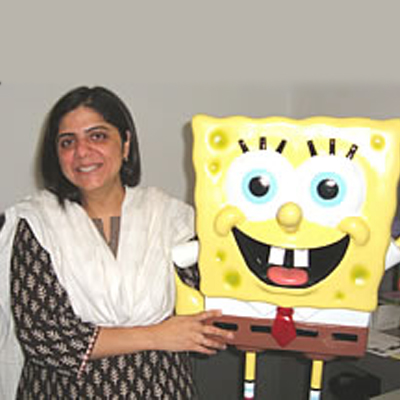
    While Viacom’s smallest wonder, Nick India wants to be synonymous with fun and laughter, the network seems to have found the perfect fit in Nina Jaipura as a head for the channel. With ‘all smiles’ Jaipuria epitomizes the values that the channel stands for and bursts into sudden bouts of laughter as she describes her favourite shows on the channel like Bakkom, the funny bear, which she gladly advices her team to watch (even at work) to de-stress. Although, the channel entered the Indian terrain in 2000, there has been a singular lack of activity, but better late than never, the Nick team seems to have finally got their act together. In a free flowing conversation with Indiantelevsion.com’s Renelle Snelleksz, Jaipuria outlines the game plan for Nick in India, and the efforts to sprint ahead in 2007.

    Excerpts:

    On recently assuming the position to spearhead operations at Nick, what strategy have you outlined to up its presence in India this year?
    During the latter half of 2006, we made several programming and grid changes as well as modified content strategy to get our content right. We also made inroads into distribution and we are now No. 2 in distribution with about 42 per cent C&S connectivity in the country today. Following this we doubled our time spent by 110 minutes, similarly the market share of Nick also doubled from 6 to 12 per cent over 2006. Once all this fell into place we got a ‘sticky’ audience.

    Having said that, the focus for 2007 is to drive reach for the channel because just having a sticky audience is not good enough, you need to increase the ratings. We will use this year to establish our brand and characters. Basically, it is a year for consolidation since we now have the content right and with distribution and promotion in place, now it’s about driving reach.

    How does the channel plan to implement awareness building initiatives?
    The way we want to do this is through a 360 degree marketing approach and while we have our on-air presence and promotion we are also going to step outside the channel as well.

    In fact, we started our marketing activities last year with the ‘Masti Dosti’ contest and the marketing campaign we did around it. It was about consolidating all the pieces and putting it together for the kids, so while we did school contact programmes, we also did cross channel promotions and even painted school buses with Nick themes. In addition, we did a lot of meet and greet sessions for kids, because it involves getting kids to learn about the characters. We are planning to continue to extensively use school contact programmes with our brand ambassadors SpongeBob and Patrick. In fact, we are also looking at bring Dora from Dora The Explora to India this year for our pre-schoolers.

    By taking these characters into malls, multiplexes and getting them to run alongside kids during the Mumbai Marathon we wanted to give them a touch and feel experience as well as sample shows on the channel. That’s how we intend to look at Nick in the way forward.

    You will also see us across many other channels where kids are viewing other shows. We will have syndicated blocks and Nick advertising on Sony, Max, Zee and Zee Cinema. In addition, we are also into regional channels like an ETV Marathi or Zee Bangla. We are reaching out to kids through various means, as you have to touch them at their touch points.

    In the kid’s television space how will Nick differentiate itself from growing competition?
    As a channel we stand apart from the rest and what differentiates us is that everything on our channel today is something that is going to make you laugh. We are a comedy destination and this is the stand we want to take forward.

    The laughter quotient actually operates as a brand filter for all content that goes on our channel. The second aspect of our content is that it has to be appropriate in terms of being absolutely safe and completely non-violent. Therefore it goes through the gatekeeper, which is the mother and we have her trust as well. The content is also universal in terms of gender and is age appropriate catering to kids in the entire 4-14 age group.

    Apart from this, we do have a message for younger kids as well, with the Nick Jr. block which is a mix of education and entertainment. It’s about edutainment where you learn while you play and in which every story has a moral.

    Nick has been a leader in international markets especially US and UK. However, it hasn’t been able to deliver the same results in India despite its launch in 2000. Why so?
    Well it’s all about timing. The focus of the network is now on Nick which was not there earlier. We now have a core structure which is aligned to the business objectives of the channel. In fact we already saw it happening in the last quarter of 2006 and we will see more activity this year.

    We will continue to create a loyal audience and keep delivering on content that has been adopted globally, which has placed us in the first and second position in most countries.

    Why are Indian kids not yet hooked onto Nick, despite its seven year existence in India? Is it that they cannot relate to the content?
    It’s not about kids not liking the content on Nick, but more about kids not sampling the content on the channel because it’s not been out there for them. Once we spread awareness, we will get kids hooked as the content will speak for itself.

    It’s about how much we can do and how fast we can do it.

    Nickelodeon recently unveiled a virtual community playground ‘Nicktropolis’ – What about an interactive website for the channel in India?
    We are also looking at launching a grand website for ourselves as what you see today is a very small portion of it. It will be very comprehensive, telling kids about the initiatives at Nick, it will have all the shows and characters and of course it will host several contests and games. It will give kids a chance to interact and play around with these characters.

    In today’s digital environment, is there effectiveness in reaching out to kids via the mobile phone?
    I think this is a metro specific phenomena, as most kids have access to their parents’ phones, so its still too early to say now, but it will definitely grow. Therefore, all our websites have a mobile SMS function for contests and activities. Once we believe that kids have direct access to this medium we will get onto downloads, ring tones and wall papers. We have already started with digital based products with the SpongeBob PC game.

    Can we expect to see an expansion on the merchandise front?
    We tied up with Bombay Dyeing for bed linen, a SpongeBob PC game has been developed and is available at Planet M, Dora the Explora apparel range has been unveiled and can be found in Landmark and Pyramid and a whole collection of party products in Big Bazaar and Hypercity.

    We have also kicked off what is called a ‘Nicksters Club’ using a database, to send out monthly flyers via snail mail or email. Along with giving kids activities to do, it also announces their birthdays and sends out a little gift to them, which is nice gesture from the channel.

    Apart from International acquisitions, do you think it’s time to strengthen localized programming, a strategy that several other kids’ channels have also adopted?
    The strength of Nick lies in its pedigree and the of kind that has been produced for over 27 years in various countries. That content has proven itself across the world therefore we need to first optimize on the content that we already have. There is a lot of scope to bring that content to India, package it and give it an Indian flavour and then roll it out to kids.

    While we may look at local productions sometime in the future, currently there is a great opportunity to cash in on the pedigree that exists with us. Kids are not really very culture specific, they are so universal in nature that everything works for them, and it’s really how you deliver it.

    Will the channel introduce any new shows?
    Yes, in fact we will launch two acquired shows Tumoya Island and Meteor and The Mighty Monster Trucks on the pre- school block Nick Jr. this month.

    Any plans to bring to Indian initiatives like ‘Kids Lets Just Play’ that encourage children to go outdoors and play or the ‘Kids Choice Awards’?
    It is just a matter of time, as the focus currently is to create a presence that will connect with kid’s, activities such as these will then be a follow up. These are our own International properties and there is no reason why we will not bring them here. But there is still time for that, first we need to establish a larger viewer base.

    What is the time line that has been set to achieve this?
    My clock is already ticking! (She laughs) There is really no time line, it’s about how much we can do and how fast we can do it. Like I said, the intent is there we just have make it happen.

    Could you elaborate on the NDTV Media’s role and some of their activities? Which new advertisers have been roped in and by how much has ad sales increased?
    The last quarter has been good for us even in terms of ad sales, we put the infrastructure in place by outsourcing this to specialists like NDTV Media. They have helped us rope in four main new sponsors for SpongeBob Pakdra Pakdri contest including LIC as the main sponsors, co-presenting sponsors Maggi rice noodles Mania and associate sponsors Perfitti’s Big Babool and Tata Sky. Britannia, Liberty Shoes and Zapak.com are a few more advertisers that joined in, so we look forward to a happy year on that front with a lot more brands joining us.

    As for the ad sales increase, it would be an abnormal percentage to mention, as you could almost say we started from scratch, however we look forward to many more initiatives and NDTV is surely going to have its hands full.

    Currently, what’s the management structure like in terms of a marketing, content and creative team?
    Under my stewardship I have a programming director – Anu Sikka, a marketing director – Shalu Wadhwa, on air promotions – Shuchita and a research director – Shatrupa Thakar and a team of about 18 youngsters.

    What do you perceive as the way forward for a kid’s broadcaster in the highly competitive scenario in India? What is the biggest challenge in catering to kids?
    There is long way to go, we need to get to the top of the chain and that’s the intent right now. The kid’s category has always been dynamic and competition will continue to be there but there is definitely space for more players, giving more choice to the viewer.

    The challenge lies in the fact that kids have a short attention span so if you don’t capture them in the wink of an eye you might as well not at all. At any point of time if the child is surfing channels, you should be able to grab his attention, therefore everything that you put on your grid of the channel makes a huge difference.

  • ‘Radio will certainly see consolidation next year’ : Apurva Purohit – Radio City CEO

    ‘Radio will certainly see consolidation next year’ : Apurva Purohit – Radio City CEO

    The radio industry is poised to make its next big leap as radio stations gear up to implement the Phase 2 licenses. The metros have been covered and it is now the turn of the smaller cities to experience FM magic. Radio City has been a pioneer in the FM boom with the first ever FM station in India- Radio City, Bangalore set up in 2001.

    Five years on Radio City CEO Apurva Purohit details the changes in this dynamic industry and all the challenges it’s yet to face in an interview with Sujatha Shreedharan from Indiantelevision.com

    Excerpts:

    The Phase 2 bidding has seen the major networks, including Radio City, expanding their footprints to cover mini metros. What are the unique challenges one would face when it comes to setting base in a small local setting?
    Clearly, when we had decided to go in for the second phase of bidding we had decided to restrict ourselves to metros and mini metros only. Essentially what we were saying is that we will go for the top 15 cities where we have over 70 per cent of the advertising revenue and they are in certain tone and manner and feel similar to the large towns we have been operating in.The only exception is the whole Maharashtra belt which includes Ahmednagar and the smaller stations. And this is a call that we took because networking is allowed only in these cities which means you set up your network in Ahmednagar and run Sangli and Nanded from that station. We took that call because we wanted a network station in our portfolio. Also Maharashtra is a rich state and works from the advertisers perspective. We also believe that our SEC A and B market are not dramatically different in these regions whether it is in terms of sophistication, exposure to media or even exposure to FM. They may be at different life stages but in terms of consumer, percentage of SEC AB population, income level or education or even ethos they are broadly similar. Also you must remember that we have been running the Lucknow FM station for five years. We have the experience of running a FM station in a mini metro and we hope to translate this experience into other smaller cities.

    What about the language and flavor of these upcoming FM stations?
    Radio City does believe in typically adapting itself to the local flavor. At the same time you must remember that we are positioned as a premium, up market SEC AB kind of stations. Therefore our language mix does tend to be different from the typical mix than a mass station is concerned. For instance in Bangalore we do run a lot of English, Hindi and Kannada whereas the other stations are typically Kanada stations. In Chennai, we are very much English and Tamil. In that sense, the kind of RJ talk will be focused on the premium market.

    What about a city like Pune?
    You know Pune is culturally very similar to Mumbai, so that is the kind of mix one is likely to find. Of course it will be adapted to the local culture of Pune which is rich in theatre or Marathi music.

    With the setting up of stations in mini metros, Radio City will now look at dual competition – from existing network players who are also setting up their stations as well as from single city players. How will you tackle that?
    Certainly the local players have taken a single city or selected a particular city because of various reasons like their already established status in say print or publishing. So they are very focused and are able to get into a mass position because they are local. Besides radio while it may have a national brand, does tend to also try to be local. So there is competition. Big, small, single city networks – they are equal competition. The other thing is that I think the position we have taken which has evolved over the last five years is differentiated not only from single city players who are local or mass but also the network player. What I am trying to say is that single city players tend to take the bottom end of the pyramid – local, regional, SEC ABC, while network players have taken the SEC AB kind of position which is mass but on a network level. Direct competition is therefore the network players, while local stations tend to be competition to players like RED FM.

    What about advertising revenue accruing from mini metro stations?
    In fact content is where you could say that differentiation gets greyer. As far as revenue is concerned, that’s a no-brainer since we are trying to get ads from the corporate clients and large national players. In that sense the local players are no competition. The question to ask is – Is the advertiser trying to buy radio because you also have print or is the advertiser trying to buy a good network which is either number one or two. We are very clear that we as a network focus on the right kind of network in 15 of the top cities. In revenues there is no competition. As far as content goes, there will be competion with local players.

    A few years ago, differentiators were perhaps easy to identify within the few radio players. With the numbers growing how does one still hold on to or reinvent that differentiator?
    I think the whole industry is in a state of flux. My opinion is that now, when the newer players come in they will have to recognize that if they want to grow the listenership pie they better come in with different options. The newer guys have to come in with different languages or different formats and personally if you ask me that is not happening right now. All the newer guys have really not lived up to our expectations of trying to build a differentiator and as you are rightly saying therefore today there is a mass of similar feel players. You could also say that there are certain brands which have been there for five years and therefore they have equity and there are others which are just entering the market and they are broadly similar. You must also remember that the investments in brand building have happened only recently. Before this the whole industry was struggling to find its own feet. In that sense the industry is still very nascent in terms of trying to build an image for itself. Given those kind of issues and challenges, we have been trying to portray Radio City as a brand, say, which is different from a Radio Mirchi perceived as a more aggressive and in your face – teeny bop kind of station to our more softer, slightly older 25- 30 years, premium listenership. And that has developed over a period of time and is becoming clearer only over the past year or so. Sure, the differentiation worked in a non competing market. Today, however, you have to take it to the next level and we at Radio City are doing exactly that- pushing this whole process of identifiable branding to the next level.

    Could you explain how you plan to do so?
    It is a little premature to say that, except that the intent is very much there. But if you had to look at international examples certainly there are differentiations that could be built in at the psychographic and demographic segment. Even demographically, what an 18-year-old youngster wants is different from what a 25- year-old youth wants although they may fall under the similar youth category. So if there is a difference in the kind of music they aspire to hear, they must be given that. And the radio that pushes this difference will be the radio station that stands out in the long run. I think where people have failed is that they have tinkered with the branding or marketing story but have done nothing different with the product. At Radio City we are very clear that we will only talk about the differentiation when we can actually demonstrate it in the product. No one has made that differentiation although we have tried various innovations. With Mughal-e- Azam or Babbar Sher or more chat shows. But we believe that we can really fine tune the product far far better.

    Is there a sense that this overdependence on Bollywood by all FM stations is the real cause of similarity in programming?
    I think that there is Bollywood and then there is an equally vibrant music industry although we tend to put them all in the same basket. But if you remove the animal out of the Bollywood cage, then you will realize that there is almost a 100 years worth of beautiful music. It’s just that a lot of it happens to be mostly from Hindi cinema. Ultimately it’s the music of the nation. All of us are using popular music and that is a fact of life. We are ultimately mass stations aren’t we? If we were niche stations we would have jazz. But it’s not fair to say that Indian radio stations are equal to Bollywood and therefore ‘Che!’ They are not different. Internationally also all mass stations do look at popular music. Almost 80 per cent of international stations play popular music except that they are able to differentiate themselves in terms of appealing to a particular target group or by playing only a particular ‘sound’. Unfortunately in India, we are yet to go to that second level. This can be due to various reasons- nascent industry, unsound policies. Besides how old is this industry? About five years old. Out of which four years we spent struggling to stay afloat. It’s very easy to beat up this industry with the ‘Bollywood tag’. But we’ve barely stabilized over the past two years. So there’s no doubt that the differentiation has to come and will come. And it will be led by pioneers like Radio City. If you ask me, even within the context of popular music you can differentiate.

    How long do you think this process of evolution will take place?
    According to me FM started evolving last year when the government announced regulatory corrections and a fresh package. Look at the growth since then. We have grown in stations. The number of players in each city has also increased and even in terms of content – you have an Indigo which plays English music or a Fever FM which experiments with format radio. So one phase of evolution has already happened. The second phase of evolution will start now where players like us really chart out our different positions which will happen in the coming six months. Then there will be an era where there will be more consolidation and regrouping. Some players will fall by the wayside, some players will push ahead. In the next year there will certainly be a lot of consolidation. Then there is the station setup, scaling up. A year ago radio city had about 100 people. We are now looking at having about 300-500 people in the next few months. Isn’t that a spurt? The natural evolution in any other industry would have been ten years; we have done that in three years.

    ‘The natural evolution in any other industry would have been ten years; we have done that in three years’

    Do you believe that there is bound to be a clutter with the number of radio stations coming in?
    I don’t think there will be a clutter, but in the frenzy to launch radio stations I believe that learning will not happen as it should. Learning and qualitative inputs. There is no luxury to actually test market a product or try a pilot launch. Now you say, lets launch first and we’ll figure out in the market if it needs to be changed.

    There is a huge debate over the tools used to measure listenership and advertising on radio. What does Radio City turn to?
    Of course the first thing that this industry needs to do is set up a robust currency to determine advertising and listenership. There is a strong movement towards it and sooner rather than later it will have to evolve. We prefer to use NRS and then we have Synovate which does our brand research for the last three quarters. We are just waiting for the industry to stabilize before we declare these findings publicly. We are looking at listenership understanding, listenership pattern in different cities, psychographic and demographic pattern.

    Is the industry complaining about the FDI regulation in radio which allows for only 20 per cent foreign equity?
    Currently we are happy with whatever the government has allowed considering we spent five years working hard to convince them. We are quite ecstatic about what we got. I think the government itself needs to realize that the industry is in a state of buoyancy and it must give whatever impetus it can – news and current affairs license, networking, multiple frequencies or FDI. Quite honestly, the first three rather than FDI.

    Is Radio City looking at multiple licenses and what kind of stations would you be interested in?
    Yes we would. But for now it would be like blue sky gazing. We would look at news and current affairs, different genres of music, spirituality or even different languages.

    Is there a worry about lack of a sizeable talent pool to choose from?
    Talented and skilled people is something all radio stations are worried about. Where does one get trained people from? You have to do your own training. Fortunately we realized sometime ago and we have invested reasonably in increasing the skill set. Since we’ve been here for five years, we have had a large number of people working for us. Even then it has been a challenge for us.The other problem is of course being attractive enough as an employer for a talent pool to come to us. We try to build ourselves as a brand which is informal or a fun place to work. Very ‘un media’ is how I would describe it.

    What does the re entry of Star mean to Radio City?
    It is purely an investment decision at a shareholder level. At the operational level of the company it has zero impact. And besides we have alliances with most networks as clients or media partners – DNA, Zee, Sony and Star. So there won’t be any special content tie ups with Star. So operationally nothing, it’s purely an investment decision.

    Can you give a comparative understanding of how radio looks – 2006 versus 2007?
    In terms of the ad pie there has been no dramatic change. While there has been a 30 to 40 per cent growth, there will be no big change since the new stations have not been all set up and operational. Between 2005 and 2008 one is looking at doubling the industry. It will grow from 2.5 to a minimum 5 per cent simply due to geographical coverage area. In fact we would have more than doubled if there were far more genres on offer. It won’t go up to a 60 per cent unless people start segmenting and providing different products. If I were a new player, that’s a question I would ask.

    What about the revenue and listenership growth at Radio City in the past year?
    Revenue wise we have clocked a 40 per cent growth last year. As for listenership, if I were to give a Bangalore example it has grown from 1.5 million to about 2.5 million listeners which is almost 60 per cent growth.
    Radio City has also jumped on the bandwagon to have celebrity RJs on air?
    We are very clear that a celebrity won’t work unless it’s what the programme wants or what the brand wants. Using a celebrity just for the heck of it won’t work. Taking a TV star and putting him on radio is just gimmicky. We concentrate on RJs in terms of their music understanding power. Sonu Nigam speaks about Mohammed Rafi, Roop Kumar Rathod talks about ghazal maestros. In so far as the celebrity enhances the music experience on our audience, we’ll entertain the concept. And this is the case for all radio stations, not just Radio City.
    What about the music industry and the high rate of fees it charges radio stations?
    Somewhere we will have to understand that radio will only help drive their CD and DVD sales.The cost of purchasing music must be justified. We as a large network may deal with it but what about smaller stations.
    Radio City recently tied up with Vibgyor Brand Services for on ground activation? What kind of details have been discussed since the launch?
    We are in the process of client briefings with various advertisers. We are already offering one level of on ground activity. But our clients are asking us for more than just sales promotions. They want more exciting ways of integrating our client’s needs.
    What according to you would be the next fillip for radio?
    The next fillip is of course the launch of stations in 91 cities. After that, the sky is the limit. How we use radio with net, outdoors, events, with new age media will also come under sharp focus. Look at radio and mobile. Radio used mobile much better than television. We receive 2-3 million text messages from one city, while television sees that number nationally. As for us, currently we are in the process of setting up our stations in Gujarat – Surat and Ahmedabad – and are in the process of employing people.
  • DD, Mike Pandey launch a brave green series

    DD, Mike Pandey launch a brave green series

    NEW DELHI: Three-time “Green Oscar” winner environmental filmmaker Mike Pandey says there is a great scope for a film like “Al Gore” which seems to have transformed the American environmental conscience leading up to massive pressure on the retrogressive Bush administration, but says Bollywood has not grown up and there is no money for that kind of endeavour.

    Speaking to indiantelevision.com ahead of the launching his latest series for Doordarshan, “Earth Matters” in its second avatar, Pandey said: “I’d love to do that kind of a film, but where is the money? Bollywood still spends money only on crass commercial ventures and ignores real issues.”
    Pandey added: “I still make these films though there is very little money in it.”The series will be telecast from February 4, and Director General LD Mandloi told indiantelevision.com: “We have paid Rs six lakh per episode, but the cost could have been higher for the filmmaker,” corroborating Pandey’s version.

    Interestingly, he said, “This is the first time an environmental series is being made in India in Hindi.” The earlier series of the same title was in English.

    Mandloi said: “We had received major appreciation for the first series and thus decided to do this new series. Unfortunately, everything nowadays is seen in terms of ‘marketability’, but as a public broadcaster have a different agenda.”

    The second series will be of 26 episodes and shown every Sunday at 11 am on DD. Mandloi said that DD is committed to such environmental programmes, despite the fact that consciousness on such issues in the country is not as high as it is in the west.

    He quoted fabled Hindi poet Muktibodh: the world must become much better and cleaner that it is today and for that we need a good sweeper.

    Mandloi said that the last figures for DD viewership was 800 million (realistically put, around 350 million) and for this new venture, 321 AIR radio centres and 30 channels of DD would be pressed into service for a massive awareness campaign, and also that billboards would be put up at all DD and AIR stations.

    The series – shown in snippets as a preview at the Indian Habitat Centre today – has captured a wide range of sensitive issues and veers right away from the rather puerile attempts to indulge in jargonistic poster-films that mark novice enterprises in the field. From the unseen Andamanese tribes and their lives – they actually seem straight out of Africa and make the audience feel they are seeing something foreign – to dances of Manipur and the relationship of such dances and rituals with the inherent lifestyle of the native people who live amidst nature, the series has some major surprises.

    There are episodes also on other countries like places in Africa and Sri Lanka. Pandey said there is need for people across the share their experiences and help coexist. Pandey, addressing the media later, Pandey said that people in India should be aware of issue such as the ones he has filmed on. There is need for understanding and thatcomes from education.

    He revealed that as a comparison, at a recent film festival on environment abroad each 40-minute film cost Rs 22 crore. That is the kind of investment people make abroad on such issues.

    “We do not realise that our lives depend on just two insects: the butterfly and honeybee, which pollinate 87 per cent of the plants and give us the food and fruits we survive on. Long ago, education was taken away from us. The emphasis was on how to survive. But that has changed and now we need to take heed of how to keep the earth green.” This is the message that Pandey feels should go out to the Indian vernacular audience needs to see.

    Pandey has also delved on issues like stem cell research and on our scientists and their IPR related progress.

    Mandloi, however, said that the series will also be dubbed in English and shown across the country where Hindi is not understood and across various places in the world at a later date. Pandey said that these are archival series that can be played again and again and will ever remain important, though the making was extremely tough. On the impact of such films in India, Pandy gave one stark example, of how a film on destruction of the vulture population in India was seen by the Prime Minister and only then a decision was taken to stop production of a drug that had wiped out 87 million vultures in the country.

  • ‘TOI’ ties up with Tata Sky for marketing in Delhi

    ‘TOI’ ties up with Tata Sky for marketing in Delhi

    NEW DELHI: While the long awaited JV between Hindustan Times and Times of India may not have surprised anyone, another marketing exercise by TOI could: it is a so-far unannounced tie-up between TOI and Tata Sky for the marketing of its DTH service in Delhi-NCR.

    The deal is that Tata Sky is going to sell and collect the monthly subscription fees from their customers through the circulation department of TOI, now termed as Report and Market Development, or RMD department.

    Sources in TOI refused to comment. But while it is being said that a deal was signed earlier this month, Tata Sky CEO Vikram Kaushik told indiantelevision.com: “There is a lot of discussion with not just TOI but beyond that also, but nothing has been finalised as yet.”

    Tata Sky has been running a business module so far that involves selling its dishes and STBs through shops selling mobile phones and electronics equipment, especially TV sets. But that does not seem enough.

    They receive a large volume of orders and requests over the telephones which operate through BPOs. “If they have to land their own sellers to service all the new demands, it will be hugely costly and eat into their slender margins of selling boxes, especially due to the competition,” a source told indiantelevision.com, adding that each box is a one-time sale only.

    Which is why, Tata Sky, these sources reveal, has said that TOI’s newspaper vendors can be used to get feedback from those who called. The plan is that since TOI has a massive network of newspaper sellers, they could be coordinated through the paper’s RMD people. “The callers’ addresses are going to be passed on to the vendors who would make actual contact with the interested persons, thus saving Tata Sky the effort, time and cost.

    Similarly, Tata Sky has reportedly told the paper’s bosses that it alone has 200,000 DTH homes in the entire Delhi-NCR region, a lot of them being in the group housing societies in outlying areas of the NCR, like Gurgaon, Rohini, Ghaziabad and so forth.

    Tata Sky has proposed that the vendors also be used to collect the monthly charges for the card, which is a prepaid one.

    “They wanted to avoid the ‘cablewallah’ experience, where the cable operator’s grounds-man comes for the monthly rental and is sent back to come on another day. In any case, just as in the case of first-contact before a person buys a Tata Sky set, for collecting the monthly charges as well, the same inexpensive network of unskilled newspaper vending staff could be used.

    In fact, Tata Sky has convinced TOI that even if a fraction of the total monthly charge for each card is retained by TOI as collection fee, that is a substantial amount per month with Tata Sky having 200,000 users and the number growing. The system would be smooth and make business sense to both the paper and the DTH operator.

    It is not clear that this system would be tried in the other cities where TOI is read. It is believed that even in places where there is no TOI edition, but the company has bought other local papers, this system could be tried later.

  • ‘B’cast pros will benefit from tec choices at Expo’ : AS Guin – Engineer-in-chief at AIR and president, BES

    ‘B’cast pros will benefit from tec choices at Expo’ : AS Guin – Engineer-in-chief at AIR and president, BES

    The NGO Broadcast Engineers Society is holding its 13th Expo this year from February 1 to February 3 at Delhi’s Pragati Maidan. It is a much larger exposition this year, and with the government setting the cut-off date for digitalisation, will showcase technology options. Possibly the most socially significant technology presented will be the low-band community radio system, supported by Unesco.


    Indiantelevision.com’s Sujit Chakraborty met AS Guin, engineer-in-chief at AIR and president, BES, to find out what’s on offer this year.


    Excerpts:

    The BES Expo is just a few days away. What are the new things expected this year?

    There are many changes in respect to last year. The participation has grown manifold and instead of the earlier venue of Hotel Taj Palace, as in 2006, this year we have to shift to a much larger arena, the Pragati Maidan, which gives us 20 per cent additional space.

    In terms of revenue, what is BES’ business model?

    Here too, there will be a 20 per cent rise in receipts. There will be 16 new companies who will take part for the first time. BES depends mainly on revenue from the exhibitions and membership. We have 1,600 members across the country, and we expect the number to grow further next year. We have to cut some of the costs, but then we also plan to start an educational programme, which will be no-loss, no-profit.

    What are the major technological windows that you wish to open this time?

    The biggest is of course the community radio solutions and mobile TV and radio. These would be most important in terms of both business and community service, with local NGOs being able to broadcast on their own radio, with all the support of AIR experts. Even our retired engineering staff is willing to offer their services free to persons willing to set up local channels.


    As I told you, we have 1,600 members across the country and they give us a tremendous outreach to help spread the low-band community radio movement. We are very excited about this programme, which will be a prime exhibit this year.

    Who all are supporting this event?

    The event is supported by the Ministry of Information and Broadcasting , Government of India, and endorsed by International Association of Broadcasting Manufacturers and also by Prasar Bharati, Asian Broadcasting Union, UNESCO, IGNOU and Department of Information Technology, Government of India.


    UNESCO is going to showcase its low-cost technological innovations and is with us at BES EXPO 2007, and will push forward the community radio programme. They are going to present suitcase radio, hand-wound sets (which need no battery or electricity to run) solar-powered FM transmitters, and other radio equipment compatible with Indian conditions.


    They will also set up in their stall a community multi-media centre, including radio, internet, and content networking programme, with live content programming.

    Many private sportscasters have announced their mobile programmes and one is running already, but these show snaps only. So how is your system going to be different?

    No, ours will be a full streaming. This will not be clips. In fact, this will completely shift prime time to office time, with people seeing DD or hearing AIR news and programmes on their way to office. These will not be clips, but as you see or hear news.

    New technology will always remain in the public domain, because of the sheer scale of operational costs, which the private sector would find very difficult to match

    Is this Prasar Bharati’s own technology?

    There is technology available in Europe and the US. The latter is using the MediaFlo. technology and Europe is using DVB-H. MediaFlo is a proprietary system, while DVB-H is an open system. An expert committee constituted by the Ministry of Information and Broadcasting has recommended DVB-H .With Secretary level approval a final decision is still awaited.

    What are the technical and operational differences in the two?

    DVB-H is IP-based and an open platform, where as MediaFlo has proprietary elements MediaFlo has less channel switching time than DVB-H. Both employ battery-saving techniques. They have different encoding and modulation schemes.

    What is the delay, and how long would it take?

    The proposal has been sent to the Planning Commission, which will study it and will have to sanction money. This could take eight to 10 months.

    What will be the outcome of the event?

    Broadcast professionals will be highly benefited in enhancing their knowledge about emerging broadcast technologies and also have a look and feel of new broadcast equipment systems in the exhibition. It will help the broadcast planners to choose viable and right technologies for their digitalisation plans.

    You have said that AIR and DD will turn digital during the 11th Plan. What is the cost you are looking at?

    For AIR, we have asked for something like Rs 5,900 crore and for DD another Rs 6,000 crore. But these are very large sums of money and chances are we might not get it all during the 11th Plan itself. But even if we get something like half of this, we could go digital and AIR could have seven digital channels. The output would be almost FM quality.

    Would these channels be available on the normal radio sets we use today?

    No, that technology is not available so far and even in the west, it is very costly, about $80 for a digital radio handset.New technology will always remain in the public domain, because of the sheer scale of operational costs, which the private sector would find very difficult to match.


    This will completely take away perhaps the only joy of millions of poor Indians who are totally dependent on AIR for news and entertainment, besides the public services as on health and agricultural advice. Well, the decision to go digital, across the world, has been taken, so this will have to happen. In any case the cut-off date set by the government for transition from analogue to digital is 2015. But then, as demand goes up, the prices will come down. A normal radio handset now costs Rs 200, and these sets will cost something like Rs 500, at the most, with cheaper technology coming in. But do remember that the audience will have a choice of seven channels.

    Any other benefits on offer for this costly technology?

    Interactive broadcasts and a number of value-added services will be possible. Well, one of the most important things will be the pro-active role AIR will get to play in disaster management. We will introduce a system all across the channels on the coastal belts, which will be integrated with the early warning systems. Thus, whenever an early warning is triggered off the computer linkage with the radio stations will ensure that the channel would automatically switch over to transmitting the warning, with the ongoing programme switched off. Once the warning has been issued, the radio station would switch over to the normal ongoing programme. This will give a huge lead time for people to evacuate.

    How do you see prices coming down?

    Take the example of DTH. When it started the companies were asking for Rs 5,000 per dish, but we are now giving our DTH, DD Direct Plus at Rs 1,200. So this depends on two things, content and demand.

    Who are you looking to as technical collaborators?

    You see, the US has HD radio, and Korea uses DMB but that’s mostly for TV. China uses DRM technology for external services. We have spoken with China about DRM .It has shown a keen interest and once the two countries collaborate, the prices of receivers would dramatically come down. China would have to collaborate to set up factories in India, because if we have to import, prices would be very high.

    What are the network plans?

    The digitalisation process would start with all the studios. It would be the Short Wave transmissions that would go digital first. Each state capital would have one Short Wave transmitter and there will be three transmission complexes with five transmitters per complex for national digital radio coverage. These complexes will be suitably located., Each complex will transmit five digital channels across the country, including regional language channels. This will mean that these channels will be accessible across the country. So, a Bengali in Mumbai would not have a problem if he wishes to hear All India Radio Kolkata.

    Being a public broadcaster, how do you think the private players would match your line of thinking?

    Interestingly, I think that introduction of new technology will always remain in the public domain, due to the sheer scale of operations and costs that private enterprise would find it difficult to match. This is a Plan expenditure with government support. Only after it is introduced in the country will public private participation happen. For example, the private players have invested a huge amount in Phase 1 and 2 of FM, which is in the analogue mode. AIR is proposing digital FM in the near future, using DRM+, or DAB or HD Radio technology. But forget replacing the existing transmitters, even initial investment will not be easy for the private entrepreneurs, unless the receivers for digital broadcasting become low cost and catch the imagination of the public.

  • Star to form JV with Balaji for Telugu channel

    Star to form JV with Balaji for Telugu channel

    MUMBAI: Television content production house Balaji Telefilms Ltd. will get into broadcasting through a joint venture with Star Group. The two companies will be launching a Telugu channel with Star as a majority partner.

    “We will be partnering with Balaji for the Telugu channel. We will have majority stake in the joint venture,” Star India advertising, sales and distribution president Paritosh Joshi tells Indiantelevision.com.

    For the Bengali general entertainment channel, Star will continue its joint venture arrangement with the Ananda Bazar Group (ABP) but the corporate structure has not been frozen yet. In Media Content & Communications Services India Pvt. Ltd (MCCS), the company which owns and operates Bengali news channel Star Ananda, Star has a 26 per cent stake while ABP holds the balance 74 per cent.

    A separate joint venture for the Bengali general entertainment channel is being considered. Star has the flexibility of holding a higher stake in the JV while in news uplinking regulation restricts it to have a maximum 26 per cent stake.

    “The shareholders have been under discussion but nothing has been finalised as yet regarding the corporate structure for the Bengali general entertainment channel,” says Joshi.

    A two-hour entertainment band in the afternoons on Star Ananda is likely to be introduced in June. “The process has got slightly delayed but we are aiming to come up with the two-hour band in June. We will monitor its success and a full fledged Bengali entertainment channel could come up towards the end of the calendar year,” says Joshi.

    The Telugu channel is expected to be launched in August-September. “We have started work on the content strategy and are in the process of formalising the joint venture for the Telugu channel,” says Joshi.

    Balaji has the option of partnering with Star in the southern-language channels. This formed part of the agreement when Star acquired a stake in Balaji Telefilms. But it excludes Vijay TV as Star bought out UTV’s stake in the Tamil channel before the deal with Balaji was struck.

    Balaji has had to weigh several factors like its existing business with Sun TV Ltd. where it gets healthy revenues. In the last two quarters ended 31 December 2006, Balaji had revenues of Rs 158 million from the Sun network channels.

  • ‘Channels building bouquets to provide the advertiser discounts is an unfortunate and shortsighted perception’ : Sunil Lulla – Times Now CEO

    ‘Channels building bouquets to provide the advertiser discounts is an unfortunate and shortsighted perception’ : Sunil Lulla – Times Now CEO

    Times Now CEO, Sunil Lulla has been associated with the business of television over the last two decades. His strength lies in building brands from scratch. And the channel is going to need all that experience as it continues to find its feet. 30 January would mark the completion of one year for Times Now but the man at the helm knows that he still has a long way to go.

    Indiantelevision.com’s Sujatha Shreedharan caught up with Lulla to discuss the channel’s performance over the past year and how it hopes to take on the competition in what is turning out to be the most fiercely competitive space on television.

    Excerpts:

    What’s the big picture in the news broadcast industry as you see it?
    While news channels are trying new formats, there are certain restrictions as an English news channel that we have to contend with. Our audience is niche, the kind of formats they have adapted to so far dictate our content too. We need to break out of that mould.

    That said, is there space for a focused or niche channel? Yes of course there is. While weather does not play such an important part in our news unlike the US – there is a space for a specialized Weather news channel or Sports news channel. But as of now we are confined to the (general) news space and this is where we will bat it out. There was a time when we had five channels gunning for about 80 per cent viewership. Today we have over 30 channels looking at the same viewership. There is audience fragmentation but that has also meant a certain rating system and therefore a certain level of accountability. Look at our ad to GDP ratio. It is perhaps better only than a Bangladesh.

    As the market grows, the consumer will have more choice. This proliferation is necessary as it will grow the ad curve. One of the more underleveraged areas in my knowledge is India’s ability to produce content for international markets. We need to take our content and license it to other players.

    The last year seems to have been as much about sorting out what exactly is the personality of the channel as anything else. Have you arrived at clarity on this?
    We were always clear that we were and are a general news channel and as such our competition is also in the general news space. When we started out NDTV was the only dominant player and our natural competition in this space. The launch of CNN IBN was a surprising entry. This meant that there was a huge amount of viewership traction.

    So in terms of competition you would name NDTV 24×7
    I have no problems naming NDTV 24×7 as our competitor. I think NDTV 24×7 being the first English news channel in India and the vast experience it has behind it will remain a competition and a benchmark for all the following channels.

    But you were also competing with the English business news channels in the 8 to 4 band?
    Yes, we do have a business band that we took a re look at and decided to restructure it. We have now made our business band slimmer. The restructuring of the business band happened around 16 July and I think we’ve bounced back pretty fast.

    Our focus is on the ‘Big story’. This is what has worked for us. So if that big story is Abhishek and Aishwarya, then we’ll cover that. If it is Sourav Ganguly and cricket then we will track that.

    What improvisation is being made on the content side to build up a loyal audience?
    On the cusp of our one year completion, we can only plan things for ahead. But using this as an anchor point, we will have announcements and changes to make on the content front. We are in the process of launching an entertainment based show to air during prime time weekend. We are already experimenting with different formats. We have our sports show ‘The Game’ repackaged and presented in a fresh format especially focusing on the World Cup.

    We will start the new entertainment based show in February while March and April will see us beefing up and fine tuning the weekend programming. Prime time for the weekend would be a combination of news and programming. Wraparounds are the way forward.

    Times Now will also launch its campaign coinciding with its completion of one year on 31 January called ‘One year: In tune with what’s next’. It will be launched as both a print and television campaign.

    Speaking of content, due to cut throat competition, news channels are increasingly resorting to sensationalizing what they broadcast and even becoming quite sordid. This is only giving a greater handle for regulation to come into the sector which is hardly what anyone wants. Isn’t this a cause for concern for all news broadcasters?
    Within the breaking news format, it has always been the combination of activism, regulation and media that has pushed up the immediacy of news. So whether it is Bollywood or cricket – both of which have shown pretty dismal performances – is always covered by the Indian media. I think where the idea of sensationalizing news needs to be questioned is by the news network itself. That is a matter or an individual call of what one must not do. There is a certain sense of values the news network follows or maturity it shows in handling issues.

    Then there is regulation. Sure it’s a concern when it becomes interfering but the regulation is simple, lucid, clear to understand and detailed. We live in what is called the ‘google world’; we have information at the tip of our fingertips. So to shy away from news, whatever the content would not be fair. How we approach it is another issue.

    Now that Times Now has settled down, what’s the strategy to take it forward and drive up ad sales?
    There are a few things which come together to create ad sales – performance in a genre in which you are perceived to be a habit, traction in terms of ads, to hold prices and take them up, offer properties which will attract the advertiser. For instance, we will have a budget special coming up soon. But by the first week of January we had already sold that. Similarly we have the ET Awards. The idea is to ROS advertiser for which you are a reach vehicle. We need a pipeline that’s full but at a healthy price. We need to identify tent pole properties which will rope in the advertisers. Obviously we accept that NDTV has more advertisers than us.

    What do you think is the number of channels that are practically sustainable in each genre of news?
    Just last week, as I was talking to someone, the whole discussion about the number of channels in India came up. There was this realization that we are about 300 channels short. Within the next three years, there will be about 250 million homes with television out of which about 71 million homes have cable and satellite while about 30 million of these are what we know as urban homes. And these are only homes that are reported. The number increases as more and more black and white television sets are replaced by colour television. So we are talking here of a paucity and not an overcrowded situation.

    One unique aspect of the news channel business is that buyouts are the exception. The only one that comes to mind is Channel 7 in the recent past. Is that about to change soon? And if and when Times Now does view the regional market how would you go about it? Would you look at acquisitions or developing your own channel?

    You are right when you say that buy outs and acquisitions are new to the Indian news space. But if you are talking growth then we believe in both organic and inorganic growth. We have no phobia to either approach. But the reason for such growth should be stronger and better shareholder value.

    I personally think channels building bouquets to provide the advertiser discounts is an unfortunate and shortsighted perception. The priority should always be the value. I would rather have one channel at a good quality pricing than have 10 channels.

    That said, I think Zee has done a better job at being a bouquet. I wouldn’t count the regional channels because they are almost stand alone channels in that region. Star Plus and Star One again leave their other channels far behind.

    This is not the kind of orientation we have at Times Now.

    ‘Turning pay may have hurt us as a business’

    As management head of Times Now, what’s your priority — toplines or would you rather watch the bottomline?
    What is important is to generate quality content, build relative rank and close the distance between us and our competitor. We understand it’s not about a short term game. The more often we manage to satisfy our consumer or advertiser, revenue growth will increase accordingly. Right now the priority is to get the content mix right and secondly to get the channel across. This does mean investing in distribution.

    What sort of investment has gone into Times Now up until now?
    Blood, sweat, grime and lots of hard work and planning …. (Refuses to state numbers)

    Has the channel reached breakeven yet?
    Honestly, it won’t happen so soon. It will take at least 4-7 years.

    News channels no longer run on televised content alone. It has to have value add like online, mobile or on ground properties. What are the other revenue streams being tapped by Times Now? What is the overall percentage of revenue likely to come from these subsets?
    There is a need to develop our web property and that will be our focus in 2007. The web strategy was not focused because there was a need for monetizing opportunity. At that point, TV was a more important monetization opportunity so concentrated on getting that right.
    Now we will focus on building a stronger web connect for our advertiser and viewer.

    As for mobile properties we were the first to tie up with a telecom company, Reliance Infocomm and are in talks with Idea as well. The format will be similar with streaming feed and select videos. But if you ask me what the revenue we accrue from them is, well it is very marginal. The telecom operator keeps the majority chunk. If this needs to be explored as a prospective revenue stream, we will have to work out better partnerships.

    All indications are CAS will be spreading to cover the metros fully and later at least the Tier 1 cities. In such a scenario isn’t it better to stay in the pay tier rather than take the short term (some would say short-sighted) approach of going FTA?
    First of all, if you read the fine print on CAS, it clearly mentions that the channel can opt to a pay status given four weeks of notification. So it’s not like we are risking anything. We are just saying that given the situation today and subscription offers being limited we thought it best to stay FTA. In case you noticed, by January a whole lot of unprepared viewers were staring at blacked out screens. But Times Now was available. When we know that the timing is appropriate we will go pay.

    By that you mean that you would have a run a risk by going pay now…
    Yes, it may have hurt us as a business. But for now we are available on all platforms – digital, Sky, Dish, analogue…

    Times Now consistently topped the most watched news channel by India’s affluent sections in the first findings of TAM’s Elite Panel set up to understand TV viewing habits of the country’s elite…
    We are very clear that our ratings don’t begin or end with the findings of the TAM national or elite panel data. Also the Elite panel was set up recently and if you look at the last quarter percentage analysis Times Now has maintained its position between No. 1 and No.2 in the past 13 weeks in a row. (Counting up until the 31st). Look at the sampling used by the peoplemeter – 25+ males, 1 million population cities, etc- whether it is TAM or Amap or other broadcasters – this is how they set their benchmarks.

    The advertisers may worry about it but if we look at the news space itself – it started out with being a one horse race, then a two horse race and now they call it a three horse race. Either ways we are benefiting from the category but that does not mean we look at their findings to mould our content.

    One of the findings of the Elite panel suggested that most viewers watching English news channels prefer to watch news even on weekends. Has that finding been considered by the channel?
    We firmly believe that the heartland of news lies on prime time. But yes, we are bringing a sharper news focus to our weekend lineup.

    When Times Now launched it made no bones about the fact that it would be a urban channel? Is there a fear that you might be losing both an audience and an advertiser in a non metro by positioning yourself in this niche bracket?
    We maintain that we are a urban channel with a special focus on urban issues. We cannot satisfy everyone, we will have to choose and serve our target audience. The big focus in 2007 will be to prove our presence in the market place. Our intent is to make ourselves a habit.

    Every single property from the Times Group is a leader in its field. Does that mean mounting pressure on you?
    I think we are allowed to work fairly independently. But yes, we know the baggage we carry. The complexities to be a leader are far more severe in our case.

  • A fistful of digital ‘fury’

    A fistful of digital ‘fury’

    NEW DELHI: When digital technology meets martial arts, it can produce some really scary moments.

    Hear Mickey Stern and John Brenkus, executive producers for Fight Science, part of NatGeo’s upcoming series on the arts, Fists of Fury. They saw a samurai sword slice completely through a ballistics-gel torso.

    They tell indiantelevision.com in an exclusive interaction: “Watching the sword slice through the ballistics-gel torso, and knowing what it could do to a human body was the most scary moment for us. Examining the data of killer moves that had never been made on a human being, and realising what was possible… there is a frightening level of performance that some of these guys can go to.”

    But ‘examining the data of killer moves?’ What would that mean in terms of making a series on martial arts? Well, if Nasa technology can be used for making a TV serial, anything could be possible, they say.

    This is a series on martial arts in which NatGeo offers its viewers a riveting journey into the extraordinary world of martial arts.

    “A one-stop shop for all martial arts fans”, an announcement from the channel says that “Fists of Fury gives viewers an insight into what is martial art myth and what is not, an insight into what it takes to be a martial arts champion, a countdown of the best killing weapons, revealing the reality behind the deadly martial arts using scientific breakthroughs and gripping footage.”

    The series will be telecast from 12 February at 10 pm. Talking about the Nasa technology used to make the series, Stern and Brenkus told indiantelevision.com: “A company called Tekscan created in-shoe pressure sensors for Nasa space suits – sheets of plastic embedded with thousands of receptors.

    “These provided constant real-time feedback to the computer – a perfect topographical map over the surface of the foot, where we watched the centre of gravity and the base of support, and the exact amount of pressure being exerted over any part of the surface area.

    “Glen Levy, demonstrating a ninja technique of climbing plum poles (ever-ascending poles that become more pliant as they get higher), turned in a jaw-dropping reading. He told us that when he is doing balance techniques, he visualises his centre of gravity all the way down to his ankles, and that he uses all 10 toes as antennae.

    “On the read-outs, you can see his toes working like the fingers of a piano player. He was incredibly precise and incredibly quick and minute in his adjustments. He really did move like a cat. The scientists from Tekscan were looking at it and saying, “This is not a normal human reading.”

    It was a technologically back-breaking series to make. In all, 32 motion picture cameras were used. So how did it all add up to go into the creation of the series?

    The producers explained: “Ultimately, we took the data captured by the martial artists – wearing tight suits studded with reflectors, and duplicating moves they had already made for the live-action cameras earlier in the day – and imposed it on a 3-D model in three layers: one for bones, one for muscles and one for nerves.

    “The angles of motion, the velocity and acceleration of particular motion, the length of an arc through the air… all are things that are measured from the data points that are driving animation.

    “A third layer that we applied, which is very seldom done, is body scanning. So when you take perfect data, real high-end CGI, and scans of the person’s actual body, you’ve got as accurate a model of that person’s movement as you could possibly create using current technology.”

    The producers also said that they used crash dummy tests. But why? They say they wanted a government-certified system which could be held up as one not something that is experimental science.

    “We wanted to know with 100 per cent certainty what force these fighters were capable of generating. The experts in the crash testing industry know more about real-life impacts on the human body than anyone else in the world.

    “This isn’t “theoretical science” – this is about real trauma to real bodies, and we wanted to capture that. We insisted on a government-certified dummy so that there was nothing experimental about our findings.”

    In more than one ways thus is a unique series, brining together hitherto unconnected people and technologis. As they put it: “It’s the first time we’ve brought together the crash test industry, the sports biomechanics industry and the Hollywood animation industry in one place. We pooled their best technology and applied it to a single subject – martial arts performance. These are people from industries who have never looked at the martial arts field before. It was entirely new for them.”

    But is this a comprehensive and all-encapsulating series on the diverse arena of martial arts? Stern says: “There are actually scores or even hundreds of martial arts – we tried to have diversity in geographical and cultural origins. We chose the biggest categories, the archetypal styles – particularly ones that involved grappling, punching, kicking… some hard linear styles and some curving nonlinear styles. We also said let’s make sure we represent the “granddaddies,” so to speak – you’ve got to have kung fu, you’ve got to have tae kwan do, you’ve got to have jiu jitsu.”

  • Max gears up for the cricket World Cup

    Max gears up for the cricket World Cup

    MUMBAI: With seven weeks to go before the biggest sports event of the year the cricket World Cup kicks off Max is gearing up to create buzz around the event.

    Speaking to Indiantelevision.com Max business head Sneha Rajani says that Extraaa Innings the wrap around show kicks off at 5 pm on each match day. Since matches get over in the wee hours of the morning the pre show will start with a review of the previous match with the expert panel.

    It will then go on to previewing the upcoming match. This time around some matches will also air on the English movie channel Pix in case Max and Sab cannot accomodate them. Besides the first couple of Extraaa Innings Charu Sharma and Mandira Bedi the channel has commentators like Geoffrey Boycott, former Indian cricket coach John Wright who will provide an insider’s touch, Barry Richards and Ian Chappell. Max is also in the process of finding someone to send to the West Indies to join its commentary team with its Host Ka Dost hunt.

    Max has kicked off promotional activity for the World Cup with an on air campaign. The message is that one world will be converging in the West Indies to watch the event.

    The campaign is feel good and light in the spirit of the Caribbean which is known for its relaxed, fun atmosphere. From Friday a series of countdown spots will air to build anticipation. Rajani adds that no cricketers have been used. There will be calypso music to give viewers a feel of the upcoming event.

    On the ground the channel will conduct a roadshow next month. A van will visit 150 cities in a bid to get fans to express their support for the boys in blue. The winning placard will be sent to the Indian team. Rajani conceedes that the fact that matches finish late might impact viewing particularly for the non India games. The hope is that the matches will be involving enough so that viewers do not mind going to bed late even if the likes of Saurav and Sachin are not involved.

    The World Cup will be used to push Indian Idol 3 which is expected to kick off sometime in the May – June period on Sony. It will also push Max’s blockbusters which will kick off from May. Key shows on Sony and Sab will also be pushed.