Tag: indiantelevision.com

  • ‘We see DT&L exploding over the next few years as an advertising category and a wish category’ : Aditya Tripathi- Discovery lifestyle networks VP

    ‘We see DT&L exploding over the next few years as an advertising category and a wish category’ : Aditya Tripathi- Discovery lifestyle networks VP

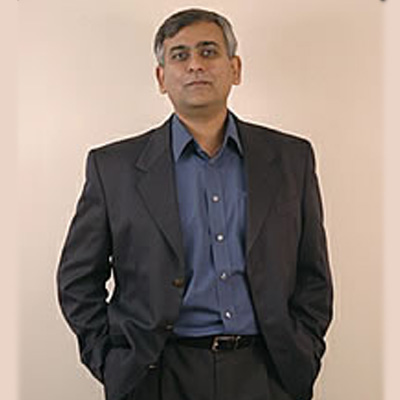
    Discovery Travel and Living VP -lifestyle networks Aditya Tripathi was in Bangalore to showcase the channel’s new local show ‘A Matter of Taste’ hosted by television anchor Vir Sanghvi. The show follows Sanghvi as he embarks on on a culinary journey to explore Indian tastes, debunk myths and discover the finest in Indian food and drink.

    Indiantelevision.com’s Tarachand Wanvari caught up with Tripathi to get a lowdown on the localisation plans, the challenges of shooting in India and client customisation.

    Excerpts:

    How would you describe the progress that Discovery has made this year?
    Discovery is growing really well. In the first 13 weeks of this calendar year, we’ve beaten everybody. That’s all English news, all English movies, all English music channels – MTV et al.

    Would this apply to Discovery alone or other channels – Animal Planet and Discovery Travel & Living (DTL)?
    This is Discovery alone. There is not even a comparison with the other channel in our genre (NGC).

    What’s new in the programming line-up on DTL, especially from India?
    The big one is of course A Matter of Taste with Vir Sanghvi. We are working on a couple of other programmes also. There’s one on Indian fashion and style which will come out towards the end of the year.

    Then there’s one based on a hotel (Taj Mahal Hotel in Mumbai) which will go on air by July or so, this year. We have actually gone into a hotel and spent three months there. It covers the hotel, about how a hotel functions. When you go to the reception of a hotel, some pretty girl smiles at you, they give you a room key, you go up, actually there are lots of people working behind the scenes that you don’t see. So how does the hotel function?

    The channel is an international channel and the intention has always been that it will be an international channel with some 15-20 per cent Indian content. The majority of the programming will always come from outside. You are looking at the Indian who wants to see the world, not an insular person who wants to see only content about India.

    And what about the fashion and style show that you mentioned?
    We have already started working on that. We have taken a well known fashion designer and we are working with him on this show. I’ll share the name with you when the show is closer to being completed.

    In this series we are traveling around India and outside the country also. We look at rural fashion, we look at pop art, we look at cheap fashion, it’s not only the high haute couture and the expensive fashion. We are at looking at the Indian style sensibilities across the board. And not only in clothes, in interiors, in hotels, in all kinds of things. It’s a very interesting show, but we have shot only two episodes right now, so we are still working on it.

    Some of the episodes will be location specific, so we’ll look at a part of the country. Other episodes will be following a story in preparing for a fashion show.

    How many episodes have you planned for? What about the sponsors for the series?
    It will be a 13-episode series. We’ve not yet lined up sponsors for the moment. We’ll wait till we have a little more polished stuff to show them. We’ve just shot two episodes. The concept has been talked about to a number of people who are interested.

    So is it mainly the garment industry that is interested?
    No, because it’s not only clothes and that kind of fashion. We’ve got interest from car brands, we’ve got interests from mobile phone companies, paints, even those categories. Then jewelry and accessories will also come in.

    Your first local show was ‘The Great Indian Wedding’ where one episode was aired. What is the status on that?
    Depending upon the press you read, we were covering so many things. According to The Times of India, we were covering the Bachchan-Ash wedding also, but that’s not true.

    We have created a brand, but we want to find very special weddings. For a lot of weddings that are special, either the people are not very comfortable to be in the public domain or there are a number of weddings where the people are scared of the tax authorities. And then there are some people who are very conscious of publicity and keen to get it, but it may not be a very classy wedding.

    We are going to keep this as an irregular one-off show. Every time there’s a wedding, we approach the family and if we can shoot, we’ll take it forward from there. But the original plan was to do a series of many weddings, we’ve decided not to do that.

    What are the challenges that you face while making something out of India?
    One challenge that we have is to convince our colleagues in other parts of the world that it will be a good story. Because we see now on Discovery channel, on our own channel DT&L there are now many programmes that are being made out of India. There’s a series like the one by Anthony Bourdain, or any of these international shows, they come and make one or two episodes out of India, but they come with their foreign crew, foreign anchor and cameramen and they come and shoot here and they go back and shoot the rest of the series everywhere.

    We are in the process of convincing them that an Indian production unit can make a show just as well, plus, we make them at a lower cost. The point is that the storytelling will be as good, the production quality will be as good. That’s one of the main challenges that we face.

    Could you shed light on the logistical challenges?
    Shooting a series which is not based in a studio is always a challenge. For instance, each half hour episode of A Matter of Taste has involved seven to eight days of travelling and shooting around different cities, plus the dubbing and editing and other work. For each episode we’ll go to three or four cities. The logistics for that are challenging, but it’s not that they would be any different anywhere else.

    What about your programmes that are focused on communities such as the drinking community – The Thirsty Traveller?
    That is one guy, an anchor called Kevin Brauch who travels around the world, like you have food programs and travel programs, his program is to explore the drinking culture and the different local beverages. That’s a show that has been very popular.

    Is anything coming out of India on those lines?
    There was talk that they would come to India. I was in touch with the production company and there was a little problem with getting permission. So we are now working with them to try and get an episode out of India.

    Won’t there be conflict with the authorities on that? After all alcoholic drinks are products that you can’t even advertise about in India?
    Well, all that we have heard so far is that they had permission problems. We are not sure what they are. We are working with them to find out.

    What is the situation as far as advertising is concerned?
    Of the English entertainment channels including movies, we have sold more inventory, more secondage than any of the others in the last year. That is movies, Star World, Zee Café…

    But those are a different genres altogether?
    We are the only lifestyle channel. When we launched two and a half years ago, Zoom, Star One VH1 – we were launching at the same time and all four were saying that we are lifestyle. Now I think that all the others have changed their formula.

    Certainly among the advertising community, we are recognised as the only lifestyle channel. But being a single channel in a genre that is not defined by anyone, it’s very difficult to define, so we compare ourselves with English entertainment. Because generally the values of the programming are the same, it’s kind of an unwinding programme that you watch to entertain.

    Depending upon the press you read, we were covering so many things. According to The Times of India, we were covering the Bachchan-Ash wedding also, but that’s not true.

    So have your advertiser numbers improved from the 236 brands that you had said sometime ago?
    Yes. The number of brands keep going up. The very interesting thing about the channel is that from the day we launched, actually even before we launched, we said that we’d be an upscale channel and we are trying to fill a niche for the advertiser of upscale products.

    Today, traditionally a lot of advertisers for upscale products are on print. They are not on TV, because most channels are not focused. So we said that we will come in and reach those kinds of advertisers. So Pepsi will not advertise on my channel, but Diet Pepsi will advertise or Crush will advertise. Now Airtel no longer advertises on our channel for their standard connections because they are much more of a mass product, but Blackberry Pearl will come on our channel, Samsung LCD screens will come on our channel. The battle for us is not to get as many advertisers as we can, the battle is to keep that focus.

    To return to the localisation issue how many of the Indian programmes are being broadcast abroad? Where do you get the best response from?
    In Discovery the way this works is that all the shows that we make here are offered to our colleagues and then it’s up to them to buy them. So our last production Indian Rendezvous is there outside the country, in UK, this was a six-episode series and all the six episodes will be there. In the case of A Matter of Taste which is now complete, we’ll be sending it to them. I am confident that this will also air around the world.

    Singapore, which is the whole of Asia region and the UK, these are the places where there is maximum affinity. But I am hoping that going forward the US will also start buying into the programming. Right now it is UK more than the rest of Europe. But now that India is on the top of mind for everyone around the world, I am expecting that our spread will be greater than it is now.

    As far as your international content is concerned and programme blocks, is there anything special happening?
    One show that we are looking forward to is Queer Eye For The Straight Guy which we will introduce later this year. This is a makeover show for men.

    Each episode features a new candidate usually a straight/heterosexual man ready to be culturally transformed. Each candidate prepares for a special event and receives generous guidance from each Fab Five member in their respective categories of expertise. Candidates are prepared for such events as a marriage proposal, a first dinner with a girlfriend’s parents, and a backyard barbecue.

    We have a women’s hour. However our viewership is homogeneous. So we have not focussed on building programme blocks.

    Have you done any further client customisation like you did for HSBC some time ago and what has been the response to such efforts? How effective has customization been for your clients?
    We do a lot of client customisation where we package programs. We had a Monday to Friday programme Off to the Caribbean with Pepsi Gold around the World Cup time. What we do is to pick up a selection of programmes.

    A few weeks ago we did something for HT Mint, a very upscale targeting was required, so we did a series that we already had for Europe. We packaged that as Mint Money Mantras. With the travel site yatra.scom we did Amazing Yatras.

    That kind of customisation happens all the time. In terms of product integration, we haven’t done that yet, but are looking at doing that as well. In terms of effectiveness the client keeps on coming back for more so obviously it is quite effective for them.

    Who are your repeat clients?
    Pepsi is a repeat client. They have come back on various occasions and we keep getting new clients also. So it’s obviously effective.

    What marketing activities does the channel do to create awareness?
    We don’t do a lot of marketing. Word of mouth has helped us a lot. The fact is that our target audience is tough to reach through the traditional mass media. Having said that, we did put in some ads in newspapers to create awareness about A Matter Of Taste.

    Discovery Lifestyle launched a couple of channels in Malaysia recently. Any plans to bring them into India?
    Not at the moment. While DTH and digital cable are growing this is not immediately on our radar.

    Who are the big advertisers from Bangalore ?
    Yeah, I do, to meet the advertisers. There’s Britannia, then you’ve got ITC here, they are the big ones. Titan, Tanishq, IBM-Lenovo, etc. ING is a big client, Kingfisher Airlines, lot of these are our clients. In the case of the IT software companies, it’s more of a B2B arrangement, so we don’t have these as our clients.

    Could you offer your views on the television scene in India?
    These are exciting times. Well, every time you open a website or a newspaper you see channels being launched left, right and center. Every one is launching channels. You’ve reported that Sun has started a Kids channel.

    So how long do you think these can be sustained?
    I’ve been working with media for a long time now. Even in the mid nineties, people were saying that so many channels are being launched and they won’t be able to sustain, but no high profile channel has really gone down. They are still able to financially keep going. Obviously there is a lot of money following the channels. You know especially when distribution money is not very substantial. Around the world, channels run on distribution money, the subscription route. If that is not substantial, then it’s very difficult.

    Finally where do you see DT&L over the next three years?
    We launched about two and a half years ago to fit into the upscale Indian. We were hoping to create a new category of advertisers. We’ve had success so far in shifting and attracting the TV advertisers. One thing that hasn’t happened yet is that a lot of print only advertisers haven’t yet moved onto TV. That’s one thing that we expect to do a lot on.

    As the economy booms, as more tourists start travelling, we are very well paced and we really see this channel as an advertising category and a wish category exploding over the next few years. I am very proud of what we have done so far. We are ahead of our advertising and revenue targets, but we expect that the next two or three years will really be boom time for us. The operations here are profitable, but we never disclose country specific breakup details.

  • We are confident of achieving a turnover of Rs 4.5 billion in the digital audio video segment by year end : Moon B Shin- LG managing director

    We are confident of achieving a turnover of Rs 4.5 billion in the digital audio video segment by year end : Moon B Shin- LG managing director

    Electronics major LG Electronics India Ltd (LGIL) recently announced their foray and focus on digital audio video products in Bangalore. LG showcased their latest offerings in the USA – the Super Multi Blue– a product they claim as the world’s first dual high definition player.

    LGIL managing director and LG Group president South West Asia Moon B Shin took on the reins of Indian operations in January 2007. A core member of the LG team, Shin is traveling over 100 countries including the Middle East, Africa and India.

    In an exclusive interview with Indiantelevision.com’s Tarachand Wanvari Shin highlights LG’s plans for India, with a special emphasis on the digital audio video segment.

    Excerpts:

    LGIL has a turnover of Rs 82.5 billion. Considering that the audio-video segment is expected to account for just Rs 4.5 billion, how are you planning to push your presence in this category?
    I know that comparatively this is a small amount, but these are the products that we expect good growth from. In the video category, we are placed number one with 26 per cent market share, Phillips is next with 22 per cent share. In audio we are far behind, we are around 13 per cent I think there number one is Sony and number two is Phillips because our presence at the moment is very small and we set the targets and these are the areas that we have to pickup. We have to beat Sony and Phillips. We have really worked very hard, product planning and selling, marketing for the last couple of years. We have come with really very new range of products.

    Phillips and Sony are strong in the cassette and audio tapes analog space. You don’t seem to have launched any products in that category?
    Today we launched MP3, MP4, the portable DVD player, the car audio system – from the lower end segment to the high-end, we have a really full range. That analog tape market is the rural market and is coming down. Our focus is on digital.

    How do your other products stack up against competition?
    Overall in India the presence is quite sound. In consumer electronics and home appliances we are around 28-29 per cent. For GSM this year we are going to sell around five million sets and we are going to reach minimum revenues of US$ 200million from this stream. AV is around US$ 100million. We expect a total revenue of Rs 95 billion or around US$ 2.2 billion, so the 300 million translates to a little less than 15 per cent of our overall revenues.

    How important is India as a market for LG?
    India accounts for around 6 per cent share of the global revenues. India is tremendously important for LG. By 2010, our target is to increase the India share to 10 per cent of LG’s global revenues. Our top management, they really pay attention to this market. The market conditions are very good and the government is very smart, they maintain an open policy, India is a market driven economy. All these things are very positive for us. The corporate attention on this market is really huge. Maybe even more than China.

    LG has a large amount of visibility as far as mass communications are concerned. What are marketing and advertisement spends?
    Every year for above the line and below the line, we spend around US$ 50 million in India. Last year we invested around US$ 46-48 million, this year we plan US$ 50 million. This figure may change because every month we are growing by 20 – 25 per cent. We are on right track.

    So which segment is driving the growth?
    The flat panel display, GSM, computer monitors, and now AV these are driving our growth. And they are also our future growth engines. Maybe PC’s too.

    What is your market share in PC’s?
    Laptops and desktops is around 6 million, and this will grow fast, so at the moment it is very minimal, around 3 per cent. But, we are coming up with good designs and technology so the PC potential is very good. The market size of laptops is area that we have to focus on.

    Flat panel display, GSM, computer monitors, and now AV are driving our growth

    Do you have lower end laptops also?
    Yes we do, but we are not going to play in the low-end segment. We are going to really play in the top of the line products.

    What are your forecasts for the next year – your growth targets?
    Every year we have to grow by a minimum of 20 per cent. By all means we have to grow by this percentage. By mobilizing the attention from headquarters, from market surveys and through consultants like McKenzie, maybe work together with them if we feel that we cannot meet the targets.

    What is the proportion of the products that you sell here that are made in India?
    Almost 90 per cent. About 10 per cent we import as finished products or complete business units (CBU). The balance 90 per cent we manufacture and export too. Some are CKD, some completely manufactured in India. The local content varies product wise. But it’s between 50-70 per cent.

    Any plans to expand further here in India?
    Not for the next several years no. In Pune we have a large space at Ranjangaon. I would not say that we have idle capacity, we have other buildings-two as a matter of fact, one is full of operations and the second building is 20 per cent operational. So there is space. We have to invest only in the manufacturing facility. The building and everything else is ready. We have to invest only in the machinery, that we will go on within Pune.

    How long have you been in India and what is your experience here?
    I have been here two years. Over this time, I have travelled a lot, to almost every corner of the country, I have pretty much covered the A and B class towns. I was a real frequent flyer, I wanted to see what is taking place in every corner of India and I could observe and find that the potential in India is really good. I think India is the only country that can fight against China. India will definitely be in the forefront as far as economic growth, or the GDP growth is concerned, it will be neck to neck with China in the next 30 years or so. China is growing very fast, but India is also growing as fast. The potential is there and I am going to communicate with the headquarters about this marketplace and how it is important. My outlook for India is very positive.

    Could you speak about the infrastructure in India?
    I was born in a very tiny town in Korea and I have grown up there. Maybe at times the infrastructure was even worse than it is today in India. So I am really accustomed to the poor infrastructure in the rural areas. For me there’s no problem at all.

    What is your opinion about the skill levels, the knowledge quotient of Indians?
    They are good, they are very fast learners. We used to send people to Korea and train them over there and then bring them here. We sent them to our other subsidiaries to benchmark. Their adaptation is excellent. Skill levels are good. I really appreciate them.

    Any R&D work being done in India for the LG group globally?
    Not much. In India we have only around seven people working on design. They have not yet contribute to the designing for LG globally. We have our own design centers all over the world, in Europe, China, in the United States. We have design centers located in every corner of the world to come up with local design and also to supply global designs.
  • “The adoption of multiple frequencies will mark the next inflation point in radio” : Naveen Chandra- Radio Mirchi SVP & National sales head Naveen Chandra

    “The adoption of multiple frequencies will mark the next inflation point in radio” : Naveen Chandra- Radio Mirchi SVP & National sales head Naveen Chandra

    The media industry has recently been eyeing the advantages that radio is promising to offer, but when it comes to the monies, advertisers are still apprehensive to bet big on the medium. As the radio industry in India evolves progressively from mass to niche, the industry is setting its targets to rake in the moolah. However, obstacles are inevitable and the biggest threat is of under valuation in proportion to its reach and accessibility.

    In a free flowing conversation, Radio Mirchi SVP and National sales head Naveen Chandra shares his views on the scope of the medium in India, which he believes will be fuelled following the Government’s sanction of a multiple frequency approach adopted by a single radio operator. He tells Indiantelevision.com’s Renelle Snelleksz that this will mark “the next inflection point in radio.” Geared to take on the big guns of print and television, this radio player has set high standards for itself and demands a premium as it moves into the radio era.

    Excerpts:

    Could you shed some light on Radio Mirchi’s sales and media strategy?
    As a market leader we have been pioneering efforts to look at things very differently. As a medium, radio is very unique because it can be both National and local at the same time. There is no parallel to this, for instance television is national by nature, and although regional television does come close, it is still very fragmented and exits in certain pockets. In terms of a National network, even print does not have editions across the country and is more regionalized. Thus we are a medium that’s does not have limitations of geography, which places us very uniquely to conduct a national or local campaign.

    The second thing about radio is that if you look at Tam data radio lures advertisers from across different product categories. While there are some categories that will use print or niche channels like FMCG, the auto, telecom and banking sectors will not advertise on GEC’s. Radio in this respect is an all encompassing medium as it offers a solution to a wide spectrum of categories that advertise on different genres of print and TV.

    Which are the biggest categories as revenue drivers on Radio Mirchi? How do they stack up percentage wise?
    Banking and finance contribute to 11 -12 per cent, media and entertainment 10 – 11 per cent, telecom 9 per cent, retail and real estate 8 – 10 per cent, automobiles 7 – 8 per cent and durables (which on an annual basis is cyclical).

    Which are the new entrants that are flocking to radio?
    We recently conducted an IPO marketing seminar with merchant bankers to get them to look at the medium positively as it can provide returns due its large reach, which exceeds a Star Plus or Times Of India. Besides radio can also provide a lot of on-ground and BTL brand building activities that attract audiences to consumer the product.

    How do you justify the fact that radio exceeds the reach of Star Plus or TOI?
    If you look at five minutes of continuous viewing on any television channel, you will notice that it is lower than the reach of radio. Using one simple metric – to consume television you need cable connectivity, to consume print you need literacy but to consume radio you nothing but to enjoy good music. Therefore radio by definition, reaches 99 per cent of the population and the reach will always be larger than any other medium.

    What is the current reach for the station nationally?
    Currently, 1.7 crore people tune into Radio Mirchi daily across 10 stations that include the four key metros Mumbai, Delhi, Kolkata, Chennai, as well as Bangalore, Hyderabad, Ahmedabad, Indore, Jaipur. Stations in Patna, Jalandhar and Goa have recently been added.

    What are your plans to increase your network across the country?
    We are looking to launch another 20 stations across the country within the next six months.

    What’s the revenue growth that Radio Mirchi has seen over this fiscal?
    We have seen good growth over this year, however I will not be able to share exact numbers until our annual report is out.

    But we have marked about 50 – 60 per cent revenue growth on radio.

    What is the current revenue generating model that radio operates on and how does it compare with television and print advertising rates?
    For radio we follow ILT research that helps us to operate on a cost per reach (in thousands) model, so while our rates are high, our cost per thousand is very low. Typically print and TV operate on the on cost per thousand (CPT) approach but at about Rs 1300 – 1400 depending on the channel.

    Our rate is Rs 70 per thousand people, which is very low in comparison to television and print. But as a means of comparison, one ad in print is equivalent to about 30 ads on radio, so in that sense it is much lower.

    The reach of radio exceeds a Star Plus or Times Of India

    What’s the ad growth curve that the station has seen over this year?
    With our focus towards a lot more on corporate driven advertising, if you look at the ad growth we have seen good growth over the last four to five years. Additionally, the ad durations have come down significantly from about 45 seconds to about 15 seconds on an average because the advertising environment has become more promotional led than as branding activities.

    In terms of spot rates, what is the margin between Radio Mirchi rates and your closest competitor?
    In Mumbai, our rate would be Rs 1,800 for 10 seconds, while other stations would range between Rs 400 – 1000 for the same.

    What is the current market size for radio in India?
    It presently stands at about Rs 500 – 600 crores.

    Could you highlight key benefits of radio as a medium?
    Radio is very linear medium, for instance in New York there are 89 radio stations but the average number of stations a person listens to is 1.7, which is under two. Essentially, this indicates a high loyalty towards radio stations as programs are seamless and it’s not like every hour there is different show. The characteristic of radio is such that it is very personal and intense and therefore is consumed as a medium of ‘one,’ it’s a mass as well as a personal medium. While for television, every half hour there is differentiated content which forces the viewer to keep shifting in and out of channels. Similarly, a Friends fan will watch the show on which ever channel it beams, so even if cricket had to shift to something like B4U, then everyone would flock there even if they have never seen the channel before.

    Therefore, for radio the research we conduct points to many unduplicated audiences that are loyal to one station alone. Thus, many unduplicated audiences will continue to be present but will not be reached even if one operator were to buy out a set five to seven stations.

    However, acquisitions will increase your presence across the country, so are you looking to buy out other stations?
    Well, we don’t know that yet. But in a sense the next inflection point in radio will be multiple frequencies.

    With India experiencing a boom in radio, what are the key differentiators for Radio Mirchi in this cluttered environment?
    Our key differentiator would be our programming and jocks which are very contemporary. Through a lot of analysis and research we cater to the needs of listeners. We often tie up with Bollywood to premiere music on our station.

    Radio has a lot of elements that a listener can identify with like for instance a radio jock. Also, every radio station has a particular ‘stationality.’

    In more mature markets, often clients only advertise on stations that are a natural extension of their brand and its values? How far away is India on that evolutionary scale?
    Let me give an example – There was a time when Warner Brothers would advertise on Go 92.5FM because it was English and niche, but today advertisers such as these are seeing the benefits of a mass radio stations as well.

    With television further fragmenting into ‘niche’ specific channel offerings, how long before radio also branches out into the realm of niche stations? Given that Go 92.5 FM grew quickly extinct and resorted to mass appeal, what barriers would radio encounter before it adopts a niche approach?
    Once the Government approves of a multiple frequency model, where a single radio operator will have different frequencies, it is then that radio will experiment and take the route of niche stations. But this will not take shape unless all the radio stations that are scheduled to launch this year roll out there plans.

    What do you see as the way forward for the radio industry in India?
    Currently, radio only occupies two per cent of an advertiser’s ad pie expenditure and that is dispensable. As a medium I feel our rate structure is under priced, the average cost for a radio campaign is about Rs 60, 00,000 across eight to nine markets. The challenge is to increase this by three times.

  • Zee Business to launch lifestyle and mobile shows for youth

    NEW DELHI: Zee Business is launching two research based business, interactive, blog-backed programmes this May onwards, targeting the youth.

    Zindagi Live will debut on 14 May as the first combo show on lifestyle, shopping, careers, informed spending and infotainment.

    The second show, Mobiles and More, is dedicated to the growing mobile handset market and seeks to inform viewers so that they can select a handset of their choice and in their budget.
    Zindagi Live is a value for money show, educating and informing viewers about products in the same categories in an effort to help them make an informed buying decision.

    The programme also has dedicated segments on career, health, beauty, movies, travel, the best deals, interiors, homes and weekend getaways.

    Mobiles and More as the name suggests is your guide to buying a mobile phone. Not just the latest handset, but handsets, which you want in your budget. Mobiles and More looks at all this and more.

    In fact, Zee officials told indiantelevision.com that the mobile-related show would have latest information on discounts and which shops in which cities these are available.

    “We shall do our own research, which will be an ongoing process, and bring to the audience pointed information on what is available where,” a Zee official explained.

    To highlight the features and utilities of available handsets, various segments within the programme have been designed.

    “Review”, a segment of the programme, will give a macro view of latest mobiles in the market. In addition to the basic features, it will analyze the handsets enhanced features like video, picture quality and audio quality.

    The handsets will be scanned through under the shadow of their respective competition in the market.

    Another segment, “Budget Phones” will profile cheap and utility handsets available in the market. Dressing up your phone with the accessories and other things will be discussed in the Accessories.

    “Features will tell us how to use a handset’s complicated and flashy things like GPRS, Blue tooth, MMS etc,” the official said, adding that another segment, “Upcoming Phone” will feature a handset yet to be launched in the market.

    There will be an interactive session – “Complaint” of industry experts dealing with the viewer’s genuine problems related to their mobile phones.

    Also, a blog will be showcased to list the comments received from people. The programme will keep the viewers informed about the latest discounts available in the markets.

    The show also compares a new phone with a similar phone in its category and generates a report card on the phone, keeping in mind pre-defined parameters.

    Zindagi Live will discuss ways to get more value for money. The show would comprise a few segments to help common man to take an appropriate buying decision.

    “Buying, as the word suggests, will highlight the aspects of a product (any) to be considered before making the purchase. Fashion Story will talk about trends of clothing and apparel prevailing in the market,” the official said.

    Food freaks will find all the information on eating-joints around and its specialty in the segment Restaurants.

    The programme will also put the spotlight on Health and Beauty, Home and Interiors, Movies, Travel, Star-signs, Career/Education besides Weekend Out, which will highlight various Plays-Rock Bands-DJs playing in the city.

    A trend story will focus on burning issues like metro-sexuality, Lounges winning over Pubs, World Cup Fever etc, the official revealed.

    The programme will also share city’s hottest deals and discounts offered on various products.
    Zindagi Live will starts on 14th May and will be telecast every Monday, Wednesday and Friday at 9:30 pm with a repeat at 4:30 pm.

    Mobiles and More will begin next weekend on Sundays at 10 am and Friday at 10:30 pm.

  • ”Music channels need to differentiate themselves’ : Amit Jain- MTV India managing director

    ”Music channels need to differentiate themselves’ : Amit Jain- MTV India managing director

    Viacom’s channels in India have not had an easy time in the last couple of years. For starters, the music genre has been stagnating in terms of viewership. Nick, which is being given a push now, had also failed to compete with the likes of Turner and Disney.

    The company’s recent focus has been to improve operating margins by removing unproductive costs. It is also looking at its brand solutions business as a way forward.

    Indiantelevision.com’s Ashwin Pinto caught up with MTV India MD Amit Jain to find out more about the company’s growth plans.

    Excerpts:

    MTV globally has positioned itself as a brand solutions provider. What is the strategy to transpose that to India?
    As a backgrounder, we have brands in the music, kids and entertainment space. The challenge is to evolve this into a business model which is viable, profitable and works in the long-term. MTV globally is different from other channels. We don’t believe that we simply air content. We are brands. Our channels stand for a specific brand promise to a specific audience.

    We are not about simply putting a pipe out and putting in content that tests well. We have a whole consumer focus which is investment in consumer insight, investigating tastes and preferences of audiences, their lifestyles. We are then able to take decisions based on insight as opposed to taking a show concept and doing research.

    We looked at whether we could take the attitudes of our listeners which is talent, careers and getting double big results in half the time and use that as an insight into our positioning and channels.

    You have brands, research and most importantly in-house creativity. A typical channel thinks of a show concept and gives it out to a production house.

    We, however, have a deep rooted philosophy where we create our own content. 90 per cent of our content is in-house and this allows us to get more aggressive in our programming. We have only outsourced news from a learning perspective. You have everything from A-Z under one roof. On Nick, while we haven’t done local productions before we now have the confidence to do it ourselves.

    Finally instead of being space sellers our team over a period of time has been very client focussed in terms of offering solutions and client integration. While everybody does it here you have a small repertoire of clients. Our managers sit down and discuss with them. They are invited to meetings.

    Agencies take us for client meetings. We are invited to talk about youth branding. We are in a position to understand consumers and clients requirements when we create solutions in-house. We are not a middleman who puts things together and gives it somebody else.

    We use our VJs, events, international properties to create solutions. We are in a position to create value for clients that goes beyond plain vanilla advertising.

    In this manner, we are feeding of our own competence. Viacom Brand Solutions is a premium service for select clients. We are not going out there and making pitches. We work with clients who seek us out and want to do innovations. Our top 10 clients want to work with us in a more effective manner.

    When was the service launched and who are the clients?
    We launched it in January. We have a roster of over five clients. We have worked with Cadbury’s, Unilever, Nokia. The most interesting one was what we did for xBox.

    xBox invited us to popularise the concept of gaming. With MTV we did a short film. It was featured on MSN’s desktop ads. VH1 created modified videos which had gaming characters. Nick had Jimmy Neutron making gaming simple for children. We extended this to the web and now we are looking at other applications. Nokia wanted to position a phone brand strongly in the music space. We tied up with a band pentagram and they gave us the music score. We invited user generated content and a video was to be created. We were stunned at the sheer creativity of untrained minds. The rub off that VHI and Nokia got through the advertising, on the website was good. VH1 did a creative job of making the first user generated music video in the country. Any of around 50-60 entries could have been used.

    Cadbury’s was very different. They wanted to do an innovation around Bytes. It launched with a new package and on purchase of the package it gave the consumer an opportunity to download an MTV ringtone.

    It brings together our expertise in partnerships in the mobile space, our creative expertise. We got seven mobile operators for this deal and around 85-90 per cent of the country’s mobile users were covered by the promotion. Cadbury’s also asked us to work with agency and create a commercial spot. This is an A-Z solution. The technical delivery across different platforms was very good. We had some operators calling up and complaining that the download of the ring tone was not working.

    Our guys were scrambling in places like Madhya Pradesh where the ringtone was not activated on Idea Cellular. There were tense moments but when it came together it rocked. Most recently we worked with HLL. This was Lux Body Wash. They worked with our team to create music videos. They wanted to own the space of dancing, music. We created a music video for them based on their brand positioning. The music video is called Friday Night Fever. The song was written in-house and produced within our own studios. They have asked to make one more video and this time around we are working with an internationally famous VJ. We have international scriptwriters. While it is early days if clients are saying that they want to do more, it is a pretty good report card. We have three more upcoming projects.

    So a recent media report that says that MTV is looking to outsource ad sales is rubbish?
    Yes! You could not have summarised it better. I don’t know where that came from. It doesn’t make logical sense. The beauty of the Brand Solutions division is that we are not in conflict with anyone. The client and media agency welcome us. We are in a joint venture with the creative agency. It is a truly collaborative effort and we are not substituting anyone at anytime. Brand managers constantly look at ways to activate consumers in a unique way. There aren’t too many options of activating consumers in a relevant manner. We offer solutions to address youth and kids. The solution will never be mass market though.


    MTV globally is in restructuring mode. Is this impacting India in any way?
    We now report directly to MTV international. Earlier we reported to London. Bob Bakish who is the head of MTV International is my boss. There is better focus and we get a lot of support from MTV International. For a lot of our brand solutions we are getting excellent help from our global digital team. There is a lot of sharing of experience.


    Could you talk about the new team that has been put in place?
    This is my favourite topic. The big challenge is that while we have always had a creative team, how do you convert it into a business? We have put in place a completely empowered matrix structure. There are three general managers. They are Ashish, Keertan and Nina. Then you have functional experts – head of ad sales, distribution. The general manager and functional expert jointly run the channel. This is the innovation that we have brought in. I do not make too many decisions.

    I set the policy and hire people. My job is to drive the culture and set a course for the future direction. I look at the vision three months to a year. We are a collaborative organisation. I run a skip level lunch for those who have been with the company for a couple of months. There are no bosses and no hierarchy. Everybody for a secretary to a general manager attends the lunch. We have freewheeling dialogue about how the experience has been. We are a young organisation. All our general managers are in their mid-30s. Sanjeev Hiremath and myself are the only 40 plus grey hairs in this organisation.

    One of MTV’s key goals globally is to increase operating margins. What is the gameplan in this regard in India?
    It is simple. Identify unproductive costs and convert them into productive costs. Drive the yields. We used to outsource 40 per cent of production, editing and post production work. We have invested in an integrated production and editing facility. The easiest thing that I see people do is outsource jobs that they do not want to do. That is not what we are doing. We are among the most cost effective content producers in the country today. We also cut costs. Last year the entire leadership team including myself did not stay in a five star hotel or fly business class. While these measures will not affect the bottomline, they are symbols of the importance of belt tightening.

    We took out overheads and invested them back into the business. We focussed on remunerative clients. We were not afraid of letting clients go who were not paying us a remunerative rate. We improved our client mix in a challenging year. We brought down our inventory by 30 per cent as we wanted to clean the environment. We took down our inventory and took up our use. We now have a strong revenue line on the back of less inventory, We are looking at a high double digit revenue growth.

    Tam data indicates that ratings for music channels are falling. What is the way forward for MTV?
    This is the most important question. The genre has been stagnating for quite a while. So what do you do about it? There is a lot of fragmentation happening in this genre. Last year four more music channels launched. We have held on to our share. Now you have 16 music channels. Typically the leader gets affected. We have however managed to avoid that.

    In difficult times Ashish and his team have done a creditable job in keeping up in the midst of competitive pressures. After eight years what generally happens is that new entrants take bites out of the leader. It is never number three or four that is hit. We however have not been hit despite being the leader. We are sitting on 34 per cent of viewership.

    A few things need to happen. From an industry point of view music channels need to differentiate themselves. This is critical. Being the leader, we have to show the way. Consumers listen to Bollywood music. You cannot be presumptuous and tell them to listen to other stuff like ghazals instead of Bollywood music. Led by consumer insight, we found that for youngsters getting up in the mornings is the most dreary part of the day. Getting a lift is very important.

    So we launched MTV Kickass Mornings. It starts with a high energy promotion with two ninjas. We have hits, humour, horoscopes and health. Most content here is audio driven. For instance health tips like how to cut down on spicy food, how much water to drink are spoken. Whatever you are doing, you will not miss out.

    Music channels get 30 second, 60 second clips as an entry point. As they do not have to pay, they are happy to play them. We are investing in content though. We are doing full length music videos. Thanks to our relationship with music labels we normally get a first look. The entire Kickass Mornings is about new music. From 100 videos a maximum of 30 are chosen. We are offering a newer and richer music experience than anybody else. And we are packaging the whole proposition. MTV helps your day get brighter and better. This is our message.

    We also recently started Soundcheck. As a leader we want to take a call and put our reputation on the line by saying what works and what does not. It is a music ratings service. There are speakers that determine the rating. Music experts are helping us make these choices as to what is emerging music as opposed to what is selling. We are not afraid to take on big names saying that their music is absolute rubbish. Some popular videos have been thrashed by us.

      http://www.indiantelevision.com/sites/drupal7.indiantelevision.co.in/files/styles/large/public/Amit%20copy.jpg?itok=e0oJYruk

    How important is MTV’s reality portfolio in the programming mix and is it mostly males tuning for this?
    Research shows that youth are tiring of fiction. They genuinely see soaps as there is no alternative. If they are given quality programming in their space they will switch despite the presence of single TV homes. Last year we took a punt on ramping up Roadies. There was an 18 city audition and covered 3600 km from Kerala to Kashmir down to Sikkhim. It was niot stage managed. We did not handpick good looking faces.

    There were kids selected by the sheer dint of their talent. We had a fantastic partnership with Hero Honda. Their ability to manage large selection was invaluable. The show had a rating of 1.9 in the metros which is really good for a special interest channel. The Roadies finale got a rating of six. Reality among the urban youth is a conceopt that will work really well.

    How would you describe your relationships with the Indian music labels and film producers who always want more in terms of license fees?
    We have a win-win relationship with them. A lot of labels look at us as an extension of them. That is because we are careful about partners. We see ourselves as a marketing arm. If you look at the likes of Yash Raj Films most of them give us a first look.

    We premiered the making of Tara Rum Pum on MTV. If it is in the youth space, film producers give us a first look. We are not victims of hard bargaining. They see the value we deliver in marketing to the right audiences. We do not have the buyer seller relationship. It is a genuine partnership.

    Could you talk about how taking up social causes like Aids has helped boost MTV’s brand image and perception?
    In terms of perception it come down to whether it is fun and frolic or does MTV have a larger meaning. It adds a reason for our existence. We are now going into an additional initiative and we are taking up the cause of illegal human trafficking on an international level across borders. We are looking to build awareness around that.

    The Indian government recently banned FTV and earlier AXN on the grounds of obscene content. What steps has MTV taken to ensure that its music videos and shows do not offend anyone?
    I must admit that early last year we faced this challenge. We got a notice. Our response was to fly down and apologise. We promised that it would not happen. We later told them why it would not happen.

    The entire MTV team showed them a new system that has been put in place. Since that incident the Ministry has complimented us for the work that we have done.

    I would appreciate your views on the proposed content code.
    This should be formulated by dialogue involving all parties. Accountability should not rest with one party. Besides the broadcaster the content cerator should also be held accountable.

    Could you elaborate on Nick’s strategy to challenge Turner and Disney?
    I am a believer in doing the basics and not trying to do too many things at one time. We will not take on Disney in the South. We have to be a serious player among the first two to three channels in the Hindi Speaking Markets. Now we are not yet there. But six months back we were the number seven market player. Now we are going to be number four.

    In six months the stickiness on Nick has doubled. The time spent has moved form the 50’s to the 90’s. Distribution, time spent, promos are in place. Now we are focussing on marketing and brand building. In the last four months a strong brand building promos are in place. They are not multi crore promos. We did a Bakra Pakdi initiative and got 80,000 entries.

    Nick has appropriate and safe content. We take our responsibility as a broadcaster seriously. We avoid violence. We are the safest babysitter available. If a mother is to leave her child in front of the television it would most likely be Nick. I can say that with confidence. We like to be the best destination for comedy. So Nick is about fun, smiles and seen from a child’s point of view. I would be surprised if we are not number three by the end of the year.

    Has the deal for ad sales with NDTV worked?
    Well our MTV and VHI teams have fared so well people wondered what we were doing. Here is where I come from. When you grow a business you need a portfolio approach. You have to make choices.

    Strategy is about what to do and what not to do. That is what I tell my team. You cannot do a little bit here, a little bit there and hope to succeed. Last year people were shocked that nick did not invest in marketing. We were focussed on building up content.

    Now in the priorities of Nick do we want to make a multi crore investment in a sales team or do we want to put the same money into brand building? We have chosen to do the latter. The deal with NDTV allows us access to several hundred clients for a share of revenue. We have limited resources and we decided to build the brand and let an expert handle client management.

    How is VH1 faring?
    It is a uniquely different brand in the Western music and lifestyle space. There is no brand close to it in this space. BH1 is delivering the highest quality audience in the country. While it may be small it delivers the highest incidence of car, refrigerator, mobile owners etc. We target a high propensity to consume buyers. Clients get no wastage. Its wastage factor is the lowest in the industry.


    On the distribution front what progress has been made to boost the reach of the channels across Asia?
    When we launched in Pakistan late last year people were sceptical. But if you look at it over the last three years with the growth in the Pakistan economy siome disposable income has come into the hands of the youth.

    Economic growth leads to a more Westernised consumption culture. Over the last three to four years the McDonalds, KFCs, Pepsis, Cokes and mobile operators have opened the doors of consumer culture. Their economy is growing as fast as ours. This has formed a middle class.

    The television industry in Pakistan is ad driven. If you do not have consumption expenditure among a large audience you cannot have an ad sales proposition. MTV was also waiting to have enough content to have a sustainable 24 hour channel. Their music video content is as good as ours. Sometimes it is better. We have Indus Television as our partner. We did research about the brand MTV. Will it be rejected? Are there going to be any negative connotations by some elements of society?

    The consequences have been positive. We trained the Pakistan team in terms of promotions, packaging.

    Then we launched Nick in Pakistan with Ary. It launched this year in English. Our markets are all licensing deals except for Pakistan which is ad driven. The tourism economy has helped us grow in the Maldives. A lot of our revenue comes from the resorts there.

    With India going through digitisation with Cas and DTH the time seems ripe to bring in more channels. Are there any plans in this regard?
    We are waiting for the digital platforms to consolidate. Let DTH reach four million homes and then we will examine options. Comedy Central is one channel I would look at bringing in. Spike TV is a channel for men is another as it is a clear differentiator. There is a correct time to do things.

    VH1 launched at the right time. I come back to the point about what I tell my team – strategy is not only about what to do. It is also about what not to do. In hindsight one can say that Nick should not have been launched so many years ago. If the management team at that time was not going to invest in it then the launch should have happened later. It is now that we are investing in it and giving it a clear direction and goals that it is moving towards.

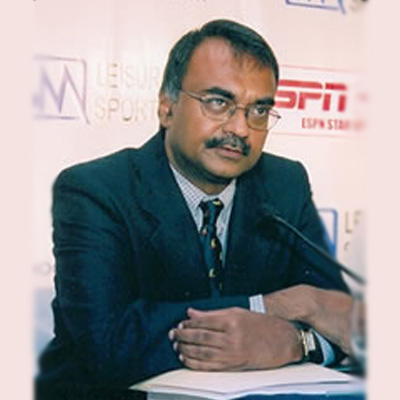
  • ‘We have enough high quality relevant content to provide for each of the three channels’ : RC Venkateishi- ESPN Software India managing director

    ‘We have enough high quality relevant content to provide for each of the three channels’ : RC Venkateishi- ESPN Software India managing director

    Just when everyone was thinking that sports broadcasters might look to “de-risk” the cricket story, ESPN Star Sports has announced the launch of a dedicated cricket channel for Indian audiences. The new channel, christened Star Cricket, will commence transmission in June.


    Star Cricket will be making its bow with a big bang property to showcase because its launch coincides with the India tour of England that involves four Tests and seven One Day Internationals.


    Indiantelevision.com caught up with ESPN Software India managing director RC Venkateish in an attempt to get a feel of what was guiding this decision.


    Excerpts:

    Is this the right time to launch another cricket centric sports channel, particularly considering the disillusionment of the general public with the game in the country?
    Suffice to say that there is still no challenge to cricket as the single sport which has pole position in the Indian market. And I don’t see that changing anytime in the near future. So, from the perspective of timing, we really don’t think that is an issue.


    What is more important is the longer term picture and going forward we continue to believe that cricket will continue to hold its own and in fact strengthen as there is a lot of new talent coming in.

    Nobody’s is arguing that India will not continue to remain cricket-centric. But the fact of the matter is that for something like this to work, it has to be underpinned by high levels of interest in the domestic game as well, which is not the case in India. In fact, this is a problem that Neo Sports seems to be confronting as well.
    Which is a pity actually. In fact, if the local tournaments are properly marketed and properly packaged for the viewers, have the potential. We unfortunately don’t have the rights for that.

    Exactly, and isn’t that what Nimbus is hoping to leverage on Neo Sports. And you don’t have local Indian cricket to showcase, so what is the USP of your channel?
    What we will be showcasing in fact, apart from the international matches, is county cricket in England and domestic cricket in Australia, which also feature some of the best players in the world, including a lot of Indian players. There will also be a substantial effort to market that.


    In many ways we will be doing a parallel to things like English Premier League. Where it was four or five years ago to where it is today, it is really a result of the investments that we have done in promoting that property and making it interesting for the viewer.


    If you just pick up something and put it on the channel, it is not going to work. That is the job of marketing to popularize a particular sport. It has to be exploited and executed properly. Even the domestic Indian tournament, it needs to be put across properly to the viewer. It is not something that will happen automatically.

    There are two strands to the communication that you sent out on your upcoming channel. One is that you will showcase live India and non India cricket. You will also showcase feature programming, including reality reality shows?
    Reality shows are like we had recently Harsha ki Khoj Dream Job. That genre has lot of space. It has a lot of opportunities for us to create programming around that. We will be developing more such shows and putting them across to the viewer.

    Fair enough but the point is that now you have three platforms through which you have to transmute content. Is there enough content to go around?
    On the content side, over the last couple of years, we strengthened our cache, not just in cricket but in all other sports. We just recently renewed the English Premier League. We have the Spanish League, we have Euro 2008. Those are the big soccer properties. In tennis, we added the French Open so we now have it along with Wimbledon and the Australian. In motor sports we have Formula 1 and A1. In golf we have all the major properties.


    So, if you look at each and every sport and the key properties, they are all residing on our channel. Along with this, we have other smaller content also which has come on the network.


    As for cricket, for the next 14-16 months I have India’s tour of England, the Twenty20 World Cup, India’s tour of Australia, the Asia Cup and the Champion’s Trophy. That is five major cricketing events.


    So I don’t believe that we are in anyway falling short of providing high quality relevant content in each of these three channels.

    What about distribution? Right now we are in a very uncertain distribution market, both on analog as well as on digital cable, with Cas only in the beginnings of being rolled out. And in such a time you are launching a 3rd channel?
    I agree with you that there are a lot of people having trouble finding distribution. But ultimately, your bottom line is going to be content. I think we will be in a position to demonstrate it through cable and to the viewer that the content we have to showcase on the channel are of a quality that must be carried.

    Let us accept that you have great content, but today the reality of placement fees cannot be wished away. And it means that slots are booked on tunable bandwidths for one year, two years…
    I think that applies more to other genres. Unless people see your channel how will they get hooked on to it? They will not demand it. For my cricket channel, I don’t have to create a demand.

    There is the recent example of Neo Sports, which had great content but still faced distribution problems?
    The difference is that Neo Sports did not have its own distribution team.

    Well they had Star distributing them, which is as good as it can get?
    I don’t know what Neo Sports needed to do but they didn’t do, or what support they got, I don’t really want to comment on that. But as far as we’re concerned, we have the strongest distribution as well as distribution team in India, and I am completely confident that we will not have any issues with our channel.

    We have been delivering higher and higher reach and we haven’t seen the proper monies for that as yet

    That still doesn’t explain how you’re going to find place in a tunable bandwidth if all the slots are already locked in.
    In case there is a cricket match happening, he (the cable operator has to put it in the prime band. I can’t see a situation where the matches will not be shown.

    There is the option of DD, where the matches are being shown because of must carry.
    Test matches are not going to be shown on DD. I agree with you that channels tend to go up and down, especially the ones who don’t pay money to the cable operator. That is a fact.


    Even then, we have always managed to be there in prime band even when we didn’t have cricket running. And you must understand that in regards to sports channels there has been a certain amount of consolidation. So the other channels which don’t have relevant content tend to be pushed onto the hyper band.


    There will be a little bit of juggling and we will have to manage that. But as a company policy, we will certainly not pay any carriage fee or any placement fee. We are a pay channel and we will get our price.

    What rates have you fixed for the new channel?
    We haven’t announced the final rate but it should be in the region of around Rs 28 to RS 30.

    Let’s talk about the ICC cricket rights. I take you back to a comment you’d made earlier to Indiantelevision.com that the crazy escalation in rights prices will start cooling down a bit. And yet you went and plonked $ 1.1 billion for those rights?
    If you do a bit of math, you’ll see that whatever I said earlier has actually happened. Let’s benchmark it with some of the other rights. The BCCI rights, which the previous version was for $ 50 million for five years, went for $ 612 million for four years. So that’s basically an escalation of 1,400 per cent.


    Now take the ICC, the last ICC went for $ 550 million. So that’s basically a 100 per cent increase. And the last ICC did not have events like the Twenty20 World Cup, which have been added on this property.


    What we have paid over eight years, is basically a 9 per cent per annum escalation in rights fee, as opposed to some of the other properties, which in recent times have gone absolutely berserk. The BCCI, as well as the BCCI offshore cricket rights package sold to Zee for over $ 215 million ($ 219.15 million).


    Even if you look at things like the Sri Lanka board for $ 50 million, or the Bangladesh board, which went for $ 56 million after going for $ 6-7-8 million last time.


    So what we have paid for are not just the World Cups and Champions Trophies, but also what is going to develop into a real cracker of a property – the Twenty20 World Cup. Not once, but thrice.

    From an average per day cost perspective, and if we compare the three properties that went for big bucks, how does such a payout work?
    Zee paid $ 8.71 million, BCCI went for around $ 3-4 million per day and we are around the same ball park.

    There are also the cricket rights that are coming up over the next 12 months for many big territories over the next year and a half. You have already committed $ 1.1 billion for the ICC rights as well as all the other rights you’ve mopped up recently, so where do you stand on that?
    We are quite comfortable with the levels of investment we’ve made thus far and what we have identified as key acquisitions for the future.


    But having the ICC rights provides us a very strong backbone of cricket over the next eight years. Whatever else we add on would be accretive to what we already have so it won’t be necessary to go out and buy everything under the sun.

    What of the territories that ESS currently own – England, Australia, New Zealand, South Africa? Will you be making aggressive bids to retain them?
    We haven’t formalised how we’re going to go about it yet.

    I again come back to the disaster that was the World Cup. Everyone was expecting 2007 to be cricket’s year as far as advertising is concerned due to the sheer volumes of A list properties that are coming up throughout the year. Now will all the calculations have to be reworked?
    On this I have a different take. I think the advertisers have had it pretty good so far. I have an argument we need to push more forcefully and that is something as a broadcasting community we haven’t done enough of. The fact of the matter is all the rates that advertisers have been paying us have been on the basis of CPRP at a time when overall reach has doubled.

    But this is an argument that Star’s Paritosh Joshi has raised, as too Zee’s Joy Chakraborty. Today we are faced with a situation where HLL has pulled out its advertising from Star. And the broadcasting community does not seem to have any unity on this issue so what are we talking here?
    There is unity developing on this issue and you will see a more forceful exposition of the point in the days to come. Certainly at IBF we are all seized of it in terms of a consolidation of our position.

    We have been delivering higher and higher reach and we haven’t seen the proper monies for that as yet.

    Coming back to the development of local sport, you’ve earlier stated that Sports federations need to get their act together. One of the biggest culprits in that sense is the IHF run by KPS Gill with whom you’re a partner. One could say that it is because of the mess the IHF is in that the PHL is not taking off. So doesn’t it make sense to encourage the IHF to get itself sorted out?
    Our experience with the PHL has been very positive. There wasn’t anything in PHL that we needed to do and have not been able to do because of lack of support from IHF. Suffice to say that we are quite happy, both with the way the PHL has performed and with the kind of partnership we have with the IHF.

    But you yourself have said one reason why PHL is not taking of is because they are not performing well internationally. I think it is interlinked. If the federation was being run properly, the teams would be doing better internationally. A follows B, one could argue.
    How federations are run is not something I would like to comment on. We stand ready to help the federation in any way we can but it is not our brief to tell the associations how they are to be run. Because, quite frankly, this is something they need to work out among themselves.

  • ”Economically sensible model is a combination of CPT and correction of income growth’ : Paritosh Joshi- Star India President

    ”Economically sensible model is a combination of CPT and correction of income growth’ : Paritosh Joshi- Star India President

    It’s now a known fact that HLL has pulled its advertising off the Star India Network, but whether a non co-existence and exchange between the biggest advertiser on television and the top rated television network in the country is a healthy proposition for either of the two parties, is the moot point?


    Even though TRP rates have declined across the network by 1-1.5 per cent after the implementation of Cas, it is also true that the television universe has grown drastically. And the truth is, Star has been singled out, leading one to question if there is a larger issue at stake here between the two mammoth corporations in this face-off that kicked off in March this year.


    Star president advertising sales and distribution Paritosh Joshi says that it is more than just an individual client issue but part of a larger debate for which the industry cannot behave like a cartel because that is unethical.


    Presented here are comments made to Indiantelevision.com on the matter by Star India president Paritosh Joshi. Additonally, relevant comments made in earlier interactions with Indiantelevision.com by HLL GM – Media Services Rahul Welde and Zee Network executive V-P Joy Chakraborthy have been provided in an attempt to offer a more rounded overview of the issue.

    Excerpts:

    How do you propose to address the issue that HLL has put the forth through its boycott of the network and rejection of Star’s advertising rate card?
    A solution to this will emerge as a fallout of the understanding of two dramatic developments in television. First the growth in television homes in the Hindi speaking markets of the East, West and North but not the South that is already saturated.

    Secondly, the GDP, which is estimated to grow by 8.9 per cent year on year. However, there is a disproportionate income increase in which the top 60 per cent of the population absorbs this growth. Out of the 120 million TV homes, 70 million are C&S, therefore with the kind of growth in disposable incomes that the country is seeing, the number of C&S homes will grow by twice that rate.

    The aggregate value of television ad sales is likely to see 20-22 per cent Y-O-Y growth. If this is not reflected as an industry then we are under monetized.

    Is CPT is the answer?
    I believe an economically sensible model is a combination of CPT and correction of income growth.

    Should broadcasters be united on this front?
    The industry cannot behave like a cartel because that is unethical. We have to, as individual broadcasters, explain this to the client in a sensible manner and get them to recognize and find merit in the argument.

    But how then do you fill up the bulk of your inventory?
    The Cricket World Cup has in some ways contributed to clients looking for a more reliable, robust and stable inventory. With April to June being a buoyant period with new category launches and the new financial year, there are enough interested clients. We are seeing high activity from the skin care sector, bottled beverages, refrigerated foods and air conditioner brands.

    XXXXXXXXXXXXXXXXXXXXXXXXXXXXXXXXXXXX

    Money is shifting from the big to the small or from the leaders to the challengers

    With HLL always known to be television heavy, what happens in the case of mass channels and niche channels, what strategy would you follow in that case?

    Well, we do spend on niche and mass channels, but with the whole area of fragmentation of audiences with multiple channels emerging, where stickiness is a challenge and competition is high. Now what it really means for us is that segmentation and multiplication of channels provides the opportunity to peg note and talk to the consumer.

    Unfortunately, the costs have increased and given that the overall advertising pie is fixed. The ad pie doesn’t grow because there are more channels, but what is happening is money is shifting from the big to the small or from the leaders to the challengers.

    The growth of channels, we will see an increase in the number seconds, but what is often interpreted is that spends are also increasing in the same proportion. It is of course a big challenge as fragmentation makes the task of planning even more difficult, where agencies will produce software and optimizers making the process more sophisticated. This scenario is good for segmentation, bad for costs. Thus I don’t know whether to call it a ‘happy situation’ because after a point of time your returns become sub-optimal when costs are high. Then that becomes a worry.

    XXXXXXXXXXXXXXXXXXXXXXXXXXXXXXXXXXXX

    The big news currently seems to be around how Hindustan Lever is significantly increasing spends on your network. You have even been on record as saying you are looking at a growth of at least 100% on Lever spend in FY08 over FY07? How do you justify that optimism?
    Levers is the biggest client in the television space and we have channels across all genres, Levers is a good client for consumption also because they are perennial clients. There has been rate correction but we have also given them big properties. At the same time, Levers buying process over the last two years has changed, initially they used to buy slots that appeared at a particular time band but now they have started buying quality as well so they would necessarily have to pay for that. Therefore, there has been a jump in ad sales rates this year over the previous year.

    When you say ‘rate correction’ – what do you mean?
    The Zee network itself is very under-priced, so we are continuously correcting our rates. I have over my tenure here (which is two years) revised my rates three times, but no rate correction is very drastic, it’s really a gradual correction.

    After all we are still in a World Cup year and although India is out of the tournament, we will see loads of other cricket action as well?
    As a network, we haven’t suffered at the hands of cricket. However a lot of money is diverted there. But thanks to cricket and sport, I believe that the overall PUT (people utilizing television) will also increase, because of World Cup TV sales will also increase, so the whole space is only going to expand.

    It will eventually benefit us also, but my only concern and what I see as a challenge this year is that the unofficial currency is cost per rating point (CPRP), which has to move cost per thousand (CPT). CPT is more important and with Tam’s expanded panel the absolute number of people watching has increased by 50 per cent and we as an industry should be paid for that. Even more, if you are a listed body you also should subscribe to the CPT model, which will happen sooner or later.

    But how soon do you think the transition from a CPRP model to CPT model will take to materialize?
    The IBF and AAAI have already met on two occasions, the next one is in April. But at the end of the day this shift will benefit all of us. It’s not that it is unfortunate for the client alone, as the television medium continues to grow the cost of programming, distribution, marketing and manpower is increasing every day. With the CPT model the ad rates will go up, infact most agencies buy on CPRP and give it to the client on CPT, but after expansion the minimum rate has increased. The recommendations of these two industry body’s should materialize within a month’s time.

    It has been previously stated that Cas impact only accounts for a 1- 1.5% drop in C&S 4+ level across TV. However, with moves to extend Cas to cover the full metros and then possibly go into other cities and towns this argument cannot be sustained for much longer. How does Zee view this situation and how do you plan to use it to your advantage?
    Cas is here to stay but the thing is that Cas growth was marginal, across the Zee network the drop accounted for 2.5 per cent, which is very less in comparison to the kind of growth that we are experiencing.

    With Cas rolling out further, the pressure from media buyers on rates is only going to go up? Do you see the possibility of many channels, including entertainment channels, going FTA to protect advertising revenues? For instance, Peter Mukerjea’s Hindi entertainment channels will be FTA when it launches…?
    Sometime we really wonder whom the media buyers really work for, the channel or the client. They will always pressurize us. Do you think they deal with rate hikes easily? They will fight for each rupee just as we fight for the same. But that is what makes our relationship so lasting.

  • ‘The challenge in a high growth economy is shortage of talented, trained manpower’ : Arvind Sharma – Goafest Committee chairman and Leo Burnett chairman India sub-continent

    ‘The challenge in a high growth economy is shortage of talented, trained manpower’ : Arvind Sharma – Goafest Committee chairman and Leo Burnett chairman India sub-continent

    As the sun and sands of Goa beckon the Indian advertising, media and marketing community for the AAAI organized ad festival Goafest from 19 – 21 April, apart from the celebration that lies in its wake, the event seeks to address more critical issues faced by the industry. Amidst all the hectic last minute schedules, Goafest Committee chairman and Leo Burnett chairman India subcontinent Arvind Sharma very co-operatively took time out to share his perspective on the current standing of the Indian advertising community, the progression towards growth and expansion and the pitfalls that need to be resolved.

    In an exclusive tete-a-tete with Indiantelevision.com’s Renelle Snelleksz, Sharma highlights the point that the fundamental objective for the festival is “to provide a platform for conversations, debates, ideas and celebrations between the rock stars and the aspirants.”

    Excerpts:

    What are the key proponents that necessitate AAAI’s endeavor to capture an untapped area of the Indian advertising fraternity through Goafest?
    As a member of the executive committee of AAAI, it was early last year that we decided to host a National Ad Festival. National because we recognized that epicenters have a way of moving and so different advertising capitals keep springing up across the country. At one point Kolkata was at the helm but today Delhi is huge, only 20 per cent smaller than Mumbai. Therefore AAAI endeavors to promote advertising work from across the country.

    Secondly, there is a fundamental difference between a one off award function and a festival. The former is largely focused on the work of the individual but we chose to go with a festival because it allows an opportunity to display the work and think of ways in which it can be bettered. Unlike award shows, the festival has been designed to not focus on the ‘agency of the year’ concept which selects one winner and a dozen losers. As an industry that is growing at 20 per cent we would rather have 1,000 winners and our attempt is to encourage and nurture those winners.

    By design, there will be no agency of the year but instead a Grand Prix award to recognize work that represents excellence. This will help develop the industry more rapidly. The fundamental objective for the festival is that it aims to provide a platform for conversations, debate, ideas and celebration.

    What are the key differentiators for Goafest as a festival, as compared to existing one off award functions?
    This takes shape in four ways – Firstly, the work that has been entered is displayed so that delegates have the opportunity to make their own judgment on the entries that have won and those that have not. The festival also brings successful International speakers and local jury members as well as aspiring youngsters to exchange their thoughts and ideas.

    Secondly, there are a host of formal seminars and thirdly, apart from the exchange between the aspirants and the rocks stars, the festival brings 2,000 people from various locations, specialist fields intermingling and sharing their experiences.

    Lastly, it brings the rising stars from across India to Goa. As is known, all industry functions like these are expensive and only the senior executives get to go, which ultimately makes development of the industry slower because the exposure is less. Thus we have provided a special package for 800 under 30 year-olds.

    While Goafest is an event of celebration, what are the larger underlying industry issues that the event is looking to address? How can these be remedied?
    The challenge for the advertising industry in a high growth economy is the shortage of talented trained manpower and this will be the primary focus at the event.

    The Ad Conclave that precedes the festival will get 150 leaders of the industry and much like town hall sessions, will get them thinking together. On an every day basis, the nature of competition exists, but this is a platform where we can all put our heads together to finds ways to cope with the existing issues.

    At an individual level, there will be competition but we need to work collectively on this front. The gurus of today spent their first 10 years in a pre-television environment with DD as the only means of TV. Youngsters on the other hand, are acquainted with the growing multimedia environment, though they may not know the craft. It is fundamental for us to listen and learn from them just as much as they learn from us.

    The industry faces a shortage of talent. It is believed that AAAI plans to unveil an ad campaign that would lure youngsters towards the profession. Is that still on the cards?
    Yes, it is still very much on the cards and will follow closely after Goafest.

    What is the growth that the industry has seen over 2006?
    Various sectors have grown differently – The creative agencies have grown at 15-20 per cent, the marketing services at about 30 per cent and the specialist’s media agencies at 25 – 30 per cent. So overall, the industry has grown by 20 -25 per cent and from a global point of view India features in the top five advertising industries. Although our base may be small, our growth rate is impressive.

    Creative agencies
    have grown
    15-20%, marketing services at about
    30% and the specialist’s media agencies
    at 25-30%

    In order to leap ahead in the next three to five years, as the Ad Conclave theme suggests, it would require the combined effort of the industry at large however; two mammoth agencies O&M and Lowe seem to stay aloof? What would be your advice to them?
    In any industry, one hopes for 100 per cent participation. But we have received enthusiastic support across centres and agencies. Sometimes people choose to wait and watch, but as and when they decide to join in we will welcome them. We will go forward with what we believe in, we will just have to give the others time.

    What is your opinion on a having a common Indian advertising body and a single credible award function, a proposition that many professionals have vouched for?
    Our belief is in an advertising festival and not just an award show that will include seminars and interactions. However, there will always be a second and third viewpoint.

    You mentioned earlier that an investment of Rs 50 million was being pumped into the event. You also have a big kitty of sponsors, what will be their contribution to making the event a success?
    Goafest is a non profit event and while no association has complete funding of its own, the whole industry has supported us directly through sponsorship money. We are extremely excited and grateful for their contribution.

    What are the logistics that have to be taken care of when planning an event on such a lavish scale? When did the planning commence and how long has it taken you to set up the agenda?
    The logistics are extensive as one has to get International speakers and coordinate dates that are convenient, to book hotel rooms and check availability. To accommodate and make arrangements for the 800 under 30 delegates as well as senior executives has been a real challenge. We started planning and preparation six month ago.

    With the inclusion of media awards and with a host of International experts and commentators – what are your expectations of the event this year?
    We are hoping to prove to ourselves and to the world that we are capable of hosting an advertising festival comparable to any in the world.

    What advice would you give to the 2,000 media, advertising and marketing professionals that are gearing up to come to Goafest this year?
    (Laughs) My only advice is to come and freely share your thoughts and ideas, as I believe this will finally help to catalyze the growth of the industry as a whole.

  • ”In the entertainment field there is nobody else who does what E! does’ : Kevin MacLellana – Comcast Entertainment Group, International president

    ”In the entertainment field there is nobody else who does what E! does’ : Kevin MacLellana – Comcast Entertainment Group, International president

    With the advent of digitisation in India, more international broadcasters are looking to launch channels in the country. A case in point is E! Networks. It runs E!, which focusses on Hollywood news, stories and features. It will also launch its fashion and lifestyle channel Style internationally later this year.


    E! Networks is looking to launch at least one, if not both of these channels before the end of the year in India. It is in talks with distribution networks to negotiate deals. Indiantelevision.com’s Ashwin Pinto caught up with Comcast Entertainment Group, International president Kevin MacLellan to find out more.


    Excerpts:

    Could you give me a brief overview of E!’s international business and the content it offers?
    E! has two sources of revenue. One is its programme sales. It has been selling foreign programming into foreign markets as far back as 1992. This was after it launched in 1991. Then in 2002 we started to sell the E! Network into foreign markets in 2002. Over the last five years we have garnered 46 million subscribers in over 100 countries.

    How important is Asia in terms of content consumption and revenue vis-?-vis Europe and the US? Which are your top three markets in this region?
    It is very important. The 46 million subscribers that I mentioned did not exist till five years ago. Over a third of E! Networks subscribers come from outside the US. Malaysia, Indonesia and Singapore are the top three markets in Asia. They account for 65 per cent of viewership in Asia.

    We have 12 feeds globally not including the US. In Asia there are three feeds.

    India is going through a period of digital transition with Cas and DTH. How do you view this market in terms of potential and has a timeline been set to launch E! and Style?
    The Indian market has always been extremely interesting to me. I was part of the team that helped launch Sony in the 1990’s. India has been interesting on account of the success of HBO. I was quite skeptical about how it would fare as I felt that Bollywood would be the programming that everybody wanted to see.

    Now it has become apparent to me that due to the upper echelon of Indian society in terms of the wealthier people with larger disposable incomes they have a significant interest in Hollywood films. From our perspective, India is a big market to reach for in Asia. The problem was that E! launched internationally pretty late in the game in 2002-2003. Analogue was pretty full by then.

    We had to find other platforms that had available capacity. We are so pleased to see DTH, IPTV taking off in India. We believe that the audience that has the money to invest in these platforms has a strong interest in Hollywood. We would like to launch E! and Style by the end of this year.

    The English entertainment and lifestyle segment in India is getting more competitive. What is E!’s USP that you feel will help it stand out from the other players?
    In general, entertainment and lifestyle programming is becoming more popular everywhere. In the entertainment field there is nobody else who does what E! does. We are the experts in Hollywood. We are not experts in Bollywood and to try and pretend to be anything we are not is a big mistake. We have learnt that by going into many markets, whether it is the UK, Italy, Japan, Malaysia.

    We cover Hollywood better than anybody else and this is what sets us apart. To find out everything on Hollywood and see it done in a high quality rich looking channel is what viewers expect from us.

    From Style’s point of view there are many lifestyle channels out there from the likes of Discovery and Scripps. Most of those channels appeal to 25-49 year old females. The Style channel has been successful in the US as it appeals to a younger female crowd. You are talking about a 12-34 year old female. Women at that age are just setting their buying trends. They are choosing brands that they will use for the rest of their lives. Style targets a young, technologically savvy woman. E!’s target is 18-49.

    The similarity between the two networks is that we are appealing to what we call the ABC1 demographic. This refers to a high income, highly educated, metropolitan audience.

    Over the last three years how has E! gone about creating awareness in Asia?
    Our aim was to go into each market and secure sophistication. There is no point in marketing unless you are strong in distribution. So what we have done is countries like Thailand, Hong Kong, Singapore, Indonesia is spending money with the local operators. Due to the limited distribution in all Asian markets doing general marketing like ads in newspapers makes very little sense. It is important to market to viewers who can access the channel.

    A good way to do that is to do marketing campaigns with the operators themselves. We do outdoor campaigns and it helps that E! has famous faces appear on the channel. We can do ads in print magazines with pictures of Brad Pitt, Angelina Jolie, Jennifer Aniston. The A-list names grab people’s attention a lot more than say an ad for a documentary would.

    In India you have licensing deals with broadcasters like Zee and Star. When you launch, will this side of the business get affected?
    Yes! I believe that there is an important mix between sales and channels. While we do sell content to channels it is important for the viewers to know that the main place to get E! content is on the channel itself and not on other networks. Viewers must know that the best place to get news on Hollywood is E!.

    However, to go back to the marketing issue, it helps to put a little of your content on the bigger networks with a broader reach. It helps familiarise the audience with the E! brand. I am sure that there will be a reduction in the content we sell once we launch.

    Right now, we do volume deals with Indian broadcasters where we sell 200-250 hours of programming. This will change. The number of hours sold will come down.

    Apart from India, China is a key market for most channels but has proven difficult to crack. What is your gameplan there?
    We have been lucky in China. We shoot the content ourselves. We own the rights. Other studios have financing partners and they all have some rights. We produce 1100 hours of programming. We do not acquire programming nor do we commission very much. We own our content across multiple platforms. We have the flexibility to be more realistic in doing deals in China.

    What has prevented some studios and production firms from being able to have a business in China is that they are inflexible in terms of what they are willing to do with their rights. We can sell 700 hours each year to multiple channels. On CCTV for instance there is an hour of content. CCTV can also use this content as they expand their broadband and mobile businesses.

    The disappointment in China is not our ability to sell there. It is to have our brand be available. However the good thing about China is that the rules for online are not as restrictive. So we can sell our content on television and maintain a brand presence online.

    What is the split between advertising and subscription revenues? What targets have been set?
    In Asia it is all affiliate revenues. There is no advertising. In Australia and New Zealand we have a significant amount of ad revenue – 35 per cent. In Latin America most of our revenue comes from advertising as is the case with the US.

    Our biggest goal is to launch Style later this year globally and to increase the subscription revenue of E!


    Are you looking at working with retail firms as well with Style as it is about fashion and accessories?
    What is good about Style is that it comes built in with a bunch of cross-promotional exercises. In the US the network has a lot of high-end brands. We have worked out global ad sponsorship deals. For instance, we do a programme that focusses on the Versace fashion shows.

    To what extent has E! Networks’ programming budget gone up over the last couple of years?
    It has gone up hugely by over 50 per cent in the past five years. Most of this is due to the amount of money being spent on high end reality shows. There was a time when reality shows were inexpensive. They are now becoming almost as expensive as scripted drama and comedy. Talent has become more expensive. In general I would say that there is more creativity in the reality genre.

    There was point when you had elimination reality shows and home based reality shows (like Big Brother) where you lock people in a house. Now you see reality shows that are based on game shows that are on mockumentary formats. This would be a hybrid scripted reality show. You will see more shows like MTV’s Laguna Beach, which is partially scripted and partial reality.

    I believe that there is an important mix between sales and channels. While we do sell content to channels it is important for the viewers to know that the main place to get E! content is on the channel itself and not on other networks.

    What are the new shows that E! is developing?
    There is a show called Paradise City, which is similar to Laguna Beach. It follows the biggest performers of Las Vegas. One character can be a playboy bunny. Another one can be a rock star.

    Another show Sunset Tan looks at Beverly Hills, Malibu beach life. The wealthiest mansions and homes in the Summer become vacant. They rent for $30,000 a week from June till the end of August. Rich families from across the world come in. Their kids hang out in nightclubs, drive sexy cars.

    We are doing a show on the New York socialite scene. Our aim is to expand beyond Hollywood. We will look at other wealthy people who are becoming a part of what we call pop culture.

    I believe that you are creating original content for Asia. Could you shed light on this?
    We will premier a show called Young Hot Asia. This is a documentary about 15 of the hottest young Asian stars. They are making a mark not just in Asia but also in Europe and the US. There have always been the Jackie Chans. Chow Yun Fats and Michelle Yeohs but in the last three years you are starting to see Asian talent that nobody had heard of before making a noise
    overseas.

    We will do specials on film festivals held in Asia. We will look at how Asian content is influencing television content in the US and in Europe. Ideally with India there should be 70:30 mix of
    Hollywood and Bollywood content. We can also have the Indian perspective on Hollywood. We can shoot in India and focus on people who are fascinated with Hollywood.

    The problem is that since we are launching on digital tiers it cannot support a great deal of local production.

    You recently hired American Idol host Ryan Seacrest. How has he helped boost the channel’s profile?
    He has become more than just our news anchor. He is also our Red Carpet host like for the Oscar Awards. He is pretty much the spokesman for the channel now. Our news ratings have risen by 50 per cent.

    The median age for our news has dropped to 32 from 38 which is very low. It is also rare. National broadcast news tends to have a viewer age above 50. Ryan is bringing the younger American Idol audience with him.

    What are the challenges in doing celebrity news vi-a-vis regular news?
    Access is a challenge. The audience has an unending desire for gossip and for paparazzi type footage of celebrities. They want to celebrities particularly when they are not on the Red carpet all beautiful and made up. There is huge interest in looking at celebrities when they are not prepared. With E! our main source of content are celebrities and their publicists and agents.

    We have to ride the line to feed the audience what they want. A lot of people cover celebrities in a mean spirited way. We need to avoid that and provide the audience with what they are looking for. When cover celebrity news you have to remember that the publicists are very powerful. Unlike other kinds of news where you are just reporting the facts here you have publicists and PR agents who are constantly trying to skew the way we cover things.

    Don’t you get accused of pandering to the stars to get access?
    (Laughs) We are not a news company like CNN whose aim is to report in an unbiased manner. We pander to the stars on some shows but there are others where we do not. We have a documentary series E! True Hollywood Story that looks at stars who have fallen due to factors like drug use, sexuality, extra marital affairs.

    We are doing one on Kirsten Dunst who am I sure is not going to be happy about everything that is on the show. We did not get information by talking to her but through sources. It is covered in a very realistic, unflattering way. On the other hand Celebrity Profile celebrates stars. So we do both types of programming. We don’t apologise for it.

    What are the other channels in E!’s portfolio?
    We have a channel called Versus. It focusses on outdoor sports like skiing, hockey, snowboarding. It is not about extreme sports but sports that viewers are very familiar with. The other channel is G4 and it focusses on videogames. Its target group is boys 12-29. We will not launch Versus in Asia right away.

    That is because you buy sports regionally. So it is difficult to have a pan regional network for it. I am more interested in launching G4 in Asia and India. Internationally G4 will launch late next year.


    In India the government has banned FTV for two months. A similar fate had fallen on AXN at the start of the year. I would appreciate your views on government regulation.
    India is not quite as strict as Malaysia and Singapore. We have a feed for those two countries and the content is not as open as what we air in Australia and New Zealand. We could air the Malaysia and Singapore feed in India.

    This feed is more on the conservative side. As India grows I would eventually look at having a feed just for India. At the moment though the digital platforms in India do not make it economically viable to have a feed just for this country. Any international broadcaster who is planning to enter India and have a separate feed just for it has no plans to breakeven. When subscribers grow for our channel in India then we would look to have a separate feed and we would be looking for more leeway compared to Malaysia and Singapore.


    One challenge for media firms in the digital age is re-purposing of content for mobile and the Internet where consumption is increasingly taking place anytime, anywhere. How is E! going about this task?
    We have done well in this regard as we own all our content. Normally people who make films, dramas and comedies do not own the rights to their properties. We do not face this difficulty. Broadband and mobile can be done on a region-by-region case. We have group called Short Programming and New Media Content (Spanc).

    They launched a year and a half back and already everyday we put 90 minutes of streamed content up for mobile. It is a cut down version of the shows we make and the news that we provide. Operators can also take 20-25 minutes of clips either on a VoD basis or on a SVoD basis. Some operators only take the streamed content while others only take the VoD content. Some take both.

    Online we have a broadband channel called The Vine. It is available at E! Online. The site has 80 editorial people. The Vine is streaming video. One popular section is called Planet Gossip. It has video stream segments from gossip columnists all over the world.

    What role are merchandising and DVDs playing in helping E! diversify its revenue streams?
    I am just launching a DVD business. E! has never released DVDs overseas. We will be coming with an international DVD called Beverly Hills Plastic Surgery Secrets. It features 10 of the top plastic surgeons in Beverly Hills talking about the best way to do procedures. It looks at what procedures leave scars and which ones do not.

    How has E! Online boosted its content offerings?
    We cover entertainment news from an aspirational perspective. Other sites only have a section for entertainment news. Some sites cover entertainment from a paparazzi, lowest common denominator view.

    We were profitable through the dotbomb era and it is still profitable. Our site has been profitable for the last seven years.

    E! Online 2.0 will launch this Summer. This will have social networking. So people can chat about their favourite stars. They can go into our library, find photos of their favourite stars and swap them with each other. One can upload one’s photo of a star if one has a digital camera. Taking photos of stars is happening more frequently in Los Angeles.

  • ”Absolute number watching TV has increased 50%, we should be paid for that’ : Joy Chakraborthy – Zee Entertainment Enterprises Ltd. executive vice president, head network

    ”Absolute number watching TV has increased 50%, we should be paid for that’ : Joy Chakraborthy – Zee Entertainment Enterprises Ltd. executive vice president, head network

    The biggest bouquet of channels on Indian television and the second largest player in the GEC space, the Zee Network has been in the limelight recently, whether it be on the receiving end of HLL’s ad spends or with big ticket events like the Zee Cine Awards.

    Joy Chakraborthy, the man spearheading ad sales for the broadcaster, agreed to offer his opinions on the current television scenario, highlighting its drawbacks of under pricing, ad revenues that exceed distribution monies and the constant debate over cricket. At the same time he lends a word of caution to new players pacing ahead to enter the broadcast space. All this and more in a free-wheeling conversation with Indiantelevision.com’s Renelle Snelleksz.

    Excerpts:

    The big news currently seems to be around how Hindustan Lever is significantly increasing spends on your network. You have even been on record as saying you are looking at a growth of at least 100% on Lever spend in FY08 over FY07? How do you justify that optimism?
    Levers is the biggest client in the television space and we have channels across all genres, Levers is a good client for consumption also because they are perennial clients. There has been rate correction but we have also given them big properties. At the same time, Levers buying process over the last two years has changed, initially they used to buy slots that appeared at a particular time band but now they have started buying quality as well so they would necessarily have to pay for that. Therefore, there has been a jump in ad sales rates this year over the previous year.

    When you say ‘rate correction’ – what do you mean?
    The Zee network itself is very under-priced, so we are continuously correcting our rates. I have over my tenure here (which is two years) revised my rates three times, but no rate correction is very drastic, it’s really a gradual correction.

    After all we are still in a World Cup year and although India is out of the tournament, we will see loads of other cricket action as well?
    As a network, we haven’t suffered at the hands of cricket. However a lot of money is diverted there. But thanks to cricket and sport, I believe that the overall PUT (people utilizing television) will also increase, because of World Cup TV sales will also increase, so the whole space is only going to expand.

    It will eventually benefit us also, but my only concern and what I see as a challenge this year is that the unofficial currency is cost per rating point (CPRP), which has to move cost per thousand (CPT). CPT is more important and with Tam’s expanded panel the absolute number of people watching has increased by 50 per cent and we as an industry should be paid for that. Even more, if you are a listed body you also should subscribe to the CPT model, which will happen sooner or later.

    But how soon do you think the transition from a CPRP model to CPT model will take to materialize?
    The IBF and AAAI have already met on two occasions, the next one is in April. But at the end of the day this shift will benefit all of us. It’s not that it is unfortunate for the client alone, as the television medium continues to grow the cost of programming, distribution, marketing and manpower is increasing every day. With the CPT model the ad rates will go up, infact most agencies buy on CPRP and give it to the client on CPT, but after expansion the minimum rate has increased. The recommendations of these two industry body’s should materialize within a month’s time.

    It has been previously stated that Cas impact only accounts for a 1- 1.5% drop in C&S 4+ level across TV. However, with moves to extend Cas to cover the full metros and then possibly go into other cities and towns this argument cannot be sustained for much longer. How does Zee view this situation and how do you plan to use it to your advantage?
    Cas is here to stay but the thing is that Cas growth was marginal, across the Zee network the drop accounted for 2.5 per cent, which is very less in comparison to the kind of growth that we are experiencing.

    With Cas rolling out further, the pressure from media buyers on rates is only going to go up? Do you see the possibility of many channels, including entertainment channels, going FTA to protect advertising revenues? For instance, Peter Mukerjea’s Hindi entertainment channels will be FTA when it launches…?
    Sometime we really wonder whom the media buyers really work for, the channel or the client. They will always pressurize us. Do you think they deal with rate hikes easily? They will fight for each rupee just as we fight for the same. But that is what makes our relationship so lasting.

    India is the only market where ad revenues are more than distribution revenues, ideally it should be the other way round. It will be better for the industry if distribution revenue picks up. Worldwide the distribution versus ad revenue model is 70:30, but in India it’s about 35:65.

    What’s the viewership growth that Zee network has seen in 2006 over 2005?
    It’s not only about Zee TV, but all our channels across the network have done well. In Marathi and Bangla we are number one, even Zee TV from Monday to Friday is delivering for us, as it is not just about one show alone. We have such a spread across our network and as a sales head I would rather have a couple of shows delivering 4 – 5 per cent ratings rather than one show delivering 10 per cent, as it helps my inventory giving us a properly defined FPC (fix point chart), because all our shows deliver within numbers in this region providing a complete media plan.

    Sa Re Ga Ma Pa has been the mantra for the network, not only did Zee TV come back with the show but also Marathi and Bangla. I believe Zee Café is number one right now and with Zee Studio we are getting back to where we belong, which means we are getting close to HBO and Star Movies. Etc and Zee Music combined gives us better numbers than even MTV and Channel [V]. Therefore, we are trying to find ways of selling together.

    In Zee TV you now have a strong number two position sewn up? Which are the channels that you have achieved a clear leadership position with?
    Percentage wise all the channels have seen growth, but in the cinema genre there has been a significant correction in GRP’s with the number of people watching cinema drastically increasing. Today 155 -160 GRP’s is equivalent to 210 GRP’s in the past, which is an absolute number of people. Movies generally give an average of 0.8 – 1.3 ratings, which points to the number of people sampling the channel.

    What’s the current order of importance of channels on the Zee network in terms of ad sales and how does it stack up percentage wise?
    Zee TV is operating on GEC where the maximum revenue lies, it will always remain the top most from an ad sales point, followed by Cinema, Marathi, Bangla, then Café, Studio, Music and Etc will stack up accordingly. But value-wise and outlay-wise these four are the ones that deliver the maximum.

    For example percentage wise Zee TV would range between 50 – 60 per cent, Cinema would be roughly around 25 per cent, while the others will corner the remaining share of the pie.

    Our differentiator is that we don’t compromise on the big channels just to accommodate weaker ones

    How is the selling done across the network? Is it broken up into Hindi entertainment, news, cinema, English entertainment and regional channels? Or is there some other formula you apply?
    We work on a matrix, for which we have all India heads and branch heads. The obvious thing is to present one face of the network to the media buyer without losing the immediate focus. The differentiation in the way we work is that we don’t compromise on the big channels just to accommodate weaker channels. As part of our strategy we also do network deals with clients like HLL, Pepsi, Coke, Nestle, L’Oreal for which we provide a bouquet offer. In fact, we can replace a lot of other networks because we have a range of channel genres to offer from GEC, music, cinema, regional etc. Each of the channels within the bouquet has its own respective teams which go out and meet the market and keep updating media agencies and through SMS we inform the trade of current GRP’s.

    From a programming perspective, Zee TV has gained a strong foothold between the 8 and 10:30 prime time, and even with the arrival of KBC you have managed to hold your ground to an extent. Are there any strategies in place to really get into programming overdrive once KBC completes its run?
    If you see, we did not panic at all when KBC was launching and didn’t resort to doing anything drastically different. We have a very close knit team for programming and marketing that evaluates the market and competition. Infact our primetime is not just 8-10.30 pm, we start at 7 pm and 7 – 11.30 pm is what we like to call primetime. All our properties are Monday – Friday that gives us a weekday skew of scheduling spots, which has been consistent in delivering an average rating between 2.5 – 8 per cent. Besides we also do plug repeats of Sa Re Ga Ma Pa, Shabash India and Johhny Aala Re.

    But what about the afternoon prime time? That is a band that Sony is actively looking at as well we’re told?
    This is a place we are not currently at, but would like to be in the future depending on the decisions taken by the programming team. With KBC and cricket we noticed that suddenly the afternoon was doing well for us, causing the time band to grow big time across all out channels. We have plans that will be unveiled once budgets are approved by the management for the financial year April – March.

    As for Sony, there seems to be confusion as to whether to go with reality or not. I strongly feel that soaps are the most important thing for a GEC because it gives you consistent viewers. I enter the fiscal in April with 60 per cent of my deals done in advance, on an assumption of X, that only soaps can deliver. As reality picks up only towards the end, you should have an ideal mix of soaps and reality, which as a network we currently have. This ultimately helps me sell well as I have more properties to offer to a client.

    Any significant weaknesses? And how do you propose to get it sorted out?
    As a network the year has been very good but we still have miles to go. For Zee TV alone, its just been a year since we started doing well, besides there is so much to be done within this genre.
    Also, the type of selling methodology is changing and we have to understand the move from CPRP to CPT. Going forward we would also like to focus on training people with skill sets because until now it was just fire fighting to grab the money that was lying in the market.

    What has been the growth like over FY06 and has it been in line with the targets you set? What are the revenues you are expecting to close this fiscal at?
    I can’t reveal growth figures but the growth has exceeded my predictions.

    We have infact exceed our revenue target by 30 per cent. However, we keep revising our targets depending upon demand and supply, channel performance which are fixed standards for us. But usually these floating targets usually go up.

    And what about Zee Next? There was talk that it would launch by mid-year. Is that plan still on track or is the current view that another channel might be a distraction as far as Zee TV’s focus on getting further ahead is concerned?
    It is still in the planning stage as there are various factors to be considered before launching a channel and we want to be fully prepared. But it is on our radar for this year. To say we are ‘on track’ largely depends on the market conditions and with KBC and so many channels actually coming in, it depends on how and when to launch.

    Yes, currently the focus is on Zee TV because our FPC has changed slightly. We also have programme launches, Sa Re Ga Ma Pa will return at the end of April and a few more strategies that will help sales.

    The Zee Cine Awards in Malaysia are obviously a headline event for you. Could you offer a picture as to the big properties Zee will have in the coming months?
    We are probably the only broadcasters that can say we own an award. In fact, the client gets lots of exposure by tying up with it across the network, that’s why there is a demand for it. It was within four days from the day we started selling, that we were sold out.

    How do you view the coming onslaught of channel launches? Wouldn’t the increased clutter only lead to further pressure on price points?
    It will affect the TV space causing further fragmentation but with so many channels coming in the number of people watching TV will increase. The only bad side to this is that new entrants will spoil the market, causing marketing and distribution costs to go up. Additionally, discounting rates will also get affected. But please note, it’s not easy to launch a channel as after launch it is difficult to maintain, because how long can you bleed? You’re basically into business and not into charity, so lets see how many will last?

    Yes, there will be pressure on price points. A situation will arise where there will be a lot of buying out of people as well as offering different credit periods to suppliers and this will ultimately spoil the market.

    If you were asked to offer a view on how the broadcast landscape will look over the coming year, what would that be?
    My only request would be that people should be very careful and do their homework before launching a channel. We have a big bouquet of channels and we know what it’s like.

    Just because somebody says GEC has got so much money and if I launch I will eat some of that pie, but at the end of the day it must make business sense.

    Competition will always keep you on your toes, you can’t be complacent and you can’t take people for granted. Even if the channel is performing, you have to be there out in the market.