Tag: indiantelevision.com

  • Virtual Fireside Series: Catch Eros STX Global’s Pradeep Dwivedi live on 18 Sep

    Virtual Fireside Series: Catch Eros STX Global’s Pradeep Dwivedi live on 18 Sep

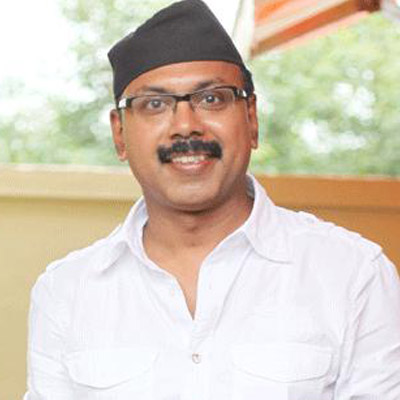
    KOLKATA: Taking ahead its virtual fireside series with eminent professionals of the media and advertising industry in India, Indiantelevision.com will be hosting Eros STX Global CEO-India Pradeep Dwivedi on Friday 18 September at 11.30 am. The session will be helmed by our founder, CEO, and editor-in-chief Anil Wanvari.

    Dwivedi is an industry veteran with nearly three decades of experience across media, marketing, publishing and advertising. He has worked at multiple brands and publishing houses in different capacities and played a key role in the growth. Dwivedi started his career with Eicher Motors, and went on to work with GE Capitals, Standard Chartered Bank, and American Express. His longest stint has been with Tata Tele Services which extended just a little over eight years. Post that he served with Dainik Bhaskar Group as chief corporate sales and marketing officer and later served in the capacity of chief executive officer with Sakal Group.   

    Watch more Virtual Fireside Chats

    Eros International recently changed its corporate name to Eros STX Global Corporation recently following the completion of rare Bollywood-Hollywood merger. The opportunities are flaring up for both sides of the business – OTT and studio segment. At this crucial juncture of the business, Pradeep Dwivedi is spearheading the Indian market of the newly merged entity.

    Read more news on Eros

    Dwivedi will be sharing his experiences of sailing through the times of pandemic, the changing landscape of the media environment, new trends and developments in the content space, merging of Bollywood and Hollywood at Eros STX Global and leadership & life lessons.

  • Arnab Goswami’s advice to budding digital news entrepreneurs and independent journalists

    Arnab Goswami’s advice to budding digital news entrepreneurs and independent journalists

    NEW DELHI: There is no denying the fact that Arnab Goswami today is one of the most successful entrepreneurs in the Indian news media space today, having taken his labour of love Republic TV Network to number 1 spot within a span of a few years of its launch. But it certainly wasn’t an easy journey for him to achieve that. 

    However,  he learnt a great many lessons on his way to excellence. And as he takes on the next step in the trajectory towards diversifying his digital reach, he recently shared his tips for budding entrepreneurs in the new media space during a virtual fireside discussion with Indiantelevision.com founder, CEO & editor-in-chief Anil Wanvari. 

    Read more coverage on Arnab Goswami

    1. Be financially independent

    Goswami pointed out that a journalist can retain his/her independence only if they are not dependent on someone else for the constant flow of money. He insisted that the money could be arranged through debt, equity, or donation. 

    “I will advise that one should avoid going into debt and not rely on donation. There is nothing called a free lunch. Do not accept any strategic investment if you are not sure about being able to give the investors an exit in the near future. You should ask yourself the question if you can’t give them an exit, will they be deciding your editorial content in future,” he noted. 

    2. Break-even

    Your initial focus should be on breaking even in the initial months of the business. The most important thing for any digital business is to break even. 

    “The mistake that many entrepreneurs in the digital space make that they get  excited with the initial rush of money but they should be very careful where they spend it. Ask yourself if you can break even in one month, and if you can’t you should not be taking away from your co-workers and essential resources. Don’t splurge on  vanity,” he explained. 

    3. Don’t launch a content strategy based on seasonality 

    One must not be creating a content strategy based on seasonal issues. The same editorial angle might not work in the long run as the audience's thought process might not sustain. Therefore, a content strategy should be independent. 

    “You should only be answerable to viewers who have faith in you. Do not change your editorial stance based on social media commentaries. The beauty of the media lies in the very fact that the people criticising you for one story might start supporting you for others,” Goswami quipped. 

  • Beauty & Lifestyle Virtual Round Table: Industry to discuss their next big move today

    Beauty & Lifestyle Virtual Round Table: Industry to discuss their next big move today

    NEW DELHI: As we step into the post-pandemic era, beauty and lifestyle brands are hopeful of witnessing another ‘lipstick effect’ to boost up their dwindling cash reserves once again. The opportunities are endless as consumer sentiment is flaring up on account of savings they managed to do over the months and also the upcoming festive season. It seems like the whole industry is waiting for the golden eggs to be laid soon. 

    Albeit, some smart moves in terms of sales channels, advertising strategies, and alluring the consumers will have to be taken. Today’s Beauty & Lifestyle Virtual Round Table by Indiantelevision.com will see the presence of some of the leading industry leaders discussing the same opportunities in strategies, in a free-wheeling conversation moderated by our founder, CEO & editor-in-chief Anil Wanvari.

    Don’t forget to tune in live today at 4 pm for the virtual event with speakers including, VLCC Health Care Limited chief business officer Ameet Kkatyal; Baggit head of marketing Atul Rohan Garg; Lotus Herbals Pvt. Ltd. head-innovation development & brand strategy Ipsita Chatterjee; Myntra head – marketing Harish Narayanan; Max Fashion India senior VP marketing Jiten Mahendra; FBB Future Group India CMO Prachi Mohapatra; mCAFFEINE founder & CEO Tarun Sharma. 

    Sign up for the live chat here: https://us02web.zoom.us/webinar/register/WN_hCuCFX1ZQbSXtDx6UUP4aA

  • Market sentiments, ad volumes to go up with Onam

    Market sentiments, ad volumes to go up with Onam

    NEW DELHI:  Indiantelevision.com’s marquee virtual conclave exploring the scope of growth in Kerala ad market during the upcoming festive season, starting Onam, “The Comeback of Kerala: Onam Returns” wrapped up Wednesday noon with an impressive lineup of speakers sharing their deep insights into the market. The show expressed great hopes and positivity towards markets across the country picking up post-Onam but with a certain air of caution in people’s minds. 

    The virtual event kickstarted with a riveting address by Indiantelevision.com Group founder, CEO, and editor in chief Anil Wanvari following which BARC India CEO Sunil Lulla presented exclusive data on the market highlighting some of the key pre-Covid2019 and Covid2019 trends and an overview of the previous three Onams in the state. 

    He indicated that as Kerala has already started witnessing a growth in ad volumes, going 10 per cent up in the month of July’20 as compared to Jan’20, the trend will continue to be so if the production-supply chains keep picking up. However, for ad revenues to grow, it will take some more time, probably the market will reach pre-Covid2019 levels in 2021. 

    After Lulla’s insightful presentation, next in agenda was a panel discussion on “Unlock 3.0: The National Perspective–Are Brands And Consumers Ready ” moderated by TAM Media Research Pvt Ltd CEO LV Krishnan. Sitting on the panel were ITC Ltd head media and PR Jaikishin Chhaproo, Godrej Consumer Products Ltd head of media Subha Sreenivasan, Initiative CEO Vaishali Verma, Wavemaker India VP Kishan Kumar Shymalan and Zenith India CEO Jai Lala. 

    Chhaproo shared that despite Onam being just around the corner, there hasn’t been any noticeable spike in sales and the market is still dealing with logistical issues. Sreenivasan, however, showed positivity indicating that things will slowly pick up. 

    Lala opined, “The need of the hour is to work together ever before. We need to get information at the ground level. The engagement has to be very deep; TV and newspapers have been impacted which need to get back to their pace."

    The panel agreed that digital is set for double-digit growth this year while for other sectors it is going to be a slow trail in the coming months. 

    Kumar Shyamalan said, “The H2 impact will be far lesser, and the next three months will be extremely critical to see how many opportunities we have while working together.”

    The next panel discussed the retail and local perspective within the Kerala market as Unlock 3.0 begins. The session was moderated by Star Regional Business EVP ad sales Dev Shenoy and had Popular Motor World Pvt Ltd CEO Sujith Chandran, LG Electronics GM Sheebu David, Seematti CEO Beena Kannan, Maitri Advertising Works (P) Ltd director-operations Raju Menon, Mplan Media CEO and founder Parag Masteh, and Pittappillil Agencies MD Peter Paul Pittappillil. 

    Addressing the challenges faced by various industries in terms of consumer behaviour, the panel noted that the biggest issue is restricted mobility, to address which they are investing in digital solutions. Masteh shared that this has led to a boom in e-commerce, especially in apparel and consumer electronics. 

    Pittappillil shared that while the overall sentiment around Onam is positive, he is not expecting performance similar to previous years. Kannan said that they are expecting 20-30 per cent growth. According to Menon, real estate is also showing positive movement in the middle-level. 

    The final panel “Unlock 3.0: Understanding the Overall Brand Sentiments” delved into the greater local and national insights into the shifts expected to happen in the marketing and advertising markets in the coming few months. The panel was made interesting by some thought-provoking inputs shared by Blue Star Ltd VP–sales and marketing for cooling and purification products division C Haridas, Mathrubhumi Group national cluster head Sunil Nambiar, Lodestar UM IPG Mediabrands EVP Laya Menon, Asianet News Network Pvt Ltd VP Unnikrishnan BK, Malayala Manorama VP–marketing Varghese Chandy, and Zee Entertainment Enterprises Ltd south cluster head Siju Prabhakaran, moderated by Kalyan Jewellers independent director and L&K Saatchi and Saatchi former CEO and managing partner Anil S Nair. 

    Haridas noted that though there is an air of caution, people will surely start spending from Onam but they will need the right kind of value and motivation.

    Speaking about sentiments felt in the rest of the country and Kerala cluster Prabhakaran said, “Kerala showed the way to the rest of the country in terms of how to handle this crisis. Brand Kerala is in a very strong position. It has always managed to be in the national limelight. TV was only the choice so viewership was on the rise, but it couldn’t be monetised. Kerala was first to start the production, but I think we have seen a lot of resilience shown by us.”

    You can catch up on the whole conclave here: 

  • “There’s nothing called unbiased news, only the degree of bias changes”: ABP Network’s Avinash Pandey

    “There’s nothing called unbiased news, only the degree of bias changes”: ABP Network’s Avinash Pandey

    The television news ecosphere is battling great image issues in India. Their over-the-top, arguably, frivolous, coverage of sensitive matters and in certain cases, their eyes turning blind to many important issues are attracting a lot of flak from viewers and in a few cases from advertisers alike. Recently, ABP Network (earlier ABP News Network) CEO Avinash Pandey sat down to address these issues and many more with Indiantelevision.com founder, CEO, and editor in chief Anil Wanvari over a virtual fireside chat.

    Edited excerpts:

    How have been the past few months for you amidst the Covid2019 pandemic? 

    When the Covid2019 pandemic started in March, there was a lot of uncertainty around it and no one had any idea how to exit. We could not predict the level of infections or the economic implications it brought. But we looked at it and thought, at the end-of-the-day, we can’t do what we do sitting at home. At the same time, it is important to keep our employees safe, understanding that we are making them face potential death. So, we set up a critical incidents management team and went on with our business. Some of our staff, including me, got infected but we were strong and brave enough to battle that. 

    The viewers were glued to the screen watching the news and we knew our responsibility on the highest level. Business-wise it has been mayhem in the market. The advertising inventory went down and traditional advertisers for the news channels like white goods, car and mobile manufacturers, bike companies, etc., were out of the market because the shops were not open, markets were not open. But fortunately, it picked up at the end of May for most of us. June became a big month for us; it was over-filled and looks like we are slowly inching into a new normal.  

    I would like to know from you what you think about the news industry right now. Roger Ailes, the man who founded Fox News believed that news channels have to have a lot of drama and he propagated that sort of journalism too. Do you think Indian channels have been impacted by his model of journalism?

    In a very poor way, yes. The problem of news television in India is two-fold: how the channels are, what are the entry barriers in the industry and what sort of competitive advantage each product comes and offers in the marketplace. On the other hand, the existing measurement system and how it measures the news channels. 

    As you rightly said, the big problem with news channels is drama but there was a time when there was a scope for intellectual drama. So, shows like Big Fight or sting operations on MPs, or Cash for Questions Scam got good ratings while performing basic duties of doing good journalism. Slowly, that disappeared. What you see on television now is that each channel has created a different type of Rafale and all kind of swings are happening in the studio. Ailes wouldn’t even have thought about drama like that. 

    But I will not solely blame the editors, chief editors or the people who are producing these shows because what happens in that if you do a nice investigative story for 20 minutes, chances are there that you will not get good ratings but if you do 100 news in 10 minutes or five minutes, which is basically telling the same news in five different formats, it will bring ratings. 

    The industry is heavily dependent on advertising and thus ratings, which makes you think what’s the future of doing good journalism on television in our country. 

    So is it just the ratings or you think the Indian audience is such that it likes drama? 

    I think ratings represent society. But also, if you look at the definition of NCCS A category today, our drivers will easily qualify for that. Now, the content sensibilities for different levels of society is very different. And largely because the NCCS model is so generalised, there is hardly any scope for good content. 

    Look at the overall TV industry, so many unique content channels came and shut down because of zero ratings. It’s not that they don’t have an audience but ratings do not reflect their true constituency. It is hard to believe that an audience searching for the same content on pull mediums are rejecting it on push mediums. 

    Both areas, the quality of content and how you measure it need to be worked on. All people have different views about how the rating system should reflect them and that is why we need to look at alternative methods. Some technologies are available and BARC today is headed by the best people in our industry. So I cannot say that they don't know what is to be done. The time for change is right here and if you don’t do it within the next one-two years, it will slim down. We need to refine the system for better and certainly move away from the NCCS system. 

    So how do you see the future of news channels in India? You talked about the whole push and pull medium. How do you see them diversifying on your platforms? 

    We put out the same content that we show on television on our OTT platforms right now. For example, we are the only channel that doesn’t put astrology content on our channel. We do not even take ads from such babas. We do not run the news of death till it is certified and there have been cases that we have delayed in sharing the news of certain celebrity deaths too. So, we follow certain principles and that works for us. It gets us similar traction on all platforms. 

    I am going to slightly contradict you here. Recently, National Human Right Commission had to intervene regarding the insensitive coverage of Sushant Singh Rajput’s death. They even wrote to NBA and all of you responded in your way stating you did not go wrong with that but there are doubts about that. 

    I am not in a position to comment on others but I looked at my content and it was certainly not insensitive. But a celeb’s death is to be covered in a big manner to get people’s attention. If you look at the coverage of princess Diana’s death at that time, all kind of things were written about that. I can tell you Indian media, Indian news journalists are far more sensible than that. 

    We are in a business where people are watching us all the time and it makes our jobs extremely difficult. I have worked in print and late in the night, when the page was ready, we took it to the editor for the final check after some five layers of corrections have already happened. On television, when a piece of news breaks, the assignment receives it and the panel producer on PCR who is probably fifth or sixth in the pecking order in the organisation decides to put it on air or not. The filter and duration to implement are minimal and humans sometimes do make mistakes. 

    When you don’t like something on a news channel you can complain to the NBA. But why should one be doing that? If you don’t like anything on a channel, simply change it. 

    Another thing is that all channels have a stance. They are either left-leaning or right-leaning, or to right-to-the-centre or left-to-the-centre. How does it impact the reporting on news channels and how close are the politicians to these channels? 

    It is a big question and I have a theory of my own, which many would not agree to, that there’s nothing called unbiased, only the degree of bias changes. 

    Having said that, at ABP Network, we are not aligned to any particular belief, ideology, or way of life. That’s one of the reasons why I stopped our 4-5 pm debates because I noticed that whether you are arguing on migration, labour, defence issues or education policies there is a set of people decided by a political party who come and speak on all these subjects. They are not subject matter experts. 

    So, what started happening across news television is that there is a kind of agenda being pushed through these debates. People are asking questions like how many zeroes or what is the full form on a panel, which doesn’t make any sense. If you are going down to that level, then we are not doing any service to our viewers. And that is the reason you are making an opinion that a particular channel may be aligned the particular group and we wanted to escape from that.

    And if we talk about how the channels handled the involvement of Tabhligi Jamat in the Covid2019 cases? 

    See, it was a very charged up time. The only reporting that was happening was death and that became an overbearing thought for most of the reporters too. The Tablighi conference, it used to happen each year and channels have covered that earlier too. But it was an irresponsible behaviour by the organisers this time to lock themselves up and thus leading to a spread. I am not saying that they did this willingly. 

    Now, debates with shouting matches get high ratings and Rubika’s episode never got the highest rating. There are obviously questions being raised about the said episode but when a debate happens, it is the prerogative of the anchor and panellists to take it ahead. The channel or the management has no say in that. People watched the debate for Rubika and it was a charged up time then.

    In the hindsight, it is not right to blame a certain community. But it was a time of unprecedented uncertainty. How do you blame people for reacting a certain way, too? 

    Another thing I want to touch upon; do you think news should go pay or not? You changed from ABP News Network to ABP Network, taking on newer avenues. Why not monetise news and build from there? 

    I have never been in favour of FTA channels. When you give anything in this country for free, people start taking it for granted. High-end content requires investment, then you have to try in that market, so that’s not an easy game. However, I am quite determined that we, as a network, will soon go pay

    We are building that that kind of content for us to be acceptable for people who like to pay for. 

    Do you think it will work in India? 

    My regional channels were already pay. I only became free-to-air because of the uncertain environment set by NTO 1.0. But if you look at the GEC segment, their demand did not drop because they went pay. 

    There is a science and logic behind how the distribution system works and I don’t see a decline happening. Advertisers will not go anywhere because they will get the eyeballs. And even if I have to take a hit for the initial quarter, I am okay with that. 

    Our digital business became profitable last year. We want to be the largest video company in three months. There are a lot of other things that we have planned which we will announce in due time. 

  • Creative content, diversity, smart recommendation engine & community building are key to UGC platform growth

    Creative content, diversity, smart recommendation engine & community building are key to UGC platform growth

    MUMBAI: While the last few years have seen the rise of online premium content, several consumers have also emerged as creators. The boom of user-generated content (UGC) has led to the adoption of a plethora of apps other than traditional video-streaming platforms. UGC platforms are here to stay but those need to focus more on personalisation, user information security, smarter recommendation engine and scaled up technology.

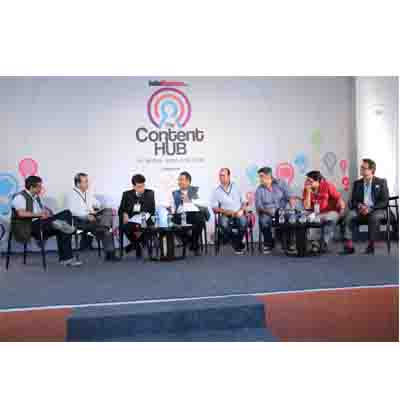
    Under The Content Hub Tech Series umbrella Indaintelevision.com hosted a virtual roundtable on the topic which saw Firework head of content and strategic partnerships Sudarshan Kadam, Roposo co-founder and VP product management Glance Avinash Saxena, Samosa Labs founder and ex-CEO Abhilash Inumella, Bolo Indya co-founder and CEO Varun Saxena, Akamai Technologies director of products – APJ Media Rishi Varma, Zee5 business head expansion projects and head of products Rajneel Kumar, moderated by Indiantelevision.com founder, CEO and editor in chief Anil Wanvari.

    The moderator started the session by charting out basic differences between over-the-top (OTT) platforms and UGC platforms. Akamai’s Verma pointed out that the biggest difference between UGC and OTT is the amount of content where the former trumps. He stated that on an average day, some of their UGC consumers individually can have 25,000-30,000 concurrent people broadcasting at any given point in time. While it comes to short videos, they are to the tune of a few millions every minute. 

    Bolo Indya’s Avinash Saxena said that one of the fundamental difference is the users holding power when it comes to UCGs. Along with showcasing talents, users can create multiple opportunities for themselves, even taking financial capital out of it. Inumella mentioned that the proliferation of smartphones has made it easier for common people to create content, leading to a boom in UGC. However, the panellists also noted that having different use cases, OTTs and UGCs can’t be looked at as contenders.

    Interestingly, one of the largest OTT platforms in India, Zee5, will soon venture into UGC. It is prepping itself for its entry into the segment through Hypershots. ZEE5’s Kumar said that the platform has been moving away from two primary types of content, catch up TV and original content in several categories like music videos, live TV and news, consistently over the last year. He noted that it's gaming platform partnered with Gameloft has seen upto six sessions a day per user each eight-minutes long, cementing its decision to work on UGC. 

    One of the major concerns for UGC platforms is content processing and monitoring content so it does not offend anyone. Firework’s Kadam said that it has AI, ML and human moderation for any content goes up on the platform. He added that whenever they see content is flagged by their system or moderation team, they go through the content to see that it is not hurting anyone’s sentiment. Since the platform is available across countries, it also keeps track of country-specific guidelines and sometimes opts for geo-blocking. Bolo Indya’s Avinash Saxena and Roposo’s Varun Saxena also spoke of multi-layered content monitoring. The former added that if the content is flagged they may not necessarily always remove from the platform but restrict to a certain community. 

    The experts agreed that content security is not a big concern for UGCs as they want to grow by getting their content shared across multiple platforms. However, impersonation and manipulation of content can be damaging for the platform. As the platforms have a long run ahead, experts believe more creativity of content, smart recommendation engine, diversity and community building will be key to growth. Even UGC platforms can look at the subscription model if they can add value to basic service while Firework already experimented with such a model.

  • How Parle G tackled distribution challenges during lockdown

    How Parle G tackled distribution challenges during lockdown

    MUMBAI: Distributing food supplies during a pandemic can be very challenging. While the central government has exempted biscuit manufacturers from the restrictions of the lockdown, Parle G was facing issues in some parts of the country as local authorities have not allowed transport of raw materials.

    Animation Xpress.com organised a virtual roundtable conference on the theme ‘The changing dynamics of brands amid the pandemic’. The insightful discussion was moderated by indiantelevision.com founder CEO and editor-in-chief Anil Wanvari. During the roundtable, Parle Products senior category head of marketing Krishnarao S Buddha spoke at length about the challenges faced while distributing Parle products during the pandemic.

    Buddha says that post 20 March, April and May has been a roller coaster ride. At Parle, hand sanitisers are a small segment; biscuit and snack business formed part of the main business.

    He says, “Since day one we were clear that most of the Parle products came under essential services. It was a very tough time till April; from May onwards we are relatively better.”

    About the challenges the company faced while kick-starting the distribution pipeline and supply chain, Buddha said, “We formed a small combat team and the whole objective was to see how we can bring things back to normal. First and foremost, we spoke to our partners, contract manufacturers.  There are ten mother units which are owned by Parle and 120 manufacturers spread across the country. So, the idea was to activate them; it didn’t really take a lot of time to do that.”

    Convincing CnFs (carrying and forwarding agent) was very difficult. They were quite hesitant in the beginning as they believed the company was not doing a right thing by sending the out, when the entire situation is so scary. But somehow the company managed to get them working as well.

    According to Buddha, the last and the most important leg in the business were distributors. According to him, initially they were not willing to step out. It took a lot of convincing and motivation, communication for maintaining hygiene. All guidelines were sent to manufacturing locations, CnF’s distributors, and most importantly, distributors to start functioning.

    In the meantime, the company’s decision of giving away Rs 3000-crore worth biscuit packets was taken up really well by the government.  It helped it get a lot of permissions to start their factories at 50 per cent capacity.

    He added, “Forget about 50 per cent capacity we were struggling to get 20 per cent of our workforce. Most of the migrant workers have already gone away and we were struggling. Somehow, we managed to start our wheels in the factories and then the challenge was to get raw material and packaging materials. For example, we needed print ink for food lamination. So, we sent letters to vendors stating that Parle food is an essential part and it would require you all to provide raw material and packaging materials.”

    The initial few days the company was struggling with 20 per cent of capacity, but today Parle is working with over 70 per cent of the capacity.

    The next challenge was to get the transportation. He points out that the drivers were not willing to come; families were not willing to send them. They had to incentivise at every level. “So, we incentivised factory workers, transporters, and vendors to provide raw materials. They were not willing to go to the containment zones. Eventually over a period of time we overcame that,” he says.

    The last leg was in the system of distributors, who were quite panicked about the whole situation.

    Gradually, distributors started going out to the market. They were to cover about 60 shops a day. Buddha mentioned that their main focus was to safeguard their lives. Distributors were advised to maintain all the norms and guidelines: wearing masks, gloves and maintaining social distancing.

     “There was reciprocation from our channel partners and another aspect was we asked our distributors for counter selling. People had started to hoard food due to the Covid2019 outbreak. By the end of March the shelves on the shops were empty. We thought there was so much demand because of people hoarding and buying stuff in panic. So we told our distributors to start calling retailers and take appointment orders and accordingly keep the stock ready.”

    He added, “If they don’t do online payment, we told them to take an appointment in different time slots to collect the payment. So, it becomes much easier and much planned. That is how we overcome this whole situation.”

    Parle G is bread and butter of so many people in India. To help the needy, Parle products started routing three crore packets to the government authorities. Buddha says, “It is not like we have done this for the first time. We sent truckloads of Parle products during earlier calamities also. We never speak about it, but now it is important to do. This enlightened the authorities, commissioners, and district magistrates.  That is where things eased up.”

  • Technology comes to broadcasters’ rescue to create content during Covid2019

    Technology comes to broadcasters’ rescue to create content during Covid2019

    MUMBAI: Technology has been the saviour for most broadcasters while producing content amid the nationwide lockdown due to the Covid2019 pandemic. This was the unanimous view of panellists from news and entertainment channels, who came together for a virtual panel discussion to share their experiences of generating content from home or remote locations.

    The virtual panel discussion, an initiative by indiantelevision.com held on 5 May, was moderated by Indian Television Group founder, chief executive officer and editor-in-chief Anil Wanvari. The panellists who participated in the virtual discussion were TVU Networks SVP solutions Jared Timmins, Mathrubhumi Television senior manager-technical Bijumohan R, Asianet News Network chief promo director Ajith Nambiar, Fakt Marathi co-founder Shirish Pattanshetty, TV9 Network technical head Devendra Maurya, ABP News Network SVP broadcast technology and operations Manish Sharma, Odisha Television head technical and engineering Sukanta Rana, Hoichoi VP-content Anindo Banerjee and senior TV Journalist Bhupendra Chaubey.

    Explaining how they have been able to provide tech-based solutions to broadcasters across the globe, TVU Networks SVP solutions Jared Timmins said, “We have seen people getting on cloud technology as soon as possible during this crisis situation, and our mobile application TVU Anywhere has seen 500 per cent jump in usage.” TVU Networks provides IP-based live video solutions.

    “Unlike video call applications such as Skype and Zoom, our technology helps the broadcasters to achieve desired audio and video quality within the given internet bandwidth,” added Timmins. He also showed a presentation of their latest offerings of new technology and cleared the doubts of news and entertainment broadcasters who participated in the panel discussion.

    Majority of the broadcasters are forced to use all the available resources amid lockdown to create content for the viewers. In this context, Bijumohan R said, “We have been using remote technology before the pandemic too, but the current crisis has forced us to use video calling apps such as Skype and Zoom more frequently.”

    The news channel has reduced the workforce by two-third and has asked people to work from home or wherever  they are located. The remaining one-third workforce has been asked to come to the office.

    Echoing Bijumohan's views, Sharma said, “The technology that majority of news broadcasters are using today was already available and they have been using it now at an optimum level for content production.” ABP News Network was the first news broadcaster in India to use the very first model of TVU Networks.

    Sharma believes that bonded server technology is a life saviour during these testing times. He added, “All our reporters, guests, speakers have been using the TVU Anywhere mobile application to send live information and also access to this app is given to all our guests during a live debate or for their byte.”

    The news broadcaster organised its current edition of a summit called Shikhar Sammelan virtually with the help of the TVU Anywhere mobile apps and backpacks.

    Chaubey, who moved on from CNN-News18 a month ago, has since then been working on his digital channel. He said, “The era of normal ways of broadcasting has completely gone. All those old broadcasting technologies are behind us.” He adds, “Digital or Zoom summits are exactly the kind of platform you’re talking about and is the way forward in future.”

    News has been the TV content consumption driver during this Covid2019 period, as the Broadcast Audience Research Council (BARC) India and Nielsen India joint report states. news channels are the only ones successfully producing fresh content compared to other genres.

    In this regard, Pattanshetty, said, “Majority of GECs are showing repeat telecast of broadcasted shows unless they have some content in the bank.”

    Banerjee added, “Television has come to a standstill due to the Covid2019 scenario and repackaging of shows is the only way we are trying to survive. We are planning to come up with Live TV in our application; we have a huge library of over 200 films and series.”

    Rana explained how the channel has been creating a 1.5-hour show every day from home for one of their GEC channels. He says, “We have created a script and have asked the artists to record their part on the mobile phone and send to the broadcaster, which we edit and telecast it on our channel every afternoon.”

    The virtual panel discussion, appreciated by the panelists for its topicaliy and relevance, was watched by over 1000 people during a live stream on indiantelevision.com’s Facebook platform. It also received a resounding engagement on its Twitter handle.

  • Applause Entertainment’s Sameer Nair on digital content creation, self-regulation and creative freedom

    Applause Entertainment’s Sameer Nair on digital content creation, self-regulation and creative freedom

    MUMBAI: Creativity, freedom of expression, self-regulation and content quality are some of the factors that come into play for digital platforms. These topics were addressed in a fireside chat between House of Cheer founder and CEO Raj Nayak and Applause Entertainment CEO Sameer Nair, at Indiantelevision.com’s The Content Hub 2020.

    Nayak started off by stating that even though just 30 per cent of Indians have access to the theatre, films like Thappad and Badhaai Ho are growing in production and acceptance. Does this signal a diamond era for content creators? Nair agreed that the screen density in India is less in comparison to the US or China. However, he feels that television has played a big role in the distribution and dissemination of cinema. Even if just 30 per cent watch movies in the theatre, eventually more people watch it on TV.

    “From a consumption point of view, everyone is seeing. The big challenge is the lack of screens. Of late, there seems to be a push that all content needs to go to digital which, in my opinion, is not the best thing. The US has figured out this window where they first go to theatres and then to TV and DVD. So, there’s more monetisation. It’s a pity when they go directly to digital because you can’t extract revenue out of it when people are willing to go to theatres and buy tickers. Theatre screens need to be an opportunity taken. It’s a good time where different kinds of stories are being told. Smaller movies have also done well. But it’s always been in the history of Indian cinema where we have space for all kinds of things. In the year when Naseeb launched, we also had something like Jaane Bhi Do Yaaron,” he said.

    Nair has delved in various types of content creation from production houses to TV to digital, making him one of the most prominent faces of the industry. With Applause, his aim is on producing content for digital. “The digital medium makes consumers behave in a particular way and that creates a difference in the content,” he said. “TV has always been a one-way talk. You program a channel and give it to the consumer. The consumer can’t control the schedule. OTT and digital have given the consumer the power to choose what they want to see or read – when, where and how they like it.”

    Even though TV is dictatorial and one-way, it has been and is still successful, according to Nair. But the choice that digital provides is creating niches. “That’s why so much of international content is being consumed with subtitles. That wouldn’t have been possible in the pre-OTT era.”

    Nayak questioned Nair on the differentiation between the content found on digital and TV. Nair replied, “We missed a revolutionary step of doing premium subscription television. For digital series, we’re talking of what the US has done successfully for 25 years with shows like The Sopranos. That’s what we are doing now with OTT. All broadcasters have found one more place to show their content.”

    With his experience, Nair highlighted that TV is driven by ratings and that limits the kind of stories that can be told. But on OTT, you can tell those stories that are restricted by TV and this is driving the change in content.

    Nayak brought up the topic of creative freedom in times of growing censorship. Nair said, “If you’re a genuinely creative person, you will look to be subversive in any environment. There’s no such thing as freedom. You have to tell your story and get it out. During the Emergency, the government banned Aandhi which returned after the government changed. But because of the new medium, we can tell stories. TV didn’t allow it, not because there wasn’t any freedom but rather because the medium wasn’t conducive. The medium requires ratings and ratings require the lowest common denominator. Stories on mothers-in-law and daughters-in-law worked very well as a formula for TV.” However, even in this new freedom, Nair said, there are bad shows.

    Even though India is only just warming up to the series format, Nair feels we are already late. With India’s propensity to leapfrog technology, it is likely we may do so in content too. “Will India watch 60-minute episodes on 4G connection? There is a lot of talk about short-form content and other disruptors but right now, we have to look at making money. Going forward, we are looking at series and short-form content.”

    Nayak, who has decades of experience in the TV industry, quizzed Nair on the need for self-regulation. “On TV, since it was family viewing, we had restrictions. But, now with digital, we have great creative freedom. Both international and local are pushing the envelope. So do you think self-regulation is necessary and does it kill creative freedom?” he asked.

    “Self-regulation is a slippery slope. It puts you in a place where you accept that if you don’t regulate in that manner there will be repercussions,” Nair pointed out. “If you want to speak, there will always be someone who will be unhappy. Someone will protest to your freedom of speech. Different countries operate differently. The US is the freest. They are also a 200-year-old democracy and they have been at freedom longer. But people are pushing boundaries and finding new ways of expression and getting away with things. Most often the establishment finds it hard to figure out what you’re saying. That’s the sort of thing to do.”

    It’s a fact that known faces work well in promoting films and shows but a show like Jamtara performed well on Netflix with new faces too. “It always starts with the story and writing. We’ve done shows with stars and without. I don’t think you can knock down faces. They are faces for a reason, for marketing and have value. There are audiences out there who like them and want to see their work. The series format does allow us to take different stars and these tend to be an ensemble cast and not focussed on a single hero. So, the script is the hero,” explained Nair.

    The area to be cautious is that since the power lies with the viewer, they can choose to skip or stop watching. That’s where the story must be interesting. “Faces will get an audience but not keep them there,” he said.

    Applause Entertainment is in the process of creating the Indian adaptation of the popular Israeli series Fauda. Giving insights into its creation, Nair said, “From an adaptation point of view, it operates at two levels. One level is the socio-political issue of the place being set in Israel and Palestine. The other one is the thriller. We’ve separated the two. With what’s going on in India, we’re using that as fodder for dialogue and context. This environment lends itself to that.”

    Comparing filmmaking and writing in the US with India, Nair mentioned, “The US takes greater care to mitigate failure. They are more disciplined in their writing and production process. They tick a lot more boxes and we have also been doing that, even if not at the same level. Even in the series business, we are looking at international businesses and learning.”

    On his prediction for content creators in 2020, Nair said that there can’t be anything truer than stories being well-written. “Everyone feels not everyone gets an opportunity. But there’s a lot of work happening out there. It’s the nature of the business that not everything gets made and even great ideas get left behind. It’s nothing to be despondent about. You’ve got to keep at it and keep trying to tell your story,” he concluded.

  • India lacks bandwidth, financial ability to work in sequences like Hollywood

    India lacks bandwidth, financial ability to work in sequences like Hollywood

    MUMBAI: The last session of The Content Hub 2020 organised by Indiantelevision.com was moderated by Suraj Wanvari with screenwriter-director Karan Anshuman and director Gurmmeet Singh. The duo spoke on their learning while making shows for OTT platforms and the development process of Inside Edge and Mirzapur.

    In conversation with Wanvari, Anshuman and Singh spoke about their journeys as a writer and film director, challenges they faced, development of Inside Edge and Mizapur, OTT platforms, and the genres that will work well on OTT.

    Anshuman said, “Writing is my favourite part of filmmaking. While writing, we have to let the big idea win and we should allow them to come. Hollywood works on sequences and we want to work in the same manner but we don’t have that bandwidth or money to work in a similar format.”

    Singh said, “While in writing best idea wins, but as a director there is always a chance of improvisation as new ideas are always welcomed; it depends from case to case. We keep ourselves creatively open and engaging within the team.”

    Anshuman said, “There is a rigour about how streaming platforms access a project. On OTT there is a proper way of accessibility; there are good creative people who take their decisions.”

    Asked about which genres OTT platforms are looking at and what genres new writers should focus on, Singh said, “Gangster kind of stories has come to a saturation level; platforms are looking at comedy genre but it’s difficult to make them in long format.”