Tag: indiantelevision.com

  • Govt. issues showcause notice to Live India on fake sting

    NEW DELHI: Live India, which ran into controversy after telecasting a sting operation that was subsequently declared as fake, has been issued a showcause notice by the information and broadcasting ministry.

    “A notice has been issued to the channel to show cause why its licence and permission to uplink should not be withdrawn for carrying out a fake sting and violating the Programme Code as well as the regulations under the Cable TV Networks (Regulation) Act 1995,” confirms a senior ministry official, speaking to Indiantelevision.com.

    “The Act is clear that ‘no person shall transmit or re-transmit through a cable service any programme unless such programme is in conformity with the prescribed Programme Code,” the source adds.

    Queried about the government notice, Broadcast Initiative Ltd promoter Markand Adhikari, however, refuted it. “I am not aware of any showcause notice issued by the ministry,” Adhikari stated.

    Meanwhile, Live India is facing the ire of the government on the one hand and other TV news channels on the other, as the incident has come at a time when there is growing confrontation between the I&B Ministry and news broadcasters on the need or relevance of an imposed Content Code.

    The channel’s reporters Prakash Singh and Rashmi Singh are in police custody, while school teacher Uma Khurana has been granted bail in the fake sting which showed her using her own students for prostitution.

    Businessman Virendra Arora, who is said to have wanted to recover money reportedly owed to him by Khurana, now stands accused of having hatched the conspiracy using Singh.

  • NT editors discuss Content; draft Code in week’s time

    NEW DELHI: The Editors of news TV channels based in Delhi met to discuss the issue of Code of Conduct and have charted 10 areas of concern.

    Based on these 10 points, Times Now editor Arnab Goswami will develop a draft code within the next week, sources have revealed to indiantelevision.com.

    Expectedly, the primary issue would be privacy and sting operations, which would be broken down into further sub-categories of violence, superstition, sleaze, showing of cadavers, explicit sexuality and cruelty, etc, along with the rather amorphous issue of impartiality.

    But who would decide the parameters of impartiality? Sources said that Goswami would first develop the draft and these finer issues would then be discussed after the draft is circulated among all channels.

    The meeting included Shazi Zaman (Star), Rajdeep Sardesai (CNN IBN), Pankaj Pachauri (NDTV), Arnab Goswami (Times Now), Ashutosh (IBN 7), NQ Naqvi (Aaj Tak), Satish K Singh (Zee News) and Annie Joseph, secretary general of the News Broadcasters Association.

    Interestingly, India TV was not present, though the sources said that they had asked to be included in any committee that works on this. “They have said they would like to be part of the process because their content has come in for sharp criticism, so they will be with us.”

    (It may be recalled that during the NT Summit organised by Indiantelevision.com in Delhi in July, India TV had been hugely criticised by both NDTV and CNN IBN for showing what they termed ‘entertainment, not news’, for showing superstitious and violent footage.)

    The meeting, held on Monday, also discussed the issue of broad-basing the process.

    “We need credibility, because tomorrow the government might say that this is a grouping of a handful of Delhi editors, so we are looking into how to bring all the channels across the country into the loop,” a senior official told indiantelevision.com.

    The official said also that the Code could be made effective only if this inclusive process is complete.

    There were discussions on how to create an agency and develop a mechanism for the implementation of the Code, and issues of penalties for violation.

    “Without an agency mechanism in place, there cannot be implementation, so we need these, but these are issue which would be looked into once the draft is sent around and discussed,” the sources added.

    That draft would be prepared in consultation with a legal expert, it was revealed.

    How would the Code be made binding? That has not been discussed yet, the sources said.

    However, another issue discussed was whether the implementing agency would have in it just journalists or some eminent persons too, to give it greater credibility.

    It is possible that an ombudsman kind of agency on the lines of the Advertising Agencies Council of India is developed.

    “The ASCI is a good model for us to follow,” the sources said.

  • ‘For the Zee Network, regional channels will be strong pillars’ : Nitin Vaidya – Zee Entertainment Enterprises Ltd. director regional channels

    ‘For the Zee Network, regional channels will be strong pillars’ : Nitin Vaidya – Zee Entertainment Enterprises Ltd. director regional channels

    As localized channels are gaining momentum on television, the Zee Network has been quick to grab untapped genres in regional markets. Spearheading four regional channels from the Zee bouquet, including Zee Marathi, Zee Bangla, Zee Gujarati and now Zee Talkies, is Zee Entertainment Enterprises Ltd director regional channels Nitin Vaidya.


    In a free flowing conversation with Indiantelevision.com’s Renelle Snelleksz, the Zee veteran outlines the growth trajectory of each region and the targets set for “regional channels to become the pillars of the Zee Network.”


    Excerpts:

    Zee has strengthened its position in Maharashtra with three channels – general entertainment, news and now movies. How has this market evolved and what is the growth story for Zee?
    In 1999 when we entered Maharasthra, there was a widespread belief that though Marathi audiences were bilingual, the market was largely Hindi skewed. It was expected that few viewers would be attracted to a Marathi channel.


    Till 2003, it was a real struggle but we were determined to provide value for the investors, for advertisers and for consumers.


    In 2003, the share of the Marathi television market was 8.3 per cent. Currently, the share of the market stands at 16.8 per cent (Tam data; January till Week 35, C&S 4+). Though Maharastra was believed to be Hindi dominated, the share of Hindi general entertainment channels dropped from 34.9 per cent in 2003 to 24.4 in 2007.


    Over the last four years, Zee Marathi has driven viewers to the genre through a very aggressive programming and marketing push.


    Evidence of that is seen in the channel share of Zee Marathi. In 2003, it stood at 40 per cent while ETV Marathi was at 35 and DD Sahyadri at 25. Although there was a decline in 2005, Zee Marathi has regained its leadership position in 2007 with a channel share of 45 per cent while ETV Marathi is at 36 and DD Sahyadri at 11.

    Can you identify the factors that contributed to Zee Marathi’s growth?
    We achieved two things in this market. Firstly, we were able to divert viewers from Hindi entertainment channels. In doing this we also changed the existing perception of the Marathi market being Hindi skewed. Secondly, the television universe as a whole has also grown considerably.


    This picture tells a story of how audiences are embracing local channels which they first try and then stick to. This gave us encouragement to invest monies behind this proposition.

    What is the growth that the Bengali market has witnessed?
    Bengal is far ahead of Maharasthra in terms of what has been accomplished as it consistently stayed ahead of Hindi GECs. In 2003, the Bangla market occupied a share of 28.6 as opposed to Hindi GEC which was at 22.9. The average for this year is 33.6 per cent share and Hindi GEC is 20.

    What were the differentiators used to combat competition and pull audiences from Hindi channels to Zee Marathi and Zee Bangla?
    We did not follow the set formula that is commonly used on Hindi GECs and replicate it for our regional audiences. We decided to take a different route and deliberately resisted the ‘saas-bahu’ dramas. Instead, we chose to focus on the interpersonal relationships that reflect the ethos of that particular region.


    These family dramas along with our popular musical format Sa Re Ga Ma Pa have been the major drivers of audiences for both these channels.


    Besides, we have not compromised on the production values for these channels and have attempted to extensively involve our viewers in daily programming through a host of interactive shows.


    This strategy even attracted urban viewers from Mumbai and Kolkata, areas considered too cosmopolitan for a regional channel. Both channels have surpassed Star Plus in C&S 15+ female SEC-A,B&C and while in C&S 4+ market Zee Bangla is far ahead of Star in Bengal, Zee Marathi is just 20 GRPs away from Star Plus in Maharashtra.

    But the growth witnessed by Marathi and Bengali has not been seen with Zee Gujarati – Why so? What was the setbacks that the channel encountered in this market?
    With Zee Gujarati we did have a problem. This too is a market strongly dominated by Hindi. With only three players in the game ETV, Zee and DD, the market has seen marginal growth over the last couple of years.


    Zee Gujarati requires the push that was given to Marathi and Bengali and going forward this is our plan. We will pump in more investments into the Gujarati market as well as rope in good talent and push our content more aggressively. One can expect to see a turnaround of Zee Gujarati.

    Zee Gujarati will see a turnaround in the next two years

    What is the time line that Zee has set for revamping Zee Gujarati?
    Within the next two years, Zee Gujarati will witness a complete turn around. In fact, the potential of this market is more than that of Marathi and Bangla due to the mere consumption of the State. Therefore, we are putting serious monies behind the channel.

    How much will you pumping into Zee Gujarati?
    I would not like on that at the moment.

    What is the current ad pie for each of the three markets and what growth is expected in these regions?
    The ad revenue of the Bangla language channels in the Bengali TV market is expected to touch Rs 280 crore (Rs 2.8 billion) in 2007 and grow to a category share of 35 per cent. Meanwhile, Marathi language channels will cross Rs 225 crores to occupy 25 per cent share of the Maharashtra TV market this year. However, the Gujarati market is presently a mere Rs 50 crores.

    The network recently made its foray into the Marathi movie segment with the launch of Zee Talkies in August, what has been the response thus far?
    Although, we were aware of the untapped Marathi movie genre, the response to Zee Talkies has been phenomenal as it touched 70 GRPs in its first week of launch. The was far beyond our expectations.


    This was supported by an extensive marketing push of Rs 80 million dedicated to the launch campaign. We consciously decided that for the first 20 days the channel will not have a single advertiser. We wanted them to first see the response before they put money on the table. The numbers speak for themselves!

    As part of the network’s attempt to boost Marathi cinema, you tied up with three production houses for a slate of 15 films across two years. When will these movies be released and what is the investment outlay for these films?
    The first film will be released by the end of this year in theatres, following which it will be telecast on Zee Talkies. Close to Rs 10 million will be spent on each film.

    Do you have plans to enter Bengali film production as well?
    We are currently in talks with a few production companies for Bengali movies. We plan to get into Bengali film production very soon.

    Which production companies are you in talks with and what is the budget allocation for Bengali films?
    We have not yet zeroed in on the production houses yet, so it would be premature to talk about it now. But we will definitely be spending more than Rs 10 million on each film.

    So, are you looking to launch a Bengali movie channel as well?
    (Laughs) No! Not at the moment.

    Going forward what are the growth opportunities that you foresee in the three regions?
    The addressable television environment will definitely provide a huge thrust in pushing these channels ahead. For the Zee Network, the regional channels will be strong pillars. This will help grow both subscription and ad revenues for the network.
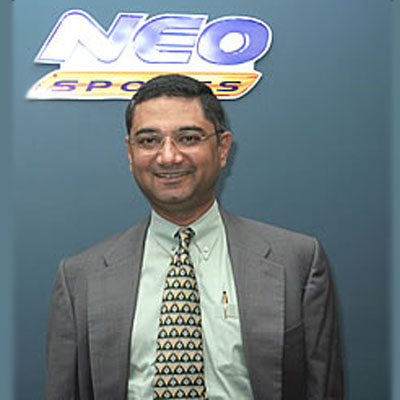
  • ‘Language feeds can get us 30 per cent more viewership’ : Shashi Kalathil – Neo Sports CEO

    ‘Language feeds can get us 30 per cent more viewership’ : Shashi Kalathil – Neo Sports CEO

    Neo Sports has had a testing time. The distribution deal with Star did not work out and the two channels – Neo Sports and Neo Sports Plus – did not find space on cable networks. This, in turn, impacted ad revenues.

    Now with Australia and Pakistan touring India, Neo is ramping up the distribution of its two channels. And it is hoping that strong content will drive in viewership and revenue.

    In an interview with Indiantelevision.com's Ashwin Pinto, Neo Sports CEO Shashi Kalathil reveals the gameplan for the company.

    Excerpts:

    Has Neo Sports gone through a rough weather ever since its launch almost a year back?
    The going has been tough. There was uncertainty on the regulation front. We had mandated Star to handle our distribution, but our channels had serious problems of being carried on cable networks. Cricket also went through its ups and downs, with the World Cup being the lowest point for the sport. There was a lot of media hype which made a not – so – good situation worse.

    What were the factors that made you terminate the distribution contract with Star and decide to do it on your own?
    We had an arrangement with Star. While I do not want to get into details as the matter is under arbitration, I will admit that we got almost zero delivery. We found that we would not be able to survive as a channel if we did not reach anyone. Besides, the payments that were contractually due to us were delayed – or never arrived.

    Did it also badly impact your ad revenue?
    Our ad revenue was hurt as a result of the Star deal. We got away with it to some extent in the Sri Lanka series by keeping ad rates high and through strategisation where some matches aired on Doordarshan. However, we could not fully exploit the Bangladesh Test series. That would have been worth at least Rs 70-90 million. We could not realise even one fifth of that.

    How have you worked out on your distribution strategy?
    We have covered one third of the cable networks. We went to the smaller towns first as there the declaration is much better. A lot of viewership comes from rural areas. We signed with direct-to-home (DTH) service provider Tata Sky. We expect to sign with Dish TV soon. We are also stitching deals with the south-based cable networks.We are now approaching the big multi-system operators (MSOs) like Incablenet, Hathway Cable & Datacom and Siticable. By the time the Australia series starts we will be in three fourths of cable & satellite (C&S) homes.

    Since the matches have to be shared with Doordarshan, doesn't it affect the kind of deals that Neo is able to strike with the cable operators?
    No! The sharing of feed has been going for a long time. The 2003 World Cup was shared. There are guidelines. Last year for a while, the Supreme Court had taken a view on this kind of activity. India-South Africa was a rare example where DD did not air the matches.

    We have a situation where the pubcaster does not bid for cricket but takes feed when it wants to do so. Besides, there is the issue of encryption.

    What was the write off that Neo Sports got from BCCI due to the non-encryption of DD's signals?
    DD's footprint extends from China to the Middle East. We had a protection clause in case of circumstances that dilute the value of our BCCI rights. If DD sends an unencrypted signal, then how can you sell the rights in those markets?

    Right now there are a lot of cricket rights coming up for grabs. Is Neo Sports going after any of these or are you first trying to justify the BCCI investment?
    It isn't a sequential process. If there are rights that are of value, we will bid for them. Right now what we are seeing is that the price appreciation for these boards has not been as high as what it was for the ICC and BCCI rights.

    If someone gets the BCCI rights which are huge, you will see polarisation happening around the ICC rights. These two rights are the definitive ones in the cricket world; nothing else comes close. About 70 per cent of cricket that India plays in the next 13 months will be on Neo. That is an awesome depth to have.

    For the Australia and Pakistan tours, in terms of coverage what are the kind of innovations being looked at?
    We are keen on language feeds. You can get 30 per cent viewer addition doing this. Traditionally, the South has been neglected in terms of the regionalised feed. Neo Sports Plus will be broadcasting the matches in Hindi, Tamil and Telugu while Neo Sports will have English language transmission.

    We are looking at virtual advertising and programming innovations. We are also looking at interactivity on DTH.

    How challenging is it to push up ad rates to match rising acquisition costs?
    The cricket market is well set up. There are certain clients who advertise heavily in it. The economy is opening up which will allow you to have better inventory utilisation. There are ways to exploit cricket like having multiple language feeds.

    There is also a proliferation of general entertainment and movies channels which is resulting in further fragmentation. This will make the monolithic viewership of cricket more cost effective for brands and more valuable. Break viewership is becoming a serious issue for advertisers. On movie channels, often the break might be too long and people surf. Cricket's format is built to counter this.

    You will eventually be able to do multiple visual feeds for advertising. Now, though, it is still expensive and messy. With addressable delivery platforms like DTH coming in, the dependence on advertising will gradually fall.

    'If someone gets the BCCI rights which are huge, you will see polarisation happening around the ICC rights. These two rights are the definitive ones in the cricket world'

    How would you describe the perception of cricket at the moment among viewers and advertisers?
    I don't think that it is changing. Yes, there is noise made in the media on perceptions of how India is faring. It has to do with the quality of the opposition, how they are perceived. However, I do not think that cricket viewership or ad revenues are as sensitive as what the media says it is. When India did not do well in South Africa last year, people said that the sport was in trouble. Then we did well at home against Sri Lanka and the same media said that this was the best team for the World Cup.

    There is huge interest in the Australia series as it takes place during the festive season. Cricket in media parlance offers viewership that other programming cannot match. This will not change.

    Which are the clients with whom Neo Sports has signed long term deals?
    Perfetti and Hero Honda are our anchor sponsors. The concept is to have someone who wants a long term relationship with cricket on board. We have predictability to our calendar. So a client knows that Australia, Pakistan England, South Africa or Sri Lanka will be visiting us. So if a client does media activity, he knows that a footprint is available.

    How many anchor sponsors do you want to have?
    Initially, we had thought of having four anchor sponsors. However, the media space is getting so competitive that we held back a little bit as we did not want to preclude a large media buyer. There are emerging segments like retail and financial services that will become large. We are waiting for the media environment to settle down before we make more long term deals. There is a risk and also a de-risk in long term deals. You might end up paying more. You might end up paying less. Management is about dealing with it.

    During the World Cup there was a lot of grumbling about the deluge of ads. Steve Waugh went public about it in a column. What is Neo Sports' gameplan to ensure that commercial considerations do not interfere with viewer enjoyment?
    Cricket has a certain format which allows you space for ads – between overs, when a wicket falls, and also during the lunch interval. I think that the World Cup was a situation where matches were going beyond midnight. So perhaps the broadcaster was trying to get in as many ads as possible in the first half as viewership would certainly drop precipitously during the second half.

    In terms of domestic cricket with the push that has been given to it by Neo Sports, has there been any increase in viewership?
    We have had a good experience with domestic cricket. Now that our distribution issues have been settled, we will do innovations around domestic cricket.

    We don't air every domestic match. Cricket is tiered at various levels. We broadcast the best part of it. I have heard arguments about having less matches and fewer teams which I will leave for the administrators to settle. But at the end of the day, a Ranji Trophy final has value. It is the question of packaging it. There is also an awareness issue. People have not gotten used to watching domestic cricket. However when they find that the coverage quality is as good as what you get for an international match, there is stickiness. Last year's data shows that domestic cricket has potential. It is for us to develop that.

    However, the ad fraternity does not seem to be getting on board domestic cricket. Is there a perception problem in the market?
    The product needs to be developed and defined. Once you do that and take it to the advertiser, it will draw interest. But it will not happen overnight. There is still work to be done.

    What is the status regarding your second channel Neo Sports Plus?
    One part of its identity is to be an adjunct to Neo Sports. So Neo Sports Plus airs cricket in local languages. We were clear at the beginning that we wanted to adopt a regional multi language feed for it.

    Neo Sports Plus also airs other sports like German soccer, Italian league. We have badminton, cycling, motorsports. We have also found that rugby got a strong niche viewership among males.

    Can we flesh out the definition of Neo Sports Plus to go beyond cricket? That is something we are working on. Other sports have a growing niche. In the long term, you can grow it to a mass level like what EPL has done. Activities were done that led to the product definition being unique. However, no other sport can substitute cricket. The assumption that if India does poorly, a cricket fan will watch another sport is wrong. Our research tells us that a lot of ODI watchers in India do not watch any other sport.

    Could you shed light on the investments made in technology?
    We are set to go live with broadcast management system ForeTV from MSA Focus. This follows the solution's recent implementation at Neo's Mumbai headquarters for $4 million. The Fore TV Broadcast management system allows Neo Sports the ability to efficiently manage the proliferation of new revenue streams that these rights will inevitably generate.

    Unlike traditional systems which treat each stream separately, ForeTV offers a consolidated solution for total revenue management, encompassing income from Internet Protocol Television (IPTV), advertising, sponsorship, pay-per-view (PPV), interactive (iTV) and video on demand (Vod). This system will be fully integrated into workflow of the channel, automation, editing and financial software allowing seamless process from acquisition, production and post production, transmission and billing at the end of the process.

    On the production front, we have installed Vizrt Virtual studio, a virtual studio for sport production. This allows Neo to create a number of different sets for each sport and change it at the flick of a button. There is no need for storing and changing physical sets. The advantages of using Vizrt virtual studio are flexibility in different backdrops, virtual monitors in the set and incorporation of sport results directly to the set. Vizrt Graphics are template based, allowing for rapid changes and are especially suited for the ever changing sport environment.

  • ‘Around 20-25 per cent of our revenues in the Asian region come from India’ : Ricky Ow – SPE Networks Asia GM

    ‘Around 20-25 per cent of our revenues in the Asian region come from India’ : Ricky Ow – SPE Networks Asia GM

    This has been a busy year for Sony’s international channels AXN and Animax. The task has been to pace up to the market competitiveness while staying sensitive to content that the government views as being “indecent.”


    Realising a vacuum in the youth market segment, Animax has repositioned itself by adding live action into its programming mix.


    AXN, on the other hand, had to be taken off the airwaves by the government at the start of the year for its potrayal of indecent content. Since then, it has focussed on differentiating itself through original content and raising the bar on acquired shows.


    Indiantelevision.com’s Ashwin Pinto caught up with SPE Networks Asia GM Ricky for a lowdown on the content, revenue and digital plans for the two channels in India.


    Excerpts:

    India is transitioning to digitisation. What opportunities does this present for Sony Pictures Television?
    In the long run, the cost of technology will go down. It will help the overall penetration of pay television. For content providers this means that more viewers will have access to their offerings which will allow them to invest more.


    Digitisation gives us opportunities to launch more channels across the region. We recently launched three channels including one for women in Singapore on Singtel’s IPTV platform. English entertainment makes sense due to the great economies of scale.

    In terms of revenues, how important is India vis-?-vis the rest of Asia?
    India is a key market driver for us in the region. Around 20-25 per cent of our revenues come from here. India offers room for a lot of growth as it is not yet a mature market.

    Are you seeing growth on the advertising front?
    I would say that this year is better compared to last year. For our key partners, we will look at more branded content which will come through our original productions. On the mobile front, we are talking with a couple of firms for getting on board. We are looking to conceptualise content so that clients can be active participants and not just passive ones.

    The government has been acting against adult content. Was AXN’s late night content modified in any manner in India after the government took action earlier this year?
    We had a block called Hot N Wild which we had taken out long before the ban. We, however, still had shows on that which reflected the edginess of that time block. We air shows that offer the brand promise of action and adventure, but we are not pushing ourselves as being a sexy channel.

    Do you feel that the India should have a watershed hour like what the UK has?
    We follow the law of the land. We only ask for clearer guidelines and for more leeway. A watershed hour means that the regulator believes in the maturity of the people. The regulator believes that people can decide for themselves what is appropriate. Whether or not this happens in India is for the people to decide.

    The English entertainment space in India is getting more competitive. How is AXN improving its programming mix to maintain share?
    Our current template has been working fine for us. From abroad you have driver shows like the CSI franchise. Then we do two to three local productions. We will be doing The Amazing Race 2.


    This is a point of differentiation for us. We don’t just produce content for a single market. We produce it so that it can travel across the region. As Indians become more sophisticated in taste, our formula will grow in appeal over the years.

    Have you noticed any changes in viewership patterns in India and Asia over the past year?
    Earlier we used to rely more on movies to drive the channel. Then when movie channels launched, this kind of content started to play a lesser role for us. It was a blessing in disguise for us as it let us concentrate on high quality TV shows.


    We are seeing a trend in India where TV serials are getting more viewership than in the past where it was mostly English movies. There will an upward curve for them in the coming two to three years. While most of our viewership is male, the number of women tuning in has also gone up.

    How did the idea of doing a pan Asian version of The Amazing Race come about?
    We have been airing the US version for a number of years. Fans kept writing in, asking how they could participate. Obviously to participate in the American version you need a Green card. So we decided to do an Asian version of the show. We were the first broadcaster to do the show after CBS.


    The show is inspirational and we wanted to do a show that would reflect what our viewers aspire to be. This show celebrates the human spirit which is why it connects so well with our viewers. It is not just about a race per se. Luck plays a part as well. The budget for the show will keep growing as we do more editions of it.


    What is most interesting is that the most number of entries have come from India. Entry is not just about sending in an SMS or filling up a form. It is about shooting a video of yourself and the partner.

    There is a vacuum that exists in the youth market which Animax is looking to fill. Our aim is to make it grow in popularity by having more diversity in our line up

    What were the key challenges and learnings from the first season?
    Getting visas for the contestants is the biggest problem. This is exacerbated by the fact that they do not know which countries they will be visiting. The Indian team needs a visa for every place they visit and this is an uphill task. For the US version, you don’t need a visa for most of the places you visit.


    The other learning was that some viewers preferred the Asian version over the US one. The Asian version is competitive but not ruthless. It offers good drama and touching moments. In my view the Asian contestants are more sincere. One team will not try to destroy the other. If one team is down and struggling, then you could find them being given a helping hand by other participants.

    How did you cope with logistics?
    Everyday you have to move from one city to the next. The core production team comprises 70-80 people. They travel with the contestants. When they reach the next destination, there will be another 70-80 people waiting. Sometimes you plan for the race to end at say 3 pm in the afternoon, but some teams take so long they arrive at 3 am. This means that we have to organise lighting. Some of the production members have worked on the US version as well. So they have the experience.


    We also work with the local players in each place we visit. The partnership really helps. We also build relationships with the airline. This way we can move equipment a lot quicker.

    What are the key attributes that AXN is looking for in participants?
    Personality is important. They must be outgoing. I remember an Indonesian couple last time around. There was talk about when they would get eliminated but they lasted till almost the last round. For each edition we look for a different relationship between the contestants. For our second edition there will be surprises.

    When does the second season kick off?
    We are looking to do it towards the end of the year. Last time around, it was more Asia focussed. The time contestants will travel outside the region as well. In fact, more than half the show will be outside Asia.

    What are the other pan Asian reality concepts that AXN has in mind this year?
    Our aim is to look at a winning formula and produce a show for a multiple number of markets. Local channels find it difficult to do this due to the comfort level and costs involved. We are doing a local version of the boxing-based reality show The Contender.


    The Contender is being done out of Singapore. India, though, does not have a representative in this show. This show is not as big in India as it is in some of the other Asian countries. But we are hopeful that it will grow. In Asia boxing is seen as a form of exercise like Yoga.


    Another show we are looking at is called Ultimate Xtreme that we are casting for. This where friends recommend that a person take part in a show without his/her knowledge. It could be that the person has been working hard without a rest and so the boss feels that this might be a good way for the employee to take a break. It will be positioned as the ultimate experience for that person.

    In terms of foreign shows, what is coming up?
    We have a major show called Damages coming up. It was done by SPTI for the US and stars Glenn Close. It is a legal thriller set in the world of New York City high-stakes litigation. The series which provides a view into the true nature of power and success, follows the turbulent lives of Patty Hewes, the US’ most revered and reviled high-stakes litigator, and her bright, ambitious, protégé Ellen Parsons as they become embroiled in a class action lawsuit targeting the allegedly corrupt Arthur Frobisher, one of the country’s wealthiest CEOs. As Patty battles with Frobisher and his attorney Ray Fiske, Ellen Parsons will be front and center witnessing just what it takes to win at all costs, as it quickly becomes clear that lives, as well as fortunes, may be at stake.


    Last year Sony did a magic show abroad. We are looking to bring it to Asia and India. Acquisition costs have gone up and so we have to be more clever in terms of what we buy.

    Animax recently introduced live action. Is it fair to say that Animax was forced to go this route as Indian viewers feel that animation is for kids?
    That seems to be the perception in the market. That is not true actually. This move was done for Asia as well. Last year we changed our positioning from an anime channel to a youth oriented one.


    We needed to add components to make it more rounded. So we have gaming, movies. In some markets there are music shows. At the same time, we are not compromising on the anime content. 70-80 per cent of the content is anime. The response to the repositioning has so far been good.

    A lot of Indian broadcasters are launching youth targetted channels. How confident are you that Animax will be able to stand out from the crowd?
    Some youth targetted genres are struggling like the music ones. We are seeing that MTV has scaled down their operations in Asia. A channel must have content that viewers really want to watch. If you are a music channel it might not be a good idea to have reality shows as that can be had anywhere else.


    There is a vacuum that exists in the youth market which Animax is looking to fill. Our aim is to make it grow in popularity by having more diversity in our line up. The net savvy youth are more exposed to anime content than any other TG.

    How has Animax used interactivity and on-ground events to get closer to viewers in India and Asia?
    The Animax Awards have been successful for us. This is a scriptwriting competition. Each country has a winner. The competition then reaches the next stage and competes also with Japan. An Asian panel chooses the wining entry.


    I am impressed with the Indian entries as one always feels that Indians are relatively less exposed to animation compared with other Asian countries. We also connect on-air and on the ground through gaming. We were one of the first channels to use gaming as a platform in India. I think that gaming will become big especially in the metros.

    As far as new media is concerned, both Animax and AXN launched mobile offerings recently. How has the response been and how many telecom partners do you have?
    It is a question of finding the right partners to work with who understand and share our vision. It is not just a question of money. Right now the money in this sector is small but with our strategy the future is bright.


    AXN offers customised short form versions of shows like The Amazing Race. This you will not find on the channel. Animax will have long form programming. This means that you can catch up on episodes that you have missed on the mobile. It is still a learning phase for us.


    What we have learnt so far is that users will use our mobile content more if it is reasonably priced. This means that the content cost and airtime cost package have to be affordable. There is no point in having low priced content if the airtime cost to download the content is high. We have to be smarter in terms of how these two costs are packaged.

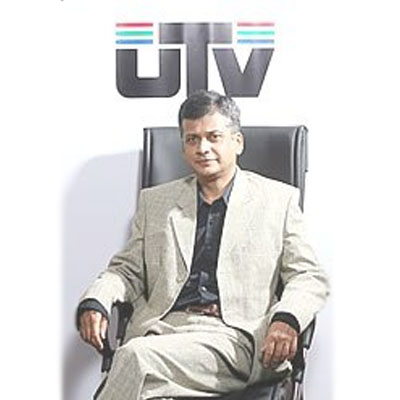
  • ‘Strategic investor will take stake in the broadcasting entity’ : Shantanu Aditya – UTV Global Broadcasting executive director and V&S Boardcasting CEO

    ‘Strategic investor will take stake in the broadcasting entity’ : Shantanu Aditya – UTV Global Broadcasting executive director and V&S Boardcasting CEO

    UTV is lining up nine channels and is planning to bet Rs 6 billion in it. The company is in talks with strategic investors to support its broadcasting venture which will be under the umbrella of UTV Global Broadcasting.

    The aim is to try and carve out a place in the youth and niche segments. The three TV verticals UTV wants to operate on are Genx Entertainment which will roll out the four youth-centric Bindass channels, UTV News for the business news channel, and V&S Broadcasting for movie and Hindi speciality channels.

    The company expects the Hindi movie channel to drive this bouquet of pay channels along with Bindass.

    In an interview with Indiantelevision.com's Sibabrata Das and Renelle Snelleksz, UTV Global Broadcasting executive director and V&S Broadcasting CEO Shantonu Aditya chalks out the road ahead for UTV's plans in the broadcast space.

    Excerpts:

    How is UTV arranging funds for the slew of nine channels it plans to launch?
    The total investment requirement for these nine channels is Rs 6 billion. While UTV will be investing Rs 1.5 billion as part of its contribution, the balance will be raised by a combination of equity at a premium and any other suitable instrument.

    Is UTV in talks to rope in strategic or financial investors?
    We are in advanced talks to get a strategic investor who will hold minority stake and come in at a premium.

    Will the strategic investor take stake in UTV Software Communications, which is the listed entity, or in the broadcasting arm?
    It will be in the broadcasting entity and not in UTV Software Communications. The broadcasting initiatives are under UTV Global Broadcasting. It has three wholly owned subsidiary companies – Genx Entertainment, V&S Broadcasting and UTV News Ltd. I wouldn't be in a position to comment on exactly where the investor is going to take a stake.

    Does UTV Software Communications have a stake in UTV Global Broadcasting?
    UTV Global Broadcasting is privately held. But this equity ownership arrangement could change after the investor is roped in.

    UTV had earlier announced that Genx, which would launch the Bindass channels, would be a joint venture with Astro as an equal partner. So is it that the three subsidiaries would be having different partners and still you would have an investor in the parent company?
    It is premature to discuss this at this stage.

    Is there a possibility of Astro picking up stake in UTV Global Broadcasting?
    As I said earlier, we can't comment on this at all.

    Will UTV News Ltd. have a separate structure as news channels uplinking from India come under a 26 per cent cap on foreign investment?
    We will abide by the current guidelines on investment in news channels.

    Speculation is that a group of Indian investors are going to invest in the news channel?
    We are speaking to a number of interested investors. It will be premature to mention any specific names at this stage.

    Will you be launching Bindass it in the first week of September?
    We will be progressively rolling out all the nine channels by mid-2008. Bindass, the youth Hindi general entertainment channel, will be up soon. This will be followed by Bindass Movies.

    Will they be pay channels?
    All our channels will be pay from the first day of launch. The first two channels are priced together at Rs 20 in non-Cas (conditional access system) and Rs 10 in Cas markets.

    'If you have a good acquisition and syndication strategy, you can build a successful Hindi movie channel'

    What are the other two channels to be launched by Genx under the Bindass brand?
    They will be in the regional space. Most probably they will be Tamil and Telugu language channels. But we are currently conducting research to support this.

    What are the four channels being launched by V&S Broadcasting?
    We will be launching a Hindi movie channel which will drive our distribution bouquet along with Bindass. We will have a world movie channel and there will be two Hindi speciality channels. We are also launching an English business news channel as we feel there is a considerable gap between viewer expectations and what they get right now.

    What are the scheduled dates for these channel launches?
    We are launching the World movie channel in November. The two Hindi speciality channels should be up in January and February. The business channel is targetted for a January launch and we should be ready with the Hindi movie channel in February.

    UTV had tied up with Palador Pictures for the world cinema venture with Olive as the brand. But with the split and Palador getting back all the titles, isn't it a setback for UTV?
    We have already acquired 150 titles and are looking at 300 at the time of launch. We will be screening the best of contemporary cinema and see a big opportunity in this. There are award winning titles and there are also good films from Bosnia, Iran and Argentina.

    Will high-priced DVDs be an important source of revenue and support system for this kind of cinema which will in any case attract niche audiences?
    We will have DVDs and theatrical release. We haven't decided whether we should go in for a high pricing or a volume strategy. But the channel has to drive by itself.

    How will you make a mark in the Hindi movie channel space when the existing players are entrenched, many more are on eve of launch, and acquisition costs are high?
    We are looking to launch with a bank of 300 titles, of which 50 films have already been acquired. The dynamics of the business is also changing. I see a syndication model coming into place and a lot of sharing of titles across channels. You may not see clean straight exclusive deals over a longer period as in the past. There will be a variety in the way you purchase movie rights.

    If you have a good acquisition and syndication strategy, you can build a successful model. Movie channels are platform agnostic and audiences are loyal to titles.

    While several broadcasters are eyeing the GEC space, why is it that UTV decided to foray into the niche genres of special interest channels?
    We have consciously decided to stay away from launching a general entertainment channel primarily because there has been a drop in viewership of 30 per cent in the Hindi GEC space in the age bracket of 15 – 35 years. The market needs segment-dedicated channels – and that is the domain we are entering into.

    Distribution of the new channels is a critical area. Have you set aside huge carriage costs?
    Carriage charges are a challenge. However, we have signed contracts with almost all the multi-system operators (MSOs) for our first set of channels.

    Have you stitched deals also with the direct-to-home (DTH) operators?
    I can't comment at this stage.

    Given the current media boom that the industry is witnessing, how are going to attract and retain talent?
    We have already recruited around 170 people for our broadcasting business. We are drawing in talent through a combination of compensation and stock options. Retention is a big part of our strategy.

  • ‘We used the brand ambassador route to break through the cluttered FM market’ : Tarun Katial – Big FM COO

    ‘We used the brand ambassador route to break through the cluttered FM market’ : Tarun Katial – Big FM COO

    Reliance ADAG has aggressive plans laid out for its radio venture Big FM. With 29 stations already in place, Big FM has 16 more waiting in the wings. And it has an investment outlay of Rs 4 billion.

    Banking on Abhishek Bachchan as the face of Big FM and supported by the brand philosophy of ‘Suno Sunao Life Banao,’ Reliance’s radio venture is looking to firm up its position in existing markets by rolling out four unique properties this year-end.

    In an interview with Indiantelevison.com’s Nasrin Sultana, Big FM chief operating officer Tarun Katial speaks about the penetration of the FM stations into the urban and smaller markets, the potential that the sector has, and the advertising opportunities it throws open for local advertisers.

    Excerpts:

    Being a new entrant in established markets, has it been a tough journey for Big FM?
    We have been extremely successful in selling the brand across the country. Our success comes from launching in cluttered markets like Kolkata, Mumbai, Bangalore and Chennai. We were the first station in Bangalore to come out with local language content.

    How has it been in the smaller markets which opened up for private operators in the second phase?
    Big FM is working extremely well in small towns. We have, in fact, revolutionised media and media consumption habits in the tier II and tier III cities. Eventually people are realising that radio is a local medium which needs to have localised content and marketing to make it successful.

    We have even entered troubled places like Srinagar and Guwahati where no one thought of venturing.

    Are the big advertisers willing to put money in the small town stations?
    For Big FM, local advertising contributes 30-40 per cent of our entire revenue kitty. Apart from this, there are corporates who advertise across all the 29 stations including big FMCG and telecom players.

    Is Delhi turning out to be a sticky wicket for the new players?
    Delhi is one of our best stations. It has been getting us good revenue. Nokia, Samsung and the big FMCGs, apart from the local retailers, are our major advertisers in Delhi. As far as listnership goes in Delhi, our internal research says that we have a good amount of base in the capital city.

    What has been the focus area for Big FM?
    It is really bad to say that we are focused on some markets and not on others. In the tier II, tier III cities it has been our effort to gather a base for listenership. In the next roll out phase, our focus will be about building a uniqueness and getting the dynamics of the company to all the stations.

    Why was there a requirement to change content in your Delhi station?
    The consumer behaviour and attitude of Delhi changes very frequently and it is very different from the other cities. Our internal research showed that Delhi is happening and on the move. That is where we zeroed in the ‘100 chartbuster’ format whereby every week the songs that the station plays is renewed. 100 songs are selected on the basis of a survey that covers mobile phones, internet downloads, music sales and song requests. This way, we satisfy the need of Delhi listeners to get something new every week. We are the first station in the country to have introduced such content in music.

    How is Big FM faring in regional markets like Jhansi, Bareilly, Jalandhar, Asansol and Guwahati among others?
    We have created a local brand out of the local product. FM has created an atmosphere where local entrepreneurs have understood these cost effective measures. There are lots of un-organised and semi-organised workers in the Indian economy for whom we have provided a platform.

    In the regional space, we have been beneficial to the common people by generating job avenues. People now need not go to cities in search of jobs in media.

    Physical hardware sales are also up. Nokia, Reliance and Samsung have got sales high. Even FM radio is being launched on the mobile platform.

    Is having Abhishek Bachchan, Upendra and Asin as brand ambassadors helped you in grabbing listenership in the Hindi and southern regions?
    Today we are in a cluttered FM market in India. The easiest way to break through the clutter is through the brand ambassador route.

    FM should be allowed to have news and sports in the content mix

    How has the brand philosophy ‘Suno Sunao Life Banao‘ worked for Big FM?
    The whole premise was to provide a new space. If you listen to our station, it’s about raising ones voice. Our content and marketing campaigns affect the lives of the people. Later this year we will introduce four new properties that will make (banao) someone’s life. As far as music goes, we are currently playing contemporary hot music of Tempo 3. Tempo 3 are specific songs that are up beat because as a rule the station does not play extremely slow music.

    What do you regard as prime time for Big FM?
    Our prime time is dependent on who our target audience is at a particular time band. If it’s the youth, then the prime time band is evening. If it’s the office goers, then it’s definitely in the morning. If it’s women, the target then is the afternoon time band.

    Which are the different platforms you are experimenting with to build brand awareness?
    Across mediums, internet is the best medium as it has an extended reach. But the best thing that works for us is on-ground activities. Big FM has been doing a good amount of on-ground activities across the country, which has received a good response in terms of participation.

    What do you think about TV campaigns used by FM stations to advertise?
    TVC is definitely a good way of promoting a brand. We are also looking to launch a TVC soon.

    What is your argument for or against the Content Code?
    Instead of getting ways to regulate us, the government should grant us some freedom. As FM affects so much of the consumption of people’s life, we should be allowed to have news and sports in our content mix.

    The ministry is talking about regulating FM broadcasters, when we are already functioning with restrictions to our content.

    When they are comparing Indian FM stations with the international radio industry, they have conveniently forgotten that we are the only set of broadcasters who have been working on the restricted content set up by the government.

    What is the investment outlay for Big FM?
    We are pumping in Rs 4 billion.

    What is the de-merger status of Big FM?
    I can’t comment on that.

    How is Big FM planning to synergise Reliance ADAG’s Big Music and Entertainment for music and home video?
    Big FM gets the exclusive music and content rights from Big Music and Entertainment, giving us the first right of refusal. We have the option to build music properties across the medium. We have the option to promote the division by pushing the content through internet downloads and mobile ring tones. Big FM does 360 degree advertising for Big Music and Entertainment.

    How are your advertising spots being priced?
    Recently we have introduced the uniform rate card system ‘Aqua’ for all our advertisers across the country. This is easily available in our website. Unlike other stations, we are transparent in our advertising rates. The advertisers know what is the rate for the same space on the other stations. The advertisers are aware of how we are priced in different markets.

    Besides, all our stations have installed the wide orbit software.

    With the increasing content clutter on radio especially with Bollywood music, how is Big FM placed?
    I agree that Bollywood is all over FM stations, but it also depends on what kind of songs you are playing at what time of the day. How you treat the music is what differentiates the content. We play old songs across era in different time bands.

    You have recently got Raju Srivastav (stand up comedian of The Great Indian Laughter Challenge) as an RJ. In an attempt to break away from the clutter, every FM station is now adopting the fun element. How is this differentiated?
    Fun is an important aspect of entertainment. We are here to entertain, so what’s wrong in doing it? Some are doing it by some other means and people; we are doing it with Raju. He is the best and the biggest clutter breaker in the industry. Nobody wants to start the day on a sad note. We will get you to start the day with laughter and good thoughts. Our effort is rewarded if we can put smile in our listener’s faces.

    Do you think the future will be in niche or mass stations?
    The FM business is in a nascent stage for me to predict the future. It depends on what is the target, though I would recommend that segmentation is required.

    How are you looking to close 2007?
    We have recently announced the four properties that Big FM has planned for the various festival seasons for the later part of the year. Starting from September, Big FM will start rolling out these properties.

    We will soon launch a show completely based on and coinciding with the ICC World Cup Twenty20. The show will provide scrore updates, interactive contests and interview of cricket celebrities.

    During the time of Diwali and Dusshera, Big FM will launch a shopping contest Sabse Sasti Diwali. With the various tie-ups that we are still working on, the contest will offer shopping discounts from 9.27 per cent to 92.7 per cent.

    Then we have a contest titled Chipak Ke Dekho by which we will give away a car to whoever remains near the car for the longest duration of time.

    Finally, we have the biggest contest of its kind, Ek Saal Free Maal to bear the entire expenses of the winner for the whole year of 2008.

  • Rising India: longest single-theme TV programming with some soul in it

    NEW DELHI: India’s longest and largest single-theme television programming – “Rising India” from the TV 18 group’s CNN IBN and IBN 7 – is poised to stun the viewers with an array of episodes such as a renowned historian explaining history through cricket, or a modern music icon leading a host of rock bands in an ensemble of patriotic songs in a modern package.

    In an exclusive interview, Rajdeep Sardesai, Editor in Chief of CNN IBN and Ashutosh, Managing Editor, IBN 7 told indiantelevision.com the idea was to showcase Indian achievements on TV in the 60th year of Independence since even at the time of the Golden Jubilee, TV had not really taken off.

    The programme will air every day from August 10 to mark the occasion of Independence Day, but has really started from 1 January, when the series started off, and is about to reach its flashiest best, in content and presentation.

    The key question is about showcasing Indianness, which Ashutosh said should be the modern India of software engineers and scientists – not the jholawallahs treated as cabbies in the West – and the rural India.”

    Ashutosh laughs nervously at the question that has baffled almost everyone, and says: “India is changing so fast it is really difficult to put it one word, so Rising India” series is about the present India as it has evolved, and is nicely poised for the next big leap forward.”

    Sardesai added that it is about the “fantastic diversity and enormous freedom that we as Indians enjoy. This is not there in any other country, and we are living it… we did not have proper TV when India turned 50 and we do not know if we will be there when it turns 75, surely not when she turns 100, so this was the best timing possible.”

    Sardesai says: “The story, as Nandan Nilekani (Infosys head) said once to me, is about the glass being half full, rather than half empty… there is so much we can actually show that is so typically Indian and innovative, it is about survival, the quintessential Indian-ness,

    “When India was born, everyone said it would break up, and here we are, a bustling and vibrant democracy and a fast developing economy… and they had said Pakistan would be a much more unified force, but Pakistan is just falling apart. That is how we conceived Rising India.”

    Sardesai’s allusion to being innovative survivalists may find some endearing examples in the episode “Only in India”, which about Indians having a knack of doing a lot of things in our own quirky “ishtyle” that makes us who we are and differentiates us from the rest of the world.

    This half-hour light-hearted show (14 August at 8:30 pm) takes a look at things like galli Cricket, lassi preparations using a washing machine, among other innovative Indian take-offs from what was originally a Western concept.

    But it is not just about frivolity, there’s tonnes of stuff between tomorrow and 15 August.

    Here is a stunning episode of the Ten Defining Moments of Indian history, moments that have changed the course of the country, and presenting this with Sardesai would be historian Ram Chandra Guha who, Sardesai says is the best intellectual who can carry the most serious message across to the least discerning.

    “He would perhaps be talking Sunil Gavsakar till you realise he is teaching you serious history,” Sardesi said.

    Due to various factors, this particular episode has been cut short drastically, especially due to shortage of archival material, but the channel had given viewers 100 such moments to choose from and taken a poll, then cut it down to 60 and finally to 10 of the most defining moments, Sardesai said.

    Both the editors are especially excited about the series featuring India’s real heroes, in the programme of the same name.

    The preparation for the massive programming had started almost the same month a year ago, and it was the idea of Ritu Kapoor and her Features team to showcase the real heroes.

    As a statement from the channels says: “CNN-IBN identifies 24 unsung heroes from four zones – East, West, South, North – (six from each zone) across the country. Capsules through the day will be aired daily to celebrate their achievements along with regular stories on the news wheel and weekend specials.

    Every week, six heroes from a particular zone will be profiled and a dedicated half an hour will be aired every Saturday at 1:30 pm summarising the entire zone. The series will be aired as follows:

    South Zone (11 August) 
    North zone (18 August) 
    East Zone (25 August) 
    West Zone (1 September) 

    “After we decided on this, our bureaus across the country identified the real grassroots level heroes and were selected and filmed. This is about the real India,” Ashutosh said.

    Taking a look at the gamut of the programmes, it encompasses what CNN IBN and IBN & is trying to do as a group: the programme genres cover everything from popular programmes (60 years of Indian cinema, Cricket 360 Special – India’s dream team, or Only In India); history (Defining Moments), entertainment like Best of India Rocks).

    Besides, it has contemporary programming and then looking at the future, like a discussion to be hosted on Indian economy and other issues by TV 18 patriarch Raghav Bahl.

    “It is not just about what the people want to see but what they ought to know, and the point is about how to tell them, which is our forte. Why should Rehman or Indian Ocean, or Euphoria or Silk Route not sing patriotic songs and make it relevant to the present generation?” Sardesai asks.

    The programmes would be aired on both the Hindi and English channels, which brought about the question of will Hindi audiences take it, given the statements of another news channel that Hindi viewers want just gore and violence?

    Ashutosh does not at an eyelid: “Why not? Journalism is about making things available and accessible to the people, so if we understand the medium, it does not matter what language you speak in or your viewers hear in”.

    For instance, who would not listen to the first ever opinion poll across India and Pakistan on issue of common interest, whatever be the language of discussion? This is a unique programme, in which Indians and Pakistanis would be asked serious questions such as Kashmir issue, as also emotional subject who Pakistanis think is an Indian Idol and vice versa.

    There will be two important fallout of the programming, and one of them is also perhaps the first of its kind for a TV channel to undertake. The corporate sector has agreed to sponsors each of the 24 Real Heroes for their future, Sardesai revealed.

    “We do not believe in just showcasing such heroes for eyeballs, we feel it is for us to bring them up and approach the corporates to empower them,” he said.

    Te other fallout would be in the field of education, for the 10 Defining Moments programming would be put on CDs and given to schools free of cost as their educational tools.

    Both are some serious, sustainable corporate social responsibility through programming!
  • ’50 per cent of the challenge of filmmaking lies in marketing’ : Ashok Amritraj – Entertainment chairman and CEO

    ’50 per cent of the challenge of filmmaking lies in marketing’ : Ashok Amritraj – Entertainment chairman and CEO

    Former tennis player turned Hollywood film producer Ashok Amritraj has reason to celebrate. Having spent 25 years in filmmaking, he was recently in India to collaborate with English movie channel Pix from the Sony stable to kick off a reality show titled ‘Gateway.’


    Amritraj’s new hunt: to discover the “hidden filmmaking talent in India.” His firm Hyde Park Entertainment will act as a platform for this talent to go international.


    In an interview with Indiantelevision.com’s Ashwin Pinto, Amritraj shares his insight into the business of filmmaking in the West, his relationship with studios and the experience of working with top talent in the industry like Bruce Willis and Steve Martin.


    Excerpts:

    What opportunities does the burgeoning Indian media and entertainment scene offer for Hyde Park?
    The good news for India is that the entertainment industry is growing. The television industry has seen enormous growth. The motion picture industry will hit a steep curve over the next five to seven years. The younger generation of filmmakers are much more globalised. They understand filmmaking in a different way compared with their predecessors.


    There are interesting opportunities in a growing industry. My business is in Hollywood first and foremost. But I have always felt a great affection and affinity for the country where I grew up. This year is the 25th anniversary of my being in Hollywood and I have made over 95 movies. It felt like the time was right to come back and do something here.

    How did the idea for ‘Gateway’ come about?
    Young Indian filmmakers have a lot of talent. Around a year ago over dinner with Sunder Aaron (Pix’s business head) I expressed an idea that involved a search for a talented aspiring filmmaker who would be given an opportunity to work with my company and make a Hollywood film.


    Pix was interested and so we started to evolve the whole idea. The concept got bigger and better. We are excited about seeing ‘Gateway’ come to fruition.

    In the US Mark Burnett and Steven Spielberg did a film-based reality show On The Lot which didn’t fare as well as had been expected. What went wrong and how confident are you that ‘Gateway’ will take off?
    I don’t think that anything went wrong. It comes down to a person’s take on a certain kind of a show. At the end of the day our show will pick a director and give him an incredible opportunity. Spielberg’s show was the same way.


    However, the way of getting there and the tasks that they go through the elimination process is completely different. In one way it is close to The Apprentice as I will act as a mentor. In another way it is also close to Project Greenlight, which was done by Ben Affleck and Matt Damon.


    There are different things being done. Our show is very India centric. It is for Indians. The aim is to make the path of a talented Indian filmmaker to Hollywood easier. We are looking to provide a platform for a young fresh Indian director to showcase his/her talent on the world stage. He/she is guaranteed a distribution of his movies between Sony and Hyde Park Entertainment.

    What brought you and Pix together?
    Our relationship with Pix is based on their tagline – We Tell Stories. This is the basis on which Pix was launched. A lot of what they do is story based. Top Hollywood producers also feel the same way.


    Money is available from a myriad of sources like hedge funds. However stories, talented and original storywriters are hard to find. When you do an initiative like Gateway you could find an extraordinary talent like an Ang Lee or an Alejandro Gonzalez Inarritu.

    What are you looking for in candidates?
    I often speak at schools and colleges and also at UCLA, AFI and so on in the US. I say that PQ plus CQ will always beat IQ which means that in films the passion quotient combined with the curiosity quotient will always trump the intelligence quotient.


    You also need abilities like how to handle actors, how to work with creativity, how to formulate a story, how to keep a producer happy. As you put all these pieces together and add to that a personality that can work, you try to frame the whole picture.

    Are you looking at other television projects?
    No! I am a film guy. I have not done television. Internationally Gateway represents my first foray into television. This project is personal. It is less about doing a TV show and more about finding hidden filmmaking talent in India.

    Last year you had mentioned that Hyde Park was looking at a JV with an Indian animation firm. Has anything happened on this front?
    Practically everyone has come to us to do something. We are going to make a film here in October called The Other End Of the Line. We will use an Indian actress who could be a newcomer or who has done a couple of movies. It is a question of finding talent. Hyde Park is looking to act as a platform for Indian talent to go international. Bollywood films may not crossover into Hollywood but I certainly think that Indian directors and actors can achieve this.

    In general what does Hyde Park look for in a project before giving the go ahead?
    Everything starts creatively. Our creative team in Los Angeles is presented with around 100 pitches each month. These include novels, books, videogames, comics, screenplays. We look at over 1000 projects a year. We develop a dozen and make three to four films. Those three or four films are chosen on the basis of creativity, gut feel and the kind of film we are looking to make.


    Secondly you look at the distribution paradigm and you look at who will want to watch this kind of a film. The distribution team gets involved and lets us know what will work and where. Then we get a casting director to tell us things like a certain project will only work if Brad Pitt is involved or it will only work with Kevin Bacon. All these pieces are put together which is why it comes down to only three to four films.

    When you work with a big star like Steve Martin on Shopgirl how much of a collaborative process is it?
    I am closely involved with every film we make which is why we only make three to four films a year. I could make ten movies a year but we do not as I would not be able to give enough attention to each one of them.


    The areas where I am very personally involved is developing the screenplay to a point where I as a producer am happy with it. I am closely involved with getting the principal cast and the director. Then I get hands on post-production. During the production period the director runs the project.


    We start with storyboards. So you have the movie laid out before you pretty much. We know where the camera angles are, where the locations are. We then do a read through with the whole cast. Sometimes we take a complicated scene from a camera point of view and computerise it. For me the post-production process in terms of the cutting, sound and music becomes very critical.

    Could you talk about some of your favourite experiences of working with creative talent?
    I have worked with a number of very talented actors over the years. Steve Martin is brilliant as he is a writer as well. We worked very closely together on Shopgirl as it was his novel which he entrusted to me. He wrote the screenplay and produced it with me. I also worked with him on Bringing Down The House which was a completely different experience. Queen Latifah was a complete pleasure to work with. She is a great character.


    I did Bandits with Bruce Willis, Billy Bon Thornton and Cate Blanchett. That was a dynamic experience as was working with Anjelina Jolie and Antonio Banderas on Original Sin. All these actors are extraordinarily professional. They arrive on time and treat their craft as a business. They are very disciplined which results in success.

    As a producer when you have a film like Bandits with more than one big star, how much of a challenge is it to deal with egos?
    Actors always have to check their egos. That is a task I have to deal with. It is also part of the director’s job. When we pick a talented filmmaker through our Gateway initiative, he is going to have to understand that managing actors is a large part of the job.

    Filmmaking is getting democratised with the use of mobile phones & Youtube

    How did a tennis player from India like you get accepted in Hollywood?
    The first six to seven years were an incredible struggle. Nobody wanted to make a movie with me as our family was not involved in the movie business at all.


    I got lucky in 1984. I met a young chap who was a limousine driver. I met him again in 1990 at the Cannes Film Festival. He said that out of 800 photographs he had sent, only I had responded. The person was Jean Claude Van Damme and we made Double Impact. Then people in the industry found messages that I had called two years earlier. They got back to me and things started to roll.

    You have been making films for two decades now. What is the biggest change you have noticed in the industry?
    There have been many. In 1984-85 when I started to make movies for half a million dollars, there was at that time a fight between two formats – VHS and Beta Max. VHS won in the end. Then the international market for Hollywood grew. Satellite movie channels became more prominent.


    The digital revolution is amazing. You just have to look at what George Lucas did with Star Wars. A more recent film 300 was shot against a green screen. It is an exciting time to launch Gateway as directors today have more tools at their fingertips.

    Would you say that filmmaking has become more democratised?
    Absolutely! Democratised is a great word to use. One can use a mobile phone to make a movie. There is Youtube through which you can get millions of film fans to view your film and comment on it. Anybody can make a film.


    You do not have to be the son or daughter of someone famous to enter filmmaking. You don’t need to have a huge film background to get into it. You need talent, vision and creativity. Gateway is a democratisation of filmmaking.

    Are new forms of distribution like VoD making it easier for a film producer to recover costs?
    It is another revenue stream. But I agree with guys like Scorcese and Tarantino that a film has to make money theatrically if it is to be anything on video or video on demand.

    When you started out you focussed on action and comedy. Are you looking to branch out further in terms of genres?
    I hate to sound egotistical but I have worked in all genres. I have done action films like Double Impact, action comedies like Bandits, serious films like Shopgirl, Moonlight Mile and family films like Dreamer. The thing that I like about Hollywood is that I can do different things.


    We just released Premonition with Sandra Bullock. We will release Death Sentence which is a gritty action film. It is not a ‘shoot them up’ film and I believe it will make audiences think a lot. It is about an ordinary man being put in an extraordinary position and to what extent he would go. It stars Kevin Bacon and Kelly Preston.

    You co-produce films with different studios. How would you describe your relationship with them?
    I have worked with pretty much every studio. My main deals today are with Fox and Disney. I have a first look deal with Fox and a second look deal with Disney. Death Sentence is being released by Fox on 31 August. I am also close with the guys at Sony and Paramount. I made Dreamer with Dreamworks. I have made ten movies with MGM.

    How does the Bollywood system compare with Hollywood in terms of creativity and professionalism?
    The Bollywood system has worked for many decades now. I think that they are now gravitating towards fully completed scripts before shooting commences. There are more storyboards in Bollywood now as you cannot shoot visual effects without them.

    Are films like the Oscar winner Crash a sign that Hollywood is becoming more multi-cultural now compared to the early 1980s?
    Definitely! When I started out 25 years back, I could not find another Indian guy. Today there are Indian agents, studio executives. There are Asians all over the place. Also, Hollywood is getting inspired by stories from Asia and so you have films like The Ring, Dark Water and The Grudge. Also you have Asian stars like Chow Yun Fat, Michelle Yeoh, Gong Li, Jackie Chan and Jet Li.

    Do you feel that there is a lack of respect for IPR in bollywood?
    I think what is lacking is good quality writers. Writers need to be encouraged more here. They are the lifeblood of the Hollywood business.

    Why can’t India have a global film like what China is doing with films like Crouching Tiger Hidden Dragon?
    I think that songs and dances in Bollywood films are a cultural barrier for someone in Idaho. However the way for Indian cinema to succeed overseas is to make films that emotionally resonate across the globe. That is what The Last King Of Scotland did. That film could have been made by anyone. Little Miss Sunshine and Letters From Iwo Jima did the same thing. The casting was also great. Emotionally resonant films come out of great stories and not necessarily from simply having a big star like Tom Cruise.

    Finally how much of a threat do you feel new forms of entertainment like gaming will be to films five years down the road?
    I know that I am not only competing against other films but also with other forms of entertainment. Marketing will have to become more savvy. At Comic Con which was recently held in Las Vegas, we gave away products to push our new film. That is one way in which you can differentiate yourself in a cluttered media environment. Fifty per cent of the challenge of filmmaking lies in marketing.

  • Janmat to don new look as Live India

    MUMBAI: Donning a fresh look, Broadcast Initiative Limited’s Hindi ‘views’ channel Janmat is being re-christened as Live India with effect from 3 August. Shedding its old look which positioned it as a ‘views’ channel, Live India will now mainly focus on live news-bulletins. In tune with its new name, the channel’s tagline is ‘Khabar Hamari Faisla Aapka.’

    “With the shift in positioning the re-vamped channel will have live-bulletins all round the day. It will catch up with all the events and live happenings across the country,” says a source close to the development.

    As reported earlier by Indiantelevision.com, the channel will dedicate 70 per cent of its content to news, while 20 per cent will be based on analysis and 10 per cent on interviews. The upgradation will involve an investment of Rs 400 million.

    “We are re-launching the channel. We will be news rather than programme-driven. Analysis will supplement the news and not the other way round,” Janmat editor and CEO Sudhir Chaudhary had earlier told Indiantelevision earlier.

    As part of its expansion plan, Janmat has added bureaus in Srinagar, Chandigarh, Bhopal, Ahmedabad, Hyderabad, Bangalore, Chennai, Bhubaneswar, Kolkata and Guwahati to its existing ones in Mumbai and Delhi. The Marathi reporters of sister channel Mi Marathi will also pool in their resources.