Tag: indiantelevision.com

  • ‘We will breakeven after the third year’ : Fraser Castellino- Emerging Media CEO

    ‘We will breakeven after the third year’ : Fraser Castellino- Emerging Media CEO

     The Indian Premier League (IPL), which kicks off next month, has brought in $2 billion into the Twenty20 format over a 10-year period, involving big corporates like Reliance Industries and Bollywood Badshah Shah Rukh Khan.


    Emerging Media, which has two other shareholders in Sporting Investment Group and Lachlan Murdoch, has bought the Jaipur team franchise for $67 million and is hoping to rake in profits after the third year.


    Indiantelevision.com’s Ashwin Pinto caught up with Emerging Media CEO Fraser Castellino to find out about his plans for the team and the impact IPL will have on the game.


    Excerpts:

    What prompted Emerging Media to be involved with the IPL?
    We have been in the sports business since 2005. Our first venture into cricket was when we bought the management rights for the Leicestershire County Cricket Club. Then we did an international T20 tournament that people today call the Champions Tournament.


    We came into India in 2006 and launched the reality show Cricket Star based on the T20 format. We are looking for the next Indian superstar. We saw IPL as a big opportunity as we also have experience in running clubs.

    What is the IPL trying to achieve?
    The IPL is BCCI’s attempt to bring in funds and get corporates involved with the development of cricket. The Board is trying to improve the infrastructure and facilities available to players who participate at a domestic level.


    By whipping up support for city-based league teams, the BCCI is also trying to bring new fans into the stadiums.

    The tradition of supporting a regional team is not present in India. Do you feel that this will be a hindrance in terms of the IPL taking off?
    I don’t think that there is a hindrance. Everything about the IPL represents an opportunity to grow the game. The challenge particularly for us is to create a fan base that supports the Rajasthan Royals.

    Another issue is that the BCCI wants the IPL to be for India what EPL is for English soccer. At the same time, the players are with EPL for several months each year and there is no conflict with an international schedule. How will IPL manage to do this?
    One of the challenges franchisees face is taking the IPL team that participates in the tournament for 45 days and stretching it across the year. The international calendar is packed. We are working with the IPL Governing Council to see how the tenure can be extended. We have a squad of 22 players. While all may not always be available, we need 11 players at any given point in time. We are looking to take the Rajasthan Royals to play in other countries including Australia and England.

    Having bought the Jaipur franchise for $67 million, what breakeven period is Emerging Media looking at from IPL?
    We will be investing $12 million in the first year which includes the payout for the team franchise, player costs, marketing, etc. Our assumption is that the business will breakeven after the third year. If IPL picks up, the breakeven can happen before that.

    How much will Emerging Media spend towards marketing?
    We will spend close to $2-3 million on this. A 360-degree campaign will break shortly. O&M has put this together. There will be a TVC, radio spots and outdoor activities. There will also be a school, college and mall activation campaign. This will happen in Jaipur, Delhi NCR, and in Gujarat.

    What brief was given to the agency?
    The brief is that the campaign must appeal to people at a local level. It must make people want to be supporters of Rajasthan Royals. It must inspire people to either switch on the television or come to the stadium.

    Have you tied up revenue deals?
    We are in advanced talks with companies for sponsorship deals. We also have merchandising and licensing activities. Besides, there are central revenue streams including ad and broadcast rights.

    Is there any chance that Emerging Media might sell a stake in the IPL team?
    Not in the first year. We might sell a stake later if we want to inject fresh capital into the company.

    ‘One of the challenges franchisees face is taking the IPL team that participates in the tournament for 45 days and stretching it across the year

    What is the strategy you followed in selecting your team?
    Our strategy was clear. We knew that there would be at least two auctions. The first auction had the stars. We knew that there was also a lot of talent that was not a part of that auction.


    During the first auction, we picked players and also set price points at which we felt that they had good value for us. If they exceeded these price points, we let them pass.


    We did our research, and went after certain players. Now when you look at my team, they are at least as good as the others if not better. And we have spent $3.5 million while the others have burnt $5 million.

    Are performance and marketability of players of equal importance?
    Performance is more important. You can have glamour and entertainment, but at the end of the day we are here to win matches. Marketability has its place but it is not the primary determining factor for us.

    Could you talk about the branding of the team and how your star player Shane Warne will be used?
    When we selected Jaipur, we were clear that we wanted to be in the state of kings. The name “Rajasthan Royals” reflects the characteristics of that state.


    Shane Warne was a strategic choice that many people do not understand. He has an incredible record in county cricket. When we signed him as both captain and coach, other teams who have specialist coaches were surprised. Specialist coaches are fine but Warne transformed the fortunes of Hampshire in county cricket. He took them from being a non-performer to a team to be reckoned with.


    The IPL is about youth and developing domestic cricket. Now that he has retired, Warne is keen to come in and give back to the game by helping youngsters. The IPL is the perfect platform for him to do just that.

    Has Emerging Media also appointed a consultant to help its IPL team form a cohesive unit?
    We have a support team in place that includes physiotherapist John Glocter and assistant coaches. We believe that our team will be inspired by our captain and the support structure, and become a cohesive unit.

    Has T20 brought sports and entertainment closer?
    The emergence of T20 has been interesting because as working life has become more hectic, people are increasingly looking for instant gratification.


    In India, while it has not been played often, we feel that this format will be well accepted. Since the IPL games will be played in floodlit stadiums in the evening, it will attract more women and families to enjoy an evening out.

    How will IPL broaden the corporate involvement with cricket overall?
    One of the things that will happen is that IPL will support academies, coaching centres, etc. These are feeder systems into T20 cricket.
    How did the idea of doing Cricket Star come about?
    We wanted to be a body that works with the BCCI but at the same time goes off into areas where it has not managed to find talent. We believe that there are people who, while possessing talent, do not have the money to turn up at the BCCI’s coaching camps. We give them the chance to spend just two days with our experts and decide if they are good enough or not. If they are good enough, the sky is the limit.

    How have you grown the event over the years and how successful has it been in uncovering hidden talent?
    I think what Cricket Star lacked in the first season was the gratification platform. It wasn’t clear what would happen with the chosen talent. Today anybody who is selected gets a contract with the Rajasthan Royals. The format has not changed much in terms of the testing process.


    We are clear in terms of what we look for in a T20 cricketer. Last year, we found two boys who were very good. But we had restricted entries to those who were absolutely fresh and had not played first-class cricket. They had never been part of an under 15 or under 17 squad. This year, we have opened it up for everybody.

    Finally, are you looking at other sports?
    Yes! We are interested in soccer, tennis and golf. There is potential for these three sports to grow in the country. We are looking at different options in terms of how to go about it. In terms of whether we do a reality show around these sports, it depends on the level of interest. There are many things that can work in sport provided you are willing to invest and watch it grow gradually.

  • ‘Zee’s largest bouquet makes it the best prepared network for digitalisation’ : Joy Chakraborthy – Zee Entertainment Enterprises Ltd President, Head – Revenue

    ‘Zee’s largest bouquet makes it the best prepared network for digitalisation’ : Joy Chakraborthy – Zee Entertainment Enterprises Ltd President, Head – Revenue

     Zee is on an upsurge, driven by its flagship Hindi general entertainment channel. Kicking in ad revenues for the fiscal has not just been Zee TV but also the two regional channels – Zee Marathi and Zee Bangla – who together will make Rs 2 billion. And despite less aggressive movie buying, Zee Cinema will see a 25 per cent jump to rake in Rs 2 billion.


    As revenue head for Zee Entertainment Enterprises Ltd, Joy Chakraborthy takes credit for it. His role extends to the regional general entertainment channels (except south) which reside in sister company Zee News Ltd. The sports side of ZEEL’s business, however, doesn’t fall under his supervision.


    “I handle the power brands where effort to returns are high,” he says.


    Joy also takes pride in continuously doing price-correction deals. Even then Zee is under-priced and there is scope for growth, he says.


    In an exclusive interview with Indiantelevision.com’s Sibabrata Das, Joy talks of how Star Plus’ loss in GRPs has been pocketed largely by Zee TV and its regional channels. He also elaborates on Zee’s plans to pile up a huge bouquet so that it stays as the best network prepared for the digital era.


    Excerpts:

    How much of an ad revenue growth will ZEEL see in the current fiscal and is this still disproportionate to the rise in GRPs of the network?
    There will be a 65 per cent robust ad sales growth for the channels that are handled by me. Advertisers like to invest in channels which are growing. Zee TV, Zee Marathi and Zee Bangla particularly gained, as the leader channels in these segments (Star Plus, ETV Marathi and ETV Bangla) were falling sharply.


    The revenue has grown disproportionate to the GRP growth. The pricing, though, needs correction. We feel we are under-priced. With every new deal, we have corrected the price upwards.

    Are the channels that fall under you (ZEEL channels except sports, and the regional GECs barring the south languages) going to post a revenue of Rs 12.5 billion during the fiscal?
    Since we are a listed company, I can’t reveal the figures of the specific channels.

    As Zee TV is the predominant revenue earner, isn’t ZEEL in as risky a position as Star India is with the dominance of Star Plus?
    Zee TV accounts for 65 per cent of ad revenues that the channels under me generate. But that is how the network business will look like in India. Hindi general entertainment channels (GECs) make bulk of the ad revenue business.

    Zee Next was launched as a flanking channel in the GEC space, but it doesn’t seem to have worked at all?
    Zee Next has a problem. We are doing introspection on what went right or wrong. We will be ready with a plan within 5-7 weeks. Besides, distribution is an issue. But we feel it is not right to pay this kind of carriage fee and spoil the market.

    What is the purpose of launching a flanking channel without aggressively distributing it when in the marketplace there is a scramble for space on choked cable networks?
    Strategically, it is important to have a second GEC as a de-risk business model. The GECs are sitting on Rs 20 billion of ad revenues. In as large a size as this, we can’t put all our eggs in one basket. If viewers want something outside Zee TV, we are offering a different kind of programming in Zee Next. With fragmentation happening, our plan also is to try and grab whatever audiences we can with the concept of a family channel for all age groups.


    But we still have to be realistic on the carriage fees. Otherwise, it will affect the business model of the whole network; we are, after all, not a single channel company. We have to take a business rather than an emotional call.


    The channel will take time to build. Any GEC with less than 130 GRPs will continue to bleed – and we have been seeing that. But with a new plan in place, we will sort out the distribution and other issues that need to be corrected.

    The loss of GRPs by Star Plus has been made up by Zee TV and its regional channels. Zee Marathi and Zee Bangla are doubling their previous year’s revenues to touch Rs 1 billion each

    Isn’t growth of GEC as a category slowing down?
    The GRPs of GEC channels as a category have grown by 6 per cent. Revenue from GECs, on the other hand, have jumped 22 per cent. What is happening is that the GRPs of GECs are getting reorganised. Star Plus, for instance, has seen a fall in GRPs while we have gained.

    Could you elaborate?
    The loss of GRPs by Star Plus has been made up by Zee TV and the regional channels. Our regional channels are operating in the most important primary markets. Zee Marathi and Zee Bangla have particularly grown.

    One reason for the growth of these two channels, according to you, is because the leader ETV is falling. But what sort of ad growth are both of them going to post this fiscal?
    Zee Marathi and Zee Bangla are doubling their previous year’s ad revenues. They will end up making around Rs 1 billion each. The ad rates of regional channels, though getting corrected, are still very low.

    After rolling out Zee Talkies to addess the Marathi market, are you planning to launch a Bengali movie channel?
    We will be launching a Bengali movie channel as it will help us create a wider bouquet in that local market. We have created a GEC, a news and a movie channel in the Marathi market. We will be repeating this combination in the Bengali market. Regional movie channels work for sales as well as help boost distribution.

    Like Kalanithi Maran’s Sun network, are you looking at packing in regional music channels as well?
    We don’t see music channels being viable in these markets.

    Doesn’t Zee have such plans for Gujarat?
    Zee Gujarati didn’t see much growth. Almost 99 per cent of the Gujarati viewership is covered by Hindi GECs and movies. It is not a viable market for india, but has an international distribution story.

    Though Zee Cinema is the second biggest channel in the network, it has been less aggressive in movie buying this fiscal. Will this hurt the revenues?
    For the movie channel category as a whole, GRPs have fallen. But Zee Cinema’s revenue for the fiscal would be Rs 2 billion, up 25 per cent. We are selling better, using all time bands.

    As revenue head, why haven’t the sports, news and southern language channels come to you?
    I am handling the power brands where effort to returns are high. The sports business is cricket-centric and needs dedicated attention. So Ten Sports is handling the ad sales. I already have too much on my plate as the network revenue head.
    Will subscription revenues be sluggish, driven by slowdown in international business and foreign exchange loss?
    Domestic subscription will grow by 30 per cent – and we see the situation improving in next fiscal. The Star bouquet is strong, but we have been catching up this year. We have more pull channels than anybody else – Zee TV, Zee Cinema, Zee Cafe, Zee Marathi, Zee Bangla, Zee Talkies and Zee Studio. International distribution is outside my ambit and I can’t comment on that.
    There is a buzz in the market that the TV18 group channels including CNBC TV18 will soon move to Star DEN?
    There is still time for some channels to move out, if at all. We will soon be making an announcement of more channels in our bouquet to make it stronger.

    Are you referring to Ten Sports moving out from SET Discovery (now MSM Discovery) to Zee Turner?
    I can’t comment on this.

    Zee has the largest bouquet of channels. With carriage fee on the up, how does it impact the business at the net level?
    Since we have a large bouquet, this at one level affects us in carriage deals. But on subscription ground, it helps make our bouquet stronger. We have presence in all genres except kids. The net effect in the long term is beneficial once digitalisation happens. We are the best prepared network for digitalisation.

    What is being done to beef up Zee’s English genre channels?
    Zee Cafe is airing new American shows and has a very loyal viewership. It will grow in ad revenues by 45 per cent this fiscal. Zee Studio’s perception as a repeat channel is changing. The sub-titling has helped us, we will be seeing 37 per cent growth, and it completes our bouquet.

    What is your revenue forecast for the next fiscal?
    Keeping in mind the fragmentation scenario, our target will be to post 30 per cent growth in both ad sales and domestic subscription. It will be a challenging year and we hope that the newcomers don’t spoil the ad sales and distribution market with price cutting and high carriage deals.

    Do you see BARC (Broadcast Audience Research Council) taking off any time now?
    It is a good initiative as it represents an association of broadcasters and advertisers. TV as a medium is very research-focused. The sector is also grossly under-priced. BARC is at an initial stage of progress but the intention is there to set it rolling.

  • ‘We expect that HD will arrive in India with sports and general entertainment’ : Krishan Sanghi – Avid country head

    ‘We expect that HD will arrive in India with sports and general entertainment’ : Krishan Sanghi – Avid country head

    As India enters a digital environment with more delivery platforms like direct-tohome (DTH) scheduled for launch this year, television technology firms are looking to service broadcasters who will face new challenges. One such firm is Avid. It offers products and services for digital nonlinear media creation.


    Indiantelevision.com’s Ashwin Pinto caught up with Avid country head Krishan Sanghi to find out more about the company’s plans.


    Excerpts:

    When Avid says that it is a pioneer in digital nonlinear media creation, what does it mean?
    Nonlinear media creation allows one to transfer all the shot material or “rushes” onto a computer hard disk. Unlike linear editing where editing can only be done in a chronological order, the hard disk is a “random access” device which can play your shots one after another regardless of the order they were on your tape.


    Through its Unity storages and Interplay, Avid has pioneered this further to allow multiple users to simultaneously work on the same media and edit, modify and create them in a collaborative environment. This allows processes to be conducted independent of a particular sequence and is, therefore, nonlinear in nature. This technology has revolutionised content creation in video, audio, film, animation, gaming and TV broadcast industries.

    Could you give me an overview of the products and solutions in Avid’s portfolio?
    Our products are used to make television and news shows, commercials, music videos and CDs, corporate/industrial productions and major motion pictures. We deliver solutions that make, manage and move media.


    Avid provides solutions in areas like video, news editing, film editing, special effects for video and films. We also offer integrated newsroom solutions as well as networked storages for workgroup editing. Besides, we offer broadcast and playout automation as well as on-air graphics and animation.

    What is the global broadcast technology market worth?
    The global broadcast technology market is estimated to be worth more than $10 billion, and is set to grow at an expected rate of 11 per cent with the pace being set in Europe, Middle East and Africa.

    What is Avid’s share in this?
    Avid has converted the highest number of broadcasters to digital news workflows in the industry with more than 250 end-to-end news work group installations. Our broadcast and cable customers include national and international broadcasters, such as NBC, Reuters, CBS News, Fox Television, the BBC, NDTV, CNBC, Times Now and DirectTV. Our clients also include network affiliates, local independent television stations, web news providers, and local and regional cable operators that produce news programming.


    We are currently present in 22 countries including India, the US, Canada, Japan and Korea.

    In terms of revenue and business generation, how much do India and Asia contribute?
    India is part of the Middle East and Africa region in Avid. Although we have been well represented here by our dealers, it’s only now that we have started to properly focus on the region.


    Our customers, installed base and revenues have been steadily growing, especially in the broadcast industry. Customers’ confidence in Avid’s technology, products and services is reflected in repeat orders for their new projects. We have invested in trainings and have the best trained manpower in broadcast support and as a result we are targeting a very healthy growth.

    It’s only now that we have started to properly focus on the region. Our customers, installed base and revenues have been steadily growing, especially in the broadcast industry

    What growth is being targeted from here?
    A healthy and sustainable revenue growth is being targeted and has been achieved. This has resulted in healthy demand for people who are able to use our software and systems. So it is not just a question of selling products for us. We are also investing to ensure that training in Avid products is available countrywide.


    Till date, Avid provides training which is available at more than 50 training institutes, a high percentage of which is part of graduation in mass media. We expect to double this number this year, and to achieve this we are partnering with leaders in the IT industry.

    Who are Avid’s major clients in India and could you give me examples of how your solutions are being used by them?
    Avid targets business solutions and not products alone. Some of our major clients in India are NDTV, Star TV Network, Network18, Neo Sports, Kalignar and Kasthuri.


    These customers use Avid’s Unity Isis shared storage media networks which is focussed on the real-time requirements of broadcast production workflows. The new file system and storage architecture combine to provide industry-leading availability, and dramatically increase storage capacity, bandwidth, and client connectivity.

    In terms of providing technical support and servicing, what does Avid offer its clients?
    We ensure that our business partners are well trained and we are proud that our Indian partner Real Image provides support round the clock through its team of engineers. They are in turn supported by our team of product and workflow experts.


    We understand our responsibility to update the technical expertise of the industry. We are, therefore, investing in providing specialised trainings to technical resources available here so that the project implementation is quick and economical.


    Support training on equipment requires a huge pile of equipment, and that’s why traditionally we have been imparting technical support training only at our regional headquarters. However, realising the regional need, we are bringing the experts and required kits to the region at high costs in the second quarter of this year. This will help add to the local knowledge and expertise, and in turn improve the support level considerably. This will be an opportunity for customers to train their own team, and keep the equipment and workflow efficient, at a fraction of traditional costs.

    Would you say that cost-effectiveness is an advantage that Avid offers clients vis-?-vis competition?
    Absolutely! All our efforts and products strive to increase our customers’ cost-effectiveness, which in itself is based on broadly on three operating parameters. Our tools and processes are aimed at enhancing the workflows efficiency and to address the rising cost of manpower and facilities. We reduce the operational cost by increasing efficiency of the employees. Today, it is more important how people collaborate than calculate on cost per machine.


    At the same time, we minimise the loss in revenues by building resilience and reliability in the system and processes. Furthermore, today it is important for media companies to market their assets in more ways than one. We enable our customers monetise their assets in multiple ways. For example, the film captured for production can be easily re-purposed in TV, mobile, IPTV and net, etc. Sharing the media across states and across nations has become important, and Avid makes this possible and easy.

    The technical departments of channels globally often do not understand fully the technology they have bought and its capabilities. Does Avid face this problem vis-?-vis clients?
    Today, the business has changed considerably. The technical department needs to have a vision and understanding of the business as a whole. Deciding on a product without looking at the full workflow is being shortsighted. Many companies fail to see the big picture.


    Yes, we face the challenge wherein the purchases are highly box driven. Judicious customers look at the big picture and visualize, and thereafter make provisions for growth in the very beginning. If you will look around, you will find Avid customers whom we have helped migrate technologically to the latest and are now using their resources for multiple revenue streams. For these companies, growth has been a painless process while others are struggling with incompatible products or obsolete technologies and have to bear the cost of running various parallel operations.


    It is important for broadcasters to bear in mind that technology is changing so fast that even experts may lack information. Therefore, we educate companies in current technologies. Selecting a right product is more important for small companies who cannot afford to take a wrong step.

    Insofar as advancements in broadcast technology are concerned, what are the trends noticeable in India and Asia?
    Broadcast has gained a much wider meaning. Trends in India and Asia are no different than the world. There is pressure of quality as well as quantity. In all, it’s a dynamic industry. Broadcasters and people who have the strength to be flexible and dynamic will survive on the technical front.


    Traditional broadcast is growing by leaps and bounds. Every broadcast station is now a network of a few channels. We are seeing that international content and participation is increasing. We are also seeing a proliferation of small regional channels.


    Sports and entertainment are looking at HDTV. Compression will play an important role here. Avid is the first company to have solutions fully compliant with SMPTE VC3 that allows HD handling at lower rates. News broadcasting will spread to the mobile and internet as well.


    Tape will loose further ground with all acquisition and distribution being digital. The post-production houses will be next to use the digital wave.

    As we move towards a digital environment in India and Asia where new platforms like online and mobile will emerge, what are the challenges that broadcasters will face on the technical front?
    Reliability and resilience is the key to all technology requirements for the broadcast industry and this is where the biggest challenge lies. This is mainly because broadcast businesses rely on stories and footage as their asset; so the technology they adopt has to be reliable.


    Speed is another criterion that is a challenge as the news industry depends on it. As seen in the World Trade Center bombing, the news channels with modern workflows were faster than the ones with traditional workflows. Sky News and Fox were the first to broadcast the bombing and both use Avid solutions.

    Has Avid signed deals with Indian broadcasters that are launching new channels to create their on-air look, graphics, etc?
    On-air looks and graphics reflect a channel’s personality and business space they are in. It is very individualistic. We provide tools and technology to bring out thoughts and creativity.


    However, at the same time we do not recommend any particular on-air look or feel. We have an on-air graphic solution called Deko, which creates on-air graphics in real time.

    What are the new solutions that Avid has recently introduced in India?
    Avid constantly updates its products. Therefore, whenever there is a version change, it is like a new product and we have released new versions in 2007. Our highly expandable storage system Isis and Interplay are recent introductions.


    We expect some more products to be announced in the near future. The future is good.

    In terms of the news genre, how do your solutions facilitate the expanding roles of journalists?
    Our newsroom solutions are used by journalists, producers, assignment editors, reporters and presenters for researching, creating, managing and delivering television news programmes. Avid iNews newsroom computer systems give producers and assignment editors control of an entire news production, including gathering and reading wires, e-mail and other messages, organising assignments, writing stories and preparing news programmes.


    Another product iNews Instinct is a storytelling tool with scriptwriting, shot selection and video and audio editing specifically designed for journalists.

    HD is an area of intense focus for Avid. How long do you feel it will take for HDTV to come to India?
    Avid offers a complete HD workflow, and in fact is playing a leading role. From ingest, storage to playout, Avid can handle HD in all its forms. HDTV compression will play an important role.


    HD has already taken off in a big way outside. However, in India it may take a while. Our expectation is that HD will arrive with sports and general entertainment.

    Could you shed light on Avid’s research and development (R&D) facilities? How much investment goes into this activity?
    Our R&D activities are focused on the development of digital media content-creation tools and workgroup solutions that operate primarily on the Macintosh and Windows platforms. Avid is committed to delivering best-in-class video, film, 3D animation, and audio editing systems to meet the professionals in the television, film, music, broadcast news production, and industrial post-production markets. We have always provided path-breaking technologies and visions, and have patents on a number of technologies.


    Our efforts also include networking and storage initiatives to deliver standard-based media transfer and media asset management tools, as well as stand-alone and network-attached media storage systems for workgroups.


    Avid spends one of the largest percentages of its income, of any company in the sector, on R&D. For instance, our R&D expenditures for 2006 were $141.4 million.

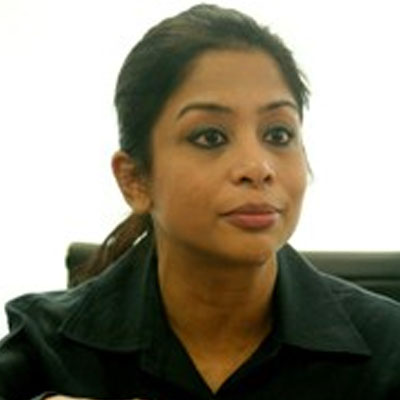
  • ‘We see GEC as a long-term game. We are playing a Test match and not a T20’ : Indrani Mukerjea – INX Media Pvt Ltd founder-CEO

    ‘We see GEC as a long-term game. We are playing a Test match and not a T20’ : Indrani Mukerjea – INX Media Pvt Ltd founder-CEO

    From starting as a human resource (HR) consulting firm in 1996 to entering the fast-growing broadcasting space, INX Media has travelled a long way.

    INX’s music channel 9XM has notched the top position in its genre while the general entertainment channel (GEC) 9X is making slow but steady strides.

    Next in the roll-out pipeline is NewsX. Despite controversies dogging the news channel venture with the exit of Vir Sanghvi and his senior editorial team, plans are being put in place to launch the channel in March. Regional channels are also part of INX’s growth agenda.

    In an interview with Indiantelevision.com , Mukerjea talks about her company’s growth plans.

    Excerpts:

    INX was a recruitment search consultancy company that you ran successfully for years. What pulled you to the broadcasting space?
    Despite being a human resource consulting firm, INX has been very inclined towards media placements. In the last 10 years, a majority of our placements have been in this sector. Besides, Peter (Mukerjea – husband, chief strategy officer INX Media and former Star India CEO) has 14 years of experience in the television industry.

    But isn’t the mainstream broadcasting space too cluttered?
    More and more channels are launching and doing fairly well. There is clearly a new emerging audience. You have seen how our music channel 9XM has grown ever since its launch. What is happening is that the gap between the number one and number two channels is decreasing. We are even seeing it in the GEC (general entertainment channel) space. The viewer base is also expanding; more and more TV sets are being bought. Moreover, viewership is getting fragmented; different viewers are liking different genres of entertainment.

    Though 9XM has shown rapid growth in the ratings game, it is a channel that runs songs without breaks. What does the revenue front look like?
    I think viewers like to watch full songs. That is why we are getting good ratings. When it comes to revenue, there are Coca-Cola and Vodafone who have joined 9XM as platinum partners. Also, though we have not put in so much of commercials, we still follow the pattern of 12-minute break. We use this duration to show our channel promos. As more ads come in, the same space will be used.

    Isn’t the growth of 9X, your flagship Hindi general entertainment channel, on the slower side?
    If you notice, we started with only two hours of prime-time programming and have added another half an hour in the last fortnight. Only by the end of June, we will be completing our four hours of prime-time programming. And that is the strategic decision we took very consciously.

    We see GEC as a long-term game. We are playing a Test match and not a T20. We want to build this block by block. The critical part is to stay there. It is very important to sustain. So, we have a five-year plan in the horizon to which we are sticking, and this is what I believe is going to make us sustain.

    So you are thinking of breaking even after five years?
    No no, breakeven will be before that. We are talking about long-term plans with short-term goals. And we are executing all our plans; you’ll see it in the coming three months.

    We’re well funded. So it’s easy for us to make long-term plans

    But there are other channels like NDTV Imagine that have shown faster growth in a short term?
    We have been funded very well, and that’s why it is very easy for us to plan ahead. When you are backed by strong financers, you can make long-term plans. We don’t have to run and do full-time programming.

    Your programme ‘Mission Ustaad’ failed commercially?
    We did Mission Ustaad as part of our corporate social responsibility (CSR). We were very clear from day one. The priority was also to establish the brand first. Now people know that there is a brand called 9X. You go to any part of the country, and people know about 9X.

    Aren’t you pumping in a huge amount of money for distribution and promotion?
    Absolutely! For us, 9X is an institution and not just a channel. It’s very important to establish a brand, and once that is done, it becomes important to keep the hammer ready. This is what happens when any new channel comes into play: first, it establishes the brand; then it waits for the right moment to strike “big”.

    Also, whoever goes up quickly has a tendency to go down as well. So we are patient. Our investors are long-term players. It’s not that if we pull out a programme, things will crash. We have not launched a channel based on one programme.

    And now, as we’ve established ourselves, I think we need at least another five months to bring in full programming. Strategically, it’s like a baby in my mind: a baby takes shape in nine months and we feed it when it’s born.

    On the ratings front, only one show has TRP of over one. Besides, isn’t it true that the channel’s GRPs are mainly being driven by movies?
    No, the report which we’ve got from Tam shows that 32 per cent of our GRPs are from movies while 54 per cent are from serials and 14 per cent from other shows. At the end of the day, when you are planning a channel, you have to think about overall GRPs, and we have taken a conscious decision not to bombard viewers. Now we have Chak De Bacche, Yeh Hai Jalwa and other programmes lined up. We are also having some serials which we will announce in due course.

    As a syndication deal, have you paid Sony Rs 400 million for 60 movies?
    That’s absolutely wrong information. The actual amount is not even half of it.

    What do you think about syndication of movies as a business model?
    It is a very good decision because at the end of the day the viewer is entertained and we, as a result, stand to gain. For example, with Jab We Met, we got fabulous advertisers, ratings. If I am calling it a family channel, I will have to provide content for the entire family.

    Mythologies seem to be coming back on Indian television. Is Ekta Kapoor doing Mahabharata for you?
    No, Ekta is not doing Mahabharata for us. I have also heard it, but Ekta and I have not spoken about making Mahabharata.

    But what do you have to say about the invasion of mythos?
    Mythological content has always been a part of Indian television. Be it Sai Baba, Sri Ganesh, Jai Maa Durga, Jai Hanuman – they have always been there. But it’s important for a channel not to overuse such content. You have to have a combination of movies, serials, soaps, fantasy, reality, etc. A good mix is essential.

    When are you launching NewsX?
    Our test signals are already on, and we have roped in Karan Thapar’s firm Infotainment Television (ITV) as editorial advisor to the channel while Arup Ghosh is our newsroom head. We will hopefully launch the news channel sometime in March; I can’t specify the date, but it will be in March.

    What content will the channel focus on?
    It will be analytical, in-depth news.

    How will it be different?
    You have to watch it to notice the difference. Our main studio is in Delhi; our Mumbai studio is under construction and is almost done.

    Are we going to see more channel launches from INX Media in 2008?
    The first priority is to complete the schedule and get NewsX up and running. We will also be launching regional channels.

  • ‘Paanchvi Paas will be telecast in the UK and US’ : Akash Sharma – Bulldog Media & Entertainment MD

    ‘Paanchvi Paas will be telecast in the UK and US’ : Akash Sharma – Bulldog Media & Entertainment MD

    Akash Sharma has been at the forefront of acquiring, developing and launching high-quality prime-time hit shows in India since 2005.


    An economics graduate from the University of Michigan, Ann Arbor, USA, Sharma spearheaded Bulldog Media & Entertainment’s efforts to be awarded the Indian licence to the international format of 2007 “Are You Smarter than a 5th Grader?” from Mark Burnett Productions. He is currently serving as an executive producer to the Indian version of “5th Grader” on Star Plus hosted by Shah Rukh Khan. Interestingly, Sharma shares his birthday (2 November) with SRK and likes to refer to this as a coincidence indicative of their similar destiny.


    In an interview with Jaahnavi P Paal, Bulldog Media & Entertainment MD Sharma reveals all about “Kya Aap Paanchvi Pass Se Tez Hain?,” the company’s future plans and lots more.


    Excerpts:

    Who are the stakeholders in Bulldog Entertainment? What are the core areas that the company is concentrating into?
    We are a new-age company which is just a year old. We have Ramit Bharti Mittal (from the promoter family of Bharti Enterprises Ltd) as a shareholder. We understand the business and the management side of it as well. Right now, we are into providing television content. We look across the globe for mature television content that would work for Indian audiences. For us as content providers, it is boom time as with the onslaught of new channels it has opened up a new client base. We just delivered our first big show – Kya Aap Paanchvi Pass Se Tez Hain?

    ‘Are You Smarter Than a Fifth Grader’ is a format owned by Mark Burnett. How did you acquire the format of the show?
    The Mittals are very active in the media space. Both Mittal and I went to USA and told them our story. We told them how content is saturated in India and how we were looking at innovative content. We wanted to shake up the apple cart, too, as the saas bahu shows were going on and on. We told them we would be able to drop the hammer on the Indian market and that too with a bang. We did not leave Los Angeles and kept talking to all top broadcasters. It was in 2007 when we were invited to the Natpe conference. We were the only Indian company who got to see the presentation of Are You Smarter Than a Fifth Grader by Mark Burnett. We saw the show and played it without knowing what it really was. But what’s interesting is that at the presentation they played the game with us and Ramit who volunteered to be part of it got his question wrong (“Which is the longest river in Asia?”)

    Do you think the format is suitable for the Indian market?
    India has become so global. Whether it is domestic or international content, right now the focus is to get quality content. If there is a show and it’s successful, then it’s a proven formula and a less calculated risk. Getting licenced content is a safer bet. Viewers need quality programmes and this is our focus. In Paanchvi Pass, we will broadcast it in a handful of territories outside India.


    The show is being produced by Synergy and Bulldog. Out of the 50+ territories in the world, we knew that it was most relevant in India because we focus on education more than anywhere else. Right from the start, we knew that it was an SRK, Star plus show, and hence we did not go anywhere else.


    In India, it will go on air when kids go on vacation. And will go on at least for a year. But what’s interesting to share is the fact that Paanchvi Paas will be telecast in the UK and USA for the NRI audience. We are in talks with representatives from New Zealand, Canada, Indonesia and Australia so that Indians across the globe can watch it.


    We are also launching a licencing and merchandising division with Star Plus where we will promote toys, games and apparel during Paanchvi Paas.

    How would ‘Paanchvi Pass’ be different from KBC?
    KBC has been around since 2000. It’s been completely put out to the public. First Big B was the host; then came SRK. It’s not the host but the format that has run its course. There were gaps which happened over eight years. KBC is a general knowledge, trivia game show. Paanchvi Pass is a different quizzing concept than KBC. You have kids as life lines, grade school-level questions and all demographics coming to watch the show. The show has in-built drama, comedy and education. I think Star was looking at something fresh to redefine their programming. With our vision and their platform, we have a great partnership.

    How does the deal that you have recently inked with CBS Paramount for the show ‘America’s Next Top Model’ look like?
    It’s a little early for us to talk about this. In January, we launched the show in China. It was one of the few shows to be licenced there. Its all about glamour but outside the usual singing-dancing reality shows we have been seeing. It allows an average, normal person who is interested in modelling to be part of the show. We have recently acquired India rights for America’s Next Top Model. We had been after CBS since the past one and half years. Hosted by Tyra Banks, the show is in its tenth season in the US. It’s the No 1 show on Foxtel in Australia. It is in its fourth season in the UK. We are in initial talks with broadcasters in India. We are only looking at top general entertainment channels (GEC) as this is a big-ticket show. America’s Next Top Model is a brand and there should be a fit between the channel and the brand. This one is a franchise and each territory globally will be renewed season after season, and so we’re looking at a channel which will be a good fit.


    We are also looking at casting A-list model-cum-actors to host the show.

    How is the format of the ‘America’s Next Top Model’ different from so many other shows currently running in almost all Hindi GECs?
    In order for a format to be successful, it has to have the local masala. We do look to bring the framework and then localise it a little. We will Indianise the show after talking to broadcasters. Bulldog will give the framework and the production house will then add the masala. But we will protect the brand. We have shortlisted production houses who can effectively produce it. This decision will be jointly taken by us and the broadcaster. The show will have your next-door neighbour girl who aspires to be a model. The hunt for her will be on a national level. The show will begin with about 35 wannabe models out of which 15-17 girls will be shortlisted and put in a house. They will then be trained on all aspects of modelling. After which one of them will be eliminated every week. The viewer gets to see the transition of the girls to super models. The viewers will be able to relate to the struggles and challenges that the models brave. There will be a panel celeb judges representing all walks of life.

    In the long run, we do want to get our hands dirty in production. We’re seeing fragmentation in TV channels’

    How big would be the prize money for the show?
    In the US, it has a complete package of a cash component, one year’s contract with a top modelling agency, a car, a film contract and a few additional perks. In India, too, we may offer something similar. The girls also get to travel for international shoots for a fortnight during the show.

    What are the other shows that are in the pipeline?
    We have just acquired a fiction show, Nuevo Rico Nuevo Pobre (“New Rich, New Poor”) from Canal Caracol TV who is the top broadcaster in Colombia. This is a very exciting deal for us as it marks our foray into the fiction space. It will set a precedent in the licencing of fiction content.

    This concept has been sold to Fox in USA and now we have the rights in India. It will be a heavily promoted show for them, and is scheduled to be launched this fall on prime time.

    What are the future plans for your company?
    In the long run, we do want to get our hands dirty in production. We’re seeing fragmentation in TV channels. This is a boon for us as this helps channels cut through the clutter. It opens up new opportunities for us so that we can change their programming. Viewers want quality now because of the clutter. And this will be our main focus.

  • Apology for ‘India TV’s dispute with CCL’ report

    Apology for ‘India TV’s dispute with CCL’ report

    Indiantelevision.com carried a report on 15 February, 2008, under the headline ‘India TV settles CCL dues, to move to new premises by November-end.’

    The report correctly states that India TV has settled its dues to CCL, while the headline wrongly implies that it would be vacating the premises by November 2008, when in fact the news channel will be moving out by November 2009. 

    Additionally, the following inadvertent errors also crept into the report, which have been brought to our notice by India TV:

    * That the issue of dispute between CCL and India TV was one of “overdue rent when in fact the channel has regularly and unfailingly paid what was due and had repeatedly brought to CCL’s notice vide emails and all other means the equipment and services that had not been put into place despite lease rentals being paid vide cheques.”

    * That, in specific terms, the article claims that ‘more than Rs 6 crore were not paid by the channel (India TV) in terms of rent for the premises and as the hi-tech digital newsroom that CCL (Century Communications Ltd) has also rented to the channel’, when the facts, as enshrined in the MoU clearly bear out the channel’s position, including a substantial amount exceeding Rs 2 crore being deleted from CCL’s original claims, confirming thereby, that key equipment and services had indeed not been made available to India TV; and the fact that India TV had to independently acquire the above mentioned digital newsroom at a huge cost.

    * That by repeating a wild allegation made by CCL officials in a press conference claiming that the lives of the CCL owners had been threatened by India TV and that they had written to the Union Home Minister for protection, indiantelevision.com has lent credence to a preposterous claim which CCL chose not to substantiate with even a shred of evidence.

    Indiantelevision.com regrets the inadvertent errors and apologises to Independent News Service Pvt Ltd, owners of Hindi news channel India TV, and states for the record that it has no intention of dishonouring or bringing to disrepute either India TV or its founder Rajat Sharma. 


  • IBN Lokmat set for launch by March-end

    IBN Lokmat set for launch by March-end

    NEW DELHI: IBN Lokmat, the upcoming Marathi news channel from the GBN-Lokmat joint venture company, is all set to launch by March-end.

    “We will be officially launching it between 16 March but before 1 April,” editor-in-chief Nikhil Wagle told indiantelevision.com.

    Wagle said that the existing 13 bureaux are fully functional and two more are being added. Four OB vans from the four key cities – Mumbai, Pune, Nagpur and Aurangabad – will be used for the most “vibrant live coverage and programming.”

    “We are completely ready after the training by the American technological and editorial experts have done their work over the past few months, and this will give us the competitive edge,” Wagle held.

    He added that the channel has 13 leased lines from across the state, so that direct and live news content can be shown throughout the day.

    However, Wagle refused to disclose any programming or coverage pattern, saying: “Already there are many copycats who are getting half-baked information of the kind of programming we are going to do, and are copying them. I do not want to disclose the content beforehand.”

    Asked about the usual repeated show of violence that the Ministry of Information & Broadcasting has been seriously upset with, Wagle said that if there is violence in society, it will be shown, but in a responsible manner, so that further violence is not fomented.

    Reminded that most channels had shown old footage of violence against north Indians during the Raj Thackeray arrest on 12 February, but without mentioning that those were old file photos, Wagle asserted that this will not be done in IBN Lokmat.

    “I do care for TRPs but I shall not stoop so low for TRPs that it gets away from serious but popular journalism, because that is what I have done in my 20 years of print and the past decade of television journalism. I believe that TRPs will come if one does serious and popular but highly credible journalism,” Wagle clarified.

  • ‘Cable companies should start thinking like DTH operators’ : Seemanto Roy – Sahara One Media and Entertainment CEO

    ‘Cable companies should start thinking like DTH operators’ : Seemanto Roy – Sahara One Media and Entertainment CEO

    After taking charge, Subroto Roy’s younger son Seemanto Roy has drawn up an aggressive plan to grow Sahara’s media and entertainment business. His target: launch of five channels over 6-8 months, revival of the motion pictures business and setting up of a film institute.


    In this his first interview to the media after becoming Sahara One Media & Entertainment CEO, Roy spells out his plans to Indiantelevision.com’s Sibabrata Das.


    Excerpts:

    Media companies have seen opportunities and been on aggressive mode in the recent past. Why haven’t we seen that sort of game being played out by Sahara?
    We have just launched Firangi, a world TV channel dubbed in Hindi. We are also going to launch five more channels over the next 6-8 months. This will include a Bengali language channel, details of which I can’t specify now.

    Won’t this be in the entertainment space as the channel will be under the Sahara One Media & Entertainment umbrella?
    In that sense, yes. It will be in the non-news space. But we can’t spell out the positioning of the channel at this stage. We are finalising the details.

    There were plans of launching a music channel and Sahara had also initiated talks to buy out Music India. What is the status?
    Launching a music channel is on our agenda. Though people say it is a cluttered and thin-revenue market, we believe the space is growing. There is an opportunity, if the positioning is done well. We are figuring out the positioning of the channel.

    Sahara had announced in late 2004 an investment plan of Rs 15 billion for its media and entertainment business and Percept was put in an operational role. Are you happy with the speed of the progress since then?
    We relaunched our flagship Hindi general entertainment channel and ramped up our movie production business. We also launched a Hindi movie channel called Filmy. Our focus now is to widen our channel offerings.

    How much money Sahara is going to pump in for this?
    We can’t give you the financial details. We’ll announce them early next fiscal.

    In the news channel business, alliances are taking place. But in any case, we are not interested in diluting majority

    Is there a move to transfer the broadcast operations of the entertainment channels into Sahara One Media & Entertainment?
    The process is on. We want the entertainment business to be in a single entity.

    Obviously this will enhance the turnover of Sahara One Media & Entertainment. Now the listed entity does not capture the advertising revenues which is with the broadcasting entity. But is it that the past liabilities of Sahara India TV Network, the broadcasting arm, will not be transferred to Sahara One?
    No, we are not transferring the liabilities.

    How do you separate the broadcasting arm of the news channel business?
    The news channel operations, because of the regulations on holdings and other issues, will need to be separate.

    Sahara One was planning to raise up to $50 million through foreign currency convertible bonds (FCCBs). Are you going ahead with it?
    We have no plans of raising money at this stage.

    Sahara One had diluted 14.98 per cent to Sivasankaran’s Aircel Televentures (later renamed Siva Ventures) for Rs 1.2 billion. BCCL (Times Group holding company Bennett Coleman & Co Ltd) also acquired close to 6 per cent stake in the company. Are there plans to further dilute equity?
    No.

    Sahara had mandated Ernst & Young (E&Y) for offering suggestions to restructure the news channel business. What were the recommendations?
    They were appointed to look into the growth prospects. We appoint consulting firms to get their perspectives.

    Are you looking at diluting equity in the news business?
    There is nothing.

    Are you in talks with investors?
    It is difficult to comment on this. In today’s market, alliances are taking place. But in any case, we are not interested in diluting majority.

    Why did you drop the Sahara name from Samay, your national news network?
    We gave the channel a new look. Besides, we are developing the sub-brands. Having lots of brands with the Sahara tag can be confusing. We did it in Filmy as well. We are maintaining Sahara as a network brand.


    Isn’t the Hindi news space getting too cluttered and hurting channels like yours?
    There is a lot of sampling happening at the moment. Our region-centric channels continue to perform well.

    One area where Sahara had a big opportunity but let it slip was the motion pictures business which had several hits at one point of time. What went wrong?
    The movie business doesn’t always give you hits.

    But the movie production business stayed dormant for a long time as there was an exodus in the team?
    There was a gap in between. Film production is futuristic – actors are not always available, nor even directors. But it is not that we lost momentum. We went back to get our plans in place. We will be getting back into it big time in the next fiscal. We will be producing 10 movies in 2008-09, out of which 4-5 will be big budgets and the remaining in the medium range.

    Don’t you think Percept hijacked the motion pictures platform?
    Not really, we are still working with them. We are acquiring movies – so we could be buying from them as well.

    Earlier you did a long-term deal with K Sera Sera where you even took an equity in the company. Are you looking at such deals again?
    We will follow all kinds of business models – producing films ourselves, acquiring, locking directors, co-producing (including international). We will have the studio model. We have a strong team and will also be in film distribution. Besides our own movies, we will also be acquiring for distribution. We are, however, not looking at overseas distribution now. We feel the home turf is an important market.

    What about home video?
    We are not getting into it. Nor will we be launching our music label.

    Sahara has not been going slow on movie acquisitions for satellite TV rights. Why is it so when the other movie channels have been more aggressive?
    Acquisition prices have gone up, but we have brought some big titles like Guru. We have also been buying syndicated content.

    Is it that you believe in syndication of titles rather than acquisition?
    We do both. Though we have introduced programming as well, we realise that movie channels will have to revolve around films.

    Is Filmy in course for its revenue target of Rs 500 million in the year?
    I don’t want to comment on the financials. But we are doing well and reaching our targets.

    What are the plans of beefing up content on Sahara One which seems to be hovering around 60-70 GRPs?
    The market is evolving and we have plans for the channel. In future, the fight in the Hindi GEC (general entertainment channel) space will be for slots. We are targeting slots.

    Do you have a strategy for regional channels in the entertainment space?
    We may launch two channels in the regional space. We want to test the regional market. But we don’t plan to grow in every direction.

    What made you launch Firangi and how do you see its growth potential?
    We are looking at the birth of a new genre. In the general offering, it is like a GEC. And it also can be looked at like Star World. Firangi is somewhere in the middle. We can attract audiences from both sides. The content is picked up from across the world, is fresh, contemporary and bold. And its strength is that the stories end in 6-8 months.

    Have you shelved plans to start a film institute?
    We will be in it. We are talking to strategic partners. For location, we are weighing various options including Mumbai.

  • High Court sacks ESPN Star Sports’ suit against news channels

    High Court sacks ESPN Star Sports’ suit against news channels

    MUMBAI: Delhi High Court on Monday gives a major relief to news channels by dismissing a suit, filed by ESPN Star Sports again them for using footages from Indo-Australian cricket series.

    The suit had sought a restrain on showing footages of the on going cricket series in programmes other than scheduled news bulletins.

    “This suit is not maintainable and hence it is dismissed,” Justice S Ravinder Bhatt said while dismissing the sports broadcaster’s plea, reports PTI.

    ESPN Star Sports had sought a restrain on using footages from matches played, and to be played, including the Tests, T-20 and One-day matches, in programmes other than scheduled news bulletins.

    ESPN-Star had contended that the usage of footages in programmes other than scheduled news bulletins was in violation of ESPN Star Sport’s terms and conditions which say that the footages could only be utilised in scheduled news bulletins for 30 seconds and for a total of two minutes per day, and that too with its permission.

    The sports broadcaster had said that footages were being utilised for programmes of commercial purpose by carrying advertisements.

    It had sought restrain against five news channels– CNN-IBN and its sister channel IBN7, Aaj Tak, Star News, Zee News and NDTV 24X7.

    When contacted by Indiantelevision.com, ESPN officials refused to give any comments.

  • ‘Cable companies should start thinking like DTH operators’ : EVS Chakravarthy – You Telecom CEO

    ‘Cable companies should start thinking like DTH operators’ : EVS Chakravarthy – You Telecom CEO

    Having acquired a broadband company in 2006, Citigroup Venture Capital International has set its eyes on the cable TV business. You Telecom has floated a subsidiary to meet the FDI (foreign direct investment) guidelines for cable and acquired Bangalore-based Digital Infotainment, a small-sized cable network.


    You Telecom intends to invest Rs 7 billion over four years as it takes steps to enter the digital convergence space. Banking on building a Headend-In-The-Sky (HITS) platform, the company plans to invest Rs 1.2 billion in the first phase of infrastructure.


    In an interview with Indiantelevision.com’s Sibabrata Das, You Telecom CEO EVS Chakravarthy talks about the onslaught from direct-to-home (DTH) players to grab the digital space and the need for cable TV operators to up their services and invest in brand building.


    Excerpts:

    Since Citigroup Venture International holds 85 per cent in You Telecom India, how are you restructuring the foreign holding to stay within the regulatory cap of 49 per cent so as to kick start cable TV operations in India?
    We have set up a company called Digital Outsourcing where Citigroup holds 49 per cent. The balance 51 per cent is being held by high net worth individuals. We have done the capital restructuring in the cable TV company to meet the FDI guidelines.

    Did Citigroup buy out the Mumbai-based broadband company from British Gas in 2006 because it saw opportunity in expanding the footprint to cable TV?
    We will probably be the only pure broadband player to get into cable TV. Unlike Sify and the other ISP operators, we have built a cable-based infrastructure. So it is a logical extension for us.

    Are you looking at acquisition of cable networks as the entry route in different markets?
    Digital Outsourcing has bought 50 per cent stake in Bangalore-based Digital Infotainment. This is our entry into cable TV operations. We will be rolling out digital services in the next couple of weeks. In other markets, we are also looking at people who could partner with us through joint ventures where we will be offering multiple services.

    Why have you set up a headend in Delhi but not yet rolled out services? Is it that you don’t have a content tie-up with broadcasters?
    Though we have set up a headend in Delhi, we haven’t started operations. We are looking at opportunities like a JV or a 100 per cent buy out. We are also looking at an outsourced service model for digital solutions to cable operators as one option.

    You are banking heavily on the HITS model. How much are you going to invest in the venture?
    We will be investing Rs 1.2 billion in the first phase for setting up the HITS infrastructure. We are waiting for the government to come out with the regulations before we go ahead. We expect the Telecom Regulatory Authority of India (Trai) to come out with its recommendations on HITS in the next 2-3 weeks. For the digital solutions including set-top boxes, we will be using Scientific Atlanta. And for HITS, we will also be looking at Motorola.

    How much are you going to invest in the overall business?
    We plan to invest Rs 7 billion over four years. This will be in addition to Rs 4 billion that we have already put in for laying out the infrastructure for broadband. We will be doubling our footprint to 24 cities.

    Why are you so bullish on digital cable when there is a very low STB penetration in the Cas (conditional access system) belt?
    2008 will be the defining year for digital. After Reliance launches its DTH service, expect fireworks on the ground to start. The cable industry is not fully prepared to combat the DTH onslaught. Cable operators will have to figure out who is going to provide them with the right ammunition to fight DTH tomorrow.

    MSOs should have a one-million digital box seeding plan. Then everything will fall in place’

    What will you offer that will make cable operators come to you?
    It’s high time cable companies started thinking like DTH operators. Cable TV has to match DTH service standards – be it brand building, billing, marketing and services. Multi-system operators (MSOs) today are not concentrating on that. They will have to support the last mile operators with all these things. Otherwise, how are the operators going to fight DTH on behalf of the MSOs. The old mindset has to change. There has to be a complete revolution in digital cable and related services like broadband. If the old MSOs don’t do it, new players like us will show the way.

    Cable operators are willing to part with equity to those MSOs who are offering them more. Isn’t that the deciding factor?
    In the initial land grab situation, it is capital. But in the medium term, it will be quality of management and the systems and processes they work with. The valuations operators are asking for has gone up dramatically with new MSOs entering the field. But it is like the sensex; it will not last forever. We are not willing to pay exorbitantly just because we want to expand our size. In cable, it is important to remember that there is no case of first mover in the consumer’s mind. The future battle in cable will be for grabbing attention in the consumer space through brand building and quality of service. The MSOs have never thought of this as a strategy. And don’t forget that HITS will open up the smaller towns and networks. So the opportunities down close down for any new entrant.

    What brand building exercise you have put in place?
    We have an equity capital reserved for brand building. Bennett & Coleman Company Ltd (BCCL), the holding company of the Times of India, has a five per cent stake in You Telecom. We are looking at doing more such media deals. We are setting in a discipline by allocating equity for brand building.


    We have also invested in technology. We have introduced the Oracle-based billing system which we are willing to outsource to others. We have 170,000 broadband subscribers, spread across 12 cities including Mumbai, Bangalore, Chennai, Hyderabad, Gurgaon, Surat, Baroda, Ahmedabad, Rajkot and Pune. Our broadband ARPU (average revenue per user) is Rs 460. Our revenues will be Rs 1.10 billion this fiscal with just broadband in our business mix at this stage.

    Won’t the cable business require huge doses of capital?
    We realise that growth needs capital. Citigroup is committed to infusing capital to grow the business. We have a plan in place.

    But for a venture capital fund, isn’t analogue cable a matter of concern for its revenue leakages across the last mile?
    When Citigroup bought out the company from British Gas, they looked at the convergence space. We are uniquely positioned in that we already have a good broadband play. When we are in cable, we are only extending our laid out infrastructure to a new area of business. It is important to remember that a single service play is like an analogue video play. We see alliances emerging with broadcasters and cable networks across the value chain.

    What is the challenge for MSOs in digital cable?
    MSOs should have a one-million digital box seeding plan. It is possible with a well-evolved cable eco system. Once an MSO has such a deployment, then everything will fall in place. It will be like building a long lasting real estate value – with multiple services including broadband, cable TV, gaming and VoIP. Later we will see bigger cable companies converting carriage fee into equity in broadcasting networks.


    What are your views on Trai’s regulation for non-Cas areas?
    The regulator has given it some shape. If the MSOs had implemented Cas more successfully and effectively, then Trai perhaps would have been confident of extending it to other areas.