Tag: indiantelevision.com

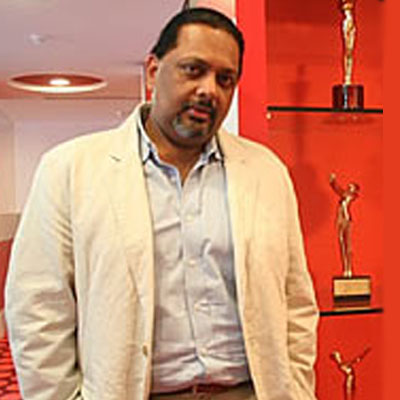
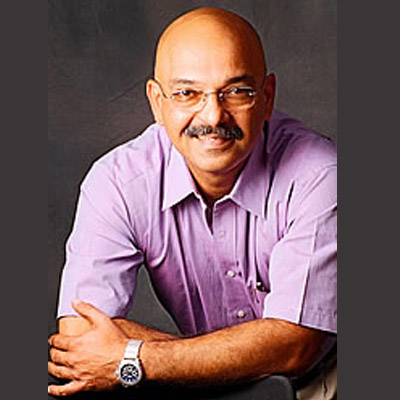
  • ‘Challenge is to convert local advertisers’ contribution to 50 per cent from 25 per cent’ : Abraham Thomas – Red FM COO

    ‘Challenge is to convert local advertisers’ contribution to 50 per cent from 25 per cent’ : Abraham Thomas – Red FM COO

     Red FM has gone through a sea change after the Living Media Group sold it to a consortium including Hyderabad-based Value Labs, NDTV and Malaysia-based Astro. Then Sun TV Ltd. acquired a 48.9 per cent stake to build a national footprint, synergising with its South India operations.


    Red FM has grown over the period, claiming to hold top spot in the lucrative market of Mumbai. It has also grown its base in Delhi and Kolkata.


    In an interview with Indiantelevision.coms Nasrin Sultana, Red FM COO Abraham Thomas throws light on some of the pertinent issues that plague the FM radio sector in a Bajate Raho style.


    Excerpts:

    What do advertisers identify with the Red FM ‘Baajate Raho’ brand?
    Advertisers associate Red FM as a young, energetic and pro-active brand. Any product or brand that targets between the 15-35-year-olds likes to get associated with Red FM. Even the local advertisers in each city where we operate – Delhi, Mumbai and Kolkata – are putting money on us as our content is wholly local.

    What about the listenership growth at Red FM in the recent past?
    The Red FM brand has been created with our innovative content and our ‘Bajate Raho’ attitude. We have moved from just being a radio brand to a FM station. Listeners identify Red FM as a station of expression. We have also ventured into TV. Our annual on-ground Bajaate Raho awards is going to air on Sony Entertainment Television.


    In terms of listenership, we have been consistently in the number one spot in Mumbai for the last seven to eight months. In Delhi we were a bit behind. Now we have climbed to the number two spot there. In Kolkata, we are the only station which play only Bollywood superhits unlike other FM stations which have Bengali music too.

    With Sun TV Ltd. picking up a stake in Red FM, what has this meant at the operational level?
    In the operational level, there has not been much change. In the ad sales front, the network is able to sell a national package to any advertiser.

    FM broadcasters are seen complaining about advertisers’ preference of TV and print over FM radio. Has it improved over the years?
    Advertisers have gradually started to realise the potential of the medium. The industry has seen a two-way expansion – growth from existing markets and new geographies with FM phase II expansion. In the last fiscal, the FM industry has expanded to deep pockets of the country. Definitely this attracts advertisers as FM radio is seen as an innovative mode of advertising in the smaller towns.


    In Red FM national advertisers pull 75 per cent revenue while the local advertisers constitute the rest. The big challenge is to convert the 25 per cent into 50 per cent. Only then can the FM radio sector expand its share in the overall ad pie which currently stands at 3.4 per cent.

    Has the launch of Ram (radio audience measurement) made any impact since advertisers can now have data to back up their spend?
    Unlike the TV industry, advertisers and FM broadcasters are not using Ram figures on a week-on-week basis. But a 4-6 week data provides a clear trend which we use to pitch to advertisers. Besides we use the trends which come out of time spend, cumulative and Tarp (target audience rating point) data to design and conceptualise our shows. They indicate content stickiness and the profile of the audience.


    The Ram figures have demystified a myth that we most often had. Pre-Ram, we neglected the weekend slot thinking that listenership is slender. Now we are concentrating on the weekend slot as well. The Ram figures clearly indicate that there is a strong listenership population even on weekends. Earlier when there was no data to refer to, most of the FM stations played back-to-back music with no jock talk.

    What are the other trends that the Ram figures indicate?
    Listeners start stepping in from 7:30-8:30 in the morning. This increases gradually, so much so that it beats TV viewing audience. But after 1:30-2 pm, listenership slides down. The 2-5 pm band faces a tough competition from the TV audience as during this time most of the general entertainment channels (GEC) have original content in the afternoon band. Radio listenership reaches its peak after 5:30 pm.


    There was another believe among us that highest listeners come in from the car listeners. However, Ram data proves this wrong as there are few listeners on the drive. Most of the listeners come in from mobile and personal set listening.

    Are you content with the Ram week-on-week data or you wish for some improvisation?
    Yes, it has been useful. At least something is better than nothing. We were not able to use the data of Indian Listenership Track (ILT) as it was out only on a quarterly basis. It was difficult to use the dated trends. The Ram figure is a good indicator. The best method in this connection is the electronic meter of mapping listeners. Only a few countries use that methodology as it is very expensive.


    The ideal thing to do in India is to have three different methodologies in three different types of market. The small markets can have Day-After-Recall (DAR) methodology, the big markets can use Daily Diary methodology while the metros can depend on Electronic methodology. But the Electronic methodology is not feasible in India as it is very expensive.

    The Indian Premier League (IPL) had its devastating effect on GECs and multiplexes. Has the FM industry felt the heat?
    IPL has been beneficial for us. Red FM is the official radio partner of Mumbai Indians IPL team. To cheer up the team, Red FM turned into Blue FM for one day. Red FM has woven both content and contest around cricket to promote the team. Vinod Kambli is our special cricket expert. He does a cricket review of the last day’s match in a humorous way.


    We also had a contest where the winners were taken to one of the matches when Mumbai Indians was involved. The winners were taken in an open bus to cheer the team with Red FM’s RJs.


    With innovation in content and different contests, there has been a spike in the listeners. But I can’t say for sure if this has been primarily because of IPL because school and colleges are closed for vacation. During this time of the year, we have spikes in listenerships. But we do not have corresponding figures as Ram was not available last year during this time.

    Is the Association of Radio Operators of India (AROI) pressurizing the government to take any decision on the issue of music content pricing?
    AROI is a new body. We have many an issue out of which pricing of music is one of them. I believe through AROI the matter will be sorted out.

    As one of the senior VPs of AROI, what do you think could be the possible solution?
    The FM industry needs a single leadership to sort out things. Large stations can pay more for music. The charge should vary according to category of the stations like A, B, C, D, E.


    The other could be if there is a revenue sharing model between the FM station and the music company.

    What are the other areas that AROI is concentrating on?
    Apart from the music rights issue, AROI is working upon methodology of listenership and finding new talent in the industry. With the expansion of the market, there is talent crunch which every station is finding difficult to address.

    How do you see Trai’s recommendation of allowing 49 per cent foreign equity in FM radio sector?
    It is a welcome move. The FM industry will see a growth with foreign players taking interest in the local medium.

    Do you think that the FM industry will see a change once news is allowed in the FM broadcasting as recommended by Trai?
    Yes, it will bring change to the industry but not to Red FM. Red FM is a total entertainment station for the masses. But there may be some operators who could position themselves as news FM stations to beat the cluttered market.
    How do you see Trai’s recommendation of multiple licensing in the same district?
    It would be a wonderful thing for the FM industry. Differentiation will come in after multiple license is allowed. It will pave way for niche stations. In the present situation very few stations dare to go the niche way as it fears losing a chunk of listeners. But with multiple licensing, stations can experiment a lot adding to the growth of the industry.
    Which are the different platforms you are experimenting with to build brand awareness?
    We have done good work in the brand activation front with our Red Activ team. We have expanded our footprint in the mobile vertical too by our exclusive tie-with Mobile2win. We syndicate our properties like Kamla Ka Hamla and Angry Ganeshan. Mobile2Win has a tie-up with the telcos by which subscribers can download our properties as ring tone, caller tone etc. But good revenue is yet to come from this activity.
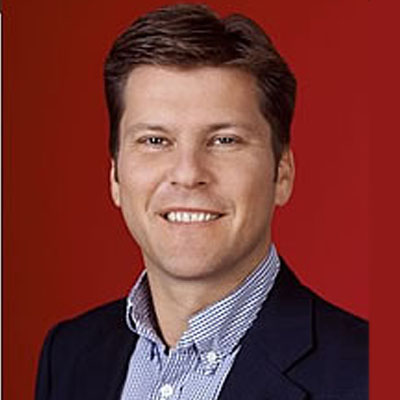
  • ‘Asia contributes 25-28 per cent of our ad revenues out of which 10 per cent comes from India’ : Jonathan Davies – CNN International exceutive VP ad sales

    ‘Asia contributes 25-28 per cent of our ad revenues out of which 10 per cent comes from India’ : Jonathan Davies – CNN International exceutive VP ad sales

     As the television landscape in India gets more fragmented, channels try to come up with customised solutions for clients by trying to understand their business requirements better. Such is the case with CNN International.


    CNN says that more revenue is coming out of India, particularly with local companies going global. The tie up with IBN has also been a big help in this regard.


    Indiantelevision.com’s Ashwin Pinto caught up with CNN International executive VP ad sales Jonathan Davies to find out more about the international news network’s prospects in India.


    Excerpts:

    How has CNN International fared over the last couple of years?
    We have fared strongly. In the last five years, we have recorded double digit growth. There aren’t many channels operating in mature markets that have seen this kind of growth level.


    There are three key drivers for us. Our digital businesses have grown rapidly. The website has been able to monetise eyeballs; we are also seeing growth in developing markets like in Asia, Africa and Middle East; the area of sponsored content has also grown in terms of collaborative partnerships.

    In terms of CNN’s overall ad pie how much do Asia and India contribute?
    About 25-28 per cent of our revenue comes from Asia, out of which India contributes 10 per cent. This has seen a huge growth over the last five years. India used to contribute two per cent of the revenue from Asia.


    In the Asian market, CNN International is seeing quick growth in Japan and Korea.

    How has the tie-up with IBN helped CNN in India?
    It increases the profile of the CNN brand among the Indian advertisers. The IBN deal was not designed to be a huge revenue earner but to establish brand saliency. Advertisers in India have become more familiar and comfortable with CNN as a result of our alliance with IBN.


    As more Indian companies want to be present on the world stage, they require a global platform to reach out. We can provide the global platform. Already you have a situation where the Tatas have bought out Jaguar and Land Rover. The more this happens, the more CNN will benefit in the coming years.


    Besides manufacturing and consulting, Indian companies in sectors like BPOs are moving up the value chain globally. We are looking to tap these sectors.

    Which are the key advertiser categories for India?
    Tourism is one of the key categories. We are also looking to tap conglomerates like ABG. Airlines are also important as they are looking to go global. However, India is still an under-developed market for us. But through the CNN IBN tie up, we are laying the foundations for a market that will take off in the coming years.


    India will follow a similar pattern like the Gulf States. Over the five years Abu Dhabi, Dubai, Qatar and Bahrain have seen huge growth in terms of clients.

    Apart from travel and tourism, which are the categories that are emerging in Asia?
    The financial segment, consumer electronics and airlines like Singapore Airlines are growing.

    India is still an under-developed market for us, but through the CNN IBN tie up we are laying the foundations for a market

    The Indian market is getting more fragmented with a plethora of launches in the news space and other genres. How has this impacted CNN?
    Fragmentation works in our favour. With the marketplace getting more confusing, clients tend to go to those places that they know and trust – like CNN. Our levels of churn have gone down. Rolex has been with us for 11 years. Cathay Pacific has been with us for 15 years. We also add new clients in different parts of the world, which is encouraging for the future. Trust is becoming an increasingly valuable commodity for brands. I am not just talking about news channels here. It also applies to governments and the financial sector, among others.

    Besides the ‘Eye On India’ initiative, is CNN International looking at more local Indian content that would allow you to attract more advertisers in the sub-continent?
    It is not necessarily that we will do only those stories that gets revenue for us. We highly place value on interesting stories. India is an interesting country. We have invested in more newsgathering resources in India. We have got people in Chennai. Now that we have more people in India we can generate more stories from this country.


    Currently we are doing an Eye On initiative. This will focus on in-depth stories from India. Investment companies will tie up with us for this initiative.

    One major initiative from CNN International was the launch of the Task Group late last year. What was its purpose?
    The travel and tourism sector is important for us. The aim is to offer expertise to any client in that industry. We give them the tools and ammunition to make their campaigns more effective. We work in a consultancy role so that a travel board can explain to their state about why they are taking marketing steps. They can explain that an ad showing beaches will create economic growth. We help film commercials for tourism organisations.


    We have worked with the Indian ministry of tourism. We helped them expand their business and offerings in other regions. In the latter part of 2006, we had in an initiative to promote India around the world in association with India’s ministry of tourism, produced a series of six advertorials.


    The vignettes aired for several months. We look at a country and understand the dynamics of their business. We then help them market it better.

    From a brand building perspective how important was CNN’s eco-tourism event in India in December?
    The environment has been the key theme in CNN programming for many years. Countries wanted to know more about eco tourism and it’s potential. Our event helped educate state tourism ministers on what eco tourism is all about.


    Horizons 2007 was organised in conjunction with ministry of tourism. We got local and international experts offering their views. Next year we will be doing an initiative around the infrastructure business, which is related to tourism. The event will also be held in India.

    Could you shed light on innovations done with clients that go beyond the 30-second ad spot?
    With Nokia we did an initiative that spanned different platforms. Phones of our journalists had a Nokia widget, which could be tracked on our site as they traveled across the world. Journalists submitted blogs from their locations. This was a marrying of technology with our editorial interests. We have worked with Suzlon to embed their brand in our environmental solutions content. The perception and understanding of this company has gone up as a result.


    We have a show called Principal Voices, which is sponsored by Shell. It looks at developmental issues around the world. We bring experts whether it is education or environment or in other areas from around the world to have a debate.

    How has CNN changed in regards to perception among clients?
    If you go back to a little over a decade, people felt that CNN offered an American view of the world. Research shows that perception about CNN has changed. It is now seen as a channel that offers a global perspective. We offer programming from around the world. While our CNN US network is a strong resource, we use it only when relevant like the US Elections. Clients see that global issues like credit crunch and food crises are tackled in an objective manner with multiple perspectives, which attracts viewers.

    Is CNN packaged with the other Turner channels or is it sold separately?
    No, we work with our sister channels in other areas but not in advertising. That is because the CNN audience is very different from the audience of the other Turner channels. The news audience tends to be more upscale. Other Turner channels get clients who are more mass market focussed.

    Does CNN do roadshows, events for clients?
    Yes, we do. However we try to make it more client-specific as opposed to exposing them to the whole world of CNN. We are introspective. We look at our business offerings and see how clients can benefit from being associated with us. We try to show people what we can do as opposed to telling them about our capabilities.
     

    We did an initiative with the Clinton global Initiative a few years back. We did a film on this and invited clients to watch CNN in action and see the kind of people that the CNN brand can bring together. Clients met Bill Clinton, which was a good endorsement for CNN.

    Now social media sites like Youtube and Facebook are competing with traditional media for eyeballs and ad revenue. How is CNN adapting to this?
    We launched ireport.com earlier this year. It is a separately managed organisation, which allows any viewer from around the world to upload video programming. This is a viewer-moderated initiative. They can discuss key issues. The best ones that are done by citizen journalists are put on CNN.
  • ‘We’re not going in with a pistol, we’re going with a cannon’ : Rajesh Kamat – Colors CEO

    ‘We’re not going in with a pistol, we’re going with a cannon’ : Rajesh Kamat – Colors CEO

     Rajesh Kamat, CEO of Viacom18’s Hindi GEC Colors, has a clear mandate – to ensure his upcoming channel a position amongst the top 3 players in the category within a year of launch.


    In a genre where Colors is the 10th entrant, Kamat has his task cut out and will have to bring to bear all the experience he garnered in earlier stints as MD of Endemol India and senior VP commercial & business planning at Star India.


    Speaking to Indiantelevision.com, Kamat gives his take on the whys and wherefores of the most expensive channel launch activity ever undertaken by a Hindi GEC.


    Excerpts:

    What would you term as the core TG for Colors?
    While we propagate programming that appeals across, if I have to specify a core TG, 15 to 34 is a number I would peg ourselves on.


    In a GEC, the 15 to 34 is what gets you your first one third. The 25 + is where the loyal audience starts. What we’re doing is, we’re getting the early adaptors and the initiators in the first phase. Once we get that, we’ve made our entry into the single TV households. That’s when you start consolidating. And the consolidation phase is actually your 25+ female. Though males would come in, that consolidation phase would focus on the female.

    That aspect of your programming focus is not reflected in either Fear Factor or in Mohe Rang De, the two shows that have been showcased thus far?
    Not right now. What happens is, with these differentiated and disruptive programmes is that you lock in your first eyeballs. With big movies as well.

    So you will have a big band for movies?
    Absolutely.

    But where will they come from? Isn’t the market more or less locked in as far as movie titles are concerned?
    These will be new ones. Now the market is moving towards syndicated movies – first airing, second airing, third airing… So there are quite a few lots floating around.

    Your entry into viewer mind space will therefore be with these tent pole shows and movies?
    I would not say entry into mind space. But the invitation card to viewers, if I can put it this way, would possibly have highlights on these. Because these are the ones that will actually draw the attention of the early adaptors and initiators.


    But while doing this, we will have the conventional shows that we believe will compete in the long running rating game.

    Audience flow at an earlier point used to be from a Kasautti… to a Kahaani… and then on to a Kyunki. Because they (the majority) liked the same kind of shows. Those days are gone

    Will you be putting out your big movie titles in this six month window?
    Absolutely. Be it big ticket reality shows, be it events, be it movies; that’s where you’ll get the sampling. As for differentiated content, it would be a Mohe Rang De, typically.


    We see it that 300 GRPs is the target. But it is all this activity in the initial six months that will give us the 100 GRPs (base to build on).

    How will you crack the balance 200?
    Once you cross 100, it is all about adding 3, 5, 10 GRPs week on week That is what will take time. This is not a T20 game.

    Isn’t that something that all the channels in the chasing pack (to Star Plus and Zee TV) have failed to crack? How to cross the 100 GRP barrier?
    Imagine is three-four months old. I take it as a compliment (to them) when somebody tells them that they can’t go beyond a 90 or a 100. To get to a 90 was not simple. A Star One with all the clout of the Star network behind it opened with a 19 GRP, 9X was 20. Imagine opened at 55, and went to 89 in a short time. But from now on, the growth will be slow.

    Which raises the question for you? These past three months has seen Imagine make a fast take-off and 9X slowly and surely build its story. That means among the new entrants two have already succeeded and are fighting it out for the third position. And way above them we have the strong number 1 and 2. Is that how you’re looking at it in terms of the distance you have to cover?
    Not quite. It is not necessarily going to be a 2 + 2. It could well be a 1 + 3. If that becomes the game, the difference between a 300 and a 150 might grow larger. And Star might gain back whatever its premium was, if at all. That remains to be seen.


    But if we have such a scenario, the balance three, 150 and 300, or 150 and 100 or 150 and 120 there’s a game. Two players at 120 each and one player at 80, is better than one player at 150.


    Again, this whole game is about sustenance. It’s financial investors versus strategic investors. What is the mindset? Are you looking at ‘first year I have to extract this much money’?

    You’ve identified six months as the time frame to embed yourself in viewer mind space. That all three new entrants might succeed is not a scenario that most experts have even considered, let alone thought possible?
    If you take the US as an example, three networks used to account for 90 per cent eyeballs. Today the same three networks get 35 per cent eyeballs.


    Even in India, where people used to talk about 70 per cent of the audiences flowing from one show to another, is a thing of the past. Now, there is nothing like saying I go from this show to this show on the same channel. It doesn’t go vertical. You actually migrate between channels based on the shows you like. That’s how the viewership pattern is going.


    And it’s not also as if the same person in the same household is watching. You’re aggregating different types of eyeballs. There is no linearity in terms of audience flow.


    Audience flow at an earlier point used to be from a Kasautti… to a Kahaani… and then on to a Kyunki. Because they (the majority) liked the same kind of shows. Those days are gone.

    So if we were to draw a one liner on why players like yourself believe you are not too late getting into this game, it would be because linearity in terms of watching schedules are a thing of the past?
    Absolutely. People will watch shows and come in and go out. That’s what it is and that’s what we’re moving into as a market.

  • ‘Online consumption of content in India is more pervasive than we think it is’ : Kamal Gianchandani – BigFlicks COO

    ‘Online consumption of content in India is more pervasive than we think it is’ : Kamal Gianchandani – BigFlicks COO

     BigFlicks, Reliance Entertainment’s online film rental service, plans to invest $100 million over three years. The plan includes a strong offline presence as well. With 50 offline rental stores already dotting the landscape, the ramp up agenda includes 200 stores by the end of this year.


    In an interview with Indiantelevision.com’s Ashwin Pinto, BigFlicks COO Kamal Gianchandani talks about the company’s growth plans.


    Excerpts:

    What progress has BigFlicks made so far?
    We have over 1000 films on our online library. We have acquired TV content that runs into thousands of hours. We also have short form content. So the content part has grown exponentially. In terms of registrations which are free, we have 400,000 customers.


    We have done lakhs of streams. In terms of the rental business in India, we have reached 50 stores. We operate in 10 cities spread across Bangalore, Hyderabad, Indore, Ahmedabad and Pune.

    BigFlicks is investing $100 million over three years. Where will this mostly go?
    The key areas would be our rental service, followed by Video-on-Demand (VoD). We would also add community features as we go along. This will also take investments.

    What is the revenue model for BigFlicks?
    The model for the rental business is subscription. In VoD the model is two-fold. One can download films for a fee ranging from $2-$10. As we go along we will have ad revenue from free streaming. But it is too early to speak about revenue targets.

    What is BigFlicks’ USP vis-a-vis other film rental companies?
    We offer convenience, multiple access points. We offer stores in combination with an online service. Most competitors offer either online or offline. We offer both as an integrated service. Our presence is more pervasive. We have a call centre with a common number. Customers can also reach us through SMS. Typical mom and pop stores do not offer these multiple access points.

    What are the synergies that exist between Big Flicks and Reliance Entertainment’s other verticals?
    Some synergies are apparent. There is direct synergy with Big TV for instance. It offers VoD of limited titles. We have a broad spectrum of titles for VoD.


    Then there are synergies that are not so apparent and which are diverse. For instance in Delhi and Mumbai, Reliance Energy has a huge base of consumers who use the power that they supply. This offers us bundling opportunities.


    Which company in Reliance Entertainment acquires films for various platforms?
    We have a central acquisition team. They acquire films for all platforms and also make sure that each department’s interests are looked after. If, however, a title’s rights are broken up, then we will acquire it for VoD directly from the producer.

    Who are the major content owners that Big Flicks has deals with?
    We have deals with several parties. Shemaroo is one of them. We also have deals with smaller players. On the television side, we have deals with the likes of NDTV, Raj Television, Zoom. Most of them are revenue sharing deals. Some of them are also fixed amount deals. In our VoD business, we have over a thousand titles. For rental we have 15,000 titles.

    What strategy has BigFlicks followed to create awareness?
    In India we will be doing a 360 degree marketing campaign. This will encompass television, print, online, radio, outdoor. We will also look at alliances as we move forward.


    For the overseas markets, we have done a lot of search related marketing. We have done things like banner displays. We have also done alliances with services that target the same audience. We have tied up with Reliance India Calling Cards. They are big in the US which is also our main market abroad. We do a lot of marketing and promotional activities with them. On television, we have a tie up with below.tv. They are a broadband site that offers cricket subscription.


    We recently did a deal with Willow TV for the IPL. We also have a deal with Remit2India which is a Times of India Group company. They target NRIs who send money to India.

    When you talk about the online space, piracy is a big headache. How is Big Flicks approaching this challenge?
    We monitor this actively. We keep a track of the rights we have and we are vigilant. If a site is offering downloads of a film illegally, then we inform the producers and right owners. We let them take action against the concerned parties. BigFlicks also has DRM software to prevent illegal downloads.

    What trends have been noticed in terms of how films are consumed online?
    Films are the dominant form of online media consumption. They also offer repeat value. While we offer new titles that are popular, the older titles like Golmaal also get consumed a lot.


    What we are also seeing is that there is preference in consuming short form content which could be three minutes in duration. This is consumed when people are on the move or when they are in the home and wish to break the monotony. We have music videos and other kinds of short form content.

    Is the TG mainly the net savvy youth or do older people also go online?
    Our main TG is in the 18-35 year age bracket. People who are on the older side also visit, but they are a small portion.

    Could you give me examples of unique promotions that BigFlicks does?
    When we launched Jab We Met we had free streaming for 24 hours. We advertised this move. The reception was positive. We also did a Laughter Riot Week where comedies were showcased.


    We have weeks where we focus on an actor and we pull out all his films and put it for our users. Going forward, we will be doing interactive initiatives involving film stars. This could be in the form of contests.

    If you want to have business of a certain scale in India, then you need to be offline as well

    How is BigFlicks leveraging the online social networking phenomenon?
    We will be adding community features. The idea is to create more stickiness on the site. While consumers come to rent or watch streaming movies, they also have their need to express opinions.


    Some elements like reviews and ratings given to movies are already present. But web 2.0 features like having a forum, tagging are being introduced so that consumers will not feel the urge to jump onto another site to express their viewpoints.

    In terms of allowing people to transfer downloaded content to the mobile, what arrangement has been made to facilitate this?
    We already have the backend to support this. We are looking at doing this in the next three months.
    Why did Big Flicks feel the need for an offline presence in India?
    At the current level if you want to have business of a certain scale in India, then you need to be offline. If you are only an online player, then you will target a smaller segment.

    What were the logistical challenges faced in setting up stores?
    The biggest challenge is the lack of an organised delivery mechanism. The postal service and courier companies deliver goods one way. The return path, though, is complicated for them. We have had to hire delivery boys on our own. They have to be trained. Inventory has to be managed. We do not have an efficient third party solution yet in the country.


    We also have a customer relationship management (CRM) team that focusses on the consumer. They look at feedback, complaints and issues that customers raise. Our call centre is a part of it. In any case training is in the DNA of Reliance Entertainment. We constantly train our people and ensure that their skills get upgraded. This is an on-going process.

    How many stores will there be by the end of the year?
    We will have 200 stores by the end of the year. The first 50 stores are our own. The next 75 will be with Reliance World. We will do a shop-in-shop model.


    The remaining 75 will come through franchisees. We have received a lot of queries in this regard but we have not formulated a franchise plan as of now.

    The dynamics of the home video market are changing due to aggressive pricing. What is the strategy of BigFlicks in this regard?
    Aggressive pricing is good for the market as it encourages consumers to buy DVD players and consume more content at home. It also fights piracy. We focus on our quality of service.


    We want to aggregate as much content as possible. People want access to a huge catalogue in one place. Our monthly charge schemes are Rs 250, Rs 399 and Rs 499. There is no restriction on the number of DVDs one can take in a month and there is no time limit to return a DVD.

    What would be more popular in India – downloads or rentals?
    In the near to mid term, monthly rentals would be more popular. But the future lies in digital copies being downloaded.

    Will offline or online be more important down the line?
    Our main business will be online. The broadband bottleneck will have been broken by then. Already companies like Reliance and Tatas are working to achieve this goal.


    The offline space will become more of a customer acquisition point and more about customer relationship management. But servicing and watching films will happen more online.

    What have the learnings been from servicing consumers?
    Indian consumers want a dependable service. They do not just want a cheap service. At the same time, price elasticity is less in our business. Online consumption of content in India is more pervasive than we think it is. Eighty per cent of our members use the online service.


    Overseas, the phenomenon of the long tail is visible. People consume content that has been seen repeatedly. Niche content also has a lot of takers overseas.

    What kind of tie ups and alliances are you looking at in India?
    We are talking with DVD manufacturers. We are also talking with retail outlets for cross promotional tie ups. We will offer subscription as a bundle like when somebody buys DVDs or say a data card for the laptop which has a net connection, they get a monthly subscription. For a retail store if the customer’s billing reaches a certain amount, then he/she gets a monthly subscription from BigFlicks.
    Are you looking at acquiring companies operating in the home video space?
    At the moment we have nothing on the table. But if a suitable opportunity comes, we will look at it. It would depend on the strategic value that the other company brings to the table.

    In the US a film that does not fare too well in cinema halls, can recover the rest through home video, PPV and even make a profit. How far away are we from seeing this happen in India?
    In developed markets like the US, the home video business is bigger than theatrical. The cinema route is used to set up a film and build a brand. The money comes from other avenues like VoD, television rights, etc.


    In India we still depend heavily on theatrical revenues. I don’t see the situation changing drastically in the near term. But the home video segment is growing. The amount of revenue a film gets from theatres has come down to around 60 per cent from 80 per cent earlier.


    As entertainment economies get more mature, the trend globally is that people increasingly watch movies at home. A similar trend will happen in India.

  • ‘With IPL you have the power of 10’ : Kunal Dasgupta – Set India CEO

    ‘With IPL you have the power of 10’ : Kunal Dasgupta – Set India CEO

    The Indian Premier League (IPL) has got off to a solid start. The ratings have been positive and crowds have thronged the stadiums. For Sony the IPL marks their return to cricket. Set India CEO Kunal Dasgupta offers Thomas Abraham and Ashwin Pinto his views on what he expects IPL to do for the game, telecast channel Max, as well as the importance of sustaining the brand.

    Excerpts:

    As a broadcaster what do you expect?
    T20 is a made for television format. When India played a T20 match against Australia at the Wankhede stadium, ratings touched 20. I am looking for a rating of 4 or 5, which is possible, given that ICL, which has retired players, got 2.5. This is a good base for us to take off from.

    The format will mean that besides country against country, one will also view it as being team versus team. This is what exists in other sports like soccer, hockey, and baseball.

    IPL is being pushed as being the ultimate in reality television. In that case how do you get that competitive environment?
    The prize money (Rs 48 million goes to the winner) will ensure this. This is much more than you get for playing for the country and so the players will go all out. The matches will be hard fought. Here all the teams are evenly balanced and so you do not know the result. It will be unpredictable and matches will go down the wire. All teams have a good mix of batsmen, bowlers and youth.

    What are you hoping for in the first year as the telecast partner?
    Ideally I would want the IPL to be a successful brand that has a long term play. After June, I will continue to do promotions to keep the team brands alive. This was one of the conditions on which we bid.

    We will do shows around the IPL. You could see teams (franchises) practicing and discussing strategies for the next season.

    The trick for us is not getting ratings for the first season. The challenge is to sustain the excitement after that

    But wouldn’t an ideal situation be for a franchise to build a brand without the big names who might be on national duty?
    This might happen. Apart from April-May, you cannot have another period where all the stars are available. What will happen is that once the league is built the new players who are playing will become the core. You can then have matches in different parts of the world to popularise the game there using these new players.

    The trick for us is not getting ratings for the first season. This will happen as a matter of course because of the way the IPL has been hyped. The challenge is to sustain the excitement after that and it is here where we will have to take a leaf out of the book of the EPL. Teams have marketed themselves and have thus become iconic brands.


    So Mallya for instance, will use the Royal Challenger brand name to go out there and create opportunities for exhibition matches. They can do charity work in Bangalore and build a fan base. Each franchise will have its own website where clips will be available. They can create merchandise.

    Sony will pitch in through magazine shows. Otherwise it will just be a flash in the pan. As we come closer to the next season you will see transfers and there will be speculation.

    New heroes will be born. It is possible that the likes of current heroes like Glenn McGrath, Kumble, and Saurav will not play beyond two seasons. Once that happens, then the brand will live outside the big names.

    One of the aims is to broaden the viewer base is to get in more children, women, But for that you have to create marketing that speaks to those demographics. What is Sony planning?
    One of the major attractions will be the presence of big Bollywood stars. Akshay Kumar will perform for Delhi. SRK will perform for Kolkata You will see proper Bollywood entertainment.

    We have even tweaked the timings of some of the matches to accommodate our entertainment specials. One match was supposed to start at 4 pm but we have pushed it back to 5:30 pm. We will even have stand up comedy for Extraaa Innings. On air we have gone in for fresh faces. We did not want Mandira (Bedi) for this. She is more suited for ODI cricket. I want 20-year-olds in T20. We also did not want Kapil Dev, Gavaskar. We wanted anchors who represent today’s kids. With the ICC World Cup we broke the mould and brought in females. Now we are breaking the mould back

    What is the distribution upside from IPL?
    This is a question mark. We are supposed to have a dip but we will retain the same level. There is no minimum guarantee now. Had Ten Sports still been present it would have been difficult to determine the value of IPL. Our team is happy as they are closing deals for the year and it is one of the distribution cornerstones.

    At $ 59 million in Year 1 and an average of $ 61 million over five years, IPL was literally sold at floor price. Wasn’t that a great deal?
    It was. Most of the payout ($ 612 million) is from the next five years. ESPN’s bid was $150 million for the first five years. They had put in conditions that the top players should be there. We did not put in any conditions.

    Anyway, the way it has turned out, all the top players are taking part.

  • ‘We expect ICL to break even in two and a half years’ : Himanshu Mody – Zee Sports business head

    ‘We expect ICL to break even in two and a half years’ : Himanshu Mody – Zee Sports business head

     When Zee launched the Indian Cricket League in the face of a take-no-prisoners campaign of opposition from the Board of Control for Cricket in India last year, there was scepticism galore on whether the Subhash Chandra-backed league would bat it out. Particularly after the the BCCI announced plans for its own league shortly thereafter.


    ICL, however, successfully staged two events despite all the hurdles thrown in its way. The Indian Premier League kicking off on 18 April notwithstanding, Zee Sports business head Himanshu Mody is confident that his cricket endeavour will hold its own.


    Indiantelevision.com’s Ashwin Pinto caught up with Mody to ascertain his views on the progress made and future plans.


    Excerpts:

    Firstly, congratulations on having been able to deliver the second edition of the ICL despite the best efforts of the BCCI to skewer you. How has the experience been different from the first edition?
    It was much better. The first one was with six teams in one venue. There were 20 games. For the next event we added two more teams and had three venues. Lahore came from across the border. The event was held on a larger scale.

    What were the learnings from the event that you will take, going forward?
    We learn every day. Despite the pressure and resistance that we face, I think that we are set on a path to success. We have good players and have built on the ground infrastructure. We have 250 members, 80 of whom are Indian players. The rest are foreigners – coaches, players support staff, etc.

    How is the event being expanded upon this year?
    From April to September it is summer and then the monsoon season. There is not we can do in this period. We will hold an event later this year. We could include ODIs as well. We had a non televised ODI tournament in January which was played in Chennai and Hyderabad. What we come out with will depend on the commercial viability.

    How succesful have you been thus far in infrastructure and grassroot talent development?
    The Indian players come from various small towns and cities like Jammu, Srinagar, Assam, Indore and Bhopal. The Indian players come from 58 cities. We have a diverse mix in this sense. We also have talent scouts in each Zone where they have gone out to find emerging talent. We will now be setting up a central Academy for our boys.

    A notable feature this time round was that there was an increase in spectators in the stadia. Has some sort of a spectator/viewer connect with the state teams happened?
    This is starting to happen. The event is a family viewing experience. People are supporting the local team. In the final, Hyderabad Heroes had a lot of local support. At the same time support depends on performance as well, which is what has hampered Mumbai.

    Simulcasting the event on Ten Sports and Zee Sports has ramped up viewership quite significantly. What have been the average combined ratings? Have they been up to expectations or have they exceeded your brand partners’ expectations?
    The ratings have exceeded our expectations. We managed an average of 1.5. Ratings peaked at 3.5, which is more than India Test cricket and some ODI ratings.

    Was it a challenge to get sponsors on board given the BCCI stance?
    The establishment tried everything they could to prevent us from getting a start. They tried to resist sponsors from coming on. Also, to be fair, for the first event sponsors were reluctant as they did not know what to expect. The first event was a solid start.


    The second event has been a big hit and on the back of that we launched a tri series between an Indian XI and a World XI. We sold most of our inventory for this. The likes of Pepsi, HUL and Vodafone have come on board.

    And what of the other cricket boards? Do you see a softening of their stances vis-a-vis the ICL and what could be the catalyst for it?
    The other cricket boards have to realise that more than ICL, it is the IPL that presents the biggest threat to them. I think that they are starting to realise this. We do not ask any existing players to break their contract. At the moment the IPL presents that dilemma to current players as to whether they should play for their country or IPL club. We have taken players who are on the fringe or who do not have a central contract with their respective boards.


    The international governing body needs to take a call on what is more important. In soccer for instance, club soccer contributes more revenue as opposed to countries playing against each other. Cricket must decide if it wants to go down this route. If that happens, then country versus country matches will have to come down. If, however, it decides that the country format is more important, then the IPL could be limited in terms of matches played.

    How has ICL fared businesswise? Could you offer any idea of the kind of investments that have been pumped in?
    I cannot talk about numbers. However the business is robust. Earlier when we started this last year, we had given ourselves a breakeven period of three years. Now we expect that to happen in two and a half years.

    The other cricket boards have to realise that more than ICL, it is the IPL that presents the biggest threat to them

    Where have the revenues come from and how does it compare with the inaugural edition?
    We have several revenue sources. We have ground sponsorship, associate sponsorship, ticket sales sponsor, advertising on television, broadband rights.


    ICL was aired in several countries including UK, US, Pakistan, the Middle East, Africa, Southeast Asia, Australia and New Zealand. We did deals with international broadcasters for ICL including Showtime in the Middle East, Starhub in Singapore and Astro in
    Malaysia.

    The ICL is unique in that everything – whether it be telecast rights, teams, stadia – is owned by the promoters. Therefore, by extension, it’s Essel that has to spend on development, promotion and marketing of every aspect of the event. With IPL as a rival, in effect you’re confronting the power of 10 – not just a powerful cricket board but eight strong franchises as well as an established television network for share of mind. Doesn’t that become a huge challenge?
    We took satisfaction from the fact that the IPL format has duplicated ICL. The economics of the whole thing differs from product to product. We knew what the marketing plan would be and what would be enough to cover the country. We are on track. If we incur all costs and do it ourselves, then all revenues belong to us. We do not have to share them with anybody on a
    80:20 or 60:40 basis.


    If there is no India cricket in a certain period, then the ICL becomes a strong proposition. If you can have many news channels, I don’t see why two leagues cannot co-exist. We can have as many events as we like with all our players.

    Actor Mithun Chakraborty has picked up a stake in the Kolkata ICL team. What are the future opportunities for stakes in teams?
    We are talking with a few corporates. We chose not to sell teams initially as we wanted to show people the value that we bring to the table and what our delivery is. Having done this, we can now command a premium for our teams for strategic partners. It is not just a question of money. We are looking for partners who share our vision and who can bring synergies to the table that will help the ICL grow.


    We will, therefore, be selective about whom we choose to partner. We need to know the drive they have and what their objective to invest is.

    With the BCCI’s league being launched next week, what impact will this have on ICL in terms of retaining both local and international talent and viewer interest? In the present context, the ICL has a shelf life as a low-cost, lower value alternative to the IPL. But if these eight franchisees are going to expand in a big way, what will be left over for the ICL to pick up might just be the crumbs. Are some of these fears being expressed?
    I don’t think that it is a fair comment. There is enough local and international talent to go around. We have contracts with our players and I know that the satisfaction level they have is high. We are a closely-knit family. I don’t see substantial movements happening.


    A mature sports market allows for trading, though. The players have contracts with us and if somebody wants them, then they will have to pay us accordingly. That is how sports clubs operate globally. A player cannot simply break his contract. Our stated objective has been to have talent at the grassroots level. So we did not go out and try to get the likes of Sachin, Dravid.


    What we do is in line with what Zee does if you look at shows like Sa Re Ga Ma or India’s Best (Cinestar Ki Khoj). We short-listed 15 Indian players who we felt were the best. They played in the tri series. The fight they showed was commendable against a global bowling attack.

    The flip side to ICL is that many cricket boards, including Pakistan, are peeved that cricketers were taken. Do you feel that this will negatively affect your ability to go after their TV rights?
    I do not think that there is a conflict over here. The businesses are separate. If our bid is the highest, then it will come to us. A good price is what any board would look for. The best man wins. I don’t think that the board will be concerned about who offers the highest.

    How is the relationship with Ten Sports working out?
    We have been partners for a year and a half. It is working well. There is content sharing. We distribute Ten Sports. They handle our ad sales. The FPC is made by a central team. If there are clashes, then the programmes get split between the two channels.


    The Uefa Champions League sometimes has two games at the same time. So we air one match. In fact, we started doing this before we partnered with them. This offers the power of two.

    You are also doing an initiative Goal 2010. How did this idea come about and what progress has been made?
    This came about when Fifa president Sepp Blatter came down to India. This sport has a huge potential. We are putting money into this sport and in a couple of years, we will start seeing the results. We do a lot of school soccer tournaments.


    Our focus is at the grassroots level. We need to emerge as champions at the Asia level by 2010. We should be among the top five teams in Asia. Ten Sports airs domestic football in the Middle East. We are also working with the AIFF at tweaking the format of domestic football.

    Is the appeal of soccer moving beyond the three states of Goa, Kerala and West Bengal?
    Yes. It is getting popular in parts of states like Gujarat and Maharashtra.
    Do you think corporatisation will help sports like soccer and hockey to move forward?
    It can certainly help soccer. Hockey, however, is on a downturn not just in India but also abroad. In soccer, you have 32 teams playing the World Cup. In hockey just seven or eight teams play the event. Even in those countries the popularity is not as high as it should be.
    How is Zee Sports faring on the distribution front?
    The ICL has done us a lot of good. We have achieved 50 per cent connectivity. This rose from 25 per cent over the last three months.

    What property acquisitions were recently made?
    Zee and Ten Sports acquire things together. We renewed the West Indies cricket rights. We have the US Open tennis event for the long term.


    India is a unique country in that there are several sports channels but only one sport dominates. In other countries there are only two sports channels but multiple sports are followed. This is why the price of rights are going up dramatcially in India due to
    competition.

    Finally on the advertising front brands at the moment are not sure about how to use sport beyond cricket. Do you see this changing in the near future?
    It is changing already. A lot of advertisers are going to Golf. Once the Indian advertisers start to understand the true value of sponsorship that goes beyond just TRP, things will change. The best example is what the EPL has done for Barclays.


    This, though, has been built over several years. Indian companies are realising that they should invest in sport over a long term. The advertiser has to invest with the sports federation.

  • IPL resolves dispute with news broadcasters

    IPL resolves dispute with news broadcasters

    NEW DELHI: Five and half minutes of news footage of the Indian Premier League will now be available on all the news channels as the News Broadcasters Association (NBA) and IPL authorities have met and resolved the issue.

    The channels will have to pay nothing for up to that duration to the IPL match footage, sources said.

    Some of the news channels today, when the blackout entered its second day, started making the visual announcement in faded fonts across the screens, that IPL news will now be available.

    Times Now CEO Chintamani Rao, who is the chief negotiator for the NBA on this issue, told indiantelevision.com, “NBA and IPL have met and resolved the issues. The negotiation ended last night.”

    Asked whether the IPL authorities have agreed to give the news clippings footage free of cost, Rao refused to divulge the arrangement. “All I want to say is that we have resolved all issues and the case is closed. IPL news will be back on the news channels,” Rao said.

    However, industry sources said that though the news channels had demanded seven minutes of free news clips per match, and the IPL had refused anything gratis, the final agreement is that the news channels will get five and half minutes of free footage from all IPL matches

    This followed a protracted negotiation that lasted more than two days after the NBA went blank on IPL news from the midnight of 15 April.

    IPL had already agreed to the terms and conditions of the newspapers and news agencies regarding use of photographs taken by them at the mega sporting event.

  • NBA threatens TV blackout for IPL from midnight

    NBA threatens TV blackout for IPL from midnight

    NEW DELHI: The News Broadcasters Association has decided that it will blackout all news on the Indian Premier League (IPL) from midnight tonight as the League officials have not reacted to their demand for giving news clips free of cost, sources in NBA told indiantelevision.com.

    When contacted IPL chairman and commissioner Lalit Modi said: “NBA is not my problem, talk to Rohit Gupta at Sony. He is dealing with this.”

    But Gupta could not be contacted. Rajiv Shukla’s mobile was switched off.

    The News Broadcasters Association has issued a warning to the Indian Premier League that unless it reconsiders its prices for news coverage and concedes the NBA demands within business hours today, it will take “concrete action.”

    The warning ended around 6 pm this evening. Though NBA did not want to offer details on what “concrete action” implied, IPL sources told Indiantelevision.com earlier in the day that they have already warned of boycotting the event, which means a possible news black out on the electronic media.

    All the top brass of the electronic media met last evening to come to a decision on this.

  • ‘We are the second stickiest channel in the category today’ : Nina Elavia Jaipuria – Nick India VP and GM

    ‘We are the second stickiest channel in the category today’ : Nina Elavia Jaipuria – Nick India VP and GM

    Driving Nick India from a market share of a mere 9 per cent to 18 per cent has been a phenomenal journey for Nick India VP and GM Nina Elavia Jaipuria. The eight-year old kids’ channel got its act together last year and since then there has been no looking back. After years of relative reticence, popular characters Spongebob, Ninja and Perman are lifting the channel up.


    In an interview with Indiantelevision.com’s Richa Dubey, Jaipuria reveals what strategy worked for Nick and how she plans to grow the kids’ channel in a fiercely competitive marketplace.


    Excerpts:

    Nick has taken its channel share from 9 per cent in January 2007 to 18 per cent by the year-end. What has led to this fast growth?
    There was no fixed mantra but just a few insights which helped us get to the position where we are now. To feel the pulse of the kids, we built a connect with them, Indianised the channel and went beyond traditional TV.


    Everything done on the channel was done in a fashion to connect with kids – right from the way we packaged our shows, to dubbing and selecting the content, and scripting them.


    We have been very innovative in marketing our channel. We add an Indian flavour to whatever we do. For example, we celebrated festivals like Janmashtami by putting slime in the handi. We did Holi with Holi flash.

    While every channel in the genre is trying to do the same, how did you ensure to look different?
    Our first effort was to Indianise the channel and that worked wonders for us. It helped us in building affinity with kids.


    We interacted with kids more and more. We were no more a passive channel that they used to watch. We became a regular destination for them. We built a bond with the child and at every point of time the kid could have a dialogue with us through IVRS, SMS or through our website. There were initiatives like “Bhoot Aya,” “Chaddhi Buddy,” etc. which kept the kids engaged.


    In 12 months, we did some 19 initiatives. This means that at any given point of time, a kid could actually interact with us.

    Nick was perceived to be a very western channel. Wasn’t that a hindrance in getting the kids’ eyeballs?
    Yes, for a while, Nick was thought of as a very western channel with shows that were international. We acquired shows from the Asian territory and Indianised them. Shows like Perman, Munnabhai, Ninja Hatori. were Asian and brought a lot of Indianness on the channel.

    How interactive was Nick with kids?
    Interactivity is not just about interacting but about having a lot of fun. A lot of ideas were out of the box. Through initiatives like “Chaddhi Buddy,” where we ran a contest, we took best friends Spongebob and Patrick to the winner. Several other initiatives like Lot Pot, Pakda Pakdi, Masti Dosti, Chak De Ninja wih Ajay Jadeja or Gift Mangta, etc. helped us build the connect. Fundoo Star was another very innovative initiative whereby we got the kids on the TV.


    Engagement is very important as it keeps kids away from the remote. Our programming was such that it made them not to surf in and out of the channel, and made it very sticky for the kids. Following this, channel stickiness grew by 40 per cent. We are the second stickiest channel in the category today.

    What was the 360-degree approach you adopted?
    The other thing was enhancing the connection with a 360-degree approach. We went to places where kids were present. If they were watching general entertainment channels (GEC), then we had our ads on the GECs so that we got noticed by our TG and their parents. We promoted ourselves on the channel which families and kids together watched. We had promotions running across shows like Sa Re Ga Ma Pa Lil Champs, Voice of India and Boogie Woogie, which are popular among kids and families.


    We also did a lot of activities in shopping malls and schools. Nick went beyond TV and made it tangible. Kids could touch and feel their favourite characters, and that is the ultimate thing for them.


    Today it is all about viral and word of mouth. We also went on to retail our properties across various categories – apparels, story boards, PC games, water bottles, etc. Nick characters also appeared in Diamond Comics.

    We would utilise our foreign library first and only then would we get into local content

    In terms of programming, how have you distinguished yourself from the other channels?
    As a kids’ broadcaster, it is important to realise that kids come to TV for relief. They want to be away from teachers and parents through Nick. We are a clean and responsible broadcaster. Within the genre, we offer a variety of programming. Our shows have slapstick comedy and silent humour, and even if there is a little action, it only adds to the humour.


    We realised that movies are a big source of entertainment for kids. So we launched “Nick Home Cinema” which has so far done very well.

    Could you please elaborate on your summer line-up?
    A new show Niender will kick off on 21 April. We also have a couple of new movies like Dinotopia and Under the Black Flag.


    We will show an entirely new series of Ninja Hatori and Perman which will be aired back to back. We are also planning interactive stuff around Mother’s Day which falls on 11 May.

    Like others in the genre, do you also have plans to foray into local content production?
    Kids’ content knows no boundaries. We have such a huge library worldwide and it has been popular. We would utilise it first and only then would we get into local content. It is just a matter of time. There is a lot of content still to be exploited. Until we have utilised all of that, I don’t think we will go ahead and manufacture it.

    Do you think that frequent channel launches are affecting the kids’ genre?
    No, not at all. In fact, the genre has grown and it’s all due to the offerings of the other channels. A kid does not want to watch a GEC. S/he needs to be given something different.


    There has been an increase in kids viewership. Kids are continuously getting enticed by the channel offerings. GECs do not focus on kids at all. The more focused and customised the offerings, the better is the growth of the category.


    Moreover, pester power is also influencing parents to let kids spend more time in front of TV.

    How much has passive viewership helped the channel?
    The trend is slowly changing. It’s now parents spending more time with kids on the kids’ channels. Kids’ programmes are very inclusive so the parents can also watch along with their kids. A lot of co-viewing is happening.

    Advertisers are taking advantage of that?
    Pester power and passive viewership have helped the channels in terms of advertisements. A lot of FMCGs, insurance and telecom brands have started advertising on kids’ channels. None of these directly target kids, but they obviously understand that co-viewing is happening.


    We ourselves started with 17 brands and now we have around 80 on board.

    Even GECs show kids’ programmes during weekends. Do you see that spoiling your Sunday line-up of shows?
    I would not deny that anything that is catering to a kid is a threat to us. Kids are not channel loyal; they are programme loyal. A kid watches a particular channel because of the show. The fact is that there is a lot of scope in kids, and so GECs are catering to them. Kids will watch a good film on any channel. But as a core kids’ broadcaster, we provide a complete 360-degree experience to the kids. We have our own set of marketing initiatives which make us stand apart.

    How do you ensure that Nick reaches to kids beyond TV in tier-2 cities?
    We normally try and reach cities in the Hindi speaking markets (HSM). We select key cities in UP, MP, Rajshthan and other parts in north India such as cities like Badodara, Surat, Ajmer, Jaipur, Allahabad, Varanasi and few others.


    We are available to around 24 million C&S homes.

    Do you have any plans to expand in the southern market?
    Our audio feed is available in English. We will consolidate our presence in HSM and only then explore the southern market. In Chennai, we are available in Cas (conditional accesss system) homes.


    We have syndicated some of our shows like Dora-the Explorer and Avtaar to Sun Network’s Chutti TV. We also have a tie-up with Jet Airways, who play our shows on the flights.

    Is there an increase in ad sales during vacations?
    Yes, there is but not much as it is seasonal. As far as viewership is concerned, vacation-watching contributes 20 per cent of the channel’s total audiences.
  • ‘We look at the IPL as a business and a media investment’ : Hiren Pandit- GroupM ESP managing partner

    ‘We look at the IPL as a business and a media investment’ : Hiren Pandit- GroupM ESP managing partner

    Being a regional player in the media business, Deccan Chronicle saw an opportunity in IPL to grab the national platform in line with the company’s strategy to step into new markets. It bought the Hyderabad team franchise which was named as Deccan Chargers while GroupM ESP played the consultancy role.


    Indiantelevision.com’s Ashwin Pinto caught up with GroupM ESP managing partner Hiren Pandit to find out about the plans for IPL, its usefulness as a brand-building exercise and the progress that has been made so far.


    Excerpts:

    What progress has GroupM ESP made since launch?
    We work in the areas of entertainment, sports and partnerships. We have broken the entertainment business into two spaces – film and TV content. We have done over 250 hours of branded content programming on TV. One of them was for NGC’s Genius where we got in Lufthansa as a partner for that show.


    In the film space, we help with in-film placements and also with partnerships. We do 25-30 in-film placements and partnerships a year. We got Reebok involved with Goal. Reebok launched a range of Goal products in their stores.


    Another innovation was helping Virgin Mobile partner with Channel (V) for the first live movie shot. Richard Branson actually danced on stage. We also worked with the Johnny Walker Golf tournament. Now we are working on the IPL with our partner Deccan Chronicle. We act as a consultancy for them.

    What is the aim when you are providing solutions to clients?
    We look for long-term strategic solutions. It is about creating a consumer connect in an increasingly fragmented market. Consumers spend time on different things at the same time. The effectiveness of the 30-second spot is reducing. Spends are going towards non-traditional media. We need to be present in this space. We give clients solutions that are out of the box and go beyond conventional media buying. Media is anything that consumers relate with and our aim is to provide solutions to clients that consumers can relate to. The Goal deal was one such example.


    In the partnership space we have deals for content creation, sales. We partner companies with implementation capabilities. The thinking, planning is what we do. The implementation is sourced. We are looking at a partnership for the marketing of sporting events and sports products. We also work with production houses. We worked with Miditech for the NGC show. The client requirement is our priority. A partnership is driven by a client need.

    What role does the IPL play in the overall scheme of
    things?

    We look at the IPL as a business opportunity. The intention was to see if we could do something substantial in that space with a partner. Deccan Chronicle loved the idea. We helped them bid for the team, players, seating, corporate boxes. We believe that it is a team that we also own.


    There are two poles of thinking. Some feel that it will not work. We feel that it will work. It is already a $2 billion industry straight away. The industry has been created overnight. The way the top players come in shows that the boards back it strongly. IPL is about cricket first and then entertainment. You cannot let the two merge. If it does, then the event will not do well. The cricket element should not be touched. As long as the quality of that is high, everything will fall into place.

    How does IPL help Deccan Chronicle from a brand
    building perspective?

    It gives Deccan Chronicle a platform on the national stage. It has two editions – in Andhra Pradesh and Tamil Nadu. They are looking to launch in other markets. They are also looking at a business daily. The IPL gives them visibility across the nation.


    While Deccan Chargers is a separate business, it can be used as a platform to build awareness for Deccan Chronicle. Markets like Delhi and Jaipur will get to know of Deccan Chronicle through the IPL which otherwise would not have been possible. It makes it easier for them to enter new markets.


    At the same time they have put in a lot of money to get the team and we have to make sure they get their money back.

    What was the strategy you followed in bidding for
    Hyderabad and the players?

    Initially we wanted to launch two to three teams. However the IPL rules did not allow that. So we decided to have a franchise in either Hyderabad or Bangalore or Chennai. Hyderabad was our first priority. We did a lot of homework in terms of different revenue streams. We predicted the kind of revenue television would bring in. We also predicted local revenues.


    We were, thus, able to figure out the bidding range we should be at. There were other players like GMR who are Hyderabad-based and so we needed to ensure that we came out on top to keep them out of Hyderabad. We got what we wanted. As far as the team is concerned, it took us two weeks of work to form a strategy. We gave ourselves five options of teams each of which were unique by themselves. They took into account the IPL rules as well as the local talent available in Orissa, Hyderabad and Andhra Pradesh.


    There was $5 million available. $17 million was the total base bid price of all players. Since the total purse that could be spent was $40 million, $23 million was the possible variation. We listed what we believed players would be bought at. Some players were given at 25 per cent or 50 per cent or 80 per cent depending on their availability to play. So you had more money to play with. VVS Laxman was graceful enough not to take icon status so that we would have more money. We followed a batting order process to select players we wanted. Some players were got reasonably but we did not overprice ourselves with any player.


    We looked at it from a T20 perspective. We wanted players who can bat up and down the order like Afridi. Gibbs can also do the same. Gilchrist has a dual role of a batsman and wicketkeeper. Symonds is also a match winner.


    Ladbrokes has rated us as one of the top teams to win the IPL. The onus is for the players to make sure it happens. The job of delivering a good side has been done. It is now a question of on-field delivery.

    Could you talk about the team’s positioning?
    The name of the team is Deccan chargers. We are not a team of stars. We are a unit and this needs to come across. We are there to play hard and win. We do not want superstars. We want players who will operate as a team. We are a bunch of individuals playing as a team. Deccan Chargers are all about Deccan. Hyderabad Deccan is associated with royalty. The charging bull, red eye, gold colour all stand for certain attributes.

    What plans are there to attract women and children?
    We have certain plans. One of them is a school programme. In the stadium, we are looking to create a family enclosure so that women can come. We had thought about having a women’s only enclosure but that may be some time way. We are trying to create a family entertainment atmosphere. You need to make it pleasurable outing for the family. The venue has to be comfortable.


    We started communicating with people from the day that we got the Hyderabad franchise. We ran an ad asking what people would want the team to comprise of. The build up started from there. We are doing activities in malls and multiplexes in Hyderabad. We have made a huge bat so that people can sign wishing the team good luck.

    What about creating a fan base? How long will it take
    to create one like say a Manchester United following?

    It will take at least two to three years. This is our second task. We need to make sure that fans know that it is a privilege for us to be associated with them. This year time has been too short to start the process of building a fan base. The only fan following we have as of now is on our website where half the hits come from the US.


    They already want a T-Shirt and so build up is happening. We are looking at privileged dinners, special ticketing offers, T-shirts, player interaction as time goes by. People at the moment are not used to a city-based team that has players from different loyalties. That connection has to be built up by the franchisees. Today fans relate to cricket with the country but over time people will root for their city. They will believe that an Andrew Symonds can play with VVS Laxman in the same time. This is when fans will start to bond with teams.

    IPL gives Deccan Chronicle a platform on the national stage. It makes it easier for them to enter new markets

    How is the team doing in terms of sponsorships?
    We have structured our deals differently from other franchises. Everybody is selling logos on T-shirts – front and back.


    We will have a team partner. That partner will have ownership of the team. The logos on the team will go to the partner.


    The second partner is entertainment. Anything to do with entertainment from cheerleaders to fours and sixes hit goes to that party. The third partner is the performance partner. This is for things like man of the match, six sixes in an over etc. Then there is a partner for pre game entertainment. The fifth partner is the apparel partner. Each association is distinct and has clear value. We do not want to be like a F1 car.


    The entertainment partner has to be related to entertainment. The performance partner has to be known for performance. Otherwise you mix things and brands get associated with things that do not fit with what they stand for. We have structured our partnerships so that we leverage the value. We will announce deals in this regard next week, as that is when our players will be together.


    Since we are a newspaper we advertise in it. Other teams would have to buy ads. SRK uses the PR route and has also tied up with Telegraph locally. Our media costs come down since we are a media owner. We look at the IPL as a business and a media investment. If someone is losing money it could be that he is using it as an investment for his own benefit. In this case you need to look at it as a media investment and not as a revenue opportunity.


    If you treat it as a business you can make money in the first three years. In three years we expect to make money and it could be for our pocket and also for media investment opportunities.

    One of the challenges is to keep the brand alive after
    the event ends. What plans does Hyderabad have?

    It is not just about a fan base for us. It is also about giving back to cricket. Deccan Chronicle wants to be associated with cricket at the grassroots level. We will start coaching camps, academies. Our partners will also be involved here. This is the difference between just being a sponsor and being a partner.


    Our involvement with cricket is not just about IPL. We will tie up with the Hyderabad Cricket Association, Orissa Cricket Association to see how we can get involved with their tournaments and bring value. We are also looking to get involved with other sports.

    What about taking the team abroad for matches?
    That might be an option as long as the sanctity of the on field play is not compromised. If it is a charity game for instance, then it has to be clear.

    If a team fares poorly in the IPL and finishes eighth,
    will the franchise suffer?

    It depends on the quality of play. If the matches were close and hard fought, then fans will not mind. If, however, the team consistently played badly and failed to compete, then not only will the fans ask questions but so too will the sponsors. It will also be a challenge to fill up the stadium as you go forward. There will be a chain reaction.


    As far as players are concerned, if one plays badly then the news will travel and the player will be dropped. It is about delivery. A lot of money has exchanged hands on account of expectations. The effort needs to be put in.

    What on-air and mobile plans do you have?
    Our site is already up and running. There are lots of forums and debates. On the mobile we will look at it in terms of ticketing and SMS. But the real fun will come when 3G applications come in and they will impact how people view cricket. This will be in the form of streaming video.
    What about tying up with channels for content related
    to the Hyderabad team?

    We are in talks with channels that want to do off-cricket coverage of our team. We will do this in conjunction with our players.
    With the IPL trying to attract women and children, do you see this helping other forms of the game in expanding the viewer base?
    I don’t see it affecting test cricket. It might help ODIs after a period of time. T20 means a faster rate of scoring which will be transferred to ODIs. If you score six to seven an over in T20, you will see the same rate in ODIs. When a lot of action is going on in terms of high scoring, we have noticed that more women tune in.
     

    On the negative side the kind of stroke play that takes place should not deviate from what quality cricket is. Technique should not suffer due to T20.

    GroupM ESP also has a tie up with John Abraham. What
    is the nature of this deal?

    We have got into the celebrity endorsement and management space. We look after his sponsorships and endorsements. We are looking at other celebrities. The celebrity space has blown apart with Dhoni and Yuvraj and MGs (minimum guarantees) being the norm. We are not sure about taking that route.
     

    The celebrity management space is different in India. Abroad, companies manage this sphere. In India, though, individuals manage it. The Indian model must evolve. There is no valuation process in place to see if the return on investments are good. It has to be a win-win situation between the celebrity and the client. Right now, this is a cluttered space.


    The brands that John has endorsed like ESPN and Wrangler stand for values that fit John. You need to keep in mind the sentimental values of individuals. Many celebrities, though, endorse brands where there is no fit. The association is unreal and nobody believes it. Consumers are not dumb.

    How do cricket and Bollywood stack up against each
    other?

    Celebrities have to be careful about the brands they endorse. If they make a mistake, then they pull their own brand value down. Bollywood is less risky. If an actor has a flop, his value does not go down. If a cricketer, however, gets dropped from the national side, there is a huge difference. Brands that he is endorsing will not get full value. The young cricketers are coming in at scary price points. I am not sure how many brands can afford them. If he is not in the team six months later due to in injury, the
    brand is in trouble. The valuation equation should make sense.