|
Australia Network, the international channel from the stable of Australian Broadcasting Corporation (ABC), has a hybrid mix of news, drama, lifestyle and kids programming.
The state-funded channel, which has an international presence in over 44 countries across Asia, the Pacific and Indian subcontinent, is planning to launch a kids channel for the pre-school and the 8-14-year-olds.
The expansion plan in India also includes introduction of subtitles in English and Hindi. Co-production deals are part of the agenda to keep in line with India as a focus area for growth.
In an interview with Indiantelevision.com’s Ashwin Pinto, Australia Network CEO Bruce Dover talks about how the hybrid programming model has worked in many markets. An old hand at media, Dover was Rupert Murdoch’s right hand man in Beijing. He went on to write a book titled Rupert Murdoch’s Adventures in China.
Excerpts: |
|
|
Being a single channel broadcaster is a tough proposition. Are you planning to launch more channels in India? |
|
|
The BBC made an entry into India after syndicating their content to the pubcaster. Do you have any such plans? |
|
|
How do you plan to grow in India? |
|
|
India is flooded with strong English international channels. How would Australia Network make a mark in India? Earlier the thinking was that TV channels fit single genres the best. International channels like NHK, though, are now following our model.
The lifestyle content is in terms of travel shows and what it is like to be an Indian student in Australia and vice versa. We have a show called Student Postcard where one learns about the good, the bad and the ugly of studying in an Australian university. Can you go out? Can you meet girls? You want to know if certain areas are safe to go out at night.
Our aim is to give Indians more insight into Australia. We do English language learning which is popular in India. This is for students who want to study overseas. We have programming as well as a site which helps you learn and become more proficient in English. Also, there is the cricket link. This helps drive interest in our channel. |
|
|
India is a difficult market to get such a niche channel like yours distributed. How much is Australia Network spending on carriage?
Almost 70 per cent of our viewership comes from the South. We are on the Sun Direct DTH platform. We are also available on several cable networks across the country. We have identified 15 towns where we want a sizeable presence. |
|
|
|
|
Are you looking at co-productions in India?
We are also looking at doing co-productions around children’s content. We have some IP software. We do kids science programming in other countries. The software and the textbooks can be recreated. |
|
|
How many feeds does Australia Network have? |
|
|
Which are your key markets?
India is also an important market for us. We just went through a re-branding process with the tagline ‘From Our World to Yours.’ It is about introducing Australia to India. |
|
|
What was the aim of the rebranding? |
|
|
How difficult is it to be a public service broadcaster when you have to depend on government for funding? Our news and current affairs content also does not carry ads. |
|
|
How has the global downturn affected ABC? |
|
|
Do you have plans for the digital space? |
Tag: indiantelevision.com
-

‘India is the only market where we pay carriage’ : Bruce Dover – Australia Network CEO
-

‘As there is no clear No. 2 sport in India, NBA has an opportunity to take that spot’ : Emilio Collins – NBA senior VP international development & partnerships
Cracking the Chinese wall, the National Basketball Association (NBA) plans to break into the Indian market and become the No. 2 sporting power within five years.
Last week the NBA inaugurated a dedicated basketball court at Nagpada in Mumbai, the first in a series of courts that it plans to develop in line with its long term commitment to grow the sport in India.
For the first time, the NBA also opened up its live matches to the online viewers in India.
In an interview with Indiantelevision.com’s Ashwin Pinto, NBA senior VP international development and partnerships Emilio Collins talks about the other plans that the company has to grow the market for basketball in India.
Excerpts:
Could you talk about the strategy NBA has employed to grow its reach globally over the last couple of years?
Our strategy starts with media. This means getting television reach and forming partnerships with other digital outlets to grow the reach of the NBA brand. Post this, we focus on building the sport out. This is done by creating more basketball opportunities. We aim at providing more access to the game like infrastructure development.Which are your top five markets outside the US and where does Asia fit in this?
China is our biggest market. It represents 40 per cent of our international business. Over the last six years, there has been substantial growth in that market. Philippines, Korea and Japan are the other key Asian markets where the basketball population is very high.In Europe there is tremendous relevance in Turkey, Spain, Italy, the UK and Russia. A lot of our international players come from Europe and so the relevance is very high. Latin America is a big priority for us, especially Mexico and Brazil. We have recently started to look at the Middle East.
Did the NBA see good revenue growth last year?
The NBA is growing at a significant clip at 20 per cent a year. I cannot talk about numbers, though. Asia contributes a little over 50 per cent while Europe accounts for 35 per cent. Latin America makes up the rest.How much do television license fees contribute?
Media license fees contribute 50 per cent. This is followed by sponsorship and consumer products.Why didn’t you push NBA into the Indian market earlier and how big a market opportunity do you see here now?
The biggest challenge that we face at the NBA as far as our international business is concerned is how to size up opportunities simultaneously. We wanted to ensure first that we managed China correctly. A lot of resources went there.India is one of our focus markets now, along with the Middle East and Latin America. The emerging middle class provides a big opportunity for us here. Basketball can play a big role in the development of sports infrastructure. The appetite for sports and entertainment is growing which has been proven with the success of the IPL. The NBA also fuses sports and entertainment. The IPL has successfully tapped into this combination.
How do Indians perceive the NBA as a brand?
The brand value is very high. We are in the unique position where the best basketball players from around the world play in the NBA. So if you grow up and get exposed to basketball, you automatically aspire to be a part of the NBA. Our players are global icons and by the sheer nature of the presentation of our game, players become larger than life personalities and figures; they are fused into the world of pop culture and entertainment. This has enhanced the status of the NBA brand.How tough is India as a market for the NBA to grow, particularly since it is a one-sport nation?
This, in fact, marks an opportunity for us as we want to be number two. In a market where there is no clear number two, there is an opportunity for growth side by side with the number one sport that is cricket.Our strategy revolves firstly around building the sport. We want to provide more access to the sport through infrastructure development. Then we want to get involved with the community and develop activities around it with our local partners. We can use basketball as a means to contribute to the community. Thirdly, we plan to expand the reach of NBA Lifestyle and offer opportunities to fans to experience the NBA. This can be done through basketball competitions, interaction with players and most importantly through broader media distribution.
Where do you see the NBA in India five years down the line?
The NBA has a long-term development plan for India. Our goal is to make basketball the No. 2 sport in India in the next five years.‘Outside the US, China is our biggest market. It represents 40% of our international biz. Philippines, Korea and Japan are the other key Asian markets where the basketball population is very high. India is one of our focus markets now‘You have successfully grown the NBA in countries like China and Japan. Are there any learnings from that brand building process which you would want to apply to India?
We have learnt the most from China. It all starts with spreading the NBA brand through television. This is then followed up with on-ground activities mixed with community initiatives. To make a court for the Nagpada neighbourhood and make this the epicenter of social and physical activities for them would make a difference to the community. This is critical to all the markets where we operate.Secondly, we want to introduce the sport to new audiences. This means going into schools and teaching basketball fundamentals through a Junior NBA initiative. We also want to create participation. We can use the Nagpada court to have tournaments there.
We bring the NBA Lifestyle experience to the market. In the USA, we will be going into malls over the summer and bringing the experience to fans like slam dunk on a small court. One can play NBA videogames. You can meet NBA players and really feel the NBA experience.
Finally, we want to bring the NBA competition to India. We will bring NBA teams to compete in an exhibition game. But before doing this, the infrastructure in India has to develop at a faster pace.
How is the deal with Star Sports working out?
They have partnered with us for many years – in fact, since 1993. In addition to showing our games live on Fridays and Saturdays, they are also increasingly showing repeats during primetime. This is very important in terms of broadening the awareness of the NBA. We go beyond this by offering highlights and condensed programming that allow fans to connect.Then there is behind the scenes programming. We focus on what our players are doing in the community and on what our teams are doing day in and day out. We look at contributions teams make in their key markets. It is about capturing what the NBA brand is about in different markets across the US.
Is there interest from other Indian and Asian television broadcasters as well for the NBA content?
There is significant interest from other Indian and Asian television broadcasters for NBA content. We are in discussions with various local Indian media outlets to distribute our content in different ways to appeal to Indian fans.Does the NBA do a lot of tie ins for film and TV shows?
The NBA works with a variety of TV broadcasters and film studios to tie in the League’s content – from product placement to guest appearances by NBA players, etc. The NBA brand and its players are a significant part of pop-culture and films and TV shows leverage the League as a platform to reach its target audiences.Would this avenue be explored in India?
Integrating NBA content within TV and film is an important component in creating local relevance for our brand in India. We are developing strong relationships with broadcasters and film studios in India to showcase the lifestyle and pop-culture appeal of our League, teams and players. We have already begun to integrate with Bollywood. This past November, the NBA hosted two Bollywood stars – Lara Dutta and Dino Morea – for an all-access VIP weekend in L.A. NBA Entertainment documented their experience and produced a 30 minute program which aired on ESPN in India on Christmas Day last year.Are you looking at specials which can serve as value adds?
In a game played by LA Lakers, Dino Morea and Lara Dutta took part in many activities around the Staples Centre. We produced a half-hour special with ESPN Star Sports. We will do more activities like this down the road. It helps if that many Bollywood celebrities are fans of basketball. We can create shows on the experiences of Bollywood celebrities with the NBA.In addition, there are opportunities for reality-based content. There could be a talent search contest about finding the next great Indian basketball player. We are talking with ESPN Star Sports in this regard as well as with other platforms.
What kind of content does NBA offer on the mobile?
It is crucial in India as there are hundreds of millions of subscribers in India. We need our content using this platform. Photos, ringtones, wallpaper and then as 3G comes in, we would offer highlights. This will all be in addition to standard scores and statistics. -

‘If you don’t innovate, somebody else will take it from you’ : Sir John Hegarty – BBH chairman & worldwide creative director
Sir John Hegarty stands tall in whatever he does. Starting Bartle Bogle Hegarty (BBH), of which he is chairman & worldwide creative director, four years into the run the agency was voted Campaign magazine’s Agency of the Year in 1986. Awards galore have seen been following the man who launched the famous Levis “Live Unbuttoned” campaign. In 2007, Hegarty received a knighthood in the Queen’s birthday honours for services to advertising.
At Goafest 2009, Hegarty explained why recession is the best time to be in advertising as it induces innovation and makes change acceptable.
In an interview with Indiantelevision.com’s Tarachand Wanvari, Hegarty talks about the current status of the advertising industry, the need to address the digital medium and the fantastic future of television as people can now watch it from anywhere.
Excerpts:
How different are the agencies and clients in India as opposed to those in the Western world?
People always talk about what’s different, but there are more similarities. You really have to understand the complexities of India, the diversity of its culture. You also have to remember that advertising is about converting people, it’s about unifying people. Great ideas unify people, and that’s what you are looking to do. Music’s done it, painting’s done it, films have done it, why can’t advertising do it?Everyone’s speaking about the new media. But is the industry, the client ready for it?
Yes, everyone’s speaking of the industry not being ready and responding to it. I mean, this is probably the most competitive business you can be in. I can start an agency tomorrow – we just started one. It’s not a difficult thing to start an agency. I think agencies are moving as fast their clients allow them. I think that it’s more often that I found that clients often talk a good digital story, but when it comes to actually doing it, they are rather hesitant. Certainly BBH is responding and so is the industry. We are looking at how we put these things together and how we create a roadmap for our client. I think we are doing as much as we can, but we can only be so far in front.Are the agencies ready for the new media – technologically and with manpower skills?
I still think that it’s a developing market and you are looking at how far ahead are consumers. You can look at Japan, I mean they are tech-mad. They live their lives on the mobile. They are texting each other, which is not the case here in India. You have got to look at the market place and see what is it doing and how is it doing it and then respond to that. I think agencies are by and large doing that in India.Audio visual is one of the best forms of communication. What do you think is going to happen next – television episodes, internet access, voice communications on the mobile or a hand held device? Are we ready with the content?
The first thing that we fundamentally believe is that the world’s going to go mobile. There’s no question. You are going to take your devices with you. You will still want to sit down in front of the television at home, you know three hours of cricket, it’s fantastic, I just love doing it. But you are also going to be taking it with you. Television has got a fantastic future if it realizes that people can now watch television anywhere. Imagine if you had a newspaper etched on stones, you couldn’t carry it with you to read. Television is going to have an ever expanding influence in my view, because people love watching it.But are we ready with the content?
It’s very hard to be ready with the content when the audience is not there yet, when they haven’t got the devices. It’s going to take another five to ten years when we have fantastic devices with great screens that give us actual clarity of picture. I have watched bits of television on an i-Phone. It’s brilliant, and I think it will happen more and more, but it won’t stop me watching TV at home.‘If you just narrowcast, then you are not going to be talking to the expanding market. And in a funny way, people talk about narrowcast. The world actually is going broadcast‘People are talking of mobisodes for TV consumption on mobile devices, because one can’t capture facial expressions and fine details on the small screen. Do you think that there is an opportunity to create more mobile-centric television content with which agencies could weave in their ad strategies?
I think I’d rubbish that. People’s eyes adjust. I have watched a bit of Star Wars on the i-Phone. Of course it’s not the same as watching it on a flat screen television, but, then, that too is not the same as watching it on cinema screen. We are incredibly adaptable and will adjust. You put the device closer to your eyes, so the ratio changes. It’s got to do with entertaining the mind, how you embellish it with sound and visual. We’ll see what people want to watch on the very very small screen and what they want to watch on the big screen.Where do you think the industry is headed here in India? I mean during one of panel discussions we had people saying that there is no recession in the industry, despite the fall in ad agencies revenue. Do you think that the industry needs a bigger shock to awaken and realise that they are going down economically?
I can’t answer that. I think that people are being na?ve if they are saying that there is no recession. There is a recession, a downturn, that is a reality. If they don’t respond to it, they are going to go out of business. As I said before, this is an extremely competitive industry. You don’t need any special training to start an agency, you don’t need any licence. You don’t need a Phd, you just need courage. If you don’t innovate, if you don’t change, if you don’t move forward, somebody else will take it from you. But I think recessions are very good at getting to accept change and that’s what we should be focusing on. I think the advertising industry has a fantastic future.Digital has one of the best ways to measure the success of any campaign. For television advertisements, even today people depend on Tam’s peoplemeters which can never give a true reach picture. Yet, marketers are allocating a major chunk of their budgets for conventional media, rather than digital media.
I consider digital as more than just a medium, it is a whole lifestyle change the way people communicate. I think you have got to be very careful about how you use it. I will quote a little – a very very important quote – ‘A brand isn’t just made by the people who buy it. A brand is also made by the people who know about it.’ That’s a very very important point! That is fundamental to the future. Broadcast – you define broadcast in some sense or another – you won’t convert, you won’t build a fantastic brand. If you just narrowcast, then you are not going to be talking to the expanding market. And in a funny way, people talk about narrowcast. The world actually is going broadcast. -

‘We will build on our global franchises and get other local content to create an environment for ratings’ : Antoine Villeneuve- Walt Disney TV International (India) SVP & MD
The Walt Disney Company acquired Hungama TV in 2006 for $30.5 million, a sign that two of its global channels needed a local muscle to fight the might of Turner International in the kids TV turf in India.
The Cartoon Network-Pogo duo still lead the space as the mouse house is busy finding the right content mix for its three channels. Disney Channel is positioned as a kids-driven family channel while Hungama TV is eyeing kids in the 4-14 years age group. Jetix is for the 6-10-year-old boys.
The challenge for Disney is not just to gain more audiences but also to drive up revenues in a genre that is seeing slow growth.
In an interview with Indiantelevision.com’s Anindita Sarkar, Walt Disney Television International (India) senior vice president and managing director Antoine Villeneuve talks about the need to build on Disney’s global franchises while filling in the other pieces of content without disturbing the brand values.
Excerpts:
Disney Channel has failed to make a mark in India, as is evident from the ratings. What are the corrective steps you are taking?
Our task is to build on our global franchises and get other local content to create an environment for ratings. But all this has to fit into the ‘Disney’ brand values.Being a kids-driven family channel, we have had to add other pieces of content. For the first time ever, we have moved ahead to acquire Bollywood content to draw in more eyeballs. We have bought two Aamir Khan movies, Hum Hai Rahi Pyaar Ke and Jo Jeeta Wohi Sikander, which will be showcased on 12 April and 3 May.
The core focus of the channel, however, is the tween segment (8-12 age group) and to increase penetration we have made the channel available in Hindi as well. We are building all the necessary bricks, but staying within the essence of the brand and the positioning of the channel.
Which are the franchises you are maximising your investments on?
Hanna Montana is appearing as a marketing phenomenon in India. She is on the path of a big success and we are taking her to the next level. We are increasing the ‘touch points’ with her so that kids can get more engaged. She appears in season 3 on 10 April and we are organising the ‘Big Pop Star’ event in India wherein the winning star will get a chance to meet Hanna. We also have a few more on ground marketing plans for Hanna to bring the character closer to the Indian kids.The Hanna Montana movie releases in May which is sure to have a great impact on building the brand value of this franchise in India.
The other big property we are building is High School Musical. We are giving it a bigger dimension as season 4 kicks off soon.
Why are ratings coming only from the locally acquired live action content?
There has been an effect on ratings, but when it comes to a brand connect with the kids it is with our franchise properties. The best example of this is Hanna Montana. Our endeavour is to build a localised experience through Hanna Montana and our other properties. We have succeeded in this.How have you positioned Hungama TV after acquiring it from UTV?
The three channels that we have are positioned separately and do not cannibalise audiences from each other. Hungama TV is transmitted only in Hindi and is positioned as a mad-comedy and fun channel devoted to the 4-14-year-olds. Also, its content is mainly driven by Japanese animation.The channel has slipped from its top position. How do you plan to revamp it?
We are creating three new bands from 13 April. We have acquired two live action shows, Hatim from Star and Dharam Veer from NDTV Imagine. We will be introducing them under the action band, Dum Powder.The Trouble Soda band will feature shows such as Doraemon and Ninjaboy Rantaro while Fun Gas will showcase Shinchan and Asari Chan.
Hungama TV will have all new shows this summer and the three bands will play on the theme ‘Mad fun with Adventure.’ We will also launch the mega summer contest – the Indian Pyjama League – on the channel, starting 11 May.
On the movie front, we will be showing titles such as Andaz Apna Apna and Fantiastic 4 this summer.
‘kids GRPs are undervalued in other markets as well. More marketing solutions have to be offered and advertisers have to realise the real worth of the kids segment‘Jetix has been more successful in the south. What are you doing to elevate its status in the north?
Of the two global channels, Jetix is a more defined channel as it has only action adventure content and is targeted at only boys between the age-group of 6-10. We have made it available in four languages – English, Hindi, Tamil and Telugu. We are happy that it is faring well in the south and have no plans to make special efforts to push it in the north as we have our other two channels to address the Hindi speaking markets.How do you plan to beef up your summer lineup this year?
Apart from showing Bolywood films, we will be exploiting our own classics from the Disney library. The channel will feature titles such as Return to Neverland, Atlantis: Milo’s return, Mulan, 101 Dalmations 2 and Secret of the Magic Gourd. All these will be featured on the Disney channel. Pirates of the Caribbean: Dead Man’s chest will premiere for the first time in Hindi on 5 April.We will also be launching brand new shows on Disney such as Wizards of Waverly Place, Sony with a chance, Imagination Movers and Aaron Stone. Aaron Stone will launch on 15 May and will be the story of Aaron, a master in video gaming. Summers will also see the second season of Mickey Mouse Club House (MMCH).
For Jetix, we are launching the ‘Spectacular Superhero Summer Operation’. Under this brand, we will have all new superhero shows ( Zoran/ World of Quest/Ratman/ Power Rangers RPM).
We will also carry new episodes of Hero, Detective Conan and Inspector Gadgets. Furthermore, we will show various martial arts and action adventure movies such as George of the Jungle 2, Hulk and X men.
Why is the revenue from kids TV not proportionate to its audience share?
The kids GRPs are undervalued in other markets as well. More marketing solutions have to be offered and advertisers have to realise the real worth of the kids segment. In India this is evolving and we are already seeing new categories such as financial services, FMCG and digital stepping in as advertisers. -
UTV plans to own 49% in UTVi holding firm
MUMBAI: UTV Software Communications, an integrated media company owned 59.9 per cent by The Walt Disney Company, plans to buy a 49 per cent stake in a special purpose vehicle, which would own UTVi, the business news channel owned and founded by Ronnie Screwvala and his affiliates.
The decision follows the amendments to the foreign direct investment (FDI) guidelines in February 2009 on calculation of direct and indirect foreign shareholding in Indian companies. The changed guidelines consider investment by a company registered in India in a subsidiary as domestic shareholding as long as the company is majority owned by Indian shareholders.
Screwvala and his affiliates will own the balance 51 per cent in the Indian Special Purpose Vehicle Company as the resident Indian and founder promoter of the business news channel.
The board of UTV Software has taken an in principle decision to invest up to 49 per cent in the special purpose vehicle, the company said in a notice to the Bombay Stock Exchange. It will immediately get an independent valuation done of UTVi and have it submitted to the board within four weeks.
Screwvala had earlier told Indiantelevision.com that UTV Software would acquire a 20 per cent stake in UTVi for $10 million. “The business news channel will get funding from UTV Software Communications and the promoter group,” Screwvala had said.
However, it could not be confirmed if UTVi had gone ahead with the transaction. The new FDI guidelines would allow The Walt Disney to own up to a maximum of 26 per cent in UTVi in addition to a 49 per cent stake in the special purpose vehicle.
-

‘We will get an opportunity to build our brand in the international arena of cricket’ : Amrit Mathur – GMR Sports CEO
The drama over, it is back to business. As the Indian Premier League (IPL) takes refuge in South Africa to play out its second edition, the team owners are readying their new plans to size up their revenues.
GMR Sports, the owner of Delhi Daredevils, is trying to figure out how to make up for the revenue loss from ticketing sales. The spotlight is on sponsorship revenues.
In an interview with Indiantelevision.com’s Anushree Bhattacharyya, GMR Sports CEO Amrit Mathur talks about the opportunity that South Africa throws up in establishing the Delhi team franchise as a brand in the international arena of cricket.
Excerpts:
GMR Sports was aiming at a 20 per cent revenue growth from sponsorship and ticketing. Now with IPL being shifted to South Africa, will that be achievable?
No, very unlikely. With ticketing revenues under pressure, it will be difficult to reach the target. Sponsorship will be the only avenue open for us to actually earn. Also, with the tournament moving out of the country, the business model in terms of cost and revenue sharing changes.How does the revenue pattern shift dramatically?
Till last year, IPL was a tournament organised by the eight franchises. Out of the total 59 matches, 56 matches were run by the franchises while IPL organised the two semi-finals and the final. But for this year, all the matches will be organised by IPL and the BCCI. So unlike last year where each franchise was clear about the cost model, (for example, the franchise knew it was to organise seven matches and could size up the costs of organising them), it is all uncertain now of how much we as franchises have to bear.We also don’t know how the revenue will be shared this time. Till last year, we knew that the central pool contributes revenues of about Rs 320 million. Now it is possible that the IPL may add the ticket revenue to the central pool to share it with the franchises. So the revenue from central pool might increase this time. It will, thus, depend on the revenue share model the IPL finally decides upon.
Which are the areas where you feel the costs will increase for the franchises?
Since the franchises have been told that it would be a centrally managed tournament, the IPL is expected to bear all the costs. But the main cost will depend on the financial structure of the facilities being made available – including the ground, the infrastructure, availability of ground for practice, etc. Now IPL will have to discuss these arrangements with the South Africa cricket board and figure out the expenses. As owners of teams, we have an idea of what the games would have cost in India. But we have no idea of what it would be like outside. The cost of travel and the hotels will be relatively minor.What if the IPL asks the franchises to bear a certain portion of the costs?
We will go by the consensus approach. We understand that it’s an extraordinary situation. So if there is a cost attached to the tournament, I am sure everybody will sit together and find out a way.On the sponsorship front, GMR Sports has roped in Coca-Cola, UB, Hero Honda, Religare, adidas and Kingfisher. What has been the progress on the two slots that are still lying vacant?
We are trying to close the last two sponsorship deals as soon as possible. However, the last couple of weeks had been uncertain and there were doubts about the tournament being played. Due to this, we had put on hold our talks with the sponsors. Now that the dates and venue have been announced, we are hoping that the interest for the property will revive.‘We are unlikely to reach our target of 20 per cent revenue growth this year. Ticketing revenues will be under pressure‘With the game shifting outside India, are sponsors looking at renegotiating their old deals?
No, not so far. We had signed sponsors for three years and there is further scope for extension. But at the same time, we are supposed to give them certain benefits. We are in constant negotiations with our sponsors and are open for any sort of dialogue.With the broadcast partner yet to be finalised, how much of damage will that do to the business?
The audience is not really bothered about who the broadcast partner is. The main concern is whether the tournament is on or out. Now that we all know that it is in, things would start moving again.Now that the IPL will be played in foreign land, does your marketing strategy go through a complete overhaul?
Well, it will change to a large extent. What we could do in terms of promoting our team in Delhi, we can definitely not carry out those activities outside India. So our marketing plans will change. We will now try to build our fan base even stronger with ticketing being handled by IPL. Moreover, we will promote our team through our media partners which include BigAdda.com, SMS GupShup, Hindustan Times, Times of India and CNN-IBN.Do you think the IPL will manage to gather enough loyalty in South Africa?
This year it is true that the character of the tournament has changed because it’s no more a domestic league. The nature of loyalty will change. For example, Delhi Daredevils will miss its loyal Delhi fans. The team will play in venues like Durham or Johannesburg which might see an inflow of neutral crowd only interested in cricket as a sport. But then this is only for this year, as the schedule clashed with the Lok Sabha polls.What would have been a better decision – no IPL or IPL in South Africa?
The most important thing is to have the IPL running. About hosting it in South Africa, the benefit is that the tournament and teams will get an international exposure. As team owners, we would get an opportunity to build our brand in the international arena of cricket. -
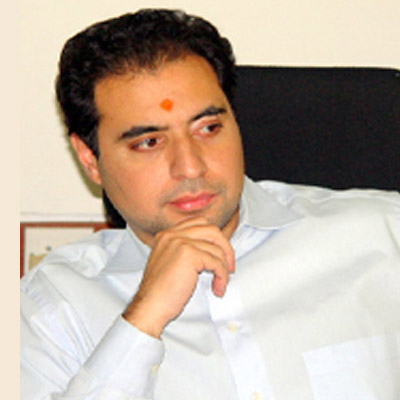
‘Sponsorship rates have reduced by 20 per cent’ : Mohit Burman – Kings XI Punjab co-owner
Kings XI Punjab, the Mohali team for Indian Premier League (IPL), was bought for $76 million by Bombay Dyeing deputy MD Ness Wadia, actress Preity Zinta, Dabur India director Mohit Burman and Apeejay Surrendra Group chairman Karan Paul.
The four shareholders together formed KPH Dream Cricket Private Limited, the holding company of Kings XI Punjab.
Kings XI Punjab is eyeing sponsorship revenues while cutting down on marketing expenses.
In an interview with Anushree Bhattacharyya, Burman talks about how the economic downturn is going to upset the revenue targets of the team franchisees.
Excerpts:
Since Kings XI Punjab did not go for three-year sponsorship deals, how difficult has it been to retain them for the second IPL edition?
Spice Telecom is very much on board as our title sponsor. We are in the final stage of negotiations with Coca-Cola as our pouring partner. Kotak, Provogue and 9X, however, are not there this time.As for new deals this year, we have signed up with United Spirits while Reebok is our apparel sponsor. We will be closing two more deals in the next four to five days. Overall, we are looking at signing eight to nine sponsors this year.
Has the downturn in the economy forced sponsorship rates to fall?
The whole world has changed and overall sponsorship rates have reduced by 20 per cent. We thought we were better off than those team franchisees who had gone in for three-year sponsorship deals. We felt we would be able to command higher sponsorship rates after the build-up from the first IPL tournament. But amid the economic downturn, the teams who signed three-year deals seem to be the smarter ones.Does this mean that the revenue targets have gone awry?
Since the tournament went off on a high note last year, we were under the impression that we would break even this year. However, looking at the present situation, I don’t think that franchisees will be able to break even before 2012. Most franchisees will not be able to make a profit this year, although the tournament will continue to be a success.The fact that the IPL is held after a long gap doesn’t help matters. Globally, leagues are played for eight to nine months with a short break, providing sponsors a continuous flow of events.
Where do you see most of your revenues coming from?
We hope to make more from our sponsorships, ticket sales and merchandising. This should account for over 60 per cent of our total revenues this year, unlike in the inaugural edition where the maximum came from the central pool. We also hope to get our act right on the ticketing sales front this year.Do you plan to decrease the ticket prices to pack more audiences into the stadium?
We already have a pricing strategy. The ticket prices range between Rs 150 to Rs 6000, addressing different segments of audiences. But this year we are going to be very strict in terms of ensuring that people who wish to watch the matches do pay for the tickets.Have you lined up your licensing and merchandising strategies?
For apparel licensing, we have already tied up with Reebok. We will be soon announcing our partner for making accessories like key chain, mugs, etc.Have you trimmed your marketing expense this year?
We are bringing down our marketing cost to Rs 35 million, from Rs 50 million last year. The initial costs in building up a brand are obviously higher. For example, we made a video with Daler Mehndi last year – and that obviously increased our marketing budget. We don’t see such a requirement for making another video this year.‘Since the tournament went off on a high note last year, we were under the impression that we would break even this year. However, looking at the present situation, I don’t think that franchisees will be able to break even before 2012‘What role will Preity Zinta play to promote the franchisee this year?
We have already started our marketing initiatives through the King XI Punjab Cup. We had also sponsored the Manali winter festival in Punjab. This year we will be concentrating more on ground level activities in our catchment areas.Preity Zinta is one of the owners and she is welcome to play whatever role she desires. She has already contributed a lot last year and as the tournament gets closer, I am sure she will help us in our marketing activities.
What was the idea behind organising the Kings XI Punjab Cup?
The idea is to reach out to the people of our catchment areas which include Himachal Pradesh, Punjab, Jammu and Kashmir, etc. At the same time, we want to promote the game of cricket at the grass root level. Since we have a coach and some of the best players from the world, we want to nurture young talent.A few franchises have partnered with TV channels in search of cheer leaders. What are your plans?
We have got plans, but at this moment we are really concentrating on ground activities. Our idea is that instead of doing national hoity-toity shows on TV, we should concentrate on building the brand in our own locality. We believe that if we really want to make our franchise work, then we need to get closer to our fans and get them more involved with the team.Are you looking at beginning a cricket academy as Ness Wadia said that the franchisee job is to acquire and groom new players?
We are setting up an academy and for that we have already got an academy coach. We should be able to roll out the academy a few weeks before the tournament.Will Brett Lee’s injury affect your team’s performance?
I believe Lee will be fit to play for the tournament. We have, however, crafted a team keeping in mind the fact that Lee may not be able to play. Which is why we added West Indian pacer Jerome Taylor and Ravi Bopara.You got England’s Ravi Bopara for $450,000, three times his starting price of $150,000. Would you call this an intelligent investment, looking at the present market scenario?
Kolkata Knight Riders bought Mortaza at a very high rate. So was that an intelligent investment? Every team has to decide on their player investments, keeping many things in mind. While it is true that Bopara was expensive, it is a fact that we needed an all-rounder. And there were two other franchisees who were bidding for him. I believe Bopara would have gone for higher if other franchisees had not run out of money.With the dates of the Lok Sabha polls coinciding with some of the IPL matches, how would franchisees be impacted if venues were changed?
The IPL committee had asked the franchisees to create a back-up plan. Franchisees have an option to play in one or two grounds in the nearby areas. Rescheduling, thus, will not affect the plans of the franchisees. -

‘Our focus in 2009 will be to maintain profitability and not get into adventurous ventures’ : Bharat Ranga – Zee Entertainment Enterprises Ltd. COO international operations
A sliding global economy has turned up the heat on the international businesses of the Hindi content broadcasters.
In 2008, Zee group stretched its wings in Russia while deepening its presence through the launch of Veria (the natural wellness channel is part of the Essel Group initiative) and Aflam (a Hindi movie channel with subtitles in Arabic) in the US and the Middle East respectively. Riding on a bull market, the group also launched a radio business in the UK.
The 2009 landscape will be far different, more punitive, and starkly grim. Delinquent ventures will be avoided and risky bets put on hold.
Zee Sports, thus, will not travel to other countries as the RoI (return on investments) just does not work out. In the US, it was launched as Zee Sports America because a partnership was hatched with EchoStar.
Zee Entertainment Enterprises Ltd (Zeel) will make efforts to guard turf in its two main markets – UK and the US – which make up 70 per cent of its total international revenues.
With around one-fourth of its revenues coming from its international business, Zeel’s drive will be to maximise revenue opportunities from each market.
In an interview with Indiantelevision.com’s Sibabrata Das, Zeel COO international operations Bharat Ranga talks about the need to value content appropriately, keep away from reckless expansion, and be tough on costs.
Excerpts:
Zee took several initatives to expand its global presence in 2008 like tapping the Russian market and launching channels in the Middle East and the US. Will the global downturn force a more conservative strategy in 2009?
Our focus in 2009 will be to maintain our profitability and not get into adventurous ventures. In these uncertain times, it is important to maintain stability. It is better to hold on to your growth plans than to expand recklessly in this market. We will have to be tough on our costs without compromising the value of our product.Will there be a drive to take Zee Sports to other markets after launching the sports channel in the US?
We launched Zee Sports in the US in partnership with EchoStar. We work along with EchoStar on that brand. For launching in other markets, we feel that the RoI (return on investments) is not there at this stage.Will there be more subscriber churn and slowdown in Zee’s two main international markets, UK and the US?
The global economic turmoil is bound to have an impact on these two markets, which make up around 70 per cent of Zee’s total international revenues. But growth in the US will be faster than in UK.‘Zee treats its international biz as a SBU. The irony is that the South Asian players have not valued their content appropriately. Hence, the revenue potential remains untapped‘Why?
UK is a tougher market because not all South Asian content is pay. This is not the case in the US. We, however, are pay in the UK and have five channels in that market – Zee TV, Zee Cinema, Alpha ETC Punjabi, Zee Gujarati and Zee Muzic. We have a subscriber base of 200,000, but it is growing slower. The yield, however, is higher and we are priced at 13 pounds a month for two channels. For each additional channel, we charge 5 pounds a month.Have you priced yourself lower in the US?
No. But unlike UK, we are not retailing ourselves. We are part of EchoStar and other cable companies like Comcast and Time Warner. We enjoy a revenue share with them.One of our group initiatives to expand in that market was the launch of Veria, a natural wellness channel, last year. It is a very premium and growing segment and we are bullish about the channel’s growth. We do not have Zee Muzic in that market. Our subscriber base in Americas is close to a million.
How far has Zee progressed in cracking the Chinese wall?
We have applied for landing rights and are waiting for approval for over a year. We hope to get the permission soon. China is a very complicated market to crack and it is important to have a very clear business model in place. Many international media companies have invested billions of dollars in that market, but not gained much. We have taken a cautious approach and, meanwhile, have started a syndication buiness there. Foreign content syndication itself is tough as there are more rules stating why not to buy such content than why there is need for it. For us at Zee, China remains a romantic thought at this stage.Even Russia is considered to be a very difficult market, as Disney found out recently when it did not get the nod for taking a 49 per cent stake in a joint venture with local firm Media-One Holdings. What has been your experience so far?
Russia is a cheap pay TV and advertising market. We launched Zee Russia last year, but the channel hasn’t taken off the way we expected. It is a pay channel with Indian content dubbed in Russian. We are at a nascent stage but, like China, it is an initiative for the future.‘We launched Zee Sports in the US in partnership with EchoStar. For launching in other markets, we feel that the RoI is not there at this stage‘Zee had to rework on its strategy in the Middle East and shut down Zee Arabia. Why?
We saw an opportunity for offering our content to local audiences in the Middle East. We tasted the water with Zee Arabia launch and learnt the nuances of the mainstream market. We replaced it with Zee Aflam, a free-to-air Hindi movie channel with Arabic subtitles, last year. Our Hindi offerings – Zee TV, Zee Cinema, and a hybrid channel of Zee News and Zee Gujarati – are, however, pay in that market.Since Zee Gujarati is wrapping up after 30 April, will that offering end in the international market as well?
We have not decided if we will do away with that offering for our international audiences. We have standalone Gujarati audiences. We may have a repurposed channel by sewing up content from others. That business decision is yet to be taken.The rates of the Zee channels have stayed flat in UK at least. Has Zee lost pricing power in the international markets?
There is room for hiking subscription and advertising rates, but it is not easy in this market condition. Besides, competitors have to work together for growing the size of the market.Which means that the revenue potential is still untapped?
There are 35 million Indians residing outside India. There are also South Asians who consume Indian entertainment content. This throws up a nice business proposition. Zee is the dominant international player, with over 50 per cent market share. We reach out to 167 countries, have 200 people spread across 16 offices, and treat it as a strategic business unit (SBU). The irony of the international business is that the South Asian players have not valued their content appropriately. Hence, the revenue potential remains untapped.What is it that Zee has done right in the global arena?
We learnt from our Indian market experiences and priced ourselves appropriately in the developed markets. -

‘With the launch of the kids channel, we are ready to scale up the verticals’ : Rajiv Sangari- Spacetoon India MD & CEO
It has been a long wait outside the ring. After building up verticals in the licensing, publishing and merchandising space, Spacetoon has launched its kids channel to combat against multinationals like Turner, Walt Disney and Viacom in the tough Indian market.
A licensing and merchandising deal with Emerging Media, owner of the IPL winning team Rajasthan Royals, has put the company on a totally different pedestal. Talks are also on with a few other sporting goliaths to expand the L&M portfolio.
Spacetoon Kids TV, however, will evolve as the prime property and will guzzle over 50 per cent of the company’s Rs 1 billion investment plan.
In India, the group has floated Kids Media India (KMI), a company that will take care of the TV and licensing business. Kids Animation India is the other arm that will look after the publishing activities.
The shareholding has also been restructured with Japanese firm Animation International holding 51 per cent stake in KMI. Dubai-based Spacetoon Media Group holds the remaining with a small stake as sweat equity resting with Spacetoon India managing director and CEO Rajiv Sangari.
In an interview with Indiantelevision.com’s Anindita Sarkar, Sangari talks about the company’s growth plans across the verticals.
Excerpts:
What took you so long to launch in India?
Since the germination of the idea way back in 2004-end, we have spent a long time testing the market. As the Indian economy and the TV industry went on a zoom and prices skyrocketed, we had to rethink our strategies as we were going to occupy a niche space. With distribution, marketing and all kinds of operational spends going beserk as Hindi general entertainment channels got launched, it would have made no business sense to launch a kids channel. Frankly, it would have been a business hara-kiri. Now the prices have corrected and things are much more in control. Despite an overall bleak scenario and a tough advertising market, launching at this moment definitely makes more business sense.The shareholding for the Indian venture has changed with Japanese firm Animation International (AI) holding 51% stake in Kids Media India. Was the delay partly caused by this?
Both Spacetoon and AI have relations since the last 25 years and they have been partnering and co-operating with each other on many businesses together. Hence, changing of the hands in shareholding doesn’t have much to do with any kind of interest level subsiding or increasing. It is a strategic move by both partners of re-strategising and restructuring their operations amongst themselves. Most of the East and South East Asian operations, for example, will be monitored by AI, while most of the Western Asian, European and Eastern European operations will come directly under Spacetoon. I would term this as strategic restructuring.Spacetoon was in talks with investors to raise money. Is that plan still on?
Spacetoon was in talks with a few players and we had already determined 3-4 of them at various stages of our discussions. But most of them wanted to basically take advantage of the position of our fund raising, rather than sharing our passion. Either they wanted majority stake or at some point they wanted us to exit. This did not go with our strategy for India.Though we realise that for taking our verticals to the next level we require some support, we are equipped as of now to handle it on our own. But if we get an extra push in terms of a partner who can value our strength, experience and hard work which has gone behind making the company and the brand what it is today, we will definitely look at the possibility. India’s economy and retail can only grow and we have 360 million kids. We require a partner who thinks and aligns with us for long term.
Did you first focus on developing the licensing, publishing and merchandising platform before stepping into the kids broadcasting space?
That is the business model Spacetoon has followed in other markets. We are doing the same thing here. For over a period of 3 years now, other than TV launch, we have successfully launched our licensing, publishing and merchandising divisions and are very soon launching our own IP programmes.We are glad that we did not divest then. We have done the tough job of laying out a platform for licensing and merchandising. After the launch of the kids channel, the time has come for us to scale up the verticals.
How much is Spacetoon investing in India?
We plan to invest Rs 1 billion over three years. Out of this, about 50 per cent upwards will be consumed by the TV operations.Why did KMI decide to launch a kids channel when the genre has actually shrunk a bit last year and the revenue size at Rs 150 crore is still too small to take in so many players?
We need to realise that kids business is not driven completely by TV broadcasting. Unlike general entertainment channels, ad revenue is important but not the only source of income in the kids genre. It’s always the ancillary units like merchandising, publishing, etc. which will help it take to the next level. And TV business is a long term game.‘Kids business is not driven completely by TV broadcasting. Ad revenue is important but not the only source of income in the kids genre. It’s always the ancillary units like merchandising and publishing which will help it take to the next level‘Earlier, Spacetoon Kids TV was looking at investing Rs 250 million for carriage in delivery platforms such as cable TV networks and DTH. However, that number has been scaled down. Why?
Haven’t others too? It’s simple, the market today doesn’t allow us or anyone to do so. I hear from some sources that most of the top to small TV channels have slashed down their distribution disbursements. And, especially in kids genre, you just can’t support such a large distribution budget.The channel is still not well distributed. How are you planning to tackle this and by when do we see it more visible?
Our focus is not only to tap the Tam cities but also other markets. As of today, our estimates are that we have penetrated over 10 million homes and we expect to do over 15 million by the middle of this year. By year-end, we should be touching 25 million homes. And, don’t forget, it’s only four weeks since we launched. We realise it will take minumum 3-4 months before we start getting visible across all markets.What are the distribution deals you with stitched with the MSOs and the DTH operators?
We are in talks with the direct-to-home operators. As far as cable goes, we are available in some Hathway Cable & Datacom networks. We have also signed up other cable operators, particularly for their digital viewers. Distribution is a gradual build-up.Spacetoon Kids TV will have to jostle with seven existing channels to tap into 360 million kids in India. How do you find space in this tough market?
Each one of us has a different style, programming methodologies, and formats. Our channel will be focusing a lot on moral and social values, packaged with lots of entertainment content.What is the different positioning you are taking?
Spacetoon will divide the day into 10 planets. Unlike running half-hour episodes back to back, we will be giving the kids a mix of several things. There will be fillers which are moral based, messages, ads, packaging, promos, etc. This will ensure a different look during the whole day.Do we also get to see localised content as part of the programming mix?
We definitely are looking towards creating localised programming very soon. This will be mostly live action-based programming. There are discussions going on with various producers to this effect.What are your other marketing plans and spends for the channel?
We will be creating a touch base by tapping thousands of schools in India. We realise that if we have to tap the minds of the kids, there is no better place than their learning ground – school. We are creating a very good value-based school-contact programme, a key area where most of our energy is going to be focused in the first year.We will also be having events from April onwards in high public areas like malls.
What is the revenue Spacetoon is projecting and how does it break up in terms of the channel and other verticals?
I would not want to put across numbers now. Nobody can predict the forthcoming financials in today’s market. But our major revenue driver will be merchandising, which is in full throttle. Following that are our publishing and licensing activities. As for TV revenue, we are expecting it to start from the later part of the year. It will take us some time to penetrate the market and grab space in the minds of the kids.What are your expansion plans in terms of licensing and merchandising?
We have tapped over 69 licensees in the last 14 months. These are translating into products that will get into the market during the course of this year. We already represent some top companies in the world for licensing and there are few more coming our way in the next few months to make our portfolio more robust and meaningful.We observed that our portfolio was tilted more towards the boy category. But now with Hello Kitty and Garfield coming our way, I think we have one of the best characters in the girls genre.
What are your plans with Rajasthan Royals?
We are in hot pursuit to come out with products before the first week of April when the IPL kicks off. We have already worked out our strategies to tap the right licensees who will be able to add value to this fantastic brand on the ground level through merchandising.We have a three-year deal with Emerging Media and are targeting Rs 200 million of retail business in the first year. Since the time is very short, we are channelising all our resources towards this.
We are also in discussions with few more goliaths from other sports, especially big international clubs. We hope to stitch deals with some of them soon.
-

‘GEC space will see turmoil this year’ : Rohit Gupta – MSM president (network sales, licensing & telephony)
2 009 is expected to be a rough year for all in media. Television is no exception. With the stockmarket collapsing and balance sheets getting battered, advertisers have become cautious and the current quarter is expected to be extremely choppy. Multi Screen Media president (network sales, licensing & telephony) Rohit Gupta concedes that clients are consistently assessing the environment and signing quarterly deals as against the annual ones earlier. He, however, is confident that Sony Entertainment will ride through the stormy times on account of the strength of its network.
Indiantelevision.com’s Ashwin Pinto caught up with Gupta to find out about what lies ahead, the mood in the market, the importance of tentpole properties etc.
Excerpts:
How was 2008 for Sony in terms of revenues? What growth was managed over 2007?
It was a successful year for us. All our channels grew their revenue. Some by 25 per cent, others grew in the range of 10-15 per cent. The other success story was the IPL. We created benchmark rates for Indian cricket before the event had even started.This year is expected to be challenging with the recession. What impact will this have on Sony and the television industry?
As we move forward this year will present challenges. The key one is the meltdown. A client would cut marketing spends but television as a genre will still grow. We believe that television is the cheapest form of advertising in terms of the reach it delivers. TV gives you the best RoI and this is what clients focus on during a slowdown.Print and outdoor will take a larger hit but television will still grow. A recent report projected a 10 per cent growth which is fair. TV has been growing at 18 per cent over the last few years. While that will not happen this year, there will still be growth.
For the IPL what is the upside being looked at this time around?
We have established rates that are in line with what we had decided upon earlier. IPL will be a bigger property this year.Everybody including the franchisees have more time to prepare. Last time we just had 45 days to prepare. This year the hype will start after the auction ends. We will hold a meeting with the franchisees after 6 February to decide on the course of action to take. Also at the point of time there is no other major property on television.
So you are confident on the financial performance of Sony for the IPL despite the slowdown?
Yes! What happens during a slowdown is that the clients’ ability to take risks decreases. IPL is a proven property. There is no risk in being associated with it. People will put money on ‘sure’ properties. The IPL is one of them. Last time the IPL had an 80 per cent reach on Max.Have deals been closed?
Yes! However I cannot divulge any details. Some deals are for both the IPL and the New Zealand series that comes before it. We do not have category exclusivity this time around for spot buys.This allows us to access more brands. Last time the IPL was not tested. Exclusivity was an incentive that we had to concede. By not giving exclusivity we will ensure that multiple brands can co-exist.
But won’t it be a challenge to get many brands on-board in a difficult climate?
You have to understand that cricket’s cost rating per rating point (CPRPs) are still holding up. The reach of the channel is key. Max does not have this issue. So we are confident of getting the desired rates.I don’t think that the rates are a problem. The challenge will lie in the outlay that a client puts on IPL. So this time around we will have smaller packages. The number of clients taking spot buys will go up. One does not have to buy all 59 games. A company can buy for ten games at a stretch. There is flexibility.
Has the revenue split within the group changed over the last couple of years?
I cannot give any numbers. However our dependence on the large channels is not that high. AXN and Pix are growing substantially. Max is now a very big channel in our network.What is the clients mood like in general?
They are more cautious. They are adopting a quarter by quarter approach. They are not signing large deals for a year which used to be the case. For this quarter ending March, clients are being extra cautious. Companies want to show better results with this being the last quarter. So it will be tough.The key is to have tentpole properties that can be sold. You need to have a distinctive niche in the market. Clients want more accountability. As a broadcaster you need to be responsive and understand clients’ needs. You have to make sure that the client gets value back. Everything is not necessarily about a rate. The question lies in the effectiveness of the media buy.
Apart from IPL what are the other tentpole properties coming up for the group?
In March we are launching Operation Dikhla Jaye on Sony. This will be a directors cut where four of Bollywood’s top directors will produce shows for us. It will be a 13 week initiative and will be the first time that anybody has tried it in India. These are one hour shows. We have roped in directors like Madhur Bhandarkar, Mahesh Manjrekar, Vikram Bhatt. Then the IPL starts. Post that we will have re-launches of our big shows.In the GEC space are the new arrivals having any impact? Is the ad pie growing or merely getting sliced further?
There has been growth overall. But this year since growth will be restricted there will be some slicing of the pie. The GEC space will see turmoil this year. New players will come in and others will go away. GEC costs are huge and it is a question of who will survive. The like of Star, Sony, Zee will always be around come what may.New channels will come. They may be on top for a while but the fact is that nobody is on top all the time. Clients also look at networks as opposed to channels per se. They want networks which are strong enough to withstand pressure. They want networks that have the sustaining power to ride over the tough times. Besides that you need big properties which ensure that clients look at you differently.
Each of our channels is in the top four in their respective genre. Sab is number one in the second level GEC tier. Sony has managed to hold on to its share more or less. Other channels have experienced a bigger fall in the GEC space. We may not have many channels but what we have done is to focus on building them.
How has Sony built up its client relationship management efforts over the years?
Our focus has always been on giving value back to the client. We were the first to start a client servicing team four years ago. Then other channels started doing this. We work closely with brands to integrate them into our properties. This is how we add value that goes beyond just 10 second spots. Therefore even though there are days when ratings have not been what they should be the clients have supported us. The relationship with clients makes a big difference in terms of your ability to raise rates.Which categories will be affected in terms of TV advertising due to the slowdown?
If you look at it the categories most affected by the meltdown which are real estate and retail these are not big on television. Finance was not as big on television compared with other mediums. Auto companies are shifting budgets from print to television.Coming back to the cricket front the New Zealand tour is the first time that Sony will air bilateral cricket. How is this event being positioned for viewers and clients?
This is a full blown tour. India has not visited New Zealand since 2002. We lost very badly then and so this is a big challenge. There will be anticipation. In fact this is the Indian team’s biggest challenge after playing Australia twice recently.But isn’t the timing an issue as the telecast of the matches is very early in the morning?
The timings are good for the T20 Games which start at 11 in the morning. The ODIs start at around 6:30 in the morning. Test matches start earlier but they are not a big revenue contributor compared with the other two formats.How many sponsors are being looked at?
We have clients who are interested in both the New Zealand series and IPL. That would give them visibility from Feb till June. So we are doing special deals for them. Generally we look at six to eight sponsors.Are you also looking at doing long term deals with clients for IPL?
No! We believe that the IPL which is a big opportunity is better served through yearly deals. You have the option to re-look at things.IPL broadened the viewer base. Has the client base also grown for cricket as a result?
Yes! Godrej an FMCG company came on board. They do not associate themselves with cricket. Max New York Life came on board. It worked well for them. It was not the traditional clients that came on board. This year also you can expect to see some surprise companies coming on board. IPL after all changed the way TV viewership happens. It is not just the male TG that tunes in.Will the IPL be simulcast?
No! It will only be on Max. We did that with the Cricket World Cup in 2007 where some matches also aired on Sab. However viewership got disrupted and the channel loses share. Then it is difficult to get viewers back.When HBO left there was a gap created. Is Pix now starting to fill this gap?
Pix has made a lot of progress over the last couple of years. Pix started when there were already established players. Now it is competing. In some weeks it beats HBO. Advertisers have followed this. Pix is making investments in terms of acquisitions. The aim over the next couple of years is that in terms of ad revenues it can reach the level of HBO and Star Movies.It is pitched as a premium movie channel. It delivers in the 25+ SEC A, B category which is what a lot of marketers target. All the large brands are on it.
How come Pix decided to air soccer with the FA Cup?
The audience for it is similar. It is SEC A,B. We decided to offer viewers something new and extra. Matches air on the weekends and so the movie schedule is not disrupted.The other two major distribution bouquets have two English movie channels – a mass one and a niche one. Isn’t Sony at a disadvantage here with just one channel that does not have the latest offerings?
It does not affect the advertising side. Channels like MGM (which is in the Star Den bouquet) do not carry ads anyway and it is dependent more on a subscription kind of revenue stream.What is the roadmap forward for AXN?
AXN is doing well and has been growing at 25 per cent CAGR. You will continue to see local content. You will shortly see the AXN Action Awards. Each year you will have three shows produced in India.Does cost control become important in this environment though?
This is an area we always look at. It is something that we are always conscious of and it is not as if this area has suddenly assumed importance. For us it is business as usual. One has to see the returns more carefully though.On the licensing front how has business grown over the past year?
This was small four years back. However we participate more actively in trade fairs like Mipcom and we showcase more content in the form of formats there. Our shows are sold in European markets, the US. We took all our formats to Mipcom. along with other shows like Filmfare, Stardust Awards. The other aspect is the Hindi movie licensing business. We syndicate them wherever we have rights.Finally we are seeing channels advertise on rivals. What is Sony’s policy?
We do not advertise on competitors nor do we accept ads from them. We accept ads from kids channels, news channels as we do not operate in that space. But you will never see us air ads from a movie channel belonging to a rival network. We are not desperate for revenue.