|
World Wrestling Entertainment (WWE) has emerged as one of the strongest TV brands in India, providing sports broadcaster Ten Sports a daily diet of popular content.
While US stays as its main revenue earner, WWE’s international revenues make up 26 per cent, or $135 million, of its total pie. UK, Australia and France are its top three markets in terms of size, but the fan base in India is growing. So is WWE’s efforts to market the property as it recently brought down one of its Superstars Kane for a promotional visit to Mumbai and Delhi.
Despite the enormous proliferation of content in the market, WWE is a significant force within the entertainment and pop culture.
In an interview with Indiantelevision.com’s Ashwin Pinto, WWE president, International Andrew Whitaker unveils the company’s growth plans in global markets.
Excerpts: |
|
|
Why do you think WWE is so effective in connecting with audiences globally? |
|
|
In terms of revenue and business generated, how much comes from outside the US? |
|
|
Where does India fit in? |
|
|
Ten Sports recently started airing WWE content in the same week as the US. Is this practice followed by most broadcasters globally? |
|
|
Do you have a special relationship with Ten Sports? |
|
|
|
|
The last time the WWE had a full tour here was back in 2002. How come there has not been more activity in this regard?
Outside of the US, we deliver around 80 live events per year. While we do not have any confirmed tour dates for India at the moment, we hope to return in the near future. |
|
|
Has the number of tours in Asia gone up over the last couple of years? |
|
|
Which of your four divisions has grown the most over the past year? |
|
|
What increase has there been in revenues derived from television licensing fees over the last five years? |
|
|
Are you looking at other areas like licensing and merchandising to grow the WWE brand in India? |
|
|
WWE reported a drop in the first quarter revenues. By when do you expect to see a turn around?
By comparison, WrestleMania XXIV in 2008 occurred on 31 March and was included as part of our first quarter results that same year, contributing approximately $31.3 million in revenues and 7.1 million in profit from across our various business lines.
All in all, despite a challenging economy, WWE stock actually outperformed other entertainment companies on both stock price performance and total return basis for the first quarter of 2009. WWE was actually up 4.2 per cent on a stock price basis versus the likes of CBS, Dream Works and Walt Disney Company, who were all down. |
|
|
With the economic slowdown, how is WWE looking to manage costs more efficiently? |
|
|
Could you shed light on how the WWE is using new media?
This makes us a larger site than those of professional sports leagues, such as the NFL and Major League Baseball, and in 2008 WWE was the second most searched term on Yahoo! after Britney Spears.
We have also launched localised websites in a number of international markets including Spain, Italy, Portugal and, of course, India. In India, WWE has partnered with Sify to deliver a local Indian website. WWE content is also available to fans via on and off portal mobile platforms across the globe. |
|
|
In terms of getting in fans at on ground events and driving pay-per-view buys, who are your top three performers at the moment?
The great thing about WWE Superstars and Divas is that they each hold a different appeal for different fans. While one fan will follow Rey Mysterio or John Cena, another will be a Jeff Hardy supporter. WWE offers something for everyone and that diversity comes to life at live events just by observing the amount of different WWE Superstar signs that are being held and merchandise worn by the fans. |
|
|
What have the learnings been from making movies through WWE Studios?
The success proves that there is an immense appetite from our fans to see their favourite WWE Superstars undertaking movie roles for their enjoyment, either in cinemas or on DVD. It has also highlighted some exceptional talent among several WWE Superstars for applying their acting skills to the big screen. |
|
|
How do you view competition like TNA which airs on another sports channel?
However, WWE is a significant force within entertainment and pop culture. Within our specific entertainment genre, we clearly are the industry leader. While TNA is pro-wrestling, WWE is entertainment. |
Tag: indiantelevision.com
-
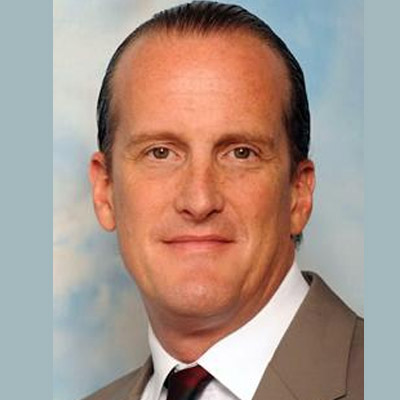
‘India is fast becoming one of WWE’s most important international markets’ : Andrew Whitaker- WWE president, International
-
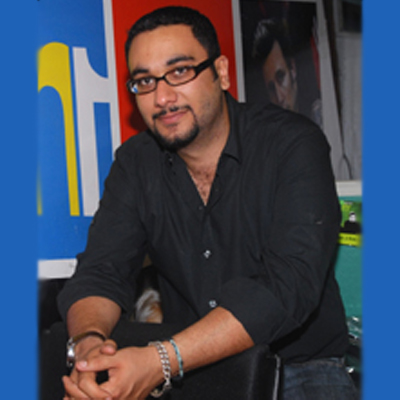
‘We are getting into the broader international entertainment space’ : Ferzad Palia – Vh1 India associate GM
In May, Viacom18’s international music and lifestyle channel Vh1 started the makeover process. Repositioned as an international entertainment channel, it ushered in new shows and introduced a new tag line ‘Vh1 – Get with it’.
Vh1 will, thus, stand on three legs – music, shows, and fashion and lifestyle. Music, however, will still constitute 50 per cent of the programming mix.
In an interview with Indiantelevision.com’s Ashwin Pinto, Vh1 India associate GM Ferzad Palia says 25 shows will be launched during the fiscal and the new-look image will result in a 100 per cent revenue growth.
Excerpts:
What factors prompted the rebranding of Vh1 to an English GEC?
We launched in 2005 when there was a need to fill the gap for international music. Music channels had all gone desi and mass. Vh1 came in as a flanker and a need gap fulfiller for lifestyle and international music. It has now been four years and we have achieved our targets. We have repopularised international music. We have also ensured that good international acts come into the country.In 2008 we did research as we felt there was a new need gap. The lifestyle shows on our channel like Pimp My Ride were popular. The audience felt that we were taking the lead towards differentiated international entertainment. This buoyed us into getting into the broader international entertainment space.
Music still constitutes 50 per cent of our mix. But now we are also going towards international entertainment with a renewed vigour.
What about content repositioning?
The channel has a new look and feel to it. Our tagline is ‘Get with it’ and is demonstrative of our brand, personality and content that is new and cutting edge. We bring in trends from across the world. We have launched four reality shows in the Monday-Thursday 11 pm slot. We also launched an animation show, South Park. The good news is that these shows cut across our TG.Our focus for the next few weeks will be to launch content that allows people to gather information on entertainment on a real-time basis. We will look at new gadgets, gizmos, Formula One and Hollywood.
Vh1 currently stands on three legs – music, shows, and fashion and lifestyle.
What is the brand philosophy of Vh1?
Vh1 is a combination of entertainment and edutainment. The brand is young and vibrant. The tagline, ‘Get with it,’ expresses that.What value is Vh1 looking to bring to the English general entertainment landscape?
While other general English entertainment channels run similar shows, our product mix is different and daring. Nobody has taken the lead on international music. Going forward, you will see that Vh1 will cover the fashion and lifestyle segment the most.I don’t think that we fit into the English GEC space per se. Our focus is on international entertainment and it covers different formats.
Who is your TG?
Our TG is 15-45 SEC A,B. Most of our viewership comes from the southern metros. The interesting thing is that the mature audience from 25-45 watches us as much as the youngsters do due to the variety in our offerings.Our audience is 60 per cent male. We talk to different audiences at different time bands. Youngsters watch us in the morning, early in the evening and also after 11 pm which is when we air reality shows. The mature audience tune in at around 9 pm and, to an extent, early in the morning. While we do Hip Hop hustle for the youth, we also have Vh1 Jazz Masters for the older and more discerning viewer. Our analysis tells us that our audience watches news to get information – and then for entertainment they tune in to Vh1.
‘We have 110 advertisers on board. We expect 100 per cent revenue growth for the year‘Could you talk about the shows that allow Vh1 to be differentiated and daring?
Pimp My Ride is about taking a thrashed automobile and making it a wow machine. The audiences took note of us with this show. Then our positioning got accentuated with a show called Yo Ma Ma (it is about kids trash talking each other). This concept had never entered India. This was a big point. All our shows have had some sort of twist. Punked with Ashton Kutcher gave birth to MTV Bakra. The difference is that Kutcher punks his celebrity friends. We launched Saturday Night Live.We will launch 25 shows this fiscal.
What are the plans for the weekend?
Sunday Brunch with Jim Morisson will return. This airs rare, unseen footage about an artist. We are launching a party block from 10:30 pm-2 am on Saturday and Sunday. We also air stacks of episodes of shows like South Park on the weekend for people who might have missed out on episodes over the week. At the same time we are conscious of not repeating our content too much.You had mentioned giving people the latest news on fashion and Hollywood. How would this work?
Content will be filmed and shown weekly. So we will launch a weekly show on Hollywood called The Scene over the next 10 days. We have a daily show at 10 pm from Monday to Friday, Daily 10, which is about the 10 top things that have happened in the world of entertainment. It is slightly gossipy in nature. Then there is The Fabulous Life which is one of our flagship shows. It takes you into the lives of the rich and famous celebrities. We also have a show that profiles what happens each week in the world of fashion. Another show BG Racing on Track is about Formula One. It tells you what happened in the previous race and also goes behind the scenes with the drivers and sees what they are doing and where they are partying.What marketing activities is Vh1 doing to spread awareness among viewers and advertisers about the repositioning?
We have done a high decibel outdoor campaign. We used radio. We tied up with about 50 gyms and salons across the country. We use this as an activation platform. We are also on Facebook and Yahoo.Are you looking at creating local versions of any of your international shows?
Yes! However we will be very selective in what we do or else there will no difference between us and competition. We are in the process of finalising a few concepts. A Pimp My Ride India is a distinct possibility.Then we will be doing an initiative called India Rules later this year. Here we will take Indian Acts abroad and give them an international platform. For us , it is a reverse migration and cross pollination of ideas.
We have a lot of local talent but there is no platform to allow it to go to the next level. We feel that it is our responsibility to give them a platform. This I would like to clarify will not be a hunt for a rock band. Anybody with musical talent can approach us. Our message is that the world is waiting for you.
What are Vh1’s plans on the events and digital space?
We constantly do on-ground experiential events. We bring down international artists often. We are now looking at the consumer product space. A lot of brands have evinced interest in associating with Vh1 as there is synergy. We are looking at like minded brands. They have to be premium and have a certain amount of audience respect. Categories could be telecom, handsets, apparel, footwear. The tie ups will be in the nature of products and services.We will also make a big play on the digital space. It could involve packaging content for the mobile and the Internet.
Do you see the brand tie up business growing to become a significant source of revenue, apart from advertising?
It will eventually be a big source of revenue. At this point of time, our objective is to build the brand.How is the channel being pitched to advertisers?
It is being pitched as a unique content channel. The way we integrate brands sets us apart. These days you have to work harder for every rupee. Nokia has an express music phone. We created a show Nokia Vh1 Playlist. Viewers decide what plays here; they send us their playlists. Nokia’s brand proposition is touch, play, share. On Nokia’s site you can see the playlist. When we play the song, your mug shot comes along with a few lines like why you like Bryan Adams’ song Summer of 69. You could dedicate it to your girlfriend.We started it last year as a weekly and now as it worked, we have made it a daily show. With Airtel we have an initiative Hello tunes Made Easy.
How many clients do you have?
We have 110 advertisers on board. We expect 100 per cent revenue growth for the year. The client list is diverse from a 50 paise candy to a Rs 500,000 jewelry set. We have not been affected by the slowdown to the extent that we had originally feared. -

ET Now launches on 22 June
MUMBAI: ET Now, the English business news channel from Times Global Broadcasting Pvt ltd (TGBPL), will officially launch on 22 June.
The channel, which witnessed soft launch on 17 June, has already signed up with major multi-system operators (MSOs) for distribution on their cable networks.
TGBPL CEO Chintamani Rao confirmed the news to Indiantelevision.com and said that the distribution is in place. However, he refused to divulge more details ahead of the launch.
ET Now will be pumping in Rs 400-500 million as carriage fee, according to multiple sources in the cable industry. The channel has signed up with MSOs such as Hathway Cable & Datacom, Incablenet and Den.
“In networks where Times Now is negotiating for renewals, ET Now is yet to sign carriage deals. In Mumbai and Delhi, ET Now is looking for a place close to rival channel CNBC-TV18,” the CEO of a leading MSO told Indiantelevision.com.
Another industry source said that ET Now would be spending for carriage on DTH unlike most of the other news channels who had launched earlier. “Leading DTH operators Tata Sky and Dish TV are asking for carriage,” he added.
Indiantelevision.com had reported first that ET Now would be launching in the June quarter.
-

‘All IPL teams should be able to break even by 2011’ : Hiren Pandit – GroupM ESP managing partner
The Indian Premier League (IPL) promises huge space for revenue growth. The team franchises will have to focus on building the brand consistently, project a healthy personality and take the sponsorship value to a different level.
It is not wise to draw sponsors just on the back of winning and losing. Performance is a factor, but it is not the only thing.
In an interview with Indiantelevision.com’s Ashwin Pinto, GroupM ESP managing partner Hiren Pandit says there is value in T20, but warns that it should not be at the cost of the other formats.
Excerpts:
How have the franchises fared financially in the second edition of the IPL?
Our assumption is that there are two who have not made a profit – Deccan Chargers (Hyderabad) and Royal Challengers (Bangalore). They had their own brands on their T-shirts, which could be looked at as an investment rather than a loss. The others have broken even at the operational level. This was due to the rise in television rights fees. The question is whether they have wiped out the losses of last year. I expect everybody to break even by 2011.In terms of sponsorship revenues between the team and central revenues, the IPL got Rs 3 billion. Last year it would not have been more than Rs 2.5 billion. Kolkata Knight Riders (KKR), Chennai Super Kings (CSK) and Delhi Daredevils have got the most in terms of local sponsorships, followed by Mumbai Indians, Kings XI Punjab Rajasthan Royals (RR).
And what about sponsorships?
CSK and KKR did a particularly good job. But you would have a team like Royal Challengers (RC) which is not interested in outside sponsorships. That franchisee put its own brands on display.How about defending champions Rajasthan Royals?
RR has broken even because their payout to the BCCI is much less as compared to the others. They only shell out $6.5 million each year. Having said that, I am not so sure that finishing number one necessarily translates into higher sponsorship revenue.
Then what matters?
You need to look at what a team stands for. Is its branding consistent? Does it show on the ground? Does the team overall project a strong and a healthy personality? Are there characteristics in the team that can take sponsorship value to a different level?If an IPL team draws sponsors on the back of winning and losing, then you have a problem. Performance is a factor, but it can’t be the only thing.
While KKR did well in terms of getting in sponsors, somewhere down the line they or the brands associated with it made the mistake of going down the performance route. That is a dangerous platform to walk on. The amount of bad press it got did not help the franchisee nor the brands that were associated with it.
On the other side, Idea did an outstanding job with the Mumbai Indians. Their activation platform was brilliant and had nothing to do with winning or losing. It gave fans the opportunity to aspire to talk with their favourite players. Even though Mumbai Indians lost on the field, the aspirational value is still there.
What was Group M’s role in this IPL?
We did a few deals with some clients for having their logos appear on T-shirts. We lost out big time, though, as the IPL moved out of India. We had a smaller role to play compared with last year. We are now not involved with the Deccan Chargers.‘Revenue growth will come from local sponsorships. If you are heavily relying on the central pool, then the franchise has not built itself properly. Building up local sponsorships and fan base will be key‘Do you see yourself playing a bigger role going forward?
Yes! We have knowledge on brand activation around the IPL. We have got a good understanding of this space and the valuation process. We can give clients a fair idea of what they should pay for a logo, depending on the position they take. We are also open to associating with teams.The IPL is looking at doing another event each year abroad, possibly a smaller one. Is this the best way forward?
The aim appears to be to develop cricket in smaller, non cricket markets. Is there a window available? Are players available? These issues have to be addressed.Where does KKR go from here?
They have to relook at what they have got. They are not a bad team per se. They have a high profile owner and they need to look at the relationship between owner and team.Secondly, they had too many people like Buchanan and Ganguly trying to become high profile. The bigger you are, the harder you fall and that is what has happened.
Kolkata’s sponsorship is on the back of Shah Rukh Khan and not because of the team. They could rejig what their brand stands for – and then sponsors will come in for the team’s values. That is a call that they will have to take. What you will find is that franchisees will move away from performance as a platform for brand activation.
Going forward, the growth of revenues will come from local sponsorships – and not so much from the central pool. If you are heavily relying on the central pool, then the franchise has not built itself properly. Building up local sponsorships and fan base will be key.
How would this happen?
The IPL will move away from being just a 45-day event. Franchisees will do activities over a longer period of time to build a fan base. They would do things like promotions, interactions and meets.There is talk that with the IPL the focus is shifting away from individual player sponsors and more towards team sponsorship. Are players like Dhoni going to lose out on lucrative deals going forward?
When a team association is done, three to four players are used. Even if you are associated with CSK, you can only use Dhoni as far as IPL is concerned. This makes sense when the IPL is on or just about to start. But in December if the team endorses a brand, what will a viewer take out of it? The viewers are not stupid. If people believe that they are getting a Dhoni for free by associating with his IPL franchise, then they have a short term approach to the business.You could associate with a team to get national reach. If you associate with a player, it would be due to his characteristics. It is not necessary that the characteristics of the franchisees will be the same.
When the IPL adds more teams in 2011, what would be the likely cities?
Gujarat and UP have opportunities. You could see another team from Maharasthra – perhaps Pune or Nagpur. Kerala also has a chance if some NRI is interested. The payout could cross $200 million. But the interested party will have to work his maths out properly. Otherwise, it will be difficult to recoup your investments. The parties that shelled out the most for a franchisee the last time around are just about making it. The lower end of the payout table are more comfortable.Also keep in mind the fact that after 2010 all player contracts are up for grabs. The whole scenario will be reworked and changed. There should again be a cap on money that can be spent or there will be teams that will be far stronger than the rest. The IPL could then turn into a two or a three horse race which will take away from its appeal. Some deals, though, might be done outside the bidding. We will see more performance-related deals. Player loyalties and disloyalties will also come into the equation.
Next year England starts P20. In 2011 South Africa, Australia and New Zealand start a joint league along the lines of the IPL. How do you see this affecting international cricket?
The question is with so many leagues happening, what happens to Tests and one-dayers. Is there enough of a window for this to happen? There was a league that started in the West Indies, which subsequently got killed.Can the other leagues generate the kind of money that the IPL gets? I don’t know if Kevin Pietersen will get $1.5 million a year in those leagues.
Then you must look at it from a player’s perspective. He plays around 35 ODIs, 15 Tests, 20 T20 games a year. Does he have time to play anything else? Remember also that T20 is successful in India as it is a country sport first. Then it is a club sport.
Could we see players bypassing the international grind and just focusing on league cricket which is lucrative?
The question is whether a player wants to play cricket for a living or does he want to represent his country and make money. You cannot have somebody only focus on the T20 format. This is something that this edition of the IPL brilliantly showed.The players who did well like Kumble, Gilchrist and Hayden are seasoned campaigners who have excelled in the other formats as well. T20 is not a wham bam affair. It is about playing proper cricket. If a cricketer chooses league cricket over his country, then he might be asking for trouble. Most of the IPL players got there as they made a statement by playing for their country. Then there are youngsters who did well in the IPL and are now playing for their country. I do not think that it is a choice of one versus the other.
What impact will India’s exit in the T20 World Cup have on ESPN Star Sports?
Ratings will take a hit. Already we are seeing that clients are not getting enough of a return when India does not play.How do you see the Champions T20 League faring?
You need to let it happen once. Some players play for two teams and so will have to decide where their loyalties lie when this event starts.Would playing at night help Test cricket?
This is not a bad idea. What has happened is that T20 has had a positive impact on the other formats. The run scoring in Test matches is quicker which is forcing results. This is desirable. Each format lives off the other in some form or the other.There will be lots of T20 cricket happening. Are you concerned that the overdose might kill the format?
It could lose its flavour. You cannot have too much of one format. There is value in T20, but it should not be at the cost of the other formats.What challenges does the economic downturn pose for Group M ESP?
We need to work harder. We need to give more value to clients. It is a partnership in good times and bad. We need to find better opportunities for clients but it is not as though we need to think differently.What progress has Group M ESP made in the celebrity endorsement and management space?
We have moved away from this. Keeping in mind the Indian mindset towards celebrities, we did not believe that it was a scalable model. We focus, among other areas, on branded content in film and television. The strike affected us but hopefully the films have only been shifted and not cancelled. We have done regional tie ups with brands. -

‘We are looking at localising further’ : Sunder Aaron – Pix business head
Pix is lapping up new movies to shed its image of being an English movie channel that showcases only classic films. Its most prize catch: Oscar-winning movie Slumdog Millionaire.
The channel from the Multi Screen Media stable, which is up against stalwarts like HBO and Star Movies, has been able to draw in a slightly younger audience base while having a wider age appeal.
Pix has also been flirting with sports properties to bring more sampling into the channel. It has been showcasing the FA Cup to grow its reach while trying to connect with brands to be constantly visible in the viewer’s eye.
In an interview with Indiantelevision.com’s Ashwin Pinto, Pix business head Sunder Aaron talks about the channel’s focus in content acquisition and its growth plans.
Excerpts:
How would you describe the progress that Pix has made since launching three years back?
We have evolved over time in terms of the schedule. In the beginning, we had mainly library films. Today while library films are shown, we air current films as well. While we are not the number one English movie channel at this stage, we are in the top three.How is the channel perceived in the market?
We frequently do dipsticks and studies from time to time to find out what is the perception of the channel. Data shows that we are skewed towards a younger audience. When we launched, we were viewed by an older TG 25+. Today, our TG is 18-44 years.Earlier, the perception was that Pix shows all classic movies. That has changed with us bringing in current films like Honeydripper, I’m Not There and Slumdog Millionaire.
Pix has focussed on building up a current crop of films this year. What strategy has been followed in this regard?
We focussed on bringing in current films without losing the premise of showing very good films. We have to remember that just because a film is new, it doesn’t necessarily make it good. Acquiring new films has helped boost our reach and increase sampling.Slumdog Millionaire is our biggest acquisition and this airs on 27 June. This kind of acquisition sends a positive signal to the market. We will also air a film called Push.
Is variety a factor in acquiring titles?
While variety is important, we find that the action and thriller genres fare the best. We buy from independent producers and distributors; we also source some content from the studios. Studios are already selling to HBO and Star Movies. While this is a handicap, we are able to find other suppliers and also do studio deals. This year we acquired films from NDTV, PVR, MGM, Icon, Pathe, SPTI and AMG.Our first and foremost aim is to find films that have good stories. We also focus on getting films with recognisable stars. Our aim is to improve the ratio of current films that we air.
In terms of pricing, what is the scene as far as English films are concerned?
With the economic slowdown, the entire industry has had to change their budgets. We are a smaller and specialised category. While pricing has not changed much, suppliers abroad are closing deals at lower prices just because they understand that channels might not be as successful as they once were due to the current economic situation.‘Acquiring new films has helped boost our reach. Slumdog Millionaire is our biggest acquisition. This kind of acquisition sends a positive signal to the market‘Has Pix been able to improve its viewership performance during the last six months?
We are looking to solidify our primetime slots as well as the afternoon bands over the weekend.During the IPL we adjusted our schedule so that we could catch the audience after they finished watching a match. This has done well for us. In some weeks, we could catch up with HBO and even beat Star Movies in Kolkata or Mumbai. But we need to be more consistent.
Are you refreshing the look and feel of the channel?
We are looking at refreshing the look of the channel. We want it to remain fresh and contemporary. We are encouraged at the response Sony Entertainment Television has received after its repackaging.Did the blackout of Bollywood films on multiplexes boost viewership of the English movie channels?
No! While viewers would have been at home, there are several viewing options. DVD sales went up.What programming innovations is Pix coming up with?
We are looking at localising further. We are examining two to three concepts that can further build our equity. We have had success with ‘Chicks on Flicks.’ Unfortunately, as not many films were released during the producers’ strike, viewership took a dip. Now that it is over, the ratings should pick up.What feedback have you received for the film review show Chicks on Flicks?
It has done well. In a lot of instances, the two hosts have not agreed with their assessment of a film. It is completely non scripted. The girls attend press screenings. They have a passion for cinema which is key in making the show work. We engage viewers by giving them references of the clips that the reviewers are talking about. Now our hosts are permanent invitees of studios who release films in India.Has Pix introduced thematic blocks to woo different audience segments?
While we have festivals, it does not pay off to have too many blocks. Then there is an inventory problem. If every Tuesday, for instance, you have a block dedicated to action, then you need to have enough movies in that genre. You could run out of content after a certain number of weeks and then start to duplicate.What could also happen is that viewers think that you only have a certain set of films to dip into. The English genre does not have much appointment viewing happening and blocks do not help in this regard. There is a lot of snacking that takes place.
So how do you build viewer loyalty?
Viewer loyalty is a challenge that all of us face, particularly film channels that are title driven. In general, you create an environment that viewers find attractive. Then you frequently deliver films that suit their taste.Would you look at dubbing and subtitling to boost reach?
No! Subtitling can distract the viewer. Many channels put incorrect subtitles illegally. They do not use the official subtitles from the supplier’s side. They may not have taken the permission of the film’s distributor to do this. If you watch some of these channels, you will see that the subtitling has been poorly done.Pix started airing soccer last year with the FA Cup. Given the escalating costs of sports rights, to what extent does it make sense for a niche channel to showcase such programming?
It makes a lot of sense. When you want to grow reach, you need to bring in special events. We have done things like concerts. The good thing about the FA Cup is that it is not soccer every week. It happens on one weekend a month. Then the timings do not disrupt our primetime schedule. Also, the TG is a fit. So we increase sampling for the channel.Are you looking at other sports events?
It has to be special enough to raise our profile. I am not actively going out there looking for sports content. We had aired a boxing bout with Oscar De La Hoya live a few months back.Should there be a block for A rated content?
It would be good if this was to come in. Frankly, it is a question the content code has to take a view on. We will have to see what the CBFC comes up with. Some other Asian markets are more relaxed in terms of what is allowed. Others like Malaysia, though, are stricter.What kind of marketing activities does Pix do to create awareness?
We do campaigns periodically around big properties. We will be pushing Slumdog Millionaire actively. We will have visibility in places like Planet M. We have also tied up with a hotel in Dubai called Atlantis. This will be in the shape of a contest and offers viewers the chance to live the life of a millionaire.The other strategy is to constantly connect with consumers. One way is to constantly spend a lot of money every month. A better way, though, is to tie up with brands.
We are looking at tying up with restaurants like a Firangi Pani or a Sports Bar. We have a tie up with DNA. We are trying to do something with The Times of India. We are also tying up with out of home screens at McDonald’s and Café Coffee Day where our promos run on a continuous basis. These will be yearly tie ups. We have a promotional deal with VH1. We are looking at one with MTV as well. To succeed we need to constantly be in the consumer’s eye.
What about tying up with studies to promote theatrical releases?
This is an area that we are increasing our focus on. This is not restricted to just what Sony Pictures is releasing on the big screen. We recently tied up with Fox for the release of Wolverine where we had clips and interviews. We also do contests around upcoming releases.The marketing, thus, is not just about films that we show. What we bring to the table when a studio wants visibility for a new theatrical release is much more than what a competing channel can offer.
How do you see new entrants like MGM affecting the scene?
The category is growing organically. Homes with television sets are growing by about 10 per cent. New channels are coming in, but the English film genre is about three channels – Star Movies, HBO and Pix. The rest of them are in a sort of jumbled up pecking order. MGM and Warner Bros, for instance, are coming in and spending money to get distributed.The question is whether they will make the necessary investments to do what it takes to become a leading player. It requires a sustained investment on all fronts – programming, marketing and distribution. I feel WB will really have to step up; their campaigns will have to be sustained across the country and not just in a couple of Metros.
What about the impact of the economic downturn on the genre?
Obviously we will have to be savvy with how we spend our marketing dollars and also our programming budget. There is at the same time a flight to quality. While advertisers reduce their budgets, the top channels in each category are the ones that are in demand the most.In a downturn you do not want to spread the money around too much. You want to go with what you know is safe.
On the ad sales front do you offer customised solutions in addition to spots?
We try to be creative at a time when clients want more added value. We have Fiama d’Wills doing a campaign in our 4 pm block on Sundays. We air films that target women in this block. We have also done stuff on the ground with clients.We recently did a ‘Hollywood Picks Your Brain’ initiative and ITC was a big sponsor. This was done across six metros and one could win prizes like ipods. We are now looking at doing a similar initiative targetted at media outlets.
-
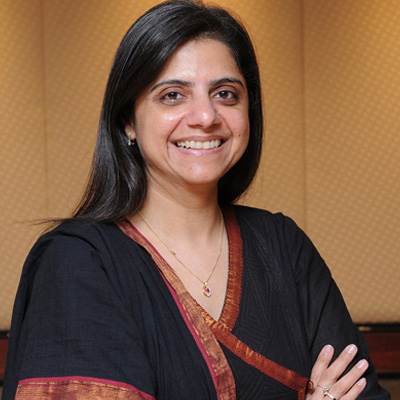
‘The kids market remains hugely under indexed’ : Nina Elavia Jaipuria – Nick India VP and GM
It has been a phenomenal journey for Nick in India. From being a channel that was residing at the bottom of the heap, the nine-year-old player has finally emerged as the leader on top in the Hindi speaking market, edging out long-standing market leader Cartoon Network.
And now, having captured the HSM space, the channel is readying to spread its wings across the southern-language market by 2009-end. The next in step is to challenge Cartoon Network which rules the all-India market.
Nick has also made its foray into local content for the Indian market with Little Krishna, acquiring the show’s TV rights for two years for the South Asian territory.
In an interview with Indiantelevision.com’s Anindita Sarkar, Nick India SVP and GM Nina Elavia Jaipuria reveals the strategies that have worked for the channel and how she plans to grow in a fiercely competitive marketplace.
Excerpts:
Nick has emerged as the number one kids channel in the Hindi speaking market. What contributed most towards this growth?
There are a couple of differentiators and unique activities that the channel has done very consistently over a period of time. The biggest differentiator for the channel has been Nicktoons – characters that have helped Nick establish space and engagement with the kids leading to an increase in the stickiness of the channel.Secondly, we have managed to take Nick beyond television, thus making it more tangible. And I think we did that very successfully with our experimental 360 degree marketing philosophy – we wanted to be in every place where children are. So we were there promoting ourselves right from schools, cinema houses, malls, cable television to comic books, van activation and general entertainment channels.
We also increased our consumer products activities – be it in the form of storyboards, storybooks, activity books, toys with Mattel, clothes with Weekender, linen with Portico, etc. And now that schools are opening, we will be soon coming out with stationary and back-to-school items.
We also intensified our engagement and connection with children through constant promotions, polls, votes, contests and festivals including father’s day, mother’s day, Raksha Bandhan, Holi and so on. We celebrated every festival that was important to kids.
Why did you choose GECs as a promotional platform?
In a one-television household, it is but natural that kids are watching Hindi GECs along with their families. So, we know that today’s kids watch a Balika Vadhu or a Star Plus or Zee TV for that matter. So we decided on this medium as we would be able to capture the entire gambit of captive audience.But don’t you think that GECs today have actually emerged as contenders to the kids channels?
If you see, even with the emergence of so many GECs, the kids’ category remained almost unaffected. This is because eventually kids come back to watch what is tailormade for them. And, no matter how hard a GEC tries, it cannot attract any child’s absolute attention. He/she at most will continue to remain only a passive viewer. GECs cater to the family as a whole and their content is not custom-made for kids unlike a kid’s category which targets only the kids.With Little Krishna you finally forayed into local animation. What took you so long to take this decision?
Well, we had been looking for something that was built on a very strong narrative so that it carried not one single hint of boredom. This is because a kid’s attention span is very limited and you have to engage them within the first ten seconds. So, our hunt went real long. And then, finally we came up with Little Krishna, in both English and Hindi, which not only has a very compelling narrative, but is also supported by seven years of extensive authentic research (without any distortion) conducted by Iscon. The show has captured Krishna in various facets and every episode is a standalone. So, you don’t have to know what has happened before or after. Also, the script is extremely strong and tight and with the quality of animation that it has, the show is sure to make it to the overseas market.What was the need for localisation?
Well, there was not really a need for localisation because as a broadcaster I want content that entertains children and also gets rid of two things – boredom and stress. Yes, I do agree that some amount of local character would surely add some local flavour. But in content, that is not at all a necessity to have. Its more about the localisation of the channel which comes with how you dub, the language you speak, and the promos that the channel lines up.‘Even though the kids segment contributes 7 per cent to the total television viewership, our revenue share is less than 2 per cent‘How has the co-viewing pattern helped the channel to grow?
Today as a channel, we have the gatekeeper’s (parents) trust. We do not carry any form of content that could be harmful to the kids. We are responsible broadcasters and because of this parents allow their kids to watch our channel. In order to spend time with their kids, they also end up spending a lot of time on the channel. Also, animation as a category is today appealing to adults. Thus, a lot of co-viewing is taking place.Are advertisers taking advantage of this trend?
Definitely! In fact, in the last one year, we have more than quadrupled our sales revenue as advertisers have found value in what Nick has to offer. We have done a lot of value addition and brand integration with all the categories that have come on board through sampling and on-ground activations. As a result, from 17 brands that we began with, we have now extended to over 75-80.Are brands confined to the kids’ category alone or is the base expanding?
Absolutely! Two years ago, our reach was 13 per cent and today it is 32 per cent. With a lot of co-viewing happening, advertisers today understand that kids’ channels are also an effective medium to reach out to their target buyers. Also, the mere pressure of pester power that kids have on their parents decisions have pulled a lot of FMCG, insurance and telecom brands on board.With recession hitting hard, what kind of impact did it have on your advertising revenues?
Look, television is the cheapest medium to reach out to the masses. For every other medium, there is an extra amount to be paid. Manufacturers understand this and they have also recognised our growth. And, thus, even during recession we have doubled our rates. Nick has performed all through and I did not want to succumb to this economic slowdown. Yes, instead of annual deals a lot of quarter deals were being cracked, but this could always be reviewed. As a broadcaster Nick did well and we surely deserved the revenues we generated.How has the backing from Viacom and Network18 helped in Nick’s growth in India?
The network has been an absolute might. If you go through our tent pole projects in the last quarter, you will see that a lot of awareness and sampling has been created through Colors, IBN7, CNBC Awaaz and MTV amongst family and children outside of the kids’ category. All of them are passive viewers and, therefore, the network has only helped us promote ourselves.How well are you distributed across the country?
We have got approximately 70-75 per cent all band connectivity wherein we are available in almost 26 million households. We are very well distributed all over the country in various town sizes. While 30 per cent of our ratings come in from metros, 35-40 per cent of the contribution comes in from the 1 million-plus cities and the remaining balance is attracted from the 1-10 million.So what are your plans going ahead?
Well, until now our focus was to get a foothold in the Hindi speaking market. And now that we have done it, our first plan is surely to continue our growth and sustain our leadership position in this space. Our next plan now is to look South, which is certain to happen by the end of this year. We will head for all the southern markets – Tamil Nadu, Kerala, Karnataka and Andhra Pradesh. We will cater to them with the same content. We will initially begin with English and then move on to the regional languages with dubbed content as we get a foothold.However, the major challenge there is going to be distribution because unlike the HSM market, we are not distributed there at all.
Is there any change in the ratio between advertising and subscription revenues?
Advertising still remains the predominant one, contributing over 60 per cent to our revenues. Distribution, meanwhile, is a constant revenue stream that you get year after year, but it’s the biggest payout as well. We have also taken baby steps in consumer products. When we started off with 2-3 products in the consumer product business, it was only a marketing tool. But now I think its time that it will start paying off. We are already available across 17 categories and will soon be launching in stationary, plush and home DVD with Excel. This year, therefore, we will see revenues flowing in from this stream as well.Why do you think that even after witnessing a growth in viewership, the kids category has not grown in terms of revenue share?
The kids market remains hugely under indexed. Even though the kids segment contributes 7 per cent to the total television viewership, our revenue share is less than 2 per cent. This is because of the baggage that the space has been carrying over the years where advertisers are used to paying to the GECs.But with a lot of co-viewing happening now along with integrated value addition to brands and the pester power of kids, I think we are ready to shed that baggage.
How has the interactive media contributed towards Nick’s growth?
Our website has about 10 per cent penetration with kids today – and this is growing. But I have to say that at the end of the day, everything feeds into one another. Therefore, it’s very essential for us to go multiplatform. -

‘We are seeing the beginnings of a global iconic brand in the IPL’ : Unni Krishnan – Brand Finance India Managing Director
The Indian Premier League (IPL) is set to revolutionise the cricketing economy, draw in a new bunch of younger audiences with the T20 format, reinforce India’s superpower status, create club cultures, and build market values that are in line with the English Premier League (EPL).
Just two years into birth, the IPL is enjoying a brand value of $311.44 million (IPL brand value of $240.72 million and IPL brand value to BCCI of $71.22 million) and an eye-popping enterprise value of $2.01 billion, according to UK-based brand valuation consultancy Brand Finance.
There is no stopping Shah Rukh Khan. Not even a dismal performance at the IPL. Kolkata Knight Riders, the team that the Bollywood star owns, leads the pack of eight with a valuation of $42.1 million. Mukesh Ambani’s Mumbai Indians walks into the crease at the second spot with a brand valuation of $41.6 million, followed by Rajasthan Royals with $39.5 million. The others in the pecking order are Chennai Super Kings ($39.4 million), Delhi Daredevils ($39.2 million), Bangalore Royal Challengers ($37.4 million), Kings XI Punjab ($36.3 million) and Deccan Chargers ($34.8 million).
The IPL and the team franchises will have to prepare for a long slog if they are to reach anywhere near the value of the EPL and its member clubs. They will have to induct professional management teams, introduce rigorous corporate structures, and chalk out strong commercial streams including merchandising and licensing.
In an interview with Indiantelevision.com’s Sibabrata Das, Brand Finance India managing director Unni Krishnan talks about the wonderful start the IPL has made, the potential it has in creating a global fan base and the things that need to be done to stretch the value of the brand and its market capitalisation.
Excerpts:
Sceptics have questioned the rationale for valuing Kolkata Knight Riders at $42.1 million. Does the performance of the team get a low weightage in comparison to the high-profile value of Shah Rukh Khan as the team owner?
The valuation process was on 2-3 months before the second edition of the IPL and, in many ways, you can’t predict the future. Having said that, enough data is available to prove that KKR has customer loyalty, a high degree of fan following, and amount of viewing for the matches that they play. Shah Rukh is able to generate an identity for the team. KKR is also able to tie in high-profile sponsors and sources of licensing and merchandising (L&M). Brand value is nothing but an ability to create fan base and convert that into cash.Even in the inaugural edition of the IPL, KKR didn’t fare too well. And in the second season, its performance has actually skid. So is there scope for a re-rating of the team franchise’s brand value?
Unlike the EPL clubs which have created a track record, the IPL is new. When we went into the exercise, the performances were just a year old. Which is why we can’t yet form a strong view of a clear winner. The valuation of the eight team franchises falls within a tight range of $42.1 million and $34.8 million.KKR is one of the clubs which has made money from the first year itself. But valuations are not chipped in stone. When we carry out our second exercise after a few months, we will weigh in certain factors like KKR’s performance, captaincy and blogger issues that could have had an impact on the commercial revenue streams and the value of the brand.
Brand Finance has valued the IPL brand at $311.44 million while fixing the enterprise value at $2.01 billion. Is there a ratio between the value of the brand and its market capitalisation?
Since the IPL is at its infant stage, the ratio between the brand and the market value is low and not clear yet. We can arrive at a benchmark after 3-4 years as the value of the brand grows. In a typical matured stage, the range varies between the 40-50 per cent ratio. The brand-to-the market value ratio in case of the EPL, for instance, should fall within this region. The brand contributes to the market value in a significant way.How come a recent study by UK-based Intangible Business and MTI Consulting has almost halved the team valuations that you have arrived at?
Valuations are based on opinions and the quality and strength of assumptions. We have conducted a rigorous exercise.Has IPL’s shift in home to South Africa for the second season created a disruption in the fan build-up process and hence a dip in valuation?
The IPL property is not under-rated because it has gone to South Africa. We are, in fact, seeing the beginnings of a global iconic brand. In the cricket-following countries like England, South Africa and Australia, it is creating a new interest among the youth, who had moved away to other sports. A whole new set of fans and audiences are being created,breaching ethnicity and race. Led by a blend of Indian and foreign players, it will take the next 4-5 years to build a global fan base for the teams, cutting across the identification of countries. We are going to see a global brand coming out of India much like the Tatas. That is the potential of the property that IPL is.But the IPL will not have a clear run in this T20 form of cricket. There are other countries like South Africa and England who are going to have their own form of IPL. Serious competition is going to come. But having said that, the foundations and start of the IPL have been a huge success. The value is just not in marketing but also with a lot of economic substance embedded into it.
‘EPL clubs have a heritage of 100 years and have moved towards corporatisation. Some of the values of these clubs are in the wide range of $100-600 million. The IPL does not have that kind of legacy or magnitude. But it has a lot of headspace for value creation‘Do the IPL teams have the potential of becoming as big as the EPL clubs?
The EPL clubs have a heritage of 100 years and have moved towards corporatisation and rigorous structures. Some of the values of these clubs are in the wide range of $100-600 million. The IPL does not have that kind of legacy or magnitude built into it yet. But it has a lot of headspace for value creation, though much depends on how an organised management process and system is being set up. We may have the teams being listed and huge value being created going forward.When do you see listing of these teams happening?
There is a lot of money and Bollywood thrown into the system called IPL. Listings can happen in the next 3-5 years after revenue streams, cost drivers and the need for professional management teams are clearly understood. Sustainable value needs to be built. Some teams may even opt for private equity.How IPL is going to impact the business of sports marketing in India?
It will be a game changing moment for sports marketing and merchandising in India. The global L&M market is $108 billion and is a significant industry on its own. Manchester United and Real Madrid have a vey strong licensing and merchandising model. India is taking its first baby steps. IPL is the medium under which these processes will come into the country. Bangalore Royal Challengers has already started focusing on sports marketing. L&M has a strong commercial role that needs to be developed, going forward. The IPL teams have appointed top legal firms to protect their IPRs. The leakages inside the system have to be plugged or you will have a case of lost opportunities.What are the steps IPL needs to take to scale up?
More teams and seasons need to be introduced. But IPL can’t consider the T20 format as its personal fiefdom because competition is already starting. We are yet to see the teams take to the professional management skills that the EPL clubs have imbibed. But the teams are on the right track.Will Test cricket be severely impacted because of the T20 format?
The Test format will be in crisis unless there is a reinvention in its game architecture. It is especially dying out among the youth in the developed countries. The T20 game has given a new lease of life to cricket. Whichever format is innovative will succeed. But T20 certainly has an edge. -

‘When you are a market leader, it’s necessary to shake things a little’ : Ashish Patil- MTV India GM and senior VP creative and content
MTV India was primarily known for music, comedy, spoofs and “Fully Faltoo” attitude. The team of Cyrus Oshirdar (creative and content), Cyrus Broucha and Cyrus Sahukar was giving its viewers a “no-tension” dose of comedy and music.
In 2007, Viacom and Network18 got together to create a joint venture. What followed was the redrawing of the roadmap for MTV. The positioning changed and music became shorter in line with its new image of being a youth entertainment channel.
The man in charge of this content revamp was Ashish Patil as he churned out shows that would stand the new look – Its My MTV. From Fully Faltoo to Kick Ass and from Bakra to Splitsvilla, MTV has scored points in segmenting, targeting and positioning for the youth.
The channel has also extended its wings in the US, New Zealand and Australia.
In an interview with Indiantelevision.com’s Gaurav Laghate, MTV India GM and senior VP creative and content Patil says that the game has just started.
Excerpts:
Is the ongoing producer-plex owner’s tussle affecting MTV as there is no new music release to lap up for content?
We have in any case reduced our music content as a strategic move. Moreover, whatever music we play is full length, which comes out after 1-2 months of release. So far we have enough of new music to run on the channel.Why are you going less on music and more on non-music content?
We have repositioned ourselves as not just a music but a music-plus-masti (fun) channel. It is a youth adda (hangout) channel now. Last year we were playing approximately 70 per cent music content, which we have reduced to 45 per cent at present. By the end of this year, we will be having only 25 per cent of music content.What was the need for this change in identity?
There was consumer as well as a business need. Research suggested that youth is looking out for much more than just music. Youth has needs ranging from style, fashion, romance, passion, thrill, and much more.And so far as the business goes, the music pie is limiting. Music as a commodity is playing everywhere; so eyeballs are limiting and revenues have hit a ceiling.
Even the market leader in the music channel genre had to change?
You have to grow the product. And it’s necessary to shake things a little or else the leader will also get stagnant. The world has gone too far and to get our core audience’s eyeballs, we have to lead the other mediums as well. Also a lot of emphasis is on packaging, looks and graphics, apart from content.So what is the new positioning of MTV?
We have created a new category for ourselves where we are no longer a niche channel. Nor are we a general entertainment channel. We are laser focused on the needs of the youth and have evolved as a mass youth channel. Many players tried to copy us, but failed as it is a very difficult path to tread.‘Music as a commodity is playing everywhere. So eyeballs are limiting and revenues have hit a ceiling‘How will you describe your TG?
Our core audience is the 18-21-year-olds. Within that demographic, it is the SEC A in the metros particularly Mumbai and Delhi. Our next target extension is viewers among the age group of 15-24 years, SEC AB 1 lakh towns, in the Hindi speaking markets. Beyond that, we look at the 12-35-year-olds (SEC AB, All India 1 Lac+ towns).This target audience is very fickle and impatient. If they don’t like something, they have multiple options to switch over to. And anything that catches youth eyeballs is competition for me. Be it malls, gizmos, movies, mobiles, ipods, internet, etc.
So that is why you are making your presence felt on internet and other space?
The intent is to take MTV to every place where the TG is. Be it web, mobile, on-ground, merchandise. It’s a circle of lead, reflect and affect – one leading to the other. I will follow my viewer everywhere. You see the kind of response we have on the Roadies community on Orkut. It has over 300,000 members now. We have tied up with PVR Cinema, Inox, T.G.I.F., cafes etc for our shows. Roadies merchandise is available in more then 20 categories. We are tapping audiences everywhere by reaching out to them.But don’t you think some of the content is not fit for small towns, or non-metros?
I don’t think that content is not fit for people in the smaller towns. Youth everywhere have same aspirations; the core of youth is the same. So my content is appreciated throughout by my TG – be it metros like Delhi, Mumbai, Bangalore or non metros like Gwalior, Indore, Chandigarh etc. Also, some of the content may be more evolved. But in such cases, I do have a simpler version on the same premise for mini metros or small towns. The idea is to have a spectrum of content for different people.Is your programming strategy confined to unlicensed thrill, living on edge and speed?
Not just that. It is, of course, one part of it. But we have other shows like On The Jobs, which talks about alternative careers; ibibo Superstar (the making of stars); Splitsvilla (intense romance); Roadies (which has a cult following now); and who can forget MTV Bakra (known for its wit). Then we have spoof movies, which are well received.So my aim is to cater to all the needs of my TG. We are now building on our franchise. Earlier I had only Roadies as a fixed offering on Saturdays at 7 pm. Now I have shifted it to Sundays and got the highest opening for Splitsvilla season 2 on Saturdays.
So you mean you are now getting appointment viewing?
Absolutely. As I said, earlier we used to launch shows on Saturdays at 7 pm band. I had a great following there, courtesy Roadies. It was a gamble when I shifted it to Sundays, but it did well for us. Now I have viewers for Saturday as well as Sunday. Also, in December, I launched Haven @ 7 on weekdays. So I am taking baby steps to get more viewer attention. I am already getting more viewership than many general entertainment channels (GECs).So what are the plans ahead?
As I said, I am taking baby steps. We have just started. From making just one Roadies two years back, we launched many new shows last year. This year, we will launch even more shows. Recently, with Force India we have launched The Fast and The Gorgeous and are coming up with Pulsar MTV Stunt Mania soon.How has the JV between Viacom and Network18 helped in MTV’s growth in India?
In many ways. It has been a fabulous ride since the JV has been formed. It is in many ways kind of a vitamin supplement. Earlier, it was MTV and Nick supporting each other and suddenly I have the strength of a full network; it’s much more than just financial support.Also, both (Viacom and Network18), as players, are front-foot batsmen. It has put our transition in the fourth gear. Our efficiency has increased and so has our brand value, distribution, marketing, headcount and infrastructure.
Have we seen MTV’s revenues grow over the last couple of years?
We have doubled the revenues during this period. We are expecting a 30 per cent growth this year.Ad sales accounts for 65 per cent of our revenues, of which 5 per cent comes from international clients. Around 15 per cent comes from affiliates, which is also increasing. 15 per cent comes from Viacom Brand Solutions (client lead stuff, events and advertiser funded programming) like The Fast and The Gorgeorus, Stunt Mania etc. The remaining 5 per cent comes from L&M and movie previews (Ghajini).
Also, we are opening up supplementary revenue streams through mobile, web, and even through ticker. Our ticker has a fan community on social networking sites and advertisers want to be there.
-
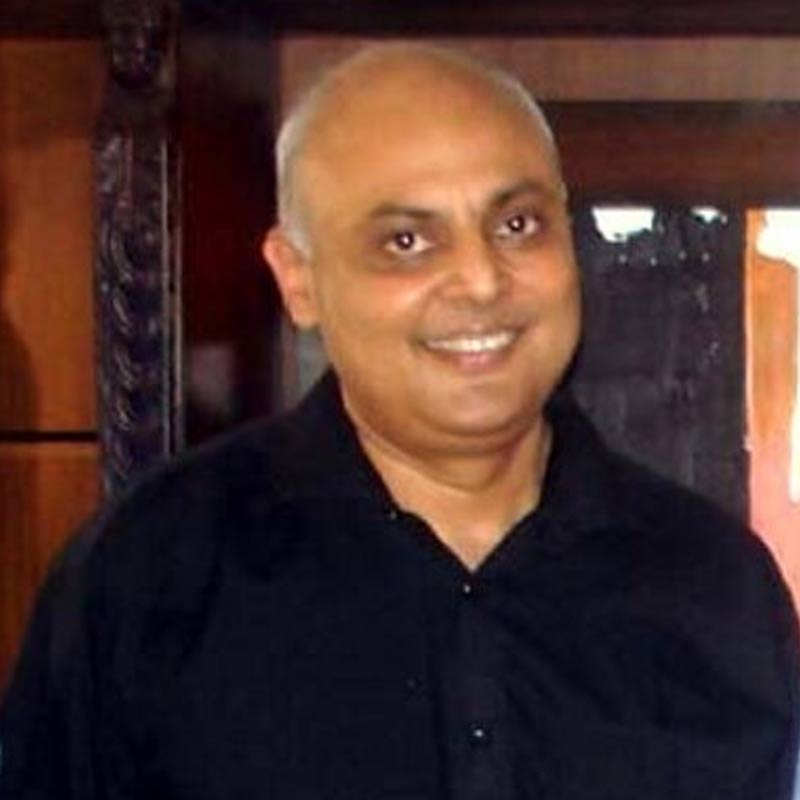
Sahara India Media CEO and Editor-in-Chief Sanjeev Srivastava quits
MUMBAI: Barely after a four-month stint at Sahara India Media, Sanjeev Srivastava has quit as CEO and Editor-in-Chief.
Srivastava had joined Sahara Group in January this year, and was heading all media-related activities of the Group.
Confirming to Indiantelevision.com, Srivastava said, “Yes I have quit today. I have a few options but have not decided as of now.”
Prior to Sahara, Srivastava was India editor at BBC. He comes with over 25 years of experience in journalism with various media organisations including the Times of India and Indian Express. Working for 16 years with the BBC, he most recently led the entire BBC Hindi output generated from India across all platforms of delivery, including FM, short wave and online.
-

‘It is better to play in the tier 1 GEC game and go out with full ammunition’ : Rajesh Kamat – Colors CEO
Viacom and Raghav Bahl-promoted Network18 are furiously working together to create an entertainment conglomerate in India. The central piece in their build-up plan is a Hindi general entertainment channel (GEC) that would support other blocks like a Hindi movie channel and a clutch of regional entertainment channels.
Colors has had a dream nine-month run, ending Star Plus’ nine-year rule to become the No. 1 GEC for two consecutive weeks. Puffed with big reality format shows and movies, the channel has made a mark with “disruptive” and “differentiated” content. Family dramas like Balika Vadhu, which are contrarian to Balaji Telefilms’ “K” soaps, have been lapped up by audiences.
Driving Colors’ growth is Rajesh Kamat, the strategist behind the big bang theory who loves to fire at his enemies from all sides. Crafting a plan built on costly but calculated bets, Kamat has shown that a direct play in the tier I GEC space is safer than a cautious, cost-conserving approach. Playing in the tier II game can extend the channel’s break even by four more years while the revenue upside for the tier I GEC is huge, he says.
No wonder Colors is eyeing a revenue of Rs 5 billion and a fourth-quarter break even this fiscal as the channel sits on a stable GRP (gross rating points) base of over 250.
Timing has been key to Kamat’s success as has been the ability to take risks. When Colors launched last year, TV audiences were already showing fatigue symptoms with an overdose of look alike, urban soaps. The movie syndication business had also caught on, allowing Colors to line up a formidable “second run” movie strategy within reasonable costs. Studio18, a sister company engaged in the movie production and distribution business, also churned out hits during the year.
Having spent his previous years at Rupert Murdoch’s Star India, Kamat has learnt the art of scaling up. He is ready to stitch advertising deals that would place Colors in the big league with revenues of over Rs 5 billion, kick in pay income, and take it to the international markets.
The distribution deal with TheOneAlliance, which has Indian Premier League (IPL) content through Max channel, will help Colors in making a smooth transition to pay. Besides, the deal guarantees the Viacom18 channels of Colors, MTV, Nick and VH1 a subscription revenue of Rs 3 billion over three years.
In an interview with Indiantelevision.com’s Sibabrata Das, Colors CEO Kamat talks about the challenges that Hindi GECs face in a ring that has three close competitors.
Excerpts:
How significant a feeling is it to end Star Plus’ nine-year rule as the No. 1 Hindi GEC and yet continue to fight weekly for the top slot?
For a challenger brand like Colors, it was important to breach the psychological barrier and feel life at the top. But we realise we are entering into a bloodbath as there would be no undisputed leader in the Hindi GEC space. From now on, it will be a weekly battle as Star Plus will not give up its nine-year rule so easily. Zee TV is also in the race. Like in the US, we are headed for a confused leadership status with dependence on spikes and seasonality.So you are still in an uncomfortable position?
Not really. We have reached a stable base of 250 GRPs (gross rating points) from our programming. And we are not banking only on Balika Vadhu, which is the biggest perception driver show for us, for our ratings. We have a basket of shows that rate over 3 TVR. With movies, we are stable in the 280-300 GRP band.There are other healthy indicators. Our reach at 73 per cent is higher than that of Star Plus. Our prime time GRPs are also higher.
Movies seem to be a divider between Star Plus and Colors at this stage. But isn’t this a fickle GRP base?
Even if we fall by half, we will have around 25 GRPs from movies. And then there will be spikes. We have created a stable base for us. The idea is to grow from this.Are you in a position now to play first run movies on your channel?
Absolutely. After establishing a base of over 250 GRPs, we are in a position to upgrade to a first run of movies on Colors as we can monetise our investments on such big premieres. Our plan is to have at least eight premieres in a year. Ghajani and Jaane Tu…Ya Jaane Na are steps in this direction.There is also the flexibility of launching the afternoon band. When will you be playing this card?
We do 22-23 hours of weekly programming as against 33-38 hours done by Star Plus and Zee TV. Our weekends are not full blown and we have the afternoon band to create. So when the need arises, we can increase original content on our channel to drive in more GRPs.We were actually tempted a couple of months back to firm up our afternoon strategy. But we decided instead to replace our weaker prime time content at 9.30 pm and 10.30 pm as they were not delivering to the potential. The rejig strategy worked for us as Naa Ana Is Desh Ladoo started delivering. Since the afternoon slots are also doing well with repeats, we can launch an assault with original shows when the need arises. That part of the arsenal we are yet to use.
‘After establishing a base of over 250 GRPs, we are in a position to upgrade to a first run of movies as we can monetise our investments. Our plan is to have at least eight premieres in a year‘Stable GRPs, movies, afernoon band yet to launch – are these the selling points to advertisers?
When we launched last year, we were clear in the head that we would only do short term ad deals and at rates we were comfortable with. The channel, in any case, was growing and we believed our product offering was worth much more. We did not want a hangover of the old deals. Come 1 April and we are operating on effective rates which is clearly off old deals. It’s a free run this year and we have stitched new deals at rates which have come from a position of over 250 GRPs. Yes, we tell advertisers that we are stable on GRPs, we have 14 hours to launch, and we have these rockets in form of reality shows which are to come up each quarter.Is Colors targeting a revenue of Rs 5 billion and a fourth-quarter break even this fiscal?
I can’t comment on the financials, but monetising of GRPs is our primary task now. This year will become the base and benchmark for us. For our big properties, we have already signed with Idea as title sponsor for Khataron Ke Khiladi (Fear Factor) and Maruti Suzuki for India’s Got Talent.Is it true that Colors’ programming budget this fiscal is Rs 4.25 billion and the running cost is at 20 per cent above rival GECs?
When I was at Coca-Cola, I learnt how they used to pump in 70 per cent of their ad budgets in seasons. That is what we did; our annual budget is like the other big GECs while the perception we have built in the market is that we spend big monies on content. You either pump in the money upfront or spread it out. When we launched, we had Khataron Ke Khiladi and backed it with Bigg Boss 2. We fired two missiles, hoping at least one would hit. As it turned out, both became hits. And we used Akshay Kumar for our content, which also helped in marketing our channel. Obviously, non-fiction can’t sustain on weekdays. But we used Bigg Boss to build Uttaran.Also, our concept of cost control is reducing the number of hours of original content. Unlike conventional media thinking, we provided alternative time slots for our prime time content and introduced repeats in the afternoon band. At a time when there is so much of audience fragmentation, this worked and maximised our reach. The afternoon repeats got us good ratings.
Considering the Hindi GEC ecosystem, is it not strategically imperative to go for a big bang theory than fiddle in the mid-rung space with low costs?
It is better to play in the tier 1 game and go out with full ammunition than take a cost-conserving approach and prepare for gradual growth. The revenue upside is much higher if you have touched 250 GRPs. By playing in the tier II race, you are effectively pushing back your break even by four more years. You would probably save in programming costs, but distribution expenses would be the same for both the players. And if you haven’t quickly moved from a consumer push to a pull situation, you would continue to pay high on distribution. In case of Colors, we will be actually reducing our payout to cable operators in the second year. On top of that, we could turn into a pay channel.Were you not fortunate in that viewers were looking for a change from the ‘K’ soaps (Kyunki…, Kasauti… and Kahani…) and nobody was willing to take a risk in providing differentiated content?
The time was favourable in that there was a fatigue built in for the kind of soaps that were running on Indian television. We made disruptive and differentiated content our main plank. We were willing to take a calculated risk; our concepts were different and on the riskier side. But they worked.Even the movie syndication business caught on at the time of your launch. How helpful was this?
The strategy was to go second run on movies. We could play on that gameplan because the syndication market opened up. This made it feasible for new players like us to keep our movie slot alive within reasonable costs.How was the content strategy drawn?
Broadly, between 7 to 9 pm, we placed shows that had strong appeal among non-metro masses as that is the time zone which attracts viewers from smaller towns. The 9-10 pm slot had content tailored for smaller towns as well as metros as there is an overlap of viewership. The more urban shows like Fear Factor and Sajid’s Superstars were placed at 10 pm.More specifically, we knew there was a vacuum, particularly among the Gujarati viewers, in the 8.30 pm slot after the exit of Kasauti. We placed Jai Shri Krishna (JSK) in that time slot. we worked out such micro details while planning our programming grid.
When Star Plus launched Kaun Banega Crorepati, it built lead-in slots. Wasn’t your strategy different in that your showpiece programme Khataron Ka Khiladi was at 10 pm while the other main shows were before that?
We couldn’t have launched Khataron Ke Khiladi at 9 pm; it had to be 10 pm. It was our differentiator show and Akshay Kumar gave it the scale.Our first task was to get noticed, invade into single TV households in prime time, and shake up the house. Outside this, we built slots through a different kind of programming slant. Balika Vadhu, for instance, was a family drama based on child marriage and carried a social message. What followed was the lead-in concept. We now own 8-9 pm and 10-10.30 pm.
Any specific strategy for timing the launch of Colors on 21 July?
Since IPL (Indian Premier League) was in April-May, we knew it would disrupt GEC viewership. We saw that as an opportunity to launch Colors post-IPL. It was also 2-3 months before the Diwali season, a hot time for advertisers. That gave us a window to settle in.The market talks of Rs 800 million as your distribution cost for the first year?
Without getting into figures, let me tell you that we took a conscious decision to take space on cable networks next to Star Plus and Zee TV. That outlet was reasonably expensive, but it gave us strategic reach.Why did you decide on TheOneAlliance to distribute Colors when it turned pay?
Besides the monetary offer (rumoured to be Rs 3 billion over three years for the Viacom18 channels of Colors, MTV, Nick and VH1), it was the IPL that swung the deal in favour of TheOneAlliance. Since we turned pay on 1 April and the IPL kicked off on 18 April, it was a good window to make the transition and yet not see impact on the ratings.Will there be any revenue inflow from subscription this fiscal or will it be offset against carriage fees?
We may not see any net gain from pay revenues this fiscal, but we have a step up plan and the second and third years would be crucial. For the first six months, in fact, what we payout will be more than what we collect. If the cable operator switches us off, he will stand to lose more. This will act as a disincentive for him to switch us off. Importantly, we have done almost 80 per cent of the cable deals.Is Colors planning to spread its wings outside India?
We will be launching in the US within 3-6 months. We then plan to reach Dubai before we land in the UK. International revenues fall straight into the bottomline.Colors has also opened up syndication revenues with JSK being licensed to Raj TV. How aggressive will you be on this?
We are looking at syndicating our other shows like Balika Vadhu. We are getting queries from Doordarshan and other networks for some of our content. We are also eyeing the global syndication market. But we have to be careful and conscious that this doesn’t jeopardise our beam syndication plans.Will Viacom18 launch a Hindi movie channel and enter into regional language channels?
Before diversifying into new products, we want to build on Colors. We want the international distribution and market to stabilise before we launch anything. We will prioritise then, based on which is the most growing pocket – a Hindi movie channel or regional channels. That is a call we will take at that stage.