Tag: indiantelevision.com

  • ‘Regional language content has a huge scope in volume biz’ : UTV Television COO Santosh Nair

    ‘Regional language content has a huge scope in volume biz’ : UTV Television COO Santosh Nair

    UTV Television, one of the foremost television production studios in India, has seen many ups and down in the past. At one stage it was one of the premier TV production houses in the country. Then a clutch of upstarts – Balaji Telefilms, BAG Films, Big Synergy, Sphere Origin, Director‘s Kut, Shakuntalam, and Endemol – came and swept business from under its feet.


    But over the past couple of years, the division of UTV – promoted by Ronnie Screwvala – has been piecing together its story show by show. It began by venturing into the production of Marathi and southern Indian language shows. Then it focused on putting together a slate of Hindi non-fiction shows. The fact that the quantum of fiction shows on its genre sheet all but disappeared did not perturb the pioneer of TV in this country.


    The man helming the division is Santosh Nair, who was earlier in UTV‘s air time sales division. Nair spoke to Indiantelevision.com‘s Gaurav Laghate about the developments so far and the roadmap ahead.


    Excerpts:


    What are the changes you introduced in UTV‘s television content business after taking over as head a year back?
    I joined UTV in May 2005 but was taking care of the airtime sales division down south. Since last year, I have taken over the overall television business.


    We have really worked towards putting together the best creative team. We got back Indrajit Ray as chief creative officer. And we have put the right people at the right place.


    Now we are concentrating on developing show formats. Two major and much talked about formats that our team has developed are – Dance India Dance (season one) and Emotional Atyaachaar.


    Apart from this, I can say a lot of thought has gone into setting the roadmap for the future.


    Was there a need to change the team structure?
    We have different teams looking after fiction and non-fiction content. Both the verticals have their development teams also, which develop home grown ideas. Dance India Dance was part of that, and recently Emotional Atyaachaar was internally homegrown.


    All these separate teams are driven by different individuals.
     
     
    We are seeing a greater focus on non-fiction shows rather than fiction. Why?
    Yes, in the last couple of years, our strategy had been to focus on an area, which was very wide open, that is non-fiction. And now we are the only content company that produces shows in Hindi, Marathi, Tamil, Kannada, Malayalam and Telugu.


    But why was the focus greater on non-fiction shows?
    We wanted to fill the vacuum that was sitting over there in terms of a content delivery vehicle for non-fiction content. I think we have been fairly successful in doing that because in that span of two years, we did only non-fiction.


    We had non-fiction shows like Chhota Packet Bada Dhamaka, Dance India Dance first season (on Zee TV), Ek Haseena Ek Khiladi (Colors) and Cash Cab (Bindass).


    Apart from one long running saga Bhabhi (on Star Plus), we didn‘t have any other fiction to look at.


    But don‘t you think the fiction quotient, what generally is termed as the staple diet, has come down?
    These shows clearly established us as a non-fiction brand. But yes, having said so, people started looking at us as a pure non-fiction content provider. They forgot that we started as a company which delivered great fiction content.


     ‘People started looking at us as a pure non-fiction content provider. They forgot that we started as a company which delivered great fiction content‘


    So how are you positioning yourself now?
    We are focused on growth. 2009-10 has been to cement this entire platform in terms of being looked as both a fiction as well as a non-fiction provider.


    Talking about projects, how many new shows do you have in the pipeline ?
    The second quarter is when we will go all guns blazing. We have many shows in the pipeline; we are starting with a primetime show on ETV Marathi.


    We also have four fiction shows for Hindi GECs including one (Rakt Sambandh, a remake of a Telugu show) for Imagine TV. For the other three shows, I can‘t share the details as we are in the process of signing the LoI. But I can tell you that we are working with the top channels.


    There are also two non-fiction shows, out of which one is the mother of all reality shows. But again I cannot give details right now.


    Are these standalone initiatives or are they being done in partnership with others?
    We have a partnership with UTV Tele Talkies Ltd (UTTL), wherein we have on board Prashant Jadhav, the man behind Kasauti Zindagi… We are working on a fiction show for Imagine TV. It will be on air by end of this quarter.


    We have also been producing Sonu Sweety with Rajesh Berry Entertainment Ltd for Sab.


    And about your recent entry in the regional space…
    In Marathi yes, but for Southern languages our association with Sun has been since the time of the network‘s inception.


    But you were not producing shows for the Sun Network. You were primarily doing airtime sales…
    In the last couple of years, we have moved from being purely an airtime sales outfit to a more of a mix and match of own productions and marketing the same.


    How do you see the growth in regional markets like Marathi?
    In the last couple of years, regional markets have been systematically growing. And if you look at pan-India or Hindi GEC, you will see shows catering to the Marathi audience, like Pavitra Rishta.


    There is huge scope, but only if you do volume business as margins are very less. But yes, it is a growing market and we are looking at it in a serious manner. The Bengal market is also where we are looking to expand, but only after establishing ourself in the Marathi space.


    Coming to your content, you are producing Emotional Atyachaar, which is a bit edgy in nature. How is the response for the show? You are planning a second season also?
    Emotional Atyachaar has really cut the ice with audiences as far as Bindass is concerned. The audiences actually liked it. It has got the channel to a GRP level where it had never reached before. It had also beaten cult shows on competitive channels.


    And talking about Bindass, it is a youth channel, so it is okay to have edgy content. Anyway there is a very thin line. And yes, the second season of Emotional Atyachaar is coming in very soon.


    So you see a change in viewership trends?
    Viewership patterns are definitely changing. People are ready to experiment; they are looking at some kind of differentiation of content and that‘s where you see successes like Sach Ka Saamna and Emotional Atyachaar.


    For example, in the midst of a huge crowd of Hindi GECs, Colors came in. Everyone thought what is this? But they took their punt and it worked. See it is the small differentiator, which will drive the content. Otherwise it is going to be one mundane thing where daily sagas are coming in. So for the daily soaps also that we are working on, we are trying to do something different. The story might remain the same, but it is all about the treatment, how you take it forward. 

     
    You said DID was your format, but the IPR remains with Zee?

    With Hindi broadcasters, what happens is that the IPR remains with the channel. And historically it has been happening this way. But we took a bold stand when we decided to retain the IPR of Shararat.


    But that was a long time back, now all the IP is vested with the broadcaster. It is as simple as that. Emotional Atyaachaar‘s IPR is with Bindass, although it‘s a group company. 

     
    So if you don‘t have IPR, how are you intending to grow? If you see international production houses like Endemol and Frementle, they all retains their IPRs.
    We have already started working on some projects where we can retain IPR as it is going to be the future. We are working on certain finite series, where we will retain the IPR. We will produce it first, before even going to the channel and pitching it.

     
    And how do you intend to fund it?
    We will opt for internal funding. And we will de-risk it by producing four episodes and sampling it to broadcasters.


    In case we have a very solid finite – 13 or 22 – episodic series, then we can think of producing it in full. 

     
    Internationally, we see the syndication model in the television business. It allows producers to take on the risk of production and getting the reward by selling it to various outlets globally. Why can‘t we have such a model here?
    See, in India since we don‘t retain IPRs we cannot have the syndication model. And channels that run repeat content, are mostly low cost in operations.


    And even if some demand comes from international markets, the broadcaster, with the IPR, makes most of the money. 

     
    But with shows on Sun Network you can guard the IP.
    The benefit any company that works with Sun has, is that they can retain their IPR. The model there is completely different – you produce, you market, you pay slot fees. That‘s the benefit with Sun. So you have shows which are running there, which you can remake in other languages. We have a long standing relationship with Sun Network.


    And at the same time you can not produce content for competitors. That‘s the condition Sun has?

    Well, in terms of revenue and feasibility it makes sense to work with Sun as it is the biggest network down south. 


     So apart from the IPR issue, what other challenges are there for a production house?

    We have already seen one big challenge when recession happened. Channels were looking at cutting down expenses including production costs. They want the same product at a lesser cost. So that was the biggest challenge and learning that we got in the last so many years.


    We really had to sit back and think on how to strategise and minimise the cost. Not only in terms of our business but on a macro level also. 

  • Bloomberg UTV targets the growth aspirants with bluntness

    Bloomberg UTV targets the growth aspirants with bluntness

    MUMBAI: Bloomberg UTV, the English business news channel, is eyeing a wider set of audiences with its new makeover.

    The channel, which has changed its tagline to ‘Blunt and Sharp’, claims that going forward, its focus will be on a larger audience who are growth aspirants, and not just on the stock markets.

    Talking to Indiantelevision.com, UTV Global Broadcasting (UGBL) CEO MK Anand affirmed that he is looking at an overhaul by practically measuring the way business news is being presented in India. “After a detailed eight-week survey of our SEC AB 25+ male audiences, we have come to know that only nine per cent viewers invest actively in the stock market. The business news should be much more than that and thus, we believe our focus should be on catering to the needs of the remaining 91 per cent audience.”

    The channel has been correcting its distribution post IPL, and changed its look and feel during May-end. Recently, it had also launched a new advertising campaign to promote its new programming strategy.

    Via the new ‘blunt and sharp’ campaign, the channel is addressing its various stakeholders, including viewers, traders and advertisers. The campaign is done by TapRoot India, the channel’s creative agency.

    Talking about content, Bloomberg UTV business head Deepak Lamba said that within the next three months, the channel will launch new shows with a complete refreshed perspective.

    “We will be using simpler terms, and launching new shows on smart money, real estate etc. Our aim is to simplify the things for our viewers,” Lamba said.

  • ‘Acquisitions, JVs – We mean business’ : Fremantle Media regional CEO Europe & Asia Pacific Simon Spalding

    ‘Acquisitions, JVs – We mean business’ : Fremantle Media regional CEO Europe & Asia Pacific Simon Spalding

    Simon Spalding is a bit of a homebody. When the Fremantle Media regional CEO Europe & Asia Pacific is not travelling around on business he likes to spend time with his family in Amsterdam.


    The 49 year old Spalding has close to a quarter of a century‘s experience in a career spanning toy marketing (with Hasbro Europe), licensing (Dreamworkz) and television (Fremantle).


    10 of those years have been spent in building Fremantle into the global TV powerhouse it is today. He set up the UK operations, built them up and, then moved onto Sydney Australia where he forged a merger between Grundy and Crackerjack to create Fremantle Australia. Today it probably is the largest Australian TV producer.


    He then moved back to Europe to oversee Asia and Europe, leaving the Asian operations in the able hands of Patrick Schult.


    Spalding was in India to touch base with the Indian operations of Fremantle India, which are headed by Raj Baruah and also meet up with broadcast executives at the leading Indian networks. The TV executive – who counts West Wing as one of his favourite TV shows – caught up with Indiantelevision.com‘s Ashwin Pinto on Fremantle‘s Indian initiatives and the vision for the production house.


    Excerpts:
     

    Was 2009 a difficult year due to the economic downturn?

    It was a better year than we expected it to be. We made our budget but in order to do that we took some things out that we had been saving for a rainy day. Last year we had a couple of rainy days. There has been a bit more of a time lag for producers as the first half of 2009 was committed in the second half of 2008. So the first half of last year was good and it got tougher in the second half. We are still feeling the impact this year.

     
    How do you see this year progressing?

    We have taken a more conservative position regarding our budget. We have recognised that we will be a slightly smaller company this year. But overall the interesting thing is that our big shows are getting bigger. So while everybody was concerned that shows like Idol or Got Talent would also suffer in the recession, the fact is that we are getting a larger audience share. It is also encouraging that more people are watching television than ever before. If you have the right content and can produce it at the right price there is market out there for it.
     

    At this point which are your top five formats?

    Our big three entertainment formats are Idol, X-Factor and Got talent. Our game shows are strong like The Price Is Right which has been around for 54 years. It was the number one daytime show in France after being reintroduced after an eight-year gap. This show has been reintroduced in nine other markets. Fremantle is also a drama producer. Our serial dramas do well.

     
    What additions have been made to your catalogue recently and are you looking at more genres?

    We look at new genres. We brought 10 new formats to MipTV. Some were reversions of existing catalogue. Some we develop ourselves and some we do in partnership with others. We have a show Push The Button which has been done with Gallowgate which is owned by the guys who host Got Talent for us in the UK. We constantly look for new ideas. We recently picked up a new cooking format from Romania. It is a reversion of a classic show called Give Us A Clue.

     
     ‘Historically we have come in on the back of a successful show. Once that show fell away we did not invest in building infrastructure and a broader base to sustain our business (in India) . This time we have come in to build a base. We have a detailed business plan.‘

     
    What goals have been set?

    From a company point of view we are trying to do three things. We want to continue to build and develop our network. We have production companies in 22 countries. We want to strengthen those. If we have a strong entertainment business, for instance in Denmark, we focus on building a drama business. In Italy the situation is the reverse where our drama business is strong. There is already this piece going on as well as looking at new markets. Last year we opened offices in India and Brazil.


    The second part of what we are doing is to build and grow our creative pipeline. The content that we bring to the market is what is going to drive our business forward. So we have made significant investments in developing original content and also in partnerships with third parties.


    The third part of our strategy is building new capabilities. As the world changes, different platforms emerge and people want to use IP in different ways. We are looking at the skill sets and resources that we need available to help build that. This would encompass developing our live show business, gambling business. We want to grow in these areas too.
     

    How much business comes from Asia in terms of business generated? Which are your top three markets?

    Not enough business comes from Asia. I cannot give you a split though. India, China, Indonesia and Japan are our priority markets in Asia. These are the markets where we have production capabilities. In the other territories we have partnerships or licensing operations. We have nailed down


    what we want to do in the markets mentioned earlier. Where do we go next? Do we want to open more production capability?

    We have a strong licensing and co-production business in Vietnam. This is a market where at some point we should open a business. The Philippines is also important. We are trying to balance the benefit of having a local production capability against the cost of a startup. In the current economic circumstances it is a tough decision to make.

     
    Are you still an acquisition target? And how is the RTL ownership helping you?

    We are 100 per cent owned by the RTL Group. RTL is 91 per cent owned by Bertelsmann. They are happy with Fremantle as we have shown a compound annual growth of 9 per cent in revenue and 13 per cent in EBIDTA over the last six years. That makes for a happy shareholder. We can access investment funds. I just bought a company in the Netherlands as I want to strengthen our drama business there. We also made an acquisition in Italy which gives us more content. RTL Group CEO Gerhard Zeller has publicly said that Fremantle is not for sale.
     

    What is your vision for India?

    What I am looking for is a successful locally driven production company that takes full value from the Fremantle network and also contributes back to the network. The Indian group should take programmes and IP and bring them to India. Also over time they should develop things that travel broadly within the Fremantle network.

     
    Will Fremantle be open to considering paper formats from Indian creative professionals?

    We do look at them. Obviously they are much tougher to get to but you have to start somewhere. We would look at an original idea when we have identified a customer. A programme idea is only good if you have a customer to sell it to. Once we have found an idea that we can link effectively to a customer that is when we can offer support to bring that idea to a pilot or a series. Once we have tape then we can start pushing it around our network.


    An example is a format developed in France but we could not find the right customer for it there. We found a customer in Australia. On the basis of this successful launch we took it to other territories. The format is Take Me Out.


    You have made efforts to set up office in India earlier but retreated? What makes your current foray any different? What kinds of investments are you looking at pouring in here?

    Historically we have come in on the back of a successful show. Once that show fell away we did not invest in building infrastructure and a broader base to sustain our business. This time we have come in to build a base. We have a detailed business plan. We have a detailed idea of how much money we need to spend and when we expect ROI. The company has signed up for a longer term vision.


    Endemol has raced far ahead of you here. Zodiak is doing well with SOL. Disney has found customers for its products here. Are you coming in too late?

    The decision for us to withdraw from the market just before I took over the role was perhaps short-sighted. My ambition was to get back as the Indian market watches the kind of television that we produce. India has a range of free to air broadcasters who would want to buy our content. Why would we not want to be in India which is a growing market? The aim is to build a solid foundation and not try to run before we can walk. We don‘t just want to be in entertainment. We want to be in multiple genres.

     
    Is Fremantle also considering taking a stake in a local production house to complement your non fiction business?

    If there is a strategic fit we would look at it. There are other business models. It could be a JV or a partnership. It could be investing in creative people and giving them a place under the Fremantle umbrella. We don‘t have a one size fits all approach.

     
    ‘What I am looking for is a successful locally driven production company that takes full value from the Fremantle network and also contributes back to the network.‘
     

    For this year what is your priority?

    We have to deliver shows that we already have an order for. Indian Idol was our number one priority for Sony. We also focussed on getting our relationship with Colors correct for Got Talent. We want to establish our credibility as a serious content producer in India. You can talk about lots of things but until delivery happens it is only talk.

     
    Do you think the Indian broadcasting and production business is receptive to formats as it is in other developed markets such as the US, the UK, Australia, Malaysia? Are they willing to pay for formats or are they more prone to rip-offs?

    There are examples of formats being ripped of here. Once a successful format is launched there is a temptation on the part of other broadcasters to put something similar into the market. Indian Idol success is a testament to the strength of the IP. Viewers feel that it is worth sticking with. Broadcasters know that they can get away with ripping off stuff once in a while however, they also know that they need the best content and to get that they need to find a way to work with the people who own that content.

     
    American Idol has lost share in the US partly due to the fact that the format has gotten stale. How is Indian Idol faring?

    This year we have made a significantly better show. The talent is stronger and the production is better than it has been for a while. We had a strong launch. The numbers dipped. The test is if we can deliver what Sony expects and what viewers want.
     

    What new formats are being brought to India?

    We are meeting broadcasters. We are trying to fit our shows with the specialities of broadcasters. Every network wants differentiated content. Our entertainment shows have a lot of potential. We are sure that X Factor will be in the market soon. Historically our game shows have done well. So we will bring in some of those. Comedy will be more challenging as it may be tough to translate but I want to do this genre in India. We have some factual content that we feel the market is increasingly ready for. I want to do drama but we are not yet ready.

     
    Are you going to be going into the languages area? Tamil, Telugu? Endemol has done that well.

    This is an area that we have identified and it is a question of building the organisation so that when we make this approach we are capable of delivery. A number of game shows would work here. They are cost effective to do in multiple languages. For instance for Family Feud you could build one set and then bring in different hosts, different families, audiences.
     

    Has there been any learning from other Asian markets that you would look to apply here?

    We have to accept shorter pre-production times. We have figured out how to produce formats that have worked in Europe here though the cost structures are different and circumstances are different. We have learnt about cultural sensitivities. We make three versions of a dating show in Indonesia. We have figured out how to do it in a way that is culturally appropriate. You also figure out when something is culturally inappropriate as opposed to something that they do not want to do.

     
    Most of your shows are upscale. India is discovering rural, massy content. What plans does Fremantle have here?

    We have IP. What our Indian team has to do is sift through them and decide what could work depending on the environment. They have to identify gaps that can be filled locally. That is what we do in different countries. Americans do not just pick up everything that is developed. They pick up some stuff and develop other content that is appropriate. This is also true for the UK, Germany, and France.

     
    Also, there seems to be no differentiation among the Indian general entertainment channels. Nobody wants to take a leap. Do you see innovation happening?

    I am optimistic that it will happen. What we have seen globally is that companies which have innovated and done different stuff have step-changed their position in the market. For us, I accept that we will need to create formats here that travel. That will be a step-change for us.

     
    In the format business what trends are we seeing?

    We are seeing more uplifting themes being popular. So if it is a reality show then one about success works rather than celebrating disaster. In drama the themes are not as dark. There is more comedy coming through. There is more subject matter considered niche like cooking that is growing. They do well not just on lifestyle channels. They have gone mass market.


    Could you elaborate on the plan for the production services division and what is its USP vis-a-vis what is already available?

    The combination is that we have a huge catalogue of IP coupled with a group of people that can produce it as they are linked in to the Fremantle network. Our team understands how to produce shows here and the shows have worked well abroad. Talent, IP and international support are what we offer.


    The market consists of local companies which are developing their own IP or buying IP and produce it here. Fremantle is unique in terms of how it is networked. No other company comes close to our ability to move information around and support productions apart from the BBC. They are obviously very different. Endemol and we are the main global players.
     

     ‘What we have seen globally is that companies which have innovated and done different stuff have step-changed their position in the market. For us, I accept that we will need to create formats here that travel. ‘


    The Indian television general entertainment market has seen growth and also some consolidation. How do you see it progressing and what are the challenges that general entertainment broadcasters will face?

    The economic circumstances will continue to be a challenge. How the advertising market responds to the economic environment, the shift in advertisers‘ priorities between television and other media is a concern. Secondly, they have to remain distinctive and at the same time attract the broadest possible audience. A balance has to be struck. You need to have a personality while not alienating people whom you want to attract.


    Channels have to figure out how to get high quality content whether it is sports rights, news etc. They have to maintain the right relationships to deliver desired content.

     
    You see foreign players actively looking at India, the latest being CBS. How will this change the market dynamics from your point of view?

    Competition is healthy. But is enough investment being made to train people who you will need to run businesses? This is a concern. If this is not looked after then staff will be poached and there will be unpleasant salary inflation. If international companies bring in expats then it would be a step backwards.

     
    Could you talk about the strategy that Fremantle follows in exploiting brands beyond the television screen?

    We look at it in terms of what we term the wheel of value. The hub of the wheel is content. We look at spokes that can be used to exploit that property. Is there a format, a tape sale, home entertainment piece, an Internet experience, a mobile experience? A brand like Idol fills in most of the spokes. The Price is Right also lends itself to various activities. However, a factual entertainment show may not fill many spokes. You can sell this show in many territories but you do not get the mugs and T-shirts part of the business or the live show.


    For The Price is Right we sell the American version in some territories. We also have a DVD. We have multiple online versions where you can play for prizes, fun, and money. We have lottery scratch card elements. We have merchandise like a board game, mugs and T-shirts. We have a gambling version through slot machines in casinos. We have a live version of the show in America. We have sold it to a casino in Belgium. We have also developed a mobile application which has had 500,000 downloads on the iphone. The only thing that we have not done is a film.

     
    Are you looking at creating content for the mobile in India with 3G coming in?

    We have done a number of shows specifically for the mobile or net. The challenge is to create a business model. We have experimented. We have an online comedy service Atomic Wedgie in the US. It has translated into a TV show. We have done other stuff like cut down versions of Baywatch on mobile.


    We are not making much money but we are learning. We are investing rather than losing money. We did a show for MySpace where we went to find interesting people on this social network.

     
    How is the iCount viewer research panel helping Fremantle understand viewers better?

    We rolled this out in Germany. We are about to launch it in the US. It allows us to get very fast feedback from engaged viewers. It does not substitute other forms of research that we do. It allows getting a fast read on what would engage viewers. We can do more pre-testing. So for instance, if you want to look at a storyline in Neighbours, you can talk to those engaged viewers and get a read on whether they think that it is something they feel that we should be doing or not.


    We can test out casting, validity of characters and get a read on other things going on in the market. We get feedback on where people are watching stuff, what they are listening to and how they spend time. It gives us a more complete viewer of the consumer at a reasonable cost.

     
    Are you planning to introduce this for India?

    We will roll it out on a territory by territory basis. Australia is probably going to be the first place in the Asia Pacific region where we will roll this out. In India and Indonesia do we have enough shows where the iCount panel could influence? If you only get feedback on stuff already done it is interesting, but may not be useful beyond a point. I probably will not roll this service in China.


    Has Fremantle cracked the social media puzzle and taken advantage of the buzz going on there?

    I will go back to the point about developing new capabilities. There are processes and techniques going on in that world which need skill sets that are different. What we have to figure out is what we can contribute from our existing skill set to the party. We are playing around the edges of social networking, social gaming. We realise that we as a company need to take more positive steps in this direction. For us gaming is a separate skill set.


    It is a big move for a television production company to say that it also wants to get into gaming. Similarly gaming companies like EA took a while before deciding to enter the entertainment business. Gradual steps were made and now there is more cross over. While the Tomb Raider and Prince of Persia games were made into movies, it took quite a while before that crossover happened.

     
    Four years down the line will Fremantle be among the top production companies in India or would it have wound up?

    India is a territory that we will never be able to not be in. I want us to be a production company that people trust to bring them high quality content. We need to have a range of customers providing a range of genres across a range of price points. We have to be a full service production business.


    The more interesting question is whether we will just be a production company? How will we characterise ourselves three years from now? We already talk about being an entertainment business and not a production business. How we evolve will impact the way in which we develop here.
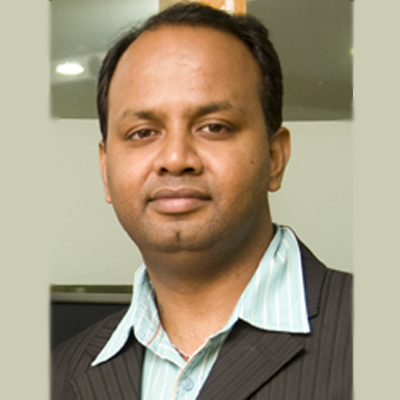
  • ‘Our biggest challenge is raising the low yields in the Hindi movie channel genre’ : Star Gold GM Sameer Rao

    ‘Our biggest challenge is raising the low yields in the Hindi movie channel genre’ : Star Gold GM Sameer Rao

    Star Gold general manager Sameer Rao is known to be a numbers man. A chartered account and an MBA in finance, Rao has a 19-year career graph that spans stints in UBS and Arthur Andersen.


    His baptism in media took place at Star in cable TV distribution, followed by the internet, the commercial department and then finally to his current posting. He was given additional charge of Star Utsav in end 2009.


    Indiantelevision.com’s Ashish Mitra spoke to Rao about the changes he has brought at Star Gold and the prospects for the channels he heads.


    Excerpts:


    How large is the Hindi movie channel space? What is the lay of the land?

    Our estimates are that all the movie channels put together make it a Rs 5,200 million ad revenue market. No doubt, Zee Cinema is the leader followed by MAX, and we are at the No 3 slot. For about six to eight weeks every year, because of the IPL and cricket, MAX steals ahead and then it goes back to the previous ranking.


    Raising the low yields in this channel genre is the biggest challenge. The inventory is keeping on growing with new channels launching: UTV Movies, for instance, entered the fray with two channels. GRPs of movie channels used to be much higher a year ago than is the casenow. There are times the ratings race becomes a big issue with us when competing with the likes of GECs such as Sony, Sab and Imagine as they are in the same GRP range as us. But the realisations by these channels for commercial time are higher.

    Can you gives us your analysis of the Hindi movie channel genre?

    The movies genre, if you aggregate consumption across movies channels, movies on Hindi GECs and movies on cable channels, is as big as the Hindi GEC slice. However, perception wise, it is regarded as much smaller, possibly because it is acquired content as opposed to original programming.


    On the supply side, satellite buyers have emerged as key players in the Hindi film industry and are critical to the viability of any Hindi film project. With some changes both on the buying and selling side, it is possible that movie channels will be able to offer much more value to all stakeholders – film producers, advertisers, viewers – while remaining a healthy and profitable business for the broadcast networks.

    You were looking after commercial for Star Plus when you were called to take charge of Star Gold and Star Utsav. What was your analysis of the two channels and your health report for them?

    I was responsible for programming commercial for the Hindi language channels at Star between March 2007 and November 2009. I took over as Star Gold general manager in March 2008 and Star Utsav general manager in late 2009. Star Gold is a healthy and growing business and Star Utsav is stable but a lot more could potentially be achieved.

    What changes did you initiate at Star Gold to fast pace its growth amongst its competing players ?

    My fundamental approach towards programming on Star Gold was to build slots that delivered on a defined content promise to a movie consumer. The slots were developed based on research inputs on content themes that audiences wanted to see on a movie channel.


    Thus, we built permanent action, comedy and kids slots apart from the Hollywood dubbed slot, which we had launched several years ago.


    Apart from this, we also incorporated slots for thematic movie festivals through the year, which would run from one to six weeks. For example, one of these, Sabsey Favourite Kaun, culminates in a big scale televised award show, India’s only audience polling driven movie awards.


    Hence, once we had the slots ready, we acquired movies designed to develop and grow the slots. All these initiatives helped us narrow the gap between us and the genre leaders.

    Star Gold was not being marketed aggressively. How have you changed this in terms of above the line and below the line activity?

    Marketing for the channel is in line with the programming strategy of building up slots and festivals. A lot of it happens outside Mumbai as our biggest consuming markets are Uttar Pradesh, Gujarat, Delhi and Maharashtra.

    We are just four GRPs behind Zee Cinema and 16 behind MAX. If we do the right things we can overtake the leader.

    Your list of acquisitions and syndications.

    Last year, we acquired films aggressively. We got the Salman Khan-starrer Wanted, the Amitabh Bachchan-starrers Aladin and Paa, the Akshay Kumar-starrers De Dana Dan and Housefull and the Ajay Devgn-starrer Atithi Tum Kab Jaoge. Besides Wanted, all other acquisitions were on an exclusive basis. Some runs of Wanted have been reserved for Sahara because they co-produced the film. We also have the non-exclusive rights of the latest RGV film Rann along with Life Partner and Luck.


    As far as syndication goes, we continue to syndicate with Zoom and UTV Movies. But this exercise entirely depends on the type of films the other channel wants to have.

    What are your plans for Star Gold?

    We’d like to lead the genre by the end of this calendar year. The network is building the catalogue through a mix of judicious new and library acquisitions and we continue to refine our slot-based programming and marketing strategy. I believe we need to acquire close to 20-25 more movies over a period of time. We are just four GRPs behind Zee Cinema and 16 behind MAX. If we do the right things we can overtake the leader. Our challenge is to have the right mix of old films, new films and blockbusters. We can’t buy the most expensive ones only; otherwise the low yields could erode our margins.

    Which are the major category advertisers for the channel?

    FMCG continues to be the biggest category. We are an important platform for male brands because of our deliveries in that demographic. We get the bulk of our advertising resources from the package of festivals. Going forward, several new acquisitions that we have gone into will boost the advertising pattern of our channel.

    Please highlight the milestones of Star Gold over the decade.

    Starting off in 2000 as a classic movie channel, we showed black and white films. We then switched on to telecasting coloured films from the post 70s. Rapidly, we turned into a channel with a modern look in terms of popular and critically-acclaimed cinema.

    Then in 2002, we launched the popular Sabsey Favourite Kaun (SFK) that first started as an award show. Then in December 2006, SFK went international. The show’s popularity can be measured well as last year, we received a whopping 17 million votes through SMS and internet in addition to the physical votes we received from people to select their favourite stars. This exercise lasted for over a period of two months.


    As for showing Hollywood dubbed content, we have excelled in showing the latest Hollywood films and rank above all other channels.


    Going forward, we hope to see Star Gold as a channel that boasts of new Hindi films.

    What has been the change in the channel perception over the years?

    The first major change in our channel was when we changed from a classic movie channel to a channel that specifies in several genres as far as films are concerned. Based on this, currently, we have a higher proportion of viewers. Our channel is driven around comedy films and of course Hollywood films. We want to build on the perception.

    You took charge of Star Utsav in 2009. What was your assement of the channel then and what changes have you brought in?

    Basically, Star Utsav is a channel that caters to repeat content. After I took over, I found that there were more repeats of shows of two distinct genres – mytholology and kids programmes. This was of course in addition to shows from the Star network.


    After I joined the channel, rationalising the schedule was my biggest priority.


    And now, we are looking at various opportunities keeping the taste and preference of the semi urban and rural markets in mind and devising a new strategy for Star Utsav. This will be implemented in the coming months.

    What were the ratings of Star Utsav when you took over and what are they now?

    The ratings are the same now comapred to when I hadn’t taken charge. It remains stable.

    What about advertisers? Have they been attracted to the channel?

    There is a potential beyond what the channel is currently generating in terms of advertiser participation and we are looking actively to tap such an opportunity.

  • ‘IPL franchise ownership seems to be driven by celebrity rather than commercial reality’ : Intangible Businesses valuation director Richard Yoxon

    ‘IPL franchise ownership seems to be driven by celebrity rather than commercial reality’ : Intangible Businesses valuation director Richard Yoxon

    The Indian Premier League (IPL) defied financial gravity at a time when the world was struggling to fight the menace of recession. Even as capital became scarce, the world’s hottest cricket property managed to renegotiate a nine-year broadcast deal in 2009 for a whopping $1.6 billion. The earlier agreement, signed a year ago, had valued the TV rights for $1.03 billion over 10 years.


    The temporary refuge in South Africa was a welcome aberration, establishing the IPL as a global property. In 2010, the IPL became bigger and better as it attracted larger audiences, costlier sponsorship deals and fatter franchise bids, growing the cricket economy.


    Then came the Lalit Modi saga and charges of match-fixing, rigging of bids, financial irregularities and betting. The architect of the IPL is now suspended and a clean-up exercise has begun.


    A parallel has often been drawn between the IPL and the English Premiere League (EPL) that houses some of the world’s iconic soccer clubs including Manchester United.


    The IPL, however, has a big mountain to climb. Its TV rights, the main revenue supply for the entire structure including the teams, went for much less. Last year the EPL‘s TV rights bundles were acquired for $2.6 billion for 3 years. And it‘s not just a big difference in value. More importantly, the EPL‘s TV rights will be renegotiated twice before the IPL‘s current deal expires.


    But the IPL is just three years old and has seen a stupendous growth. It can learn important lessons from the EPL as it scales up, including doing shorter term TV deals in future as the property gets well established.


    The IPL team owners should also be cautious in not repeating the mistakes committed by their EPL counterparts. Some of the EPL club owners have funded their acquisitions through huge debt and have gone on to pay unrealistic amounts to purchase players. In fact, the EPL clubs are popularly known as the ‘rich boys‘ toys‘ that appeal to the owner‘s ego and vanity.


    In an interview with Indiantelevision.com‘s Sibabrata Das, Intangible Businesses valuation director Richard Yoxon talks about the challenges that sports properties face as they grow up to be run like big commercial businesses.


    Excerpts:
     
     
    Will it be right to compare the IPL as a potential sports property that can grow to the scale of the EPL in future?

    I think the IPL has more in common with the American franchise sports such as NBA and NFL than with the EPL. The success of English football was built on interest from local communities and commercialisation came a lot later. American sports and the IPL, on the other hand, were created and driven by commercial objectives.


    Football is the major sport in most countries. NBA, NFL and baseball are only major sports in the US while India is the only major economy where cricket is the number one sport.


    Can the IPL leapfrog?

    On the basis of global appeal, the IPL will never come close to the EPL. Commercially it‘s possible due to the size and growth of the Indian economy, but I think it‘s unlikely except in the very long-term as in a global context cricket is small beer compared to football.


    In a renegotiated deal in 2009, the IPL‘s TV rights went for $1.6 billion for 9 years. In contrast, last year the EPL‘s TV rights bundles were acquired for ?1.7 billion ($2.6 billion) for 3 years. A very big difference. More importantly, the EPL‘s TV rights will be renegotiated twice before the IPL‘s current deal expires.


    England has 3 professional leagues below the EPL and over 90 professional clubs!


    The Indian economy (2009 GDP $1,235 billion) will need to be multiple times bigger than the UK economy (2009 GDP $2,184 billion) for the IPL to leapfrog the EPL.


    Several EPL clubs are sunk in debt while the IPL has run into controversies very early in life. Do you see sports businesses being in trouble across the world?

     Not many football clubs currently or historically make a profit. It is often suggested that the clubs are ‘rich boys‘ toys‘ that appeal to the owner‘s ego and vanity. Football clubs are trophy assets rather than profit centres. This is a key similarity as I think IPL franchise ownership seems to be driven by celebrity rather than commercial reality.


    Are the allegations of match-fixing, rigging of bids and betting going to impact the IPL as a brand?

    The events are certainly not helpful but the impact will be minimal in the long-term if the BCCI acts promptly and transparently to address the problems. The Indian public loves Twenty20 cricket and the competition‘s format. This love affair with the game is not going to change as long as the game is cleaned up commercially. What‘s the alternative? I can‘t imagine the Indian public switching to football, hockey, kabaddi or even test cricket with equal fervour and enthusiasm.


    What is the IPL worth in value after 3 years of existence and how does it compare with the EPL?

    I think there is nothing wrong with the progress made to date by the IPL. I think the BCCI / IPL has done amazingly well in a short space of time.


    But we haven‘t valued either brand. Brand Finance valued the IPL brand at $4.13 billion, but I struggle to understand how the brand of a business whose main source of income is a 9-year TV deal for $1.63 billion can be worth so much.
     

    ‘IPL franchises certainly do need to scale up to justify the high franchise fees. The amount they need to scale up in the time available appears unrealistic‘


    But you have valued the IPL franchises and they are much below that of Brand Finance‘s estimates. Why?

    Brand Finance is, perhaps, more optimistic than us. Regarding the IPL, they have more ambitious growth rate projections and are less conservative in discounting.


    But if you look at our valuations, the top four teams are almost having similar values (Royal Challengers Bangalore at $37.7 million to Chennai Super Kings‘ $36.1 million). There can‘t be any particular team breaking too far ahead at this stage because there is no big difference among them. The difference is mainly due to the size and level of interest in the IPL franchise‘s catchment areas. Rajasthan Royals ($27.5 million) is distinctly disadvantaged compared to Royal Challengers Bangalore and Mumbai Indians (5th at $32.7 million).


    Do you see revenue streams a big problem with the IPL teams?

    They certainly do need to scale up to justify the high franchise fees. The amount they need to scale up in the time available appears unrealistic.


    As far as licensing and merchandising revenues go, the IPL franchises can tap their growing fan base. There will be a limitation, though, if you compare it with EPL clubs like the Manchester United where the shirts are even bought by the Japanese or the Chinese. The IPL team merchandise will find it difficult to cross the global boundaries and communities outside the Indian diaspora.


    What are the lessons the IPL needs to learn from the EPL?

    The IPL needs to negotiate shorter TV deals. I suspect that the IPL‘s 10-year deal (renegotiated deal after a year is for 9 years) was driven by necessity as the concept was unproven at the time of the negotiation. A longer deal was probably needed to get to potential franchise owners on-board by providing the assurance of guaranteed revenues and media coverage over a sufficient period to justify the initial franchise setup costs.


    The IPL is a closed shop. There‘s no promotion or relegation. Teams should earn the right to play in the IPL rather than buy their way in. The British public loves an underdog (hence I follow Rajasthan Royals in the IPL) and it is great for the sport when a small team gains promotion to the EPL on a shoestring budget and even beats one of the big names (Burnley won promotion to the EPL last year and beat Manchester United in their first home game).


    It is equally interesting when the big teams face the threat of relegation despite significant investment in players (Newcastle relegated last year). Relegation also maintains interest for longer; once teams are out of contention to win the IPL there‘s little to play for. It would be good to see the IPL develop feeder leagues to give smaller cities the opportunity to develop teams and aspire getting a sniff of the big time.


    When did the EPL commercialise?

    Football is a fabric of British society; it has been developed over 120 years. But the first big step towards commercialisation was when TV deals were renegotiated in 1992. Twenty top clubs separately negotiated for TV rights, which became the main driver for their increase in revenues. Previously, the TV rights were negotiated collectively for all the 90 clubs.


    Merchandising is a huge income for certain big clubs like the Manchester United. But for most of the clubs, the main income is from TV. Portsmouth, for instance, reported a total income of $60 million last season, out of which $40 million came from TV.


    Why has the enterprise value of the EPL come down recently?

    The same reason as any other market or business. Recession! Leisure and entertainment expenditure is cyclical. It‘s to be expected that consumers spend less on leisure and entertainment during recessionary times. In the medium and long-term, leisure and entertainment is a fast growing but highly competitive market.


    Why have the EPL clubs amassed huge debt?

    Two reasons. First, leveraged buyouts. Manchester United and Liverpool were bought by Americans using debt finance which was pushed onto the club‘s balance sheets. The clubs did not create these debts.


    The second reason is bad management – spending more than the club can afford in the hope that any resulting success will pay for the gamble.


    Is there a current crisis?

    What crises? The EPL is as popular as ever. Football clubs going bust is nothing new. The fans suffer in the short-term but the club survives.


    There are no major threats to the EPL. It‘s been going on since 1888 (rebranded in 1992); it‘s survived two world wars and hooliganism in the late 1970‘s / 1980‘s. The current exchange rate and increased income tax rates make playing in England less appealing financially for the world‘s top footballers. This has yet to have an effect but this summer I expect we‘ll see less big name players than usual moving the EPL in favour of Spanish, Italian and German leagues. This will not affect popularity in the UK but may have an impact on global interest in the medium term.


    Have foreign owners contributed to the financial mess?

    International investors have actually made the EPL economy much bigger. The problem has been with the buyouts being funded by debt and the purchase of players at a very high price. 
     

    Does the EPL need a restructuring?

    No. Some clubs need probably restructuring but the EPL is a profitable business. The supporters of several clubs would like new owners (Manchester United, Liverpool). Overtime, I suspect and hope that we will see more clubs owned by supporter‘s trusts, similar to the Barcelona model.

  • ‘One individual is not capable of running IPL’s complex business ecosystem’ : Brand Finance India managing director Unni Krishnan

    ‘One individual is not capable of running IPL’s complex business ecosystem’ : Brand Finance India managing director Unni Krishnan


    The Indian Premier League (IPL) is caught in the midst of a storm with dark clouds hovering over team ownership issues, sources of funding, corruption and match-fixing charges.


    Lalit Modi, the architect of the IPL, is being accused of holding hidden stakes in some of the franchises. Income-Tax sleuths have broadened their probe into the financial details of the IPL by conducting nationwide raids cut across Multi Screen Media (MSM), World Sport Group and the franchise owners.


    So how will these chain of events affect the brand value of the IPL pegged at $4.13 billion?


    In an interview with Indiantelevision.com‘s Sibabrata Das, Brand Finance India managing director Unni Krishnan says the risks for brand value erosion are significant if the IPL does not quickly put in place proper management systems and processes.


    Excerpts:


    With controversy swirling around the IPL, is there a need now to downgrade the brand?

    It is too early to take a call on this. The probe has started and we will have to wait for the government to come out with a final report on the investigations before we can comment on whether the IPL brand is fractured.


    But in our February report, we had cautioned that the IPL branded ecosystem is rapidly approaching an inflexion point. We had predicted this to happen in the next 6-10 months. This has come sooner than that.


    Surely, there are definite weaknesses regarding brand value governance and transparency, management systems and processes. But have we got a revised value of the IPL brand? Not yet.


    Does this mean that there is no brand erosion at this stage?

    The risks for brand value erosion are significant if things are not managed swiftly and the stakeholder relationships start weakening. But the truth is that the IPL is a very valuable brand created in a very short period of time. The wealth that can be created by the brand is going to be substantially significant for many stakeholders. A conducive ecosystem has to be created to move the brand to the next level.


    But will it be safe to say that the IPL brand has got tainted?

    The fault is not with the IPL brand. Some people are commenting that the property be nationalised. That is not how you run a global commercial property like the IPL. Iconic brands such as the IPL are national assets and a source of wealth creation. The question is whether we have the capability and determination to put systems and processes in place to manage one of the best brands we have produced. If we fail to do so, and all the allegations also turn out to be true, the brand will take a big knock.


    Enough dirt is thrown on Lalit Modi, the architect of the IPL. Now it looks like the man who created and built the IPL property would be thrown out. Will that not damage the IPL brand?

    Let us not confuse the individual called Modi with the business and the brand. One individual is not capable of running such a complex business ecosystem like the IPL. The need is to fix the weaknesses.


    Are you suggesting a proper balance of power system?

    As the architect of IPL, Modi has done a great job. But for such a large-scale property, we need 10-12 key members. We are not sure if the IPL governing council acts as a rubber stamp. We need to go through these questions urgently if are to create a sustainable brand property.


    The IPL brand is a set of complex relationships with fans, franchises, sponsors, business houses and players. This can create huge value in future if properly managed – not by one individual but by a system.

      
    ‘The IPL is a global commercial property produced from India. The unfortunate part is that if we don‘t do a clean-up action, we would be destroying it not due to any competition but because of our own action‘


    A fundamental problem being raised is that the revenues do not match the sudden flood of investments that have gone into the IPL. Are you worried about a possible nexus between the IPL organisers, the politicians, the big corporates and the Bollywood celebrities?

    There is an entry price to every business. Substantial investments are required and the revenue potential is huge. If there are misconducts like match-fixing and betting, then obviously the guy watching the game will turn off. So will sponsors. Years ago, when the first match-fixing charges were made, there was a brief period of lull. But that does not mean that cricket has died in India. The key question is governance and transparency.


    Is there inherent strength at the IPL franchise level?

    There has to be transparency at the ownership level too. Media reports are suggesting murkier deals. We don‘t know at this stage what is the truth. But sporting properties have to be run like proper businesses. Look at how the English Premiere League (EPL) has hurt itself. The club owners chased iconic players and made unrealistic purchases through a huge load of debt. Sports businesses can be lucrative but proper regulations have to be in place.
     

     Is the IPL an overheated economy?

    Is there value to be created? Yes. There are strong revenue and marketing opportunities.


    Most of the clubs, however, have not yet put the systems and processes in place to manage these opportunities. Take the licensing and merchandising (L&M) business which is pegged globally at $108 billion. This is not a Mickey Mouse number. Manchester United has 25-30 per cent of its revenues coming from L&M. But in India, this revenue stream is not visible in many of the clubs. We have to build the requisite bandwidth to monetise these opportunities.

     
    Is this a struggle between the old and the new India?

    As a country, we need to move away from intrigues and corrupt systems to a phase where we develop international properties. We can‘t run these properties with the same baggage as we move from a developing to a developed country. The tussle between the old and the new India will lead to pain and tribulations. But the fact is that we have created a positive property in the IPL which can provide sustainability in the long run for various stakeholders.


    People are seeing a new India through the IPL. This goes much more than cricketing business; it is about brand India. On a much broader level, IPL has demonstrated the coming of age of India‘s commercial prowess on a global stage.

     
    Does this remain as a dream at this stage?

    The developed world is looking at the IPL as a global property produced from India. The IPL has changed the very perception of India in the global stage. The unfortunate part is that if we don‘t do a clean-up action, we would be destroying IPL not due to any competition but because of our own action. The moment of truth has arrived for us. We have to face it with independence and courage. Can we live up to the expectations that we have created? It will be a sad essay if we don‘t deliver.

     
    How do we move the IPL up from one-third its value ($4.13 billion) to a level that it can sit along with the EPL ($12 billion)?


    That is only an indicative figure we have given to compare a property developed in one part of the world with another that has achieved maturity status. The IPL has hardly scratched the surface. It has a long way to go and a considerable value to realise before it lives up to its full revenue and brand potential.

     
    Brand Finance has more than doubled the brand value of the IPL from its first evaluation. What are the reasons for this?

    We are seeing a remarkable increase in revenues from broadcasting (as deal was renegotiated) and sponsorship. We have also considered the IPL‘s capability to draw in fans and viewership.

     
    Why have you upgraded Chennai Super Kings (CSK) to the top as the most valued IPL franchise (Rs 2.24 billion, up 35.5%)?

    There are 3-4 breakaway clubs. We have looked at teams who have managed cricket as a product and blended this with marketing and commercial excellence. The two performances have to be done simultaneously.


    CSK is beginning to put the various pieces together, synergising between their enterprise (India Cements) and their IPL business. We are also seeing Mumbai Indians show a remarkable revival this year, both in performance on the field and in their commercial activities.

     
     Why has Kolkata Knight Riders (KKR) slipped in your latest brand value estimate (Rs 2.13 billion, up 20.6%)?

    KKR topped in our first round as it has an iconic brand like Shah Rukh Khan. This gives it an undue advantage. But they are not able to exploit this to the maximum. Their performance as a cricket team has also been bad. If this trend continues over the next few seasons, then it will seriously erode the brand value of KKR.

  • ‘A generational shift is happening in the TV news space’ : BAG Films and Media CMD Anurradha Prasad

    ‘A generational shift is happening in the TV news space’ : BAG Films and Media CMD Anurradha Prasad


    BAG Films and Media founder-promoter Anurradha Prasad has put up a mighty fight. Not many would have dared take her seat a year back as she had to fend for her two newly-launched channels amid an epic global economic downturn.


    News24 was fighting for space in a crowded Hindi news TV market. The top tier – Aaj Tak, India TV, Star News and Zee TV – had settled. Just down below were IBN7 and NDTV India, both big brands and threatening to pace up.


    Prasad promised hard news, a gap that wasn‘t being serviced too well. But down the road she realised that news consumption was changing. Riding the cyclic wave was important. So she changed gears without compromising the basic ethics of journalism. “We have to bring in the interesting element. India is a youth population. We have to show news that appeals to them,” she says.


    News24‘s market share improved, inching close to seven per cent. E24, the Bollywood news channel, was also gaining currency. While the slowdown allowed her to trim costs, revenues also started looking up. The net result: bringing down the broadcasting business‘ operating loss to Rs 122.36 million during the first nine months of FY‘10.


    The struggle, though, is far from over. The broadcasting business is still bleeding while the TV content production, which used to rake in revenues of around Rs 600 million, is almost blank.


    In an interview with Indiantelevision.com‘s Sibabrata Das & Gaurav Laghate, Prasad says the broadcasting business will operationally break even this fiscal and the focus will be to revive the content production business.


    Excerpts:


    Bag Films recently raised $17.4 million. Is the funding complete with that or you will need more capital?

    We have raised Rs 804.5 million ($17.4 million) through a GDR issue to fund our existing broadcasting business. The board had taken an approval to raise $30 million over two years. We will need new capital when we decide to launch two more channels.


    But aren‘t the two existing channels bleeding while the TV content production business is almost a blank?

    Yes, we are still posting losses, but they are much less than the earlier fiscal. The two channels will be operationally breaking even this fiscal. We will be raising our ad rates by at least 20 per cent while we have brought down the costs.


    Won‘t there be a shortfall even then as your cash burn rate is about Rs 700 million?

    For News24, the cash burn is around Rs 600 million, while our revenue at this level is Rs 400-450 million. We are starting with a hike in ad rates in the first quarter of the fiscal, but expect to post more growth during the course of the year. We will also be tapping more clients. As for E24, we are already very close to being in a break even state.


    When you announced your broadcast plans, you said you needed a funding of Rs 4 billion. How much have you completed so far?

    We had raised Rs 2.4 billion from India Bulls promoter Sameer Gehlaut, High Growth Distributors and Fidelity. Add to this the Rs 804.5 million we have just raised. There is still a shortfall but the original plan included the launch of four channels. We have put the launch of two channels on hold.


    Recession hit the industry just as you made an entry into the broadcasting space. Were your plans upset in a major way?

    We deferred the launch of our two channels. Our revenue projections also went for a toss. But the slowdown actually acted as a blessing in disguise. We could rationalise our costs very early into our expansion into the TV broadcasting space. We transferred our E24 operations from Mumbai to Delhi. This was a bold step as we had to take the risk of running a Bollywood news channel from Delhi, but we succeeded. We also initiated multitasking at the junior level.


    ‘The two channels will be operationally breaking even this fiscal. We will be raising our ad rates by at least 20% while we have brought down the costs by 30% on a monthly basis‘


    Did this also mean trimming manpower?

    Our peak staff strength came down from 900 to 650 people. But I did not make any compromise on the editorial and we did not ask anyone to leave. By restructuring operations, we brought down our costs by 30 per cent on a monthly basis. And now with the market improving, we see ourselves ready for growth.


    News24 has managed to improve its market share in the Hindi news channel space to around 7 per cent. Just before launch, you had said that you would focus on serious news. Have you had to dilute from your original position to gain market share?

    We have had to change along with the tastes of our viewers. So we brought in the “interesting” factor in news without compromising on our journalistic ethics. For example, we aired a story on prostitutes dancing on a cremation ground in Varanasi. We wouldn‘t have shown this two years back. Visually, it was a great story. We must remember that India has a dominant youth population and they consume news so differently. And why blame them? It is a twitter age.


    So is news getting redefined?

    Let‘s face it. A generational shift is happening in the TV news space. And there are cyclic waves of viewing preferences. After the Mumbai terror attack, all channels started ‘Pakistan bashing‘ while the ‘bhoot-pret‘ (ghosts and demons) element came down. And audiences loved that.


    Indians love experimentation in every aspect. I also believe that though English has become the link language, Indians typically think in Hindi. Which is why some of the English news channels are also changing.


    In such a cluttered Hindi TV news market, how will News24 wing its way up?

    Our focus this year will be on distribution. We feel we have a strong chance of going up the ratings ladder among the second tier of Hindi news channels once this is taken care of. I firmly believe that chaos leads to creation.


    We see a high growth and revenue potential for News24 as there are still over 200 advertisers to tap. And the effective rate of advertising is still the lowest in the broadcasting sector. We believe the market will expand to accommodate more players.


    Also, the sporting events like Commonwealth Games, T20 World Cup and ODI World Cup will generate a lot of excitement, which will help the news channels.


    Do you have plans to launch your channels in international markets?

    We have international expansion plans for our broadcasting business. We plan to launch both the channels in the Middle East by the first quarter of this fiscal.


    We already give the feed of E24 to DirecTV in USA for two hours daily.


    How do you plan to revive your TV content production business that was raking in about Rs 600 million?

    Since our broadcasting business is under control, we will bring back our focus on the TV content business. We understand that side of the business very well. We will make soaps as they are the staple diet of all Hindi general entertainment channels. Non-fiction content is expensive and the RoI (return on investments) is not good; broadcasters are realising this. 


    On the FM radio front, will you bid for phase III once the government comes out with a policy for it?

    We have 10 operational radio stations at this stage. We will take a call on bidding for more stations once there is clarity on regulation. There are still question marks on royalty and permission of news on radio. Since we are already in TV news, we believe permission of news on radio will give us a definite push and advantage.


    Are we going to see Bag Films being active on the movie production front this fiscal?

    We will wait for further price corrections. Recent movies like LSD (Love, Sex aur Dhoka) are good business models.

  • ‘Break even will take five to six years for new franchises’ : GroupM ESP managing partner Hiren Pandit

    ‘Break even will take five to six years for new franchises’ : GroupM ESP managing partner Hiren Pandit

    Bigger, better, richer. That is what the franchises hope the Indian Premier League (IPL) will grow into year after year.


    In an interview with Indiantelevision.com’s Ashwin Pinto, GroupM ESP managing partner Hiren Pandit talks about the vast revenue opportunities that are waiting to be tapped as the IPL grows into a sporting spectacle.


    Excerpts:

    How is GroupM ESP involved with the IPL this time around?
    We do deals with franchises on behalf of our clients. There are logos on T-shirts and also innovations that have not been done before. We create revenue opportunities for the client as well as the franchise. This is in the form of licensing and merchandising.

    Are franchises able to fetch better rates this year with the economic situation somewhat improving?
    Keep in mind that last year local activation could not take place due to the shift to South Africa. This year, some amount of rationalisation has taken place. There is measurement in place. You know whether you should pay Rs100 or Rs 150. Most team sponsorships have been sold.

    In terms of local revenue, how will franchises fare this year as per your calculations?
    It will increase by around 20 per cent for each franchise. Revenues on T-shirts are anywhere from zero for Bangalore (The UB Group uses its own brands) to Rs 400 million for Kolkata. Delhi and Chennai will each earn Rs 330 million. Mumbai, Rajasthan and Punjab will individually earn Rs 300 million. Hyderabad will earn around Rs 200 million. The big difference is the logo on the right chest which will add Rs 30-50 million in revenue. Licensing and merchandising is just starting to happen. So this will take time to grow.


    Kolkata will get hit in terms of gate receipts as the two large stands that seat the most number of people is being reconstructed. Mumbai’s matches will happen in the CCI and DY Patil. Ahmedabad should boost Jaipur’s gate receipts. I, however, do not know the extent to which Dharamshala as a venue will help Punjab. The question that remains is Hyderabad. There needs to be some clarity on where the matches will be played.

    If you include the central pool, how much revenue will franchises earn?
    It will be a 25 per cent growth overall. Each franchise will earn $12-14 million from the central pool. The local pool will contribute around $8-10 million. Revenues from theatres, YouTube and Colors will also kick in. This will add a certain amount but it will not be dramatically different.

    Will Hyderabad’s revenues be hit due to the venue being shifted?
    I am not so sure that Hyderabad sponsorships will get hit as it depends on TV exposure. On the back of that, activation will be done. In-stadia activity, though, will be hit. But licensing and merchandising may stay unharmed. It depends on the kind of deals that they will do. It remains to be seen how much revenues come from ticketing.

    Franchises will see a 25 per cent growth overall. Each franchise will earn $12-14 million from the central pool. The local pool will contribute around $8-10 million. Revenues from theatres, YouTube and Colors will also kick in

    Is there a danger of sponsorship getting cluttered?
    From what we gather, the number of brands on IPL was 40 in the first season and 68 in the second. We expect the number to touch 80 in the third season. It is clutter but since it is at home, clients can do more activation. There needs to be innovation done by companies in terms of their campaigns. You cannot do what was done earlier unless you are sure that it will stay fresh. It needs to be different. Just keeping a logo on the T-shirt is not enough.

    Could you give me a couple of examples where team sponsors have successfully leveraged the IPL?
    Idea Cellular did something different with the Mumbai Indians in the second season. Their users could have conversation with players. Wrigleys did something different by associating with all teams. Vodafone did the Zoozoo campaign which was a wake up call to competition. Sprite did the unique ‘Seedhi Baat, No Bakwaas‘ campaign with Kolkata.

    What is the key to a successful licensing and merchandising campaign?
    Both parties have to make money. The distribution platform has to be solid and give access to all potential buyers. Under licensing and merchandising, the franchisee gets a flat amount and then a share on revenues – depending on sales. It will be a slow burner, though. And it will not kick in from day one. A substantial amount of promotions will be needed.


    Licensing and merchandising is different from having a logo on a T-shirt. People are still struggling to figure out what is the difference between advertising and licensing and merchandising. These two categories are separate but are getting mixed up. That actually helped Wrigleys who did a smart number on franchises. They did a partnership at a low cost and signed up most franchises for three years. From what I understand, Wrigleys can now milk the value of its deals to such an extent that franchises feel that they did not get the value that they were looking for. I don’t think that Wrigleys shares revenues of its products. Franchises now realise that the deal might have been a mistake for them.

    Have the franchises got it right on ticket pricing?
    I assume that they would have learnt from the first season. They will know what works and what does not. You need to analyse in detail what was done in the first season – what was right and what was wrong. If they have not done that the same mistakes will be made again. You also need to do activities to make fans come to the stadiums. The in-stadia experience will be far better this time. Catering is centrally managed. There are now turnstiles and so the number of people entering and leaving can be checked.

    Will the break even period elongate for the new franchises as the IPL has set a fourfold increase in base price?
    The revenue opportunities have grown. The break even position, however, depends on how one manages costs and the revenue generation potential of a city. Some cities will perform better than others. But generally, it will take five to six years for the new franchises to break even. The time taken to break even is also a question of how innovative can the new owners be in generating revenues. Local revenues should rule over the earnings from the central pool. Anybody who can do this will have a model that will set themselves up to making money that would justify the price tag.

    Who has fared the best in this area so far?
    The closest that anybody has come to achieving a great model is Kolkata. The fact that Shah Rukh Khan has lent himself to his sponsors like Nokia and Sprite has worked. He has extracted more revenues as a result. So instead of charging Rs 40 million, this franchise can charge Rs 70 million. Other teams also have values but I am not so sure that they are using it to their maximum potential. No franchise is optimising local sponsorship the way that they should.


    Also, keep in mind that with more teams coming in, costs and revenues will go up. The impact will be felt across the board. Player costs, travel and stadium maintenance costs will rise. Sponsorship revenues will also go up. All this has to be taken into account by whoever is bidding.

    Another issue is that current franchises will be allowed to retain some key players even after the third season. This could limit the pool of payers who are available to the new franchises. How do you see things panning out?
    A middle ground will have to be found. This is a sticky issue. On one hand, you have India Cement saying that since they have invested in Dhoni and have built their team around him, he must be retained. Otherwise the team’s value will be affected. On the other hand, the new franchises need to have a solid pool of players to pick from or else they might decide not to play. A balancing act will have to be performed by the IPL Governing Council.

    Rajasthan Royals has tied up with other cricket clubs globally. Is this the trend for the other franchises as well?
    If you have world class players who can play in different countries and fill a stadia, then it forms another revenue stream. The IPL guidelines state that Rajasthan Royals cannot play against Kolkata in, for instance, England. So by doing this kind of a tie up, they avoid that situation. Events can take place all over and more money flows in. There is an opportunity here.
    Do you see the IPL playing out well in cinema theatres?
    This year it will be a tried and tested concept. The concept looks very impressive. You will have high definition which makes a big difference. The 16:9 screen size will allow you to see more ground. This is the summer and people might want to go to an air conditioned place and enjoy it together. It is about the quality of experience. If it is good, then word of mouth will spread.

    How important is the YouTube deal in spreading the IPL brand globally?
    It is fantastic on two levels. In India, you can sit in the office and watch matches. It is a question of bandwidth. I would expect people to avail of the highlights package for matches that happen between 4-7 pm the next day. Then there is the Indian diaspora who want to watch the IPL but have no access.


    The question is how YouTube is going to monetise the IPL property. Will YouTube become pay for international markets? Today they have said no. They can continue to say no if there is enough ad support.

    The Champions T20 League got off to a slow start. Where do you see it going from here?
    I was surprised that it got off to such a slow start. But if people thought that the Champions Twenty20 League would do as well as the IPL, then they were wrong. The IPL and Champions League are about clubs. The club culture has not yet come in the country. It will take time. The second reason is that the three Indian teams did poorly in the Champions League. The interest among audiences fizzled out.


    The franchises and the IPL need to start developing a club culture. Nobody says that they want to go for an IPL match to see a particular franchise play. They simply go for great cricket. That has to change. You need to create a fan base that is passionate about the team per se, even if it comes last. Franchisees need to invest money in creating a club culture.

  • BAG Films plans to take News24, E24 to Middle East in early FY’11

    BAG Films plans to take News24, E24 to Middle East in early FY’11

    NEW DELHI: BAG Films and Media, which has diverse interests across broadcasting, television production and radio businesses, is planning to take its two channels to the Middle East by early next fiscal.

    News24 (Hindi news) and E24 (Bollywood news channel) are slowly gaining market share in their respective segments.

    “We have international expansion plans for our broadcasting business. We plan to launch both the channels in the Middle East by the first quarter of the next fiscal,” BAG Films and Media CMD Anurradha Prasad tells Indiantelevision.com.

    The company already gives the feed of E24 to DirecTV in USA for two hours daily. “We have a content tie-up with DirectTV and two hours of E24 feed beams in the USA,” Prasad says.

    The focus this year will be to achieve operational break even for the two channels, she adds.

  • News channels on road to slow recovery

    News channels on road to slow recovery

    NEW DELHI: Stung by high costs, shrinkage in the genre share and a slowdown in the economy, news channels have had a tough year. Expansion plans were shelved, the workforce was trimmed and operations were rationalised.

    The TV news industry is now beginning to show early signs of recovery as the economy is improving. “The ad volumes are coming back. It is a matter of time when the rates will also come back,” said Star News CEO Ashok Venkatramani.

    Still, news channels are far from being out of trouble. “One of the problems is that broadcasting is looked upon independently as a separate sector whereas it should include distribution. The total industry gets approximately Rs 300-350 billion. We hope to get our share of the distribution pie. The need is for a more addressable system,” said NDTV Group CEO KVL Narayan Rao.

    Agreed TV Today executive director and CEO G Krishnan, “About Rs 150 billion resides with the last mile. We want a share of that.”

    The challenge for news broadcasters is also to retain eyeballs at a time when events are absent. Though the total news audience grew 11 per cent in 2009, the time spent on news channels has fallen.

    “In 2009, there were lesser events. Regional news channels were eating into Hindi news. The viewership for English news channels has, however, grown,” said Tam Media Research CEO LV Krishnan, while speaking at the News Television (NT) Summit.

    The session on ‘Reality dawns in the news business’ was moderated by Indiantelevision.com founder and Editor-in-Chief Anil Wanvari.

    News channels, particularly in the Hindi space, are facing competition from general entertainment channels. The hard task cut out for news broadcasters is to have newsy as well as entertaining content in the mix.

    LV Krishnan said audiences don’t always accept frivolous content. “Social issues and science and technology work in smaller towns. Politics and astrology content work in metro markets,” he said.

    G Krishnan dismissed charges of weak newsy content on news channels. “About 65 per cent of content on news channels is pure news. Not more than 35 per cent is entertaining content,” he said.

    He blamed the government for interfering with pricing. “The content can’t improve because we are dominantly dependent on advertising revenues. Allow free market to take place,” he added.

    Den president SN Sharma said many new channels have been launched without a proper understanding of the distribution costs that they have to cough out to cable TV operators.

    P7 News director Jyoti Narain said news is coming back to news channels, while Sahara Media India CEO and Editor-in-Chief Sanjeev Srivastava raised the question of how news channels could arrive at an agreement on sharing infrastructure for news gathering.

    Associated Broadcasting Company Ltd (TV9) VP operations NVN Murthy said the regional space was on a growth trajectory and his company posted a 35 per cent growth even during the downturn phase.