Tag: indiantelevision.com

  • Outdoor advertising badly hit in Kolkata

    Outdoor advertising badly hit in Kolkata

    KOLKATA: A few days ago, when indiantelevision.com spoke to a cross-section of advertisers, media planners and broadcasters to find out if the current economic scenario had negatively impacted ad budgets, the response was a bit of a mixed bag.

    However, when this correspondent undertook a recce of primary hoarding spaces in and around the City of Joy, a different picture emerged.

    “The near-empty billboards (many of them just white spaces with telephone numbers) spoke of outdoor advertising suffering on the back of subdued economic sentiments. Usually, with the onset of the festive season, Kolkata’s advertising business eagerly awaits newer opportunities. Not so this year. As compared to last year, we can see that clients have reduced their ad spends by more than 40 per cent as market sentiments are low,” observes Ashif Kumar Biswas, treasurer and grievance committee convener, West Bengal Outdoor Advertising Association, and director, Arun Sign Service.

    Even hoarding spaces at sought-after locations like Park Street, Park Circus, Gariahat and Girish Park have no takers. So much so, the Rs 300-Rs 350 crore Kolkata outdoor advertising market is likely to nosedive nearly 20-25 per cent in the current fiscal, says Biswas.

    Big to small brands have considerably slashed their marketing and advertising budgets to hold back funds with a view to investing in relatively direct factors that affect business.

    Sampark Advertising & Media marketing head Kalyan Brata Ghosh downplays the fall in outdoor advertising somewhat. “25 per cent billboards are vacant as of now. But with different packages offered by players, vacancy rates are expected to decrease going forward.”

    So why has outdoor advertising taken such a beating in Kolkata? Well, there are a number of explanations.

    According to Brand Wagon Media creative director Prantar Chaudhuri, “that most brands are channelling their ad spends into areas like ambient and digital are the primary reason.”

    Biswas pins the problem on oversupply of billboards, “There are far too many billboards and the increase of supply has only added to the problem. Kolkata has more than 5,000 billboards, including in areas such as Joka, Diamond Harbour, Airport Gaira and Dunlop.”

    Arun Signs has around 15-20 per cent direct hold on such billboards, he is quick to point out.

    Not just the number but also the size of billboards matters. In the Kolkata municipal area, the maximum size of a billboard is 60 by 20 feet. But the most popular dimension is 20 by 10 inches for which, clients are asked to shell out nearly Rs 50,000-Rs 60,000 per month (long-term campaign).

    Then again, the price differs from location to location, says Biswas.

    An outdoor media agency (name withheld on request) reveals that for a 20 by 10 ft billboard, it has to pay a corporation tax of up to Rs 3.60 lakh per year, even if the billboard stays blank throughout.

    Also, the sorry state of outdoor advertising is as much to do with who spends on it and when, not to mention how certain media agencies appear to rule the roost.

    According to Chaudhuri, while retail, mobile service, mobile hardware, liquor and surrogate are the big spenders, July to October is the period when spending is the highest while January to March are lean months. He expects the market to be okay by Durga Puja though.

    As far as the biggies in this business go, of the over 300-400 outdoor media agencies in Kolkata, the likes of Selvel, Arun Sign, Karukrit, Enkon, and Incoda Media Services call the shots. Brand-wise, some real estate projects, Bengali serials and FMCG products from the house of ITC and HUL have an upper hand, “Johnson and Johnson, Emami and Shalimar coconut oil among others do occupy a sizable space,” says an expert.

    With a saturated telecom market and big telecom players getting business without really having to spend in the outdoor medium, the practice of telecom operators targeting customers with billboards in every nook and corner of the city has also somewhat stopped.

    Yet another reason is corporate and brands planning annual ad spends for TV and newspaper at the beginning of the year itself. Since they get a lucrative package from these media, outdoor is not really a big draw. Ghosh cites the example of Sampark Adverting & Media, which garnered a business of Rs 16 crore in the last fiscal and expects no growth but the same amount of business in the current fiscal.

    A media analyst sums up the situation as: “I see less work coming from all clients in general as compared to previous years. The economic crisis has affected greatly the entire media spend, be it on TV, outdoor, radio or any other form of mass media.”

    With outdoor ads maintaining a really low profile in the city, what is the state outdoor advertising association currently busy with, we ask. “The outdoor advertising vertical is mostly unorganised. We are making rules on credit policies that we can give our clients. And also ensuring that the two lakh-odd people working in this industry get their dues and don’t face any professional hazards,” Biswas shoots back.

    Well, we do wish him luck in his current assignment…

  • Darpan Press likely to takeover Ekdin

    Darpan Press likely to takeover Ekdin

    KOLKATA: City-based Chakra Group which runs a daily broadsheet newspaper ‘Ekdin’ from Kolkata, plans to sell the newspaper to Darpan Press, a highly placed media industry source said.

    “Ekdin will be sold again,” the source exclusively told to indiantelevision.com today.
    It should be noted that veteran journalist Suman Chattopadhyay was the founder and the first editor of the newspaper Ekidn. But after Chattopadhyay joined Ei Samay, the Bengali daily by Times group, the daily was being purchased by Chakra Group, he added.

    Publisher and editor Partha Chakraborty could not be contacted even after repeated attempts.

    The newspaper is published from Kolkata, Durgapur and Siliguri.

    As per the distribution department of the broadsheet, the circulation of Ekdin is around one lakh at present.
    Ekdin readers said the content of the newspaper is top-notch and it covers almost all the sections but sometimes it covers too much of state political news to make the administration happy. “However one month ago, it was the only Bengali daily which emphasised to a great extent on business news also,” he said.

  • International Emmy Awards judging held in Mumbai

    International Emmy Awards judging held in Mumbai

    MUMBAI: Judging is not an easy task and especially when it is for the International Emmy Awards which are considered as the Oscars of the television world.

    Indiantelevision.com founder Anil Wanvari once again – for the ninth year – hosted the semi-final judging round of The International Emmy Awards for the New York-based International Academy of Television Arts & Sciences. A bevy of Indian television professionals – 12 of them from both on screen and off screen – descended on to the Raheja Classique Club, in the Andheri suburb of Mumbai on 23 August to decide which of the entries – from two categories, comedy and telenovellas – would get into the final round of the International Emmy Awards 2013. The International Emmys had a healthy response from television content creators and broadcasters world wide with more than 1000 entries pouring in, but the Mumbai leg of judging saw seven entries for comedy and four entries for telenovelas being judged.

    The jury comprised of producers, directors, actors and writers. The ones judging comedy were: Anita Basu, Amit Aaryan, Harshad Joshi, Prabal Baruah and Divyanka Tripathi. On the other hand, Meghna Malik, Ashka Goradia, Shruti Ulfat, Rajan Shahi, Yash Patnaik and Sudhir Sharma were judging the telenovela category.

    Founded in 1969, the International Academy of Television Arts & Sciences promotes excellence in international television programming. With more than 700 members from 50 companies in the media and entertainment space in 500 countries, it is the International Emmy Awards are the premier recognition for those involved in content creation in television, internet, and mobile.

    “It is always a pleasure to have India as a part of our judging which is taking place in more than 20 countries worldwide this year,” says The International Emmy judging director Nathaniel Brendel. “And we are delighted to have indiantelevision.com and Anil Wanvari as our hosting partner, like we have done for so many years.”

    “The International Emmys is a recognition producers and broadcasters and creators globally aspire for,” says Wanvari. “By hosting the judging we continue the very good relationship we have with the International Academy and we also become a part of a global initiative. This apart, it gives me and my company a good opportunity to give the Indian creative and production community exposure to the best in global content. We are grateful to the Academy.”

    After the first round of shortlisting and filtration, six to seven entries for each category make it to the semi-final round. Following this, the entries are posted online for final jurors to decide on the final nominees and winners. The main two criteria of judging are content and execution. Indian industry professionals were more than happy with Wanvari’s initiative to host the judging and on being called to do International Emmy jury duty.

    Says comedy juror Big Synergy director / producer Anita Basu: “This is my third year with the International Emmy, and it is a fantastic experience to see a lot of rich and good content and be exposed to a lot of innovative content outside India.

    ”Telenovela juror and Beyond Dreams Entertainment producer & creative director Yash Patnaik says being on the jury is a time for him to get away and chill on the best of international content. “Judging the International Emmys is a wonderful experience. This is my second year with Emmy and we get to see a lot of good content and you get to know what kind of effort they put in. Their style of working is very different from ours. The storytelling, cameras, scale is different.”

    “It is always very good and educational to come and watch different programs and this time it is the international platform and watching good shows from all over the world. The telenovelas are brilliant and it’s a good experience and you get to see good work and good content of international quality,” says director and producer Rajan Shahi.

    “It was a very different experience judging the telenovela category,” says respected actor Meghna Mallick. “The entries were of a very high order, and a couple of them, well they blew me away.”

    What surprised the jurors was the absence of entries from India in the categories they were judging. Say Brendel: “The fact is Indians would not get not judge entries from India; they would be judged elsewhere. Going by the huge production base India has entries can only go up, I believe that Indian producers should compete in the International Emmys because it is the only way that their shows can be judged and be seen by the best producers, networks. These may then be interested in buying their shows.”

    Agrees Patnaik says: “Yes of course Indian shows should compete, because there is a lot of original content in India. Our programs are quiet popular in the US and UK and we have Indian audience everywhere. It will be good refreshing change for them to see Indian content which are original and go beyond self-zone.”

    Anita Basu chips in: “Production and technical wise we are much ahead and there is a lot of good content here. We are way ahead of the curve, and I think we need to make an effort to represent ourselves in a very big platform like the Emmy awards.”

    “There are two reasons why we don’t see Indian entries in Emmys is a lack of information and I think Indian television industry is still evolving. And you never know maybe next year we will see entries from here as well. Indian content is improving every year so we definitely stand a chance to showcase out talent in the international platform,” adds Sharma.

    The gala event is slated to take place on 25 November in New York. The next competition will start early this December and the deadline is till February 2014 to submit their shows.

  • TVT gives us power to negotiate better: Broadcasters

    TVT gives us power to negotiate better: Broadcasters

    MUMBAI: The month of July saw the tamasha related to the ratings – TRPs vs TVTs and it was for a fortnight that the whole industry awaited for the three stakeholders to reach a consensus on how viewership numbers will be dished out and what will be the metric for evaluating how television is faring.

    Several meetings and exchanges of emails  between the involved parties gave birth to television viewership in thousands, colloquially referred to as TVTs. The format was devised to capture and reflect growth in TV audiences in the country in absolute numbers.

    And so from the past three weeks, the industry has been receiving ratings in numbers rather than percentages. Indiantelevision.com spoke to industry professionals to understand the changing scenario and the road ahead.

    Though most broadcasters feel that it is still too early to expect any major changes, but the numbers have surely put them in a better position to negotiate.

    “It is never too easy to get advertisers on board,” laughs and says Zeel chief sales officer Ashish Sehgal. “Currently, the way transactions are happening people sometimes still tend to refer to both (percentage as well as numbers) as they are habituated to the old ways. But to see the real change happening, we will have to wait for a while – till the whole universe is revamped in January,” he adds.

    He further elaborates, “Things like ad cap and ad rate hike are the roadblocks in adaptation of the new currency. However, broadcasters now have higher negotiating power.”

    On the same lines, a senior executive from a leading GEC is happy that TVT which is the accepted norm globally for gauging TV viewership has been finally adapted in India. “The new method is a true reflection of how many people are really watching TV and hence, it helps our sales team to utilise the data in a profitable manner while discussing ad rates with the clients.”

    The new method has benefitted the niche and regional channels the most which at times received zero per cent TRPs. ETV Marathi and ETV Gujarati business head Anuj Poddar says, “The shift of TAM from GRP to GVT is a healthy thing for everyone and I don’t know why the buyers and advertisers were protesting so much. Now it’s all doodh ka doodh, paani ka paani because it shows absolute numbers. It is very easy to compare across platforms.  You can see the reach of the channels and know the number of homes it reaches.It’s a good starting point where TVT helps all of us get our math right and to also know how and where to spend money.”

    However, there is a catch in the consensus achieved which is keeping all the stakeholders happy. For internal evaluation including planning and buying, percentage TVR weekly and all other data is still available to advertisers and advertising agencies as in the past. Hence, for most advertisers it’s business as usual.

    Parle general manager (marketing) Praveen Kulkarni says, “For us, it has not made any difference. We still go by the old currency (TRPs). So, there is no change in our media plans.”

    Similarly, Godrej & Boyce Manufacturing vice-president (sales & marketing) Kamal Nandi states, “The change has just happened so it is too early to say anything. As of now, we still refer to information in percentages.”

    He further elaborates and says that for TVTs to become a reference point will still take some time and it all depends on how fast planners and buyers can cope with the new metric.

    Media planners too think that it is too early to talk about benefits of TVTs over TRPs and continue to refer to the old rating method. A south India based media planner explains, “It is too early to say how it will change the way money is exchanged between the two parties. We are trying our best to make sure that both the parties are in a win-win situation.”

    On this, the GEC executive goes on to say, “Earlier an advertiser who would pay Rs 100 (and if 100 people were watching a channel) will now have to pay Rs 500 as the reach too would have increased to 500 viewers. And that is the main reason they were and are still opposing it.”

    Whatever be the case, one thing which is clear right now is that the broadcasters have engineered change in the way industry views how television programming is being consumed. And that is only phase one of their journey. They still have some road to travel to ensure that TVTs become the currency amongst aadvertisers and agencies.

  • NBA welcomes Tewaris proposal to delay ad cap

    NBA welcomes Tewaris proposal to delay ad cap

    NEW DELHI: The News Broadcasters Association (NBA) is a happy lot and why shouldn’t it be? After all its demands are being heard and openly expressed in public meetings by the Information and Broadcasting Minister Manish Tewari himself. As reported earlier by Indiantelevision.com (Tewari reaffirms his support for extension of ad cap implementation) the minister has come out in support of the news channels who for long have been asking for an extension to the implementation of the 12 minute ad cap.


    Welcoming his recent statement that news channels should get an extension on the 12 minute ad cap “at least till the final phase of digitisation is complete”, the NBA said that the industry is in a dire financial condition, like many other sectors of the Indian economy, with ad revenues being slow, carriage fees continuing to be burdensome and credible subscription revenues being out of sight.


    Reinstating its earlier argument on the need for delay in implementation of ad cap, NBA today said that a forced curb on advertising will have a catastrophic impact on revenues of news broadcasters forcing many to take drastic steps that would have an unavoidable and adverse impact on quality of service and jobs.


    The association has estimated that if the ad cap were indeed implemented at this stage, the revenue loss across news channels would be in excess of Rs 500 crore, forcing cuts of at least that amount in costs, if channels have to survive.


    The NBA agreed with the minister that the 12 minute cap on advertisements per clock hour be kept in abeyance and such restrictions “kick in only when the benefits of digitisation are apparent so that broadcasting companies can make good their advertising losses with subscription fee.”


    It also urged that the burdensome and crippling nature of carriage fees which have no business to exist in a truly digitised environment is also addressed urgently.


    NBA requested the minister and the Telecom Regulatory Authority of India (TRAI) to come out with a final notification keeping the ad cap for news channels in abeyance as above in the next 10 days as any delays beyond that will have an irreparable impact on the industry.


    Now with the I&B minister himself coming out in open to support the news channels, will TRAI melt and give in to the demands of the news channels is something which is worth a wait.

  • 7 broadcast networks have 72 hours to revert to weekly TV ratings

    7 broadcast networks have 72 hours to revert to weekly TV ratings

    MUMBAI: Seven broadcast networks which have told TAM to shift to monthly reporting of TV ratings of their channels have been given 72 hours to revert to weekly reporting, after which all advertising release orders (ROs) for spot bookings will stand cancelled. This is contrary to reports that advertisers have already sent RO cancellations effective last evening.


    The CEO of a channel told Indiantelevision.com that his network has received emails pertaining to large advertisers like Levers, Procter & Gamble, Loreal, Dabur, ITC, Britannia, Marico and Godrej. “But I don’t expect any cancellations between today and Monday. The action will begin on Tuesday.”


    Agrees Group M south Asia CEO C.V. L Srinivas: “Notices have been sent out across the board from our clients as of yesterday evening. Advertisers are quite clear: they are not going to carry spots on channels for which there is no data.”


    Almost 102 channels come under these networks and this figure has gone up to 105 with Discovery Networks also writing to TAM wanting to be reported on a monthly basis.

  • Colors to telecast 12th Indian Telly Awards on 26 May at 6 pm

    Colors to telecast 12th Indian Telly Awards on 26 May at 6 pm

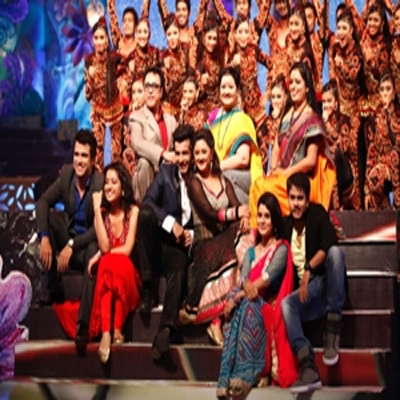
    MUMBAI: Breathtaking performances, rib-tinkling humour, loads of glitz and glamour and your favourite television stars. Find it all at the starry night that is the 12th annual Indian Telly awards, organised by indiantelevision.com.


    indiantelevision.com’s The 12th Indian Telly Awards is all set to entertain one and all and celebrate the best of the Indian television industry only on Colors. One of the most awaited events for those involved in any way in the world of Indian television, the awards promise three things to all its excited viewers- entertainment, entertainment and more entertainment.


    “indiantelevision.com’s Telly Awards is the most prestigious property for the Indian television and broadcasting fraternity. Both Colors and indiantelevision.com have planned a wonderful show for our viewers.We are looking forward to the telecast,” says Colors CEO Raj Nayak.


    Adds Indiantelevision.com and The Indian Telly Awards founder & CEO Anil Wanvari: “Winning an Indian Telly Award is extremely prestigious moment for actors, producers, technicians, and anyone else associated with TV. While we recognise excellence, we also work on putting in more than a high dose of entertainment to keep audiences at home wanting more. The 12th edition of the show is planned as a mega-spectacular with a never before seen set designed by Oomung Kumar. We designed the show to be full of fun and puns for the audiences and lots of entertainment.”


    Be prepared for your television screens to come alive with spectacular performances by the most celebrated talents of the Indian television industry. The very dashing television poster ‘boys’ Ronit Roy and Ram Kapoor will leave the viewers in splits with their quick wit and incredible stage presence as they co-host the evening with panache and bromance. Helping them keep the awards lively as co-hosts are the witty and popular Jay Bhanushali and the child like Rashmi Desai and telly land’s Chautala Kavita Kaushik.


    The sexiest yummy mummies of telly world Barkha Bisht, Shweta Tiwari and Urvashi Dholakia will sizzle the screens on the item songs like Fevicol Se, Halkat Jawani, among other songs.


    The lovely act by the most romantic off-screen TV couple Aamir Ali and Sanjeeda Sheikh will make one fall in love with love. Watch Jay Soni romance his on-screen partner Shamin Mannan. Watch television’s leading leadies – Sanaya Irani, Suhasi Dhami, Mahi Vij and Simran Kaur – performing in an eyecatching and rivetting prop-heavy act denoting the moods of a woman – right from passion, to envy and sorrow.


    What more? Viewers can ogle at television’s hottest hunks – Gurmeet Chaudhary, Manish Raisinghani, Mrunal Jain and Gaurav Chopra – take off their shirts and even their trousers on a foottapping medley of the year’s greatest Bollywood masala hits. Their terrific bare-chested performance is sure to take the breath of female fans away.

    The highlight of the evening was the very thoughtful ‘family relations’ act which saw beautiful and engaging performances by actors who are family in real life with segments of bhabi-nanand (Tanaz Irani and Delnaz) , real life maa- betiyan (Savita Joshi, Ketki Dave and Purbi Joshi), real life bhai-bhai (Rohit Roy and Ronit Roy), real life bhai-bahen (Krushna Abhishek-Aarti Singh) and real life shriman shrimati (Apurva Agnihotri and Shilpa Saklani)


    indiantelevision.com’s The Indian Telly Awards are one of the oldest and most respectable television honours in the industry and have been successfully lauding excellence in the Indian television and broadcasting industry since the past 12 years. Its popularity is only soaring year after year.


    “The response for the 12th Indian Telly Awards has been great,” says Nayak. “While Dabur Glucose D has come on as the title sponsor, Brooke Bond Taj Mahal Tea has taken the powered by status. The associate sponsors include: Aircel, Vasan Eye Care Hospitals, Margo, Pudin Hara, Layer’s Deo, Ponds white beauty and Nycil Gulabjal. It’s great to have them on board, a property we are very pleased to be associated with, as it recognises the very best in our TV industry.”


    The show also has some poignant moments like TV’s hottest personality Karan Singh Grover slow dancing with his wife the ever so popular Jennifer Winget.


    The winners that took the coveted and prestigious Indian Telly Award trophy home were cock-a-hoop Vivian Dsena and Drashti Dhami were declared the most popular television on-screen jodi as RK and Madhu from popular Colors show Madhubala-Ek Ishq Ek Junoon. Star Plus’s TRP garnering Diya Aur Bati emerged as a hearty winner by bagging the awards for the most popular daily show fiction as well as the popular actress and popular actor in a lead role for Deepika Signh as Sandhya and Anas Rashid as Sooraj. The award for popular actor in a lead role was also bagged by Kunal Karan Kapoor for Mohan Bhtanagar in Colors’s Na Bole Tum Na Maine Kuch Kaha- 2. Hot hunk Mohit Raina bagged the jury award for best actor while Manish Paul walked away with the best anchor trophy.


    All in all, the Indian Telly Awards was a spectacular evening to remember with fabulous performances, surprising acts and the shinning television industry at its glamorous and entertaining best. Watch the repeat on Sunday if you are a diehard fan at 6.00 pm.

  • What the media & govt ecosystem is doing on potrayal of women in advertising

    What the media & govt ecosystem is doing on potrayal of women in advertising

    NEW DELHI: The Advertising Standards Council of India (Asci) rejected six of the fourteen complaints relating to wrongful depiction of women in advertisements during 2012 and 2013.


    Advertisements were taken off or voluntarily withdrawn by the channels in five cases after the Asci raised the issue of indecent representation about women, Information and Broadcasting Ministry sources said.


    Two cases are still pending with Asci for appropriate action and the inter-ministerial committee demanded an apology from four channels which had carried the advertisement of a deodorant.


    The advertisements mostly about deodorants were aired on just over thirty channels. Other advertisements were about mobiles, creams for women, razor blades, innerwear and lingerie, a condom brand, and a carbonated drink.


    Meanwhile, the government has already announced that the Indecent Representation of Women (Prohibition) Act 1986 is to be amended to include the audio visual media and material in electronic form.


    Sources in the women & child development ministry told indiantelevision.com that the aim would also be to strengthen the penal provisions.


    The sources clarified that the move had nothing to do with recent rape case and its coverage on the electronic and social media, and had been approved by the Union Cabinet much earlier for being moved in parliament as an amendment to the Act.


    At present, the Act has provision for prohibition of advertisements containing indecent representation of Women, and prohibition of publication or sending by post of books, pamphlets, etc; containing indecent representation of women. But this will not apply to any book, pamphlet, paper, slide, film, writing, drawing, painting, photograph, representation or figure where it is justified as being for the public good.


    Meanwhile, home ministry sources said there was no proposal to amend the Indian Penal Code to keep a check on the vulgarity/objectionable content in programmes and advertisements telecom on various Doordarshan channels.


    I&B ministry sources denied that any representation had been made by it to the two ministries to amend the existing laws or to formulate a new code for the content telecast on DD or other TV channels. The sources added that DD strictly adhered to the Programme and Advertising Codes and so no programme containing vulgarity or objectionable content was telecast by the pubcaster.


    Parliament had been told recently that more than ninety per cent of the advertisers comply with the orders of the Asci.


    I&B Minister Manish Tewari informed parliament that in 2012-13, a total of 2,954 complaints were received against 784 advertisements. A total of 640 of these complaints had been upheld and the advertisers had been asked to withdraw or modify the advertisements.


    Asci has informed the ministry that it has set up a new initiative wherein advertisements which are extremely inappropriate, indecent, vulgar and against public interest are suspended pending investigation.


    In cases where it appears prima facie that an advertisement is in serious breach of the Asci code and its continued transmission on any medium causes or has the effect of causing public harm, then Asci would, pending investigation, forthwith direct the advertiser/the advertising agency/the media buying agency and the media concerned to suspend the advertisement.


    Asci also informed that they will write to the concerned ministries to take appropriate action against advertisers who do not comply with the Asci orders.

  • Movies OK says it did not go off air

    Movies OK says it did not go off air

    NEW DELHI: As the Delhi high court ordered a stay on the order of the inter-ministerial committee relating to suspending telecast for 24 hours from midnight of 2 May, Movies OK has clarified that the channel was never taken off the air as reported earlier by indiantelevision.com (based on the ministry of information and broadcasting’s website).


    The ministry had directed the punitive action on the channel for allegedly showing a film ‘Dil Jale’ on 18 June last year with an ‘Adult’ certificate at 6.12 pm, refusing to accept the argument that the certificate was shown by human error as the version shown had been issued a U/V certificate.


    However, the channel got the order stayed on the ground that it was issued the ministry directive only at 5.30 pm on 1 May. The court also heard counsel for the government had listed the case for further hearing on 26 July. Justice Rajiv Shakhder said “I am of the view that since enough time was not available to the petitioner to collect the relevant material in order to challenge the findings to which I have made a reference to above, I am inclined to stay the impinged order till the next date of hearing. It is ordered accordingly.”
    In a statement following a story by this website, the channel said: “Star India would like to clarify that it is factually incorrect to state that the channel faced closure for 24-hours as no such action was taken. Contrary to what the article suggests, the channel wasn’t taken off air at all.”

  • Digitisation penetration reaches 90 per cent, says Varma

    Digitisation penetration reaches 90 per cent, says Varma

    NEW DELHI: Three weeks after the switch-off of analogue signals in a majority of the 38 cities covered under Phase II, the level of digitisation has touched ninety per cent, according to information& broadcasting ministry secretary Uday Kumar Varma.

    The I&B ministry secretary told Indiantelevision.com that a total of fifteen cities have crossed 100 per cent digitisation, while one more city has crossed 98 per cent digitisation mark. Another three cities have crossed a level of 90 per cent, he added.

    He also asserted that there is no shortage of set top boxes (STBs) in the Phase II cities.

    The government, he said, was still in the process of collating all the figures from the nodal officers and would bring a detailed report after its review.

    He also clarified that while announcing the switch-off of analogue on 31 March, the government had said that it would watch the situation for around two weeks and was now reviewing the reports coming in on the achievement so far.

    The ministry had announced earlier this month that analogue signals has been completely switched-off in the five states of Maharashtra, Punjab, Rajasthan, West Bengal, Haryana, and the Union Territory of Chandigarh.

    Meanwhile stays continued to be in force in the cities of Bhopal, Indore, Jabalpur, Hyderabad, and Visakhapatnam. The Karnataka and Gujarat high courts had last week quashed petitions seeking extension of DAS thereby paving way for the analogue signals to be switched-off.

    Meanwhile, the Supreme Court is expected to hear tomorrow a special leave petition by the Indian Broadcasting Foundation seeking to quash all pending cases in various high courts and also ensure there is no postponement of the date of digitization.