Tag: indiantelevision.com

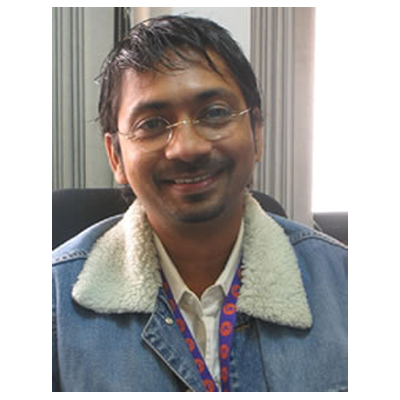
  • ‘Channels will stop chasing TRPs if we had a proper subscription revenue model:’ Vikram Chandra

    ‘Channels will stop chasing TRPs if we had a proper subscription revenue model:’ Vikram Chandra

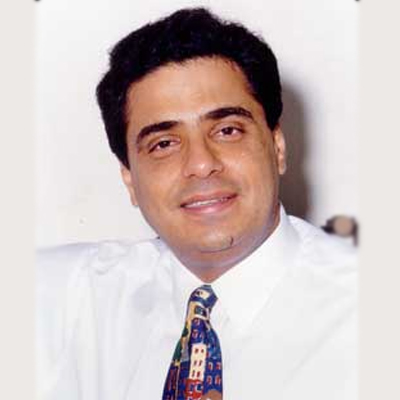
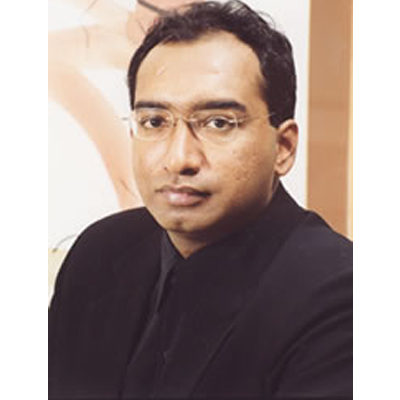
    In an industry where people change jobs every few years in order to quickly climb the ranks, his association spanning more than two decades with Dr Prannoy Roy’s NDTV Group speaks volumes about his commitment and stability. One of India’s leading journalists, he now helms NDTV Group as executive director and CEO. He is also the executive chairperson of the company’s online venture – NDTV Convergence.


    What’s more, even with the increasing managerial responsibilities, he manages to find time to anchor shows like Gadget Guru and The Big Fight and therein reflects his love for the Fourth Estate. He also flirted with the pen when he wrote his first fiction thriller titled The Srinagar Conspiracy in the year 2000. He is none other than Vikram Chandra.


    With many a feathers in his cap, Chandra is now well poised to take NDTV to newer heights with the expansion in the digital space. Tapping new avenues, NDTV now has its fingers dipped in multiple segments like wedding, fashion, auto, gadgets et al… and all under Chandra’s stewardship.


    In a chat with Indiantelevision.com’s Megha Parmar, Chandra sheds light on his journey, NDTV’s businesses ventures, cable TV digitisation, social media and the road ahead for the company.


    Read on for excerpts:


    NDTV is now expanding its digital footprint with gadgets, auto and retail. What drives you towards digital despite being a traditional broadcaster?


    This has been one of NDTV’s key strategies from a long time. Going digital is a key part of NDTV from several years. Way back in 1999 and 2000s, we started to believe that Internet is going to be a dominant part of our lives. While TV is still a core part of our DNA and plays an important role in everything that we do, we then wanted to expand into digital from a long time.


    Today, people can consume the same NDTV news though different streams. You can watch it on your TV, phone and the NDTV app. There are different ways to get the content that we are enabling for people. Going forward, we took a decision that there were individual niche areas where we want to make a major impact. That is what we are building on from the past couple of years; be it food, auto, wedding, retail and there are other things also coming into place.


    How much does digital contribute towards the company’s revenue?


    Digital’s contribution to the company’s revenues has been growing. It used to be around three – four per cent sometime back, but today because digital revenues are growing at a faster rate, digital accounts 20 – 22 per cent of NDTV’s revenue. The number is growing rapidly.


    What was the idea behind NDTV entering the online wedding market?


    Everything that we are doing in these areas has a very specific planned execution strategy. We thought it is a good proposition to be in and we got into it. We followed the same thing with Gadgets360 and the other portals. In weddings, we have found the same niche that we think is going to be very attractive. 


    Are revenues from television on the decline?


    The revenue from TV has grown over the years and will continue to grow. It’s just that the revenues from digital are growing at a faster rate almost at 15 per cent a year from a long period of time. While the share of digital revenue is increasing, it’s not that the TV revenues are declining.


    How long before revenue from digital will surpass that from television?


    We’re a long way from there. There is a lot of action going on TV also and we are also expecting regulatory changes to happen soon. If everything goes fine, the revenues from TV will also grow at a faster rate. There is no competition between the two. As long as the both are growing and are doing well, that is what we want.


    What are your plans with Gadgets360 and Auto? Do you see enough monetisation opportunities?


    Gadgets360 is by now a very dominant property. It is not just the number one gadget site in the country, it’s four or five times far than the number two in the entire world and has gained a very massive position. With Gadgets360, we tend to hold a position of considerable dominance in the space. If the people want to buy a gadget and want to know about anything related to it be it news or reviews, they have to refer to some or the other NDTV’s properties. It gives us a good position to build a strong community around the gadget loving and gadget dying population. We have now started to do some select launches of individual products that we think are interesting on the website. Many e-commerce transactions have also started to happen on Gadgets360 and the initial response has been quite astonishing. The first two three phones that we tried to sell were sold out in a month’s time, which surprised us. So now we are planning to do more such things, which will surprise us in many other ways.


    Auto is an area where we have built a powerful franchise over a long period of time. We have a good combination of content like carandbike.com and technology package combined with good engineering. This will help the auto portal also scale up both from the content side and from the transactions point of view.


    Do you see enough monetisation opportunities in Gadgets360 and Auto?


    Gadgets360 is doing well for us and has stayed ahead of our expectations. The monetisation is coming in. Once you have strong communication in various communities, it’s not just an attractive proposition from the revenue point of view but also from advertising. From an advertiser’s perspective, where else would you want to put your money than on a leading portal in that space? If you have a leading tech, auto or food content portal, that’s where you will want to put your money. Auto is also emerging successfully.


    What kind of investment is being pumped in for these new ventures?


    Well these have raised funds already. Food is the recent one, which has raised funds to the tune of $12 million roughly. Each of these have been visualised as an individual entity and they have a life of their own. Each of them have been done in a very entrepreneurial manner like start-ups. We don’t have the group dynamics playing; it’s all done by individual entrepreneurial team. They have raised their own money including some of the top investors.


    Can you share your overall plans for NDTV Convergence? It’s already the leader in its space but now there have been others joining in too.


    There will always be competition and that’s good. We are not scared of the competition. The more the activity and action in the field, the more it will help in growing the market. Today, only a small fraction of our population has access to the internet but the number of people who are going to use the service five years down the line is huge. It’s a vast untapped market. If more people come in, it will just expand the market. So far, with competition, it has not changed our position, market share or even the traffic that we get. We are in a comfortable position.


    In the age of clutter, competition & multiple start-ups mushrooming in the country, how does NDTV plan to have an edge over the others in the new areas that it has ventured into? 


    There are things that we do and focus on. So far we have managed the competition right. If you look at the page views or the traffic, it’s clear that there are a couple of clear leaders and while a few competitors are at some distance behind. We know how to manage the space.


    How do you see digitisation changing the game in India for broadcasters in terms of content, revenues, etc?


    Digitisation was always anticipated to be a game changer but to some extent we are disappointed. What is causing disappointment in the market is that the business models have not changed after digitisation.


    Digitisation was supposed to transform the business models for broadcasters where distribution revenues start to become a very major contributor, where subscription money starts to flow and also lower the reliance on advertising. That was the logic that digitisation was supposed to drive.


    There was also a strong economic business rational for this that in analog systems you only had 40 slots for 200 channels but now you have no capacity constraints. What we really would want to see in 2016 is concerting actions to be taken especially by the government and the regulators to try and persuade people that the model needs to change and formulate what the correct model should be.


    There is an effect on the content model as well. If subscription revenues were robust, then it sets up a business model where quality channels will have money to invest in quality content and a channel’s revenue will be based on subscription and not around chasing the advertising. Then what will be the need of content if one is chasing advertising? It’s not only chasing advertising; the channels are chasing TRPs, which is to some extent evident in the news space. They are clearly following tabloid type of news content, creating sensationalism and other things that are basically designed to get more TRPs. If you had a proper model wherein channels could make money from subscription, then people will not want to chase the TRP game. They will do good quality content and would gain some money from subscription.


    How much importance do you give social media? Do social media insights play a vital role in penning down your strategy?


    Social media is a very powerful tool and helps people connect with each other. There are obviously issues around and you should not think that social media is everything, which sometimes you pretend to do. Social media sometimes acts as a platform for the loudest voices but with a disproportionate scare. For a journalist too, it’s one of the first bases where you might get breaking news and information about what’s happening around you. But you do need to be careful about how you use social media and how you engage with social media. You should not believe on everything that goes around.


    Having said that, I don’t think social media plays any key role in driving our strategy back at NDTV.


    The credibility of a news story is now defined by a trending hashtag. If your story leads to a trending tag, it’s a successful story, otherwise it’s not. Is it a fair proposition?


    I don’t agree to that. It’s good to have your story trending but you can do a very successful strong and powerful story, which does not necessarily need to trend. It should not be the only metric. As a journalist, I think that it’s not necessary that something that drives more clarity or will trend means that it’s the only form of journalism you can do. You can still do very powerful journalism in various areas, which may not drive TRPs or trend on Twitter.


    Do trending #tags like presstitutes bother you?


    I think on social media a lot of the language and discourses have become disappointing. The language used, at times, is inappropriate. There are some people using abusive language. I think this is dangerous as at times you will find accusations, which aren’t true. People are straightforward and mature and also are definitely using social media for the right purpose but there is a possibility that they sometimes might pick up something, which is incorrect or not accurate and is a total fabrication. Someone will put something on social media and then it will be re-tweeted repeatedly and will be passed around, which is not true and will cause damage. 


    Social media has helped us in democratically using the voice of the people. Anyone can access it and express their views on anything, which should be rolled forward. But everything has a sad part attached to it and here the issue is about how we control the worst impulses of a few people putting something, which is invalid or not factual. We have to find a solution to how we can control such things from taking place on social media.


    Suppose a journalist is doing a hard hitting story like on child smuggling or malnutrition or about what is going in the Vidarbha region; these are not negative stories but are strong powerful development stories and may lead to some transformation happening in one place or other.


    We often hear people commenting on why we don’t publish positive stories or development stories. The answer is, these stories are done but are not the kind of social stories that will either make TRPs or be trending on Twitter. You do a great story on solar power and publish it; it will not work that much. But the story should be done. We should find ways to tweak the model that those stories are done on and are broadcast without anyone worrying about TRPs or trends.


    How important are ratings in the larger scheme of things?


    Ratings are a currency. TRPs will always reward a certain type of content over another type of content. That is one another intrinsic problem with the rating system. Now we are seeing new methods of measurement also coming out with a much larger monitoring system and a larger sample of people, which is interesting. At some point, I am sure BARC India and others will start monitoring digital data as many consume news not only from television but also from live streams.


    For a long time, NDTV has not been trying to sell on the basis of TRPs alone. I think the sales team has done a great job. Many of the powerful and important brands are keen to be a part of NDTV now.


    Is digital gradually taking over TV when it comes to news? What should TV players be doing to keep the audience intact?


    I don’t think it is going to be an either or situation… just as television and print have co-existed from such a long time. It’s not that after the invention of TV the newspapers shut down. Digital is another facet of it.


    We at NDTV are content providers and will provide content to  consumers in whichever format we can. It will be on TV, desktops, mobiles, etc. Wherever the consumer is consuming content, we will be there in that space. We are visible in most of the areas. So I think TV and digital will go together.


    From Doon School to journalism to Chief Executive Officer, how would you define your journey so far?


    Well, it’s been an interesting journey. I have worn so many hats so far. I have always enjoyed my years as a journalist and I still enjoy my anchoring. I get a lot of satisfaction especially from things like the special projects that I do and the big campaigns in which I play an active role as an anchor.


    Other than Gadget Guru and The Big Fight, I don’t get to do so much journalistically, which taps some area of regret within me. 


    What role has Dr Prannoy Roy played in your career?


    He has been a guide and a mentor in more ways than one. I went to TV because I saw Prannoy anchoring a show. That’s when I decided to make a career in the same field. He has been a role model for me and many of us. I wouldn’t have been a journalist if it wouldn’t have been for him.


    What can we expect from NDTV in the coming year?


    We are hoping for another change in the TV business model in 2016. On TV, we will continue to target growth and profitability. We will focus on our three basic aspects of TV, i.e. digital content, TV  and e-commerce business. Each have their own targets and matrices against which we will be evaluating them. We will go to the bottom line and get the profitability up as much possible.


    In digital content, we will try to consolidate our leadership position. On the e-commerce side, this is a crucial and critical year of all our new ventures that we are launching and we are hoping that the success that they have seen in the initial stage will turn into strong marketing business model.

  • DD confident of achieving 112-channel target on FreeDish by March-end

    DD confident of achieving 112-channel target on FreeDish by March-end

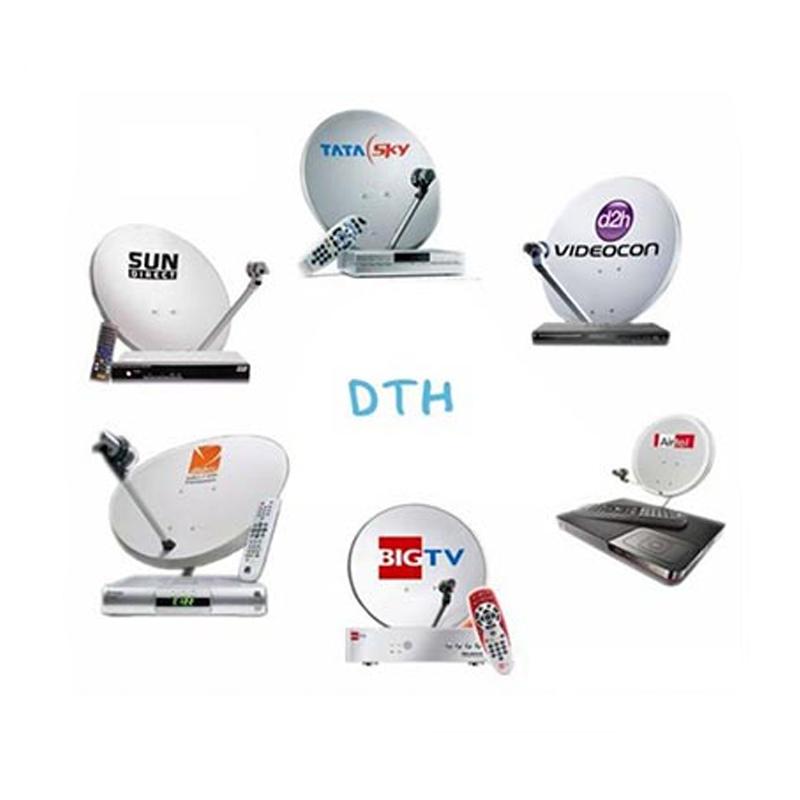
    NEW DELHI: Indian pubcaster Doordarshan is now confident that it will acquire the capacity of carrying 112 channels on its free-to-air (FTA) direct to home (DTH) service FreeDish by March-end.
     
    DD director general C Lalrosanga told Indiantelevision.com that a meeting had been held recently by the engineering team in FreeDish and Doordarshan with experts from the Bangalore based ByDesign India.
     
    DD is acquiring ByDesign’s conditional access system (CAS) so as to increase its channel offerings from the current 64 by the end of March 2016.
     
    The meeting was primarily aimed at assessing the requirement of CAS-enabled set top boxes (STBs) that will be needed to cover all regions of the country.
     
    Lalrosanga said the DTH player will switch over to MPEG4 from the current MPEG2 in two phases. “The first phase may begin this month,” he informed.
     
    Late last year, the Department of Electronics and Information Technology (DeitY) approved a proposal by ByDesign India to develop an Indian conditional access system. ByDesign was to receive a support amount of Rs 19.79 crore from DeitY to develop the new system in association with Centre for Development of Advanced Computing (C-DAC).
     
    The ByDesign model is totally indigenous and built for DVB-C setup. This CAS solution will enable broadcasters to control access to their services by viewers, and thereby enabling them to extend their business models to subscription based schemes.
     
    This will mean that the FreeDish will become encrypted but will remain FTA. In addition to helping increase the number of channels on the platform, this will enable FreeDish to gauge the exact number of households relying on FreeDish as encrypted STBs will only be available with authorised dealers.
     
    Lalrosanga went on to add that many homes were gradually switching over to FreeDish as they could then get their entire entertainment for a one-time fee of purchasing a dish, which costs as low as Rs 700 to Rs 1200.
     
    Prasar Bharati CEO Jawhar Sircar had said early last year that FreeDish’s aim was to reach 112 channels within a year or so.
     
    At present, there is no vacant slot on Freedish since all channels that were on the platform and whose licences had expired have come back through the 24 e-auctions conducted over the past year.
     
    Interestingly, two new entrants on the platform – Aaj Tak and Big Magic – are pay channels, which are being run as FTA on FreeDish.
     
    DD sources said that the reference interconnect agreement signed by these two channels no longer carries any non-discriminatory clause as it refers to FreeDish.

  • ED charge-sheet may jeopardise expansion plans of Sun TV and FM; group considering legal options

    ED charge-sheet may jeopardise expansion plans of Sun TV and FM; group considering legal options

    NEW DELHI: The security clearances for both the proposals for expansion of Sun TV and the group’s FM channels will get further jeopardised with the filing of a charge-sheet against the Maran brothers Kalanithi and Dayanidhi, Kalanithi Maran’s wife Kavery Maran and three others including two companies.


    A spokesperson for the group told Indiantelevision.com from Chennai that the company was examining legal recourse to ensue that the expansion plans are not jeopardised as they are linked to freedom of the press and have nothing to do with the alleged money-laundering cases.


    This follows the corruption case lodged by the Central Bureau of Investigation in the Aircel-Maxis deal. The complaint alleged that Rs 742.58 crore was paid for former Telecom Minister Dayanidhi Maran by two Mauritius-based companies through Sun Direct TV Pvt. Ltd and South Asia FM Ltd.


    Special Judge O P Saini here has fixed 18 January as the date for consideration and taking cognisance of the complaint, asked the ED to place all relevant documents before it.


    The two companies are owned and controlled by Kalanidhi, and the money was utilised by these companies for their business, the complaint alleged.


    SAFL, SDTPL and SAFL managing director K Shanmugam has also been named as accused in the complaint.


    Dayanidhi allegedly obtained the proceeds of crime (Rs 742.58 crore) by camouflaging it as capital contribution in SDTPL and SAFL and thus committed the offence of money laundering under the Prevention of Money Laundering Act, the complaint said.


    SDTPL is owned and controlled by Kalanithi and Kaveri, being the chairman and the director respectively. It received the proceeds of crime, Rs 549.03 crore for Dayanidhi in the guise of foreign investment, which was consumed by it in its business, the complaint said.


    SAFL received Rs 193.55 crore for Dayanidhi by projecting it as capital contribution received by the company. This amount was also consumed by SAFL in its business.


    The ED had on 1 April last attached assets of Dayanidhi, Kalanidhi and Kaveri Kalanidhi and other accused equivalent to proceeds of crime of (Rs 742.58 crore).


    Earlier, the CBI in August 2014 had chargesheeted Maran brothers, Malaysian business tycoon T Ananda Krishnan, Malaysian national Augustus Ralph Marshall and four companies — Sun Direct TV, Maxis Communication Berhad, South Asia Entertainment Holding Ltd and Astro All Asia Network PLC — in the case.


    The CBI had earlier alleged in the court that Dayanidhi had “pressured” and “forced” Chennai-based telecom promoter C Sivasankaran to sell his stakes in Aircel and two subsidiary firms to Malaysian firm Maxis Group in 2006.

  • Wipro names Abidali Neemuchwala as new CEO

    Wipro names Abidali Neemuchwala as new CEO

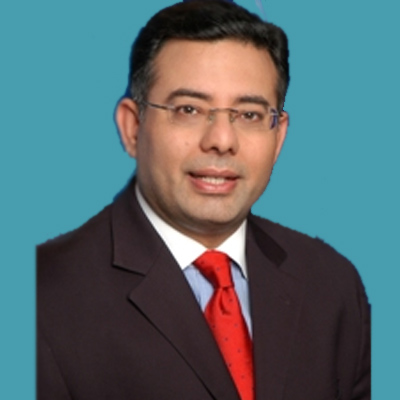
    NEW DELHI: Information technology services provider Wipro has appointed Abidali Z Neemuchwala as the new CEO.


    Prior to this, he was group president and chief operating officer of Wipro for the past nine months. At present, he is not on the board of Wipro.


    A Tata Consultancy Services veteran, Neemuchwala worked for 23 years in leadership roles.


    The Bangalore-based Wipro said current CEO TK Kurien will become the executive vice chairman and will be a member of Wipro board till March 2017.


    A spokesperson of Wipro told Indiantelevision.com that the aim was to ensure smooth transition of executive powers to the new CEO.


    Neemuchwala will handle the mandate to take Wipro through the next phase of growth.


    Wipro chairman Azim Premji said, “As executive vice chairman, Kurien will enable Abid by leveraging his deep relationships with customers and chart out a new technology roadmap for Wipro.”


    Premji said Neemuchwala has effortlessly assimilated into the culture and ethos of Wipro in his nine months as the group president and chief operating officer.


    Kurien will continue to report to Premji and will remain a member of the Wipro Board until 31 March, 2017.


    “I am convinced that we are well positioned to seize new opportunities in today’s marketplace. I look forward to working with the thousands of Wiproites to take our company to greater heights,” said Neemuchwala.


    Both Kurien and Neemuchwala will be on the Board of the company. Both these appointments are effective 1 February, 2016.


    Neemuchwala came to Wipro as the group president and COO from 1 April, 2015 from TCS, He has been handling the service lines of global infrastructure services, business application services, business process services, and advanced technology solutions. He will also head business operations; the geographies comprising Continental Europe, Africa, and LATAM; strategic engagements, advisor relationships as well as the marketing function.


    An Electronics & Communication engineer from NIT, Raipur, with a Masters in Industrial Management from IIT, Mumbai, Neemuchwala has experience in business and technology operations, process, and consulting.

  • DAS Phase III stayed in 5 states including Maharashtra as Bombay HC issues restraining order

    DAS Phase III stayed in 5 states including Maharashtra as Bombay HC issues restraining order

    NEW DELHI: Maharashtra has become the fifth state to join the group of states, which have obtained a High Court restraint on the implementation of digital addressable system (DAS) Phase III.


    The Bombay High Court cited a Supreme Court judgment and noted that a stay granted by a high court on a central notification in one state would be applicable in other states as well.


    The Hyderabad High Court and the Sikkim High Court have already granted stay on implementation of DAS Phase III primarily on the ground of shortage of set top boxes (STBs). In addition, the implementation of DAS in Tamil Nadu remains stayed after a bunch of petitions were admitted from Phase I onwards by the Madras High Court.


    The Hyderabad stay is for eight weeks in both Andhra Pradesh and Telangana, and the Sikkim stay is till 28 March, which is the next date of hearing. 


    Justice R D Dhanuka of the Bombay High Court said the Court will hear the matter on 1 February and gave the Government time to file its reply.


    Citing shortage of seeding of STBs as well as problems in interconnect agreements (ICA), petitioner Nashik Zilla Cable Operator Association (NZCOA) presented copies of the stay orders by other High Courts. Other petitioners were City Cable Operator Association of Nashik and Sai Big Star Welfare Association of Jogeshwari, Mumbai.


    Legal experts told Indiantelevision.com that while the Bombay High Court could use the precedent of other courts and direct a stay, this would only apply to areas under its jurisdiction and not pan-India. 


    Earlier on 23 December, 2015 a bench of the same Court had refused to extend the deadline and held that interim agreements could be entered into until the Telecom Regulatory Authority of India (TRAI) comes out with a model ICA. 


    TRAI has already issued a Consultation Paper on the subject and hopes to finalise a model ICA by mid-January, TRAI sources told this website.


    The extension of DAS does not augur well for the Information and Broadcasting Ministry, which may see a catapulting of such cases as reports pour of just over 50 per cent of seeding of STBs. 


    In most cases, the Courts turned down a plea by TRAI to be impleaded though it was permitted to file applications for this purpose. 


    The directive by the Hyderabad High Court was notable in that Justice Vilas V Afzalpurkar went against an order given by a division bench of which he was a member in the same court relating to Phase III on 20 August, 2013.


    As reported earlier, the Maharashtra Cable Operators Federation had also expressed difficulties in the 13th Task Force meeting held on the eve of the switch-off and had in fact said that seeding pan-India was less than 50 per cent even as the government claimed 76 per cent seeding and said the percentage achievement was 86.25 if Tamil Nadu that has some legal and other issues is excluded. The meeting was told there were only 405 zero seeding areas till the last report.


    The first phase of digitisation covered four metro, Mumbai, New Delhi, Kolkata and Chennai. In the second phase 38 cities were covered with population more than one million. About 630 districts and 7709 urban areas will be covered in DAS Phase III aimed at all urban areas while the fourth phase by 31 December, 2016, this year will cover the rest of the country.

  • Facebook’s Free Basics in a pinch in India; Zuckerberg comes to rescue with op-ed

    Facebook’s Free Basics in a pinch in India; Zuckerberg comes to rescue with op-ed

    MUMBAI: Facebook founder and CEO Mark Zuckerberg is on a mission – digital equality in the world. His means to achieve it? Internet.org that has been rechristened as ‘Free Basics’ in India. What’s standing in his way? The Telecom Regulatory Authority of India (TRAI).


    The prolonged debate over net neutrality and whether Free Basic will be detrimental to it has not only led to the establishment of online communities such as savetheinternet and online celebrities like All India Bakchod (AIB) to release a three part series on the subject, but also caught the government body’s attention. TRAI has asked Facebook’s only partner in the project, Reliance Communications to cease all work on Free Basics till it takes a call on the fairness of operators placing prices on certain online content and services.


    A move that only egged on Facebook further and that’s when it came up with an extensive online campaign that asked users to sign a petition addressed to TRAI in support of Free Basics.


    To further abate the growing skepticism over the service amongst Indian netizens, the social media giant also went offline with their advertising campaign. From full page advertisements in leading newspapers to billboards across the country’s metros, Facebook has made its presence felt and motive clear: it will leave no stones unturned to make Free Basics a reality.


    The idea behind the campaign was to highlight the need for Free Basics in India, especially for the underprivileged.


    “Hundreds of millions of people in India use the Internet every day and understand the benefits it can bring. This campaign gives people the opportunity to support digital equality in India. It lets people speak in support of the one billion people in India who remain unconnected, and lets them participate in the public debate that is being held by the Telecom Regulatory Authority of India on differential pricing for data services. And it gives them the opportunity to support Free Basics, which is proven to bring more people online and accelerate full internet adoption,” a Facebook spokesperson tells Indiantelevision.com.


    The campaign did gain ground and as per a survey commissioned by Facebook, overall, 86 per cent of respondents support Free Basics when presented with arguments for and against the service

    conducted by David Binder Research in partnership with India’s Hansa Research, the survey was sampled from 3000 people in India.


    “At the heart of the results was awareness of the importance of the Internet in shaping India’s future. A majority (65 per cent) of Indians agreed with the statement that, ‘a connected India is a stronger India and connecting more people makes India stronger, more informed, and more competitive in the world’ and more than half support the Digital India initiative,” the report states.


    Nevertheless, questions were raised on whether Free Basics truly adheres to what the advertisement campaign claims —  internet for all.


    In fact, the Advertising Standards Council of India (ASCI) received several complaints and petitions from netizens across the country stating that the advertisements were insensitive and only painted a one dimensional picture about rural India and its basic needs. Several argue that it is a very simplistic way to sell their product projecting Free Basics as some sort of a magic wand that waves away underprivileged India’s problems.


    While TRAI still awaits an official response from Facebook over the credibility of their campaign, Zuckerberg’s op-ed in one of India’s leading daily clearly addresses the subject.


    “More than 35 operators have launched Free Basics and 15 million people have come online. And half the people who use Free Basics to go online for the first time pay to access the full internet within 30 days. If we accept that everyone deserves access to the internet, then we must surely support free basic internet services. That’s why more than 30 countries have recognised Free Basics as a program consistent with net neutrality and good for consumers. Who could possibly be against this? Surprisingly, over the last year there’s been a big debate about this in India,” writes Zuckerberg,” adding, “Instead of wanting to give people access to some basic internet services for free, critics of the program continue to spread false claims – even if that means leaving behind a billion people.”


    One would argue that Zuckerberg is almost suggesting that India accepts Free Basics without any questions asked as it at least solves its problem of internet for all. The question of net neutrality is secondary to a developing country.


    Citing an example of a farmer in India, Zuckerberg highlights the power of internet in connecting India. “A few months ago I learned about a farmer in Maharashtra called Ganesh. Last year Ganesh started using Free Basics. He found weather information to prepare for monsoon season. He looked up commodity prices to get better deals. Now Ganesh is investing in new crops and livestock.”


    What is interesting to note here is that the example is in line with their campaign that speaks of rural India urging everyone to focus on immediate advantages of free internet for all.


    Regarding its long term effect on net neutrality and Facebook’s advantage over other players in market, the CEO argues, “There is no advantage because the platform is open to all developers. Facebook does not receive or give any money to developers, telcos or anyone else for their participation in Free Basics, nor does Facebook generate any revenue from the version of Facebook within Free Basics as there are no ads in it. Our connectivity efforts have brought 15 million new people online and is consistent with net neutrality because the actual results from the program prove it serves as a bridge to the full internet for people, and is non-discriminatory.”


    And while Zuckerberg rallies for Free Basics, even as he takes his paternity leave, a Reliance Mobiles’ TVC on ‘New Ways To Facebook’ has surfaced, adding an interesting angle to their partnership, and its impending impact on free competition in the market.

    Promising free access to Facebook even on offline mode through their specially designed ‘Go To Facebook’ button, which is available exclusively to Reliance Mobile users, the mass media campaign might not go down well with the ‘save the internet’ crusaders.


    Whether this will dent the progress Free Basics has had in convincing netizens in favour of it, or Facebook’s mission of Free Basics will be possible, one thing is for sure, it’s certainly made the space more exciting and started many a conversations.

  • Scope of Innovation in Print Advertising

    Scope of Innovation in Print Advertising

    On 16 April, 2000, The Times of India arrived on the doorsteps of millions of Indian households with its front page blank! It carried only the masthead, but no editorial. Blank!! That was the surprise of all surprises. It was our way of telling the world that the dot com revolution had arrived with the launch of indya.com. It took the country by shock! It hit newsreaders right between their disbelieving eyes. You couldn’t help but notice it. Unbelievable, even to us! 

    When we thought of the idea, we didn’t use fancy words like ‘innovation in print’. All we wanted to do was dominate the news! Take over everything. To shell-shock the world, to be remembered! Nobody had dared mess with the front page of Times of India until then. It took a great client like Sunil Lulla, the then CEO of Indya.com, to inspire, appreciate and see this idea right through. 

    Today we see a lot of messy stuff on the front pages of most newspapers. These are not innovations, but desperations. If we want to truly break through, we’ll have to do much better than what we currently see. More importantly, we’ll have to have the inventive fire of a madman and the inspired blessing of a visionary client. Else all we’ll get is paper pulp.

    It is getting harder for advertising to stand out in print. Because editorial is so much more exciting. And it’s being generated at the speed of life. So forget about creating print ads like we did before. We are competing with gripping news. And the only way to fight news is to make news. 

    Which explains the work many of us have seen for Benetton a few years ago. The ‘Unhate’ campaign. It dared to create news. A childlike argument for peace and reconciliation, it created huge buzz. The big pictures of world leaders kissing each other in the print ads incited strong reactions. The campaign was withdrawn but the brand’s point was made. The work won worldwide accolades and the Grand Prix at Cannes.

    To truly innovate in print advertising, it’s important to remember that we are not competing with other ads, we are competing with news. What’s your news? If you have inspired guts, you’ll find the answer. Innovation in print is not a topic of discussion. It’s not an ad… it’s an act!

    (These are purely personal views of BBDO India chairman and chief creative office Josy Paul and Indiantelevision.com does not necessarily subscribe to these views.)

  • NXT Digital signs RIO deal with Taj Television

    NXT Digital signs RIO deal with Taj Television

    MUMBAI: The Hinduja Group’s Headend In The Sky (HITS) service under the brand name NXT Digital has finally struck a reference interconnect offer (RIO) deal with Zee Entertainment’s distribution subsidiary Taj Television India, by virtue of which it will be able to include Zee Entertainment Enterprises Ltd (Zeel) and Turner International India’s channels in its bouquet of offerings.

    As was reported earlier by Indiantelevision.com, the matter was with the Telecom Disputes Settlement and Appellate Tribunal (TDSAT) and the two companies informed the Tribunal that Taj Television will provide its signals to Hinduja Group’s Grant Investrade as soon as an inter-connect agreement was signed.

    Zeel and Turner International were the only major broadcasting networks that were missing from the service’s bouquet. This deal will see NXT Digital, the rapidly growing platform in phase III areas, having a wholesome catalogue to offer to the operators, as well as reach a larger audience.

    Speaking on the signing of the new deal, a source from close to development told Indiantelevision.com, “The channels will be available on an ? la carte basis. And we are certain that this deal will help NXT Digital garner an enhanced reach.”

    This gives a definite edge to NXT Digital, which is the second HITS player in the country, the first being Jain HITS NXT Digital was launched earlier this year with state of art technology. On the other hand, Jain HITS is currently in the process of upgrading its technology.


    Also read:


    Taj TV to supply signals to Grant Investrade after signing ICA

  • Indian School of Media unites with The Indian Telly Awards 2015

    Indian School of Media unites with The Indian Telly Awards 2015

    MUMBAI: It’s that time of the year when the entire Indian television industry comes together to celebrate success, recognize talent, rejoice and cheer! It’s time for the most celebrated awards from Indiantelevision.com – The Indian Telly Awards.


    Indiantelevision.com’s the Fourteenth Indian Telly Awards which is scheduled to happen on the 28 be a star studded event and the extra­ordinary set and brilliant event execution will take the celebrations of the year end a few notches higher.


    Organizing the mega event has been a herculean task and has involved efforts of several well trained youngsters. Talking about the contribution made by students of Indian School of Media (ISM), owner, founder and director of Indian School of Media Natasha Aranha said, “This is our way of giving our students unparalleled, hands­on exposure to Event Management. ISM students have demonstrated their drive and ability in the last four years by working on several events of this size. Indiantelevision.com has shown faith in how well we train them, by giving them several responsibilities; from managing production and operations, backstage and front stage, red carpet and security to costumes and celebrity management, and we are delighted for the opportunity to support their initiatives.”

  • Indiantelevision.com’s ‘The 14th edition of the Indian Telly Awards’ now on &TV

    Indiantelevision.com’s ‘The 14th edition of the Indian Telly Awards’ now on &TV

    MUMBAI: It’s time for the television industry to rejoice, stand tall and cheer! &TV, the youngest member in the Hindi GEC space that represents New Age India is all set to showcase the most celebrated awards from Indiantelevision.com – The Indian Television Telly Awards. 


    In its fourteenth year – Indiantelevision.com’s The Indian Telly Awards will see over 80 categories covering technical, programming, popular and digital awards, with winners chosen by both an eminent jury and the public. With Ching’s as the presenting sponsor &TV will air Indiantelevision.com’s The Fourteenth Indian Telly Awards this December taking the celebrations of the year end a few notches higher.


    Applauding the achievements of the best on television, the viewers will be entertained with a host of performances and acts by their favourite television stars like Jennifer Winget, Krystle D’Souza, Mouni Roy, Sanaya Irani, Karan Patel, Ritwik Dhanjani, Shakti Arora, Mahima Makwana amongst others. Anchored by the popular cast of &TV’s Bhabi Ji Ghar Par Hai! – Shilpa Shinde, Asif Sheikh and Rohitash Gaud, the evening will witness a host of emotions and a sense of achievement amidst much fanfare and aplomb.


    Talking about the Indian Telly Awards, &TV business head said, “We are very excited to partner with one of the most reputed awards honoring the television industry. The Indian Telly Awards is an embodiment of work and talent that has entertained viewers and we are certain that the audiences will enjoy the awards nights as they witness a whole new side of their favourite stars.”


    “Over the years the awards have retained the utmost integrity and credibility. And that’s thanks to our respectable juries – like this year – consisting of industry professionals,” said Indiantelevision.com group and The Indian Telly Awards founder, CEO and editor-in-chief Anil Wanvari.  “We are delighted to say that we have taken Indiantelevision.com’s The Indian Telly Awards event to a very different scale this year with fabulous sets, performances and acts. We are also proud to announce a new telecast partner in &TV – the fast growing channel from Zee Entertainment Enterprises – in our fourteenth year.” 


    The Indian Telly Awards are the first awards for television which were started in 2001 by Indiantelevision.com and are known for being the most credible television awards in India. In its Fourteenth year the premier awards will set new standards in quality, grandeur and scale.