Tag: indiantelevision.com

  • Havmor’s aggressive brand building campaign; to spend Rs 125 crore in market development

    Havmor’s aggressive brand building campaign; to spend Rs 125 crore in market development

    NEW DELHI: Havmore Ice Cream, a brand that prides itself for using only pure milk ice cream, has said that around 15 to twenty per cent of its annual expense budget is put into marketing and advertising.

    Havmore Ice Cream Ltd Vice-President Chaitanya Rele told indiantelevision.com that even before its launch in Delhi and north India that was announced yesterday, it has commenced a 360 degree promotion that covers not only television commercials but also social media apart from print media and bill boards. He said the company would put around Rs 125 crore in market development over the next three to four years, but clarified that this did not mean only advertising.

    Rele revealed further that a major part of the expenditure will go on social media to reach out to the youth, and on TVCs, of which two are already on air. In addition, there will be one large media campaign every year.

    Repeating the line of Havmor MD Ankit Chona that the brand itself was a hero and did not need a Bollywood or celebrity brand ambassador, however, Rele explained that Chhota Bheem was being used on its packaging to reach out to the young, apart from the fact that packaging was very perky, vibrant and authentic.

    Ankit Chona said the brand will invest Rs 100 crores over the next 36 months which included a new Rs 100 crores new state-of-the-art ice cream manufacturing facility at Faridabad – expected to complete the first phase by December 2016 – and a production capacity of one lakh litres of ice cream per day. This new facility will increase an overall production capacity to 3.5 lakh litres of ice cream per day.

    Ankit revealed that the company was a Rs 450 crore company in the last fiscal and hoped to become a Rs 1,000 crore company by 2020 with its pan-India Udaan plan.

    Earlier at a press meet, chairman and managing director Pradeep Chona whose father Satish Chona had founded the brand in 1944 in Ahmedabad said there will also be a utility in south India in the next few months.

    The Faridabad facility will manage a complete range of pure ice creams using milk as the main ingredient and maintaining the highest quality standards. In addition to the two plants in Gujarat, the new manufacturing facility will streamline the production as well as efficient distribution across the northern market.

    Pradeep said: “We will introduce a diverse range of pure ice creams especially for consumers in Delhi taking into consideration the rich history and mouth-watering food as well as high consumption of ice cream. With Havmor, they will now enjoy pure and creamy varieties of unique flavours. We are confident that within no time, Havmor will reach every part of the city; gradually capturing the taste buds across North India.”

    The brand had over 160 varieties of ice cream and added three new varieties every three months. He said the aim of the company was ‘Acchai, Sachai, Safai’ (Purity, truth, and cleanliness) and its plant in Gujarat was one of the cleanest in the country. He said Havmor uses pure cream while the Indian Industry has moved towards Frozen Dessert, a substitute made out of vegetable oils.

    Ankit added that the ice cream industry would grow to a Rs 7,000 crore industry by 2018. The per capita consumption was 300 million to 400 million and 50 per cent of the sales were from the unorganized sector.

    Havmor’s diverse range of products includes first of its kind flavors like saffron pinenuts, paan, whisky and a Chotta Bheem range targeting all segments of consumers from kids to adults.

    Havmor’s strategic business focus and growth plan aims at exploring newer markets and strengthening its presence across India with an aggressive expansion plan which includes over 100 ice cream parlours and 10,000 retail outlets.

    Ankit said as part of the exclusive retail expansion, Havmor is planning to open 10 exclusive ice cream parlours in New Delhi by June 2016 and another 25 by the end of the year.

    Currently with over 30,000 retail outlets and with a strong presence in Maharashtra, Rajasthan, Madhya Pradesh, Goa & Telangana, Havmor will aggressively expand its operations through various retail partnership and ice cream parlours across the northern region.

  • Havmor’s aggressive brand building campaign; to spend Rs 125 crore in market development

    Havmor’s aggressive brand building campaign; to spend Rs 125 crore in market development

    NEW DELHI: Havmore Ice Cream, a brand that prides itself for using only pure milk ice cream, has said that around 15 to twenty per cent of its annual expense budget is put into marketing and advertising.

    Havmore Ice Cream Ltd Vice-President Chaitanya Rele told indiantelevision.com that even before its launch in Delhi and north India that was announced yesterday, it has commenced a 360 degree promotion that covers not only television commercials but also social media apart from print media and bill boards. He said the company would put around Rs 125 crore in market development over the next three to four years, but clarified that this did not mean only advertising.

    Rele revealed further that a major part of the expenditure will go on social media to reach out to the youth, and on TVCs, of which two are already on air. In addition, there will be one large media campaign every year.

    Repeating the line of Havmor MD Ankit Chona that the brand itself was a hero and did not need a Bollywood or celebrity brand ambassador, however, Rele explained that Chhota Bheem was being used on its packaging to reach out to the young, apart from the fact that packaging was very perky, vibrant and authentic.

    Ankit Chona said the brand will invest Rs 100 crores over the next 36 months which included a new Rs 100 crores new state-of-the-art ice cream manufacturing facility at Faridabad – expected to complete the first phase by December 2016 – and a production capacity of one lakh litres of ice cream per day. This new facility will increase an overall production capacity to 3.5 lakh litres of ice cream per day.

    Ankit revealed that the company was a Rs 450 crore company in the last fiscal and hoped to become a Rs 1,000 crore company by 2020 with its pan-India Udaan plan.

    Earlier at a press meet, chairman and managing director Pradeep Chona whose father Satish Chona had founded the brand in 1944 in Ahmedabad said there will also be a utility in south India in the next few months.

    The Faridabad facility will manage a complete range of pure ice creams using milk as the main ingredient and maintaining the highest quality standards. In addition to the two plants in Gujarat, the new manufacturing facility will streamline the production as well as efficient distribution across the northern market.

    Pradeep said: “We will introduce a diverse range of pure ice creams especially for consumers in Delhi taking into consideration the rich history and mouth-watering food as well as high consumption of ice cream. With Havmor, they will now enjoy pure and creamy varieties of unique flavours. We are confident that within no time, Havmor will reach every part of the city; gradually capturing the taste buds across North India.”

    The brand had over 160 varieties of ice cream and added three new varieties every three months. He said the aim of the company was ‘Acchai, Sachai, Safai’ (Purity, truth, and cleanliness) and its plant in Gujarat was one of the cleanest in the country. He said Havmor uses pure cream while the Indian Industry has moved towards Frozen Dessert, a substitute made out of vegetable oils.

    Ankit added that the ice cream industry would grow to a Rs 7,000 crore industry by 2018. The per capita consumption was 300 million to 400 million and 50 per cent of the sales were from the unorganized sector.

    Havmor’s diverse range of products includes first of its kind flavors like saffron pinenuts, paan, whisky and a Chotta Bheem range targeting all segments of consumers from kids to adults.

    Havmor’s strategic business focus and growth plan aims at exploring newer markets and strengthening its presence across India with an aggressive expansion plan which includes over 100 ice cream parlours and 10,000 retail outlets.

    Ankit said as part of the exclusive retail expansion, Havmor is planning to open 10 exclusive ice cream parlours in New Delhi by June 2016 and another 25 by the end of the year.

    Currently with over 30,000 retail outlets and with a strong presence in Maharashtra, Rajasthan, Madhya Pradesh, Goa & Telangana, Havmor will aggressively expand its operations through various retail partnership and ice cream parlours across the northern region.

  • DD’s programme acquisition spends over Rs 108 crore  for 2015-16

    DD’s programme acquisition spends over Rs 108 crore for 2015-16

    NEW DELHI: Doordarshan, which is now working on a plan to auction prim time slots, spent over Rs 108.5 crore in acquiring programmes in 2015-16. The pubcaster had spent just over Rs 71 crore in 2014-15 and a little above Rs 96.52 crore in 2013-14.

    Prasar Bharati sources told indiantelevision.com that its board had advised DD to proceed with an alternative policy by opening-up prime slots for sale in its 127th meeting on 17 June 2015.

    Doordarshan sources said it was anticipating higher side of revenues from sale of slots. Accordingly, DD proposed a slot sale policy, so that genuine external and creative professionals could mount their programmes on DD Channels through slot purchase. In this scheme DD would stop financing production through “Pay Out” modes and instead have revenue assurance in the form of a slot fee.

    The policy envisages that producers are made stake holders in the scheme. They would invest in the content and recover the same from the market through sale of associated commercial time. In such a situation, market forces would ensure that high quality standards were maintained for the content mounted.

    Sale of slots could provide a platform to DD to partner with the best content developers for improved viewership and financial health. 

  • DD’s programme acquisition spends over Rs 108 crore  for 2015-16

    DD’s programme acquisition spends over Rs 108 crore for 2015-16

    NEW DELHI: Doordarshan, which is now working on a plan to auction prim time slots, spent over Rs 108.5 crore in acquiring programmes in 2015-16. The pubcaster had spent just over Rs 71 crore in 2014-15 and a little above Rs 96.52 crore in 2013-14.

    Prasar Bharati sources told indiantelevision.com that its board had advised DD to proceed with an alternative policy by opening-up prime slots for sale in its 127th meeting on 17 June 2015.

    Doordarshan sources said it was anticipating higher side of revenues from sale of slots. Accordingly, DD proposed a slot sale policy, so that genuine external and creative professionals could mount their programmes on DD Channels through slot purchase. In this scheme DD would stop financing production through “Pay Out” modes and instead have revenue assurance in the form of a slot fee.

    The policy envisages that producers are made stake holders in the scheme. They would invest in the content and recover the same from the market through sale of associated commercial time. In such a situation, market forces would ensure that high quality standards were maintained for the content mounted.

    Sale of slots could provide a platform to DD to partner with the best content developers for improved viewership and financial health. 

  • Living Foodz draws up an appetising menu: website, app, new shows

    Living Foodz draws up an appetising menu: website, app, new shows

    MUMBAI: Essel Group’s international food and lifestyle channel, Living Foodz, had hit Indian television waves in September 2015. The channel is already riding on a wave of success within 7 months of its launch. Apart from curating 100 hours of original content for the Indian market, Living Foodz will roll-out its website in May, while the application will launch by June this year. The channel plans to create a marketing buzz within 30 to 60 days. Living Foodz is also looking at converting into HD by the end of this financial year and has already applied for a few licenses and is waiting for approvals.

    “Converting Living Foodz into HD is definitely on the agenda. We have already applied for a few licenses. In any case, 100 per cent of our programming is in HD but as far as the audiences are concerned, the HD penetration is still limited. Business viability and economics dictate that you have a good enough audience reach to justify advertising revenue. It will have to be an optimum and improvement call at an appropriate time for us to decide whether we should create an additional HD channel or go solo HD”, revealed Zee Entertainment’s Living Group APAC and India CEO Piyush Sharma.

    The channel believes that producing original content plays a pivotal role in ensuring enhanced reach. With many channels lying on content library and syndication, Living Foodz stresses on making quality content to enhance brand equity and hold audiences.

    As reported earlier by Indiantelevision.com, under the Living Entertainment umbrella, the group will unveil its other new channel Living Zen, which it plans to launch in the third quarter. Focused on health, wellness and happiness, it is likely to be followed by the launch of Living Rootz, Living Homez and Living Travelz every quarter thereafter.

    Living Foodz claims to have a 40 per cent market share in the lifestyle genre and will continue to focus on food as its strong component for content. To strengthen its footprint in the lifestyle space, the channel has announced a new show Sunday show Ganga:The Soul of India. Bollywood actress Dia Mirza will make her debut on TV with this new offering. The show will launch on 1 May 2016 and will air at 12 noon with a repeat telecast at 7 pm on the same day. The one hour per episode 10 episode show will see Mirza narrating the multi-faced story of the Ganges as she travels through many towns along the majestic river.

    Promising to give viewers a peek into the legacy shaped by India’s longest river, the show has bagged Airtel 4G as title sponsor and Gowardhan Ghee as co-powered by sponsor, while American Tourister is the travel partner. The travel food documentary will explore every part of what the river has to offer, including the people, history, mythology, anthropology, adventure, music and the cuisine.

    “Quality of content is very important to attract viewers as well as advertisers on any show. The reason why we have these sponsors on board is because of our ambitious content. Travelling is an enriching experience that often remains etched in our memories forever. Ganga: The Soul of India will give our viewers a never-before opportunity to experience the culture, history and cuisine offered along the banks of the sacred Ganges through the eyes of Dia Mirza, who is an ardent traveller. We could not think of a better concept and host to marry the ideas of travel and culture in the Indian context,” said Living Foodz business head Amit Nair.

    “It is impossible for me to encapsulate in a sentence the boundless joy, the learning, the discovery, the adventure Ganga: The Soul of India has brought to my life. For those seeking to define the idea of India, this is the journey to be a part of!” said Mirza.

    The show allowed her to combine her passion and love with professional experience, added Mirza. She also said that while the show was a deeply spiritual and inward journey, it was also physically challenging. This was especially true in higher terrains.

    “Before this, I had said no to reality shows and the typical formats that actors get offered. I want people to make their own roadmap. Slow travel gives you a personal, warm and an enriching experience. TV gives you the opportunity to present yourself as who you are. The show encompasses all that I wanted to explore and do,” she said further.

    It has also launched a coffee table book amalgamating the entire journey of Mirza and the team from Gomukh in the Himalayas to the Gangasagar delta where it meets the Bay of Bengal.

    “The numbers speak for us. One of the key reasons why people watch us rather than any other channel is because we create original relevant content set in context for our viewers. All our shows have a deeper connection with the audience which leads to more viewer engagement and time spent. As far as creating original content in the factual space goes, I think we are the leaders making the largest amount of factual entertainment content,” added Nair.

    As far as the marketing goes, Ganga: The Soul of India will be cross promoted on the other channels under Zee Network. The show will be primarily displayed on TV and digital platforms while the channel has also planned more specific market activities like the book launch.

    With a strategically shaped business road map, it will be interesting to see how this new feature in the growing factual entertainment genre can retain its dominance.


  • Living Foodz draws up an appetising menu: website, app, new shows

    Living Foodz draws up an appetising menu: website, app, new shows

    MUMBAI: Essel Group’s international food and lifestyle channel, Living Foodz, had hit Indian television waves in September 2015. The channel is already riding on a wave of success within 7 months of its launch. Apart from curating 100 hours of original content for the Indian market, Living Foodz will roll-out its website in May, while the application will launch by June this year. The channel plans to create a marketing buzz within 30 to 60 days. Living Foodz is also looking at converting into HD by the end of this financial year and has already applied for a few licenses and is waiting for approvals.

    “Converting Living Foodz into HD is definitely on the agenda. We have already applied for a few licenses. In any case, 100 per cent of our programming is in HD but as far as the audiences are concerned, the HD penetration is still limited. Business viability and economics dictate that you have a good enough audience reach to justify advertising revenue. It will have to be an optimum and improvement call at an appropriate time for us to decide whether we should create an additional HD channel or go solo HD”, revealed Zee Entertainment’s Living Group APAC and India CEO Piyush Sharma.

    The channel believes that producing original content plays a pivotal role in ensuring enhanced reach. With many channels lying on content library and syndication, Living Foodz stresses on making quality content to enhance brand equity and hold audiences.

    As reported earlier by Indiantelevision.com, under the Living Entertainment umbrella, the group will unveil its other new channel Living Zen, which it plans to launch in the third quarter. Focused on health, wellness and happiness, it is likely to be followed by the launch of Living Rootz, Living Homez and Living Travelz every quarter thereafter.

    Living Foodz claims to have a 40 per cent market share in the lifestyle genre and will continue to focus on food as its strong component for content. To strengthen its footprint in the lifestyle space, the channel has announced a new show Sunday show Ganga:The Soul of India. Bollywood actress Dia Mirza will make her debut on TV with this new offering. The show will launch on 1 May 2016 and will air at 12 noon with a repeat telecast at 7 pm on the same day. The one hour per episode 10 episode show will see Mirza narrating the multi-faced story of the Ganges as she travels through many towns along the majestic river.

    Promising to give viewers a peek into the legacy shaped by India’s longest river, the show has bagged Airtel 4G as title sponsor and Gowardhan Ghee as co-powered by sponsor, while American Tourister is the travel partner. The travel food documentary will explore every part of what the river has to offer, including the people, history, mythology, anthropology, adventure, music and the cuisine.

    “Quality of content is very important to attract viewers as well as advertisers on any show. The reason why we have these sponsors on board is because of our ambitious content. Travelling is an enriching experience that often remains etched in our memories forever. Ganga: The Soul of India will give our viewers a never-before opportunity to experience the culture, history and cuisine offered along the banks of the sacred Ganges through the eyes of Dia Mirza, who is an ardent traveller. We could not think of a better concept and host to marry the ideas of travel and culture in the Indian context,” said Living Foodz business head Amit Nair.

    “It is impossible for me to encapsulate in a sentence the boundless joy, the learning, the discovery, the adventure Ganga: The Soul of India has brought to my life. For those seeking to define the idea of India, this is the journey to be a part of!” said Mirza.

    The show allowed her to combine her passion and love with professional experience, added Mirza. She also said that while the show was a deeply spiritual and inward journey, it was also physically challenging. This was especially true in higher terrains.

    “Before this, I had said no to reality shows and the typical formats that actors get offered. I want people to make their own roadmap. Slow travel gives you a personal, warm and an enriching experience. TV gives you the opportunity to present yourself as who you are. The show encompasses all that I wanted to explore and do,” she said further.

    It has also launched a coffee table book amalgamating the entire journey of Mirza and the team from Gomukh in the Himalayas to the Gangasagar delta where it meets the Bay of Bengal.

    “The numbers speak for us. One of the key reasons why people watch us rather than any other channel is because we create original relevant content set in context for our viewers. All our shows have a deeper connection with the audience which leads to more viewer engagement and time spent. As far as creating original content in the factual space goes, I think we are the leaders making the largest amount of factual entertainment content,” added Nair.

    As far as the marketing goes, Ganga: The Soul of India will be cross promoted on the other channels under Zee Network. The show will be primarily displayed on TV and digital platforms while the channel has also planned more specific market activities like the book launch.

    With a strategically shaped business road map, it will be interesting to see how this new feature in the growing factual entertainment genre can retain its dominance.


  • Not sacked, going back to handle different responsibilities: Kenny Shin

    Not sacked, going back to handle different responsibilities: Kenny Shin

    MUMBAI: The Home shopping business in India which has major players Home Shop 18, Shop CJ, Den – Snapdeal, Naptol and the latest entry Best Deal TV, was rattled by reports of two senior officials of Shop CJ Network moving. There were rumours of CEO Kenny Shin and CFO Ramakrishnan N being sacked by the top management. 

    “Not sacked, just going back to handle different responsibilities” says Shin in an exclusive interaction with Indiantelevision.com. “We have performed better than we expected and hence sacking for underperformance is beyond question,” he adds.

    “Rs 850 crore was our estimate and we have had sales of Rs 900 crore which shows we over performed. We re-branded ourselves, we transformed from Star CJ to Shop CJ, launched two regional channels. So it has been an action packed year for us,” explains Shin.

    A few months ago, in an interview with Indiantelevision.com, Shin had shared a different number for sales estimates. He had said, “We are poised to cross Rs 1,200 crore turnover this year, recording a 40 per cent growth over sales of Rs 850 crore achieved in the last calendar year. Our channel reaches to more than 6.5 crore households in India and currently caters to about 40 per cent of the market.”

    Costs incurred by the company have also gone up significantly this year. As per information from a source close to the development, Shop CJ spent around Rs 70 crore last year (2014 – 15) which skyrocketed this year. “We were looking at spends of Rs 200 crore from the very beginning, as I told you earlier, we were looking ahead at this year to garner maximum reach and sales and hence higher spends were done to have better marketing and distribution,” asserts Shin.

    What about the CFO Ramakrishnan N? Has he also been moved to take on other responsibilities? “No!” exclaims Shin. “He has two daughters and a family in Bengaluru, and since the past one year he has been traveling a lot to and fro, which was getting difficult for him. So he decided to step down as the CFO and will now move back in with his family. He has done a wonderful job as the CFO and we wish him best of luck,” Shin adds.

    “I am headed back to Korea by this month end and it was a great four year journey in India” Shin concludes.

    Meanwhile the network has announced SR Yoon as the new CEO of Shop CJ India to replace Kenny Shin, and in an official letter to its employees mentioned it is looking for a new CFO.

  • Not sacked, going back to handle different responsibilities: Kenny Shin

    Not sacked, going back to handle different responsibilities: Kenny Shin

    MUMBAI: The Home shopping business in India which has major players Home Shop 18, Shop CJ, Den – Snapdeal, Naptol and the latest entry Best Deal TV, was rattled by reports of two senior officials of Shop CJ Network moving. There were rumours of CEO Kenny Shin and CFO Ramakrishnan N being sacked by the top management. 

    “Not sacked, just going back to handle different responsibilities” says Shin in an exclusive interaction with Indiantelevision.com. “We have performed better than we expected and hence sacking for underperformance is beyond question,” he adds.

    “Rs 850 crore was our estimate and we have had sales of Rs 900 crore which shows we over performed. We re-branded ourselves, we transformed from Star CJ to Shop CJ, launched two regional channels. So it has been an action packed year for us,” explains Shin.

    A few months ago, in an interview with Indiantelevision.com, Shin had shared a different number for sales estimates. He had said, “We are poised to cross Rs 1,200 crore turnover this year, recording a 40 per cent growth over sales of Rs 850 crore achieved in the last calendar year. Our channel reaches to more than 6.5 crore households in India and currently caters to about 40 per cent of the market.”

    Costs incurred by the company have also gone up significantly this year. As per information from a source close to the development, Shop CJ spent around Rs 70 crore last year (2014 – 15) which skyrocketed this year. “We were looking at spends of Rs 200 crore from the very beginning, as I told you earlier, we were looking ahead at this year to garner maximum reach and sales and hence higher spends were done to have better marketing and distribution,” asserts Shin.

    What about the CFO Ramakrishnan N? Has he also been moved to take on other responsibilities? “No!” exclaims Shin. “He has two daughters and a family in Bengaluru, and since the past one year he has been traveling a lot to and fro, which was getting difficult for him. So he decided to step down as the CFO and will now move back in with his family. He has done a wonderful job as the CFO and we wish him best of luck,” Shin adds.

    “I am headed back to Korea by this month end and it was a great four year journey in India” Shin concludes.

    Meanwhile the network has announced SR Yoon as the new CEO of Shop CJ India to replace Kenny Shin, and in an official letter to its employees mentioned it is looking for a new CFO.

  • Union Budget 2016: What it means for the media & entertainment industry

    Union Budget 2016: What it means for the media & entertainment industry

    MUMBAI: 29 February marked an important date in the year’s calendar as Indian Finance Minister Arun Jaitley presented the Union Budget 2016, amidst expectations from all sections. With an aim to give equal attention to all sectors that need financial assistance, Jaitley presented the nine pillars of his budget that focused on multiple subjects; from eCommerce to start-ups; from education to increasing jobs; and from agriculture to health.

    In a quest to find out what it really means for the media and entertainment industry, Indiantelevision.com reached out to several industry stalwarts to find out how they interpret the Union Budget 2016.

    Here’s what they have to say:

     M&E Tax Advisory India, EY, partner and head Rakesh Jariwala

    “As part of the budget proposals, India has levied an equalisation levy – what is known as ‘google tax’ globally. The tax @ six per cent of the consideration will apply on services relating to online advertisement, provisions on online ad space or other facility or services for the purpose of online advertisement, when such services are provided by a non-resident to either an Indian resident or a non-resident having a permanent establishment in India. The payer for these services are required to deduct 6% prior to making the payment. This is the first time that online services are being taxed in India.”

     Videocon director Anirudh Dhoot

    “The Finance Minister presented a balanced budget with a focus on infrastructure and agriculture sectors. By keeping the fiscal deficit target to 3.5 per cent of the GDP, the budget addresses long term positive impact on businesses. For consumer durable and home appliances industry specifically, the budget brings mixed responses. While the focus is more on dispute resolution and simplification of provision, the voluntary income disclosure will dampen the market. The government has lowered the corporate tax for new manufacturing units at 25 per cent with a view to promote industrial activity and generate jobs. With regard to small units having a turnover of Rs 5 crore, the corporate tax rate has been reduced from 30 per cent to 29 per cent. However, there is no relief on the corporate tax for big manufacturers. Government has stressed on GST implementation and proposed changes in customs duty to push make in India initiatives, which is aimed at improving the overall business environment.” 

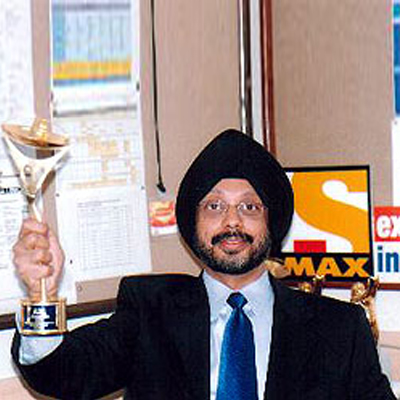
     Sony Pictures Networks India CEO NP Singh

    “From an overall budget perspective, the enhanced public spending through various social schemes and infrastructure investments should further help to expedite economic growth. The government has also balanced spending with fiscal prudence by reigning-in fiscal deficit. From a media industry perspective, there were no major changes. I feel that a change in the definition of industrial undertaking for the services industry as well as a push to define the GST roadmap would have been sector-positive. There is a landmark attempt in the budget to simplify the tax administration, which should herald a friendlier tax regime.”

     Dentsu Aegis Network South Asia CEO and chairman and Posterscope & MKTG – Asia Pacific chairman Ashish Bhasin 

    “Overall there are some positives and some negatives in the budget. Not increasing the service tax is a positive, particularly for the advertising and media sector. The general expectation was that Service Tax may go up in anticipation of higher GST rates. Controlling the fiscal deficit and several steps to invigorate the rural economy and rural consumption are positive signals. A rural consumption revival will help the economy and the advertising and media sector tremendously. On the negative side, there was an expectation based on what the Finance Minister said in the past, that corporate tax rates would come down. That is not to be so for most large companies. Introducing double taxation on dividends is also a negative. In balance this seems to be a mixed bag budget with a positive bias. If it is able to spur overall economic growth, we could see good times ahead for the advertising and media sector.”

     Times Network CEO and MD MK Anand

    “Digitisation, in my opinion is the most important factor for the broadcast sector currently, we are very happy about the excise duty changes proposed for set-top-boxes, which will help in the last mile infrastructure of Digital Addressable System (DAS) Phase 3 and 4. Overall, a stable and positive fiscal situation is good for the economy and that will support our ad sales growth projections. All in all budget 2016 looks good for the Broadcast sector.”

     Viacom18 Group CEO and National Media and Entertainment Committee CII chairman Sudhanshu Vats

    “Kudos to the government for presenting a disciplined and inclusive budget. The emphasis on rural development and commitment to the fiscal deficit target augur well for the economy in the long-run. The proposal for a more conducive excise duty regime for STBs and other ‘entertainment-access devices’ is welcome. While many of us from the industry were anticipating more sector-specific announcements, I’m sure that this budget will benefit the larger economy and therefore, by extension, have a positive impact on our industry as well.”

  • Union Budget 2016: What it means for the media & entertainment industry

    Union Budget 2016: What it means for the media & entertainment industry

    MUMBAI: 29 February marked an important date in the year’s calendar as Indian Finance Minister Arun Jaitley presented the Union Budget 2016, amidst expectations from all sections. With an aim to give equal attention to all sectors that need financial assistance, Jaitley presented the nine pillars of his budget that focused on multiple subjects; from eCommerce to start-ups; from education to increasing jobs; and from agriculture to health.

    In a quest to find out what it really means for the media and entertainment industry, Indiantelevision.com reached out to several industry stalwarts to find out how they interpret the Union Budget 2016.

    Here’s what they have to say:

     M&E Tax Advisory India, EY, partner and head Rakesh Jariwala

    “As part of the budget proposals, India has levied an equalisation levy – what is known as ‘google tax’ globally. The tax @ six per cent of the consideration will apply on services relating to online advertisement, provisions on online ad space or other facility or services for the purpose of online advertisement, when such services are provided by a non-resident to either an Indian resident or a non-resident having a permanent establishment in India. The payer for these services are required to deduct 6% prior to making the payment. This is the first time that online services are being taxed in India.”

     Videocon director Anirudh Dhoot

    “The Finance Minister presented a balanced budget with a focus on infrastructure and agriculture sectors. By keeping the fiscal deficit target to 3.5 per cent of the GDP, the budget addresses long term positive impact on businesses. For consumer durable and home appliances industry specifically, the budget brings mixed responses. While the focus is more on dispute resolution and simplification of provision, the voluntary income disclosure will dampen the market. The government has lowered the corporate tax for new manufacturing units at 25 per cent with a view to promote industrial activity and generate jobs. With regard to small units having a turnover of Rs 5 crore, the corporate tax rate has been reduced from 30 per cent to 29 per cent. However, there is no relief on the corporate tax for big manufacturers. Government has stressed on GST implementation and proposed changes in customs duty to push make in India initiatives, which is aimed at improving the overall business environment.” 

     Sony Pictures Networks India CEO NP Singh

    “From an overall budget perspective, the enhanced public spending through various social schemes and infrastructure investments should further help to expedite economic growth. The government has also balanced spending with fiscal prudence by reigning-in fiscal deficit. From a media industry perspective, there were no major changes. I feel that a change in the definition of industrial undertaking for the services industry as well as a push to define the GST roadmap would have been sector-positive. There is a landmark attempt in the budget to simplify the tax administration, which should herald a friendlier tax regime.”

     Dentsu Aegis Network South Asia CEO and chairman and Posterscope & MKTG – Asia Pacific chairman Ashish Bhasin 

    “Overall there are some positives and some negatives in the budget. Not increasing the service tax is a positive, particularly for the advertising and media sector. The general expectation was that Service Tax may go up in anticipation of higher GST rates. Controlling the fiscal deficit and several steps to invigorate the rural economy and rural consumption are positive signals. A rural consumption revival will help the economy and the advertising and media sector tremendously. On the negative side, there was an expectation based on what the Finance Minister said in the past, that corporate tax rates would come down. That is not to be so for most large companies. Introducing double taxation on dividends is also a negative. In balance this seems to be a mixed bag budget with a positive bias. If it is able to spur overall economic growth, we could see good times ahead for the advertising and media sector.”

     Times Network CEO and MD MK Anand

    “Digitisation, in my opinion is the most important factor for the broadcast sector currently, we are very happy about the excise duty changes proposed for set-top-boxes, which will help in the last mile infrastructure of Digital Addressable System (DAS) Phase 3 and 4. Overall, a stable and positive fiscal situation is good for the economy and that will support our ad sales growth projections. All in all budget 2016 looks good for the Broadcast sector.”

     Viacom18 Group CEO and National Media and Entertainment Committee CII chairman Sudhanshu Vats

    “Kudos to the government for presenting a disciplined and inclusive budget. The emphasis on rural development and commitment to the fiscal deficit target augur well for the economy in the long-run. The proposal for a more conducive excise duty regime for STBs and other ‘entertainment-access devices’ is welcome. While many of us from the industry were anticipating more sector-specific announcements, I’m sure that this budget will benefit the larger economy and therefore, by extension, have a positive impact on our industry as well.”