Tag: indiantelevision.com

  • IDOS 2016: Prasar Bharati could share infra with private players: Sircar

    IDOS 2016: Prasar Bharati could share infra with private players: Sircar

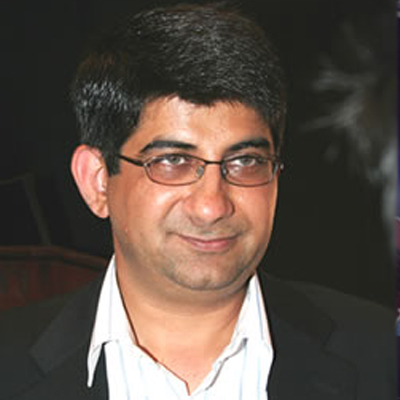
    GOA: Prasar Bharati has thrown an invitation to all private broadcasters and it reads: come and use our under-utilised resources and infrastructure to increase your reach in digital format terrestrially. What’s more, the Indian pubcaster will help in the distribution.

    According to Prasar Bharati CEO Jawhar Sircar, the best spectrum available for broadcasting was between 470-585  MHZ, which is with the pubcaster Doordarshan lying  highly underutilised. And, private TV channels can join hands as the organisation plans to make linear TV available to the public on their hand-held devices via digital terrestrial transmission (DTT).

    “Twenty  channels can be relayed per two antennas as such (via DTT) in four metros. All that people have to do with DVB-T2 is attach an affordable dongle on their mobile handsets and watch TV channels on the go. We can give it away free to consumers to experience it and then charge for it in the second year,” Sircar said while speaking at IDOS 2016 here on Friday.

    As Doordarshan has 1,400 broadcast towers and in the event of complete conversion to digital, DD may not need all those towers for the sake of broadcasting its own channels. The tower infrastructure could therefore be shared and private broadcasters could look at Prasar Bharati as an alternate delivery medium, Sircar explained. There would then be digitised cable, DTH and DTT on offer to the consumer.

    In conversation with indiantelevision.com founder CEO and editor-in-chief  Anil Wanvari, Sircar admitted that DD’s viewership may be falling and which was getting reflected in BARC’s audience measurement.

    “The grand days of DD happened not at the hands of DD’s personnel producing content but duringRamayan, Buniyaad, etc, all of which were made by private producers,” he said. “Hence DD should not make the content on its own. The people over here don’t know how to. The time slot sale to private producers is the best way to go,” he said, adding Prasar Bharati will primarily work on sharing its resources and reduce (in-house) content creation.

    To drive home his point on indifferent quality of present programming on DD, Sircar said the reach of the pubcaster’s resources hasn’t diminished and added, “We allowed private players to come on DD’s FreeDish platform. Yes, they are willing to pay from Rs 1.5 crore (Rs. 15 million) a year in the beginning to Rs 5.5 crore ( Rs. 55 million) today for a slot on FreeDish. That’s because it’s getting them viewership.”

    However, the former bureaucrat, now in the last lap of his present assignment, was evasive and forthcoming at the same time on FreeDish’s actual reach. “Nobody knows how many set top boxes for FreeDish are there, but the industry knows about missing subscribers of (private) DTH players. Those are our FreeDish subscribers. They could number 30 million or so,” he asserted, adding that DD had not initially put in CAS, but now  intends to do so with Indian CAS, take the boxes up to MPEG4 , and add more transponders for distribution, thereby increasing the DTH platform’s capacity to 250 channels in a phased manner.

    Asked about DD’s role as a pubcaster and obvious comparison with the BBC, Sircar was quick to point out that the British pubcaster gets thousands of crores of rupees every year from consumers  in licence fee, apart from government funding.

    Still, unable to restrain himself from taking a dig at the present Indian system regarding pubcasting, Sircar quipped, “They (BBC) know for sure what is expected from a pubcaster. The problem with DD is that we don’t know our real goal and mission.”

    Quizzed further on muddled policies and the pubcaster’s objectives, Sircar, with is tongue firmly in cheek, quipped, “I am Jawhar Sircar, not Bharat Sarkar.” The punning on his last name and Sarkar (Hindi for Indian government) was telling.

    Also read

    http://www.indiantelevision.com/regulators/trai/prasar-bharati-responds-to-trai-consultation-paper-open-to-sharing-dtt-infrastructure-160926

  • IDOS 2016: Prasar Bharati could share infra with private players: Sircar

    IDOS 2016: Prasar Bharati could share infra with private players: Sircar

    GOA: Prasar Bharati has thrown an invitation to all private broadcasters and it reads: come and use our under-utilised resources and infrastructure to increase your reach in digital format terrestrially. What’s more, the Indian pubcaster will help in the distribution.

    According to Prasar Bharati CEO Jawhar Sircar, the best spectrum available for broadcasting was between 470-585  MHZ, which is with the pubcaster Doordarshan lying  highly underutilised. And, private TV channels can join hands as the organisation plans to make linear TV available to the public on their hand-held devices via digital terrestrial transmission (DTT).

    “Twenty  channels can be relayed per two antennas as such (via DTT) in four metros. All that people have to do with DVB-T2 is attach an affordable dongle on their mobile handsets and watch TV channels on the go. We can give it away free to consumers to experience it and then charge for it in the second year,” Sircar said while speaking at IDOS 2016 here on Friday.

    As Doordarshan has 1,400 broadcast towers and in the event of complete conversion to digital, DD may not need all those towers for the sake of broadcasting its own channels. The tower infrastructure could therefore be shared and private broadcasters could look at Prasar Bharati as an alternate delivery medium, Sircar explained. There would then be digitised cable, DTH and DTT on offer to the consumer.

    In conversation with indiantelevision.com founder CEO and editor-in-chief  Anil Wanvari, Sircar admitted that DD’s viewership may be falling and which was getting reflected in BARC’s audience measurement.

    “The grand days of DD happened not at the hands of DD’s personnel producing content but duringRamayan, Buniyaad, etc, all of which were made by private producers,” he said. “Hence DD should not make the content on its own. The people over here don’t know how to. The time slot sale to private producers is the best way to go,” he said, adding Prasar Bharati will primarily work on sharing its resources and reduce (in-house) content creation.

    To drive home his point on indifferent quality of present programming on DD, Sircar said the reach of the pubcaster’s resources hasn’t diminished and added, “We allowed private players to come on DD’s FreeDish platform. Yes, they are willing to pay from Rs 1.5 crore (Rs. 15 million) a year in the beginning to Rs 5.5 crore ( Rs. 55 million) today for a slot on FreeDish. That’s because it’s getting them viewership.”

    However, the former bureaucrat, now in the last lap of his present assignment, was evasive and forthcoming at the same time on FreeDish’s actual reach. “Nobody knows how many set top boxes for FreeDish are there, but the industry knows about missing subscribers of (private) DTH players. Those are our FreeDish subscribers. They could number 30 million or so,” he asserted, adding that DD had not initially put in CAS, but now  intends to do so with Indian CAS, take the boxes up to MPEG4 , and add more transponders for distribution, thereby increasing the DTH platform’s capacity to 250 channels in a phased manner.

    Asked about DD’s role as a pubcaster and obvious comparison with the BBC, Sircar was quick to point out that the British pubcaster gets thousands of crores of rupees every year from consumers  in licence fee, apart from government funding.

    Still, unable to restrain himself from taking a dig at the present Indian system regarding pubcasting, Sircar quipped, “They (BBC) know for sure what is expected from a pubcaster. The problem with DD is that we don’t know our real goal and mission.”

    Quizzed further on muddled policies and the pubcaster’s objectives, Sircar, with is tongue firmly in cheek, quipped, “I am Jawhar Sircar, not Bharat Sarkar.” The punning on his last name and Sarkar (Hindi for Indian government) was telling.

    Also read

    http://www.indiantelevision.com/regulators/trai/prasar-bharati-responds-to-trai-consultation-paper-open-to-sharing-dtt-infrastructure-160926

  • Nawaz is face of Vodafone’s new campaign

    Nawaz is face of Vodafone’s new campaign

    NEW DELHI: Actor Nawazuddin Siddiqui is the brand ambassador in north India while Bobby Simha will be publicising the new Vodafone FLEX plan.

    Vodafone India Director-Commercial Sandeep Kataria told Indiantelevision.com it would be a high-decibel, 360-degree multi-media creative campaign to propagate the launch and introduce this new concept. This highly vibrant and impactful campaign will be seen across mediums — TV, print, OOH, radio and digital.

    Vodafone introduced Vodafone Flex to ease the problems of consumers who have to separately pay for voice data, STD calls, and Internet. Consumers will now pay a fixed fee for a period of 28 days that covers all.

    Kataria said this plan was only for pre-paid subscribers, and would not apply to post-paid consumers. He said it would take away the hassle of consumers of remembering dates when they have to pay and will be able to use their monthly subscription. Furthermore, he said that, if the full amount paid remained unutilised, it would be carried over to the next month.

    Consumers would receive a message three days before the period expires to let them know they need to renew their subscriptions. He said that 90 per cent of the consumers were still in the pre-paid segment.

    The rates would vary from city to city, and the rates in Delhi range from Rs 119 (325 Flex) to Rs 399 (1750 Flex).

  • Nawaz is face of Vodafone’s new campaign

    Nawaz is face of Vodafone’s new campaign

    NEW DELHI: Actor Nawazuddin Siddiqui is the brand ambassador in north India while Bobby Simha will be publicising the new Vodafone FLEX plan.

    Vodafone India Director-Commercial Sandeep Kataria told Indiantelevision.com it would be a high-decibel, 360-degree multi-media creative campaign to propagate the launch and introduce this new concept. This highly vibrant and impactful campaign will be seen across mediums — TV, print, OOH, radio and digital.

    Vodafone introduced Vodafone Flex to ease the problems of consumers who have to separately pay for voice data, STD calls, and Internet. Consumers will now pay a fixed fee for a period of 28 days that covers all.

    Kataria said this plan was only for pre-paid subscribers, and would not apply to post-paid consumers. He said it would take away the hassle of consumers of remembering dates when they have to pay and will be able to use their monthly subscription. Furthermore, he said that, if the full amount paid remained unutilised, it would be carried over to the next month.

    Consumers would receive a message three days before the period expires to let them know they need to renew their subscriptions. He said that 90 per cent of the consumers were still in the pre-paid segment.

    The rates would vary from city to city, and the rates in Delhi range from Rs 119 (325 Flex) to Rs 399 (1750 Flex).

  • Ten Sports proposed sale: Biz acumen trumps emotions

    Ten Sports proposed sale: Biz acumen trumps emotions

    NEW DELHI: In business, emotions have importance, but they have to be weighed against the larger interest (of the company). This was Zee boss Subhash Chandra telling an eager journalist on the media beat for a business newspaper in the fag end of 90s after having just bought out Rupert Murdoch from three joint ventures in a cash-and-stock deal worth few shades less than $ 300 million.

    When an announcement came on 29 August 2016, almost 16 years and mega growth later, on the Bombay Stock Exchange from Zee Entertainment Enterprises Ltd (ZEEL) that in order to maximize shareholders returns, the company, while exploring various strategic options to start or exit businesses, is in an advanced stage of negotiations to sell off its sports business (carried out under the Ten Sports brand), it generated lot of hiccups all around. This despite the fact that the rumor about an impending sale had been going around for quite some time now.

    But to indiantelevision.com shedding off of a business that could — and is partially doing so, financial analysts opine — turn the company’s bottomline scarlet is classic Chandra. A risk taker to the core, he is equally quick to invest as he is to divest. Of course, at a price that makes sense. He has designed his group to be very bottom line focused and cut losses whenever things are not looking good.

    Though it could be argued that this time round the final call to exit the sports business in the face of rising content acquisition costs and inadequate proportionate revenues (India’s slow digitisation process has been hampering real-time growth in subscription earnings) must have been taken by Chandra’s eldest son helming ZEEL, Punit Goenka, a true chip off the old block.

    The speculated price for Ten Sports’ impending sale, acquired from its Dubai-based owner Abdul Rahman Bukhatir’s Taj Group in 2006, is around Rs 2,000 crore. The prospective buyer: Japan’s Sony group’s Sony Pictures Networks India (SPN India), presently headquartered in the US with its APAC head office in Singapore.

    If the Indian Premier League (IPL) cricket is now a phenomenon to reckon with in world sports, being compared with the likes of the money-spinning NBA, tennis and golf leagues, it had an ancestor in ICL (Indian Cricket League).

    Conceptualized by Zee with Chandra’s active backing, ICL in the mid-2000 era couldn’t flower like IPL, a property of the Indian cricket board. Reason: Zee and Chandra were on the wrong side of the Indian cricket bosses who refused to recognize ICL and also pressured the international cricket community to boycott it terming it an illegitimate affair. A lot of cloak and dagger followed with some associates and partners apparently letting him down as he sought to fulfill his passion and dream that sports television in India should be in the hands of Indians, rather than some foreign broadcasters as it is in other countries.

    And, then came Lalit Modi with his own blueprint for a cricket league about nine years back that’s now known as IPL and, along with Kaun Banega Crorepati (KBC), is one of the bigger revenue earners for the present broadcast rights holder SPN India. However, many argue that Modi simply polished Chandra’s ICL — an allegation that the now-banished Indian has always denied saying the IPL idea was much older than even ICL.

    ZEEL did make attempts to get the broadcast rights for the IPL too to boost revenues for its Ten Sports channels, but was out-batted and bowled by the Indian cricket bosses. Not to mention that in the meantime the acquisition cost of cricket rights related to anything Indian kept going north.

    In a cricket-crazy nation where advertisers pour in money in cricket (except probably the original domestic leagues like the Ranji and the Duleep Trophy that get much discounted rates from sponsors and broadcasters), Zee’s Ten Sports ventured out looking for cricket rights in places like Sri Lanka, Bangladesh, and Zimbabwe, which enthused sponsors less compared to, say, an India vs. Australia cricket series. Additionally, from time to time the Essel group announced that it would be putting together other cricket leagues, involving local Indian domestic teams or international ones. But apparently, that did not go well, either courtesy resistance from boards or the fact they ended up being commercially unviable.

    Though while announcing its financial results for the first quarter for FY 2017 ending June, Zee did mention that key properties on its sports channels during the April-June 2017 quarter included telecast of Zimbabwe vs. India cricket series, WI-Australia-SA cricket series, the UEFA Champions League football final and WWE among others. The sports business revenue in the first quarter of FY2017 was Rs 1,700 million, while the cost incurred in this quarter was Rs 1,529 million. Certainly a narrow gap that would tend to get narrower with former ally-turned-competitor Murdoch’s Star India investing aggressively in sports led by cricket rights.

    For Ten Sports to survive largely on properties that not only had limited appeal for viewers and, thus, Indian sponsors (considered one of the bigger spenders in the world of sports, especially cricket) it would have always been an uphill task. Despite a Tour de France here and US Open tennis there with some premium golf thrown in for good via a dedicated golf channel.

    In most countries, unlike India, the business of sports broadcasting thrives on monopoly or most duopoly. Like in the UK with Sky Sports or in the US with Fox Sports and ESPN (NBC does make an occasional splash in the US with mega sporting properties like the recent Olympics coverage) or in Australia with Fox and Channel Nine.

    In India, three players in the sports broadcasting business – actually there’s a fourth in Nimbus, but it has retreated to being a niche player with a few sports – was a tad too much. SPN India had been gradually curating its sports telecast properties over the past 10 years or so – of which of course the premier one was the mega spinner IPL – and had launched a couple of channels, with ambitions to launch more. And then came the blinder of an announcement that SPN India was marshalling forces and getting into bed with the global sports heavyweight ESPN as it made efforts to make a comeback into sports television in India. This followed the annulment of its Star-ESPN joint venture (meant specifically for Asia) and the necessary cooling off period post its divorce from Star about a couple of years back.

    A three-way fight for Indian viewers despite 153 million TV households and growing was always going to be tough when Star was splurging money on sporting properties and the now Sony-ESPN joint venture brought to the table the expertise and deep pockets of two global media conglomerates.

    With the kind of financial muscle these two media heavyweight gorillas bring, Goenka and Chandra probably thought it would not be okay just being a member of the pack. And in such a scenario, it clearly makes business sense to cut one’s losses and get out. And if emotions have no business to be in business, then Zee getting out of the sports business makes more sense. Still, it must have been a tough call for Chandra and Punit to cut the cord.

    However, the sale deed has yet to be signed – ZEEL informed the BSE that it is in advanced discussions to sell its sports business to potential buyer(s). The ball is in the hands of Sony Pictures Television worldwide networks boss Andy Kaplan, SPN India CEO NP Singh and of course the two main players out on the green – Subhash Chandra and Punit Goenka. Keep watching this space!

    (SPN India and Zeel have since announced that they had reached an agreement on the buyout of Ten Sports. Read the announcement by clicking on the link below)

    SPN India acquires ZEEL’s Ten Sports for USD 385 mn
    http://www.indiantelevision.com/television/tv-channels/gecs/spn-india-acquires-zeels-ten-sports-for-usd-385-mn-160831

  • Ten Sports proposed sale: Biz acumen trumps emotions

    Ten Sports proposed sale: Biz acumen trumps emotions

    NEW DELHI: In business, emotions have importance, but they have to be weighed against the larger interest (of the company). This was Zee boss Subhash Chandra telling an eager journalist on the media beat for a business newspaper in the fag end of 90s after having just bought out Rupert Murdoch from three joint ventures in a cash-and-stock deal worth few shades less than $ 300 million.

    When an announcement came on 29 August 2016, almost 16 years and mega growth later, on the Bombay Stock Exchange from Zee Entertainment Enterprises Ltd (ZEEL) that in order to maximize shareholders returns, the company, while exploring various strategic options to start or exit businesses, is in an advanced stage of negotiations to sell off its sports business (carried out under the Ten Sports brand), it generated lot of hiccups all around. This despite the fact that the rumor about an impending sale had been going around for quite some time now.

    But to indiantelevision.com shedding off of a business that could — and is partially doing so, financial analysts opine — turn the company’s bottomline scarlet is classic Chandra. A risk taker to the core, he is equally quick to invest as he is to divest. Of course, at a price that makes sense. He has designed his group to be very bottom line focused and cut losses whenever things are not looking good.

    Though it could be argued that this time round the final call to exit the sports business in the face of rising content acquisition costs and inadequate proportionate revenues (India’s slow digitisation process has been hampering real-time growth in subscription earnings) must have been taken by Chandra’s eldest son helming ZEEL, Punit Goenka, a true chip off the old block.

    The speculated price for Ten Sports’ impending sale, acquired from its Dubai-based owner Abdul Rahman Bukhatir’s Taj Group in 2006, is around Rs 2,000 crore. The prospective buyer: Japan’s Sony group’s Sony Pictures Networks India (SPN India), presently headquartered in the US with its APAC head office in Singapore.

    If the Indian Premier League (IPL) cricket is now a phenomenon to reckon with in world sports, being compared with the likes of the money-spinning NBA, tennis and golf leagues, it had an ancestor in ICL (Indian Cricket League).

    Conceptualized by Zee with Chandra’s active backing, ICL in the mid-2000 era couldn’t flower like IPL, a property of the Indian cricket board. Reason: Zee and Chandra were on the wrong side of the Indian cricket bosses who refused to recognize ICL and also pressured the international cricket community to boycott it terming it an illegitimate affair. A lot of cloak and dagger followed with some associates and partners apparently letting him down as he sought to fulfill his passion and dream that sports television in India should be in the hands of Indians, rather than some foreign broadcasters as it is in other countries.

    And, then came Lalit Modi with his own blueprint for a cricket league about nine years back that’s now known as IPL and, along with Kaun Banega Crorepati (KBC), is one of the bigger revenue earners for the present broadcast rights holder SPN India. However, many argue that Modi simply polished Chandra’s ICL — an allegation that the now-banished Indian has always denied saying the IPL idea was much older than even ICL.

    ZEEL did make attempts to get the broadcast rights for the IPL too to boost revenues for its Ten Sports channels, but was out-batted and bowled by the Indian cricket bosses. Not to mention that in the meantime the acquisition cost of cricket rights related to anything Indian kept going north.

    In a cricket-crazy nation where advertisers pour in money in cricket (except probably the original domestic leagues like the Ranji and the Duleep Trophy that get much discounted rates from sponsors and broadcasters), Zee’s Ten Sports ventured out looking for cricket rights in places like Sri Lanka, Bangladesh, and Zimbabwe, which enthused sponsors less compared to, say, an India vs. Australia cricket series. Additionally, from time to time the Essel group announced that it would be putting together other cricket leagues, involving local Indian domestic teams or international ones. But apparently, that did not go well, either courtesy resistance from boards or the fact they ended up being commercially unviable.

    Though while announcing its financial results for the first quarter for FY 2017 ending June, Zee did mention that key properties on its sports channels during the April-June 2017 quarter included telecast of Zimbabwe vs. India cricket series, WI-Australia-SA cricket series, the UEFA Champions League football final and WWE among others. The sports business revenue in the first quarter of FY2017 was Rs 1,700 million, while the cost incurred in this quarter was Rs 1,529 million. Certainly a narrow gap that would tend to get narrower with former ally-turned-competitor Murdoch’s Star India investing aggressively in sports led by cricket rights.

    For Ten Sports to survive largely on properties that not only had limited appeal for viewers and, thus, Indian sponsors (considered one of the bigger spenders in the world of sports, especially cricket) it would have always been an uphill task. Despite a Tour de France here and US Open tennis there with some premium golf thrown in for good via a dedicated golf channel.

    In most countries, unlike India, the business of sports broadcasting thrives on monopoly or most duopoly. Like in the UK with Sky Sports or in the US with Fox Sports and ESPN (NBC does make an occasional splash in the US with mega sporting properties like the recent Olympics coverage) or in Australia with Fox and Channel Nine.

    In India, three players in the sports broadcasting business – actually there’s a fourth in Nimbus, but it has retreated to being a niche player with a few sports – was a tad too much. SPN India had been gradually curating its sports telecast properties over the past 10 years or so – of which of course the premier one was the mega spinner IPL – and had launched a couple of channels, with ambitions to launch more. And then came the blinder of an announcement that SPN India was marshalling forces and getting into bed with the global sports heavyweight ESPN as it made efforts to make a comeback into sports television in India. This followed the annulment of its Star-ESPN joint venture (meant specifically for Asia) and the necessary cooling off period post its divorce from Star about a couple of years back.

    A three-way fight for Indian viewers despite 153 million TV households and growing was always going to be tough when Star was splurging money on sporting properties and the now Sony-ESPN joint venture brought to the table the expertise and deep pockets of two global media conglomerates.

    With the kind of financial muscle these two media heavyweight gorillas bring, Goenka and Chandra probably thought it would not be okay just being a member of the pack. And in such a scenario, it clearly makes business sense to cut one’s losses and get out. And if emotions have no business to be in business, then Zee getting out of the sports business makes more sense. Still, it must have been a tough call for Chandra and Punit to cut the cord.

    However, the sale deed has yet to be signed – ZEEL informed the BSE that it is in advanced discussions to sell its sports business to potential buyer(s). The ball is in the hands of Sony Pictures Television worldwide networks boss Andy Kaplan, SPN India CEO NP Singh and of course the two main players out on the green – Subhash Chandra and Punit Goenka. Keep watching this space!

    (SPN India and Zeel have since announced that they had reached an agreement on the buyout of Ten Sports. Read the announcement by clicking on the link below)

    SPN India acquires ZEEL’s Ten Sports for USD 385 mn
    http://www.indiantelevision.com/television/tv-channels/gecs/spn-india-acquires-zeels-ten-sports-for-usd-385-mn-160831

  • Satisfying writer, client and customer is biggest challenge: Arunabh Kumar

    Satisfying writer, client and customer is biggest challenge: Arunabh Kumar

    MUMBAI: The room was jam packed. Industry specialists came in droves to support Indiantelevision.com’s flagship event, Vidnet 2016: Content on the Go, India’s first focused OTT conference.

    The speaker line-up made a beefy face. Some of the biggest names shared knowledge and expertise on the podium.

    And the one who rose to a thundering applause, thanks to his cult following and inimitable personality, was Arunabh Kumar, CEO & Founder at The Viral Fever.

    In a one-to-one with indiantelevision.com CEO, Founder and Editor-in-Chief Anil Wanvari, Arunabh shared some valuable insights on the ever evolving content ecosystem. The session began with the airing of the promo of TVF’s upcoming venture, Tripling.

    “This is the first time ever that a promo of a web-series has gone viral. With Tripling, we are touching new levels of execution,” Arunabh said with a chuckle.

    Anil, snappy as ever, shot a flurry of questions to Jogi from Pitchers (character played by Arunabh). Answering why TVF is yet to partner with an established OTT platform, the beardy Arunabh said: “We are open to do so, but sadly none can afford us.”
    Confident and brave…indeed!!

    Arunabh revealed TVF’s upcoming ambitious venture, a full-fledged movie. Yes, a movie which will be a game-changer.

    “The team is currently working on it and we assure that it will be three times better than 3 Idiots. It’s going to be a full-length feature film. Once it is complete, we will plan its distribution. All big players in the movie industry have entered web space, so we decided to do the opposite.”

    The conversation proceeded with Anil and Arunabh discussing possibilities of a collaborative approach, to merge energies of different creators.

    “We would love to work with others. Our aim is simple. Whoever is working with us should be creatively satisfied and feel that they have done their best work with us,” added Arunabh.

    TVF has been one of the driving forces in the space of branded content. Arunabh shared his mantra on the same.

    “There is more competition now, which is good. It means better content will be produced. Satisfying the triangle of the writer, the client and the customer is the biggest challenge. Though the headcount of content creators have increased, there are enough brands out there to support all of us.”

    He summed up with a masterpiece: “The USP is teamwork. You need to have a good team which will believe in your project. Rest, anything can be achieved.”
    Touché!!!

  • Satisfying writer, client and customer is biggest challenge: Arunabh Kumar

    Satisfying writer, client and customer is biggest challenge: Arunabh Kumar

    MUMBAI: The room was jam packed. Industry specialists came in droves to support Indiantelevision.com’s flagship event, Vidnet 2016: Content on the Go, India’s first focused OTT conference.

    The speaker line-up made a beefy face. Some of the biggest names shared knowledge and expertise on the podium.

    And the one who rose to a thundering applause, thanks to his cult following and inimitable personality, was Arunabh Kumar, CEO & Founder at The Viral Fever.

    In a one-to-one with indiantelevision.com CEO, Founder and Editor-in-Chief Anil Wanvari, Arunabh shared some valuable insights on the ever evolving content ecosystem. The session began with the airing of the promo of TVF’s upcoming venture, Tripling.

    “This is the first time ever that a promo of a web-series has gone viral. With Tripling, we are touching new levels of execution,” Arunabh said with a chuckle.

    Anil, snappy as ever, shot a flurry of questions to Jogi from Pitchers (character played by Arunabh). Answering why TVF is yet to partner with an established OTT platform, the beardy Arunabh said: “We are open to do so, but sadly none can afford us.”
    Confident and brave…indeed!!

    Arunabh revealed TVF’s upcoming ambitious venture, a full-fledged movie. Yes, a movie which will be a game-changer.

    “The team is currently working on it and we assure that it will be three times better than 3 Idiots. It’s going to be a full-length feature film. Once it is complete, we will plan its distribution. All big players in the movie industry have entered web space, so we decided to do the opposite.”

    The conversation proceeded with Anil and Arunabh discussing possibilities of a collaborative approach, to merge energies of different creators.

    “We would love to work with others. Our aim is simple. Whoever is working with us should be creatively satisfied and feel that they have done their best work with us,” added Arunabh.

    TVF has been one of the driving forces in the space of branded content. Arunabh shared his mantra on the same.

    “There is more competition now, which is good. It means better content will be produced. Satisfying the triangle of the writer, the client and the customer is the biggest challenge. Though the headcount of content creators have increased, there are enough brands out there to support all of us.”

    He summed up with a masterpiece: “The USP is teamwork. You need to have a good team which will believe in your project. Rest, anything can be achieved.”
    Touché!!!

  • OTT players have many content, technical challenges to overcome: Akamai’s Dev Gupta

    OTT players have many content, technical challenges to overcome: Akamai’s Dev Gupta

    MUMBAI: More and more ‘OTT players’ are entering India’s fast churning online video ecosystem in a bid to make something out of the double digit growth rates in digital ads in India. If one were to go by industry estimates some thirty odd new digital video services will launch in this market by the next financial year. Those jumping the gun to make fast money in all this disruption fail to realise the challenges that this new media poses in the long run.

    How will all these players co exist and be self-sustaining without a well defined USP when there is only a limited space for apps in smart devices? Which ones will get loyal users and which one will be forgotten in a pile of uninstalled apps?

    The key to having an edge over the rest out there is to see the larger picture and build an ecosystem around content, network and technology — something that technology based companies such as LeEco have realised and already implementing through their massive web of CDNs or Content Delivery Networks. While big players have the financial and technological backbone to support CDNs, the emerging players thus turn to media solutions providers such as Akamai to build this ecosystem for them.

    Speaking at indiatelevision.com initiative ‘Vidnet 2016′, Akamai’s global VP for Media Solutions Services, Dev Gupta, laid down the fundamentals of what an aspiring or existing OTT player must heed to if it planned to survive in the market till when the space becomes revenue generating.

    Global trends such as growing audience size, longer watch hours spent on online videos, and preference for higher bit rate videos or inclination towards high quality streaming point towards the fact that the consumer is not only giving significant time to digital videos but also is picky about the content and how it is served to him or her, pointed out Gupta.

    “Add to that the growing number of connected devices options in the market, and the OTT player has already found itself challenged to deliver the right type of content for the right type of device and operating system, in the right format. Easier said than done,” Gupta reiterates.

    Gupta insisted it is essential for each player to get the basics right to ensure a seamless service for the end user. ‘It starts with securing the content for the consumers which includes getting the rights and licenses of the content in place, ensuring your distribution channels be it for offline or online viewing and theft proofing the entire content flow from content producer to the audience from end to end,” he stated.

    The next important step in ensuring a profitable future in this business is to position oneself as a trustworthy brand that includes protecting the audience’s privacy and their payment information. “If you have content sitting in your servers or clouds, without a doubt there will be people trying to hack into it. Similarly, if you have databases with credit card information of millions of customers, who have put faith in your service by sharing delicate information with you, it needs to be protected as dearly as the content,” Gupta advised.

    Having a clear brand strategy in communication is also a must, according to Gupta.

    Players with AVOD business model have to especially make sure the advertisement do not dilute the experience of the content. Gupta further added that every player must be ready to handle multiple fold challenges, including different operating systems, devices and formats.

    Gupta aptly concluded with a final advice: be nimble.

  • OTT players have many content, technical challenges to overcome: Akamai’s Dev Gupta

    OTT players have many content, technical challenges to overcome: Akamai’s Dev Gupta

    MUMBAI: More and more ‘OTT players’ are entering India’s fast churning online video ecosystem in a bid to make something out of the double digit growth rates in digital ads in India. If one were to go by industry estimates some thirty odd new digital video services will launch in this market by the next financial year. Those jumping the gun to make fast money in all this disruption fail to realise the challenges that this new media poses in the long run.

    How will all these players co exist and be self-sustaining without a well defined USP when there is only a limited space for apps in smart devices? Which ones will get loyal users and which one will be forgotten in a pile of uninstalled apps?

    The key to having an edge over the rest out there is to see the larger picture and build an ecosystem around content, network and technology — something that technology based companies such as LeEco have realised and already implementing through their massive web of CDNs or Content Delivery Networks. While big players have the financial and technological backbone to support CDNs, the emerging players thus turn to media solutions providers such as Akamai to build this ecosystem for them.

    Speaking at indiatelevision.com initiative ‘Vidnet 2016′, Akamai’s global VP for Media Solutions Services, Dev Gupta, laid down the fundamentals of what an aspiring or existing OTT player must heed to if it planned to survive in the market till when the space becomes revenue generating.

    Global trends such as growing audience size, longer watch hours spent on online videos, and preference for higher bit rate videos or inclination towards high quality streaming point towards the fact that the consumer is not only giving significant time to digital videos but also is picky about the content and how it is served to him or her, pointed out Gupta.

    “Add to that the growing number of connected devices options in the market, and the OTT player has already found itself challenged to deliver the right type of content for the right type of device and operating system, in the right format. Easier said than done,” Gupta reiterates.

    Gupta insisted it is essential for each player to get the basics right to ensure a seamless service for the end user. ‘It starts with securing the content for the consumers which includes getting the rights and licenses of the content in place, ensuring your distribution channels be it for offline or online viewing and theft proofing the entire content flow from content producer to the audience from end to end,” he stated.

    The next important step in ensuring a profitable future in this business is to position oneself as a trustworthy brand that includes protecting the audience’s privacy and their payment information. “If you have content sitting in your servers or clouds, without a doubt there will be people trying to hack into it. Similarly, if you have databases with credit card information of millions of customers, who have put faith in your service by sharing delicate information with you, it needs to be protected as dearly as the content,” Gupta advised.

    Having a clear brand strategy in communication is also a must, according to Gupta.

    Players with AVOD business model have to especially make sure the advertisement do not dilute the experience of the content. Gupta further added that every player must be ready to handle multiple fold challenges, including different operating systems, devices and formats.

    Gupta aptly concluded with a final advice: be nimble.