Tag: indiantelevision.com

  • Indiantelevision.com, mFilterIt co-host Bengaluru roundtable on AI-led app marketing

    Indiantelevision.com, mFilterIt co-host Bengaluru roundtable on AI-led app marketing

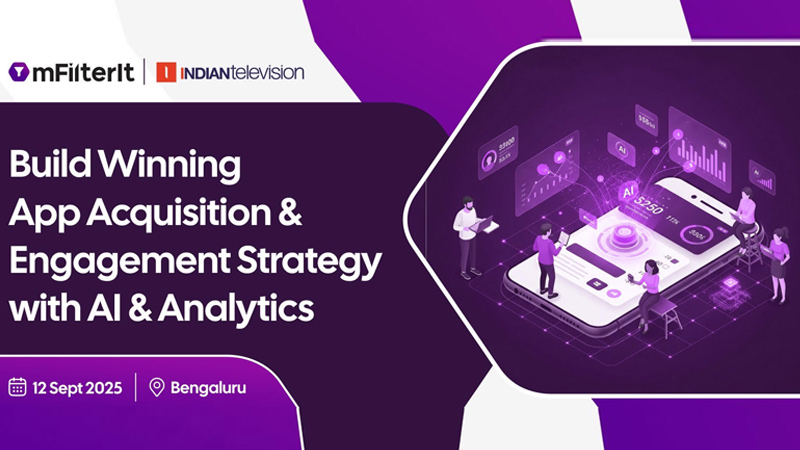
    BENGALURU: With India’s app economy mushrooming and companies locked in a race for clicks and engagement in an era of attention deficit, the question is no longer just about investing in app marketing, it’s about making every install count. To address this challenge, Indiantelevision.com Group and mFilterIt co-hosted a closed-door roundtable in Bengaluru on September 12, themed Build Winning App Acquisition & Engagement Strategy Using AI & Analytics.”

    “In an ecosystem, where installs alone no longer define success, it is critical to focus on cleaner traffic, sharper strategies, and genuine engagement. That’s why we are delighted to co-host this forum with mFilterIt—a partner whose expertise in AI and analytics has been pivotal in redefining transparency and trust in the digital ecosystem. By co-hosting this forum with mFilterIt, we aim to equip marketers with insights that go beyond the numbers and help shape sustainable, growth-focused approaches for the industry,” noted Indiantelevision.com, chief business officer, Soumitra Sahu.

    The invite-only forum brought together senior voices from leading brands to discuss sharper strategies for app marketers. The focus was not only on driving installs but also on ensuring genuine user engagement, maintaining cleaner traffic, and improving key efficiency measures such as cost per install (CPI) and cost per engagement (CPE). 

    The shifting ground of app acquisition

    With user acquisition campaigns increasingly driven by affiliates, India’s top brands are beginning to face blind spots in their frameworks. Attribution platforms may be able to measure installs, but optimisation and bot detection often fall outside their scope. This is where independent validators such as mfilterit have entered the picture, deploying AI-powered algorithms and layered checks that uncover wasted ad spend and fraud patterns usually missed by traditional systems. 

    A powerhouse panel

    The discussion was moderated by WPP Media, national head – performance marketing, Satheesh Kumar and featured senior leaders including Rohit Utmani of Phonepe’s Indus app store, Manas Prakash of Ajio, Pawandip Singh of Rapido, Akansha Kumari of Pocket FM, Utkarsh Garg of Jar, Satheesh Chinnappan of redbus, Saravanan G of Payrupik, Kirtiman Phadke of Stable Money, Rajat Srivastava of My Growth Club, Durgesh Rathore of mfilterit, and Jagmeet Singh of mfilterit. Together, they brought perspectives from diverse verticals of India’s booming app economy.

    Cracking the code

    The agenda stressed on some of the toughest questions in app marketing today. Among them was how brands can detect wasted ad spend and improve ROI, what critical metrics validate app ad traffic and highlight potential risks, and how incent walls distort campaign outcomes. A key theme: why marketers must challenge the data they receive from platforms and affiliates instead of taking it at face value. Fraud samples, like unusual CTIT patterns, installs from invalid OS versions, click hijacking, incent traffic, and even fake orders, further demonstrated how affiliate monitoring and real-time validation can uncover non-compliant activities and wasted spend. By highlighting these real-world patterns, the session demonstrated how independent checks bring more rigour, transparency, and efficiency to app marketing campaigns. 

    Why it matters

    By the end of the session, participants gained a clearer view of the blind spots in user acquisition and a sharper understanding of how AI and big data can improve campaign outcomes. They also walked away with a roadmap to elevate their strategies with real-time insights, helping ensure that every install delivers value rather than vanity. For Indiantelevision.com group, co-hosting the event reinforces its role as a knowledge partner to the industry. Together with mfilterit, it aims to provide marketers with a forward-looking agenda at a time when the quality of engagement, rather than sheer quantity, defines sustainable growth.

  • Indiantelevision.com launches whatsapp channel for readers

    Indiantelevision.com launches whatsapp channel for readers

    Mumbai: WhatsApp channels are all the rage. Almost every news website worth its salt has given access to its followers on this mobile-first communication tool.

    The 25-year-old Mumbai -hqed Indiantelevision.com is also joining this party and has launched its whatsapp channel so that readers can have the latest news from their fave website at their fingertips.

    To stay updated with the latest industry news and insights, follow Indiantelevision.com’s WhatsApp channel here: Indiantelevision.com WhatsApp Channel.

  • TV9 Network dominates the Indiantelevision.com News Television Awards 2023

    TV9 Network dominates the Indiantelevision.com News Television Awards 2023

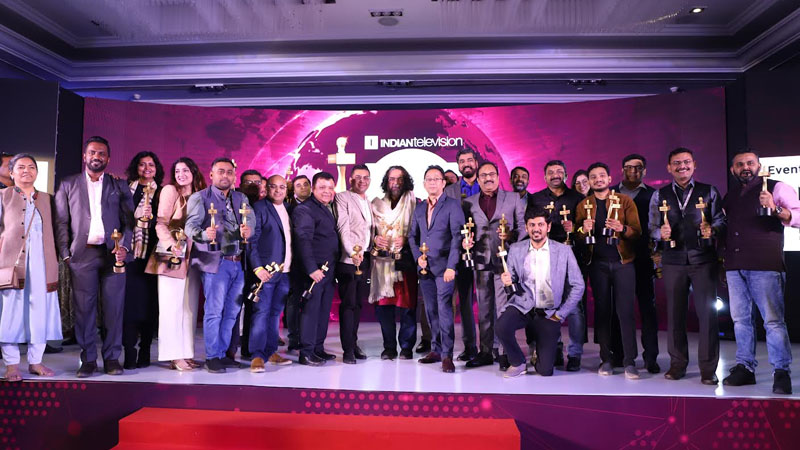
    Mumbai: In a resounding recognition of its commitment to excellence in journalism, TV9 Network won a staggering 53 awards at the News Television Awards 2023, organised by Indiantelevision.com at an event on 9 December in Holiday Inn, Delhi.

    The honours span no less than 15 categories and 7 languages, recognising the work of multiple broadcast channels and digital platforms by TV9 Network, including News9 Plus, The Innovation Hub, Money 9, TV9 Bharatvarsh, TV9 Bangla, TV9 Gujarati, TV9 Kannada, TV9 Marathi, TV9 Telugu and the TV9 UPUK Digital YouTube channel.

    Incepted in 2007, the News Television Awards honour outstanding television news journalism across 45 unique categories in 8 different languages, rewarding “channel programmers, anchors, presenters, technicians, producers, editors, reporters and management”, as per its website.

    “There is a major transformation taking place in the realm of Indian news media today. As viewers become more discerning amidst a surplus of options, TV9 Network has succeeded at disrupting the status quo, both in conventional broadcasting and in digital news formats. From pioneering the world’s first news OTT platform to delivering unparalleled coverage of current affairs through traditional television, innovation is at the centre of everything we do. Our commitment is to continually enhance the quality of content while upholding the fundamental tenets of journalistic integrity”, said TV9 Network chief growth officer Raktim Das.

    Indiantelevision.com founder & CEO Anil NM Wanvari, joined the panel of jurors for this year’s event, which included esteemed personalities such as PolicyBazaar CMO Sai Narayan, Gulf Marketing head Amit Gheji and JK Tyre CMO Amit Gujral among others.

    News9 Plus, India’s first news OTT platform took home 8 laurels at the event, across the ‘Programming’ and ‘Promo, Designing and Packaging’ categories, with TV9 Network MD and CEO’s ‘Duologue with Barun Das ft. Mithali Raj’ winning the award for ‘Editorial Choice – Most Cerebral Talk Show’.

    TV9 Network Innovation Hub, the flagship brand solutions powerhouse, bagged 2 wins for the Set Design and Brand Partnership of its ‘Road to Safety’ campaign, which aimed to increase awareness about road safety in India.

    Money9, the personal finance OTT offering by TV9 Network and the first of its kind in India, was also graced with the ‘Original Programming On OTT (Hindi)’ award, for its show Money Central.

    Also winning big were the broadcast channels, with TV9 Bangla walking away with an unprecedented 12 accolades, including 3 Personality Awards, for Amritanshu Bhattacharya, Anirban Chowdhury and Suman Mahapatra.

    TV9 Telugu scored a similarly impressive 11 wins, with 3 Special Awards and 4 Personality Awards given out to Deepthi Vajpeye, Rajinikanth Vellalacheruvu, G Nethravathi and Pranitha Yadav.

    TV9 UPUK, the YouTube channel dedicated to quality news coverage of events in Uttar Pradesh and Uttarakhand also emerged a big winner of the evening, with 4 Programming Awards and 2 Personality Awards, to Pankaj Tripathi and Brijesh Tiwari.

    On another front, Shivani Purohit of TV9 Gujarati was also conferred with a Personality Award, bringing the total tally of honours bestowed on the channel to 6.

    Meanwhile, TV9 Kannada and TV9 Marathi enjoyed great success in the Programming Categories, taking home 3 and 2 commendations respectively.

    Logging one win for Programming and one Personality Award to Mahesh Kumar Tiwari, TV9 Bharatvarsh rounded out the Network’s tally for the evening, bringing the figure up to a tremendous 53.

  • IBS: Rebuilding brands, building economies

    IBS: Rebuilding brands, building economies

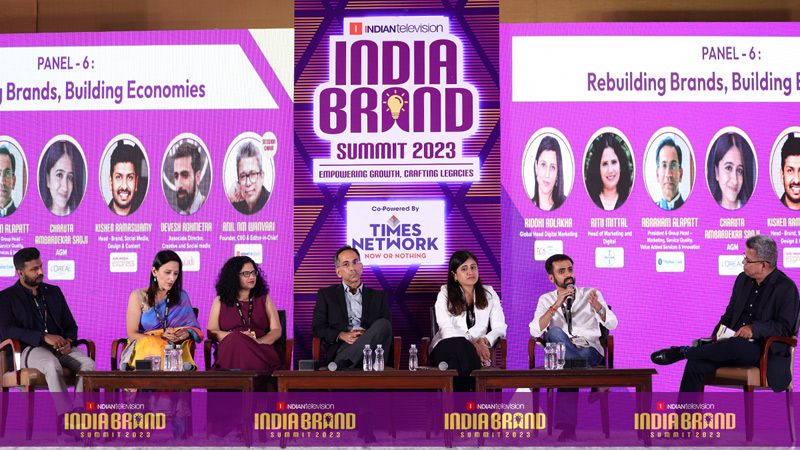
    Mumbai: The India Brand Summit held on 28 November 2023 at The Lalit Mumbai, convened leaders, marketers, entrepreneurs, and experts to explore current trends, challenges, and opportunities in the dynamic brands and marketing arena.

    The session offered a comprehensive exploration of the strategies and approaches required to revitalize brands to contribute to the growing economy. Through this session, We delve into the intricate relationship between brand revitalization and its impact on larger economic landscapes.

    The key highlights of the session were How brand revitalization efforts can contribute to stimulating economies, attracting investments, and creating jobs. Indicators to understand the brand’s current perception, customer sentiment, and market positioning. Strategies for Brand Revitalization – To explore methods to refresh brand messaging & how to adapt to evolving consumer preferences. To underscore the role of digital platforms and technology in brand rebuilding. To examine how brand extensions in brand rebuilding initiatives translate into tangible economic benefits. Recognizing the global scope of brand rebuilding & how it can collectively contribute to the development of the country

    The session was chaired by Indiantelevision.com group founder – CEO & editor in chief Anil NM Wanvari had panellists including Bayer consumer health division India head of marketing and digital Ritu Mittal, Tata consultancy services global head of digital marketing Riddhi Adlakha, Thomas Cook (India) Ltd president & group head – marketing, service quality, value-added services & innovation Abraham Alapatt

    Loreal Paris AGM Charuta Ambardekar Saoji, Air India Express head-brand, social media, design & content Kishen Ramaswamy, Shaadi.com associate director creative and social media Devesh Rohmetra

    Anil began the session by asking,  “How is each of your houses? How are each of you transforming yourself to serve this new consumer? And what’s happened to the brand that you’re associated with?”

    Devesh stated “So as you mentioned, like how and we were just talking about it that you know how the world around this is changing so much and especially not just economically, culturally and in all aspects, the institution of marriage is changing, There was an idea of arranged marriages, which has now changed to planned marriages as we spoke about. There was a time when parents found you somebody and said, this person looks like a good person. This is going to be your party. Those were arranged marriages. Now we’re in a world when parents come to you and then they look for you and they find multiple suitors for you, for you to meet, match a vibe and you know eventually then settle down with one of them. That’s something that we can do, say planned marriages. It is somewhere between love marriages and arranged marriages. So it’s chosen by you but may be found by somebody else. That’s what we at shaadi.com are also trying to do right? You spoke about the economic changes in our lives and our lifestyles. I’ll give you a great insight. Recently we were doing some research on our data from the platform. And we found out that women who are, you know, doing very well professionally and financially, independently. Are underplaying their salaries by a lot on our platform. So we found out that you know, people who are women, who are at very senior positions and very good companies, global companies have added their salaries at let’s say 12 LPA ++, Now that can be anything. So technically they are not lying, but we know this for a fact they are much higher than that. But they are doing that to kind of fit in and be more suitable or for multiple other reasons. Also found out that you remember there was a time when government job was the thing. if you’re a guy who has a government job, you are right, now entrepreneurs and MBAs are the new government jobs. They are the most suitable suitors on our platform. People are more desirable suitors on the platform, almost like, how a government job used to be. So yeah, we are also changing our brand approach. We are not trying to be the regressive, matchmakers that everybody thinks that we are.  We are trying to evolve our brand approach to fit the new narrative of our society and hopefully, it works out pretty soon.”

    Anil asked, “How are the changes that have impacted you how are you reacting to the changes and how has it impacted what you’re doing apart from localizing, colors maybe shades?”

    Charuta replied, “ Loreal Paris is a 114-year-old brand present in 150-plus countries. It’s massive from a global point of view. It has three pillars, One is women empowerment or because you’re worth it like everyone knows, the Second is science and the third part is inspiration and luxury. Now these three pillars don’t really change. They don’t need to be revitalized. So no matter which country we move to exactly like you said, the macroeconomic trends of more working women, more disposable income consumption shifting from household to individual consumers, and digitization. So that really helps a company like L’Oreal. So it’s more from a brand point of view we don’t need to drastically change our brand image from country to country however what we need to adapt in a growing economy like India. Firstly, are our products the correct products for Indian women? Many times what happens is when you launch a new brand comes into a country, there is a plug-and-play. So you have imports that come in and that’s what gets sold. But over a period of time, a scale builds. The products have to be made for the country. They have to be tested on Indian skin, on Indian hair and that’s the first step. And that’s how you will get skin. The more you make such products, the more you produce in the country, the costs become lower, the volume increases and this is a virtual cycle that everyone in FMCG slash beauty wants to get into. So that’s the first thing for us to do, which we did. I think the second thing is that this consumer is also very demanding. So it’s no longer to say for example, just about Shampoos to quote hair care there is a routine. So shampoo, everyone uses shampoo conditioner, half the consumers use conditional, then you have serums, then you have some hair masks and so many other products just in one category. And it is our responsibility as a company who’s known for this and who has been at this. We are the number one beauty brand in the world to really bring to the market newer and newer gestures like this. And this is what we do, So we play everything. So we play in terms of formats, smaller packs, etc. For the mass market. At the same time, we play high and low. So we play high for the evolved consumer who’s online. So in fact L’Oreal is a pioneer when it comes to e-commerce. When it comes to digitization, we have invested ahead of the curve. We foresaw that this is happening and in fact from 2018-2019 onwards we are over-indexed on our investments and that’s really helped us because that’s where the consumer is. Currently, there are 660 million smartphones in the country. So that’s massive and some around half of that household, so 330 million households, so around 2 smartphones. So the way we look at consumers has changed and that’s really helping us. So in terms of premiumization, new gestures, format change, and our brand itself being positioned being international, the consumer has come to that now and that’s what they asked for. So it really helps us create this virtual circle.”

    Abraham further spoke about his company adding, “The fastest-growing major economy in the world. So as a result of that, we’re pushing up a fair amount of people literally every year into the consumption disposal segment, which is a segment that we in the travel industry focus on. Two is that the youngest demography in the world obviously has a lot of implications in terms of media consumption, lifestyle, attitude towards saving or suspending as you refer to, and so on. And the third is the fastest-growing digital economy and the sort of rapid shift from analog to digital that India has witnessed leapfrogging various other economies. So if you look at our category, I think brand for those who don’t know, Thomas Co we are 143-year-old pioneer in modern travel as we know it. Everything from the first traveller’s check to the first hotel coupon was invented by Thomas Co. So Thomas Co India itself in its own right as I was explaining to you as a multinational, we are in 25 countries and five continents ourselves. We bought the British brand when it was liquidated in 2019. So we are the original Thomas Co now. So our whole attitude on the backdrop of these three trends is really looking at how we need to shift from a sustainability standpoint. One is this whole positioning, So I think where we are most focused on is what we call premium mass, which is the segment that’s big enough to want high-quality experiences when they travel and go on holiday especially. But at the same time, not too much customization because we recognize that’s not really a space that we are good at in terms of scale. So clearly positioning-wise, we are in the premium mass phase. Two is because of the young demography thing. The big shift is the shift from travel to places to travel for experiences. So you have a segment that’s coming to us over the last 10 years that’s coming from I want to do this and this. So why should I be going rather than I want to go here? What can I do? So that’s a big shift and that really signifies, not just young in terms of age, but young in terms of attitude, experience late travelers. And the third piece is, of course, the digital-first economy that India has already become. And that really means from a discovery point of view, from a transactional consumption point of view. We’ve shifted from being pure traditional, which is where we were born and while a lot of our competitors appear online, we have what we call Omni channel. So we allow customers to interface with us purely offline or analogue if that’s the mode they prefer and a lot of us stand that way and your digital which is the evolved customers may be customers like you and I, but most of India actually is a hybrid. So you have a lot of digital discovery and digital part analog consumption. This has got to do with ticket size. This has to do with the involvement of the family, This has got to do with complexity. This has to do with these applications and foreign exchange, a lot of HR physical processes still. So I think these are three big trends and three shifts that we’re making. So I’m happy to say that from pre-pandemic to post a lot of focus is on going after younger customers because we realize we appeal more to older customers. We’ve actually managed to recreate products and experiences and reach young customers in a funky, quirky way. We’ve actually managed to bring down the average age of our customers by 10 years over the last three-year period. Which I think makes us squat in the middle of the Indian demography average age.

    Anil moved on to the next question, “What’s been going on at bio-consumer health products?”

    Ritu commented, “Bayer globally has three divisions: Crop Science, Pharmaceuticals, and Consumer Health, operating in over 80 countries. The Consumer Health Business was launched in India in 2021 amidst the pandemic, presenting unique challenges. Our mission, upon launch, became centered on enhancing and democratizing access to self-care in India. This involves not only improving product availability but also providing easier access to information. Now, let’s explore why this mission is critical. In a rapidly growing economy like India, where individuals harbor significant dreams and aspirations, the need for better self-care is paramount. Data reveals that the average peak productivity period for an Indian lasts only seven years, nearly half that of a Chinese individual. India ranks 158 out of 195 countries in productivity surveys, signaling a substantial scope for improvement. Improving self-care is crucial for both individuals and the economy. The healthcare system in India is strained, with a ratio of one doctor per 2000 people, contrasting with the WHO’s recommended ratio of one doctor per 1000 people. This imbalance worsens in rural areas. Therefore, effective self-care can alleviate the burden on the healthcare system.

    Next, how do we drive this mission further? Despite being present in India for over 50 years, our flagship brand Saridon has seen minimal innovation. We are currently working on new developments, and although details are limited due to ongoing projects, we are excited about the potential. The introduction of formats can stimulate self-care adoption, as observed in developed markets for vitamins and supplements. While this trend is emerging in India, its scale remains relatively small. Leveraging our expertise, we aim to make these products more accessible to a broader audience.

    Creativity can play a pivotal role in simplifying complex scientific concepts for consumers. Besides leveraging science and expertise, translating it into relevant, easy-to-understand, and memorable ideas is a key area of intervention needed. In terms of technology, we have explored the potential of AI to launch a voice-AI-based program, leveraging the penetration of mobiles in India. In a pilot program initiated in Uttar Pradesh last year, a voice chatbot provides consumers with information on managing headaches, offering solutions both with and without pills. Under the “without pills” pillar, modules were designed to address common stressors, such as financial and relationship issues, contributing to better stress management and, consequently, reduced absenteeism and enhanced productivity.

    McKinsey’s self-care report from 2018 suggests that good health through self-care can contribute up to half a point to a country’s GDP. Recognizing this potential, we continue to focus on enhancing self-care practices in India, combining innovation, creativity, and technology for a healthier and more productive future.”

    Riddhi further commented about his company,  “So the way I would look at this opportunity is to talk today about how people think. TCS is an enterprise that basically deals with the B2B world. Everybody knows about TCS, but surprisingly, a lot of people still don’t know about TCS.

    We are in enterprise we have gone service products, platforms, consulting, all of it under one umbrella. We definitely take a lot of pride in working with almost everybody who was on the stage. So we take a lot of pride right from Air India to some called Bayer or Loreal, not with shadi.com. So we believe in getting married in-house.

    The way I would look at it is we’re trying to serve three different segments. The segment that I would say is there are a lot of people who know and who want to join us in India because we’re TCS we’re a tech giant Little did you know that we’re actually touching every person’s daily walk of life. Sure, right without actually talking about technology to rather enabling a person on your terms of your postal services to get a passport today is TCS even your postal services. So there are various such not just like I said, these are products and platforms, you go to any one of your retail stores like a chroma everything that comes on your bill is to TCS, what you’re seeing through AI is through TCS, if you’re seeing something on Air India the technology backbone is TCS. So that’s one segment that we deal into the second segment that we’re definitely Catering is to our customer’s customer and I think that’s what we spoke briefly inside. Our job is not to go back and create brand awareness for ourselves, but literally have our customers know more about themselves. what do I mean by this? So today, if I want to help them innovate, and growth transform, I need to become the strategic partner. I don’t need to be considered a technology giant alone. Tech definitely is an enabler for a lot of things that we do today. But do I also have to go back and become a transformative partner to you, I need to sit down with you and be hand in glove with your problems, your challenges your needs. And that’s the role that teachers are playing today. And here is the way marketing plays and also my brand image in India would be very different. And people would love to know me, versus somebody sitting in North America, or Latin America, or as a matter of fact, within Canada or Europe, Little do people know that we do not advertise in French, or in Spanish, or we are talking to German, and we talk to them in their language. But we will always consider ourselves as tech people, which is when the transformation journey is going to change the way we talk to these customers. And the way we are bringing ourselves out is the different side of TCS that we talked about today. So that’s the segment number two. Segment number three is bringing the two ecosystems together. We can’t do this separately because, at the end of the day, we may be the president of each and every company, we may be the CEOs of every company, but we’re individuals who have daily needs. How are we connecting the two to dry this entire ecosystem from this white animal? is what we’re trying to achieve.

    Kishen further about his company added, “Air India Express has been a legacy brand. It’s been there for about 18 years now. And if you look at Air India as a group, it’s been there for nineteen years., I think our brand has seen a transformation in the last five years I was part of AirAsia India, and now it’s part of Air India Express, It has taken us over two years of work that we have put into Air India Express itself, although a legacy brand, it had its own positioning in the Middle East Market, etc. But we wanted to take that ahead in terms of what it means like if we have to completely revitalize a brand such as Air India Express, which has a legacy of Air India as well as the Tata has now how do we bring that across to the new consumers, right, that is what we wanted to take. At the core of any airline, it is the three pillars that we look at which is connecting people, places, and cultures, right? We wanted to take that one step ahead, we wanted to say that you know, we would stand for an airline that will make meaningful connections, we will bring you the most unique of experiences and we will give you the best in value. But also tying it back to being rooted to the culture that we are coming from like being an Indian airline, we need to have that Indian warmth as well. We call it the unique Indian warmth. There is a reason for us to position it as a unique Indian walk because there is a classification in India or anybody anywhere else where the media is classified as a full-service airline and a low-cost carrier, We don’t classify ourselves as a low-cost carrier. The only reason for that is when you look at the differentiation between the first full-service airline and low-cost airline. There is not much of a difference we rather give you more value, we feel that we give you more value than a full-service airline where you get to choose how you want to fly. We have as a low-cost carrier, as they say, we give you options for you to choose from in terms of if you want to eat something like a wage meal or a non-veg. That is what you get from a full-service airline you will you will be asked whether Veg or non-veg and we will give you a full menu, we have four major options. If you don’t want to carry baggage, why would you want to pay for it? Those are value additions that are there. But you don’t get to choose a full-service airline. But you can do so with a low-cost carrier, which comes across as a value-based service. So we call ourselves a class of its own. And we position ourselves as fly as you are, right? You decide how you want to fly with us. You decide what you want to take with you, you decide how much you want to pay for it. We have everything that you want, you just have to choose and decide what is the experience you want. That is what we stand for. Now as a brand, that has been there for about 18 years now, how do we revitalize it we had to look at it from the ground down It’s not just about putting a great ad on TV. It’s about changing everything from our systems to our website. As Riddhi said, it’s been powered by TCS right now, we have a brand new website, which we launched last few months back even there, we had so much interest from the consumers and we saw a 130 per cent increase in terms of people visiting our website. India is Ota driven market for us to achieve that is great, people took an interest in terms what we are doing, we launched our brand in October and since then, our brand value has increased by over 3x people are looking for us and seeing that what is that new brand stands for we have a known livery that we have achieved, we are looking at completely revitalizing our service standards, we are looking at everything that has been there on Air India Express and looking at how can we improve our services from ground up? How do we talk to the customers, what do we serve them everything. So, that is what we are doing as a brand that you will see I think in India, as an Air India group, we have about 470 orders and then that that means that we will be getting about 190 aircraft in the next five years. And in the next 15 months, we will be adding about 50 aircraft which shows how much the economy is going to grow.” 

  • IDBF 2023: From Script to Screen: EC Studios Crafting compelling narratives for brands

    IDBF 2023: From Script to Screen: EC Studios Crafting compelling narratives for brands

    Mumbai: Beginning the session on a lighter note, Wanvari, who was intrigued by the earrings Bopche was wearing, asked him what was so special about it. To which Bopche said that it was more from a religious point of view, and it was not a fashion statement.

    Wanvari then asked, “There are various studios out there, but what makes EC Studios so special?”

    Bopche replied, “I think the first part is, yes, there are a lot of studios, a lot of content houses but EC is special because it has been owned by an agency. So, it works as a one-stop solution. Also, I think for brands to tell them compelling narratives, not just the creative, but production, post-production end-to-end, we take care of. First of all, this is medium agnostic, agency agnostic, as well as platform agnostic. So that’s one of the biggest USP and that kind of differentiates us from the rest of them. Also, we are web 3.0 already. So, I think that kind of sums it up in terms of the difference.”

    Wanvari then asked Bopche, “How does it work? Does a brand approach you or an agency approach you?”

    Bopche replied saying, “As I said, it’s more like end-to-end. At the same time, it’s piecemeal which is also available. Today, brands are looking for a quicker turnaround time, lower budget, and mostly the ecosystem as you have a creative agency production house, post-production house, and then technically, the content distribution partners. What we focus on is a flexible model. Brands can choose to engage with us for a one-neck-to-grab approach, where we handle everything end-to-end. Alternatively, they may already have an established agency that handles scriptwriting and then passes it on to us for production. There’s also the option for smaller projects, which might involve post-production, including CGI and VFX. So, it’s a matter of offering a full-service experience or fitting seamlessly into their existing supply chain, wherever they see the best fit.”

    Adding on to it, Wanvari asked, ”You have a full-fledged creative team in-house, including scriptwriters and crew, right?”

    Bopche said, “Not only do we have our creative team, which is standard for any agency or content house, but we also have our streamlined workflow tailored towards producing high-volume content. In today’s market, we’re witnessing a surge in live commerce activities and an increasing demand for content from DTC brands. The days of creating a single TV advertisement are behind us. Brands now aim to become content destinations, focusing on continuous engagement across platforms. That’s where we come in with our comprehensive in-house capabilities, encompassing studio setup, creative teams, production units, and post-production. If a script requires an external shoot, we arrange for it, but for the most part, our operations are fully in-house.”

    Moving on to his next question, Wanvari asked, “When working with an agency or brand, how closely do you all work?”

    To which Bopche replied, “Many names in the industry are primarily post-production houses, often comprising just two or three individuals with a set of producers who outsource post-production work. Companies like Famous or Prime Focus are typical examples, focusing exclusively on post-production and not involved in the creative aspect such as scriptwriting. The industry has traditionally been quite fragmented in this way. However, what sets us apart is our one-stop-shop approach. We handle everything in-house, from scripting to campaign development. Whether it’s engagement campaigns, ROI-focused ad campaigns, or any other type of content, we manage it all internally. It’s not about outsourcing; it’s about having everything under one roof, which allows us to pass on cost-efficiency and shorter timelines to our clients. In today’s landscape, content is the currency that brands are dealing in, and we aim to be at the forefront of helping brands optimize their content strategies.”

    Wanvari then asked, “How does being a part of the chain network help you?”

    Bopche answered, “Being part of a larger network is immensely beneficial for us. Countries like Korea and China are well ahead of India in terms of content marketing and production, covering everything from virtual reality to live commerce. We draw inspiration and best practices from these markets. This is one of the reasons why we confidently say we are well-prepared. While the media’s focus has been on meta, we believe that as we transition to web 3.0, there will be a significant demand for content creation in that space. Today, we create content for platforms like Instagram, Facebook, and YouTube, which operate within the web 2.0 framework. Content will always play a crucial role in advertising, just as newspapers, TV, and radio did in the past. Some platforms may coexist while others may fade away over time; the future will reveal this. Additionally, we are gearing up for the Metaverse era, including digital human creation and Metaverse content production. Learning from more advanced markets, such as Indonesia and developed countries, where content is concerned, they are approximately two years ahead of India. This ongoing learning process greatly benefits us.”

    Following the presentation of an AV for EC Studios, Wanvari then highlighted the tagline displayed in the last frame of the video and inquired, “Could you please share some insights about ‘Kaam se hi Naam’?”

    Bopche replied saying, “We believe that our work should speak for itself, much like the approach taken by individuals like Sachin Tendulkar, MS Dhoni, or Shahrukh Khan, who have earned their names through their achievements. While there may be countless others with the same name, it’s the work that distinguishes them. This philosophy is at the core of our values, and with every project we undertake for our clients, our aim is to not only meet their satisfaction but also elevate the pride and satisfaction of our team.”

    Talking further about the pleasant feeling of the video, Wanvari said, “I’m sure clients will also feel comfortable when they come in there.”

    Bopche then went on to say, “We’ve been in operation for the past four and a half years, and we’ve recently expanded with a new facility, including two studios located in Gurgaon. One of these studios is exclusively dedicated to Samsung, where we manage their live commerce operations. While we certainly create entertaining content that engages audiences, we also produce educational content that delivers ROI for the brand. Additionally, we craft content designed to foster engagement and build communities for our brand partners.”

    Wanvari then shot his next question, “What is the one thing that we wished the client understood about the production side?”

    Bopche answered, “While production may appear easy and glamorous to outsiders, it presents a myriad of challenges. One of the key challenges is coordination and collaboration. Production involves managing large teams with diverse skills and responsibilities, making it crucial to maintain effective communication and coordination. Failure to do so can impact costs and timelines, both of which are critical. Staying within budget and adhering to tight schedules are essential in this line of work. Safety is also a paramount concern when dealing with crews of 120 to 150 individuals. Ensuring safety on set is a top priority. Furthermore, client satisfaction post-shoot is vital. In the world of production, there is a significant degree of unpredictability, as we’re experiencing today. This necessitates a team with skills like adaptability, problem-solving, and the ability to make quick decisions on the set. These aspects often go unnoticed but are instrumental in the success of any production.”

    Wanvari then asked, “How does coordination take place at EC Studios? Is it facilitated through cloud-based systems, with clients providing feedback online?”

    Bopche replied, “In today’s fast-paced world, convenience is key. People want to access content with a simple tap on an app, and nobody has the time to deal with downloading links or managing files through WhatsApp or WeTransfer. That’s why we’ve developed a cloud platform that streamlines the approval and feedback process for decision-makers, such as senior CMOs or marketing heads, even when they’re on the move, like at the airport. They can easily provide feedback on content with a few clicks, and it’s automatically relayed to us. We make the necessary changes, and it goes back to them seamlessly. There’s no need for manual link transfers; it’s all automated. This approach not only simplifies content production but also enhances the logistical aspects of the creative collaboration between the brand and the agency. Everyone can work together efficiently on a single platform to achieve the desired output.”

    Moving on, Wanvari asked Bopche whether they welcome clients on their shooting floor. To this, Bopche replied with a laugh, “Obviously, they are the ones putting the money.”

    Adding on to it, Wanvari said that it gets very painful at times after the storyboard is approved and after everything’s approved.

    Bopche then said, “When we have clients on the set, it comes with its own set of pros and cons. Let’s start with the pros. Having the brand or client present on the set allows for quick feedback, as they can see the production in action. It promotes transparency, as they witness the communication firsthand. Moreover, it enables swift decision-making, especially in unpredictable situations. Additionally, client feedback often contributes valuable creative nuances that enhance the final film, from a brand hygiene perspective. However, there are also cons to consider. Having the client on set can sometimes be distracting, adding pressure to the production crew. Excessive interference from the client in the creative process can be challenging, as it may undermine the expertise of the production and creative teams. So, while there are definite benefits, it’s essential to strike a balance when clients are on set.”

    Wanvari asked, “How do you respond to clients’ expression that budgets are constrained but promise significant exposure in return for your services?”

    Bopche answered, “While we always maintain a smiling demeanour externally, internally, we engage in critical evaluation when clients mention tight budgets and the promise of exposure. This assessment considers several factors, such as the state of our business at that time, the value the project brings to our portfolio, and whether it’s worth undertaking even if the financial compensation is limited. Given the choice, we often lean towards managing tight timelines over tight budgets, as it offers an opportunity to showcase our skills under pressure.”

    Pointing out that Bopche didn’t answer the question properly, Wanvari said, “Would you choose to undertake the project, strike a balance between the two by possibly compromising on the budget for exposure, or opt for a different approach altogether based on the demand?”

    Bopche replied, “We need to establish the value of what’s achievable. Content can be created at various price points, and it’s important to convey what clients can realistically expect based on their investment. It’s not a matter of categorically refusing projects; we don’t work for free, as no one can sustain that. We have a track record of successful projects and satisfied clients, supported by testimonials. However, there’s a delicate balance. We always consider whether a project adds substantial value or if it’s worth undertaking. It’s about helping clients understand the value they’ll receive in return. While there’s often humour around client expectations versus reality in memes, in real life, we’re committed to maintaining quality. We believe that, ultimately, people remember the one goal you miss, not the ten you save. So, we uphold our commitment to delivering quality work.”

    Wanvari added, “You’ve worked for a Korean company. Korean companies are known to look at bottom lines.”

    Adding on to the same, Bopche said, “Yes, business is crucial, and everyone in this room, regardless of their role or department, is connected to it in some way. It’s a shared goal. However, it’s equally important to consider how to approach it ethically. Bottom lines hold significance, but there are instances where projects may have tight budgets, yet they are worth pursuing. Not all content will deliver a high ROI, just as not all content will directly impact the bottom line.”

    Wanvari then asked Bopche, “What role does technology play as far as your studio is concerned and production is concerned?”

    Bopche said, “Technology has played a pivotal role in the evolution of film production. We’ve witnessed significant advancements in cameras, cinematography techniques, editing software, and special effects, including the exciting realm of virtual reality. Now, we can pre-visualize scenes with precision, addressing safety concerns proactively. Technology has become an integral part of filmmaking, especially for creating unreleased content and product launches where the product hasn’t been seen before. CGI and VFX have always been present, but its utilization is increasing. They enable us to depict what’s otherwise challenging to capture, and with the rise of OTT platforms and global content consumption, this demand has surged. People are enjoying content from various countries with diverse exposure levels. As a result, we see a growing use of VFX, virtual reality, and technology as a central component of this dynamic landscape.”

    “We’ve formed a partnership with a Korean company specializing in digital humans for the Metaverse. This involves creating a digital archive. A notable case study is the use of a digital avatar to continue filming when a Fast and Furious cast member passed away. We anticipate that Bollywood celebrities, influential figures, and even politicians will establish their digital archives. In this futuristic vision, even after their physical presence has departed, these digital personas can continue to endorse brands, perpetually earning royalties. The concept of royalties is not new, but it’s poised to take on a whole new dimension,” added Bopche.

    Wanvari then asked, “More and more brands are going the B2C route. So how do you see this entire thing?”

    Bopche answered, “In the B2C realm, there’s a notable shift towards increased brand control and awareness. Data-driven insights are becoming central, and content marketing is playing a significant role. As Neeraj mentioned earlier, live commerce, like what we do for Samsung, is a prime example. Many clients are realizing the power of creating content to support their sales efforts, whether through live video commerce or other means. D2C is an exciting space, emphasizing the need for a higher volume of content. It’s no longer solely about crafting a single TV commercial but about producing a plethora of content aimed at educating and engaging consumers to foster brand loyalty. This dynamic landscape has witnessed an abundance of content creation, with even companies like Whirlpool generating thousands of recipe videos to promote a microwave, showcasing the immense potential of this space.”

    Moving on Wanvari asked, “What is your stance regarding clients establishing in-house studios?”

    Bopche answered, “Having in-house studios is always an option, and it’s similar to the earlier concerns advertising agencies had when setting up in-house creative teams. However, this doesn’t eliminate the entire industry ecosystem. This industry relies heavily on talent and professionalism. While some content can be managed in-house, it doesn’t replace the need for skilled production and large-scale expertise. Establishing something like that would typically require significant resources.”

    Wanvari then asked his final question, “I believe you’re doing something special for clients, you have some loyalty programs going on, can you let us know a little more about that?”

    Bopche said, “I’d like to clarify that this is more of a reward program rather than a loyalty program, as loyalty comes with time and usage. We operate in the content creation industry, and we saw this as a way to introduce a unique experiment for EC Studios. Today, we’ll be distributing the EC card, which is essentially a reward program card pre-loaded with 50,000 points, equivalent to 50,000 rupees. My team will be distributing these cards here, and they can be redeemed for any content creation services, big or small. As they continue to use our services, they’ll accumulate more rewards. While reward programs aren’t new, they are somewhat unique in our industry. It’s a way of bringing the concept of rewards, which we see in various sectors from Google Pay to others, into the B2B landscape, which we believe can add value to our clients.”

    Adding on to it,  Bopche said, “This offer is exclusively for companies, and you can utilise it for various services. Whether it’s creating static posts, producing videos, designing motion graphics, or other services we offer, the options are diverse. It’s essentially a way for your organization to save 50,000 bucks.”

  • Weekend Unwind with: Sumit Garg, MD & co-founder of Luxury Ride

    Weekend Unwind with: Sumit Garg, MD & co-founder of Luxury Ride

    Mumbai: Indiantelevision.com rolls over to the next in its weekend series of informal snippets that peek into the minds of corporate executives. “Weekend Unwind” is an attempt to get to know the person behind the title a little better by having them share their life nuggets and mantras for dealing with life’s curveballs.

    This week, we have on the hot seat Sumit Garg, the MD & co-founder of Luxury Ride—”India’s biggest pre-owned luxury car company.” Born into a business family, the path to entrepreneurship was always a given, says Garg. Accordingly, in keeping with the ‘family tradition’, he founded KoiBhiCar.com, an online marketplace for pre-owned luxury cars, in 2012, while straight out of engineering college. Garg shifted his business to an offline model in 2015 after a quick realisation about the industry and founded Luxury Ride with two friends. Here, his prime focus is the exponential expansion of the company across India. Today, the company has a presence in seven cities across north India – Delhi, Gurugram, Karnal, Chandigarh, Jaipur, Dehradun, and Ludhiana.

    So here goes without further ado…

    Your mantra for Life

    Follow your passion in such a way that you don’t need an alarm clock to wake you up.

    A Book you are currently reading / plan to read

    Rich Dad, Poor Dad by Robert T. Kiyosaki and Sharon Lechter.

    Your Fitness mantra, especially during the pandemic

    We had set up a home gym during the pandemic, and I was doing rigorous workouts. I kept my eating and sleeping habits in check too. By the end of the pandemic, I had lost around 15 kg. Indulging in some sort of exercise keeps me in a healthy mental space as well.

    Your comfort food

    I am a die-hard foodie, so it’s very difficult for me to answer this question as I am spoilt for choice. But if I had to choose one, then I would have to say Italian cuisine is my comfort food.

    When the chips are down a quote/ philosophy that keeps you going

    My teacher once told me that if you want to be successful in life, you have to take risks no matter what. Setbacks are a part of the deal, but if the risk pays off, your life will change. As Swami Vivekananda said, “Take risks: if you win, you will be happy; if you lose, you will be wise.”

    Your guilty pleasure

    Sweet dishes

    When was the last time you tried something new?

    I love to discover new things on a regular basis. And, it doesn’t have to be extraordinary. It can be in the form of meeting new groups of people and learning new things; implementing new things in my work life; or trying out different cuisines.

    A Life lesson you learnt the hard way

    That you should do away with incompetent people as soon as possible. Having the right circle of people around you matters the most, as it helps you grow in life.

    What gets you excited about life?

    Exploring  new places and living a luxurious lifestyle.

    What’s on top of your bucket list?

    Right now the only thing that is on top of my bucket list is to make Luxury Ride a unicorn brand.

    If you could give one piece of advice to your younger self, what would it be?

    Always follow your passion and don’t listen to naysayers. Your comfort zone is your enemy, you will have sleepless nights, there will be days where you’ll have to work when you are unwell, you’ll be skipping meals and working throughout the day. But that is part of the process if you want to be successful in life.

    An activity that keeps you motivated / charged during tough times

    Whenever I am faced with tough times I either go out for long drives.. Physical activities like playing Squash and Table tennis or having a great workout session keeps me motivated as well.

    What lifts your spirits when life gets you down?

    That has to be Music, I am an audiophile and listening to music can lift my spirits up no matter how tough the situation is.

    Your go-to stress buster

    My kids and my family are my go-to stress busters. Spending time with them relieves me from all the stress that I am facing.

    One thing you would most like to change about the world

    That has to be poverty, I believe that there should not be such a big gap between the rich and the poor.

  • TCH 2022: Experts discuss the significance of technology to create authentic content

    TCH 2022: Experts discuss the significance of technology to create authentic content

    Mumbai: The media & entertainment sector is facing an adverse effect of the Covid 19 pandemic crisis. During the lockdown period, most of the film production and entertainment houses had to shut down, in such a scenario, technology played an imperative role in generating quality production work by functioning virtually. The pandemic has accelerated the adoption of technologies. The introduction of virtual productions, VFX, and game engines changed the film production business. The creation of content is improved by technological development and adapting to new trends.

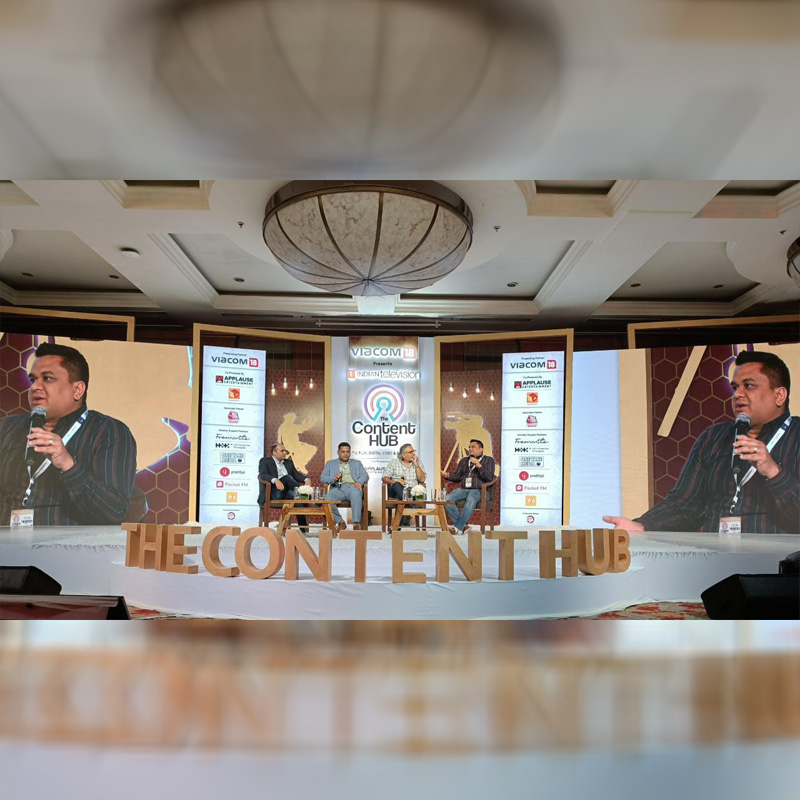
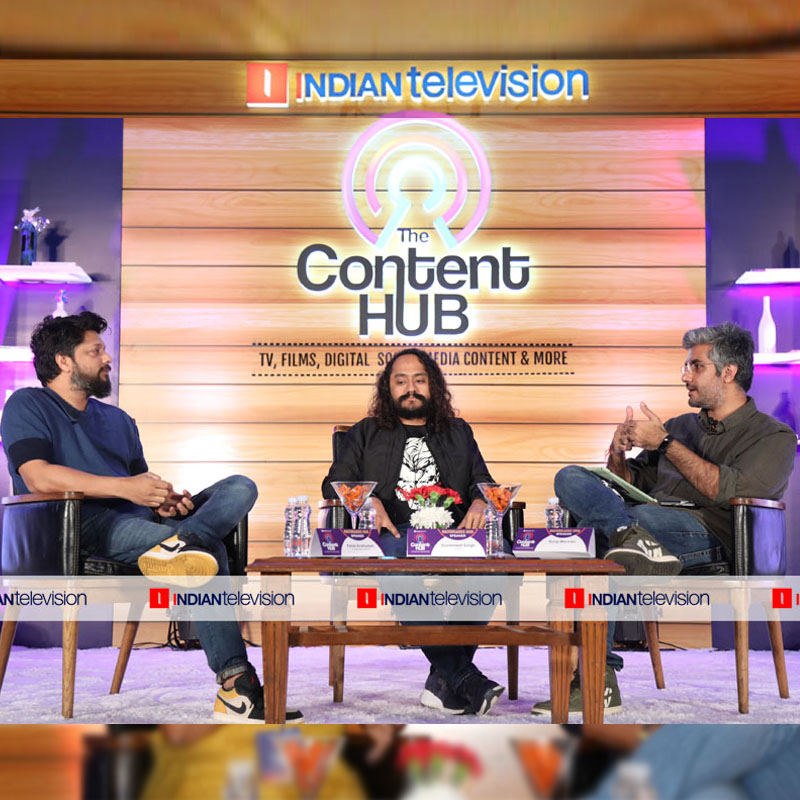
    On the sixth edition of Indiantelevision.com’s The Content Hub Summit 2022 held in Mumbai recently the media and entertainment industry experts shared their insights on the topic, ‘Tech-celeration of content: where have we reached?’

    The session had the presence of Eros Now chief technology officer Lokesh Chauhan; Contiloe Group CFO and Illusion Reality Studios CEO Nitin Dadoo; EPIC ON & Stream-Sense chief operating officer Sourjya Mohanty. 

    The panel deliberated views on the development of tools and techniques for creating incredible content experiences. There has been immense development on the tech front that is changing the way content is consumed. Cutting-edge content is transforming the media & entertainment sector every day. Virtual production capabilities are becoming a key differentiator for content creators. 

    During the Covid-19 pandemic, the entertainment segment leveraged technology throughout the entire virtual production life cycle to enhance the way content is created. It helped to improve production planning, increase shooting efficiency, and reduce the number of expensive reshoots.

    The panel was also moderated by Plug and Play Entertainment media consultant & co-founder Anuj Gandhi.

    The summit was presented by Viacom18, and co-powered by Applause Entertainment and IN10 Media Network. Aaj Tak Connected Stream is the association partner. Industry partners are Fremantle India, Hill+Knowlton Strategies, One Take Media, Pratilipi, Pocket FM and The Viral Fever. The Indian Motion Pictures Producers’ Association (IMPPA) is our community partner.

    Understanding the significance of technology for generating content was the starting point of the conversation.

    When asked, Is content & technology limited to OTT and theatre? What has happened to the good old TV? Dadoo said, “I don’t think that technology is only restricted to OTT! Rather, it is highly helpful to all types of storytellers.” He explained that “the use of new technologies like Unreal and Cam, which provide DOP directors camera tracking as well as onset information with an unreal virtual background, has drawn viewers back to television. The amount of time spent has increased during the past three months.”

    In addition, he also remarked on the availability of talent to handle such technologies, “The talent aspect is quite difficult. We came to the conclusion that we needed to hire a foreign crew since Indians are unprepared for these kinds of technologies. After a month or two of preparing the Indian crew for the new technologies, we had another difficulty: keeping them employed when other opportunities in the market were available.”

    Another member from the panel, Mohanty added, “The problem is omnipresent. There is always a talent crunch in the industry.”

    Chauhan also mentioned, “OTT platforms’ journeys are very distinct from those of traditional platforms.” He continued, “All of these systems, including LG, Samsung, Android, and iOS are constantly evolving. There are continually more changes occurring; these are not coming to an end. There will be immersive experiences that will necessitate the complete rebuilding of many of these services, many of which we currently consider to be quite stable. In light of this, you must constantly develop your skills and learn new things, unlike many other technologies.”

    Sharing his view on the impact of technology on the creative side of the business, Mohanty said, “Today is the era where machines decide what we need to think and what we need to do. The basic recommendation engine which is driven by AI and ML decides the content that audiences would like to watch.”

    Regarding the monetization aspect, Chauhan stated, “Right now in India, there aren’t enough individuals utilising these sites. Most of them run in the red. Players on OTT platforms are attempting to optimize their journey. The ugly truth is that Indian OTT services don’t have as much money as Netflix and Amazon do.” 

    Watch the full session:

  • TCH 2022: Will the 2020s decade drive an insatiable demand for content?

    TCH 2022: Will the 2020s decade drive an insatiable demand for content?

    Mumbai: The world is undergoing a fierce transformation courtesy the pandemic, streaming services, new content forms and formats and changing work and entertainment consumption habits. The excitement and expectation are palpable amongst those in content creation and distribution – TV, film, streaming, short format, audio series, games, metaverses and what have been to serve those emerging needs.

    The transformation leads to a lot of questions such as will the 2020s see a further revolution and exploitation of the opportunities the decade offers? Or will there be a cooling off? Will Indian content follow the trajectory of the Korean Wave? And how? Will the 2020s prove to be India’s roaring twenties?

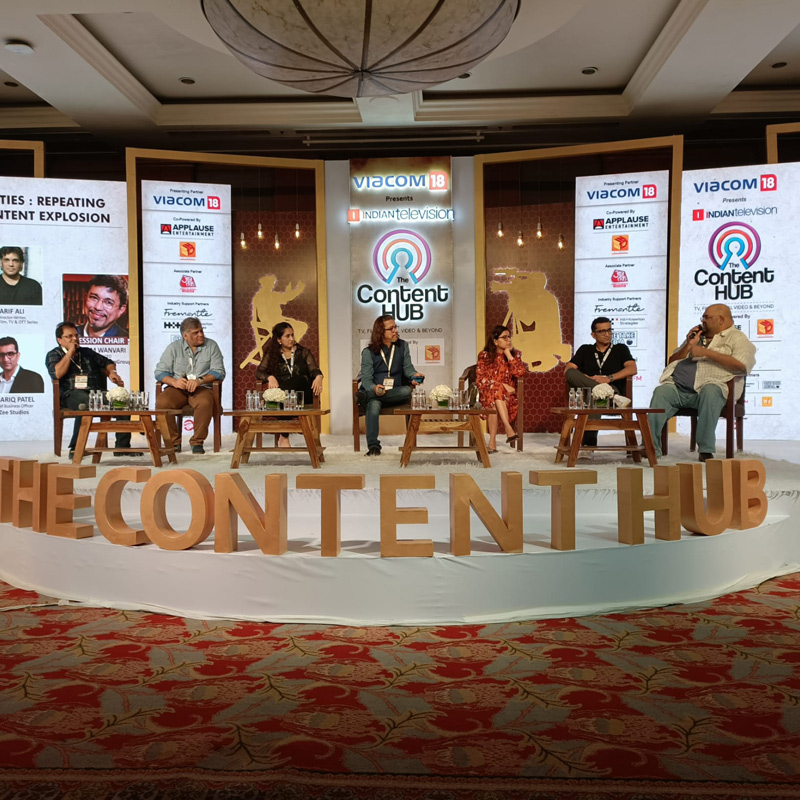
    Finding and discussing the answers to these questions, the first panel of the sixth edition of Viacom18 presents Indiantelevision.com’s The Content Hub Summit 2022 saw an insightful debate on the theme ‘The Roaring Twenties: Repeating The Successful Era Of Content Explosion.’

    Moderated by Indiantelevision.com Group founder & CEO, the panel included Indian screenwriter, director and producer Alankrita Shrivastava, Indian Film Director Arif Ali, Pratilipi  head, IVM Podcasts Amit Doshi, Neela Films Productions founder and managing director Asit Kumarr Modi, Balaji Motion Pictures creative producer and executive vice president Ruchikaa Kapoor and Zee Studios chief business officer Shariq Patel.

    The industry event is co-powered by Applause Entertainment and IN10 Media Network. Aaj Tak Connected Stream is the association partner. Industry partners are Fremantle India, Hill+Knowlton Strategies, One Take Media, Pratilipi, Pocket FM and The Viral Fever. The Indian Motion Pictures Producers’ Association (IMPPA) is our community partner.

    A century ago, after the global pandemic known as the Spanish flu, much of the world enjoyed a boom period, later immortalised as the ‘Roaring Twenties’.Opening the discussion, ITV founder, CEO & editor-in-chief Anil Wanvari asked the panel, “Are we about to experience another Roaring Twenties?”

     Pratilipi head, IVM Podcasts Amit Doshi said, “we’ve barely scratched the surface in terms of what exactly kinds of content we’re going to see in future.”

    “Technological transformation over the last ten years has already unleashed creativity in this country and it is going to continue,” he added.

    Further, Wanvari asked Neela Films Productions founder and managing director Asit Kumarr Modi, who has successfully run over thirty-five hundred episodes of ‘Tarak Mehta Ka Ooltah Chashma’, how he sees this remarkable show in the 2020s?

    “We started back in 2008 where technology was way behind than where we are today and we have seen it all changing over the years. Now, things are developing rapidly, it might be more challenging but we are more excited to create stories in the new age of technology,” answered Modi.

    Taking the discussion further, Zee Studios chief business officer Shariq Pate said, “pandemic has shown that all of us have this insatiable amount of content that all of us could consume and this prompted platforms to step up on investments.”

    “We can expect a roaring 2020s with huge amounts of content to be created which is definitely far more than what the existing platforms can digest at present,” he added.

    Sharing her outlook for the roaring 2020s, Balaji Motion Pictures creative producer and executive vice president Ruchikaa Kapoor said, “the big realization about this changing content landscape is that there’s an audience for every genre, however the size of the audience differs.”

    She added, “the content consumption has increased dramatically over the last three years. But as far as movies are concerned, the urgency of going to the theatres has come down drastically due to the growth of OTT.” Talking about the future, she said, “we expect exponential growth in the 2020s too.”

    Agreeing with what his co-panellists had said, Indian film director Arif Ali said, “being behind the doors for so many months during the pandemic has actually opened a lot of doors for content creators.”

    “Pre-pandemic there was more focus on making money, but now content creators want to have a legacy and it is going to lead to a thrilling 2020s,” he asserted.

    Further, highlighting the challenges that the transformation in the content space brings, screenwriter, director and producer Alankrita Shrivastava said, “today the major challenge is to go back to the core of storytelling and not get overwhelmed.”

    Watch the complete video of this insightful session here.

  • NT Awards 2022: Check out the winners!

    NT Awards 2022: Check out the winners!

    Mumbai: IndianTelevision.com is back with its latest edition of the News Television (NT) Awards 2022, that recognises, honours and celebrates the ground-breaking work done in the space of Indian television news in the year gone by.

    The 15th edition of the NT Summit and Awards were held at Holiday Inn, New Delhi on Friday. The evening saw the cream of the Indian news industry being felicitated, including regional news channels. The event was co-sponsored by Dalet. GTPL Hathway, Hill+Knowlton Strategies, JW Player and Live U were industry support partners and The Ayurveda Company was gifting partner.

    The NT Awards 2022 felicitated work across English, Hindi, Marathi, Tamil, Telugu, Bangla, Gujarati, and Kannada languages, among others. Each language had five categories including, ‘Programming Awards’, ‘Personality Awards’, ‘Promo, Design and Packaging Awards’, ‘Sales and Marketing Awards’, and ‘Special Awards’.

    A total of 154 awards across 40 categories were given out this year to deserving news channels and eminent personalities in the industry. These included awards presented to channel programmers, anchors, presenters, technicians, producers, editors, reporters and management from news media groups such as TV9 Network, Zee Media Corporation, Network18 Group, India Today Group, Times Network, NDTV, ABP Network, among others.

    This year’s Best Prime Time News Show in the Programming Awards category was conferred upon News18 India’s Sau Baat Ki Ek Baat show while amongst English News channel Wion’s Gravitas took home the award.

    The Prime TV News Anchor (male) award was won by NDTV 24×7’s Sanket Upadhyay, while CNN-News18’s Marya Shakil picked up the coveted award in the female anchor category for English channels.

    In Hindi, Zee Hindustan’s Pratyush Khare and Aaj Tak’s Anjana Om Kashyap bagged the honours, respectively.

    English news channel, Wion took home the top honours for Best Live News Reporting on Ground, as well as the award for Strongest Digital Footprint of a News Network.

    Aaj Tak’s digital campaign won the Strongest Digital Footprint of a News Network Award among Hindi news channels.

    In the Sales and Marketing category, Times Now Navbharat’s ‘Ab Badlega Bharat Banega Navbharat’ campaign won the ‘Best Marketing Initiative from a News Channel’ in Hindi, while in English, CNN-News18’s #DontShowMeYourFace campaign won the honour.

    In the Special Awards category, India Today’s ‘Pehno Sahi’ and TV9 Bharatvarsh’s Suraksha Bandhan with Gulf Oil won the ‘Social Contribution by a News Network’ recognition respectively.

    The esteemed jury for the awards included H+K Strategies India chief executive officer Abhishek Gulyani, Sri Adhikari Brothers chairman and managing director Adhikari Markand, OMD India CEO Anisha Iyer, Airtel VP-media Archana Aggarwal, Upstox senior director-marketing Kunal Bhardwaj, among others.

    The complete list of winners can be viewed below.

  • NT Summit & Awards: Industry experts to discuss critical topics in the news television space

    NT Summit & Awards: Industry experts to discuss critical topics in the news television space

    Mumbai: The dynamic Indian news television space has gone through various transformations over the last couple of years. With the introduction of new concepts and shows, the news television segment has evolved and caught the audience’s attention. The pattern of consuming news content has changed among the audience lately.

    The industry has also demonstrated constant expansion and many new channels have penetrated the market & have become market leaders. Indiantelevision.com will discuss in the ‘NT Summit and Awards’ the challenges and opportunities in the news television segment. The event, which will be co-sponsored by Dalet, will be held at Holiday Inn, Delhi on 10 June 2022.

    Experts will deliberate their views on topics like the future of the newsroom, how newsrooms are adapting to remote technology, the impact of new technology on the news production process, and the need for professionals to reshape the future newsroom. The summit will bring together marketing & advertising veterans to discuss the marketing opportunities as well as the problems in the news television industry.

    Further, GTPL, Hill+Knowlton Strategies, JW Player, and Live U will be industry support partners at the NT Summit 2022, with The Ayurveda Company as a gifting partner. This year’s event will feature sessions with 10+ speakers, 50+ winners, and 20+ jury members.

    Speakers for the NT summit will include industry experts like Dentsu Creative India chief executive officer Amit Wadhwa, 24 Newsgroup COO Anil Ayroor, Zee Media Corporation Limited marketing head Anindya Khare, Patanjali Ayurveda Ltd. COO- media & communications Anita Nayyar, ABP Network chief revenue officer Mona Jain, Just Dial chief marketing officer Prasun Kumar and many more. 

    There will also be speakers on the panel like BJP national spokesperson Shehzad Poonawalla, Samajwadi Party national secretary and spokesperson Rajeev Rai, INC national spokesperson Dr Shama Mohamed, Times Now editorial director and editor-in-chief Rahul Shivshankar, Zee Media Corporation chief content officer and Zee News editor Rajnish Ahuja, CNN-News18 managing editor Zakka Jacod as speakers and Star News former president and media professional Ravina Raj Kohli as moderator. 

    The NT Awards will honour work in English, Hindi, Marathi, Tamil, Telugu, Bangla, Gujarati, and Kannada, among other languages. Each language will have five categories including, ‘Programming Awards’, ‘Personality Awards’, ‘Promo, Design and Placing Awards’, ‘Sales and Marketing’, and ‘Special Awards’.

    The esteemed jury for the awards includes H+K Strategies India chief executive officer Abhishek Gulyani, Sri Adhikari Brothers chairman and managing director Adhikari Markand, OMD India CEO Anisha Iyer, Airtel VP-media Archana Aggarwal, Upstox senior director-marketing Kunal Bhardwaj and more. 

    The summit is a one-of-a-kind initiative that will bring together industry experts to allow you to meet and connect with them. The NT summit will also provide you with the opportunity to pick up insights and strategies from like-minded individuals. The interesting sessions will also help you learn from the experts by listening to their journeys and experiences.