Tag: Indians

  • For Circa 2024, 87 per cent expecting better year: Ipsos Global Predictions 2024

    For Circa 2024, 87 per cent expecting better year: Ipsos Global Predictions 2024

    Mumbai: Ipsos Global Predictions for 2024 shows a positive outlook emerging for the year 2024 with 87 per cent urban Indians and 70 per cent global citizens predicting it to be a better year.

    And 8 in 10 urban Indians (84 per cent) say they are willing to make personal resolutions and specific changes for themselves in 2024. And 85 per cent Indians are also hopeful of the global economy doing better in 2024.    

    2023 was a bad year

    The local and global verdict on the year 2023 shows a great deal of disappointment, with 65 per cent of urban Indians pronouncing it a bad year for India and 64 per cent calling it a bad year for them and their family. 70 per cent global citizens felt it was a bad year for their country and 1 in 2 global citizens (53 per cent) felt it was a bad year for them and their family.

    The markets unhappy with 2023 were Argentina (88 per cent), Sweden (84 per cent), Turkey (84 per cent), Great Britain (per cent), Portugal (82 per cent), South Korea (82 per cent) and Hungary (82 per cent).

    The survey captured views of citizens on a host of issues, with their predictions for 2024.  

    Economy

    Most urban Indians expect cost of living to go up, with 71 per cent believing prices in the country will increase faster than people’s incomes.79 per cent global citizens echo similar views

    7 in 10 urban Indians (70 per cent) further believe inflation will be higher in 2024 as compared to 2023. 68 per cent urban Indians expect interest rates to be higher in 2024 as compared to 2023. 66 per cent expect unemployment to be greater in 2024 versus 2023.

    Technology

    Impact of technology in 2024 is likely to be a mixed bag. 61 per cent urban Indians expect artificial intelligence leading to loss of many new jobs in the country. 56 per cent Indians fear their personal data being leaked on the internet in 2024. 67 per cent urban Indians expect doctors in India to use artificial intelligence regularly, to decide on treatments for their patients. Interestingly, 61 per cent urban Indians believe in 2024, robots will look, think and speak like humans. The biggest upside, 65 per cent urban Indians polled believe artificial intelligence will lead to many new jobs being created in the country. And 57 per cent urban Indians plan to use social media less in 2024.

    Environment

    Climate change has been wreaking havoc around the globe.

    In 2024, 65 per cent urban Indians expect more extreme weather events in the country than seen in 2023. 60 per cent Indians also fear a natural disaster hitting a major city. And 70 per cent urban Indians expect the average global temperature to increase.

    At the same time 67 per cent urban Indians polled expect the govt to introduce more demanding targets for reducing carbon emissions quickly in 2024. While 63 per cent urban Indians expect more restrictions to be introduced to reduce the amount people drive in their cars in the country.    

    Society

    Predictions for 2024 are optimistic. 71 per cent urban Indians expect women to be paid the same as men for the same work. 71 per cent expect India to win more medals in the 2024 Summer Olympics than the last one. 66 per cent Indians believe people in the country will become more tolerant of each other.

    69 per cent urban Indians predict office workers spending more time in the office than at home, in 2024. 86 per cent Indonesians held this view, 78 per cent Malaysians and 76 per cent Chinese.

    63 per cent Indians expect the level of immigration into the country to increase in 2024. Markets predicting the most influx included Portugal (87 per cent), Turkey (82 per cent), Singapore (82 per cent) and Italy (79 per cent).

    And 1 in 2 Indians (53 per cent) expect the total size of the population of the country to fall in 2024. For a country that has become the world’s most populous nation.

    Ipsos India CEO Amit Adarkar said, “Majority of our citizens have a positive outlook for 2024, predicting it to be a better year for them. Though they are bracing themselves up for a tougher year in terms of inflation, rising prices, higher interest rates and higher unemployment. Year 2023 was a bad year is the majority verdict. The year saw many upheavals due to inflation, rise in prices of essential commodities, yo-yo of fuel prices, drought and floods and violence in certain parts of the country. The predictions for 2024 hinge a lot on optimism, of office workers going more often physically to work, govt taking stringent measures to reduce the carbon footprint, pay parity of women with men doing the same work, citizens becoming more tolerant of one another and India bagging more medals in its kitty in the summer Olympics. AI is expected to stave off some jobs and create new ones, so this will put a lot of emphasis on reskilling. Cautious optimism is the approach for 2024, as there is also fear of a new more severe pandemic and natural disasters.”      

    About the study

    These are the results of a 34-country survey conducted by Ipsos on its Global Advisor online platform and, in India, on its IndiaBus platform between Friday 20 October to Friday 3 November, 2023.

    For this survey, Ipsos interviewed a total of 25,292 adults aged 18 years and older in India, 18-74 in Canada, Malaysia, New Zealand, South Africa, Turkey, and the United States, 20-74 in Thailand, 21-74 in Indonesia and Singapore, and 16-74 in all other countries.

    Africa, Turkey, and the United States, 20-74 in Thailand, 21-74 in Indonesia and Singapore, and 16-74 in all other countries.

    Read the full report here:

    https://www.ipsos.com/en-in/optimism-rife-among-urban-indians-circa-2024-87-expecting-it-be-better-year-ipsos-global-advisor

  • Indians as entrepreneurs can turn limitations into opportunities, says Subhash Chandra

    Indians as entrepreneurs can turn limitations into opportunities, says Subhash Chandra

    MUMBAI: Be it business or life challenges, learn how to innovate, overcome obstacles and make your business flourish with some help from the expert — a man of a thousand ideas, Dr. Subhash Chandra.

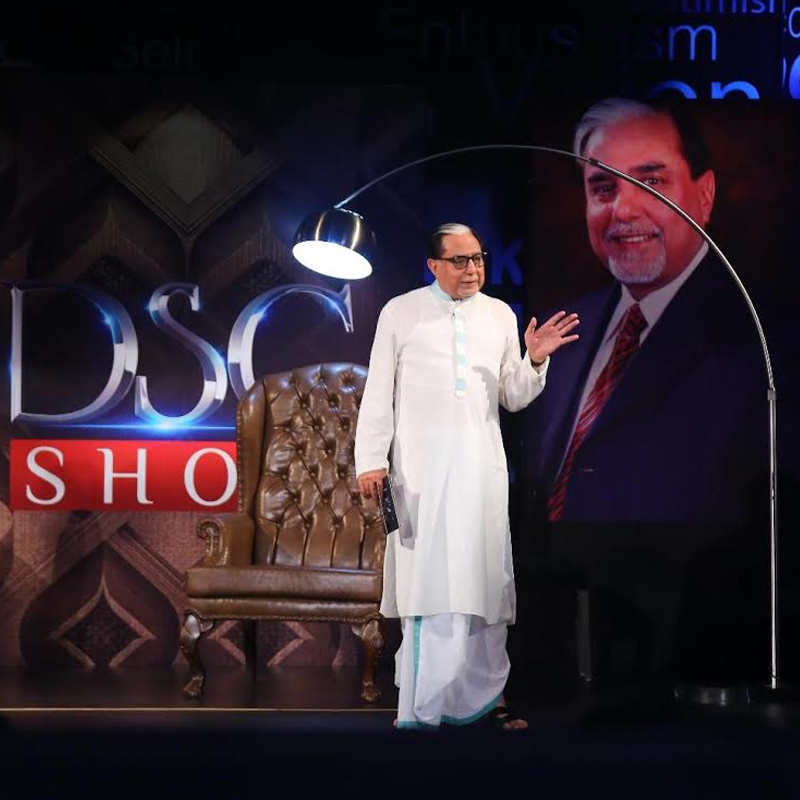
    Fresh episodes of India’s popular youth show, Dr. Subhash Chandra (DSC) Show will go on-air from 6 May. Chandra shared his success mantra with students in Mumbai at Whistling Woods International Institute and Prahlad Kakkar School of Branding & Entrepreneurship (PKSBE) for the next episodes of the show.

    Kakkar, Dr. A. Velumani, Founder & Chairman of Thyrocare, Beena Sheth Lashkari, Director, Door Step School, Kaustubh Dhargalkar, Innovation Consultant and Pratish Nair, Director & Co-founder of PKSBE are the eminent guests for these episodes.

    With a fresh look and format, India’s popular motivational youth show, Dr. Subhash Chandra (DSC) Show is returning to television screens with new episodes that highlight inspirational stories of people from different backgrounds.

    After shooting at New Delhi, the next episodes of the DSC Show were held at Whistling Woods and PKSBE in Mumbai. During these episodes, Dr. Chandra, MP, Rajya Sabha & Chairman, Essel Group & ZEE spoke on topics close to his heart – “MBA versus Entrepreneurs, Job-seeker versus Job-creator” and “How is entrepreneurship in creative industries different? What is required to be a successful media and entertainment entrepreneur in 2017?”

    A successful entrepreneur himself, Dr. Subhash Chandra expounded his views on “MBA versus Entrepreneurs; Job-seeker versus Job-creator” saying, “India is a country of entrepreneurs. Entrepreneurship runs in our blood since we know how to succeed with limited resources, which is the pre-requisite for running a successful business. This behaviour arises in Indians not out of choice but out of requirement; but that is what successful entrepreneurs do, they turn limitations into opportunities.”

    Elaborating further, Dr. Chandra said, “For an economy to flourish and be successful, we need both – Entrepreneurs and MBAs, Job-creators and Job-seekers. Neither is better or worse; each path has its own risks and rewards. However, both are essential parts of the system and it is upto each individual to find his or her calling and to strive for perfection. It is a universal truth that if you aim for excellence, you will be successful in whatever you do.”

    Sharing insights and examples from his own experience in the Media and Entertainment industry, Dr. Chandra spoke on “Entrepreneurship in Creative Industries” saying, “The Indian Media & Entertainment (M & E) industry stood at Rs. 1,26,200 crores in 2016 as per the FICCI-KPMG Media and Entertainment Report 2017 and is expected to almost double its current size by the year 2020. We can therefore see that there is much opportunity for growth in this industry. To become a successful entrepreneur in the M & E industry or for that matter in any industry, you need to have a strong product on offer which is unique from any other existing product or you need to cater to an audience that has not been tapped before. By experimenting with new and creative offerings, you can keep the interest alive for your audiences, your employees and yourself.”

    Catch the curtain-raiser on 6 May followed by the first episode on 13 May on the following channels of Zee Media:

    Name of the Channel

    Saturday

    Sunday

    Zee News

    10:00 pm

    11:00 am

    India 24X7

    7:30 pm

    10:00 am

    Zee Business

    7:00 pm

    11:00 am

    Zee Rajasthan

    8:00 pm

    12:00 pm

    Zee Madhya Pradesh Chhattisgarh

    5:00 pm

    9:00 am

    Zee Haryana Himachal

    7:00 pm

    10:00 am

    24 Ghanta

    11:00 pm

    11:00 am

    Zee Purvaiya

    9:00 pm

    10:00 am

    Zee 24 Taas

    1:00 pm

    10:30 am

    Zee Kalinga

    1:30 pm

    10:00 am

    Also Read:

    Who Am I: Subhash Chandra show comes back in a new avatar

    ‘Chawal’ to channel: Zee’s 24 years of a memorable roller-coaster ride

    Gadkari unveils Marathi edition of Subhash Chandra’s ‘The Z Factor’

  • Indians ready to pay for compelling health-related content, says Brilliant Living TV CEO

    Indians ready to pay for compelling health-related content, says Brilliant Living TV CEO

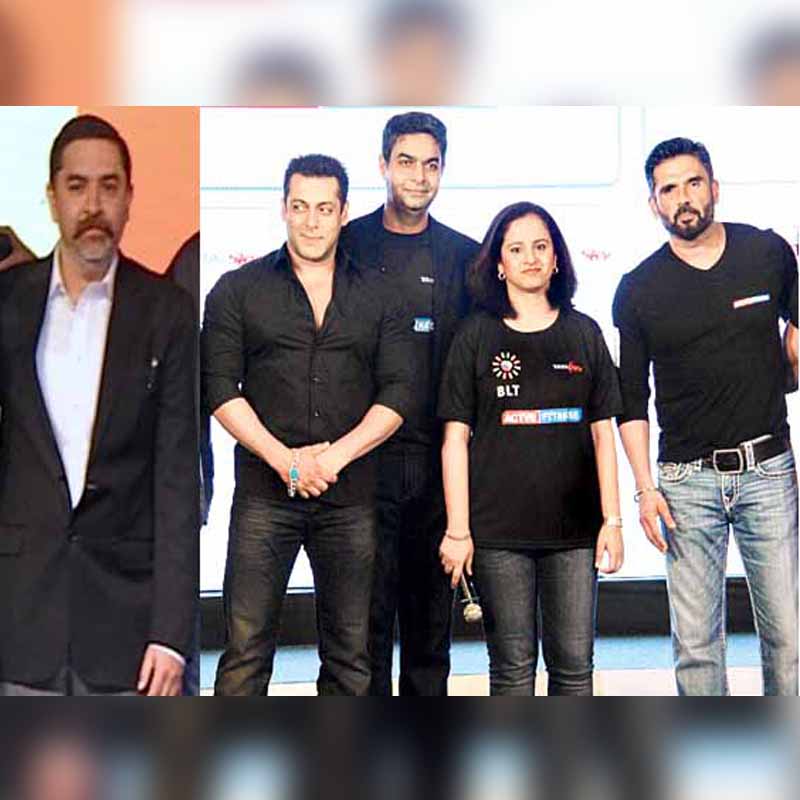
    Staying fit and healthy is one of the top priorities in today’s hectic lifestyle. Brilliant Living TV is an initiative by Suniel Shetty & Adarsh Gupta, which recently tied up with SonyLiv VoD, Vodafone and Tata Sky DTH to offer health and fitness content.

    The Tata Sky interactive service enables subscribers to access a world of fitness experts that train the country’s film stars, from the comfort of their homes. Tata Sky’s Pallavi Puri had said that there was a growing desire to find solutions that help manage the challenges of a fast paced and demanding lifestyle. However, not everyone had access to right exercising regimes or trainers across the country. It was this insight that triggered the Actve Fitness service, where Tata Sky offered celebrity fitness experts who would help subscribers to stay fit.  Celebrity fitness trainers such as Kaizzad Capadia, Yasmin Karachiwala, Abbas Ali, and Shifuji share workout, yoga sessions, self-defense and fitness tips that any individual can follow at home.

    Brilliant Living TV’s founder and CEO Adarsh Gupta added that their focus had been on creating passion and excitement for fitness amongst all Indians by guiding them through fitness exercises such as work-out videos, yoga  and meditation. The former Times Music COO and HMV Saregama music business head who, in December 2014, launched ‘s first-destination fitness channel bringing together the best global fitness & wellness experts, shared some insights with indiantelevision.com’s deputy editor Parvinder Sandhu. Excerpts from an interview:

    Do you believe more people in India are inclined towards fitness of late, unlike the scenario, say, 5-10 years ago?

    Fitness and wellness has emerged as a megatrend in India today. From being a niche sector 5-10 years ago, fitness today has become a subject of priority in the tier 1 and 2 cities like never before. There are three categories of people in the fitness ecosystem: enthusiasts, dabblers and fence sitters. Between these categories there are approximately 50- 60 million people in the top 20 cities in India today.

    public://0e4cd13.jpg

    Until recently food or travel industry seemed to be growing in India. But, lately, growth seemed to have slowed down. Why would you not think that fitness is another fad?

    Fitness is too intrinsic to the well being of a person and that realization has hit people. The trend today is prevent-rather-than-cure. I believe fitness is too solid an issue on people’s agenda to pass off as a fad. Look at more matured markets as a reference point and it is clear that this emerging megatrend in India is here to stay and grow.

    How big is the health, fitness and wellness market in India?

    The fitness market, which includes essentially the gym eco-system, is expected to be around Rs. 7000 crore (Rs.700,00 million) in the current year. If we expand the scope of the industry to wellness, which then also includes segments such as beauty services /spas/personal health counseling and yoga, the size of the category is in the region of 35,000 core (Rs 350,000 million) and growing 15-17 per cent per year.

    How big is the health and fitness genre on/through television?

    Actve fitness was the first dedicated fitness/wellness media service that launched in  in 2015. The launch was an unprecedented success and is now being replicated by other leading media houses in India. We at Brilliant Living TV are driving this agenda. Having achieved the position of the most credible content creator in this genre, we have launched and are in the process of tying up the best platforms in the media space in India and relevant markets overseas.

    If I were a broadcaster, why would I think of Brilliant Living TV as a wellness content provider or why would it come to my mind?

    At Brilliant Living TV, we have the distinction of being the only domain experts that have mapped this category end to end like no other content creator. This is not one of the many things we do…this is the only genre that we super specialize in. The best experts in  and the more advanced markets have all been signed on with our company for exclusive long term deals ensuring the very best expert talent is only with Brilliant  Living TV. We have also been able to layer fitness / wellness with a heavy dose of  Bollywood / celebrity content coefficient ,giving us the all round best competitive advantage.

    Is Brilliant Living TV a VC/investor funded company? Or, is it privately funded?

    Our company is currently privately funded. However, we will be looking to raise our first round of capital for funding growth objectives soon.

    How is BLT company’s internal structure?

    Suniel Shetty (partner) plays the role of the mentor and guide for BLT. He has been an iconic star who has been known for his fitness through the years and is still fighting fit to the point of being inspirational. He guides us on all aspects of the domain. Additionally, Vikram Razdan (another partner) who is a film industry veteran looks after production for Brilliant Living Television.

    How many companies like Shemaroo, Brilliant, etc are supplying health and fitness content to television networks in India ?

    Currently there are about 3-4 companies like Shemaroo/Rajshri and a few other that have a presence in this genre. However there are rumors that there is a lot of activity by new companies in this space.

    Approximately, how much is Brilliant Living TV’s share of the pie? You are 25 months into the business and by when would you potentially break even?

    From the point of view of the content catalogue, we are the most dominant player in the category today. We would be bordering approximately 1000 plus hours of content already, which would put us at about 70 percent of this category today.

    How many well-known fitness experts have you tied up with and is there something unique in your strategy?

    Across the domains of yoga/all forms of fitness/nutrition and spirituality, we have over 400 of the best experts from India and overseas markets signed on to us. It is unique in the sense that we were the first ones to identify fitness/wellness as an opportunity for us to become the domain leaders. The strategy has paid off as we are already spearheading this genre for the most credible and reputed media platforms in India. Besides, most of the remaining platforms are also engaging with us for launches in the near future.

    How smooth is it to sign up celebrities and manage (co-ordinate with) them?

    The moment you get into the realm of managing celebrities and celebrity experts, there is bound to be a degree of kid glove management involved, and we as a team are real good at it.

    As a strategy would you rather not concentrate on the merit of content than the celebrity quotient in the business?

    Like i mentioned earlier, there are three categories of people in this ecosystem.

    1. Enthusiasts – driven by fitness

    2. Dabblers – keep coming in and out of fitness

    3. Fence sitters – people who think about getting fit but have done nothing yet.

    The celebrity content works beautifully well to motivate the fence sitters and dabblers to get into the fold of fitness. And, hence celebrity content is critical to our content strategy.

    Do you think people are ready to pay for non-entertainment programmes in India?

    Yes our launch with Tata Sky has proved that people are willing to pay for a genre that has a compelling proposition. All our engagements across Ttata Sky, Vodafone and SsonyLiv are paid services. We believe it is still a genre of very high demand and relatively low supply and, hence, a perfect market for the paid ecosystem.

    What are the terms of the Tata Sky deal and was it difficult to convince the team there?

    We have a exclusive arrangement only for the DTH segment with them. Outside of DTH, we are free to do what we want. When we approached Tata Sky, the team was looking to start a service under the actve portfolio dedicated to fitness. It may be coincidence but, in retrospect, we timed our initiative really well.  

    While the product design for Active Fitness is done by the Tata Sky team, rest of the work is done jointly. The programming scheduling, packaging, etc is all worked on jointly between the teams.

    How does it work? You supply a single type of linear content, say, every week/fortnight to Tata Sky and then get paid depending on number of subscribers?

    We have a defined refresh rate of content every month that we provide to our platforms. And yes, our revenues are a function of the number of subscribers.

    Would you curate your fitness content in the traditional form, or do you also incorporate different styles/genres?

    Our objective is to showcase the wealth of knowledge that  India has to offer.. yoga and fitness in its most authentic forms. We do, however, believe that we need to package this content in a contemporaneous way so as to appeal to the youth today.  

    Does one get a variety of health and wellness content with one subscription — for the whole family?

    Yes if you subscribe to actve fitness, you get content for all groups. This includes kids, youth, middle aged, senior citizens and dedicated women-related content.

    Do you need to keep innovating on content or is it standard form?

    Yes we need to keep innovating. While we offer the most traditional forms of yoga workouts, we also showcase the best that the world has to offer in terms of trending workouts like zumba/ariel yoga/pilates/masala bhangra workouts, etc. to name a few.

    Would you also negotiate deals with other DTH players or broadcasters? Would the content be similar or differentiated?

    I cannot comment on this DTH aspect at this stage. But we have already launched with Sony and are in the middle of tying up with other prominent broadcasters as well.

    How much according to you is the wellness business on hand-held devises like mobile phones in India?

    There is a growing apetite for all kinds of content on mobile phones and fitness is a part of that emerging story. The logic is simple. In today’s dynamic world where people are forever short of time, if we had a “do it along” fitness workout on our mobile phone, we could be at it anywhere anytime.

    What strategy works well for you? SVoD or AVoD?

    Our current strategy is SVoD. However, over time we will be looking to expand to the AvoD side of the action too. In our experience both work in India, depending on the core proposition. Majority of action currently is skewed towards AVoD. However, all major players have already either launched an AVoD option or are in the process of putting one together

    Is the health content on OTT/VoD platforms similar to DTH content? Is one able to choose different genres of fitness programmes on SonyLiv?

    Yes the offering is very similar. At the moment, we are focusing on full length workouts on SonyLiv. However going forward, we are considering shorter workouts as well.

    Is the SonyLiv deal exclusive in some way?

    Brilliant Living TV exclusively powers the fitness/wellness genre for SonyLiv. The Sony team has clearly viewed this as a great strategic differentiator and is driving the initiative accordingly.

    What is your analysis of people being ready to pay for fitness content on mobile?

    They may have recently learnt to pay a minimal amount for GECs, sports and movies on Amazon, Netflix etc.

    Too early to say. However, my conviction is that fitness is such a compelling genre where options like gyms etc cost a lot more, we expect a good response of the paid audiences. We are in discussion with other OTT players too, but cannot discuss details at this point of time.

    Few OTT/VoD players share their numbers of active subscribers. Subs seem to switch a bit too often, or switch off completely. Is that something that bothers content providers?

    As a content provider, we understand the need to build a core base of loyal users. We also recognize that there will be a certain percentage of churn on an ongoing basis and we are prepared for that.

    India has too many Internet infrastructure challenges. How would you overcome those?

    Our offering is adaptive. Hence, the feed adapts itself to the (Internet) speeds available to the viewer.

    You seem to be well-entrenched in the health and fitness space. What are the measures that you are taking to maintain your lead?

    We are constantly working on increasing our content library with the most happening workouts and experts across domains. We believe we have a significant lead over any other player in this genre and plan to maintain it.

  • London Dairy indulges Indians in ‘International Ice Cream Month’

    London Dairy indulges Indians in ‘International Ice Cream Month’

    MUMBAI: London Dairy is celebrating International Ice Cream Month all of July. A month that is much revered in the West from erstwhile President Reagan’s time, the celebration comes to India and London Dairy makes sure we all indulge in some delicious ice cream. What more could anyone ask for? One month dedicated to love, laughter, and limitless indulgence of ice creams.

    Making the most of this occasion, London Dairy decided to reach out to its consumers through a campaign on social media and on-ground activations. The idea behind this campaign #LondonDairyIceCreamMonth, was to make consumers indulge in the extensive London Dairy range of ice creams and help them relish their special moments. Adding excitement to the campaign, the brand urged the consumers to share their special moments through London Dairy ice creams on social media. This created a huge frenzy twitter as tweeple went crazy sharing their London Dairy special moments with loved ones making the campaign #LDIceCreamDay trend #2 pan India. Tweeple thoroughly enjoyed participating and this was evident from their rampage of sharing fun and candid pictures showcasing their moments of indulgence with loved ones.

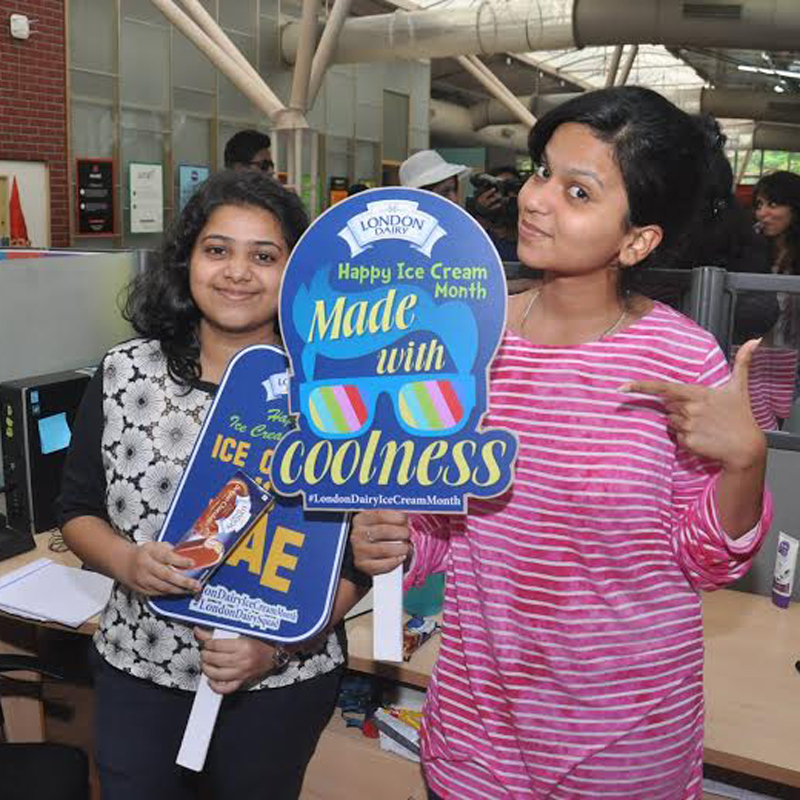
    As part of the campaign’s on-ground activation, the brand had devised a London Dairy Squad in Mumbai and Delhi, where the Men In Tux from London Dairy barged into the coolest busy offices of the city, asking everyone to freeze and stop their work. The Squad then explained how work can get very monotonous and how one must indulge in things they love the most….in this case Ice Cream. The London Dairy Squad then opened up tubs of London Dairy Ice Creams and surprised the employees with a variety of flavours like Strawberry Cheesecake, Mango Sorbet, Tiramisu and Berries n Cream, to engage them in the merriment as they turned around a boring and monotonous day into an indulgent experience.

    London Dairy marketing head Shweta Shrivastava expressed her views saying, “On the occasion of international ice cream day, the London Dairy Squad reached out to young working professionals in an attempt to break the monotony of a regular work day and enthrall them with an indulgent London Dairy experience! Throughout the ice cream month, we had a lot of activities for our consumers, celebrating this theme and indulging our consumers the true London Dairy way.”

    London Dairy also engaged with consumers on social media like Twitter, Instagram and Facebook inviting them to join the celebration as they celebrated July 17, 2016 as World Ice Cream Day and became one of the first premium ice cream brands to get this culture here in full swing. The response received on all social media platforms was so over whelming that #LDIceCreamDay was trending #2 in India throughout the day.

  • London Dairy indulges Indians in ‘International Ice Cream Month’

    London Dairy indulges Indians in ‘International Ice Cream Month’

    MUMBAI: London Dairy is celebrating International Ice Cream Month all of July. A month that is much revered in the West from erstwhile President Reagan’s time, the celebration comes to India and London Dairy makes sure we all indulge in some delicious ice cream. What more could anyone ask for? One month dedicated to love, laughter, and limitless indulgence of ice creams.

    Making the most of this occasion, London Dairy decided to reach out to its consumers through a campaign on social media and on-ground activations. The idea behind this campaign #LondonDairyIceCreamMonth, was to make consumers indulge in the extensive London Dairy range of ice creams and help them relish their special moments. Adding excitement to the campaign, the brand urged the consumers to share their special moments through London Dairy ice creams on social media. This created a huge frenzy twitter as tweeple went crazy sharing their London Dairy special moments with loved ones making the campaign #LDIceCreamDay trend #2 pan India. Tweeple thoroughly enjoyed participating and this was evident from their rampage of sharing fun and candid pictures showcasing their moments of indulgence with loved ones.

    As part of the campaign’s on-ground activation, the brand had devised a London Dairy Squad in Mumbai and Delhi, where the Men In Tux from London Dairy barged into the coolest busy offices of the city, asking everyone to freeze and stop their work. The Squad then explained how work can get very monotonous and how one must indulge in things they love the most….in this case Ice Cream. The London Dairy Squad then opened up tubs of London Dairy Ice Creams and surprised the employees with a variety of flavours like Strawberry Cheesecake, Mango Sorbet, Tiramisu and Berries n Cream, to engage them in the merriment as they turned around a boring and monotonous day into an indulgent experience.

    London Dairy marketing head Shweta Shrivastava expressed her views saying, “On the occasion of international ice cream day, the London Dairy Squad reached out to young working professionals in an attempt to break the monotony of a regular work day and enthrall them with an indulgent London Dairy experience! Throughout the ice cream month, we had a lot of activities for our consumers, celebrating this theme and indulging our consumers the true London Dairy way.”

    London Dairy also engaged with consumers on social media like Twitter, Instagram and Facebook inviting them to join the celebration as they celebrated July 17, 2016 as World Ice Cream Day and became one of the first premium ice cream brands to get this culture here in full swing. The response received on all social media platforms was so over whelming that #LDIceCreamDay was trending #2 in India throughout the day.

  • 79% Indians look for best deals while shopping

    79% Indians look for best deals while shopping

    MUMBAI: A majority (79 per cent) of Indians would rather ‘spend time looking for a good deal,’ while only 21 per cent would rather ‘pay more to make a quick/efficient purchase.’ The findings reflect a new poll of 18,503 online respondents conducted by Ipsos OTX.


    “Indian consumers lately show both impulsive and compulsive buying behaviour. But at the same time they are dealaholics and hardcore value for money seekers. No wonder why sale/ discount offer periods record the highest revenue both for online and offline retailers,” said Ipsos India head of marketing Biswarup Banerjee.


    Those with a lower household income (82 per cent) are most likely to spend time looking for a good deal. Even those with middle (80 per cent) and high (74 per cent) levels of income, however, would take the time to find a better price. Similarly, those with a low level of education (100 per cent) are more likely than those with a medium (80 per cent) or high (79 per cent) level. Women (80 per cent) are more likely than men (78 per cent) to go hunting for a sale.


    The countries with the highest proportions of those indicating they would rather spend time looking for good deals are from: Hungary (94 per cent), Spain (94 per cent), Great Britain (93 per cent), Argentina (92 per cent), Belgium (91 per cent), France (91 per cent) and Germany (91 per cent). This group of deal-chasers is followed by: Australia (90 per cent), Italy (90 per cent), Mexico (90 per cent), Japan (88 per cent), South Africa (87 per cent), Canada (86 per cent), Poland (86 per cent), the United States (85 per cent), China (81 per cent), Russia (81 per cent) and South Korea (81 per cent). The lower group includes: India (79 per cent), Brazil (76 per cent), Saudi Arabia (76 per cent), Norway (75 per cent), Sweden (75 per cent), Turkey (74 per cent) and Indonesia (58 per cent).

  • 69% Indians feel SMS is an easier way to express than in person: Ipsos Study

    69% Indians feel SMS is an easier way to express than in person: Ipsos Study

    MUMBAI: Seven in ten (69 per cent) Indians admit they say things in that they would not say voice-to-voice or person-to-person; compared to 43 per cent globally, finds a new poll conducted by Ipsos OTX – the global innovation center for Ipsos.

    “Text or Email is comparatively an impersonal medium and people feel less hesitant to speak their mind. Perhaps that is the reason why majority of Indian would rather avoid saying things in person or over phone,” said Ipsos – head marketing communication Biswarup Banerjee.

    “For example people prefer to share sensitive comments like – “I love you.” “Our relationship is over.” “You are fired.” “I failed in exam.” in writing rather than saying over the phone or face-to-face to avoid embarrassment when they are physically involved,” added Banerjee.

    Demographically in India, age appears to be the most significant variable as those under the age of 35 (75 per cent) are considerably more likely than those aged 35-49 (67 per cent) and those 50-64 (52 per cent) to text/email things they won’t say out loud. Education is also a significant factor as seven in ten (69 per cent) of those with a high level of education say they do so compared with 100 per cent among those with low education. Both Indian women (70 per cent) and men (68 per cent) feel more comfortable texting or emailing sensitive subject rather than voicing it out.

    Strong majorities in China (90 per cent) and South Korea (80 per cent) say they text or email things they would not say over the phone or in person. Seven in ten of those in Indonesia (76 per cent), India (69 per cent) and Saudi Arabia (67 per cent) say so. Following next are Turkey (58 per cent), Brazil (48 per cent), Japan (46 per cent), South Africa (45 per cent), Argentina (42 per cent), Mexico (42 per cent) and Russia (39 per cent). Only three in ten or less in most of the countries surveyed say they reserve some communication for text or email: Canada (34 per cent), Australia (33 per cent), France (33 per cent), Great Britain (32 per cent), Poland (32 per cent), Belgium (31 per cent), Italy (31 per cent), United States (30 per cent), Germany (25 per cent), Hungary (24 per cent), Spain (24 per cent), Norway (22 per cent) and Sweden (22 per cent).

    Ipsos conducted this study among 18,502 adults in 25 countries in the month of August.

  • Tigmanshu wins Best Director at Norway Bollywood film festival

    Tigmanshu wins Best Director at Norway Bollywood film festival

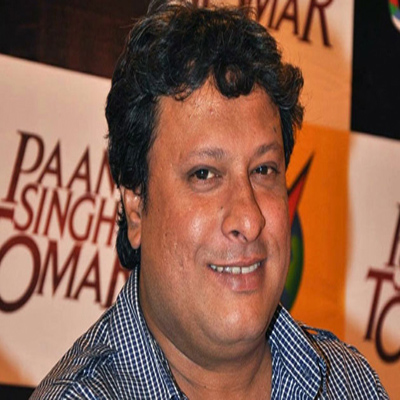
    Tigmanshu Dhulia was presented the best director award for Paan Singh Tomar at the 11th Norway Bollywood Film Festival at a packed Loreskog cinema center in Oslo on 17 September.


    While filmmaker Rahul Mittra bagged the Best Producer award for his last year’s hit Saheb Biwi Aur Gangster Returns, Jimmy Sheirgill got the best actor award for the same film.


    Organised by Nasarullah Qureshi, this festival is one of the biggest film festivals in Scandinavia, attracting hundreds of Indians, Pakistanis and Norwegians each year, apart from top names from Bollywood.


    Mittra and Dhulia also announced the date of their upcoming film Bullett Raja starring Saif Ali Khan, Sonakshi Sinha and Jimmy Sheirgill which is releasing on 29 November.

  • Star India urges employees to contribute to Uttarakhand relief

    Star India urges employees to contribute to Uttarakhand relief

    MUMBAI: After shooting exclusive promos with lead actors of its shows to promote the cause of providing relief to those affected by disaster in Uttarakhand and asking viewers to send in their donations, Star India has gone further and urged its employees to get philanthropic.

    Star India CEO Uday Shankar requests its employees to contribute a day’s salary for Uttarakhand relief fund

    According to sources, Star India CEO Uday Shankar sent an email (a copy of which is with indiantelevision.com) to Star India employees requesting them to contribute at least a day’s salary or more to the relief fund for the victims. In the email Shankar says that the company will match the contribution made by the employees and the sum collected will be used towards relief operations.

    “As responsible citizens and more importantly as employees of a company that has a deep connect with millions of Indians, Star extends the support in whatever way they can,” the Star India CEO says in the email. “Towards this, Star India is launching an effort to provide some solace to the thousands who have been affected by this disaster.”

    Will Star India employees open their wallets and purses? Watch this space!

  • TV most preferred news medium by Indians: Survey

    TV most preferred news medium by Indians: Survey

    MUMBAI: In India, television and newspapers are engaged in a neck and neck fight for prominence in the news media space, while internet lags far behind. The country also has more people trusting the media than its government when it comes to news.

    The findings were derived from a global survey conducted by BBC, Reuters and Media Center Poll in association with research firm Globescan. A total of 10,230 adults were questioned by GlobeScan in the UK, USA, Brazil, Egypt, Germany, India, Indonesia, Nigeria, Russia, and South Korea in March and April.

    As per the survey, the most important news sources for Indians in a typical week are television (mentioned first by 37 per cent), newspapers (36 per cent), radio (7 per cent), and news magazines (4 per cent). There is no significant gender imbalance in India regarding where people get their news.

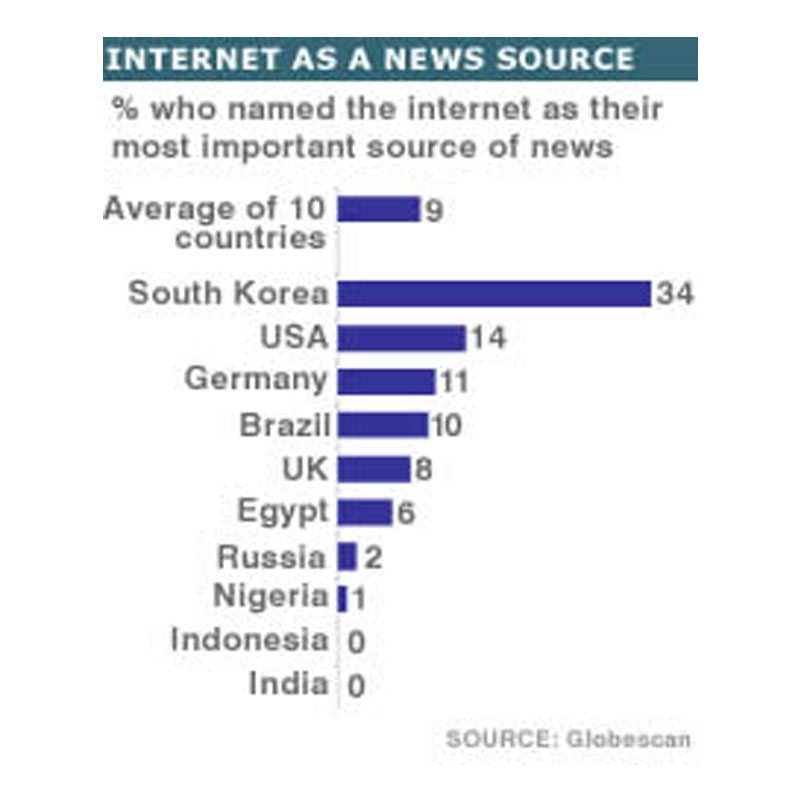
    When asked which news sources they trust the most, Indians give the highest rating to national/regional newspapers and national television (85 per cent give each a lot or some trust). Also strongly trusted are local newspapers (76 per cent), friends and family (70 per cent), and public broadcast radio (69 per cent). Very low levels of awareness mean that blogs and news websites are each trusted by only 1 per cent (Zero per cent named internet as their most important source of news), while 10 per cent trust international newspapers.

    The most trusted specific news sources mentioned spontaneously by Indians include Aaj Tak (mentioned by 11 per cent), DD television (10per cent), Dainik Jagran (7 per cent), Sun TV (5 per cent), Star News (4 per cent), NDTV (4 per cent), AIR (3 per cent), the Times of India (3 per cent), Zee News (2 per cent), Rajasthan Patrika (2 per cent), and BBC World Service radio (2 per cent).

    There is broad satisfaction with standards in India’s media with 76 per cent agreeing that news is reported accurately, and 69 per cent that the media report all sides of a story. A solid majority of 64 per cent also agree that the media strikes the right balance between freedom of speech and respect for culture. Nonetheless 58 per cent say that there is too much foreign influence in their media and 60 per cent that the media is too focused on Western values and concerns.

    MEDIA Vs GOVERNMENT

    Media is trusted by an average of 61 percent compared to 52 percent for governments across the countries polled. But the US bucked the trend – with government ahead of media on trust (67 per cent vs 59 per cent) along with Britain (51 per cent vs 47 per cent).

    Trust in media was highest in Nigeria (88 per cent vs 34 per cent govt.) followed by Indonesia (86 per cent vs 71 per cent), India (82 per cent vs 66 per cent), Egypt (74 per cent, govt. not asked), and Russia (58 per cent vs 54 per cent).

    Comparing these current trust findings with 2002 results to the same question shows media is trusted the same or more today in 7 of the 8 countries for which comparative results are available (that is, all countries except Germany, where trust has fallen from 49 percent to 43 percent; and Egypt and Brazil where no tracking is available). Trust has increased over the last four years in Nigeria (from 61 per cent to 88 per cent), India (76 per cent to 82 per cent), USA (52 per cent to 59 per cent), Russia (48 per cent to 58 per cent), and the UK (29 per cent to 47 per cent).

    GlobeScan President Doug Miller comments, “With public trust levels in general eroding over the last four years, it is noteworthy that the media has retained or increased its trust in most of the 10 countries in the same period.”

    Over one in four people (28 per cent) across the 10 countries surveyed either strongly agrees (13 per cent) or somewhat agrees (15 per cent) with the statement, “In the past year I have stopped using a specific media source because it lost my trust.”

    This is particularly the case in Brazil (44 per cent), Egypt (40 per cent), South Korea (39 per cent), and the US (32 per cent). Russians (10 per cent) are least likely to say this, as are Germans (15 per cent), and Indonesians (17 per cent). Citizens of the UK (29 per cent), India (28 per cent), and Nigeria (27 per cent) define the average position across the 10 countries.

    GLOBAL NEWS BRANDS

    The most trusted global news brands among those tested include the BBC (with 48 per cent across the 10 countries saying they have a lot or some trust) and CNN (44 per cent). Even though Internet web sites in general do not receive particularly high trust ratings, three Internet portals received the next highest prompted trust ratings across the 10 countries; namely, Google (30 per cent, a lot or some trust), Yahoo (28 per cent), and Microsoft/MSN (27 per cent).

    Newsweek (25 per cent) and Time (24 per cent) are next most trusted among the 16 global news brands tested in all countries. Al Jazeera (23 per cent) came next but it also had the highest percentage of people (19 per cent) expressing no trust or not much trust in providing the information they want.