Tag: Indian TV

  • What Are Overseas Viewers Loving About Indian TV in 2025?

    What Are Overseas Viewers Loving About Indian TV in 2025?

    Indian TV is no longer just for Indian households. Viewers from the U.S., UK, Canada, and Australia are tuning in like never before. Shows from Mumbai, Delhi, and Hyderabad are building global fanbases. This isn’t just Bollywood spillover. People are watching daily soaps, thrillers, game shows, and reality series. And they’re sticking around.

    So what’s pulling international viewers in? What shows should they watch? This guide answers that. It breaks down the trends, the titles, and how to jump in.

    Why Is Indian TV Getting Global Attention?

    Streaming platforms made Indian TV easier to find. Netflix, Amazon Prime Video, and Hotstar now offer subtitles, better curation, and global access. Shows that were once stuck behind time zones and language barriers are now front and center.

    Viewers Want Emotion and Drama

    Western shows often focus on subtlety. Indian shows bring the opposite. Big drama. Strong emotions. Larger-than-life characters. That contrast is refreshing for new viewers.

    A UK college student said, “I started watching Anupamaa as a joke with my roommate. Three episodes in, we were crying and yelling at the screen.”

    Shows like Yeh Rishta Kya Kehlata Hai and Kundali Bhagya are slow-paced but heavy on relationships and emotion. For some, that’s the point. They want time with the characters.

    Stories Feel Personal

    Family tension. Cultural values. Sacrifice. Indian TV hits these themes hard. And it turns out, they’re universal. You don’t need to be Indian to connect with a mother trying to support her kids, or a couple fighting family pressure.

    A viewer in Toronto explained, “My mom is Egyptian, not Indian. But when we watched Ghum Hai Kisikey Pyaar Meiin, we both got it. The aunties. The guilt. The family drama. It felt like home.”

    What Genres Are Popular with International Viewers?

    Soap Operas and Dramas

    This is the big one. Indian daily soaps are still dominating. Viewers love the long arcs and family themes.

    Top choices in 2025:

    ●  Anupamaa (Hotstar)

    ●  Imlie (JioCinema)

    ●  Parineetii (Voot)

    These shows air nearly every day in India but are available with subtitles overseas. New fans binge through hundreds of episodes in weeks.

    Mythology and History

    Viewers want stories they haven’t seen before. Indian TV delivers with epics and historical tales. Shows like Mahabharat and Chakravartin Ashoka Samrat bring Indian legends to life with colorful costumes and massive sets.

    Netflix recently added a remastered version of Ramayan and saw a 40% spike in South Asian sign-ups in the UK that month.

    Crime and Thriller

    This is where Indian TV is gaining new fans fast. Indian police procedurals and crime thrillers are picking up steam. Series like Crime Patrol, Sacred Games, and Delhi Crime bring suspense, corruption, and high-stakes investigations.

    Even fictionalized stories like Asur and Rudra offer a mix of culture, mystery, and edge.

    One American fan posted, “Asur was way better than most crime shows on HBO. It’s weird, smart, and totally messed up in a good way.”

    Reality and Game Shows

    People outside India are discovering the chaos and charm of Indian reality TV. Whether it’s cooking, dancing, or singing, the emotion is always on full blast.

    Top picks:

    ●  Indian Idol

    ●  Dance Deewane

    ●  Kaun Banega Crorepati (India’s version of Who Wants to Be a Millionaire?)

    These shows often go viral on YouTube too. Full clips with subtitles bring in millions of views from outside India.

    What Makes Indian TV Different?

    Indian TV doesn’t hold back. Characters cry hard, love harder, and argue louder. The sets are colorful. The music is constant. The stakes feel huge even when the plot is small.

    New fans enjoy how immersive it is. Watching Naagin might feel like stepping into a whole other world of shape-shifting serpents and epic curses, but that’s exactly why people like it.

    Another key difference is the length. Indian series can run for years. Some have thousands of episodes. That’s a lot of screen time, but it also means you get attached.

    How Can Overseas Viewers Start Watching?

    Use Subtitled Streaming Platforms

    The best platforms for Indian TV in 2025:

    ●  Hotstar: Great for StarPlus and Star Bharat shows

    ●  Netflix India: Best for crime, thrillers, and originals

    ●  Amazon Prime Video: Wide mix of drama and comedy

    ●  ZEE5: Strong in regional content (Marathi, Bengali, etc.)

    ●  Sony LIV: Good for soaps and sports

    Most of these platforms offer subtitles in English. Some are adding French, Spanish, and Arabic too.

    Don’t Start in the Middle

    Some shows have long histories. Jumping in at episode 1472 won’t help. Find recap videos or start with new seasons. YouTube channels often post “story so far” clips.

    Explore Different Languages

    Indian TV isn’t just Hindi. Try Tamil, Telugu, Marathi, or Malayalam shows. Each brings a different style and pace.

    One Australian viewer shared, “I watched Koodevide (Malayalam) with subs. I don’t speak a word, but the acting pulled me in. Now I’m learning bits just to follow better.”

    What’s the Cultural Impact?

    As more people watch Indian TV globally, it’s shaping how India is seen. Not just Bollywood, but real India. Families, food, arguments, humor. This kind of media spreads soft power.

    It also boosts language interest. Duolingo reports that Hindi and Tamil enrollments from U.S. users rose 22% year-over-year in early 2025.

    And it builds community. Facebook groups, Reddit threads, and TikTok edits connect fans across borders. Some viewers even learn how to remove google search result pages to hide spoilers before watching new episodes.

    Final Thoughts

    Indian TV is loud, long, and full of life. That’s why global viewers love it. In 2025, it’s not just about watching from afar. It’s about joining the party.

    If you’re new, start with Anupamaa or Delhi Crime. Then try a regional language show. Explore genres. Share clips. Get hooked.

    Because once you’re in, you’re in. Indian TV doesn’t just tell stories. It pulls you into them. 
     

  • ZEE5 Global kickstarts its partnership with LuLu in the Middle East with their “Celebrating India” Festival

    ZEE5 Global kickstarts its partnership with LuLu in the Middle East with their “Celebrating India” Festival

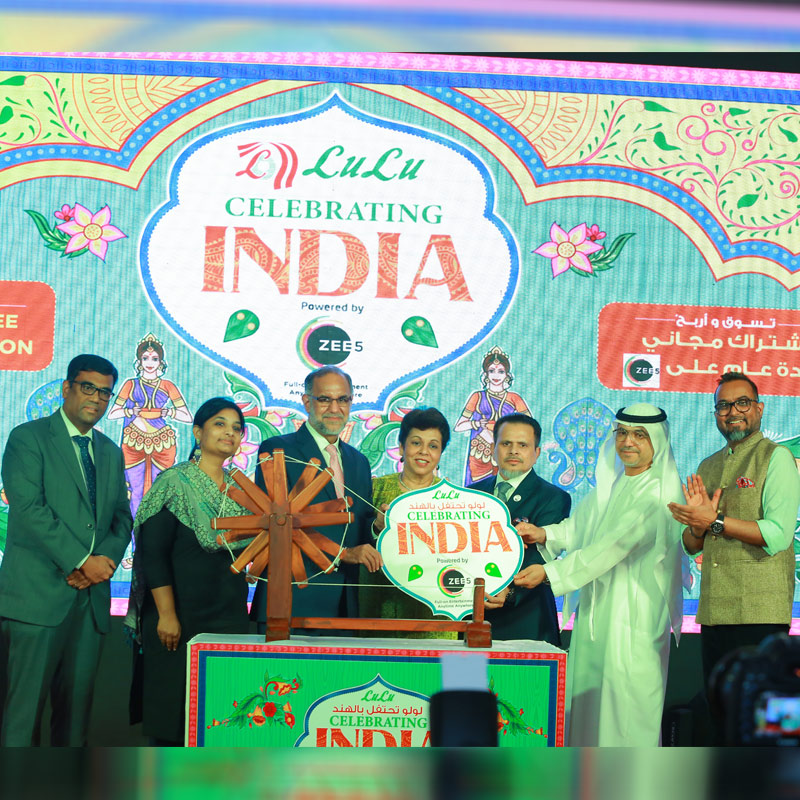
    ZEE5 Global has kickstarted its partnership with LuLu, the top retailer in the Middle East, by powering their bi-annual Indian-themed festival “Celebrating India” rolling out across its stores in the UAE, coinciding with the Indian Independence Day. The week-long festival will highlight food, offers, cultural shows and celebrity visits from 14th to 20th August 2019.

    The festival was inaugurated by H.E. Navdeep Suri, Indian Ambassador to the UAE, alongside Archana Anand, Chief Business Officer of ZEE5 Global, the official partners of this promotion, Saifee Rupawala, LuLu Group Chief Executive Officer and other top officials and government authorities at LuLu Hypermarket Al Wahda Mall, Abu Dhabi.

    H.E. Suri shared: “This is a wonderful initiative by LuLu in showcasing the rich culture and food heritage of India. I am looking forward to welcoming the residents and citizens of UAE to come and explore the delicious flavours of India. I am sure these products will be highly appreciated not only by Indian nationals, but also the local and other expat communities residing here.”

    Commenting on the partnership, Archana Anand said: “With a huge demand for Bollywood and Indian content from not only the South Asian diaspora but also mainstream audiences, and a highly conducive digital and payment ecosystem, the Middle East is an extremely exciting market for us. As the largest retail conglomerate in the Middle East, LuLu has an extremely strong presence in the market and our partnership with them will help us reach our fabulous content bouquet to audiences in this market. I’m thrilled to be here today at the inauguration of the Celebrating India Festival, which marks the first step of this partnership.”

    Powered by ZEE5, the global entertainment app for the best of Bollywood movies, Indian TV shows and more, LuLu gives customers a chance to join and win a free annual subscription of ZEE5 for every AED 50 purchase. LuLu customers will also have access to the latest movie releases exclusively on ZEE5, and a chance to meet with their favourite stars.

    Speaking on the occasion, Rupawala said: “We have always taken pride for showcasing the beauty and diversity of Indian culture through a festival like “Celebrating India”. This is our humble tribute to the glorious tradition, food and offerings of India, which have been widely popular and embraced by the UAE population with more than 200 nationalities residing in it. More than 5 Million shoppers are expected to experience India through this festival. Other than the wide product range that we offer in store, this is our initiative to bind together all communities for a common interest.” 

  • Guest Column: Invest NOW in Indian TV industry

    Guest Column: Invest NOW in Indian TV industry

    As per PWC 20th Annual Global CEO survey, top 5 concerns for entertainment and Media CEOs worldwide are : Changing consumer behaviour, availability of key skills, volatile energy costs, uncertain economic growth and speed of technological change.  Despite the concerns as above, nearly 35%global Entertainment and Media CEOs are confident about improvement in global economic growth and in 12-month revenue prospects.

    In an absolute contrarian play-out case of India, almost all these factors are weighing in favour of the growth of M&E industry in India. There is therefore every reason for investing in the emerging great Indian M&E story.

    Micahel Porter’s five forces analysis is a framework for analyzing the level of competition within an industry and business strategy development. It draws upon industrial organization (IO) economics to derive five forces that determine the competitive intensity and therefore the attractiveness of an industry.Porters Five Forces Analysis throws up an overall high degree of attractiveness for the M&E industry in India:

    public://f1_6.jpg

    Competitive rivalry

    With the M&E industry being highly fragmented with no single enterprise having large enough share to influence the entire sector along with high fixed costs & highly perishable products, the risk factor here at best is medium.

    Threat of new entrants

    With involvement of high sunk costs, high capital requirements and access to distribution difficult, at best the risk factor here is low.

    Substitute Products

    Once again risk factor here is low as Film industry, print media and internet and significant sporting events like World Cup, T20 etc & other cultural events

    Bargaining Power of suppliers

    Since the number of suppliers is very high which leads to the low bargaining power with them and with an ever increasing number of content providers, risk factor once again is low.

    Bargaining Power of customers

    Increased globalisation along with consumers’ loyalty towards one channel being less owing to a variety of alternative sources of entertainment being available, this factor can at best have a medium risk attached to it.

    Conclusion

    In its annual sector forecast for 2017-2021 survey undertaken by PWC across 54 countries, M&E sector is expected to grow at a CAGR of 4.2% which is lower than the projection for the average GDP growth. Lower than the average GDP growth will be for the first time in global markets signalling that the sector may be plateauing in many of these countries.

    Unlike such sectoral shrinkage in global markets, in India, M&E sector projected to grow at near 10.5% and TV at 11% plus is far above the projected economy GDP growth rate.

    The right time to invest in Indian M&E industry and in Indian TV industry is therefore right now.

    public://Untitled-4_3.jpg

    (Piyush Sharma, a global tech, media and entrepreneurial leader, created the successful foray of Zee Entertainment in India and globally under the ‘Living’ brand. The views expressed here are of the writer’s and Indiantelevision.com may not subscribe to them.)

  • Guest Column: Four market forces lending the power to risk in Indian TV industry

    Guest Column: Four market forces lending the power to risk in Indian TV industry

    Overall, the outlook for the M&E industry is very positive and robust. This is spearheaded by continuing top performance by Television and projected unprecedented performance by digital.

    Strong long term economic fundamentals driven by domestic consumption – as high as 70% of GDP- constitutes the core reason for the outlook to be rosy. This combined with delayed yet inevitable completion of digitisation with its resultant benefits.  In the long run, government policies of demonetisation and GST also lending further boost to GDP would further help.

    Rising share of FTA channels, even as it may pull down long term subscription revenue forecast, is expected to only contribute to the overall health of the industry.

    The future very clearly revolves around digital.  With the government’s unabashed push for digital consumption and digital payments, mass adoption of technology is a foregone conclusion. Digital media is no longer being viewed as an additional distribution platform but as a core revenue engine.

    Investment Outlook

    public://F1_19.jpg

    Driven by growth, the investment outlook through an analysis of the past as also last year 2016 is very rosy.

    public://F2_10.jpg

    Key Market Force for Investments

    Four key market drivers favouring India and Indian M&E industry in general and Television industry in particular, are:

    1. Favourable demographics
    2. Tremendous Market Potential
    3. Immense Talent Availability
    4. Increasing Digital consumption

    Favourable demographics

    Per capital income growth rate is projected to double from 2016 to 2020. India has the largest youth population in the world (350 million).  Spend on leisure activities in India is projected to grow at a CAGR of 8.4% up to 2025.

    Tremendous Market Potential

    Traditionally urban India has been a major source of revenue.  TV reach in rural markets has expanded rapidly from 78 million hhs in 2015 to 99 million in 2016 (up 27% yoy). Many TV broadcaster have therefore launched rural-specific ‘Free-to-air’ to tap the growing potential.

    Immense Talent Availability

    The M&E industry employs 0.6 million people as of 2016 which is likely to increase to 1.3 million by 2022. The government has set up M&E Skills Council (MESC) with a   mandate to develop 1.2 million skilled workforce by 2020.

    Increasing Digital consumption

    Penetration of high-speed broadband and wireless internet and proliferation of low-cost smartphone devices have led to an increase in consumption of digital media content such as online media, music streaming and on-demand video streaming. Plummeting data cost will continue to support high growth in the segment, particularly in video streaming.  Attracted but high growth, there has been an unprecedented increase in OTT service providers including world leaders in OTT like Netflix and Amazon.

    Conclusion

    Impending challenges galore. For every sub-segment of Media and entertainment industry. These relate to requirements to innovate, to evolve with this change and to evolve for building sustainable business models.

    Media and entertainment companies will need to be flexible and nimble to be able to make the most of this unfolding opportunity. The long-term future for the television industry is very robust with CAGR projections above 14% for both segments of ad revenues and subscription revenues. The Indian Media & Entertainment industry is expected to leap forward after a slow 2016.

    public://Untitled-3_17.jpg

    (Piyush Sharma, a global tech, media and entrepreneurial leader, created the successful foray of Zee Entertainment in India and globally under the ‘Living’ brand. The views expressed here are of the writer’s and Indiantelevision.com may not subscribe to them.)

  • Indian entertainment channel in US for Amazon’s Prime subs

    MUMBAI: E-commerce giant Amazon is planning to entice the fans of Indian TV shows and movies with a new on-demand subscription service called Heera which will showcase serials, movies and children’s content in five regional languages — Telugu, Tamil, Marathi, Hindi, and Bengali.

    Heera, meaning “diamond” in Bengali, Hindi, Urdu and Punjabi, will have new shows and movies added every month, Amazon says. It’s being seen as the second SVOD channel brand from Amazon, after it debuted the Anime Strike channel earlier.

    Priced at $5 per month, the service is being started only in the U.S. and needs membership of $99-per-year in sync with other Amazon channels.

    Amazon claims ‘Heera’ plans to offer hundreds of recent releases and classic titles including the most popular Bollywood films such as “Fan” starring Shah Rukh Khan, “Sultan” starring Salman Khan and Anushka Sharma and “Kapoor and Sons” with Sidharth Malhotra and Alia Bhatt.

    Heera’s regional best collection would have Marathi classic “Mee Shivajiraje Bhosale Boltoy”, Rajinikanth’s “Kabali,” the best Tamil movie of 2016, and Telugu-language “Eega” starring Sudeep.

    For Prime members, the Amazon Channels lineup includes over 100 add-on video subscription services for Showtime, HBO and Cinemax, Starz, NBCUniversal’s Seeso, Fullscreen, Machinima, Warner Bros.’ DramaFever, A+E Networks’ Lifetime Movie Club, Cinedigm’s Dove Channel, CuriosityStream, Comedy Central’s Stand-Up Plus, PBS Kids, Fandor, Cheddar and Outside TV.

    Almost all the Amazon services are also available separately without subscription.

  • Startup finding reality TV series The Vault makes debut

    Startup finding reality TV series The Vault makes debut

    MUMBAI: The Indian version of Dragon’s Den – on which the iconic Mark Burnett show Shark Tank is based – is being readied to hit Indian TV screens come 1 October 2016. Called The Vault, the reality TV series is looking to fund start ups and nouveau entrepreneurial ideas.

    Each wannabe entrepreneur will get a chance to pitch his idea before a six member strong investor panel and get his or her idea funded to the tune of Rs 1 lakh to Rs 1 crore.

    The 12 episodic show spanning over 30 minutes will enable startups, household businesses, aspiring entrepreneurs with an extraordinary idea, or an established venture an opportunity to expand. The idea is to finance and mentor 36 entrepreneurs by the end of the show.

    But even before The Vault has gone on the floors, it seems to have to run into some sort of controversy. Which is what its American predecessor- Shark Tank – is known for.

    Jatin Goel, the creative brains behind it, says that it will air every Saturday at 7:30 pm on ET Now and every Sunday at 11:30 pm on Times Now. But the channel spokesperson told indiantelevision.com that nothing has been finalized yet.

    However Goel says that he has a signed contract with the Times Group for The Vault.
    Says he: “We have signed a contract with Times Group to discover the next big idea for startups to expand through The Vault. This show is a first-of-its-kind initiative in India towards developing a robust environment that fosters innovation and drives growth for promising business ideas irrespective of the sector they operate in.”

    Goel added that he will be helming the show.

    And he says the procedure to get a shot at the millions on the show has been kept very simple. Entrepreneurs have to register themselves on the show’s website by filling an application form with personal, company or idea related details and the funding expected by coughing up Rs 300 as a one time non-refundable fee. Applicants have to also mention how much equity they are willing to part and for what value. The last announced date of applications is 31 August 2016.

    Accepted applications will be screened and will be shortlisted for the first round of auditions in which each entrepreneur will be grilled about his idea by experts telephonically. A total of 100 applications will be taken forward from this round.

    The shortlisted 100 applications will have to upload a two minute video for the second audition round. From this, the list will be whittled down further to the final list of just 50.

    Goel strongly believes that the Indian entrepreneurial landscape is currently at its peak. “India has the third-largest and the fastest-growing startup ecosystem in the world. The growth witnessed by SMEs and household and rural businesses also indicates that there are many more milestones yet to be achieved.”

    The jury of six will – consisting of self-made millionaires who have already proven their mettle in various backgrounds- retail, technology, real-estate, FMCG, food, health, automobile industry- will judge the entrepreneurs on their idea or startup’s uniqueness and feasibility.

    The investors will be revealed one-by-one on TV and social media through various campaigns.

    A crew of 30 will be filming the show in Film City, Noida, starting the first week of September. An eight multicamera set up is being designed – with four cameras profiling the investors and their closeups when they are talking, two will zoom in on the entrepreneurs as they are pitching and their product showcase, and two will be used for long shots showing both the investor and entrepreneurs in one frame.

    As far as marketing is concerned, Goel says the show will be promoted highly on digital and will have some brand integration involved in it. He and his team are currently in talks with seven or eight advertisers to hop on board for this show.

    “We have not fixed any deals yet. There is no specific sector that we are targeting. Any company which can relate to our concept can be on board,” voiced Goel.

    Plans are afoot to launch a YouTube channel post the show’s run. Apart from a big push on digital, the show will also be marketed on TV, radio, print with various hoardings in metros mainly Delhi, Bangalore and Mumbai. The anchors from various channels falling under Times Network will also talk about the show.

    Will it do well in India? The wagers are on. The Subhash Chandra show on Zee Business has also been running for a couple of years . Shark Tank, which aired on Viacom18 English entertainment channel Colors Infinity earlier this year , met with a muted audience response according to reports. The challenge for The Vault does not only lie in securing advertiser backing but also in gaining its audience.

  • Startup finding reality TV series The Vault makes debut

    Startup finding reality TV series The Vault makes debut

    MUMBAI: The Indian version of Dragon’s Den – on which the iconic Mark Burnett show Shark Tank is based – is being readied to hit Indian TV screens come 1 October 2016. Called The Vault, the reality TV series is looking to fund start ups and nouveau entrepreneurial ideas.

    Each wannabe entrepreneur will get a chance to pitch his idea before a six member strong investor panel and get his or her idea funded to the tune of Rs 1 lakh to Rs 1 crore.

    The 12 episodic show spanning over 30 minutes will enable startups, household businesses, aspiring entrepreneurs with an extraordinary idea, or an established venture an opportunity to expand. The idea is to finance and mentor 36 entrepreneurs by the end of the show.

    But even before The Vault has gone on the floors, it seems to have to run into some sort of controversy. Which is what its American predecessor- Shark Tank – is known for.

    Jatin Goel, the creative brains behind it, says that it will air every Saturday at 7:30 pm on ET Now and every Sunday at 11:30 pm on Times Now. But the channel spokesperson told indiantelevision.com that nothing has been finalized yet.

    However Goel says that he has a signed contract with the Times Group for The Vault.
    Says he: “We have signed a contract with Times Group to discover the next big idea for startups to expand through The Vault. This show is a first-of-its-kind initiative in India towards developing a robust environment that fosters innovation and drives growth for promising business ideas irrespective of the sector they operate in.”

    Goel added that he will be helming the show.

    And he says the procedure to get a shot at the millions on the show has been kept very simple. Entrepreneurs have to register themselves on the show’s website by filling an application form with personal, company or idea related details and the funding expected by coughing up Rs 300 as a one time non-refundable fee. Applicants have to also mention how much equity they are willing to part and for what value. The last announced date of applications is 31 August 2016.

    Accepted applications will be screened and will be shortlisted for the first round of auditions in which each entrepreneur will be grilled about his idea by experts telephonically. A total of 100 applications will be taken forward from this round.

    The shortlisted 100 applications will have to upload a two minute video for the second audition round. From this, the list will be whittled down further to the final list of just 50.

    Goel strongly believes that the Indian entrepreneurial landscape is currently at its peak. “India has the third-largest and the fastest-growing startup ecosystem in the world. The growth witnessed by SMEs and household and rural businesses also indicates that there are many more milestones yet to be achieved.”

    The jury of six will – consisting of self-made millionaires who have already proven their mettle in various backgrounds- retail, technology, real-estate, FMCG, food, health, automobile industry- will judge the entrepreneurs on their idea or startup’s uniqueness and feasibility.

    The investors will be revealed one-by-one on TV and social media through various campaigns.

    A crew of 30 will be filming the show in Film City, Noida, starting the first week of September. An eight multicamera set up is being designed – with four cameras profiling the investors and their closeups when they are talking, two will zoom in on the entrepreneurs as they are pitching and their product showcase, and two will be used for long shots showing both the investor and entrepreneurs in one frame.

    As far as marketing is concerned, Goel says the show will be promoted highly on digital and will have some brand integration involved in it. He and his team are currently in talks with seven or eight advertisers to hop on board for this show.

    “We have not fixed any deals yet. There is no specific sector that we are targeting. Any company which can relate to our concept can be on board,” voiced Goel.

    Plans are afoot to launch a YouTube channel post the show’s run. Apart from a big push on digital, the show will also be marketed on TV, radio, print with various hoardings in metros mainly Delhi, Bangalore and Mumbai. The anchors from various channels falling under Times Network will also talk about the show.

    Will it do well in India? The wagers are on. The Subhash Chandra show on Zee Business has also been running for a couple of years . Shark Tank, which aired on Viacom18 English entertainment channel Colors Infinity earlier this year , met with a muted audience response according to reports. The challenge for The Vault does not only lie in securing advertiser backing but also in gaining its audience.

  • Eikona dribbles through FIFA 2006

    Eikona dribbles through FIFA 2006

    MUMBAI: The period of roughly a week before the launch of any product, film, program, or event is extremely crucial. The pre-buzz prior to the launch created with multiple touch  points  across  editorial,  advertising,  teasers  /  promos  not  only  build  up curiosity but also pulls the target audience to sample it, at least ones. More so, for a massive global sporting events like FIFA, the communication has to get through boundaries  of Age, Gender  and SEC (Socio Economical  Classification),  Geography etc.


    Effectively, FIFA is not a very new phenomenon to India. The roaring success in FIFA 2006 has played a key role in repositioning Soccer as one of the most preferred sporting events among the Indian TV audiences. What made FIFA 2006 bridge with the Indian TV audiences? Amongst many, buzz creation was one of cornerstones towards making FIFA 2006 a success story. Within the construct of FIFA 2006 buzz, PR played a key role in influencing and pushing Indian audiences to take interest, watch and re-watch FIFA telecast.


    Click here to read the full report

  • The LGBT challenge for Indian TV & cinema

    The LGBT challenge for Indian TV & cinema

    It’s said that a country’s art and culture reflect its plight in the best way. At the present time its TV and films that have become the biggest platform to showcase the visual arts. And in the present situation when the lesbian, gay, bisexual, transgender (LGBT) community is facing a tough time after the Supreme Court reinstated that gay sex will remain a criminal offence, it seems so apt.

    On Wednesday, the Supreme Court gave a severe blow to the largely-closeted homosexual community in the world’s largest democracy. It overturned a 2009 ruling by Delhi’s High Court, which had lifted a ban on gay sex between consenting adults that dates back to 1861. According to SC, only parliament can now change the penal code. Under Section 377 of the Indian Penal Code (IPC), sexual activities “against the order of nature” – including homosexual acts – are a criminal offence.

    The law says: “Whoever voluntarily has carnal intercourse against the order of nature with any man, woman or animal, shall be punished with imprisonment for life, or with imprisonment of either description for term which may extend to ten years, and shall also be liable to fine.”
    While the law has can be extrapolated to cover even heterosexual couples indulging in oral or anal intercourse, it’s the folks with alternate sexual orientation (the LGBT community) that are the most troubled.

    Apparently, if we look back, we would realise that "mainstream" commercial TV and cinema  (whicht are not just the most disposable form of art in the country, but also the most common source of entertainment across masses) are mostly devoid of any content that features the LGBT community. 

    'Maryada…lekin Kab Tak' featured a gay couple but the main plot overshadowed this sub-plot

    While in the world cinema space, we have had aesthetically and artfully shot films like Brokeback Mountain,All About LoveAnother Country among many others, in India, the ones that feature gay relationship are either very caricaturish in nature (like Dostana that largely made fun of a gay relationship), or aren’t promoted enough to reach the masses. 

    Films like Fire by Deeepa Mehta, My Brother Nikhil and I Am by Onir, one of the short films in Bombay Talkies by Karan Johar and Dunno Y…Na Jaane Kyun have tried to bring up the topic to the fore, but our country’s film certification board hasn’t let them reach the audience the way they were supposed to. Others like Girlfriend sank without a trace as most of the scenes were just meant to provide cheap thrills rather than focusing on the issue. There have been many other independent films, like You Can't Curry Loveabout an Indian gay, Vikas who works in London that has won awards and acclaim at international film festivals but in India remain confined to the certain sections.

    Mitchell and Cameron in 'Modern Family'

    The situation on TV seems to be even worse. While the world TV is opening up to a cross-section of issues, we seem to be lagging far behind with most of our shows still featuring the saas-bahu sagas.

    So if, internationally, we have shows such as Mom and Dads, an Israeli series involving a menage-a-trois between two gay men – Ima and AbaZ and the mother of their child; Modern Family, a comedy that tastefully puts across the relationship of a gay couple; The New Normal that follows a wealthy Californian gay couple – Bryan (Andrew Rannells) and David (Justin Bartha) – who have a child through a surrogate mother; Sean Saves the World about a gay father and his teenaged daughter; and The Fosters produced by Jennifer Lopez featuring a lesbian couple and their three kids, airing on TV, in India, we can hardly recall anything similar.

    While there’s no serial featuring a gay couple in the lead plot, even the side-kicks who have portrayed gay characters haven’t been fleshed out well. One of the first official gay characters was Petha, portrayed by Deven Bhojani in Tara almost two decades ago, that even a hardcore TV viewer would hardly be able to recall. Maddy in Jassi Jaisi Koi Nahi portrayed by Rajesh Khera was another character that showed an alternate sexuality openly, however it was more comical in nature and barely brought out the issues of the community.

    'Moms and Dads' is about a gay couple raising a baby

    It was only in 2010 when Imagine TV reprised a popular Telugu serial Rakth Sambandham that dealt with the character of a closeted eunuch, the industry had thought that Indian TV is coming of age. But unfortunately, the serial, Rakt Sambandh starring Dhruv Bhandari and Sriti Jha, didn’t work its magic on the audience and met with a natural death very soon.

    Another show, Maryada…Lekin Kab Tak had a strong sub-plot featuring a gay relationship portrayed by actors Dakssh Ajit Singh and Karaan Singh. But that too didn’t make much difference as it was overshadowed by the main storyline.

    At a time when the entire country is debating on what could be done to protect the rights of the LGBT community and is suggesting various measures from bringing in young leaders and disowning the judiciary, shouldn’t the creative industry instead of shouting and screaming on social-media platforms come forward and work towards putting the spotlight on this minor community whose members can now be labelled as criminals just because they love someone from the same sex!

  • “Indian TV programmes have widespread reach and appeal”: Zee TV’s global head syndication Sunita Uchil

    “Indian TV programmes have widespread reach and appeal”: Zee TV’s global head syndication Sunita Uchil

    For the worldwide television industry, Paris-based Reed Midem‘s MipCom and MipTV are akin to what the Festival de Cannes is for global cinema. Both MipTV and Mipcom attract more than 11,000 participants. Each sees the coming together of the world‘s brightest television, animation, format, and audiovisual content creators, buyers and sellers. An estimated one billion euro in transactions – in terms of sales and acquisition of TV shows, formats, feature film and documentary – is estimated to emanate from MipTV which is held in April and MipCom (held in October every year).

    While China, south Korea, Russia and Latin America have been growing by leaps and bounds in terms of programme syndication worldwide and their presence in Cannes‘ Palais des Festivals, India has been moving at a steady pace. At this year‘s MipTV close to 100 participants from India made their presence felt. Some exhibited, some came as buyers to pick up shows and formats, some did co-production deals and some came as sellers to hawk their TV shows and feature films. Viacom18, DQ Entertainment, Shemaroo, Eros, Verria, Maximus Multimedia, were among the big-name players who exhibited. But there were scores of others who came in as participants and bought and sold TV programmes, formats, films, and documentaries.

    The most prominent of the Indian exhibitors has been Zee TV. With an impressive location and display, the company has been a regular exhibitor at Mipcom and MipTV for the most part of this decade; and has been reaping the fruits of its continued participation in terms of growing syndication sales and building its brand globally.

    Indiantelevision.com spoke to Zee TV‘s global head syndication Sunita Uchil to know more about Indian programme syndication worldwide, India‘s presence at Mip, and the benefits that accrue to her company courtesy its Mip outings.

    Excerpts:

    Has demand for Indian content picked up? And what kind of content is attracting maximum attention?

    There definitely is an increasing demand for Indian ‘entertainment‘ content, especially genres such as family dramas, romance and non-fiction. Our syndication strategy (under the Zee Bollyworld umbrella) for the new show launches (Badalte Rishton Ki Dastaan, India‘s Best Dramebaaz, and now more recently DID Supermoms), has been developed keeping in mind the rapidly evolving industry where viewers can access content directly.

    How large is the Indian TV programme and film syndication market internationally? Can you give an estimate on its size? Is this growing and in which markets?

    I cannot comment on the film bit as of now, but Indian TV programs have a widespread reach and appeal. Currently it could be anywhere between US$25-$30mn. Yes, this figure is growing continuously. The recognition that Indian content receives at international markets such as MipTV and MipCom only shows that the demand is increasing globally. Content aggregators and distributors (Americas, Europe) have realised that their audiences are excited to understand more about Indian culture, cuisines, lifestyles etc; and will turn to other platforms like PPV, VOD to access this; with a shift from traditional viewing.

    Can Indian and international co-productions work? Which area – TV, cinema or animation?

    Definitely and in all three forms, Indian technology and skill are on a par with the western markets. We have seen the successful collaborations in the past few years. Growing trends like social media are bringing the world closer. Consumers are getting influenced and watching whatever their friends are watching rather than what the broadcasting networks are promoting.

    Zee Bollyworld itself is offering better customised services like dubbing and subtitling in foreign languages (in order to deliver a superior product) that truly makes it a one-stop shop for Indian entertainment the world over.

    MipTV & Mipcom India rep & indiantelevision.com‘s CEO Anil Wanvari alongside Zee TV‘s global syndication head Sunita Uchil

    How large was your delegation to MipTV this year? 

    We had representation from Europe, Africa, Asia Pacific and the Middle East region this year. Our teams are located in all these regions as well as in the USA now. Our strategy for gaining market intelligence has considerably improved. This has benefited in having a direct resource in the market with better client interaction taking place.

    ‘We are noticing a shift from consumption patterns- from traditional, DTH platforms to VOD, PPV mediums. The increasing importance of social media in influencing consumer tastes and the exposure of international lifestyles is creating a shift towards foreign content with the idea being to ‘try out new things’

    What was your objective from MipTV this year? How did you position yourself differently? Did you introduce any new products or offerings? How was the receptivity to it?

    Zee is the first to create a separate brand umbrella for trading and syndication. In 2012, we had mandated Mumbai based creative agency Young which had created the distinct Zee Bollyworld identity and this concept was well received within trade circles and has been a discernible differentiator for Zee at international content markets. At MipTV 2013, our objective was to leverage and build on this differentiator and to reinforce our positioning – ‘one stop shop for Indian entertainment content‘. We showcased our most successful properties and highlighted our dubbed content to clients.

    Any new ideas of trends you picked up this year from MipTV?

    We are noticing a shift from consumption patterns- from traditional, DTH platforms to VOD, PPV mediums. The increasing importance of social media in influencing consumer tastes and the exposure of international lifestyles is creating a shift towards foreign content with the idea being to ‘try out new things.’