Tag: Indian Television Dot Com

  • Nielsen pushes case for independent audience measurement at India Brand Summit India ’25

    Nielsen pushes case for independent audience measurement at India Brand Summit India ’25

    MUMBAI: When brands can’t measure right, they can’t spend smart. That was the blunt message from Nielsen at the third India Brand Summit 2025, organised by Indian Television dot com, on 19 September.

    The summit brought together a heavyweight mix of marketers from leading FMCG firms, advertising agencies, media buyers, policymakers and digital innovators: all focused on rewriting India’s branding playbook with sharper, more cost-effective strategies.

    Speaking on the theme “The need for an independent audience measurement system for enhanced reach analysis,” Nielsen, senior director, Mridul Verma  made the case for breaking out of siloed metrics. He argued that platform-specific data clouds the true picture of audience reach, causing wasted ad spend and missed opportunities.

    To illustrate, he cited a Samsonite campaign that tapped Nielsen one ads to fine-tune in-flight advertising. By applying unified, cross-platform measurement, the brand was able to optimise outcomes across connected TV, mobile and desktop.

    Verma noted that such cross-channel clarity is critical in today’s fragmented media environment, adding that independent measurement is no longer a nice-to-have but a necessity for marketers seeking efficient and accountable growth.

    With digital advertising spend soaring in India, Nielsen’s pitch for a single yardstick was clear: only a unified view can keep campaigns efficient and effective in a crowded media landscape.


  • Television’s Biggest Night: Inside the Dazzling Indian Telly Awards 2025

    Television’s Biggest Night: Inside the Dazzling Indian Telly Awards 2025

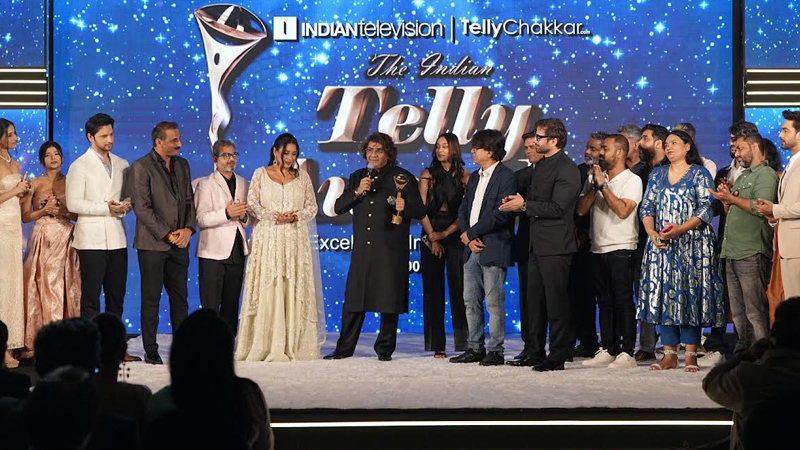
    MUMBAI: The stage was set for a glittering event, one of India’s most prestigious entertainment award functions in television. Organized by the parent company, Indian Television Dot Com and Tellychakkar, the event honoured the finest talent in Indian television, celebrating exceptional performances, groundbreaking creativity, and artistic excellence.

    Hosted by Sandiip Sikcand, Jay Soni and Sugandha Mishra, this year’s ceremony was as dazzling as it was memorable.

    Event Details: 
    • Date: 23rd july 2025 
    • Time: 7:00 PM – 11:30 PM 
    • Venue: JW Marriott Juhu 
    • Tickets: By invite only

    THE GRACEFUL SPONSORS WITHOUT WHICH THE EVENING WOULD NOT HAVE BEEN POSSIBLE ARE :

    Waman Hari Pethe Jewellers has been a trusted name since 1909.

    Rooted in Maharashtra’s rich heritage and driven by a progressive vision, we are proud to be the Title Sponsor of the Indian Telly Awards this year.

    This association celebrates the brilliance of Indian television, just as we celebrate craftsmanship and timeless elegance in jewellery.

    We look forward to a long and meaningful partnership with this iconic platform,” said Ashish Pethe, Partner, Waman Hari Pethe Jewellers. “Partnering with the Indian Telly Awards is a proud moment for RENÉE. It’s a celebration of confidence, creativity, and the power of self-expression. Together, we honor the faces and stories that continue to inspire millions.”

    Aashka Goradia, Co – Founder & CMO, RENÉE Cosmetics “At OTerRi, we get that life moves fast, and laundry usually gets left behind. That’s where we step in.

    Partnering with the Indian Telly Awards means more than visibility for us.

    It means reminding people that even in the middle of all the lights, cameras, and chaos, clean clothes shouldn’t be a worry.

    We’re here to make everyday life feel a little lighter, one load at a time!

    Behind every spotless outfit, there is a silent hero – We are OterRi” – Abhishek Sharma CTO & Manoj Wanvari COO OterRi 

    “The Indian Telly awards are not just about celebrating talent but about acknowledging the stories that inspire and resonate with millions. This year, they aim to make the event bigger and more unforgettable than ever with getting the best from the Industry under one roof and making sure they are acknowledged for entertaining millions,” said Anil Wanvari, Founder of the awards and parent companies.

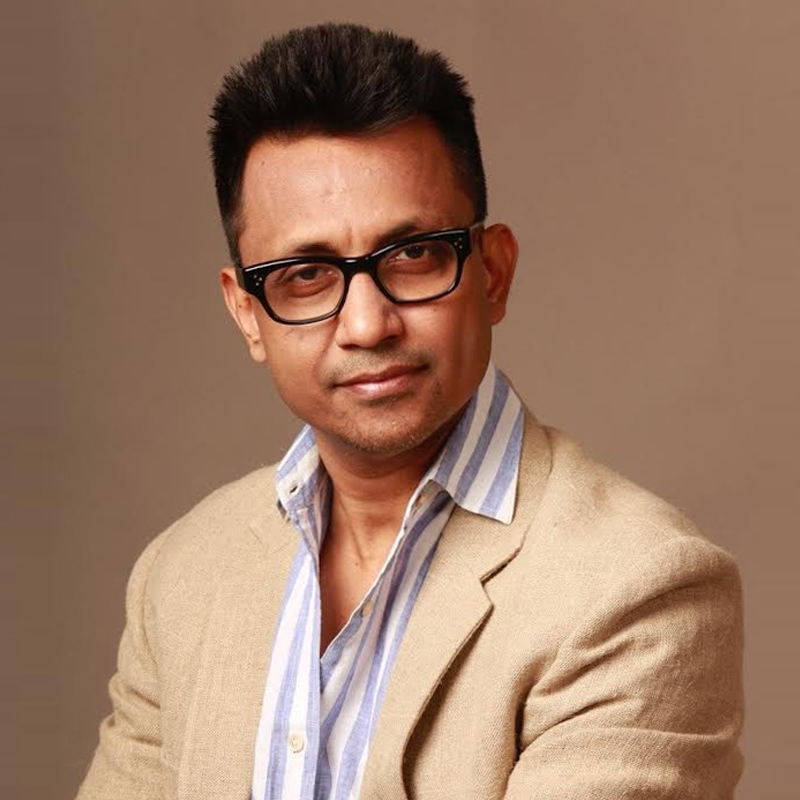
    Anil Wanvari

    Event Highlights:

    • Red carpet arrivals featuring India’s top TV and music stars.

    • Award categories, including Best Actor, Best Actress, Best Show and Viewers and Editors Choice Awards.

    • Jeetendra and Shobha Kapoor together got felicitated and a sweet moment was shared between them

    Rupali Ganguly

    • Rupali Ganguly, Bharti Singh, Krushna Abhishek, Ankita Lokhande, Deepika Singh and many more biggies under one roof

    Vivian Dsena

    • Vivian Dsena and Karanveer Mehra bonding on the red-carpet after the show.

    • The Laughter Chefs star contestants sharing a winning moment with their awards at the red carpet.

    Shivangi Joshi

    • Shivangi Joshi recevieng her award and speaking on Yeh Rishta Kya Kehlata Hai.

    Karan Kundrra

    • Karan Kundrra doing his boyfriend duty by collecting the award for ladylove Tejasswi Prakash and for himself.

    • Akanksha Puri stunning the paps with her jaw-dropping look

    Arti Singh and Krushna Abhishek

    • Arti Singh and Krushna Abhishek sharing the most beautiful sibling bond while the latter won and was handed over his winning moment by his sister

    Bharti Singh

    • Bharti Singh’s winning speech had everyone smiling.

    Deepika Singh

    • Deepika Singh ever grateful to win her second Indian Telly Award.

    Yeh Rishta Kya Kehlata Hai

    • The entire cast of Yeh Rishta Kya Kehlata Hai having a lovely moment on stage.

    Anupamaa

    • Team DKP along with the cast of Anupamaa and Yeh Rishta Kya Kehlata Hai enjoying a family moment on stage.

    Shobha Kapoor,Jeetendra

    • Veteran actor Jeetendra presenting the award to wife Shobha Kapoor, creating a timeless moment.

    Actress Hiba Nawab And Krushal Ahuja

    • Krushal Ahuja and Hiba Nawab dazzle together on the red carpet at the Indian Telly Awards 2025.  

    • Exclusive, star-studded after-party for VIP guests

    Asit modi

     • Asit Modi beams with pride after winning for Taarak Mehta Ka Ooltah Chashmah at the Indian Telly Awards 2025.

    Dilip Joshi, • Dilip Joshi wins hearts and honours once again for his iconic role as Jethalal at the Indian Telly Awards 2025. Jamnadas Majethia • JD Majethia bags top honours, celebrating his contribution to Indian television comedy at the 2025 Telly Awards.    
    Other Celebrities hobnobbing with each other from the likes of Romit Raj, Eijaz Khan, Gauri Tonk, Hunar Hali, Sudhandhu Pandey, Shiv Thakre, Sarita Joshi, Dilip Joshi, and Shubhangi Atre to Tanuj Virwani, Nivedita Basu, Avinash Mishra, Khanzadi, Priyamvada Kant and many more.


  • Virtual Fireside Series: Watch BARC India CEO Sunil Lulla live on 25 September

    Virtual Fireside Series: Watch BARC India CEO Sunil Lulla live on 25 September

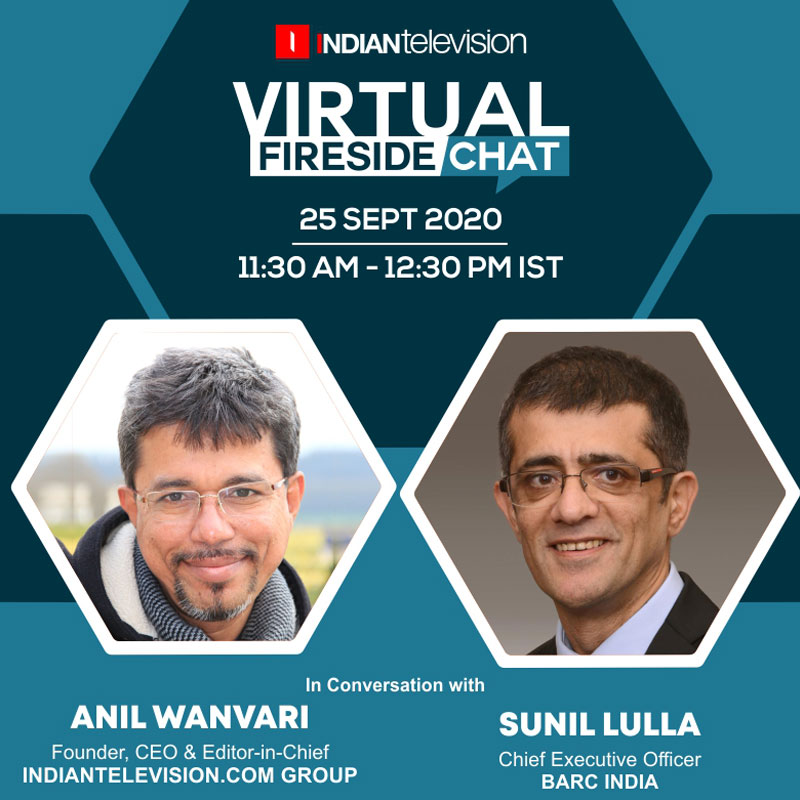
    MUMBAI: Taking ahead its virtual fireside series with leading professionals spearheading the broadcast industry in India, Indiantelevision.com will be hosting BARC India CEO Sunil Lulla on 25 September 2020. The session will be helmed by our founder, CEO, and editor-in-chief Anil Wanvari.

    During this chat, Lulla will be sharing the impact of pandemic on the television and broadcast industry, television viewership, technology, advertising, and much more. 

    Read more news on BARC

    With over 35 years of industry experience, Lulla has worked in leadership roles across media (TV, Digital), brands (marketing) and advertising (agencies). He has worked at J. Walter Thompson, Balaji Telefilms, HMV Saregama, MTV India, Diageo, Indya.com, Sony Entertainment Television, Grey Group, Times Television Network, and others. Lulla's longest stint was at J. Walter Thompson as director of client services for India, China and Taiwan between 1985 to 1996. He was also part of the which helped turn around Sa Re Ga Ma (HMV). Lulla played a key role in starting, shaping and developing the Times Television Network (owned by the Times Group) which comprises successful and leading TV channels: ET NOW, MOVIES NOW, ROMEDY NOW, TIMES NOW and zoom. 

    He is associated with several industry bodies and associations and drives policy and agenda setting for the advertising, media and entertainment industry. Simultaneously, he continues to be on the boards of multiple companies.

    Watch our previous virtual fireside chats with industry veterans

    The virtual fireside series in its previous sessions has hosted eminent industry professionals such as Zee Entertainment Enterprise Ltd chief growth officer – advertisement revenue Ashish Sehgal; Sri Adhikari Brothers Group MD Markand Adhikari; Applause Entertainment CEO Sameer Nair; Republic Media Network founder Arnab Goswami and several others.

    Keep watching this space to know more.

  • Virtual Fireside Series: Catch Viacom18’s Mahesh Shetty live on 17 September

    Virtual Fireside Series: Catch Viacom18’s Mahesh Shetty live on 17 September

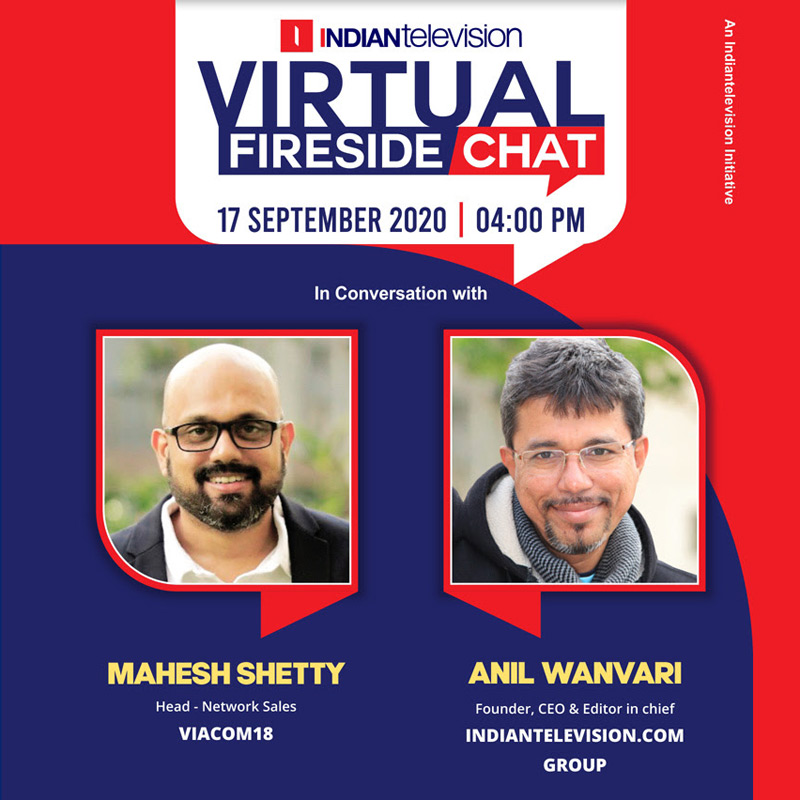
    MUMBAI: Taking ahead its virtual fireside series with eminent professionals of the media and advertising industry in India, Indiantelevision.com will be hosting Viacom18 network sales head Mahesh Shetty on Thursday, 17 September 2020 at 4:00 pm. The session will be helmed by our founder, CEO, and editor-in-chief Anil Wanvari.

    Shetty has been handling the Viacom18’s network sales and is associated with the company for the past year and a half. He comes with over two decades of experience in marketing, sales and general management across media and FMCG sectors. His last stint was at Radio Mirchi where he spent 12 years and played a key role in the expansion of the radio network to 66 stations, and eventually expanding its footprint in the international market. Shetty started his career with PepsiCo to lead the beverage major’s marketing outreach in Maharashtra and Gujarat and over his decade long stint grew within the organisation to become the general manager, national sales – organised trade.

    Read more news around Mahesh Shetty 

    He will be sharing his experiences of sailing through the past few months of nationwide lockdown, managing advertising revenues, and other insights from the world of broadcast, marketing, ad sales and general life. 

    The virtual chat series had earlier hosted industry veterans such as Zee Entertainment Enterprise Ltd chief growth officer – advertisement revenue Ashish Sehgal; Sri Adhikari Brothers Group MD Markand Adhikari; Applause Entertainment CEO Sameer Nair;  BCCL president – response Partha Sinha; DAN CEO APAC and chairman India Ashish Bhasin; and IPG Mediabrands CEO Shashi Sinha. During these interactions, these eminent industry leaders have shared their understanding of the  television business, advertising industry, content pipeline and strategies that will be leading the new world order in the post-pandemic era.

    Watch our Virtual Fireside Chats

    Keep watching this space to know more.

  • “India is not yet developed to venture into TV pay model”: Sri Adhikari Brothers’ Markand Adhikari

    “India is not yet developed to venture into TV pay model”: Sri Adhikari Brothers’ Markand Adhikari

    15 September 1959 saw a small transmitter and a makeshift studio in a corner of Delhi give birth to terrestrial television. Decades later in 1990, India saw the arrival of private television channels. When saas-bahu dramas ruled, SAB TV is credited for putting a smile on the face of the Indian audience with the launch of India’s first and only comedy channel. After acquiring relevant experience in the fields of advertising, marketing and media publicity, Markand Adhikari, along with his late brother Gautam Adhikari, started Sri Adhikari Brothers (SAB) Group – in 1985 as a partnership firm. Later, it went on to become the first publicly-listed television production company in India when it was listed on the BSE in 1995.

    The company initially created regional language programs in Marathi and Gujarati and then moved on to producing Hindi programs on the Doordarshan. With the advent of satellite channels in India, SAB started producing serials for Zee TV. The group had numerous channels like SAB TV (now owned by Sony Networks), Mi Marathi & Mastii. The group made regional channels for rural parts of India like Dabangg, Dhamaal and Dillagi. The duo further forayed into films.

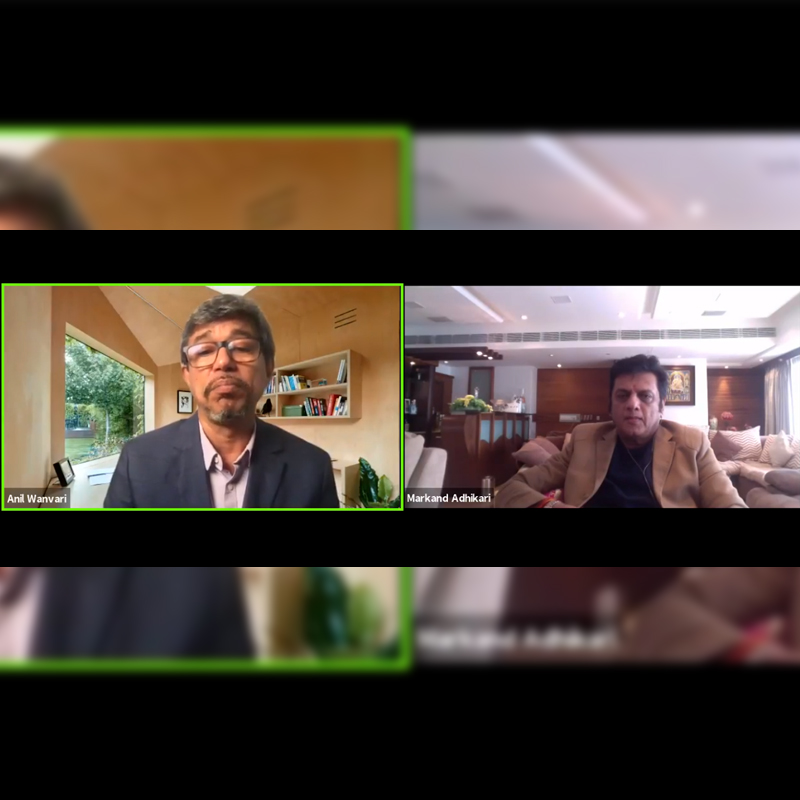
    Sri Adhikari Brothers co-founder Markand Adhikari, in an insightful fireside chat with indiantelevision.com founder, CEO and editor in chief Anil Wanvari, got candid about his journey, plan going forward, advertising and subscription model in television and more.

    Edited Excerpts:

    You have been a part of television industry for 40 decades; can you tell us more about your journey?

    When Doordarshan started in India, it only used to telecast an infotainment show called Krishi Darshan. When I was just a teenager, I met then information and broadcasting minister Vasant Sathe to discuss the chances of bringing commercial shows in India just like the west. At that time, he only asked me to look outside the window and asked me what do you see, I said I could see green trees and a colourful world. He explained to me about vision to bring colour television in India which was heavily criticised back then. Somehow, he accepted my proposal to create a show with Shashi Sharma. It started the era of sponsorship programs on television. We did sponsorship programs on Doordarshan for quite a few years then we ventured into regional space with LPTS (Low Power Transmission). We connected to the regional centres of Mumbai and Ahmedabad. Bandini became the first serial for Bombay Doordarshan. We carried a lot of shows for Doordarshan from the mid 80s to 1991.

    My late brother Gautam Adhikari’s name was registered in Limca book of world records for directing the maximum number of shows. I made Commander with Essel Group chairman Dr Subhash Chandra and I learned a lot from him. With the help of Jeetendra Kapoor (veteran Bollywood actor), I met Ketan Somaiya, a Nairobi-based entrepreneur who used to run an Asia channel in London with Amitabh Bachchan. We created a show called Waqt for him for $11,000 per episode and at that time import and export were free. The show had 52 episodes but due to some non-payment issues, the show was stalled at 26 episodes. After this, I again switched back to Doordarshan because Zee never used to give rights to the shows. DD Metro was recently launched where I did popular shows like Shriman Shrimati and All The Best. At that time, it was Rs 1,20,000 for 10-second spots on DD Metro. Doordarshan wanted us to make an afternoon soap within 15 days. I spoke to TV Asia about my 52 episodes out of which I was only paid for 26 episodes. I imported the pending episodes on half of the rate. Starting with 52 episodes I made Waqt Ki Raftaar which eventually had 600 episodes.

    What happened after you listed your company in 1995?

    Due to the Harshad Mehta Scam, the entire stock market suffered until 1998. Finally, in 1999 the economy was witnessing a boom then I realised it is the perfect time to start our own channel. The main challenge was we were always in production. Broadcasting was altogether a new experience. Our financial adviser only gave the plan of Rs 115 crore for the channel but to launch a channel it was too less. Then with the limited amount at my disposal, I started SAB TV in 2000. Again, due to Ketan Parikh’s scam, the economy was in shambles still we managed to run the channel for five years. We were a trend-setter by bringing a niche comedy channel. Sony Networks took over SAB in 2005, which till date is my biggest regret. However, I am happy that SAB is a big brand. After SAB TV we started two news channels Janmat and Mi Marathi which later I sold at a good price.

    What do you think about the future of television?

    Television in India is not going to die so soon, it will at least stay for another ten years. In the typical Indian household, it is still a culture to watch TV together. Most of the people are not aware of the multi-set concept or firesticks. However, one of the benefits with digital channels is that it is moving whereas television is static. Television is appointment viewing, on the other hand, digital is infinite. But digital requires a lot of capital investment. One cannot enter the digital market with a three-year plan.

    Are you looking at OTT content production?

    Our next-generation has already ventured to digital space with a series called Dheet Patangey that was uploaded on Disney+ Hotstar. It is directed by Gautam Adhikari’s son Ravi. My son Kailashnath and Ravi already have close to five shows which are almost done.

    Television is heavily dependent on advertisers; do you think subscription-based models will be a viable option in the long run?

    As far as television is concerned, I think in India most of the channels will be dependent on ad revenue. Also, I believe India is not yet developed to sustain on a pay model. There are broadcasters, MSO, semi-MSOs and then cable operators who collect money from individual households. So it has a lot of loopholes and layers in between which needs to be identified. There is a lack of transparency. At the same time advertising models will not work on digital platforms because audiences are now used to watching OTT content ad-free.

    What are your thoughts on IPL which is expected to happen during Diwali? Also, will it benefit all the channels or only sports channels?

    I believe it is good news; it is creating a moment with the advertising world and advertisers. IPL or any other cricket forms were running in the same manner as it was before Covid2019. Advertising spends were created keeping all the channels in mind; it was just not for sports channels. I don’t think so IPL will impact the revenue of any other channel.

    According to media planners, 30 per cent of advertising spends are kept for IPL, so do you think it will impact other channels?

    It is not a new scenario. In fact, it is a testing time for other channels, where we will get to see how they perform when IPL arrives.

  • TV9 Network to shut English news channel News9 to focus on digital medium

    TV9 Network to shut English news channel News9 to focus on digital medium

    MUMBAI: With the huge audience shift from television to digital, staying relevant in the broadcast industry is challenging. With that goal, TV9 is all set to venture into the digital medium for its English news. In a fireside chat with Indiantelevision.com founder, CEO and editor in chief Anil Wanvari, TV9 Network CEO Barun Das said that the company will shut down its English channel News9 to focus on expanding its digital platform.

    He said, “Traditional format of television would go and it will get more into the digital space. People below the age of 18 years are not watching news channels. If you see English news channels have shrunk to an extent that they will not sustain. We had News9, a Bangalore-based channel, but I believe city-based English news offerings in the Indian market are not ready yet. We had to take a business call, so we are coming up with a national version of that but on a digital platform. We are coming up with digital web TV.”

    He further explained that the television news genre is overly crowded and even the regional channels are exploding. According to Das, news channels have more than “pure business reasons” to launch channels. So, that is the reason why fringe channels come in and the market gets crowded.

    He added, “But I think viewers and advertisers filter them out. In the regional market, there are not more than four big channels. In Hindi it is a larger market, 45 per cent of our population speaks Hindi. Advertisers look at the top nine channels so every leading new channel gets the share of the pie.”

    As per Das, in the past 10 years Hindi and regional news channels have moved in the same way print has moved in 10 years.

    He pointed out that the channel will continue to grow in double digits leaving out exceptions like Covid2019 period and slowly it will taper into single-digit. Das also clarifies that the content on news will not disappear but the way it is being packaged and distributed will change.

    “In India, digital revenue will overtake the traditional medium by 2025. This scenario will happen to Hindi and regional channels by 2028. We still have good seven to eight years to go. Hence we are currently focusing on the digital front. As TV9 group was not digital-savvy, our focus has turned to embark on a major expansion on the digital side,” he said.

    Das highlighted that the channel has already set up an infrastructure for Studio9 where the team will look to work with clients to develop creative solutions. Studio9 will look at the convergence of television and digital revenue with a solution-driven approach. As a major expansion in the digital medium, TV9 Network has set up a new office of 20,000 square feet where it is briefing teams across the country. The company has recruited close to 400 employees.

    He quipped, “Digital is a big game for us going forward. Raktim Das will be looking at the convergence side. Slowly you will see we will be moving with digital but also keeping a stronghold on TV side revenue. I am also planning to do anchoring in the coming future. I am working on a concept that will see the light of the day, but it will be on the English side.”

    You can catch the full fireside chat here:

  • The accidental producer: Siddharth Kumar Tewary gets candid on his journey

    The accidental producer: Siddharth Kumar Tewary gets candid on his journey

    MUMBAI: Most popularly known for creating magnum-opus shows like Mahabharat, Karmaphal Daata Shani, Porus, Ram Siya Ke Luv Kush and RadhaKrishn Swastik Productions has successfully managed to win our hearts over the years.  In a virtual fireside chat with Indian Television Group founder, CEO and editor in chief Anil Wanvari, on ‘The evolution of a creator – The maker of the new Mahabharat,’, Swastik Productions and One Life Studios founder and chief creative officer Siddharth Kumar Tewary gets candid about his journey and much more.

    Tewary, who was born and raised in Kolkata, always had a dream of making it big in the city of dreams Mumbai. After quitting his job in advertising, he started working in the marketing department of Sony Entertainment Television. His sheer love for storytelling and writing unique stories inspired him to make Amber Dhara for Sony Entertainment Television. 

    About the idea behind creating Amber Dhara, Tewary said: “A news article about two conjoined twins gave me the idea to speak to Sony Entertainment who I thought believed in unique and progressive shows rather than daily soap operas. Amber means sky and Dhara means earth so they are two distinct characters. The story was about how they are the same but still think differently.”

    Tewary says that he never thought of becoming a producer. The initial idea was to create a story that will be backed by a production house. But later, after figuring out different ways, he and his previous partner Vikas Seth decided to do it themselves, and that gave birth to Swastik Productions in 2007.

    Amber Dhara was a show with a beautiful concept but failed to make money. So, after this show, Tewary went on to make Mata ki Chowki which was aired on Sahara One. The show became a huge success and created new avenues for Tewary. He didn’t have to look back after that; he created another show named Agle Janam Mohe Bitiya Hi Kijo, a story that showcased the issues prevailing in rural India. The show was quite successful. Since then, he has created more than 30 shows.

    On his most favourite television shows Amber Dhara and Mahabharat, Tewary says: “Amber Dhara will always remain close to my heart. We have not even created a set. Because I wanted to write a series where just like human lives you are not stuck in one place. It is a story of two characters that kept moving. My second most favourite will be Mahabharat. In 2009 Vivek Behl from Star Plus called me and said he liked my show Agle Janam Mohe Bitiya Hi Kijo and he wanted me to make a Mahabharat. It took me five years to make that show. Mahabharat has taught me a lot and it has changed me as a person. Porus was the first Indian show that was showcased on the digital platform Hulu in Japan. It taught me to invest more in what you are creating and going around the world to sell your content. We have sold it in more than 14 countries now.”

    Tewary is ecstatic about re-running his show Mahabharat which was made seven years back.

    On parting ways with long-time friend and Swastik Productions managing partner Vikas Seth, he said it was a difficult time. Due to Mahabharat they were in huge debt. But after Mahabharat was launched it did well. “Initially we decided to make 128 episodes, but I was unable to tell the story in those particular episodes so we decided to extend it. Because of the extension Mahabharat did well for us on all fronts. It helped us get back on our feet,” he explained.

    According to Tewary, the formula for being a successful production house is going ahead with your team who share similar ideology. “The sheer passion of the entire team at Swastik Productions kept us going despite the challenges. Me and my elder brother Rahul always dreamt of creating a set, how we will provide shooting facilities. So, slowly we started acquiring land, building set on our own properties. Today we have more than 25 shooting floors which are spread across 25 acres. We have a huge mythological setup in western India. One thing led to the other and we started on investing in infrastructure while we were doing a lot of work on the visual effect front. Where we can have control over the delivery of our own product. That is how One Life VFX came into existence.”

    Elaborating more on One Life, Tewary said that Swastik Productions is a parent company and One Life Studios is a subsidiary of that where they do most of the digital work, syndication, distribution and visual effect work.

    Tewary is currently working on the animation front, where he is busy making a few promos and developing some animation stories. In the near future he wishes to create characters that sustain for much more time. He is also focussing on syndication and distribution where he is taking Indian content overseas and similarly wishes to bring international content in India.

    He adds, “We have acquired some international series that we will be distributing to OTT platforms in India for them to stream. I am also working on an original series called Escape Life for Hostar. I finished the writing; we were about to begin the shoot but due to lockdown things are at halt.”

    He revealed that he has no plans to lay off workers in the wake of the Covid2019 pandemic. "We have deducted salary from April onwards. But there are no plans of furlough or layoffs. Infact, we are taking care of 250 people who are staying at our Umbergaon set in Gujarat," he said. 


  • Restaurant industry can introspect and reinvent during Covid2019: Sanjeev Kapoor

    Restaurant industry can introspect and reinvent during Covid2019: Sanjeev Kapoor

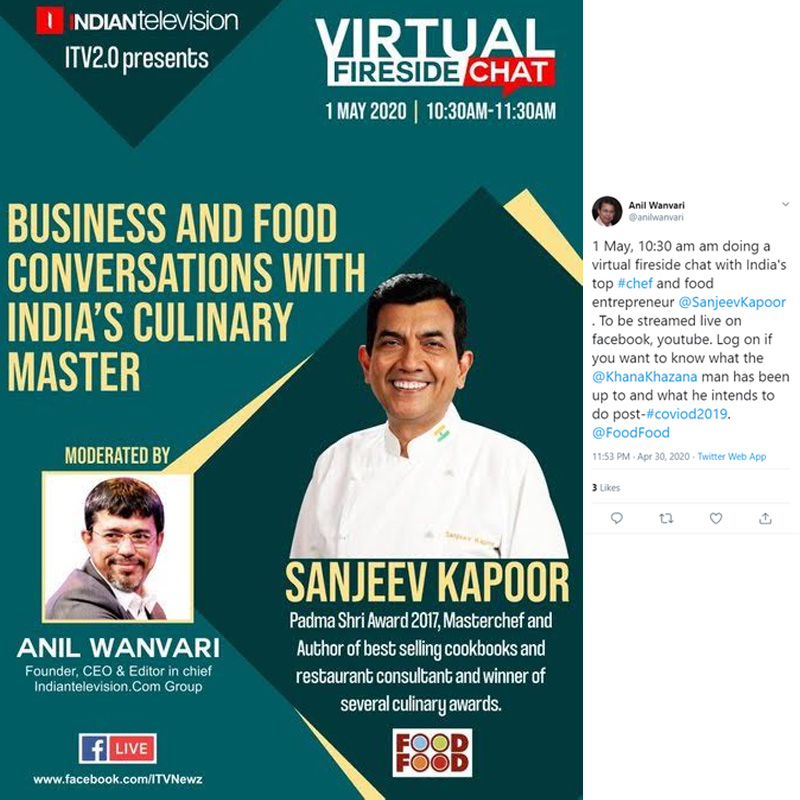
    MUMBAI: The restaurant industry, just like any other industry in the country, has suffered huge losses since the Covid2019 outbreak. India’s culinary master and food entrepreneur, Sanjeev Kapoor, in a virtual fireside chat with indiantelevision.com founder, CEO and editor-in-chief Anil Wanvari talks about the spirit of generosity, lessons learnt during Covid2019 and his personal evolution. He also explains how the restaurant industry needs to reinvent itself in order to grow ahead.  

    Explaining about his work during the pandemic, Kapoor said, “In Mumbai we have partnered with Taj Group to distribute food to 45,000 people every day and same is the case in Delhi and Bangalore.”

    As people will not stop eating food, there is a significant growth in the consumption of digital content where audiences are looking up their favourite chefs to acquire cooking skills. Hence, Kapoor is keeping himself busy looking after his specialised channel Food Food and also creating content for his digital platforms where he is creating content and live shows with the help of his family members who have turned into sound and camera persons.
    According to Kapoor, reviving restaurants during this pandemic is very essential. Because people's need to eat is still there. What they will eat or where they eat may change. Which means that skills are still required. He added, “If you want to eat a rumali roti you cannot eat at home.You need skilled people to do that. I have been advising people in the restaurant industry to bring in new concepts, new thoughts to sustain and grow.  Also, this is the time to look at what was going wrong in the industry.”

    Kapoor is of the opinion that the fixed cost in the restaurant industry is very high. He notes businesses should look into compensation based on the work being done. They should create work that functions on a variable cost model in order to survive.

    The one positive outcome of the pandemic will be a chance for the restaurant business to refurbish itself.

    Kapoor feels that the restaurant industry will have to go in for some major modification in the coming future. When the business starts, it is important to let go of outdated business practices and develop new concepts, thoughts and more innovative ways to feed people.

    According to Kapoor, the hospitality industry is a very resilient sector, but going forward, will they change their traditional model of doing business? He said, “Meal kits are going to be the next big thing in the industry. We have already started our meal kits. I will include primary ingredients, a recipe card along with a cook along with Alexa, where you scan the QR code and the cook will guide you. It is about changing the model and creating opportunities.”

    Kapoor, who closely works with Akshay Patra, serves 18 lakh meals every day. The food is prepared at 50 large kitchens. According to Kapoor, the restaurant industry was not looking at sectors like that as an opportunity. Institutions like Akshay Patra have interns from top universities including Harvard and Stanford whereas top Indian colleges do not even go there. He thinks that a food service solution needs people who understand processes and taste.

    He says, “If today you want to eat Thai food at home and if you are vegetarian, you don’t want something with fish oil and shrimp paste. You want an Indian solution for that. There are many such opportunities in the market like I closely work with, such as pharma companies. Has anyone thought if medicine tasted good what miracles it would create? There are nutritional and functional foods which need to be healthy and tasty. So, many companies need that intervention. This is the time for specialists and there are many opportunities. We just have to keep our ears and eyes open. I have always advised people to look beyond the standard option.”

    About the options available for a corner-side restaurant, Kapoor said, “They are way better warriors than us. I know many people who are supplying food to a hospital chain. There will be two kinds of people: one who will fight and another who will wait. The ones who are fighting will survive and those who are waiting will also survive but they will need much more time.”

  • The Content Hub 2019: Creators discuss digital adaptation, creativity and originality

    The Content Hub 2019: Creators discuss digital adaptation, creativity and originality

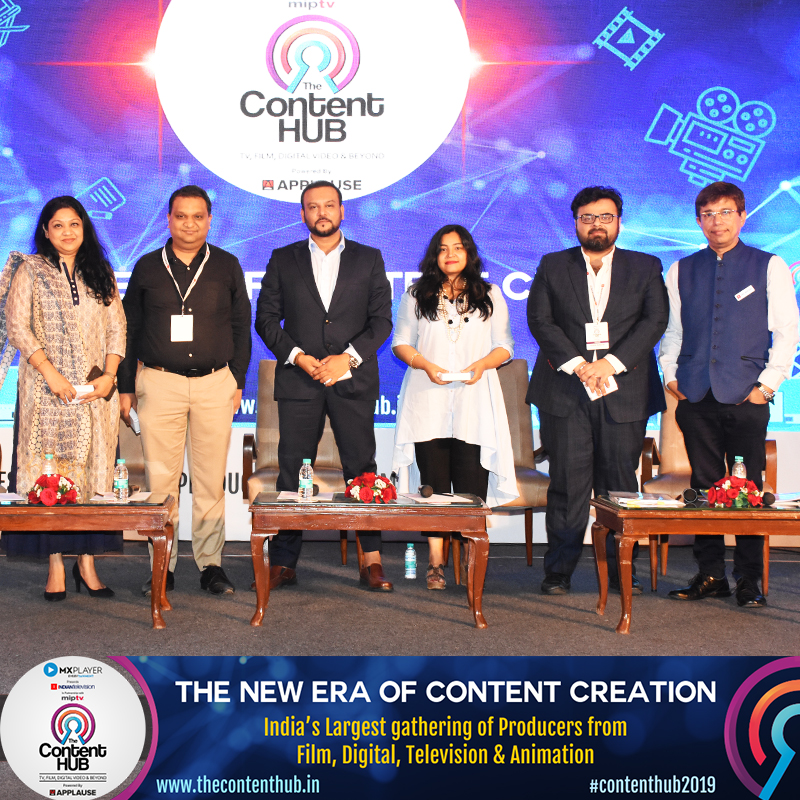
    MUMBAI: Indiantelevision.com on Wednesday wrapped the third edition of its popular event The Content Hub in presence of some of the biggest names from the TV, digital, and the movies industry. Spanned across several panel discussions and fireside chats, this edition of The Content Hub discussed ‘the new era of content creation’ with a focus on the digital boom, need of good content creators, the synergy between creators and producers, and creating properties that can travel globally.

    Starting the day was a panel discussion on ‘The TV Production Story: Reality, Not Fiction’, moderated by Bodhi Tree Multimedia co-founder and director Mautik Tolia. In discussion were some of the most successful and prominent names in the TV industry – Contiloe Pictures Pvt Ltd founder and producer Abhimanyu Singh, Endemol Shine India CEO Abhishek Rege and SOL India – Banijay Group founder and MD Fazila Allana.

    The distinguished panel discussed the opportunities and challenges fiction and non-fiction formats today face in the TV and digital world. They also shed some light on the prospects premium content has in the Indian industry.

    The panel agreed that non-fiction producers face bigger challenges in creating content as compared to those investing in fiction and dramas. Allana noted that while earlier people were chasing formats, now they are chasing stories. However, she quipped that there is a vast opportunity for non-fiction shows on OTT platforms citing examples of TV shows like MTV Troll Police.

    Singh reflected the same sentiments as he noted that this is a very good time for the content creators. He said, “I feel it is a great time to tell stories. I think we as an industry haven’t delivered premium content because the nature of delivery has always been daily content. So, this is an opportunity to deliver premium content.”

    Rege mentioned, “Scripted becomes a little easier to tell stories more across TV, OTT or across multiple platforms. The challenge here is making attractive content for the viewers and targeting the right people. With OTT I don’t think it’s easy to do as many talent shows that we do on linear.”

    The second session was a fireside chat between Indiantelevision.com founder, CEO and editor-in-chief Anil Wanvari and Swastik Productions  & One Life Studios founder and chief creative officer Siddharth Kumar Tewary.
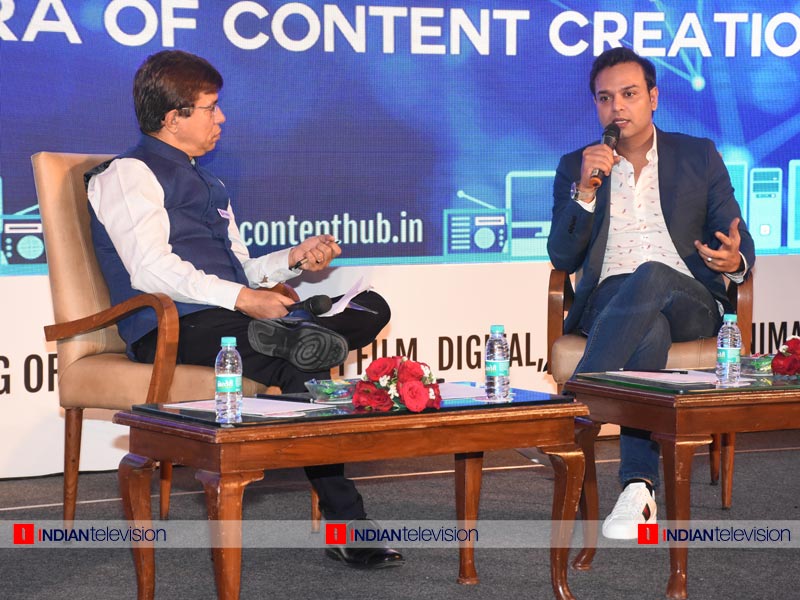
    Tewary, based on his extensive experience of industry work, reflected upon many aspects of content creation and production including formats, IP rights, and disruptors in the industry. He noted while most of the people believe that longer formats don’t work internationally, the reality is not the same.

    Speaking about IP rights of content, Tewary made some relevant points saying, “IP creation is a scientific thing related to the socio-political situation in the country and the world. We need to know where the world is heading. If you are going to add value and bring something unique for the TV, then you will get the IP.” He also announced the foray of his group in the animation category at the platform.

    The next session was a discussion on the animation industry with an esteemed panel of Discovery Kids head Uttam Pal Singh, Golden Robot Animation head of business development RK Chand, Paperboat Animation co-founder and chairman Soumitra Ranade and Bioscopewala Pictures managing partner Nishith Takia. The session was moderated by Kinsane Entertainment Inc chief marketing officer Pranab Punj.

    The panel highlighted the vast opportunities OTT platforms are offering them right now. Takia shared that his company is in talks with several big digital players to create content for them. Another point that the panel highlighted was that Indian audience is not very keen to visit theatres to consume animated content and that closed their avenues of creating content for a wider audience and not just the kids.

    Answering a question on why there aren’t more female-led animated shows in India, the panel shared a similar tone as they mentioned that in most of their shows, the female characters have an equal prominence as the mail lead, they are inclusive to the storyline. They added that male-led shows are doing well in the market and from a business perspective they are focusing on that aspect as well.

    The next session was an interesting and insightful chat on ‘The Syndication Opportunity’ between Sony head networks—licencing Malvika Prabhu, Go Quest Media Ventures MD Vivek Lath, Swastik Productions and One life studio producer and managing director Rahul Kumar Tewary, MX Player head of content acquisition Mansi Shrivastav and ANM Global co-founder partner Nidhish Mehrotra. Moderating the panel was Wanvari.

    Wanvari started the discussion by asking the panellists whether the demand for Indian content in the global market is going up or declining. To this, the panel stated that it has probably reduced over time. However, the Indian creations are performing well at markets like Thailand and Sri Lanka.

    The panel mentioned that genres like romance, drama, horror, and good animation has a lot of markets overseas. They also added that premium content will also attract a lot of traction towards Indian creations. Kumar stated that we need to relook at the type of content we are creating and invest more in subjects that have the potential to travel. He also said that Indians do not value their content enough.

    Lath said, “We have to think like a programmer and not from a sales perspective,” as he elaborated on the right approach to sell content overseas. He predicted that India has the potential to make around Rs 400-500 crore with content syndication (minus the movies) because it is still young in the market and has a lot of potential to improve in the coming times. Kumar added that in the next few years Indian premium content will find a lot of audiences globally.

    Taking the insightful day ahead was the next panel of digital producers including Addatimes Pvt Ltd managing director Rajiv Mehra, The Viral Fever (TVF) global head of business and content Rahul Sarangi, Viacom18 EVP and head content Monika Shergill, MX Player chief content officer Gautam Talwar and One Digital Entertainment COO and co-founder Gurpreet Singh. The panel was moderated by industry veteran and Hungama Digital Media Entertainment executive producer Sanjeev Lamba.

    While the panel agreed that there is a great influx of male-oriented and sexually-oriented content performing on OTT platform, they all are looking beyond that. They all mentioned that the industry is currently focusing on good writing talent and meaningful stories. Sarangi said that TVF is not looking towards creating violent or sexual content at all, at least for the next four to five years. Its focus is on stories like Pitchers and Yeh Meri Family that touch the hearts of the people.

    Shergill shared that Voot is looking at ideas that bring new and original voices to the stories. Unless platforms experiment, she believes they will lose their audience.

    Talwar shared that the focus of recently launched MX Player is on creating content that can be watched on a 5-inch phone screen rather on a 50-inch TV. The TG for the player is 18-30-year-old male and it wants the platform to be genre-agnostic.

    The next event was a fireside chat between Wanvari and Applause Entertainment CEO Sameer Nair. The duo discussed ‘The New Studio Model’.

    Nair started with launching an amazing showreel of upcoming programmes from the Applause banner. They included a wide variety of content ranging from humour to political to drama. It also included the Indian version of the very popular The Office series.

    Nair stated that he did not want to start a company which goes on to become just a production house but he rather wanted to invest in good content. He thus worked with some amazing directors, writers, and actors like Ronit Roy, Pankaj Tripathi and Swara Bhaskar to create the first instalment of the Applause shows. One of the flagship series, Rasbhari-starring Swara Bhaskar and written by Shantanu Shrivastava—has in fact already been selected for ‘Series Mania’ festival in France. Warning them of slacking in content, he said, “If the content industry is not careful right now, it will end up becoming a replica of TV.”

    The day continued with a panel discussion on how new Hindi film producers are making their mark and what business models they are drawing up. Part of the discussion were Essel Vision (Zee Studios) CEO Shariq Patel, Viacom18 Studios chief operating officer Ajit Andhare, Alliance Media and Entertainment owner Sunil Doshi and Fox Star Studios India CEO Vijay Singh. Moderating the panel was film reviewer at Film Companion Suchitra Tyagi.
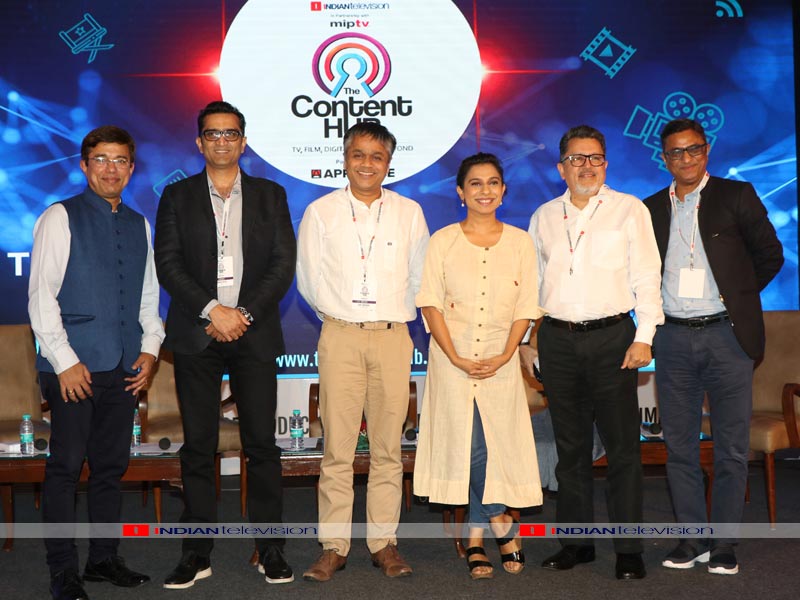
    The panel was a light-hearted but with insightful discussions on the current trends of the Indian movie industry, the need for well-written scripts and content that performs. The panel agreed that today is an amazing time for good storytellers and content creators. They forced upon the fact that literature is the sibling of cinema. The panel also discussed on creating avenues to make the system more approachable to the budding writers who want to reach out to the studios.

    The evening was concluded by an overview of the MIP platform by MIP China Hangzhou director of market development Ted Baracos, who in an interactive session apprised the gathering of various opportunities this global content-sharing platform brings and how they can leverage on that.