Tag: Indian startups

  • India rises as the world’s third largest IPO hub, surpassing China

    India rises as the world’s third largest IPO hub, surpassing China

    MUMBAI: India IPO rankings, global IPO market, SEBI reforms, confidential filings, Axis Capital, IPO pipeline India, Reliance Retail IPO, Indian startups, public markets, capital markets, retail investors, valuation sensitivity

    India has rapidly emerged as a major force in the global initial public offering (IPO) market, now ranking as the world’s third-largest hub for public listings—and at times, even surpassing China. Not more than a decade ago, India sat outside the top ten. Today, it is one of the leading forces in the world when it comes to reshaping domestic capital markets and altering how global investors view growth, innovation, and capital access across emerging economies.

    Fueling this rise is a confluence of global and domestic tailwinds. Indian mutual funds and retail investors now contribute over half of the capital raised in public issues, signalling a deepening pool of local capital that insulates the market from external volatility. Regulatory reforms have added momentum: the Securities and Exchange Board of India (SEBI) has introduced faster listing timelines, confidential filings, and T+1 settlements—shrinking the IPO cycle from nearly two years to under nine months.

    The confidential route, adopted by companies such as boAt, Physics Wallah, and Shadowfax, has widened the IPO pipeline to include more mature and strategically timed listings. This reformdriven flexibility has been crucial in attracting a diverse set of issuers.

    As of mid-2025, more than 140 IPOs are in the queue with a combined estimated value of $26 billion, cutting across sectors including financial services, renewables, and fast-moving consumer goods (FMCG). Unlike the last IPO boom, which leaned heavily on tech, the current wave reflects a more balanced mix. Major players like LG Electronics India, Credila, and JSW Cement are already preparing to list.

    India raised $6.6 billion through IPOs in 2023, enough to claim third place globally after China and the United States. That momentum only accelerated in 2024, with India not only surpassing China in IPO proceeds but also setting a national record for deal count. In the first half of 2025 alone, Indian issuers have raised nearly $6 billion—accounting for more than 10 per cent of global IPO proceeds and 22 per cent of total global deal volume.

    A recent report by law firm White & Case noted that the country’s IPO momentum is largely domestic: billion-dollar offerings are being funded by local institutions rather than relying on foreign inflows.

    That said, challenges persist. Valuation sensitivity remains top of mind, with investment bankers cautioning that deals priced more than 10–15 per cent above listed peers are unlikely to find favour. Some companies have already revised pricing expectations downward. Additionally, global market turbulence can still affect timelines. SEBI is also under pressure to streamline its approval processes, a task it is addressing through increased automation and digitisation.

    Despite these headwinds, the outlook remains strong. Goldman Sachs estimates that India could raise $25 billion in IPO proceeds in calendar 2025, especially if large mandates like Reliance Retail or Hyundai Motor India materialise. Even without those mega-deals, India’s deepening investor base, policy stability, and sectoral diversity suggest it will retain its global standing.

    (If you are an Anime fan and love Anime like Demon Slayer, Spy X Family, Hunter X Hunter, Tokyo Revengers, Dan Da Dan and Slime, Buy your favourite Anime merchandise on AnimeOriginals.com.)
     

  • Nikhil Kamath invests in One Hand Clap to support new-age brand storytelling in India

    Nikhil Kamath invests in One Hand Clap to support new-age brand storytelling in India

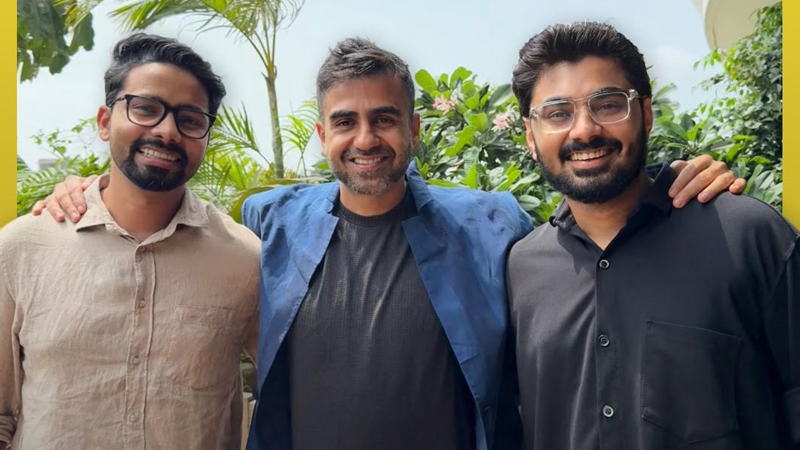
    MUMBAI: In a fresh twist to the Indian advertising playbook, Zerodha co-founder and a prominent investor Nikhil Kamath has put his weight behind One Hand Clap Media — a rising creative agency founded by former AIB heads Aakash Shah and Naveed Manakkodan.

    Kamath’s investment marks a vote of confidence in the agency’s mission to build content-first, digital-native storytelling that moves at the speed of the internet. In a marketplace where traditional campaigns are losing steam, One Hand Clap’s high-impact narratives and lightning-fast execution have made it a go-to name for Indian brands that want relevance and recall.

    Known for their campaigns for Swiggy, BGMI, Netflix India, Bumble, Cred, Ather, Emotorad, and Prime Video India, the agency has carved a reputation for weaving story with speed. From writing and producing ad films to running influencer and digital mandates, One Hand Clap offers end-to-end creative firepower.

    “Nikhil gets our DNA, and our visions align,” said One Hand Clap co-founder Shah. “We both never cared for the status quo; we have always aimed to disrupt it, defy the metrics and algorithms to tell stories, not just campaigns for our clients”.

    Co-founder Manakkodan added, “Nikhil’s investment validates our thesis that in today’s rapidly evolving digital landscape, speed and authentic storytelling are paramount. This partnership fuels our ambition to redefine the agency model, delivering impactful creative solutions with unparalleled agility”.

    For Kamath, the deal is part of a wider plan to back India’s rising creative and entrepreneurial talent. “Through this partnership, Kamath is betting not just on content but on the creators driving the next wave of Indian brand-building”, the company noted.

    The creative agency space is seeing a churn, with speed, relatability and innovation becoming non-negotiables. One Hand Clap’s sharp creative engine, coupled with Kamath’s entrepreneurial acumen, signals a new wave in adland where business meets culture, and memes could be just as powerful as media buys.
     

  • Akshay Gurnani steps down as Schbang CEO, gears up for next big leap

    Akshay Gurnani steps down as Schbang CEO, gears up for next big leap

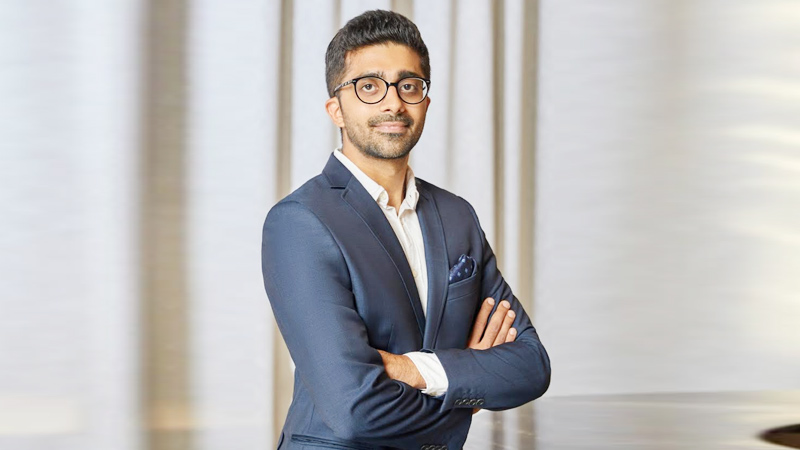
    MUMBAI: For most, Mondays mean emails, meetings, and caffeine-fuelled survival. But for Akshay Gurnani, this Monday was different-it marked the end of a decade-long journey as co-founder & CEO of Schbang and the beginning of a brand-new adventure.

    “Ten years. A whole decade. A long time, yet in the larger picture of life, just a small fraction,” reflects Gurnani. “And yet, these 10 years have been nothing short of transformative.”

    Gurnani co-founded Schbang at just 25 years old, fuelled by the ambition to build something from the ground up. Along with his fellow co-founders, he set out to redefine the marketing landscape and provide cutting-edge solutions to clients. Under his leadership, Schbang scaled to a 1,100+ member team across Mumbai, Bangalore, Delhi, London, and Amsterdam, servicing over 200 brands globally. His relentless commitment propelled the agency to become one of the most sought-after creative powerhouses in the industry.

    From the boardroom to the brainstorming room, Gurnani’s leadership has been marked by resilience, innovation, and the sheer audacity to push creative boundaries. Schbang executed award-winning campaigns for Pidilite, Perfetti, Godrej Consumer Products, Tata Consumer, L’Oréal Group, Finolex Pipes, Ashok Leyland, Crompton, Castrol, Baskin Robbins, Philips, and more. Beyond building a successful agency, he fostered a community—mentors, teammates, industry peers, and clients who became friends.

    “More than anything, Schbang has been about the people, the culture. The teammates who turned into family. The mentors I looked up to. The clients who became partners (many now good friends) and believed in us. Each one of you has left a mark, and for that, I am eternally grateful.”

    While one chapter closes, another unfolds. Gurnani isn’t slowing down—he’s simply switching lanes. His next phase will focus on business transformation, mentoring startups, investing in game-changing ideas, and empowering young students. He aims to help brands and agencies on a hyper-growth trajectory in India and the UAE, leveraging his expertise in digital marketing, AI, media, and technology.

    “As business landscapes evolve and consumer behaviours shift, client needs are changing rapidly. My focus is on eliminating redundancies and prioritising services that deliver business value,” he shares. “Digital transformation isn’t just about technology—it requires a deep understanding of a client’s business and a partnership-driven approach to drive meaningful change.”

    Having worked with Fortune 500 brands, Gurnani has developed a keen eye for identifying inflection points where inefficiencies arise. His goal is to go beyond vanity metrics, dive deeper into digital transformation, and help brands achieve sharper outcomes powered by the right human resources, media, and technology.

    During his time at Schbang, Gurnani was also recognised with numerous 30 Under 30 awards and named among India’s Top 50 Content Marketing Professionals.

    “It’s not a goodbye, it’s just a shift in gears because if there’s one thing I’ve learned over the last 10 years, it’s that new ideas, new journeys, and new beginnings are always around the corner.”

    Schbang may have started as a bold idea, but its legacy continues. And so does Gurnani’s next great adventure.

  • Zomato revenue hits Rs 5,657 million in Q3 while PAT shrinks to Rs 59 million

    Zomato revenue hits Rs 5,657 million in Q3 while PAT shrinks to Rs 59 million

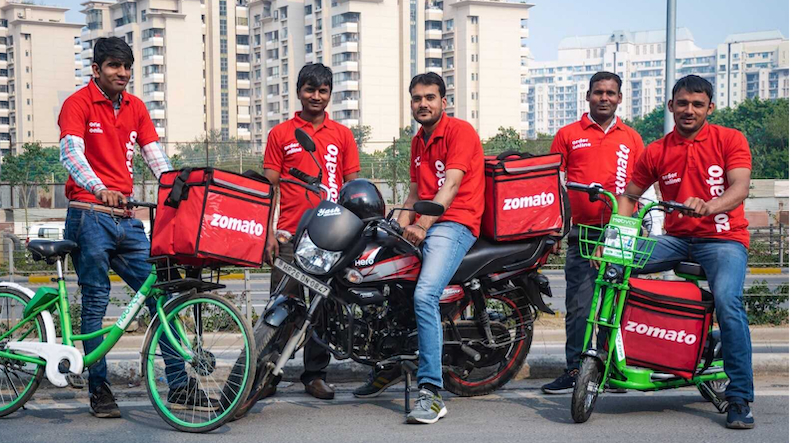
    MUMBAI: Zomato, the poster child of India’s food-tech revolution, has released its Q3 FY25 results, revealing a fascinating mix of growth and persistent challenges. Founded by Deepinder Goyal, a man who turned his restaurant review dream into a billion-dollar reality, Zomato’s journey from a niche startup to a household name is nothing short of inspiring. Today, the company boasts a market valuation of over Rs 50,000 crore, but the path has been far from smooth.

    In a bid to outpace competitors like Swiggy and Zepto, Zomato has aggressively expanded its portfolio. From acquiring Blinkit, which revolutionised its quick commerce game, to launching ‘Zomato District,’ an experimental dining experience platform, the company is firing on all cylinders. However, this rapid growth hasn’t come without its challenges. The acquisition spree and investments in new verticals have added significant strain to its financials. And let’s not forget the Rs 803.4 crore GST-related setback from Maharashtra —talk about an unexpected delivery charge!

    With consolidated revenue hitting Rs 5,657 million, up from Rs 3,507 million a year ago, the numbers tell a story of resilience and reinvention. But as profitability continues to slip through its grasp, the burning question remains: can Zomato strike the elusive balance between growth and financial sustainability? Or is it simply running faster on a treadmill of rising costs? Buckle up, because this food-tech giant’s journey is far from over.

    Consolidated Results

    In Q3 FY25, Zomato’s consolidated revenue from operations surged by 54 per cent year-over-year to Rs 5,405 million, with additional income of Rs 252 million pushing total income to Rs 5,657 million. While these numbers showcase growth, they come with a hefty price tag—rising costs that seem as persistent as your favourite food app’s notifications.

    Employee benefits expenses climbed to Rs 689 million, which makes one wonder: are delivery executives being given gold-plated scooters? Advertising and sales promotion costs held steady at Rs 421 million, showing Zomato’s relentless pursuit of eyeballs and appetites. Meanwhile, delivery-related charges hit a whopping Rs 1,450 million—proof that staying ahead in the food-tech race isn’t a cheap sport.

    But here’s where the humour fades. Despite revenue growth, Zomato’s profit before tax tumbled to Rs 124 million, a notable dip from Rs 237 million in the previous quarter. The consolidated profit after tax (PAT) followed suit, shrinking to Rs 59 million, down from Rs 176 million last quarter. Even EBITDA, the trusty metric of operational health, showed only marginal improvement. Is this growth, or are we just running on a treadmill of expenses?

    Adding spice to the financial mix, Zomato’s segment performance revealed contrasting flavours: Hyperpure, its B2B vertical, grew a sizzling 94.5 per cent YoY, while Quick Commerce revenue rocketed 117 per cent YoY, contributing Rs 1,399 million to the top line. But profitability? It’s still playing hard to get—a romance worthy of a Netflix drama.

    So, what’s the takeaway here? Is Zomato on a path to future dominance, or is it stuck in a never-ending balancing act between growth and margin woes? Investors, grab your popcorn, because this plot just keeps thickening!

    Standalone Results

    The standalone results painted a slightly brighter picture—a rare dessert in a financial menu filled with rising costs. Revenue from operations for Q3 FY25 climbed to Rs 2,226 crore, up from Rs 1,782 crore in the same period last year. Including Rs 311 crore in other income, total income reached Rs 2,537 crore, offering some much-needed cheer to investors. Who doesn’t love a surprise topping?

    But let’s not pop the champagne just yet. Employee benefits expenses rose to Rs 333 crore—are we paying delivery riders in Bitcoin now? Meanwhile, delivery-related costs surged to Rs 941 crore, showing that keeping up with a booming market comes at a steep price. Despite these headwinds, Zomato managed to serve up a standalone profit before tax of Rs 574 crore, a healthy increase from Rs 385 crore in Q3 FY24. The standalone PAT came in at Rs 494 crore, proving that even amidst turbulence, there’s room for optimism.

    So, can Zomato keep delivering these sweet surprises, or are rising costs about to steal dessert off the table? Investors, stay tuned!

    Operational Highlights

    1.  Segment Growth:

    Food delivery revenue grew by 21.6 per cent YoY to Rs 2,072 million.

    Hyperpure, Zomato’s B2B vertical, surged by 94.5 per cent YoY to Rs 1,671 million.

    Quick commerce, a new darling, contributed Rs 1,399 million, up from Rs 644 million last year.

    2. Acquisitions: Zomato’s acquisition spree continues to bear fruit. The recent addition of Wasteland Entertainment Private Limited (WEPL) and Orbgen Technologies Private Limited (OTPL) underscores its focus on diversification.

    3. Regulatory Challenges: The company faced a GST-related setback, with demands totalling Rs 420 crore from Maharashtra and West Bengal authorities. While management remains optimistic, these disputes add another layer of complexity to its financial landscape.

    Zomato’s results reflect the growing pains of a company caught between scaling operations and achieving profitability. While the rapid growth in Hyperpure and Quick Commerce shows plenty of promise, the company’s ballooning costs and pesky regulatory hurdles resemble hurdles in a marathon where the finish line keeps moving.

    So, what’s the final verdict? Is Zomato writing the next big food-tech success story, or is it cooking up a recipe for endless spending? As India’s food-tech landscape becomes more cutthroat, the stakes for Zomato couldn’t be higher. The question isn’t just whether they can deliver food on time but whether they can finally deliver profits to investors. One thing’s for sure: this is a journey worth watching—and it’s bound to be as spicy as a midnight biryani craving!

    Key Financial Highlights

    . Consolidated Revenue: Rs 5,405 million for Q3 FY25; Rs 14,410 million for nine months.

    Standalone Revenue: Rs 2,226 million for Q3 FY25; Rs 6,425 million for nine months.

    PAT (Consolidated): Rs 59 million for Q3 FY25; Rs 488 million for nine months.

    EBITDA Margin: Improved slightly but remains constrained by rising costs.

    Segment Growth: Hyperpure surged by 94.5 per cent YoY, Quick Commerce up by 117 per cent YoY.

  • Where dreams take flight: ABP Live’s Future Forward Startup Conclave 2024

    Where dreams take flight: ABP Live’s Future Forward Startup Conclave 2024

    MUMBAI: In a land brimming with ideas and untamed ambition, startups are the modern-day dreamers charting a bold path through challenges and uncertainties. Their journey is fueled by an insatiable hunger for recognition—the kind that cements their place in the nation’s story. And what could be more exhilarating than earning a spotlight on a national platform?

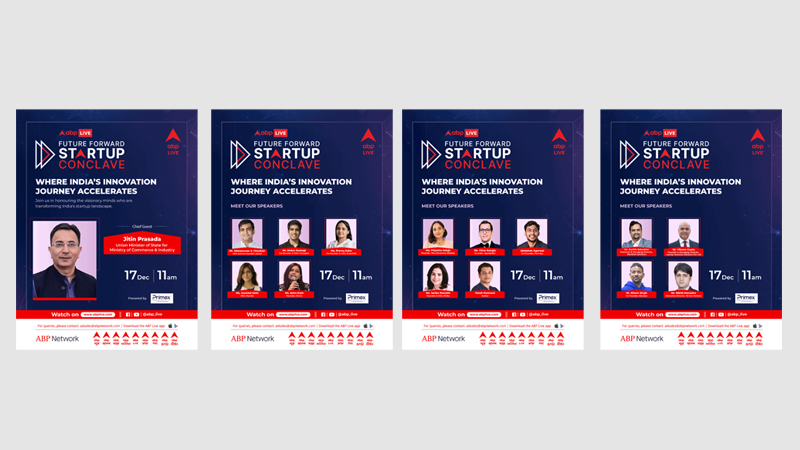
    This 17 December, ABP Live raises the curtain on Future Forward Startup Conclave 2024 in the heart of New Delhi. A celebration of grit, innovation, and the audacious spirit of Indian entrepreneurship, this premier gathering promises to be a melting pot of ideas and possibilities. It’s not just an event; it’s where visionaries meet their moment, where leaders, innovators, and changemakers converge to script the next chapter of India’s startup saga.

    Anticipation runs high. The stakes are real. The spotlight is waiting. Are you ready to be part of the revolution?

    The event will begin with a keynote address by Union minister of state for Commerce, Industry, and Electronics & IT, Jitin Prasada. This will be followed by engaging discussions led by some of the country’s most innovative leaders, including:

    1   Daalchini co-founder & CEO, Prerna Kalra

    2   The Cinnamon Kitchen founder, Priyasha Saluja

    3   Flyrobe CEO, Aanchal Saini

    4   Classplus co-founder & CEO, Mukul Rustagi

    5   Clovia co-founder, Neha Kant

    6   AppMySite founder, Vikas Nangia

    7   Zostel co-founder & CEO, Dharamveer Singh Chouhan

    8   JiViSa founder & CEO, Sarika Pancchi

    9   Farmley co-founder, Abhishek Agarwal

    10  Vertex Venture executive director, Nikhil Marwaha

    11  Bluetea founder, Nitesh Singh

    12   Blackhat Syncidus chairman & MD, Sachin Salunkhe

    13   IvyCap Ventures founder & MD, Vikram Gupta

    14   Acclaimed author, Harsh Pamnani

    As of May 2024, India has solidified its position as the world’s third-largest startup ecosystem, boasting a valuation of $349.67 billion. With over 1.25 lakh startups and 110 unicorns, the country has emerged as a global leader in innovation, particularly in sectors such as fintech, healthcare, and technology.

    According to the Confederation of Indian Industry (CII), Indian startups are projected to contribute an additional $1 trillion to the nation’s economy by 2029-30. The CII further anticipates the emergence of 300 new unicorns between 2024 and 2035, underscoring the sector’s significant potential for growth and its role in shaping India’s economic future.

    Initiatives like Startup India and Atmanirbhar Bharat have played a pivotal role in propelling India to the forefront of global innovation, creating jobs, driving economic growth, and earning international recognition.

    Audiences can witness the event live on www.abpLive.com on 17 December from 11 AM.

  • Why startups facing strong headwinds with massive layoffs

    Why startups facing strong headwinds with massive layoffs

    MUMBAI: Social commerce startup CityMall became the latest startup to announce mass lay-offs. In a LinkedIn post on 19 June, the firm said that it has laid off 191 employees alluding to the current funding environment and a change in its business model as reasons. In addition, SoftBank-backed Unacademy laid off another 150 employees last week, after letting go of around 600 employees or 10 percent of its workforce in the beginning of this year. Around the same time, Coinbase sacked about 8 percent of its India workforce, amid a crash in digital assets. While crypto companies have taken a hit in 2022 because of uncertainties revolving around their legal validity in India, they aren’t the only ones to feel the chills of a market meltdown.

    Several Indian startups seem to be on a lay-off spree currently, after the hiring augmented for a brief period, leading to thousands of workers staring at an uncertain future amid heightened inflation & economic downturn, thereby, adversely impacting startups in the recent months. Startups that issued pink slips this year included unicorns such as Vedantu (laid off 642 employees in May), Cars24 (laid off 600 in May), Ola (laid off 1,200 earlier this year), Meesho (laid off 150 in April), MPL (laid off 100 in May), Trell (laid off 300 in March) and Unacademy (laid off 750 over the last few months).

    So far, over 10,000 employees have been laid off by 24 startups, based on media reports. The new-age sectors which have witnessed the maximum layoffs are edtech and ecommerce. Just a year back, several of these new companies were hiring robustly, offering ambitious pay packages, having raised intense funding, and expanding vigorously.

    Furthermore, Indian startups were the largest spenders during the IPL season, even leaving the heavyweight FMCG brands far behind in its ad spends. It is noteworthy that all the official sponsors of IPL this season comprised only startups. These majorly included fintechs and edtechs, such as Unacademy, Upstox, RuPay, and CRED, apart from Swiggy Instamart & Dream11, with each official sponsor shelling out excessive moolah.

    Gaming platform Mobile Premier League (MPL) was the official kit sponsor for the Indian Cricket Team while edtech brand, Unacademy was the official partner of IPL 2022 and sponsor of Kolkata Knight Riders team. E-comm brand Meesho was the sponsor of IPL’s official broadcaster Star Sports and the Gujarat & Rajasthan teams.

    What kind of challenges the Great Indian Startup is facing? Is the party finally over for startups? What is the current market scenario? Will startups recover and increase hiring in future? We spoke to the experts to understand the current situation of the market and future growth?

    According to Talent acquisition marketplace, FlexC founder and CEO Girish Kukreja said that most of the startups witnessed a sharp surge in demand for their products and services, when Covid was at its peak. “The market trend then showed a very bright upward growth. It multiplied the demand for human power to cater to the needs of current users and attract more consumers to the business. But most of these employees were hired probably in haste, with little to no solid plans for managing the growth and succession planning of these employees within the organisation.”

    However, when things moved to the pre-pandemic world, so did consumer’s behaviour also changed in many aspects. It, therefore, resulted in a setback for these firms. Hence, the layoffs happened, Kukreja believes.

    After a funding blitzkrieg that lasted for nearly two years, venture capital investments globally have gone down as technology valuations have taken a hit in 2022 in the post-pandemic economic situation, coupled with inflation and international unrest. As the startup ecosystem braces for a funding winter and subsequent slowdown, it is increasingly becoming clear that most of the players in the space hired too many & too soon.

    Despite that, Kukreja does not believe that it’s all over for ‘the great Indian startup party’. “In terms of overall startup employment, the current layoff numbers reported are a minor percentage- possibly five to ten per cent,” he states, adding, “Making mistakes and learning along the way is a part of every startup’s journey. The only mistake these startups made at that point was to hire many permanent employees.”

    The startup culture in India is pretty resilient and it will adapt & get back on track in no time, he says, citing the example of an edtech startup called Physics Wala that entered the unicorn club amid the layoffs.

    Some of these online-first edtech startups, such as BYJU’S and Unacademy are also reinventing themselves by moving to a hybrid model, with plans to open offline coaching centres, blending their online and offline teaching models.

    Several others have also resorted to curtailing expansion plans by closing down non-core verticals, moderating marketing and advertising spends, while going on a hiring freeze to tide over the bleak phase.

    Grapes CEO & cofounder Shradha Agarwal attributes the “mass layoffs” phenomenon against the startups experiencing a funding peak in 2021 to “the unplanned hiring spree in the rush to onboard talents”.

    “To achieve immediate results, startups experiment with new approaches that often misguide the management to formulate inadequate growth analysis. As a result, they expand into new growth plans and venture into new verticals which fails due to an unrealistic approach,” she says. This puts a lot of pressure on the workforce, and companies resort to cutting down on human resources as the only viable solution owing to its easily controllable factor compared to the other fixed costs, which are beyond their hands, Agarwal adds.

    Despite the glitch in the framework, the startup culture is there to stay given its business nature, Agarwal believes. “The industry is versatile where it has the ability to change and mould its business models according to the market conditions.” The startups must focus on proper recruitment strategies with specific skills hiring for longer sustainability, rather than being concerned about short-term goals, she states.

    Staffing solutions provider, Gi Group Holding India country manager Sonal Arora  does not see the layoffs being witnessed in recent times as necessarily being a sign of troubled times ahead for the Indian start-ups ecosystem. “Some of these start-up companies across various industries are in a process of consolidating their workforce. It is a strategic step that every organisation aiming to expand adopts,” she states. “In some cases, they have matured in terms of their business model and decided which are the products/ services they want to focus on, which will eventually result in better or improved services.”

    Experts highlight that layoffs are not a new phenomenon and have always been a part of various industries, considering that the layoffs are happening at a large scale around the same time in several startups is what has garnered a lot of attention.

    According to Arora, India continues to be the centre of emerging technologies. “This means that in the future we will continue to attract various series of funding and interest from venture capitalists,” she concludes.

  • IPL 2022 sponsorship: Brands catch the cricket fever!

    IPL 2022 sponsorship: Brands catch the cricket fever!

    Mumbai: Indian Premier League (IPL) is undisputedly the most captivating and prominent cricket league in India and a handful of other countries. Thanks to its growing popularity worldwide, the brand value of IPL has upped by seven per cent last year, according to the market reporter. Post the Covid-19 pandemic, the brand value of the cricket tournament has reached $4.7 billion, despite the last two seasons being played in the UAE; and this popularity has attracted brands from across the categories.

    The euphoria around the cricket league has resulted in increased viewership, TRPs, and of course, sponsorships and investments. From shopping app Meesho being the lead trouser branding partner for four teams namely Mumbai Indians, Royal Challengers Bangalore, Rajasthan Royals, and Gujarat Titans to Rapido’s IPL campaign with actors Ranveer Singh, Allu Arjun – the tournament is a feast for brands. The sponsor lists include more brands like Vedantu, Astral, Dream11, Swiggy Instamart, OLX Autos, Greenply, Bira 91, Sunstone Eduversity, Pristyn Care, boAt, StockGro, Redcliff, and so on.

    To dive deeper into the game, IndianTelevision.com talked to industry experts and various brands in order to understand the strategies and perspectives behind the grand welcome of IPL by brands.

    A first of many

    This year, IPL is going to be the first of many things- such as the first time 10 teams are participating in the IPL, Tata joined as title sponsor, for the first time 29 startups invested in IPL, 10 fintech brands are on board as sponsors and a first of many other things.

    In the 15th season of IPL, two more new franchises have been added, due to which all eyes were on the ranking of IPL, its sponsorships, and investments. Experts feel that an event like IPL if used correctly, will move the needle for brands on their awareness and consideration scores.

    ALSO READ | Meesho makes T20 debut, partners with four IPL teams

    “The key is being prepared for different outcomes, and the ability to execute relatable content on the right platform, at the right moment,” said Smartcricket.com founder and CEO Atul Srivastava who has closely seen and analyzed IPL ever since its inception.

    Increased demand from investors in IPL

    The 15th edition of the tournament saw a huge increase in demand among the investors. It is not just the big names like Tata who came forward to invest in the tournament, in fact, the startups are showing great interest.

    The IPL is moving towards achieving mastery like LaLiga and English Premier League. From this season, the Tata Group is the new title sponsor of the IPL as Tata has won the IPL title sponsorship bidding. Disney, Sony, Reliance Jio, streaming giant Google, and Meta were in the race to get the broadcasting rights of this cricket league.

    Srivastava feels IPL has shown over the years that it will continue to grow. “Despite the lockdown restrictions, the IPL is organized properly. This assures all the investors that they can trust the brand with their participation,” he added.

    Startups, fintech and digital brands are running the show

    Interestingly, a total of 29 start-ups came on board as sponsors. Another interesting trend that we saw this year is fintech brands’ representation in this season with the fintech startups including Cred, Slice, Paytm, Fino Payments Bank etc.

    Fino Payments Bank MD and CEO Rishi Gupta said competence and sincerity are brand attributes that strongly connect Fino Payments Bank and Rajasthan Royals.

    ALSO READ | IPL engagement on digital is higher than TV: Report

    Highlighting how their partnership with Rajasthan Royals will help the brand, Gupta said RR is known to promote cricketing talent from non-metros and smaller towns, our core markets. For us, it is a great opportunity to reach out to the millennial consumer from urban and rural areas and create avenues for them to explore Fino’s digital payment offerings.

    Blink Digital vice president and head of strategy Dia Kirpalani feels that digital marketers have always smartly leveraged the IPL for its ability to deliver high brand impact in a shorter duration than any other genre of content – riding the country’s sheer passion for cricket.

    The Indian audience has been seeking stability in all aspects of life, given the last two years of uncertainty and turmoil. According to Kirpalani, IPL is one beloved way for them to achieve that sense of life going back to normal.

    A Carnival for brands across categories

    With fintech companies leading, IPL is a favorite of all types of brands. From Dream 11 launching a campaign with 17 new ad films featuring international cricketers, celebrities and social media stars to OLX Autos partnering with Star Sports, Swiggy Instamart joining hands with BCCI, Greenply joining the new franchise Lucknow as associate partner, the list of sponsors is quite huge.

    On being asked about their investment in IPL for Swiggy Instamart, Swiggy head of brand Ashish Lingamneni said IPL is one of the most celebrated sports leagues in the world, and we are excited to partner with the BCCI to offer a wholesome experience to audiences with our large assortment of munchies, beverages and other snackable options through our quick commerce service Instamart.

    We look forward to engaging with customers/fans and catering to their needs, be it mid-match snack cravings, beverages, and popcorn for nail-biting finishes or sweet indulgences to celebrate team victories, he said.

    Addition of two new cities boosted brands’ interest in IPL

    Barc data shows Lucknow and Ahmedabad are big cricket markets – they contributed 17 per cent to the overall viewership in last year’s IPL.

    The addition of teams from these markets will create targeting opportunities for not just local brands but also national brands that have been wanting to establish themselves in Uttar Pradesh and Gujarat, said Kirpalani.

    Lucknow and Ahmedabad are quite huge markets not just in terms of viewership but in terms of demography too. The population of these cities plays a crucial role in deciding the mood of their respective states.

    Greenply, who partnered with Lucknow by featuring their logo on the right-side chest of their match day jersey, is eying to grow their business nationally.

    Sharing why they were so keen to partner with this new franchise, Greenply Industries Ltd chairman cum managing director Rajesh Mittal asserted, there has been a dynamic shift in the consumer pattern towards the branded products and hence we see a lot of growth potential in the Uttar Pradesh market.

    “Our three new manufacturing units will cater to serve the growing demand for plywood and allied products in this market and will cumulatively help us to grow our business operations nationally. Uttar Pradesh is an ideal investment destination for us as this market even in the current scenario is the third-largest value contributor towards our business,” he states.

    With this, it is significant that the Indian Premier League will grow bigger in the future.