Tag: Indian Space Research Organisation

  • India launches its heftiest satellite yet

    India launches its heftiest satellite yet

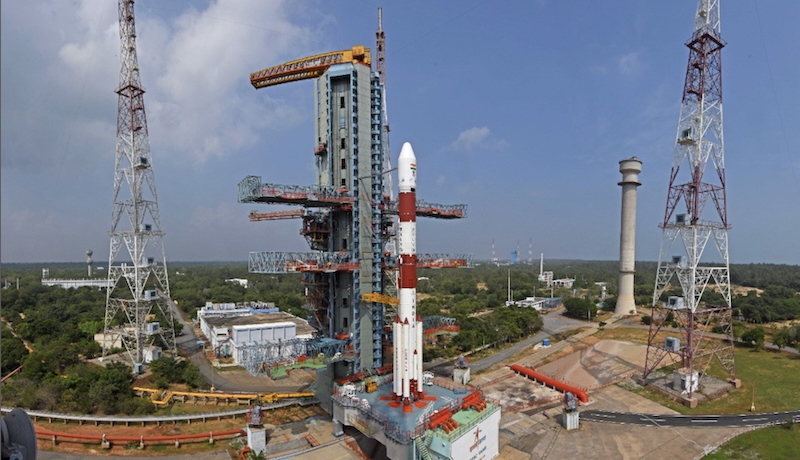
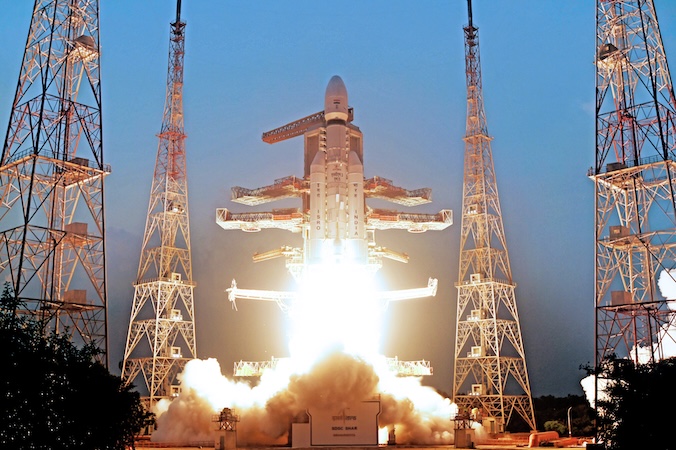
    SRIHARIKOTA: India just flexed its space muscles. On 2 November, the Indian Space Research Organisation (Isro) hurled its heaviest communications satellite ever into orbit from home soil—a 4,400 kg behemoth called CMS-03 that will keep the navy’s ships, submarines and aircraft chattering across the Indian Ocean. The launch from Sriharikota at 5:26 pm marked the end of an embarrassing era: no longer must India send its bulkiest satellites abroad for a lift.

    The rocket doing the heavy lifting was LVM3, ISRO’s most powerful launcher and now nicknamed “Bahubali” for its Herculean payload capacity. This souped-up version sports a beefier cryogenic upper stage—the C32, carrying 32,000kg of fuel and belching 22 tonnes of thrust, a 10 per cent upgrade on the previous model. It can now haul 4,000kg to geosynchronous orbit and 8,000kg to low Earth orbit without breaking a sweat.

    Until now, India’s chunkier satellites hitched rides with foreigners. France’s Arianespace launched the 5,854kg GSAT-11 and 4,181kg GSAT-24. Elon Musk’s SpaceX ferried the 4,700kg GSAT-20. No more. Isro chairman V Narayanan crowed about the mission being “a shining example of Atmanirbhar Bharat”—self-reliant India, in case the point wasn’t clear enough.

    The CMS-03, also known as GSAT-7R, isn’t just heavy; it’s clever. Bristling with indigenous components, the multiband satellite will provide encrypted voice, data and video links for 15 years, giving the Indian Navy real-time situational awareness across a vast oceanic region. The navy called it a testament to national self-sufficiency in maritime defence.

    This was LVM3’s eighth consecutive successful launch, following triumphs like Chandrayaan-2, Chandrayaan-3 (which made India the first nation to land near the lunar south pole), and OneWeb satellite deployments. The upgraded rocket also feeds directly into Isro’s Gaganyaan programme, which aims to send astronauts into space. Three uncrewed missions are planned first, including one carrying Vyommitra, a robotic astronaut, later this year.

    Narayanan said the space organisation is eyeing seven more launches by March 2026, with another LVM3 mission slated for December. India’s space sector, he declared, is “soaring high.

    With launches this meaty, it’s hard to argue.

  • India’s southern spaceport progressing; to take aim at polar satellites

    India’s southern spaceport progressing; to take aim at polar satellites

    MUMBAI: India is racing to complete its second spaceport on the Tamil Nadu coast, promising to revolutionise the country’s small satellite launch capabilities. The Kulasekarapattinam facility, targetted for commissioning in 2026-27, will unlock dramatic payload improvements that existing infrastructure simply cannot match.

    Minister of state in the prime minister’s office Jitendra Singh told parliament that the Rs 985.96 crore project has consumed Rs 389.58 crore so far, with land acquisition nearly complete and technical facilities under construction. What makes the coastal location special is geography: launching southward over open ocean eliminates the orbital gymnastics required at the existing Satish Dhawan Space Centre.

    The numbers tell the story. India’s Small Satellite Launch Vehicle can carry just 300kg to sun-synchronous polar orbits from Kulasekarapattinam—but “inadequate” payloads from the established Sriharikota facility. The problem lies in trajectory: rockets launching from Sriharikota must perform complex manoeuvres to avoid dropping spent stages on populated areas, gutting their carrying capacity.

    Sun-synchronous polar orbits are the sweet spot for earth observation satellites, keeping spacecraft in constant sunlight as they circle the planet. But reaching these orbits from India’s existing spaceport requires fuel-guzzling course corrections that leave little room for actual cargo.

    Kulasekarapattinam changes the equation entirely. The southern facility’s coastal position allows rockets to fly straight into polar trajectories without dodging landmasses or cities. Once operational, the spaceport will handle launches for both ISRO’s Small Satellite Launch Vehicle and equivalent rockets from private companies.

    The project represents India’s push to capture more of the booming small satellite market, where payload efficiency often determines commercial viability. With fabrication of equipment underway at various work centres and construction proceeding on technical facilities, the race is on to bring India’s orbital ambitions down to earth—or rather, up to space—by 2027.

  • ‘Demand-driven’ communication satellite GSAT-24 launched; capacity leased to Tata Play

    ‘Demand-driven’ communication satellite GSAT-24 launched; capacity leased to Tata Play

    Mumbai: NewSpace India (NSIL) on Thursday successfully launched GSAT-24 in its first “demand-driven” communication satellite mission post space sector reforms, leasing the entire capacity on board to direct-to-home (DTH) service Tata Play, as per a news agency report.

    The 24 Ku-band communication satellite was built by Indian Space Research Organisation (ISRO) for NSIL. It will provide pan-India coverage to meet DTH application needs, stated the report.

    The satellite was launched by French company Arianespace in French Guiana (South America).

    As part of the space reforms announced by the government in June 2020, NSIL incorporated in March 2019, was mandated to undertake operational satellite missions on a “demand-driven” model, wherein it had the responsibility to build, launch, own and operate satellites and provide services to its committed customer.

    GSAT-24 is configured on ISRO’s proven I-3k Bus with a mission life of 15 years.

    “Demand-driven” mode basically means when a satellite is launched, one will know who the end customers are going to be and what’s the kind of utilisation and commitment so that you have very effective utilisation of this satellite capacity once it goes into orbit,” the news report said qouting an NSIL official.

    “Earlier the mode was supply driven, with capacity being leased after the launch with largely no firm commitment by customers beforehand,” the official added.

    “The entire mission including satellite, satellite launch, launch campaign, insurance, in-orbit maintenance, transformation and support is fully funded by NSIL. Once the satellite is in orbit it will be fully funded and owned by NSIL,” NSIL chairman & managing director Radhakrishnan Durairaj also opined in the report.

    Post the successful launch of GSAT-24, NSIL would own and operate 11 communication satellites in-orbit and meet the bulk of the communication needs of the country.

    NSIL is the commercial arm of ISRO and a public sector undertaking by the Government of India.

  • Rocket scientist S Somanath named as ISRO chairman

    Rocket scientist S Somanath named as ISRO chairman

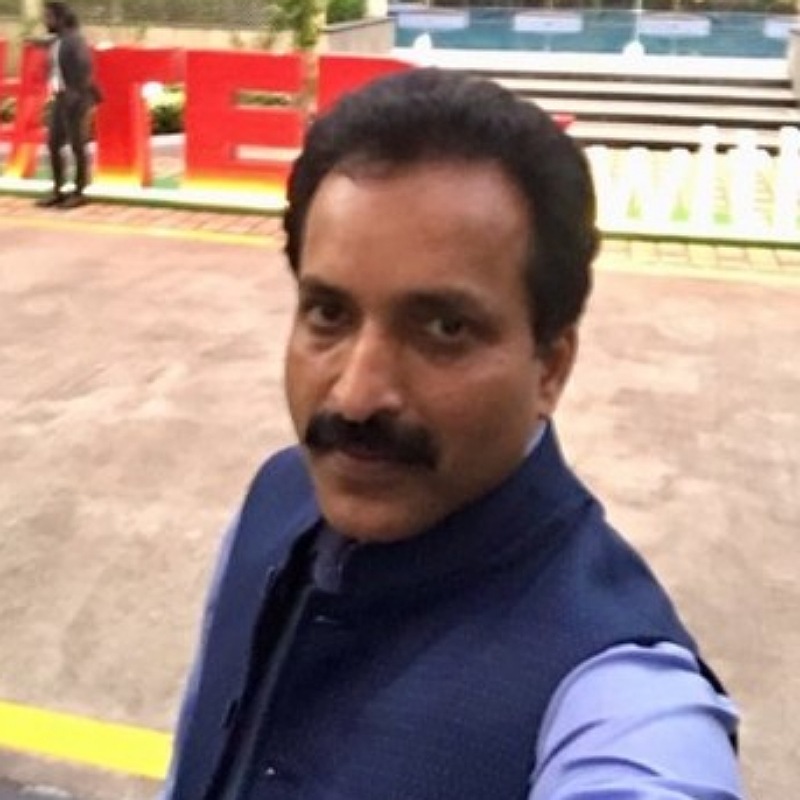
    Mumbai: Well-known rocket scientist S Somanath is named as chairman of the Indian Space Research Organisation (ISRO). He will succeed Dr K Sivan, who completes his extended tenure on 14 January.

    “The Appointments Committee of the Cabinet has approved the appointment of S Somanath, Director, Vikram Sarabhai Space Centre (VSSC) to the post of Secretary, Department of Space and Chairman, Space Commission for a combined tenure of three years from the date of joining of the post, inclusive of an extension in tenure beyond the age of superannuation in the public interest, or until further order whichever is earlier,” said the space organisation in a statement.  

    Somanath’s expertise lies in the area of system engineering of launch vehicles. He joined Vikram Sarabhai Space Centre (VSSC) in the Polar Satellite Launch Vehicle (PSLV) project in 1985. He served as associate director (projects) at the VSSC and as project director of the GSLV Mk-III launch vehicle. He also spent two-and-a-half years as director of Liquid Propulsion Systems Centre (LPSC) at Thiruvananthapuram’s Valiamala.

    Somanath pursued his B-tech in mechanical engineering from Kollam’s TKM College of Engineering and Masters in aerospace engineering from IIT Bengaluru with specialisation in structures, dynamics and control. 

  • DTH-aiding GSAT-19 launch plan under way

    DTH-aiding GSAT-19 launch plan under way

    NEW DELHI: The Indian Space Research Organisation is working towards putting into orbit an indigenous communication satellite GSAT-19, weighing 3.3 tonne and carrying Ka/Ku band payloads. Ku Band is suitable for direct-to-home platforms.

    The satellite assembly is in an advanced stage, the space minister Jitendra Singh told the Rajya Sabha yesterday.

    Meanwhile, the launch campaign for the first developmental flight of GSLV Mk-III commenced on 29 September 2016 at Satish Dhawan Space Centre (SDSC), Sriharikota.

    ISRO is working towards increasing the payload capacity of GSLV Mk-III beyond four tonnes in the coming years. The strategies identified to achieve the increased payload capacity include performance improvement of propulsion systems, inert mass optimisation and miniaturisation of avionics system.

    The Chandrayaan-2, comprising Orbiter, Lander and Rover, with a total payload mass of 3250 kg is planned to be launched on board GSLV Mk-II during the first quarter of 2018.

    Also read:

    http://www.indiantelevision.com/satellites/satellite-launches/isro-to-launch-83-satellites-on-single-rocket-create-world-record-161029

    http://www.indiantelevision.com/satellites/satellite-launches/gsat-18-successfully-launches-new-capacity-for-dth-operators-tv-channels-161006

  • DTH-aiding GSAT-19 launch plan under way

    DTH-aiding GSAT-19 launch plan under way

    NEW DELHI: The Indian Space Research Organisation is working towards putting into orbit an indigenous communication satellite GSAT-19, weighing 3.3 tonne and carrying Ka/Ku band payloads. Ku Band is suitable for direct-to-home platforms.

    The satellite assembly is in an advanced stage, the space minister Jitendra Singh told the Rajya Sabha yesterday.

    Meanwhile, the launch campaign for the first developmental flight of GSLV Mk-III commenced on 29 September 2016 at Satish Dhawan Space Centre (SDSC), Sriharikota.

    ISRO is working towards increasing the payload capacity of GSLV Mk-III beyond four tonnes in the coming years. The strategies identified to achieve the increased payload capacity include performance improvement of propulsion systems, inert mass optimisation and miniaturisation of avionics system.

    The Chandrayaan-2, comprising Orbiter, Lander and Rover, with a total payload mass of 3250 kg is planned to be launched on board GSLV Mk-II during the first quarter of 2018.

    Also read:

    http://www.indiantelevision.com/satellites/satellite-launches/isro-to-launch-83-satellites-on-single-rocket-create-world-record-161029

    http://www.indiantelevision.com/satellites/satellite-launches/gsat-18-successfully-launches-new-capacity-for-dth-operators-tv-channels-161006

  • Doordarshan agrees to apply for permission for four IGNOU channels

    Doordarshan agrees to apply for permission for four IGNOU channels

    NEW DELHI: Doordarshan has agreed to apply for licence to telecast four channels of the Indira Gandhi National Open University, even as the 32 channels of the Human Resource Development Minstry are still to find a place in the pubcaster’s Freedish.

    Interestingly, one Gyan Darshan channel and one one Gyani channel had been taken off DD and All India Radio respectively in 2014 for non-clearance of dues.

    Under a Memorandum of Understanding now signed between Doordarshan and IGNOU regarding the transmission of four Gyan Darshan Educational channels, DD has agreed to apply for permission to telecast four Gyan Darshan channels from IGNOU Earth Station Delhi to operate in C-band from GSAT-10. IGNOU is not eligible to apply under the Uplinking and Downlinking Guidelines as it is not a broadcaster.

    The Gyan Darshan Bouquet of Educational TV Channels is an educational media initiative of MHRD in collaboration with the Information and Broadcasting Ministry, Prasar Bharati and the Indian Space Research Organization with IGNOU as the nodal agency.

    It consists of four TV Channels: GD-I & II (by IGNOU), GD-III – Eklava (by Indian Institute of Technology, Delhi), and GD-IV – Vyas Channel (by University Grants Commission, CEC).

    Gyan Darshan had been initially launched on 26 January 2000 as a solitary 24×7 hour satellite channel under the banner of Doordarshan which provided a Transponder on INSAT 2B satellite, free of cost.

    Gyan Darshan ran successfully till 2 June 2014 as a must carry channel for educational programmes but was shut down by ISRO to facilitate its migration from INSAT 3C to GSAT-10.
    IGNOU now needs to apply for a fresh License to start the uplinking of its Channels for GSAT-10 Satellite.

    Speaking on the occasion, DD DG Supriya Sahu said, “I am happy that we have signed this MOU with IGNOU and joined hands with a premier institution like IGNOU. This partnership would ensure that the educational channels of IGNOU reach and benefit millions of students across the country. I think this is one of the most outstanding initiatives in the field of Public Broadcasting”.

    IGNOU Vice Chancellor Ravindra Kumar said, “Gyandarshan has always been a flagship programme for IGNOU and educational community. Today we (IGNOU & DD) are both happy and enormously excited that Gyandarshan has once again become a reality.”

    Earlier in October 2014, indiantelevision.con and radioandmusic.com had reported that the channels Gyan Darshan and Gyanvani had been shut down because of non-payment. While the figures were DD were not available, AIR DG Fayyaz Sheheryar had said the dues amounted to more than Rs 21.6 crore.

    He had then said that it had to be understood that Gyanvani and Gyandarshan were radio and television channels respectively run and owned by IGNOU and Prasar Bharati only provided the platform for the broadcasts.

    Later, IGNOU had launched these channels on the Internet. indiantelevision.com had learnt at the time that IGNOU had applied to WPC for a licence to run television channels, but had been refused by the Department of Telecom which had told them that only Doordarshan can apply for such a channel.

    But DD had refused to apply for the channel on behalf of IGNOU in view of the report by the Telecom Regulatory Authority of India which bars allotment of licences to government bodies to start their own channels.

    These web-based channels can be accessed by the students directly from their homes at http://www.ignouonline.ac.in/Broadcast/ without having to go to the Regional Centres or Local Study Centres.

  • Doordarshan agrees to apply for permission for four IGNOU channels

    Doordarshan agrees to apply for permission for four IGNOU channels

    NEW DELHI: Doordarshan has agreed to apply for licence to telecast four channels of the Indira Gandhi National Open University, even as the 32 channels of the Human Resource Development Minstry are still to find a place in the pubcaster’s Freedish.

    Interestingly, one Gyan Darshan channel and one one Gyani channel had been taken off DD and All India Radio respectively in 2014 for non-clearance of dues.

    Under a Memorandum of Understanding now signed between Doordarshan and IGNOU regarding the transmission of four Gyan Darshan Educational channels, DD has agreed to apply for permission to telecast four Gyan Darshan channels from IGNOU Earth Station Delhi to operate in C-band from GSAT-10. IGNOU is not eligible to apply under the Uplinking and Downlinking Guidelines as it is not a broadcaster.

    The Gyan Darshan Bouquet of Educational TV Channels is an educational media initiative of MHRD in collaboration with the Information and Broadcasting Ministry, Prasar Bharati and the Indian Space Research Organization with IGNOU as the nodal agency.

    It consists of four TV Channels: GD-I & II (by IGNOU), GD-III – Eklava (by Indian Institute of Technology, Delhi), and GD-IV – Vyas Channel (by University Grants Commission, CEC).

    Gyan Darshan had been initially launched on 26 January 2000 as a solitary 24×7 hour satellite channel under the banner of Doordarshan which provided a Transponder on INSAT 2B satellite, free of cost.

    Gyan Darshan ran successfully till 2 June 2014 as a must carry channel for educational programmes but was shut down by ISRO to facilitate its migration from INSAT 3C to GSAT-10.
    IGNOU now needs to apply for a fresh License to start the uplinking of its Channels for GSAT-10 Satellite.

    Speaking on the occasion, DD DG Supriya Sahu said, “I am happy that we have signed this MOU with IGNOU and joined hands with a premier institution like IGNOU. This partnership would ensure that the educational channels of IGNOU reach and benefit millions of students across the country. I think this is one of the most outstanding initiatives in the field of Public Broadcasting”.

    IGNOU Vice Chancellor Ravindra Kumar said, “Gyandarshan has always been a flagship programme for IGNOU and educational community. Today we (IGNOU & DD) are both happy and enormously excited that Gyandarshan has once again become a reality.”

    Earlier in October 2014, indiantelevision.con and radioandmusic.com had reported that the channels Gyan Darshan and Gyanvani had been shut down because of non-payment. While the figures were DD were not available, AIR DG Fayyaz Sheheryar had said the dues amounted to more than Rs 21.6 crore.

    He had then said that it had to be understood that Gyanvani and Gyandarshan were radio and television channels respectively run and owned by IGNOU and Prasar Bharati only provided the platform for the broadcasts.

    Later, IGNOU had launched these channels on the Internet. indiantelevision.com had learnt at the time that IGNOU had applied to WPC for a licence to run television channels, but had been refused by the Department of Telecom which had told them that only Doordarshan can apply for such a channel.

    But DD had refused to apply for the channel on behalf of IGNOU in view of the report by the Telecom Regulatory Authority of India which bars allotment of licences to government bodies to start their own channels.

    These web-based channels can be accessed by the students directly from their homes at http://www.ignouonline.ac.in/Broadcast/ without having to go to the Regional Centres or Local Study Centres.

  • ISRO’s PSLV-C35 takes off successfully, Scatsat1 launched

    ISRO’s PSLV-C35 takes off successfully, Scatsat1 launched

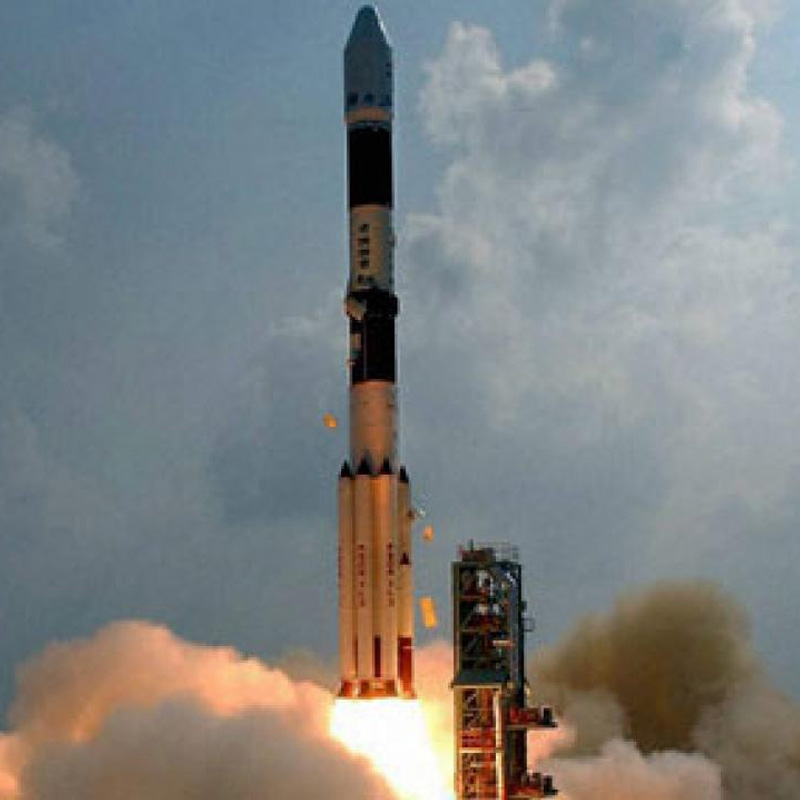
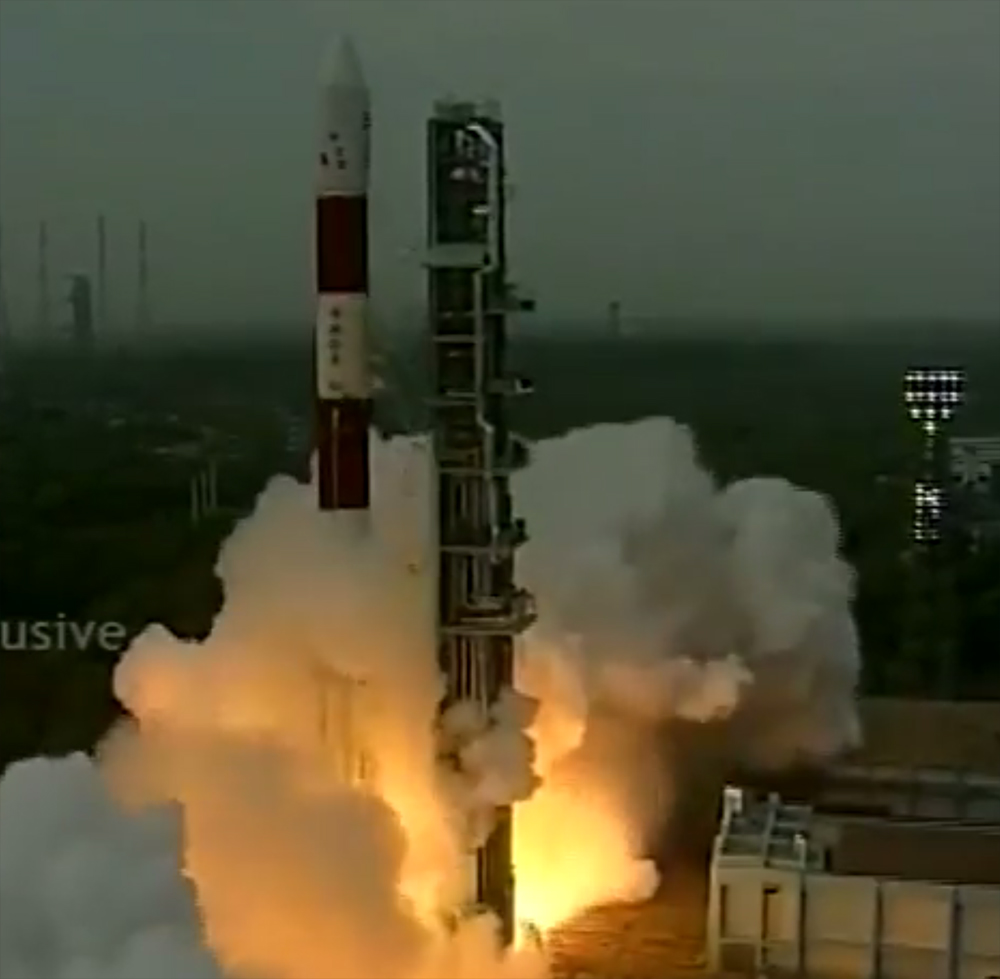
    MUMBAI: It’s another feather in ISRO’s cap. The Indian space outfit seems to be going from success to success. Earlier this morning at 9:12 am, its latest mission the PSLV-C35 lifted off immaculately from the Satish Dhawan Space Centre in Sriharikota. Around 17 minutes later, its fourth stage rocket engine was shut off and it launched one of its passengers, the ScatSat 1 satellite, into its orbit at height of 720 km., to the delight of ISRO scientists.

    Currently, the organization is waiting to fire the fourth stage engine again to send the remainder of its seven satellite payload into their orbit at a height of 670 km, between 11:25 and 11:28 am, according to ISRO updates.

    “This is a challenging two-in-one mission which puts India in a unique league of nations having the capability to achieve two different orbits in a single mission,” ISRO chairman AS Kiran Kumar was quoted as saying.

    Tweeted Prime minister Narendra Modi: “Moment of immense joy and pride for India. Congratulations to isro on successful launch of PSLV-C35/ScatSat1 & 7 co-passenger satellites. Our space scientists keep scripting history. Their innovative zeal has touched the lives of 125 crore Indians & made India proud worldwide.”

  • ISRO’s PSLV-C35 takes off successfully, Scatsat1 launched

    ISRO’s PSLV-C35 takes off successfully, Scatsat1 launched

    MUMBAI: It’s another feather in ISRO’s cap. The Indian space outfit seems to be going from success to success. Earlier this morning at 9:12 am, its latest mission the PSLV-C35 lifted off immaculately from the Satish Dhawan Space Centre in Sriharikota. Around 17 minutes later, its fourth stage rocket engine was shut off and it launched one of its passengers, the ScatSat 1 satellite, into its orbit at height of 720 km., to the delight of ISRO scientists.

    Currently, the organization is waiting to fire the fourth stage engine again to send the remainder of its seven satellite payload into their orbit at a height of 670 km, between 11:25 and 11:28 am, according to ISRO updates.

    “This is a challenging two-in-one mission which puts India in a unique league of nations having the capability to achieve two different orbits in a single mission,” ISRO chairman AS Kiran Kumar was quoted as saying.

    Tweeted Prime minister Narendra Modi: “Moment of immense joy and pride for India. Congratulations to isro on successful launch of PSLV-C35/ScatSat1 & 7 co-passenger satellites. Our space scientists keep scripting history. Their innovative zeal has touched the lives of 125 crore Indians & made India proud worldwide.”