Tag: Indian Railways

  • National Geographic India returns with new edition of Extreme Tech

    National Geographic India returns with new edition of Extreme Tech

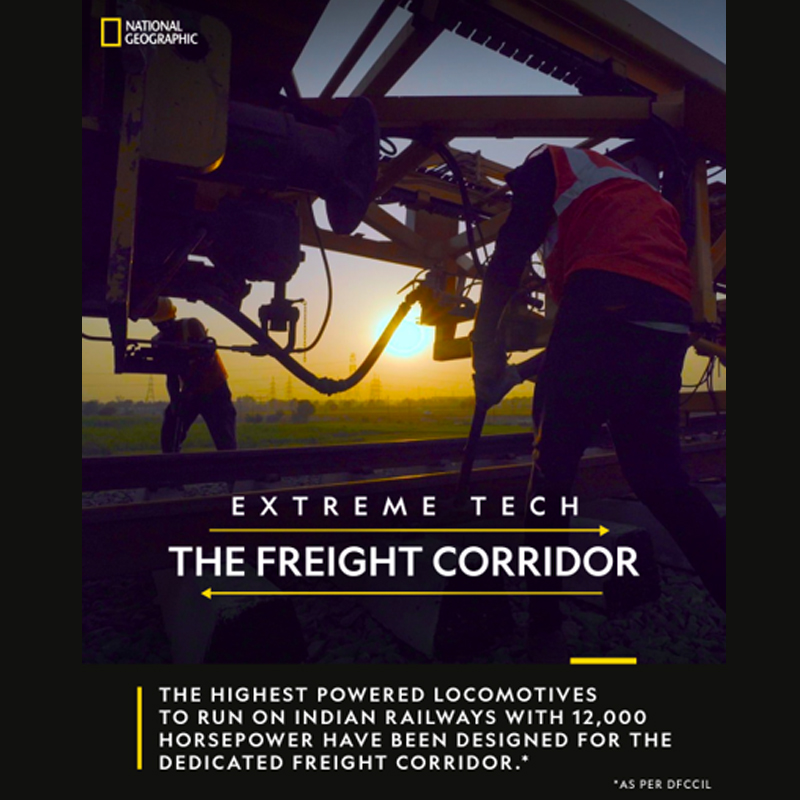
    MUMBAI: The latest edition of National Geographic India’s Extreme Tech is all set to bring forth an extreme engineering feat that aims to change the narrative of the freight transport system in India. Premiering Extreme Tech: The Freight Corridor on 19 December 2020 at 7 pm, the channel will offer a glimpse into the new age Indian Railways transportation system and delve into the efforts of introducing a pioneering solution – dedicated freight corridors – that can become a model of infrastructural development.

    The documentary brings to light the journey of Indian Railways, which is one of the world’s largest rail networks by size, and touches upon the numerous challenges currently faced by our freight transport. It highlights the need for path-breaking innovation and demonstrates the profound impact envisioned for the dedicated freight corridors that can make India’s freight movement fast, cost effective and reliable. Taking the viewer across various sites where construction is underway, the documentary concentrates on understanding the process and the long-term positive impact it will have on Indian businesses, trade, economy and India’s GDP in the coming years. From running a dedicated freight corridor, managing freight traffic efficiently to slashing the carbon footprint by more than 4.5X the documentary showcases the way ahead for India’s future-ready transport system.          

    “At National Geographic India, we endeavour to bring inspirational stories of our nation’s growth and development, through insightful and ground-breaking storytelling. With this edition of Extreme Tech, which focuses on highlighting the magnificence of modern engineering, we took the opportunity to enlighten our viewers on an engineering marvel that can change the very landscape of the Indian freight transport system,” said a National Geographic India spokesperson

    “DFC is a project that will make India stand out in the world market; cementing our place as a manufacturing hub. We are creating a truly futuristic design with a sustainable and green model that has the potential to expand its capacity to keep up with India’s ever-growing freight demands. DFC will pave the way for a robust, world class ecosystem in infrastructure” said DFCCIL MD Ravindra Kumar Jain. 

  • Shemaroo cautiously optimistic on Indian Rlys’ entertainment service bid

    Shemaroo cautiously optimistic on Indian Rlys’ entertainment service bid

    MUMBAI: Well, it may be one of the 24 media and tech companies that have evinced initial interest in providing wi-fi delivered entertainment on demand content to passengers of Indian Railways, but Shemaroo Entertainment is still evaluating the business proposal. Reason: it involves investment of billions of rupees in setting up the whole system, especially on moving trains that may pass through broadband dark areas, which is a technologically challenging work.

    Shemaroo whole time director & CFO Hiren Gada told indiantelevision.com, “It is a technically complicated work. It involves latest technology access, hardware components and a big capex investment. The technology involves giving access to content via a wi-fi platform that will work within a rail coach when the train is moving.”

    According to Gada, an in-house team is preparing a business plan to get a “better sense” of the potential costs and return on investments though, admittedly, the Indian Railways do offer captive eyeballs. “Once we have worked out the costs and equipments needed to put the mechanism in place, we’d make a final decision. If revenues don’t match up to our costs, then it may not be viable for us to bid,” he added.

    The Indian Railways’ local wi-fi network will be available to everyone on board via a distribution box and passengers will be able to log in through their phones or other smart devises to access the entertainment content, according to some media reports.

    Shemaroo, along with 23 other media companies like Viacom18, Zee and Hungama, has shown initial interest in the Indian Railways’ proposal to offer entertainment content on 3,000 trains. The bid will be valid for five years and extendable by another five years.

    The proposal that seeks to raise approximately Rs. 5 billion in non-fare revenues is similar to entertainment services offered on all international and some domestic flights by airlines.

    According to reports where government officials have been quoted, a distribution box will be installed in the coaches, which will be updated regularly for a seamless experience for passengers. However, it is not clear yet how the Indian Railways proposes to monetize such a service from the passengers.

    “Based on the actual revenues that get generated, there could be some additional amount that Railways may share (with the service provider) if the revenue reaches a certain level,” Gada explained the revenue share model proposed by the Indian Railways.

    The tender documents are slated to be opened in the afternoon of 24 August 2017 after bidders have made their final submissions. Only one service provider (successful bidder) will be permitted per designated sectors. The project is being tendered on a revenue sharing model.

    The project shall be executed on a build operate and transfer model. Some of the pre-qualification demands made by the India Railways include the prospective bidders/consortium members having relevant experience in

    India or abroad in providing i) content either as content IP owner/linear broadcaster/aggregator/ OTT player (ii) in providing technology solution in entertainment domain for transport/Railways sector and (iii) experience in monetisation of content through either advertisements or subscriptions.

    Can this project help in making more enjoyable a journey on Indian Railways, apart from the scenic beauty of the country’s hinterland that is visible on long-haul trains? Only once the service starts, the question, probably, would get answered.

    ALSO READ:

    Jet Airways partners with Cineplay for on board entertainment

    Virgin America signs on Disney, Fox, Paramount & Warner Bros for in-flight content

    Akshar Advertising bags bulk ad tenders for Mumbai railway stations

  • Future Group’s Kosh Oats partners Indian Railways

    MUMBAI: The catering service providers in Indian Railways has partnered with Kosh Oats, a premium oats grain brand by Future Consumer Limited to serve nutritious meals to Rajdhani and Shatabdi travelers.

    Oats are a source of high dietary fiber, protein and energy as compared to plain wheat atta, hence in-train parathas will be made & served using Kosh Wheat + Oats Atta.

    Future Consumer Limited head – business strategy and marketing Rahul Kansal says, “With our products one can include oats to prepare any type of food be it breakfast, lunch or dessert making it high in nutrition and flavor.”

    Kosh Wheat + Oats Atta parathas are currently provided on select Rajdhani and Shatabdi train routes where meals are served as a package with the ticket and will end on 14 August 2017. During this association, Kosh Wheat + Oats Atta parathas will be served to approximately 4.5 lakh travelers in a month. In addition to this, travelers will get an exclusive discount voucher of Rs.50 on Kosh Wheat + Oats Atta.

  • Google, Microsoft and Reliance may help design rlys ad tech

    MUMBAI: Leading global companies such as Google, Microsoft and Reliance may be keen to take part in the Indian Railways project and help design platform screens advertising technology. Railways is putting together a strategy to launch two lakh screens across India, aiming at a revenue Rs 10,000 crore in 10 years, the Times of India reported, for which a tender could be awarded by May this year.

    Indiantelevision.com had earlier reported that content on demand on trains and at stations is a sizeable market. According to a report by the Boston Consulting Group (BCG), the infotainment market to be around Rs 2,277 crore in three years’ time.

    The Railway Ministry, in a bid to revamp railways, may invite bids for Content on Demand (CoD) and railradio services in April. Services that would be included under the CoD initiative are — movies, TVserials, short videos, kids’ shows and devotional content. The CoD would also include streaming audio such as regional songs, movie songs, and devotional music; and providing electronic newspapers, gaming and educational content. Railways’ bids for app-based cab services will also be invited by May.

    The video, radio, digital music and digital gaming contracts will be for a period of 10 years. The railways is, through these initiatives, expecting revenue of Rs 16,000-20,000 crore in 10 years.

    As per the BCG report, to provide offline content, railways may have to shell out Rs 38,000 per coach. But, the online content will be expensive — for Rs 25 lakh each. Coaches are required to be well equipped to offer content streamed via the internet.

    Also Read :

    Govt may invite bids for railway TV content this month, market pegged at Rs 2.3k cr


  • Budget 2017: From highway to e-way media sector searches for sops

    Budget 2017: From highway to e-way media sector searches for sops

    MUMBAI: The Indian government today unveiled a roadmap for financial year 2017-18 that covers areas from “highways to e-ways” (PM Modi’s words while describing the Union Budget 2017) aimed at “strengthening the hands of the poor”, while looking at further easing doing business by abolishing Foreign Investment Promotion Board and hinting at a new FDI policy. However, for India’s media and entertainment sector, especially the broadcast and cable sector looking to reach the $ 100 million turnover mark, there wasn’t much to cheer about — unless an angel is hiding in the fine prints that are still being deciphered.

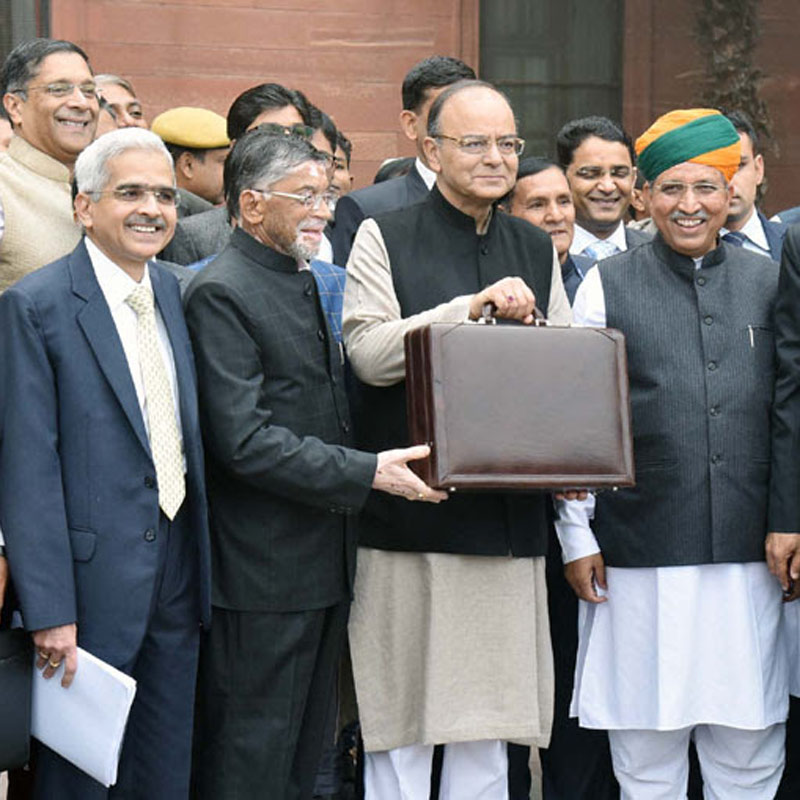
    Finance minister Arun Jaitley, while announcing the Budget, has brought in macro-level major financial reforms by slashing tax rates for middle level income groups and opening the FDI floodgates in favour of a rural economy.

    Jaitley’s budget focused on boosting infrastructure and lifting up rural incomes besides bringing in reforms in the financial sector such as the abolition of the FIPB to enable a new policy for FDI. The Indian Railways Catering and Tourism Corporation (IRCTC), one of the world’s biggest e-commerce companies, will be now be listed, Jaitley said, aside from sending out an indirect warning to economic offenders such as Lalit Modi and Vijay Mallya that for for absconders new legislation would be drafted soon.

    But a big thumbs up to the government for allocating Rs. 10,000 crore (Rs 100,000 million) to boost rural fibre optics network to give further leg up to all round digitisation.

    While the fine prints are still being read, some highlights are as follows:

    # The FIPB will be abolished. Further liberalisation in the FDI policy would be done in the next few days. (Star Den, etc to benefit)

    # SANKALP – Rs 4000 crore allotted for market-oriented training. (At least 4 million youth will be provided market-relevant training under Sankalp programme)

    # Cashback scheme – Petrol pumps card payments, launch two more schemes for use of BHIM app

    # In yet another boost for digitisation, the government has removed service tax on e-tickets .

    #IRCTC to be listed.

    # The government proposes to create a payment regulatory board at RBI. (The proposal assumes significance as there is currently no regulator for FinTech companies such as Paytm in India.)

    # Small and Medium enterprises (MSME) to be encouraged. Income tax reduced to 25% from 30% if turnover is up to Rs 50 crore or Rs 500 million.

    # Startups to pay tax on profits for three out of seven years, increased from three out of five years.

    # Under Bharat Net, optic fibre cable has been laid out In 1,55,000 km. (Recent spectrum auctions have removed spectrum scarcity.) Bharat Net allocation at Rs 10,000 crore.

  • Budget 2017: From highway to e-way media sector searches for sops

    Budget 2017: From highway to e-way media sector searches for sops

    MUMBAI: The Indian government today unveiled a roadmap for financial year 2017-18 that covers areas from “highways to e-ways” (PM Modi’s words while describing the Union Budget 2017) aimed at “strengthening the hands of the poor”, while looking at further easing doing business by abolishing Foreign Investment Promotion Board and hinting at a new FDI policy. However, for India’s media and entertainment sector, especially the broadcast and cable sector looking to reach the $ 100 million turnover mark, there wasn’t much to cheer about — unless an angel is hiding in the fine prints that are still being deciphered.

    Finance minister Arun Jaitley, while announcing the Budget, has brought in macro-level major financial reforms by slashing tax rates for middle level income groups and opening the FDI floodgates in favour of a rural economy.

    Jaitley’s budget focused on boosting infrastructure and lifting up rural incomes besides bringing in reforms in the financial sector such as the abolition of the FIPB to enable a new policy for FDI. The Indian Railways Catering and Tourism Corporation (IRCTC), one of the world’s biggest e-commerce companies, will be now be listed, Jaitley said, aside from sending out an indirect warning to economic offenders such as Lalit Modi and Vijay Mallya that for for absconders new legislation would be drafted soon.

    But a big thumbs up to the government for allocating Rs. 10,000 crore (Rs 100,000 million) to boost rural fibre optics network to give further leg up to all round digitisation.

    While the fine prints are still being read, some highlights are as follows:

    # The FIPB will be abolished. Further liberalisation in the FDI policy would be done in the next few days. (Star Den, etc to benefit)

    # SANKALP – Rs 4000 crore allotted for market-oriented training. (At least 4 million youth will be provided market-relevant training under Sankalp programme)

    # Cashback scheme – Petrol pumps card payments, launch two more schemes for use of BHIM app

    # In yet another boost for digitisation, the government has removed service tax on e-tickets .

    #IRCTC to be listed.

    # The government proposes to create a payment regulatory board at RBI. (The proposal assumes significance as there is currently no regulator for FinTech companies such as Paytm in India.)

    # Small and Medium enterprises (MSME) to be encouraged. Income tax reduced to 25% from 30% if turnover is up to Rs 50 crore or Rs 500 million.

    # Startups to pay tax on profits for three out of seven years, increased from three out of five years.

    # Under Bharat Net, optic fibre cable has been laid out In 1,55,000 km. (Recent spectrum auctions have removed spectrum scarcity.) Bharat Net allocation at Rs 10,000 crore.

  • Indian Railways target four-fold increase in advertising revenue: Railway Budget 16-17

    Indian Railways target four-fold increase in advertising revenue: Railway Budget 16-17

    MUMBAI: Aiming to tap newer areas for generating revenue, Railway minister Suresh Prabhu expressed his intention to heavily explore the potential of Indian Railways in generating more advertising revenue, with a target to multiply earnings by almost four times.

    While presenting the Railway Budget 2016 – 2017, Prabhu said, “We have vast physical infrastructure that facilitates exploitation through advertising. We intend to give special focus to exploring advertising potential on trains, stations and land adjacent to tracks of big stations.”

    “We will use customer interfacing assets to earn advertising revenue. Evolve models for revenue potential in 20 stations over the next three months to target ad revenue and improve earnings from advertising by more than four times than the current ad revenue,” added Prabhu.

    To further optimise the service’s potential for advertising revenues, Prabhu also announced the introduction of display screens. “We are soon introducing 20,000 high tech display screens across 2000 stations as rail display network for real time information to passengers and also unlock advertising potential,” Prabhu asserted.

    “Railway has typically focused on increasing revenues on tariff hikes,” Prabhu had stated at the beginning of his budget address at the Rajya Sabha.

    Stressing the need to increase Indian Railways’ revenue through non-tariff resources and methods at the beginning of his address at the Rajya Sabha, Prabhu also shared his plans to capitalise on the heavy digital traffic on the IRCTC website by engaging in e-commerce activities. “Railway has typically focused on increasing revenues on tariff hikes. IRCTC also has potential to exploit e commerce activities due to the large number of hits,” Prabhu shared.

    The minister also announced a special concession for journalists on ticket tariff. “For our journalist friends we will allow e-booking of tickets on concessional passes,” said Prabhu, later adding in jest, “Hoping that they will cover it better.”

  • Indian Railways target four-fold increase in advertising revenue: Railway Budget 16-17

    Indian Railways target four-fold increase in advertising revenue: Railway Budget 16-17

    MUMBAI: Aiming to tap newer areas for generating revenue, Railway minister Suresh Prabhu expressed his intention to heavily explore the potential of Indian Railways in generating more advertising revenue, with a target to multiply earnings by almost four times.

    While presenting the Railway Budget 2016 – 2017, Prabhu said, “We have vast physical infrastructure that facilitates exploitation through advertising. We intend to give special focus to exploring advertising potential on trains, stations and land adjacent to tracks of big stations.”

    “We will use customer interfacing assets to earn advertising revenue. Evolve models for revenue potential in 20 stations over the next three months to target ad revenue and improve earnings from advertising by more than four times than the current ad revenue,” added Prabhu.

    To further optimise the service’s potential for advertising revenues, Prabhu also announced the introduction of display screens. “We are soon introducing 20,000 high tech display screens across 2000 stations as rail display network for real time information to passengers and also unlock advertising potential,” Prabhu asserted.

    “Railway has typically focused on increasing revenues on tariff hikes,” Prabhu had stated at the beginning of his budget address at the Rajya Sabha.

    Stressing the need to increase Indian Railways’ revenue through non-tariff resources and methods at the beginning of his address at the Rajya Sabha, Prabhu also shared his plans to capitalise on the heavy digital traffic on the IRCTC website by engaging in e-commerce activities. “Railway has typically focused on increasing revenues on tariff hikes. IRCTC also has potential to exploit e commerce activities due to the large number of hits,” Prabhu shared.

    The minister also announced a special concession for journalists on ticket tariff. “For our journalist friends we will allow e-booking of tickets on concessional passes,” said Prabhu, later adding in jest, “Hoping that they will cover it better.”