Tag: Indian Performing Rights Society

  • “AI is better than humans at many things but feels no emotions”: Silk Road Communications’ Achille Forler

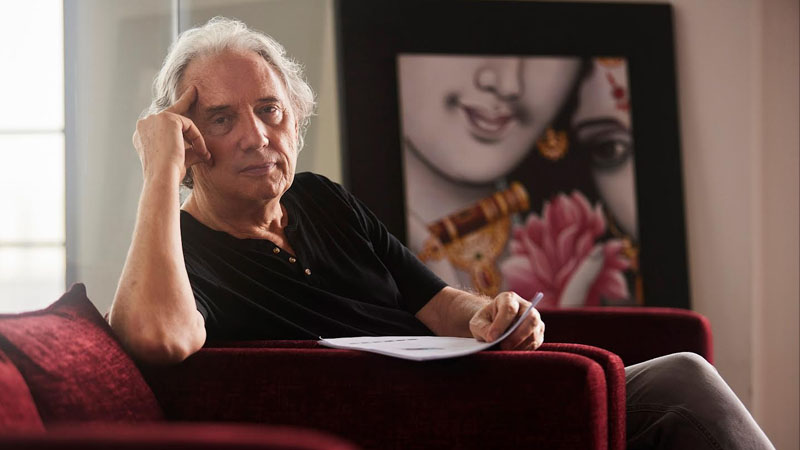
    “AI is better than humans at many things but feels no emotions”: Silk Road Communications’ Achille Forler

    Mumbai: On 5 December 2023, the International Music Creators Seminar was organised by the Indian Performing Rights Society (IPRS) in collaboration with CISAC and the Asia Pacific Music Creators Alliance (APMA). The seminar comprised informative panel discussions, each focused on delving into various aspects of the music industry. Particularly, the inaugural panel centered on the transformative impact of artificial intelligence on the music industry.

    On the sidelines of the event, Indiantelevision.com caught up with music industry veteran and Silk Road Communications founder Achille Forler, to gain valuable insights on the topic…

    Edited Excerpts:

    On the use of AI causing a potential threat to the music industry and artists’ creative processes, with the rising use of AI tools to make dubbed versions of a song in different artists or people’s voices

    Any technology, be it atoms or bioengineering, can be applied for good or bad. Deepfaking, impersonation, and plagiarism are the negative aspects of AI. They pose a greater risk to music creators than piracy ever did.

    We are at the very beginning of the revolution, but now is the time to ensure its developments occur within the boundaries of the common good. Copyright protects an original expression of a self. AI-generated works can never qualify for copyright protection. It is a good time to ask ourselves, what is a human being? How can technology prove that a creation has a human, and not AI, origin? We must create tools that will fingerprint human creations and filter out AI productions. A working group has been set up on this topic by IPRS and some sister societies.

    On the steps that regulatory bodies like IPRS should take to shape the guidelines for the ethical and legal use of AI in music composition and production

    The good news is that creators have taken up the issue. The International Confederation of Authors and Composers Societies (CISAC), representing five million creators worldwide, and of which IPRS is a member, is very clear on AI and its potential to work for or against creativity. It has proposed guidelines to be followed. https://bit.ly/4a2VCsp WIPO also has a comprehensive page on AI and intellectual property in general: https://bit.ly/484ZXtf

    A significant portion of the Conference on Asia-Pacific Collective Management Organizations, which IPRS organised in Jaipur, was focused on this subject.

    On the positives of AI that you see

    Music is born of deep emotions. AI is better than humans at many things but feels no emotions. It can write poems about love but never pined for the beloved, felt the fire of love tingle through its bones, or suffered a heartbreak. On the other hand, we can already see how AI can help Copyright Societies increase compliance by users, improve their collection capacity through smarter licensing, collect royalties that are impossible to collect today, and speed up the distribution of these monies to music creators.

    I already use AI tools on my music licensing platform, SyncMama, to help clients find the right tracks for their videos within minutes simply by uploading a reference track or pasting a YouTube link. We released version two of this audio similarity search tool, Maya. The next version will enable search by prompts like.

    We experiment with the use of prompts, but they have a learning curve because they require more precision—and more attempts—before you find what you’re looking for.

    Our top priority today is video preview. You upload your video on SyncMama and add a track of your choice. Maya analyses the video and matches the audio track to the video by giving you up to three edit options. If the selected audio section is one or two seconds longer or shorter than the video, Maya will time-stretch the audio to fit exactly your video. Click download, and your video will be ready for broadcast.

    We believe that AI tools like these will greatly facilitate the work of promo producers, advertising agencies, and anyone who needs music for their videos.

    On the music industry better supporting and nurturing the growth of amateur talents who are just beginning their journey, ensuring they have opportunities to shine and develop their unique voices

    Budding talent needs a helping hand. The report on music publishing released last week by E&Y shows that the economic value of music to corporate users is at least 12,000 crores. What value would radio, television, films, or games have without music? If corporate users of music were to carry out their legal duty to pay the IPRS, that money would go a long way to nurture and support new talent.

    On ensuring that artists remain at the forefront of decision-making processes to safeguard their interests and maintain the spirit of artistic expression, in a world increasingly influenced by AI

    The answer is in this video:

    SyncMama Valentine

  • IPRS inks MOU with KOMCA

    IPRS inks MOU with KOMCA

    Mumbai: The Indian Performing Rights Society (IPRS) and KOMCA (Korea Music Copyright Association) have signed an MOU, whereby KOMCA and IPRS join hands to organise events that aim to enhance awareness, knowledge, and collaboration in the field of copyright (e.g. seminar on the latest copyright issues for the music industry), music creation (e.g. song-writing camp), and collective management (e.g. sharing experiences on best practices) for music creators. Fostering cross-border music between India and Korea.

    Music is the core cultural wealth of nations like India and Korea with melody being at the heart of popular music. Indian music with its legendary legacy emanating from its various regions has been a  top draw across the world. Blessed with catchy rhythms and chorus sections like Indian music, Korean Pop music is globally, well-received and amenable to blending with Indian music in its true elements. This, we believe, is just the beginning of a deeper association between the music talents of the two countries and will add a slew of listeners, consequently upping revenues. Given the open world we inhabit, it is in the best interest of the creators on both sides to be cognizant of their rights to maximize their earning potential. The MOU’s intent to arm the creators with this basic know-how has to be viewed in this light.

    With the IPRS ever alert to widening the reach of the Indian music industry, it was only a matter of time before a solid MOU between the two associations came to fruition. The MOU is the true harbinger of an expansion phase that will give the music industry a wider spectrum. IPRS members and other Indian artists are also in line for better royalties, recognition and newer opportunities with this new development.

    Legendary lyricist, screenwriter, poet, and IPRS chairman Javed Akhtar expressed his satisfaction with the same, stating, “The recently established collaboration with KOMCA ushers in a transformative period, encouraging a dynamic interchange of creation between India and Korea. Our narrative revolves around breaking down barriers, creating opportunities, and envisioning a world where creators and creativity flourish. We look forward to more collaborative initiatives for our members in the near future. “

    Commenting on the same, IPRS CEO Rakesh Nigam shared his thoughts on the collaboration, stating, “The MOU with KOMCA represents a pivotal step in fostering a dynamic cross-cultural music exchange between India and Korea. This collaboration symbolizes our commitment to nurturing creativity while ensuring creators’ rights are protected. The MOU is poised to be a pivotal step in creating a transformative journey that opens up new avenues for creative partnerships and innovation among our esteemed creator members.”

    KOMCA general manager Giseob You shared his views stating “KOMCA x IPRS MOU paves the path towards a stronger bond between the two societies. Korea Music Copyright Association (KOMCA) and IPRS, representing the author-composers of two musically rich countries, will now work together to spread awareness on creators’ rights and create new opportunities for the promising talent of both countries through music collaborations and partnerships.”

  • TuneCore announces the second TuneCore Grant

    TuneCore announces the second TuneCore Grant

    Mumbai: TuneCore, the leading development partner for self-releasing artists—owned by Believe, one of the world’s leading digital music companies—has announced the funding of the second artist grant India-based artists, with this year’s grant specifically highlighting Punjabi music creators. The TuneCore Grant is a cash endowment of Rs 100,000 that will be awarded to one selected artist.

    Artists who participate and submit their singles will be judged based on their talent and potential by a panel of industry experts including Artist and Label Partnerships head Padmanabhan NS, Spotify head Rumpa Banerjee, Indian Performing Rights Society head of marketing/communication & member relations Atul Churamani, Turnkey Music & Publishing managing director Satvinder Kohli (Sonu Paaji), Speed Records Entertainment director (Punjab) Sonali Singh, Ripple Effect Studios founder and business manager Diljit Dosanjh; and TuneCore head, South Asia, Heena Kriplani.

    Submission details and additional information surrounding the TuneCore Grant Punjab are available on TuneCore India’s Instagram channel @tunecore.ind. Grant Applications from artists should include an original Punjabi single of any genre.

    TuneCore VP International Tash Shah said, “The Indian music industry is made up of one of the largest pools of talented independent artists in the world. Through the direct financial support offered by the TuneCore Grant, we are able to provide a rising artist with the resources to continue to create inspiring music, which resonates with audiences around the world. The wealth of diversity and talent that comes out of India is an inspiration, and TuneCore is proud to spotlight, celebrate and uplift talent from all of India’s robust regional music markets!”

    TuneCore head South Asia Herna Kriplani commented, “The first edition of the TuneCore Grant brought forth an incredible selection of talented artists from across the country. We recognise the skills of our artists and, with the second instalment of the Grant, wanted to focus on local pockets of India to highlight the importance and relevance of regional music. India is a diverse land, and to celebrate that diversity, TuneCore aims to turn our attention—one at a time—to musicians who choose to sing in their preferred language, shedding light on the different voices that comprise the Indian music community. As part of TuneCore’s ongoing efforts to eliminate barriers faced by independent artists, we are excited to fund this new grant and remind our artists that we are here for them.”

    Last year, TuneCore unveiled its Unlimited pricing structure, allowing constant music creation to be made more accessible for all artists by giving them the ability to release an unlimited number of singles and albums for one flat annual price. The Unlimited program gives artists the freedom to create more music and experiment with different release strategies to advance their careers and feed their growing fanbases. Even those sensitive to pricing can experience TuneCore’s expertise in independent distribution and become eligible for upstream into Believe’s Label & Artist Solutions or Believe Artist Services divisions’ “Signed By” program which has benefited over 400 TuneCore artists globally.

    Earlier this year TuneCore introduced Splits to fuel collaboration for self-releasing artists and enable royalty payments from their streaming & download revenue to be easily split between all collaborators on any track or album.

    With this edition of TuneCore Grant Punjab, TuneCore focuses on the talent of regional India, narrowing the scope and turning the spotlight on regional music. The TuneCore Grant Punjab is the first of its kind.

    Panelist Sonali Singh said, “India is a land of immense musical talent and we’re glad that TuneCore is giving local independent musicians an opportunity to shine. We are certain that India will drive the next century of music, with Punjabi music creators contributing significantly to the nation’s musical output. I am excited to see what all the participants have in store for us while we build and nurture talent to showcase Indian talent on a global stage.”

    Panelist Satvinder Kohli (fondly known as Sonu Paaji to those in the industry) said, “Punjabi music has garnered attention on a global scale and I’m happy to support the TuneCore Grant, giving an opportunity for Punjabi artists to shine. Independent artists in Punjab, in India, and across the world are changing the global music landscape and an opportunity like this will encourage young talent to keep expressing themselves and pursuing their dreams.”

    In the following months, new editions of the Grant that turn to other parts of India focusing on Tamil, Telegu, Gujarati, Bengali, Kannada and other languages from India can be expected.